

 0086-138 3838 9622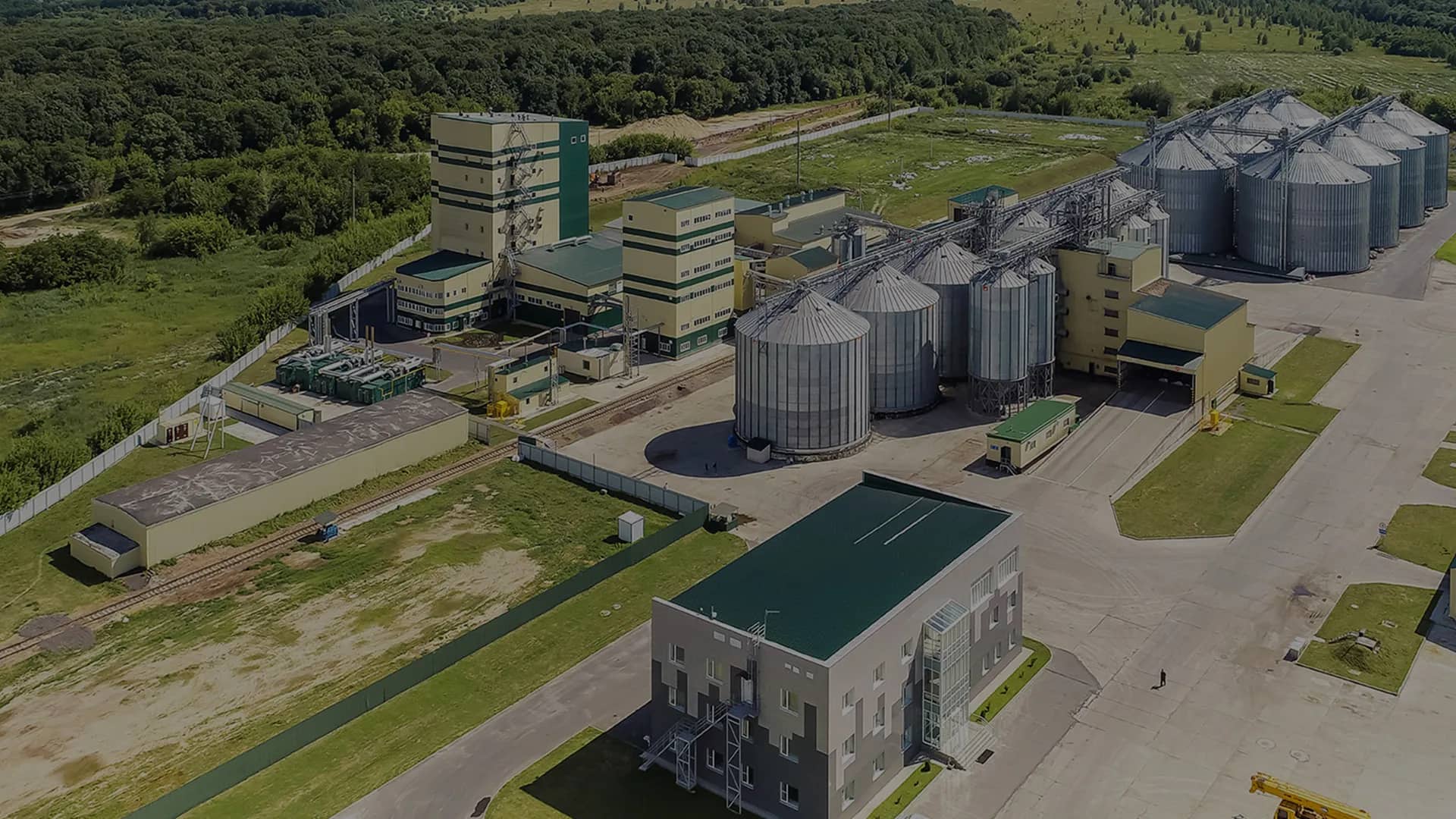

Pellet Production Line in Thailand
We didn’t just ship a few machines to Thailand; we built a reputation across the country’s pellet sector. Looking back at our pellet production line in Thailand projects, the range of materials processed is honestly the part we’re most proud of. From wood waste to feed, organic fertilizer, and even specialty items like pest poison and pyrolysis carbon, our ring-die systems are running in applications most people wouldn’t think possible. If a client has a raw material, we’ve likely figured out how to turn it into pellets.


150+ Units
Over 150 Ring Die Pellet Machines Delivered
Ring-die pellet mills currently operating across Thai facilities. That count doesn’t include the supporting grinders, dryers, or conveyors we’ve installed alongside them.
80+ Projects
80+ Complete Pellet Plant Projects Built
Full production plants we designed, built, and commissioned. Each one started with a conversation about raw material and ended with a fully operational facility.
25% Coverage
25% share of commercial pellet applications
The share of commercial pellet applications in Thailand where our equipment is part of the process. From feed mills to waste-to-energy, it’s our most active export market.
Thailand Project Portfolio
Over the years, we’ve installed quite a few lines across Thailand. Some clients came to us with a clear idea of what they wanted to pellet. Others just had a material problem they needed to solve. Either way, each project had its own set of challenges—moisture content that wouldn’t cooperate, raw materials that changed season to season, or production targets that kept shifting during planning. Here’s a look at some of the work we’ve done.
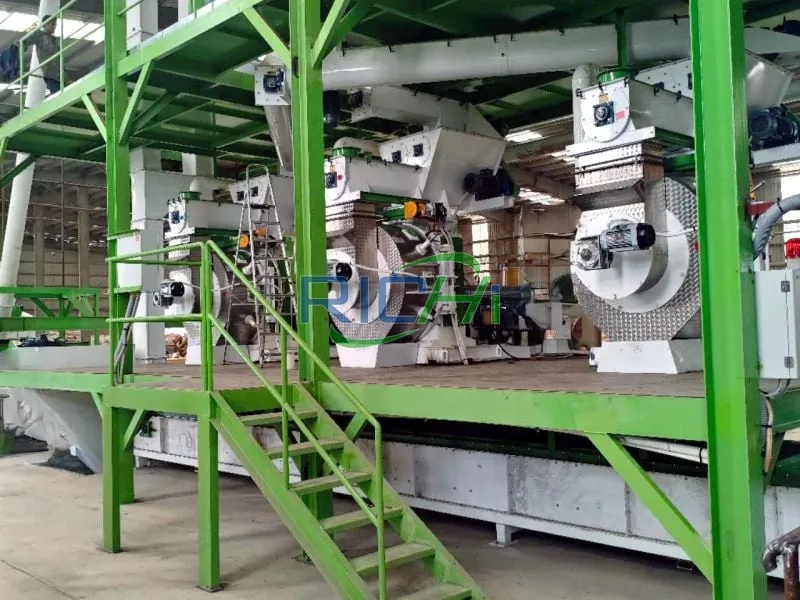
Samut Prakan Province
15 t/h municipal waste pellet plant in Thailand
The customer runs a waste management operation just outside Bangkok. They’d been sending mixed municipal and industrial waste to landfill for years, and the disposal costs kept climbing. Their thinking was straightforward: if they could convert that waste into a fuel pellet, they’d cut transport costs and create something with market value.
Raw material is anything but consistent. On any given day, they’re feeding in agricultural residue, packaging waste, textile scraps, and various industrial byproducts. The moisture content fluctuates between 15% and 30%, and particle sizes are all over the place. That’s why we went with four MZLH768 ring die pellet mills—the 768 platform handles variability better than smaller units.
- The complete line includes shredders, magnetic separators, a rotary dryer with temperature control, and a dust collection system that actually keeps up with the fines.
- We designed a two-stage screening process to remove contaminants before pelleting.
- The whole pellet plant in Thailand runs 15 tons per hour, producing 8mm and 10mm RDF pellets for cement kilns and industrial boilers.

10 t/h cattle feed pellet production line in Thailand
This one started with a call from a livestock operation in Nakhon Ratchasima. They’d been buying commercial feed for their dairy herd but weren’t happy with the consistency or pricing.
The real twist came during planning. They wanted one feed mill in Thailand that could handle both finished cattle pellets and pre-mix production for their own blending. We spec’d an SZLH420 as the main pelletizing machine in Thailand for this line because it’s forgiving with formula changes.
- Raw materials arrive at varying sizes—corn needs hammer milling first, cassava chips get processed separately. Moisture in incoming ingredients runs 12-14%.
- Beyond the pellet mill, the line includes a batching scale system, ribbon mixer, counterflow cooler, crumbler for certain rations, and a full automation package for recipe management.
- They’re producing 5mm and 6mm pellets for different age groups in the herd.
- The customer invested roughly $350,000 for the complete setup.

Nakhon Ratchasima Province

Ratchaburi Province
5 t/h organic fertilizer pellet production line in Thailand
A fertilizer company in Ratchaburi approached us after struggling with inconsistent pellet quality from their previous equipment. They were working with chicken manure sourced from layer farms and rice straw from local fields—two materials that behave very differently during processing.
The manure comes in at 35-40% moisture, which meant we had to build in serious drying capacity. The straw, on the other hand, is dry but fibrous. We ended up designing a system with separate feed lines that merge before the FZLH350 ring die pellet mill in Thailand. A rotary dryer handles the manure, while a hammer mill reduces the straw to 3mm particles before mixing.
- The rest of the pellet production line in Thailand includes a compost turner for pre-treatment, mixing system to balance C:N ratios, and a coating drum for adding beneficial microbes post-pelleting. They’re making 4mm and 6mm organic fertilizer pellets for the domestic agriculture market.
- Total equipment investment was around $280,000.
5-6 t/h tofu cat litter pellet production line Thailand
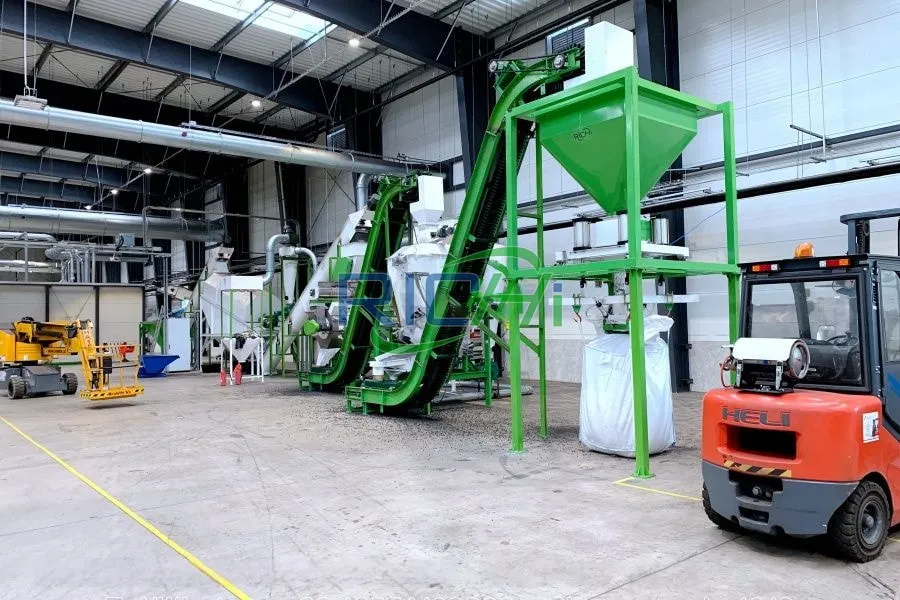
This was one of those projects that came out of left field. The client runs a soy processing facility and was sitting on massive amounts of okara (soy pulp) with no good way to dispose of it. They’d heard about using tofu byproduct for cat litter but weren’t sure if the production was feasible.
The raw material is wet—like, really wet. Fresh okara comes out at 75-80% moisture, so drying was the first problem we had to solve. We spec’d a rotary dryer with a custom retention time to bring it down to 12% before pelleting. The MSZLH320 pelletizer for sale Thailand configuration uses a special die design for the absorbency characteristics they needed. The final product is 4mm pellets that clump well and have low dust—exactly what cat litter brands look for.
- The complete pellet system in Thailand includes a dewatering press, dryer, pellet mill, and a coating unit where they add natural attractants. They’re running about 5-6 tons per hour depending on incoming moisture.
- Investment came to roughly $220,000.
Ayutthaya Province
Chonburi Province
3-4 t/h poultry feed pellet line in Thailand
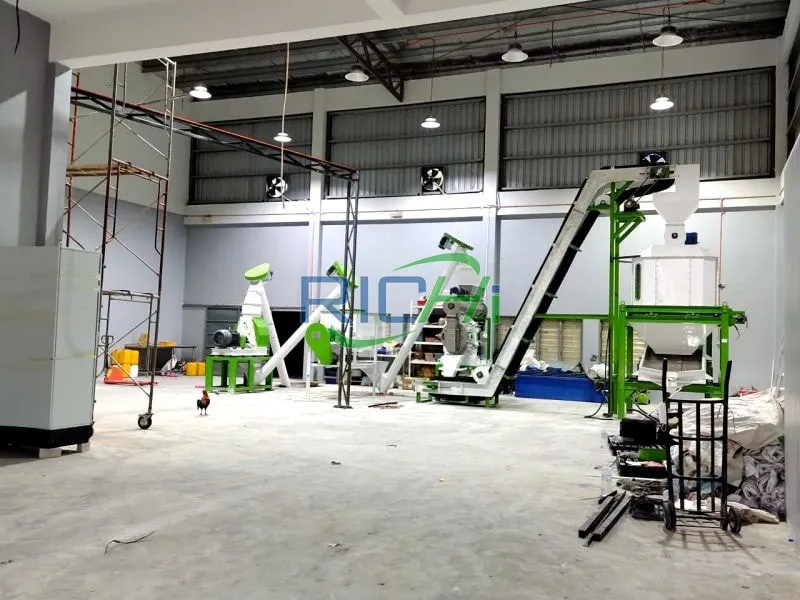
A family-owned poultry operation in Chonburi wanted to bring feed production in-house. They’d been raising broilers for fifteen years and were tired of dealing with feed mill delays and price swings. The challenge was space—their existing facility didn’t have room for a sprawling setup.
We worked with them on a compact layout that fits the SZLH320 feed plant in Thailand into a surprisingly small footprint. Raw materials are mostly corn, soybean meal, and rice bran, all sourced within 50 kilometers. Moisture in the incoming grains runs 13-14%, which is workable without heavy drying. The line includes a hammer mill, mixer, pellet mill, and a vertical cooler that saves floor space compared to horizontal units.
- The line includes a hammer mill, mixer, pellet mill, and a vertical cooler that saves floor space compared to horizontal units.
- They’re producing 3mm starter pellets and 5mm grower pellets. The whole pellet line in Thailand runs 3-4 tons per hour depending on formula. Total investment was around $180,000.
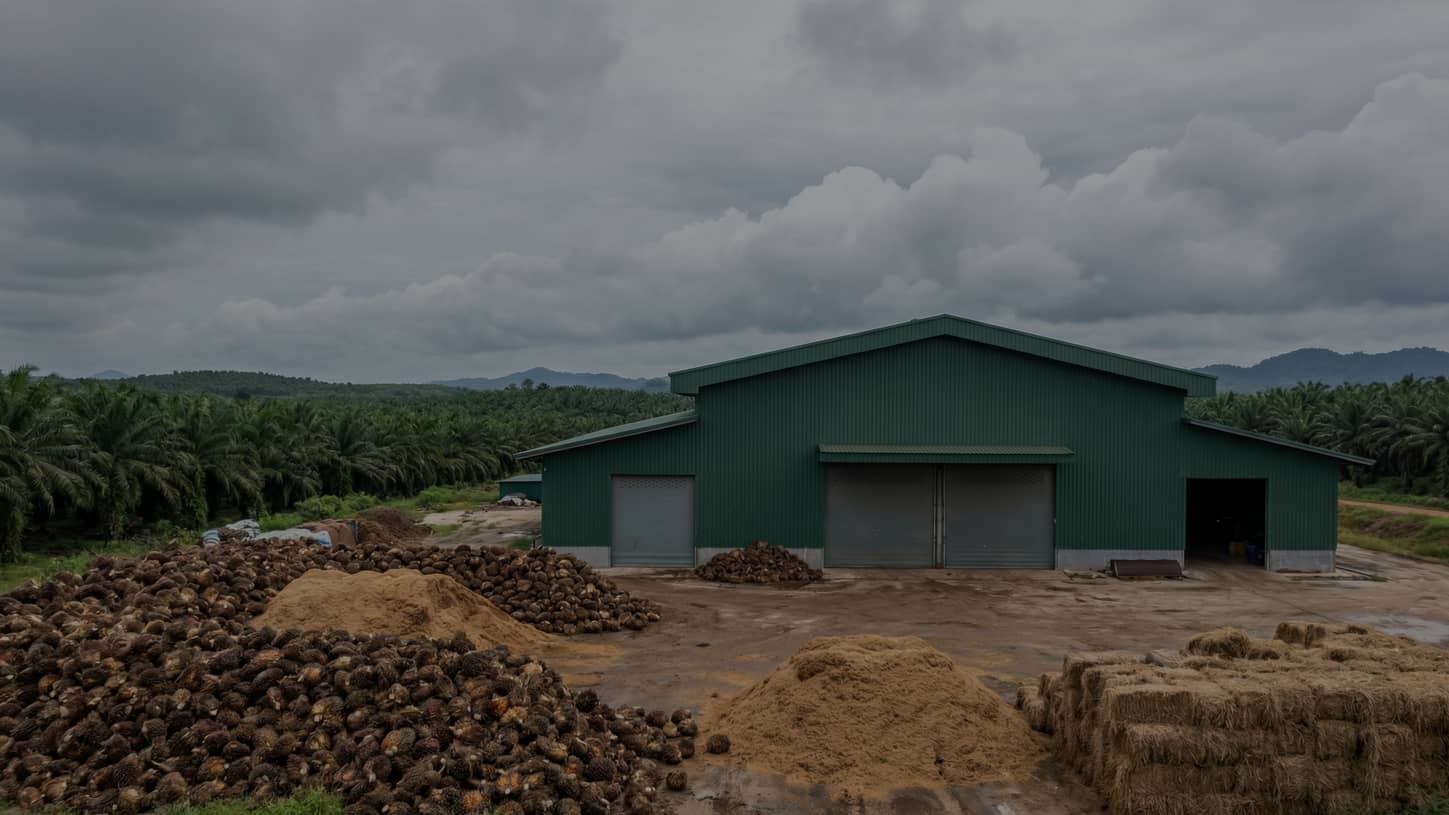
4 t/h biomass palm pellet production line in Thailand
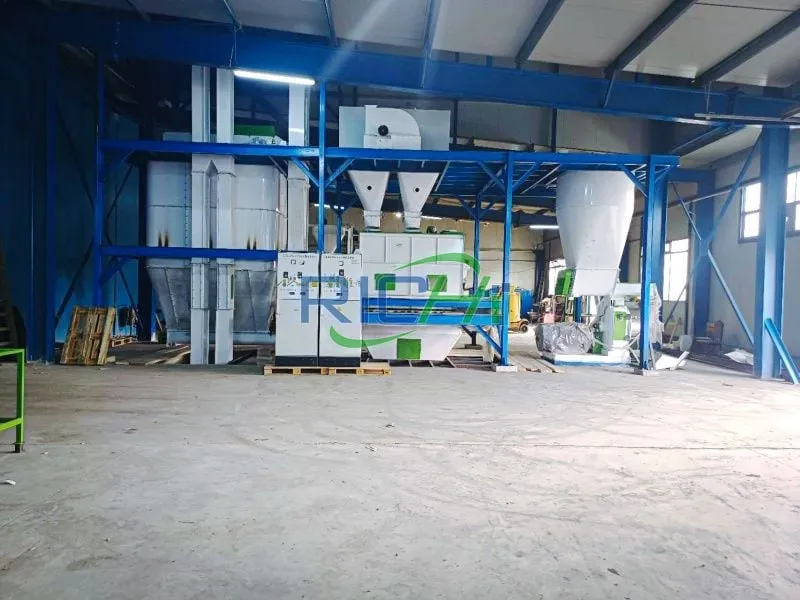
Palm processing in Surat Thani generates massive amounts of waste. This client was sitting on piles of palm kernel shell and pressed fiber with no good use case. They’d tried selling raw biomass to local power plants but wanted more control over pricing by processing it themselves.
The tricky part is the fiber. It’s fibrous, stringy, and tends to wrap around smaller mill shafts. We went with the MZLH768 biomass pellet mill in Thailand specifically because the larger shaft diameter handles that stringy material without jamming.
- Raw material moisture in the kernel shell runs about 12-14% as-received, but the fiber needs some drying—we added a small rotary dryer just for that stream.
- The line includes a shredder for oversized material, the dryer, the 768 pellet mill, and a cooling conveyor. They’re making 8mm biomass pellets for industrial boilers and co-firing applications.
- Equipment investment was about $340,000.
Surat Thani Province
Pathum Thani Province
5 t/h fish feed pellet production line in Thailand
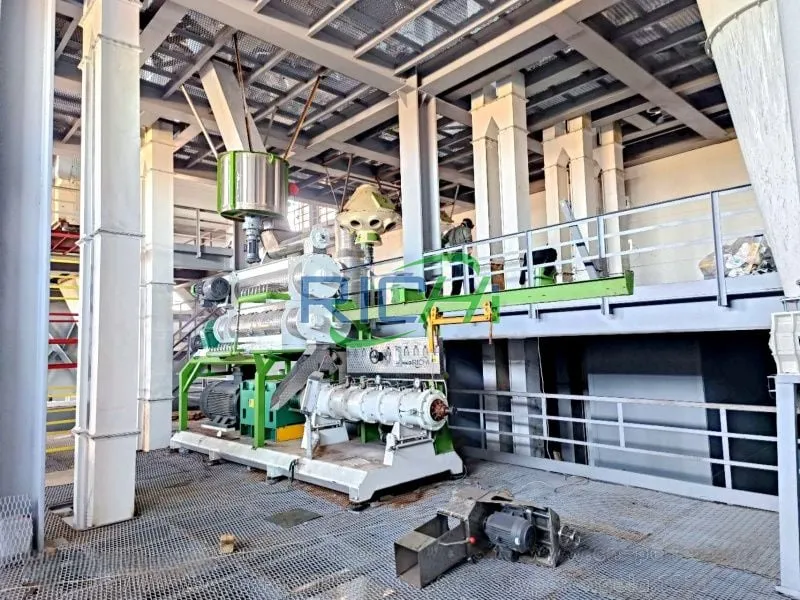
This customer had been importing floating fish feed from overseas and wanted to manufacture locally. They’re located in Pathum Thani with good access to fishmeal, soybean, and wheat flour suppliers. The challenge was achieving the right float characteristics—extrusion parameters matter more than people realize.
We installed an SPHS150*2 twin-screw extruder for this pellet factory in Thailand. The twin-screw setup gives them the flexibility to adjust expansion ratio depending on the target species—catfish pellets behave differently than tilapia formulations.
- Raw materials are ground to 0.8mm before entering the extruder, with moisture adjusted in the preconditioner to around 25%.
- Beyond the extruder, the line includes a hammer mill, ribbon mixer, dryer, and a coating drum for adding oils and attractants. They’re making 2mm, 3mm, and 4.5mm floating pellets.
- Total investment was around $520,000.
1 t/h shrimp feed production line in Thailand
Shrimp feed is a different beast entirely. This client in Chachoengsao had been mixing their own feed manually for their intensive shrimp ponds and wanted to scale up with proper equipment. The micronization requirements for shrimp feed are tighter than poultry or livestock—ingredients need to be fine, and pellets need water stability.
We spec’d an SZLH350 with a specially designed conditioner to achieve the cook level they needed. Raw materials include fishmeal, squid meal, and various plant proteins, all milled to 0.5mm or finer in the pre-grinding setup. Moisture in the mixed mash runs about 15% before conditioning.
- The complete feed factory in Thailand includes a micro-grinding system, batching scale, mixer, pellet mill, and a vertical dryer for removing surface moisture without cracking pellets.
- They’re making 1.2mm and 1.8mm pellets that hold together for over two hours in saltwater—critical for shrimp feeding efficiency.
- Investment came to roughly $260,000.
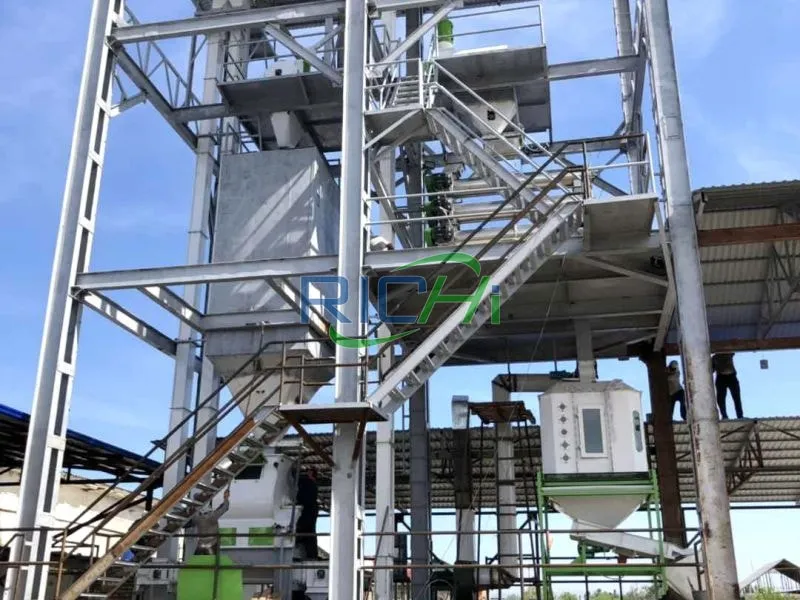
Chachoengsao Province
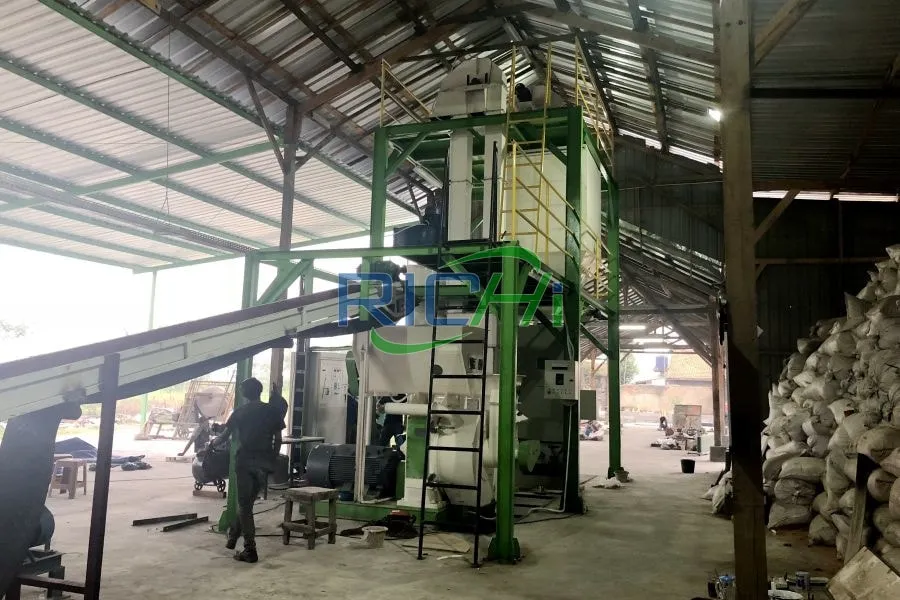
Trang Province
2 t/h wood pellet production line in Thailand
This project was for a rubberwood processing facility in Trang. They were generating tons of sawdust and planer shavings with no real market. Wood pellet exports were picking up, and they wanted in.
The raw material is clean hardwood sawdust with moisture around 10-12% straight from their drying kilns. Honestly, the material was ideal—consistent particle size, predictable moisture, no contamination. We installed an MZLH520 industrial pellet mill in Thailand for this line, which is a good match for the capacity they wanted.
- The line includes a hammer mill for the shavings stream, the pellet mill, a counterflow cooler, and a bagging station.
- They’re making 6mm and 8mm wood pellets for the domestic heating market and export to Asian buyers.
- Equipment investment was about $110,000.
1 t/h RDF pellet production line in Thailand
A waste management company in Khon Kaen wanted to test the RDF market before scaling up. They had access to municipal waste from several collection routes but weren’t sure about conversion rates or pellet quality. This was a pilot project to validate the economics.
The MZLH420 pellet manufacturing equipment in Thailand we installed is sized for 1 ton per hour, which gave them room to experiment without over-investing.
- Raw material is mixed municipal waste that’s been shredded and screened. Moisture is the variable they struggle with—sometimes 12%, sometimes over 20%. We included a small air dryer to handle the wetter batches.
- The line is compact: shredder, dryer, pellet mill, and cooling conveyor. They’re making 10mm RDF pellets for local cement plants.
- Total investment was about $65,000.
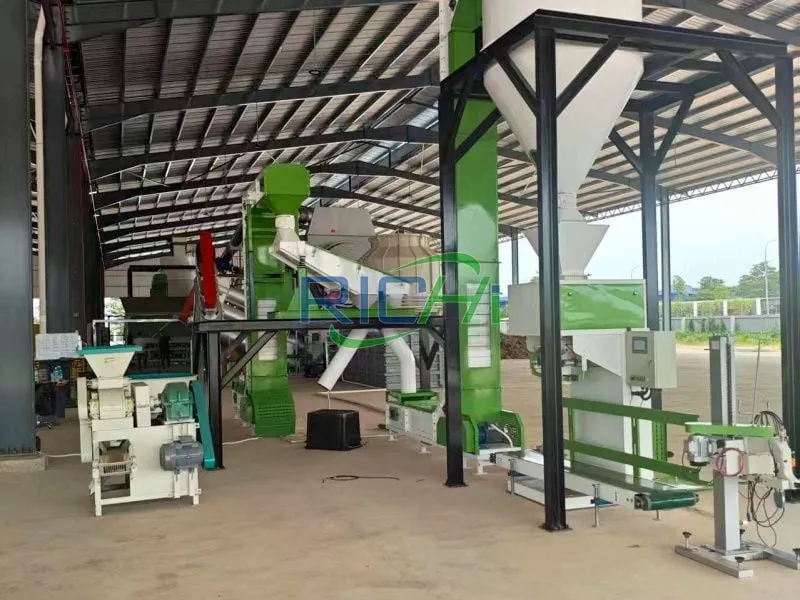
Khon Kaen Province
Other Pellet Equipment Projects Across Thailand
Not every project gets the full case study treatment, but these installations are just as important to our footprint here. Some are single machines going into existing operations; others are smaller lines where customers wanted to test a market before scaling up. Each one solved a specific problem for the operator, whether that was dealing with wet manure, fibrous biomass, or inconsistent feed formulas. Here’s a look at the range.
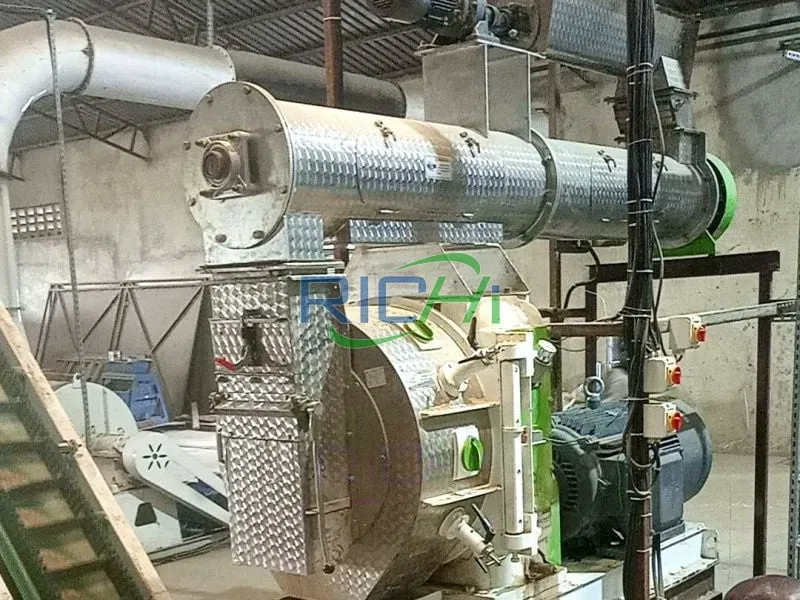
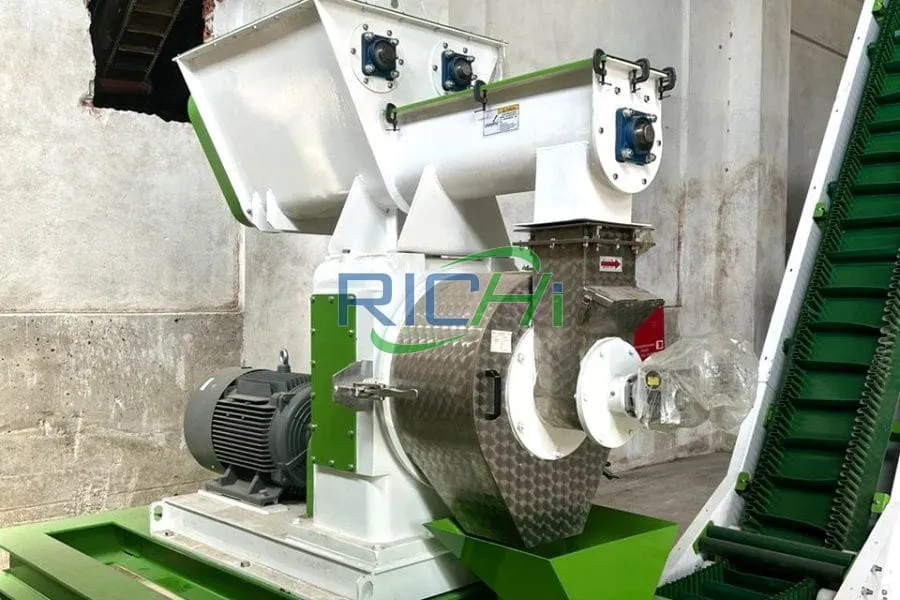
10 t/h cassava waste pellet machine in Thailand
A tapioca starch factory in Nakhon Ratchasima was generating tons of cassava pulp and wastewater sludge with nowhere to go. The FZLH520 handles the high-fiber material well, producing organic fertilizer pellets that local rubber and palm plantations now use. This pellet mill in Thailand runs continuously during their production season, processing about 10 tons per hour into 6mm pellets.
Model
FZLH520
Pellet Size
6mm
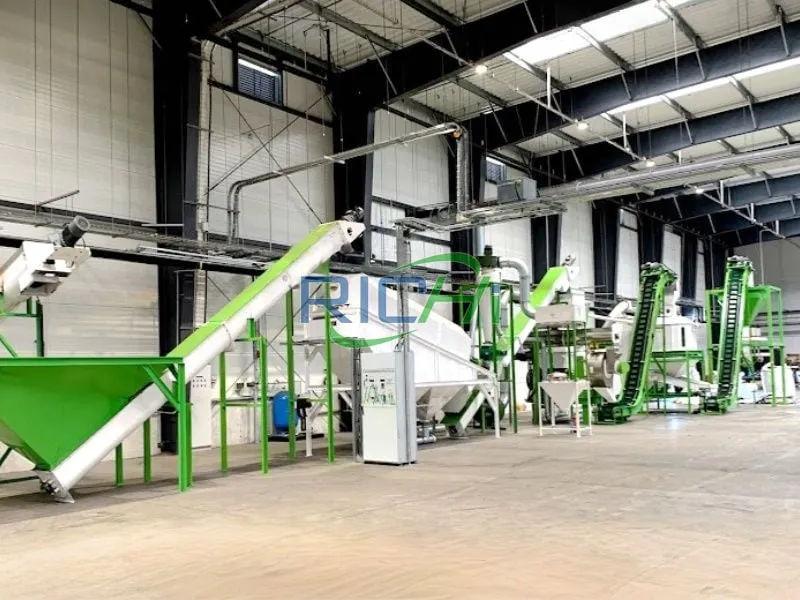
5 t/h chicken manure pellet machine for sale Thailand
A layer farm operation in Ratchaburi had been stockpiling manure for years—great fertilizer potential, but the raw material was too wet and odorous to move easily. The FZLH350 runs after their composting windrows, turning dried manure into 4mm organic fertilizer pellets for nearby vegetable farms. It’s become a reliable piece of pellet plant equipment in Thailand for them.
Model
FZLH350
Pellet Size
4mm
4-5 t/h straw pellet machine for sale Thailand
A dairy cooperative in Saraburi had rice straw piling up after harvest season and wanted to turn it into roughage pellets for their own cattle. The CZLH678 runs a 5mm die and handles the dry, stemmy material after hammer milling. Their feed plant in Thailand now produces consistent feed pellets that reduce waste compared to loose straw feeding.
Model
CZLH678
Pellet Size
5mm

0.8-1.0 t/h fish feed pellet machine for sale Thailand
A small aquaculture operation in Suphan Buri was mixing their own sinking feed by hand and wanted to upgrade to a proper extruder. The DSP-135B single-screw extruder gives them control over density and sink rate. This pellet production machine in Thailand runs 2mm and 3mm sinking pellets for their catfish ponds.
Model
DSP-135B
Pellet Size
2mm, 3mm
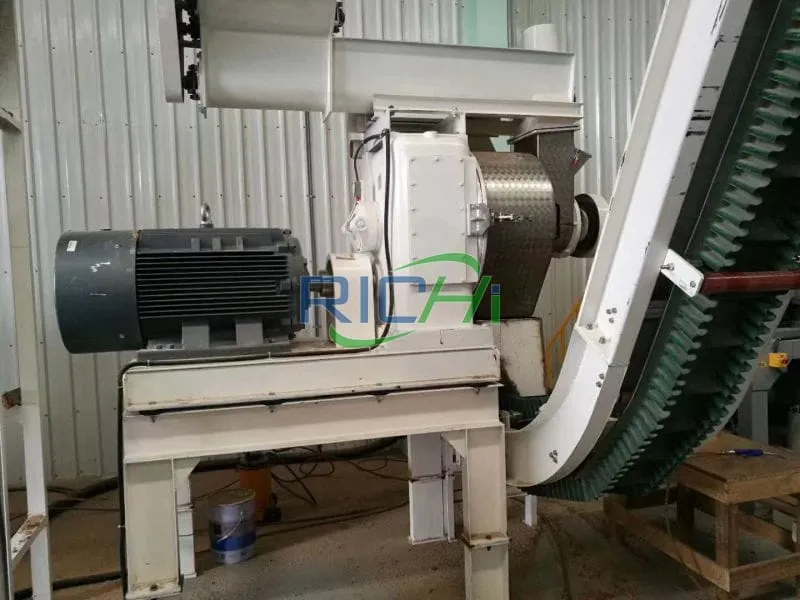
3 t/h biomass wood pellet mill for sale Thailand
A rubberwood processing yard in Trang had sawdust and shavings going to waste and wanted to test the wood pellet market. The MZLH768 gives them room to scale if they add more drying capacity later. Right now, this biomass pellet mill in Thailand runs about 3 tons per hour, producing 8mm industrial-grade pellets for local boiler users.
Model
MZLH768
Pellet Size
8mm

15 t/h poultry chicken feed pellet mill for sale Thailand
One of the larger integrated poultry operations in Chonburi needed to replace an aging pellet mill that couldn’t keep up with their grow-out schedule. The SZLH508 runs 20 hours a day during peak season, producing 3mm starter and 5mm grower pellets. Their feed factory in Thailand now has a reliable workhorse that handles corn-soy formulas without slowdown.
Model
SZLH508
Pellet Size
3mm, 5mm

20 t/h compost pellet machine in Thailand
A commercial composting facility near Bangkok was producing high-quality compost but struggled to package it efficiently for the horticulture market. The FZLH678 runs their screened compost after moisture adjustment, producing 8mm organic fertilizer pellets. This pelletizing machine in Thailand processes about 20 tons per hour during their main production season.
Model
FZLH678
Pellet Size
8mm
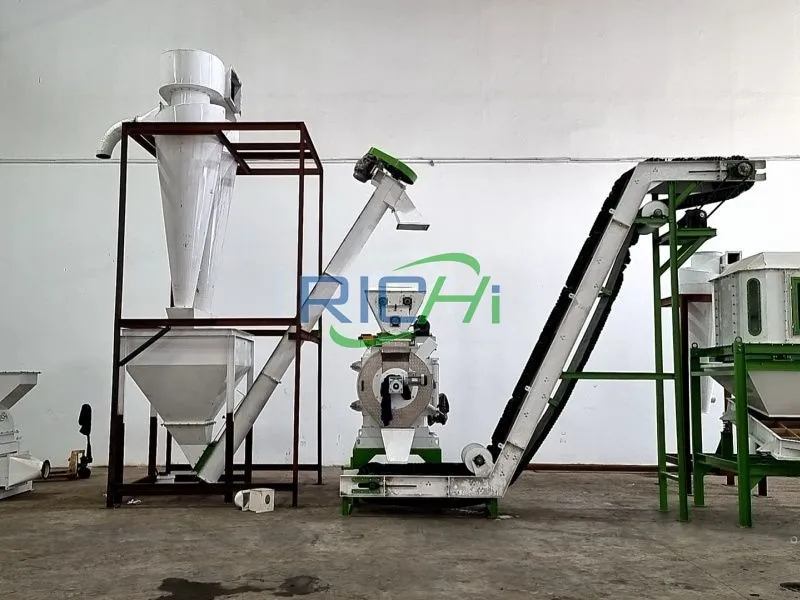
2 t/h palm fiber pellet machine for sale Thailand
A palm oil mill in Surat Thani had both kernel shell and pressed fiber—two materials that usually get burned as boiler fuel with low efficiency.The MZLH520 runs the mixed fiber and shell after size reduction, producing 6mm biomass pellets. It’s a straightforward pellet press machine in Thailand that runs on their own mill’s waste stream.
Model
MZLH520
Pellet Size
6mm

20 t/h cattle feed pellet mill for sale Thailand
A large feed mill in Lopburi was expanding their cattle feed division and needed higher throughput than their existing equipment could handle. The SZLH558 runs 20 tons per hour on standard cattle rations, producing 5mm and 6mm pellets. Their feed mill in Thailand now has capacity for export orders as well.
Model
SZLH558
Pellet Size
5mm, 6mm
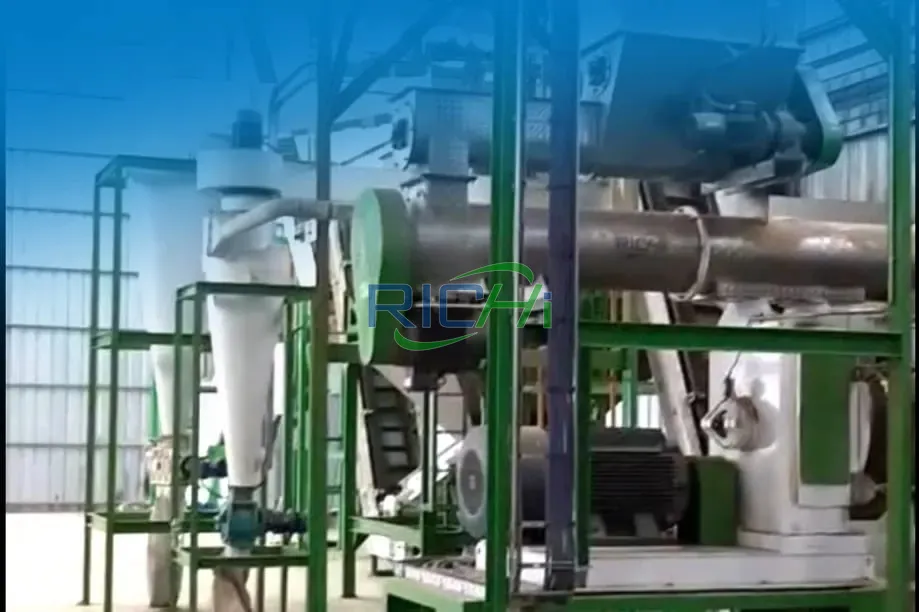
3 t/h alfalfa grass pellet machine for sale Thailand
A livestock operation in Chiang Mai wanted to produce alfalfa pellets for their own herd but also sell to neighboring farms. The CZLH520 ring die setup handles the fine grind well and runs 3 tons per hour producing 6mm pellets that keep their nutritional value during storage.
Model
CZLH520
Pellet Size
6mms

1-1.5 t/h sludge pellet machine for sale Thailand
A municipal wastewater treatment plant in Khon Kaen had dewatered sludge they wanted to repurpose rather than landfill. The FZLH250 is sized for their daily output—about 1.5 tons per hour—and turns the sludge into 4mm fertilizer pellets after lime stabilization and drying.
Model
FZLH250
Pellet Size
4mm
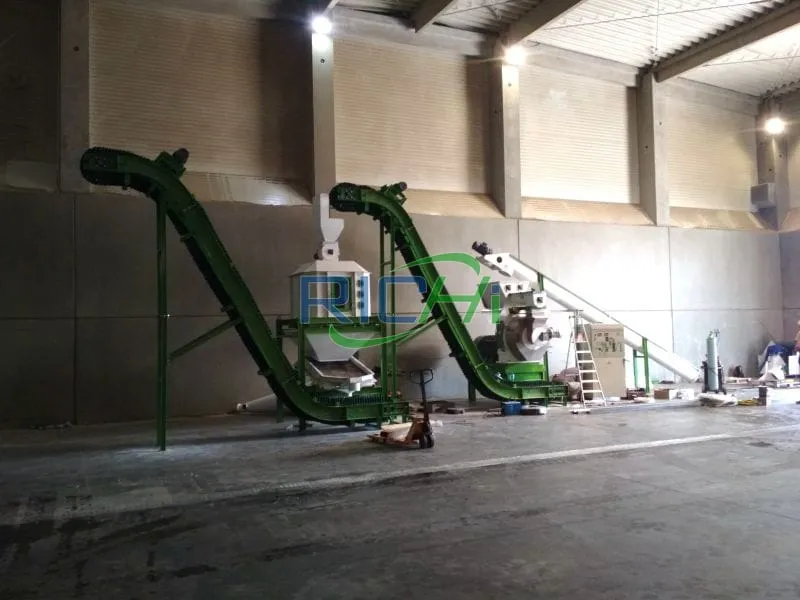
4-5 t/h rice husk pellet machine for sale Thailand
A rice mill in Ayutthaya was sitting on mountains of rice husk, a material that’s notoriously abrasive and hard on equipment. The MZLH768 has the heavy-duty construction to handle the silica content. This pellet factory in Thailand now runs about 5 tons per hour, producing 8mm biomass pellets for industrial boilers.
Model
MZLH768
Pellet Size
8mm
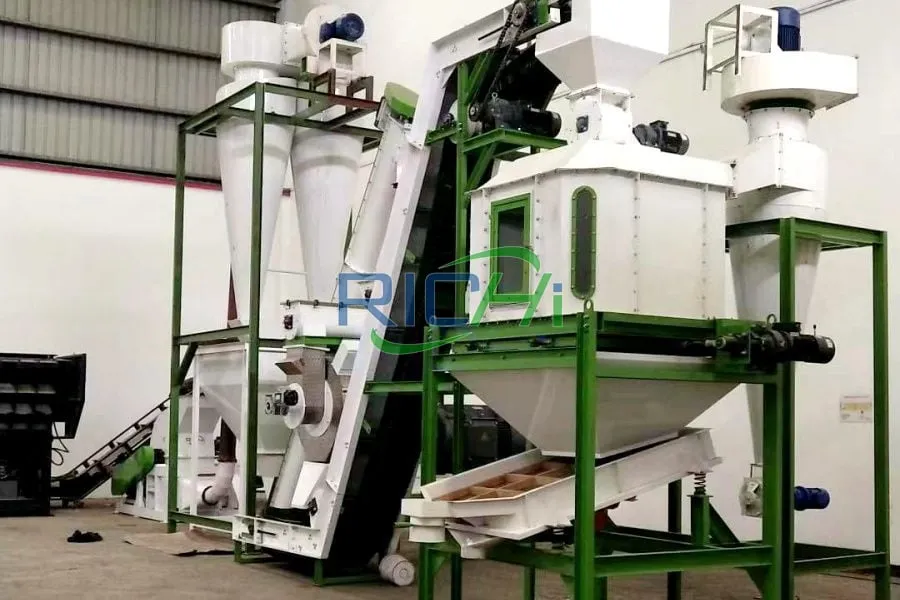
0.3-0.5 t/h bamboo pellet machine in Thailand
A bamboo plantation in Kanchanaburi wanted to pellet their pruning waste and offcuts. The MZLH350 runs slowly enough to handle the material without overheating, producing 6mm pellets for garden mulch and small-scale biomass heating. It’s a niche pelletizer for sale Thailand but fits their operation perfectly.
Model
MZLH350
Pellet Size
6mm
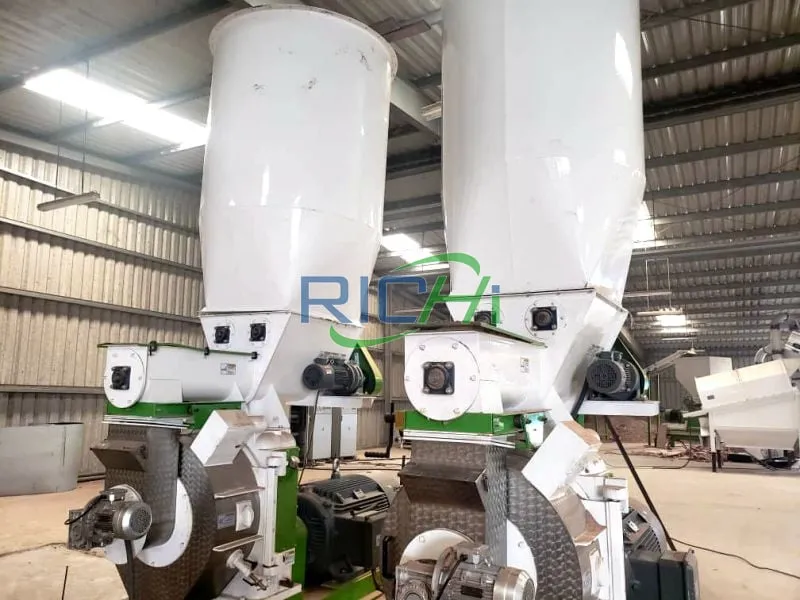
5-6 t/h pig manure pellet machine for sale Thailand
A large pig farm in Nakhon Pathom had anaerobic digesters already, but the digestate still needed management. The FZLH350 runs after dewatering and drying, producing 5mm pellets that store well. Their pellet plant in Thailand processes about 6 tons per hour during peak production.
Model
FZLH350
Pellet Size
5mm
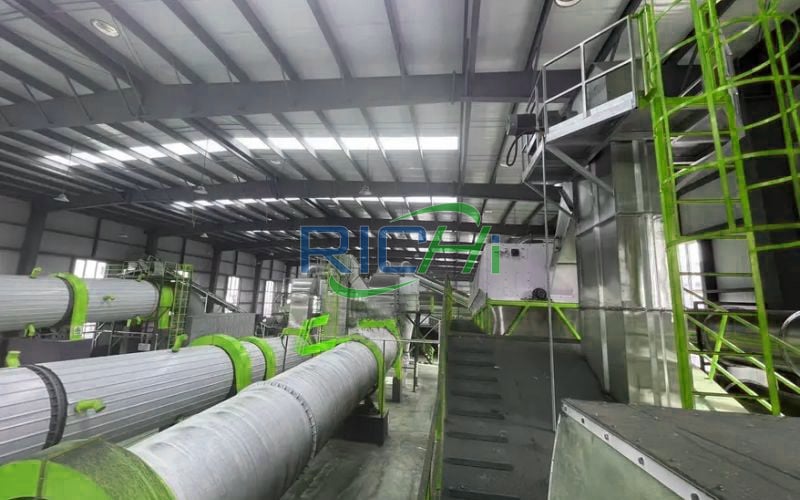
6 t/h cow dung pellet machine for sale Thailand
A dairy operation in Petchaburi was looking to diversify income beyond milk production. The FZLH420 handles their daily manure output after composting and drying, running about 6 tons per hour. It’s become a steady second revenue stream for this feed plant in Thailand that now does both dairy feed and fertilizer.
Model
FZLH420
Pellet Size
6mm
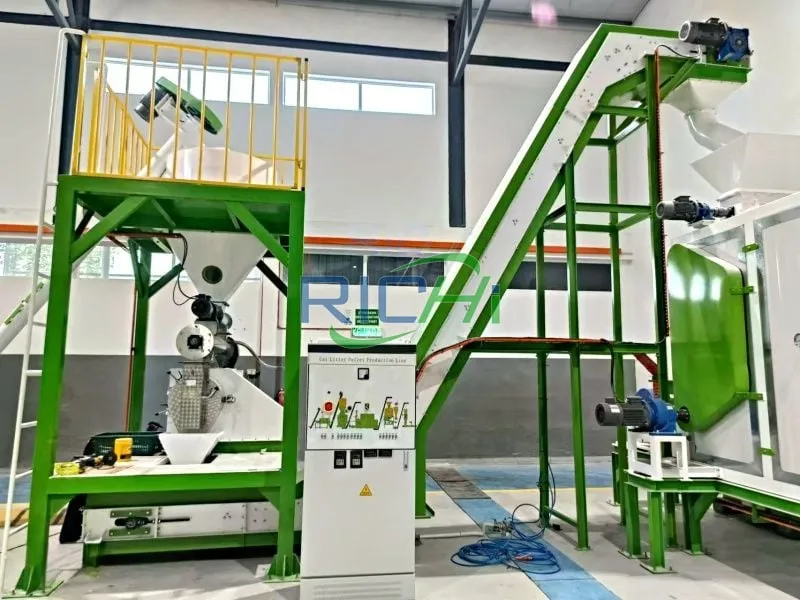
1.0-1.5 t/h tofu cat litter pellet machine for sale Thailand
A tofu manufacturer in Nonthaburi was dealing with the same wet okara problem we’ve seen elsewhere but wanted a smaller entry point into the cat litter market. The MSZLH250 gave them enough capacity to test the market without over-investing. It runs about 1.5 tons per hour after drying, producing 4mm clumping litter pellets.
Model
MSZLH250
Pellet Size
4mm
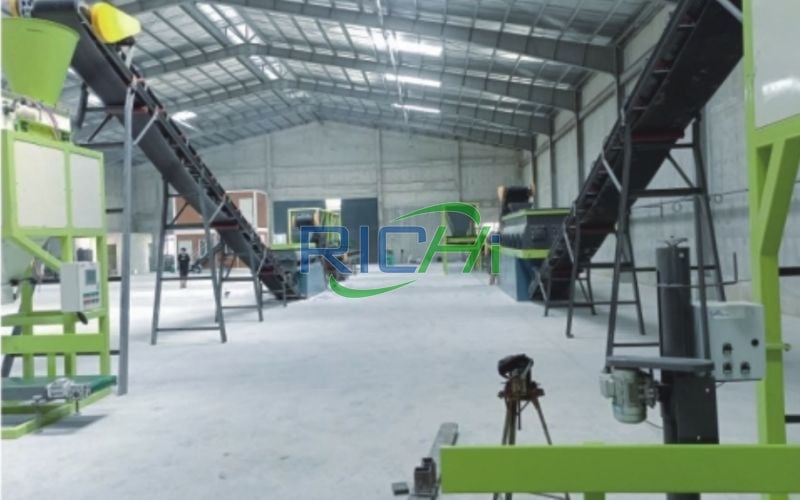
8 t/h sugarcane bagasse pellet machine in Thailand
A sugar mill in Khon Kaen had bagasse stockpiled with no efficient use besides low-value boiler fuel. The FZLH420 runs the bagasse after shredding and moisture adjustment, producing 6mm pellets that return nutrients to the soil. This pellet production line in Thailand component has helped close the loop on their crop cycle.
Model
FZLH420
Pellet Size
6mm
Watch Our Projects in Thailand
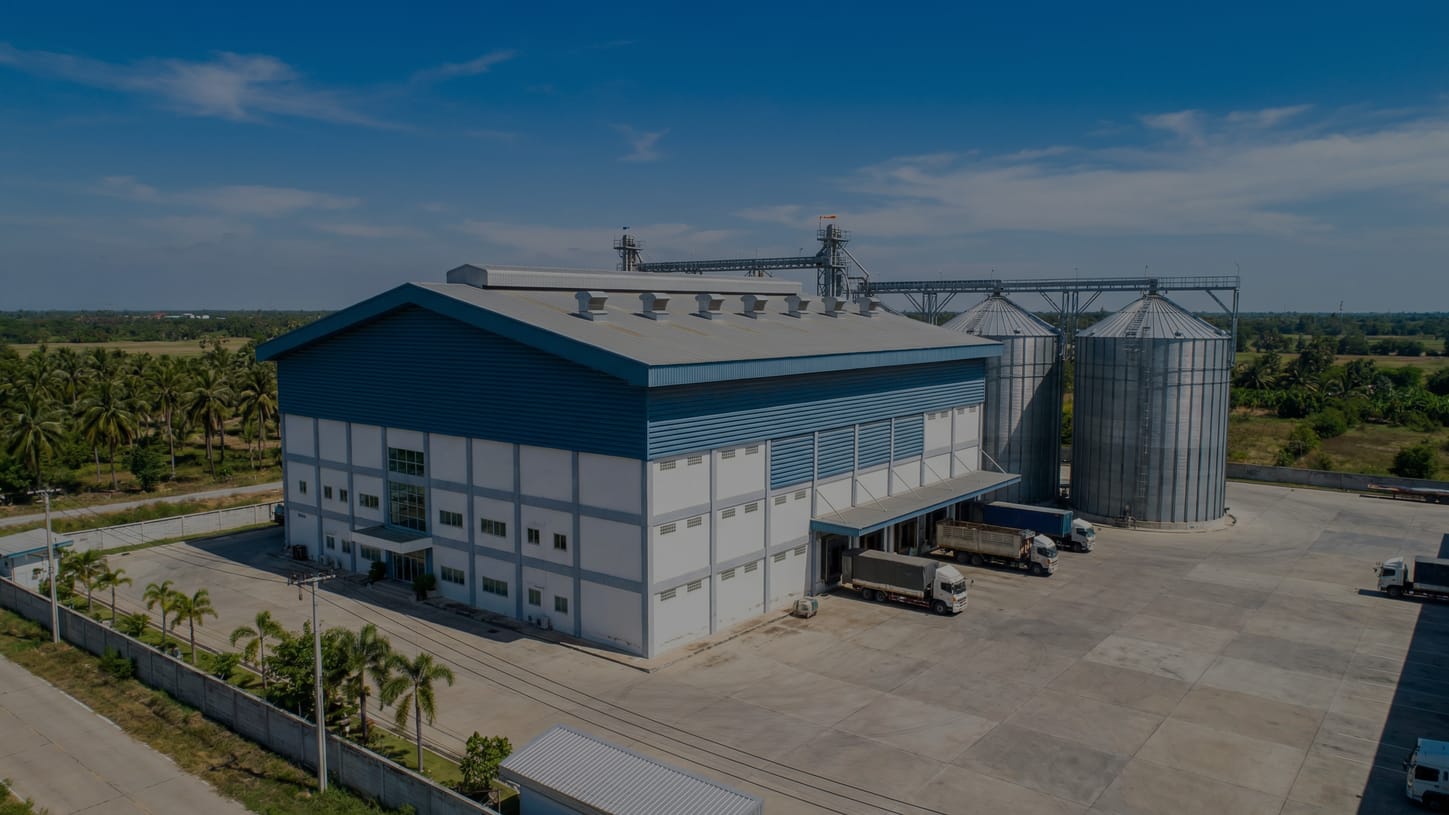
10 t/h animal feed pellet production line in Thailand
This video shows an SZLH508 ring die mill running a standard corn-soy ration at a commercial feed mill in Lopburi. You can see the material flow from batching to mixing to pelleting—the whole line runs surprisingly smooth once everything’s dialed in.
They’re producing 3mm starter pellets and 5mm grower pellets, about 10 tons per hour depending on formula changes. What the footage doesn’t show is the counterflow cooler below the mill, which we had to adjust twice during commissioning to get the moisture right. This pellet production line in Thailand has been running 18-hour days since installation without a major shutdown.
3 t/h biomass pellet plant in Thailand
The client in Surat Thani wanted a flexible system—they source whatever biomass is cheapest that season, so the equipment has to handle variation. This clip shows the MZLH520 running palm fiber one day and rice straw the next.
You’ll notice the feed rate changes between materials; that’s us adjusting the conditioner settings on the fly. They’re making 6mm and 8mm pellets for industrial boilers. The setup includes a hammer mill, dryer, and pellet mill. This biomass pellet mill for sale Thailand configuration has become a go-to reference for clients with mixed feedstock.
1-2 t/h pet litter production line in Thailands
This one’s interesting because it runs two completely different recipes. The video starts with the tofu cat litter side—MSZLH250 processing dried okara into 4mm clumping pellets. Then it switches to the wood line, where we’re running fine sawdust through a separate conditioning setup for lightweight wood litter pellets.
The customer in Nonthaburi wanted both product types from one facility, so we designed dual feed systems feeding into the same packaging line. It’s a compact layout that fits their existing building. This pellet plant in Thailand runs about 1.5 tons per hour total, split between the two product lines depending on demand.
5 t/h floating fish feed pellet plant in Thailand
This footage from Pathum Thani shows the SPHS150*2 twin-screw extruder during a tilapia formula run. You can see the expansion happening right at the die—it’s one of those things that looks simple on video but took us a week to dial in during startup.
The preconditioner adds steam and water to hit 25% moisture before extrusion, and the dryer behind the camera is running at 90°C to pull down to 10% final moisture. They’re making 3mm and 4.5mm floating pellets. The whole feed production line in Thailand includes a micro-grinding system that gets fishmeal down to 0.6mm.
2 t/h shrimp feed pellet mill plant in Thailand
Shrimp feed is a different game—small pellets, high fat content, and strict water stability requirements. This video shows the SZLH350 running a 1.2mm die during a test run in Chachoengsao. You’ll notice the conditioner is running longer than standard feed applications; that extra cook time helps bind the fishmeal and squid meal together.
They also run 1.8mm pellets for larger shrimp. The footage includes a close-up of the pellet discharge—you can see the surface is smooth, no cracks. That matters for saltwater stability. This feed mill in Thailand runs about 2 tons per hour and supplies their own shrimp ponds exclusively.
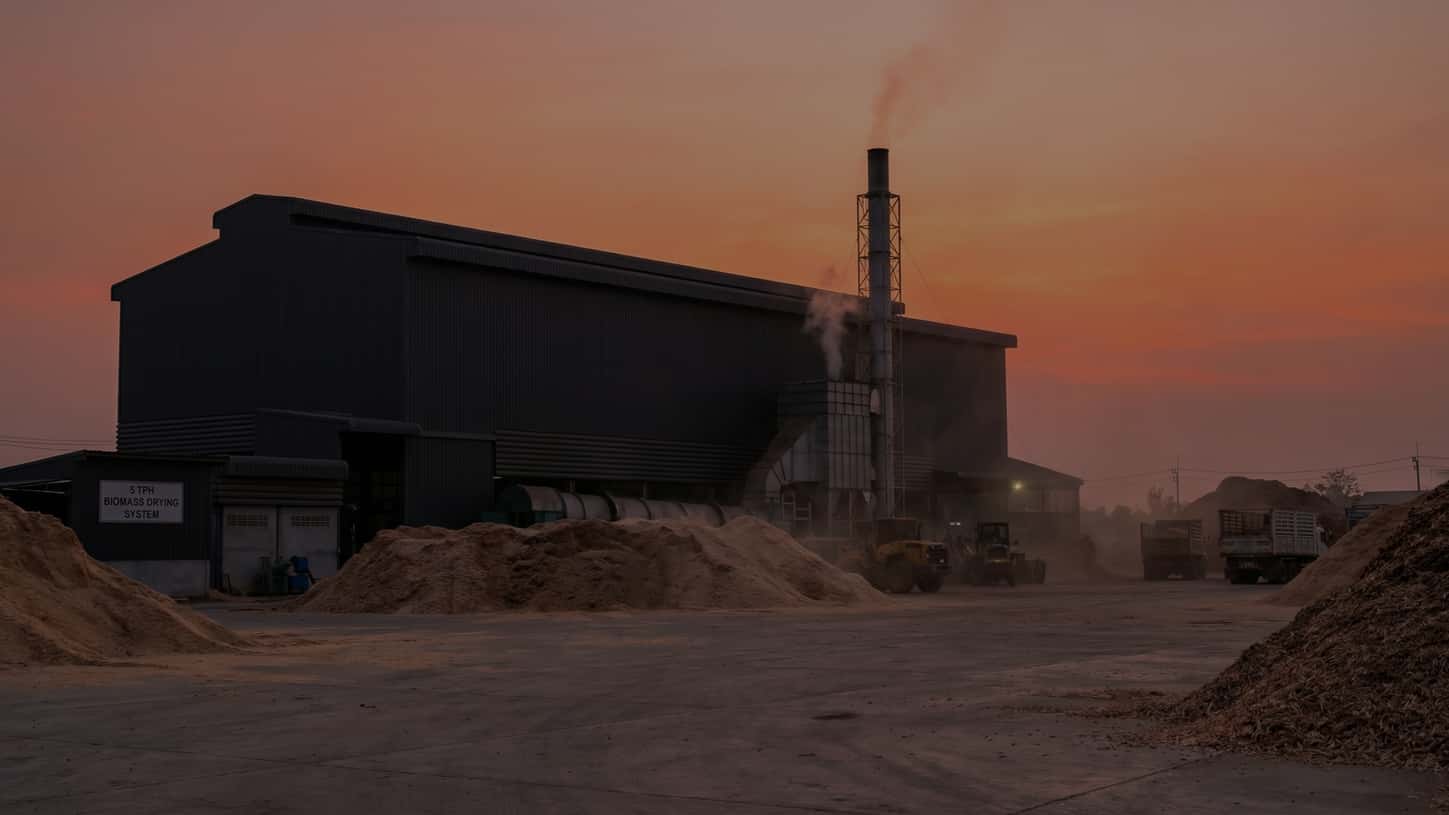
5 t/h biomass drying system in Thailand
Not every project is a pellet line—sometimes customers need drying capacity first. This installation in Trang shows the rotary dryer we put in for a rubberwood operation. The video captures the infeed with wet sawdust at about 45% moisture, then the discharge end where it’s down to 12% before storage.
The burner runs on wood fines from their own operation, so fuel cost is minimal. They’re drying about 5 tons per hour, enough to feed their existing pellet mill for sale Thailand setup and still have surplus dry material for other buyers. The system includes a cyclone separator and baghouse to keep dust under control.
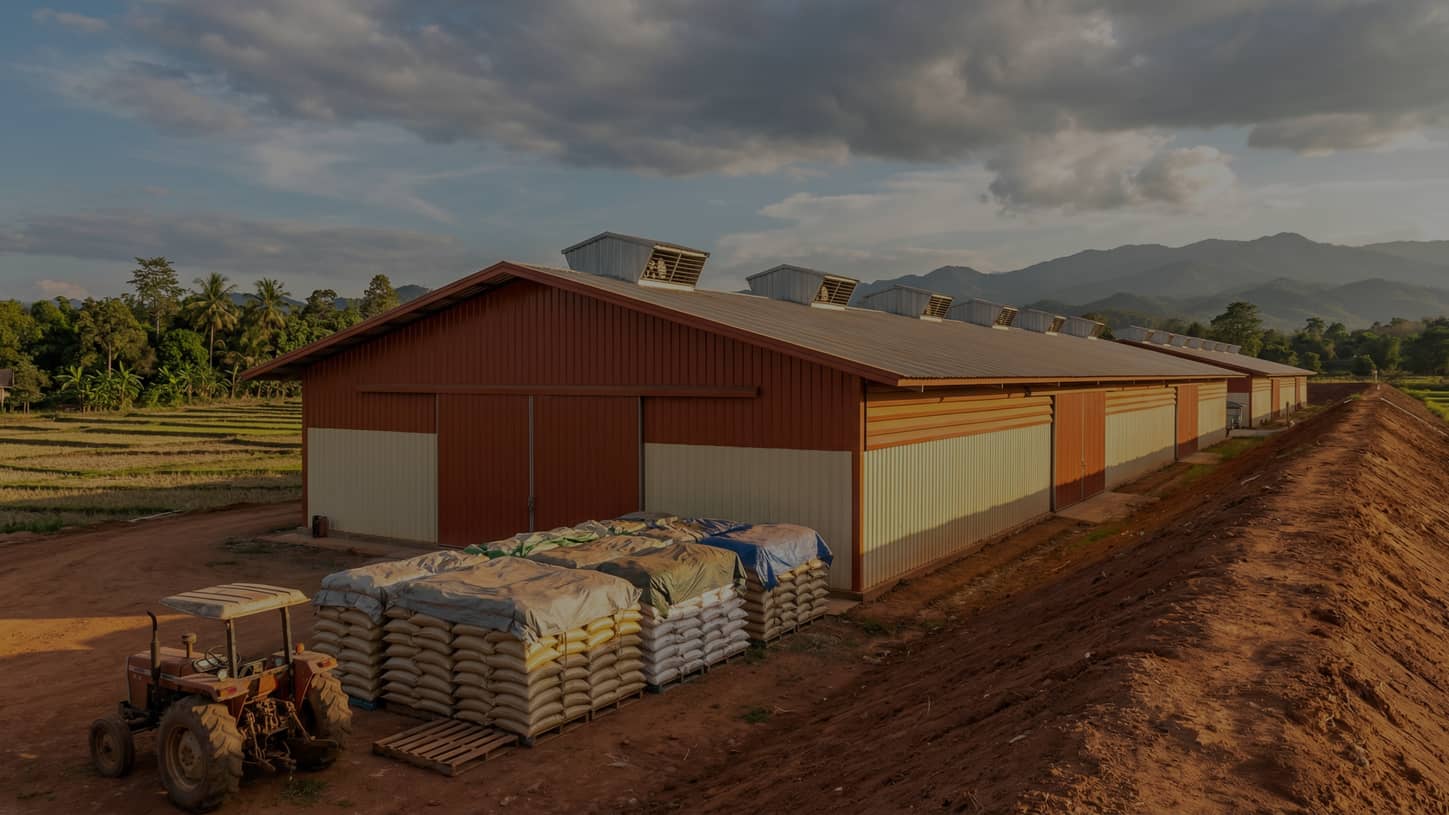
Farm Use 1-2T/H Chicken Feed & 0.5T/H Extruded Fish Feed Line In Thailand
This is one of our more compact dual-purpose installations, for a mixed farm in Suphan Buri that raises both broilers and catfish. The video shows the SZLH320 running chicken feed on one side—3mm and 5mm pellets—and the DSP-135B single-screw extruder on the other making 2mm sinking fish feed.
They share a common hammer mill and mixer, which keeps the footprint manageable. The farm owner runs this himself with one helper; the automation package we supplied handles formula switching between the two product types. It’s a good example of a pellet production machine in Thailand setup that serves multiple livestock operations from one facility.

What Our Customers Say

Our pellet production line in Thailand runs mostly on rice straw and cassava waste from surrounding farms—two materials that couldn’t be more different in how they behave. The FZLH520 handles the straw without wrapping around the shaft, and the conditioner setup lets us dial in steam for the cassava mash.
We tried a cheaper mill from another supplier before this one, and it lasted maybe ten months before the bearings gave out. This one has been running daily for three years now. The only downtime we’ve had was scheduled maintenance. Honestly, the pre-installation testing you did with our actual material samples made all the difference.
Somchai Wongsuwan
Plant Operations Director, Agricultural Waste Processing | Northeastern Thailand

Industry Opportunities Across Thailand
When we look at our project history here, what stands out isn’t just the volume of equipment we’ve shipped—it’s how varied the applications have become. Thailand’s agricultural and industrial base generates an incredible range of raw materials, and more businesses are realizing that pelletizing adds value to what used to be waste or low-margin bulk goods. Whether you’re sitting on rice straw, palm waste, or municipal sludge, there’s probably a market for the processed product. Below is a quick look at where we’re seeing real traction for pellet production line in Thailand installations.
WOOD PELLET PRODUCTION
WOOD PELLET SOLUTION
Rubberwood is everywhere in southern Thailand, and most mills generate sawdust and shavings as a byproduct. The export market for wood pellets to Japan and Korea has been steady for years, but domestic industrial boiler users are now buying more as they shift away from fuel oil. A biomass pellet mill in Thailand running rubberwood or mixed plantation wood can find buyers without looking too hard.

GRASS PELLET PRODUCTION
GRASS PELLET SOLUTION
Napier grass and other fast-growing grasses are gaining attention as livestock feed and biomass fuel. The advantage over wood is shorter harvest cycles—some farmers cut every 45 days. The challenge is moisture management; fresh-cut grass runs 70%+ water, so drying capacity matters. We’ve done several pellet plant in Thailand setups focused specifically on grass, usually with a rotary dryer sized to the harvest schedule.


STRAW PELLET PRODUCTION
STRAW PELLET SOLUTION
Rice straw, corn stover, cassava stalks—there’s no shortage of residue after harvest. The question is usually collection logistics, not whether there’s a market. Local feed mills take straw pellets as roughage, and some cement plants are buying agricultural residue pellets for co-firing. A pellet press machine in Thailand designed for fibrous material handles these better than standard wood-focused equipment.


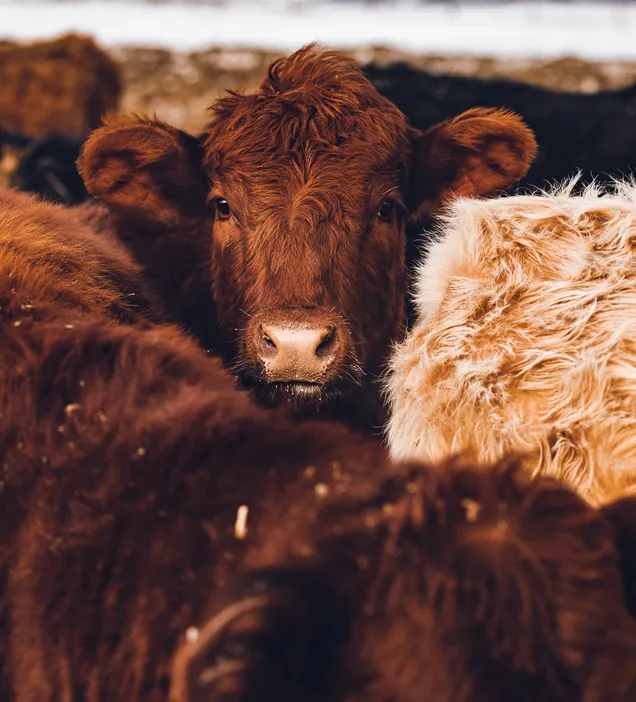
RUMINANT FEED PELLET PRODUCTION
CATTLE FEED PELLET SOLUTION
The dairy and beef sectors here are expanding, and larger operations are bringing feed production in-house. Ruminant rations are less demanding on die specs than poultry feed, but they do require good conditioning for proper starch gelatinization. Many of our feed mill in Thailand customers start with a single SZLH series mill and add capacity once they see the cost savings over purchased feed.

POULTRY FEED PELLET PRODUCTION
POULTRY FEED PELLET SOLUTION
This is one of the most competitive segments. Large integrated operations run 15-20 ton per hour lines with high automation. But smaller contract growers are also installing their own feed plant in Thailand setups—often in the 3-8 ton per hour range—to lock in formula control and reduce dependency on commercial mills. The key is reliable pelleting with minimal fines, since broiler performance ties directly to pellet quality.

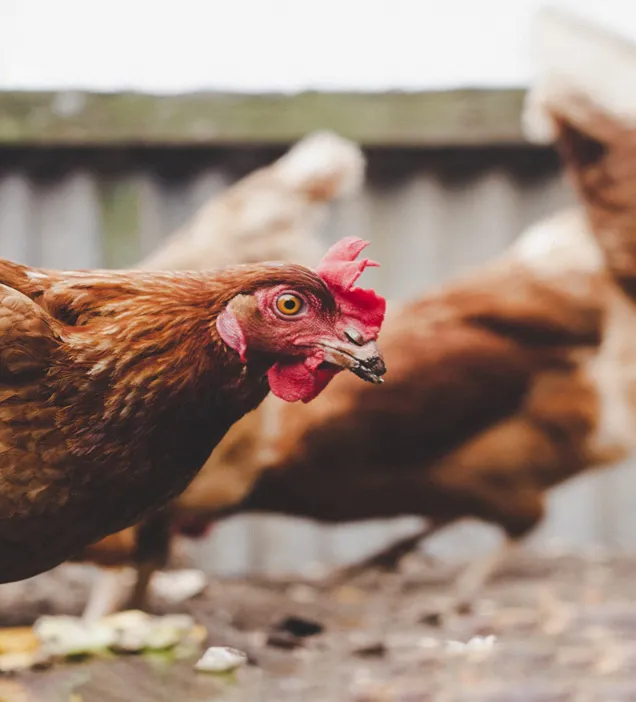
LIVESTOCK FEED PELLET PRODUCTION
LIVESTOCK FEED PELLET SOLUTION
Swine feed requires finer grinding than poultry, and pellet durability matters for feeding efficiency. We see more pig operations in the central and eastern provinces moving to on-farm production. A pellet production machine in Thailand for swine feed usually needs a micro-grinding system ahead of the mill and careful steam control to avoid over-conditioning.


FERTILIZER PELLET PRODUCTION
FERTILIZER PELLET SOLUTION
Organic fertilizer from chicken manure, cow dung, and compost is a growing market. The government has been pushing organic farming initiatives, and pelletized fertilizer sells at a premium over loose material. The technical challenge is moisture—fresh manure needs drying or composting first. A ring die pellet mill in Thailand with a heavy-duty gearbox handles abrasive manure better than standard feed mills.


FISH FEED PELLET PRODUCTION
FISH FEED PELLET SOLUTION
Aquaculture is huge here—tilapia, catfish, shrimp. Floating feed commands higher margins than sinking, which means extrusion technology rather than just pelleting. But for sinking feeds, a standard pelletizing machine in Thailand with a small die size works fine. The real opportunity is regional feed mills supplying small-scale fish farmers who can’t justify their own extrusion lines.

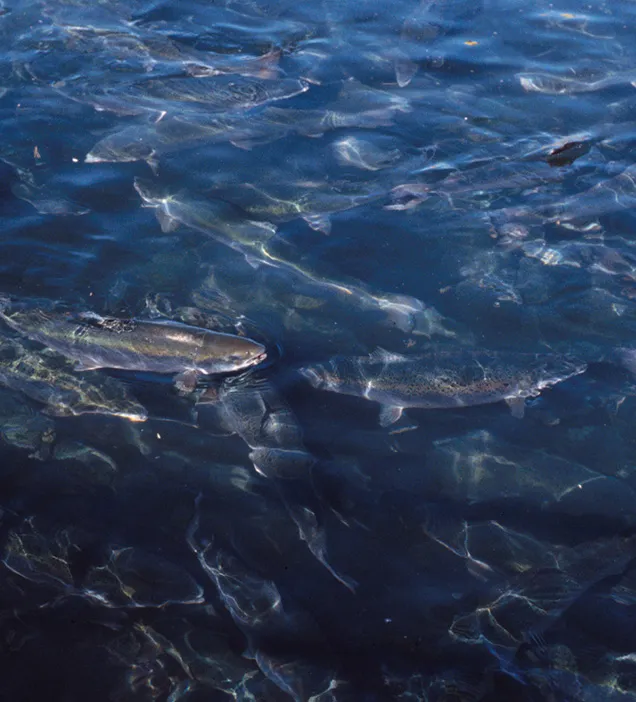
PET FOOD PELLET PRODUCTION
PET FOOD PELLET SOLUTION
Pet ownership has grown noticeably in urban areas, and local pet food brands are emerging. This segment tends to start small—1-3 tons per hour—with flexibility to run different formulas. A pellet factory in Thailand focused on pet food usually needs good fat coating capabilities after pelleting to meet palatability requirements.

cat litter PELLET PRODUCTION
cat litter PELLET SOLUTION
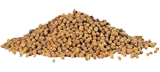
Tofu cat litter from soy byproduct and wood-based litter from rubberwood sawdust are both viable products. The domestic market is still developing, but export potential to neighboring countries exists. The equipment requirements are similar to feed pelleting but with different die specs for absorbency. Several of our pellet mill for sale Thailand installations now run cat litter exclusively.


paper PELLET PRODUCTION
paper PELLET SOLUTION
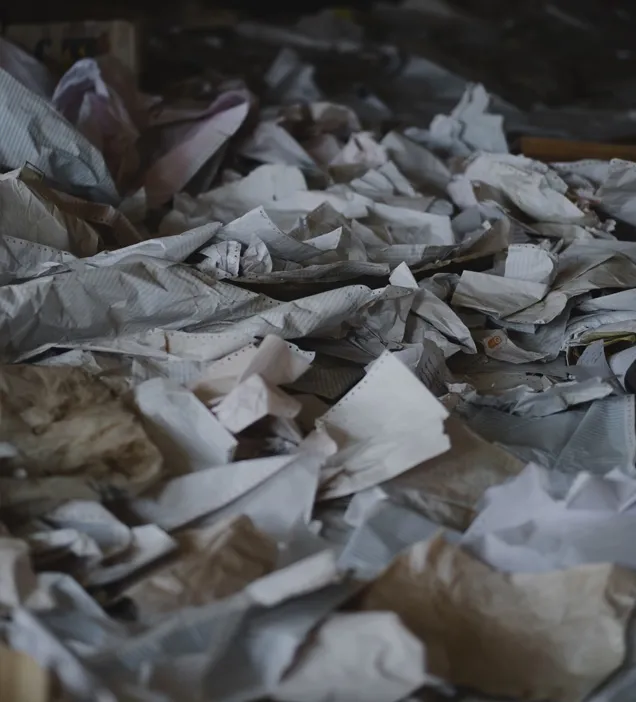
Waste paper is abundant in urban areas, and pelletizing it creates fuel for industrial boilers or absorbent products like animal bedding. The binding is tricky—paper doesn’t compress the way biomass does. We’ve found that mixing paper with other fibers improves pellet durability. A pellet plant equipment in Thailand setup for paper usually includes shredding and conditioning steps standard biomass lines don’t need.

ANIMAL BEDDING PELLET PRODUCTION
ANIMAL BEDDING PELLET SOLUTION
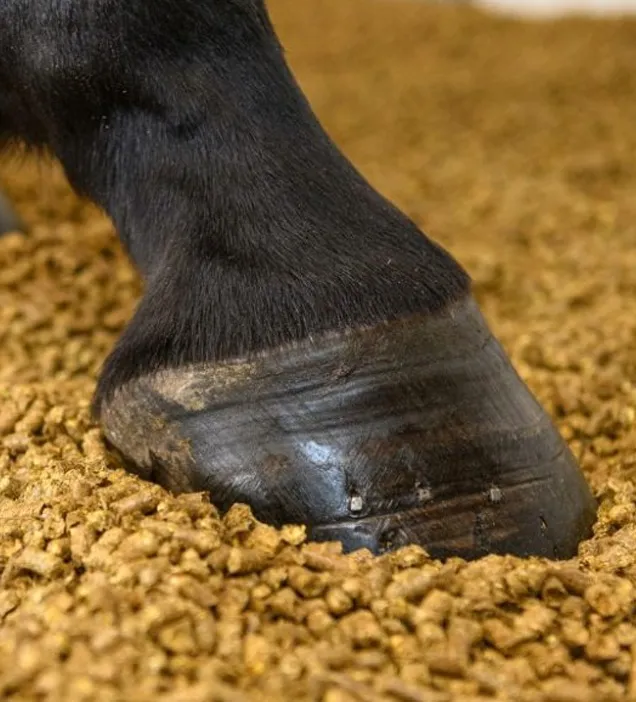
Horses, poultry, and even pet stores buy wood-based bedding pellets. The product is similar to fuel pellets but with stricter dust and moisture specs. The market here is smaller than Europe or Japan but growing as more Thai animal operations adopt imported management practices. A pellet production line in Thailand for bedding can often dual-purpose for fuel pellets with minor die changes.
RDF PELLET PRODUCTION
RDF PELLET SOLUTION
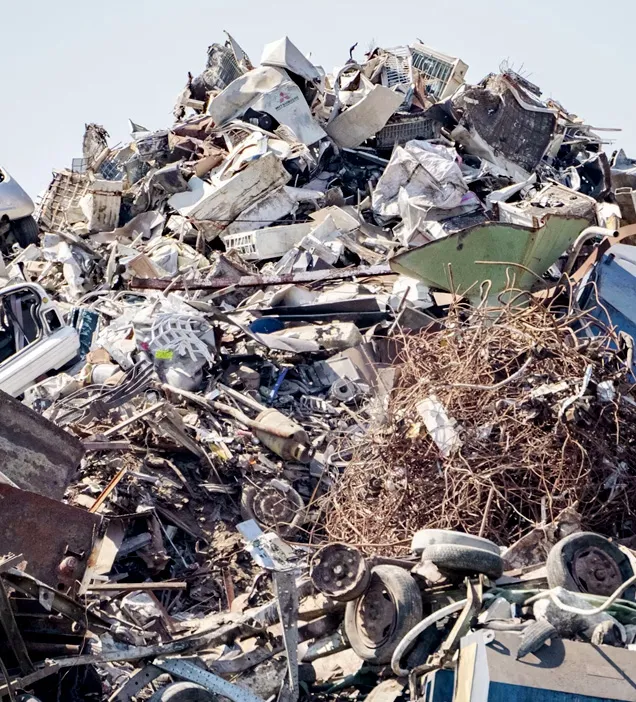
Refuse-derived fuel from municipal and industrial waste is getting serious attention. Landfill pressure is increasing, and cement plants are actively seeking alternative fuels. The technical hurdles are contamination control and material consistency. We’ve installed several industrial pellet mill in Thailand systems for waste processors who sell RDF to industrial users.

Raw grain puffing PRODUCTION
Raw grain puffing SOLUTION
Expanding grains like corn, soybean, and rice for human food or animal feed is a different process from pelleting—twin-screw extruders cook and expand the material. The market here includes snack food manufacturers and feed mills that want to pre-cook ingredients for better digestibility. An extruder often sits alongside a feed factory in Thailand setup as a value-added processing step.


Pyrolytic carbon PELLET PRODUCTION
Pyrolytic carbon PELLET SOLUTION
Pyrolysis carbon from biomass is used in water filtration, soil amendment, and industrial applications. The material is abrasive and tends to be dusty, so heavy-duty equipment matters. We’ve supplied pellet manufacturing equipment in Thailand for biochar producers who need consistent pellet sizes for activated carbon or agricultural use.


Rat poison PELLET PRODUCTION
Rat poison PELLET SOLUTION
This is a niche but real market. Pest control companies need bait pellets that hold together in humid conditions. The manufacturing process is similar to feed pelleting but with active ingredients added during mixing. A pellet press machine in Thailand running these products needs easy cleanup between batches—something we address with stainless steel contact surfaces.


solid waste PELLET PRODUCTION
solid waste PELLET SOLUTION
Beyond RDF, we’re seeing more projects converting specific industrial waste streams—textile scraps, plastic composites, packaging waste—into fuel or raw material for other industries. The equipment configuration varies wildly depending on the material. This is where having an engineering team that can design a custom pellet system in Thailand around your specific waste stream makes a difference.


Best-Selling Equipment in Thailand
When customers ask what we ship most to Thailand, the answer depends on the industry. Feed mills order different machines than biomass processors, and fertilizer operations need completely different specs. What ties it all together is that every piece has been field-tested here—we know how each one performs with local materials, local humidity, and local operating conditions. Below are the equipment types that keep showing up in our export orders.
biomass pellet mill for sale
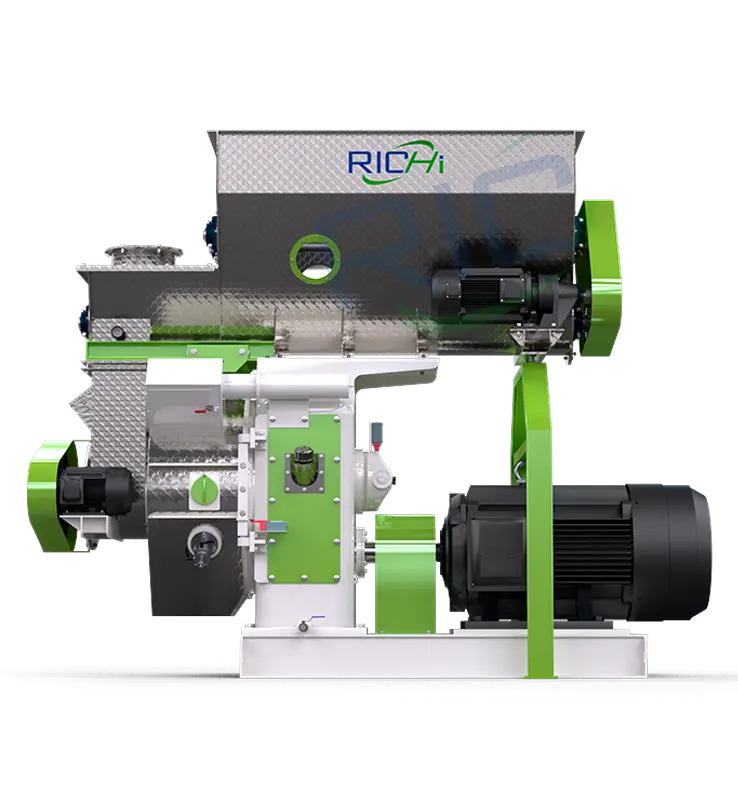
Our MZLH series ring die mills are the backbone of most biomass operations here. Palm fiber in the south, rubberwood in the east, rice husk in the central plains—these mills handle the variation without constant die changes. The heavy-duty gearbox is the main selling point; lighter mills wear out fast when running abrasive rice husk or stringy palm fiber. Most customers running a pellet production line in Thailand start with one of these and add more as they scale.

grass pellet machine for sale
Napier grass and guinea grass are increasingly grown as dedicated energy crops, but fresh-cut grass is wet—like 70% moisture wet. Our CZLH ring die series handles dried grass well, but we usually push customers toward a dryer first. The ring die design works better than ring dies for stemmy material that doesn’t flow evenly. A few dairy operations in Chiang Mai are using these to make grass pellets for supplemental feed during dry season.

feed mill pellet machine
The SZLH series is what most Thai feed mills run—it’s the standard for a reason. Corn, rice bran, soybean meal, fishmeal, whatever the formula calls for. The 508 and 558 models show up in larger commercial mills, while the 320 and 420 are common for on-farm setups. Customers like the quick die change feature; switching between 3mm starter and 5mm grower pellets takes under twenty minutes. We’ve supplied these to every major poultry-producing region in the country.
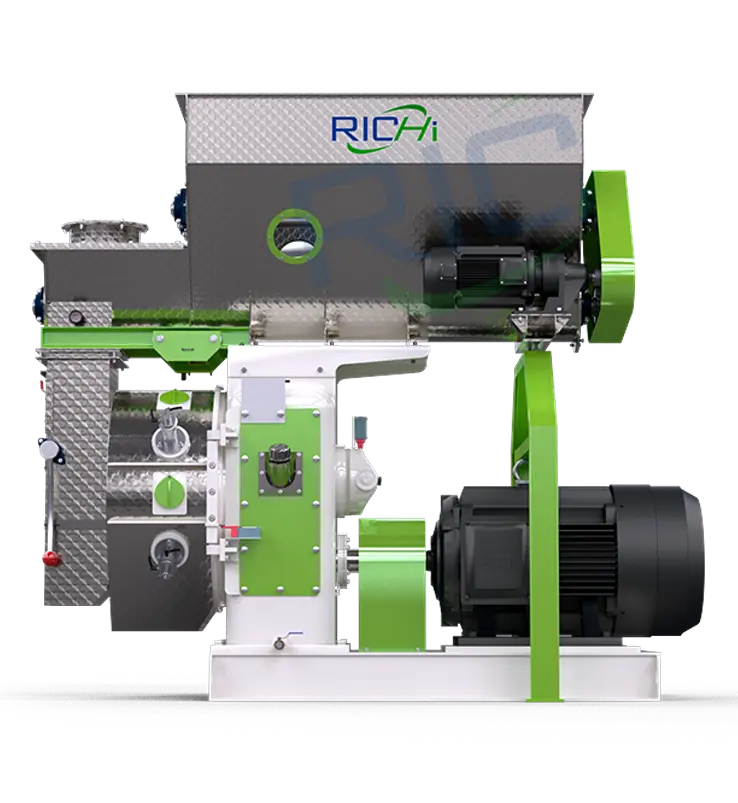
fertilizer granulator equipment
FZLH series mills are built differently from feed mills—thicker dies, heavier bearings, and stainless steel contact surfaces for corrosion resistance. Chicken manure from layer farms in Ratchaburi, cow dung from dairy operations in Petchaburi, compost from municipal facilities near Bangkok—this line handles them all. The key is moisture management; we always pair these with drying or conditioning equipment depending on the incoming material.

twin screw extruder for sale
Floating fish feed requires expansion that a standard pellet mill can’t achieve. Our SPHS series twin-screw extruders cook the material and create the porous structure floating pellets need. The tilapia farms in central Thailand use 3mm and 4.5mm floating feeds; shrimp operations in the east use smaller sinking pellets from the same machine with die changes. The twin-screw design handles higher fat content than single-screw units, which matters for high-energy formulations.
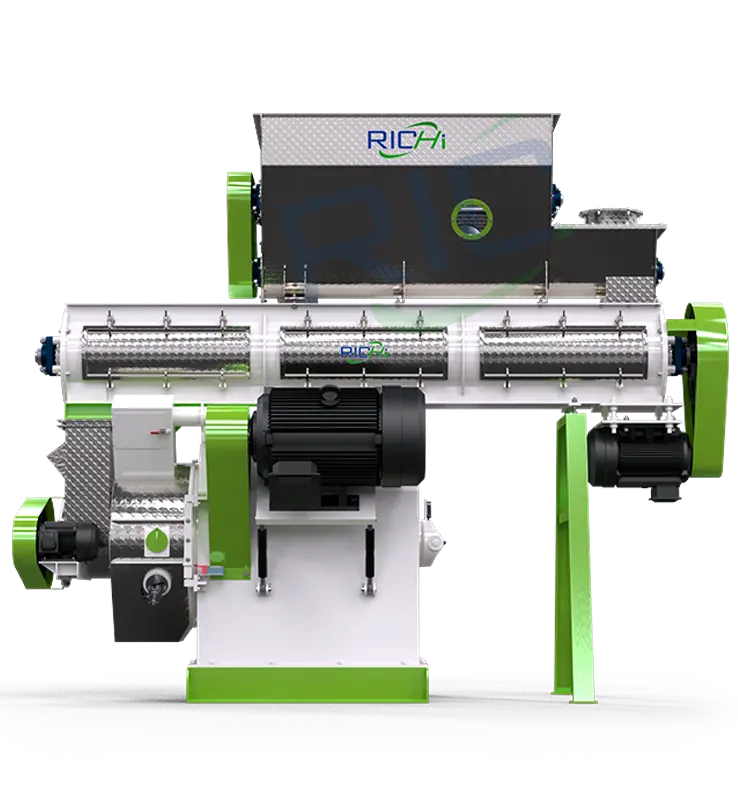
straw pellet machine for sale
Rice straw is abundant but challenging—it’s dry, stemmy, and tends to wrap around shafts. Our CZLH ring die configuration handles straw better than ring dies for smaller operations. A cooperative in Saraburi runs one of these with a hammer mill ahead of it, turning straw from surrounding farms into roughage pellets for their dairy members. The output isn’t huge—2-3 tons per hour—but it uses material that would otherwise get burned in the field.

shrimp feed pellet machine
Shrimp feed is small—1.2mm, 1.8mm—and needs high water stability. The SZLH350 we ship for these applications comes with a special conditioner that increases retention time for better cooking. The die metallurgy is different too; shrimp feed formulas often include fishmeal and squid meal that can be corrosive. Several operations in Chachoengsao and Chanthaburi run these mills for their own ponds and occasionally sell to neighboring farms.

cat litter pellet machine
Tofu cat litter from soy okara is the main application here, but we also supply wood-based litter lines. The MSZLH series uses a smaller die size than standard biomass mills—4mm is common—and the conditioning requirements are different. Moisture has to be precise; too wet and the pellets crumble, too dry and they won’t bind. A soy processor in Nonthaburi runs one of these using their own okara waste, turning a disposal problem into a revenue stream.
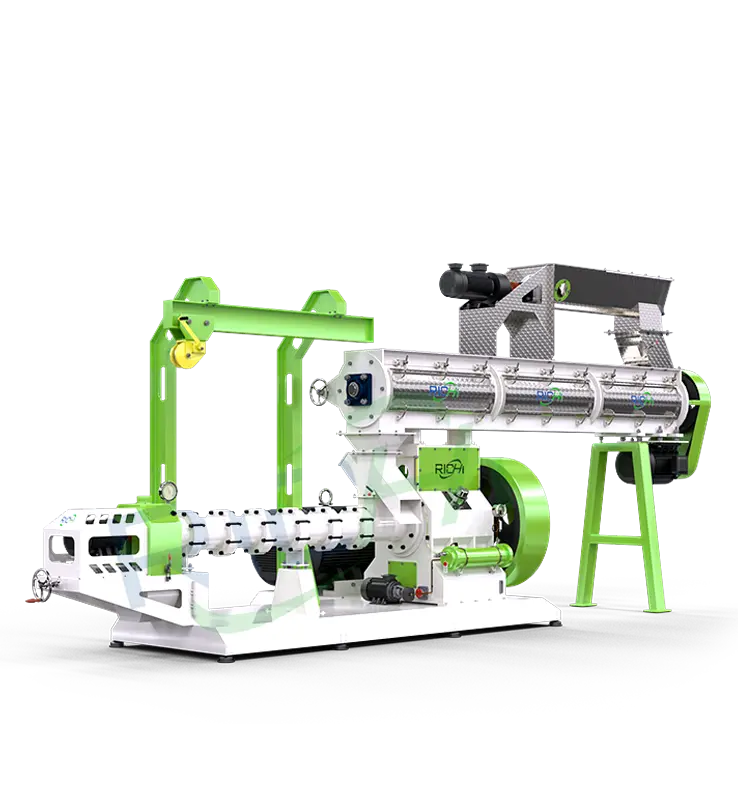
single screw extruder machine
For smaller fish feed operations or farms that want to produce their own sinking feed, the DSP series single-screw extruders are a good fit. They’re simpler than twin-screw units and cost less. A catfish farm in Suphan Buri runs a DSP-135B for 2mm sinking pellets, feeding their own ponds and selling extra to neighbors. The downside is less flexibility with high-fat formulas, but for standard sinking feed it’s reliable.

Grain extruder machine
Pre-cooking grains improves digestibility for young animals and reduces anti-nutritional factors in soy. Our expanders sit ahead of pellet mills in some feed plant in Thailand setups, processing corn or full-fat soy before grinding. The expansion process also helps with pellet binding. A few large integrated operations in Chonburi use these to improve feed conversion rates on their broiler lines.
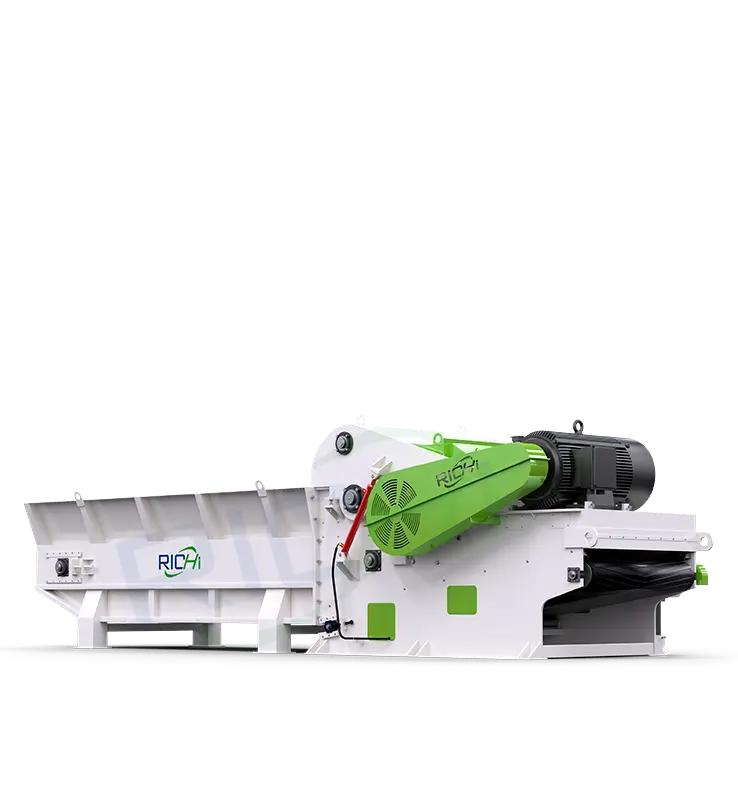
wood chipper machine
Rubberwood plantations generate branches and offcuts that are too large to grind directly. Our drum chippers reduce them to chips that feed into hammer mills. The units we ship to southern Thailand handle green wood as well as dry; the knife design adjusts for moisture content. Most customers use these ahead of a biomass pellet mill in Thailand to prepare raw material from plantation thinnings and pruning waste.

shredder machine
For municipal waste and industrial byproducts, shredders are the first step. Our dual-shaft shredders handle materials that chippers can’t—plastic, textile, mixed waste. A facility near Bangkok uses one of these to break down commercial waste before screening and pelletizing into RDF. The blades are reversible, which extends service life when running contaminated material.

Wood Chip Dryer
Moisture control is everything in biomass pelleting. Our rotary dryers drop material from 40-50% down to 12-15% before the pellet mill. The units in Trang run on rubberwood sawdust; in Surat Thani they’re drying palm fiber. Fuel comes from the material itself—we design the burner to run on fines or off-spec pellets. A dryer is often the difference between a line that works and one that struggles with inconsistent output.

bale crusher
Rice straw and grass bales need to be broken before grinding. Our bale breakers pull apart compacted bales and feed material evenly into hammer mills. A cooperative in Nakhon Ratchasima uses one ahead of their pellet mill for sale Thailand setup, processing straw bales from member farms. The machine runs slow—low rpm—but that’s intentional; it reduces dust and prevents wrapping.

hammer mill
Feed mills need fine, consistent grinding for good pellet quality. Our water-drop hammer mills are standard in feed mill in Thailand installations for corn, rice bran, and other grains. The screen changes are quick, and the magnetic separator at the inlet catches tramp metal before it reaches the rotor. A mill in Lopburi runs one of these 18 hours a day during peak season with only routine maintenance.

mesh belt dryer
For materials that can’t handle high heat or need gentle drying, belt dryers are the answer. We’ve installed these for fish feed after extrusion—the product needs slow drying to avoid surface cracking. Also for cat litter lines where appearance matters. The drying temperature is lower than rotary dryers, and the product moves through layers on perforated belts. More expensive than rotary units, but necessary for certain applications.

Feed mixer machine
Consistent mixing is non-negotiable in feed production. Our ribbon mixers and paddle mixers handle fat inclusion better than vertical units. The batch sizes range from 500kg to 5,000kg depending on the feed factory in Thailand setup. We include liquid addition systems for molasses and oils, which are common in Thai feed formulations. A mixer might seem like a simple piece, but uneven mixing shows up immediately in pellet quality.

fertilizer crusher machine
Before pelletizing fertilizer, large clumps need breaking down. Our vertical crushers handle compost, dried manure, and other organic materials that would gum up a standard hammer mill. The design uses chain hammers rather than screens, so it doesn’t clog. A composting facility near Ayutthaya uses one of these ahead of their fertilizer pellet line to ensure uniform particle size before binding.

grass straw crusher machine
Regular hammer mills struggle with fibrous material like straw and grass—the screens clog, and the material wraps around the rotor. Our specialized straw hammers use a different rotor design and larger screens to handle the stringy stuff. We’ve supplied these to biomass operations across the central plains where rice straw is the primary feedstock. Without the right hammer mill, the pellet mill downstream will never run consistently.

vibrating screening machine
Pellets need screening after cooling to remove fines and oversize. Our rotary and vibrating screens handle both. Some customers use them ahead of the pellet mill too, for raw material classification. A pellet plant in Thailand without good screening ends up with dust problems and inconsistent product quality. The screens we ship are simple but they make a noticeable difference in final appearance.

storage silos
Raw materials and finished pellets need proper storage. We supply welded steel silos and bolted silo systems ranging from 50 to 2,000 tons. A feed mill in Chonburi stores corn in two 500-ton silos with aeration to prevent mold during the rainy season. For finished pellets, we provide silos with discharge cones that prevent bridging—a common problem with fibrous biomass pellets. Good storage is often overlooked until something goes wrong.
Frequently Asked Questions
Over the years, we’ve fielded thousands of questions from Thai customers—rubberwood mill owners in Trang, rice millers in Ayutthaya, poultry farmers in Ratchaburi, fish farmers in Suphan Buri. Some questions are technical, some are practical, and a few come up so often we can almost answer them before they’re asked. Below are the ones we hear most. If yours isn’t listed, just ask—we’ve probably dealt with something similar before.
What Are the Specifications and Prices for Different Pellet Mills You Export to Thailand?
+
This is probably the most common question we get from Thai customers—understandably so. When someone is planning a pellet production line in Thailand, they need to know which machine fits their raw material and what the investment looks like. Below is a breakdown based on what we’ve actually installed across the country. Keep in mind these are our standard configurations; once we know your specific material—moisture content, particle size, throughput target—we can adjust accordingly.
Feed Pellet Mill Specifications (SZLH Series)
These are what most Thai feed mill in Thailand operations run. The SZLH series handles corn, rice bran, soybean meal, and the various formulas common in poultry, swine, and aquaculture feed. The numbers below are based on standard 3-5mm pellet sizes with typical feed formulations.
| Model | Power (kW) | Ring Die Diameter (mm) | Capacity (T/H) |
|---|---|---|---|
| SZLH250 | 22 | 250 | 1.0-1.5 |
| SZLH320 | 37 | 320 | 3-4 |
| SZLH350 | 55 | 350 | 5-6 |
| SZLH420 | 110 | 420 | 10-12 |
| SZLH508 | 160 | 508 | 15-16 |
| SZLH558 | 185 | 558 | 20-22 |
| SZLH678 | 250 | 673 | 30-33 |
| SZLH768 | 315 | 762 | 38-40 |
The smaller models—SZLH250 and SZLH320—are common for on-farm setups where a farmer wants to produce their own feed. The larger ones go into commercial feed factory in Thailand operations running two shifts daily.
Biomass Wood Pellet Mill Specifications (MZLH Series)
For rubberwood, palm fiber, rice husk, and other biomass materials, the MZLH series is what we recommend. These mills have heavier gearboxes than feed mills because biomass is more abrasive. The forced feeder is standard—without it, fibrous material like palm fiber or rice straw won’t feed evenly.
| Model | Power (kW) | Ring Die Diameter (mm) | Capacity (T/H) |
|---|---|---|---|
| MZLH320 | 22 | 320 | 0.2-0.3 |
| MZLH350 | 37 | 350 | 0.3-0.5 |
| MZLH420 | 90 | 420 | 1.0-1.2 |
| MZLH520 | 132 | 520 | 1.5-2.0 |
| MZLH678 | 185 | 673 | 2.5-3.0 |
| MZLH768 | 250 | 762 | 3.0-4.0 |
A biomass pellet mill in Thailand running rubberwood sawdust typically lands in the MZLH420 to MZLH520 range for medium-scale operations. The MZLH768 is what you see in larger export-oriented facilities.
Straw & Grass Pellet Mill Specifications (CZLH Series)
Napier grass, rice straw, and corn stover behave differently than wood. The CZLH series uses a ring die configuration that handles stemmy, fibrous material better than ring dies for smaller throughputs. The capacities listed are based on dried material—fresh grass needs drying first.
| Model | Power (kW) | Ring Die Diameter (mm) | Capacity (T/H) |
|---|---|---|---|
| CZLH320 | 22 | 320 | 0.5-0.6 |
| CZLH350 | 37 | 350 | 1.0-1.2 |
| CZLH420 | 90 | 420 | 1.8-2.0 |
| CZLH520 | 132 | 520 | 2.8-3.0 |
| CZLH678 | 185 | 673 | 4-5 |
| CZLH768 | 250 | 762 | 6-8 |
A dairy cooperative in Saraburi runs a CZLH420 for rice straw pellets. The material is dry, around 12-14% moisture after storage, and they get about 2 tons per hour consistently.
Cat Litter Pellet Mill Specifications (MSZLH Series)
Cat litter—whether tofu-based from soy okara or wood-based from sawdust—requires smaller dies and precise moisture control. The MSZLH series shares the same platform as our feed mills but with different conditioning setups.
| Model | Power (kW) | Ring Die Diameter (mm) | Capacity (T/H) |
|---|---|---|---|
| MSZLH250 | 22 | 250 | 1.0-1.5 |
| MSZLH320 | 37 | 320 | 3-4 |
| MSZLH350 | 55 | 350 | 5-6 |
| MSZLH420 | 110 | 420 | 10-12 |
| MSZLH508 | 160 | 508 | 15-16 |
| MSZLH558 | 185 | 558 | 20-22 |
| MSZLH678 | 250 | 673 | 30-33 |
| MSZLH768 | 315 | 762 | 38-40 |
For tofu cat litter, the smaller models—MSZLH250 and MSZLH320—are common because the raw material volume from a tofu plant is limited. Wood-based litter operations tend to go larger.
Fertilizer Pellet Mill Specifications (FZLH Series)
Organic fertilizer from chicken manure, cow dung, or compost requires different metallurgy than feed mills—corrosion resistance matters. The FZLH series uses stainless steel contact surfaces and heavier bearings.
| Model | Power (kW) | Ring Die Diameter (mm) | Capacity (T/H) |
|---|---|---|---|
| FZLH250 | 22 | 250 | 1-1.5 |
| FZLH320 | 22 | 320 | 2-3 |
| FZLH350 | 37 | 350 | 3-5 |
| FZLH420 | 90 | 420 | 6-8 |
| FZLH520 | 132 | 520 | 9-12 |
| FZLH678 | 185 | 673 | 18-22 |
| FZLH768 | 250 | 762 | 22-26 |
A layer farm in Ratchaburi runs an FZLH350 for chicken manure pellets. The material is composted first, then dried to about 15% moisture before pelleting.
What About Pricing?
Customers searching for pellet machine price in Thailand usually find a wide range, and for good reason—specs vary. Below are FOB Qingdao price ranges for single machines. A complete pellet production line in Thailand will obviously cost more once you add dryers, mixers, conveyors, and silos.
Feed Pellet Mill (SZLH Series) – Single Machine
- SZLH250 (22KW): $6,500 – $8,500
- SZLH320 (37KW): $14,000 – $18,500
- SZLH350 (55KW): $25,000 – $32,000
- SZLH420 (110KW): $27,000 – $34,000
- SZLH508 (160KW): $38,000 – $46,000
- SZLH558 (185KW): $45,000 – $55,000
- SZLH678 (250KW): $60,000 – $74,000
- SZLH768 (315KW): $72,000 – $88,000
For someone looking at feed pellet machine price in Thailand, the SZLH320 and SZLH350 are the most common entry points for on-farm production.
Biomass Wood Pellet Mill (MZLH Series) – with Anti-Arching Feeder, Force Feeder, Control Cabinet
- MZLH320 (22KW): $13,000 – $17,000
- MZLH350 (37KW): $18,000 – $23,000
- MZLH420 (90KW): $26,000 – $33,000
- MZLH520 (132KW): $40,000 – $50,000
- MZLH678 (200KW): $60,000 – $74,000
- MZLH768 (315KW): $72,000 – $88,000
If you’re searching for small wood pellet machine price in Thailand, the MZLH320 fits that category—it’s what many smaller rubberwood operations start with.
Straw & Grass Pellet Mill (CZLH Series) – with Anti-Arching Feeder, Conditioner, Force Feeder, Control Cabinet
- CZLH250 (22KW): $6,500 – $9,000
- CZLH320 (22KW): $17,000 – $22,000
- CZLH350 (37KW): $22,000 – $27,000
- CZLH420 (90KW): $27,000 – $34,000
- CZLH520 (132KW): $46,000 – $56,000
- CZLH678 (200KW): $66,000 – $81,000
- CZLH768 (315KW): $78,000 – $96,000
The small pellet machine price in Thailand for grass applications often lands in the CZLH250 or CZLH320 range—enough capacity for a cooperative or medium-sized farm operation.
Small Machine Price Summary
For customers specifically asking about entry-level equipment:
- Small feed pellet machine price in Thailand: The SZLH250 starts around $6,500. Good for a small farm mixing their own chicken or pig feed.
- Small pellet machine price in Thailand: For general biomass, the MZLH320 or CZLH250 fall into this category, ranging from $6,500 to $17,000 depending on the material.
- Small wood pellet machine price in Thailand: The MZLH320 is our smallest wood-focused unit, running $13,000 to $17,000. It handles rubberwood sawdust well for operations producing 0.2-0.3 tons per hour.
What’s the Cost of a Full Pellet Production Line in Thailand?
This is where things vary the most. The cost of pellet production line in Thailand depends entirely on what you’re processing and how much. A small feed line with just a hammer mill, mixer, and SZLH250 might run $25,000-$35,000.
A complete biomass line with drying, milling, pelleting, cooling, and bagging for 2-3 tons per hour is more like $150,000-$250,000. The price of pellet production line in Thailand for larger commercial setups—10+ tons per hour—easily crosses $500,000 when you include storage silos and full automation.
The tables above cover our main pellet mill types, but they’re not the full list. We build machines for specific materials too—shrimp feed, tofu cat litter, RDF, you name it. If your raw material isn’t listed here, we’ve probably done something similar somewhere else.
The right machine for your operation depends on your material, your site conditions, and your production targets. Tell us what you’re working with, and we’ll recommend the configuration that makes sense.
What’s the Investment Range for Different Feed and Pellet Production Lines?
+
We get this question constantly from Thai customers—whether they’re a small farm operator in Buriram looking to produce their own chicken feed or a commercial operation in Chonburi planning a 30-ton-per-hour facility.
The answer varies a lot because “feed line” can mean anything from a simple flat die setup in a barn to a fully automated feed mill in Thailand with batching, liquid addition, and silo storage. Below is a breakdown based on what we’ve actually quoted and installed.
Small Farm Feed Lines (Flat Die Systems)
For smaller operations—maybe a mixed farm with a few thousand birds or pigs—the flat die lines make sense. These are compact, don’t require heavy electrical infrastructure, and can switch between mash feed and pellets. We’ve installed several of these in the northeastern provinces where farms are spread out and commercial feed delivery is expensive.
Flat Die Production Line – FOB Price Range
| Configuration | Capacity | Price Range (USD) |
|---|---|---|
| Hammer mill + horizontal mixer + flat die pellet mill | 1t/h mash + 0.2-0.3t/h pellet | $12,000 – $15,000 |
| Hammer mill + horizontal mixer + flat die pellet mill | 1t/h mash + 0.5-0.6t/h pellet | $13,000 – $16,500 |
| Hammer mill + horizontal mixer + flat die pellet mill | 1t/h mash + 0.8-1.0t/h pellet | $14,500 – $17,500 |
These small lines are what a lot of Thai farmers search for when they look up feed pellet production line in Thailand pricing. The lower end gets you basic equipment; the higher end includes better motors and stainless steel contact parts.
Commercial Ring Die Feed Lines
Once you move past the 1-2 ton per hour range, ring die systems become more cost-effective. These include batching scales, larger hammer mills, proper conditioners, and counterflow coolers. The price ranges below reflect that—a basic 3t/h line with minimal automation costs less than one with full recipe management and liquid coating.
Ring Die Feed Production Line – FOB Price Range
| Capacity | Price Range (USD) | Typical Configuration |
|---|---|---|
| 1-2 t/h | $27,000 – $65,000 | Basic batching, SZLH250 or SZLH320, simple cooler |
| 3-4 t/h | $55,000 – $210,000 | SZLH350 or SZLH420, hammer mill, mixer, cooler, some automation |
| 5-6 t/h | $72,000 – $270,000 | SZLH420, full batching, liquid addition, cooler, screener |
| 10 t/h | $155,000 – $350,000 | SZLH508, pre-grinding or post-grinding design, silos |
| 15 t/h | $220,000 – $430,000 | SZLH558, dual hammer mills, automated batching |
| 20 t/h | $400,000 – $650,000 | SZLH678, bulk ingredient receiving, full automation |
| 30 t/h | $550,000 – $760,000 | SZLH768, multiple conditioners, large silo storage |
| 40 t/h | $640,000 – $870,000 | Dual SZLH678 or SZLH768 lines, automated load-out |
| 60 t/h | $1,000,000 – $1,200,000 | Multi-line setup, full turnkey with electrical and civil works |
For customers searching animal feed pellet line in Thailand, the 3-5 t/h range is where most new commercial mills start. The 10 tph and above is typically expansion projects or larger integrated operations.
Specific Feed Line Applications
Different species require different equipment configurations. A cattle feed pellet production line in Thailand needs a different die spec and conditioner setup than a poultry line. Ruminant rations are less demanding on pellet durability but often include molasses, which means specialized liquid addition systems. A poultry feed pellet line in Thailand needs tighter control on fines and consistent pellet hardness for broiler performance.
For customers looking at larger scale, 10 tph feed pellet production line in Thailand pricing usually lands in the $170,000-$320,000 range depending on whether it’s a basic commercial line or a fully automated facility. A 15 tph animal feed pellet line in Thailand is typically $240,000-$400,000—the spread comes down to automation level, silo capacity, and whether we’re doing a greenfield installation or retrofitting into an existing building.
For the biggest operations, a 30 tph feed mill plant in Thailand runs $600,000-$700,000 for a single SZLH768 line with full automation. At that scale, we’re usually talking about integrated poultry or swine operations that feed their own farms and sell surplus to contract growers.
What Influences These Prices?
The ranges above aren’t random. Here’s what moves the number up or down:
Automation level. A line with manual batching and basic motor controls costs less than one with recipe management, automatic formula switching, and remote monitoring. Thai labor costs are reasonable, but larger operations still prefer automation for consistency.
Raw material handling. If you’re receiving ingredients in bulk bags versus trucks, the equipment changes. Bulk receiving with pneumatic conveying adds cost but reduces labor.
Building vs. no building. Some customers have an existing structure; others need steel frame design included. We’ve done both.
Local conditions. Power supply in rural areas sometimes requires soft starters or VFDs that urban installations don’t need. Moisture levels in different regions affect dryer sizing if the line includes one.
The Flat Die vs. Ring Die Decision
One question we hear often: should I start with a flat die system and upgrade later? Sometimes yes. A flat die line gets you producing pellets with lower upfront investment. But if you know you’ll scale, starting with a ring die system—even a small SZLH250—saves money in the long run because the auxiliary equipment (hammer mill, mixer, cooler) scales with you.
Beyond the Standard Lines
The tables above cover our most common pellet production line in Thailand configurations, but they’re not the full list. We’ve built lines for tofu cat litter, shrimp feed, RDF, organic fertilizer, and materials you wouldn’t expect. Each of those had its own price point based on material characteristics and output requirements.
If you’re planning a feed line—whether it’s a small flat die setup or a 30 tph commercial feed plant in Thailand—the numbers above are a starting point. The final price depends on your specific raw materials, your site conditions, and how automated you want the operation to be. Tell us what you’re producing and what your target capacity is, and we’ll put together a configuration that fits.
What Does a Biomass Wood Pellet Production Line Cost in Thailand?
+
This is the question we get from rubberwood operators in Trang, palm mill owners in Surat Thani, and rice millers in Ayutthaya. They’ve got the raw material—sawdust, palm fiber, rice husk—and they want to know what it takes to turn it into pellets.
The short answer is that the price of a biomass pellet production line in Thailand varies more than people expect. Not because we’re vague about pricing, but because the equipment list changes completely depending on whether your raw material comes out of a kiln at 12% moisture or sits in a pile at 40%.
Below is what we’ve actually quoted for projects over the last couple years. These ranges reflect real numbers—the lower end for basic lines with manual operation and minimal automation, the higher end for fully automated setups with drying, silos, and turnkey installation.
Small Capacity Biomass Lines
These are entry-level setups for operators who want to test the market or supply their own fuel needs. Usually just a hammer mill, pellet mill, cooler, and bagging station. Drying is separate—if the material is already dry, you save money.
0.2-0.3 T/H
- Price range: $18,000 – $150,000
- This spread looks wide because some customers want a single MZLH320 pellet mill with a manual hammer mill, while others want a small rotary dryer included because their sawdust comes off the saw wet. A 1 ton per hour pellet production line in Thailand is actually a bigger jump from this than the numbers suggest—the equipment scales differently.
0.3-0.5 T/H
- Price range: $25,000 – $175,000
- MZLH350 territory. At this scale, most customers are either testing a business model or running a small operation for their own boiler fuel. The upper end of the range usually includes a dryer and some automation.
1.0-1.2 T/H
- Price range: $35,000 – $240,000
- This is where it starts to look like a real commercial line. MZLH420 or MZLH520 as the main mill. The price jumps if you need a dryer—a 1-2 ton per hour rotary dryer adds $40,000-80,000 depending on the fuel source.
1.5-2.0 T/H
- Price range: $50,000 – $295,000
- A 2 tph pellet production line in Thailand is common for rubberwood operations that have consistent sawdust supply. At this capacity, most customers add a cooler and a screener. The difference between $50,000 and $295,000 usually comes down to whether we’re including a dryer, silos, and electrical installation.
2.5-3.0 T/H
- Price range: $70,000 – $380,000
- MZLH678 range. A 3 tph biomass pellet line in Thailand at the lower end is a straightforward hammer mill + pellet mill + cooler setup. The higher end includes automated feeding, a dryer, and a bagging system.
3.0-4.0 T/H
- Price range: $85,000 – $470,000
- This is where you start seeing more customers opt for full automation. The labor savings from automated feeding and packaging pay for themselves within a couple years if you’re running two shifts.
Medium to Large Capacity Biomass Lines
Once you cross 5 tons per hour, the equipment mix changes. Multiple hammer mills, larger dryers, and storage silos become standard. The price spread narrows as a percentage of the total because the core equipment is less optional.
5.0-6.0 T/H
- Price range: $145,000 – $620,000
- A 5 tph wood pellet production line in Thailand at the lower end might use a single MZLH768 with a hammer mill and cooler. The higher end includes a dryer, full automation, and often a second hammer mill for redundancy.
6.0-8.0 T/H
- Price range: $170,000 – $750,000
- At this scale, customers usually have a consistent raw material source—a rubberwood mill generating 8-10 tons of sawdust daily, or a palm operation with fiber year-round. The higher end of the range includes steel structure, conveyors, and sometimes a lab for quality testing.
10-12 T/H
- Price range: $250,000 – $1,200,000
- A 10 tph biomass pellet production line in Thailand at this capacity is a serious commercial operation. Two MZLH768 mills, a large rotary dryer, multiple silos. The $250,000 end of the range assumes you already have a building and power infrastructure; the $1.2M end includes everything from civil works to commissioning.
12-15 T/H
- Price range: $420,000 – $1,550,000
- This is export-scale production. The equipment list includes dual pellet mills, a dryer sized for 15+ tons per hour, finished product silos with automatic bagging, and a control room with full SCADA.
20-24 T/H
- Price range: $510,000 – $2,300,000
- A 20 tph biomass pellet production line in Thailand at this scale is usually purpose-built for a specific export contract. Three or four pellet mills, large receiving pits, multiple dryers, and rail or truck loading facilities. The $2.3M end includes everything—site preparation, steel structure, electrical, installation, and training.
What Creates the Price Spread?
The ranges above reflect real projects we’ve quoted. Here’s what pushes a quote toward the high end:
Raw material moisture. If your sawdust comes in at 40-50% moisture, you need a dryer. A dryer is often the single most expensive piece in a wood pellet production line in Thailand after the pellet mill itself. If your material is already dry from a kiln operation, you skip that cost entirely.
Automation level. A line with manual bagging and basic motor starters costs less than one with automated bagging, recipe management, and remote monitoring. Labor costs in Thailand are reasonable, but larger operations still prefer automation for consistency.
Site conditions. Greenfield sites need more engineering than existing buildings. If we’re designing the steel structure, pouring foundations, and running electrical, that adds cost.
Storage. Raw material and finished product silos add significant cost but also improve efficiency. A line with 100 tons of raw material storage can run through weekends; one with only a day bin needs constant feeding.
A Note on the Lower End of the Range
When someone asks about a 25 tph wood pellet plant in Thailand, they’re not looking at the lower end of that 20-24 T/H range—they’re at the higher end or above it. At those capacities, every piece is sized for continuous operation, and redundancy is built in so a single breakdown doesn’t shut the whole plant.
Beyond the Standard Configurations
The price ranges above cover complete biomass pellet production line in Thailand installations—meaning hammer mill, dryer (if needed), pellet mill, cooler, screener, bagging, and control system.
But every line is custom. We’ve built biomass lines for rubberwood that cost less than the ranges suggest because the customer already had drying capacity. We’ve built lines for mixed waste that cost more because they needed extra screening and metal removal.
If you have a specific capacity in mind and know your raw material, we can give you a more precise number. The ranges here are a starting point—the actual quote depends on whether you need drying, how automated you want to be, and what you already have on site. Tell us your numbers, and we’ll work through the equipment list.
We have a rubberwood mill in Trang with sawdust coming off the kiln at 12% moisture. What’s the right wood pellet mill for sale Thailand to process 2 tons per hour?
+
For rubberwood sawdust at that moisture, you’re in an ideal spot—no drying needed. The MZLH520 is what we typically recommend for 2 tons per hour. It’s a ring die mill with 132kW main motor, forced feeder, and anti-arching feeder. The forced feeder matters because even though rubberwood sawdust flows decently, keeping consistent feed into the die gives you better pellet quality.
We’ve installed this exact setup in Trang before. The customer runs about 1.5-2 tons per hour depending on whether they’re making 6mm or 8mm pellets. The total package for a pellet production line in Thailand at this capacity would include the MZLH520, a cooler, and a bagging scale. If you’re just replacing an existing mill and already have the rest, you can buy just the pellet mill.
Price-wise, the MZLH520 runs around $40,000-58,000 depending on whether you want the full electrical control cabinet included. The complete line—mill, cooler, screener, bagging—would be higher, but if you already have material handling in place, you might just need the mill.
Our rice mill in Ayutthaya generates about 8 tons of rice husk daily. Is a rice husk pellet machine for sale Thailand the right choice, or should we mix it with something else to improve pellet durability?
+
Rice husk is tricky. It’s abrasive because of the silica content, and it doesn’t bind well on its own. We’ve done rice husk lines in Ayutthaya and elsewhere, and the ones that run consistently mix the husk with something else—sawdust, cassava waste, or even a small percentage of binder like cassava starch.
For a daily output of 8 tons, you’re looking at about 1 ton per hour if you run one shift. The MZLH420 or MZLH520 would work, but you’ll want the hardened die option. Standard dies wear fast on rice husk. The hardened dies add about $2,000-3,000 but last 2-3 times longer.
If you mix 30-50% sawdust or another biomass, the pellets hold together better and the mill runs smoother. A pellet production line in Thailand for mixed rice husk and sawdust needs the same equipment as a wood line—just with the die spec adjusted for the husk content. We’ve shipped several of these to rice mills in the central plains.
I have a palm oil operation in Surat Thani with both pressed fiber and kernel shell. Can one palm fiber pellet machine for sale Thailand handle both materials, or do I need separate lines?
+
Pressed fiber and kernel shell behave very differently. The fiber is stringy, high moisture, and tends to wrap around shafts. The shell is hard, dense, and abrasive. You can run both through the same mill, but you’ll want to run them separately, not mixed.
The MZLH768 is what we use for palm operations in Surat Thani. It has a larger shaft diameter and heavier gearbox than smaller mills, which helps with the fiber. For kernel shell, you’ll want the hardened die option—same as rice husk, the shell is abrasive.
If you’re running 3-4 tons per hour total, one MZLH768 with different die sets works. Swap dies when you switch materials. It takes about 30-40 minutes once you’re used to it. For a pellet production line in Thailand that runs both materials, we typically include a counterflow cooler sized for the larger throughput, and storage bins to keep the two product streams separate until packaging.
We’re a tapioca starch factory in Nakhon Ratchasima sitting on tons of wet cassava pulp. Is a cassava waste pellet machine in Thailand different from a standard biomass mill?
+
Cassava pulp is wet—like 70-80% moisture when it comes out of the starch extraction process. You can’t pellet it wet. The main difference isn’t the pellet mill; it’s what comes before it. You need drying capacity first.
We’ve done a few of these in Nakhon Ratchasima. The setup starts with a dewatering press to mechanically squeeze out as much moisture as possible, then a rotary dryer to bring it down to 12-15%. After that, a standard MZLH420 or MZLH520 works fine. The pulp is sticky, so the forced feeder is essential.
The pellet mill itself isn’t specialized—it’s the same MZLH series we use for wood. But the complete pellet production line in Thailand for cassava waste is about 30-40% more expensive than a wood line of the same capacity because of the drying equipment. A 1-2 ton per hour line with drying runs around $150,000-220,000 depending on how much dewatering you need upfront.
My sugar mill in Khon Kaen has bagasse year-round. What’s the typical moisture range a sugarcane bagasse pellet machine in Thailand can handle without pre-drying?
+
Fresh bagasse from the mill runs about 45-50% moisture. You can’t pellet that directly—it won’t bind and it’ll jam the mill. You need to get it down to 15-18% at least. Some mills air-dry bagasse in storage piles for a few weeks, which brings it down to 25-30% depending on the season. But even at 25%, you’re pushing it.
We recommend drying for bagasse. A rotary dryer sized for your throughput is the way to go. The pellet mill itself—MZLH520 or MZLH678 depending on capacity—is the same as for wood, but the die compression ratio needs to be lower because bagasse is more fibrous.
A customer in Khon Kaen runs a 3 ton per hour line with a dryer. The total pellet production line in Thailand cost was around $280,000 with the dryer included. Without drying, you’d struggle to get consistent pellet quality during the rainy season when bagasse moisture creeps up.
I have 50 acres of napier grass in Chiang Mai and want to pellet it for animal feed. What’s the difference between a grass pellet machine for sale Thailand and a wood pellet mill?
+
The main difference is the material prep. Fresh-cut napier grass is 70-75% water, so drying is the first hurdle. But assuming you’re drying it, the pellet mill itself isn’t hugely different—it’s more about the conditioning and die specs.
Grass is more fibrous and tends to be “springy.” A ring die mill like our CZLH series actually works better for grass, especially at smaller scales. For 1-2 tons per hour, the CZLH520 is a good fit. It will reduce the friction heat that can scorch the feed value out of grass.
If you’re going bigger—3-5 tons per hour—a ring die like the MZLH520 with a forced feeder works, but you’ll want to add a conditioner to pre-heat the material. For a pellet production line in Thailand making grass pellets for dairy feed, we usually include a double-layer conditioner to get the starch binding without overcooking the protein.
What’s the Price for Straw and Grass Hammer Mills in Thailand?
+
This comes up all the time—especially from customers in the central plains where rice straw is everywhere, or from livestock operations that want to process napier grass for feed.
The question usually isn’t just “how much,” but “which one actually works for my material without clogging every hour.” Below is what we’ve been quoting for our SFSP series water-drop hammer mills, which have proven themselves on Thai straw and grass applications.
SFSP Series Hammer Mill – Specifications
These mills are built for materials that have been pre-cut to about 5cm or smaller—think chopped rice straw, baled napier grass, corn stover, or cassava stalks. The design uses a water-drop shaped crushing chamber, which improves airflow and helps with material discharge. That matters when you’re running fibrous stuff that tends to hang around in the chamber longer than it should.
| Model | Rotor Dia. (mm) | Chamber Width (mm) | Power (kW) | Straw/Grass Capacity (T/H) |
|---|---|---|---|---|
| SFSP56*40 | 560 | 400 | 37 | 0.8-1.0 |
| SFSP66*60 | 660 | 600 | 55 / 75 | 1.0-1.5 |
| SFSP66*80 | 660 | 800 | 75 / 90 | 2.0-2.5 |
| SFSP66*100 | 660 | 1000 | 90 / 110 / 132 | 3.0-4.0 |
| SFSP66*120 | 660 | 1200 | 110 / 132 / 160 | 5.0-6.0 |
| SFSP66*150 | 660 | 1500 | 160 / 185 / 220 | 7.0-8.0 |
The rotor speed on these runs about 2980 rpm, with hammer tip speed around 88-103 m/s depending on the model. That’s fast enough to break down fibrous material but not so fast that you’re just beating it into dust—unless you want dust, in which case you run a smaller screen.
Price Ranges for Different Models
What customers actually pay depends on power configuration, screen size, and whether they need a magnetic separator at the inlet (recommended for straw and grass—you’d be surprised what ends up in bales). Below are FOB price ranges based on what we’ve quoted for straw hammer mill in Thailand installations over the past couple years.
SFSP56*40 (37kW) – Small Farm Scale
- Price range: $6,500 – $9,800
- Good for a small livestock operation processing rice straw or napier grass for their own animals. Runs about 0.8-1.0 tons per hour depending on screen size.
SFSP66*60 (55kW or 75kW) – Medium Operation
- Price range: $9,500 – $15,000
- The 55kW version runs about 1.0-1.5 t/h; the 75kW version pushes toward the higher end of that range. We’ve installed several of these for dairy cooperatives in Saraburi and Nakhon Ratchasima.
SFSP66*80 (75kW or 90kW) – Commercial Scale
- Price range: $14,000 – $22,000
- This is where you start getting into consistent 2.0-2.5 t/h output. A common choice for hay grinding mill in Thailand installations that supply multiple farms or commercial pellet operations.
SFSP66*100 (90kW, 110kW, or 132kW) – Large Operation
- Price range: $19,000 – $32,000
- 3.0-4.0 t/h capacity. The power choice depends on how fine you need to grind. Finer screen = more power draw.
SFSP66*120 (110kW, 132kW, or 160kW) – Industrial Scale
- Price range: $26,000 – $45,000
- 5.0-6.0 t/h. We’ve quoted these for biomass pellet plants in the eastern provinces where they’re processing rice straw and corn stover for fuel pellets.
SFSP66*150 (160kW, 185kW, or 220kW) – High Throughput
- Price range: $38,000 – $68,000
- 7.0-8.0 t/h. This is what you see in large straw crusher machine in Thailand setups feeding 10+ t/h pellet lines. Not common, but when someone needs this much throughput, they usually know exactly why.
What Affects the Price on These?
Screen size is the biggest variable. A 0.5mm screen for fine grinding costs more to run than a 10mm screen for coarse chopping—not because the screen itself is expensive, but because the motor has to work harder. If you’re just rough-grinding straw for cattle feed, you can use a larger screen and a smaller motor. If you’re grinding for pellet feed that needs to pass through a 3mm die, you need finer material, which means more power.
The other factor is feeding method. Some customers use manual feeding for smaller operations; others want a screw feeder and control panel included. That adds cost but saves labor.
A Note on Material Preparation
One thing we always tell customers looking at grass chopper machine for sale Thailand options: what goes in matters as much as the machine itself. If your rice straw is still in whole bales, you need something to break those bales first—a bale breaker or a coarse shredder—before feeding into the hammer mill. Running whole bales straight into a hammer mill is a recipe for wrapping and downtime. We’ve seen it happen.
Beyond the Standard Configurations
The SFSP series above covers our most common hammer mills, but we also offer specialized straw and grass configurations with larger screen areas and different rotor designs for particularly fibrous materials. If your raw material is wetter than 15-20%, or if it’s something like palm fiber that tends to string out, we can adjust the spec.
The prices listed are for the hammer mill alone—magnetic separator, feeding system, dust collection, and control cabinet are additional. If you’re putting together a complete pellet production line in Thailand, the hammer mill is usually the first piece we size, because everything downstream depends on consistent particle size.
If you know your material and your target capacity, let us know. We’ll recommend which model makes sense and give you a price based on your specific screen size and power requirements.
We’re a layer farm in Ratchaburi with 100,000 birds. What capacity chicken manure pellet machine for sale Thailand would process our daily manure output?
+
A 100,000-bird layer operation produces roughly 8-10 tons of fresh manure per day, but fresh manure is too wet to pellet directly. You need to compost it first, which reduces volume and moisture. After composting and drying, you’re looking at maybe 3-5 tons per day of material ready for pelleting.
That’s about 0.4-0.6 tons per hour if you run one shift. The FZLH350 is the right size for that—it’s a ring die mill with 37kW motor, stainless steel contact surfaces (which you want for manure), and forced feeder. It’ll run 0.5-1.0 tons per hour depending on moisture.
We’ve done this exact setup in Ratchaburi. The pellet production line in Thailand for that operation included a compost turner, a vertical crusher to break clumps, the FZLH350, a cooler, and a bagging scale. Total equipment investment was around $85,000-110,000 depending on whether they wanted a bagging scale or manual bagging.
What’s the Price of Biomass Pellet Machines in Thailand?
+
The question isn’t just “how much.” It’s “how much for my material.” Thailand has so many different biomass resources—rubberwood in the south, rice husk in the central plains, palm fiber in the east, cassava waste in the northeast—and each one behaves differently in a pellet mill.
The MZLH series we ship handles all of them, but the machine size and configuration change depending on what you’re processing. Below are the price ranges based on what we’ve actually quoted for different materials and capacities.
MZLH Series – Specifications at a Glance
| Model | Power (kW) | Capacity (T/H) | Ring Die Diameter (mm) |
|---|---|---|---|
| MZLH320 | 22 | 0.2-0.3 | 320 |
| MZLH350 | 37 | 0.3-0.5 | 350 |
| MZLH420 | 90 | 1.0-1.2 | 420 |
| MZLH520 | 132 | 1.5-2.0 | 520 |
| MZLH678 | 185 | 2.5-3.0 | 673 |
| MZLH768 | 250 | 3.0-4.0 | 762 |
Price Ranges by Model
MZLH320 (22kW) – 0.2-0.3 T/H
- Price range: $13,500 – $18,500
- Smallest in the series. Good for testing a market or a small operation processing dry sawdust or rice husk. A wood pellet mill for sale Thailand at this size fits a small rubberwood shop generating a few tons of sawdust per day.
MZLH350 (37kW) – 0.3-0.5 T/H
- Price range: $18,500 – $26,000
- A step up. Common for small farms or cooperatives processing their own material. The forced feeder makes it handle slightly wetter or more fibrous material than the MZLH320.
MZLH420 (90kW) – 1.0-1.2 T/H
- Price range: $26,500 – $38,000
- This is where commercial operations start. A rice husk pellet machine for sale Thailand at this size can process about a ton per hour, which is what many rice mills need to handle their daily husk output.
MZLH520 (132kW) – 1.5-2.0 T/H
- Price range: $40,000 – $58,000
- The MZLH520 shows up in a lot of rubberwood operations. Consistent sawdust supply, 1.5-2.0 tons per hour, enough to supply a small export contract or a local industrial boiler user.
MZLH678 (185kW) – 2.5-3.0 T/H
- Price range: $60,000 – $85,000
- A palm fiber pellet machine for sale Thailand often lands in this size range. Palm fiber is fibrous and takes more power per ton than wood, so the 185kW motor gives you the torque you need.
MZLH768 (250kW) – 3.0-4.0 T/H
- Price range: $72,000 – $105,000
- Largest in the standard series. This is what you see in export-oriented facilities running two shifts. The MZLH768 handles the full range—wood, husk, fiber, straw—without breaking a sweat.
What These Machines Actually Process
Different materials, different considerations:
Rubberwood and mixed wood. The most common wood pellet mill for sale Thailand application. Rubberwood sawdust is relatively easy—consistent particle size, moisture usually under 15% from kiln drying, and the wood itself is soft. MZLH420 and MZLH520 are the sweet spot here.
Rice husk. Abrasive. The silica content wears dies faster than wood. A rice husk pellet machine for sale Thailand needs a heavier gearbox and hardened dies. The MZLH420 and MZLH520 work, but you’ll change dies more often than with wood.
Cassava waste. Cassava starch factories generate wet pulp—high moisture, sticky, tends to ball up. A cassava pellet machine for sale Thailand needs a good conditioner ahead of the mill and a forced feeder to push the material through. The MZLH420 with a longer conditioning section is what we typically recommend.
Palm fiber and palm kernel shell. Two different challenges. Palm fiber is stringy and wraps around shafts if the mill isn’t designed for it. Palm kernel shell is hard and abrasive. A palm fiber pellet machine for sale Thailand needs the forced feeder; a palm kernel shell pellet machine in Thailand needs the heavy-duty gearbox. The MZLH520 and MZLH678 are common choices.
Sugarcane bagasse. Available in sugar-producing regions like Khon Kaen. Bagasse is fibrous but brittle. A sugarcane bagasse pellet machine in Thailand needs a die with the right compression ratio—too high and the material overheats, too low and the pellets don’t hold together. We usually recommend the MZLH420 or MZLH520 with customized die specs.
Rice straw and other straw. Straw is dry, hollow, and tends to create dust. A straw pellet machine for sale Thailand needs a different die configuration than wood—lower compression, larger holes. The MZLH520 and MZLH678 work well with a forced feeder.
Napier grass and alfalfa. Grasses are used for animal feed and biomass. A grass pellet machine for sale Thailand needs to handle material that’s often chopped rather than ground. The MZLH420 works for smaller operations; the MZLH520 for commercial scale. An alfalfa pellet machine for sale Thailand is similar, but alfalfa is finer and needs a different conditioning setup.
Bamboo. Available in northern provinces like Chiang Mai. Bamboo is hard, fibrous, and abrasive. A bamboo pellet machine in Thailand needs the heavy-duty construction of the MZLH520 or MZLH678, and you’ll want hardened dies.
Beyond Fuel Pellets
The MZLH series isn’t just for fuel. We’ve installed these for:
Cat litter. Wood-based cat litter from sawdust needs a finer die than fuel pellets. Same machine, different die spec. A wood pellet mill for sale Thailand for cat litter runs a 4mm die with specific compression.
Animal bedding. Pellets for horse stalls or poultry bedding need to be absorbent but not too hard. Same MZLH hardware, different die and conditioning settings.
Municipal waste and RDF. A municipal waste pellet plant in Thailand uses larger MZLH mills—often the MZLH768 or multiple units. The material is inconsistent, so the forced feeder and heavy gearbox matter. An RDF pellet production line in Thailand with the MZLH series runs slower than wood but handles the variation.
What Affects the Price
The ranges above are for the complete mill—anti-arching feeder, forced feeder, pellet mill, and control cabinet. Here’s what moves the number:
Die configuration. Standard dies are fine for most biomass. For abrasive materials—rice husk, bamboo—hardened dies add $2,000-5,000 but last 2-3 times longer.
Conditioner. Adding a conditioner (steam or water) improves pellet quality for feed applications but adds $5,000-12,000. For biomass fuel, you usually don’t need it.
Stainless steel. For corrosive materials or cat litter, stainless steel contact parts add cost but prevent rust contamination.
One Machine, Many Materials
What customers appreciate about the MZLH series is that one machine can handle multiple materials with a die change. A cassava waste pellet machine in Thailand can become a rice husk pellet machine for sale Thailand just by swapping the die and adjusting the feeder speed. That flexibility matters when raw material prices fluctuate or when you want to diversify your product line.
If you know your material—whether it’s rubberwood, rice husk, palm fiber, or cassava waste—tell us your throughput target and we’ll recommend the right MZLH model and die configuration.
I run a pig operation in Nakhon Pathom with digesters. The solid fraction still needs management. What size pig manure pellet machine for sale Thailand would handle 5 tons per day of dewatered manure?
+
After digesters, the solid fraction is dewatered to maybe 60-70% moisture. You’ll still need drying to get down to 15-20% for pelleting. Assuming you have that drying step, 5 tons per day is about 0.6-0.8 tons per hour over a single shift.
The FZLH320 with 22kW motor is enough for that throughput. It’ll run about 0.5-0.8 tons per hour on dried manure. Stainless steel contact surfaces are a must—the acids in manure will eat carbon steel within a couple years.
For a pellet production line in Thailand handling pig manure, we also include a magnetic separator and a pre-crusher because digestate sometimes has grit or small stones that damage the die. The total cost for a complete line at this scale—including drying—runs $60,000-150,000. If you already have drying capacity, just the pellet mill and cooler are much less.
We have dairy cattle in Petchaburi and want to pellet our own cow dung for fertilizer. What’s a realistic capacity for a cow dung pellet machine for sale Thailand for a 500-head operation?
+
A 500-head dairy herd produces about 12-15 tons of fresh manure daily. After composting and drying, you’re down to maybe 5-8 tons of material ready for pelleting per day. That’s 0.6-1.0 tons per hour over a single shift.
The FZLH350 works well here—37kW motor, forced feeder, stainless steel. It’ll run 1-1.5 tons per hour depending on moisture and how fine you grind it before pelleting. You’ll want a hammer mill ahead of it because cow dung often has undigested fiber that needs size reduction.
We’ve done a few of these in Petchaburi and Ratchaburi. The complete pellet production line in Thailand for a dairy operation includes a compost turner, a vertical crusher, the FZLH350, cooler, and bagging scale. Budget around $110,000-150,000 for a complete line at 1 ton per hour output.
What types of pellet production lines has Richi Machinery installed in Thailand?
+
Quite a range, actually. We’ve been shipping equipment to Thailand for years now, and the project list keeps growing. What started with a few single machines has turned into complete lines across multiple industries—feed mills, biomass operations, cat litter plants, fertilizer facilities. Each one has its own story, and honestly, the variety is what keeps things interesting.
10 T/H Premix Feed Production Line – This went into a commercial feed mill in the central region. Premix lines are a different animal than standard feed mills. The ingredients are fine powders—vitamins, minerals, medications—and the accuracy requirements are tight. We spec’d stainless steel contact surfaces throughout and a batching system that holds ±0.1% on small additives. The mill runs 10 tons per hour of premix concentrate that gets blended into finished feed at other facilities.
1 T/H Sinking Fish Feed Production Line – A catfish operation in Suphan Buri wanted to produce their own feed rather than buying commercial. The challenge was getting sinking pellets that wouldn’t disintegrate in water. We installed a DSP-135B single-screw extruder running 2mm pellets. The line includes a micro-grinding system, mixer, extruder, and dryer. They’re feeding their own ponds now and selling extra to neighboring farms.
2-2.5 T/H Wood Pellet Line – Rubberwood sawdust from a mill in Trang. Simple, straightforward setup: hammer mill, MZLH520 pellet mill, counterflow cooler, bagging scale. The material comes off their drying kilns at 12-14% moisture, which is ideal. They started with one line, and after 18 months of consistent orders, they added a second. Now they’re shipping container loads to Japan.
1 T/H Tofu Cat Litter Production Line – This one started with a problem. A tofu processor in Nonthaburi was sitting on piles of wet okara (soy pulp) with no good way to dispose of it. We designed a line that dries the okara first—fresh pulp runs 75% moisture—then pellets it into 4mm cat litter. The MSZLH250 runs about a ton per hour. They’ve turned a waste disposal cost into a revenue stream, and the local pet stores are buying it.
3-5 T/H Organic Fertilizer Production Line – A chicken farm in Ratchaburi had manure stockpiled for years. They wanted to turn it into something sellable. The FZLH350 we installed runs after composting and drying. The line includes a vertical crusher, mixer, pellet mill, and cooler. They’re making 4mm and 6mm organic fertilizer pellets for vegetable farms and rubber plantations.
10+ Complete Feed Lines – Beyond these specific projects, we’ve installed more than ten feed production lines across Thailand—poultry feed, swine feed, cattle feed. Capacities range from 3 tons per hour up to 20. Each one is a bit different because the raw materials vary. Some customers have corn and rice bran locally; others rely more on imported ingredients. We design the hammer mill sizing, mixer capacity, and conditioner setup around whatever they have available.
20+ Pellet Systems – The total count of pelletizing systems we’ve delivered to Thailand is over 20. Some are standalone pellet mills for customers who already have drying and grinding capacity. Others are complete turnkey lines where we handled everything from the raw material receiving pit to the bagging scale.
What makes these projects work – The materials in Thailand are diverse. Rubberwood in the south, rice husk in the central plains, palm fiber in the east, cassava waste in the northeast, sugarcane bagasse in the west. We’ve learned that one die spec doesn’t fit all. A die that works beautifully for rubberwood sawdust will overheat on rice husk. The conditioning requirements for palm fiber are different than for cassava pulp. That’s why we spend time on material testing before we finalize a design.
The engineering side – Most of these lines aren’t just equipment drop-offs. We do site layouts, steel structure design, electrical integration. For the 10 T/H premix line, we worked with the customer’s civil engineer to get foundation specs right. For the cat litter line, we spent a week on-site dialing in the drying curve because okara is sticky and doesn’t behave like wood. Small adjustments in temperature and retention time made the difference between a product that worked and one that didn’t.
Why customers come back – We’re seeing repeat orders. The wood pellet operation in Trang added a second line. A feed mill in Lopburi that started with a single SZLH320 now has three lines. When customers expand, they call us again. That tells me we’re doing something right on the technical side.
If you’re planning a pellet production line in Thailand, the first question isn’t really about equipment—it’s about what you’re processing. Different materials, different approaches. Tell us what you have and what you want to make, and we’ll work through the configuration.
What’s the Price Range for Water-Drop Hammer Mills in Thailand?
+
We get asked about hammer mill pricing constantly. A feed mill in Lopburi needs something different from a biomass operation in Trang, even though both are technically looking for a hammer mill for sale Thailand. The raw material dictates everything—grain behaves differently than wood chips, and the screen size you need changes the power requirement. Below is what we’ve been quoting for our SFSP series water-drop hammer mills, with the numbers broken out by what the machine is actually grinding.
SFSP Series – Specifications at a Glance
These mills are designed for materials pre-cut to about 5cm or smaller. The water-drop shaped crushing chamber improves airflow and discharge, which matters when you’re running anything fibrous. Rotor speed runs about 2980 rpm across the series, with hammer tip speed ranging from 88 m/s on the smaller models to 103 m/s on the larger ones.
| Model | Rotor Dia. (mm) | Chamber Width (mm) | Power Options (kW) | Grain Capacity (T/H) | Wood Chip Capacity (T/H) |
|---|---|---|---|---|---|
| SFSP56*40 | 560 | 400 | 37 | 3-5 | 0.5-0.6 |
| SFSP66*60 | 660 | 600 | 55 / 75 | 5-7 | 1.0-1.2 |
| SFSP66*80 | 660 | 800 | 75 / 90 | 8-10 | 2.0-2.5 |
| SFSP66*100 | 660 | 1000 | 90 / 110 / 132 | 10-15 | 3.0-4.0 |
| SFSP66*120 | 660 | 1200 | 110 / 132 / 160 | 15-22 | 4.0-5.0 |
| SFSP66*150 | 660 | 1500 | 160 / 185 / 220 | 25-40 | 5.0-6.0 |
The grain numbers assume corn or rice at around 14% moisture. The wood chip numbers assume dry material—20% or less. Wet chips drop the throughput significantly.
Price Ranges by Model
What you actually pay depends on power selection, screen size, and whether you need extras like a magnetic separator or screw feeder. Below are FOB price ranges based on actual quotes we’ve sent to Thai customers.
SFSP56*40 (37kW)
- Price range: $5,800 – $9,500
- This is the entry point. Good for a small feed hammer mill in Thailand setup—a farm processing their own corn or rice for livestock. Wood chip capacity is about 0.5-0.6 t/h, enough for a small biomass operation testing the market.
SFSP66*60 (55kW or 75kW)
- Price range: $8,500 – $14,500
- The 55kW version handles grain at 5-6 t/h; the 75kW pushes toward 7 t/h. For wood chips, you’re looking at about 1.0-1.2 t/h. We’ve installed several of these in the central provinces for feed mills expanding their capacity.
SFSP66*80 (75kW or 90kW)
- Price range: $12,500 – $21,000
- This is where it starts to get serious. Grain throughput hits 8-10 t/h. For a wood hammer mill for sale Thailand, this model works well for rubberwood chips at 2.0-2.5 t/h. A common choice for biomass pellet operations that want a single hammer mill feeding a 1.5-2.0 t/h pellet line.
SFSP66*100 (90kW, 110kW, or 132kW)
- Price range: $17,000 – $30,000
- Grain: 10-15 t/h depending on screen size. Wood chips: 3.0-4.0 t/h. The 110kW version is probably the most common configuration we sell for biomass grinder machine in Thailand applications. It gives you enough capacity to feed a 3-4 t/h pellet line without bottlenecking.
SFSP66*120 (110kW, 132kW, or 160kW)
- Price range: $24,000 – $42,000
- Grain throughput hits 15-22 t/h. Wood chips run 4.0-5.0 t/h. This is what you see in larger feed mills and commercial biomass plants. The 132kW version is the sweet spot for customers who want consistent output without overspending on power they don’t need.
SFSP66*150 (160kW, 185kW, or 220kW)
- Price range: $35,000 – $65,000
- Grain: 25-40 t/h. Wood chips: 5.0-6.0 t/h. This is industrial scale—the kind of machine you put in a sawdust grinding machine for sale Thailand setup that’s feeding a 5+ t/h pellet line. Not common, but when someone needs this much throughput, they usually know exactly why.
What Moves the Price Around
The ranges above aren’t arbitrary. Here’s what pushes a quote up or down:
Screen size. A 0.5mm screen for fine grinding needs more power than a 10mm screen for coarse work. The machine itself costs the same, but if you need a larger motor to pull the finer screen, the price goes up.
Magnetic separator. We strongly recommend one, especially for wood chips. You’d be surprised what ends up in a pile of rubberwood chips—nails, bolts, random metal. A magnetic separator at the inlet saves the rotor from catastrophic damage. Adds about $800-1,500 to the quote.
Feeding system. Manual feeding keeps the price down. A screw feeder with a variable frequency drive adds cost but gives you consistent feed rate, which matters if the hammer mill is feeding a downstream process like a pellet mill.
Control cabinet. Basic motor starter vs. full PLC control. Most Thai customers go with something in the middle—soft starters to manage inrush current, especially in areas with weaker power grids.
Grain vs. Wood Chips – Why the Numbers Look Different
If you’re comparing the grain and wood chip capacities on the table, you’ll notice wood chips run at about one-fifth the throughput of grain on the same motor. That’s not a mistake. Corn shatters; wood fibers tear. A hammer mill thailand setup running rubberwood chips needs more time in the chamber to break down the material to the same particle size. The machine is the same—the physics is different.
One thing we tell customers looking at the wood chip numbers: if your material is green—fresh from the mill at 40%+ moisture—the throughput drops further. Wet wood chips flex instead of shatter. Some customers add a dryer before the hammer mill; others oversize the hammer mill to compensate for the wet season.
Beyond the Standard Configurations
The SFSP series above covers our most common hammer mills, but we also offer specialized configurations. If you’re grinding particularly fibrous material—palm fiber, for example—we have a version with a different rotor design. If you’re grinding pre-shredded material, we can adjust the feed arrangement.
The prices listed are for the hammer mill unit with motor, basic control, and screens. Magnetic separator, feeding system, dust collection, and installation are additional. If you’re putting together a complete line—whether it’s a feed mill in Thailand or a biomass operation—the hammer mill is usually the first piece we size. Tell us your material, your target particle size, and your throughput, and we’ll recommend the model that fits.
I’m a vegetable farmer in Chiang Rai looking to start an organic fertilizer business. What’s the smallest organic fertilizer granulator for sale Thailand that makes commercial sense?
+
The smallest we’d recommend for commercial use is the FZLH250. It’s a 22kW ring die mill with stainless steel contact surfaces. It’ll run about 0.3-0.5 tons per hour on dried compost or manure.
But here’s the thing: for organic fertilizer, the pellet mill isn’t the only piece. You also need a compost turner (if you’re making your own compost), a grinder to break clumps, and a cooler. A complete small line with the FZLH250, a vertical crusher, and a cooler runs about $45,000-60,000.
If you’re buying composted material already processed, you might skip the turner. But for a pellet production line in Thailand that makes commercial sense, you want enough throughput to cover your equipment cost. At 0.5 tons per hour, if you run 8 hours a day, that’s 4 tons daily—enough to supply local farms and garden centers.
We compost municipal green waste in Bangkok and want to pellet it. Is there a compost pellet machine in Thailand that can handle material that’s already screened?
+
Yes. Screened compost is actually easier to pellet than raw manure because it’s more consistent. The main challenge is moisture—compost often runs 30-40% moisture, which is too wet. You’ll need drying to get down to 15-18% before pelleting.
Once dry, the FZLH420 or FZLH520 works well depending on your volume. For 2-3 tons per hour, the FZLH420 with 90kW motor. For 4-5 tons per hour, the FZLH520 with 132kW. Stainless steel is recommended because compost can be slightly acidic.
For a pellet production line in Thailand processing municipal green waste, you’ll want a drum cleaner ahead of the grinder to remove plastic and debris that inevitably ends up in green waste collections. That adds cost but saves your equipment. A complete 2 ton per hour line with drying, cleaning, grinding, pelleting, and cooling runs $50,000-350,000.
What’s the Price Range for Wood Chipper Machines in Thailand?
+
This question usually comes from someone standing next to a pile of rubberwood branches, palm trunks, or sawmill offcuts. They’ve got material too big to feed into a hammer mill directly, and they need something that can reduce it to chips that a grinder or pellet mill can handle. The XPJ series rotary drum chippers we ship to Thailand are built for exactly this—taking logs, branches, and slabs and turning them into consistent 20-40mm chips.
Below is what we’ve actually quoted for these machines over the last couple years. The price ranges reflect FOB Qingdao, and as always, final pricing depends on whether you need additional screens, hydraulic systems, or discharge conveyors.
XPJ Series Rotary Drum Chipper – Specifications
These are drum-style chippers, which means they handle larger diameter material better than disc chippers. The drum pulls material in, and the knives slice rather than impact—cleaner chips, less dust, and less power draw per ton.
| Model | Inlet Size (mm) | Max Feed Dia. (mm) | Feed Motor (kW) | Main Motor (kW) | Hydraulic Pump (kW) | Discharge Belt (kW) | Knives (Fly/Stationary) |
|---|---|---|---|---|---|---|---|
| XPJ500x230 | 500×230 | 230 | 4+3 | 75 | 0.75 | 1.5 | 2 / 1 |
| XPJ680x300 | 680×300 | 300 | 4+3 | 90 | 1.1 | 1.5 | 2 / 1 |
| XPJ500x500 | 500×500 | 500 | 4+3 | 110 | 1.5 | 2.2 | 6 / 2 |
| XPJ850x500 | 850×500 | 500 | 4+3 | 132 | 1.5 | 2.2 | 10 / 3 |
| XPJ1200x500 | 1200×500 | 500 | 5.5+4 | 200 | 1.5 | 2.2 | 14 / 3 |
| XPJ850x600 | 850×600 | 600 | 7.5+7.5 | 200 | 3 | 2.2 | 14 / 3 |
The “feed motor” numbers show two motors on some models—one for the feed roller, one for the conveyor. That dual-drive setup helps with uneven material shapes.
Price Ranges by Model
XPJ500x230 – Small Operation
- Price range: $14,000 – $23,000
- This is the entry point. Max feed diameter 230mm—good for branches, small logs, and sawmill trim ends. We’ve sold several of these to rubberwood plantations in Trang and Surat Thani. A wood crusher machine for sale Thailand at this size fits a small to medium operation that’s generating maybe 5-10 tons of waste wood per day.
XPJ680x300 – Medium Farm or Sawmill
- Price range: $18,000 – $29,000
- Max feed 300mm. This is common for medium-sized sawmills that want to chip their offcuts rather than burn them. Also shows up in palm plantations where they’re clearing old trees. The capacity jump from the 500×230 is noticeable—you can feed larger material without pre-cutting.
XPJ500x500 – Larger Diameter Material
- Price range: $24,000 – $38,000
- Notice the inlet size change—500×500 means you can feed material up to 500mm in diameter. This is what you want if you’re processing whole tree trunks or large palm stems. Six fly knives instead of two, so the chip size is more consistent. We’ve installed these for industrial shredder for biomass in Thailand operations that supply chips to pellet plants.
XPJ850x500 – Commercial Scale
- Price range: $32,000 – $48,000
- Ten fly knives, three stationary knives. This is where it starts to look like a commercial operation. Rubberwood processing yards that supply chips to multiple buyers use this model. The 850mm width means you can feed wider material without having to trim it lengthwise.
XPJ1200x500 – Large Industrial
- Price range: $55,000 – $78,000
- Fourteen fly knives, main motor at 200kW. This is the kind of machine you see at large sawmill complexes or biomass fuel suppliers processing 50+ tons per day. A chipper machine for wood in Thailand at this scale usually sits at the front of a chip yard feeding a semi-truck loading system.
XPJ850x600 – Heavy Duty
- Price range: $58,000 – $85,000
- Similar power to the 1200×500 but with a larger feed opening—600mm diameter capacity. The dual feed motors (7.5kW + 7.5kW) give better traction on irregular material. This model is popular for palm trunk processing; the bigger feed opening handles the odd shapes better than the narrower models.
What Affects the Price
The ranges above cover the chipper with basic controls and discharge belt. Here’s what moves the number up:
Hydraulic feed system. Some customers want variable speed hydraulic feed rollers to control chip size and prevent overloading. Adds $3,000-6,000 depending on the model.
Screen size customization. Standard chips come out at 20-40mm. If you need smaller chips—say 10-15mm for direct hammer mill feeding—we can add a screen or adjust the knife configuration. That adds cost.
Discharge configuration. Standard is a belt conveyor. Some customers want a blower system to blow chips directly into a truck or storage bin. Adds $4,000-8,000.
Installation. These are heavy machines—the XPJ1200x500 weighs over 8 tons. If we’re handling installation and commissioning, that adds to the delivered price.
A Note on Material
One thing we always tell customers looking for a wood chipper for biomass in Thailand: what you’re chipping matters as much as the machine size. Rubberwood is relatively soft and chips easily. Palm trunks are fibrous and stringy—they need more knife maintenance. Eucalyptus from plantation thinnings is hard and can be abrasive.
If you’re processing mixed material—sawmill waste one week, plantation thinnings the next—oversize the machine a bit. Running a chipper at 80% capacity gives you room for the tough stuff.
Beyond the Chipper
The XPJ series is what we recommend for drum chipper for sawmill waste in Thailand applications, but it’s not the only option. For smaller operations or mobile setups, we offer disc chippers. For material that’s already broken down—construction waste, pallets—a wood waste grinder in Thailand might make more sense than a chipper.
If you’re processing forestry residue—thinnings, branches, tree tops—the biomass shredder for forestry residue in Thailand we recommend is usually the XPJ500x500 or larger. The key is matching the feed opening to your largest material diameter. A machine that’s too small becomes a bottleneck. One that’s too big costs more than you need to spend.
Tell us what you’re processing—species, diameter range, and daily volume—and we’ll recommend the model that fits without overspending.
What’s the Price Range for Mixer Machines in Thailand?
+
Mixers are one of those pieces where customers often don’t think enough about them until something goes wrong. A feed mill in Chonburi needs a different machine than an organic fertilizer operation in Ratchaburi, even though both are technically looking for a feed mixer machine for sale Thailand.
The material makes the difference—powders behave differently than fibers, and molasses is a whole other problem. Below are the mixer series we ship to Thailand, with price ranges based on actual quotes.
SLHJ Series – Single Shaft Paddle Mixer
These are the workhorses for feed mills and fertilizer operations. Single shaft with double-layer paddles—the outer paddles move material one direction, the inner paddles move it the opposite. Creates a fluidized mixing zone. Good for powders, granules, and materials that tend to clump.
| Model | Power (kW) | Batch Size (kg) | Effective Volume (m³) | Material Options |
|---|---|---|---|---|
| SLHJ1A | 11 | 500 | 1 | Carbon steel |
| SLHJ1B | 11 | 500 | 1 | Stainless steel |
| SLHJ2A | 22 | 1000 | 2 | Carbon steel |
| SLHJ2B | 22 | 1000 | 2 | Stainless steel |
| SLHJ3A | 30 | 1500 | 3 | Carbon steel |
| SLHJ4A | 37 | 2000 | 4 | Carbon steel |
| SLHJ6A | 55 | 3000 | 6 | Carbon steel |
Price Ranges:
- SLHJ1A (500kg, carbon steel): $5,800 – $8,500
- SLHJ1B (500kg, stainless steel): $7,200 – $10,500
- SLHJ2A (1000kg, carbon steel): $8,500 – $12,500
- SLHJ2B (1000kg, stainless steel): $10,500 – $15,000
- SLHJ3A (1500kg): $11,500 – $17,000
- SLHJ4A (2000kg): $14,500 – $21,000
- SLHJ6A (3000kg): $19,500 – $28,000
The stainless steel versions cost more but are worth it if you’re mixing corrosive materials—organic fertilizer with high moisture, or anything with salt content. A horizontal feed mixer in Thailand in carbon steel works fine for standard grain-based formulas.
SLHSJ Series – Double Shaft Paddle Mixer
Two shafts rotating in opposite directions. Faster mixing time than single shaft—usually 30-60 seconds per batch. Better for larger operations where cycle time matters. Also handles sticky materials better because there’s less dead space.
| Model | Power (kW) | Batch Size (kg) | Effective Volume (m³) | Material Options |
|---|---|---|---|---|
| SLHSJ0.5A | 5.5 | 250 | 0.5 | Carbon steel |
| SLHSJ0.5B | 5.5 | 250 | 0.5 | Stainless steel |
| SLHSJ1.0A | 7.5 | 500 | 1 | Carbon steel |
| SLHSJ1.0B | 7.5 | 500 | 1 | Stainless steel |
| SLHSJ2.0A | 18.5 | 1000 | 2 | Carbon steel |
| SLHSJ4.0A | 30 | 2000 | 4 | Carbon steel |
Price Ranges:
- SLHSJ0.5A (250kg, carbon steel): $4,200 – $6,500
- SLHSJ0.5B (250kg, stainless steel): $5,500 – $8,000
- SLHSJ1.0A (500kg, carbon steel): $6,500 – $9,500
- SLHSJ1.0B (500kg, stainless steel): $8,200 – $12,000
- SLHSJ2.0A (1000kg): $10,500 – $15,500
- SLHSJ4.0A (2000kg): $15,500 – $23,000
The double shaft design is what most commercial feed mills prefer. Faster cycle means more batches per hour. If you’re running a ribbon mixer machine for sale Thailand, you might think the SLHSJ is similar, but the paddle design gives better mixing with less power than a ribbon in the same batch size.
SLHY Series – Single Shaft Ribbon Mixer
This is the classic. Ribbon agitator moves material in a double helical pattern. Simple, reliable, and easier to clean than paddle mixers. Good for dry powders and granular materials where you don’t need aggressive mixing.
| Model | Power (kW) | Batch Size (kg) | Effective Volume (m³) | Discharge Type |
|---|---|---|---|---|
| SLHY0.5A | 4 | 250 | 0.5 | Manual |
| SLHY1.0A | 7.5 | 500 | 1 | Manual |
| SLHY1.0A | 7.5 | 500 | 1 | Pneumatic |
| SLHY2.5L | 18.5 | 1000 | 2.5 | Pneumatic |
| SLHY3.5L | 30 | 1500 | 3.5 | Pneumatic |
| SLHY5.0L | 37 | 2000 | 5 | Pneumatic |
| SLHY7.5L | 45 | 3000 | 7.5 | Pneumatic |
Price Ranges:
- SLHY0.5A (250kg, manual discharge): $2,800 – $4,200
- SLHY1.0A (500kg, manual): $3,800 – $5,500
- SLHY1.0A (500kg, pneumatic): $4,500 – $6,500
- SLHY2.5L (1000kg): $6,500 – $9,800
- SLHY3.5L (1500kg): $8,500 – $12,500
- SLHY5.0L (2000kg): $10,500 – $15,500
- SLHY7.5L (3000kg): $13,500 – $19,500
The SLHY series is common for smaller operations. A fertilizer mixer machine in Thailand for organic fertilizer often uses this design—ribbon mixers handle the fibrous material in compost reasonably well, though paddle mixers do better with sticky stuff.
STHJ Series – High Speed Molasses Mixer
Molasses is the problem child of feed mixing. Sticky, heavy, and hard to distribute evenly. The STHJ series runs at higher speed than standard mixers, continuous flow rather than batch, and sits right above the pellet mill. Designed specifically for molasses inclusion in ruminant feed.
| Model | Power (kW) | Capacity (T/H) | Material Options |
|---|---|---|---|
| STHJ35x200A/B | 30 | 15-20 | Carbon / Stainless |
| STHJ40x250A/B | 37 | 20-25 | Carbon / Stainless |
| STHJ50x275A/B | 45 | 25-30 | Carbon / Stainless |
Price Ranges:
- STHJ35x200: $22,000 – $32,000
- STHJ40x250: $26,000 – $38,000
- STHJ50x275: $31,000 – $45,000
Stainless steel versions are at the higher end of these ranges. If you’re running molasses inclusion rates above 5-6%, you need this type of mixer. Standard ribbon or paddle mixers just smear the molasses around without proper distribution.
ZGH Series – Rotary Drum Mixer
Small batch mixer for premixes and additives. Simple design—drum rotates, material tumbles. No internal agitators, so it’s gentle on ingredients. Good for small-scale operations or labs.
| Model | Power (kW) | Batch Size (kg) |
|---|---|---|
| ZGH-100 | 2.2 | 100 |
| ZGH-200 | 2.2 | 200 |
| ZGH-300 | 3 | 300 |
| ZGH-500 | 3+4 | 500 |
Price Ranges:
- ZGH-100: $2,800 – $4,000
- ZGH-200: $3,500 – $5,000
- ZGH-300: $4,200 – $6,200
- ZGH-500: $5,500 – $8,500
These are what customers look for when they search powder mixing machine for feed in Thailand for small-scale additive blending. A lot of Thai feed mills use these for their premix room—mixing vitamins, minerals, and medications into a concentrate before it goes into the main mixer.
What Determines the Price Spread?
The ranges above cover the basic machine with motor and standard discharge. Here’s what moves the price:
Stainless steel vs. carbon steel. If you’re mixing anything corrosive—organic fertilizer, fish feed with high salt, anything with moisture—stainless steel adds 20-40% to the price but pays off in machine life.
Discharge type. Pneumatic discharge adds cost over manual. But if your mixer is feeding a bucket elevator or conveyor, you want pneumatic. Opening a manual slide gate every batch gets old fast.
Liquid addition. Adding oils or molasses? We can add liquid spray systems with pumps and nozzles. Adds $3,000-8,000 depending on complexity.
Beyond the Standard Mixers
The mixers above cover what most Thai feed mills and fertilizer operations use. But we’ve also supplied specialized mixers for pet food, for high-fat inclusions, and for continuous mixing in large biomass operations. If your material doesn’t fit neatly into these categories, we can talk through what works.
Tell us what you’re mixing—batch size, materials, whether you need liquid addition—and we’ll recommend the right machine and give you a firm price.
I have a shrimp farm in Chanthaburi and want to produce my own feed. What size shrimp feed pellet machine for sale Thailand would cover 100 ponds?
+
Shrimp feed is specialized. The pellets are small—1.2mm to 1.8mm—and need high water stability. A standard feed mill won’t work; you need fine grinding and good conditioning.
For 100 ponds, assuming standard stocking densities, you’re looking at maybe 5-10 tons per day of feed, depending on pond size. That’s about 0.6-1.2 tons per hour.
The SZLH350 with a specially designed conditioner works for this scale. It’s a 55kW ring die mill that runs about 1-2 tons per hour on shrimp feed, depending on die size. You’ll also need a micro-grinder ahead of it because shrimp feed ingredients need to be milled to 0.5mm or finer.
The complete pellet production line in Thailand for shrimp feed at this scale includes a micro-grinding system, mixer, conditioner, pellet mill, vertical dryer, and bagging. Budget around $180,000-250,000. We’ve installed a similar line in Chachoengsao that runs 1.5 tons per hour.
We raise tilapia in Suphan Buri and want to switch from commercial feed to our own production. What’s the typical fish feed pellet machine for sale Thailand capacity for a medium-scale operation?
+
Tilapia feed can be sinking or floating. For sinking feed, a standard ring die mill like the SZLH320 works. For floating, you need an extruder.
For a medium tilapia operation—say 20-30 ponds—you’re looking at 3-5 tons per day, or about 0.4-0.6 tons per hour over a single shift. The SZLH320 with 37kW motor handles that easily for sinking feed. You’ll want a conditioner to cook the starch for better water stability.
If you want floating feed, the DGP40-C twin-screw extruder is the right size. It runs about 1-1.5 tons per hour on floating tilapia feed. The extruder costs more than a pellet mill—about $45,000-65,000 for the extruder alone, plus dryer and coating system.
For a pellet production line in Thailand making tilapia feed, we usually include a hammer mill (SFSP56×40), mixer, conditioner, pellet mill or extruder, dryer, and bagging scale. Total for a 1 ton per hour sinking feed line runs $80,000-120,000. Floating feed with extruder runs $130,000-180,000.
I’m a tofu processor in Nonthaburi with wet okara waste. Can a tofu cat litter machine in Thailand process fresh pulp, or does it need drying first?
+
Fresh okara from tofu production is about 75-80% moisture. You cannot pellet it wet—it’s too sticky and won’t bind. You need drying first.
We’ve done a tofu cat litter line in Nonthaburi. The setup uses a dewatering press to get moisture down to 60%, then a rotary dryer to bring it to 12-15%. After that, the MSZLH320 pellet mill (same as our feed mill platform but with cat litter-specific die specs) produces 4mm clumping litter.
The MSZLH320 runs about 1-1.5 tons per hour on dried okara. The complete pellet production line in Thailand for tofu cat litter includes dewatering, drying, pellet mill, cooler, and vacuum packaging machine. Total cost for a 1 ton per hour line is around $280,000-350,000, with most of that being the drying system.
We have a sawmill in Rayong and want to produce wood-based cat litter. What’s the difference in equipment between a sawdust cat litter pellet line in Thailand and a fuel pellet line?
+
The core equipment is similar—both use a ring die pellet mill. The differences are in the details:
- Die specs: Cat litter needs a 4mm die with lower compression than fuel pellets. Fuel pellets want 6-8mm with higher compression for durability.
- Conditioning: Cat litter often needs less heat because you don’t want to seal the surface—absorbency matters.
- Packaging: Cat litter usually goes into vacuum-sealed bags or sealed plastic packaging to prevent moisture absorption. Fuel pellets can go into woven bags.
- Material: Cat litter needs clean sawdust without bark or contaminants that could stain.
For a sawmill in Rayong, the MZLH420 or MZLH520 works for both applications—just swap the die. A pellet production line in Thailand making cat litter will cost about the same as a fuel pellet line of the same capacity. The MZLH520 line with cooler and bagging runs $120,000-180,000. Add a vacuum packaging machine and you’re looking at $140,000-200,000.
What’s the Price Range for Rotary Drum Dryers in Thailand?
+
When someone asks about dryer pricing, they usually already know they have a moisture problem. Fresh sawdust from a rubberwood mill in Trang comes out at 40-45%. Palm fiber in Surat Thani can hit 50-60% straight from the press. Rice husk is drier—maybe 12-15%—but if it’s been sitting in a pile during rainy season, that number climbs. The question isn’t just “how much,” but “what size do I actually need to get my material dry enough for the pellet mill.”
Below are the rotary drum dryers we’ve been shipping to Thailand. The price ranges reflect FOB Qingdao, and as always, the final number depends on burner type, control system, and whether you need a cyclone and baghouse.
Single-Pass Rotary Drum Dryers
These are the standard. Material goes in one end, tumbles through the drum, comes out the other. Simple, reliable, and easier to maintain than multi-pass units. Good for materials that don’t need extremely low final moisture.
| Model | Diameter (m) | Length (m) | Layers | Notes |
|---|---|---|---|---|
| φ0.6×6 | 0.6 | 6 | 1 | Smallest, for testing or very small operations |
| φ0.8×8 | 0.8 | 8 | 1 | Entry-level commercial |
| φ1.2×12 | 1.2 | 12 | 1 | Common for 1-2 t/h biomass lines |
| φ1.5×15 | 1.5 | 15 | 1 | Good for 2-4 t/h capacity |
| φ1.8×18 | 1.8 | 18 | 1 | 3-5 t/h range |
| φ1.8×20 | 1.8 | 20 | 1 | 4-6 t/h range |
| φ1.8×36 | 1.8 | 36 | 1 | Long single-pass, more residence time |
Price Ranges:
- φ0.6×6: $13,000 – $19,000
- φ0.8×8: $16,500 – $24,000
- φ1.2×12: $25,000 – $38,000
- φ1.5×15: $38,000 – $55,000
- φ1.8×18: $48,000 – $72,000
- φ1.8×20: $52,000 – $78,000
- φ1.8×36: $85,000 – $125,000
The φ1.2×12 is probably the most common entry point for a biomass rotary dryer in Thailand feeding a 1-2 t/h pellet line. The φ1.8×20 shows up a lot in rubberwood operations that want to dry 4-6 tons per hour.
Three-Pass Rotary Drum Dryers
These are more efficient than single-pass units for the same footprint. Material goes through the drum three times before exiting—more residence time in a shorter overall length. Higher thermal efficiency, but also higher maintenance because of the internal structure.
| Model | Diameter (m) | Length (m) | Layers |
|---|---|---|---|
| φ1.8×12×3C | 1.8 | 12 | 3 |
| φ1.8×24×3C | 1.8 | 24 | 3 |
Price Ranges:
- φ1.8×12×3C: $68,000 – $98,000
- φ1.8×24×3C: $125,000 – $175,000
A three-pass dryer makes sense when space is tight or when fuel cost is high enough that the efficiency gain pays back the higher upfront cost. We’ve installed the φ1.8×12×3C in a few sawdust dryer machine for sale Thailand applications where the customer had limited building height but needed decent throughput.
What’s Included in These Prices?
The ranges above cover the dryer drum, support structure, drive system, and basic controls. But a dryer isn’t a standalone machine—you need a complete system. Here’s what typically gets added:
Burner. The heat source. Can run on diesel, LPG, or biomass (wood fines, rice husk, palm fiber). Biomass burners add $15,000-35,000 depending on size but save on fuel cost long-term.
Cyclone separator. Collects the dried material from the exhaust air. Usually included in the dryer package but worth confirming. Adds $5,000-15,000.
Baghouse or dust collection. Required in most Thai industrial areas for environmental compliance. A basic cyclone gets maybe 80-90% of the fines; a baghouse gets 99%+. Baghouse adds $12,000-35,000 depending on air volume.
Feed system. Screw conveyor or belt feeder to get material into the dryer at a controlled rate. Adds $3,000-8,000.
Discharge system. Screw or belt to move dried material to storage or next process step. Adds $3,000-8,000.
A complete drying system—dryer, biomass burner, cyclone, baghouse, and conveyors—can easily be 1.5-2x the base dryer price.
What Affects the Price
Material characteristics. Wet sawdust dries differently than palm fiber. Palm fiber is stringy and tends to ball up, which means you need different internal flighting. Customizing the internal lifters adds cost but makes the dryer actually work with your material.
Inlet moisture vs. outlet moisture. Taking rubberwood sawdust from 45% down to 12% is standard. If you need to go from 55% down to 8%, you need more residence time—either a longer drum or a three-pass design. That pushes the price up.
Fuel type. A diesel burner is simpler but costs more to run. A biomass burner costs more upfront but pays back in fuel savings, especially if you’re using your own wood waste or rice husk as fuel. We’ve installed biomass drying system in Thailand setups where the dryer runs entirely on the fines from the same material being dried.
Climate. The numbers on the spec sheet assume standard conditions. If you’re drying during rainy season when ambient humidity is higher, you need more heat input. Some customers oversize their dryer by 20-30% to account for this.
A Note on the φ1.8×36 Single-Pass
That 36-meter single-pass dryer is a beast. It’s what you use when you have the space and you want maximum residence time without the complexity of a three-pass design. We’ve quoted these for large rotary dryer for sale Thailand projects in the eastern provinces where customers are processing 8-10 tons per hour of wet material and have the real estate to lay out a long drum.
Beyond the Dryer
The tables above cover our most common drum dryer for wood chips in Thailand configurations, but every drying system is custom. The right size depends on your material’s starting moisture, your target moisture, your throughput, and your fuel source. Tell us what you’re drying—species, moisture in, moisture out, tons per hour—and we’ll size a system that works.
What’s the Price Range for Belt Dryer Machines in Thailand?
+
Belt dryers serve a different purpose than rotary drums. If you’re drying sawdust for biomass pellets, you want a rotary dryer—fast, high temperature, efficient. But if you’re drying fish feed, pet food, or anything where appearance matters and you can’t risk scorching the product, a belt dryer is the right tool. In Thailand, we see belt dryers in aquaculture feed plants, pet food facilities, and even fruit processing operations. Gentle drying at lower temperatures, better product consistency, but slower throughput and higher upfront cost.
Below are the DHG and QHG series belt dryers we’ve been shipping. The price ranges reflect FOB Qingdao, and as always, final pricing depends on heating source, automation level, and whether you need a complete system with conveyors.
DHG Series – Electric Heating Belt Dryers
Electric heating makes sense for smaller operations or where steam isn’t available. Clean, easy to control temperature, but higher operating cost than steam if you’re running large volumes. Good for small-scale fish feed, pet treat drying, or specialty products where temperature precision matters.
| Model | Heating Type | Power (kW) | Belt Width (m) | Drying Area (m²) |
|---|---|---|---|---|
| DHG-400 | Electric | 40 + (0.55×4) + 0.55 | 0.8 | 13 |
| DHG-500 | Electric | 50 + (2.2×2) + 0.75 | 1.0 | 21 |
| DHG-1000 | Electric | 70 + (2.2×3) + 1.5 | 1.2 | 43 |
| DHG-2000 | Electric | 132 + (2.2×3) + 1.5 | 1.6 | 58 |
Price Ranges:
- DHG-400 (13m², electric): $12,000 – $18,500
- DHG-500 (21m², electric): $18,500 – $27,000
- DHG-1000 (43m², electric): $32,000 – $48,000
- DHG-2000 (58m², electric): $48,000 – $72,000
The DHG-400 and DHG-500 are common for small to medium fish feed dryer in Thailand applications—a fish farm producing their own extruded feed, or a small pet food operation. The DHG-1000 and DHG-2000 show up in larger commercial feed mills.
QHG Series – Steam Heating Belt Dryers
Steam is more economical for larger volumes. You need a boiler on-site, but once you have steam, the operating cost is lower than electric. These are what most commercial feed mills and food processing plants prefer.
| Model | Heating Type | Power (kW) | Belt Width (m) | Drying Area (m²) |
|---|---|---|---|---|
| QHG-500 | Steam | (2.2×2) + 0.75 | 1.0 | 21 |
| QHG-1000 | Steam | (2.2×3) + 1.5 | 1.2 | 43 |
| QHG-2000 | Steam | (2.2×3) + 1.5 | 1.6 | 58 |
Price Ranges:
- QHG-500 (21m², steam): $22,000 – $32,000
- QHG-1000 (43m², steam): $38,000 – $56,000
- QHG-2000 (58m², steam): $55,000 – $82,000
The power numbers on these are just the fans and conveyors—the actual heating energy comes from your boiler. That’s why the installed power looks lower than the electric models.
Where Belt Dryers Make Sense in Thailand
Fish feed. Extruded floating fish feed needs gentle drying after leaving the extruder. Too much heat cracks the pellets; too little and they mold in storage. A belt dryer machine for sale Thailand for fish feed usually runs 60-80°C with careful airflow control. We’ve installed QHG series dryers in tilapia feed plants in central Thailand where product appearance is critical for export.
Pet food and treats. Similar to fish feed—gentle drying preserves color and prevents fat oxidation. A food drying machine for sale Thailand in this application needs precise temperature zones. Wet material goes in at 20-25% moisture, comes out at 8-10% after 20-60 minutes depending on belt speed.
Fruit and vegetable drying. Thailand produces plenty of mango, pineapple, banana, and other fruits that get dried for snacks. A fruit drying machine in Thailand for this application runs lower temperatures—50-65°C—over longer periods. The belt dryer keeps the product flat and prevents sticking. DHG electric models are common for smaller fruit processors; larger operations go with QHG steam units.
Animal feed. For standard feed dryer machine in Thailand applications, belt dryers work well for pelletized feed that needs final drying after the cooler. Most feed mills already have steam boilers, so the QHG series is the natural fit.
What Determines the Price
Heating source. Electric vs. steam. Electric units cost less upfront but more to run. Steam units require a boiler investment, but if you already have steam on-site for conditioning and pelleting, the marginal cost is lower.
Number of zones. The spec sheets show basic configurations, but we can add multiple drying zones with independent temperature control. More zones = better product quality = higher price. Adds $5,000-15,000 depending on complexity.
Belt material. Standard is stainless steel mesh. For sticky products—fruit, certain pet foods—we use Teflon-coated belts that release easier. Adds cost but saves labor cleaning.
Dehumidification control. The basic system runs on timed cycles. Adding automatic humidity sensors that control exhaust fans based on actual moisture content adds $3,000-8,000 but improves consistency.
Infeed and discharge. Conveyors to feed the dryer and collect dried product are usually separate. If you need a complete system with infeed belt, dryer, and discharge conveyor, add $5,000-15,000.
Belt Dryer vs. Rotary Dryer – The Trade-Off
A question we get from Thai customers: why not just use a rotary dryer? Rotary is cheaper per ton of throughput and works fine for biomass. But if your product is fragile—extruded fish feed, pet food kibble, dried fruit—a rotary dryer tumbles the product and creates fines and breakage. Belt dryers keep the product stationary on the belt, moving it gently through the drying zones. You get lower throughput per square meter, but better product quality.
A feed dryer machine in Thailand for high-value products pays for itself in reduced breakage and better appearance. For bulk biomass, stick with rotary.
Beyond the Standard Sizes
The DHG and QHG series above cover our most common configurations, but belt dryers are highly customizable. We’ve built units with 3 belts and units with 7 belts. Wider belts. Longer drying chambers. Multiple independent temperature zones for delicate products. If your product doesn’t fit the standard sizes, we can design around it.
Tell us what you’re drying—product type, moisture in, moisture out, desired throughput—and we’ll recommend the right belt dryer configuration and give you a firm price.
What’s the Price Range for Automatic Weighing Packing Machines in Thailand?
+
Packaging is the last step in production, but it’s where customers feel the inefficiency if something’s wrong. A feed mill running 10 tons per hour can’t afford a bagging line that only does 2 bags per minute. A fertilizer operation can’t tolerate inconsistent bag weights that either short the customer or give away product. In Thailand, we see packing machines everywhere from small organic fertilizer producers to large wood pellet exporters. The right machine depends entirely on what you’re bagging and how fast.
Below are the DCS series automatic packing scales we’ve been shipping. The price ranges reflect FOB Qingdao, and final pricing depends on sealing method, conveyor integration, and whether you need a stainless steel version for corrosive materials.
DCS-50W – Standard Gravity Feed, Granules
This is the basic model. Gravity feed—material drops straight into the bag. Simple, reliable, and the lowest cost option. Works for free-flowing granules that don’t bridge or clump.
| Model | Application | Feeding Type | Speed (bags/min) | Power (kW) |
|---|---|---|---|---|
| DCS-50W | Granules (pellets, grains) | Gravity | 2-3 | 0.55 + 0.37 |
Price Range: $4,800 – $7,500
This is what small to medium feed mills and wood pellet producers start with. A pellet packing machine for sale Thailand at this price point works fine if you’re doing 2-3 tons per hour. The downside is speed—2-3 bags per minute is slow if you’re running high volumes.
DCS-50K – High-Speed Gravity Feed
Same gravity feed principle but designed for faster cycling. Better valves, faster bag clamps, quicker weigh bin discharge. Same application—free-flowing granules.
| Model | Application | Feeding Type | Speed (bags/min) | Power (kW) |
|---|---|---|---|---|
| DCS-50K | Granules (pellets, grains) | Gravity | 5-6 | 0.55 + 0.37 |
Price Range: $6,500 – $9,800
The speed difference from the DCS-50W matters. At 5-6 bags per minute, you’re looking at 3-4 tons per hour on 50kg bags. This is what many commercial wood pellet operations use—fast enough to keep up with a 3-5 t/h pellet line.
DCS-50F – Screw Feed for Powders
Powders don’t flow like granules. A gravity feed on fine material either clogs or floods. The DCS-50F uses a screw auger to control the feed rate. Works for feed powders, flour, and fine organic fertilizer.
| Model | Application | Feeding Type | Speed (bags/min) | Power (kW) |
|---|---|---|---|---|
| DCS-50F | Powders (feed meal, flour) | Screw auger | 6-8 | 1.5 + 0.55 + 0.37 |
Price Range: $7,200 – $11,500
If you’re running a feed bagging machine for sale Thailand for mash feed or fine ingredients, this is the one. The screw feed gives you consistent flow without the dust explosion you get with gravity dumping powders.
DCS-50P – Belt Feed for Mixed Materials
Belt feed is the most versatile. Handles granules, powders, and materials that tend to bridge or clump. The belt controls the flow rate and gives you a steady stream rather than a dump. This is what we recommend for customers who bag multiple products—pellets one day, mash the next.
| Model | Application | Feeding Type | Speed (bags/min) | Power (kW) |
|---|---|---|---|---|
| DCS-50P | Granules, powders, mixed | Belt | 6-8 | 1.5 + 0.55 + 0.37 |
Price Range: $8,500 – $13,500
A wood pellet packing system in Thailand for a biomass operation that also bags animal bedding or fertilizer often uses the DCS-50P. The belt gives you flexibility when your product changes.
DCS-50P×2 – Dual Scale High Capacity
This is two complete weighing systems in one frame. While one bag fills, the other scale is weighing the next batch. Cuts cycle time nearly in half compared to a single scale.
| Model | Application | Feeding Type | Speed (bags/min) | Power (kW) |
|---|---|---|---|---|
| DCS-50P×2 | Granules, powders, mixed | Dual belt | 10-12 | (1.5×2) + 0.55 + 0.37 |
Price Range: $14,500 – $22,000
For a fertilizer packing machine in Thailand running 10+ tons per hour, or a feed mill bagging 15-20 tons per shift, the dual scale is worth the extra cost. At 10-12 bags per minute, you’re looking at 6-7 tons per hour on 50kg bags.
DCS-50FB – Stainless Steel for Premix and Corrosive Materials
Stainless steel construction for materials that would corrode carbon steel—premix with minerals, salt, certain fertilizers. Same screw feed as the DCS-50F but with stainless contact parts.
| Model | Application | Feeding Type | Speed (bags/min) | Power (kW) |
|---|---|---|---|---|
| DCS-50FB | Premix, corrosive powders | Screw auger | 6-8 | 1.5 + 0.55 + 0.37 |
Price Range: $12,000 – $18,500
If you’re bagging premix or anything with salt content, the stainless steel version pays for itself in machine life. We’ve sold these to several automatic bagging machine in Thailand installations for premix plants where carbon steel would rust within a year.
What Affects the Price
Sealing method. The base price covers the weighing scale and bag clamp. Sealing is separate. Options include:
- Heat seal (thermoplastic) for plastic bags: adds $2,500-4,500
- Sewn closure for woven poly or paper bags: adds $3,000-5,500
- Combination (heat + sew): adds $5,000-8,500
Conveyor integration. Most customers want a bag conveyor after the scale to move filled bags to the sewing station or palletizer. A simple roller conveyor adds $1,500-3,000. A powered incline conveyor to a sewing platform adds $3,000-6,000.
Dust collection. For fine powders, a dust hood at the filling spout is worth having. Adds $1,500-3,000.
Stainless steel. The DCS-50FB costs more than carbon steel models because of the material cost and fabrication. If you’re bagging anything corrosive, it’s worth it.
Accuracy Matters
One thing Thai customers appreciate about the DCS series is the accuracy spec—static ±0.1%, dynamic ±0.2%. On a 50kg bag, that’s ±100 grams. For a feed mill or fertilizer plant bagging thousands of tons per year, that accuracy adds up. Underfilling gets you complaints; overfilling costs you margin.
Matching the Machine to Your Operation
If you’re looking at a pellet packing machine for sale Thailand, ask yourself:
- What’s the material? Free-flowing pellets can use gravity feed. Powders need screw or belt.
- What’s the throughput? 2-3 bags per minute works for small operations. 10-12 bags per minute needs a dual-scale machine.
- What’s the bag type? Plastic needs heat seal. Woven poly needs sewing. Some customers want both options.
The DCS series covers the range. Tell us what you’re bagging, your target speed, and your bag type, and we’ll recommend the right configuration and give you a firm price.
I’m looking at bentonite clay deposits in the south for cat litter. What would a bentonite pellet machine for sale Thailand look like compared to a biomass mill?
+
Bentonite is a completely different material. It’s a clay, not a fiber. It doesn’t compress the same way biomass does. You actually need a different type of equipment—a disc granulator or a pin mixer, not a ring die pellet mill.
Bentonite clay is often mixed with water and extruded, then dried. We do offer bentonite processing lines, but they use our organic fertilizer granulator equipment rather than the biomass pellet mills.
If you’re serious about bentonite, we can talk through the process. But for a pellet production line in Thailand making cat litter from bentonite, the equipment is different enough that it’s worth a separate conversation. The cost is comparable to a biomass line of similar capacity—maybe $50,000-250,000 for a 2-3 ton per hour line.
We’re a municipal waste facility in Khon Kaen exploring RDF. What’s the typical throughput for a municipal waste pellet plant in Thailand to make the numbers work?
+
RDF (refuse-derived fuel) from municipal waste is tricky because the material is inconsistent. The throughput that makes economic sense is usually at least 5-10 tons per hour of finished pellets. Below that, the cost per ton is hard to justify.
The equipment is different from clean biomass. You need shredders, magnetic separators, air classifiers, and screens to remove inorganics before pelleting. The pellet mill itself is heavier-duty—often our MZLH768 or multiple units—because municipal waste can have contaminants that stress the equipment.
For a pellet production line in Thailand making RDF, you’re looking at a serious investment. A 5 ton per hour line with sorting, shredding, drying, and pelleting runs $800,000-1,200,000. But the payoff is gate fees plus fuel sales. We’ve done a few of these in Thailand, and the customers who succeed have consistent feedstock contracts.
I have a waste-to-energy project in Samut Prakan. What’s the difference between an RDF pellet production line in Thailand and a standard biomass line?
+
The main difference is the pre-processing. Municipal solid waste has plastic, metal, glass, textiles, and organic material mixed together. You need to separate it before pelleting.
A standard biomass line starts with grinding and drying. An RDF line starts with sorting: magnetic separators for metal, air classifiers for light fractions, screens for size separation. The pellet mill is similar—MZLH768 or larger—but you run it slower and change dies more often because of the contaminants.
We also add more dust control in RDF lines. Municipal waste dust can contain hazardous particles. The baghouse system is oversized compared to a biomass line.
The cost difference is significant. A 5 ton per hour biomass pellet production line in Thailand might run $250,000-400,000. A 5 ton per hour RDF line with full sorting runs $800,000-1,200,000. But the feedstock is free or even generates gate fees, so the economics work differently.
What’s the Price Range for Pellet Cooler Machines in Thailand?
+
Here’s something a lot of first-time pellet producers don’t realize until they’re standing in front of a pile of hot pellets: you can’t bag them straight out of the mill. Pellets come off the die at 80-90°C. If you bag them hot, moisture condenses inside the bag, and within a week you’ve got mold. A cooler isn’t optional—it’s what makes your product stable for storage and transport.
In Thailand, we see coolers everywhere from small feed mills in the central provinces to large wood pellet exporters in the south. The SKLF and SKLY series below are what we’ve been shipping. They’re counterflow coolers—cold air moves up through the pellets, hot pellets come down, and you get efficient cooling with minimal power consumption.
SKLF Series – Flap Discharge Counterflow Cooler
The flap discharge uses a rotating plate that opens and closes to drop pellets in batches. Simple mechanical design, less sensitive to power fluctuations. Good for most feed and biomass applications.
| Model | Capacity (T/H) | Power (kW) | Cooling Time | Discharge Type |
|---|---|---|---|---|
| SKLF11×11 | 1-3 | 1.5 | 6-15 min | Flap |
| SKLF14×14 | 3-5 | 1.5 | 6-15 min | Flap |
| SKLF17×17 | 6-8 | 1.5 | 6-15 min | Flap |
| SKLF20×20 | 8-13 | 1.5 | 6-15 min | Flap |
| SKLF24×24 | 13-20 | 2.2 | 6-15 min | Flap |
| SKLF28×28 | 25-30 | 2.2 | 6-15 min | Flap |
| SKLF32×32 | 30-40 | 2.2 | 6-15 min | Flap |
Price Ranges:
- SKLF11×11 (1-3 T/H): $3,800 – $5,500
- SKLF14×14 (3-5 T/H): $4,500 – $6,800
- SKLF17×17 (6-8 T/H): $5,800 – $8,500
- SKLF20×20 (8-13 T/H): $7,500 – $11,000
- SKLF24×24 (13-20 T/H): $9,500 – $14,000
- SKLF28×28 (25-30 T/H): $12,500 – $18,000
- SKLF32×32 (30-40 T/H): $16,000 – $23,000
The SKLF series is what most feed pellet cooling machine Thailand customers go with. Simple, reliable, and the flap discharge handles sticky feed pellets without jamming.
SKLY Series – Impeller Discharge Counterflow Cooler
Same counterflow principle, but discharge uses a rotary impeller instead of a flap. The impeller gives more even discharge and works better for materials that tend to bridge. Slightly more complex mechanism, but smoother operation.
| Model | Capacity (T/H) | Power (kW) | Cooling Time | Discharge Type |
|---|---|---|---|---|
| SKLY11×11 | 1-3 | 1.5 | 6-15 min | Impeller |
| SKLY14×14 | 3-5 | 1.5 | 6-15 min | Impeller |
| SKLY17×17 | 6-8 | 1.5 | 6-15 min | Impeller |
| SKLY20×20 | 8-13 | 1.5 | 6-15 min | Impeller |
| SKLY24×24 | 13-20 | 2.2 | 6-15 min | Impeller |
| SKLY28×28 | 25-30 | 2.2 | 6-15 min | Impeller |
| SKLY32×32 | 30-40 | 2.2 | 6-15 min | Impeller |
Price Ranges:
- SKLY11×11 (1-3 T/H): $4,200 – $6,200
- SKLY14×14 (3-5 T/H): $5,200 – $7,800
- SKLY17×17 (6-8 T/H): $6,800 – $9,800
- SKLY20×20 (8-13 T/H): $8,500 – $12,500
- SKLY24×24 (13-20 T/H): $11,000 – $16,000
- SKLY28×28 (25-30 T/H): $14,500 – $21,000
- SKLY32×32 (30-40 T/H): $18,500 – $26,000
The impeller discharge makes the SKLY series a better choice for biomass pellet cooler in Thailand applications where pellets might be slightly sticky from natural binders. The continuous discharge also means less surging on the conveyor downstream.
How Cooling Actually Works
Both series work the same way: hot pellets fall from the top, cool air enters at the bottom and moves up. The counterflow design means the coldest air hits the coldest pellets at the bottom, and the warmest air exits at the top where the pellets are still hot. That arrangement gives you the most efficient heat transfer.
The spec says “cooled to room temperature +3-5°C.” In Thailand, room temperature might be 30-35°C, so your pellets come out at 33-40°C. That’s cool enough to bag without condensation issues.
What Affects the Price
Size. Bigger square footage costs more. The SKLF32×32 has about 8 times the cross-sectional area of the SKLF11×11, and the price scales accordingly. Don’t oversize—a cooler that’s too big for your throughput won’t perform as well because the pellet bed is too shallow.
Discharge type. Impeller costs a bit more than flap. For feed pellets, flap is fine. For biomass pellets that might have inconsistent moisture or binders, impeller is worth the extra.
Construction. Standard is carbon steel. If you’re cooling corrosive materials—some fertilizers, anything with salt—stainless steel is available. Adds about 30-40% to the price.
Air system. The base price includes the fan. If you need ducting to exhaust warm air outside the building, that’s additional. A simple louver on the fan outlet costs nothing; ducting 10-15 meters to a roof vent adds $1,500-3,500.
Flap vs. Impeller – Which One?
We get this question from Thai customers a lot. The short answer:
- Flap (SKLF): Simpler. Fewer moving parts. Works fine for feed pellets, wood pellets, and most standard applications. The batch discharge is fine if your downstream conveyor can handle the surge.
- Impeller (SKLY): Smoother. Continuous discharge means no surge. Better for materials that tend to bridge or stick. Costs a bit more.
If you’re looking for a counter flow cooler in Thailand for a standard feed mill, the SKLF is probably all you need. If you’re running sticky materials or want the smoothest possible discharge, spend the extra on the SKLY.
Cooling Time Matters
The 6-15 minute cooling time spec is important. It means you need enough retention volume to keep pellets in the cooler for that long. If your throughput is 5 tons per hour and you need 10 minutes of cooling, your cooler needs to hold about 830kg of pellets at any given time. That’s why you can’t just run a cooler at 200% of its rated capacity—the pellets won’t have time to cool properly.
Beyond the Cooler
The SKLF and SKLY series cover most industrial pellet cooling system Thailand needs, but we also offer larger units for 40-60 T/H applications, and smaller units for pilot plants. The cooler is usually the last piece before the bagging scale. If you’re planning a complete pellet cooler for sale Thailand purchase, think about how it integrates with your elevator and packing line.
Tell us your throughput and what you’re cooling, and we’ll recommend the right size and discharge type.
We process slaughterhouse waste and want to convert it to bio-fertilizer. Is there a bio fertilizer pellet machine for sale Thailand that can handle this material?
+
Slaughterhouse waste is high in protein and fat, which makes it challenging. It needs to be rendered first—cooked to sterilize and separate fats—before it can be processed into fertilizer. After rendering, the solids are similar to meat and bone meal.
For this application, we use the same FZLH series we use for manure, but with stainless steel and a specialized die. The FZLH350 or FZLH420 works depending on volume. You’ll also need a pre-crusher because rendered material can be lumpy.
A pellet production line in Thailand for slaughterhouse waste fertilizer is a specialized project. We’ve done a few in other countries but only one in Thailand so far. The rendering equipment is separate from the pelleting line. For the pelleting side only—assuming you already have rendered solids—a 1-2 ton per hour line runs $50,000-180,000.
What went into the 1 T/H sinking fish feed production line you installed in Thailand?
+
This one was signed at the very end of 2019—December 31st, actually. The customer wanted a line for sinking fish feed, and they had specific requirements that shaped how we designed everything. Sinking feed is different from floating. You need fine grinding, good conditioning, and the pellets have to hold together in water without floating up.
The raw material grinding fineness was the first thing we had to get right. The hammer mill screen needed to be in the 0.8-2.0mm range—finer than what you’d use for poultry or swine feed. That fine grind improves water stability and digestibility. We used an SFSP series hammer mill sized for about 1 ton per hour.
The conditioning side needed more attention than a standard feed line. Fish feed requires proper cooking to bind the ingredients—fishmeal, soybean, wheat flour. We spec’d a double-layer conditioner on the SZLH320 pellet mill. That gives enough retention time to get the starch gelatinized properly. Without that, the pellets disintegrate in water.
The pellet size itself is small—2.0 to 4.0mm depending on the target species. The SZLH320 ring die handles those smaller diameters well. We ran it with a 3mm die for most of their production.
How the line flows
Raw material receiving: They bring in bulk grains and bagged ingredients. The receiving setup includes weighing, cleaning to pull out straw and stones, and dust control. You’d be surprised what shows up in grain deliveries—magnets catch the metal bits before they hit the hammer mill.
Cleaning: The SCY drum pre-cleaner does the first pass. It separates out coarse impurities before anything goes into storage.
Crushing: The hammer mill reduces everything to that 0.8-2.0mm range. Fine grinding increases surface area, which improves digestibility and helps the pellets bind.
Batching: This is where the recipe comes together. The batching system pulls ingredients in the right sequence. For fish feed, the order of addition matters more than some other feed types.
Mixing: A 1000kg/batch mixer blends everything. We made sure the mixing cycle was long enough to get uniform distribution of the micro-ingredients.
Pelletizing: The SZLH320 does the work here. It’s a ring die pellet mill—the same platform we use for many feed applications, but with a die and conditioner tuned for sinking fish feed.
Crumbling: Not always needed, but they wanted the option to break pellets down for smaller fish. The crumbler uses rollers to reduce pellet size without creating too many fines.
Cooling: Coming out of the pellet mill, the feed is hot—maybe 80-85°C—and soft. The counterflow cooler brings it down to 3-5°C above room temperature and drops moisture to ≤12.5%. If you bag it hot, you get condensation and mold.
Screening: After cooling, the pellets go through a screener to remove fines and broken pieces. Only whole pellets make it to packaging.
Packaging: The DCS-50 automatic scale does the bagging, with a sewing machine to close the bags. They’re doing 25kg and 50kg bags mostly.
The numbers
Total power draw on the equipment is about 110kW. The building footprint came out to roughly 9.5×7 meters, with a height of 16.3 meters. They also needed a 0.5 ton boiler for steam in the conditioner—fish feed needs more steam than dry feeds.
Design choices that made this line work
We added single-point dust collection on this one. Each rotary distributor and cleaning screen has its own pulse dust collector. It’s more expensive than a central system, but the dust control is better—especially with fine grinding, the dust gets everywhere. The customer opted for it, and honestly, the working environment is noticeably cleaner than similar lines without it.
The number of silos was adjustable based on their formula. We didn’t lock them into a fixed configuration. If their recipe changes later, they can reconfigure storage without major rework.
We also offered a dust and suction option at the packaging station. They took it. Same reasoning—fine powders are hard on workers if you don’t control the dust.
Why this project matters
A feed mill in Thailand producing sinking fish feed needs to get the details right—grind size, conditioning, pellet durability. This line runs at 1 ton per hour, which is a good scale for a catfish or tilapia operation that wants to produce their own feed or supply local ponds. The SZLH320 we used is a proven pellet mill in Thailand for this application; we’ve installed several of them across the country.
If you’re looking at a pellet production line in Thailand for fish feed—or any aquaculture application—the conversation starts with your target species. Tilapia and catfish have different requirements. The grind size, die diameter, and conditioning time all shift depending on what you’re feeding. We’ve done enough of these now to know the adjustments.
How did the 2-2.5 T/H wood pellet line in Thailand come together over multiple orders?
+
This project has an interesting history. The customer is from Bangkok, and when he first contacted us, he already had a small wood pellet line. But his old equipment kept breaking down—constant downtime, inconsistent pellet quality, the usual headaches when you buy cheap machines. He needed to replace it with something reliable, aiming for over 2 tons per hour.
What makes this project unique is that he didn’t buy everything at once. He placed three separate orders over about 18 months. Each order solved a specific problem, and by the end, he had a complete 2-2.5 T/H line that runs consistently.
First order – January 2021
He started with an MZLH350 pellet mill and a cooler. That’s it. Just those two pieces. He wasn’t confident buying equipment online—understandable—and wanted to test our quality before committing to a full line. The MZLH350 is a solid mid-range biomass pellet mill in Thailand for wood applications. It runs on about 37kW and handles dry sawdust well. He hooked it up to his existing material handling and started producing pellets.
The cooler was important. His old setup didn’t have one, and he was bagging hot pellets, which caused condensation and mold. The counterflow cooler solved that immediately.
Second order – May 2022
About 16 months later, he came back. His raw material situation had changed. He started sourcing wet sawdust—probably from a different supplier or a different part of his operation—and the moisture content was too high to pellet directly. Wet material won’t bind, and it jams the mill.
So he added a drying and conveying system. The rotary dryer brings wet wood chips down from whatever incoming moisture (sometimes over 20%) to 13-15%, which is the sweet spot for pelleting. The conveyors tie everything together—from dryer to pellet mill to cooler. With drying in place, he could now run consistently regardless of whether his sawdust came in dry or wet.
Third order – July 2021
Wait—this date looks odd. July 2021 actually came before the second order in May 2022. Let me sort that out.
The timeline in the original notes has the third order dated July 2021, which would put it between the first and second orders. That makes sense: after running the first MZLH350 for a few months, he realized one mill wasn’t enough to hit his target capacity. The first mill was running, but at about 1-1.2 T/H. To reach 2-2.5 T/H, he needed a second MZLH350.
So the July 2021 order was a duplicate of the first—another MZLH350 pellet mill. Plus he added a bagging machine at that point. The bagging machine automated the final step, replacing whatever manual bagging setup he was using.
With two MZLH350 mills running in parallel, he finally hit the 2-2.5 T/H target. The drying system came later because his raw material mix changed, but the core capacity was there after the second mill arrived.
The final configuration
The line that emerged from these three orders:
- Cleaning: A drum cleaning screen with 20×20mm square holes removes large impurities from the dry sawdust (13-18% moisture) before it hits the pellet mills.
- Drying: When incoming material exceeds 20% moisture, it goes through the rotary dryer first, dropping to 13-15%.
- Pelletizing: Two MZLH350 wood pellet machines for sale Thailand running in parallel. Combined output 2-2.5 T/H of 6-8mm pellets.
- Cooling: The counterflow cooler drops pellet temperature to within 5°C of ambient and moisture down to 8-10%. Bulk density ends up around 650-750kg/m³.
- Packaging: A bagging machine handles 20-50kg bags, which is what the local market wants.
Total power draw is about 210kW. The workshop footprint is roughly 30×20 meters—enough space to lay out the equipment with room for raw material storage and finished product pallets.
Why this project matters
This customer started cautious. He bought one piece, made sure it worked, then bought another. He didn’t commit to a full pellet production line in Thailand upfront. But by the time he placed his third order, he had seen enough to trust us with the whole package.
The lesson is that a pellet plant in Thailand doesn’t always have to be a single turnkey project. Sometimes it grows organically. The key is that the equipment scales. The MZLH350 we sold him in the first order was exactly the same machine he added in the third order. No compatibility issues. No need to replace anything.
If you’re planning a wood pellet operation, you don’t have to buy everything at once. But if you start with a pellet mill for sale Thailand that’s built to last, adding the rest later is straightforward.
How is the 1 T/H tofu cat litter production line in Thailand designed and laid out?
+
This project was signed in February 2022, and at the time of writing, the equipment was tested and ready for shipment. The customer needed a complete line for tofu-based cat litter—using corn flour, corn starch, pea dregs, and soybean dregs as the base materials. The total building footprint is about 400 square meters, divided into production area, raw material warehouse, and finished product storage.
What makes this line interesting is the process sequence. Tofu cat litter isn’t like wood pellets or feed. The material is sticky, needs precise moisture control, and the drying step is critical.
The process flow
Raw material configuration. The base ingredients—corn flour, corn starch, pea dregs, soybean dregs—are pre-mixed in specific proportions. The ratios matter because they affect how the pellets bind and how they perform as litter.
Mixing. After pre-mixing, the batch goes into a double-shaft paddle mixer. This is where the wet ingredients get added: guar gum (binder), calcium carbonate (clumping agent), fragrance, and water. The water-to-powder ratio runs about 1:10. That’s a lot of water—the mix comes out pretty wet compared to feed or biomass.
Granulation. The wet mix goes via closed belt conveyor to the pellet mill. This line uses a double-layer conditioner cat litter pellet mill system. The conditioner adds steam or heat to help the material bind before it hits the die. Coming out of the mill, the pellets are still wet—about 20% moisture.
Drying. This is the most delicate step. The pellets go through a drying tunnel on a closed conveyor belt with plexiglass observation panels—lets the operator see what’s happening without opening the system. The heat source is a natural gas hot air stove. Drying takes the moisture down from 20% to about 9.2%. Too fast and the pellets crack; too slow and they don’t dry evenly.
Screening. Inside the drying tunnel, there’s a screening section that separates out unqualified product. Off-spec pellets get sent back to the mixer for reprocessing. Nothing goes to waste.
Fan cooling. After drying, the pellets are still warm. The fan cooling system brings them down to near ambient temperature before packaging.
Automatic packaging. The finished litter goes into a silo, then through an automatic vacuum packing machine. Vacuum sealing is important for cat litter—it keeps the product fresh and prevents moisture absorption before the customer opens the bag.
Layout considerations
We laid out the 400 square meters with the process flow in mind. The production area, raw material storage, and finished goods warehouse are separated but connected logically. Each section is close enough to keep material movement short, which cuts down on conveyor length and makes it easier for one operator to monitor multiple stations.
Fire safety was a consideration. The layout includes proper spacing between buildings and clear fire exits. Cat litter ingredients are combustible—corn starch, in particular, is a dust explosion risk if not handled properly. The ventilation and dust control systems are sized accordingly.
Noise is another factor. The high-noise equipment—batching area, mixer, packaging area—is grouped together. Between the building insulation, foundation vibration damping, and distance from the property line, we were able to keep boundary noise within acceptable limits.
The internal road is a circular loop, which makes truck access straightforward. Raw materials come in one way, finished product goes out another. The fire lane doubles as the main access road, which is efficient without compromising safety.
Why this line works
Tofu cat litter is a niche product, but it’s growing in Thailand. The raw materials—soy dregs, pea dregs—are byproducts of food processing, so there’s a supply chain already in place. The challenge is getting the moisture curve right. Too wet in the bag and the product molds; too dry and it crumbles. The dryer we spec’d gives the customer control over that final moisture number.
The pellet mill in Thailand for this application is a double-layer conditioner unit—same platform as some feed mills, but with a die and conditioning setup tuned for sticky, high-moisture material. We’ve used similar configurations for other cat litter lines we’ve built in the UK, Mauritius, and Russia.
If you’re looking at a pellet production line in Thailand for cat litter—whether tofu-based, bentonite, or wood-based—the conversation starts with your raw material. The drying requirements alone can vary by a factor of two depending on what you’re starting with. We’ve done enough of these now to know the adjustments.
How does the 3-5 T/H chicken manure fertilizer pellet line in Thailand handle the fermentation and granulation process?
+
This project was signed in September 2021 for a customer who had already been in the organic fertilizer business for six years. He knew the material—chicken manure mixed with rice husk—and he knew what quality he needed. The target was 4mm organic fertilizer pellets, running at 3-5 tons per hour. The mix is about 50% chicken manure, 50% rice husk. The rice husk provides carbon and helps with porosity during fermentation.
Installation took 10 days, which is pretty fast for a line this size. The customer already had some infrastructure in place, so we were mostly integrating new equipment into existing material flow.
Fermentation – the critical first step
This is where organic fertilizer differs from feed or biomass. You can’t just dry manure and pellet it. It needs to be composted first to stabilize the nutrients and kill pathogens. The process starts with a windrow turner—in this case, an LYLP-6.
The raw materials are piled into strips about 1.5-2 meters wide, 0.8-1.2 meters high, and at least 3 meters long. During fermentation, oxygen supply is critical. The turner moves through the piles regularly to aerate them. The operator watches the temperature—when it hits 75°C or above, it’s time to turn. Ideal temperature range is around 65°C. Too high, and you start killing off beneficial microbes; too low, and the process slows down.
The fermentation timeline they use is one we’ve seen work: heats up within 2 days, odor starts disappearing by day 3, material loosens by day 7, and by day 9-10 it’s fully decomposed. After that, it goes into a post-aging stage before moving to the granulation section.
Crushing
Once the material is fermented and dried, it goes through the FFSP66×80 grinder. Before the grinder, there’s a magnetic separator to catch any metal that might have gotten into the compost pile—you’d be surprised what ends up in manure piles. The grinder reduces everything to a consistent particle size, which is essential for even mixing and good pellet quality.
Mixing and bacteria addition
The SDHJ2 mixer handles the blending. This is where they add beneficial bacteria and any additional ingredients. There’s a small material addition hopper for the bacterial cultures—those get mixed in carefully to ensure even distribution. The mixer runs long enough to get uniform distribution without damaging the microbial cultures.
Granulation
The MZLH350 ring die pellet mill does the pelleting. It’s the same platform we use for biomass applications, but with dies and conditioners suited for organic fertilizer. The feed auger moves material into the mill at a controlled rate. The MZLH350 runs about 3-5 tons per hour depending on the material moisture and die size. For this line, they’re running a 4mm die.
Cooling
After pelleting, the fertilizer pellets go into a cooler. Fresh pellets come off the die warm—maybe 60-70°C—and need to come down to near ambient before bagging. Cooling also drops any remaining surface moisture.
Packaging
The finished pellets go to an automatic weighing and packing system. The customer is using a belt scale (SDBLY-PD) to monitor production rates and ensure consistent bag weights. Bags get sealed and palletized for warehouse storage.
Why this configuration works
The customer had been in organic fertilizer for six years, so he knew his raw material. Chicken manure is high in nitrogen and can be corrosive. The rice husk addition serves multiple purposes: it bulks up the material, improves carbon-to-nitrogen ratio, and adds porosity for better airflow during fermentation.
The MZLH350 pellet mill in Thailand for this application is spec’d with stainless steel contact surfaces. Regular carbon steel would corrode over time from the manure acids. That’s one of those details that matters years down the road.
The fermentation phase is the longest part of the process—about 10 days from fresh material to ready-to-pellet compost. But once it’s through that stage, the actual pellet production line in Thailand runs at 3-5 tons per hour consistently.
A note on timing
The original project notes mention a 10-day fermentation cycle. That’s realistic for chicken manure with rice husk in warm climates like Thailand. In cooler weather, it takes longer. The key indicators are temperature and odor—when the pile stops heating and the smell is earthy rather than ammonia, it’s ready.
If you’re looking at an organic fertilizer pellet plant in Thailand, the fermentation equipment is as important as the pellet mill. We’ve done enough of these to know how to match the turner capacity to the rest of the line.
What other types of pellet machines and production lines has Richi Machinery supplied in Thailand beyond feed applications?
+
Our business scope covers biomass pellet lines, feed mills, organic fertilizer plants, cat litter production, and complete engineering solutions. So when we talk about our work in Thailand, it’s not just feed projects. The range is broader than most people expect.
Here’s a snapshot of some other projects we’ve done there:
Feed applications
3-5 T/H Animal Feed Pelleting Machine – February 2018. An SZLH series mill for a commercial feed operation. This was one of our earlier projects in the country, and it’s still running.
5-7 T/H Animal Feed Pellet Machine – December 2019. A larger SZLH model for a customer who started with a smaller line and needed to scale up. The power jump from 37kW to 55kW or 75kW makes a noticeable difference in throughput.
1-2 T/H Animal Feed Production Line – December 2019. A compact line for a farm operation that wanted to produce their own feed. Small footprint, but complete—mixing, pelleting, cooling, bagging.
37KW Animal Feed Grinding Machine – May 2020. A standalone SFSP hammer mill for a customer who already had a pellet mill but needed better grinding capacity. The 37kW model handles corn and rice bran at about 3-5 tons per hour.
Feed Mill Laboratory Equipment – August 2022. This one’s different. Not production equipment—lab-scale grinders, mixers, and small pellet mills for a feed company’s R&D department. They wanted to test formulations before scaling to full production.
Fish feed extrusion
DGP40-C Floating Fish Feed Production Line – August 2022. A complete extrusion line for floating fish feed. The DGP series uses a twin-screw extruder to get the expansion needed for floating pellets. Different from the sinking feed lines we’ve done—the die design and conditioning are completely different.
DGP-50 Fish Feed Extruder Machine – August 2021. A single extruder for a smaller operation. They were producing sinking feed for catfish, but wanted the option to run floating formulas as well. The DGP-50 gives them that flexibility.
Organic fertilizer
MZLH350 Organic Fertilizer Pellet Making Machine – September 2021. This was part of a larger line we discussed earlier—chicken manure mixed with rice husk, running 3-5 tons per hour. The MZLH350 is the same platform we use for biomass, but with stainless steel contact surfaces for the corrosive manure.
Wood pellets
Wood Pellet Making Machine Ring Die – July 2022. This was a single MZLH768 for a rubberwood operation in southern Thailand. They had the drying capacity already; they just needed a mill that could handle 3-4 tons per hour of dry sawdust.
What these projects have in common
Looking at this list, a few things stand out:
- The range of pellet mill in Thailand applications is wide. Feed, fish feed, fertilizer, wood—each one uses the same basic ring die technology, but the machine configuration changes. Die metallurgy for fertilizer is different than for feed. Conditioning requirements for fish feed are different than for wood.
- Some customers buy complete lines; others buy single machines to complement existing equipment. The 37KW grinder, the lab equipment, the standalone extruder—all of those went into facilities that already had some processing capacity.
- The timeline shows repeat business. The 2018 feed line customer eventually came back for the larger mill in 2019. That’s how we know the equipment holds up.
What we’re not showing here
This list is just a sample. We’ve done more than 10 feed lines, 20+ pelletizing systems, and a growing number of specialty lines—tofu cat litter, shrimp feed, RDF, you name it. The Thailand market has been active for us, and the project list keeps growing.
If you’re looking for a pellet production line in Thailand, the first step is knowing what you’re processing. The same pellet production machine in Thailand that works for rubberwood won’t be right for fish feed or chicken manure. We’ve done enough of these to know the adjustments.
I’m looking at a sludge pellet operation in Bangkok. What moisture content can a sludge pellet machine for sale Thailand handle without pre-drying?
+
Sludge from wastewater treatment is usually 75-85% water. You cannot pellet it at that moisture. You need mechanical dewatering first—belt presses or centrifuges—to get it down to 50-60%, then drying to 15-20% before pelleting.
The FZLH250 or FZLH320 works for dried sludge, but stainless steel is mandatory. Sludge can be corrosive and often contains grit that wears dies.
The complete pellet production line in Thailand for sludge is expensive because of the dewatering and drying steps. A 0.5-1 ton per hour line with dewatering, drying, pelleting, and cooling runs $250,000-350,000. But sludge disposal costs in Bangkok are high, so the economics can work if you have consistent volume.
I’m starting small with a rubberwood pellet operation in Rayong. What’s the most common wood pellet machine in Rayong Thailand for a 1-2 ton per hour startup?
+
The MZLH420 is the most common entry point we see in Rayong. It’s a 90kW ring die mill that runs 1-1.2 tons per hour on dry rubberwood sawdust. If you want a bit more room to grow, the MZLH520 (132kW) runs 1.5-2 tons per hour.
Both include forced feeder and anti-arching feeder, which are essential for consistent feed with sawdust. The MZLH420 runs about $26,500-38,000 depending on whether you want the full electrical control cabinet. The MZLH520 runs $40,000-58,000.
For a complete pellet production line in Thailand at this scale, you’ll also need a cooler and bagging scale. Add another $15,000-25,000 for those. Many customers in Rayong start with just the pellet mill and bag manually, then add the cooler and bagging later as they grow.
We’re planning a 5 ton per hour feed mill in Khon Kaen. What equipment does a feed mill plant in Khon Kaen Thailand need beyond the pellet mill itself?
+
A 5 ton per hour feed line is a serious operation. Beyond the pellet mill, you’ll need:
- Receiving system: bucket elevators, cleaning screens, magnets
- Grinding: a hammer mill—SFSP66×80 or SFSP66×100 depending on your grinding needs
- Batching: a weighing system with multiple ingredient bins
- Mixing: a 1000-2000kg batch mixer, likely the SLHJ4A or SLHSJ2.0A
- Conditioning: a double-layer conditioner ahead of the pellet mill
- Pellet mill: SZLH420 or SZLH508 depending on final capacity
- Cooling: a counterflow cooler sized for 5 tons per hour
- Screening: a crumbler and screener if you need different pellet sizes
- Packaging: an automatic bagging scale
The total power draw for a 5 ton per hour pellet production line in Thailand is around 200-250kW. The building footprint is roughly 20×15 meters, plus storage silos. Complete turnkey cost runs $80,000-250,000 depending on automation level.
I want to scale my rice husk operation from 2 to 10 tons per hour. Can I add more pellet mill for sale Thailand units in parallel, or should I replace with a single larger mill?
+
Parallel mills give you redundancy—if one mill goes down, you still run at reduced capacity. That’s a real advantage for commercial operations. For scaling from 2 to 10 tons per hour, adding mills in parallel makes sense.
If you’re currently running one MZLH520 at 2 tons per hour, you could add three more to reach 8-10 tons. Or replace with two MZLH768 units running 4-5 tons each. The MZLH768 has a 250kW motor and runs 3-4 tons per hour on wood, a bit less on rice husk.
Parallel mills also mean you’re not replacing your existing equipment—you’re just adding capacity. For a pellet production line in Thailand, we often design with multiple smaller mills rather than one large one for exactly this reason. The cost per ton is slightly higher with multiple mills, but the operational flexibility is worth it for many customers.
What’s the typical capacity range for a biomass pellet plant in Chonburi Thailand supplying industrial boilers? I’m thinking 5-8 tons per hour to start?
+
5-8 tons per hour is a good size for industrial boiler supply in the Eastern Seaboard industrial zone. At that capacity, you’re looking at either one MZLH768 running 3-4 tons plus an MZLH520 running 1.5-2, or two MZLH768 units if you want to run consistently at 8 tons.
The full pellet production line in Thailand at this scale includes:
- Raw material receiving and storage
- Rotary dryer (if your sawdust isn’t already dry)
- Hammer mill (FFSP66×120 or larger)
- Multiple pellet mills
- Cooler and screener
- Bagging scale or bulk loading
Total power draw is 400-600kW. Building footprint 30×40 meters minimum. Turnkey cost ranges $550,000-850,000 depending on whether you need drying and how automated you want the line.
I’m planning a 15 ton per hour poultry feed line in Chonburi. What’s the difference in poultry feed pellet mill for sale Thailand configuration between 5 TPH and 15 TPH?
+
At 5 tons per hour, one SZLH508 or SZLH558 works. At 15 tons per hour, you’re looking at multiple mills or one very large mill. The SZLH678 runs 8-10 tons per hour, so two of those would get you to 15-20 tons.
The bigger difference is in the supporting equipment. At 15 tons per hour:
- Hammer mills: You’ll need multiple—probably two SFSP66×120 or SFSP66×150 units with at least 160kW each.
- Mixer: 3000-4000kg batch mixers with 55-75kW motors.
- Batching: Automated system with 20+ ingredient bins.
- Liquid addition: Molasses and fat coating systems become standard at this scale.
- Automation: Full SCADA control is almost mandatory.
A 15 ton per hour pellet production line in Thailand is a major project. Turnkey cost runs $200,000-1,200,000 depending on site conditions and automation level. Building footprint 40×50 meters plus silos.
We’re expanding our cattle operation in Lopburi and need 8 tons per hour of feed. What cattle feed pellet mill for sale Thailand models are in that range?
+
For cattle feed, you have more flexibility than poultry because the pellet durability requirements are lower. Cattle will eat crumbles and fines.
At 8 tons per hour, the SZLH558 is a good fit. It’s an 185kW ring die mill that runs 8-10 tons per hour on cattle rations. You’ll want a conditioner ahead of it—cattle feed often includes molasses, which needs good mixing before the die.
The complete pellet production line in Thailand for cattle feed at 8 tons per hour includes:
- Batching system with molasses addition
- SFSP66×120 hammer mill (132-160kW)
- 2000-3000kg batch mixer
- SZLH558 pellet mill with conditioner
- Counterflow cooler
- Crumbler (optional, for making smaller pellets)
- Bagging scale
Total cost for a turnkey line at this scale runs $100,000-700,000. We installed a similar line in Lopburi last year—the customer was expanding from 3 to 8 tons per hour.
I want to produce 3 tons per hour of alfalfa pellets for export. What’s the right alfalfa pellet machine for sale Thailand for that throughput?
+
Alfalfa is a high-protein feed, and you want to preserve that protein value. The pelleting process shouldn’t overheat the material. The CZLH series flat die mills run cooler than ring die mills, which is better for alfalfa.
For 3 tons per hour, the CZLH678 is a good fit. It’s a 185kW flat die mill that runs 4-5 tons per hour on grass and alfalfa. You’ll also need a conditioner to add steam or water—alfalfa is often dry and needs moisture to bind.
The complete pellet production line in Thailand for alfalfa includes a hammer mill (alfalfa needs fine grinding), mixer, conditioner, pellet mill, cooler, and bagging. Total cost runs $280,000-380,000 depending on automation. We’ve done alfalfa lines for export to Japan and Korea; the key is consistent color and protein content.
We’re planning a 25 ton per hour biomass facility in Surat Thani. What’s the typical setup for a pellet production line in Nakhon Ratchasima Thailand at that scale?
+
At 25 tons per hour, you’re talking about a major industrial facility. The equipment list is substantial:
- Multiple rotary dryers—probably two 2.2×18m units or one 2.5×24m
- 4-5 MZLH768 pellet mills (each 250kW, 3-4 tons per hour)
- Multiple hammer mills (SFSP66×150 or larger)
- Finished product silos with bulk loading
- Automated bagging lines (dual-scale units)
- Full SCADA control system
The building footprint is 60×80 meters minimum plus silos and raw material storage. Power draw is 1500-2000kW. Turnkey cost runs $500,000-1,500,000 depending on site conditions and whether you need rail loading or truck loading.
We’ve quoted this scale for customers in Surat Thani and Chonburi. The economics work if you have consistent feedstock contracts—rubberwood, palm, or mixed plantation wood.
I need 12 tons per hour of organic fertilizer from chicken manure. How does the equipment list change between 5 TPH and 12 TPH?
+
The main change is in the fermentation and drying stages. Organic fertilizer lines are often limited by the compost turner and dryer capacity before the pellet mill.
At 5 tons per hour, one FZLH520 (132kW) runs 9-12 tons per hour, so the pellet mill isn’t the bottleneck. The bottleneck is the dryer. You’ll need a larger dryer at 12 tons per hour—probably a 2.2×24m rotary dryer or a 1.8×36m unit.
The compost turner also needs to be bigger. The LYLP-6 works for 5 tons per hour; at 12 tons per hour, you’d want the larger turner with wider windrows.
A 12 ton per hour pellet production line in Thailand for chicken manure runs $180,000-700,000, with the dryer and compost area being the biggest cost drivers. We’ve done this scale in Ratchaburi and Petchaburi.
We’re looking at a 20 ton per hour wood pellet operation in Trang. What’s the difference in drying requirements between a pellet production line in Thailand at 5 TPH versus 20 TPH?
+
The drying requirements scale with throughput, but there’s also a difference in technology. At 5 tons per hour, a single-pass rotary dryer works fine. At 20 tons per hour, you might want a three-pass dryer for better efficiency, or multiple dryers in parallel.
A three-pass dryer has a smaller footprint for the same throughput because the material goes through three passes inside the same shell. The thermal efficiency is higher—maybe 15-20% better fuel consumption. But the upfront cost is higher than a single-pass of the same capacity.
At 20 tons per hour, you’re also looking at multiple pellet mills. The MZLH768 runs 3-4 tons per hour, so you’d need 5-6 of them. Or you could use larger mills if we develop them—we’ve done 5-6 ton per hour mills for some customers.
The complete pellet production line in Thailand at 20 tons per hour runs $500,000-2,000,000. The drying system alone is $200,000-600,000 depending on configuration.
I already have a hammer mill and dryer. Can I just buy a pellet mill for sale Thailand as a standalone, or do I need other equipment to integrate it?
+
Yes, you can buy just the pellet mill if your existing equipment is in good shape and sized correctly. We do this all the time—customers upgrading older mills or adding capacity.
The key is matching the throughput. If your hammer mill and dryer are sized for 2 tons per hour, buying an MZLH520 that runs 2 tons per hour works fine. If your hammer mill is undersized, you’ll starve the pellet mill.
You’ll also need a cooler. If you don’t have one, you’ll need to add it. Pellets coming out of the mill at 80-90°C need to cool before bagging, or they’ll mold.
When you buy just the pellet mill from us, we include installation support and training. We can help you integrate it with your existing system. For a pellet production line in Thailand, we often do phased purchases—hammer mill and dryer first, then pellet mill and cooler later.
What’s the difference between a ring die and flat die pellet press machine in Thailand? Which one works better for high-fiber materials like palm fiber?
+
Ring die mills are better for higher throughput and continuous operation. Flat die mills are simpler and work well for smaller scales and more fibrous materials.
For palm fiber, which is stringy and tends to wrap, a ring die with a forced feeder is actually better. The forced feeder pushes material into the die, preventing the fiber from bridging. Flat die mills can struggle with palm fiber because the material sits on top of the die and can ball up.
We use ring die mills for all palm fiber applications in Thailand—MZLH520 or MZLH768 depending on capacity. The forced feeder and anti-arching feeder are standard on those models.
If you’re looking at a pellet production line in Thailand for palm fiber, the ring die is the way to go. The cost is higher than a flat die of similar capacity, but the reliability is worth it for the material.
I’m producing fish feed in Suphan Buri. Do I need an extruder, or can a standard fish feed pellet machine for sale Thailand make sinking pellets without extrusion?
+
Sinking pellets can be made with a standard ring die pellet mill. Extrusion is only needed for floating pellets. The SZLH320 or SZLH350 with a good conditioner works well for sinking catfish or tilapia feed.
The key is getting the conditioning right. You want the starch to gelatinize enough to bind the pellet but not so much that it expands and floats. A double-layer conditioner gives you better control.
For tilapia feed, many farmers in Thailand use sinking pellets. For shrimp, it’s usually sinking as well. A standard SZLH series pellet mill in Thailand handles these fine. The extruder is an additional investment if you want floating feed.
Price-wise, a 1-2 ton per hour sinking feed line with SZLH320 runs $50,000-120,000. A floating feed line with DGP extruder runs $130,000-180,000.
We’re setting up a feed mill in Songkhla and need a mixing system. What’s the difference between a ribbon mixer and a paddle mixer for feed pellet machine in Songkhla Thailand applications?
+
Ribbon mixers are simpler and work well for dry powders and granular materials. They’re easier to clean and cost less. Paddle mixers have more aggressive mixing action and work better for materials that tend to clump or when you’re adding liquids like molasses.
For a feed mill in Songkhla, if you’re making standard dry feed formulas, a ribbon mixer is fine. If you’re adding molasses or fats (common in cattle feed), a paddle mixer gives you better distribution.
Our SLHJ series are paddle mixers; the SLHY series are ribbon mixers. For a 5-10 ton per hour feed line, we typically recommend a paddle mixer because it’s more versatile. The cost difference is maybe $10,000-15,000 at that scale.
For a pellet production line in Thailand, the mixer choice depends on your recipes. We can recommend based on what you plan to make.
I’m processing cassava waste in Nakhon Ratchasima. What size hammer mill do I need ahead of the pellet mill to get the right particle size?
+
Cassava waste is sticky and tends to clump. You need a hammer mill with good discharge to prevent material from hanging up. The SFSP66×60 or SFSP66×80 works well depending on throughput.
For a 1-2 ton per hour pellet line, the SFSP66×60 (55-75kW) is sufficient. For 2-3 tons per hour, the SFSP66×80 (75-90kW).
The screen size matters more than the mill size for cassava. You want a 2-3mm screen to get the particle size right for pelleting. Cassava waste doesn’t need to be as fine as fish feed, but it needs to be consistent.
We’ve done several cassava waste projects in Nakhon Ratchasima. The complete pellet production line in Thailand includes a dewatering press, dryer, hammer mill, and pellet mill. The hammer mill is sized to match the dryer output.
We’re drying rubberwood sawdust in Trang. What’s the typical efficiency difference between a single-pass and three-pass drum dryer for a wood pellet machine in Rayong Thailand operation?
+
A three-pass dryer is more efficient—maybe 15-20% better fuel consumption—because the material goes through the drum three times, extracting more heat per cubic meter of dryer volume. The footprint is smaller for the same throughput.
The trade-off is upfront cost and maintenance. Three-pass dryers have more internal structure and cost 20-30% more than a single-pass of equivalent capacity. They’re also more complex to maintain.
For a 2-3 ton per hour wood pellet operation, a single-pass dryer is fine. For 5+ tons per hour, the three-pass starts to make economic sense because the fuel savings pay back the higher upfront cost over time.
In a pellet production line in Thailand, we usually recommend single-pass for smaller lines and three-pass for larger commercial operations. We’ve installed both in Trang and Rayong.
I need a system to move material from dryer to pellet mill to cooler to bagging. What conveyor types work best for fragile pellets versus raw material?
+
For raw material like sawdust, a screw conveyor or belt conveyor works. For finished pellets, you want a bucket elevator with gentle discharge to avoid breaking pellets. Belt conveyors are also fine for pellets as long as the drop height isn’t too high.
We use screw conveyors for raw material feeding into the dryer and hammer mill. For moving finished pellets from the cooler to the bagging scale, we use belt conveyors or bucket elevators with padded buckets.
The key is to minimize drop points. Every time pellets fall, you generate fines. In a well-designed pellet production line in Thailand, we layout equipment to use gravity as much as possible and keep conveyors to a minimum.
We’re looking at a 10 ton per hour feed line in Chonburi. What automatic bagging machine capacity matches that throughput?
+
At 10 tons per hour with 50kg bags, you need about 3.3 bags per minute. A single DCS-50P belt feed machine runs 6-8 bags per minute, so one unit is enough. For redundancy, some customers install two smaller machines.
If you’re doing 25kg bags, you need double the speed—about 6-7 bags per minute. The DCS-50P×2 dual-scale machine runs 10-12 bags per minute, which covers you with room to spare.
For a pellet production line in Thailand, we typically include a single DCS-50P for 5-15 ton per hour lines. For larger lines, we go with the dual-scale or multiple bagging stations. The bagging machine itself runs $8,500-22,000 depending on model and features like heat seal or sewing.
What’s the electrical requirement for a pellet mill in Bangkok Thailand? Do Thai industrial three-phase voltage (380V/50Hz) work with your equipment?
+
Yes, Thai industrial three-phase 380V/50Hz is standard for our equipment. All our motors are designed for 50Hz operation. Some customers in rural areas with unstable power sometimes add soft starters or VFDs to protect the equipment.
We’ve shipped to Bangkok, Chonburi, Rayong, Khon Kaen—everywhere. The voltage and frequency are compatible. For larger installations, we provide the electrical control panel designed for your local power conditions.
If you’re planning a pellet production line in Thailand, we can include the full electrical package—MCC, control panel, cabling—or you can source locally. We prefer to supply the control panel to ensure everything is integrated correctly.
What environmental permits do I need for a biomass pellet plant in Chonburi Thailand? Does the dust collection system design need to meet specific Thai emission standards?
+
Environmental requirements in Thailand are managed by the Pollution Control Department and local provincial offices. For a biomass pellet plant, you’ll need an industrial factory license (Ror Ngor 4) and environmental impact assessment depending on size.
For dust emissions, Thai standards require particulate matter not exceeding 240 mg/m³ for biomass boilers and 120 mg/m³ for process emissions. Our dust collection systems are designed to meet these standards—typically using cyclones followed by baghouses.
We’ve done several plants in Chonburi and Rayong that passed environmental inspections. When we design a pellet production line in Thailand, we include dust control sized to meet local requirements. We can also provide documentation for permit applications.
For the actual permit process, you’ll work with the local Industrial Works Department. We can provide equipment specs and emissions estimates to support your application.
What kind of service and support do you provide for pellet production lines in Thailand?
+
We’ve been doing this for over 25 years, and the service side is where the experience really shows. A customer in Bangkok or Chiang Mai isn’t just buying equipment—they’re buying a system that needs to run reliably with local materials, local power conditions, and local operators. Here’s how we handle it.
Customized design with 3D renderings
Every project starts with a conversation about what the customer actually needs. Not just “I want a pellet line,” but what raw materials, what throughput, what building space, what budget. We design complete project plans around those specifics.
One thing customers appreciate is the 3D renderings. Before we build anything, they can see how the equipment fits in their space—where the conveyors run, how the silos sit, where the operator stations are. It catches layout problems before construction starts. We go back and forth on the process flow until it makes sense, optimizing wherever we can. If a customer has a reasonable request that improves their operation, we find a way to make it work.
Site investigation and local adaptation
Thailand isn’t one uniform environment. A plant in the south dealing with palm fiber has different challenges than one in the central plains processing rice husk. We send our people to the site to see what we’re working with.
On-site investigation means we can adjust to local conditions. The equipment layout might change based on prevailing wind direction for dust control. The foundation specs might need adjustment if the soil is different than expected. The dryer sizing might need a margin for wet season humidity. We’ve learned that what works in a brochure doesn’t always work on the ground—so we check first.
Professional installation team
Our technical team has been doing this for 25 years—design, fabrication, installation. They’re trained together, managed together, and they know each other’s work. Every year there’s technical assessment to keep skills sharp.
When we ship a pellet production line in Thailand, the same team that designed it often handles the installation. They know where the tricky parts are. A customer in Trang had their wood pellet line installed in 10 days because the crew had done similar setups before and knew exactly what to expect.
Technical support throughout
Pre-sale or post-sale, we’re available. We keep 24-hour technical inquiry coverage—if something breaks at 2 AM, someone answers. On-site service, equipment maintenance, troubleshooting, it’s all part of the same system.
Phone consultation handles a lot of issues. A customer in Khon Kaen had a feed mill that kept tripping the motor overload. A quick call, we walked them through checking the amp draw, found they were running wet material that was overloading the mill. Adjusted the feed rate, problem solved. No service call needed.
For bigger issues, we go to the site.
Operator training
After installation and commissioning, we don’t just hand over the keys. We do one-to-one training with the operators. The goal is to get them comfortable running the pellet mill in Thailand on their own—adjusting feed rates, changing dies, doing basic maintenance.
A customer in Ratchaburi had never run a ring die mill before. We spent three days with their operators, starting with basic startup and shutdown, then moving to die changes, then troubleshooting common problems. By the end, they were running the line without us standing there.
Lifetime service and quick response
We don’t stop supporting after the warranty period. If the equipment is in use, we’re still available. Lifetime service is the policy.
When a customer reports a problem, we respond quickly. First response is immediate—acknowledge the issue, gather information. Then we work the solution. If it’s a common problem, we might have a fix ready within hours. If it’s something new, we figure it out.
We also track recurring issues. If we see the same problem coming up in multiple installations, we improve the design. That’s how our dryers got better airflow control—feedback from customers in humid climates who needed more adjustment range.
One more thing
If you’re planning a pellet production line in Thailand, the service side matters as much as the equipment. We’ve been doing this long enough to know what can go wrong—and how to prevent it. The projects we’ve done across the country—feed mills, wood pellet plants, cat litter lines, fertilizer operations—are all backed by the same support system.
60000 +
Backed by a 60,000 m² advanced production complex
140 +
Global footprint extends across 140+ international markets
2000 +
Over 2,000 successful pellet production system installations
2013
RICHI MANUFACTURE
Established in 1995, RICHI MACHINERY has grown from a medium-sized enterprise to become China’s largest pellet production line manufacturer. With two major manufacturing bases spanning hundreds of thousands of square meters, we specialize in custom pellet machines and complete plant solutions, handling every production stage in-house—from R&D to delivery.
Our vertically integrated facilities (including dedicated sections for production, testing, and logistics) ensure premium quality, environmental responsibility, and operational reliability for feed, biomass, and fertilizer industries worldwide. For nearly three decades, we’ve partnered with clients to enhance productivity, minimize risks, and achieve sustainable outcomes through innovative engineering.
Zhengzhou Headquarters
R&D, global operations and strategic management converge

Jiaozuo New Production Base (2025)
Featuring automated production lines and Industry 4.0 technologies

Kaifeng Original Complex (Since 1995)
Our manufacturing legacy began and quality traditions endure
Certifications & Patents
As a world-leading pellet equipment manufacturer, RICHI Machinery demonstrates its engineering prowess through internationally recognized certifications and proprietary innovations.
Our ISO quality management system, CE compliance, BV-certified production processes, GOST-R for Russian compliance, ATEX explosion-proof certification for EU safety standards, FDA registration for U.S. market access, and EHEDG hygienic design certification validate our commitment to global standards, while 50+ patented technologies in pellet mills, extruders and automation systems deliver unmatched performance.

When you choose RICHI, you’re selecting globally validated, future-proof pelletizing solutions backed by the industry’s most comprehensive certification portfolio.

01
Consultation
Our experts provide professional advice to understand your specific feed production requirements.

02
Design
We develop customized solutions with optimized layouts and equipment configurations for your project.

03
Manufacturing
All pelletizing equipment is precision-built using quality materials in our ISO-certified factories.
04
Shipping
We handle secure packaging and global logistics with reliable delivery timelines.

05
Installation
Our engineers supervise on-site assembly and commissioning for smooth operation.

06
Training
Comprehensive operator instruction ensures proper use and maintenance of equipment.

07
After-sales
Dedicated support team provides troubleshooting and technical assistance.
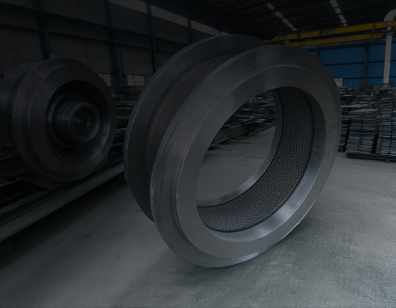
08
Spare Parts
Genuine components are available worldwide with fast delivery service.


