RICHI NEWS
richi news
Biomass pellet production line in Brazil
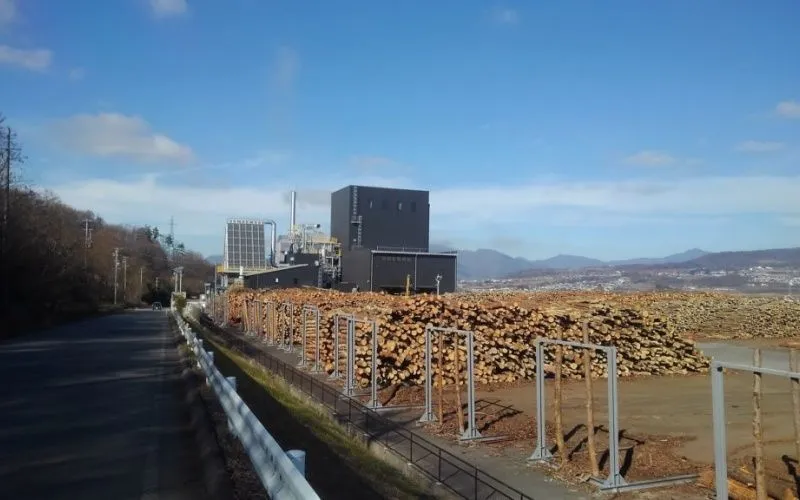
Sawdust pellet production line in Japan
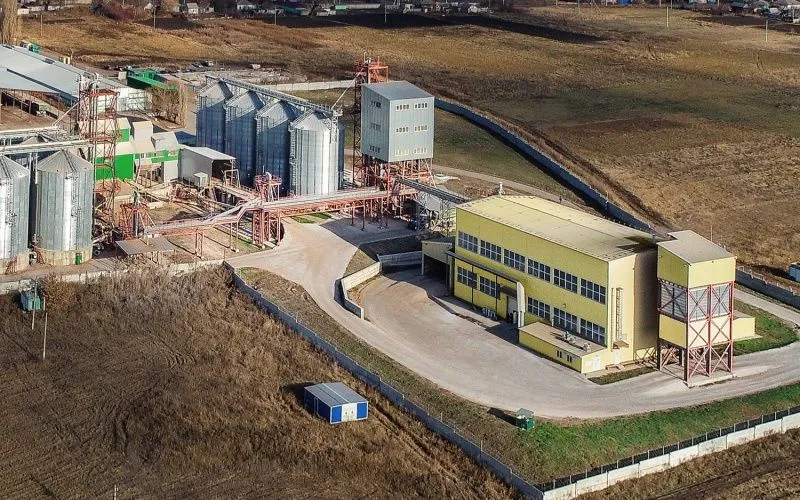
Animal feed production line in Indonesia
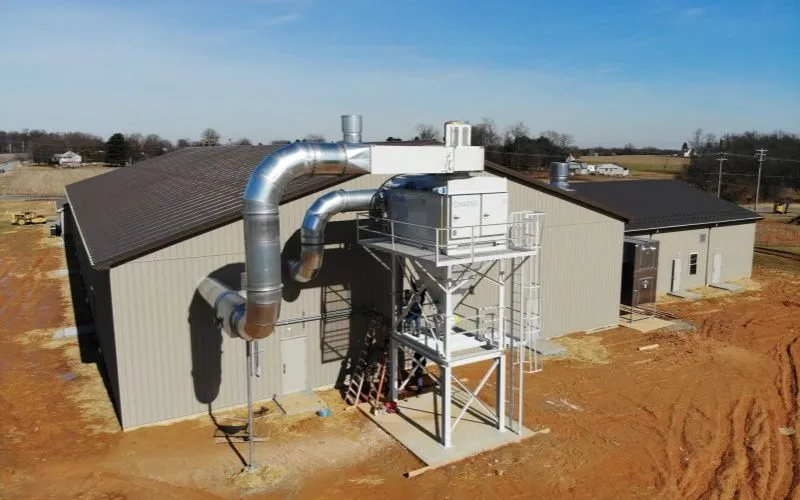
Chicken manure production line in the United States
Cat litter production line in Russia
Poultry feed production line in Thailand
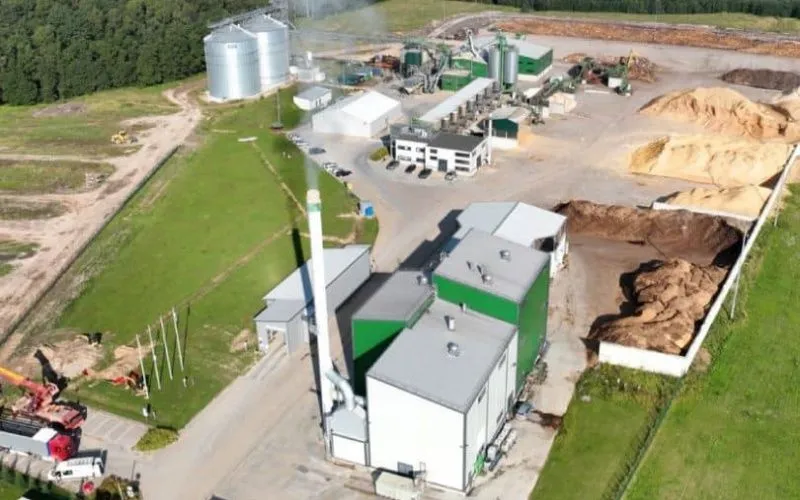
Wood pellet production line in Germany
Fuel pellet production line in Argentina
Cattle feed production line in South Africa

Broiler Chicken Feed Line Reaches Full Capacity Operation in Pakistan — 20 t/h

A 20 t/h broiler chicken feed production line supplied by RICHI Machinery to a poultry feed mill operation in Punjab, Pakistan, has reached full rated capacity operation, according to production data the buyer shared following several weeks of ramp-up since initial commissioning. Pakistan’s poultry sector is one of the larger ones in South Asia, and […]

A 20 t/h broiler chicken feed production line supplied by RICHI Machinery to a poultry feed mill operation in Punjab, Pakistan, has reached full rated capacity operation, according to production data the buyer shared following several weeks of ramp-up since initial commissioning.

Pakistan’s poultry sector is one of the larger ones in South Asia, and broiler feed represents a substantial share of overall feed production volume given the scale of commercial broiler operations across the country — feed mills supplying this sector operate at meaningfully higher throughput than many of the specialty or smaller-scale feed lines RICHI works with elsewhere.

The buyer’s broiler formula follows a fairly typical regional pattern: maize as the primary energy source, soybean meal and some rice polish (a byproduct of rice milling, commonly used in South Asian poultry formulas as a partial substitute for more expensive ingredients) as protein and fiber components, plus a vitamin-mineral premix.

Equipment for this larger-scale line includes dual hammer mills running in parallel (a configuration used at higher throughput levels to avoid a single grinding bottleneck — each mill handles a portion of the total material flow, with the outputs combined before the mixing stage), a large-capacity batch mixer, conditioner, pellet press (ring die, 3mm pellets typical for broiler starter/grower feed, with the buyer also running some larger 4mm pellets for finisher-stage feed via die change), and pellet cooler sized for the higher throughput.

Ramp-up to full capacity took longer than some smaller installations RICHI has commissioned — partly because at this scale, achieving consistent output across dual hammer mills required some balancing adjustments (ensuring both mills receive proportionally even material flow from the receiving and metering system, which initially showed some imbalance that the buyer’s maintenance team corrected with minor conveyor speed adjustments based on RICHI’s commissioning engineer’s diagnostic observations during the ramp-up period).

With full capacity now achieved and sustained over multiple production days, the buyer’s plant management has indicated the facility is meeting their production planning targets, supporting their broiler feed supply commitments to integrated poultry operations across the surrounding region.

12 / 2026
06

Cork Waste and Wood Chip Combined Pellet Line — Equipment Configuration Finalized for Portugal Project

Equipment configuration has been finalized for a 4.5 t/h pellet production line in Portugal designed to process a combination of cork waste and wood chips — a feedstock combination that’s relatively unusual but makes practical sense given Portugal’s position as a major global cork producer, generating substantial cork processing waste alongside more conventional wood residue […]

Equipment configuration has been finalized for a 4.5 t/h pellet production line in Portugal designed to process a combination of cork waste and wood chips — a feedstock combination that’s relatively unusual but makes practical sense given Portugal’s position as a major global cork producer, generating substantial cork processing waste alongside more conventional wood residue streams.

Cork waste (granules and dust from cork stopper and flooring production) has interesting properties for pelletizing — it’s naturally low density, has some inherent water-resistant characteristics due to cork’s cellular structure, and burns with a distinctive but acceptable profile for biomass fuel applications, though pure cork pellets aren’t common — blending with wood chips is the more typical approach, which is what this buyer is doing.

The buyer’s blend ratio is approximately 30% cork waste to 70% wood chips by volume, though this can be adjusted seasonally depending on cork waste availability from the buyer’s own cork processing operations (which generate the cork waste as a byproduct) versus wood chip supply from regional sawmills.

Equipment includes a chip/material receiving and proportioning system (allowing the blend ratio to be adjusted by the operator), hammer mill, drum dryer, ring die pellet mill, and cooler — fairly standard configuration overall, though the proportioning system at the front end is a feature not all biomass lines include, added specifically because of the blend-ratio flexibility the buyer wanted.

Pellet target is 6mm, for the residential and small commercial heating market in Portugal and potentially for export to neighboring Spain, where biomass heating demand has also been growing.

During the configuration finalization process, the buyer requested confirmation that the dryer’s burner could run on a portion of the buyer’s own wood waste as fuel for the drying process itself (rather than relying solely on purchased fuel for the dryer) — RICHI confirmed the dryer’s burner configuration is compatible with wood waste fuel, a fairly common setup that helps offset the dryer’s operating costs, though the buyer will need to manage their own wood waste fuel supply separately from the cork/wood chip feedstock for pelletizing.

Manufacturing is set to begin shortly, with delivery estimated at 7-8 weeks.

07 / 2026
06

Hay Pellet Line for Equine Feed Market — Shipment Confirmed for Client in United Arab Emirates

A 5 t/h hay pellet production line, configured for the equine (horse) feed market, has been confirmed as shipped to a client in the United Arab Emirates, where demand for high-quality forage products is driven significantly by the region’s substantial horse racing and equestrian sectors. Hay pellets for horses serve a different purpose than typical […]

A 5 t/h hay pellet production line, configured for the equine (horse) feed market, has been confirmed as shipped to a client in the United Arab Emirates, where demand for high-quality forage products is driven significantly by the region’s substantial horse racing and equestrian sectors.

Hay pellets for horses serve a different purpose than typical livestock feed pellets — they’re often used as a forage replacement or supplement, particularly useful in regions like the UAE where growing or storing large volumes of baled hay locally is impractical given climate conditions, and importing baled hay is costly relative to its bulk and weight.

The raw material for this line is alfalfa and timothy hay, imported by the buyer in baled form (likely from suppliers in regions like the US or parts of Europe, though RICHI’s role doesn’t extend to the buyer’s raw material sourcing) and processed locally into pellets — reducing the bulk volume significantly compared to baled hay, which simplifies the buyer’s own storage and onward distribution to stables across the region.

Equipment includes a bale breaker, hammer mill for initial size reduction (hay needs less aggressive grinding than wood biomass — the goal is more about achieving uniform particle size for consistent pelletizing than breaking down tough fiber), pellet press (ring die, 16mm pellet diameter — notably larger than feed pellets for poultry or swine, since equine hay pellets are typically larger, sometimes described in the industry as “hay cubes” though the equipment here produces cylindrical pellets rather than cube-shaped products), and a cooler with an extended cooling section given the larger pellet size takes longer to stabilize temperature throughout the pellet’s cross-section.

No additional formula ingredients are involved — this is a single-ingredient (or dual-ingredient, alfalfa plus timothy, processed in separate runs or blended depending on the buyer’s product lines) pelletizing operation, simpler in terms of process complexity than most feed lines RICHI handles, though the larger pellet diameter does require specific die configuration.

The shipment includes four containers, with sea freight transit estimated at approximately 3-4 weeks to a UAE port, followed by inland transport to the buyer’s facility.

02 / 2026
06

Eel Feed Production Line Update: Steam Conditioning System Upgraded Mid-Project for Client in Japan

A modification has been made to an in-progress 1 t/h eel feed production line order for a client in Japan — at the buyer’s request, the steam conditioning system originally specified has been upgraded to a model with finer temperature control, before equipment fabrication was completed. Eel feed (for Japanese eel, unagi, aquaculture — a […]

A modification has been made to an in-progress 1 t/h eel feed production line order for a client in Japan — at the buyer’s request, the steam conditioning system originally specified has been upgraded to a model with finer temperature control, before equipment fabrication was completed.

Eel feed (for Japanese eel, unagi, aquaculture — a long-established industry in parts of Japan, though increasingly facing supply pressures around wild-caught juvenile eel availability that affect the broader industry, separate from the feed production itself) is unusual among aquaculture feeds in that it’s often produced as a paste or dough-like product rather than dry pellets, at least for certain life stages — eel feed for larger juveniles and adults can be pelletized, but the formula and moisture content differ significantly from typical dry fish feed.

This particular order is for a pelletized formula targeting sub-adult to adult eel, with a formula built around fish meal (a high percentage — eel require a very high protein diet, often 45%+ crude protein), wheat flour, fish oil, and a vitamin premix.

The original steam conditioning system specified met RICHI’s standard parameters for fish feed of this protein level, but the buyer’s quality team — based on their experience with a previous (non-RICHI) line at another facility — requested a unit with more granular steam pressure adjustment, citing sensitivity in how the high fish meal content responds to even small variations in conditioning temperature, affecting pellet water stability in testing they’d conducted previously with samples.

RICHI’s engineering team reviewed the request and confirmed the upgraded conditioner model could be substituted without affecting the rest of the line’s configuration or the project timeline significantly — about a one-week delay to source the upgraded unit, which the buyer accepted given the potential quality benefit.

Fabrication is proceeding with the updated specification, and the revised delivery estimate has been communicated to the buyer — approximately 9 weeks from the modification date, compared to the original 8-week estimate.

28 / 2026
05

Pheasant and Specialty Poultry Feed Line Ordered for Game Bird Operation in France

An order has been placed for a small-scale, 2 t/h specialty poultry feed production line by a game bird breeding operation in southwestern France, focused on pheasant and partridge feed for both commercial release programs and gourmet poultry markets. Specialty game bird feed differs from standard broiler or layer formulas in several ways — protein […]

An order has been placed for a small-scale, 2 t/h specialty poultry feed production line by a game bird breeding operation in southwestern France, focused on pheasant and partridge feed for both commercial release programs and gourmet poultry markets.

Specialty game bird feed differs from standard broiler or layer formulas in several ways — protein requirements tend to be higher, particularly during early growth stages, and some formulations include ingredients less commonly seen in mainstream poultry feed, such as insect meal (increasingly used in premium and specialty feed formulations across parts of Europe due to both nutritional profile and sustainability positioning).

The buyer’s formula for young pheasant starter feed includes a notably high protein percentage — over 28%, compared to typical broiler starter feed around 22-23% — achieved through a combination of fish meal, soybean meal, and a small percentage of dried insect meal (black soldier fly larvae meal, sourced from a European supplier).

Equipment for this line is modest in scale given the relatively small production volumes typical of specialty game bird operations: a hammer mill, batch mixer, pellet press (ring die, with a 2mm die for starter feed and a 3mm die available via die change for grower/finisher formulas), and pellet cooler. No conditioner is included — at this small scale and with this formula, the buyer’s nutritionist determined that conditioning wasn’t critical for pellet quality, keeping the equipment package simpler and reducing cost.

One thing flagged during the order process: the insect meal component has a notably different particle behavior in the hammer mill compared to standard feed ingredients — it’s more prone to clumping if not pre-screened. RICHI recommended the buyer pre-screen the insect meal before it enters the main grinding process, a simple manual step that avoids potential feed inconsistency without requiring additional equipment.

Production of the equipment is underway, with delivery anticipated within roughly 6 weeks given the relatively compact equipment list for this order.

23 / 2026
05

Empty Fruit Bunch (EFB) Pellet Plant — Equipment Installation Complete, Palm Oil Mill Site in Malaysia

Installation of a 5 t/h EFB (empty fruit bunch) pellet production line has been completed at a palm oil mill site in Malaysia’s Johor state, with the equipment now positioned and connected, ahead of commissioning scheduled for the coming weeks. EFB is the fibrous residue left after palm fruit bunches have been stripped of their […]

Installation of a 5 t/h EFB (empty fruit bunch) pellet production line has been completed at a palm oil mill site in Malaysia’s Johor state, with the equipment now positioned and connected, ahead of commissioning scheduled for the coming weeks.

EFB is the fibrous residue left after palm fruit bunches have been stripped of their fruit during oil extraction — palm oil mills generate enormous volumes of this material, and on-site disposal (often composting or incineration) has increasingly given way to pelletizing as a way to create a sellable biomass fuel product, turning a disposal cost into a revenue stream.

EFB arrives extremely wet — often 60-65% moisture straight from the mill — and has a long, stringy fiber structure that needs significant pre-processing before it can be ground and pelletized. The line includes an EFB shredder (a heavy-duty unit designed to handle the tough fiber bundles), a hammer mill for further size reduction, a high-capacity dryer (sized larger relative to throughput than most biomass lines, given the starting moisture content), ring die pellet mill, and cooler.

Finished pellet target is 8mm, intended for sale to industrial users for boiler fuel — there’s established regional demand for EFB pellets, including from cement plants and other palm oil mills that may supplement their own fiber waste fuel supply during periods of EFB shortage (similar to the bamboo pellet situation mentioned in a separate Indonesian project).

A notable aspect of this installation: because the palm oil mill operates continuously and EFB is generated as a constant byproduct stream, the buyer requested the pellet line’s receiving and storage capacity be sized to handle at least 18 hours of EFB accumulation in case the pellet line itself needs downtime for maintenance — without that buffer, EFB would simply pile up faster than it could be processed during any stoppage.

Commissioning is expected to begin within the next two to three weeks, once the mill’s own EFB handling conveyors (which connect to RICHI’s receiving system) complete their final integration testing.

18 / 2026
05

Pet Food Extrusion Line — Trial Batches Produced for Specialty Pet Treat Manufacturer in South Korea

Trial production has begun on a 1 t/h pet food extrusion line installed at a specialty pet treat manufacturer’s facility in South Korea, with the first test batches produced this week showing promising initial results according to the buyer’s quality team. This particular line is somewhat smaller and more specialized than RICHI’s typical pet food […]

Trial production has begun on a 1 t/h pet food extrusion line installed at a specialty pet treat manufacturer’s facility in South Korea, with the first test batches produced this week showing promising initial results according to the buyer’s quality team.

This particular line is somewhat smaller and more specialized than RICHI’s typical pet food orders — the buyer focuses on premium dental chew treats and semi-moist treats rather than standard kibble, which changes both the formula and the extrusion process parameters considerably.

The formula for the dental chew line includes a higher starch content than standard dog food (starch gelatinization during extrusion is what gives dental chews their characteristic texture — dense enough to provide chewing resistance but not so hard as to risk tooth damage), along with a protein component (chicken meal in this case) and a small percentage of mint flavoring added post-extrusion via a coating drum.

Equipment includes a single-screw extruder configured for the higher-starch formula (different screw configuration than a standard kibble extruder — the compression profile needs adjustment to achieve proper gelatinization without over-expanding the product, since dental chews should be dense rather than puffy), a drying oven, and the flavor coating drum mentioned above.

During trial batches this week, the team tested several screw speed and temperature combinations — the buyer’s R&D staff worked alongside RICHI’s commissioning engineer to dial in a profile that produces the target texture, described by the buyer as needing to be “firm enough to resist immediate breakage but with internal density that allows gradual wear during chewing.”

Results from the third trial batch were closest to target, according to initial feedback, though the buyer plans several more rounds of texture testing — including actual dog chewing trials with test animals — before finalizing production parameters. RICHI’s engineer remains available remotely for further parameter consultation as testing continues over the coming weeks.

13 / 2026
05

RICHI Machinery Signs Contract for Combined Feed and Pre-Mix Production Facility in Tanzania

A contract has been signed for a combined facility in Tanzania incorporating both a 6 t/h compound feed production line and a smaller premix production unit, intended to serve smallholder poultry and livestock farmers across the surrounding agricultural region. This is a slightly different project structure than RICHI’s typical single-line orders — the buyer, a […]

A contract has been signed for a combined facility in Tanzania incorporating both a 6 t/h compound feed production line and a smaller premix production unit, intended to serve smallholder poultry and livestock farmers across the surrounding agricultural region.

This is a slightly different project structure than RICHI’s typical single-line orders — the buyer, a regional agricultural input distributor, wanted the capability to produce both finished compound feed (for direct sale to farmers) and concentrated premixes (vitamin-mineral concentrates that other smaller feed producers in the area can purchase and blend into their own formulas), within one facility footprint.

The compound feed line covers poultry and to some extent pig feed, given mixed livestock farming is common among the region’s smallholders — the buyer’s formulas will vary based on what raw materials are seasonally available locally, which in Tanzania can include maize, sunflower seed cake (a byproduct of local sunflower oil pressing, similar in concept to the Argentina sunflower husk situation but used as a protein-fiber feed ingredient rather than fuel), and various local protein sources.

The premix unit operates at much smaller batch sizes — measured in hundreds of kilograms per batch rather than tons per hour — and requires more precise dosing equipment, since premix formulations involve micro-ingredients (vitamins, trace minerals) that need accurate weighing down to gram-level precision.

Equipment for the compound feed line follows a fairly standard configuration: hammer mill, batch mixer, pellet press (ring die, 3-4mm adjustable via die change for different feed types), and cooler. The premix unit includes a smaller precision mixer with a separate micro-ingredient dosing system.

Given the dual-purpose nature of the facility and the buyer’s plan to phase production startup — compound feed first, premix capability added a few months later — RICHI’s delivery schedule has been structured in two phases, with the compound feed equipment shipping first and premix equipment following roughly two months later. Contract terms reflect this phased delivery and payment structure.

08 / 2026
05

Coconut Shell Pellet Line — Production Milestone Reached in Sri Lanka

A coconut shell pellet production line operating at a facility in Sri Lanka’s coastal coconut-growing region has reached a production milestone, with cumulative output crossing a notable threshold since commissioning earlier this year — the 4 t/h line has been running at close to full capacity for several consecutive weeks. Coconut shell is dense, hard, […]

A coconut shell pellet production line operating at a facility in Sri Lanka’s coastal coconut-growing region has reached a production milestone, with cumulative output crossing a notable threshold since commissioning earlier this year — the 4 t/h line has been running at close to full capacity for several consecutive weeks.

Coconut shell is dense, hard, and the resulting pellets have a notably high calorific value — higher than most wood pellets, which makes coconut shell pellets attractive for industrial heating applications where energy density per kilogram matters for transport economics, particularly for export markets.

The grinding stage for coconut shell required somewhat heavier-duty equipment than a typical wood waste line of similar capacity — shell fragments are abrasive and the hammer mill’s screen and hammers see faster wear, something the buyer was made aware of during the proposal stage so spare parts could be budgeted accordingly from the start.

No dryer is included in this configuration — coconut shell, especially after the husk and fiber have been removed for other uses (coir production is a major parallel industry here), arrives at a moisture content low enough that drying isn’t necessary, generally under 12%.

Finished pellets are 6mm diameter, sold primarily to industrial users — a textile dyeing facility in the region uses the pellets as boiler fuel, having switched from a mix of firewood and lower-grade biomass previously.

The buyer reported that die wear has been within expected ranges based on RICHI’s projections at the proposal stage, and a spare die was already on hand locally when the first replacement was needed — avoiding any production interruption.

03 / 2026
05

Sheep Manure Pellet Fertilizer Project — Equipment List Finalized for Mongolia Site

Equipment specifications have been finalized for a 9 t/h sheep manure organic fertilizer pellet line headed to a livestock processing zone in Mongolia, following several rounds of revisions based on local conditions. Sheep herding operates at enormous scale across Mongolia, and manure collection from semi-permanent grazing camps has typically meant the material arrives at any […]

Equipment specifications have been finalized for a 9 t/h sheep manure organic fertilizer pellet line headed to a livestock processing zone in Mongolia, following several rounds of revisions based on local conditions.

Sheep herding operates at enormous scale across Mongolia, and manure collection from semi-permanent grazing camps has typically meant the material arrives at any central processing point already quite dry — sometimes below 30% moisture, which is unusually low for manure-based fertilizer feedstock and actually changes the equipment requirements compared to, say, a dairy operation’s wet manure.

Lower incoming moisture means less drying capacity is needed, but it also means the granulator needs supplemental water addition during the mixing stage to achieve proper granule formation — too dry, and the material won’t bind into pellets at all, it just stays as loose crumbs.

The finalized equipment list: pre-crusher for breaking up dried manure clumps, mixer with a water spray system for moisture adjustment, drum granulator, a smaller dryer than typical for this capacity (given the lower moisture starting point), cooler, and screening with returns.

Pellet size is 4mm, formulated with a small percentage of humic acid additive — sourced by the buyer from a domestic supplier — to improve soil conditioning properties for the region’s grassland and limited crop areas.

One revision during the spec finalization process: the original proposal included a rotary dryer sized for 55-60% moisture input, standard for most manure fertilizer lines RICHI builds. After the buyer provided actual moisture test data from collected samples (averaging 28%), RICHI’s team reduced the dryer size by roughly 40% and added the water spray system to the mixer instead — resulting in lower equipment cost and energy consumption for the buyer, better suited to the actual feedstock.

Manufacturing will begin once the buyer confirms the additive specification documentation, expected within the next week or so.

28 / 2026
04
Biomass pellet project in Romania
videobtn
Argentina Alfalfa Pellet Project
videobtn
Russia Trout Extruded Feed Project
videobtn
videobtn
Malaysia Cat Litter Project
videobtn
20tph Wood pellet plant construction in Bangladesh
videobtn
Rice Straw Pellet Production Line in Brazil
videobtn
fish feed mill project
videobtn
animal feed factory project
videobtn
Australia Rat Poison Project
videobtn

Investment Guide

Pioneering Pelletizing Solutions Since 1995

richi factory
richi factory

Pelletizing Excellence Across Industries

animal feed solution
biomass pellet solution
fertilizer pellet solution
cat litter solution
fuel pellet solution
Email
WhatsApp
Get Quote!

LEAVE YOUR NEEDS

Keeping in touch with us is an effective way to solve all your problems. If you have any needs or questions, please leave your contact information, then RICHI technical consultants will send design, quotation, videos to your mailbox. You can also contact us directly via WhatsApp: +86 138 3838 9622

    Application:

    * We will store the information you have provided us. We will only use this information for the purpose of helping to answer your inquiries. We will not disclose your information to third parties.

    Scroll to Top