
 0086-138 3838 9622
HORSE FEED MILL
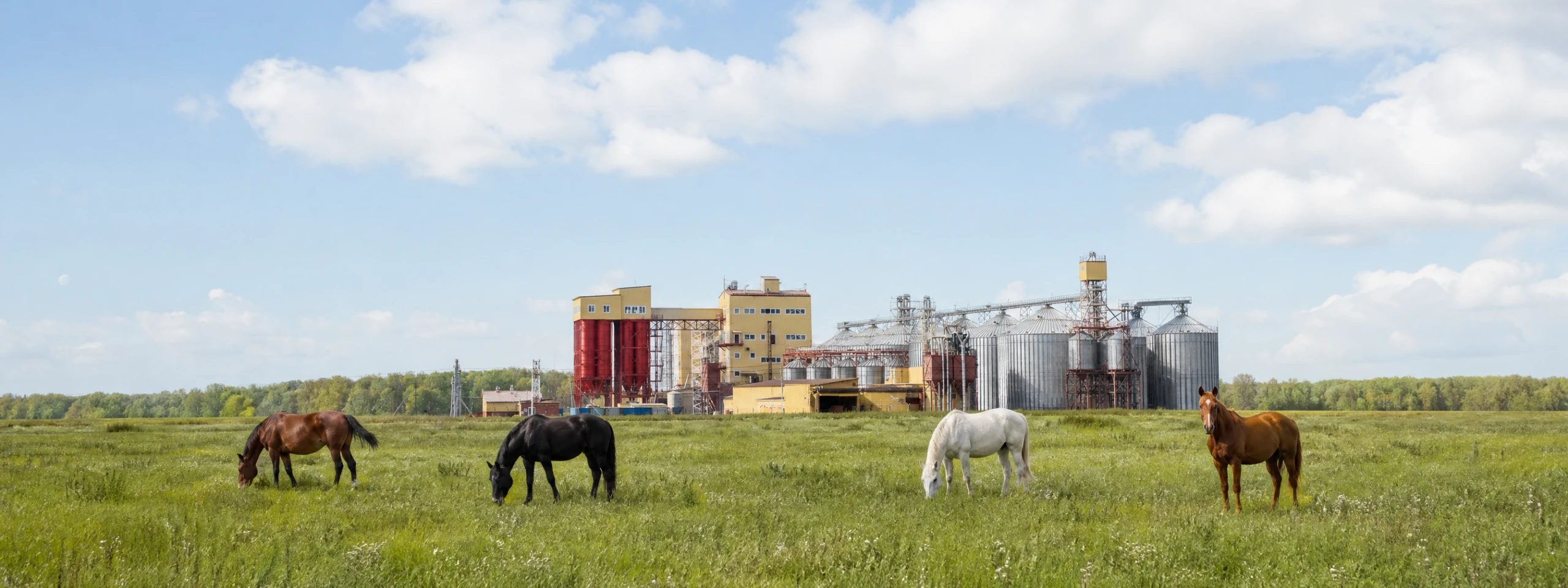
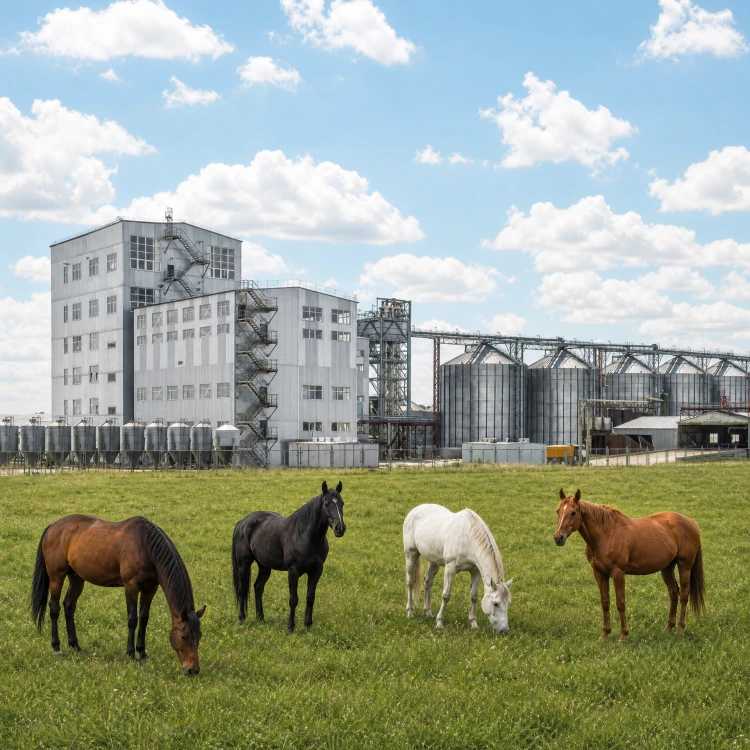
Horse feed mill systems today are rarely built for a single feed type. Most of the projects we deliver end up balancing three feeding directions at the same time—energy-rich concentrates, forage-heavy formulations, and full compound rations depending on how the client structures their herd.
For racehorse and performance barns, the focus is usually corn-based horse feed, oats, and barley blends, where the horse feed production line has to keep particle uniformity tight or you’ll see sorting issues at feeding time. On the other side, large farms lean more toward alfalfa hay feed and grass pellet feed, sometimes even straw-based horse feed when they are trying to reduce cost per ton. Commercial feed factories sit somewhere in between, running a complete horse feed mill setup that shifts recipes weekly.
Most buyers coming to us are feed manufacturers, equine farms, and integrated livestock groups that already operate a horse feed plant or horse feed factory but struggle with consistency or expansion limits. In some cases, it’s a horse feed manufacturing plant in Europe adding pelleting capacity; in others, a new turnkey horse feed plant in the Middle East trying to stabilize raw material intake from multiple suppliers. The equipment is not just about production—it’s about keeping formulation stable when grain quality changes between shipments.
Discuss Your Horse Feed Mill Project with Our Engineers
Horse Feed Types We Process in a Horse Feed Mill
A horse feed mill is not just about making pellets—it’s really about controlling five very different feed behaviors on the same production line. Some formulas want structure and density, others break easily, and a few are almost sticky by design. The production line has to adjust without slowing down, or the whole batch consistency drifts.
What we usually see in real projects is not “one horse feed,” but a mix of energy feeds, forage-based formulations, and specialty nutrition blends running on the same horse feed production line with different die settings, conditioning temperatures, and even moisture targets. That’s where the design of a complete horse feed mill starts to matter more than individual machines.
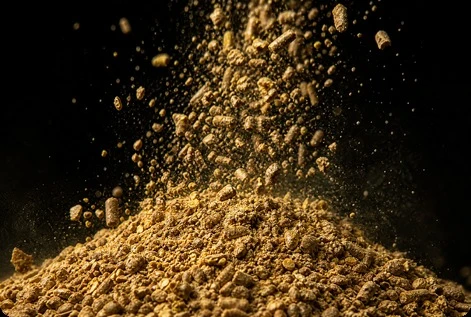
Horse Pellet Feed (Energy Concentrate Pellets)
This is the standard output from most horse feed pellet production line setups, especially for racing horses and breeding stock. Corn-based horse feed, barley, and oat blends are commonly used here, with starch gelatinization controlled at around 75–85°C conditioning temperature. Too high, and you lose nutrient stability; too low, and pellets crumble during transport.
Particle size: 3–6mm pellets
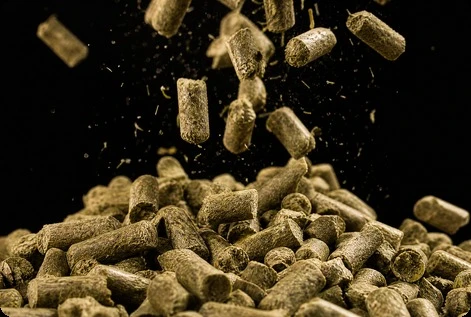
Forage-Based Horse Feed Pellets (Fiber-Rich Pellets)
This is where alfalfa hay feed, grass pellet feed, and straw-based horse feed are processed. Fiber content often exceeds 18%, which changes everything—cutting, grinding, and even pellet formation behavior inside the horse feed processing line. In many equine feed plant projects, we see this line requiring a wider die opening and lower compression ratio.
Particle size: 6–10 mm pellets
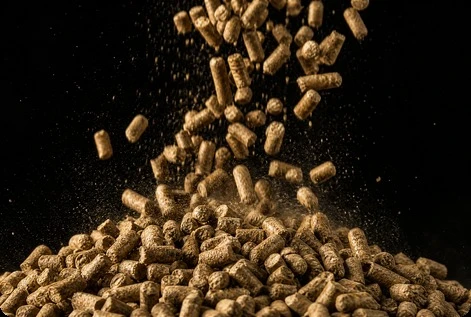
Horse Concentrate Feed (High-Energy Mash / Pellet Base)
This is a high-energy supplement used alongside hay feeding systems. Common in performance barns where oats horse feed, corn-based blends, and protein meals are tightly controlled. Inside a horse feed manufacturing plant, this section often shares grinding and batching systems with other lines, but mixing time is longer.
Particle size: 1–3mm mash or 4–6mm pellets
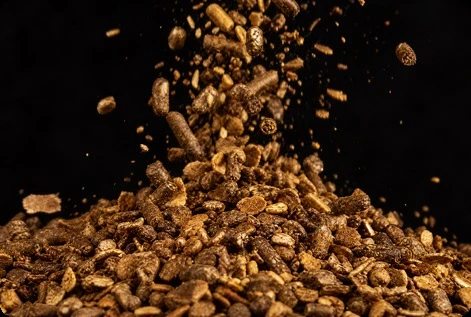
Molasses Mixed Horse Feed (Palatability-Enhanced Feed)
Molasses changes everything inside a horse feed processing plant. It improves taste, yes, but it also increases stickiness inside mixers and pellet coolers. Corn, wheat bran, and alfalfa are common bases, but molasses addition usually stays under controlled percentage ranges.
Particle size: 2–5mm loose pellets or crumb feed
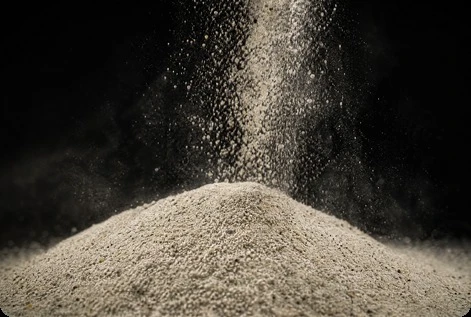
Horse Premix Feed (Vitamin & Mineral Blend)
This is not a bulk feed, but it runs through the same horse feed mill system in many turnkey horse feed plant setups. Vitamins, trace minerals, amino acids—everything must be evenly distributed at very low inclusion rates. The challenge here is segregation. If the mixing system is not precise, heavier minerals settle during packaging. It doesn’t matter how good the formula is—the horse still gets an imbalanced intake.
Particle size: 0.3–1mm powder
Some clients build only a horse feed pellet factory. Others want a combined system that produces pellet feed, mash feed, and premix lines together inside one equine feed production line. We’ve also designed systems where horse feed, cattle feed, and even sheep feed run on shared infrastructure. A horse feed mill can be single-purpose or multi-species depending on how the plant is planned from the start.
Customize Horse Feed Mill for Multiple Feed Types & Capacity Planning
Horse Feed Mill Project Videos
We’ve delivered multiple horse feed mill projects across different regions, and each one behaves differently once it starts running with real raw materials on site.
These cases include standalone equine feed systems and multi-livestock plants, but what connects them is how the horse feed production line adapts to corn, barley, oats, alfalfa hay, wheat bran, straw pellets, rice bran, soybean meal, molasses, and even high-variation local grains depending on the country and supply chain stability.
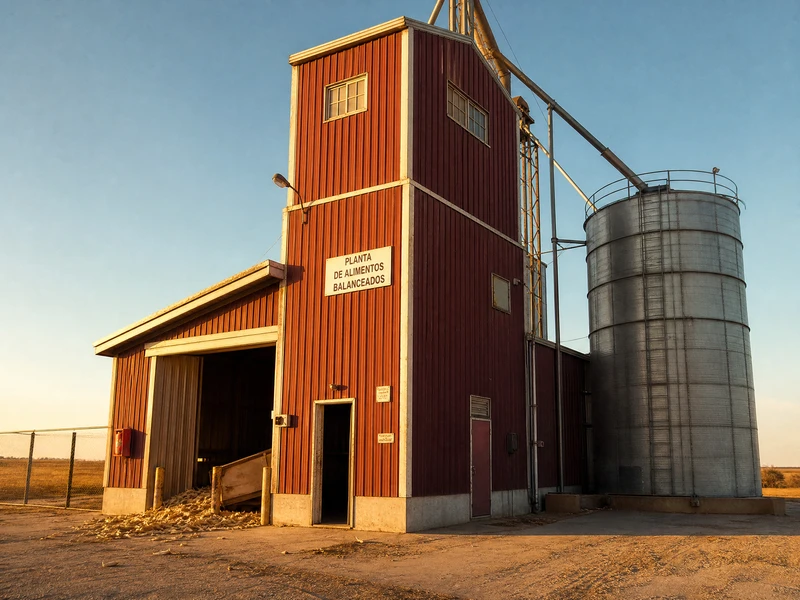

【Video — Argentina – 5T/H Horse Feed Mill (Beef Cattle + Horse Mixed Feed Plant)】This horse feed mill project in Argentina was built for a beef cattle and horse integrated feed factory where corn, soybean meal, alfalfa hay, and wheat bran dominate the formulation, and the real challenge was not capacity but keeping the horse feed pellet quality stable while switching frequently between cattle fattening feed and equine maintenance rations; the horse feed production line had to handle higher oil soybean meal ratios without causing pellet softening during cooling, and alfalfa fiber distribution also required careful grinding control because uneven particle size started showing up in early trial runs when switching batches too quickly.
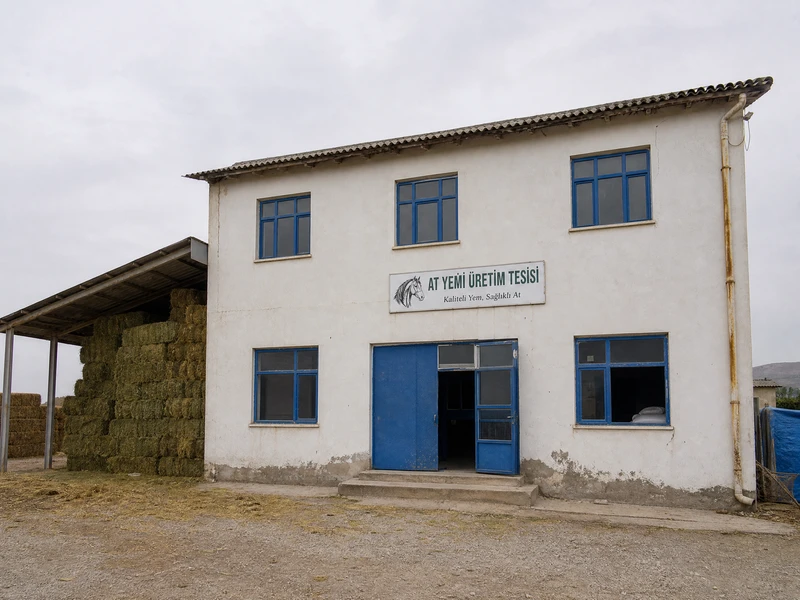
【Video — Turkey – 1–2T/H Horse Feed Mill (Commercial Equine Feed Plant)】In Turkey, this 1–2T/H horse feed mill serves a commercial equine feed production setup where corn, barley, wheat bran, and a high proportion of alfalfa hay (often 50–80%) are processed into forage-heavy horse feed pellets, and during commissioning the main issue was pellet fragility because the forage ratio pushed the horse feed processing line to operate at lower compression settings than typical concentrate feed plants, meaning operators had to accept slightly reduced throughput to maintain structural integrity of 6–10 mm forage pellets used in daily stable feeding.
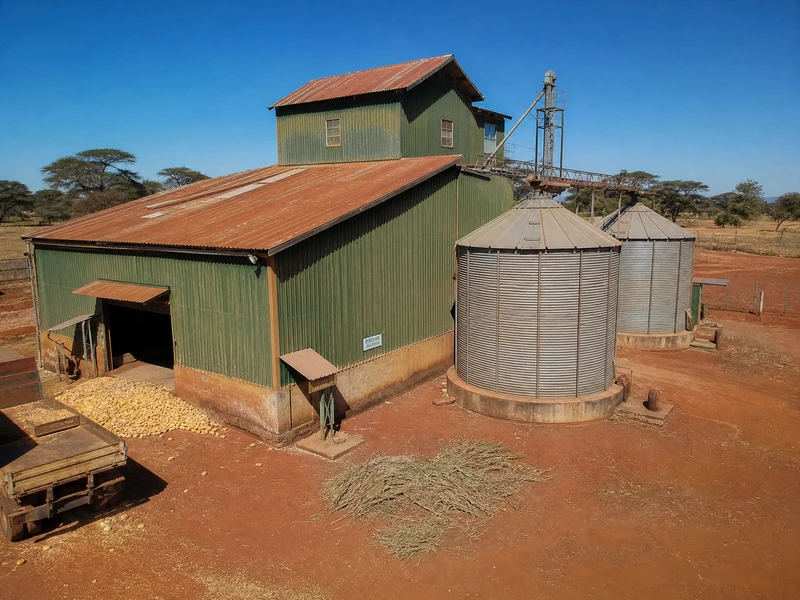
【Video — Zimbabwe – 5–6T/H Horse Feed Mill (Multi-Livestock Feed Factory)】This Zimbabwe project is a multi-livestock horse feed mill combined with cattle and sheep feed production, using maize, oats, lucerne hay, and wheat bran as core raw materials, and the plant layout was designed for continuous switching between formulas, where the horse feed manufacturing line had to remain stable despite maize moisture fluctuations and variable lucerne fiber length, especially during peak harvest seasons when raw material consistency drops and the mixer load behavior changes noticeably between batches.
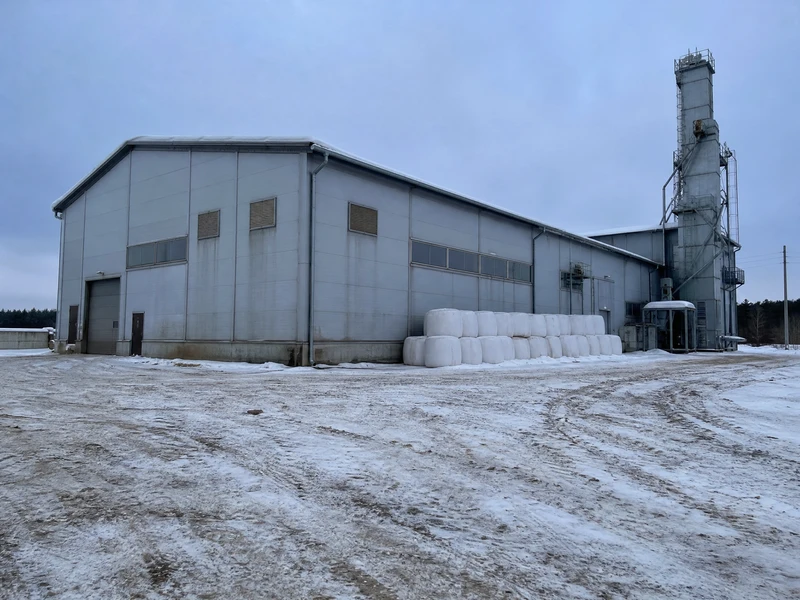
【Video — Russia – 3T/H Horse Feed Mill (Forage-Based Feed System)】The Russia horse feed mill is a forage-based system processing barley, oats, grass hay, and straw pellets, and the biggest operational reality here is equipment wear—straw content increases hammer mill screen abrasion much faster than expected, while the horse feed pellet mill runs at lower speed to maintain pellet density for 6–10 mm forage pellets used in cold-climate livestock farms, where feed storage stability matters more than peak production speed.
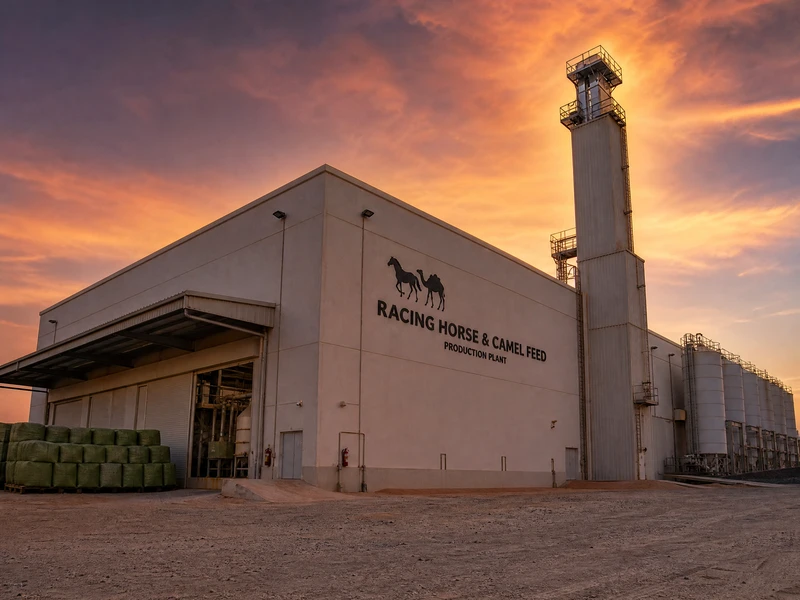
【Video — Saudi Arabia – 3–4T/H Horse Feed Mill (Racing Horse Nutrition Plant)】This Saudi Arabia horse feed mill is designed for racing horses and mixed livestock nutrition, processing oats as the dominant energy source along with barley, corn, imported alfalfa hay, and controlled molasses addition, and the production line had to be tuned carefully because molasses improves palatability but creates stickiness in the mixer and cooler sections of the horse feed production line, especially under high ambient temperature conditions where storage stability becomes a limiting factor rather than pellet formation itself.
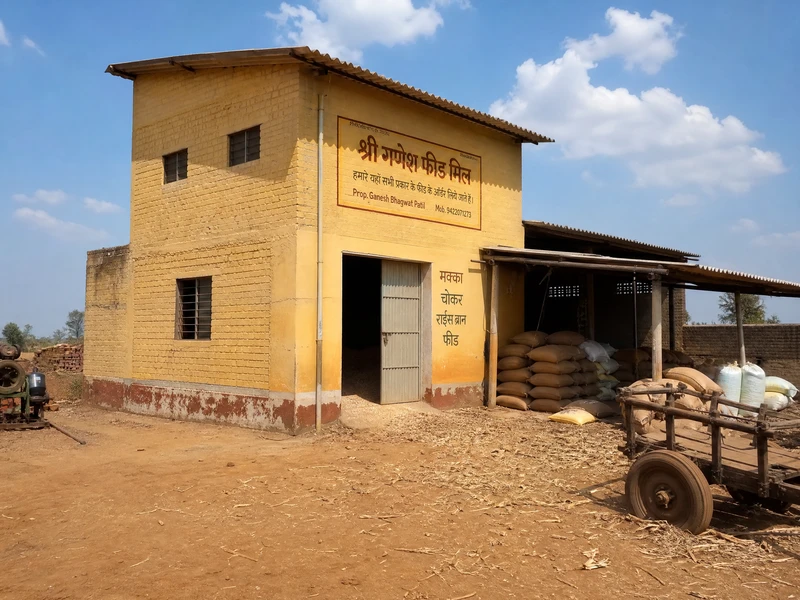
【Video — India – 1–2T/H Horse Feed Mill (Small Agricultural Feed Plant)】In India, this small-scale horse feed mill runs on corn, wheat bran, rice bran, limited alfalfa hay, and molasses, and the project is less about pure equine nutrition and more about flexible agricultural feed production where horse feed, cattle feed, and general livestock feed share the same horse feed manufacturing system, but rice bran oil variability occasionally affects mixing uniformity and forces operators to adjust batching time more frequently than expected in standard formulations.
orse Feed Mill Process Design & Engineering Solutions
A horse feed mill project is never a fixed diagram we simply “install”. In real projects, the process design shifts depending on what the client actually plans to run through the system—energy horse feed, forage-heavy pellets, mash feed, or even premix lines sharing the same workshop space. The moment raw materials change, the entire horse feed production line logic changes with it.
Most clients come to us with mixed conditions: corn, barley, oats, alfalfa hay in bales or powder form, straw, rice bran, sometimes even unusual inputs like sugar beet pulp, sunflower husk, or bagasse. Moisture variation alone can decide whether you need a drying section or just a stabilized conditioning system. That’s why every horse feed manufacturing plant we design is modular—some sections are fixed, others are optional depending on formulation, factory height, and investment limits.
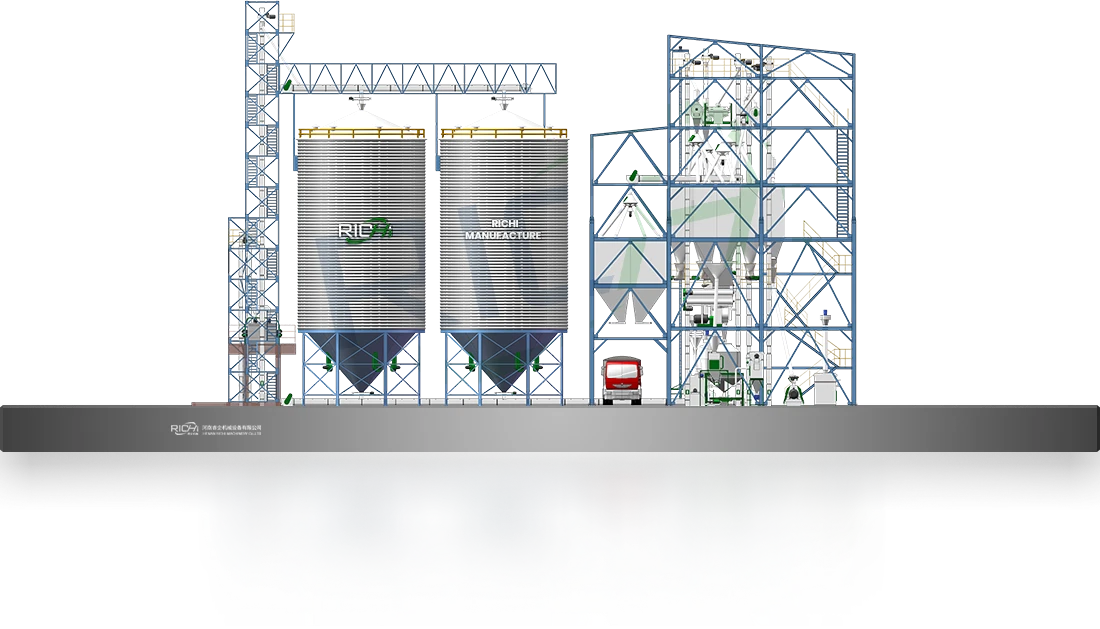
A complete horse feed mill system typically includes receiving & storage silos, raw material cleaning, hammer mill or multi-stage grinding system (for grain + fiber separation cases), batching & dosing system, horizontal ribbon mixer or paddle mixer, liquid addition (molasses or oil spraying), pelletizing section with horse feed pellet mill, pellet cooler, screener, and automatic packing line. For forage-based or high-fiber horse feed processing line setups, we may add bale breaker systems or pre-shredding units before fine grinding. If the formulation leans toward premix or high-precision nutrition, the mixing section becomes more critical than pelleting itself.
But the real variation starts with raw material behavior. Whole grain systems run differently from straw or alfalfa-heavy horse feed plant layouts. Fiber-rich inputs require multi-stage crushing instead of single-pass grinding—otherwise particle size distribution becomes unstable and pellets start breaking after cooling. In some cases, high-moisture raw materials also force clients to consider airflow drying or conditioned storage before batching. None of these are “standard modules”; they are selected based on how the horse feed production plant is actually going to be operated day after day, not how it looks on paper.
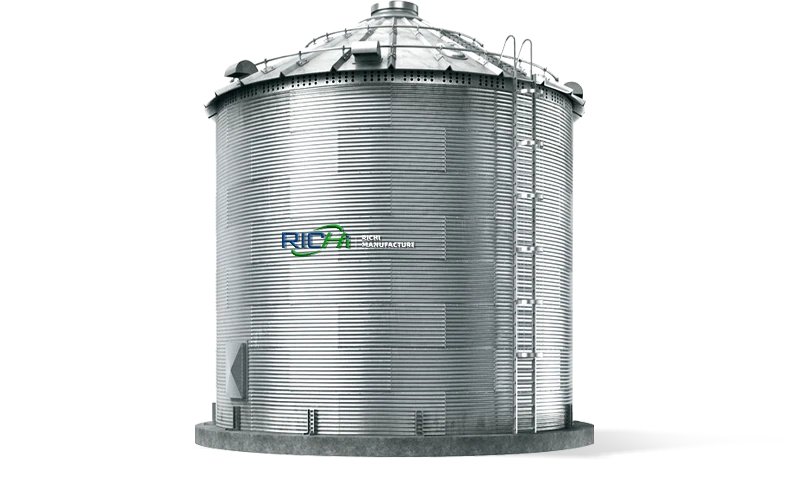
Silo system
01
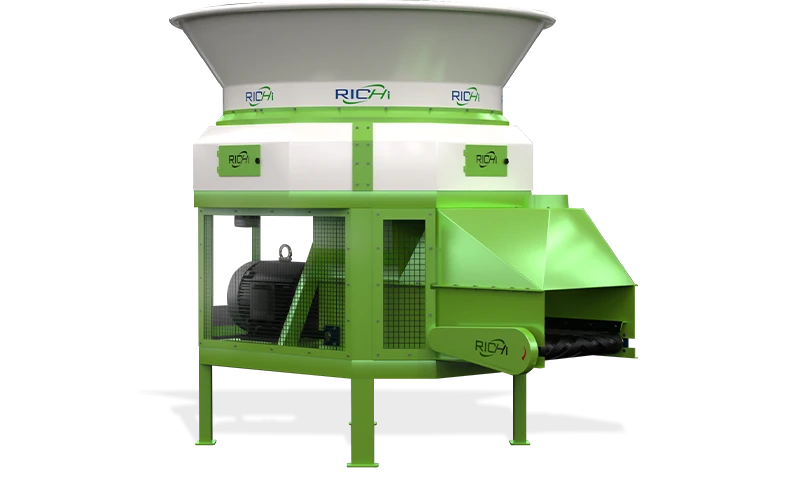
bale chopping
02
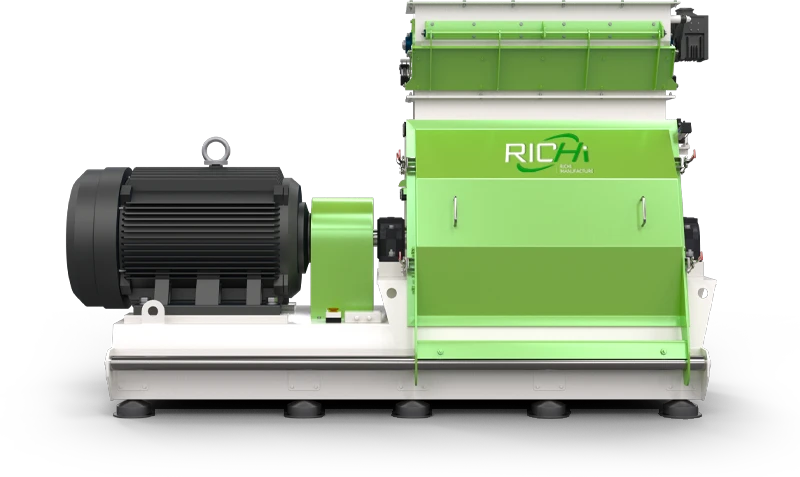
Grinding system
03
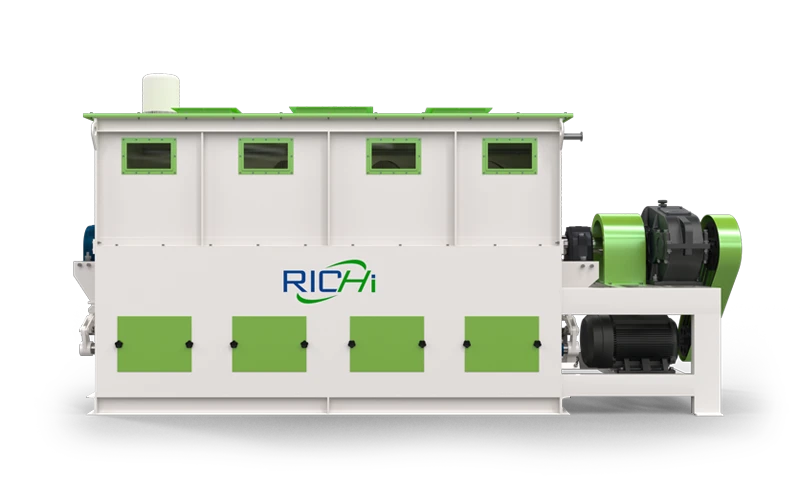
Mixing system
04
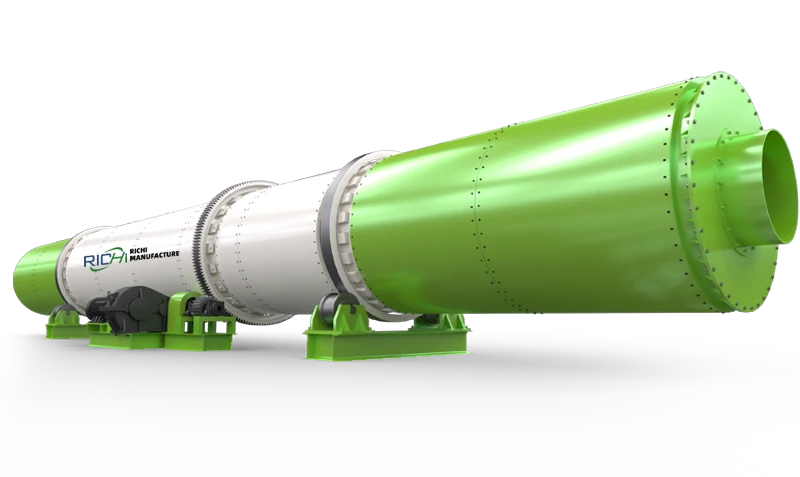
Drying system
05
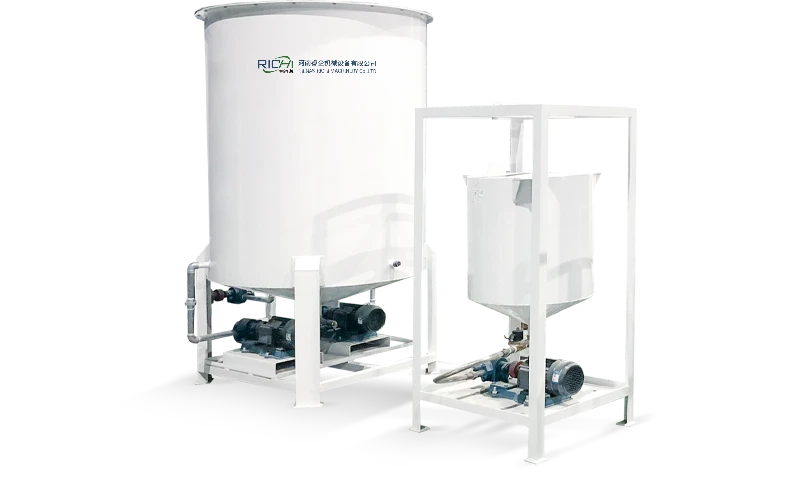
Liquid Addition
06
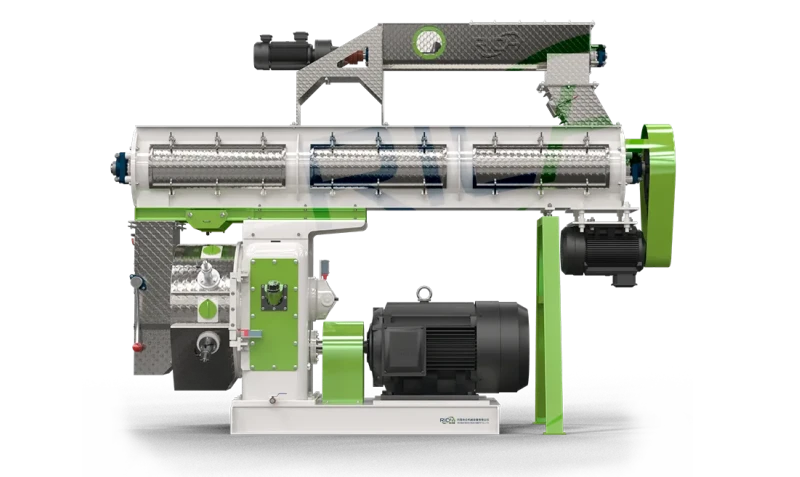
Pelleting system
07
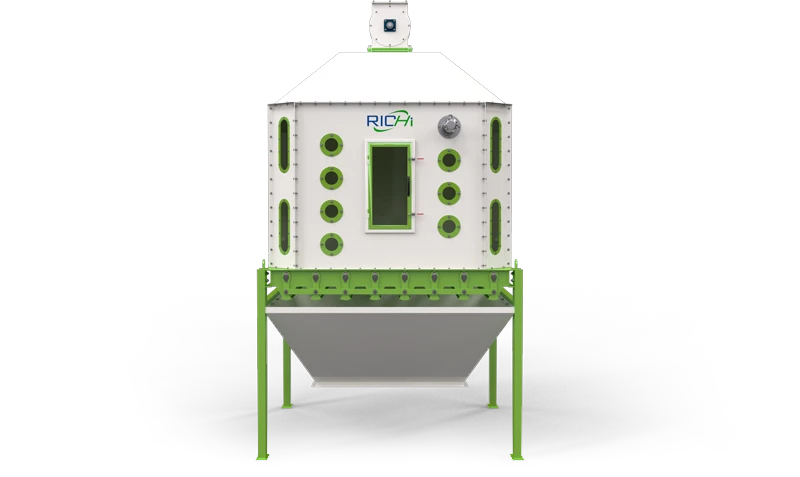
Cooling system
08
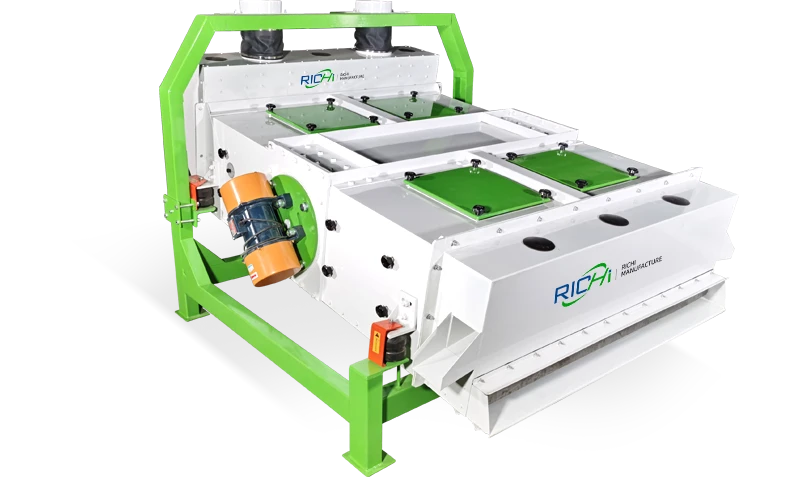
Screening system
09
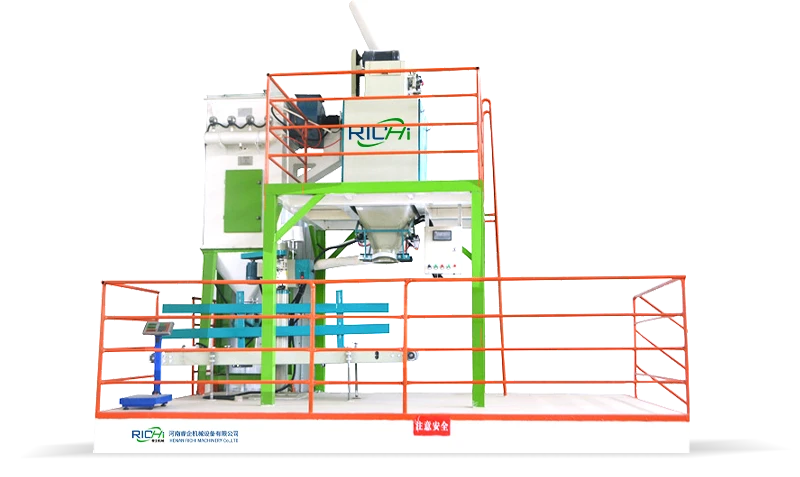
Packaging system
10
Customized Horse Feed Mill Process Flow Design
Every horse feed mill project we design starts from one simple reality: no two clients are running the same raw materials, even if the end product looks similar. Some plants are built around straw and grass variability, others around grain-heavy formulations, and some are hybrid systems switching between horse feed, cattle feed, or even fish feed depending on seasonal demand. That’s why the process design is never fixed—it is built as a modular system that expands or contracts based on actual production behavior on site.
Below are real-world horse feed mill design cases we’ve delivered. Each system reflects different raw material conditions, country requirements, and production goals—ranging from small farm-scale setups to multi-ton commercial feed factories.
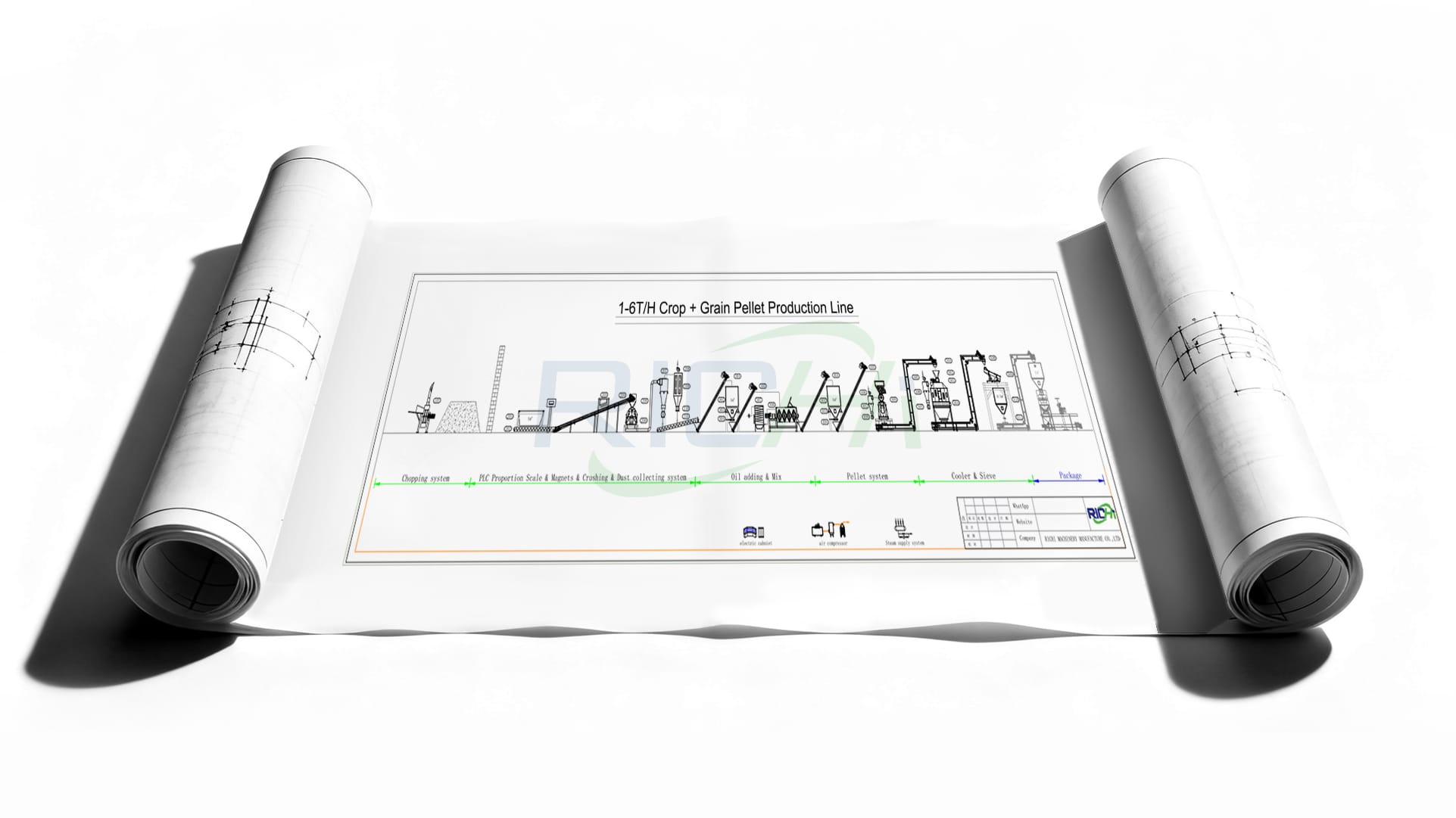
1–6T/H Horse Feed Pellet Plant Design
This horse feed mill project is based on a flexible straw and grain system where long crop straw is first processed through a straw chopping machine before entering a staged crushing and batching system, then mixed with pre-ground corn and wheat-based grains before pelleting.
The reason the capacity range fluctuates between 1 and 6 tons/hour is not equipment limitation but recipe switching behavior—some batches are 100% grain-based horse feed pellets, others are high-straw forage pellets, and some are mixed rations depending on cattle or horse growth stages, which directly affects grinding load, pellet density, and die compression ratio selection in the horse feed production line.
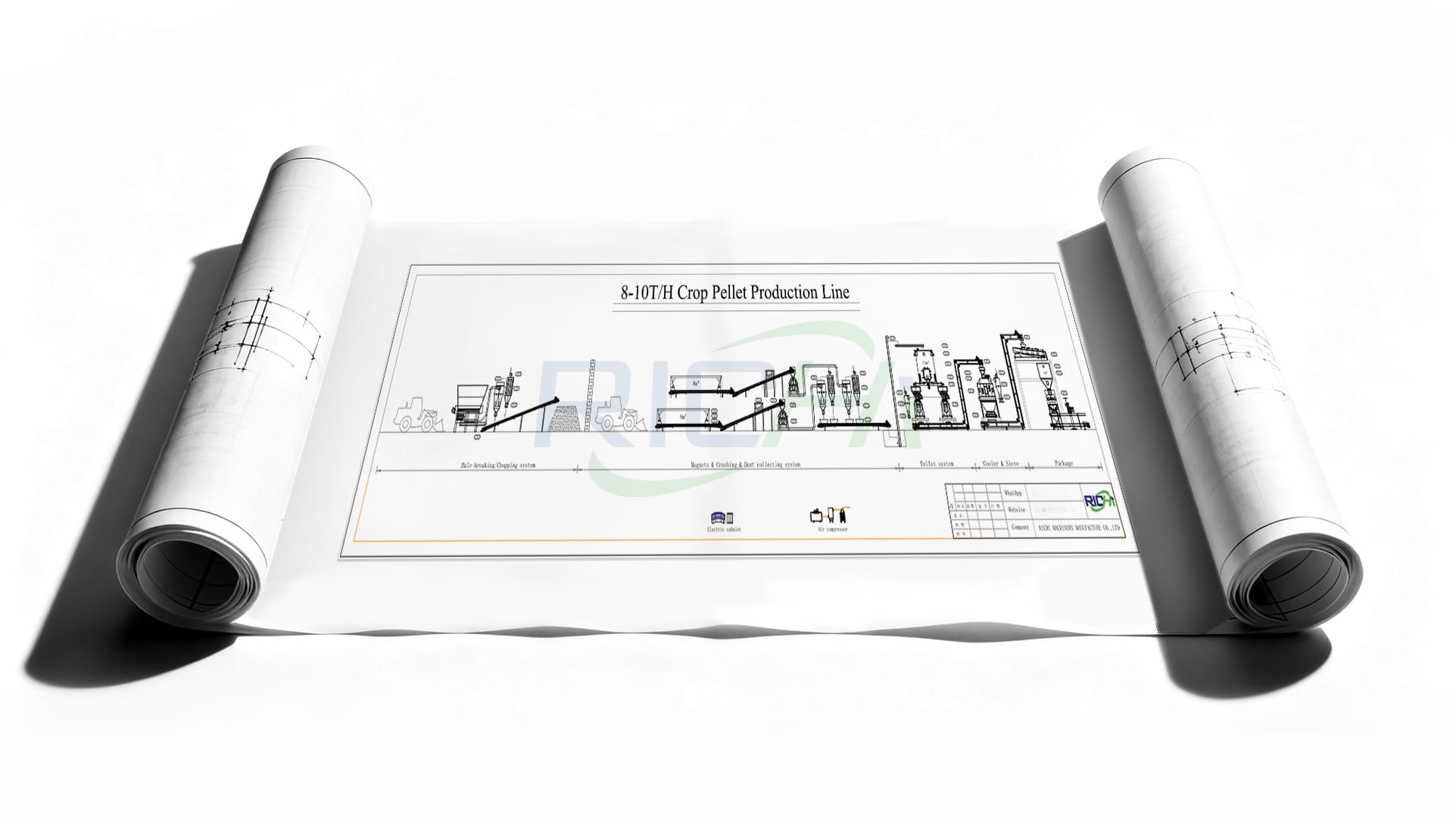
8-10T/H horse feed manufacturing plant Design
This horse feed mill installed in Iraq is a fully straw-based system where 100% low-moisture straw bales (under 15%) are first processed through bale breakers before batching, sometimes with manually added grain or premix ingredients depending on formulation changes, then crushed, pelletized, cooled, screened, and packed in a continuous flow.
The key challenge in this horse feed manufacturing plant is material uniformity because bale density varies between suppliers, which directly impacts hammer mill stability and pellet durability, especially when the system is also used for cattle, sheep, and camel feed production under one integrated line.
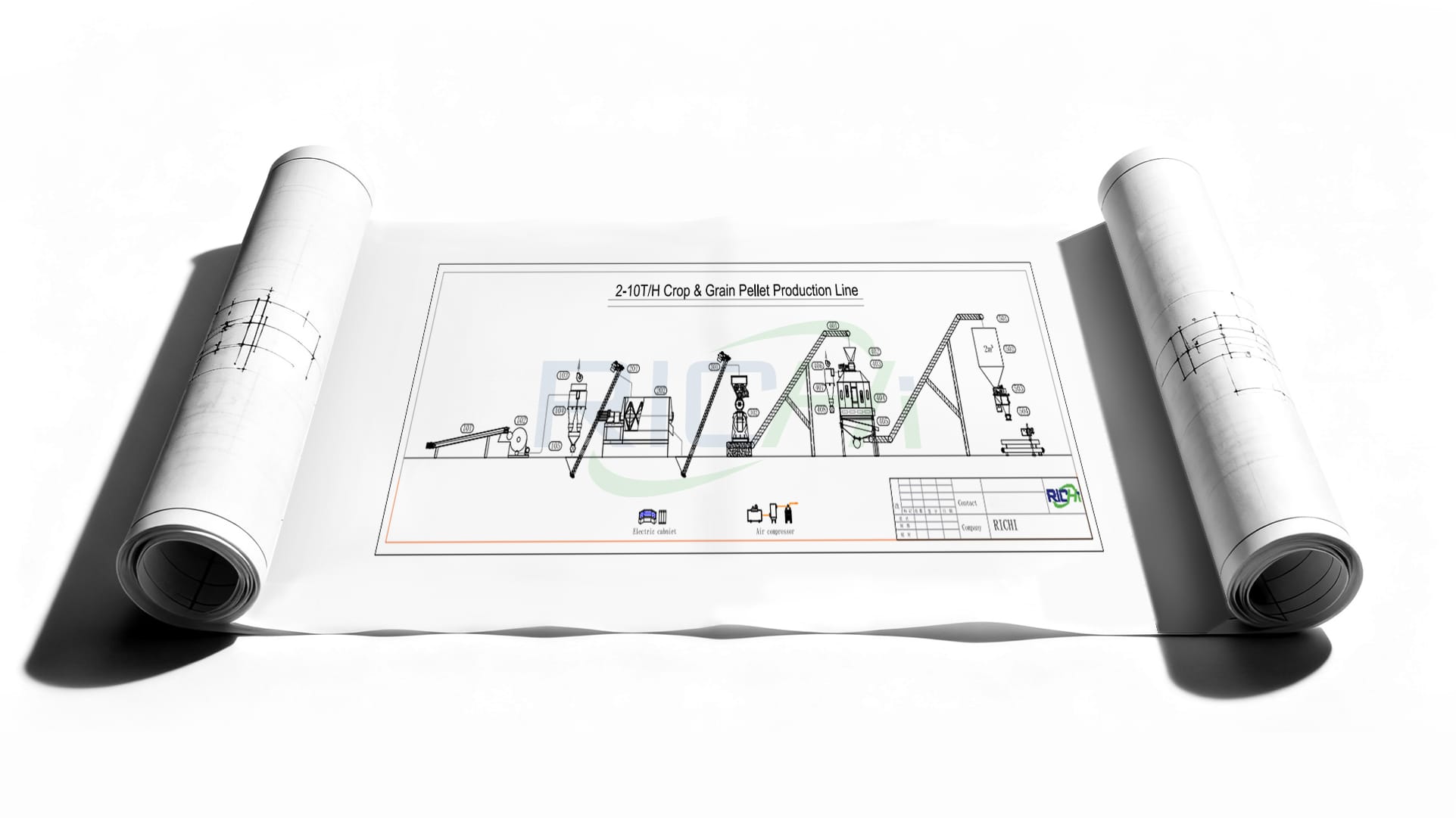
2-10 t/h complete horse feed plant design
This horse feed mill setup is designed for clients who already have pre-crushed grain systems and only need integrated straw and forage handling, where chopped grass, straw, and pre-ground corn or barley are blended in a central batching system before entering pelleting, cooling, and packaging sections.
Capacity variation in this horse feed production line comes from frequent formula switching between high-grain energy feed, forage-heavy maintenance feed, and mixed rations, which changes mixer retention time, pellet die pressure, and even cooling duration depending on moisture and fiber ratio inside the horse feed plant.
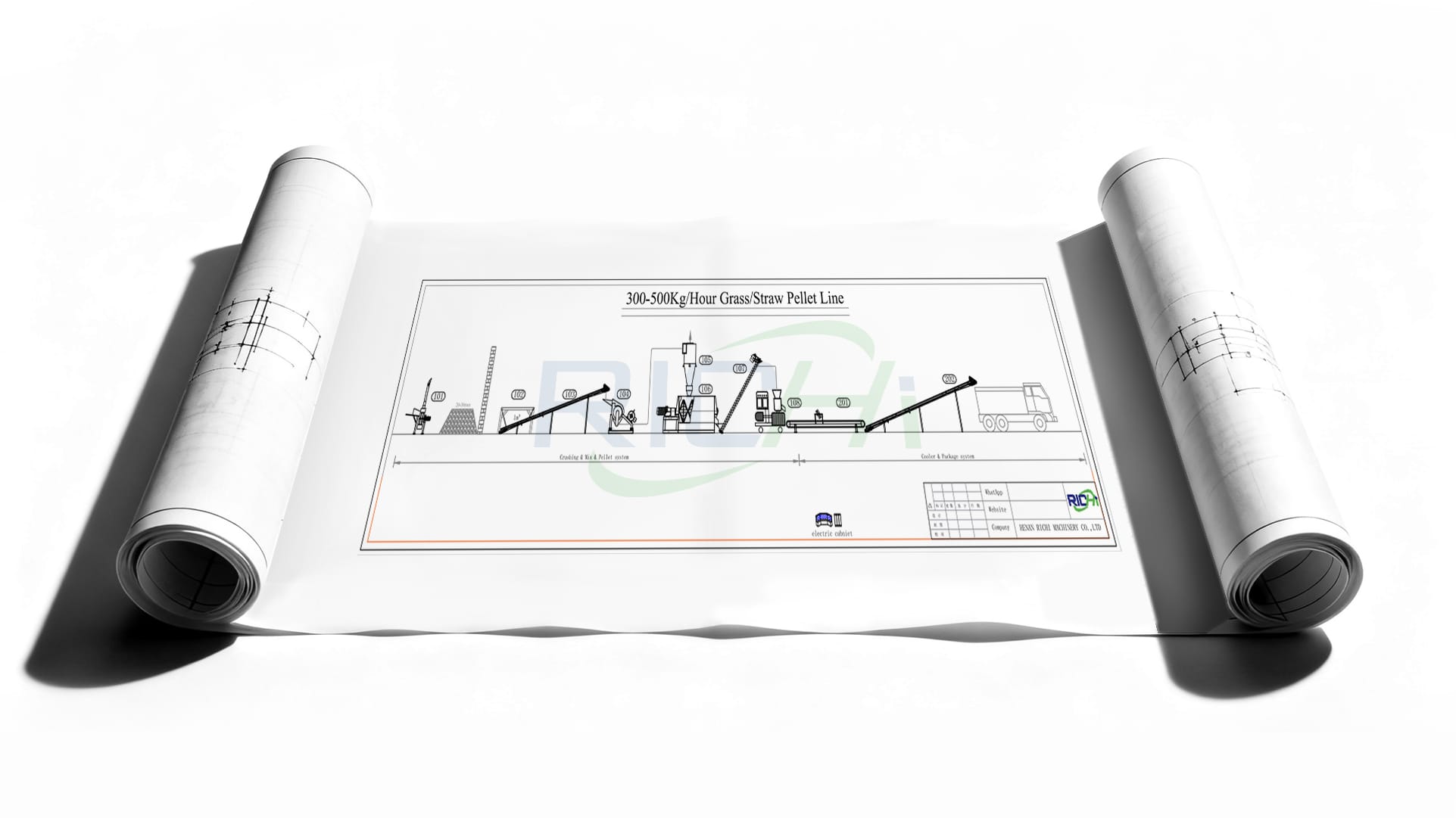
0.3-0.5T/H small automatic horse feed mill design
This compact horse feed mill is built for small farms using 100% alfalfa hay as raw material, where long grass is first chopped, then double-crushed before entering a simple mixing stage and pelletizing system, but instead of a full cooling tower, pellets are cooled through long-distance conveying before direct loading.
The limitation here is obvious—without screening and packaging, product uniformity depends heavily on operator control, but for low-budget farm-level horse feed production, this simplified horse feed processing line is often more practical than a full industrial system.
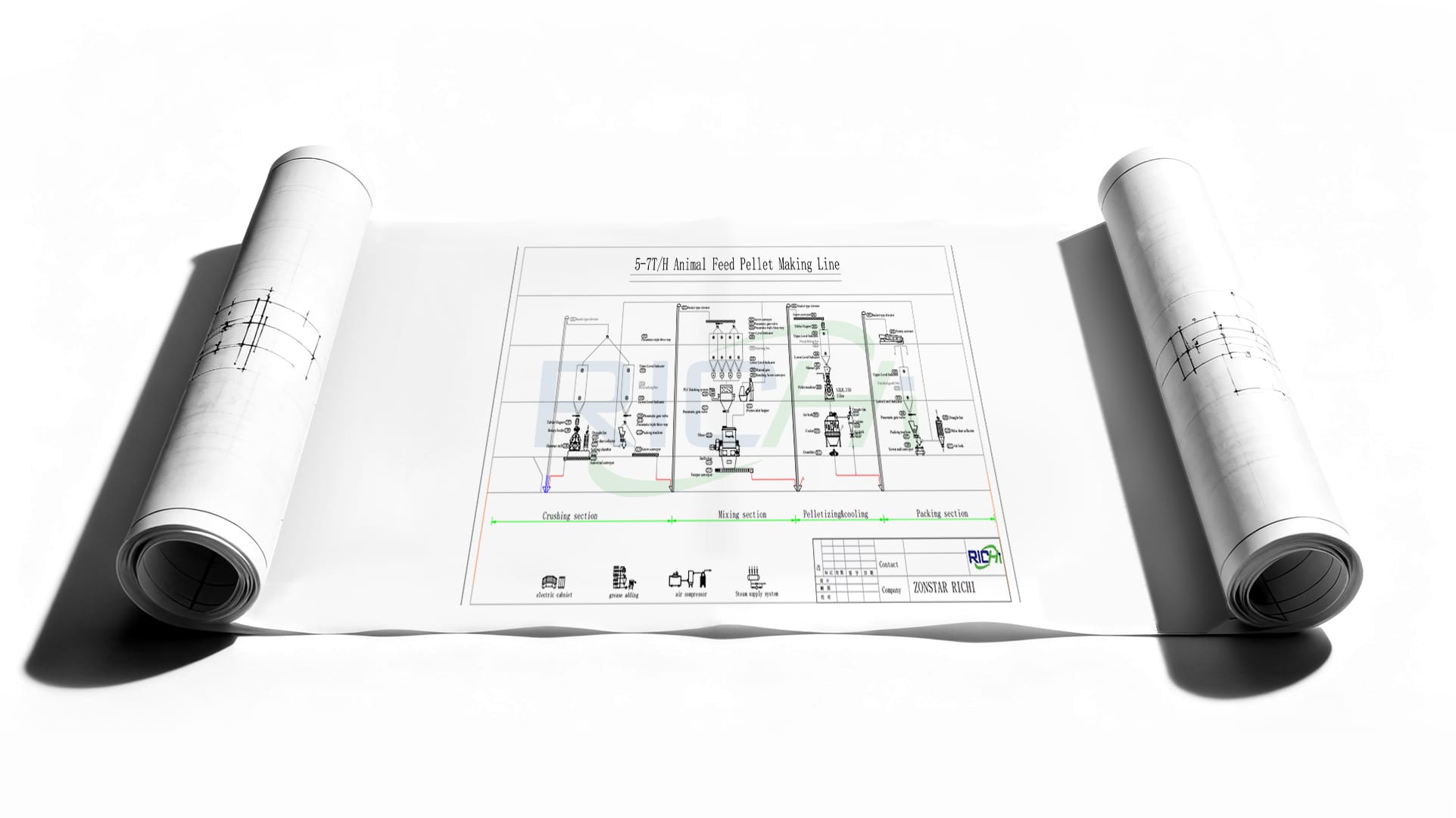
5-7 t/h horse feed pellet production line Design
This horse feed mill project uses clean powdered raw materials dominated by corn, supplemented with soybean meal and minor additives, where ingredients are directly fed into a computer-controlled batching system before grinding, mixing, pelleting, cooling, crumbling, screening, and automatic packing.
The key focus in this horse feed production line is energy feed consistency for performance horses, and because corn starch gelatinization is sensitive to temperature, the conditioning section becomes more critical than the pellet mill itself when stabilizing final pellet hardness.
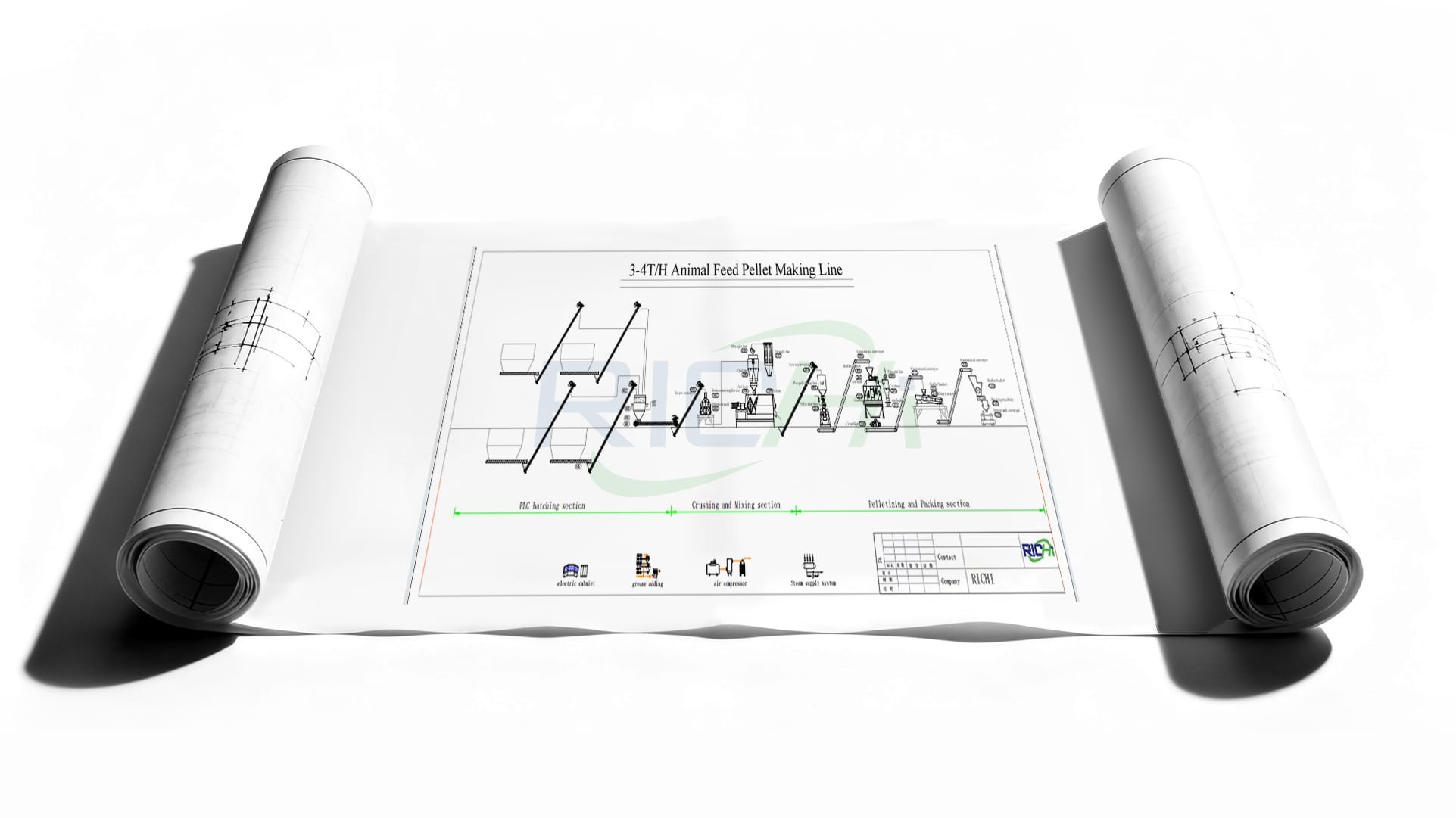
3-4T/H horse feed manufacturing system design
This horse feed mill system uses barley as the primary ingredient for horse feed while also switching between cattle and poultry feed production, where materials from four batching silos are processed through PLC-controlled weighing, crushing, mixing, pelleting, cooling, screening, and optional crumbling systems depending on product type.
A key feature here is the integration of a pellet crumbler, which is activated when switching from horse feed pellets to poultry feed production, showing how one horse feed manufacturing plant can operate as a multi-species feed facility without separate production lines.
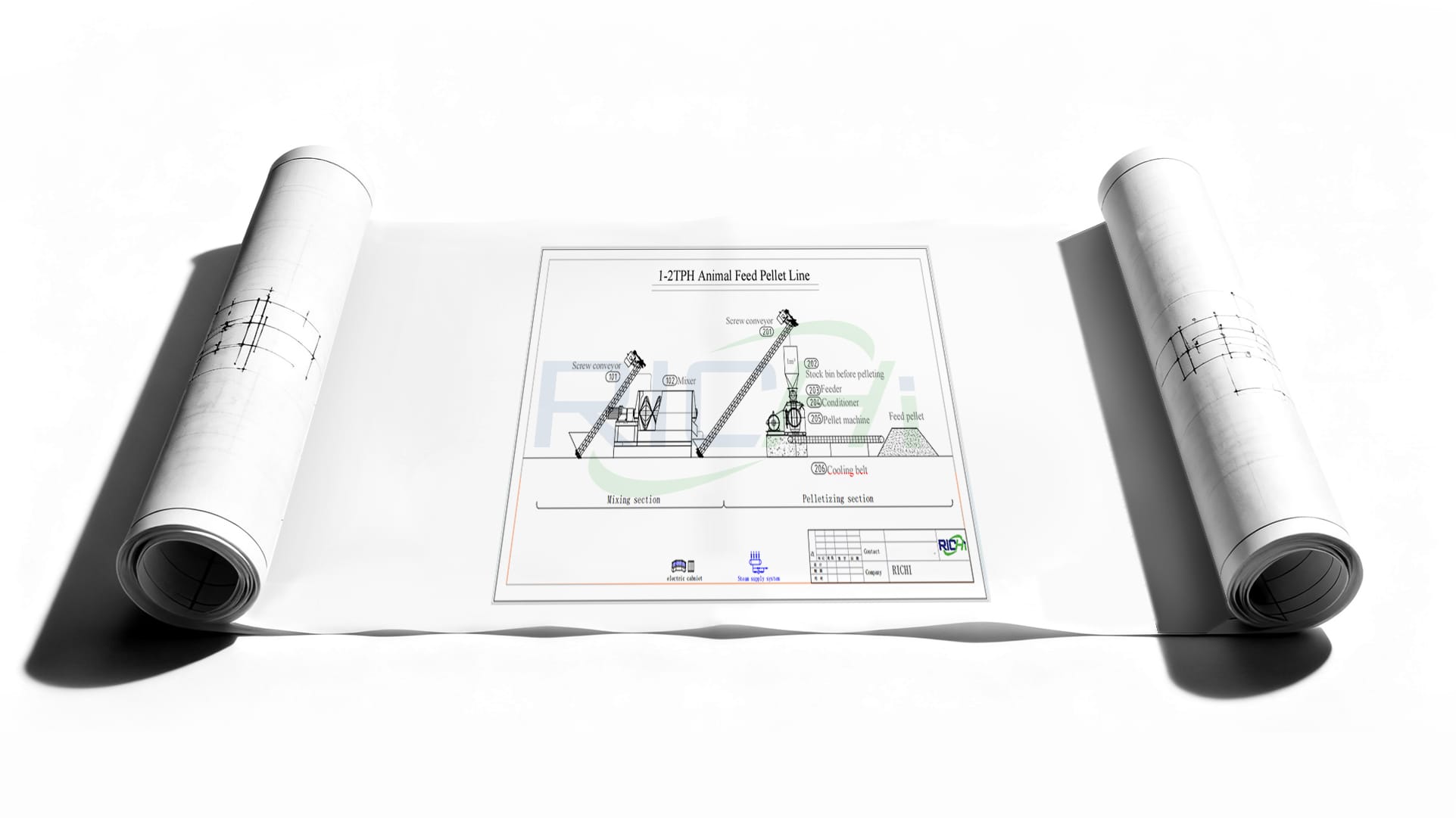
1-2T/H horse pellet feed production line design
This horse feed mill project in India is a simplified farm-based system where the client already owns a grinding unit, so our scope included conveying, mixing, and pelleting only, using oats as the main energy ingredient for on-farm horse feeding, and due to budget constraints, the system omits both packaging and cooling equipment, instead using natural discharge and ground stacking after pelleting.
Although simple, this horse feed production line is stable enough for internal farm consumption where logistics and packaging cost are not a priority.
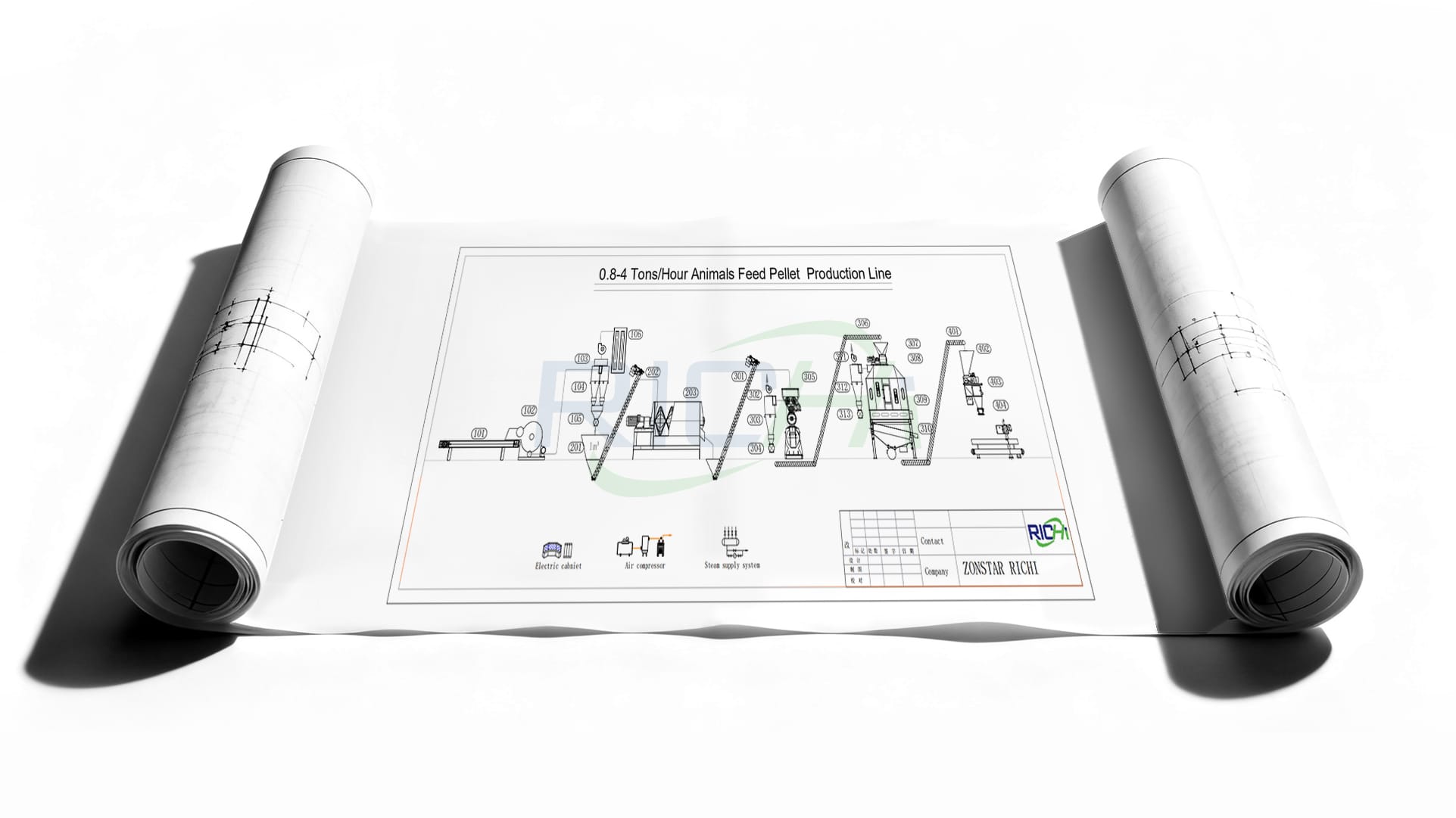
0.8–4T/H Straw-Based Horse Feed Production Plant
This horse feed mill combines pre-crushed straw with 20–40% barley and oats, where all materials pass through a unified hammer mill before batching, then enter mixing, pelleting, cooling, screening, and automatic packing sections.
The interesting point in this horse feed production line is how straw behaves differently depending on moisture variation—too dry increases dust loss, too wet affects pellet hardness—so operators often adjust grinding fineness more frequently than grain-only systems.
Global Horse Feed Mill Project
We’ve delivered a wide range of horse feed mill projects across different continents, covering everything from small farm-scale installations to fully automated industrial plants. These systems are not limited to horse feed pellet production alone—many clients also run grass feed production lines, premix systems, or combined livestock feed plants within the same horse feed mill infrastructure. That flexibility is one of the reasons our equipment is often listed in inquiries such as horse feed mill for sale, especially from buyers planning long-term expansion instead of single-purpose production.
Raw materials, production goals, and investment levels vary heavily between regions. Some clients focus on corn-based energy feed, others on alfalfa hay pellets, barley and oat blends, or straw-based roughage systems. In many cases, one plant handles multiple feed types depending on season or market demand, switching between horse feed, cattle feed, and even poultry or aquatic feed. Below are real project references showing how different horse feed mill configurations were designed and delivered worldwide.
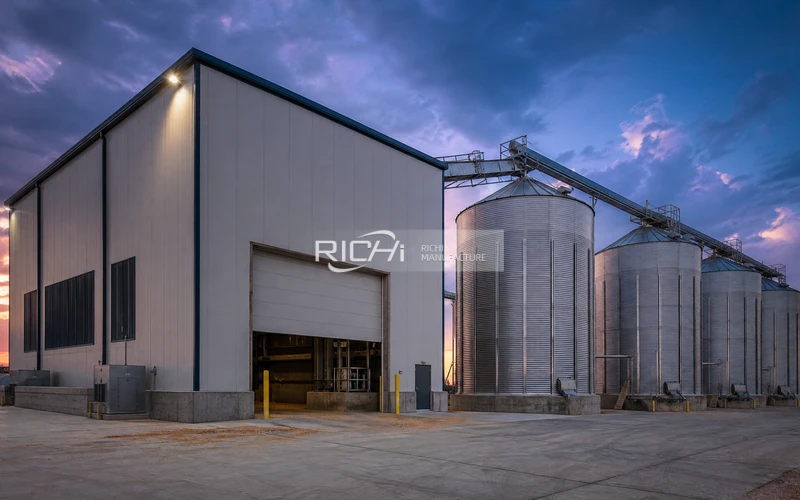
Energy Pellet Line
United States
A high-capacity horse feed mill installed for a large integrated feed producer, designed around corn, soybean meal, and oat-based energy formulations with alfalfa inclusion for fiber balance, operating at 10–12T/H with fully automated batching and pelleting.
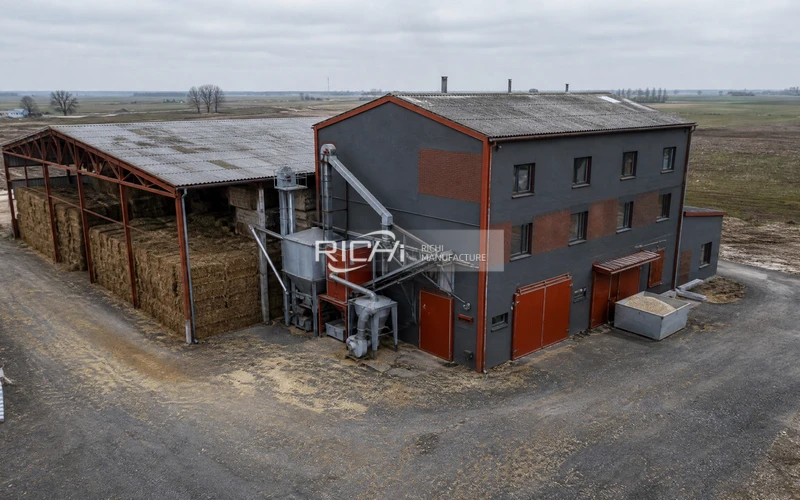
Precision Feed Plant
Germany
A Germany-installed horse feed mill operating at 5–7T/H, focused on high-precision equine nutrition including barley, oats, corn, and vitamin premix integration for racing and breeding horses, where the batching accuracy requirement is significantly higher than standard livestock feed plants.
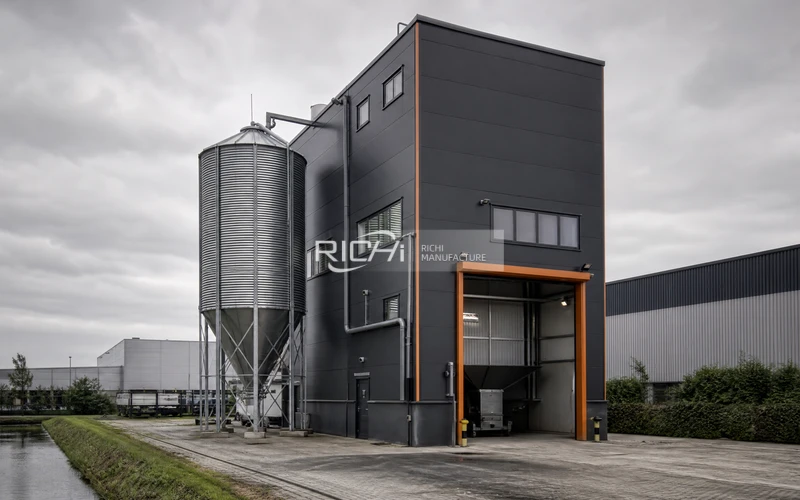
Compact Feed Line
Netherlands
A Netherlands horse feed mill system built for 5T/H compact automated production, combining corn, oats, wheat bran, and premix additives in a highly automated layout with minimal manual intervention; the system was designed for urban-adjacent feed factories where space limitation forced vertical equipment arrangement instead of traditional horizontal layout.
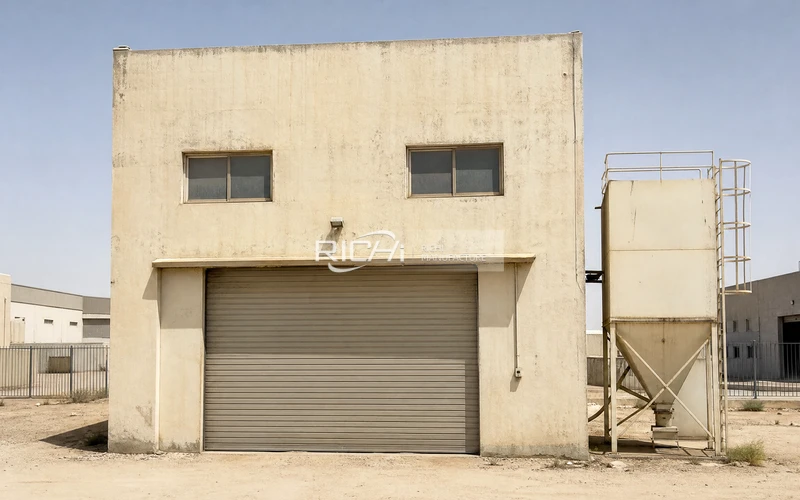
Compact Desert Line
Kuwait
A Kuwait horse feed mill project at 2T/H, designed for small commercial feed supply using corn, wheat bran, and alfalfa hay, where raw material moisture variability is low but heat exposure is extreme, requiring careful control of cooling duration after pelleting to prevent pellet surface cracking.
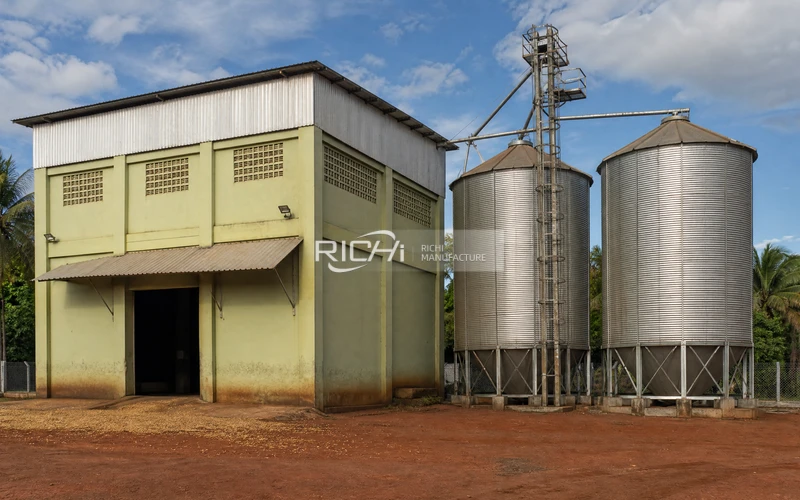
Grain Feed System
Brazil
A Brazil-based horse feed mill project operating at 6–8T/H, processing corn, soybean meal, wheat bran, and locally sourced alfalfa hay for mixed horse and cattle feed production, where seasonal humidity fluctuations directly impacted grinding stability.
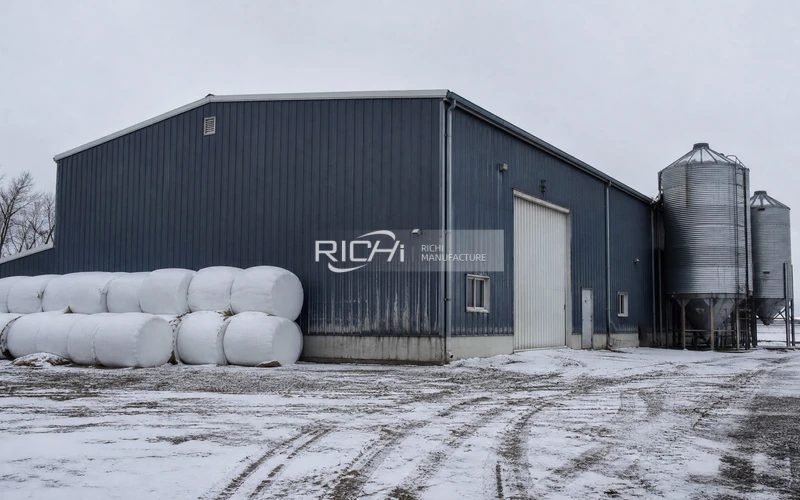
Oat Feed System
Canada
A Canada horse feed mill project designed at 4–6T/H, primarily processing oats, barley, wheat bran, and alfalfa hay for cold-climate horse farms, where feed stability during storage was more important than maximum throughput.
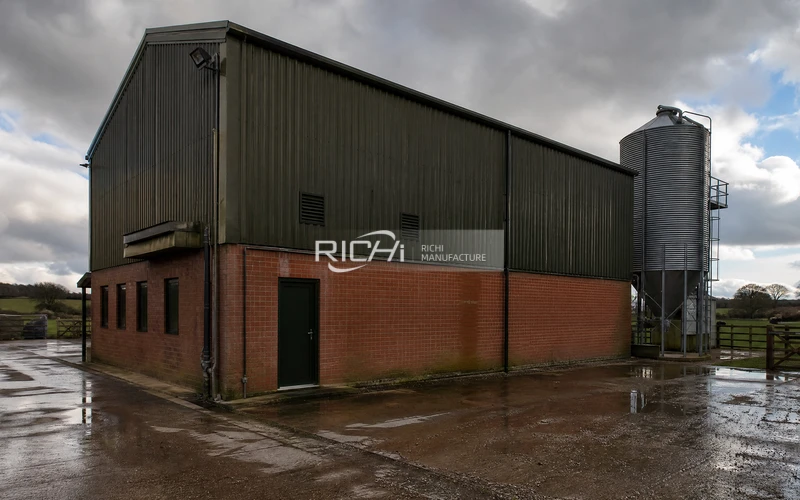
Racing Feed Plant
United Kingdom
A United Kingdom horse feed mill project operating at 3–4T/H, focused on racing horse nutrition using oats, barley, corn, and controlled molasses addition, where feed uniformity is critical for performance consistency; even slight variation in molasses spraying affected pellet surface texture, which directly influenced feed intake behavior in high-performance horses.
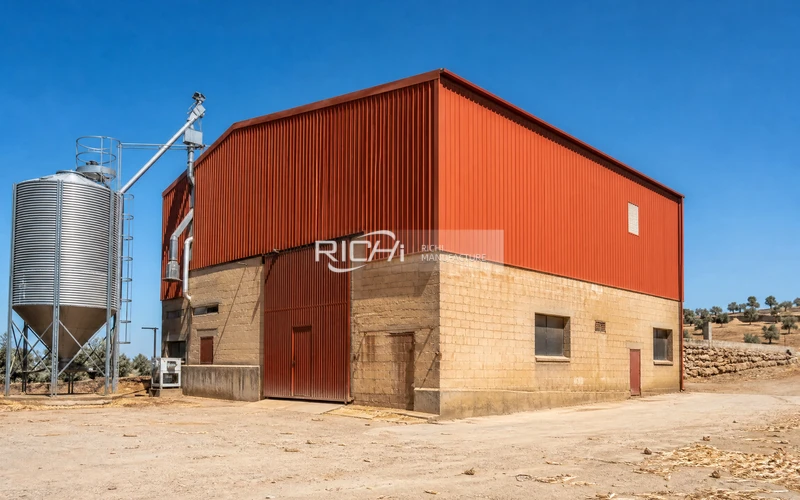
Mediterranean Feed Plant
Spain
A Spain horse feed mill operating at 1–2T/H, using barley, corn, olive byproducts, and alfalfa hay for mixed equine and cattle feed production, where oil-rich raw materials occasionally affected pellet hardness and required adjustment in conditioning temperature to maintain stable pellet formation.
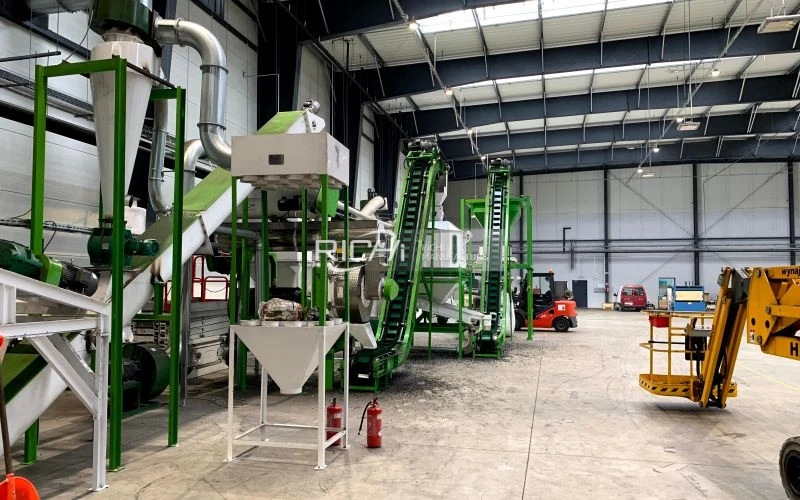
Straw Processing Plant
Poland
A Poland horse feed mill system built around barley straw, oats, and wheat bran, running at 3–5T/H with a strong focus on forage pellet production for farm horses and working animals; the key technical issue was straw length inconsistency from suppliers, which required a dual-stage grinding system before pelleting.
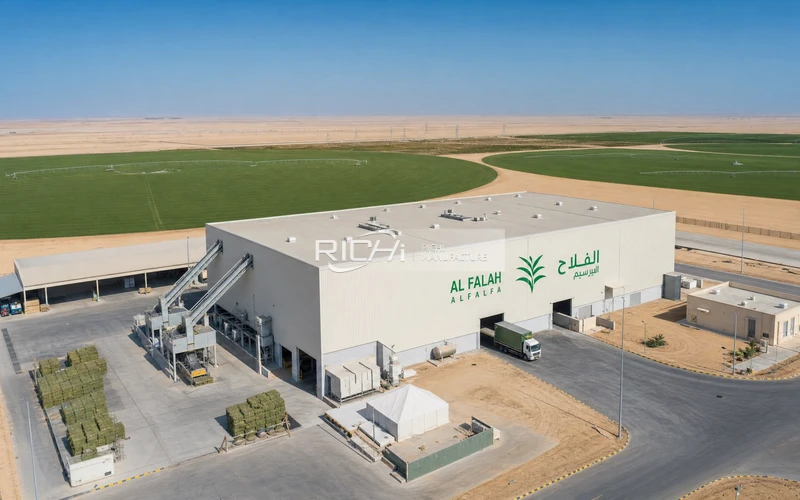
Alfalfa Pellet Line
France
A France-based horse feed mill operating at 3–6T/H, specialized in alfalfa hay pellets blended with corn and wheat bran for sport horses and breeding farms, where fiber length control is a major concern because overly fine grinding reduces chewing activity in horses.
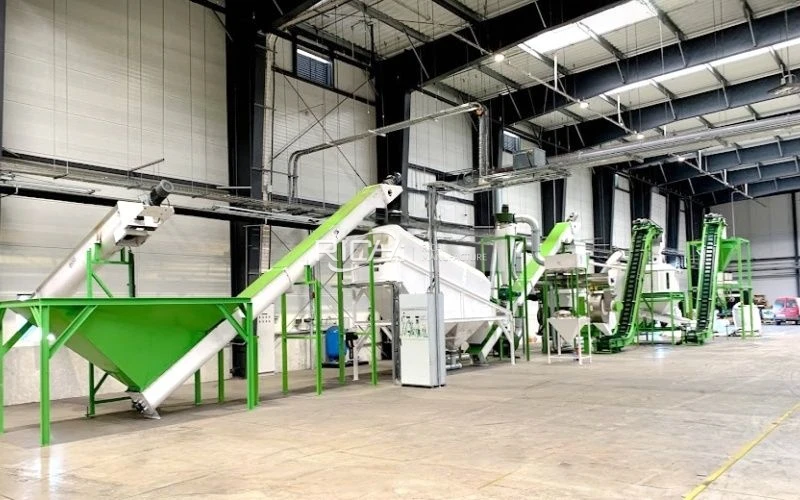
Livestock Feed Unit
Belgium
A Belgium horse feed mill designed at 4–6T/H, operating as a multi-species feed plant producing horse, cattle, and poultry feed, where the inclusion of a pellet crumbler system allows flexible switching between coarse livestock pellets and fine poultry feed formats without changing core equipment configuration.
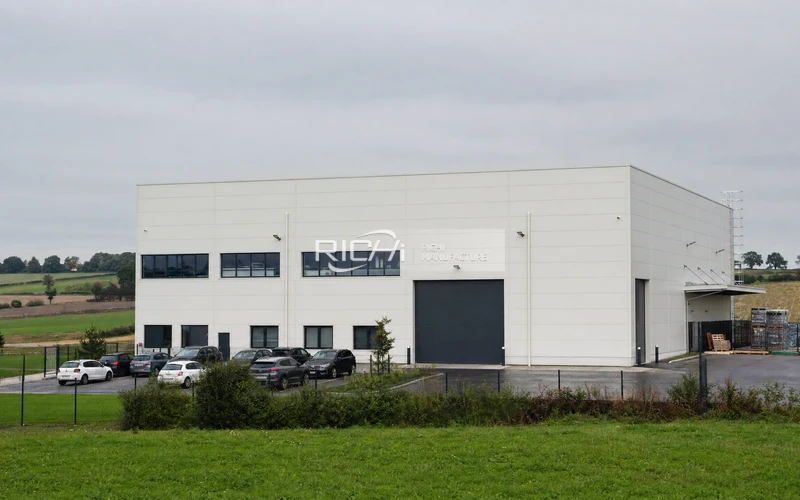
Fiber Feed System
Italy
An Italy horse feed mill project designed at 3–5T/H, processing alfalfa hay, wheat bran, corn, and oat blends for sport horses and farm animals, where fiber balance is tightly controlled to ensure digestibility, and operators often adjust grinding fineness depending on seasonal forage availability.
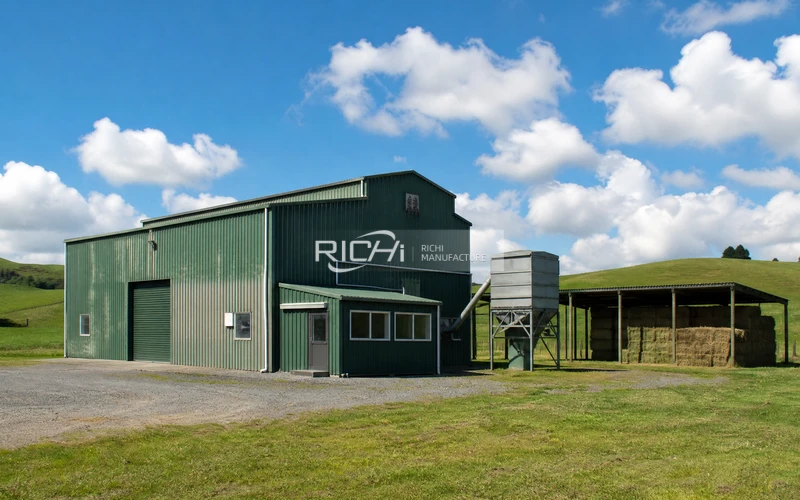
Grass Pellet Line
New Zealand
A New Zealand horse feed mill designed for 2–3T/H grass-based production using ryegrass, alfalfa hay, and limited grain supplementation, mainly serving equestrian farms and pasture-based feeding systems where pellets are used as nutritional supplements rather than full rations.
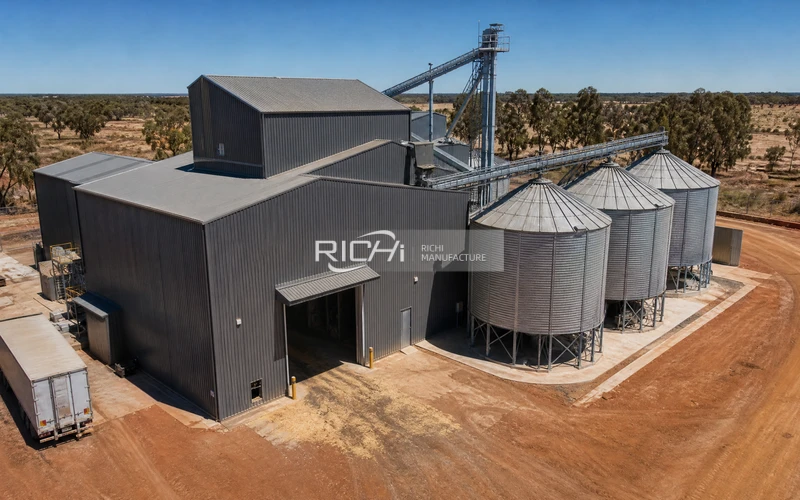
Mixed Feed System
Australia
An Australia horse feed mill project running at 8–10T/H, designed as a multi-livestock facility producing horse feed, cattle feed, and sheep feed using corn, barley, sorghum, and alfalfa hay, where production scheduling became the main challenge due to frequent recipe switching across different animal feed types within the same line.
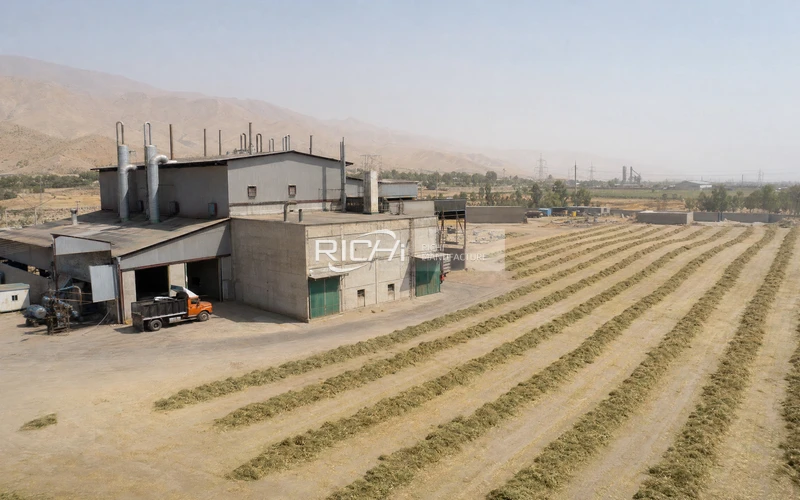
Desert Feed System
Qatar
A Qatar horse feed mill operating at 2–4T/H, built around imported alfalfa hay, oats, barley, and molasses-based formulations for horses and camels, where high ambient temperature and dust conditions required reinforced cooling and sealed conveying systems to maintain feed stability during storage and transport.
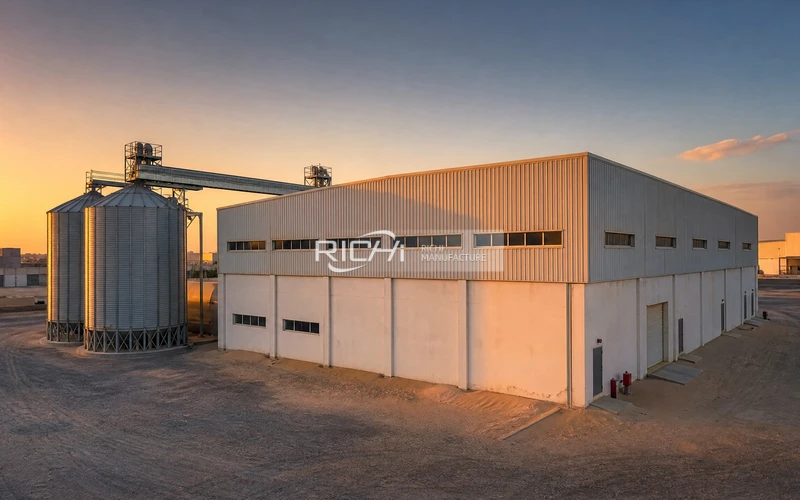
Multi Feed Plant
United Arab Emirates
A horse feed mill system operating at 6–8T/H, designed for horse, camel, sheep, and cattle feed production using corn, barley, oats, alfalfa hay, and molasses, where the biggest operational constraint is not production capacity but recipe switching frequency under high-temperature desert conditions.
Across different regions, operators running our horse feed mill share a similar conclusion after commissioning — once raw material fluctuations and process settings are stabilized, the line becomes predictable in daily production. Below are selected on-site feedback summaries from commissioning engineers and plant supervisors.

Germany – Stable Pellet Hardness Control
- Role: Feed Production Supervisor
- Project: 3–4 T/H horse feed mill for mixed equine ration
“We had issues with pellet hardness drifting due to oat moisture variation, especially in winter storage conditions. After tuning conditioning time and steam input, the horse feed mill finally kept a stable 9–10 mm pellet profile. What impressed me is how sensitive the system is to fiber balance in barley-based formulas”

Saudi Arabia – Dust Control During Batching
- Role: Plant Commissioning Engineer
- Project: 5 T/H horse feed mill for alfalfa-based horse feed
“In dry climate, alfalfa powder caused inconsistent micro-dosing at first. The horse feed mill itself was fine, but dust affected weighing accuracy. After adjusting aspiration points and feeder speed, the batching accuracy became stable within one shift.”

France – Cooling Balance Adjustment
- Role: Senior Line Engineer
- Project: 6 T/H horse feed mill with integrated cooling system
“Pellet temperature stayed high after summer runs, which affected storage quality. We realized the issue was airflow distribution in cooler, not the press. After adjustment, the horse feed mill line became much more stable during continuous operation.”

USA – Raw Material Variability Handling
- Role: Shift Production Engineer
- Project: 8 T/H commercial horse feed mill line
“Corn moisture varies too much between shipments. The horse feed mill responded well once we shifted from fixed steam control to load-based adjustment. It reduced sticky buildup and improved consistency during long shifts.”

Canada – Die Wear Optimization
- Role: Mechanical Commissioning Specialist
- Project: 4–5 T/H sport horse feed mill
“Barley-heavy recipes caused uneven die wear earlier than expected. After adjusting grinding size upstream, pellet uniformity improved and die life extended noticeably. The horse feed mill itself remained stable under continuous operation.”

UAE – Line Synchronization
- Role: Commissioning Lead Engineer
- Project: 6–7 T/H automated horse feed mill
“Batching discharge and pelletizing were slightly out of sync at startup, causing short overload peaks. After introducing a small buffer timing adjustment, the horse feed mill line ran smoothly as a single system.”

Breaking Down the Real Investment in a Fully Automatic Cattle Feed Plant
A real horse feed mill investment is never just equipment. The total project cost shifts heavily depending on raw material handling complexity, moisture levels, automation, and local construction conditions. We’ve seen identical systems differ by 2–3x in total investment depending on country.Below is a realistic breakdown range based on our global feed mill project data.
Whole Manual/Automatic Horse feed plant set up investment : $37,000 – $40,000,000
Equipment Cost Breakdown :
Raw Material Cleaning machine price :
$3,000–$15,000
Crushing & Grinding machine Price :
$2,000–$40,000
Bale Breaking machine Price :
$5,000–$25,000
raw material Drying machine Price :
$8,000–$250,000
Batching & Weighing machine Price :
$2,000-$50,000
horse feed Mixing machine Price :
$2,000–$20,000
Horse feed pellet machine Price :
$7,000-$80,000
Cooling equipment Price :
$1,500-$15,000
Screening equipment price :
$2,000-$8,000
Horse feed Packing systems Price :
$2,000–$30,000
Conveying machine Price :
$3,000-$25,000+
Dust Collection system Price :
$3,000–$20,000
Liquid/Molasses Addition Price :
$2,000–$15,000
Storage Silos Price :
$5,000–$500,000
Control system & automation Price :
$5,000-$100,000
These numbers come from hundreds of installed projects across different continents. Still, no two horse feed mill setups cost the same. Material choice, automation level, and factory layout always change the final number. If the goal is serious investment planning, the most practical step is not guessing ranges—it’s letting us map your raw materials and output target into a real configuration and budget structure.

Horse Feed Mill Engineering & Service
Building a horse feed mill is not just supplying machines. Most project failures we’ve seen come from incomplete system design rather than equipment quality. We usually stay involved from layout planning to long-term operation support.
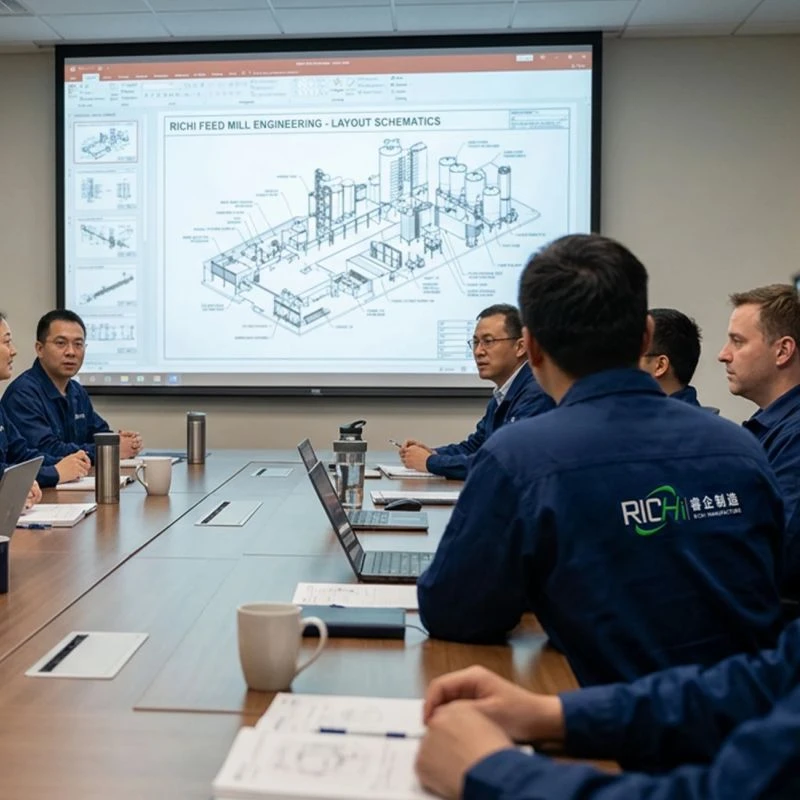
Process Design & Engineering Layout
We design full horse feed mill systems including factory layout, flow diagrams, silo positioning, and raw material routes. Some projects require vertical layouts due to land limits, others prioritize maintenance access. No fixed template works.
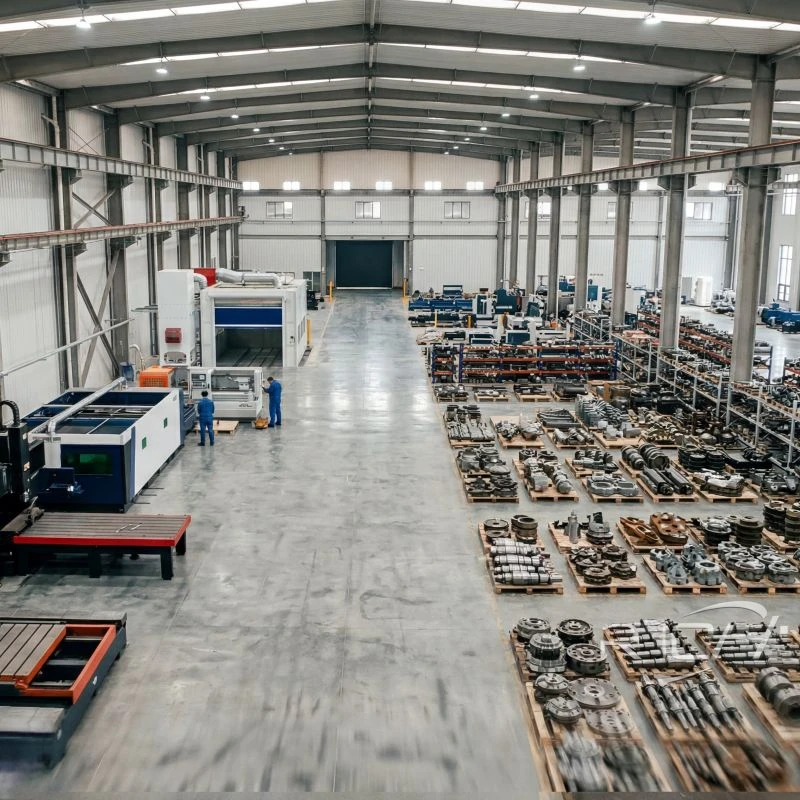
Manufacturing & Equipment Production
All core equipment is produced in our manufacturing base—crusher, mixer, pellet mill, cooling system, conveyors. Many units are customized depending on raw material behavior like straw length or grain hardness.
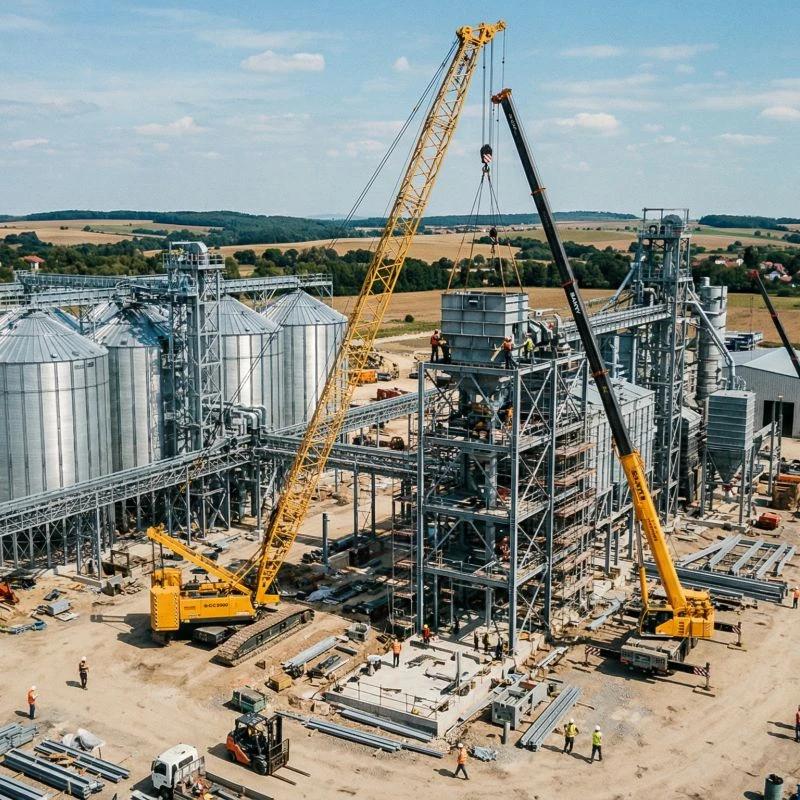
Installation & Commissioning
On-site assembly, wiring, calibration, and first production runs. We’ve seen small installation mistakes affect pellet density more than equipment design itself—so commissioning matters more than most buyers expect.
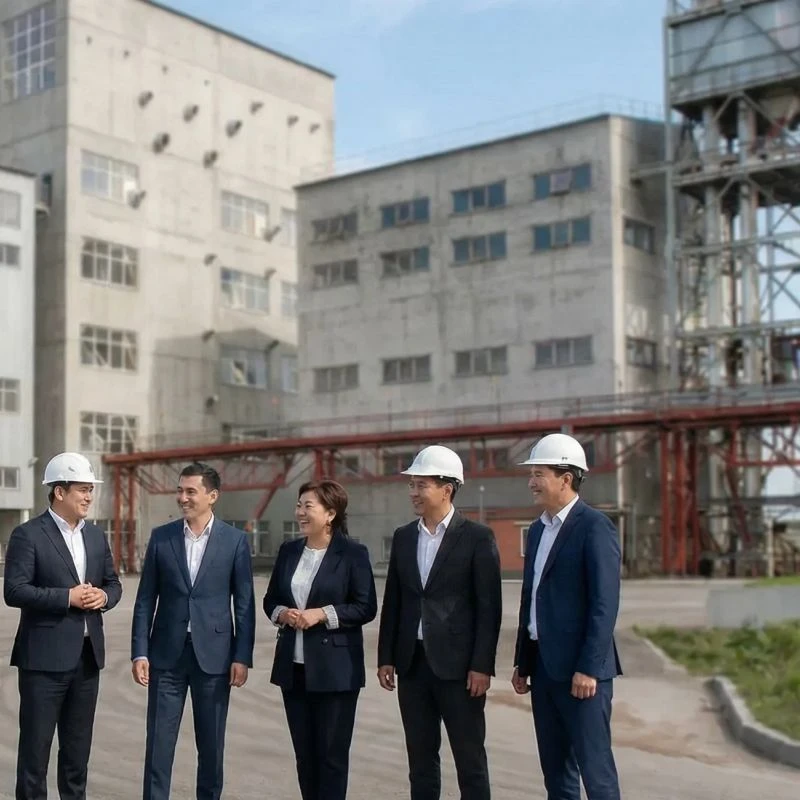
After-Sales & Lifecycle Support
Spare parts supply, operator training, troubleshooting, and production optimization. Some horse feed mill clients come back years later just to upgrade capacity without changing the original layout.
Free Engineering Support
Before any equipment is sold, we usually provide preliminary technical support. Not marketing material—actual engineering inputs based on raw materials and capacity targets. We also include continuous support such as operator training, production testing, and recipe adjustment guidance after installation.Some clients treat this as standard service. Others realize later—this early design stage often decides whether a horse feed mill runs smoothly or struggles for years.

Free project cost estimation based on raw materials
Free process flow chart design for horse feed mill
Free 3D plant layout and equipment positioning
Free structural and civil layout drawings
Free electrical and circuit system design
Free factory zoning and space planning
Free equipment configuration list & reference cases
Free long-term remote installation and operation guidance
The Equipment Behind Horse Feed Mill Machinery Supply
A horse feed mill project is usually decided at equipment level before anything else. Once the client fixes raw material type—corn-based, straw-based, or mixed forage—the whole machinery configuration starts taking shape. In most real cases we’ve handled, buyers don’t start from “machines,” they start from output problems: unstable pellet quality, high dust ratio, or inconsistent fiber mixing. That’s where equipment selection becomes very specific.
We supply a full range of horse feed mill equipment covering the entire production flow: raw material receiving system, silo storage, cleaning and screening unit, hammer mill or straw crusher, batching and dosing system, horizontal mixer, liquid addition system (molasses/oil spraying), pellet mill, pellet cooler, rotary screener, crumbler (for special feed size adjustment), and automatic packing machine.
Auxiliary systems include dust removal, pneumatic conveying, bucket elevator, and full PLC control cabinet. Some clients only need a partial setup—others build a complete horse feed production line from zero raw grain intake to finished bagged feed.
One thing often underestimated: straw-heavy horse feed mill systems behave very differently at the crushing stage compared to grain-only plants. Long fiber materials can overload hammer mills if screen selection is wrong. We’ve seen operators reduce capacity just to stabilize particle size distribution. Not ideal, but common in early commissioning stages.
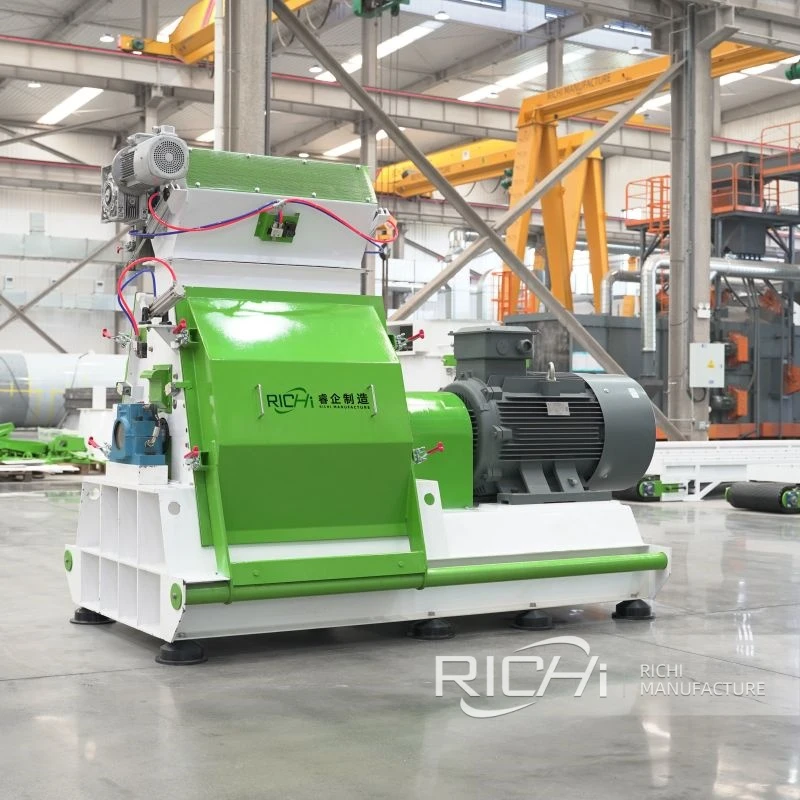
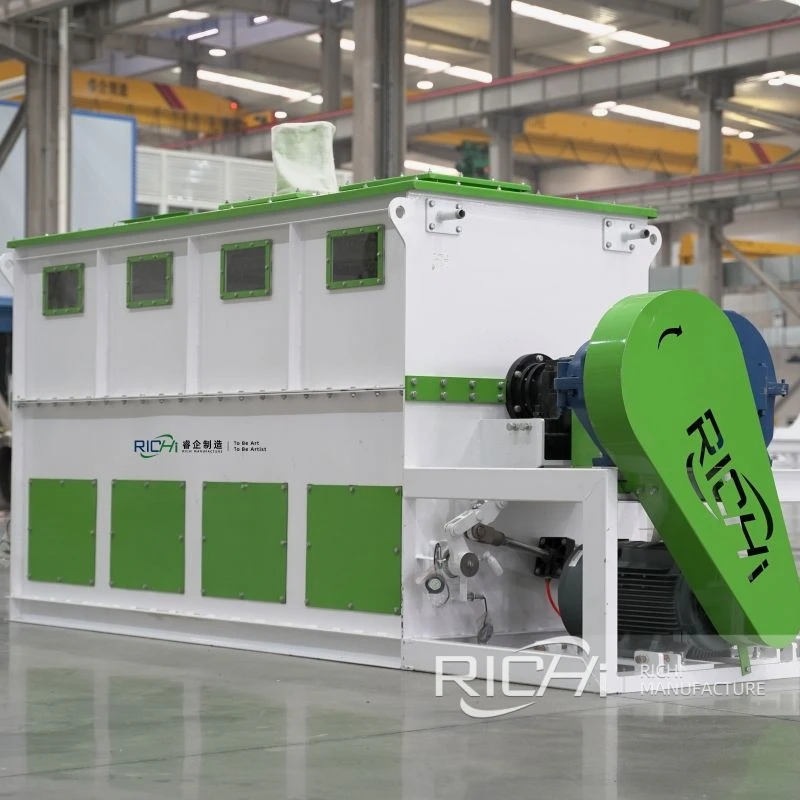
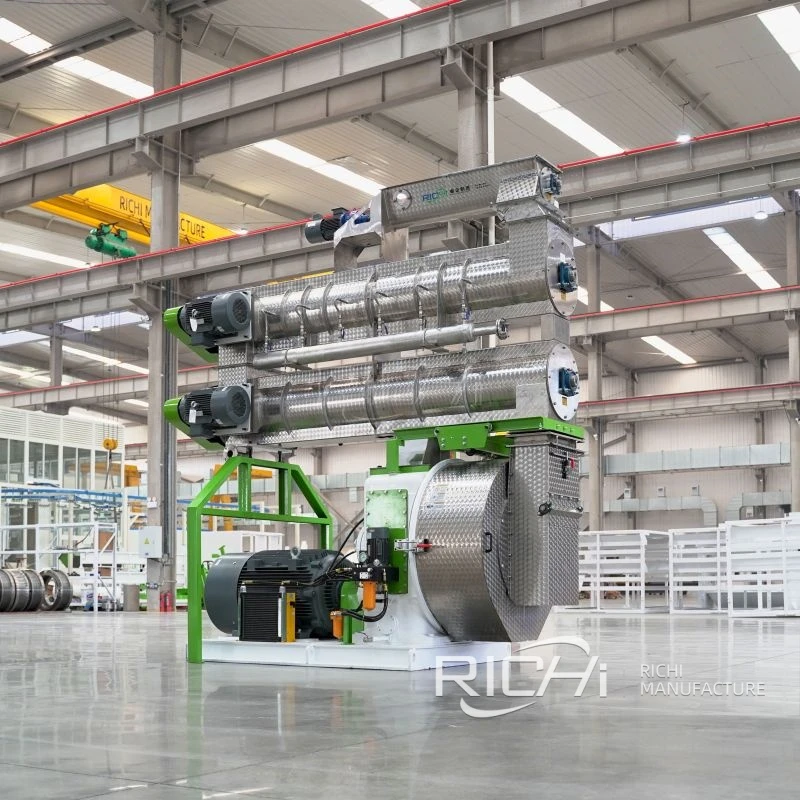
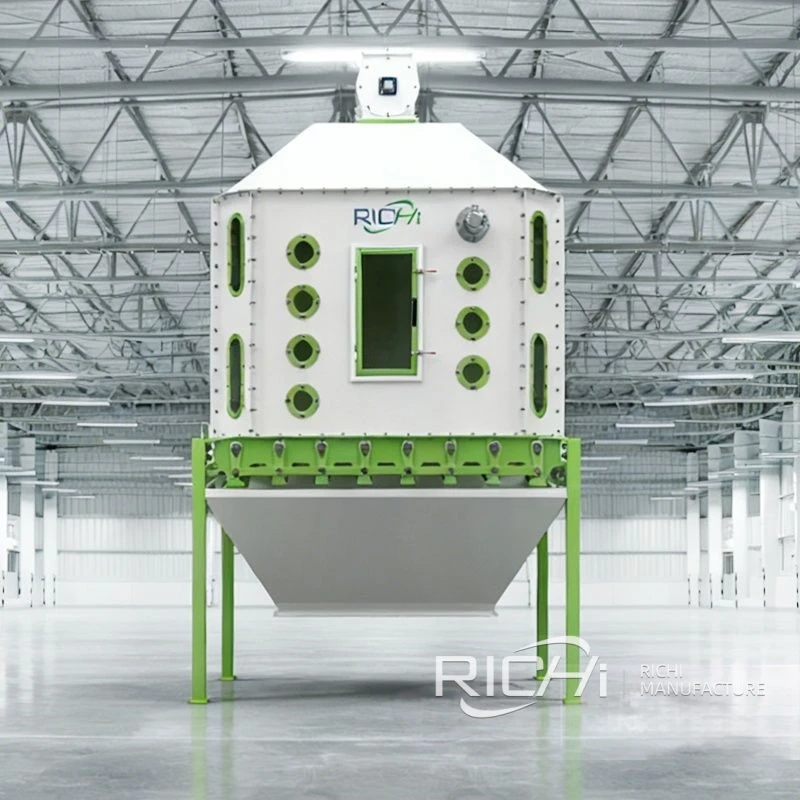
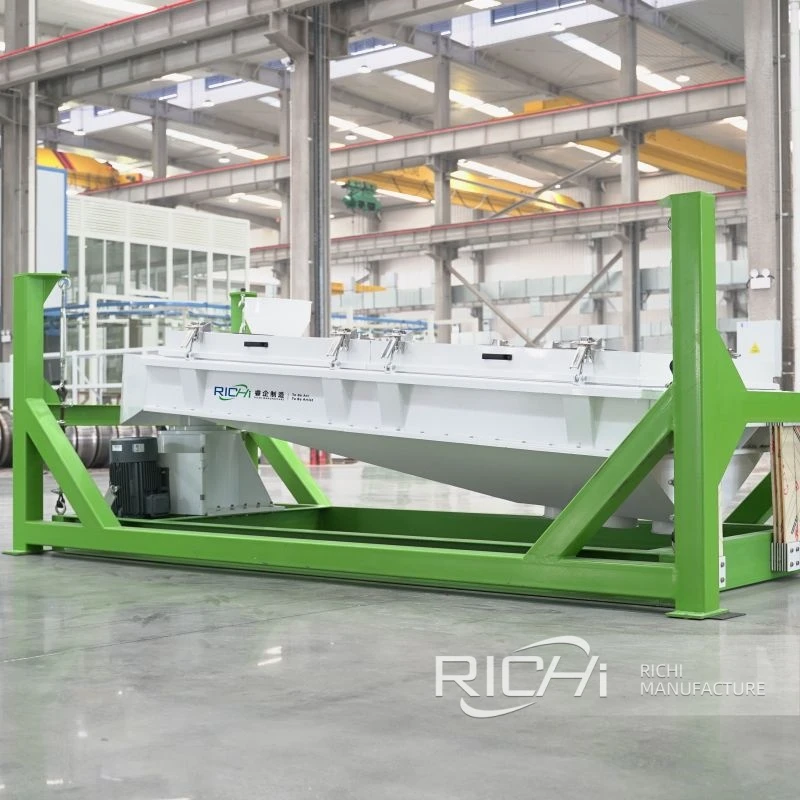
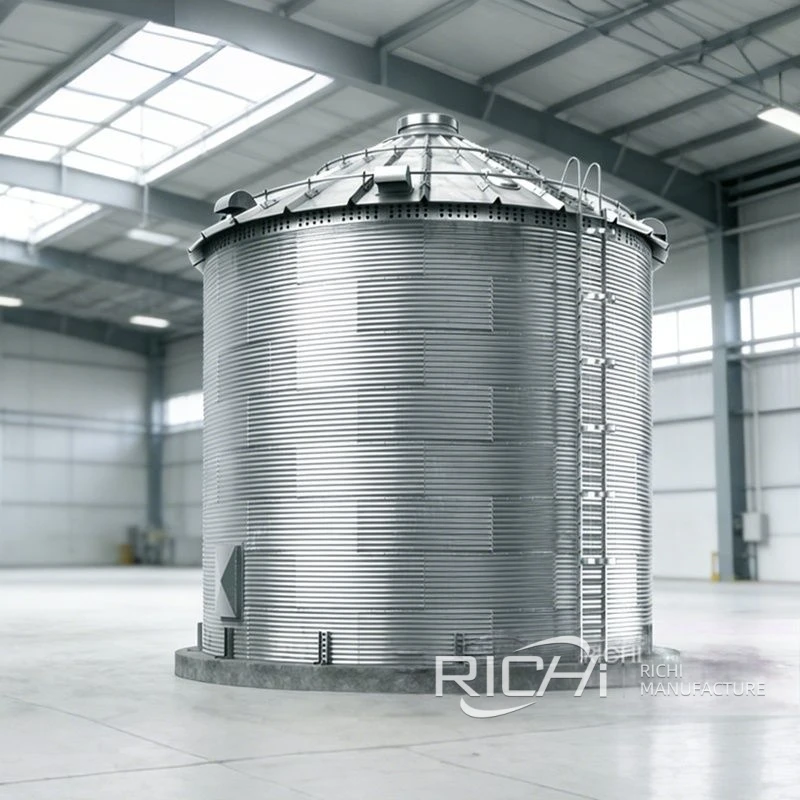
If you’re evaluating a horse feed mill setup or comparing different horse feed mill equipment configurations, the key is not just what machines are included—but how they behave together under your actual raw material conditions.
Horse Feed Processing Outlook & Industry Growth Potential
What’s interesting about the horse feed mill industry right now is not just demand growth, but how fragmented product requirements have become. Ten years ago, most buyers only asked for standard horse pellets. Now the same facility may need oat-based racing feed, alfalfa fiber pellets, and low-energy mash feed at different times. This shift is directly changing how a modern horse feed mill is planned and configured.
Profit today is less about producing one stable formula and more about switching flexibility. A well-designed horse feed mill can move between corn-based energy feed, straw roughage pellets, and blended premix products without major mechanical changes. In many plants, seasonal strategy is common—barley-heavy formulas in winter, grass-based pellets in summer—adjusted mainly through recipes and minor die or conditioning changes, not equipment replacement.
Another clear trend is multi-species use. Some facilities now combine horse feed, cattle feed, and sheep feed in one production line, not because it is complex, but because it gives investors flexibility under unstable raw material pricing. The real limitation is no longer equipment capacity—it is operator control and production discipline. At that point, a horse feed mill is no longer just a machine setup, but a full feed production strategy.
Talk to Us About Your Market Opportunity
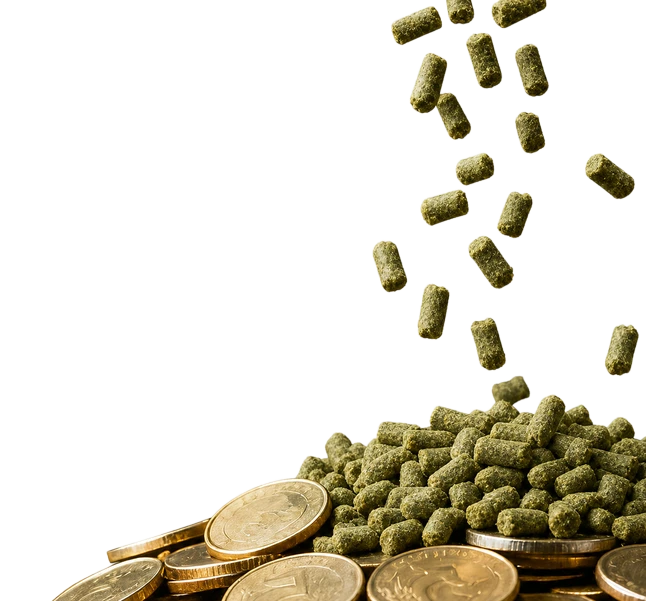
Horse Feed Raw Materials, Feed Types and Practical Formulations
Walk into any working horse feed mill and the first thing you notice isn’t the machines—it’s the raw material bins. Corn cracking slightly at the edges, alfalfa meal with that dry green smell, oats coming in different sizes depending on the supplier. Then the additives… sometimes clean, sometimes inconsistent.
Most horse feed systems we design end up handling a mix like this: corn, barley, oats, wheat bran, soybean meal, alfalfa meal, beet pulp, rice bran, molasses, plus vitamin-mineral premixes. In some regions we’ve seen unusual additions too—sunflower husk powder, dehydrated grass pellets, even brewery by-products when the cost pressure gets tight. The point isn’t the list. It’s the variability.
That’s where the horse feed mill process design becomes sensitive. Moisture swings, fat content changes, particle size differences—these decide whether you run stable pellets or end up constantly adjusting steam and die compression. We usually build the process around the client’s actual raw material mix instead of forcing a standard flow. Even small changes in formulation can shift conditioning temperature by 8–12°C, which operators notice immediately on the press load. Not always smooth. But that’s the reality on site.
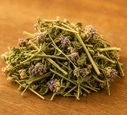
Alfalfa Hay
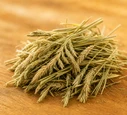
Timothy Hayge
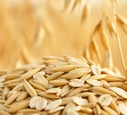
Oats
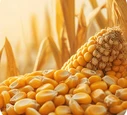
Corn
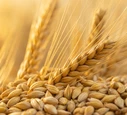
Barley
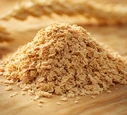
Wheat Bran
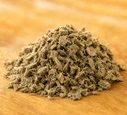
Beet Pulpal
Foal Feed
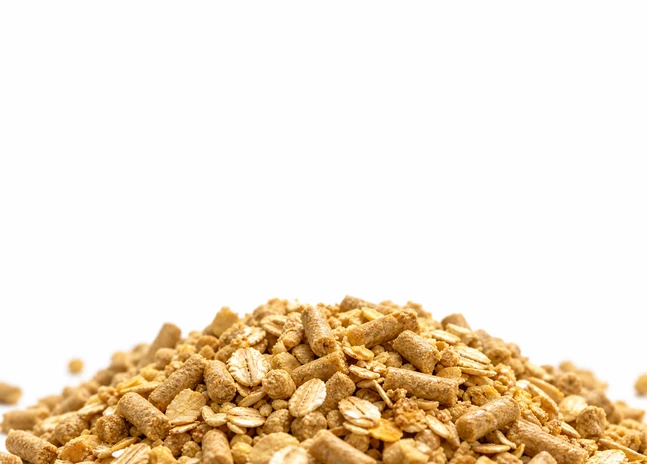
Foal feed is where operators are usually most cautious. Too fine and it becomes dusty; too coarse and digestion becomes uneven. Most setups use cracked corn, oat groats, soybean meal, wheat bran, and a higher proportion of milk-based or highly digestible protein sources in some regions.
Pellet size is typically 3.0–4.0 mm. We often reduce die compression ratio slightly because young horses are sensitive to hardness—something buyers underestimate when they only look at output capacity.
Check Foal Feed Process Layout
Performance Horse Feed
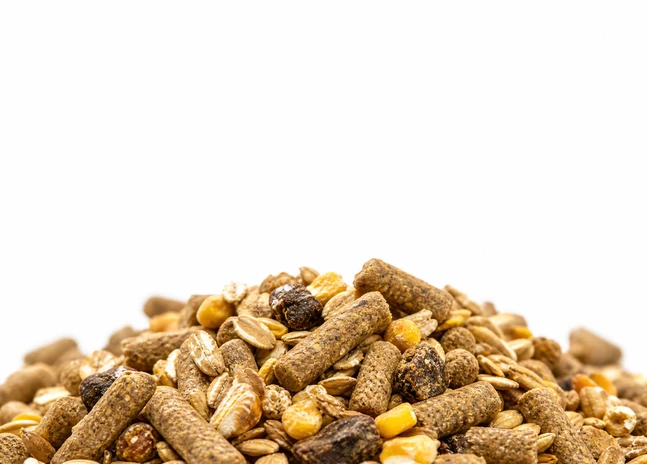
This one is usually driven by owners of racing or sport stables. Energy density matters more than cost per ton. Corn, barley, oats, beet pulp, soybean meal, and fat additives (vegetable oil or rice bran oil) are common.
Pellet hardness is slightly higher here—around 4.0–6.0 mm. Some clients even prefer crumble form instead of full pellets depending on feeding strategy before training sessions.
Explore Performance Feed Solutions
Breeding Horse Feed
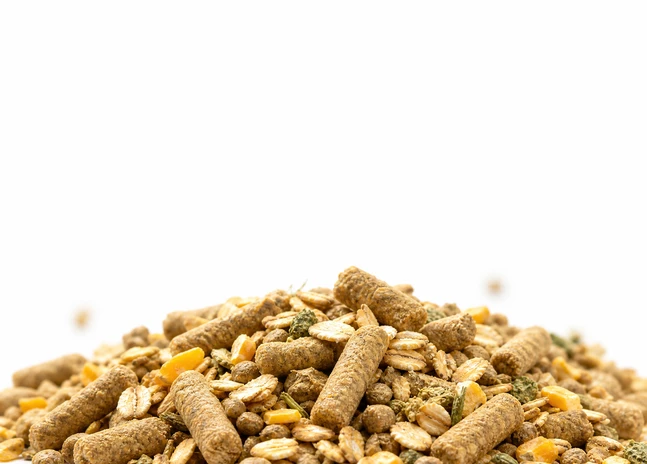
Breeding feed is less about energy spikes and more about stability. Soybean meal, alfalfa meal, corn, wheat bran, plus controlled calcium and phosphorus ratios dominate the formula.
Pellet size usually stays in the 4.0–5.0 mm range, but the key is nutrient uniformity. We often see clients insist on higher inclusion of fiber sources, which changes the friction inside the conditioning chamber more than expected.
View Breeding Feed Line Design
Senior Horse Feed
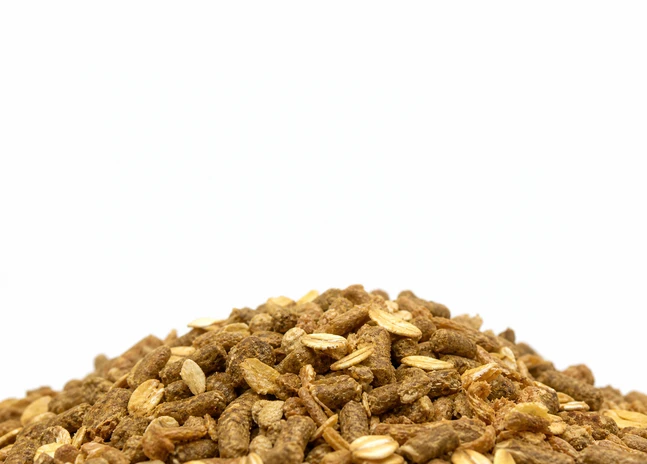
Older horses don’t tolerate hard feed well. That’s usually where beet pulp, alfalfa meal, wheat bran, and softened grains dominate. Some formulations include pre-gelatinized starch sources.
Pellet diameter is usually smaller—around 3.0–4.5 mm. We’ve seen clients reduce die speed significantly just to avoid excessive compression heat.
Discuss Senior Feed Configuration
Typical Horse Feed Formulation References
Foal Feed Formula
Cracked corn
28%
Oats
22%
Soybean Meal
18%
Wheat Bran
15%
Alfalfa Meal
12%
Premix
5%
…
…
Performance Horse Feed Formula
Corn
35%
Barley
20%
Beet pulp
15%
Soybean meal
15%
Rice bran oil
5%
Premix
5%
…
…
Breeding Horse Feed Formula
Corn
25%
Alfalfa meal
20%
Soybean Meal
20%
Wheat Bran
18%
Molasses
7%
Mineral mix
5%
…
…
Senior Horse Feed Formula
Beet pulp
30%
Alfalfa meal
25%
Wheat bran
18%
Oats
15%
Vitamin mix
5%
Binder
5%
…
…
These are not fixed recipes. They’re closer to what we actually see in commercial horse feed mill projects. Formulations shift depending on region, grain price, and available by-products.Some clients treat these tables as “final recipes.” That’s usually where problems start. Formulation always interacts with the horse feed mill configuration—conditioning time, die compression, cooling airflow. Change one side, the other reacts immediately.
horse feed mill faqs
What is the real price of a horse feed mill project?ant?
+
It depends on capacity and raw material structure. Not a fixed machine price.
For grain-based horse feed production line systems:
- 1–2 t/h → $10,000–50,000
- 3–4 t/h → $50,000–120,000
- 5–7 t/h → $70,000–250,000
- 8–10 t/h → $150,000–300,000
- 12–20 t/h → $250,000–580,000
- 25–40 t/h → $450,000–850,000
- 50–60 t/h → $900,000–1,400,000
- 60–80 t/h → $1,450,000–1,800,000
- 80–100 t/h → $2,000,000–3,000,000
- 100–120 t/h → usually above $2,500,000
For crop-based or straw-added horse feed processing line:
- 0.3–2 t/h → $37,000–62,000
- 0.5–4 t/h → $80,000–200,000
- 1–6 t/h → $99,000–220,000
- 2–10 t/h → $190,000–400,000
- 3–12 t/h → $220,000–450,000
- 4–20 t/h → $300,000–620,000
We usually tell clients one thing: price is not the first problem. Raw material structure decides equipment configuration, and that shifts investment more than people expect.
Can a horse feed plant run inside an existing workshop?
+
Yes, but height matters more than floor area.
A horse feed production plant typically needs 8–12 meters for vertical layout if you use a standard gravity-flow system. If the building is lower than that, you’ll need extra conveying stages—more energy, more maintenance points.
We’ve seen cases in Eastern Europe where clients forced a full horse feed processing plant into a 6-meter building. It runs, but the dust control load increases. Not ideal, especially for molasses-added formulas.
Do I need a pit for installation?
+
Sometimes yes, sometimes no.
For a compact horse feed pellet mill line, pit-free installation is possible using bucket elevators. But when capacity goes above 8–10 t/h, many engineers still prefer partial pit design for better feeding stability into the conditioner.
One mistake we often see: clients avoid pits completely, then struggle with unstable feeding angle into the horse feed pellet mill. Small issue, but it shows up as inconsistent pellet hardness.
What raw materials are suitable for a horse feed manufacturing plant?
+
Most horse feed manufacturing systems handle:
Corn, barley, oats, wheat bran, soybean meal, alfalfa meal, beet pulp, rice bran, molasses, mineral premix.
In Australia and South America, we’ve also integrated higher fiber content—sun-dried grass, rough hay powder. That changes wear rate inside the conditioning chamber more than expected.
Too much variability in fiber length… that’s where operators start complaining about power fluctuation.
Can one horse feed factory produce multiple feed types?
+
Yes. This is actually common.
A modern horse feed factory or horse feed manufacturing line often switches between:
- Foal feed
- Performance horse feed
- Breeding horse feed
- Senior horse feed
But there is a limitation—switching between high-fat and high-fiber formulas requires cleaning time. If not managed, residue buildup in the horse feed processing line equipment will affect pellet consistency.
We’ve seen clients underestimate changeover time. It’s not the machine—it’s the cleaning discipline.
What is included in a complete horse feed production line?
+
A standard complete horse feed mill or complete horse feed production line usually includes:
Grinding system, batching system, mixing system, conditioning system, horse feed pellet mill, cooling system, screening system, packing system, plus dust collection and control system.
For a turnkey horse feed plant, we also design airflow, steel structure layout, and sometimes raw material warehouse integration.
Nothing fancy. Just making sure material flows without manual interruption.
How different is a horse feed pellet mill compared to poultry feed equipment?
+
Not small difference.
Horse feed pellet mill systems usually operate at slightly lower compression ratios because horses are sensitive to hard pellets. If you push poultry settings into equine feed production, you’ll get durability—but poor intake performance.
We’ve seen this mistake in retrofit projects: same die, different animal behavior. That mismatch shows up immediately in feeding trials.
Can an automatic horse feed mill reduce labor significantly?
+
Yes, but not zero labor.
An automatic horse feed mill reduces manual batching and feeding, but operators are still needed for moisture control, steam adjustment, and formulation switching.
Fully automated doesn’t mean fully hands-off. Especially when raw material moisture swings between 11% and 16%—which happens more often than clients expect.
Is a horse feed manufacturing system suitable for export projects?
+
Yes. Most of our horse feed manufacturing systems and equine feed production lines are exported as modular steel-frame designs.
But shipping size becomes critical above 20 t/h. Some clients in Africa and Central Asia prefer split installation because container limits affect assembly sequence.
We usually design around transport constraints first, then production layout.
What makes your horse feed processing line different from standard feed systems?
+
The key difference is adaptability.
A horse feed processing line has to handle fiber variability, fat addition, and relatively sensitive pellet texture requirements. That means conditioning stability matters more than raw throughput.
Some clients push for higher capacity, but forget: if conditioning is unstable, 10 t/h becomes worse than 6 t/h in real output consistency.
That’s usually where we step in—not just supplying a horse feed mill, but adjusting the entire process logic around the actual feed formulation.
What is the minimum investment for a small horse feed mill?
+
This is usually the entry question from new investors testing the market.
A small horse feed mill or horse feed making machine setup around 0.5–2 t/h can start from roughly $10,000–50,000 in grain-based systems, or around $37,000+ if straw and roughage processing is included.
We’ve seen farms in Central Asia and parts of Eastern Europe start this way—small batch production, mostly for internal supply first. The limitation is obvious: once demand exceeds 2–3 t/h, manual batching becomes the bottleneck faster than expected.
Can I upgrade an existing feed factory to horse feed production?
+
Yes, but not always directly.
A horse feed factory upgrade usually requires changes in pellet conditioning and grinding fineness. Existing poultry or cattle lines often lack the control needed for fiber-rich horse feed formulations.
We’ve walked through old plants in Turkey and Argentina where the main issue wasn’t capacity—it was inconsistency after adding alfalfa and beet pulp. The horse feed production line equipment needs more stable moisture control than standard feed systems.
How much space does a complete horse feed factory require?
+
Depends heavily on layout type.
A compact complete horse feed factory (3–5 t/h) can fit into 600–1,200 m² with vertical design. Larger horse feed production plants above 10 t/h usually require 2,000 m² or more plus raw material storage space.
One detail many buyers underestimate: warehouse space is often larger than production itself. Especially when handling multiple grain types for horse feed processing line flexibility.
What is the power consumption of a horse feed production line?
+
Not fixed—it depends on grinding and conditioning load.
A typical horse feed production line runs around 60–90 kWh per ton in grain-heavy systems. Fiber-rich equine feed production systems can go slightly higher due to extra grinding resistance.
We’ve seen cases where oat-heavy formulas ran smoothly, but switching to high-fiber alfalfa blends increased motor load by 12–18%. Operators notice it immediately on the main drive current.
Can horse feed pellet plant handle high-fat formulas?
+
Yes, but it needs correct conditioning control.
A horse feed pellet plant handling fat-added recipes (3–8%) must stabilize steam injection carefully. Too much moisture and pellets lose structure; too little and die friction increases sharply.
We’ve seen performance horse feed production lines struggle here—not because of machine failure, but because oil addition was not synchronized with conditioning temperature.
What is the lifespan of a horse feed pellet mill die?
+
Typically 800–1500 tons per die set, depending on raw material abrasiveness.
Alfalfa-heavy formulas wear dies faster than grain-only feed. In some horse feed manufacturing systems running high-fiber blends, die replacement cycles shorten by nearly 20–30%.
This is where operators usually adjust compression ratio rather than force longer die life.
Is dust control necessary in a horse feed processing plant?
+
Absolutely.
Horse feed processing plant systems generate fine particles during grinding and mixing—especially when handling dry alfalfa or bran. Without dust control, material loss and explosion risk increase.
We’ve seen older horse feed factories running without proper aspiration systems. It works… until humidity drops and static builds up.
What automation level is typical in modern horse feed plants?
+
Most new horse feed plants run semi-automatic to fully automatic batching systems.
Automatic horse feed plant setups reduce human error in formulation weighing, especially when switching between foal feed and performance feed recipes.
But full automation still requires manual oversight. One incorrect moisture input, and pellet hardness shifts noticeably within minutes.
Can a horse feed manufacturing line produce export-grade feed?
+
Yes, if hygiene and consistency standards are controlled properly.
A horse feed manufacturing line designed for export usually includes stainless contact parts in key sections, tighter sieving control, and more stable cooling systems.
We’ve built systems for Middle East and South American clients where export certification required stricter particle uniformity than domestic feed.
What is the biggest mistake investors make in horse feed production projects?
+
Over-focusing on capacity, underestimating raw material variability.
A horse feed production plant doesn’t fail because of tonnage limits. It fails when raw material moisture, fiber length, or fat content is not stable enough for continuous pellet formation.
We’ve seen 20 t/h systems running worse than well-tuned 5 t/h lines for this exact reason. Capacity doesn’t mean stability.
What does a complete horse feed mill production line include, and what kind of raw materials and capacities can it handle?
+
A complete horse feed mill is not just a pellet machine. In most real projects we’ve handled, it’s an integrated processing system — sometimes called a horse feed production line, horse feed plant, or even a full horse feed factory, depending on the scale and automation level.
RICHI designs these systems around one simple fact: horse feed formulas are not stable. One client uses mostly alfalfa and timothy hay, another pushes high-energy grain blends with beet pulp and soybean meal. The equipment has to handle both — without constant adjustment headaches.
Core process inside a horse feed mill
A standard horse feed processing line equipment setup usually includes:
- Raw material receiving & pre-cleaning (hay, grains, by-products)
- Crushing system (especially for long-fiber materials like alfalfa or ryegrass)
- Precise batching system (important when balancing energy vs fiber ratios)
- Mixing section (uniformity is critical for performance horses)
- Pelletizing or extrusion section
- Cooling + screening
- Optional: automatic packaging & palletizing
Some buyers underestimate the crushing step. Long-fiber hay that isn’t properly prepared will cause unstable pellet quality — you can see it immediately in die blockage or uneven pellet length (especially with 4–8 mm dies used for equine feed).
Raw materials we commonly design for
A typical horse feed mill system can process a wide mix of ingredients:
- Alfalfa, timothy, teff hay, ryegrass, orchard grass
- Whole oats, corn, wheat, barley
- Beet pulp, rice bran, wheat bran
- Soybean meal, clover, molasses blends
- Specialty fiber sources (kikuyugrass, kangaroo grass in some regions)
One practical note — high-moisture hay (above ~14%) often requires pre-conditioning or it will cause inconsistent pellet hardness. This is something many new investors only discover after commissioning.
Product flexibility (pellet type & size)
The system can produce:
- Pellet horse feed
- Foal creep pellets
- Performance horse feed
- Breeding horse feed
- Senior horse feed
- Fiber-rich maintenance pellets
Typical output size: 2–12 mm pellets, depending on die configuration and formula density.
What RICHI actually delivers
We don’t treat this as “equipment selling”. A real horse feed factory project includes engineering decisions that affect long-term stability:
- Layout design (especially for long-fiber raw material flow)
- Customized crushing strength for hay-based formulas
- Flexible batching logic for multi-formula production
- Optional extrusion systems for high-digestibility feeds
Everything is built as a turnkey horse feed production line — not scattered machines.
If you’re evaluating a project…
Most buyers we talk to are comparing two directions:
- A small-to-medium horse feed mill for local supply
- Or a scalable horse feed manufacturing plant that can expand into commercial export production
We usually advise clients to confirm raw material stability first. Capacity comes second. Otherwise the line runs below design load most of the year.
You can contact us for layout discussion, or if you already have raw material testing results, we can map the full horse feed production plant configuration directly.
What types of horse feed mill systems can be designed for different feed formulas and horse requirements?
+
In real horse feed projects, this is usually one of the first technical discussions. Clients rarely ask for a “standard line”. They ask how a horse feed mill can be configured based on feed formulation, horse age, and even special nutritional constraints.
From engineering experience, we normally classify a horse feed mill system in three practical ways: feed type, horse life stage, and special dietary requirements. Each category affects the grinding size, batching accuracy, conditioning time, and even pellet durability targets (PDI is often expected around 85–92% for performance horses).
1) Classification by Feed Type
Different feed structures require different processing logic inside the horse feed mill:
- Complete Compound Horse Feed Mill – standard full ration production, includes grains + fiber + premix
- Concentrate Horse Feed Mill – high-energy formulations, typically corn/wheat based
- Ration Balancing Horse Feed Mill – used when farms already have forage, focus on nutrient correction
- Forage & Hay Horse Feed Mill – alfalfa, timothy, ryegrass pellets; heavy fiber cutting is critical
- Fermented Feed Mill System – includes pre-conditioning or post-fermentation sections (less common, but increasing in EU projects)
Small note from site visits: forage-based lines usually struggle more with fiber length control than capacity. Not the hammer mill power—it’s the consistency of raw hay moisture (often 12–38% depending on storage).
2) Classification by Horse Life Stage
This is where most clients adjust pellet size and density.
- Foal Horse Feed Mill – very fine grinding, fragile pellet structure (2–3 mm)
- Growing Horse Feed Mill – balanced protein and starch control
- Breeding Horse Feed Mill – higher amino acid + mineral accuracy required
- Maintenance Horse Feed Mill – stable low-energy formulation
- Adult Performance Horse Feed Mill – high energy density, fat-added formulations common
- Senior Horse Feed Mill – soft pellet structure, higher fiber digestibility
- Weanling/Yearling Horse Feed Mill – transitional formulation, strict particle uniformity
One thing operators often mention: senior horse feed is easy to design on paper, but in real production it tends to overheat during conditioning if steam control is not stable.
3) Classification by Special Diet Requirements
This part is growing fast, especially in North America, Australia, and the Middle East.
- Alfalfa Diet Horse Feed Mill
- Flax-Free Horse Feed Mill
- Grain-Free Horse Feed Mill
- High Fat Horse Feed Mill
- High Fiber Horse Feed Mill
- High Protein Horse Feed Mill
- Limited Ingredient Diet Horse Feed Mill
- Low Fat Horse Feed Mill
- Low Glycemic Horse Feed Mill
- Low Starch Horse Feed Mill
- Low Protein Horse Feed Mill
- Molasses-Free Horse Feed Mill
- No Corn / No Wheat / No Soy Horse Feed Mill
- Organic Horse Feed Mill System
These formulations usually require tighter batching accuracy (error ≤0.2–0.5%) and better cross-contamination control. Some clients underestimate this and later upgrade from basic systems.
Quick Engineering Reality Check
Across all categories, a modern horse feed mill system is not just “changing recipes”. It usually involves:
- adjustable hammer mill screen sizes (2–8 mm common range)
- flexible batching system (manual → semi-auto → fully automatic)
- pellet diameter control (2–12 mm depending on market)
- conditioning temperature control (typically 75–90°C for starch gelatinization)
Once a line is optimized for high-fiber forage pellets, switching frequently to grain-heavy formulas may require cleaning downtime. Not always obvious during early design discussions.
If you’re planning a horse feed mill project, the real decision is not only capacity—it’s how many of these feed types you expect to run on the same production line. That’s usually where layout and configuration decisions become critical.
What is the complete process design of a horse feed mill for producing horse feed pellets?
+
A horse feed pellet project is usually not defined by a single machine, but by how the horse feed mill process design connects every section—from raw material intake to finished pellet packing. In most real projects, the flow is adjusted based on raw materials (grains, alfalfa, hay, bran mixes) and the final feed type (foal feed, performance feed, forage pellets, etc.).
Below is the standard configuration we design and install for a horse feed mill production line.
Complete Horse Feed Mill Process Flow
01 — Raw Material Receiving Section
Raw materials such as corn, wheat, alfalfa, timothy hay, and bran are unloaded and stored.
- Bulk intake pits + bag dump stations (depends on factory size)
- Designed to reduce manual handling and dust exposure
- Typical mistake from some small plants: no separation between grain and forage intake → leads to unstable formulation later
We usually design this section based on daily throughput (5–300 tons/day depending on horse feed mill capacity).
02 — Raw Material Cleaning Section
This step is often underestimated.
- Vibrating screen + magnetic separator
- Separate cleaning lines for:
- granular materials (grains)
- powder materials (bran, premix)
Proper impurity removal improves pellet die life significantly—sometimes by 15–25% in real production.
03 — Crushing Section
Particle size control is critical in a horse feed mill process design.
- Hammer mill for grains (corn, wheat, barley)
- Dedicated forage grinder for hay, alfalfa, fiber materials
- Adjustable screen size: typically 2–8 mm
In forage-heavy formulas, we often configure dual grinding systems. One mill is not enough—this is a common early design mistake we see in retrofit projects.
04 — Batching Section
This is where formulation accuracy is controlled.
- Automatic batching scale system (PLC controlled)
- Accuracy: ±0.1–0.3% depending on configuration
- Enlarged batching bins for high-frequency recipes
For performance horse feed, even small dosing errors can affect energy balance—clients usually notice this only after trial production.
05 — Mixing Section
Uniformity is everything here.
- Double-shaft paddle mixer or ribbon mixer
- Designed for both heavy grains and light fiber materials
- Mixing CV value ≤5% in standard design
For forage-based horse feed, mixing speed is intentionally slower. Too fast → segregation issues. This is one of those trade-offs that only shows up in real plants.
06 — Granulation Section
This is the heart of the system.
- Horse feed pellet machine (ring die type)
- Conditioning system (steam + optional molasses/fat addition)
- Pellet diameter: usually 2–12 mm
Multiple conditioning modes can be configured:
- standard pellets
- high-fiber forage pellets
- high-energy performance pellets
One limitation: high-fat formulas can reduce pellet hardness if conditioning is not controlled properly.
07 — Cooling & Screening Section
Fresh pellets exit at 70–90°C.
- Counterflow cooler for stable cooling
- Temperature drop target: within 5–10°C above ambient
- Vibrating screen removes fines and broken pellets
Without proper cooling design, storage stability drops quickly—especially in humid climates.
08 — Packing Section
Final step before storage or shipping.
- 5–50 kg bagging scales (adjustable)
- Optional automatic palletizing system
- Suitable for both retail and bulk distribution markets
Some export projects add vacuum packaging for premium equine feed products.
Horse Feed Mill Process Design Principles
In real engineering projects, we follow several non-negotiable principles:
- Keep the process continuous and as automated as possible
- Reduce material transfer distance inside the plant
- Design flexibility for multiple formulas (not just one product type)
- Ensure safety instruments (dust control + explosion protection where needed)
- Allow future expansion without rebuilding the entire line
A well-designed horse feed mill process is not just about efficiency—it’s about stability when switching between different horse feed formulas.
Engineering Note
RICHI Machinery provides full horse feed mill plant design and construction support, including process layout, equipment manufacturing, installation, commissioning, and operator training.
Most clients don’t come only for equipment—they come for a process that can actually run different horse feed recipes without constant downtime or reconfiguration. That’s usually where the real engineering work starts.
What equipment do I need to start a complete horse feed mill production line?
+
Setting up a horse feed mill is usually not about buying single machines—it’s about matching crushing, mixing, pelleting, cooling, and packing into one stable flow.
In most real projects, the final configuration depends on raw materials (grain-heavy vs forage-heavy) and target capacity (1–48 T/H for standard feed systems).
Below is the typical core equipment package used in a working horse feed mill plant.
Core Equipment for Horse Feed Mill
1. Hammer Mill (Grain Crushing System)
Used for corn, wheat, barley and other grain materials.
- Capacity: 3–25 T/H
- Power: 30–160 kW
- Function: particle size reduction before batching or pelleting
In real plants, screen size selection (usually 2–8 mm) directly affects pellet quality more than people expect.
2. Grass / Hay Crusher Machine
Designed for fiber materials.
- Capacity: 0.3–3 T/H
- Power: 22–93 kW
- Raw materials: alfalfa, ryegrass, straw, baled hay
One practical issue we often see: if hay moisture is too high (above ~35%), blockage risk increases significantly.
3. Horse Feed Mixer
Ensures uniform formulation before pelleting.
- Batch capacity: 250–2000 kg
- Power: 4–55 kW
- Types: ribbon mixer / paddle mixer
Mixing uniformity is critical for equine nutrition balance—especially in performance horse formulas where fat and vitamin premixes are sensitive.
4. Horse Feed Pellet Machine
Core forming equipment of the horse feed mill.
- Capacity: 1–48 T/H
- Power: 22–315 kW
- Pellet size: typically 2–12 mm
Pellet quality depends heavily on conditioning temperature (usually 75–90°C). Too low → weak pellets. Too high → nutrient loss risk.
5. Pellet Cooler Machine
Stabilizes pellet temperature after pressing.
- Capacity: 3–25 T/H
- Power: 30–160 kW
- Function: reduces moisture + hardens pellet structure
Without proper cooling, storage instability becomes a common complaint in humid regions.
6. Screening Machine
Separates fines and unqualified pellets.
- Capacity: 3–20 T/H
- Power: 1.5–5.5 kW
- Function: grading + secondary cleaning
A small machine, but it directly affects final product appearance and market acceptance.
7. Automatic Packing Machine
Final stage before storage or shipment.
- Speed: 6–12 bags/min
- Power: 1.1–5 kW
- Application: 5–50 kg packaging
Some export-oriented horse feed mills also integrate palletizing systems for logistics efficiency.
8. Conveying System
Moves material between sections.
- Bucket elevator / screw conveyor / scraper conveyor
- Capacity range: 1–12 T/H (typical modules)
- Power varies by layout
Poor conveying design is one of the most common causes of dust leakage and material loss in early-stage plants.
Supporting Equipment
A complete horse feed mill production line may also include:
- rotary vibrating screen
- batching silos
- magnetic separators
- feeding augers
- dust removal system
- distributors / valves
These units don’t directly define product quality, but they decide whether the plant runs continuously or constantly stops for cleaning.
A real horse feed mill setup is not just about selecting machines from a list. The real challenge is matching:
- grain vs forage ratio
- pellet size requirement (2–12 mm)
- capacity balance between grinding → mixing → pelleting
- plant layout (vertical vs flat flow)
That’s where most engineering mistakes happen in early planning.
RICHI Machinery typically designs the full system as an integrated horse feed mill solution, including layout design, equipment manufacturing, installation, and commissioning—so the line can actually run different horse feed formulas without constant adjustment.
What real horse feed mill projects have been built around the world, and what do they typically include??
+
When clients evaluate a horse feed mill, they often want to see real project references—not just technical descriptions. In practice, horse feed plants vary a lot by region, raw materials, and investment strategy.
Below are several real-world horse feed mill project cases we have designed and supplied, covering forage-based, grain-based, and hybrid equine feed production systems.
Global Horse Feed Mill Project References
United States — 20T/H Horse Feed Mill
- Project Date: 2019.05.10
- Investment: ~USD 550,000
- Equipment Configuration:
Bale breaker, grass crusher, feed mixer, hemp pellet mill, cooling machine, screener, baling scale, oil adding system
This project focused heavily on forage + hemp-based horse feed pellets. One challenge was fiber consistency—bale moisture fluctuated significantly depending on storage season, which required adjustable crushing settings.
Russia — 5T/H Horse Feed Mill Plant
- Project Date: 2021.10.11
- Investment: USD 184,500
- Equipment:
Alfalfa grinder, feed mixer, batching system, alfalfa granulator, cooler, screening machine, silo system
A relatively stable small-scale horse feed mill plant, mainly alfalfa-based formulations. The key requirement was low energy consumption due to remote location constraints.
France — 8–10T/H Horse Feed Mill
- Project Date: 2022.10.14
- Investment: USD 131,820
- Equipment:
Grass crusher, corn crusher, feed mixer, grass granulator, livestock feed pellet machine, cooler, screening system, packaging scale
This was a dual-purpose equine + livestock feed production line. Interestingly, the client initially underestimated grass fiber length control, which later required adjustment of crusher rotor speed.
Italy — 10T/H Horse Feed Factory
- Project Date: 2022.06.30
- Investment: USD 159,070
- Equipment:
Feed grinder, ultra-fine grinder, mixer, granulator, horse feed extruder, cooler, screening, packaging system
This horse feed mill factory was designed for premium equine nutrition products. Fine grinding and extrusion flexibility were key requirements for high-end performance horse feed.
Australia — 5T/H Horse Feed Mill
- Date: 2015
- Investment: USD 80,000–400,000
- Equipment:
Crusher, mixer, granulator, cooler, screening system, silo system
A relatively standard horse feed production line, mainly grain-based. The biggest design concern was dust control due to dry climate conditions.
Germany — 7T/H Horse Feed Mill
- Date: 2019.07.06
- Investment: USD 150,000–400,000
- Equipment:
Grain grinder, grass grinder, mixer, pellet mill, cooler, baling scale, screener, silo system, boiler
This project integrated a boiler system for stable steam conditioning. German clients usually focus heavily on energy efficiency and process automation stability.
Chad — 5T/H Horse Feed Mill
- Date: 2021.02
- Investment: USD 220,000–250,000
- Equipment:
Grinder, distributor, mixer, granulator, pellet cooler, packing scale, screening machine, boiler
A more challenging environment project. High ambient temperature required stronger cooling capacity after pelletizing—otherwise storage stability dropped quickly.
Ireland — 3–5T/H Horse Feed Mill
- Date: 2021.10.29
- Investment: USD 60,000–65,000
- Equipment:
Feed grinder, mixer, alfalfa pellet machine, cooler, crumbler, baling scale, screening machine
A compact horse feed mill plant, mainly for alfalfa-based feed. One limitation was capacity expansion—future scaling required additional silos and batching modules.
Engineering Insight
Across these cases, a horse feed mill system is rarely identical. Even at the same capacity (like 5T/H), differences appear in:
- raw material type (grain vs forage vs mixed)
- pellet technology (compression vs extrusion)
- automation level (manual batching vs PLC control)
- climate adaptation (cooling, dust, moisture control)
That’s usually where engineering design matters more than equipment selection.
If there is one consistent pattern from these projects—it is that most clients do not change the machine first. They adjust the process design first.
What are the key characteristics of horse feed that a horse feed mill should consider in formulation and processing?
+
In real projects, when we design a horse feed mill, the first thing we look at is not the machine—it’s how horses actually digest feed. Horses are hindgut fermenters, meaning the main fermentation happens in the cecum and colon, where a large population of fiber-decomposing bacteria works continuously.
That single point changes almost everything in feed formulation and processing.
1) Basic digestion characteristics that affect feed design
- Horses rely heavily on hindgut microbial fermentation
- They are sensitive to sudden diet changes (especially starch overload)
- Fiber is not optional—it is the core energy source
- Feed structure (particle size + fiber length) directly affects digestion efficiency
This is why a horse feed mill is usually designed with flexible grinding and conditioning sections, not just a standard pellet line.
2) Typical raw materials used in horse feed production
In most horse feed processing plant projects we’ve handled, the formulation is a mix of forage + concentrate:
- High-quality hay (alfalfa, timothy, ryegrass)
- Corn straw (usually crushed before use)
- Oats, wheat bran, rice bran
- Soybean meal (often cooked or heat-treated)
- Beet pulp, corn by-products
- Silage (well-fermented and properly sealed material)
A small detail many new investors underestimate: corn stalks and straw must be properly crushed. Otherwise, pelletizing stability drops sharply, and the horse feed pellet mill load becomes inconsistent.
3) Processing considerations inside a horse feed mill
From an equipment engineering perspective, horse feed is not “standard livestock feed”:
- Fiber-rich materials require separate grinding paths (grain + forage)
- Mixing must avoid segregation of light fiber materials
- Conditioning temperature is usually controlled lower than poultry feed
- Pellet size is typically in the 2–12 mm range, depending on horse type
In some equine feed plant projects, we even adjust hammer mill screen size and mixer retention time just to stabilize fiber distribution.
4) Practical formulation insight from real projects
- Tender corn stalk tops → good palatability, often used after crushing
- Sweet corn / waxy corn residue → higher digestibility than raw grain sources
- Oats + bran + soybean meal → considered safe baseline energy-protein mix
- Green pasture and high-quality hay → still the most stable foundation in most systems
One limitation we always remind clients: high-starch formulas without fiber balance will quickly create digestive issues. That’s not a feed mill problem, but it becomes a production consistency issue in the horse feed production line.
A properly designed horse feed mill is not just about making pellets. It’s about matching grinding size, fiber structure, and mixing uniformity to a very sensitive digestive system. That’s where most production stability problems actually start—or get solved.
What is the step-by-step process to prepare for building a horse feed mill project?
+
Setting up a horse feed mill is usually not a single decision. In real projects, it is a structured process that combines business planning, engineering design, land preparation, equipment selection, and long-term operation strategy.
We often see three types of investors:
- Feed companies expanding into new markets
- Agricultural industrialization projects supported by governments
- Existing plants upgrading or replacing old feed equipment
Each case looks different on paper, but the preparation logic is very similar.
1. Team & “people” decision comes first
One mistake we see often: companies focus on equipment first, not people.
Before building a horse feed mill:
- Assign a production manager or general manager early
- Or bring in an experienced technical consultant
- Decide who will run the plant before construction starts
Without this, even a well-designed horse feed production line can become inefficient in daily operation.
2. Land selection
Typical scale: 30–50 acres for a medium horse feed factory.
Key factors we always check in real projects:
- No major pollution sources nearby
- Stable wind direction (important for dust control)
- Easy logistics access (road + rail + port if possible)
- Low transportation cost for raw materials and finished feed
A horse feed mill location is not only about price—it directly affects operating cost for 10–20 years.
3. Factory planning & layout design
After land confirmation:
- Apply for land use rights (lease or purchase)
- Plan full layout: workshop, warehouse, office, weighing room, boiler room, etc.
Two practical engineering notes from our side:
- Boiler room should stay close to production workshop to reduce steam loss
- Power distribution room is often better placed under or near the central control room
These details sound small, but they affect daily stability of the horse feed manufacturing plant.
4. Equipment selection
This is where a horse feed mill becomes highly customized.
Design depends on:
- Self-use vs commercial sales
- Raw materials (alfalfa, corn, hay, oats, bran, silage, etc.)
- Whether you need premix or bulk batching system
- Whether grain + forage grinding lines are separated
Important point:
If you plan future expansion, we usually suggest reserving space for an additional production line instead of over-investing too early.
5. Choosing a horse feed mill equipment manufacturer
At this stage, investors usually:
- Compare process design proposals
- Evaluate machine configuration (crusher, mixer, pellet mill, cooler, packing system)
- Confirm motor, reducer, and automation level
A professional manufacturer should not only quote equipment, but also design the full horse feed processing line based on raw material behavior.
Contract details should clearly include:
- Installation scope and labor conditions
- Transportation and on-site support cost
- Spare parts and commissioning terms
6. Engineering, construction & equipment installation
Once design is approved:
- Civil construction usually takes 4–6 months
- Workshops are mostly concrete structure, warehouses steel structure
Critical construction points:
- Foundation must be compacted and leveled
- Reserved openings must match equipment drawings exactly
- Floor scale area must include drainage system
Equipment installation typically takes:
- 45–180 days depending on capacity (e.g., 5–120 T/H horse feed production line)
7. Auxiliary systems + commissioning preparation
During installation, supporting systems are built in parallel:
- Boiler and steam system
- Electrical cabinets and transformer setup
- Laboratory and quality control system
- Raw material storage and silos
At the same time:
- EIA report preparation
- Staff recruitment
- Procurement channels setup
8. Training & trial production
Before starting operation:
- Operators receive technical + safety training
- Trial production includes: single machine test → empty run → full line linkage
A properly built horse feed mill usually enters stable production quickly if installation and formula design are done correctly.
Building a horse feed mill is a long engineering chain—not just purchasing a horse feed pellet mill or a few machines. Success depends on how well people, land, process design, and equipment are connected.
That is also where a full engineering supplier like ours usually becomes involved—from early feasibility discussion to final commissioning of the horse feed production plant.
What should be considered when selecting equipment for a horse feed mill project?
+
In real horse feed mill projects, equipment selection is rarely about picking the “best machine.” It’s about whether the full system fits the product, raw materials, and production scenario. Many plants fail not because of low-quality machines, but because the configuration doesn’t match the actual feed strategy.
We usually break the selection process into four practical layers:
1. Product structure
Before selecting any horse feed making equipment, you need to understand:
- Feed formulation structure (grain-heavy, forage-heavy, mixed)
- Pellet size requirement (commonly 2–12 mm for horse feed pellet production line)
- Raw material composition and fiber content
- Whether premix or customized formulations are involved
This directly decides whether you need:
- Separate grinding lines (grain mill + grass crusher)
- High-fiber mixing system
- Adjustable pelletizing system in your horse feed production plant
2. Equipment performance and system compatibility
In a real horse feed processing plant, we don’t only evaluate one machine—we check system behavior:
Key points:
- Crushing efficiency (especially for alfalfa, hay, straw)
- Mixing uniformity for light fiber materials
- Pellet mill stability under high-fiber formulas
- Cooling and screening efficiency after granulation
A stable horse feed pellet mill system must maintain consistent density even when raw materials vary.
3. Expandability and maintenance strategy
One common mistake we see:
Investors choose fixed-capacity equipment with no upgrade path.
A better approach:
- Choose modular horse feed production line design
- Keep space for future capacity expansion
- Prefer equipment with replaceable wear parts and adjustable control systems
In long-term operation, maintainability is often more important than initial efficiency.
4. Production scenario
Equipment selection must match how the plant actually runs:
- Large-scale commercial production → higher automation, continuous batching system
- Medium farms or mixed feed factories → flexible configuration, easier changeover
- Small horse feed manufacturing plants → compact layout, simplified flow
Also consider:
- Dust level in raw material handling
- Moisture variation in forage materials
- Operator skill level (this affects automation choice more than people expect)
Practical industry insight
In many horse feed mill projects we have delivered, the real issue was not equipment capacity—it was mismatched grinding fineness or unstable mixing of fiber-rich ingredients like alfalfa and straw.
Once the process flow is aligned with raw material behavior, even mid-range equipment can perform like a high-end horse feed production line.
Choosing horse feed mill equipment is essentially about system engineering:
- Product definition first
- Process matching second
- Equipment selection last
When these three are aligned, the entire horse feed manufacturing system becomes stable, efficient, and easier to scale later.
How should a horse feed mill process be designed for stable and efficient production?
+
In most real horse feed mill projects, process design is not just drawing a flow chart. It is about making sure every section—grinding, batching, mixing, pelleting, cooling, and packaging—works at a slightly different capacity level so the whole system never becomes a bottleneck.
RICHI-style engineering (and similar industrial feed design practice) usually follows a “center-first” logic: the mixer defines everything, and then upstream and downstream equipment are balanced around it.
1) Process flow design
A typical horse feed production line is organized as:
- Raw material receiving & storage
- Cleaning and impurity removal
- Grinding (grain + forage often separated)
- Batching and dosing system
- Mixing section (core control point)
- Pelletizing or extrusion section
- Cooling and screening
- Packaging & palletizing
A key engineering rule we always apply:
downstream capacity should be 15–20% higher than upstream to avoid material backlog in a horse feed manufacturing plant.
2) Equipment layout inside the workshop
In real projects, layout is often more important than individual machines.
Typical design logic:
- Batching system (or batching bins) becomes the “center reference point”
- Other equipment is arranged around it based on gravity flow
- Avoid unnecessary horizontal conveying where possible
In some modern horse feed processing plants, we first simulate layout in 3D before final construction. This helps identify space conflicts early—especially around pellet mill discharge and cooling sections.
3) Logistics + personnel flow design
A stable horse feed production line must separate:
- Raw material logistics flow
- Finished product flow
- Operator walking routes
Common transport systems include:
- Bucket elevators
- Screw conveyors
- Pneumatic conveying (for specific dust-sensitive sections)
One practical point:
If logistics and human access cross too often, dust control and maintenance efficiency will drop noticeably in long-term operation.
4) Pipe network system design
A horse feed mill is not only mechanical—it is also a pipeline system.
Main networks include:
- Dust collection system
- Pneumatic conveying pipelines
- Steam conditioning system (for pelletizing)
- Compressed air system
- Material transfer pipes
We always reserve maintenance space during design. If cleaning access is ignored, even a well-built horse feed pellet mill becomes difficult to maintain after 1–2 years.
5) Electrical and control system design
Modern horse feed factories require separated electrical design:
- Strong current (power system)
- Weak current (control & automation signals)
Key detail:
BUS or PLC control lines should be isolated from power cables to avoid signal interference—this becomes critical in fully automatic horse feed production plants.
Practical engineering note
In many projects we’ve seen, the biggest design issue is not machine selection—it is poor balance between mixer capacity and upstream grinding or downstream cooling. Once that mismatch is corrected, the entire horse feed mill process becomes stable without increasing investment.
A well-designed horse feed mill process is:
- Centered on the mixer
- Balanced by 15–20% capacity logic
- Structured around smooth material + people flow
- Supported by clean piping and stable electrical systems
When these elements work together, the horse feed manufacturing system runs continuously with fewer interruptions and much easier operation management.
How should the equipment layout of a horse feed mill be arranged inside the factory?
+
In real horse feed mill projects, equipment layout is never random. It is designed based on factory structure, material flow, maintenance access, and future expansion. A good layout reduces lifting times, stabilizes production flow, and makes daily operation much easier for operators.
We usually design layouts with one goal in mind: keep the process compact but not crowded, and make gravity do as much work as possible.
1) Overall layout principle
In many horse feed factory projects:
- Main production line and Phase II reserved line are often designed in the same workshop
- Interfaces for future expansion are reserved in advance
- Some shared equipment can be planned to reduce early investment
This is especially useful for growing horse feed manufacturing plants that expect capacity upgrades later.
2) Equipment positioning by function
In a typical horse feed production line layout:
Key production equipment
- Crusher
- Batching system
- Mixer
- Horse feed pellet mill
These are usually placed near natural light areas (windows) for easier operation and monitoring.
Auxiliary systems
- Cyclone separator
- Dust collection system (bag filter)
- Fans and ventilation units
These are often placed in lower-visibility or less accessible areas since they require less operator interaction.
3) Heavy equipment and vibration control
Some equipment creates vibration and noise:
- Hammer mill / crusher
- Large conveying systems
These should be:
- Installed on ground floor or basement
- Isolated with vibration reduction structure
- Kept away from control rooms when possible
This improves long-term stability of the horse feed processing plant and reduces structural fatigue.
4) Vertical arrangement logic (very important in feed plants)
A well-designed horse feed mill usually follows gravity flow principles:
- Batching bins → upper level
- Mixer → middle/lower level
- Pellet mill → above cooler
- Cooler → below pellet press outlet
This allows hot pellets to directly enter the cooling system without extra conveying.
Also:
- Pneumatic conveying and dust collection equipment are typically placed on upper floors
- This helps natural dust collection and reduces pipeline length
5) Operational convenience design
Good layout is not only about machines, but also human operation:
- Same-type machines are grouped on the same floor when possible
- Wide maintenance space is reserved around mixer and batching section
- Sampling points and additive feeding zones are kept accessible
In real horse feed production plant operations, this directly affects daily efficiency more than people expect.
Practical engineering insight
One common issue we see in poorly planned horse feed mills is excessive vertical lifting. Every unnecessary lifting step increases energy consumption and reduces system stability over time.
A properly designed layout minimizes re-lifting and lets materials move smoothly from grinding → mixing → pelletizing → cooling.
A horse feed mill layout should always follow:
- Functional zoning (clean, grinding, batching, pelleting, packaging)
- Vertical gravity-assisted flow
- Vibration isolation for heavy machines
- Reserved expansion space for future capacity
When these principles are applied correctly, the horse feed manufacturing system becomes easier to operate, maintain, and scale without major reconstruction.
How do you determine the product mix and investment solution for a horse feed mill project?
+
Product solution planning in a horse feed mill is not just about capacity — it’s about balancing raw materials, market demand, and long-term operating efficiency. In most real projects we design for horse feed mill or horse feed production line customers, the solution is defined in a structured way rather than a single formula.
1) Start from raw material + product portfolio
A horse feed mill typically processes multiple formulations from one or several raw materials, such as alfalfa, corn, oat, beet pulp, bran, and fiber-rich grasses.
The first step is to confirm:
- Product types (pellets, balancer feed, high-fiber feed, etc.)
- Moisture and fiber ratio of raw materials
- Annual demand split by formulation
This directly decides whether you need a horse feed pellet plant focused on flexibility or a high-capacity continuous horse feed factory.
2) Build a production planning table
We usually express the product solution in a structured table like this:
| Item | Description |
|---|---|
| Product name | Horse feed pellets / fiber pellets / balancer feed |
| Annual output | Based on market + breeding scale |
| Shift output | 1–3 shifts depending on automation level |
| Monthly schedule | Seasonal adjustment (summer forage vs winter concentrate) |
This is the basis of a complete horse feed manufacturing plant planning model.
3) Technical and economic comparison
When designing a horse feed mill, we always compare multiple solution options:
- Equipment balance and line stability
- Labor requirement per ton of feed
- Energy consumption (steam, electricity, compressed air)
- Raw material flexibility (grain vs forage-heavy systems)
- Infrastructure investment level
- ROI / profit per year per worker
A simplified comparison matrix:
| Factor | Solution A (basic) | Solution B (optimized horse feed mill) |
|---|---|---|
| Investment | Lower | Higher but stable ROI |
| Automation | Medium | Fully automatic horse feed production line |
| Flexibility | Limited | Handles multi-formula feed |
| Operating cost | Medium | Lower long-term cost |
4) Final selection logic
In real horse feed mill projects, the final scheme is selected based on:
- Production continuity (24h vs batch operation)
- Expansion possibility (future second line reservation)
- Utility system compatibility (steam, dust control, silo system)
- Local raw material reality, not theoretical formula
Some clients initially over-design capacity. In practice, we often adjust the horse feed manufacturing system to avoid early-stage idle equipment.
RICHI’s engineering team usually finalizes the horse feed mill solution after evaluating all these factors together, instead of simply selecting a machine list. That’s also why many turnkey horse feed plant projects are built with phased expansion logic rather than one-time oversized investment.