RICHI NEWS
richi news
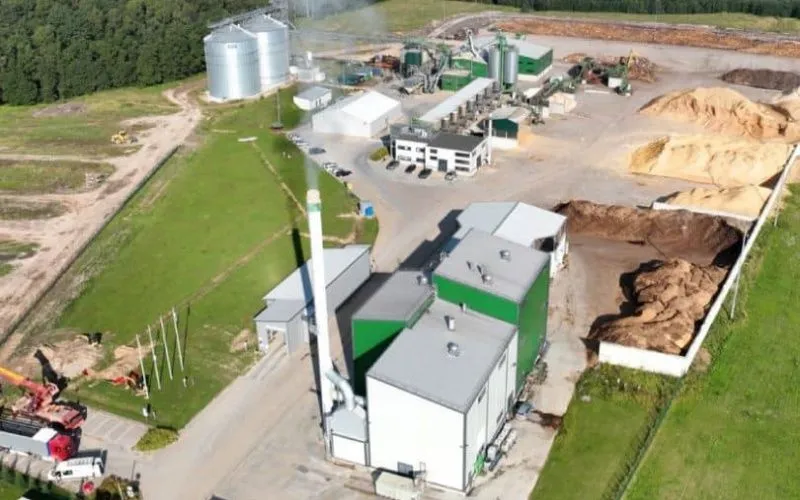
Biomass pellet production line in Brazil
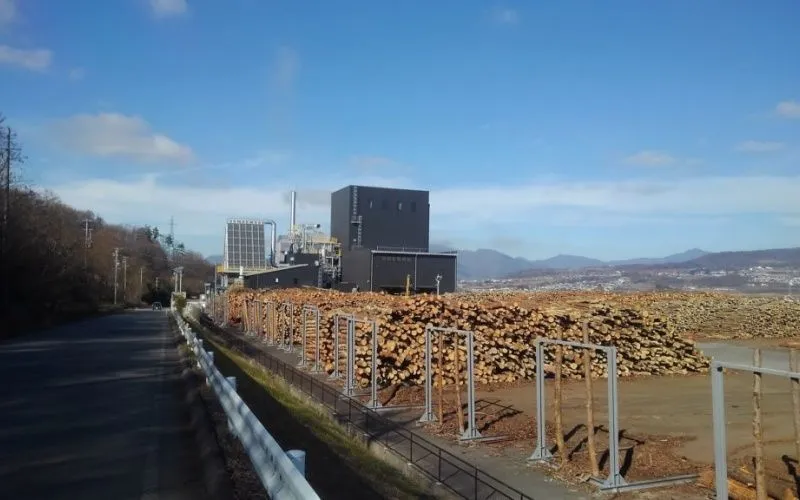
Sawdust pellet production line in Japan
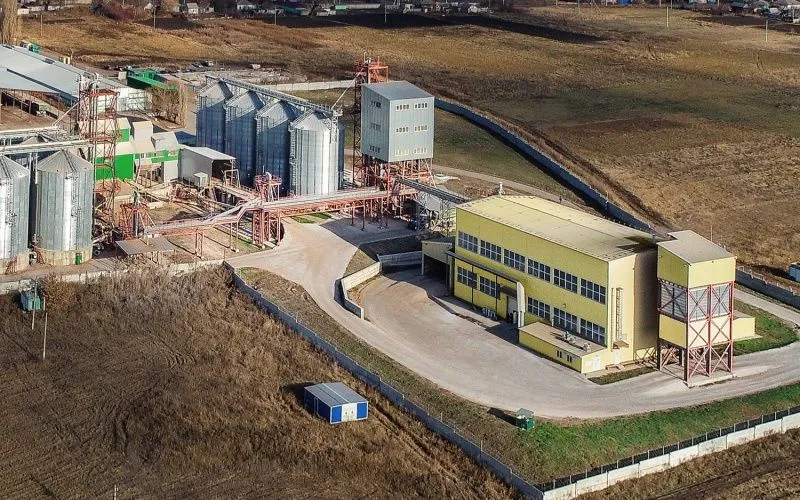
Animal feed production line in Indonesia
Chicken manure production line in the United States
Cat litter production line in Russia
Poultry feed production line in Thailand
Wood pellet production line in Germany
Fuel pellet production line in Argentina
Cattle feed production line in South Africa

RICHI Machinery Completes Delivery of Tilapia Feed Production Line to Aquaculture Zone in Nigeria

Delivery has been completed for a 1.2 t/h floating tilapia feed production line at an aquaculture development zone in Nigeria’s Kwara State, with all major equipment now on-site and unloaded. Tilapia farming has been expanding steadily across several West African countries, driven by growing domestic demand for affordable protein and government-backed aquaculture development initiatives. Feed […]

Delivery has been completed for a 1.2 t/h floating tilapia feed production line at an aquaculture development zone in Nigeria’s Kwara State, with all major equipment now on-site and unloaded.

Tilapia farming has been expanding steadily across several West African countries, driven by growing domestic demand for affordable protein and government-backed aquaculture development initiatives. Feed availability and cost remain persistent challenges for smaller and mid-sized farms in the region — much of the feed has historically been imported, which adds significant cost.

This line produces floating extruded feed (tilapia are surface feeders, unlike shrimp or bottom-feeding species, so the pellet needs to float for an extended period — typically several hours minimum — rather than sink).

Equipment includes a hammer mill for grinding local feed ingredients (the buyer’s formula leans heavily on locally available materials — maize, soybean meal, and a fish meal component sourced regionally rather than imported, which keeps overall feed costs more manageable), a single-screw extruder (extrusion is essential for floating feed — the cooking process under pressure creates the expanded, air-pocket structure that gives pellets buoyancy), drying system, and oil spraying/coating equipment for adding fat content post-drying.

Pellet sizes range from 2mm to 4mm depending on fish growth stage, and the extruder’s die can be swapped to accommodate different sizes as the farm’s stock matures through different feeding phases.

Local conditions add some complexity here — power supply reliability in the region isn’t always consistent, so the buyer specified equipment configured to handle voltage fluctuations within a wider tolerance band than RICHI’s standard spec, and a generator backup system (sourced locally by the buyer, not part of RICHI’s equipment scope) will run alongside grid power.

Installation is set to begin in the coming weeks, pending completion of the buyer’s electrical infrastructure work.

23 / 2026
04

Project Update: Sunflower Husk Pellet Plant in Argentina Approaches Commissioning

The 6 t/h sunflower husk pellet plant RICHI Machinery has been constructing for a client in Argentina’s Pampas region has reached the final pre-commissioning stage — equipment installation is complete, and dry-run testing (without raw material) began this week. Argentina is one of the world’s larger sunflower seed producers, and the husk byproduct from sunflower […]

The 6 t/h sunflower husk pellet plant RICHI Machinery has been constructing for a client in Argentina’s Pampas region has reached the final pre-commissioning stage — equipment installation is complete, and dry-run testing (without raw material) began this week.

Argentina is one of the world’s larger sunflower seed producers, and the husk byproduct from sunflower oil extraction has historically been underutilized — much of it ends up as low-value bulk material or disposed of. Pelletizing turns it into a transportable, higher-density fuel product suitable for industrial boilers.

Sunflower husk has relatively low bulk density (lighter than most wood residues) and a moderate natural oil content remaining after pressing, which actually assists with pellet binding similar to what’s seen with other oilseed residues.

The line: husk receiving and metering system, hammer mill (sunflower husk needs less aggressive grinding than wood — it’s already fairly fine after the oil extraction process, so this stage mostly handles any larger fragments), ring die pellet mill, cooler, and bulk loading system for truck transport (the buyer isn’t bagging product — it’s sold in bulk to a regional industrial boiler operator under a supply agreement).

Pellet diameter target is 8mm. Dry-run testing this week focuses on conveyor alignment, pellet mill motor load testing under no-load conditions, and verifying the cooler’s airflow rates against design specifications before introducing actual husk material.

Once dry-run testing clears — expected to take about three to four days — the first material test runs will begin, with RICHI’s commissioning engineer present to calibrate the pellet mill’s die gap and roller settings against the actual husk characteristics, which can vary somewhat depending on the sunflower variety processed at the source oil mill.

18 / 2026
04

RICHI Machinery Ships Activated Carbon Pellet Production Line to Industrial Client in India

A 2.5 t/h activated carbon pellet production line has departed for an industrial filtration media manufacturer located in the Gujarat region of India, with the shipment confirmed as loaded this week. Activated carbon pelletizing sits a bit outside the usual biomass-and-feed conversation, but the core pelletizing technology shares similarities — what’s different is the raw […]

A 2.5 t/h activated carbon pellet production line has departed for an industrial filtration media manufacturer located in the Gujarat region of India, with the shipment confirmed as loaded this week.

Activated carbon pelletizing sits a bit outside the usual biomass-and-feed conversation, but the core pelletizing technology shares similarities — what’s different is the raw material handling. The buyer’s process starts with powdered activated carbon (derived from coconut shell carbon in this case, which is widely available in the region given coconut shell charcoal production is already an established industry there).

The line includes a mixer where the activated carbon powder is blended with a binder — typically a small percentage of coal tar pitch or a similar binding agent, though the exact binder formula is the buyer’s own proprietary mix — followed by an extrusion-type pellet press rather than the ring die compression pelletizers used for biomass or feed. Activated carbon pellets are typically cylindrical extrudates rather than compressed pellets, and the die design reflects that.

After extrusion comes a drying stage (the binder needs to cure/dry without the carbon losing its porous structure — too aggressive drying can actually damage the activated carbon’s adsorption properties, which is the opposite problem from most pelletizing applications where you want fast, thorough drying).

Pellet diameter is 4mm, intended for water filtration cartridge applications — a growing market in India given increasing attention to water treatment infrastructure in both municipal and industrial sectors.

RICHI’s role in this project was primarily equipment supply with process guidance on the mechanical handling stages — the activated carbon activation process itself (the actual carbon production) was already established at the buyer’s facility; this line addresses only the pelletizing/shaping step downstream of that.

Shipping is expected to take approximately 3 weeks via sea freight to Mumbai port, followed by inland transport to the Gujarat facility.

13 / 2026
04

Dairy Cattle Feed Pellet Line Installed and Running — 15 t/h Capacity, New Zealand

Installation has wrapped up on a 15 t/h dairy cattle feed pellet production line at a facility on New Zealand’s North Island, and the line has been running production batches for the past week. New Zealand’s dairy sector is large, well-established, and feed formulations tend to be relatively standardized compared to some markets RICHI works […]

Installation has wrapped up on a 15 t/h dairy cattle feed pellet production line at a facility on New Zealand’s North Island, and the line has been running production batches for the past week.

New Zealand’s dairy sector is large, well-established, and feed formulations tend to be relatively standardized compared to some markets RICHI works with — this particular buyer’s formula centers on a maize and palm kernel expeller (PKE) base, which is a common combination in NZ dairy feed given the country’s reliance on imported PKE as a supplementary feed ingredient alongside pasture grazing.

PKE has a notably high fiber and fat content, which changes how it behaves in a pellet mill — the fat content acts almost like a natural lubricant during pressing, which sounds helpful but actually requires the die’s compression ratio to be adjusted slightly higher than a standard dairy formula would need, otherwise pellets come out too soft and crumble during handling.

Line configuration: hammer mill, mixer, conditioner, pellet press (ring die, 10mm pellets — larger diameter typical for dairy cattle feed compared to poultry), pellet cooler, and a crumbler for a portion of the output that goes to younger stock on the same farm operation.

During the first week of production runs, output has been averaging around 13-14 t/h — slightly below the 15 t/h rated capacity, which the buyer’s operations team attributes to still-evolving operator familiarity with the conditioner settings for the PKE-heavy formula. RICHI’s commissioning engineer, who remains on-site for another few days, expects full rated output once conditioner steam settings are finalized — likely within the next two to three production days.

08 / 2026
04

Wheat Straw Pellet Manufacturing Plant — Foundation Work Begins in Ukraine Following Equipment Order

Foundation construction has started at a site in the Poltava region of Ukraine, where a 7 t/h wheat straw pellet manufacturing plant ordered from RICHI Machinery will be installed once equipment arrives. Wheat straw is abundant in this part of Ukraine — agricultural residue management has become more of a focus in recent years as […]

Foundation construction has started at a site in the Poltava region of Ukraine, where a 7 t/h wheat straw pellet manufacturing plant ordered from RICHI Machinery will be installed once equipment arrives.

Wheat straw is abundant in this part of Ukraine — agricultural residue management has become more of a focus in recent years as farmers look for additional revenue streams from what used to be burned or left in fields.

The equipment package includes a straw bale breaker (straw typically arrives baled from the field, and bales need to be broken apart and fed evenly before any further processing), a hammer mill, ring die pellet mill configured for straw’s lower bulk density compared to wood, and a pellet cooler with extended residence time — straw pellets, in our experience, take slightly longer to stabilize after pressing than wood pellets do, something related to the wax content in straw’s outer layer.

Target pellet diameter is 8mm for the export biomass fuel market — straw pellets from this region often end up supplying biomass power plants in parts of Western Europe during winter months when demand peaks.

A note on the foundation work: the buyer’s contractor raised a question about vibration isolation for the pellet mill’s foundation, since the building also houses an office area on a mezzanine level above part of the production floor. RICHI’s engineering team provided supplementary foundation drawings with additional isolation pad specifications to address the concern — not a standard part of the original drawings, but a reasonable addition given the building layout.

Equipment fabrication is proceeding in parallel with the foundation work, and the buyer expects both to be ready around the same timeframe, roughly 6-8 weeks out.

03 / 2026
04

Olive Pomace Pellet Line — Trial Run Completed at Spanish Facility, Output Quality Confirmed

After several days of trial production, a 3.5 t/h olive pomace pellet line installed by RICHI Machinery at a facility in Andalusia, Spain, has produced its first batches of finished pellets meeting target specifications. Olive pomace — the solid residue left after oil extraction — is a tricky material. It arrives wet (often 50-65% moisture […]

After several days of trial production, a 3.5 t/h olive pomace pellet line installed by RICHI Machinery at a facility in Andalusia, Spain, has produced its first batches of finished pellets meeting target specifications.

Olive pomace — the solid residue left after oil extraction — is a tricky material. It arrives wet (often 50-65% moisture straight from the olive oil mill, depending on whether it’s two-phase or three-phase extraction residue) and contains residual oil content that actually helps pellet binding but can also cause issues with equipment if not managed.

The dryer here is sized larger than what you’d typically see for a 3.5 t/h wood pellet line of similar throughput — pomace needs aggressive drying, and RICHI’s three-pass drum dryer configuration was selected specifically because single-pass dryers struggled with pomace’s tendency to clump during drying, based on feedback from similar installations.

Finished pellets came out at 8mm diameter, targeted for the local biomass heating market — Spain has a growing residential and commercial biomass boiler sector, particularly in areas with strong olive oil production where pomace pellets are viewed as a “waste valorization” product with both environmental and economic appeal to buyers.

During trial runs, the residual oil content (around 3-4% in this particular batch of pomace) actually helped pellet durability — durability test results came back above 96%, better than some pure wood pellet batches RICHI has tested with similar equipment.

One adjustment made during commissioning: the cooler’s airflow was increased slightly because the oil content was causing pellets to retain heat longer than expected, and the buyer noticed some pellets were still warm to the touch after the standard cooling cycle. A simple fan speed adjustment resolved it.

The facility is now moving toward continuous operation, with the buyer planning to begin commercial sales within the month.

29 / 2026
03

Goat Manure Organic Fertilizer Pellet Line Ships to Morocco — Smallholder Cooperative Project

Eight tons per hour. That’s the rated capacity of the goat manure organic fertilizer granulation line currently making its way to a farming cooperative region in Morocco’s Atlas foothills, where goat herding is one of the dominant agricultural activities. The project came about somewhat differently than most RICHI deals — it’s backed by an agricultural […]

Eight tons per hour. That’s the rated capacity of the goat manure organic fertilizer granulation line currently making its way to a farming cooperative region in Morocco’s Atlas foothills, where goat herding is one of the dominant agricultural activities.

The project came about somewhat differently than most RICHI deals — it’s backed by an agricultural development program aiming to give a cluster of smaller herding operations a shared processing facility rather than each running their own. Goat manure on its own is relatively dry compared to cattle or pig manure (often 40-50% moisture when collected), which actually simplifies the dryer sizing somewhat.

Equipment going out: a manure crusher/pre-treatment unit, mixer for blending in a small percentage of rock phosphate (locally sourced — Morocco has significant phosphate reserves, so this was an easy addition to the formula), drum granulator, dryer, cooler, and screening unit with a returns loop for oversized granules.

Pellet size is 3mm, intended for application on olive groves and cereal crops in the surrounding farmland — both major crops in the region.

What’s interesting about this one: the cooperative structure means the equipment needs to handle somewhat inconsistent feed rates, since manure collection volumes vary week to week depending on which member farms are delivering. RICHI’s mixer and granulator sizing included extra buffer capacity in the hopper design specifically to absorb these fluctuations without requiring constant operator adjustment.

Shipping documents were finalized this week; the equipment is currently in transit to the port for loading, with sea freight to follow shortly after.

24 / 2026
03

Shrimp Feed Pellet Line — 1.5 t/h Order Placed for Aquaculture Operation in Ecuador

A specialized shrimp feed production line, capacity 1.5 t/h, has been ordered by an aquaculture feed operation on Ecuador’s coastal region — the contract was finalized following several weeks of formula and equipment discussions. Shrimp feed is unforgiving in terms of equipment requirements. Pellets need to sink slowly and hold together in water for extended […]

A specialized shrimp feed production line, capacity 1.5 t/h, has been ordered by an aquaculture feed operation on Ecuador’s coastal region — the contract was finalized following several weeks of formula and equipment discussions.

Shrimp feed is unforgiving in terms of equipment requirements. Pellets need to sink slowly and hold together in water for extended periods — shrimp are slow, deliberate feeders compared to fish, picking at pellets over hours rather than minutes. If the pellet disintegrates too fast, feed conversion ratios suffer and water quality degrades from dissolved organic matter.

This requires steam conditioning before pelletizing (longer conditioning time than typical fish feed) and a pellet press configuration with a higher compression ratio die to achieve the density needed for water stability. The line includes a fine grinder (shrimp feed ingredients need finer particle size than most livestock feeds — typically under 250 microns for key components), a conditioner with extended retention time, the pellet press, and a counter-flow cooler.

Formula base includes fish meal, soybean meal, wheat flour as a binder component, and a vitamin-mineral premix specific to shrimp nutritional requirements — squid meal is also part of the buyer’s formula, which adds an attractant quality but also affects how the mix flows through the conditioner (it’s slightly oilier than standard formulas).

Pellet diameter is small — 1.8mm, sized for juvenile to sub-adult shrimp depending on the farm’s stocking stage.

RICHI’s technical team flagged during the proposal stage that the squid meal content would need conditioner steam pressure adjustments beyond standard settings, and recommended the buyer budget for a slightly longer commissioning period — about 3-4 extra days — to fine-tune conditioning parameters against actual water-stability test results rather than relying on generic settings.

Fabrication is underway, with shipment targeted for approximately 8 weeks from contract signing.

19 / 2026
03

Bamboo Pellet Manufacturing Plant Progress Update — Civil Works Complete, Equipment Arrival Imminent in Indonesia

Construction progress on a 4 t/h bamboo pellet manufacturing plant in Sumatra has reached a key stage — the buyer reports civil works for the main production hall are now complete, and RICHI’s equipment shipment is currently at sea, expected to arrive at the regional port within roughly two weeks. Bamboo as a pelletizing feedstock […]

Construction progress on a 4 t/h bamboo pellet manufacturing plant in Sumatra has reached a key stage — the buyer reports civil works for the main production hall are now complete, and RICHI’s equipment shipment is currently at sea, expected to arrive at the regional port within roughly two weeks.

Bamboo as a pelletizing feedstock is gaining traction in parts of Southeast Asia where bamboo plantations exist at scale but processing infrastructure has lagged. The material is fibrous, with a higher silica content than typical softwood, and tends to be harder on cutting and grinding equipment.

The plant’s processing chain — once installed — will run: bamboo chipper (for raw culms delivered from harvest sites), hammer mill for size reduction down to a workable particle size, drum dryer (bamboo arrives at variable moisture, sometimes 40%+ depending on harvest season), ring die pellet mill, cooler, and bagging line.

Final product target is 6mm pellets for export to regional industrial boiler users — there’s growing demand from palm oil mills in the area looking to supplement their own fiber waste fuel with purchased bamboo pellets during periods when their own EFB (empty fruit bunch) supply runs short seasonally.

A note from the buyer’s project manager during a recent video call: the access road to the site floods during heavy rain season, which has already pushed back the civil works timeline by about three weeks earlier this year. RICHI‘s logistics coordinator has factored this into the equipment delivery schedule, building in buffer time for the final inland transport leg from port to site.

Installation crew mobilization is tentatively planned for next month, contingent on the equipment clearing customs without delay.

14 / 2026
03

Layer Hen Feed Pellet Production Line Delivered to Egypt — 8 t/h Configuration

A complete layer (egg-laying poultry) feed production line with 8 t/h capacity has arrived at its destination in the Nile Delta region of Egypt, and unloading at the buyer’s facility began this week. Egg-laying hen feed has its own quirks compared to broiler feed — calcium content needs to be higher (for eggshell formation), and […]

A complete layer (egg-laying poultry) feed production line with 8 t/h capacity has arrived at its destination in the Nile Delta region of Egypt, and unloading at the buyer’s facility began this week.

Egg-laying hen feed has its own quirks compared to broiler feed — calcium content needs to be higher (for eggshell formation), and the pellet hardness has to be moderate, not too hard, because layer hens are typically older birds and overly hard pellets can affect feed intake in some flocks.

The formula the buyer is running includes corn, soybean meal, limestone (a major component here — layer feed often runs 8-10% limestone by weight, far more than broiler formulas), and a vitamin-mineral premix dosed via a separate small-batch system.

Equipment list includes a hammer mill for grinding corn and other grains, a batch mixer, the pellet press itself (ring die, 3mm pellet diameter — small diameter is typical for layer feed since hens peck rather than gulp), pellet cooler, and a crumbler unit that breaks some of the pellets down into crumb form for younger pullets in the same flock rotation.

The limestone content actually changes die wear characteristics noticeably — it’s abrasive in a different way than fiber-heavy ingredients. RICHI specified a die with a slightly modified compression ratio for this order based on the buyer’s formula sheet, which they shared during the proposal phase. Good thing too, since a standard broiler-spec die would’ve shown wear issues within the first couple months on this formula.

Installation is expected to begin once the buyer’s electrical contractor completes panel work, likely within the next two weeks.

09 / 2026
03
Biomass pellet project in Romania
videobtn
Argentina Alfalfa Pellet Project
videobtn
Russia Trout Extruded Feed Project
videobtn
videobtn
Malaysia Cat Litter Project
videobtn
20tph Wood pellet plant construction in Bangladesh
videobtn
Rice Straw Pellet Production Line in Brazil
videobtn
fish feed mill project
videobtn
animal feed factory project
videobtn
Australia Rat Poison Project
videobtn

Investment Guide

Pioneering Pelletizing Solutions Since 1995

richi factory
richi factory

Pelletizing Excellence Across Industries

animal feed solution
biomass pellet solution
fertilizer pellet solution
cat litter solution
fuel pellet solution
Email
WhatsApp
Get Quote!

LEAVE YOUR NEEDS

Keeping in touch with us is an effective way to solve all your problems. If you have any needs or questions, please leave your contact information, then RICHI technical consultants will send design, quotation, videos to your mailbox. You can also contact us directly via WhatsApp: +86 138 3838 9622

    Application:

    * We will store the information you have provided us. We will only use this information for the purpose of helping to answer your inquiries. We will not disclose your information to third parties.

    Scroll to Top