0086-138 3838 9622
Poultry Pig and Extruded Fish Feed Mill in Vietnam
RICHI MACHINERY
Three Product Families Share Only What Should Be Shared
This Poultry Pig and Extruded Fish Feed Mill in Vietnam is built around one production decision: share receiving, storage and selected dosing systems where the ingredients are genuinely common, then separate the process before product quality begins to diverge. Poultry and pig feeds use conventional conditioning and ring-die pelleting, while aquatic formulas require finer grinding, preconditioning, extrusion, drying and post-extrusion oil application.
The customer therefore did not purchase three isolated factories. The shared front end lowers duplicated investment in the animal feed production line, while dedicated thermal and forming sections protect the specifications that poultry, pig and fish buyers actually pay for. The resulting animal feed mill plant can move between high-volume livestock feed and smaller, more energy-intensive aquatic-feed campaigns.
Annual sales are planned at approximately 120,000 tonnes. The installed process envelope is about 20–25 T/H depending on the product mix, but the annual target is not calculated from two perfect eight-hour shifts. At an average 22–23 T/H, the plant needs roughly 5,200–5,500 effective production hours per year. Two regular shifts form the base schedule, with selected extended or third-shift campaigns during higher-load periods.
RICHI’s machinery and engineering supply is planned at about USD 1.4 million. The figure covers the main feed-processing package, extrusion section, drying/coating interfaces, automation and associated engineering rather than land, main civil buildings, local utility connection, vehicles, freight, duties or working capital. This keeps the equipment price separate from the customer’s full Vietnam site-development budget.
20–25 T/H
product-mix capacity
USD 1.4 million
RICHI supply
Vietnam
location
120,000 T/A
annual target
RICHI MACHINERY
Vietnam Gives the Factory Three Real Demand Pools
Vietnam supports this product mix because livestock and aquaculture are both industrial-scale markets. Official reporting put industrial livestock-feed output above 21 million tonnes in 2024, while national aquaculture production reached about 6.12 million tonnes in 2025. Pig and poultry farming remain major commercial sectors, and aquaculture continues to expand, so the project is not relying on one species cycle to keep the factory occupied.
Aquatic feed is also more commercially relevant than a generic “fish line” suggests. Vietnam’s 2025 seafood sector remained strongly tied to farmed fish, including pangasius, while other freshwater species such as tilapia create additional product opportunities. The factory therefore prepares for floating or controlled-density extruded diets with several pellet diameters rather than locking the entire aquatic section to one species or one buoyancy specification.
This diversified demand is the reason the factory can justify different processing intensities under one roof. Poultry and pig feeds provide higher-volume conventional pellet demand. Extruded fish feed carries more grinding, cooking, drying and coating cost per tonne, but serves a market that needs those physical properties. Production planning balances margin, order size and line occupancy instead of ranking every SKU only by tonnes per hour.
RICHI MACHINERY
Ingredient Risk Is Controlled before It Reaches the Mill
Raw-material purchasing is organized by ingredient function and turnover. The complete feed mill plant receives corn and other cereal energy sources, soybean meal, rice bran, wheat bran, DDGS and selected protein meals, together with oils, minerals, amino acids and premixes. Domestic rice-processing by-products can be useful in Vietnam, while grain and protein purchasing remains flexible enough to include imported material when price and specification are competitive.
An animal feed pellet mill cannot repair a poor ingredient decision. Every bulk lot therefore enters against a purchasing specification covering moisture, contamination, odor, visible mold, nutrient declaration and supplier identity. Mycotoxin risk receives particular attention in cereals and meals, especially when warm, humid storage conditions can amplify a problem that began before delivery.
Cleaning and magnetic protection precede size reduction. The hammer mill feed grinder section is protected from stones, ferrous contamination and other avoidable foreign material so screen wear and downstream contamination are not accepted as normal operating cost.
| Ingredient Group | Normal Storage Route | Main Control |
|---|---|---|
| High-turnover grains | Bulk silos | Moisture, temperature, impurities and stock rotation |
| Soybean meal / protein meals | Silo or covered flat storage | Protein, moisture, contamination and supplier lot |
| Rice bran / wheat bran / DDGS | Bins or dry warehouse | Freshness, fat stability, moisture and formula limits |
| Premixes / amino acids | Dedicated dry room | Identity, lot control and dosing accuracy |
| Oils / liquid additives | Dedicated tanks | Temperature, filtration and metered addition |
| Aquatic specialty ingredients | Segregated bins or bags | Formula-specific quality and traceability |
RICHI MACHINERY
The Process Splits before Product Quality Begins to Diverge
The architecture changes when the formula leaves storage. A poultry grower formula, a piglet pellet and a 2 mm extruded aquatic feed can share part of the ingredient system, but they should not be forced through the same grinding, forming and thermal route. The integrated Vietnam factory therefore splits process responsibility before the equipment that controls particle size, cooking and final physical form.
Macro batching uses automatic weighing, while low-inclusion materials receive smaller-scale dosing so an error in premix or amino acid addition is not treated like the same absolute error in corn. The feed mixer machine capacity is matched to batch size, fill time, mixing time and discharge time, with parallel mixing capability where needed to prevent the fish-preparation route from waiting on every poultry formula change.
| Product Family | Shared Front End | Dedicated Processing after the Split | Typical Commercial Form |
|---|---|---|---|
| Broiler / layer / duck feed | Receiving, storage, cleaning, batching | Grinding, mixing, conditioning, pelleting, cooling, crumbling where required | Mash, crumble or approx. 2–5 mm pellets |
| Pig feed | Receiving, storage, cleaning, batching | Grinding, mixing, conditioning, pelleting, cooling | Approx. 2–5 mm pellets by stage |
| Extruded freshwater fish feed | Receiving, part of storage and batching | Fine grinding, preconditioning, extrusion, drying, cooling, oil coating | Approx. 1.5–6 mm floating or controlled-density feed |
RICHI MACHINERY
Conventional Pelleting Carries the High Volume Feed
The conventional pellet branch is sized around about 15–20 T/H combined poultry and pig demand. Poultry feed accounts for several of the factory’s highest-volume campaigns, so die changes, crumbling and finished-bin allocation are scheduled around bird growth stage rather than treated as one generic pellet product.
The animal feed factory project uses parallel pelletizing capacity so production can be scheduled by species, formula sensitivity and die size rather than by one large machine that forces every campaign into the same queue.
This part of the factory behaves differently from a simple livestock feed plant because starter poultry products may need crumbling, while piglet, grower, finisher and sow diets have different formula and pellet requirements. The operator can run longer campaigns for high-volume products and shorter scheduled campaigns for specialty feeds without rebuilding the common receiving system.
- Chick starter products can be made as fine crumbles after pelleting and cooling.
- Broiler and duck diets move to larger pellets as feeding stage and customer specification change.
- Piglet feeds generally use smaller pellets than grower-finisher or sow diets.
- Formula sequencing, cleanout and sensitive-additive management are planned before the production order is released.
RICHI MACHINERY
The Aquatic Route Is Built around Cooking Drying and Coating
The aquatic branch is built around one twin-screw extruder sized for roughly 4–5 T/H. That lower tonnage is deliberate. Fish feed carries extra fine-grinding, preconditioning, extrusion, drying and coating duty, so its energy and thermal intensity per tonne is higher than conventional livestock feed.
Fine grinding is applied only to aquatic formulas that need it. The prepared mash then enters a preconditioner where water and steam are controlled before extrusion. Inside the extruder, screw configuration, mechanical energy, barrel conditions, die geometry and feed moisture are adjusted against the actual formula and desired density. The project does not promise that one fixed parameter set will produce every floating or sinking specification.
Fresh extrudate then enters a dedicated dryer. Moisture is removed to the commercial storage target before cooling and coating. Post-extrusion oil application gives the customer more flexibility for higher-energy aquatic diets because sensitive or high-fat additions do not all have to pass through the most severe cooking step. Final screening removes fines before packing.
RICHI MACHINERY
Annual Capacity Is Managed by Product Mix
The 120,000 T/A target is managed as a factory schedule, not as one machine multiplication. In the Poultry Pig and Extruded Fish Feed Mill in Vietnam, simultaneous livestock/poultry and aquatic production can push total output toward the upper end of the 20–25 T/H envelope. During a fish-heavy campaign, combined tonnage can be lower even though electrical and thermal loads remain high.
The ring die feed pellet machine group therefore carries the conventional-feed volume, while the extruder sets the aquatic bottleneck. The control room follows tonnes by product family, not just total plant tonnes, because the same 100 tonnes of broiler feed and extruded fish feed require very different machine hours and energy.
| Capacity Layer | Project Basis | What It Means |
|---|---|---|
| Poultry + pig pellet section | Approx. 15–20 T/H | Multiple pellet campaigns and die sizes |
| Extruded fish section | Approx. 4–5 T/H | Fine grinding, extrusion, drying and coating |
| Combined instantaneous envelope | Approx. 20–25 T/H | Depends on which sections operate simultaneously |
| Annual target | Approx. 120,000 T/A | Product-mix dependent |
| Effective annual hours | Approx. 5,200–5,500 h | Two base shifts plus scheduled extensions / third-shift campaigns |
| Operating days | Approx. 300 days/year | Maintenance and campaign planning built into calendar |
RICHI MACHINERY
Electricity Steam Heat and Water Are Balanced Separately
Electricity is the dominant utility for grinding, mixing, pelleting, extrusion, conveying, aspiration and packing. For this commercial feed mill, a preliminary annual range of about 5–7 GWh is reasonable until the final product mix is fixed. A fish-heavy sales year pushes electricity per tonne upward because ultrafine grinding and extrusion add substantial specific energy.
Large loads include the hammer mills, pulverizer, animal feed pellet making machine group, extruder, cooler fans and pneumatic systems. A preliminary transformer class around 1.8–2.5 MVA can be evaluated, potentially split for operating flexibility, but final sizing follows the simultaneous-load schedule, motor starting method and the local utility connection.
Thermal duty is separated into steam and drying heat. Pellet conditioners and the aquatic preconditioner require steam, while the mesh belt dryer or selected aquatic dryer requires hot air. A preliminary 2–3 T/H steam system is suitable for detailed evaluation, with the final balance determined from simultaneous conditioner demand rather than from every theoretical peak added together.
Water is used for steam generation, aquatic preconditioning, limited extrusion adjustment, cleaning and personnel. About 12,000–18,000 m³/year is a practical planning range before condensate recovery and product mix are finalized. Vietnam’s power system operates at 50 Hz; site voltage, transformer connection and protection are confirmed against the local distribution network rather than copied from another country.
RICHI MACHINERY
Vertical Flow Keeps a Large Factory inside a Practical Site
The feed mill factory uses vertical gravity flow through selected process stages so the site does not become a long chain of horizontal conveyors. A total land range of roughly 12,000–16,000 m² can accommodate the main tower, raw-material storage, grain silos, fish thermal section, finished warehouse, utilities, roads and fire access when the plot geometry is suitable.
Humidity affects both raw and finished storage. Receiving points need rain protection; silos need temperature and inventory monitoring; bagged premixes stay off damp floors; the finished aquatic-feed warehouse protects dried product from moisture regain. Uncontrolled outdoor air is not automatically useful for cooling a warehouse when the ambient air itself is hot and humid.
| Functional Area | Planning Range | Design Reason |
|---|---|---|
| Main process tower | 1,500–2,000 m² footprint | Uses vertical gravity flow |
| Raw-material warehouse | 2,000–2,500 m² | Bagged meals, additives and lower-turnover ingredients |
| Silo / bulk receiving zone | 800–1,200 m² | High-turnover grain handling |
| Finished-feed warehouse | 2,000–2,500 m² | Separates SKUs and dispatch lots |
| Fish drying / coating area | 700–1,000 m² | Keeps thermal equipment and coating route accessible |
| Utilities / maintenance | 500–700 m² | Steam, compressed air, electrical and workshop functions |
| Laboratory / office | 500–700 m² | QC release, retained samples and administration |
| Roads / loading / fire access | Balance of site | Keeps raw and finished traffic organized |
RICHI MACHINERY
Changeover Control Is Part of Feed Safety
A multi-species factory succeeds or fails on changeover discipline. The Poultry Pig and Extruded Fish Feed Mill in Vietnam therefore links production planning to ingredient identity, formulation, medicated or sensitive additives where applicable, carryover risk and finished-product destination. The customer does not treat a cleanout as lost time when it prevents one high-value formula from contaminating the next.
This is where feed mill engineering has more value than simply adding machines. Separate micro-ingredient control, product-specific bins, scheduled sequencing, accessible conveyors and documented flushing routes reduce the number of manual corrections operators have to improvise during busy production weeks.
Vietnam’s livestock-feed manufacturing remains governed by the Law on Animal Husbandry and its implementing rules, including Decree 13/2020 as amended. Aquaculture feed follows its own regulatory framework; the national technical regulation issued under Circular 67/2025/TT-BNNMT has been effective since 25 May 2026. The customer therefore maintains separate quality and compliance files for livestock feed and aquaculture feed rather than assuming one product declaration covers both.
RICHI MACHINERY
Specialist Equipment Is Installed Only Where It Adds Value
The equipment list is organized by process duty, not by counting three complete lines. High-volume common systems receive enough throughput and buffer capacity to feed several branches, while expensive specialist equipment is installed only where the product requires it.
| Process Duty | Main Equipment | Project Configuration |
|---|---|---|
| Bulk receiving / cleaning | Intake hoppers, pre-cleaners, magnetic protection | 2 receiving routes |
| Bulk storage | Grain and meal silos / bins | By ingredient turnover and procurement plan |
| Primary grinding | Feed hammer mills | 3 units / staged duty |
| Aquatic fine grinding | Ultrafine pulverizer | 1 system |
| Macro batching | Automatic weighing bins | 2 sets |
| Micro dosing | Small-ingredient dosing | 1 controlled system |
| Mixing | Double-shaft paddle mixers | 2–3 depending final batch cycle |
| Liquid addition | Metered oil / liquid system | 1 common utility with product-specific dosing |
| Livestock / poultry pelleting | Ring-die feed pellet mills + conditioners | 2–3 machines by final capacity split |
| Crumbling / conventional screening | Crumblers and product screens | Matched to poultry/pig route |
| Aquatic preconditioning / extrusion | Preconditioner + twin-screw extruder | 1 × 4–5 T/H section |
| Aquatic drying / cooling | Multi-pass or mesh-belt dryer + cooler | Matched to extruder output |
| Aquatic coating | Vacuum or surface coater | 1 system |
| Packing | Automatic bagging systems | Multiple product routes |
| Dust control | Pulse filters and aspiration | By receiving, grinding, transfer and packing points |
| Automation | Central PLC/MCC + production data | 1 integrated control architecture |
This configuration avoids two opposite mistakes: making the common front end too small for simultaneous production, and duplicating an entire aquatic-feed process that only carries 4–5 T/H. Final motor sizes, bin volumes and machine models are frozen after the customer’s formula list and annual product split are confirmed.
RICHI MACHINERY
The Project Schedule Is Driven by Interfaces Not Just Machine Delivery
A multi-product feed factory cannot be commissioned efficiently if silos, steam, thermal equipment, electrical rooms and product bins are treated as separate contractor jobs. The project schedule therefore closes interface drawings early, so the civil team knows where loads, openings, utility headers and access clearances belong before equipment reaches Vietnam.
- Confirm annual tonnage by poultry, pig and aquatic product family, together with formula count, pellet size and floating/sinking targets.
- Freeze process routing, silo/bin capacity, batching logic, thermal demand and the simultaneous electrical-load schedule.
- Issue civil, foundation and utility interface drawings while the main equipment package enters manufacture.
- Complete local buildings, electrical rooms, steam/hot-air infrastructure, drainage and heavy-equipment access before shipment arrival.
- Install common receiving and preparation systems first, then conventional pelleting and the dedicated aquatic extrusion/drying branch.
- Run no-load checks and interlock tests before product-family commissioning begins with actual customer formulas.
Manufacturing and local civil work can proceed in parallel after approved drawings, but the final calendar still depends on site readiness, customs, utility energization and thermal-system completion. This is why the project is managed around interface milestones rather than one promised number of months that would ignore customer-side construction risk.
The same sequencing protects startup cost. If the common batching system is unstable, there is little value in pushing the extruder to full output. If steam quality is poor, pellet durability problems should not be blamed on the die. Each subsystem is therefore released only after the upstream condition it depends on has been checked.
RICHI MACHINERY
Commissioning Proves Three Product Families Separately
Around 45–55 employees can support the planned operation when the factory uses central control, automatic batching and mechanized conveying. The roster covers receiving, control-room operation, grinding, pelleting, extrusion/drying, packing, warehouse, laboratory/QC and electrical-mechanical maintenance. Procurement, sales and some transport roles can sit outside the direct production headcount.
Commissioning is divided by product family. Poultry trials focus on grind, conditioning, pellet durability, cooling and crumble quality. Pig trials focus on particle size, batching accuracy, conditioning and fines. Aquatic trials add fine-grinding distribution, preconditioning, expansion, bulk density, drying, oil uptake and water stability. The factory is not declared commissioned simply because one broiler formula reaches nameplate throughput.
Equipment ships from Qingdao. The Vietnam destination port and inland route are selected from the actual project location, container mix and heavy-cargo plan rather than inserted without site evidence. Civil foundations, silo interfaces, thermal-utility space, electrical rooms and drainage are prepared while equipment is manufactured so installation is not delayed by avoidable site conflicts.
RICHI MACHINERY
Expansion Follows the First Measured Bottleneck
The USD 1.4 million RICHI supply is proportional to the multi-product scope: common receiving and storage interfaces, conventional feed grinding and pelleting, aquatic fine grinding and extrusion, dryer/coating integration, dust control, packing and centralized automation. The customer does not pay for three complete independent factories, but it also does not force three product families through one generic finishing route.
Expansion follows the measured bottleneck. More poultry demand may require longer pellet campaigns or another pelletizer; more aquatic demand can make fine grinding, extrusion or drying the first constraint; a broader SKU portfolio may expose bin or warehouse limits before nominal process capacity is reached. The next investment therefore goes to the section whose utilization data and sales orders justify it.
For another Poultry Pig and Extruded Fish Feed Mill in Vietnam, the engineering inputs should include annual tonnes by product family, species and growth stage, mash/pellet/crumble requirements, aquatic floating or sinking target, pellet diameters, formula list, raw-material sources, silo coverage days, sensitive additives, packing sizes, power connection, thermal fuel, water, land and planned future SKUs.
Once those inputs are clear, RICHI Machinery can determine what should remain common, what must be dedicated and how much reserve capacity is commercially useful. That product-first approach is more valuable than selecting a 25 T/H label first and trying to force every feed category into it afterward.
● RICHI MACHINERY
RICHI Service

● Consulting
Customer Consultation
We want to have a deep understanding of your industrial process, to know your exact needs of feed, wood, biomass, fertilizer or other pellet processing.

● Design
Feed Pellet Plant Design
Based on your unique situation and industrial process, we will tailor complete pellet plant you need, and inform you of every additional detail that could facilitate operation, minimize total cost.
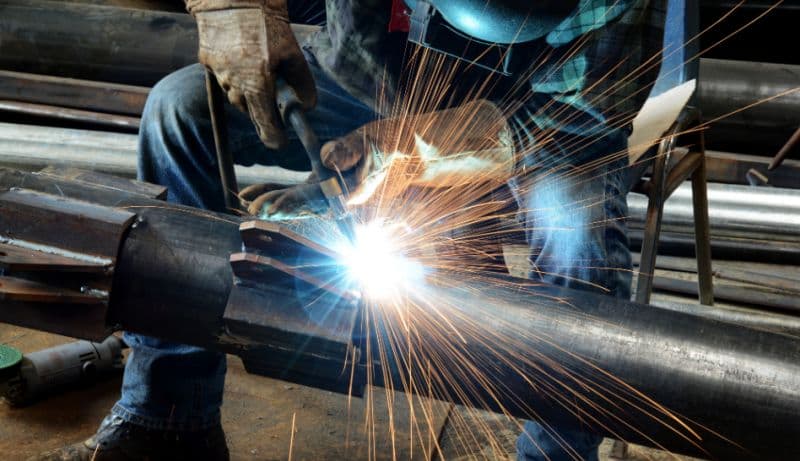
● Manufacturing
Equipment Manufacturing
The critical components of the of the complete pellet production line equipment are built in our own workshops in Asia. Additional equipment is manufactured by our worldwide network of reliable partners.

● Testing
Quality Inspection & Testing
Before leaving the factory, all equipment will be inspected by the quality inspection department. We can also provide customers with testing services from a single machine to a complete pellet plant system, and provide you with real actual data for “worry-free use.”

● Delivery
Equipment Delivery
In equipment boxing and packaging, we adopt professional packaging and modular solutions to ensure the safe and non-destructive delivery of pellet plant equipment.
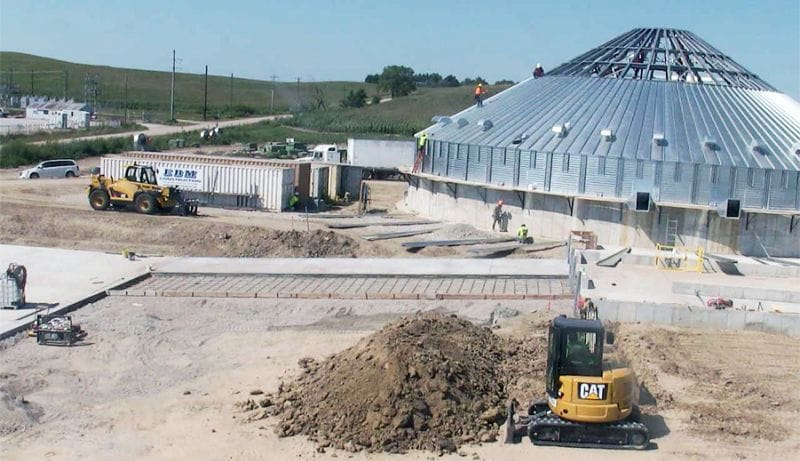
● Installation
Installation & Commissioning
Whether you choose your own subcontractor for the erection phase or you want to install everything together with us, a Richi supervisor will be around to make sure everything is mounted in a safe and thorough way.

● Training
Staff Training
We provide comprehensive training for the technicians of each project. We can also continue to provide support for the technicians during latter project operation.
● After-sales
Project Follow-Up
When everything is up and running our Richiers will help you further whenever needed. We are ready to answer your call 24/7.We’ll also visit you regularly to learn about your needs.
Who we are
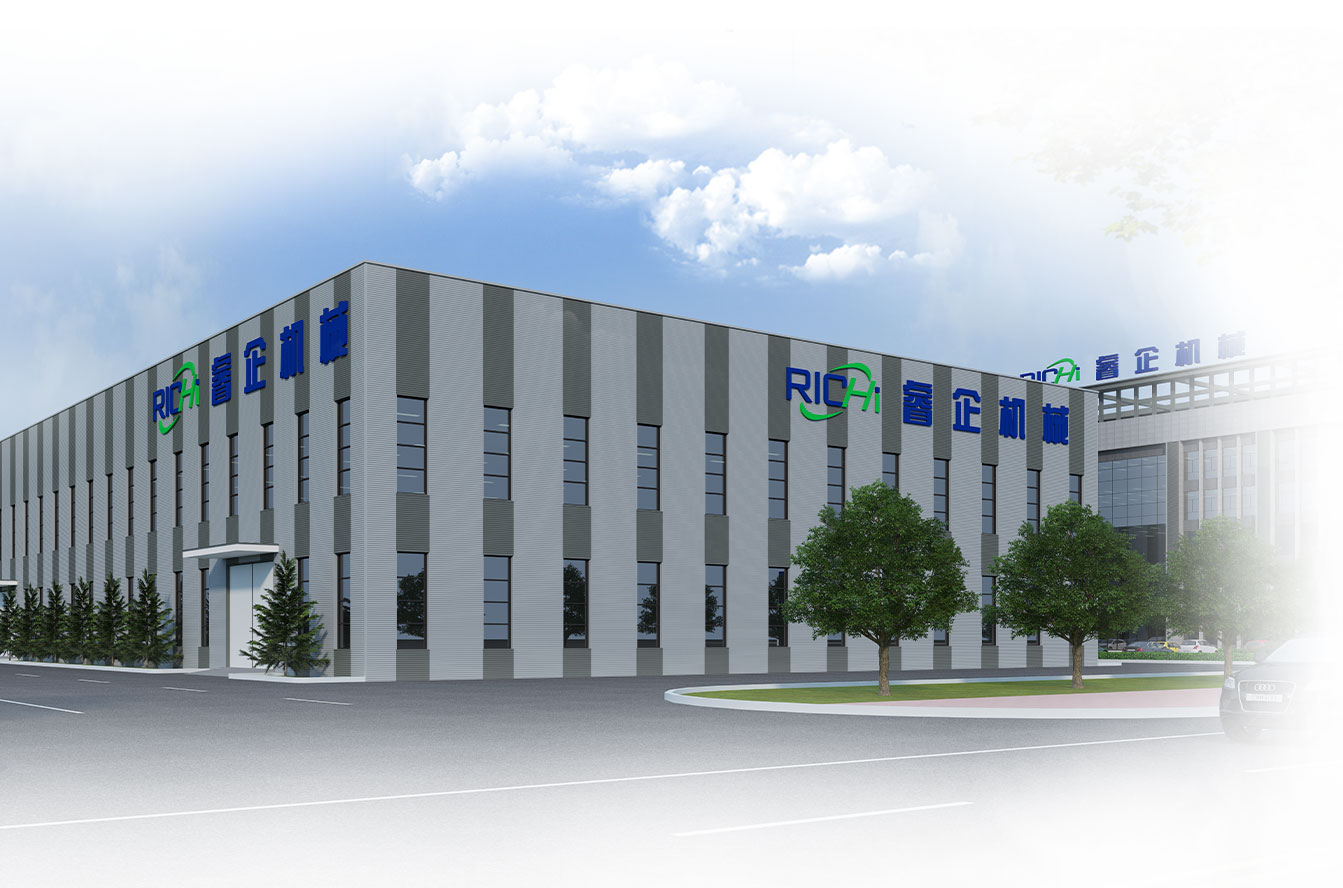
RICHI Machinery is one of the world’s leading suppliers of technology and services for the animal feed, aqua feed and pet food industries, also the largest pellet production line manufacturer in China.
Since 1995, RICHI’s vision to build a first-class enterprise, to foster first-class employees, and to make first-class contributions to society has never wavered.
In the past three decades, we have expanded our business to a wide range of areas, including animal feed mill equipment, aqua feed equipment, pet feed equipment, biomass pellet equipment, fertilizer equipment, cat litter equipment, municipal solid waste pellets equipment, etc.

1995
RICHI Established

2000+
Serving More Than 2000 Customers

120+
RICHI Employees

140+
Exported To 140 Countries