
 0086-138 3838 9622
SHEEP FEED MILL
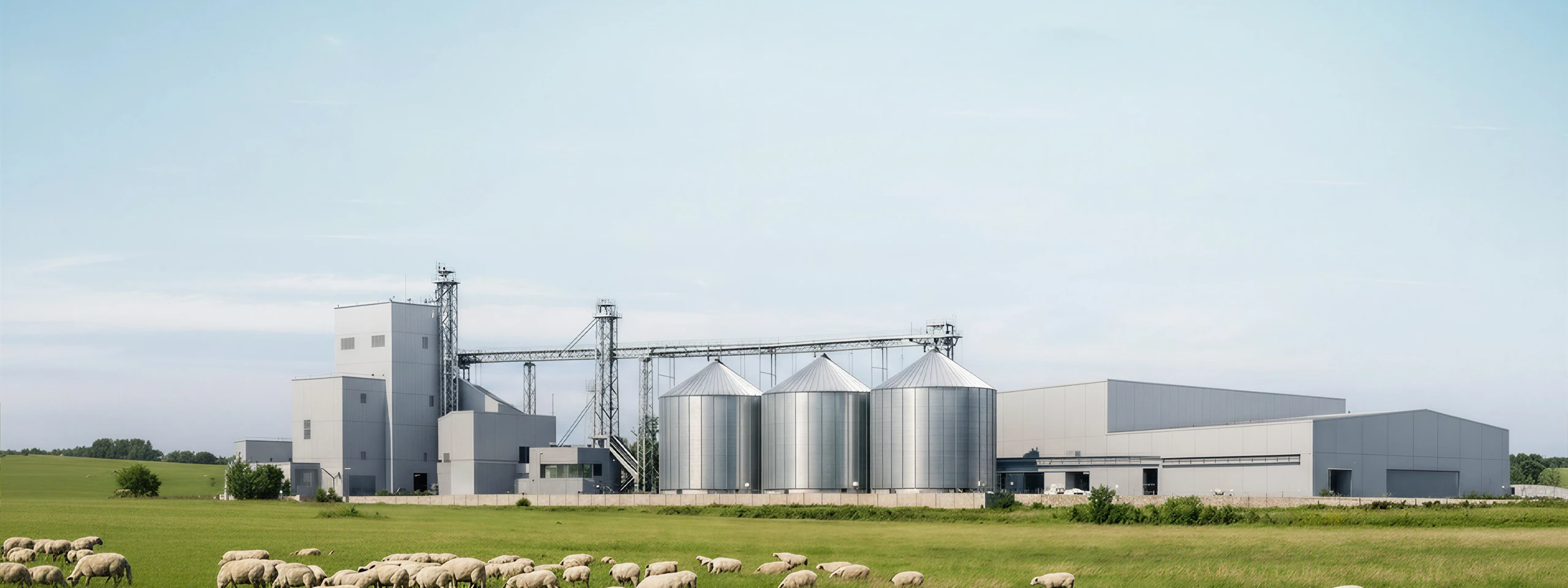
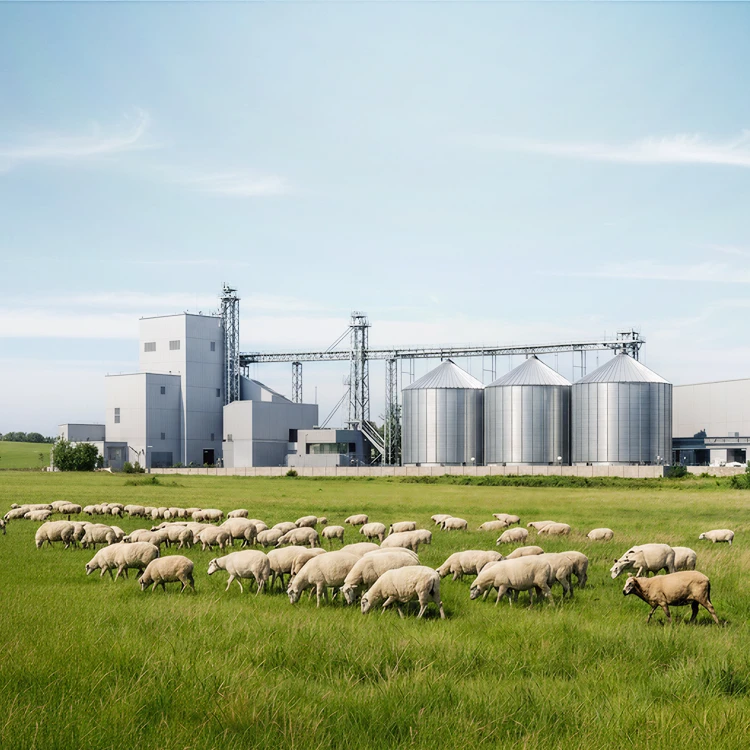
Sheep feed mill projects are developed for different types of sheep farming operations, from local farms looking to produce their own feed to commercial feed manufacturers supplying the livestock market. The right production system depends on the available raw materials, feeding purpose, and expected output.
We provide complete sheep feed plant solutions for processing forage-based feed, agricultural by-products, and commercial compound feed, helping customers turn materials such as hay, grass, straw, wheat bran, corn, rice bran, oilseed meal, and silage into nutritious sheep feed pellets or complete feed products.
Over the years, we have designed and supplied sheep feed manufacturing plants solutions for customers in different regions, including countries with large-scale grazing farms, agricultural production areas, and developing livestock industries. These projects cover small and medium farms, commercial sheep feed factories, and industrial feed production plants.
Different buyers have different production goals. A feed factory may need an automatic sheep feed mill with stable capacity for market supply, while a sheep farm may focus more on reducing feed costs by using local forage and crop residues. Based on these requirements, we customize equipment configuration, processing flow, and production capacity instead of offering a standard solution for every customer.
Explore Sheep Feed Mill Solutions
Different Sheep Feed Types Produced by Our Sheep Feed Mill
A modern sheep feed mill is not limited to producing one single feed formula. Depending on the farming system, available raw materials, and feeding goals, sheep producers may require different feed forms with different nutritional structures.
Our sheep feed production line can be configured to process grain-based pellets, forage-rich feed, concentrated supplements, and other specialized sheep feed products by adjusting the formulation, processing flow, and equipment combination.
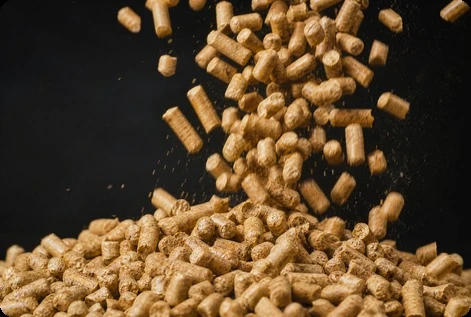
Grain-Based Sheep Fattening Feed
Designed mainly for intensive feeding and late-stage fattening, this type of sheep feed is usually made from corn, wheat, barley, soybean meal, and other energy-rich ingredients. Our sheep feed pellet mill can produce uniform 3–5 mm pellets with good hardness and low powder content, making them suitable for rapid supplementation and commercial sheep farming.
Fine Pellets (3–5mm)
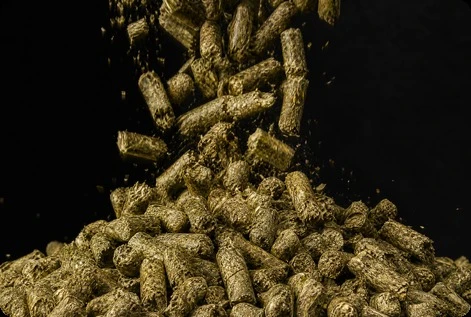
Forage & Straw Pellets
For sheep farms that rely on hay, grass, straw, or crop residues, our sheep feed processing plant can handle high-fiber materials and produce complete forage-based pellets. These pellets usually contain around 15–25% crude fiber and combine roughage with nutrients in one feed product, reducing feeding management difficulty in grazing areas.
(6–10mm) with High Fiber Content
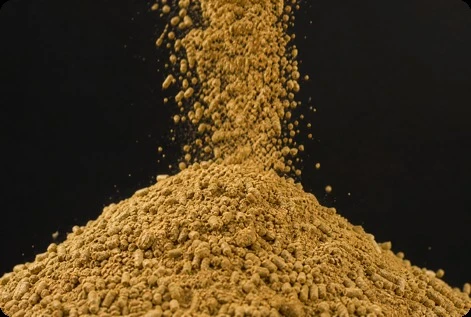
Concentrate Feed Pellets
Concentrated sheep feed is commonly used together with hay or silage to improve energy and protein intake. Our sheep feed manufacturing equipment can process soybean meal, oilseed meal, grains, minerals, and other ingredients into compact concentrate pellets with consistent nutrient distribution for dairy sheep, breeding sheep, and growing lambs.
(2–5mm) for Protein Supplementation
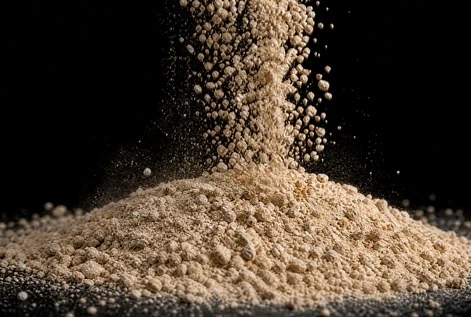
Urea / Non-Protein Nitrogen Supplement Pellets
For regions where sheep are mainly fed with low-cost roughage, urea and non-protein nitrogen supplements can help improve feed utilization. This type of product requires careful formulation and controlled processing conditions. Our sheep feed pellet production line can be customized for specialized supplement production with suitable mixing, conditioning, and pelletizing systems.
Pellet Size: 3-6mm

Sheep Premix Feed for Grazing Supplementation
Premix feed focuses on providing vitamins, trace minerals, and nutritional additives rather than large amounts of energy ingredients. Our sheep feed processing equipment can be configured for precise mixing and small particle production, which is suitable for pasture-based sheep operations requiring targeted supplementation.
0.5–1.5mm Powder
One complete sheep feed plant can be arranged to produce both pellets and mash feed, or combine sheep feed production with cattle feed, poultry feed, or aquatic feed manufacturing according to market demand.
Customize Your Sheep Feed Production Line

Real Sheep Feed Mill Project videos
Over the years, we have designed and supplied sheep feed mill solutions for customers in different regions with various farming systems, raw material conditions, and production requirements.
The following project videos show part of our completed work, covering forage-based feed production, straw pellet processing, small ruminant feed manufacturing, and commercial sheep feed production. Each project reflects different customer needs, from raw material preparation and process design to equipment selection and complete production line delivery.
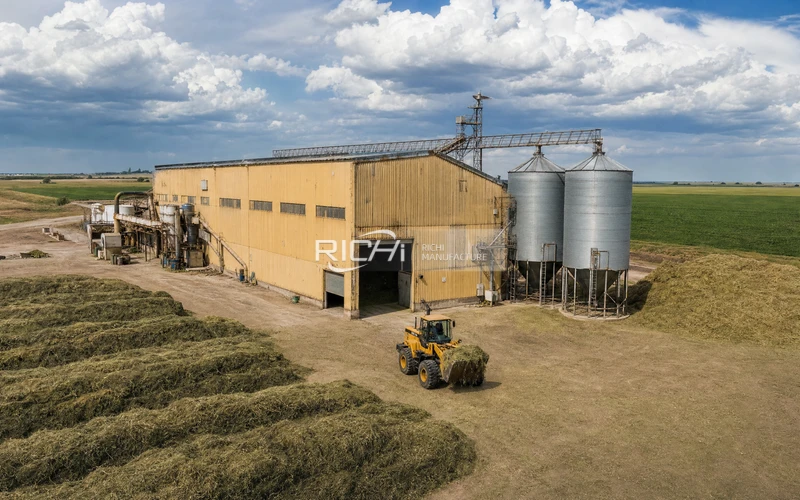

【8-10T/H Sheep Feed Mill in Argentina】This project was developed for an integrated beef and sheep farming operation requiring a stable forage-based feed production system. The customer mainly processes corn, soybean meal, alfalfa hay, wheat bran, and grass hay to produce balanced sheep and livestock feed. Based on the characteristics of hay-based materials, we designed a suitable crushing, mixing, and pelletizing process without a drying system, producing consistent feed pellets for large-scale farm use.
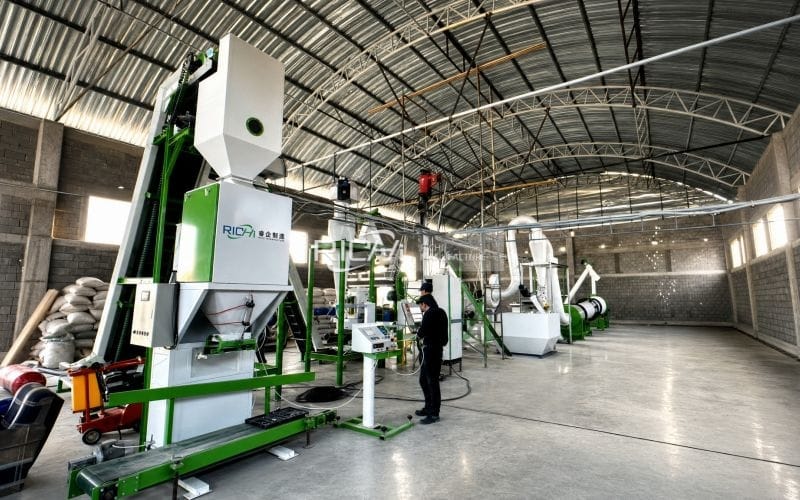
【1-2T/H Sheep Feed Mill in Uzbekistan】This straw-based sheep feed production line was designed for a customer who wanted to improve the utilization of locally available agricultural residues. Straw accounts for a significant proportion of the formula, together with wheat bran, barley, corn, and limited alfalfa. Considering the high-fiber characteristics and moisture variation of straw materials, the project included a drying system and customized processing equipment to ensure smooth pellet production and stable feed quality.
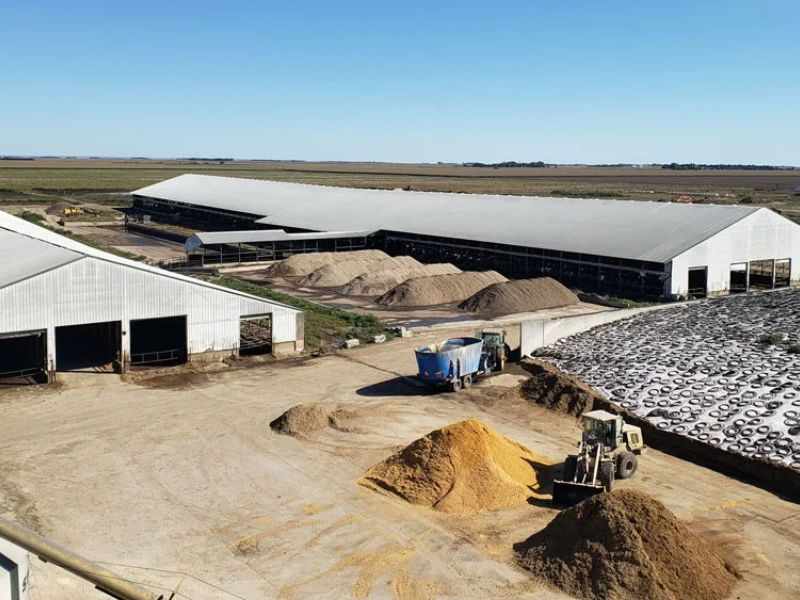
【3T/H Sheep Feed Mill in Kyrgyzstan】This forage-based sheep feed mill was built for a customer processing locally available grass hay, straw, barley, wheat bran, and a controlled amount of corn. The project focused on producing nutritious sheep feed under local raw material conditions, with a drying system included to improve material handling. We provided the complete production solution from process design to equipment configuration, helping the customer achieve reliable pellet feed production.
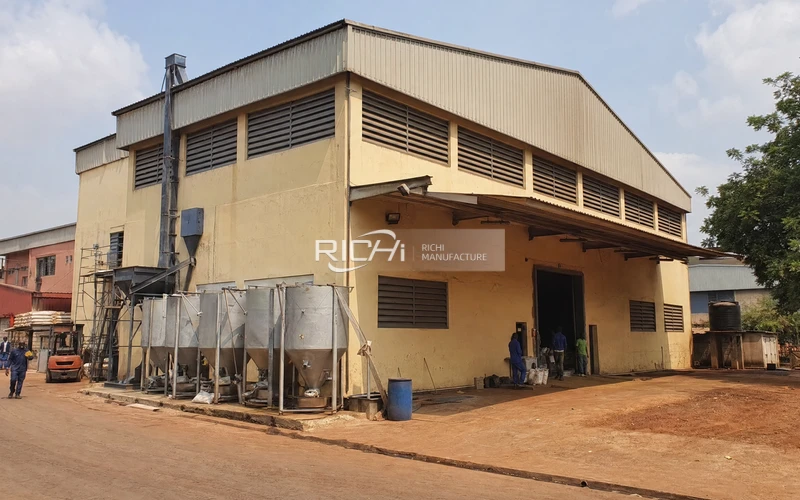
【5-6T/H Sheep Feed Mill in Zimbabwe】This sheep feed production line was designed for a customer using grass hay bales as one of the main raw materials. The production system handles maize, wheat bran, sorghum, grass hay, and oilseed cake to manufacture forage and straw-based sheep feed products. Considering the characteristics of baled grass materials, the project was equipped with a suitable raw material preparation process and optimized pellet production flow for continuous operation.
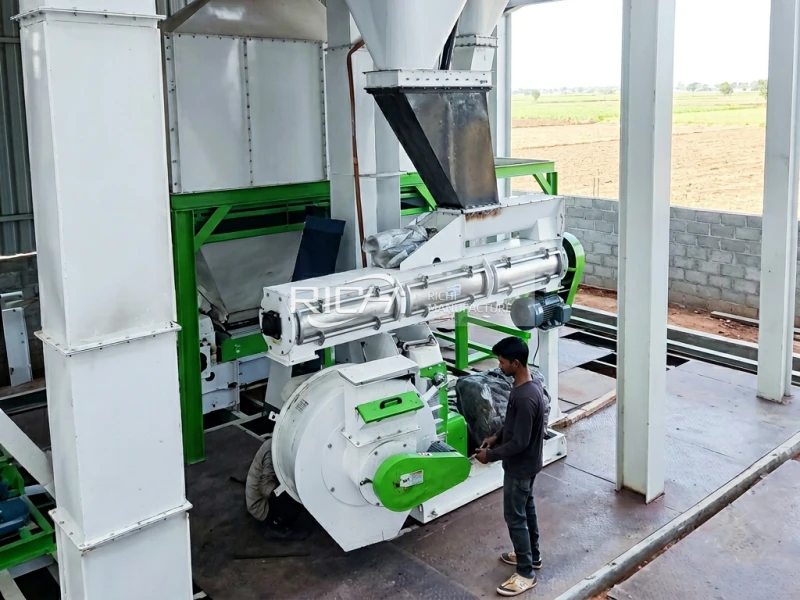
【5T/H Sheep Feed Mill in Oman】This forage pellet feed plant was developed for a customer producing sheep feed with imported alfalfa hay as the key fiber source. The formula combines alfalfa hay, barley, corn, wheat bran, and molasses to meet the nutritional requirements of sheep farming in an arid region. We customized the production line according to the customer’s raw material conditions and provided a complete pellet processing solution without a drying system.
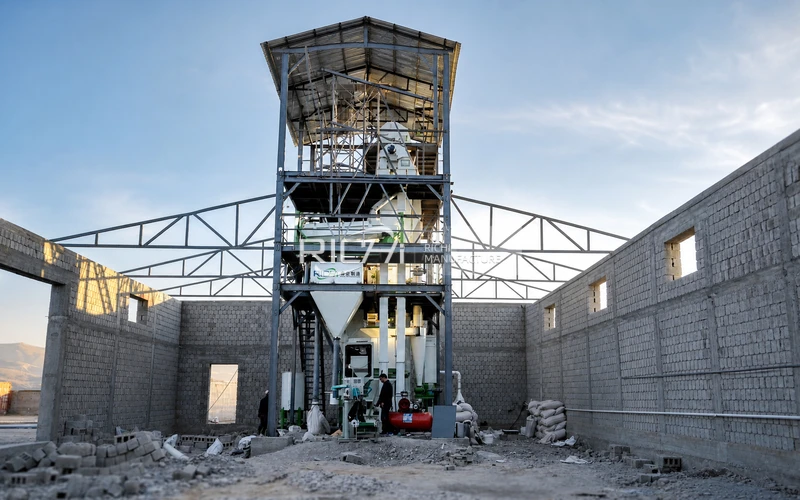
【1-2T/H Sheep Feed Mill in Sudan】This small ruminant feed mill plant was designed for a customer who needed to process sorghum, maize, wheat bran, straw, and oilseed cake into affordable livestock feed. Since straw bales were included in the raw materials, the project incorporated a bale breaker system and drying equipment to improve material preparation before pelletizing. The customized layout helped the customer efficiently utilize local agricultural resources for sheep and other ruminant feed production..
Customized Sheep Feed Mill Process Design
Every sheep feed mill project has different requirements. The production process for grain-based pellets is not the same as a forage-rich feed line, straw pellet system, or complete feed production plant. We design customized processing solutions according to the customer’s feed type, raw materials, production capacity, and final application, providing technical support from initial planning and equipment manufacturing to installation, commissioning, and operation guidance.
A complete sheep feed production system can include multiple processing modules such as raw material receiving and storage, cleaning, crushing, drying, batching, mixing, conditioning, pelletizing, cooling, screening, packing, and finished product storage. According to the actual production needs, we combine different equipment units to create a practical sheep feed plant layout instead of adding unnecessary processes.
For sheep feed production, raw material characteristics play a major role in equipment selection and process design. Some customers use conventional grains such as corn, barley, and wheat bran, while others process challenging materials including straw bales, grass hay, alfalfa, bagasse, peanut shells, sunflower seed husks, or other agricultural by-products.
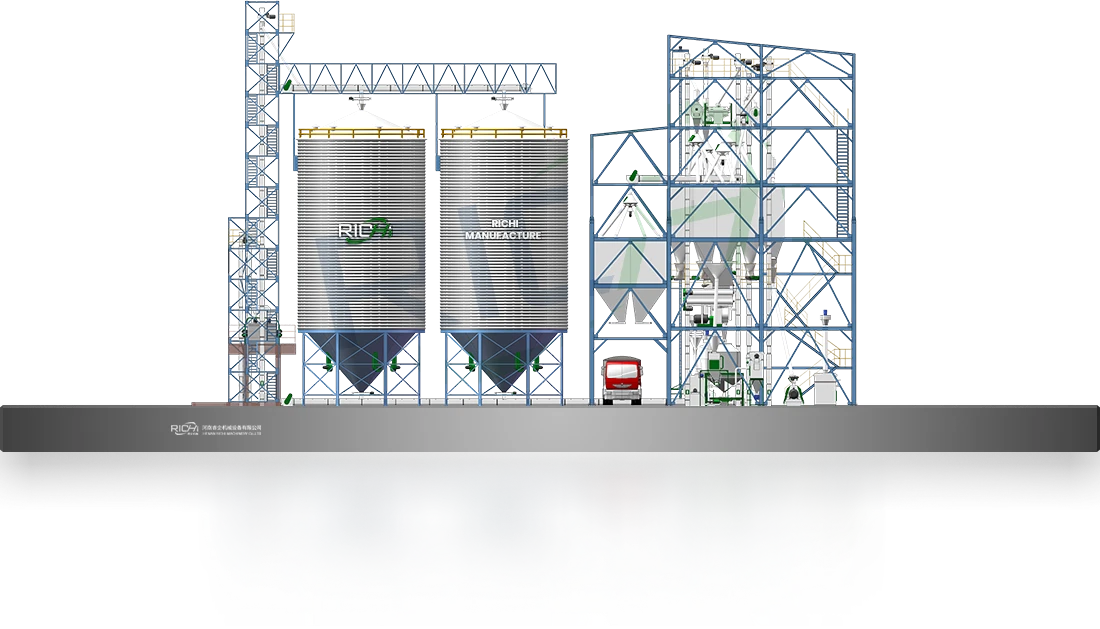
Depending on the material condition, we may design different crushing combinations, including multi-stage grinding systems for high-fiber materials, drying sections for high-moisture ingredients, or special preparation equipment for oversized raw materials. Feed formula, moisture content, pellet size, mash feed requirements, expanded feed requirements, premix production needs, factory height, available space, and investment budget are all considered during the sheep feed mill design process.
Our support does not stop at equipment delivery. We provide complete project assistance throughout the production line lifecycle, including technical consultation, customized design, manufacturing, installation support, operator training, and spare parts supply. Whether you are planning a new sheep feed manufacturing plant or upgrading an existing facility, we can help develop a solution that matches your actual production goals.
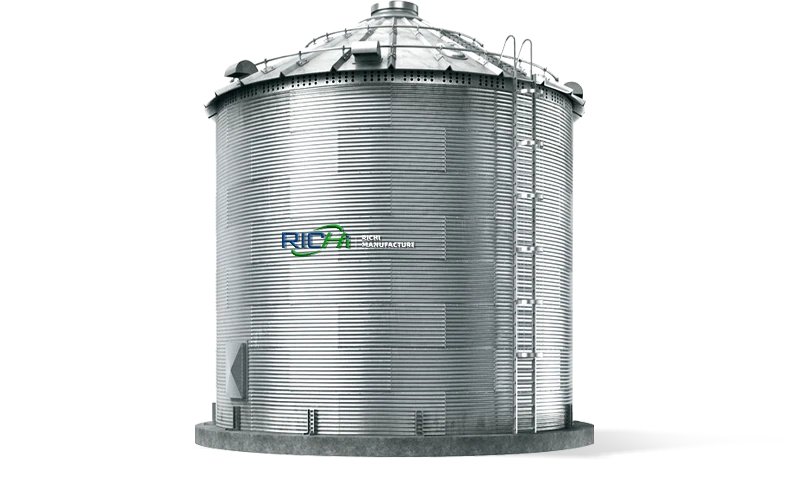
Silo system
01
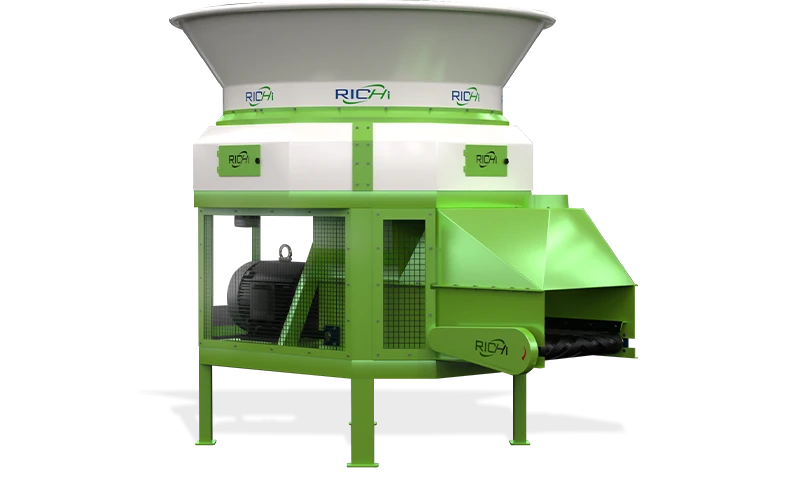
bale chopping
02
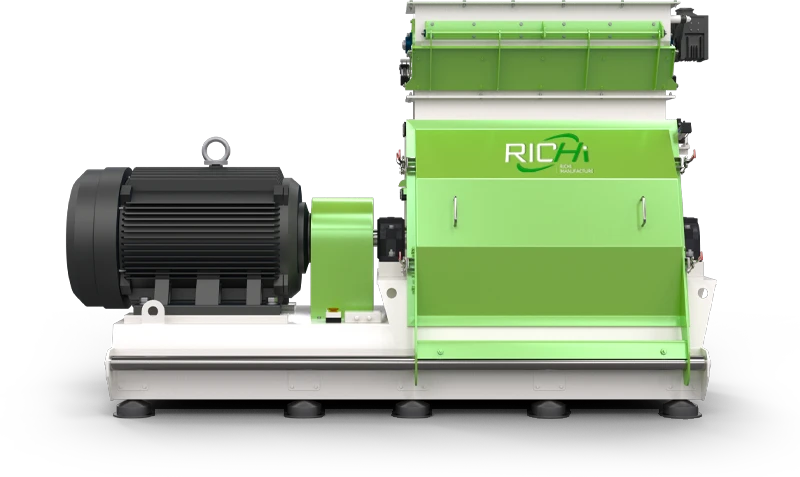
Grinding system
03
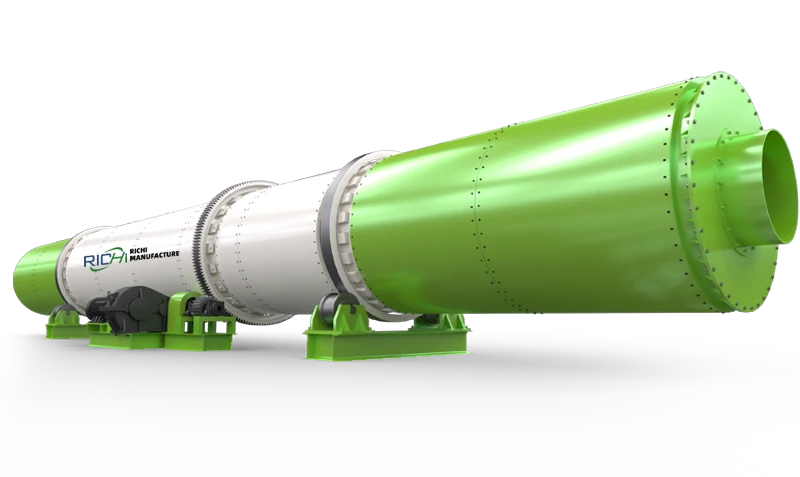
Drying system
04
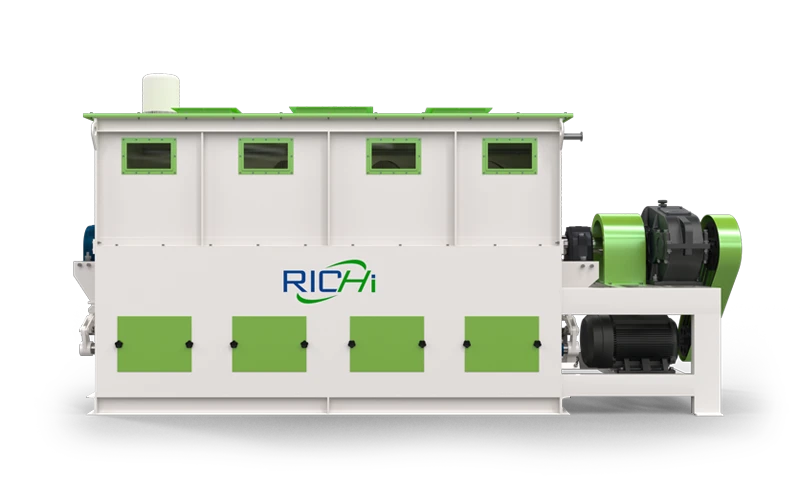
Mixing system
05
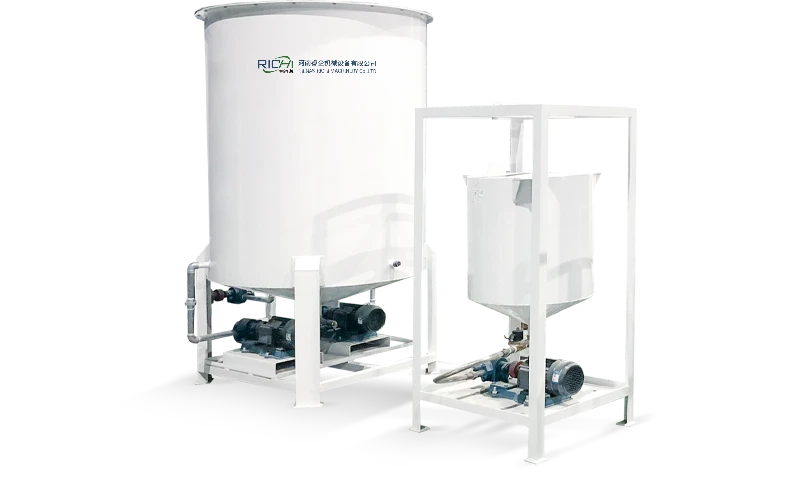
Liquid addition system
06
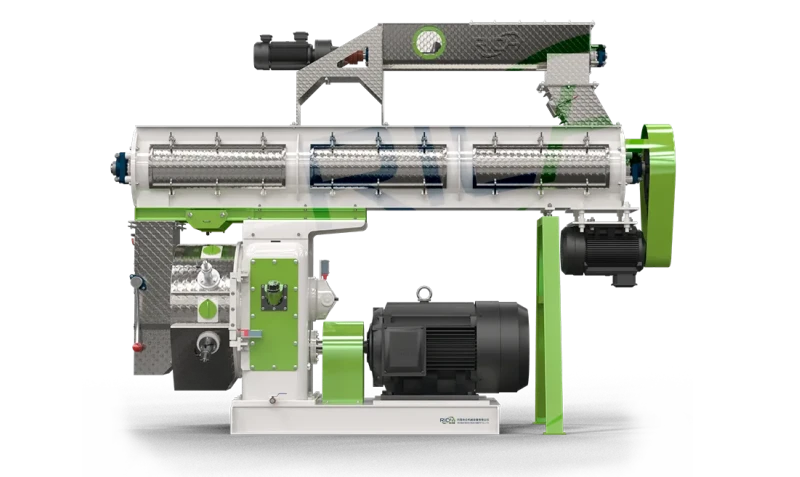
Pelleting system
07
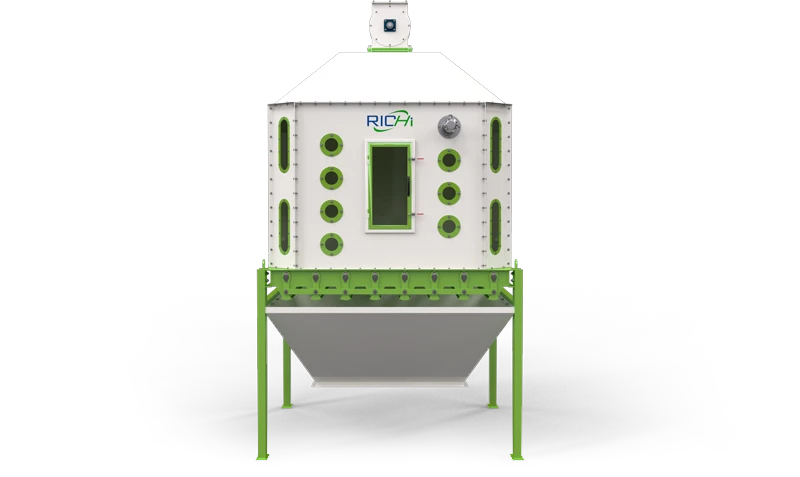
Cooling system
08
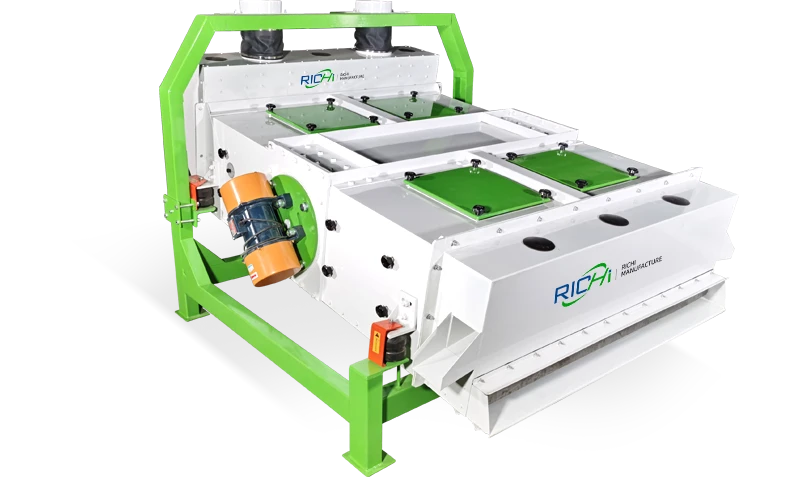
Screening system
09
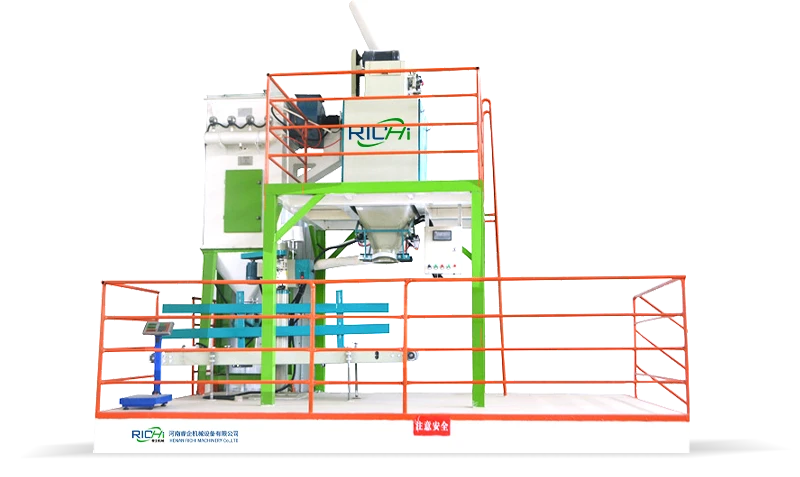
Packaging system
10
Customized Sheep Feed Mill Process Flow Designs
A sheep feed mill should be designed around the customer’s actual production conditions rather than a fixed equipment list. The following customized process flow designs represent different project requirements, including forage-based sheep feed pellet production, straw and crop residue processing, small-scale farm feed solutions, and combined livestock feed production systems.
Each solution was developed according to the customer’s raw materials, available factory space, target capacity, feed type, and investment plan. Whether you need a compact farm-based pellet system, a commercial sheep feed factory, or a combined livestock and aquatic feed production line, our team can customize the process flow and equipment configuration.
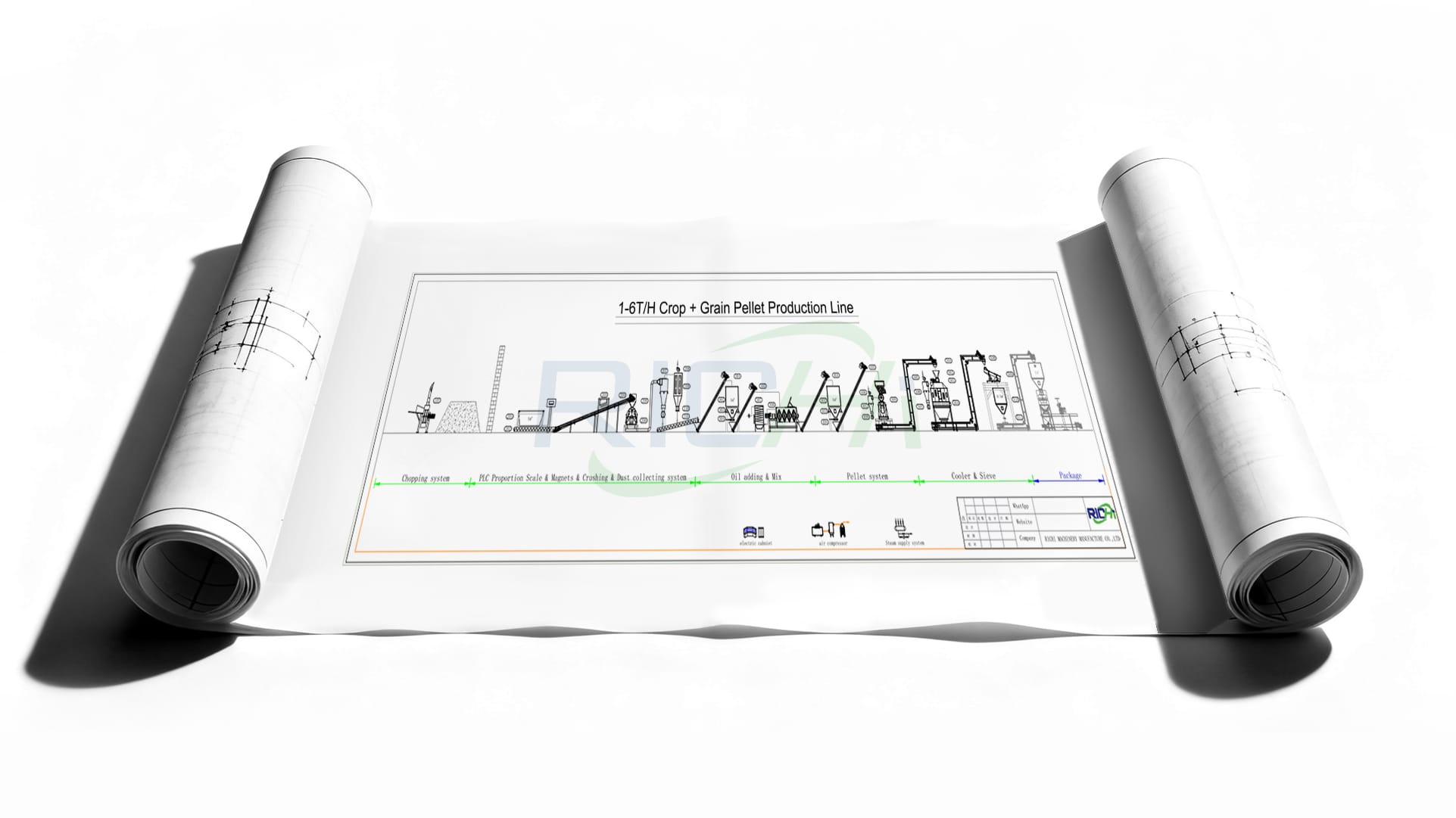
1–6T/H Sheep Feed Mill Design for Crop Straw + Grain Formula
This sheep feed mill project processes crop straw and grains for different sheep feed formulas. Since the straw was long and unprocessed, a chopping system was added before grinding and mixing. The production line includes straw preparation, batching, grinding, mixing, pelletizing, cooling, screening, and packing. With flexible formula adjustment, it can produce grain-based feed, forage pellets, and mixed rations.
Main Configuration: Straw cutter, batching system, grinder, mixer, pellet mill, cooler, screener, packing machine.
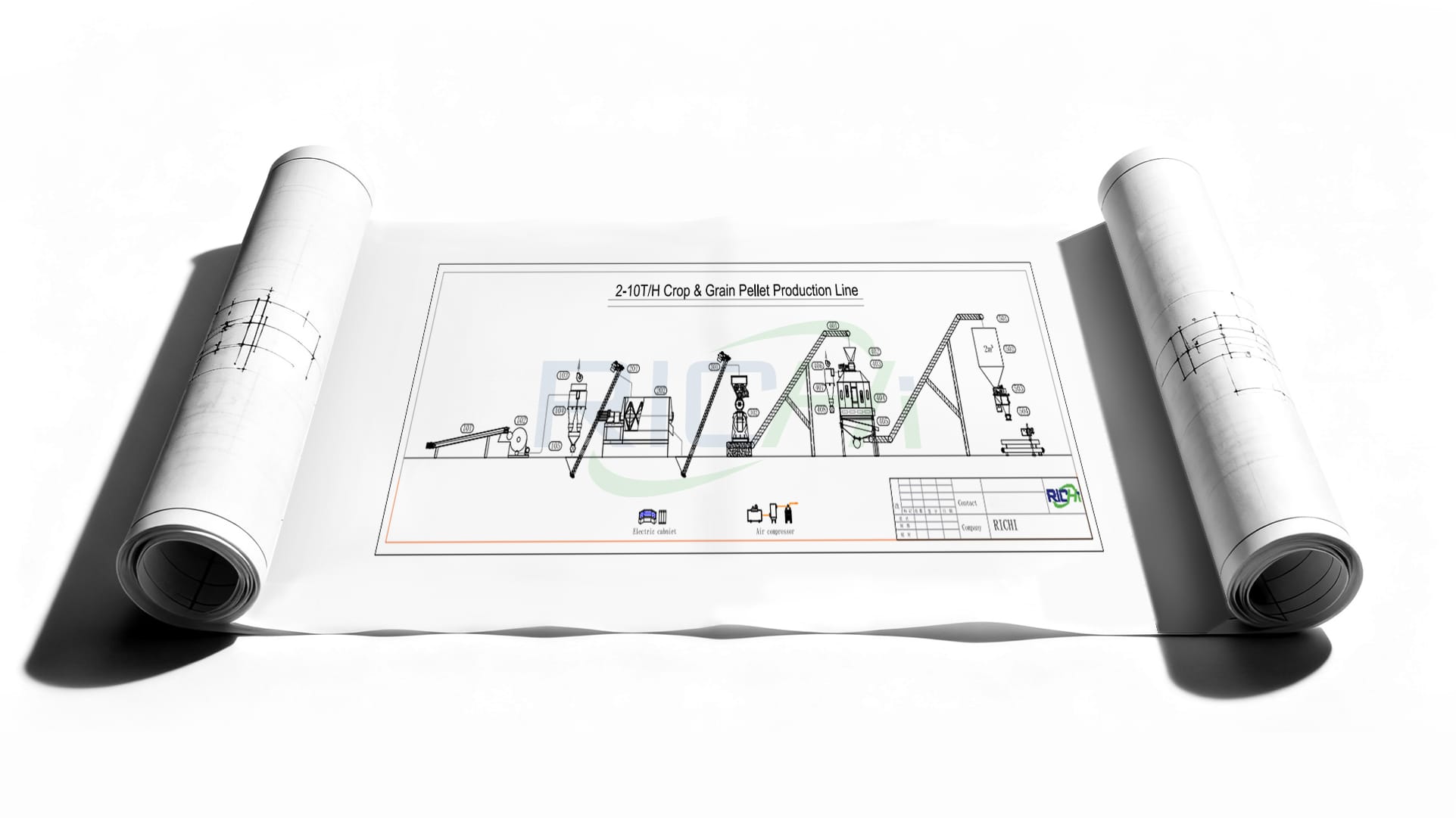
2–10T/H Sheep Feed Mill Design for Crop + Grass + Grain Formula
This project was designed for a customer who already owned a grain grinding system and needed to process grass, straw, and grain together. The line focuses on batching, mixing, pelletizing, cooling, and packing. The modular design allows production of different sheep feed formulas while avoiding unnecessary equipment investment.
Main Configuration: Raw material receiving, batching system, mixer, pellet mill, cooler, screener, packing system.
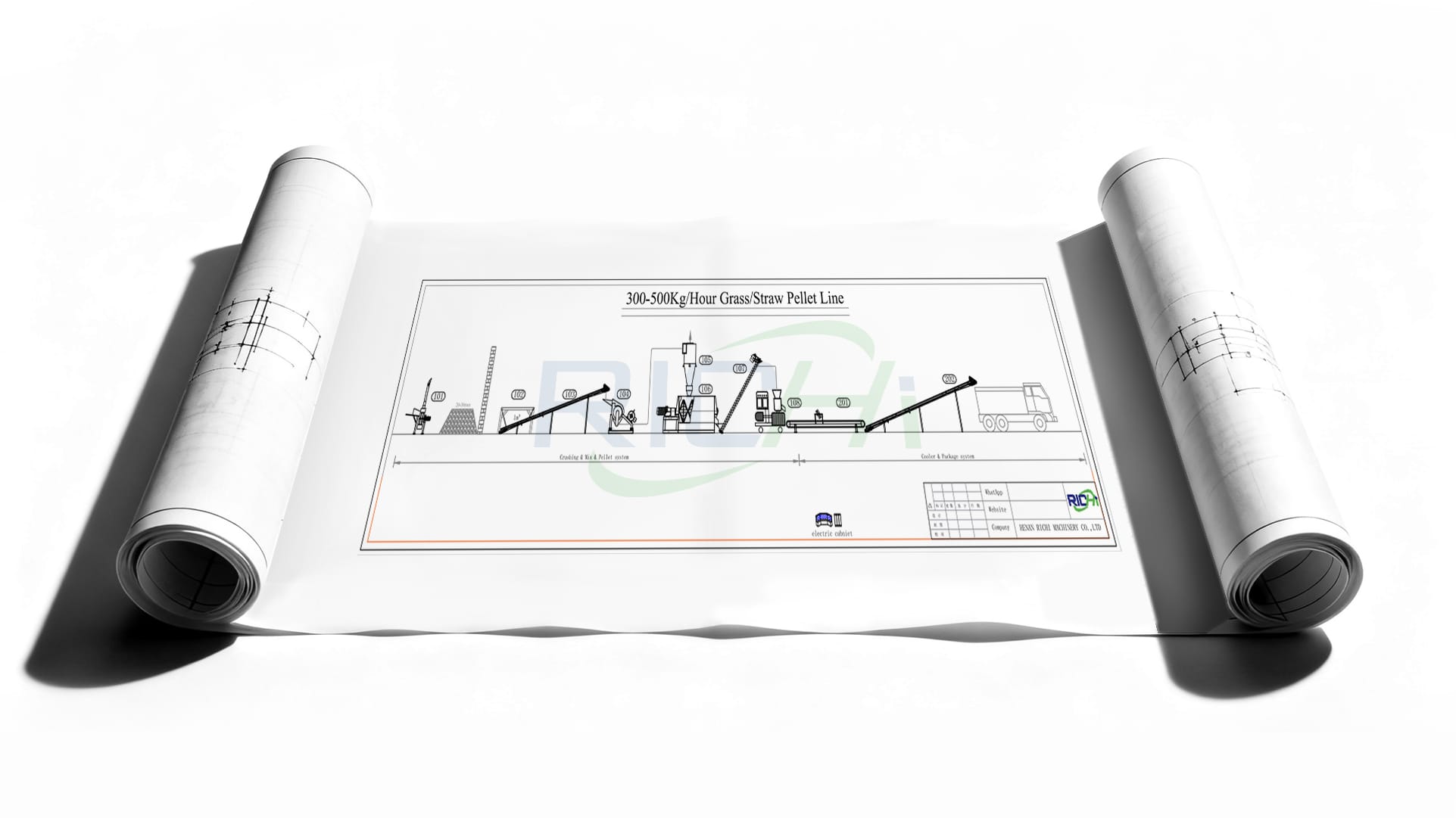
0.3–0.5T/H Small Sheep Feed Mill Design for 100% Grass + Straw Formula
This small sheep feed mill was designed for a farm using local grass and straw resources. The process includes grass cutting, grinding, mixing, and pelletizing. To reduce investment, a long conveyor is used for natural pellet cooling, while screening and packing equipment are not included. The simplified design meets the daily feed production needs of small farms.
Main Configuration: Grass cutter, forage grinder, mixer, pellet mill, cooling conveyor.
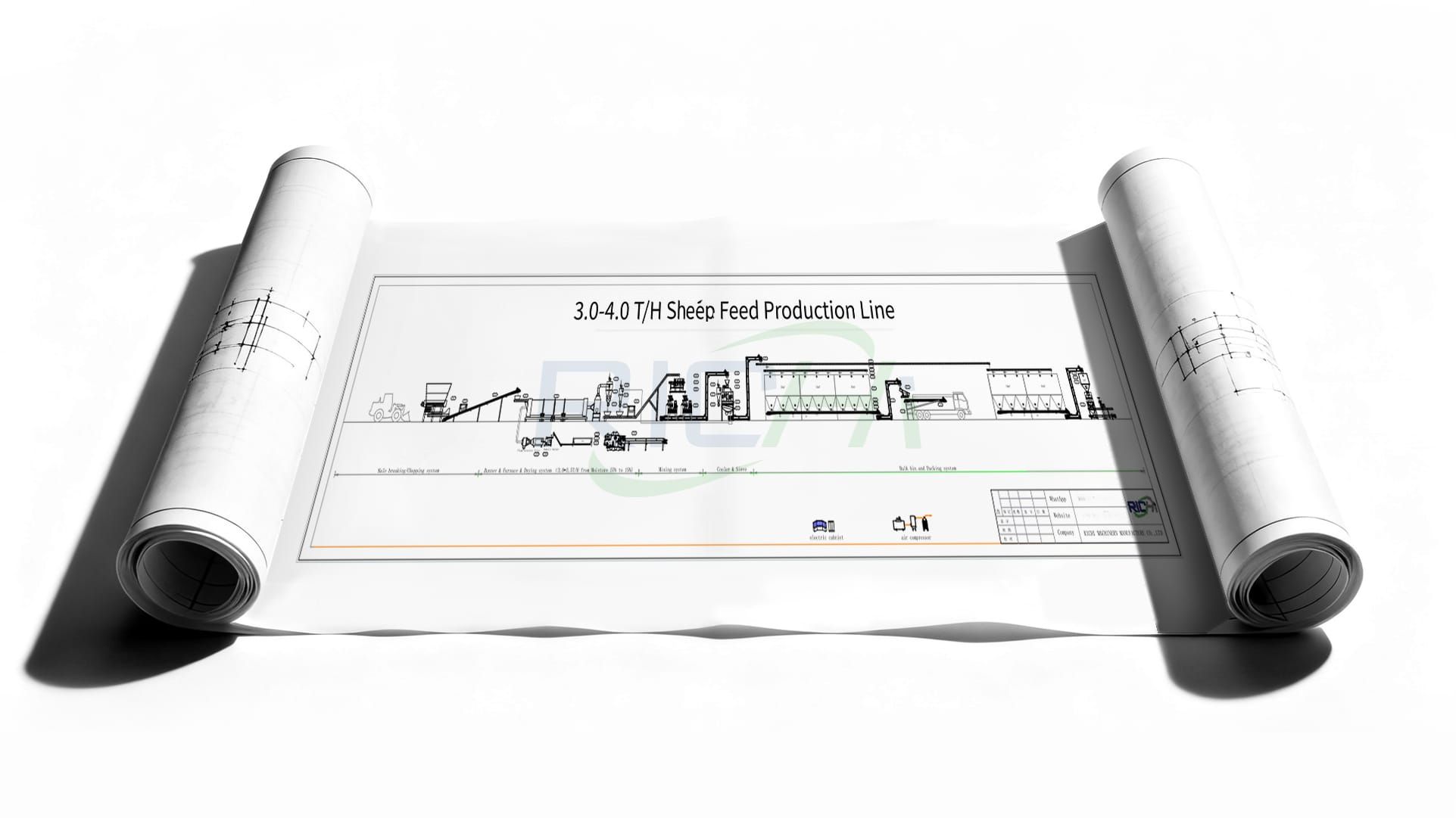
3–4T/H Sheep Feed Mill Design for 100% Alfalfa Formula
This sheep feed mill project was designed for a customer in Turkey using fresh alfalfa as the main raw material. Since the alfalfa moisture content reached 50–60%, additional drying and preparation processes were added before pellet production. Baled and loose alfalfa are processed separately.
Baled material enters through a bale breaker, while loose alfalfa is chopped before drying. After moisture reduction, the material is finely ground, mixed, and processed into sheep feed pellets through pelletizing, cooling, and screening. The finished alfalfa pellets can be packed automatically or directly loaded into bulk transport vehicles according to the customer’s feeding and distribution requirements.
Main Configuration: Bale breaker, chopper, dryer, grinder, mixer, pellet mill, cooler, screener, automatic packing machine.
Global Sheep Feed Mill Projects
Our sheep feed mill projects have been delivered to customers in different livestock markets around the world, covering commercial feed factories, sheep farms, agricultural enterprises, and integrated animal production companies. These projects include not only sheep feed pellet production lines but also customized mash feed production lines, premix processing systems, and multi-purpose feed manufacturing solutions.
For customers looking for a sheep feed mill for sale, we provide flexible designs that can produce different feed forms, pellet sizes, and animal feed types within one production system, including sheep feed, cattle feed, horse feed, poultry feed, and other livestock feeds according to market requirements.
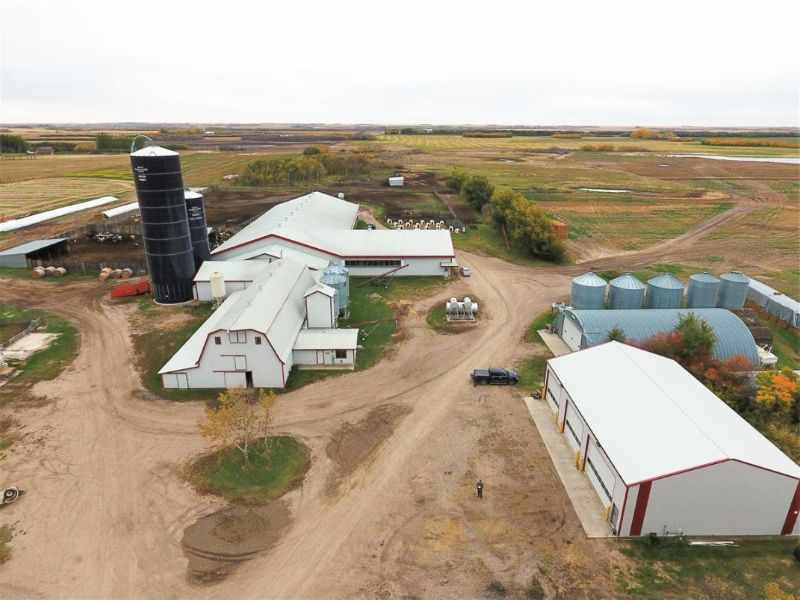
Australia Forage System
Australia
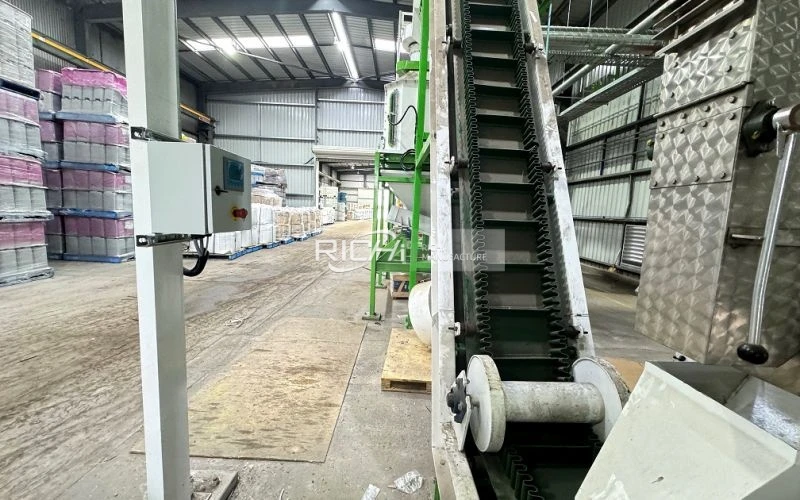
This 8T/H sheep feed mill was designed for an Australian livestock company producing forage-based sheep feed pellets. The customer mainly uses alfalfa hay, oaten hay, wheat bran, barley, and lupin meal to manufacture high-fiber sheep feed for pasture operations. The customized line includes hay grinding, mixing, pelletizing, cooling, and packing sections to produce consistent 6–8 mm forage pellets.
Algeria Straw Feed Project
Algeria
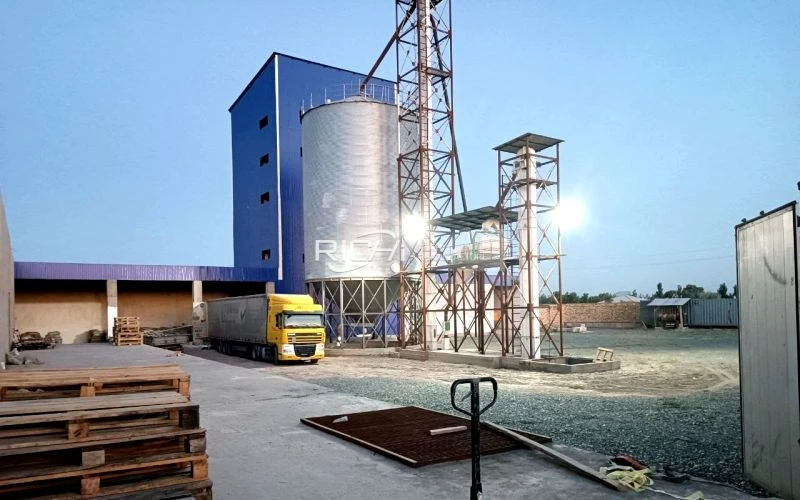
A 3T/H sheep feed processing plant was designed for an Algerian farm using wheat straw, barley, corn, and oilseed cake as main ingredients. Due to the high-fiber straw formula, the project included special raw material preparation equipment to improve grinding performance and produce suitable straw-based sheep feed pellets.
Saudi Arabia Desert Feed Plant
Saudi Arabia
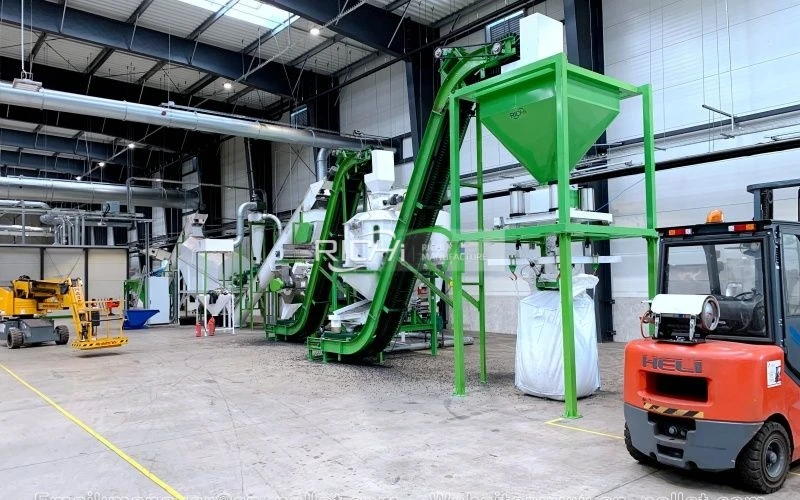
A 8T/H forage-based sheep feed production plant was developed for a Saudi Arabian livestock company. The customer uses imported alfalfa hay, barley, corn, wheat bran, and molasses to produce sheep feed pellets suitable for dry-region farming conditions.
Spain Grass Pellet System
Spain
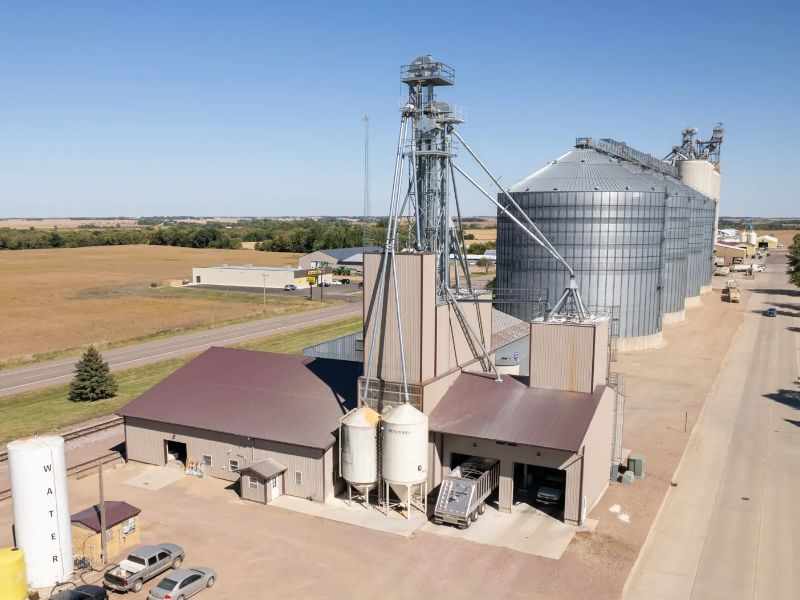
A 4T/H sheep feed pellet plant was designed for a Spanish agricultural company specializing in grass-based feed products. The customer uses Mediterranean grass hay, alfalfa, barley, and wheat bran to produce fiber-rich pellets for sheep farms. The compact design matches the customer’s moderate production demand.
France Dairy Feed Line
France
A 10T/H complete sheep feed plant was supplied for a French agricultural company producing dairy sheep and livestock compound feed. The formula combines corn, wheat, soybean meal, alfalfa meal, and mineral additives. The customer required one system for both pellet feed and mash feed production, so we designed flexible screening and packing processes for different feed forms.
Iraq sheep Feed Factory
Iraq
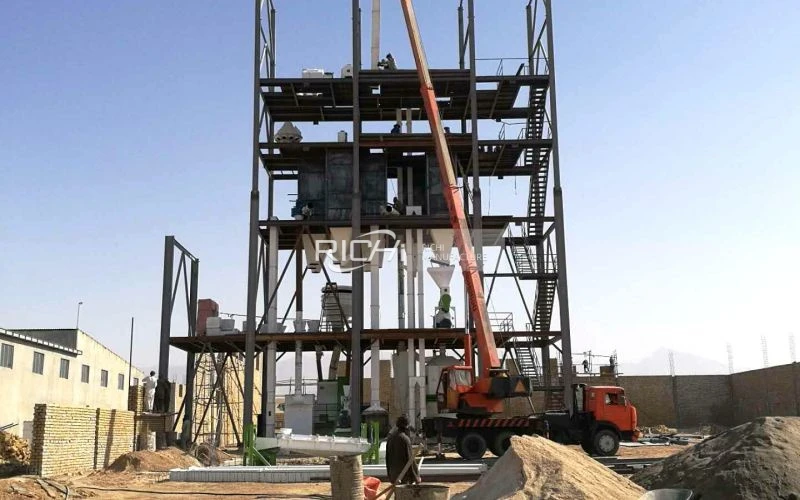
This 7T/H sheep feed manufacturing plant was supplied for an Iraqi livestock company producing energy-based sheep feed. The customer uses straw, corn, barley, soybean meal, wheat bran, and premix ingredients to produce concentrated pellets for intensive sheep farming. The line was designed for continuous commercial production.
USA Ruminant Feed Plant
USA
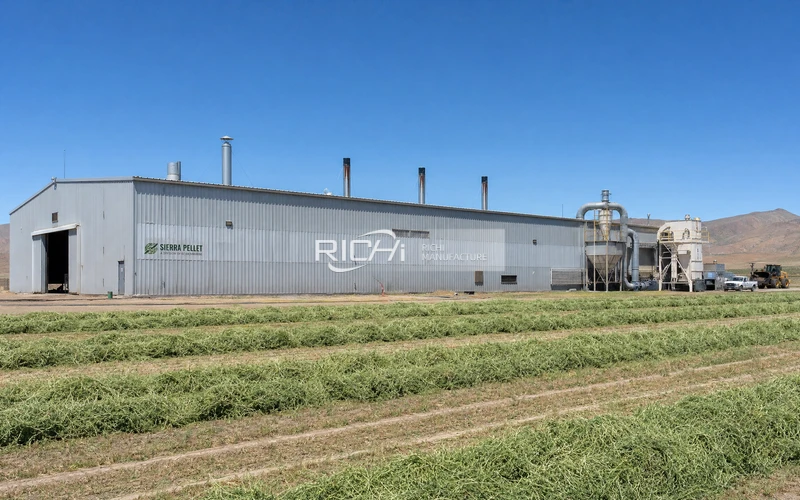
This 15T/H commercial sheep feed factory was built for an American livestock feed producer supplying sheep and cattle farms. The project processes corn, alfalfa hay, soybean meal, distillers grains, and mineral supplements. The customized system supports multiple formulas and different pellet specifications.
Morocco Mixed Feed Factory
Morocco
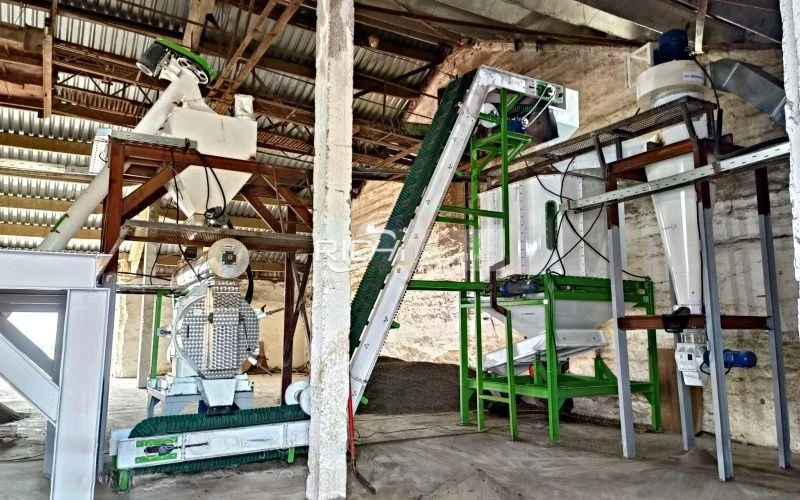
This 6T/H sheep feed processing plant was designed for a Moroccan agricultural enterprise producing sheep and cattle feed. The production line handles wheat bran, corn, barley, olive by-products, and alfalfa meal, allowing flexible production of pellet feed and mash feed.
Turkey Mixed Pellet Plant
Turkey
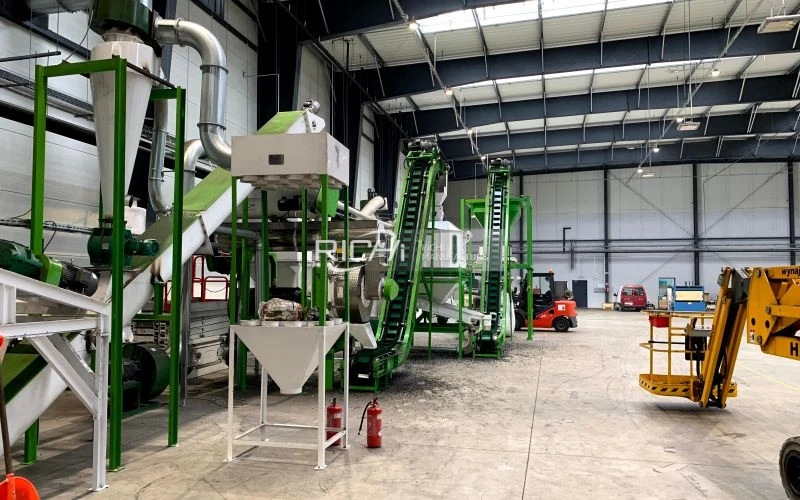
This 5T/H sheep feed production line was built for a Turkish feed manufacturer serving local sheep farms. The customer processes barley, corn, wheat bran, sunflower meal, and dried grass into mixed sheep feed pellets. The production system was customized for stable operation with locally available grain resources and seasonal forage variations.
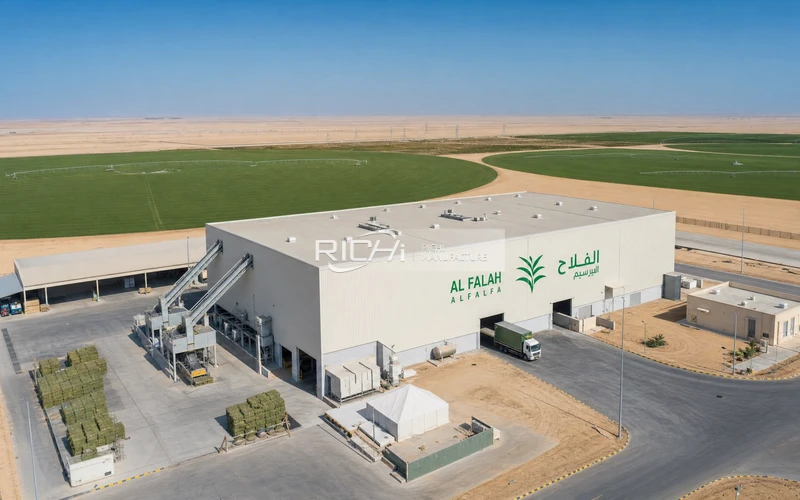
New Zealand Pasture Feed Line
New Zealand
A 12T/H complete sheep feed mill was developed for a New Zealand livestock enterprise requiring flexible pasture supplement production. The formula includes ryegrass hay, lucerne hay, barley, oats, and protein additives. The system supports both sheep feed pellet production and other ruminant feed applications.
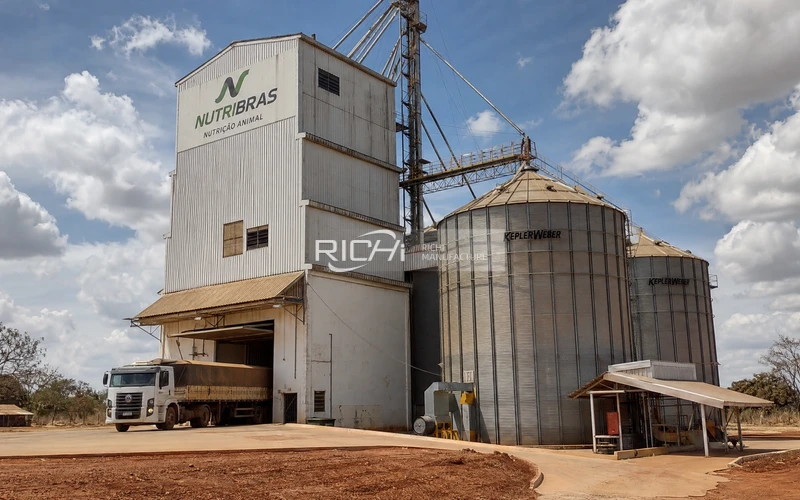
Brazil Corn Formula Plant
Brazil
A 20T/H sheep feed manufacturing line was supplied for a Brazilian agricultural company producing grain-based livestock feed. The customer mainly uses corn, soybean meal, sorghum, and rice bran to manufacture energy-rich sheep pellets and mixed ruminant feed products.
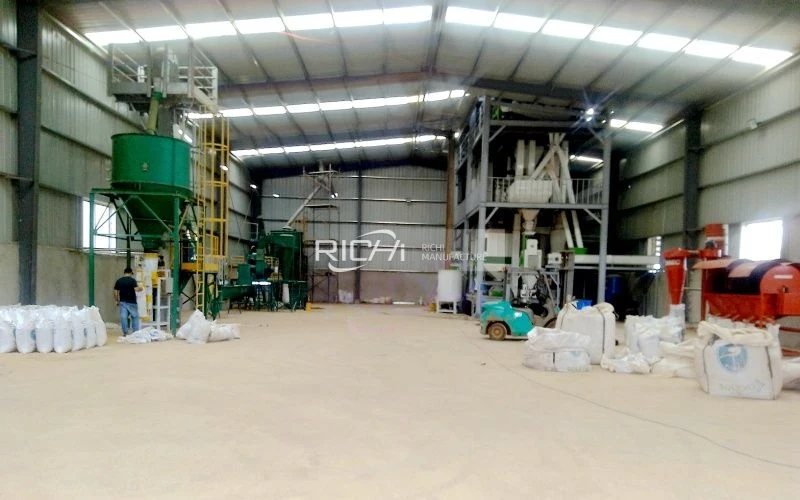
Egypt Grain & Forage Plant
Egypt
A 10T/H sheep feed manufacturing system was supplied for an Egyptian livestock company. The customer processes corn, wheat bran, clover hay, soybean meal, and rice bran into complete sheep feed pellets. The system was configured for efficient production using locally available agricultural resources.
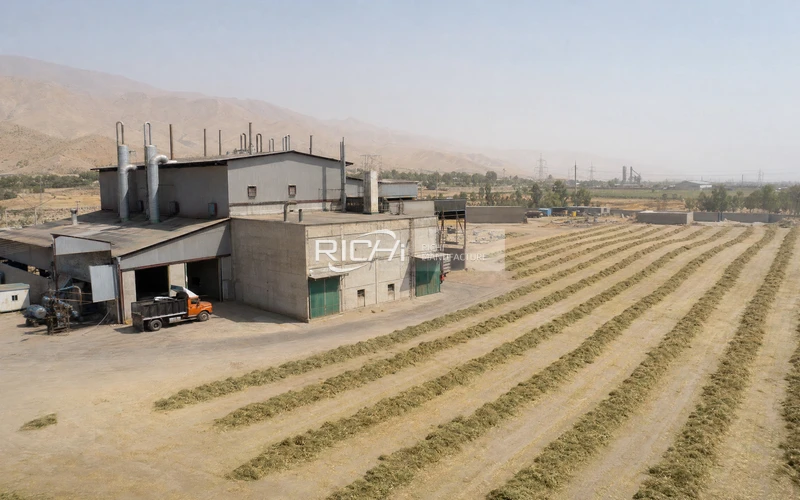
Iran Alfalfa Feed Plant
Iran
This 6T/H forage pellet production project was developed for an Iranian livestock company using locally produced alfalfa hay, barley, corn, and wheat bran. The sheep feed mill was designed to handle dry forage materials efficiently and produce alfalfa-based pellets for sheep and ruminant feeding applications.
UK Multi Feed Plant
UK
This 10T/H industrial sheep feed mill was customized for a British feed company producing multiple animal feed products. Besides sheep feed pellets made from grass meal, wheat, corn, and soybean meal, the same production line can process cattle feed and other livestock compound feeds.
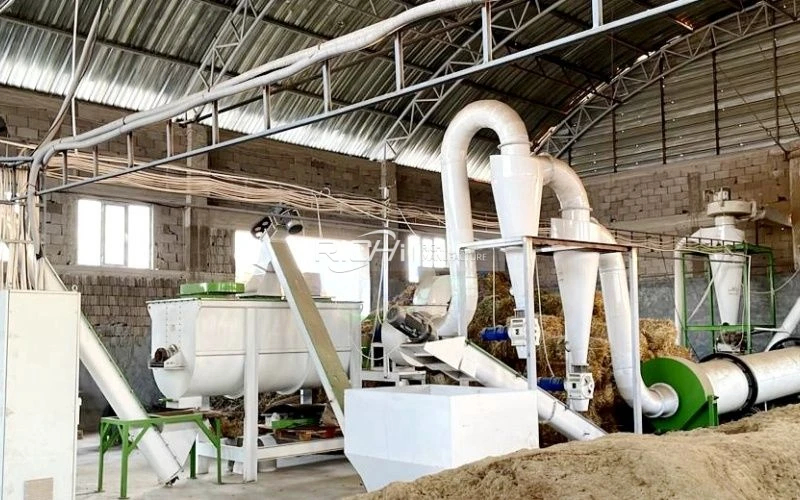
Jordan Small Farm Line
Jordan
This 2T/H sheep feed mill was designed for a Jordanian sheep farm producing its own feed supply. The formula includes barley, wheat bran, alfalfa hay, and mineral additives. The compact system helps the farm reduce purchased feed costs through local feed production.
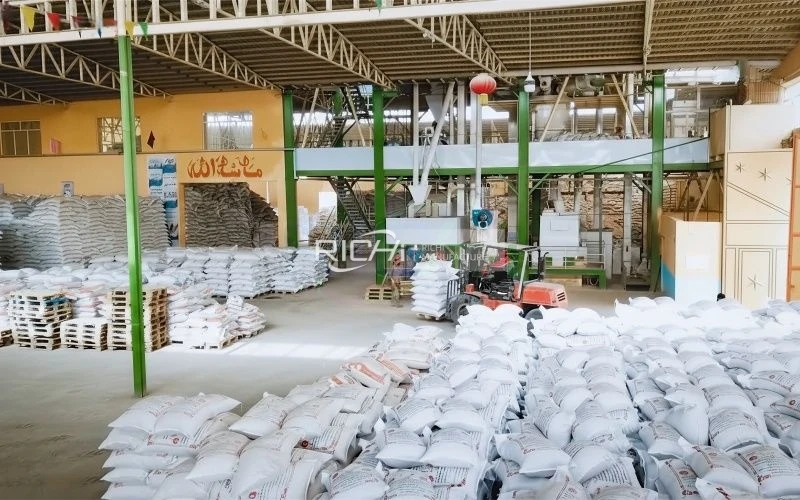
UAE Premium Feed Plant
UAE
This 5T/H sheep feed mill project was developed for a UAE livestock investment company requiring premium forage and concentrate feed production. The formula combines imported alfalfa hay, barley, corn, soybean meal, and molasses. The customized line supports different pellet sizes for sheep and other ruminant feed markets.
Our sheep feed mill solutions have been supplied to customers in different regions with various farming conditions, raw materials, and production requirements. From small farm-based projects to commercial feed production systems, our customers appreciate our practical process design, reliable equipment manufacturing, and complete technical support throughout the project.

3T/H Sheep Feed Mill in Mongolia
- Customer: Sheep Farm Owner
- Project Type: Forage & grain pellet feed production
“We needed a reliable sheep feed mill to process our local raw materials, including barley, wheat bran, and hay. The team designed a pellet production system suitable for Mongolia’s cold climate, and the equipment has helped us produce stable feed for our sheep farms.”

5T/H Sheep Feed Mill in Ireland
- Customer: Livestock Feed Producer
- Project Type: Alfalfa hay pellet feed plant
“Our project focused on producing high-quality sheep feed pellets using alfalfa hay, oats, barley, and mineral additives. We were satisfied with the customized equipment design, especially the processing solution for forage materials and the professional support during installation.”

4T/H Sheep Feed Mill in Uruguay
- Customer: Agricultural Business Manager
- Project Type: Multi-purpose ruminant feed production line
“We selected this sheep feed mill to produce feed using corn, soybean meal, wheat bran, and local forage resources. The complete solution matched our requirements for sheep and other ruminant feed production, and the equipment operation has been stable since startup.”

2T/H Sheep Feed Mill in Afghanistan
- Customer: Sheep Farm Project Manager
- Project Type: Straw & grain sheep pellet feed project
“Our main challenge was processing local straw and grain resources into usable sheep feed pellets. The customized design, including straw preparation and pelletizing equipment, helped us improve feed utilization and reduce dependence on purchased feed.”

6T/H Sheep Feed Mill in Chile
- Customer: Feed Factory Technical Director
- Project Type: Commercial sheep feed production plant
“We wanted a commercial sheep feed mill that could handle corn, barley, soybean meal, and forage ingredients with consistent quality. The production line design, equipment manufacturing, and technical communication gave us confidence in expanding our feed business.”

Sheep Feed Mill Solutions Based on Different Production Capacities
A suitable sheep feed mill capacity depends on more than the expected output. The investment scale, available factory space, raw material supply, target market, and production purpose all influence the final design.
We provide customized sheep feed production solutions from small farm-based systems to large commercial feed manufacturing plants, helping customers select the right production scale and equipment configuration for their business plans.
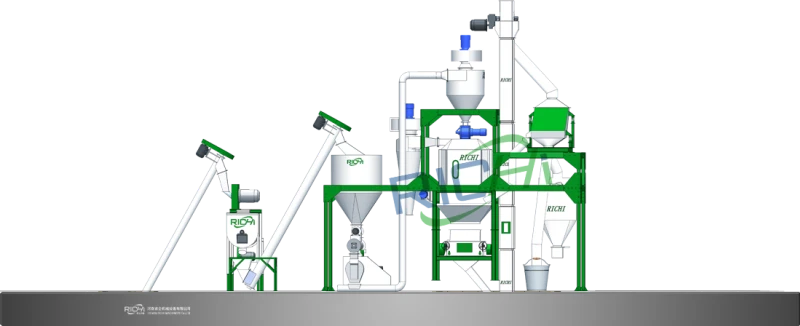
This capacity range is suitable for small and medium sheep farms, pasture operators, and investors who want to produce their own feed instead of purchasing finished products. These compact systems are commonly used for forage pellets, straw-based feed, and basic sheep feed production with lower investment and limited factory space requirements.
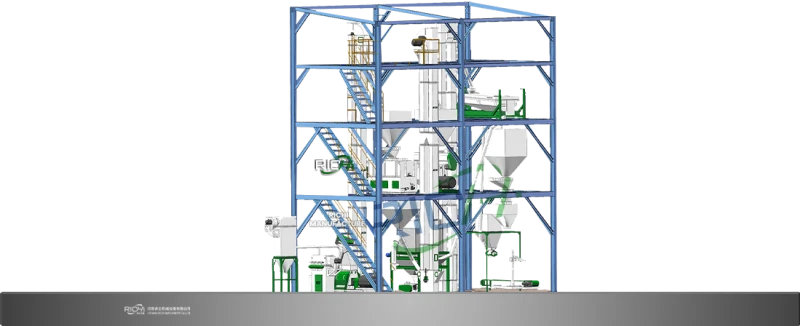
3-4 t/h animal feed production plant
A 3–4T/H production line is ideal for growing farms, local feed suppliers, and agricultural companies starting commercial sheep feed production. This scale provides a balance between investment cost and output capacity, allowing production of different sheep feed formulas from grains, hay, straw, and agricultural by-products.
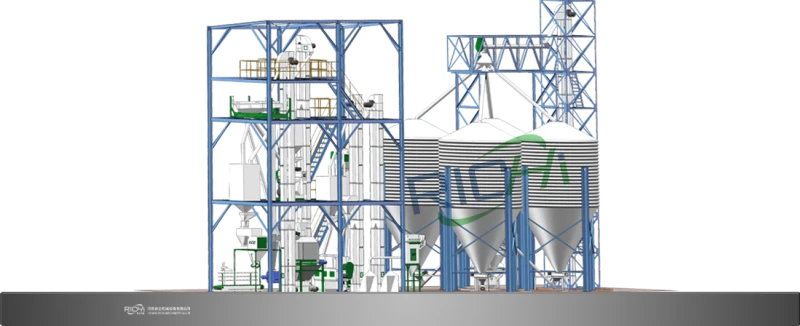
5-7 t/h animal feed pellet plant
This capacity is commonly selected by professional sheep farms and regional feed producers requiring stable daily feed supply. The system can support multiple feed formulas, including concentrate pellets, forage-based pellets, and mixed sheep feed products for different feeding stages.
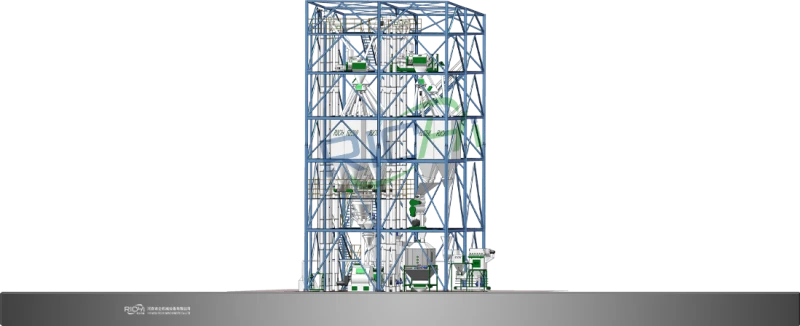
8-10 t/h animal feed processing plant
An 8–10T/H sheep feed mill is suitable for commercial livestock companies and medium-sized feed factories serving multiple farms. These projects usually require more complete processing systems for raw material handling, automatic batching, pellet production, cooling, screening, and packing.
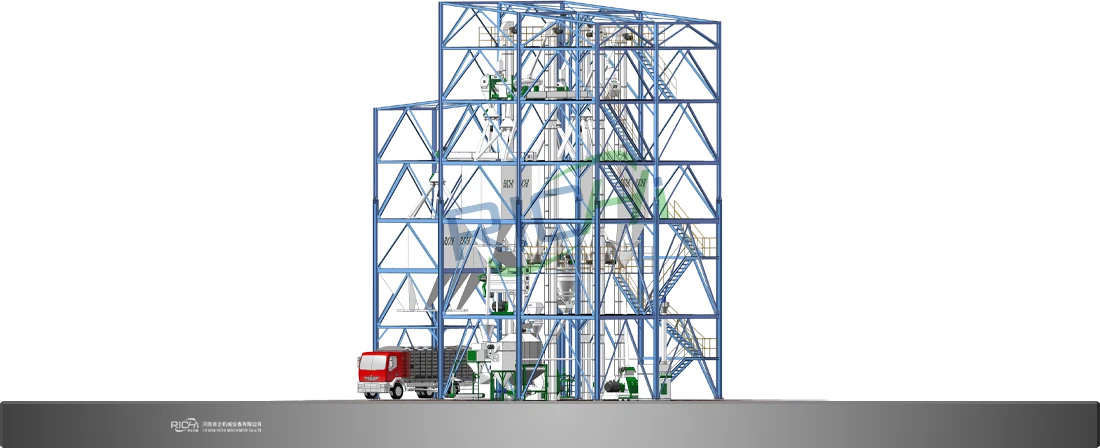
12-20 t/h feed preparation plant
This production scale is designed for industrial livestock enterprises and feed manufacturers with larger market supply requirements. These sheep feed plants can handle multiple raw materials and formulas, including sheep feed, cattle feed, and other ruminant feed products within one flexible production system.

25-40 t/h feed pellet production line
A 25–40T/H solution is suitable for established commercial feed factories and agricultural groups expanding their livestock feed business. These larger systems are usually designed with higher automation levels, efficient material handling, and the ability to produce different feed types continuously.
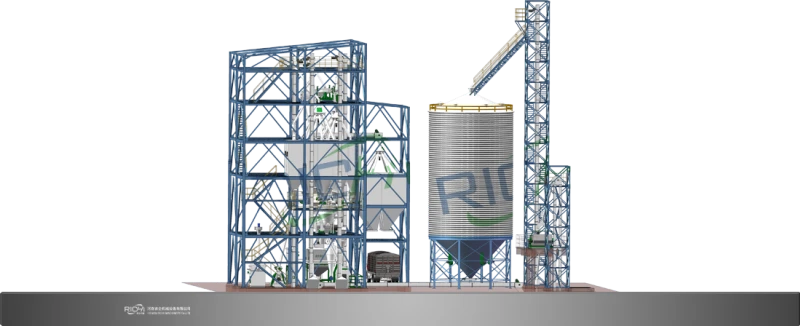
50-60 t/h commercial feed mill
This capacity range meets the needs of large feed manufacturers and integrated livestock companies supplying feed on a regional scale. The production line can be customized for high-volume sheep feed production while supporting additional livestock feed categories according to market demand.
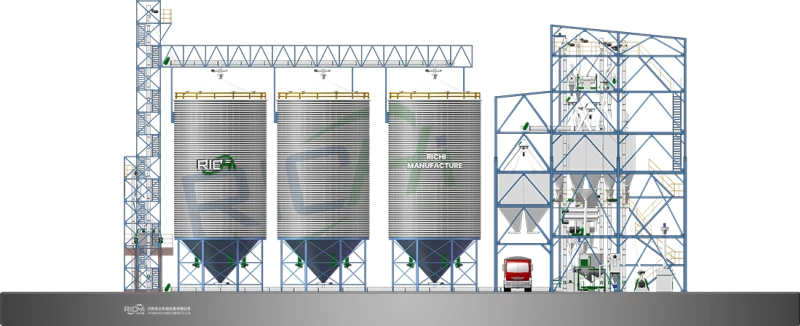
60-80t/h complete feed mill plant
A 60–80T/H sheep feed mill is developed for large industrial feed production projects requiring high output and continuous operation. These systems usually include advanced automation, large storage capacity, and optimized production layouts for complex feed manufacturing requirements.
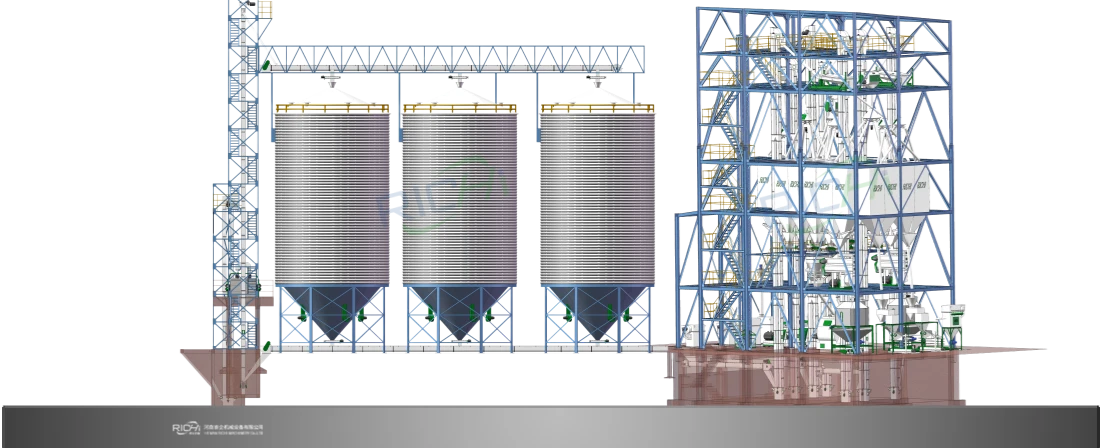
This scale is suitable for major feed enterprises and agricultural investment groups operating large commercial production facilities. An 80–100T/H solution can support multi-product manufacturing, including different pellet sizes, mash feed production, and combined livestock feed production.
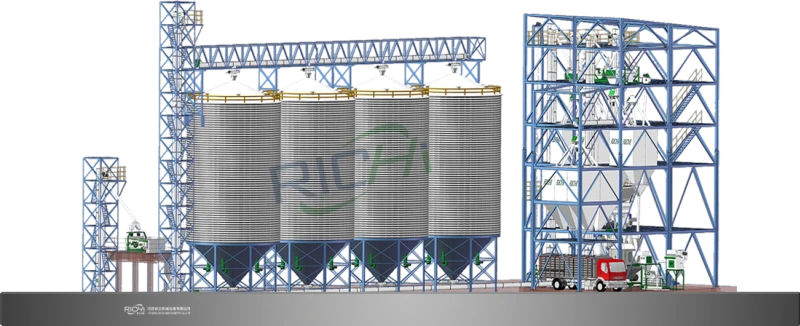
100-120 t/h feed mill engineering
A 100–120T/H sheep feed mill represents a large-scale industrial production solution designed for major feed manufacturers and integrated agricultural companies. These projects require detailed factory planning, high-efficiency equipment configuration, and customized production systems to meet large market supply needs.
Sheep Feed Mill Investment Cost
The total investment of a sheep feed mill is not only determined by the production equipment itself. The final project budget depends on many factors, including production capacity, feed formula, automation level, factory construction conditions, raw material preparation requirements, and local construction costs.
Based on our experience with global feed production projects, we provide a practical cost overview covering both the complete sheep feed production line equipment and the additional investment required to establish a fully operational feed manufacturing facility.
Whole Manual/Automatic sheep feed plant set up investment : $37,000 – $40,000,000
Equipment Cost Breakdown :
Raw Material Cleaning machine price :
$3,000–$15,000
Crushing & Grinding machine Price :
$2,000–$40,000
Bale Breaking machine Price :
$5,000–$25,000
raw material Drying machine Price :
$8,000–$250,000
Batching & Weighing machine Price :
$2,000-$50,000
sheep feed Mixing machine Price :
$2,000–$20,000
sheep feed pellet machine Price :
$7,000-$80,000
Cooling equipment Price :
$1,500-$15,000
Screening equipment price :
$2,000-$8,000
cattle feed Packing systems Price :
$2,000–$30,000
Conveying machine Price :
$3,000-$25,000+
Dust Collection system Price :
$3,000–$20,000
Liquid/Molasses Addition Price :
$2,000–$15,000
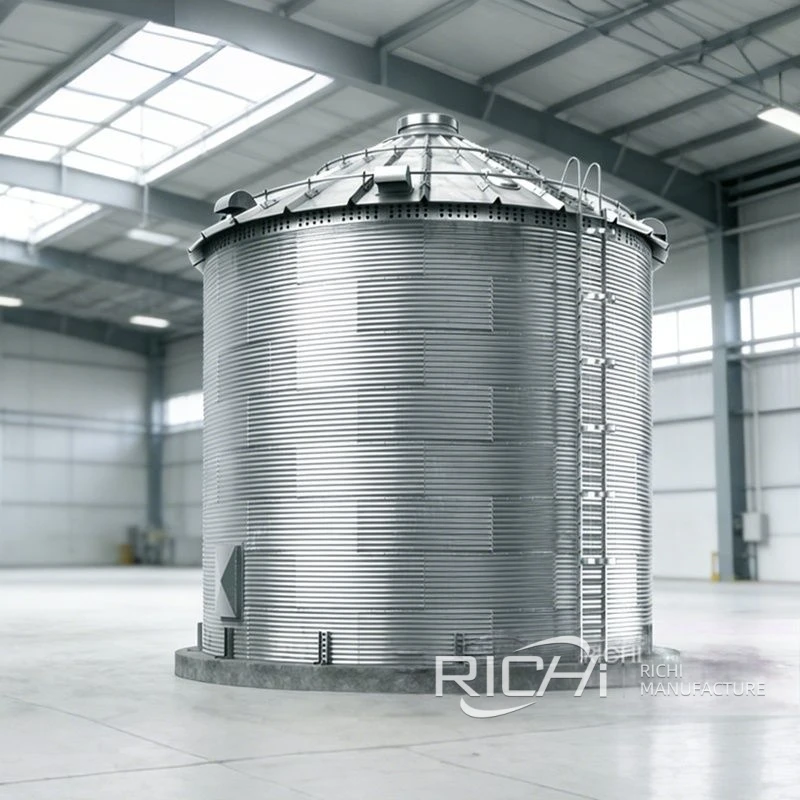
Storage Silos Price :
$5,000–$500,000
Control system & automation Price :
$5,000-$100,000
The above investment ranges are summarized from our experience with thousands of feed production projects in different markets. However, every sheep feed mill has unique conditions. A farm using local straw and hay will require a different system from a commercial feed manufacturer producing multiple livestock feed products.
The most reliable way to understand the actual investment is to discuss your project directly with our team. We can evaluate your raw materials, target output, feed types, factory conditions, and future business plans, then provide a customized equipment quotation, production line proposal, and practical investment recommendation.

From Design to Long-Term Support
Building a sheep feed mill requires more than supplying individual machines. We provide complete project services covering production planning, customized process design, equipment manufacturing, installation support, operation training, and after-sales assistance. From the first discussion of raw materials and production goals to long-term operation, our team supports customers with practical solutions based on their actual factory conditions and business requirements.
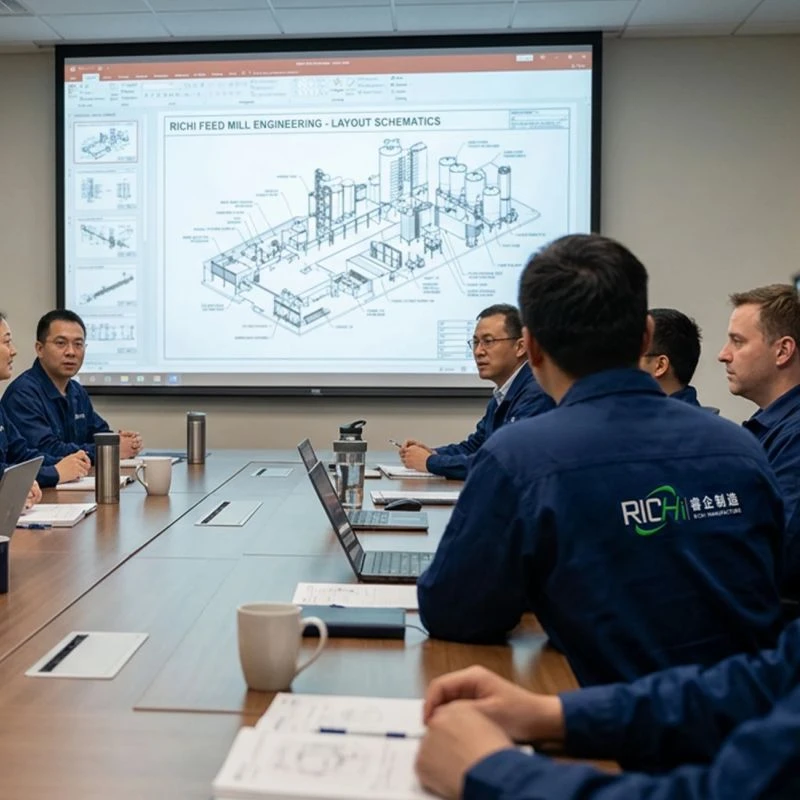
Customized Design & Project Planning
Every sheep feed mill starts with a detailed project design. We customize the production process, equipment layout, workshop planning, and civil construction requirements according to raw materials, feed formulas, production capacity, and investment budget. Special equipment modifications and process adjustments can also be developed for unique materials such as straw, hay, agricultural by-products, or special feed formulas.
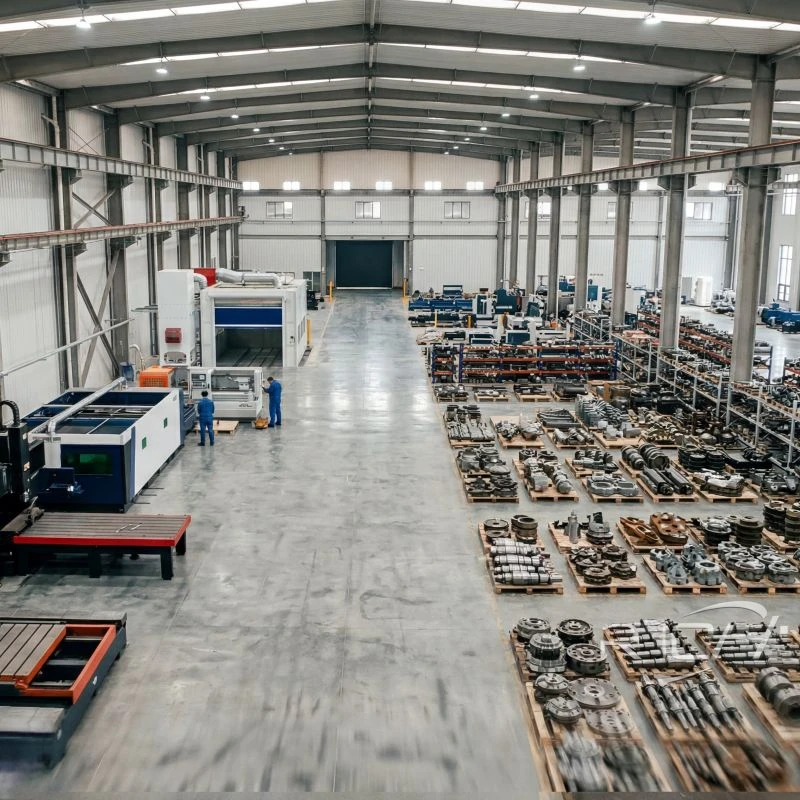
Professional Equipment Manufacturing
All core equipment for our sheep feed mill projects is manufactured by our own production facilities, including crushing, mixing, pelletizing, cooling, packing, and conveying equipment. With modern manufacturing workshops, advanced processing machines, patented technologies, and international certifications, our equipment is designed for reliable operation and export to customers worldwide.
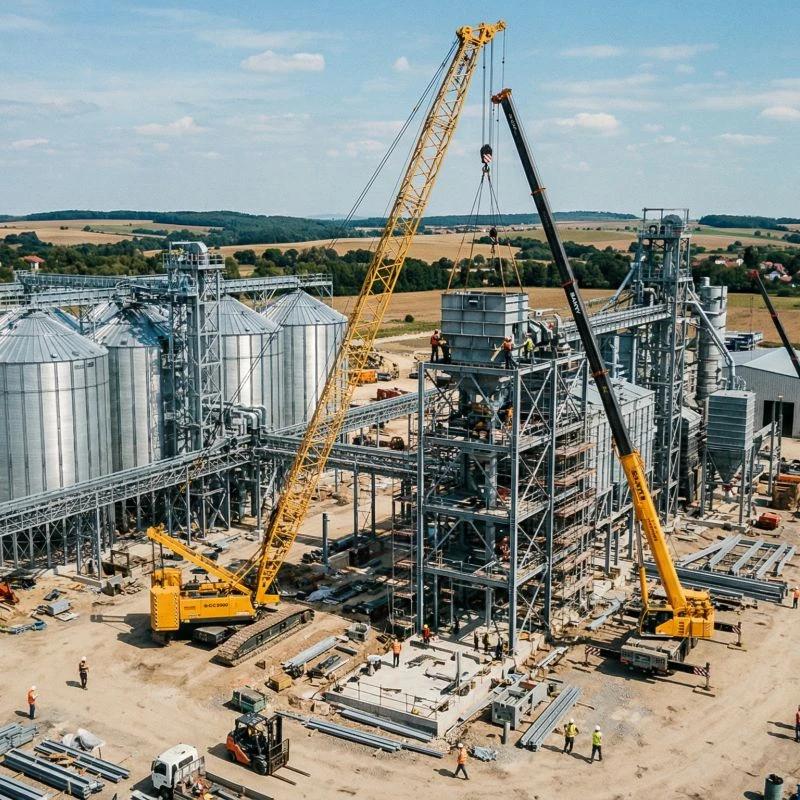
Installation, Commissioning & Training
After equipment delivery, we provide technical support for installation, commissioning, and operation training. Our team helps customers understand equipment operation, production adjustment, maintenance requirements, and daily management procedures to ensure the sheep feed production line can run smoothly after startup.

Lifetime Technical & After-Sales Support
Our service continues after the sheep feed mill is put into operation. We provide long-term technical support, spare parts supply, production consultation, and regular project follow-up to help customers maintain stable production and improve their feed manufacturing system throughout the entire service life of the equipment.
Free Customized Services
A successful sheep feed mill project requires careful planning before equipment production begins. To help customers evaluate their projects more clearly, we provide a range of free technical services covering cost estimation, process design, factory planning, and operation support.
These services help customers understand the required investment, production layout, and implementation details before starting their sheep feed production project.

Free Project Evaluation & Cost Planning
Free Process Flow Chart & Production Design
Free Factory Layout & Engineering Drawings
Free Project Reference & Case Support
Free Equipment Operation Documents
Free Remote Installation Guidance
Free Operation Training & Technical Guidance
Free Production Testing Support
Complete Equipment Solutions
A complete sheep feed mill requires the right combination of equipment to handle different raw materials, feed formulas, and production targets.
We manufacture and supply full sets of sheep feed production equipment, including raw material cleaning systems, crushing machines, batching and weighing systems, mixers, pellet mills, conditioners, cooling machines, screening equipment, packing machines, conveyors, dust collection systems, liquid adding systems, storage silos, and automatic control systems.
According to different project requirements, we can provide individual machines or complete production line equipment packages. Whether processing grain-based sheep feed, forage pellets, straw feed, concentrate feed, or mixed livestock feed, we customize the equipment configuration based on the customer’s raw materials, capacity, and final product requirements.
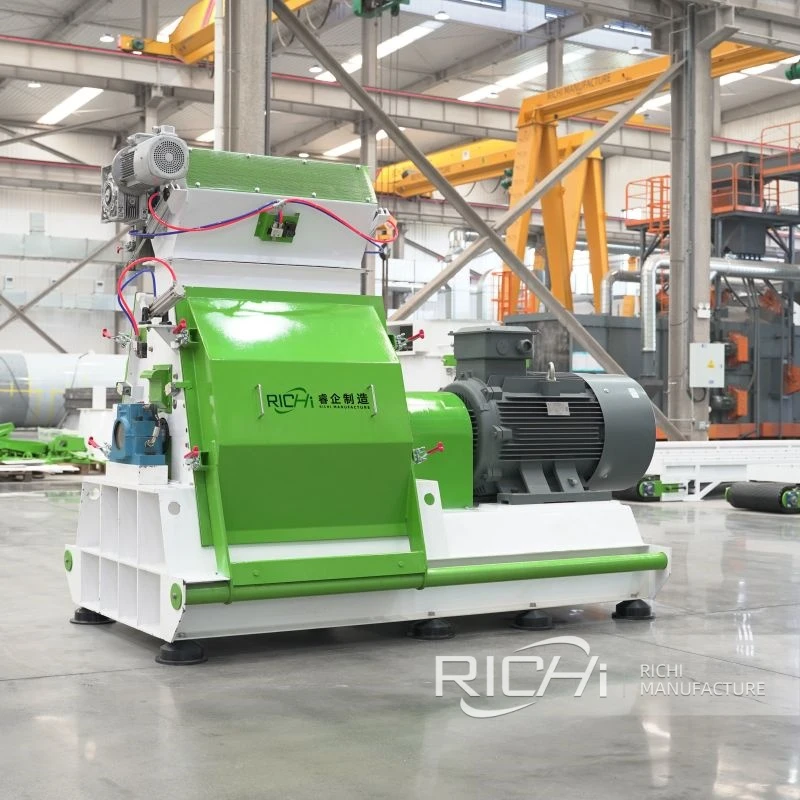
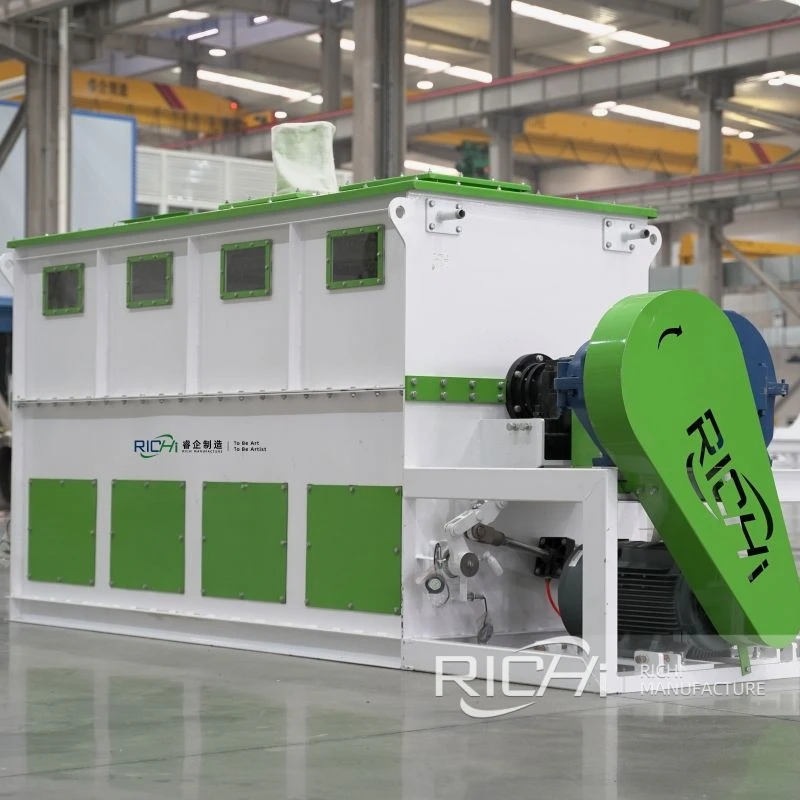
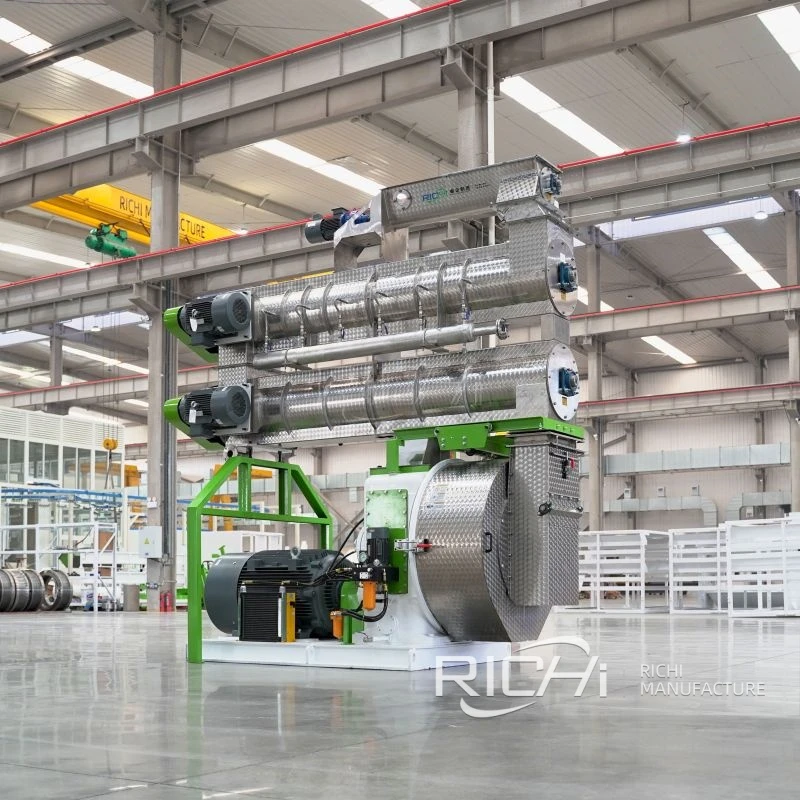
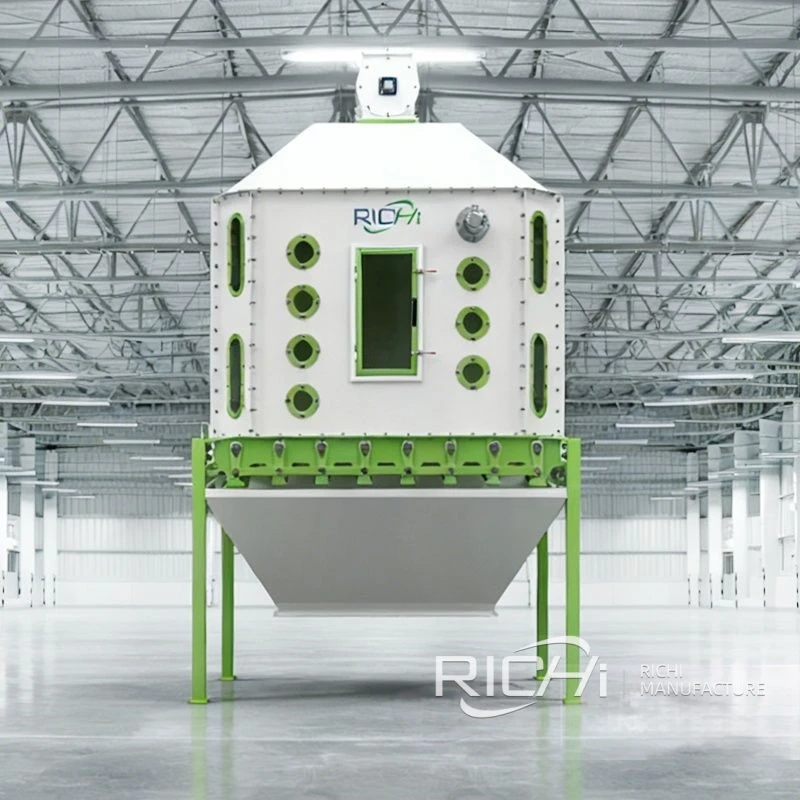
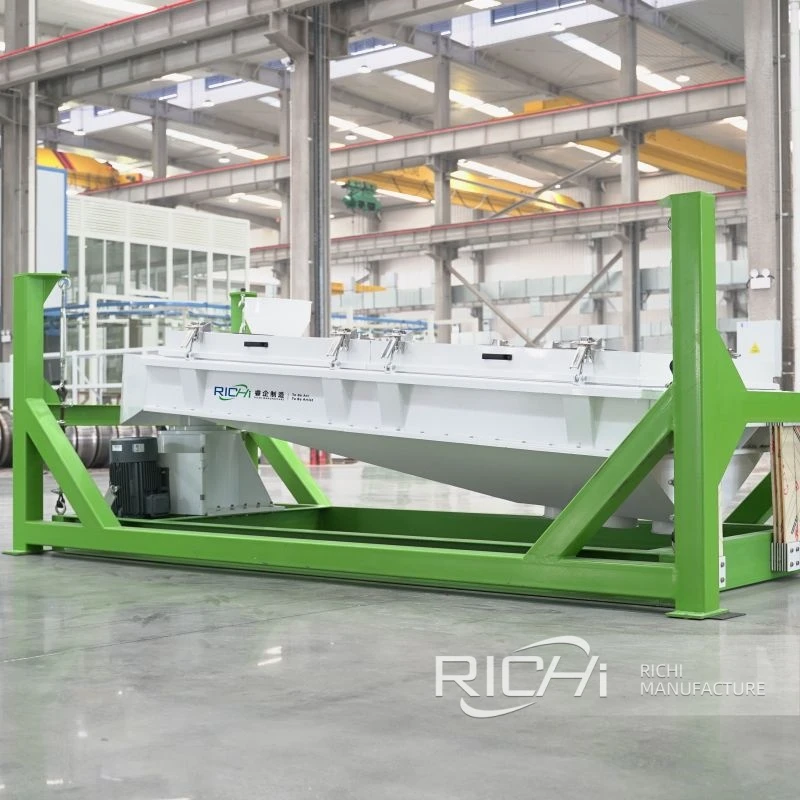
You can explore more details about our complete sheep feed mill equipment range and find the suitable configuration for your project.
Why Investing in Sheep Feed Processing Has Growing Potential
A modern sheep feed mill is becoming an important investment choice as sheep farming continues to move from traditional grazing methods toward more efficient and commercial production systems.
Farmers and livestock companies are looking for stable feed quality, lower feeding costs, and better utilization of local resources such as hay, straw, grains, and agricultural by-products. Producing feed locally can help reduce dependence on purchased feed and create additional value from available raw materials.
Different sheep feed products also provide different business opportunities. Forage pellets, straw-based feed, concentrate feed, and complete sheep feed can meet the needs of various farming markets.
For investors who want to improve production efficiency and increase market competitiveness, a flexible production line that can manufacture multiple feed types, such as sheep feed, cattle feed, horse feed, or other livestock feed, can create more business possibilities.
Start Your Sheep Feed Mill Project Consultation
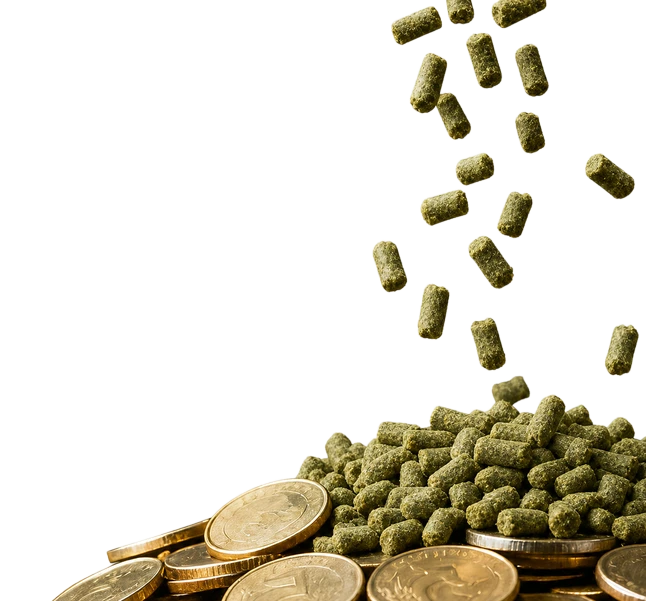
Sheep Feed Types & Raw Materials
The raw materials and feed formulas used in a sheep feed mill can vary significantly depending on the sheep breed, growth stage, farming method, and local agricultural resources. Common ingredients include corn, barley, wheat, sorghum, soybean meal, alfalfa hay, grass hay, straw, silage, wheat bran, rice bran, oilseed meal, molasses, minerals, and vitamins. In different regions, customers may also use special materials such as peanut shells, sunflower seed husks, bagasse, beet pulp, or other agricultural by-products.
As a professional feed equipment manufacturer and complete production line supplier, we understand that different raw materials require different processing methods. Whether the customer needs to process grain-based pellets, high-fiber forage feed, straw-based feed, concentrate feed, or mixed animal feed, we design the sheep feed mill process according to the material characteristics, formula requirements, moisture content, and final feed products. From crushing and drying to mixing, pelletizing, cooling, and packing, every processing section can be customized for the actual production conditions.
Alfalfa Hay
Corn
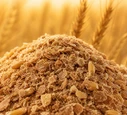
Wheat Bran
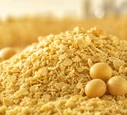
Soybean Meal
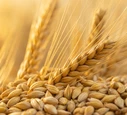
Barley
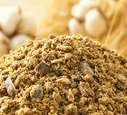
Cottonseed Meal
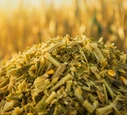
Corn Silage
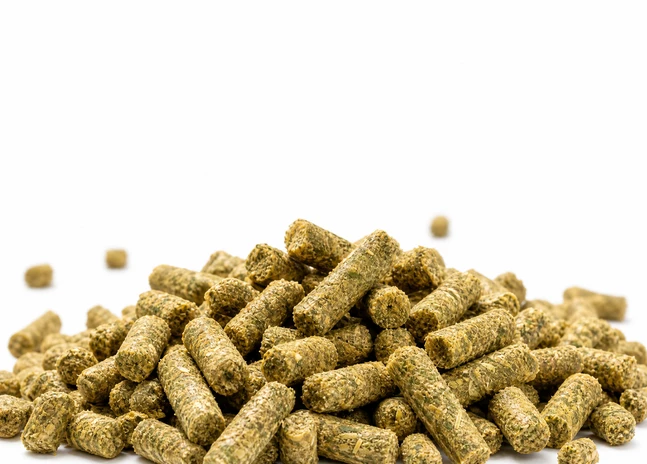
Lamb Feed
Lamb feed is specially designed for young sheep that require highly digestible nutrients and balanced energy supply during early growth stages. Typical formulas include corn, soybean meal, wheat bran, alfalfa meal, milk replacer ingredients, minerals, and vitamins, while some customers also use high-quality grass meal or beet pulp to improve palatability.
The common lamb feed pellet size is around 3–5 mm, which is suitable for young animals and helps improve feed intake.
Design Your Lamb Feed Production Line
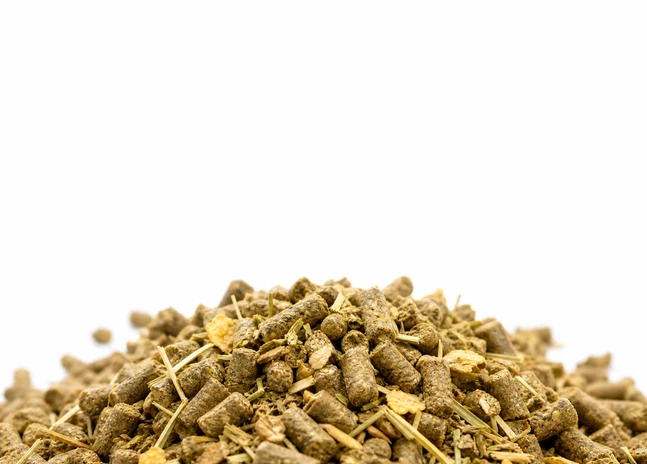
Growing Sheep Feed
Growing sheep require a feed structure that provides sufficient protein, energy, and fiber to support continuous development. Common raw materials include barley, corn, wheat bran, soybean meal, alfalfa hay, grass meal, and mineral additives. In some grazing regions, customers also combine local forage resources such as ryegrass, clover hay, or crop residues into the formula.
Our sheep feed mill solutions can include different crushing systems, mixing processes, and pelletizing configurations to produce 4–6 mm pellets with stable quality for different farming conditions.
Customize Growing Sheep Feed Equipment
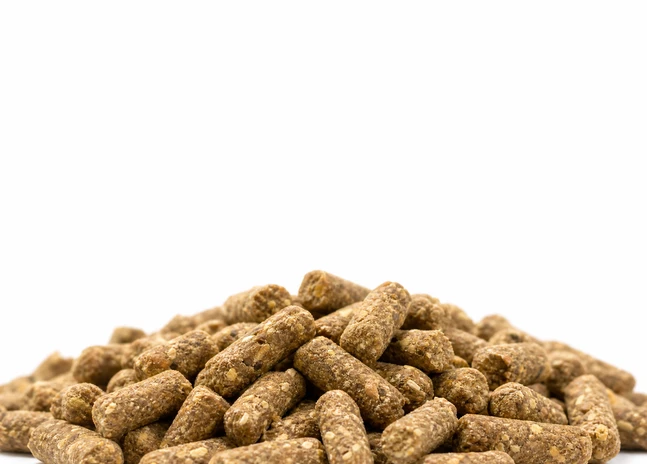
Fattening Sheep Feed
Fattening sheep feed focuses on improving energy utilization and supporting faster weight gain before market delivery. Typical ingredients include corn, barley, sorghum, soybean meal, wheat bran, oilseed cake, molasses, and fiber sources. Some customers also use local agricultural resources such as sunflower seed meal, cottonseed meal, or beet pulp to reduce feed costs.
Our sheep feed mill can be configured for producing larger pellet sizes of around 5–8 mm.
Build Your Fattening Sheep Feed Mill
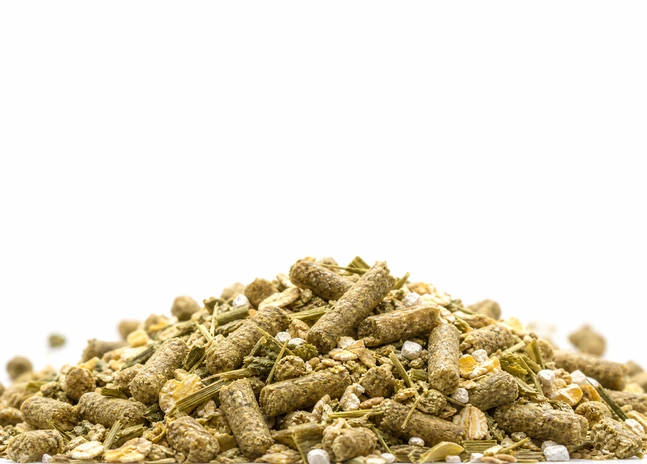
Breeding Ewe Feed
Breeding ewe feed requires balanced nutrition to support pregnancy, lactation, and overall reproductive performance. Common formulas combine alfalfa hay, corn, barley, soybean meal, wheat bran, minerals, and vitamins. In different markets, customers may also add silage ingredients, grass pellets, or special mineral supplements according to local feeding practices.
Our customized sheep feed mill solutions can include precise batching systems, efficient mixing equipment, and suitable pellet production processes.
Get a Breeding Ewe Feed Solution
Typical Sheep Feed Formulas
Example Formula for Grain-Based Lamb Feed
Corn
40%
Soybean Meal
20%
Wheat Bran
18%
Barley
12%
Mineral & Vitamin Premix
5%
Others
5%
Example Formula for Barley & Straw Growing Sheep Feed
Wheat Straw
35%
Barley
25%
Wheat Bran
20%
Sunflower Meal
10%
Molasses
5%
Mineral Additives
5%
Example Formula for Sorghum-Based Fattening Sheep Feed
Sorghum
45%
Cottonseed Cake
18%
Wheat Bran
15%
Maize
10%
Rice Bran
7%
Mineral Premix
5%
Example Formula for Grass & Forage Pellet Feed
Grass Hay
45%
Alfalfa Hay
20%
Oat Hay
15%
Wheat Bran
10%
Barley
5%
Mineral Additives
5%
Example Formula for Agricultural By-product Sheep Feed
Rice Bran
30%
Palm Kernel Meal
20%
Peanut Shell Meal
15%
Cassava Residue
15%
Wheat Bran
10%
Mineral Additives
10%
Example Formula for Sheep Concentrate Feed
Barley
30%
Wheat Bran
25%
Soybean Meal
15%
Corn Gluten Feed
15%
Rice Bran
10%
Mineral Premix
5%
The raw materials used in sheep feed production vary greatly between regions. Some customers have access to abundant grains, while others rely on forage, crop residues, or agricultural by-products. These differences directly influence the crushing process, mixing requirements, pelletizing performance, and overall sheep feed mill design.
The above formulas are examples of common sheep feed applications. They are not fixed formulas, but references showing how different raw materials can be processed into suitable sheep feed products. The final formula and production process should always be adjusted according to local resources, animal requirements, and customer production goals.
Frequently Asked Questions About Sheep Feed Mill
How much does a sheep feed mill cost?
+
The investment cost of a sheep feed mill mainly depends on production capacity, feed formula, raw materials, automation level, factory requirements, and equipment configuration. A small farm-use system may require a lower investment, while a commercial production plant with automatic batching, storage, packing, and multiple processing functions requires a much larger budget.
For grain-based sheep feed production lines, the equipment investment range is usually as follows:
| Production Capacity | Estimated Equipment Cost (USD) |
|---|---|
| 1–2 T/H | $10,000–$50,000 |
| 3–4 T/H | $50,000–$120,000 |
| 5–7 T/H | $70,000–$250,000 |
| 8–10 T/H | $150,000–$300,000 |
| 12–20 T/H | $250,000–$580,000 |
| 25–40 T/H | $450,000–$850,000 |
| 50–60 T/H | $900,000–$1,400,000 |
| 60–80 T/H | $1,450,000–$1,800,000 |
| 80–100 T/H | $2,000,000–$3,000,000 |
| 100–120 T/H | More than $2,500,000 |
For sheep feed projects using forage, straw, crop residues, or agricultural by-products, the investment is usually different because the production process may require additional equipment such as straw cutters, bale breakers, special crushers, drying systems, and conditioning equipment.
Typical equipment investment ranges for forage and straw-based sheep feed production lines are:
| Production Capacity | Estimated Equipment Cost (USD) |
|---|---|
| 0.3–2 T/H | $37,000–$62,000 |
| 0.5–4 T/H | $80,000–$200,000 |
| 1–6 T/H | $99,000–$220,000 |
| 2–10 T/H | $190,000–$400,000 |
| 3–12 T/H | $220,000–$450,000 |
| 4–20 T/H | $300,000–$620,000 |
| Higher Capacity | Customized according to project requirements |
The final cost of a sheep feed mill project can be very different even at the same capacity. For example, a 5T/H grain pellet line and a 5T/H straw-based pellet line may require completely different equipment configurations because of differences in raw material preparation, moisture content, crushing requirements, and production process.
To provide an accurate quotation, we need to know your raw materials, target capacity, final feed type, factory conditions, and automation requirements. Based on your information, we can design a suitable sheep feed mill solution, recommend the right equipment configuration, and provide a detailed project investment estimate.
I want to process corn, barley, and wheat bran for sheep feed. What equipment do I need?
+
For grain-based formulas using corn, barley, wheat bran, soybean meal, or similar ingredients, the production process is relatively stable. A typical sheep feed production line includes cleaning, crushing, batching, mixing, pelletizing, cooling, screening, and packing systems.
The final equipment configuration depends on whether you produce only pellets or also need mash feed production. For customers with multiple formulas, we normally recommend an automatic batching and control system to improve formula accuracy and production efficiency.
Our experience with grain-based projects in countries such as Australia, Turkey, and Iraq allows us to provide suitable solutions according to local raw material conditions.
Can your equipment process alfalfa hay, grass, and straw for sheep feed pellets?
+
Yes. Many sheep farms do not use only grains; they rely heavily on forage resources such as alfalfa hay, grass hay, wheat straw, and crop residues. These materials require different preparation processes compared with normal grain ingredients.
For high-fiber materials, we may add equipment such as straw chopping machines, bale breakers, forage crushers, and drying systems according to moisture content and material size. The final process is designed according to whether the customer wants complete forage pellets or mixed feed pellets.
Our sheep feed processing equipment has been used for different forage-based projects, including alfalfa pellet production and straw-based sheep feed production.
I have a small sheep farm. Is a 0.5–2T/H sheep feed plant suitable for my business?
+
A 0.5–2T/H system is commonly selected by small and medium sheep farms that want to produce their own feed instead of purchasing finished products. It is suitable for processing local materials such as grass, straw, corn, barley, and agricultural by-products.
This type of sheep feed plant usually requires less factory space and lower investment, making it practical for farms that need daily feed production rather than large commercial sales.
We can simplify the process according to the customer’s budget, such as reducing automation or removing unnecessary sections while keeping the core pellet production function.
What capacity should I choose if I want to start a commercial sheep feed business?
+
The suitable capacity depends on your target market, customer numbers, and future expansion plan. A 5–10T/H system is commonly selected by regional feed suppliers, while 12–40T/H solutions are more suitable for commercial feed manufacturers serving multiple farms.
For larger markets, customers may choose an industrial sheep feed mill with higher automation and storage capacity to support continuous production.
Before recommending capacity, we usually analyze local livestock numbers, available raw materials, expected sales volume, and investment budget to avoid over-investment or insufficient production capacity.
Can one production line make both sheep feed pellets and mash feed?
+
Yes. A properly designed system can produce different feed forms. Many customers do not only need pellet feed; they also require mash feed for certain animals or specific feeding methods.
By adjusting the process configuration, we can design a complete sheep feed mill that produces both pellets and powder feed. Additional equipment such as screening, bypass systems, and different packing methods can be included according to production requirements.
This flexible design is especially useful for customers who want to expand from sheep feed into cattle, goat, or other livestock feed markets.
My factory building is already available. Can you design the sheep feed production line according to my existing space?
+
Yes. Existing factory buildings are very common in feed production projects. Before designing the layout, we check the available length, width, height, column positions, material flow direction, and storage requirements.
The equipment arrangement can be adjusted according to the customer’s building instead of requiring a completely new workshop. For example, vertical layouts can be used when factory height is limited, while horizontal layouts are suitable for larger ground areas.
We provide customized factory layout drawings to help customers make better use of their existing facilities.
Does a sheep feed mill require underground pits for installation?
+
Not every animal feed mill plant project requires underground pits. Whether pits are needed depends on the equipment arrangement, material receiving method, factory structure, and customer’s operation preference.
For small and medium projects, many customers choose above-ground installation to reduce civil construction costs. Larger automatic systems may use pits or underground receiving areas to improve material transfer efficiency.
During the design stage, we evaluate the complete production process and recommend the most practical installation method.
We already have a feed factory. Can we upgrade our old equipment for sheep feed production?
+
Yes. Many customers contact us because their existing equipment cannot handle new feed formulas, higher capacity requirements, or special raw materials.
We can evaluate the current production line, identify bottlenecks, and provide upgrade solutions such as replacing animal feed granulators, adding automatic batching systems, improving crushing capacity, or adding forage processing equipment.
Our experience includes both new sheep feed factory projects and existing feed plant renovation projects.
Can your sheep feed pellet mill handle different pellet sizes?
+
Yes. Different sheep feed products may require different pellet sizes depending on animal age, feeding method, and market requirements. Common sizes include 3–5 mm pellets for lamb feed and 5–8 mm pellets for adult sheep or forage-based feed.
The pellet size is affected by livestock feed pellet machine specifications, die design, raw material structure, and formula characteristics. We select suitable pelletizing equipment according to the customer’s final product requirements.
For customers producing multiple products, we can design a flexible sheep feed pellet production line that supports different pellet specifications.
We use wheat straw bales as the main raw material. Can your equipment process this type of sheep feed?
+
Yes. Straw bale processing is one of the common requirements in sheep feed projects, especially in countries with large agricultural production areas. However, baled straw cannot directly enter the pelletizing process because the material size is too large and the fiber structure is not suitable.
For this type of project, we normally design a preparation system including bale breakers, straw cutters, crushers, and sometimes drying equipment depending on moisture conditions. After proper treatment, straw can be mixed with grains, bran, oilseed meal, or minerals to produce stable sheep feed pellets.
We have supplied solutions for customers using wheat straw, rice straw, and other crop residues, helping them convert low-value agricultural waste into commercial feed resources.
Can your sheep feed mill process corn-based formulas for intensive fattening sheep?
+
Yes. Corn-based formulas are widely used in intensive sheep farming because corn provides high energy content and is easy to process.
For these formulas, the animal feed production line usually focuses on efficient grinding, accurate batching, uniform mixing, and pellet quality control. Ingredients such as corn, barley, soybean meal, wheat bran, and premix can be processed into concentrated sheep feed pellets.
For customers producing fattening feed, we can customize the sheep feed manufacturing equipment according to the required pellet hardness, production capacity, and feeding purpose.
We have grass with high moisture content. Do we need a drying system before pellet production?
+
A drying system depends on the actual moisture level of the raw material. Materials such as fresh grass, wet forage, bagasse, or some agricultural by-products may require drying before grinding and pelletizing.
If the moisture content is too high, it can affect crushing efficiency, pellet forming quality, and finished feed storage stability. In these cases, we design additional drying modules according to the customer’s material characteristics.
For dry hay or low-moisture straw materials, a drying system may not be necessary, which helps reduce investment and operating costs.
Can one sheep feed production line also make cattle feed and goat feed?
+
Yes. Many customers prefer a multifunctional system because it improves equipment utilization and creates more business opportunities.
A properly designed production line can produce sheep feed, cattle feed, goat feed, and other ruminant feed products by changing formulas and adjusting production parameters. The same equipment can often handle different raw materials and feed types.
For customers planning commercial production, we often recommend a flexible design instead of a single-purpose line.
What is included in a complete sheep feed production line?
+
A complete system normally includes raw material receiving, cleaning, crushing, batching, mixing, pelletizing, cooling, screening, packing, and storage sections.
However, not every project requires all modules. For example, a small farm may only need crushing, mixing, pelletizing, and simple discharge, while a commercial factory may require automatic batching, silos, packing systems, and dust collection.
We customize the equipment combination according to the customer’s actual production needs rather than supplying unnecessary equipment.
Can you design a sheep feed mill for customers in desert areas such as Saudi Arabia or UAE?
+
Yes. Feed production in dry regions often has special requirements because customers usually rely on imported forage such as alfalfa hay and locally available grains.
For these projects, we consider factors such as raw material storage, dust control, imported hay handling, and finished feed preservation. Many desert-region customers produce formulas based on alfalfa hay, barley, corn, wheat bran, and molasses.
Our project design considers local environmental conditions to ensure stable operation after installation.
We want to use sorghum, maize, and agricultural by-products. Is this suitable for sheep feed production?
+
Yes. Sorghum and maize are common energy sources in many sheep feed formulas, especially in regions where corn availability is limited.
Agricultural by-products such as oilseed cake, wheat bran, rice bran, and crop residues can also be incorporated depending on the formula requirements. Different materials require different crushing and mixing strategies.
Our engineers evaluate the physical characteristics of each ingredient before selecting suitable processing equipment.
How much factory space is required for a sheep feed mill?
+
The required factory space depends mainly on capacity, equipment arrangement, storage requirements, and automation level.
A small 1–2T/H sheep livestock feed production line project may only require a compact workshop, while a large commercial production plant needs additional areas for raw material storage, finished product storage, and auxiliary systems.
Before equipment manufacturing, we provide layout planning based on the customer’s available land and building conditions.
Can you provide an automatic sheep feed plant with less manual operation?
+
Yes. For customers who need higher efficiency and lower labor requirements, we can design automatic systems with PLC control, automatic batching, centralized operation, and automatic packing.
Automation level can be adjusted according to investment budget and production requirements. Some customers only automate key processes, while large feed factories usually choose a complete automatic control system.
The final solution is customized according to the customer’s operation model.
What is the difference between a small farm sheep feed machine and a commercial production system?
+
The main difference is not only capacity but also process complexity and automation level.
A small sheep feed making machine is usually designed for self-use farms with simple formulas and limited output. Commercial systems require more complete processing sections, higher stability, larger storage capacity, and continuous production capability.
We provide both compact farm solutions and complete industrial feed manufacturing systems according to customer goals.
Can you design a sheep feed pellet plant using alfalfa hay as the main ingredient?
+
Yes. Alfalfa hay is one of the most popular forage materials used in sheep feed production because of its nutritional value and good palatability.
When alfalfa is the main ingredient, the process focuses on proper grinding size, moisture control, and pellet forming performance. Depending on the formula, customers may combine alfalfa with barley, corn, wheat bran, or protein sources.
We have designed forage-based systems specifically for customers using alfalfa hay pellets.
Do you provide turnkey sheep feed plant solutions including installation?
+
Yes. A turnkey sheep feed plant includes project planning, equipment manufacturing, delivery, installation guidance, commissioning support, and operation training.
Our responsibility is not limited to supplying machines. We help customers complete the entire production system from initial design to stable operation.
This service model is suitable for customers who are investing in a new feed business and need complete technical support.
How long does it take to manufacture and install a sheep feed mill?
+
The timeline depends on project size, equipment configuration, and customization requirements.
Small projects may require less time, while large commercial plants involving automation, silos, and complex layouts require longer preparation and installation periods.
After confirming the project details, we provide a clear production and delivery schedule.
Can you customize a sheep feed processing line for unusual raw materials?
+
Yes. Many customers use special local resources that are not standard feed ingredients.
We have worked with materials such as bagasse, peanut shells, sunflower seed husks, straw, grass pellets, and other agricultural residues. These materials often require customized crushing, drying, or preparation systems.
The process design is developed according to the physical characteristics of the raw materials.
What advantages does your complete sheep feed factory solution provide compared with buying individual machines?
+
A complete solution ensures that all equipment works together correctly, from raw material handling to final packing.
When customers purchase separate machines from different suppliers, compatibility issues may occur between capacity, electrical systems, and processing flow.
As a complete production line manufacturer, we focus on overall system performance, equipment matching, and long-term operation reliability.
Can you help design a sheep feed project according to my investment budget?
+
Yes. Investment planning is an important part of our project consultation.
Based on your budget, expected capacity, and market plan, we can recommend different livestock feed mill equipment configurations, automation levels, and process designs.
The goal is to build a practical production system that matches your business situation instead of simply selecting the most expensive equipment.
Do you supply spare parts and technical support after the sheep feed mill starts operation?
+
Yes. Long-term technical support and spare parts supply are included in our service system.
Customers can contact us for operation guidance, equipment maintenance suggestions, and spare parts requirements after production begins.
We support customers throughout the equipment lifecycle to maintain stable operation.
Can your sheep feed pellet machine plant produce different pellet sizes for different sheep groups?
+
Yes. Different sheep groups may require different pellet specifications.
For example, lamb feed commonly uses smaller pellets, while adult sheep and forage-based products may require larger pellet sizes. Pellet size selection depends on animal requirements, formula structure, and customer preferences.
We select suitable sheep animal feed pellet mill configurations according to the final product requirements.
Do you have experience exporting sheep feed equipment to different countries?
+
Yes. We have supplied feed production equipment and complete production solutions to customers in many regions, including Asia, Africa, the Middle East, Europe, and South America.
Different countries have different raw materials, climate conditions, electricity standards, and business requirements. Our export experience helps us provide more suitable equipment configurations and project support.
How can I get a suitable sheep feed mill plant project proposal?
+
The best way is to provide your basic project information, including raw materials, target capacity, final feed type, factory conditions, and investment plan.
Based on this information, we can prepare a customized solution including process design, equipment configuration, and estimated investment.
Our team can help you evaluate the complete sheep feed plant project from both technical and business perspectives.