

 0086-138 3838 9622
Fruit Waste Pellet Machine
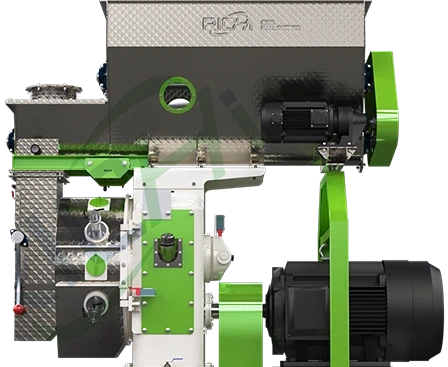
Fruit waste pellet machine turns processed fruit residues such as pomace, peels, pulp, and fibrous by-products into uniform fertilizer pellets. Built for fruit processors, juice plants, wineries, recycling companies, and fertilizer producers, it supports practical waste recovery from pre-treated fruit materials.
for Practical Fertilizer Production
A fruit waste pellet machine gives large fruit processors, juice and beverage plants, wineries, fertilizer manufacturers, waste recyclers, and agricultural cooperatives a practical way to turn concentrated organic residues into a more stable, manageable fertilizer product. Fruit waste is rarely a uniform feedstock: apple or grape pomace, citrus peel, pineapple fiber, fruit pulp, sorting residues, and blended processing by-products can differ greatly in moisture, sugar content, fiber structure, acidity, particle size, and physical condition.
Rather than treating every material the same, RICHI matches the pelletizer and necessary preparation equipment to the actual feedstock and finished fertilizer requirements. For customers with sufficient material supply, pelletizing can reduce bulk, improve handling and storage, create a consistent commercial fertilizer form, and provide a higher-value route for residues that would otherwise require disposal or low-value utilization.
RICHI has supplied fertilizer pelletizing equipment and project solutions to customers in markets worldwide, and our scope can extend from the pelletizer itself to complete fruit waste fertilizer lines, powder fertilizer systems, or individual crushing, mixing, drying and other processing modules. The same plant can also be engineered around multiple organic raw materials and different fertilizer products, giving processors room to use seasonal fruit residues without building the business around a single waste stream.
Who need Fruit Waste Pellet Machine?
Fruit Processing Plants
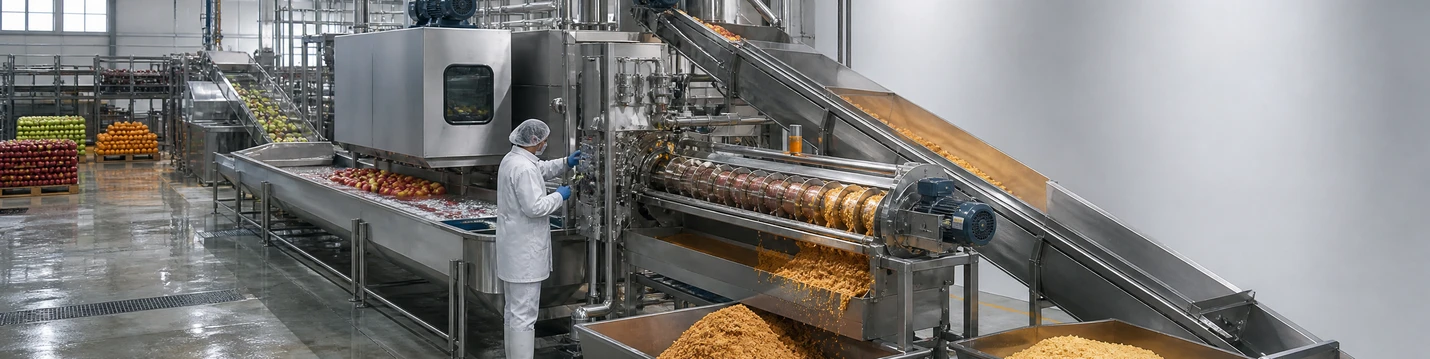
Fruit processing plants are among the most direct users of a fruit waste pellet machine because they generate concentrated streams of peels, pulp, pomace, trimming residues, seeds, cores, and fibrous by-products every day. After suitable sorting, dewatering, stabilization, drying, and formulation, the pelletizer converts these residues into uniform fertilizer pellets that are easier to handle, store, transport, and sell than loose organic waste. For processors dealing with substantial seasonal volumes, pelletizing creates a practical route from disposal cost to fertilizer-product value.
Juice & Beverage Producers
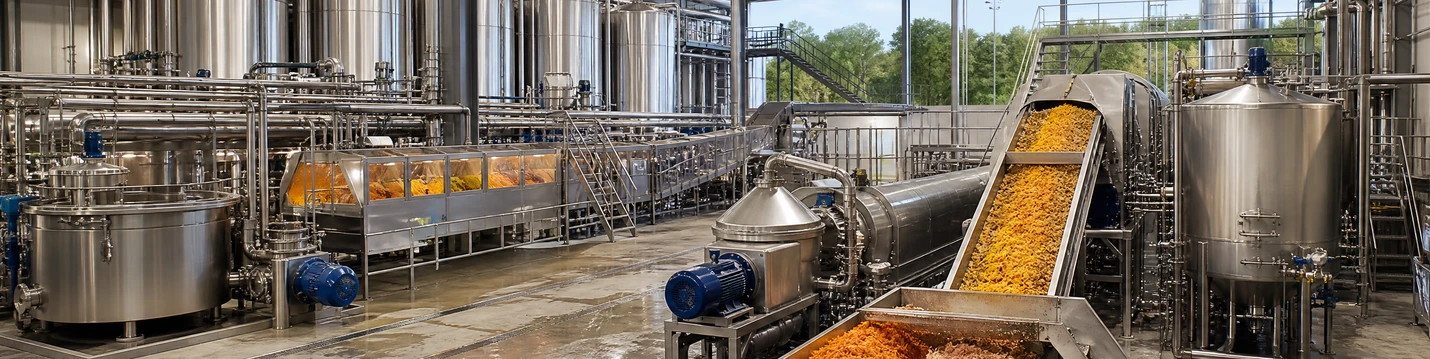
Juice factories, beverage plants, concentrate producers, and puree manufacturers typically handle large quantities of apple pomace, citrus peel and pulp, grape pomace, and pineapple fiber residues. A properly configured fruit waste pelletizing system works after the necessary dewatering, fermentation or composting, drying, and mixing stages, producing a denser and more standardized fertilizer form. This helps beverage companies manage continuous by-product generation while reducing dependence on low-value disposal or temporary storage.
Wineries & Fermentation Plants
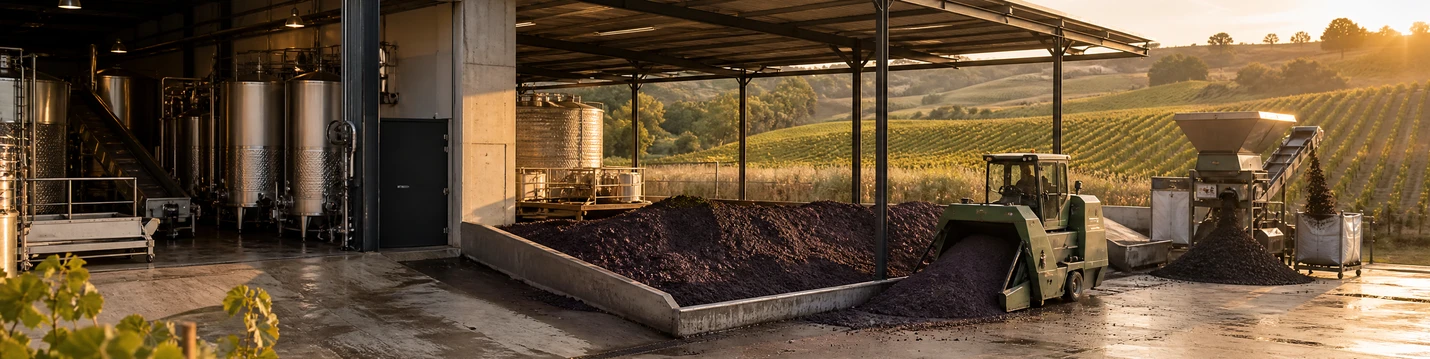
Wineries, cider producers, fruit wine factories, and grape processors generate grape skins, pulp residues, seeds, stems, and apple pomace in concentrated batches during processing seasons. Once stabilized and adjusted to the proper moisture and particle condition, a fruit waste pellet machine can convert the prepared material into organic fertilizer, compost fertilizer, or soil-conditioner pellets. Pelletizing gives wineries a more manageable outlet for seasonal residues and makes it easier to integrate fruit by-products into commercial fertilizer formulations.
Canning & Preserved Fruit Plants
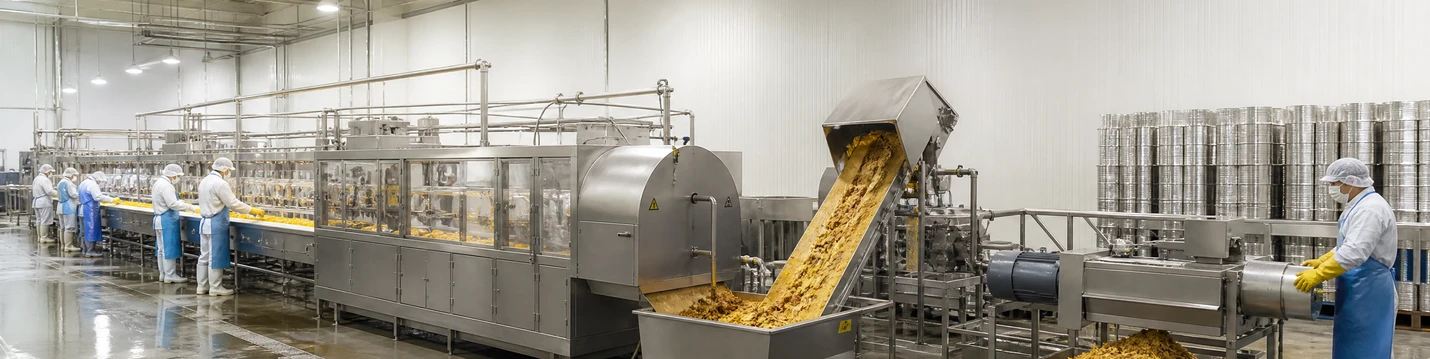
Canning and preserved-fruit factories generate peels, cores, seeds, trimming waste, rejected fruit, and other organic residues during peeling, cutting, grading, and packing operations. For plants with continuous production and sufficient waste volume, the fruit waste pelletizer provides a controlled way to convert mixed processing residues into stable fertilizer pellets. This reduces the handling burden of loose organic waste and creates a more consistent material for storage, transport, downstream fertilizer production, or sale.
Agricultural Waste Recyclers
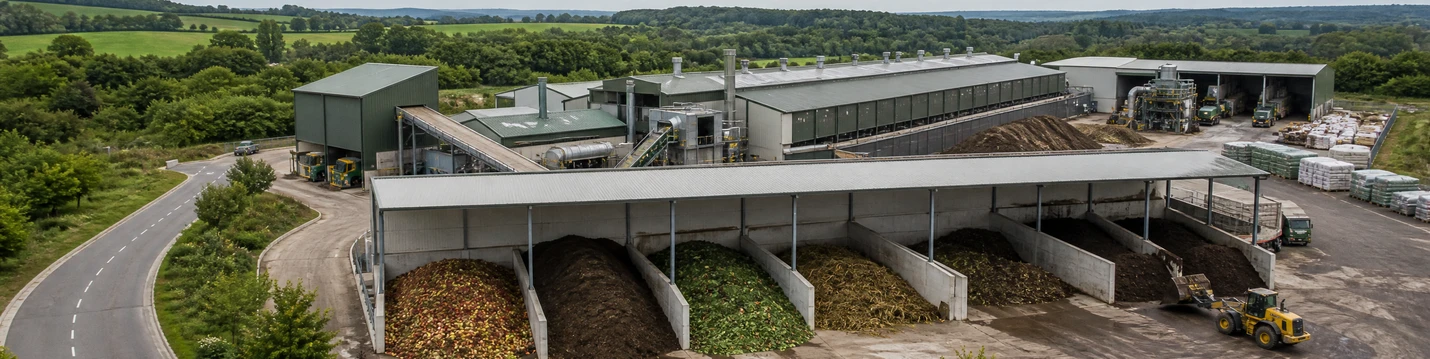
Agricultural waste recycling companies and regional organic-waste treatment centers often receive a much broader material mix than a single fruit processor. Their feedstock may include fruit processing waste, market fruit waste, vegetable residues, crop by-products, and other biodegradable food-processing materials. A fruit waste pelleting solution allows recyclers to process multiple waste streams instead of relying on a single seasonal raw material.
Organic Fertilizer Manufacturers
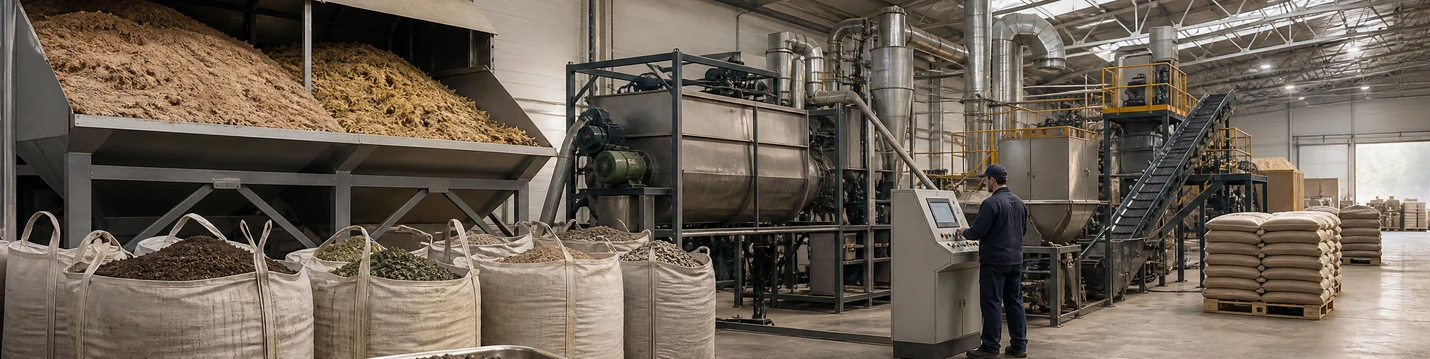
Organic fertilizer producers are strong candidates for fruit waste pelletizing because they can combine fruit pomace, fruit-processing residue, vegetable waste, animal manure, composted organics, and crop residues into balanced fertilizer formulations. The fruit waste pellet machine gives them a dedicated granulation step for converting prepared powder or composted material into organic fertilizer pellets, bio-organic fertilizer, compost fertilizer, or soil-conditioning products.
Large Fruit Farms & Cooperatives
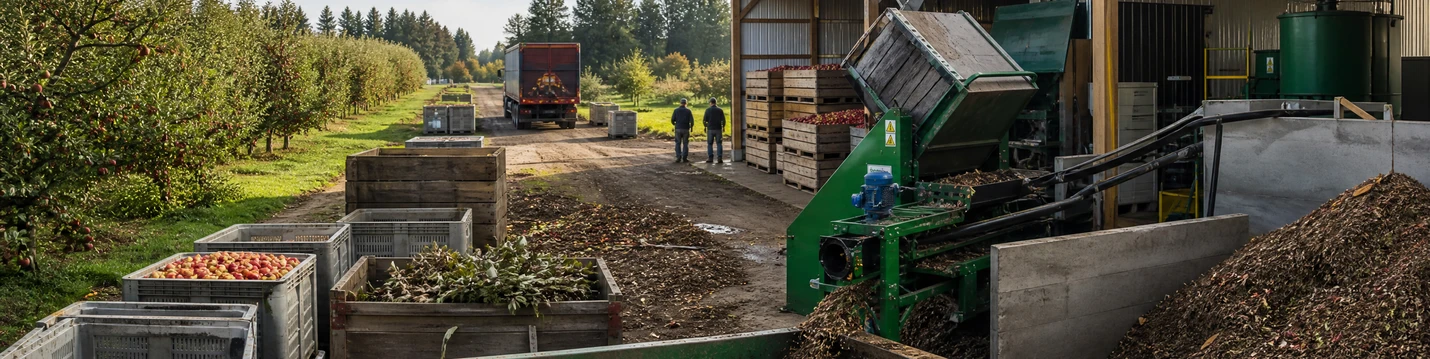
Large orchards, plantations, agricultural enterprises, and fruit cooperatives can also become suitable users when they generate enough centralized waste to support industrial processing. Typical materials include fallen fruit, damaged fruit, grading rejects, sorting residues, harvest waste, and, in some cases, fibrous processing residues from on-site packing or juice operations. These materials are often seasonal and may arrive with very high moisture, so the feasibility of pelletizing depends on available dry matter after pretreatment rather than on wet waste tonnage alone.
The key requirement is not the industry name itself, but whether the customer has a stable and economically meaningful supply of suitable organic material, enough dry matter to support the intended capacity, and a genuine need to convert prepared fruit waste into pellets. RICHI can configure standalone pelletizers or customized systems around the customer’s actual raw materials, moisture conditions, product targets, and existing equipment.
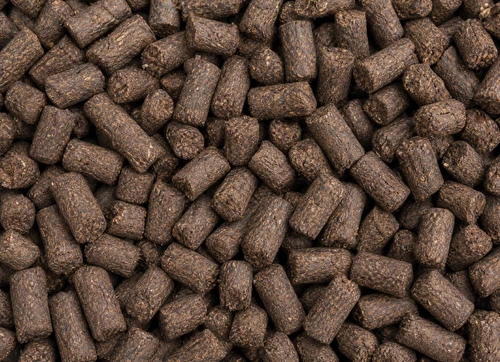
Raw Materials for Fruit Waste Pellet Production
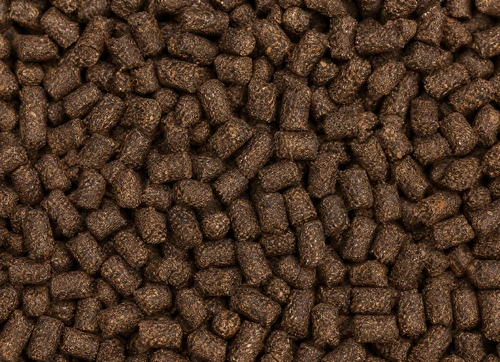
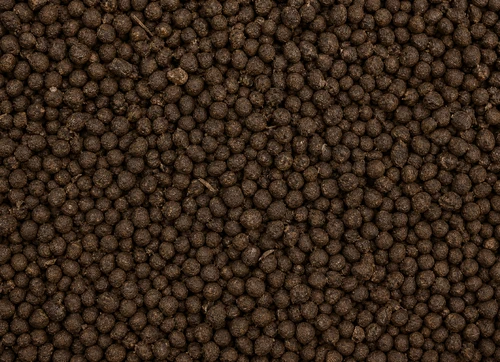
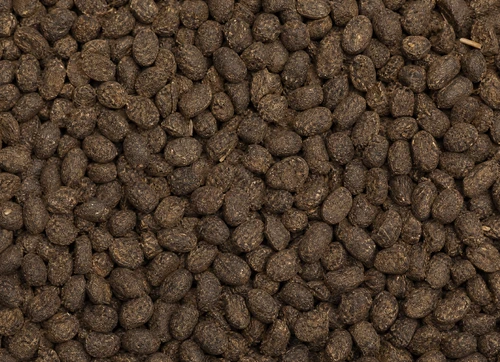
Fruit waste varies widely from one plant and season to another. Fresh pulp and peel may arrive with very high moisture, while fermented pomace, dried fibrous residues, seeds, cores, or pre-composted material behave very differently during feeding and granulation. The fruit waste pellet machine is therefore configured around the actual moisture level, particle size, impurity content, fiber structure, formulation, and required pellet specification rather than around a single standard feedstock.
Fruit residues can be processed alone when their condition and formulation allow, or blended with manure, crop residues, vegetable waste, compost and other suitable organic materials. Agricultural residues, selected forestry-derived organic materials, biodegradable food or kitchen waste, organic sludge, and livestock or poultry manure can also enter fertilizer formulations after appropriate sorting, stabilization, moisture adjustment and other necessary pretreatment.
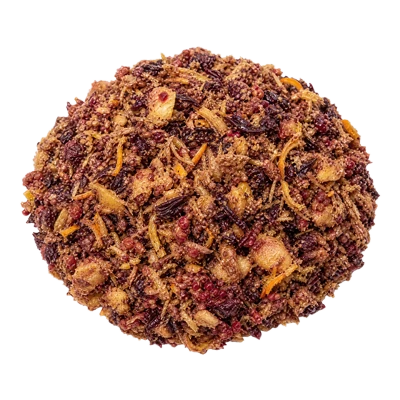
Fruit Pomace
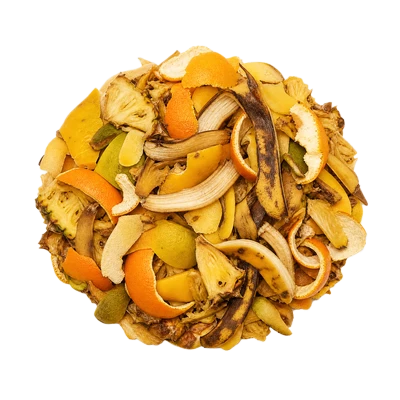
Mixed Fruit Peels
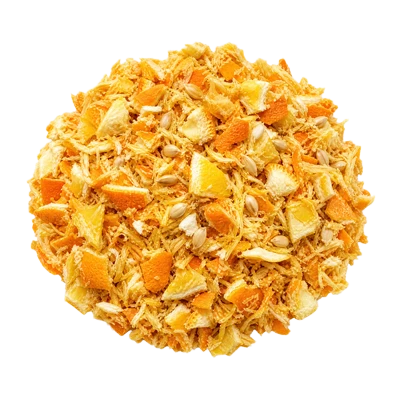
Citrus Processing Residues
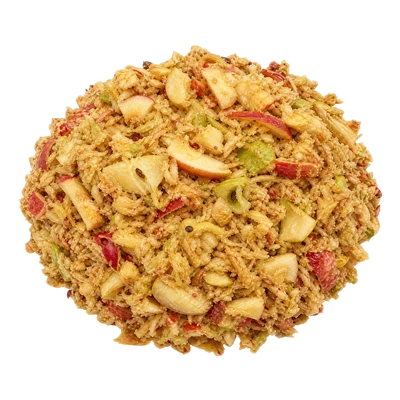
Apple Processing Residues
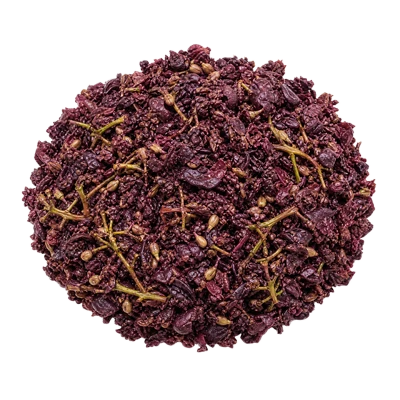
Grape Processing Residues
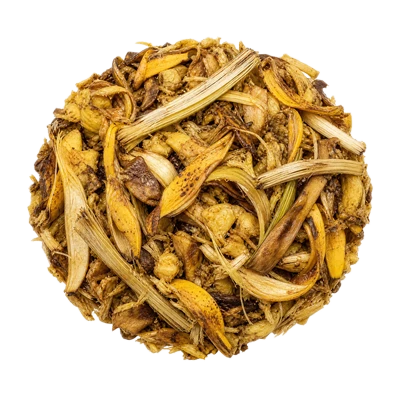
Banana Processing Residues
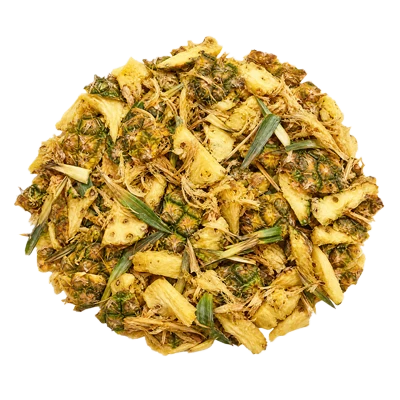
Pineapple Processing Residues
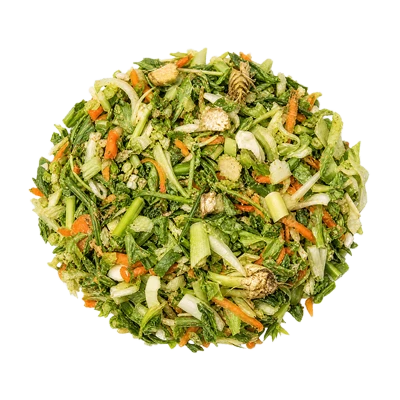
Vegetable Processing Wast
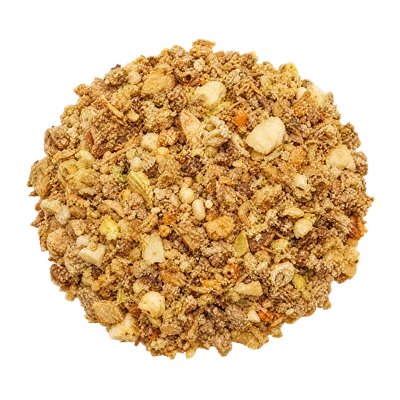
Food Processing Residues
Fruit Waste
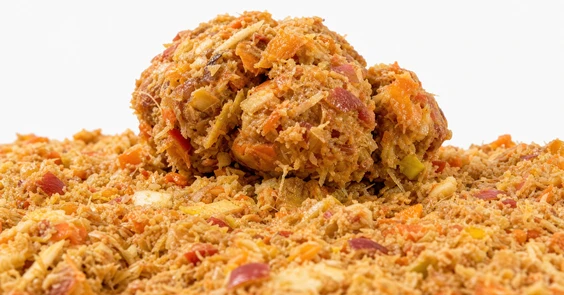
Fruit waste is the primary feedstock and may include pomace, peel, pulp, trimming residues, damaged or rejected fruit, fibrous residues, seeds, and cores from industrial fruit processing or centralized agricultural collection. Fresh material is often wet and soft, while pomace may be fibrous and sticky and harder fractions such as some seeds or pits require separate size reduction or removal.
Inside the Fruit Waste Pellet Machine
The fruit waste pellet machine is built around a heavy-duty ring-die granulation system for prepared fruit pomace, peel, pulp, fibrous residues, and fruit-based fertilizer mixtures. Because these materials can vary in fiber content, bulk density, residual moisture, and feeding behavior, stable granulation depends on more than motor power alone.
RICHI combines controlled forced feeding, precision gear transmission, reinforced working parts, reliable overload protection, and service-oriented die handling to maintain consistent material flow and pellet formation under continuous fertilizer production.
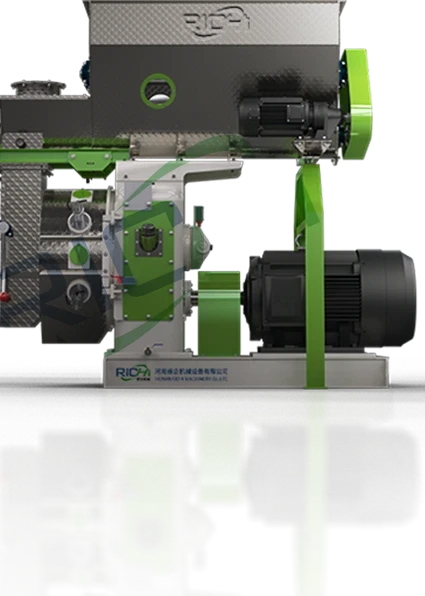
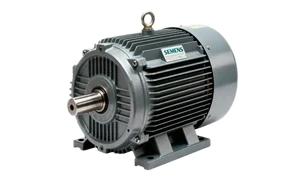
A Siemens motor provides stable power for continuous ring-die granulation, supporting the sustained load required when processing prepared fruit residues and blended organic fertilizer materials.
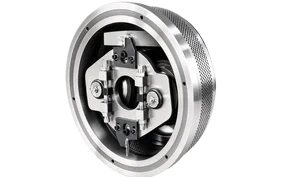
The reinforced ring die uses optimized materials and heat treatment, with clamp-type mounting for secure operation and faster die replacement during formula or pellet-size changes.
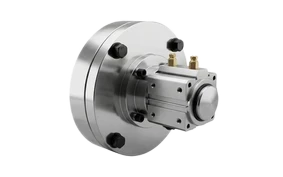
The protection system responds to abnormal overloads caused by unstable feeding or unsuitable material conditions, helping limit damage to critical transmission and granulation components..
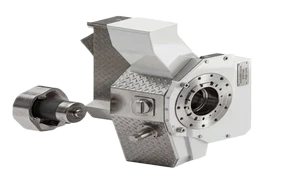
The forced feeder meters light, fibrous, or less-flowable fruit-based mixtures into the pelleting chamber, reducing uneven feeding that can affect throughput and pellet formation.
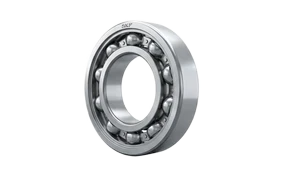
SKF bearings support critical rotating assemblies under continuous load, helping maintain transmission stability, alignment, and dependable operation during long fertilizer production shifts.
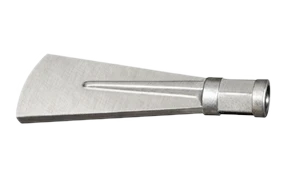
The cutter controls pellet discharge length after extrusion through the ring die, allowing operators to adjust finished fruit-waste fertilizer pellets for different product specifications..
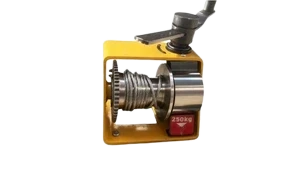
The lifting device assists with handling the heavy ring die during inspection, replacement, and maintenance, reducing manual handling and simplifying routine servicing.
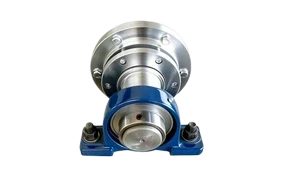
High-precision gear transmission delivers power efficiently to the granulation system, providing the stable torque needed as fruit-waste formulations change in fiber content and bulk density.
Why Choose RICHI Fruit Waste Pellet Machine?
For fruit processors and fertilizer producers, the value of a pelletizer lies in how well it matches changing feedstocks, product specifications, operating schedules, and existing plant conditions. RICHI configures each fruit waste pellet machine around the customer’s actual material condition and production target, with engineering support extending from the standalone pelletizer to a complete fertilizer production system when required.

More Value from Processing Residues
Pelletizing prepared fruit waste converts loose organic material into a denser, uniform fertilizer form that is easier to package, store, transport and apply. For processors already paying to manage large residue volumes, this creates a practical route toward higher-value utilization.

Built Around Your Fruit Waste
Apple pomace, citrus residue, grape waste, pineapple fiber and blended fruit by-products behave differently in production. RICHI matches the pelletizer to the actual moisture, fiber structure, bulk density and formulation instead of applying one fixed configuration to every project.

Flexible for Changing Feedstocks
Seasonal processors rarely handle the same fruit residue throughout the year. The fruit waste pellet machine can be engineered for prepared fruit waste blended with manure, compost, crop residues or other suitable fertilizer materials, helping customers maintain production as available feedstocks change.

Engineering Support from RICHI
A successful project depends on more than supplying the pellet mill. RICHI evaluates raw-material condition, pretreatment requirements, target output and plant integration before configuration, drawing on fertilizer pelletizing project experience across international markets to reduce avoidable design mismatches.ting conditions.

Customized from Machine to Line
RICHI can adapt die specifications, feeding arrangements and supporting equipment to the required pellet size, formulation and capacity. Customers can purchase a standalone pelletizer, integrate it into an existing fertilizer plant, or develop a complete customized fruit waste fertilizer line.

How the Fruit Waste Pellet Machine Works
Once fruit-based fertilizer material has been properly prepared to the required moisture, particle size, and formulation, it is continuously metered into the pelleting chamber. Inside the fruit waste pellet machine, the rollers press the conditioned material against the rotating ring die, forcing it through the die holes under mechanical pressure. The extruded material emerges as continuous strands, which are cut to the required length before leaving the machine for subsequent cooling and screening. Die-hole diameter, compression characteristics, feed condition, and operating settings are selected according to the fruit-waste formulation and the required fertilizer pellet specification.
Technical Specifications
| Model | Capacity (t/h) | Main Motor Power (kW) | Anti-Bridging Feeder Power (kW) | Forced Feeder Power (kW) | Ring Die Inner Diameter (mm) | Finished Pellet Diameter (mm) |
|---|---|---|---|---|---|---|
| FZLH250 | 1–1.5 | 22 | 2.2 | 0.75 | 250 | 4–12 |
| FZLH320 | 2–3 | 22 | 2.2 | 0.75 | 320 | 4–12 |
| FZLH350 | 3–5 | 37 | 2.2 | 0.75 | 350 | 4–12 |
| FZLH420 | 6–8 | 90 | 3 | 1.5 | 420 | 4–12 |
| FZLH520 | 9–12 | 132 | 3 | 1.5 | 520 | 4–12 |
| FZLH678 | 18–22 | 200 | 3 | 1.5 | 673 | 4–12 |
| FZLH768 | 22–26 | 250 | 4 | 1.5 | 762 | 4–12 |
RICHI offers seven fruit waste pellet machine models with rated capacities from 1–1.5 t/h to 22–26 t/h, covering smaller commercial fertilizer operations through high-throughput industrial plants. Model selection should be based on the prepared feed rather than wet fruit-waste volume alone: pomace content, fiber structure, formulation, bulk density, moisture after pretreatment, and required pellet diameter can all affect actual production. Ring-die specifications, feeding arrangements, supporting equipment, and line configuration can be matched to the customer’s fruit residue and finished fertilizer requirements.
Fruit Waste Pelletizing Specifications
Fruit waste pelletizing depends on moisture, particle size, fiber content, formulation and the condition of the material after pretreatment. The following ranges provide practical reference values for configuring a fruit waste pellet machine; final settings are adjusted according to the actual pomace, peel, compost or blended fertilizer feedstock.
Raw Material Particle Size
1–5 mm
Raw Material Moisture Content
15–25%
Pelletizing Temperature
50–80℃
Compression Ratio
1:4–1:8
Pellet Length
5–30 mm
Pellet Formation Rate
85–95%
Finished Pellet Moisture
≤10–15%
Cooling Temperature
≤ Ambient + 5°C
Pellet Durability (PDI)
≥85–90%
Fines Content
≤5–10%
Broken Pellet Rate
≤3–5%
Operating Mode
Continuous Operation
Actual pelletizing conditions vary with fruit type, moisture, fiber, fermentation condition and blending ratio. RICHI can match the ring die, compression ratio and operating parameters to your raw material and required fertilizer pellet specifications.
Fruit Waste Pellet Machine Projects Around the World
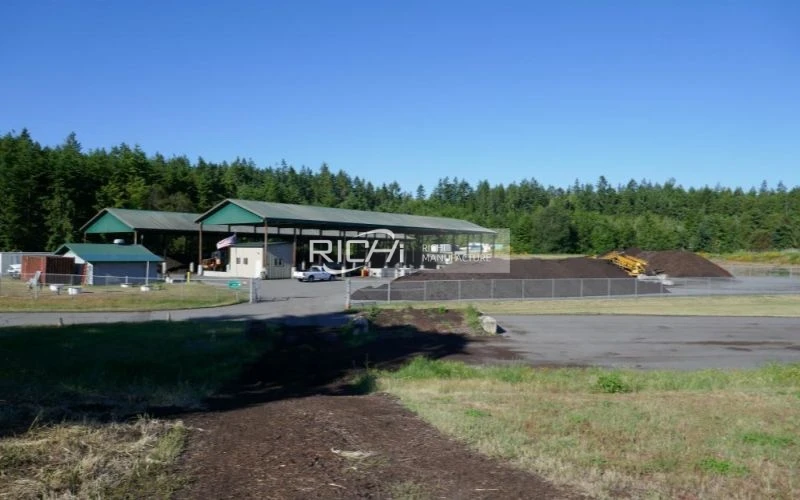
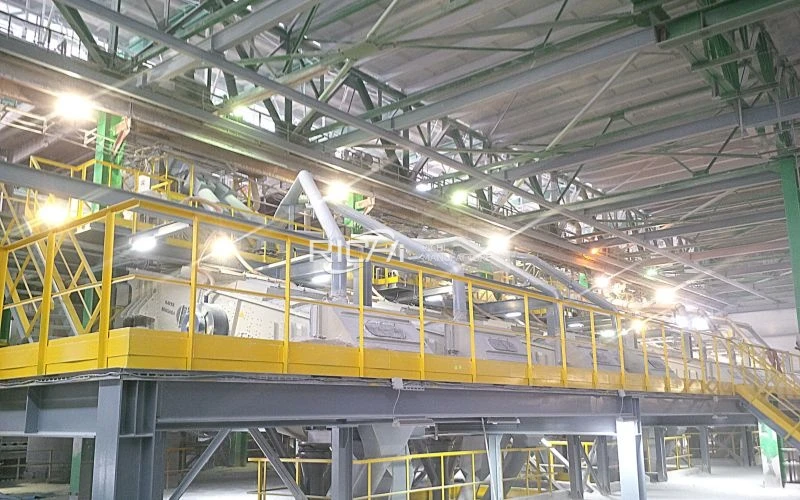
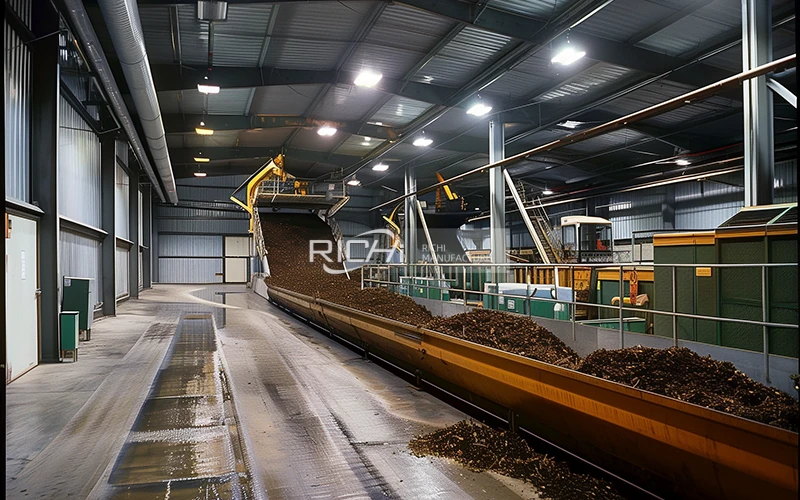
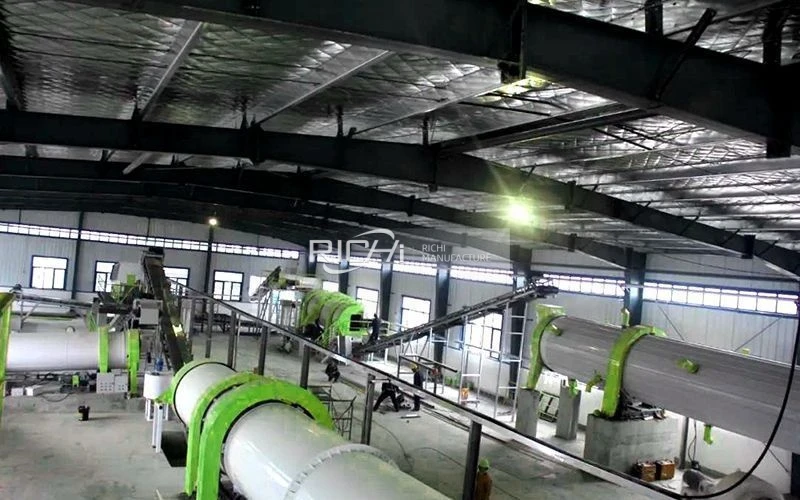
RICHI has developed fruit waste pellet machine solutions for fruit processors, wineries, agricultural recyclers, fertilizer producers, farms, and integrated food-processing businesses. Project conditions vary widely—from wet tropical fruit residues and winery pomace to blended formulas containing manure, bedding, straw, bagasse, or other agricultural by-products. Most installations extend beyond the pelletizer itself, with pretreatment, fermentation, drying, mixing, cooling, screening, and packing equipment configured around the customer’s actual material and fertilizer product.
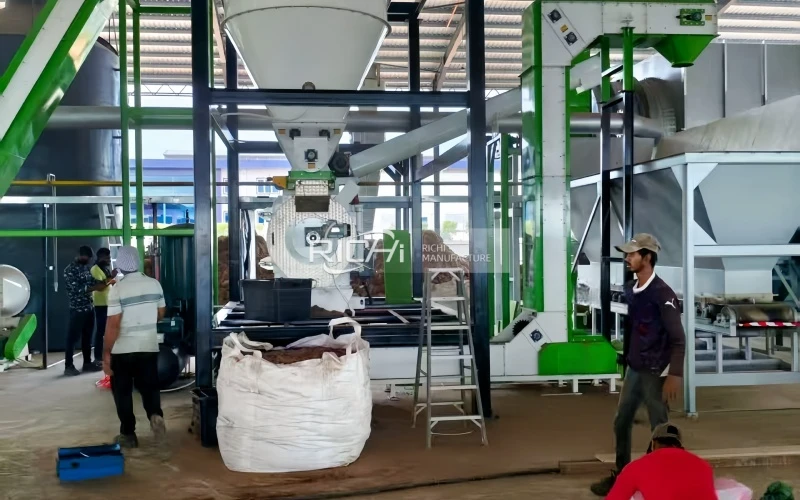

1 T/H
Pineapple Waste Fertilizer Project in Thailand
The processor needed to handle fresh pineapple peel and core containing about 78% initial moisture. Its formula used approximately 60% pineapple residue, 25% rice husk, and 15% composted poultry manure. RICHI configured crushing, dewatering, composting, drying, mixing, pelletizing, cooling, and screening around this wet, fibrous feedstock.
Equipment Used :FZLH250
Pellet Size :4 mm
Customer :Pineapple canning and juice processor
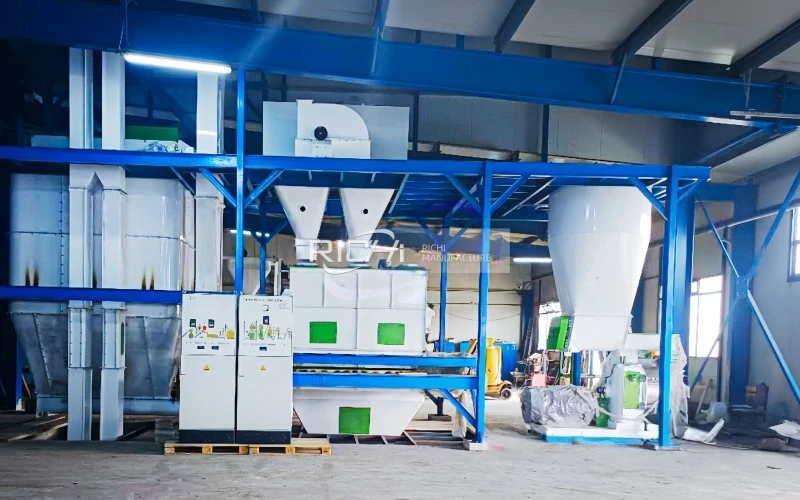

1.5 T/H
Grape Pomace Fertilizer Project in Argentina
Seasonal grape pomace from the winery contained skins, pulp, seeds, and stems at about 62% initial moisture. The fertilizer formula combined roughly 70% pomace with 20% wheat straw and 10% mature compost. RICHI matched pomace stabilization, straw crushing, drying, mixing, pelletizing, cooling, and screening to the vineyard’s production cycle.
Equipment Used :FZLH250
Pellet Size : 5 mm
Customer : Winery and vineyard group
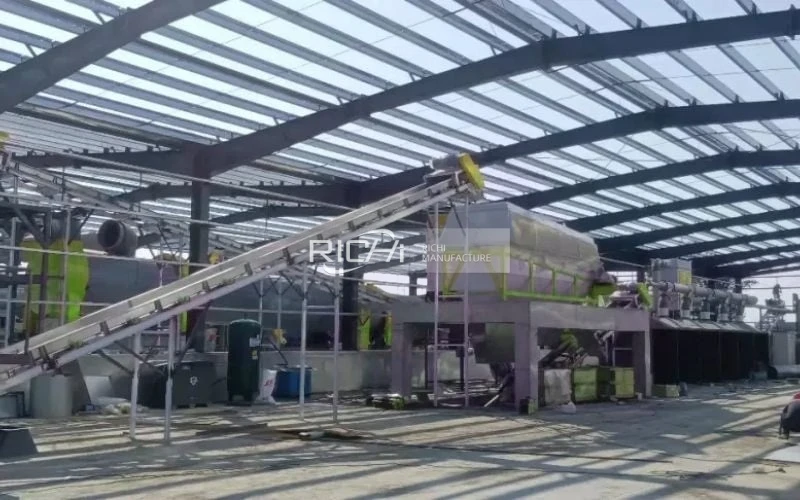

2 T/H
Apple Waste Fertilizer Project in the United States
Apple pomace left the juice process at approximately 74% moisture and accounted for about 45% of the fertilizer formula. The customer blended it with 35% composted dairy manure and 20% recovered sawdust bedding. The supplied system covered dewatering, fermentation, drying, crushing, mixing, pelletizing, cooling, and fines screening.
Equipment Used :FZLH320
Pellet Size : 4 mm
Customer : Apple juice processor working with a dairy farm
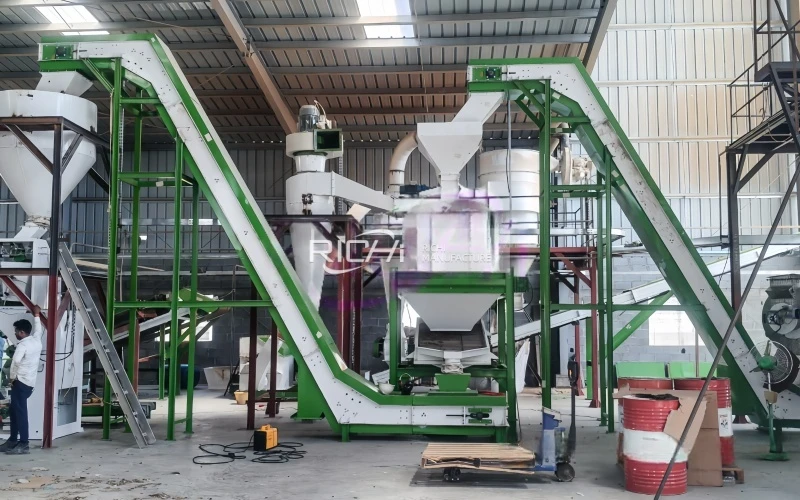

3 T/H
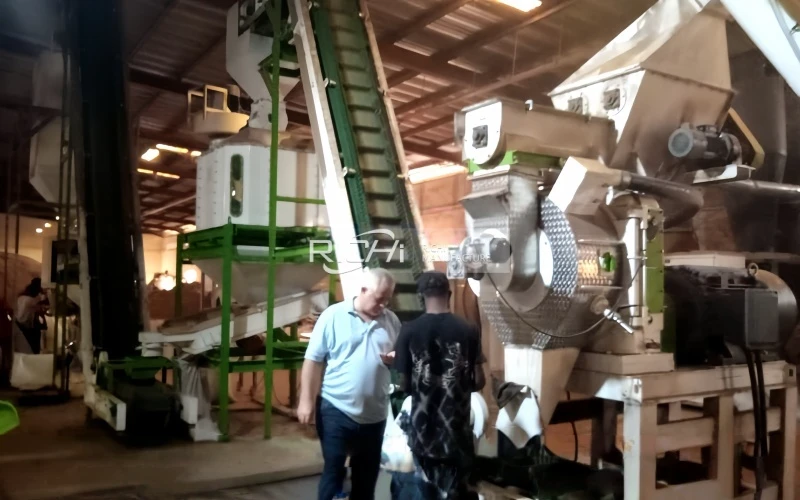
Mango Waste Fertilizer Project in India
Fresh mango peel and pulp residue entered the project at around 80% moisture, requiring substantial water removal before granulation. The working formula contained approximately 55% mango waste, 30% composted cattle manure, and 15% chopped wheat straw. RICHI configured dewatering, composting, drying, crushing, mixing, pelletizing, cooling, and screening accordingly.
Equipment Used :FZLH320
Pellet Size : 4-6 mm
Customer : Mango pulp and puree manufacturer

3 T/H
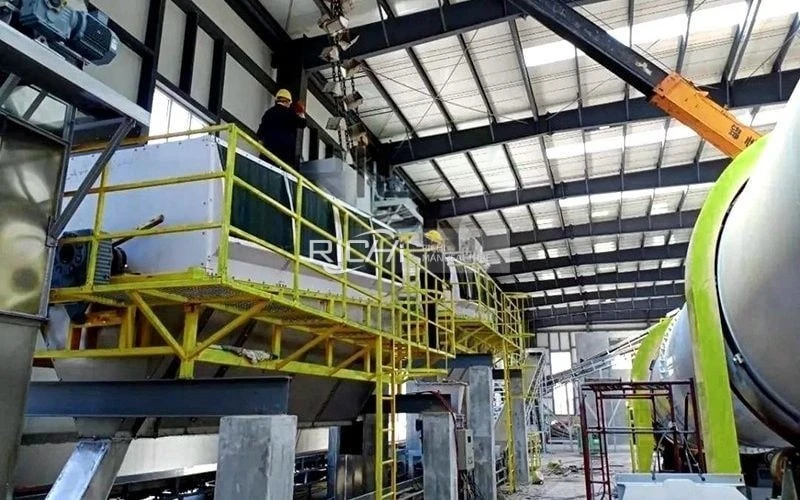
Citrus Waste Fertilizer Project in Turkey
Orange and lemon peel and pulp arrived at roughly 76% initial moisture and formed about 65% of the customer’s recipe, supplemented with 20% wheat straw and 15% composted cattle manure. Because the citrus fraction was wet and readily fermentable, the line incorporated dewatering, controlled stabilization, drying, size reduction, mixing, pelletizing, cooling, and screening.
Equipment Used :FZLH320
Pellet Size : 4 mm
Customer : Citrus juice and concentrate producer

4 T/H
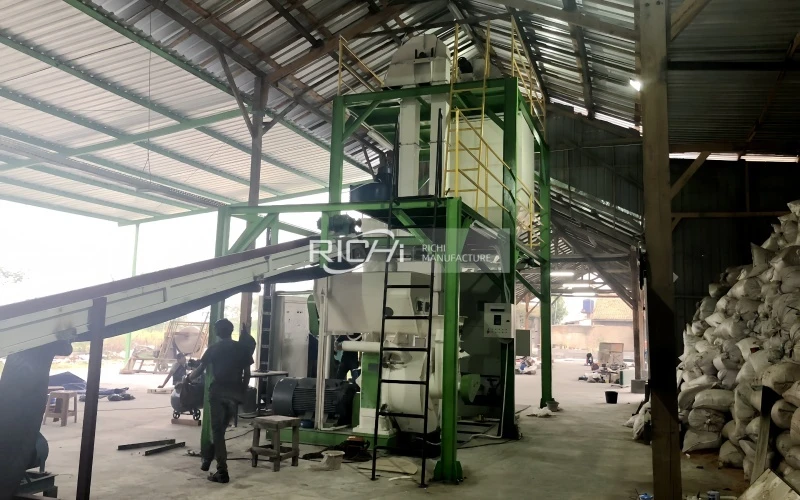
Orange Waste Fertilizer Project in Brazil
Orange peel and pulp at approximately 79% initial moisture made up 60% of the planned fertilizer formulation. The processor used 25% sugarcane bagasse as a fibrous co-material and 15% mature compost. RICHI arranged dewatering, stabilization, bagasse preparation, controlled drying, mixing, pelletizing, cooling, and screening for the citrus-based line.
Equipment Used :FZLH350
Pellet Size : 4 mm
Customer : Industrial orange juice processor

4T/H
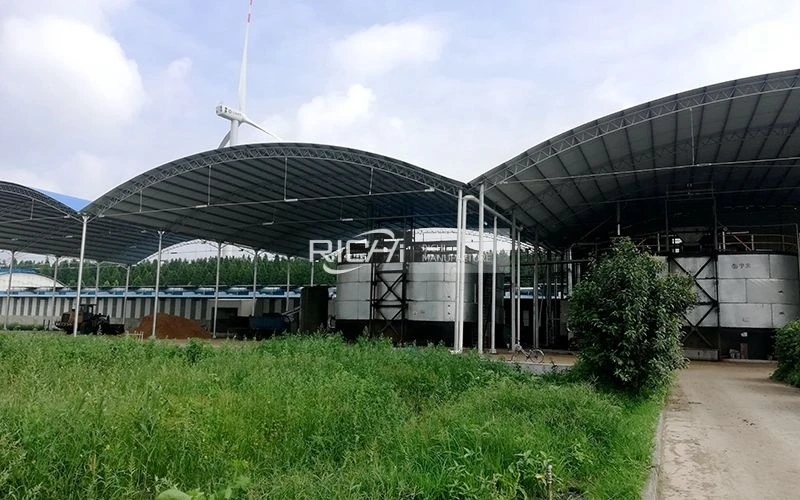
Banana Waste Fertilizer Project in Indonesia
The recycler received banana peel and rejected fruit at about 82% initial moisture and combined this 50% fruit fraction with 30% rice husk and 20% composted poultry manure. The contrast between soft wet banana material and dry rice husk required shredding, dewatering, compost stabilization, drying, proportioning, mixing, pelletizing, cooling, and screening.
Equipment Used :FZLH350
Pellet Size : 4 mm
Customer : Agricultural waste recycling company

4-5 T/H
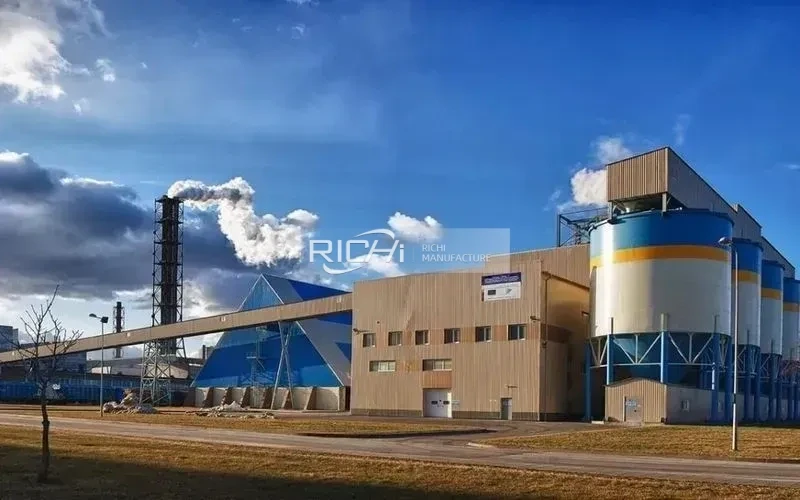
Citrus Fertilizer Project in Spain
Orange and mandarin residues entered the facility at approximately 72% moisture and represented about 55% of the formula. The remaining material consisted of 25% stabilized olive-processing solids and 20% composted crop residues. RICHI configured sorting, crushing, moisture reduction, stabilization, drying, recipe mixing, pelletizing, cooling, and screening for the seasonal feedstock mix.
Equipment Used :FZLH350
Pellet Size : 5 mm
Customer : Citrus packing and juice-processing enterprise

5 T/H
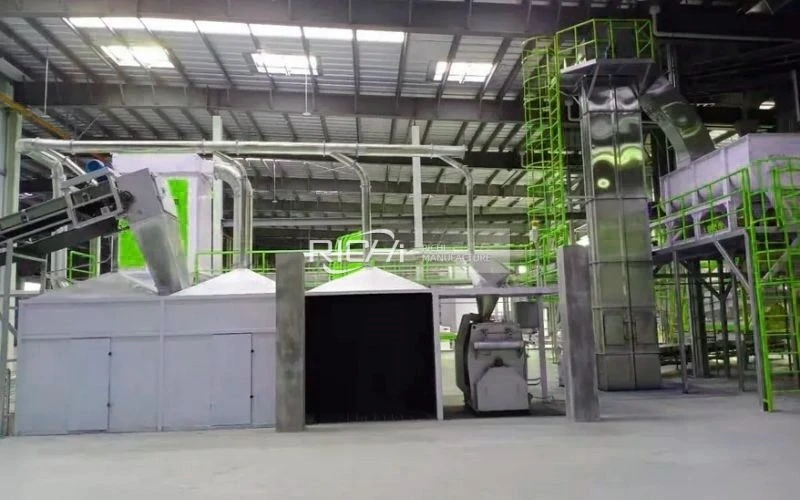
Winery Residue Fertilizer Project in Italy
Grape pomace containing roughly 60% initial moisture accounted for half of the fertilizer recipe, with 30% composted olive-processing residue and 20% cereal straw providing additional organic and structural material. The system combined pomace handling, straw crushing, composting, drying, proportioning, mixing, pelletizing, cooling, and screening for changing seasonal inputs.
Equipment Used :FZLH350
Pellet Size : 4 mm
Customer : Winery and organic fertilizer producer

5 T/H
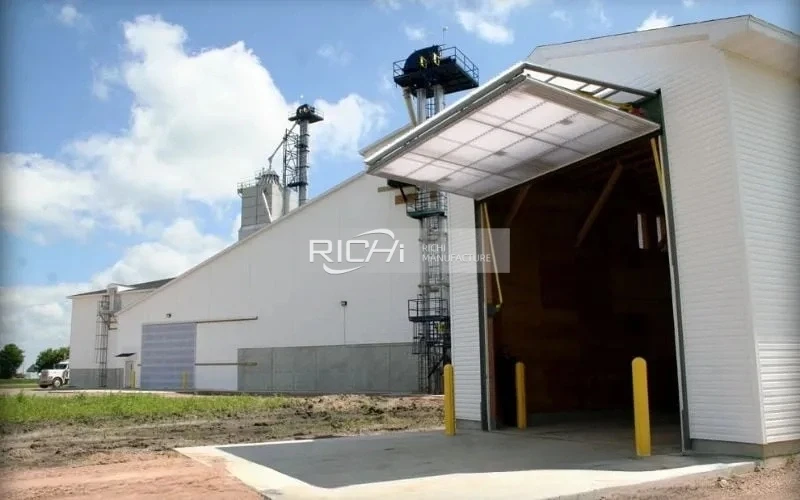
Mango-Citrus Fertilizer Project in Mexico
The plant handled mango residue at about 77% initial moisture and citrus residue at roughly 75%, using them at 40% and 30% of the formula respectively. Another 20% came from crop straw and 10% from mature compost. Separate receiving, shredding, dewatering, stabilization, drying, dosing, mixing, pelletizing, cooling, and screening accommodated the changing fruit streams.
Equipment Used :FZLH350
Pellet Size : 3-6 mm
Customer : Multi-fruit processor and fertilizer company

6T/H
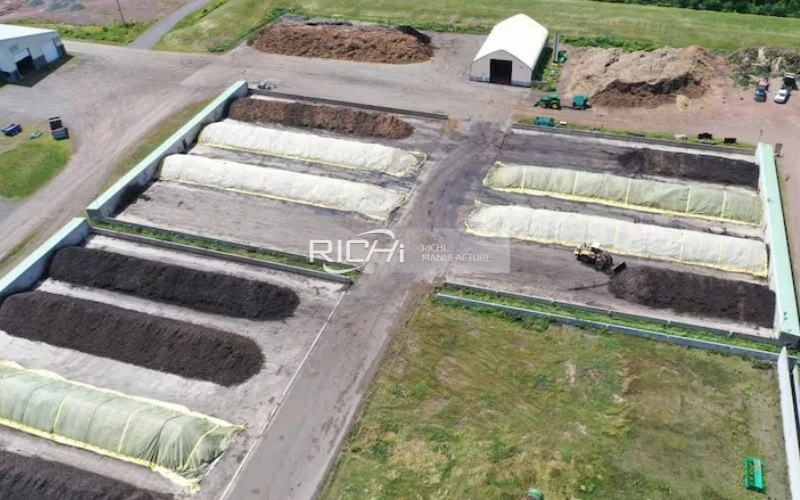
Grape Waste Fertilizer Project in Chile
The vineyard group based its fertilizer on approximately 75% grape pomace entering at 58% moisture, together with 15% processed vineyard-pruning fiber and 10% mature compost. Concentrated pomace generation during vintage required a line combining stabilization, pruning-residue crushing, drying, proportioning, pelletizing, cooling, and screening.
Equipment Used :FZLH420
Pellet Size : 3-4 mm
Customer : Winery group and vineyard fertilizer operation

6-7 T/H
Citrus-Manure Fertilizer Project in South Africa
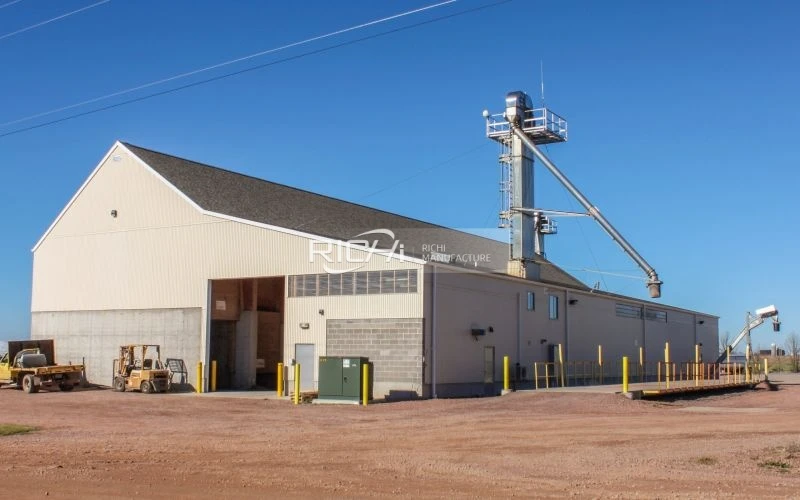
Citrus peel and pulp at about 74% initial moisture formed 55% of the customer’s fertilizer recipe. It was combined with 25% composted cattle manure and 20% dry sawdust bedding from nearby livestock operations. RICHI configured dewatering, composting, drying, dosing, mixing, pelletizing, counterflow cooling, screening, and fines recovery around the mixed feedstock.
Equipment Used :FZLH320
Pellet Size : 4-5 mm
Customer : Citrus processor and agricultural recycling company

7-8 T/H
Grape Pomace Fertilizer Project in Australia
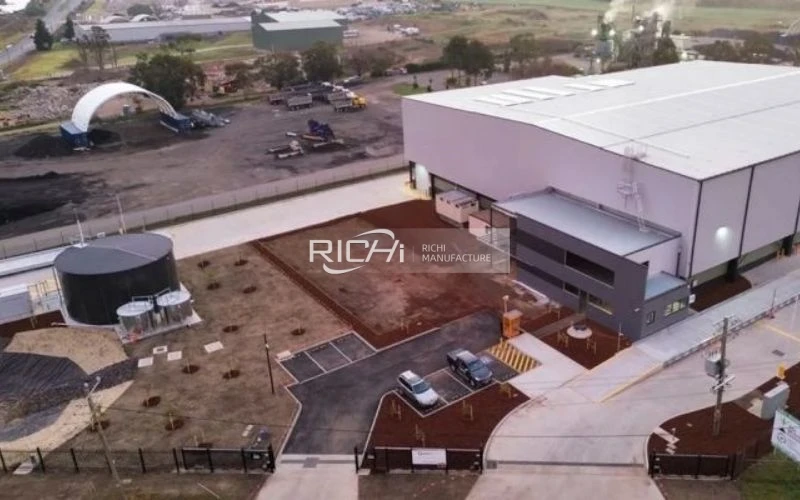
The main feedstock was grape pomace at approximately 57% initial moisture, accounting for 65% of the formula, while cereal straw and composted winery organics contributed 20% and 15%. RICHI designed preparation, drying, straw milling, formulation, pelletizing, cooling, screening, and packing sections that could accommodate seasonal changes in pomace availability.
Equipment Used :FZLH420
Pellet Size : 3-4 mm
Customer : Large winery and agricultural by-product processor

8 T/H
Apple-Grape Fertilizer Project in France
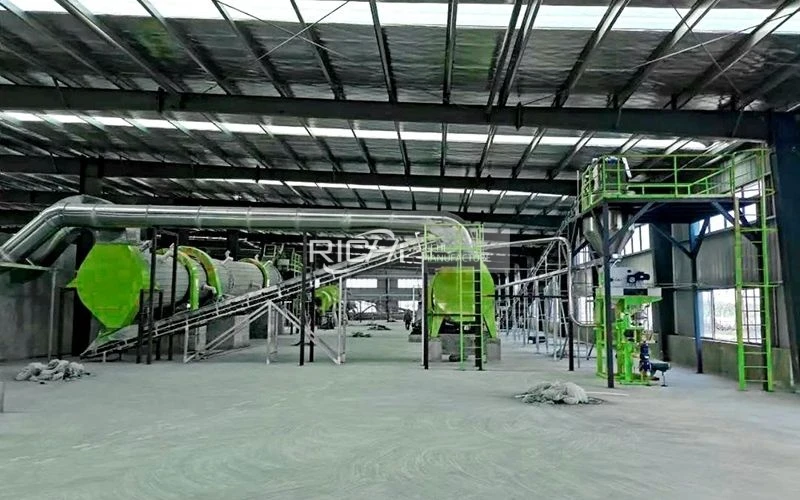
The recycler combined 45% apple pomace entering at about 69% moisture with 35% grape pomace at approximately 61% moisture and 20% chopped straw. Because the two fruit streams peaked at different times, RICHI used separate receiving and moisture adjustment before stabilization, drying, grinding, mixing, pelletizing, cooling, and screening.
Equipment Used :FZLH420
Pellet Size : 5 mm
Customer : Cider, juice, and wine by-product recycler

8T/H
Apple Pomace Fertilizer Project in Germany
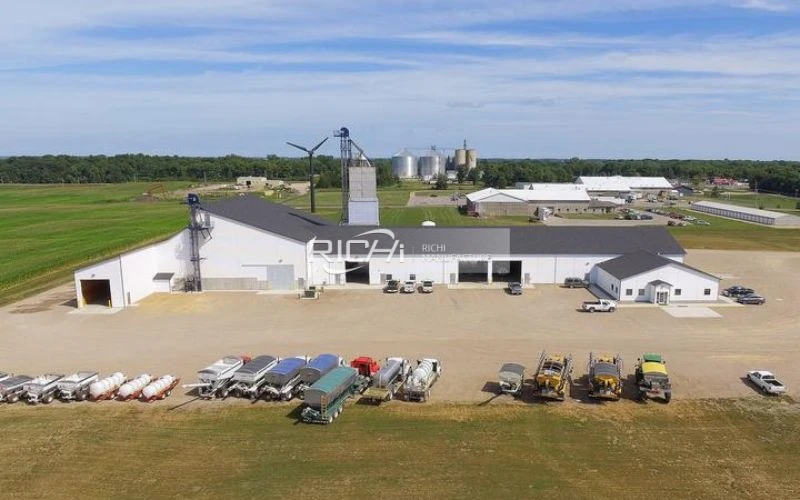
Apple pomace at roughly 68% initial moisture represented 55% of the formulation, blended with 25% screened green-waste compost and 20% clean wood-fiber material. RICHI configured dewatering, stabilization, drying, fiber preparation, dosing, mixing, pelletizing, cooling, and screening to handle the fibrous fruit-based fertilizer mixture.
Equipment Used :FZLH420
Pellet Size : 4 mm
Customer : Juice manufacturer and organic waste processor

9-10 T/H
Mixed Fruit Fertilizer Project in the Netherlands
Separated fruit-processing residues entered at around 70% moisture and made up 40% of a broader organic fertilizer formula containing 25% vegetable residues, 20% mature compost, and 15% cereal fiber. RICHI provided controlled receiving and sorting, dewatering, composting, drying, fine crushing, recipe dosing, pelletizing, cooling, and screening for the multi-feedstock plant.
Equipment Used :FZLH520
Pellet Size : 3-6 mm
Customer : Food-waste recycler and fertilizer manufacturer

10 T/H
Pineapple-Cassava Fertilizer Project in Vietnam
The recipe combined 45% pineapple peel and fiber entering at about 81% moisture with 30% cassava-processing residue at approximately 65%, plus 15% rice husk and 10% mature compost. Because both principal residues arrived wet, RICHI emphasized shredding and mechanical dewatering before stabilization, drying, mixing, pelletizing, cooling, and screening.
Equipment Used :FZLH520
Pellet Size : 4 mm
Customer : Fruit processor and agricultural fertilizer company

10 T/H
Citrus Fertilizer Project in Egypt
Unlike the blended projects, this plant was designed around conditioned citrus peel and pulp as the principal fertilizer feedstock. Fresh residue entered pretreatment at approximately 75% moisture before dewatering, biological stabilization, drying, crushing, conditioning, pelletizing, cooling, and screening. The cooling section was sized for stable downstream handling and bagging.
Equipment Used :FZLH520
Pellet Size : 3-4 mm
Customer : Citrus packing, juice, and fertilizer enterprise

10-12T/H
Citrus-Olive Fertilizer Project in Morocco
The customer combined approximately 50% citrus-processing residue at 73% initial moisture with 30% composted olive-processing solids and 20% cereal straw. Separate preparation of the wet citrus fraction and fibrous co-materials was followed by stabilization, drying, proportioning, mixing, pelletizing, cooling, screening, and packing in the integrated fertilizer system.
Equipment Used :FZLH520
Pellet Size : 4 mm
Customer : Agricultural waste recycling and fertilizer company

12 T/H
Banana-Pineapple Fertilizer Project in Ecuador
Two high-moisture tropical residues formed the core of this project: 35% banana waste entering at about 80% moisture and 35% pineapple peel and core at roughly 78%. The balance comprised 20% dry crop fiber and 10% compost. RICHI configured shredding, dewatering, stabilization, drying, dosing, mixing, pelletizing, cooling, screening, and bagging.
Equipment Used :FZLH520
Pellet Size : 4-6 mm
Customer : Export-fruit processor and organic fertilizer producer
Behind each project is a different raw material problem, plant condition, and production target. These customer experiences show how RICHI fruit waste pellet machine solutions perform in practical situations—from high-moisture tropical residues and winery pomace to mixed fertilizer formulas, existing-plant integration, operator training, cooling, and final product handling.

Canada Apple Juice Processor
3T/H Apple Pomace Fertilizer Project
“Our apple pomace comes off the press quite wet, so simply buying a pellet mill was never going to solve the problem. RICHI helped us match dewatering, drying and pelletizing, and the 4 mm pellets now come off the line much more consistently than during our early trials.”
Peru Fruit Processing Cooperative
5T/H Mango & Avocado Waste Fertilizer Project
“We deal with mango residues in one season and avocado-processing waste in another, which made feedstock flexibility very important for us. The system lets us change the blend with composted manure and dry crop fiber without rebuilding the line each time, and our operators learned the changeover procedure quickly.”
Colombia Juice & Fertilizer Producer
6T/H Tropical Fruit Waste Pellet Project
“Our main concern was the very wet mix of passion-fruit shells, mango residue and other juice-processing solids we receive every week. RICHI did not oversell the pelletizer; their engineers focused first on moisture reduction and mixing, which is why the 5 mm fertilizer pellets now run much more steadily.”
Poland Organic Fertilizer Manufacturer
8T/H Apple Pomace Blended Fertilizer Project
“We already had composting and part of the conveying system, so we did not want to replace equipment that was still useful. RICHI integrated the fruit waste pellet machine into our existing plant, adjusted the feeding arrangement for apple pomace and manure compost, and made commissioning much less disruptive than expected.”
Portugal Winery & Compost Producer
4T/H Grape Pomace Fertilizer Project
“Grape pomace is never exactly the same from one vintage to the next, especially in moisture and the amount of skins and seeds. The engineers tested our material before finalizing the die setup, and we can now produce 4 mm pellets without constantly fighting unstable feeding or excessive fines.”
Japan Food By-Product Recycler
2T/H Citrus Waste Fertilizer Project
“What impressed us most was the attention to the parts after pelletizing, not only the pellet mill itself. Our citrus-based pellets leave the die warm and slightly soft, so the correctly matched cooler and screen made a noticeable difference to pellet condition before weighing and packing.”
Kenya Pineapple Processor
3.5T/H Pineapple Waste Fertilizer Project
“Pineapple peel and core contain far more water than the dry agricultural residues we blend with them, and that difference caused problems in our earlier trials. RICHI trained our team to control dewatering and mixing before granulation, and the operators were able to run the complete system independently after commissioning.”
New Zealand Winery Group
7T/H Grape Marc Fertilizer Project
“Our biggest challenge is vintage: a large amount of grape marc arrives in a relatively short period, so downtime during that window costs us. The pelletizing section has handled our prepared marc-and-straw blend reliably, and the service team has been practical whenever we needed to adjust settings between production batches.”
Fruit Waste Pellet Machine Price
The price of a fruit waste pellet machine ranges from USD 10,000 to USD 100,000. The final investment depends mainly on the selected FZLH model, required throughput, ring-die specification, feeding configuration, and any customization needed for the customer’s prepared fruit pomace, peel, pulp, or blended fertilizer material.
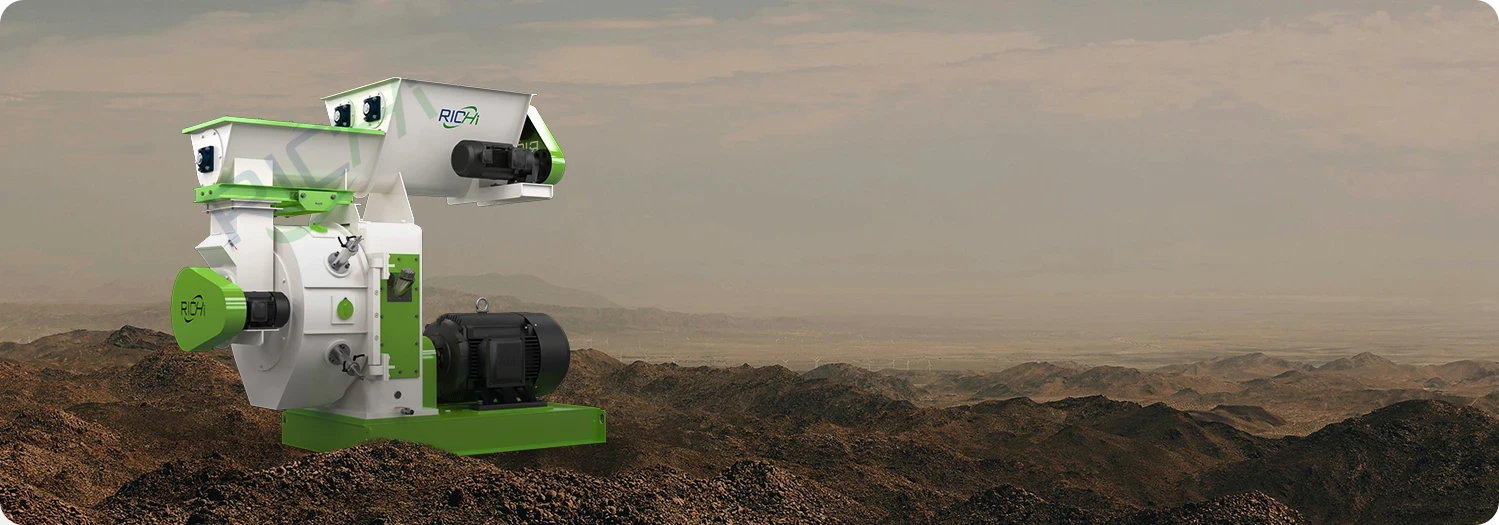
For fruit processors and fertilizer manufacturers, selecting the right machine should start with the amount and condition of material actually entering the pelletizer after pretreatment—not the tonnage of fresh wet fruit waste generated at the factory. RICHI can match the equipment to your required output and fertilizer product, whether you need a compact 1–1.5 t/h unit or a high-capacity industrial pelletizing system.
Range for
Fruit Waste Pellet Mill Cost:
FZLH250 (22KW)
$10,000–$13,000
FZLH320 (22KW)
$15,000–$18,000
FZLH350 (37KW)
$18,000–$25,000
FZLH420 (90KW)
$26,000–$32,000
FZLH520 (132KW)
$43,000–$50,000
FZLH678 (200KW)
$64,000–$70,000
FZLH768 (315KW)
$75,000–$85,000
What Scale of Fruit Waste Pellet Processing Plant Do You Want to Build?
Choose the capacity range closest to your planned finished fertilizer output, or send us your fruit-waste volume, initial moisture, operating hours, and formulation so our engineers can help determine the appropriate machine size.
Fruit Waste Fertilizer Processing Solutions
A complete fruit waste fertilizer process is built around the condition of the incoming material, not around a fixed equipment list. Depending on whether the feedstock is fresh pomace, peel, pulp, fermented residue, mixed agricultural waste, or a blended fertilizer formula, the process may include impurity removal, crushing, fermentation or composting, drying, batching, mixing, pelletizing, cooling, spraying or coating, screening, storage, and packaging. For some projects every stage is required; for others, part of the process can be removed or integrated with the customer’s existing equipment.
RICHI supplies more than a standalone fruit waste pellet machine. We can design complete fruit waste pellet production lines, fruit waste powder fertilizer lines, and modular systems for crushing, drying, batching, mixing, conveying, dust collection, or material storage. Equipment selection changes with the raw material—for example, wet fruit pulp may require dewatering and drying, fibrous peel may need shredding or crushing, hard seeds or cores may require separate size reduction, while fully composted material may move directly into fine crushing, mixing, and granulation.
The final process is customized according to raw material type and physical form, initial moisture, whether composting is necessary, required fertilizer product, plant layout, available space, investment level, and planned capacity. RICHI supports the project from process consultation and layout design through equipment manufacturing, installation, commissioning, operator training, and spare-parts supply, so the production system can be adjusted as raw materials or product requirements change over time.
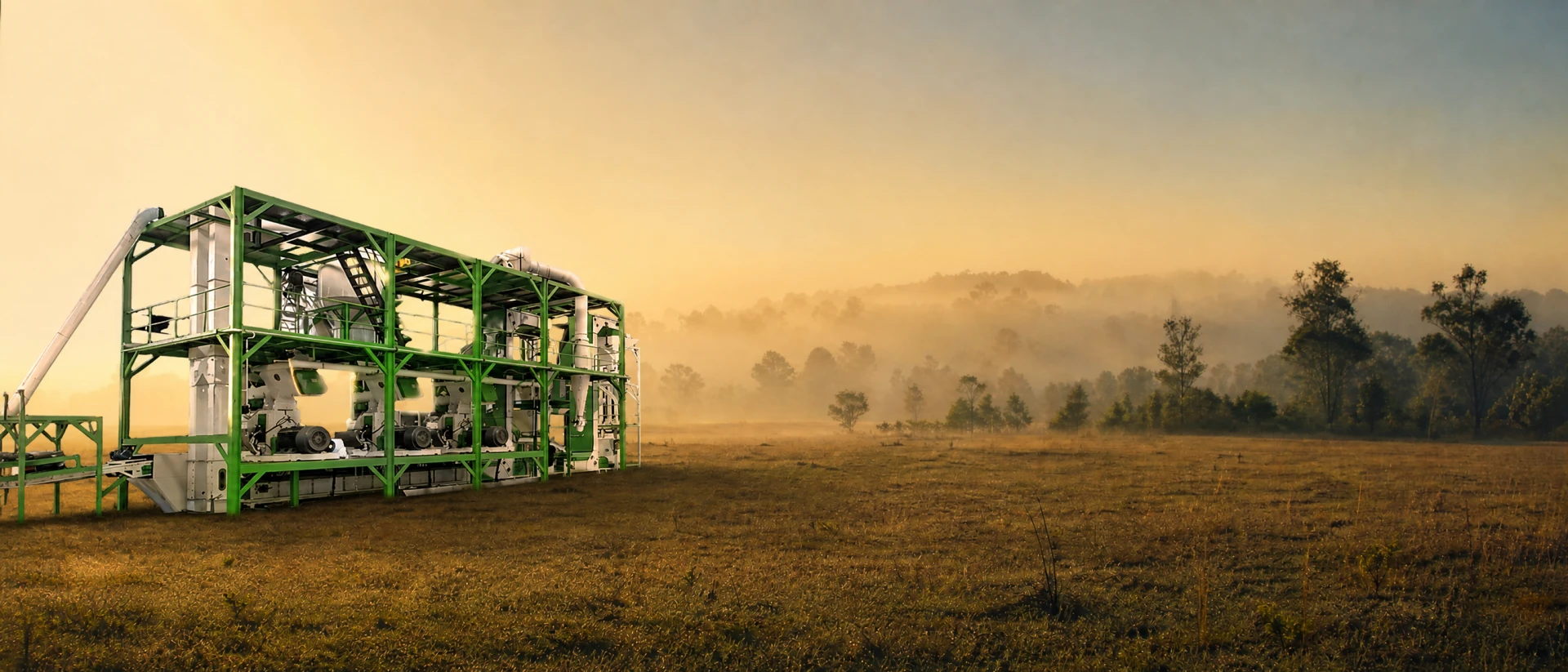
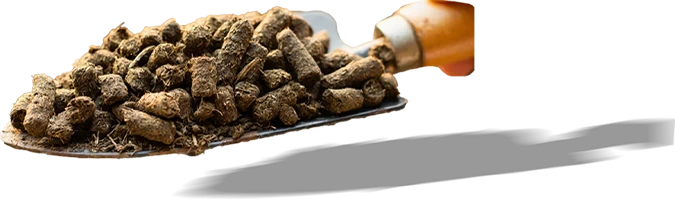
Equipment for a Complete Fruit Waste Pellet Production Line
A complete fruit waste pellet production line normally combines pretreatment, fermentation, drying, batching, mixing, pelletizing, cooling, screening, coating, conveying, and packing equipment around the core fruit waste pellet machine. Fresh pomace, peel, pulp, fibrous residues, manure blends, and composted materials do not require exactly the same configuration, so RICHI selects each machine according to moisture, particle structure, formulation, plant layout, and budget rather than applying one fixed equipment list.
Fruit Waste Compost Turner
Used where fresh fruit waste, manure, bedding, or other biodegradable materials require aerobic composting before further processing. The turner improves aeration and material homogenization while helping release moisture and heat during stabilization.
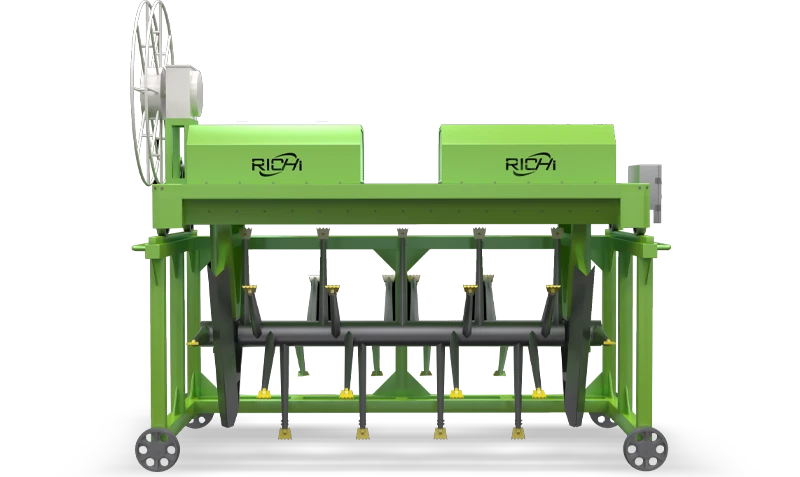
Turning Width
2–8 m
Turning Height
0.5–2.5 m
Fruit Waste Crusher machine
Used after composting or drying to break agglomerated fruit-waste fertilizer, manure compost, and fibrous organic mixtures into a more uniform feed for batching and pelletizing. It is especially useful when fermented material forms soft lumps that would otherwise cause unstable feeding.
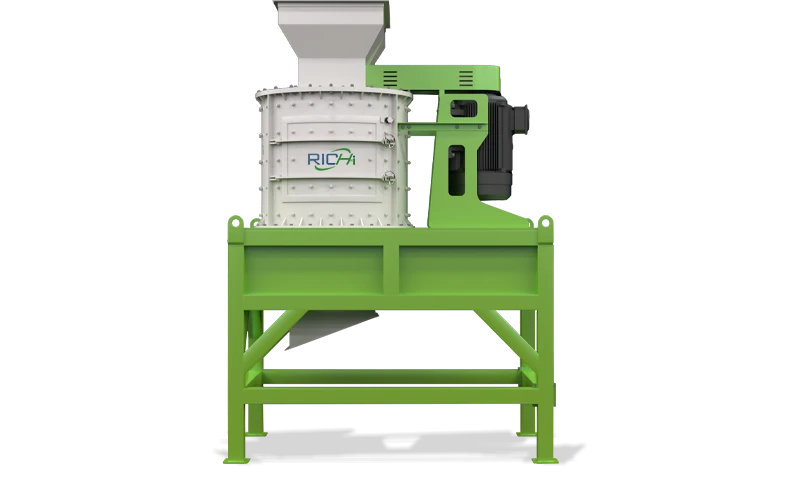
Capacity
1–30 T/H
Main Power
7.5–160 kW
Fruit Waste Mixer machine
Blends conditioned fruit residue with manure, compost, straw powder, sawdust, rice husk, minerals, or other formulation materials before pelletizing. Uniform mixing is particularly important when fruit waste represents only part of a multi-material fertilizer recipe.
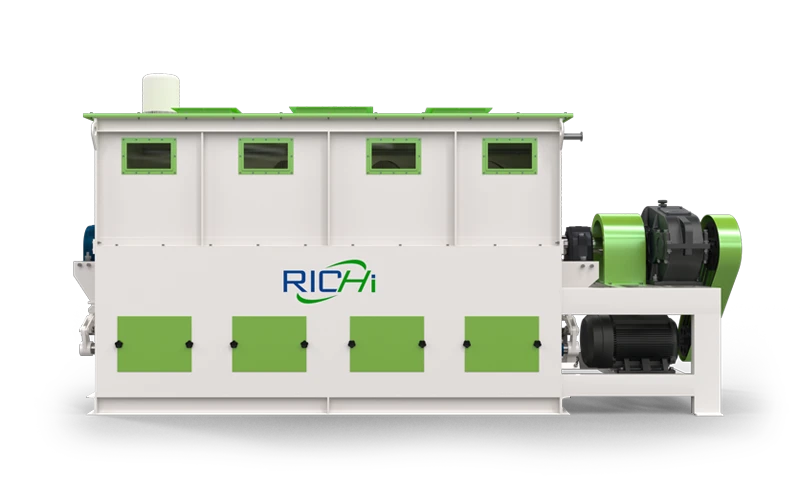
Capacity
250–2,000 kg/batch
Main Power
4-30KW
Fruit Waste Dryer machine
Used when dewatered or fermented fruit waste still contains too much moisture for stable downstream crushing, mixing, or pelletizing. Dryer size depends strongly on incoming moisture, evaporation duty, heat source, and residence time.
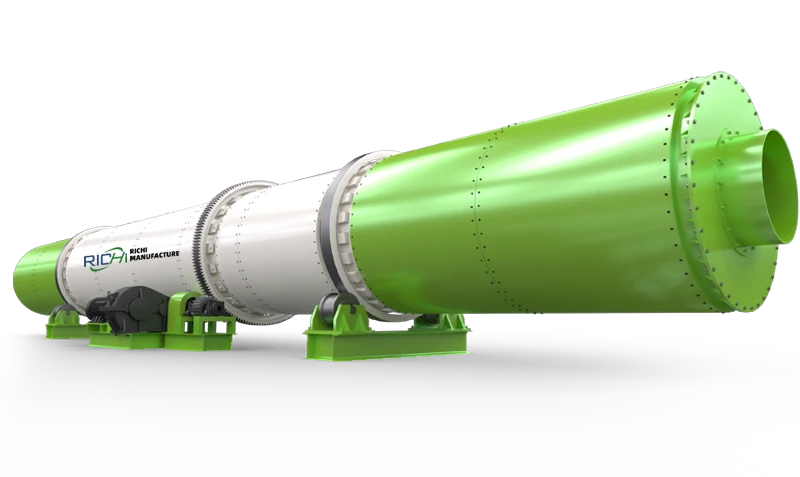
Capacity
1–30 T/H
Drying Temperature
60–250℃
Fruit Waste Screener
Separates acceptable fertilizer particles from oversized material, lumps, and fines before or after pelletizing. Screen configuration is selected according to whether the unit is used for pre-cleaning, powder classification, or final pellet grading.
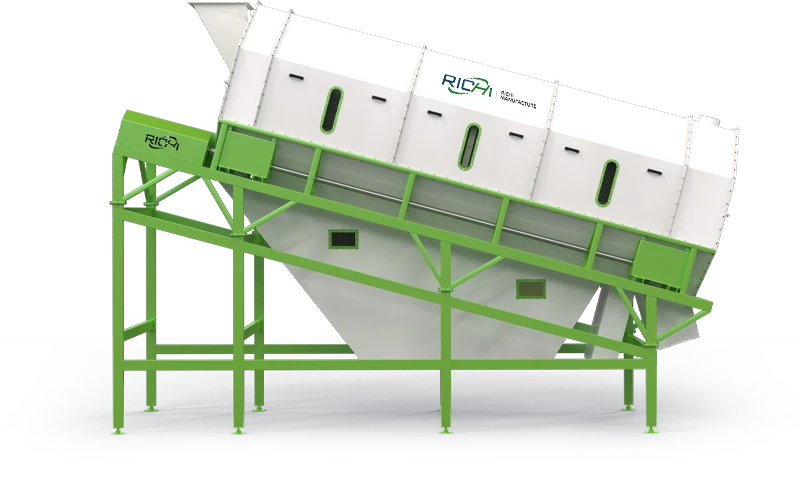
Capacity
3-50T/H
Screen Layers
1–3 Layers
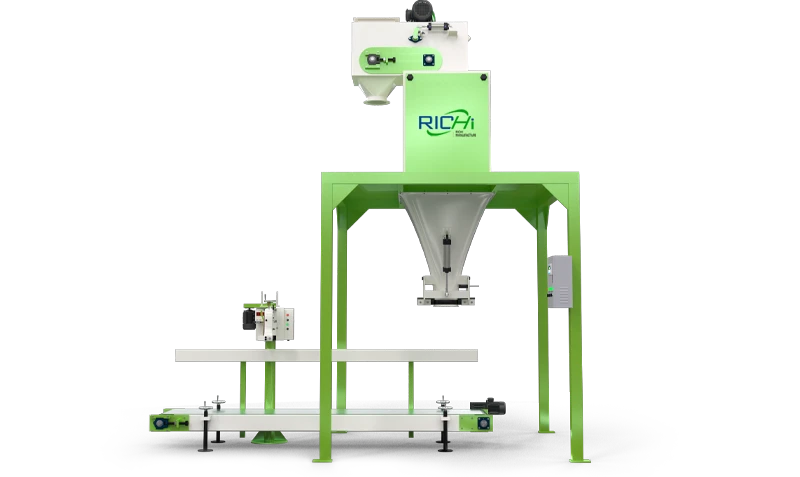
Fruit Waste Bagging Scale
Weighs and fills finished fruit-waste fertilizer pellets or powder into commercial bags after cooling, screening, and temporary storage. Bag format and automation level can be selected according to local fertilizer distribution requirements and labor availability.
Packing Range
10–1000 kg/bag
Packing Speed
6–20 Bags/min
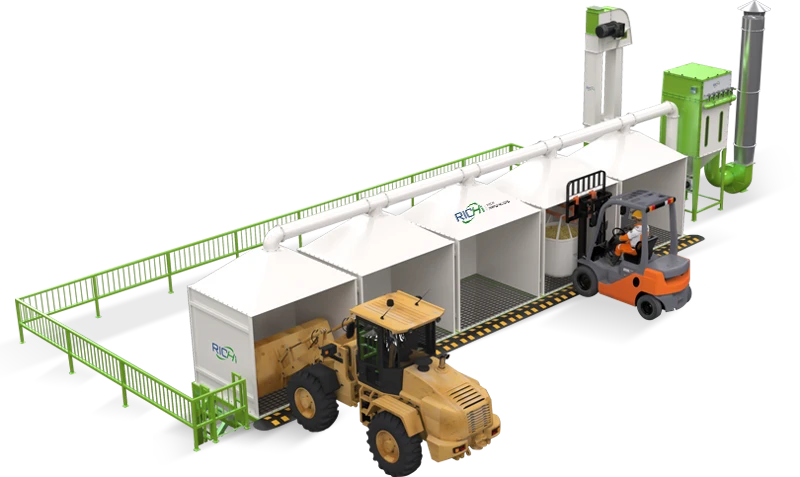
Feeding & Weighing System
Handles the main bulk ingredients—such as composted fruit waste, manure, straw powder, or other organic materials—and weighs them according to the production recipe before mixing. Unlike trace-element dosing, this system is designed for high-volume base materials.
Weighing Capacity
1–50 T/H
Weighing Accuracy
±0.5–1%
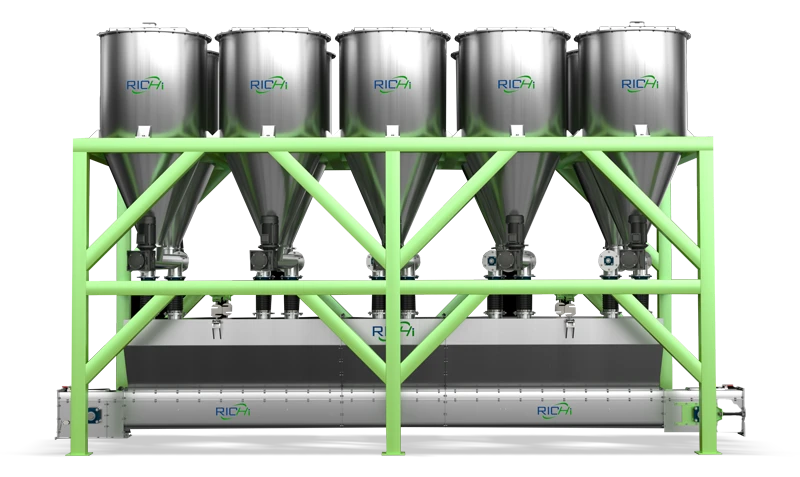
Trace Element Dosing System
Meters small quantities of micronutrients, microbial carriers, minerals, or other approved formulation ingredients separately from the bulk organic feed. It is used where the fertilizer recipe requires controlled low-dose additions rather than simple bulk mixing.
Dosing Accuracy
±0.1–0.5%
Hopper Volume
50–1000 kg
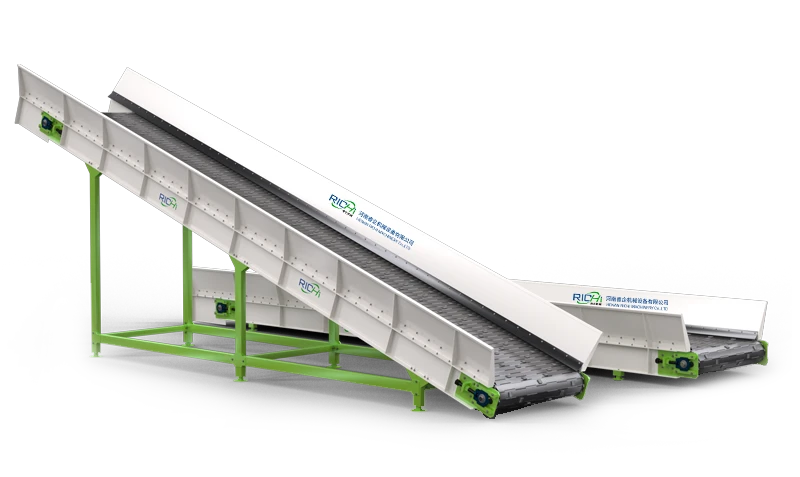
Fruit Waste Conveyor
Links receiving, crushing, drying, mixing, pelletizing, cooling, screening, and packing sections while controlling transfer between different elevations and process stages. Belt, screw, scraper, and bucket conveying systems are selected according to moisture and material flowability.
Capacity
2-40T/H
Conveying Length
3–40 m
For some projects, additional equipment such as dewatering machines, bale breakers, rotary screens, magnetic separators, cleaning units, storage silos, buffer bins, bucket elevators, screw or belt conveyors, pellet coolers, automatic control systems, and dust collection units may also be required. Rotary drying and other bulk-solids equipment should always be sized around the actual material and required moisture removal rather than nominal throughput alone.
Depending on the condition of the incoming fruit waste and the final product, the line may also include screw presses or other dewatering machines, fruit crushers, shredders, bale breakers, magnetic separators, rotary cleaning screens, fermentation equipment, hot-air systems, pellet coolers, bucket elevators, storage bins, raw-material silos, finished-product bins, recycle conveyors, liquid spraying systems, automatic control cabinets, and centralized dust collection.stems, automatic palletizers, and PLC control cabinets.
Customized Fruit Waste Fertilizer Production Solutions
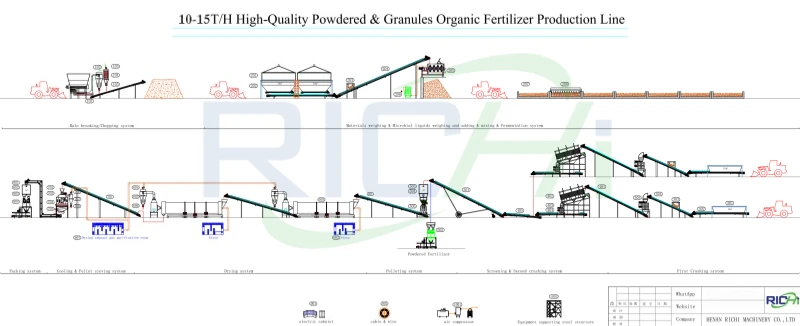
[Example Solution] 10–15T/H Fruit Waste Fertilizer Line
The example below is a 10–15 t/h integrated project designed to produce both powdered fertilizer and pellet fertilizer from fruit waste blended with straw and other organic ingredients. The client required one plant rather than separate systems for powder and pellets. Incoming fruit-based materials varied in moisture and physical form, while straw needed coarse size reduction before batching. The production target included customized powdered fertilizer and pellet fertilizer in the 2–12 mm range, so the process was designed with a powder-product outlet as well as a complete fruit waste pellet machine section.
The line begins with straw chopping to approximately 20–30 mm and dust collection, followed by loader-fed receiving, batching, magnetic separation, liquid dosing, and intensive mixing. The prepared mixture then enters fermentation, where microbial activity stabilizes the organic material before downstream fertilizer production.
After fermentation, material is received through a second large hopper and passes through magnetic separation and a first vertical crusher. A rotary screen separates acceptable fine material from oversized fractions; coarse material is sent through a second vertical crusher, while qualified powder can be directed to a 304 stainless-steel packing system for adjustable 10–50 kg fertilizer bags.
crushing & feeding
cleaning & addition
mixing & fermentation
crushing & screening
powder packing
pelletizing & drying
cooling & storage
pellet packing
For pellet production, the prepared fraction enters the ring-die pelletizing section and is formed into customized 2–12 mm fertilizer pellets. Under a properly matched formulation and operating condition, high pellet recovery can be achieved; pellet hardness is adjusted through formulation and die selection. Wet pellets are then dried to approximately 8–15% moisture, cooled close to ambient temperature, screened to remove fines, and transferred to finished-product storage.
The final vibrating screen separates undersized powder from marketable pellets, and collected fines can be returned to the process rather than discarded. Finished pellets are stored temporarily before automatic packing into adjustable 10–50 kg bags, giving the customer both powder and pellet fertilizer products from one integrated production system.
This example also shows why fruit waste fertilizer plants cannot be designed from capacity alone. Moisture level, straw content, impurity load, fermentation requirements, powder-versus-pellet output, available factory space, and desired automation all change the final equipment arrangement.
RICHI can modify the receiving, crushing, drying, batching, pelletizing, screening, storage, and packing sections around the material actually available at your site. Have a different fruit waste composition, moisture level, or finished fertilizer requirement? Send us your raw-material data and target capacity, and our engineers can develop a process flow and equipment configuration specifically for your project.
Market Potential for Fruit Waste Pellet Production
Fruit waste pellet production sits at the intersection of two practical demands: food processors need better outlets for concentrated organic residues, while agriculture continues to use compost, organic fertilizers, and soil-conditioning products. Composting and nutrient recovery from organic waste are already recognized routes for returning organic matter to soils, while Europe has also expanded the regulatory framework for organic and waste-derived fertilizing products.
For investors, the strongest opportunities are therefore not limited to one country: fruit-processing regions in Asia and Latin America offer large residue streams, Europe provides a developed market for recycled fertilizer products, and markets such as South Africa and Egypt show growing commercial activity in organic and biofertilizers. A fruit waste pellet machine adds value where stabilized fruit residues need to be converted into a uniform product that can be handled, packaged, distributed, and applied more conveniently than loose organic material.
Turn Disposal Streams into Products
Juice plants, wineries, canneries, and fruit processors already generate pomace, peel, pulp, and rejected fruit as part of normal production. Converting suitable residues into fertilizer pellets creates another utilization route instead of relying only on disposal, temporary storage, or low-value handling.
Serve More Than One Fertilizer Market
Fruit-based pellets can be formulated for organic fertilizer, compost fertilizer, soil-conditioning, and blended agricultural products when the raw materials meet the required product and regulatory specifications. This gives producers room to supply orchards, vegetable farms, field-crop growers, distributors, and other agricultural users rather than depending on one application.
Keep the Plant Working Beyond One Season
Fruit processing is seasonal, so profitability improves when the same line can also handle suitable manure, compost, vegetable residues, straw, crop by-products, or other qualified organic materials. A configurable fruit waste pellet machine allows producers to change formulations as feedstock availability shifts, reducing dependence on a single harvest period.
Build Where Raw Material Supply Is Strong
The most attractive projects are usually located near concentrated fruit-processing, agricultural, or organic-waste sources, because consistent feedstock supply directly affects plant utilization and transport cost. Regions combining strong fruit industries with fertilizer demand and circular-economy policies offer particularly favorable conditions for commercial-scale resource recovery.
Frequently Asked Questions
Can fruit waste be processed into animal feed instead of fertilizer?
Yes, but the economics are quite different. For example, 1 ton of fruit waste at 70% moisture yields only about 353 kg at 15% moisture before other ingredients are added. If you have only 10 t/day of wet fruit waste, that is roughly 3.5 t/day after drying—too little to keep our minimum 1 t/h pellet mill continuously loaded. A feed project is worth evaluating when raw-material supply is substantially larger and the higher investment in dehydration, drying, formulation, and feed-safety control is acceptable.
We generate 15–20 tons of fresh apple pomace per day. Is that enough for a 1 t/h project?
It is borderline if apple pomace is the only ingredient. At 70% initial moisture, 20 t/day becomes approximately 7.3 t/day at 18% moisture, before normal process losses. For an 8-hour, 1 t/h operation, you would therefore need either more pomace, shorter operating shifts, accumulated seasonal material, or additional fertilizer ingredients such as compost or manure.
Our orange waste reaches 78–82% moisture in peak season. How can we avoid an oversized dryer?
Remove free water mechanically before thermal drying. At 80% moisture, reducing 10 tons of residue directly to 20% moisture means removing about 7.5 tons of water; lowering the moisture mechanically first can substantially reduce the evaporation duty. For this type of fruit waste treatment machine project, we normally calculate a water balance before selecting the dryer.
Can I store wet fruit pomace for several days before processing it?
We would not design the plant around uncontrolled storage of fresh, sugary pomace. Wet apple, grape, citrus, or tropical fruit residues can ferment rapidly and change in temperature, odor, pH, and handling characteristics. If daily processing is impossible, controlled receiving, drainage or dewatering, covered storage, and planned fermentation should be incorporated into the fruit waste recycling system.
Our fruit waste volume triples during harvest. Should the line be sized for the peak?
Not automatically. A line sized entirely around a short peak season can remain underutilized for the rest of the year. We normally compare peak tonnage, annual tonnage, allowable storage time, operating hours, and alternative off-season feedstocks before deciding whether additional shifts, temporary storage, parallel pretreatment, or higher pelletizing capacity gives the better investment balance.
What can we run when our fruit-processing season ends?
A properly designed fruit waste pellet machine can also process suitable prepared formulations based on composted manure, vegetable-processing residues, crop by-products, straw, bedding, or other qualified organic materials. The formulation and pretreatment settings change, but this approach can keep the plant productive instead of tying the investment to one harvest season.
We process several fruits during the year. How much changeover is needed between recipes?
That depends more on moisture and physical structure than on the fruit name. Switching from dried grape pomace to wet pineapple residue may require changes in dewatering, drying, batching, and feeder settings, while two similarly conditioned pomaces may need relatively minor adjustments. We design recipe storage and operating procedures around the material combinations you actually expect to run.
Can very sticky mango or banana residue cause feeding problems?
Yes, especially when residual moisture and soluble sugars remain high. Instead of solving the problem by increasing feeder force alone, we first correct dewatering, drying, particle structure, and dry-material blending. A fruit pulp waste pellet machine performs much more consistently when the upstream process prevents wet material from reaching the pelleting chamber as a sticky mass.
Our grape pomace contains a lot of seeds and stems. Will they damage the pelletizer?
Not if the material is properly prepared and foreign objects are removed. Seeds and stems can be incorporated into many fertilizer formulations after suitable crushing, but long woody stems and uneven coarse fractions should not enter the fruit processing residue pelletizer untreated. We determine the crushing and screening arrangement from a representative material sample.
Can we keep citrus peel in the formula if its pH is low?
Potentially, yes, but pelletability alone is not the deciding factor. Citrus-rich material should be stabilized and the final fertilizer checked for pH, maturity, salinity, nutrient composition, and intended application. If citrus represents a high percentage of the formula, composting conditions and blending materials should be established before finalizing the fruit peel fertilizer machine configuration.
We receive fruit waste from supermarkets. How clean does it need to be?
The cleaner the source separation, the more practical the project. Plastic film, labels, trays, glass, metal, and stones should be removed before biological treatment and size reduction. A market fruit waste recycling machine project normally needs more sorting and impurity-removal equipment than a juice factory handling a clean, single-source pomace stream.
Can spoiled or moldy fruit simply be mixed into fertilizer production?
Do not treat all rejected fruit as automatically acceptable. The material should be assessed for contamination, chemical residues, foreign matter, and the requirements applying to the intended fertilizer product. Biological stabilization can handle normal biodegradable fruit residues, but it is not a substitute for proper incoming-material control.
We want to use fruit waste together with chicken manure and litter. How should we evaluate the formula?
Start from moisture and dry-matter balance rather than an arbitrary recipe. A trial formulation might contain roughly 30–50% fruit residue, 30–50% composted poultry manure, and 10–30% litter or dry crop material, but the actual proportions should be adjusted for moisture, carbon structure, nutrient targets, and pelletability.
We have pig manure, sawdust bedding, and fruit-market waste. Can one system handle all three?
Yes, and the combination can be useful because the materials have different physical characteristics. Fresh pig manure and market fruit waste contribute considerable moisture, while sawdust bedding provides a drier structural fraction. The fruit waste fertilizer production system should therefore be designed from the combined mass and moisture balance rather than treating each waste stream independently.
How large should a livestock operation be before this type of project makes sense?
Judge it by recoverable material tonnage, not animal count alone. Our minimum 1 t/h line requires approximately 8 tons of prepared mixture for an 8-hour shift; because fresh manure and fruit waste lose substantial water during stabilization and drying, the incoming wet tonnage must be considerably higher. Large farms, integrated farms, farm clusters, and fertilizer companies collecting from several farms are generally better candidates than small individual farms.
We only have 4–5 tons of prepared fertilizer material per day. Can we still use your smallest pelletizer?
Not efficiently as a normal continuous 1 t/h operation. At 5 t/day, the FZLH250 would need only about five productive hours even before allowing for startup and shutdown. It may be better to accumulate prepared material and operate periodically, increase the feedstock base, or reconsider whether industrial pelletization is justified at the present scale.
Our material supply is 40 tons/day wet, but only 12 tons/day after preparation. Which figure should I send you?
Send both. Wet tonnage determines receiving, dewatering, fermentation, and drying loads, while the approximately 12 t/day prepared tonnage is much more relevant to pelletizer utilization. We also need initial and final moisture so we can check whether the mass reduction is physically consistent.
Can we reduce drying cost by adding straw or sawdust?
To a degree, but dry additives should not be used to hide an inefficient moisture-removal problem. Roughly 10–30% dry structural material may be useful in some formulations, yet very wet fruit pulp can still require mechanical dewatering. We calculate whether blending, dewatering, waste heat, or a combination gives the more sensible operating cost.
We have waste heat from our fruit factory. Can the dryer use it?
Possibly, and it is worth evaluating because drying is often one of the largest energy loads in high-moisture fruit waste processing. Send the heat-source temperature, airflow or steam conditions, available thermal capacity, operating schedule, and contamination constraints. We can then determine whether it can fully or partially supply the drying system.
Can we use an existing boiler instead of buying a new heat source?
Often yes, if it has sufficient spare thermal capacity and can interface safely with the dryer. We need boiler output, fuel, steam or hot-air conditions, current load, available operating margin, and local emission requirements. Reusing a suitable utility system can reduce unnecessary capital expenditure.
Our existing compost crusher keeps blocking on wet material. Would replacing it solve the problem?
Only if the crusher is genuinely the bottleneck. Blocking can originate from excessive moisture, long fibers, poor upstream dewatering, unsuitable crusher type, or uneven feeding. We normally review the material condition and existing flow before recommending a replacement fruit waste processing machine, because changing one machine may simply move the blockage downstream.
Our old pellet mill produces too many fines. Is the ring die the problem?
It may be, but not necessarily. Excessive fines can result from incorrect feed moisture, poor mixing, unsuitable particle size, die compression characteristics, worn working parts, insufficient cooling, or aggressive conveying. For a retrofit, we review the entire section around the fruit waste pelletizer before deciding whether the pellet mill itself needs replacement.
Can your pelletizer be installed after our existing mixer and conveyors?
Yes, if their capacities and discharge characteristics match the new pelletizing section. We check mixer batch size, discharge rate, conveyor capacity, elevation, feed uniformity, and available installation space. Reusing suitable equipment can make a fruit processing waste pellet machine retrofit significantly simpler than rebuilding the entire plant.
We have limited building height. Can the line be arranged mostly horizontally?
Usually yes, although it increases conveyor length and floor-space demand. We can replace some gravity transfers with belt, screw, or scraper conveying and reposition bins, screens, and coolers. Send the building length, width, clear height, column grid, door dimensions, and prohibited areas before layout design begins.
Can the production line be split between two existing buildings?
Yes. Wet-material pretreatment can be separated from the cleaner pelletizing and packing section if material transfer between buildings is practical. This arrangement can be particularly useful for fruit waste because receiving, fermentation, and drying generate different moisture, odor, and dust conditions from finished-product handling.
Our factory is in a hot climate. Will standard pellet cooling be enough?
Cooling should be designed against local ambient conditions, not a fixed discharge temperature. A useful target is generally to bring pellets to within about 5°C of ambient before storage or bagging. In hot regions, airflow, cooler residence time, pellet moisture, and warehouse ventilation become particularly important.
We operate in a humid tropical climate. Will the pellets absorb moisture again after cooling?
They can if they are exposed to humid air for long periods. Once pellets reach their specified moisture and temperature, avoid unnecessary open storage between cooling and packing. Enclosed transfer, appropriately sized finished-product bins, moisture-resistant packaging where needed, and dry warehouse conditions help protect product quality.
Can collected fines be returned to the pelletizer?
Usually yes, provided they remain clean and within the formulation specification. Screened fines can be returned at a controlled rate to the mixing or pelletizing section rather than discarded. The recycle ratio should be managed so it does not gradually change moisture, particle distribution, or recipe consistency.
We want harder pellets for long-distance transport. What would you change?
We would review formulation, feed moisture, particle size, ring-die compression characteristics, and cooling rather than simply making the pellet longer or larger. Higher durability must also be balanced against throughput and energy consumption. If export transport is the target, tell us the bag type, handling method, and expected logistics route during process design.
Can one line make different fertilizer formulas for different crops?
Yes, provided each formula uses qualified fertilizer ingredients and the dosing system can reproduce the required ratios. Recipe-based production is particularly useful when fruit waste is combined with manure, compost, crop residues, minerals, or approved additives. Batch traceability and cleaning between significantly different formulations should be considered.
We want to add microbial liquid during production. Where should it be introduced?
That depends on the microorganism and whether it can tolerate later heat exposure. Liquid used for fermentation may be dosed before composting, while heat-sensitive biological products may require a later application point rather than passing through drying or hot pelletizing stages. We therefore need the additive specification before positioning the liquid system.
Can trace elements be added with the bulk fruit-waste ingredients?
They can enter the same final formulation, but low-dose ingredients should normally use a dedicated dosing system rather than the main bulk weighing hopper. This provides better control when additions are only fractions of the recipe. The required accuracy depends on formulation and the applicable fertilizer standard.
Can we process cassava residue and fruit waste on the same line?
Yes, but both streams can arrive wet, so simply mixing them does not necessarily solve the moisture problem. A project using, for example, pineapple residue plus cassava-processing waste may still need dewatering, dry structural material, and controlled drying. We calculate each stream separately before establishing the combined recipe.
Can vegetable waste be added when fruit waste supply is low?
Yes, if the vegetable residues are properly sorted and suitable for the intended fertilizer. Because fresh vegetable waste can also contain 70–90% water, replacing fruit waste with vegetables does not automatically reduce drying demand. The advantage is mainly broader feedstock availability rather than guaranteed easier processing.
Can we process fruit waste and sewage sludge together?
Technically, certain stabilized organic sludge can be incorporated into fertilizer formulations, but regulatory suitability must be confirmed first. Sludge source, contaminants, heavy metals, pathogens, stabilization method, and local fertilizer rules are critical. We would not recommend a fruit by-product fertilizer machine configuration until those material data are available.
Our fruit residue contains sand and soil from field collection. How should we protect the equipment?
Remove abrasive contamination before fine crushing and pelletizing. Screening, washing where appropriate, settling, or other cleaning methods may be required depending on whether the waste is whole rejected fruit, peel, or pomace. Sand increases wear on crushers, conveyors, dies, and bearings, so upstream removal is usually cheaper than accepting accelerated wear.
What samples should we send before you finalize the ring die?
A representative sample is much more useful than a small handful of unusually clean material. Ideally, provide material representing normal production, together with moisture, composition, approximate particle size, bulk density if known, and the proposed mixing ratios. For changing seasonal recipes, samples of the major formulations are preferable.
Can you test our actual material before we order?
For projects where pelletability is uncertain, material testing is the best way to reduce configuration risk. Tests can help evaluate feeding behavior, achievable pellet formation, die selection, moisture adjustment, and the effect of different blends. This is particularly valuable for unusual fruit processing by-products or formulas with high proportions of sticky pulp.
What information do you need to calculate a complete solution rather than just quote a machine?
Provide each raw material and its percentage, initial moisture, daily/annual volume, operating hours, current treatment method, target fertilizer product, required capacity, site dimensions, available utilities, existing reusable equipment, packaging format, and destination market. Those details allow us to build a material balance before selecting fruit waste processing equipment.
How do we know whether our fruit waste project is suitable for RICHI equipment?
Start by sending us three things: your actual daily fruit-waste volume, initial moisture, and the other materials you intend to blend with it. We will first check whether the prepared material can support our minimum 1 t/h scale, then evaluate pretreatment requirements, existing equipment, utilities, and finished-product goals. If the project is technically and commercially suitable, RICHI can take it from material testing and process design through manufacturing, installation, commissioning, training, and long-term spare-parts support.


