0086-138 3838 9622
Sludge and Cattle Manure Vermicompost Plant in India
RICHI MACHINERY
The Project Starts with a Regulatory Gate
The first production gate in this sludge and cattle manure vermicompost plant in India is laboratory acceptance, not the earthworm bed. The customer is a regional resource-recovery company working with dewatered sludge from approved municipal wastewater-treatment facilities, cattle manure from contracted livestock sources and clean plant-derived structural material. No incoming sludge is treated as fertilizer simply because it contains organic matter.
The commercial target is 12,000 T/A of screened vermicompost or soil-amendment product, subject to the regulatory route that applies to sludge-derived material at the selected site. The mechanical finishing section is sized at 5 T/H. At 8 hours per day and 300 operating days, that capacity closes exactly at 12,000 tonnes, while the biological section carries several weeks of substrate at different stages.
The process therefore has two separate release decisions. First, municipal sludge must be suitable for the proposed reuse route before it enters normal production. Second, the finished material must meet the physical, chemical and microbiological requirements of the category under which it will be sold. Vermicomposting improves biological conversion and product structure, but it is not a shortcut around either gate.
RICHI’s machinery and engineering supply is approximately USD 230,000. The figure covers the mechanical interfaces around receiving, substrate preparation, conveying, screening, lump reduction, packing, local odor-control interfaces and electrical integration. Land, vermicomposting-bed civil work, local drainage, buildings, laboratory construction, utility connection, freight, duties and working capital remain separate unless the final contract states otherwise.
5 T/H
finishing capacity
USD 230,000
RICHI supply
India
location
12,000 T/A
target output
RICHI MACHINERY
Regional Supply Works Only with Approved Sources
India gives the project access to two large resource streams: municipal wastewater-treatment residuals and livestock manure. The country also has an established fertilizer-control framework for vermicompost as a product category. Those conditions make a regional recovery business technically plausible, but they do not mean that every municipal sludge stream automatically qualifies as feedstock for a saleable fertilizer.
The organic fertilizer production project is therefore built around contracts with specific treatment plants and livestock suppliers rather than a city-wide promise to accept all sludge. Each sludge source is reviewed for treatment history and analytical consistency. Each cattle-manure source is checked for moisture, bedding and contamination. Dry plant material is bought only when the substrate needs more porosity or carbon.
This sourcing model also keeps transport within a realistic radius. Wet sludge and manure are expensive to haul because part of the payload is water. A centralized plant only makes sense when approved sources are close enough to support regular deliveries without turning inbound logistics into the largest operating cost.
RICHI MACHINERY
Municipal Sludge Is Accepted by Batch
Municipal sewage sludge is the highest-risk incoming material because its composition reflects both the wastewater source and the treatment process. The normal route accepts only dewatered sludge from identified municipal sewage-treatment facilities with predominantly domestic wastewater characteristics. Industrial sludge, unidentified mixed sludge and any batch outside the customer’s approved analytical envelope are excluded from the fertilizer process.
| Acceptance Item | What the Customer Checks | Why It Matters |
|---|---|---|
| Source identity | Treatment plant, process and batch record | Maintains traceability back to the wastewater source |
| Moisture / solids | Measured for each receiving batch | Controls dry-matter balance and mixing |
| Pathogen-control status | Treatment and hygienization evidence | Vermicomposting is not the primary sanitation shortcut |
| Heavy metals | Risk-based laboratory panel | Metals are not destroyed by earthworms |
| pH and organic matter | Representative laboratory analysis | Supports substrate and product control |
| Foreign material | Plastic, grit and visible contamination | Protects product quality and equipment |
| Unusual characteristics | Odor, color or process deviation | Triggers isolation instead of automatic blending |
Earthworms can transform suitable organic substrate, but they do not make cadmium, lead, chromium or other persistent contaminants disappear. A failed sludge batch therefore stays out of the production route. The plant does not use cattle manure or clean crop residue to dilute an unsuitable sludge concentration below a limit.
RICHI MACHINERY
Product Compliance and Sludge Compliance Are Two Different Questions
The regulatory point deserves its own design decision. India’s Fertiliser (Control) Order contains specifications for vermicompost as a commercial organic fertilizer, yet national work on dedicated sludge/faecal-sludge standards and agricultural-use guidance has continued separately.
For the sludge and cattle manure vermicompost plant in India, meeting generic vermicompost quality values is therefore necessary where that category is used, but it should not be treated as automatic authorization for every sludge-derived product.
If the project targets certified organic agriculture, the customer must also check the applicable organic-production input rules. Sewage-sludge-related inputs are not something the project should describe as unrestricted simply because the final material looks like dark compost. The sales label, intended crop use and certification claim must match the regulatory route actually approved for the site and product.
RICHI MACHINERY
Cattle Manure Improves the Substrate Not the Legal Status
Cattle manure has a biological role rather than a legal one. It contributes readily degradable organic matter and helps create a substrate that is more suitable for pre-stabilization and earthworm activity. Manure is still inspected for plastics, stones, ropes, excessive soil and abnormal chemical contamination before mixing.
Dry plant material is added when the sludge-manure blend is too wet or dense. Chopped straw, screened crop residues and other clean fibrous materials can improve porosity and reduce the tendency of the substrate to collapse into an anaerobic mass. The plant does not fix one permanent sludge-to-manure-to-straw recipe because incoming solids and moisture change.
- Dewatered sludge supplies the controlled municipal organic fraction only after batch acceptance.
- Cattle manure contributes biological substrate and can improve mixture structure.
- Dry crop residue is added only when moisture and porosity require it.
- Previously mature material can be recycled in a controlled way when it supports bed structure.
- Microbial additives remain optional and cannot compensate for unsuitable sludge or poor aeration.
RICHI MACHINERY
The Annual Intake Is Closed on Dry Matter
The annual material plan is controlled by dry matter. A finished 12,000-tonne vermicompost program at roughly 15–25% moisture contains about 9,000–10,200 tonnes of dry solids before considering rejected material or off-spec product. The wet feedstock entering the plant must therefore supply more dry matter than that because biological conversion also consumes part of the degradable carbon.
| Mass-Balance Layer | Preliminary Planning Range | Control Basis |
|---|---|---|
| Qualified dewatered municipal sludge | Approx. 14,000–18,000 T/A | Actual solids content and analytical acceptance |
| Cattle manure | Approx. 10,000–14,000 T/A | Moisture, bedding and collectable supply |
| Dry structural material | Approx. 3,000–5,000 T/A | Added only as substrate condition requires |
| Total wet/raw feedstock envelope | Approx. 30,000–38,000 T/A | Adjusted from measured dry matter |
| Target finished product | Approx. 12,000 T/A | Released only after quality and regulatory checks |
| Mechanical finishing | 5 T/H × 8 h × 300 days | 12,000 T/A theoretical scheduled capacity |
These are procurement envelopes, not a recipe. A wetter sludge contract can push annual wet tonnage upward without increasing finished output. A drier cattle-manure source can do the opposite. The customer records wet weight, solids or moisture, batch additions and finished yield so purchasing decisions are based on usable matter rather than on the number of truckloads received.
RICHI MACHINERY
Pre Stabilization Protects the Earthworm Beds
The biological route separates heat-generating stabilization from earthworm conversion. Fresh sludge, manure and plant fibre are mixed first, then held in controlled aerobic pre-stabilization until the strongest heating phase has passed. Earthworm beds receive a prepared substrate rather than an actively heating pile.
- Verify the municipal-sludge batch and cattle-manure lot before unloading into their separate receiving zones.
- Blend approved wet materials with only the structural fibre required to correct moisture and porosity.
- Pre-stabilize the mixture aerobically so readily degradable material begins breaking down and excessive heat is released.
- Transfer suitable substrate into multiple vermicomposting beds and manage moisture, feeding depth and biological condition by cell.
- Harvest mature vermicompost after the required residence period and move it into a separate curing or product buffer.
- Screen the mature material, remove foreign matter and reduce only suitable dry lumps where necessary.
- Route qualified product to bulk dispatch or 25–50 kg bagging with batch identification and retained quality records.
The organic fertilizer production line therefore supports the biological process instead of trying to replace it. Mechanical mixing, conveying and screening work in minutes or hours; vermicomposting works over weeks. The site has to carry both time scales at the same time.
RICHI MACHINERY
Biological Residence Time Sets the Land Requirement
Land requirement is driven by biological inventory. At 12,000 T/A finished output, average finished production is about 40 tonnes per day over 300 days. Because substrate remains in pre-stabilization, vermicomposting and curing for much longer than one day, several thousand tonnes can be present in biological stages at the same time.
A total site of roughly 18,000–22,000 m² remains a practical planning range. About 7,500–9,500 m² can be reserved for vermicomposting cells, with additional area for pre-stabilization, curing, receiving, roads and drainage. Final bed area depends on substrate bulk density, bed depth, worm-management method, residence time and whether some stages are covered or semi-covered.
India does not have one climate that can be copied into every project. Monsoon exposure, hot-season evaporation and winter conditions vary by state. The civil design therefore uses the actual site’s rainfall and temperature data. Roof water is kept away from contaminated receiving areas where practical, while bed irrigation and shading are sized from the local evaporation load instead of a national-average assumption.
RICHI MACHINERY
Mechanical Finishing Begins after Harvest
Mechanical finishing starts after vermicompost has been harvested and allowed to reach a manageable condition. Screening is the primary quality step because mature vermicompost naturally contains fibres, partially decomposed fragments, worm-bed material and different particle sizes. Crushing is secondary and is used only when dry or semi-dry lumps need size reduction.
| Mechanical Duty | Project Equipment | Design Role |
|---|---|---|
| Wet receiving | Contained unloading and transfer | Keeps sludge and manure lots identifiable |
| Substrate preparation | 2 heavy-duty organic-material mixers | Handles wet heterogeneous feedstock |
| Structural-fibre preparation | Shredder where required | Shortens straw/crop residues without powdering them |
| Bed transfer | Conveyors / loader interfaces | Moves prepared substrate into biological cells |
| Harvest screening | 2 vermicompost screens | Separates saleable fraction and oversize |
| Lump reduction | 1 organic fertilizer crusher | Used only where screened product still contains suitable lumps |
| Finished buffer | 1–2 hoppers | Creates stable packing feed |
| Packing | 1 bagging system | 25–50 kg commercial formats |
| Odor / ventilation | Local collection interfaces | Targets receiving and substrate-preparation areas |
| Drainage | Contact-water collection | Controls water from wet-material zones |
| Control | Electrical panels and interlocks | Coordinates the mechanical section |
The line does not include a large thermal dryer or pellet mill in phase one. Avoiding those machines keeps energy use aligned with the actual product: screened loose vermicompost. If a mature batch is wetter than the packing specification, the customer first uses curing, aeration, protected storage and appropriate bed management rather than sending wet sludge into a dryer by default.
RICHI MACHINERY
Vermicompost Quality Has to Be Measured
India’s FCO gives vermicompost a measurable commercial identity. If the product is released under that category, the current specification includes 15–25% moisture, dark-brown-to-black colour, absence of foul odour, at least 90% passing a 4 mm IS sieve, bulk density around 0.7–0.9 g/cm³ and minimum values for total organic carbon, nitrogen, phosphate and potash. Heavy-metal limits also apply.
Those product values are useful for the finishing line because they affect screening, curing and laboratory release. They do not erase the upstream sludge question. The customer therefore maintains two files for every production campaign: incoming-source compliance and finished-product conformity. A batch is not released simply because it passes through a 4 mm screen.
The exact label also follows the approved commercial route. Where the customer sells a soil conditioner rather than an FCO vermicompost, the applicable state and central requirements must be confirmed before launch. The plant is designed to generate traceable product data, but the machine supplier does not substitute for the producer’s regulatory approval.
RICHI MACHINERY
Utilities Labor and Environmental Control Follow the Biological Process
Electrical demand is moderate because biological conversion carries most of the residence time. The main connected loads are mixers, conveyors, structural-material shredding, screens, the optional crusher, packing, pumps and ventilation. A preliminary connected-load class of about 160–240 kW and annual electricity of roughly 220–350 MWh are reasonable until the final motor schedule and operating duty are frozen.
India’s national grid reference frequency is 50 Hz. Site voltage, transformer capacity, motor starting and protection are confirmed with the local distribution connection. Water demand is more climate-sensitive than electricity because earthworm beds must remain moist without becoming waterlogged. A preliminary non-fire allowance of roughly 3,000–6,000 m³/year is appropriate for planning, with final demand calculated from incoming moisture, bed cover and local evaporation.
A direct workforce of about 18–24 people is a practical basis for this medium commercial plant when material handling is mechanized. The roster covers receiving and QC, loader/mixer operation, biological-bed management, harvesting, screening, packing, maintenance, warehouse and environmental records. Additional seasonal labour can support bed preparation or bag handling without permanently enlarging the core team.
Environmental controls stay concentrated in the wet end: impermeable receiving surfaces, contact-water collection, short wet-material residence, contained mixing and local odor capture where needed. Clean stormwater is separated from contaminated water where the site allows. The project does not publish an invented odor-removal percentage or one national discharge limit because those depend on the final location and permit.
RICHI MACHINERY
Pelletizing Waits until the Loose Product Market Is Proven
Pelletizing remains an optional second-phase product route. If distributors later pay for higher bulk density and cleaner mechanical spreading, screened mature vermicompost can be conditioned and sent through an organic fertilizer pellet mill. That future line would be sized from the tonnage actually committed to pellets, not automatically from the full 12,000 T/A biological output.
The same rule applies to any downstream fertilizer granulator equipment. A denser physical form can improve transport and handling, but it does not solve an unsuitable sludge source or change the regulatory status of the incoming material. The customer should prove raw-material qualification and the loose-vermicompost market before adding a more capital-intensive finishing route.
RICHI MACHINERY
Biological Startup Changes the Project Timeline
Mechanical installation can be finished before the plant has saleable vermicompost, so the schedule is not managed like a conventional dry fertilizer factory. Sludge qualification, bed construction and earthworm-process preparation have to start early enough for mature material to become available after the finishing equipment is commissioned. Civil and biological work therefore run in parallel with equipment manufacture.
| Execution Stage | Planning Window | Main Dependency |
|---|---|---|
| Material qualification and process confirmation | 3–5 weeks | Sludge analysis, manure supply, product route and site data |
| Detailed layout and civil coordination | 3–5 weeks | Bed geometry, drainage, traffic and utility interfaces |
| Equipment manufacture and factory checks | 8–12 weeks | Final mechanical scope and approved drawings |
| Local civil and bed construction | 8–12 weeks in parallel | Weather, contractor resources and local approvals |
| Shipment, customs and inland delivery | Route dependent | Final Indian port, customs and project location |
| Mechanical installation and no-load checks | 2–4 weeks | Foundations, power and completed wet-area interfaces |
| Biological ramp-up | Several weeks | Stable substrate, earthworm response and maturity |
These periods are planning windows rather than guarantees. A delayed sludge approval can hold the project even when all machines are on site, while a good civil contractor cannot shorten biological residence time by working faster. The customer therefore treats first commercial output as the point where approved feedstock, stable worm beds and a tested finishing line become available together.
The main operating risks are also visible in this schedule: a new sludge source can fail acceptance, monsoon water can upset bed moisture, a hot substrate can stress the worm population, and an off-spec finished batch can stop dispatch. The design controls these risks with source isolation, separate wet and clean drainage, staged beds, retained samples and a finished-product release procedure instead of relying on one machine to solve them after they occur.
Commercial benefit comes from keeping the first phase focused. The customer spends on the receiving, mixing, biological and finishing interfaces needed to create a traceable vermicompost fertilizer product, while avoiding a dryer and pellet line before the market requires them. That reduces installed power, wear parts and startup complexity without reducing the quality-control obligations of the plant.
RICHI MACHINERY
Execution Starts with Material Qualification
The USD 230,000 RICHI scope is concentrated on interfaces that industrialize the biological process: receiving, substrate mixing, structural-material preparation, conveying, mature-product screening, optional lump reduction, finished buffering, packing, drainage interfaces and electrical control. Vermicomposting beds, sheds, roads and most civil works are constructed locally because shipping large simple structures internationally would add cost without improving process performance.
Equipment leaves from Qingdao, while the Indian destination port is selected from the real project state, inland distance and freight plan. The case does not assign Mundra, Nhava Sheva or another gateway without knowing the final location. Site grading, dirty/clean drainage and bed infrastructure are prepared before mechanical installation so commissioning can start with a controlled material route.
Commissioning also begins below the headline 5 T/H. Operators first prove sludge acceptance, substrate mixing, pre-stabilization and bed behavior. Only after mature product becomes available do engineers tune screen throughput, oversize return, lump reduction and packing accuracy. This sequence keeps the biological process from being distorted simply to demonstrate the mechanical nameplate rate.
For another sludge and cattle manure vermicompost plant in India, the first design inputs should be sludge origin, treatment history, dry solids, contaminant analysis, cattle-manure supply, structural-fibre availability, approved agricultural-use route, site climate, bed area, target product specification and sales format. Those inputs decide whether the project is a viable resource-recovery business before equipment quantities are fixed.
That is also where RICHI Machinery adds the most value: integrating wet-material handling and dry finishing around a biological system without claiming that machinery can turn an unqualified sludge stream into a legally saleable fertilizer. The sludge and cattle manure vermicompost plant in India only works commercially when feedstock acceptance, biological conversion, product testing and market authorization remain connected.
● RICHI MACHINERY
RICHI Service

● Consulting
Customer Consultation
We want to have a deep understanding of your industrial process, to know your exact needs of feed, wood, biomass, fertilizer or other pellet processing.
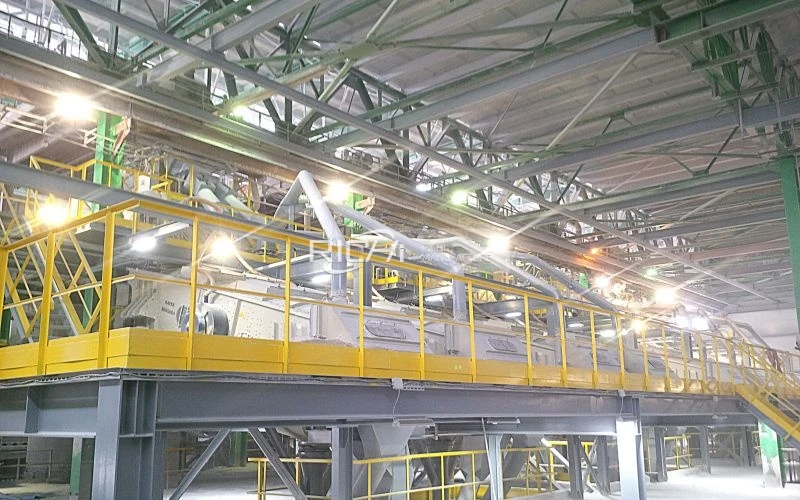
● Design
fertilizer Plant Design
Based on your unique situation and industrial process, we will tailor complete pellet plant you need, and inform you of every additional detail that could facilitate operation, minimize total cost.

● Manufacturing
Equipment Manufacturing
The critical components of the of the complete pellet production line equipment are built in our own workshops in Asia. Additional equipment is manufactured by our worldwide network of reliable partners.

● Testing
Quality Inspection & Testing
Before leaving the factory, all equipment will be inspected by the quality inspection department. We can also provide customers with testing services from a single machine to a complete pellet plant system, and provide you with real actual data for “worry-free use.”

● Delivery
Equipment Delivery
In equipment boxing and packaging, we adopt professional packaging and modular solutions to ensure the safe and non-destructive delivery of pellet plant equipment.
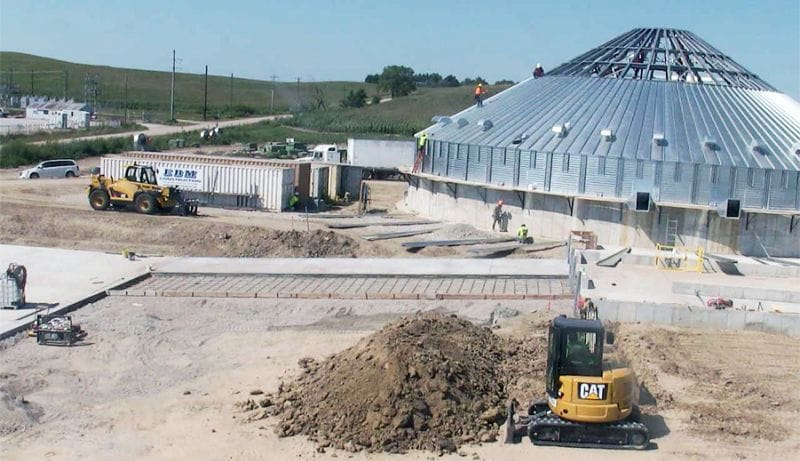
● Installation
Installation & Commissioning
Whether you choose your own subcontractor for the erection phase or you want to install everything together with us, a Richi supervisor will be around to make sure everything is mounted in a safe and thorough way.

● Training
Staff Training
We provide comprehensive training for the technicians of each project. We can also continue to provide support for the technicians during latter project operation.
● After-sales
Project Follow-Up
When everything is up and running our Richiers will help you further whenever needed. We are ready to answer your call 24/7.We’ll also visit you regularly to learn about your needs.
Who we are
RICHI Machinery is one of the world’s leading suppliers of technology and services for the animal feed, aqua feed and pet food industries, also the largest pellet production line manufacturer in China.
Since 1995, RICHI’s vision to build a first-class enterprise, to foster first-class employees, and to make first-class contributions to society has never wavered.
In the past three decades, we have expanded our business to a wide range of areas, including animal feed mill equipment, aqua feed equipment, pet feed equipment, biomass pellet equipment, fertilizer equipment, cat litter equipment, municipal solid waste pellets equipment, etc.

1995
RICHI Established

2000+
Serving More Than 2000 Customers

120+
RICHI Employees

140+
Exported To 140 Countries