

 0086-138 3838 9622
Slaughterhouse Waste Pellet Machine
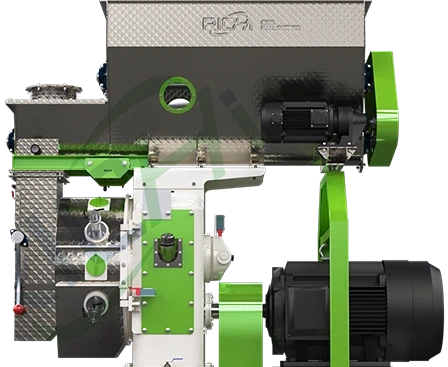
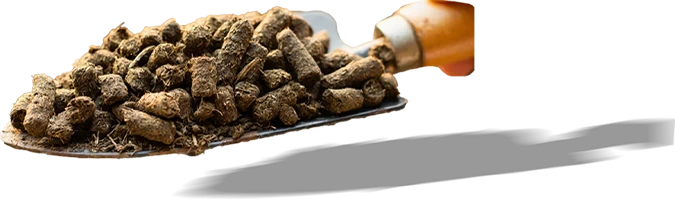
Slaughterhouse waste pellet machine converts properly treated animal by-products, meat and bone meal, blood meal, feather meal and fertilizer blends into uniform 4–12 mm pellets for commercial handling, storage and organic fertilizer production.
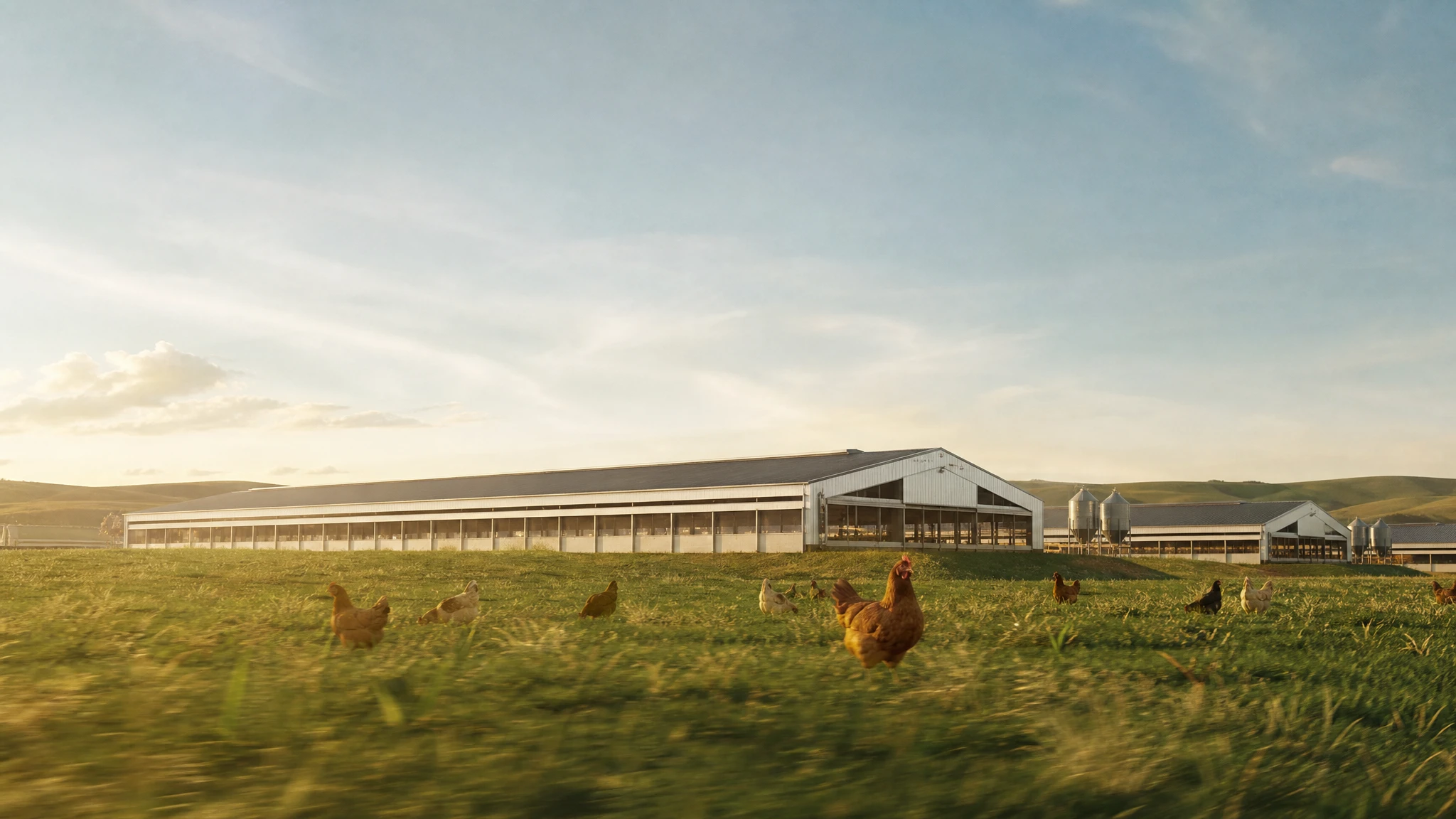
From Animal By-Products to Fertilizer
RICHI’s slaughterhouse waste pellet machine is built for commercial animal by-product and fertilizer operations where the feedstock can change from one batch or formula to another. Depending on the project, incoming materials may include pretreated slaughterhouse residues, meat and bone meal, blood meal, bone meal, feather meal, poultry by-product meal, or blends with other organic fertilizer ingredients.
Fresh, wet slaughterhouse residues are not simply fed into the pelletizer; materials that require rendering, approved thermal treatment, dewatering or fat separation, drying and size reduction must first reach a suitable condition for downstream fertilizer production. Once properly prepared, pelletizing turns loose or dusty fertilizer materials into more uniform 4–12 mm products that are easier to handle, screen, pack, store and distribute.
Our experience covers fertilizer granulation projects for customers in multiple markets worldwide, and our scope is not limited to the pellet mill: we can supply a complete slaughterhouse waste fertilizer production line, a line capable of switching between pellet and powder fertilizer products, or individual systems for crushing, mixing, drying and other required processing stages. This gives customers the flexibility to build a new facility around several animal-derived raw materials or integrate only the missing equipment into an existing plant.
Who Needs Slaughterhouse Waste Pellet Machine?
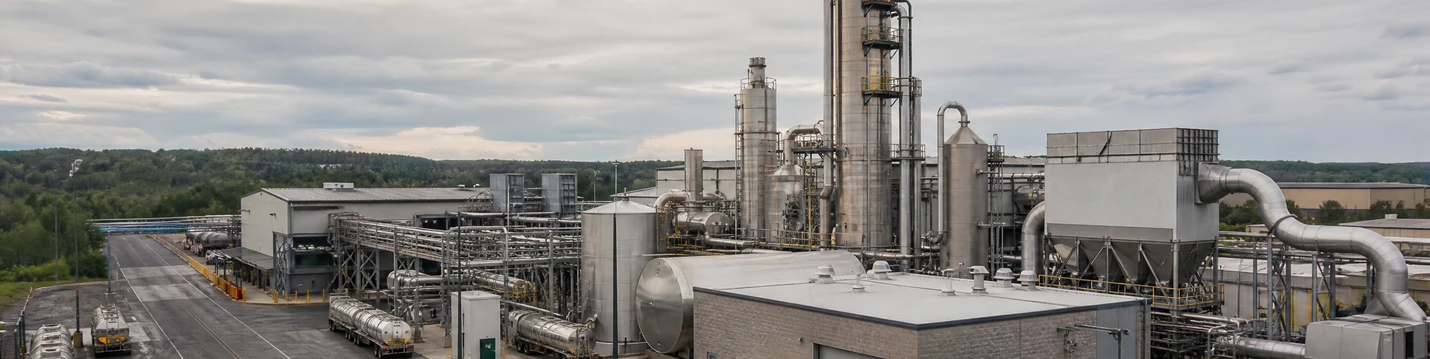
Rendering & Animal By-Product Plants
Rendering plants already handle some of the most suitable feedstocks for downstream pelletizing. Meat and bone meal, bone meal, blood meal, feather meal and poultry by-product meal are produced after the necessary thermal treatment, separation, drying and size reduction. When these powders are destined for fertilizer production, pelletizing provides a controlled way to convert formulated material into uniform, easier-to-handle granules.
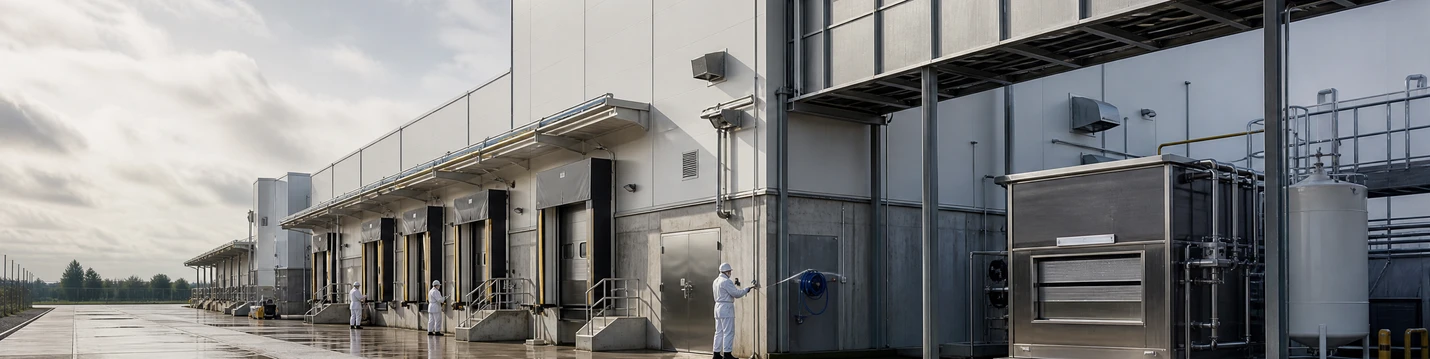
Slaughterhouses & Integrated Abattoirs
Large beef, pork, poultry, sheep and goat slaughterhouses continuously generate blood, bones, offal, fat, meat trimmings and other animal by-products, but these fresh materials are not direct pellet-mill feed. The strongest candidates are facilities that already operate rendering or by-product treatment systems, or plan to add them as part of an in-house recovery project.
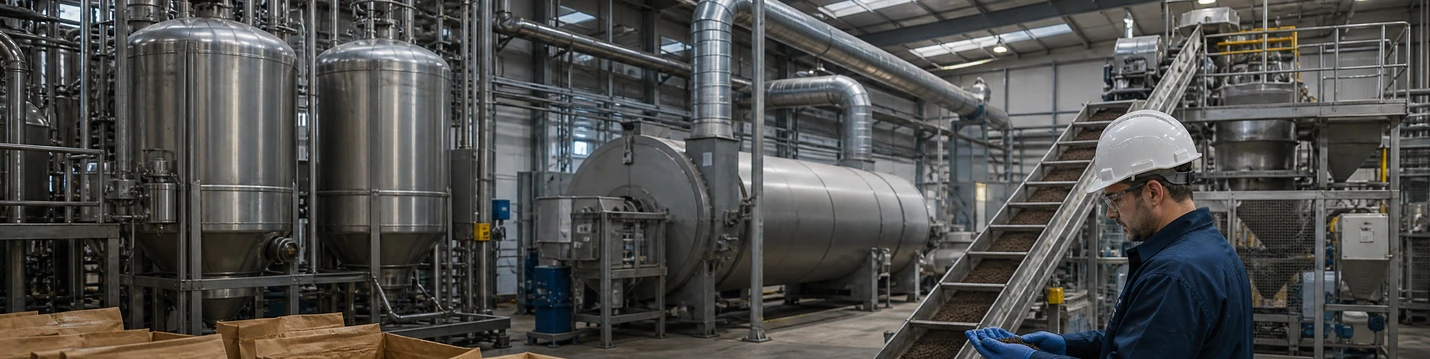
Animal Protein & Fertilizer Producers
These manufacturers often purchase processed blood meal, bone meal, meat meal, meat and bone meal, feather meal or poultry by-product meal rather than handling fresh slaughter waste themselves. Their challenge is formulation: moisture, fat level, particle size and the proportion of animal- and plant-derived ingredients can change between fertilizer products.
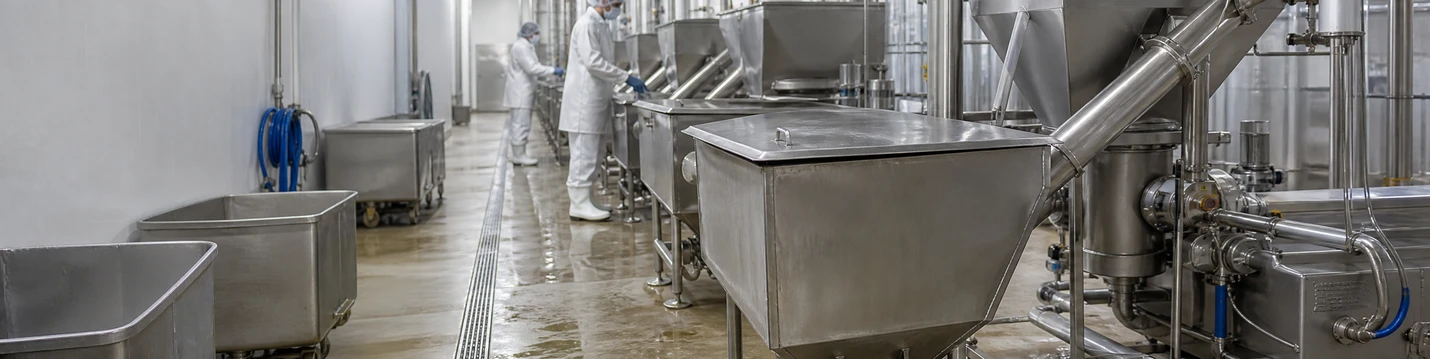
Meat Processing Plants
Meat cutting, sausage, frozen-meat and prepared-food plants can generate bone residues, meat and fat trimmings, offal and other processing by-products. Pelletizing is relevant when the plant has sufficient material volume and either operates its own approved by-product treatment system or sends material through an appropriate upstream process before
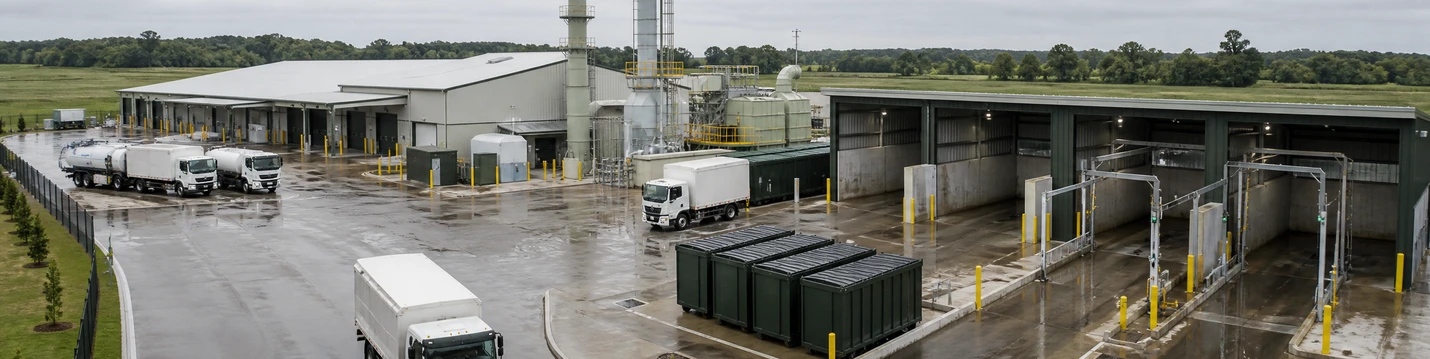
Animal By-Product Recovery Companies
Companies collecting animal residues from multiple slaughterhouses and meat processors can accumulate much larger and more varied feedstock streams than a single small waste generator. Material origin, moisture, fat content and treatment requirements may vary substantially, making sorting and controlled upstream processing essential.
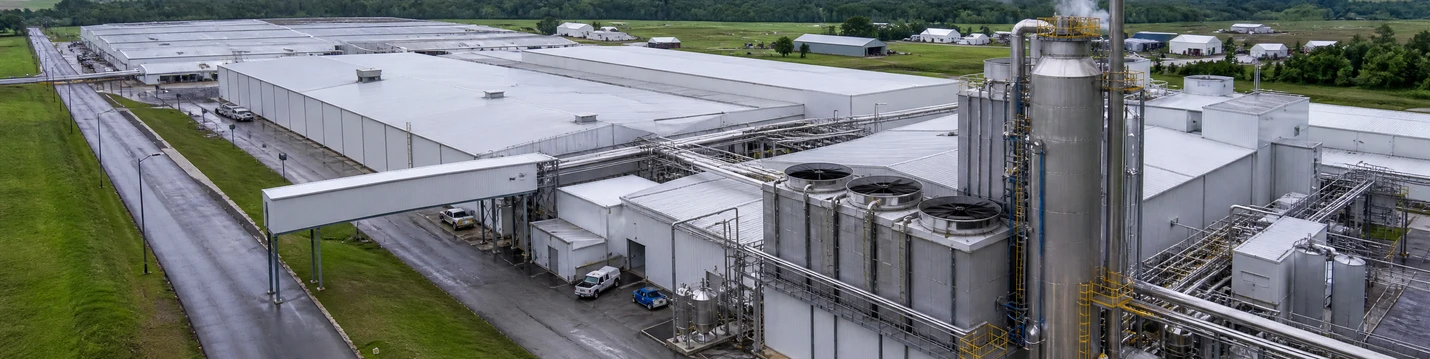
Poultry Processing & Rendering Plants
Commercial poultry processors generate characteristic streams including feathers, blood, offal, bones, fat and meat residues, particularly at integrated slaughtering and rendering facilities. After suitable treatment, these materials can become feather meal, blood meal, bone meal or poultry by-product meal for permitted downstream uses.
Organic fertilizer plants purchasing processed animal-derived ingredients, integrated livestock businesses with their own slaughtering and by-product treatment operations, centralized organic-waste processors, agricultural recycling companies, and investors building animal by-product fertilizer facilities may also require a slaughterhouse waste pellet machine.
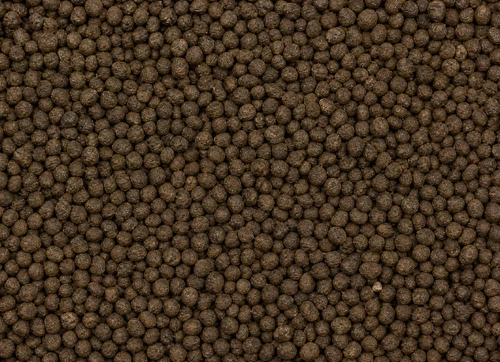
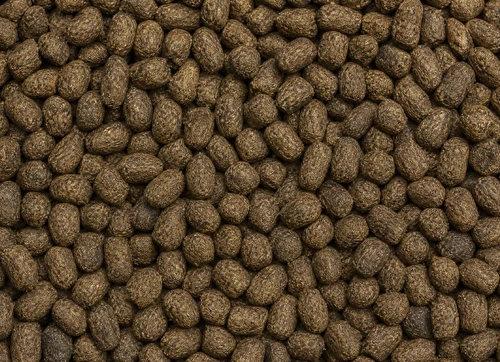
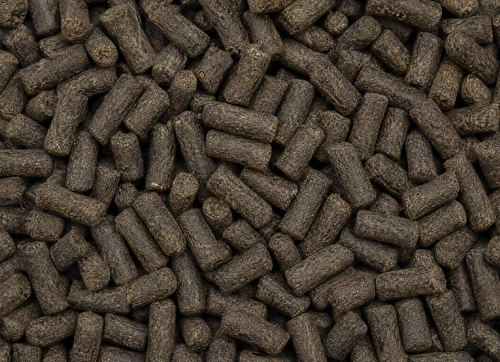
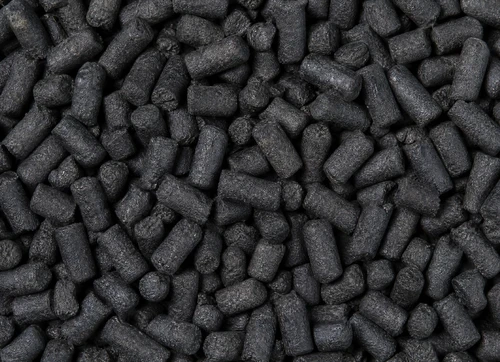
What Materials Can Slaughterhouse Waste Pellet Machine Process?
A slaughterhouse waste pellet machine is designed for pelletizing properly treated animal by-products and fertilizer formulations made from a wide range of organic materials. Feedstocks can differ in moisture, fat content, impurity level, particle size and blending ratio, so the material entering the pelletizer must first be brought into a suitable condition through the required upstream treatment.
Beyond slaughterhouse-derived materials, customers can also combine compatible farm and organic resources such as livestock bedding, manure, crop residues, digestate, food-processing residues, sludge and other agricultural or forestry by-products when these materials are suitable and legally permitted for fertilizer production. The value of the system lies in its flexibility: one pelletizing plant can be configured around different formulas rather than being limited to a single waste stream.
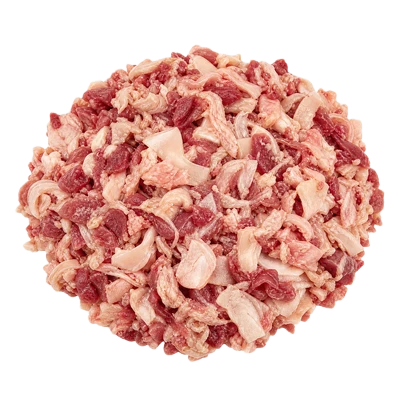
Meat Processing Residues
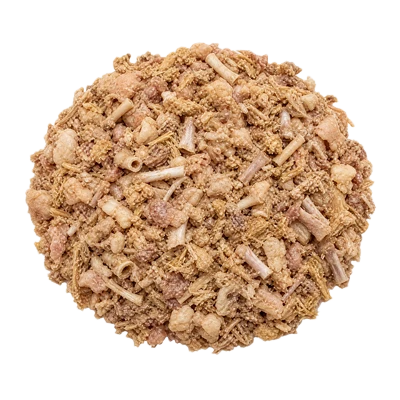
Poultry Processing Residues
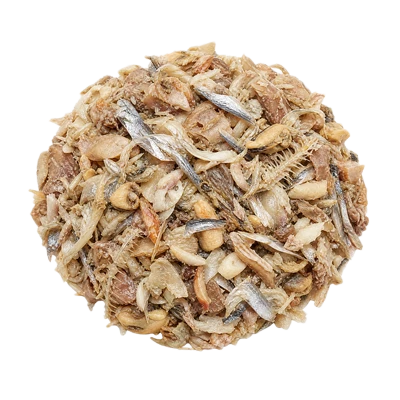
Fish & Seafood Residues
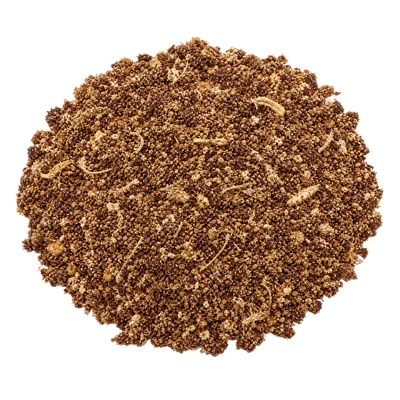
Animal By-Product Meals
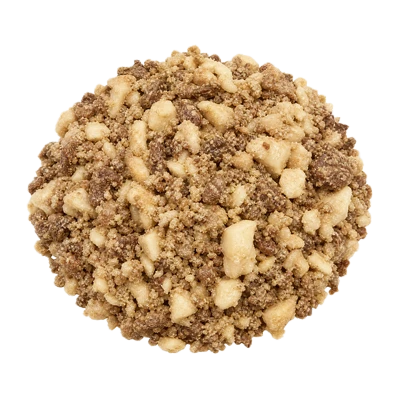
Fat & Protein Residues
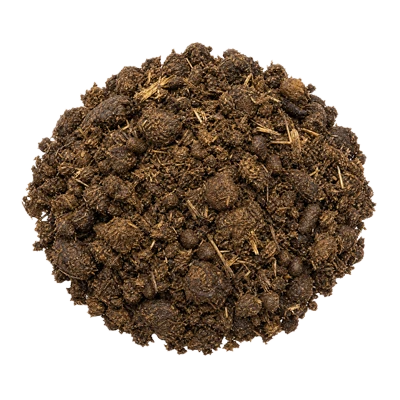
Animal Manure
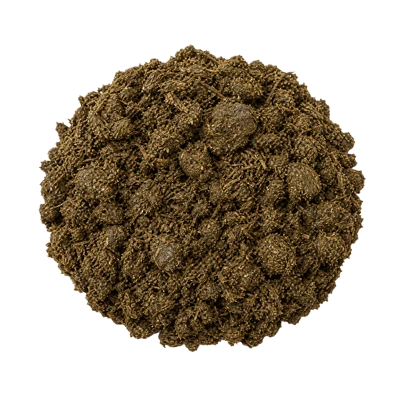
Digestate & Biogas Solids
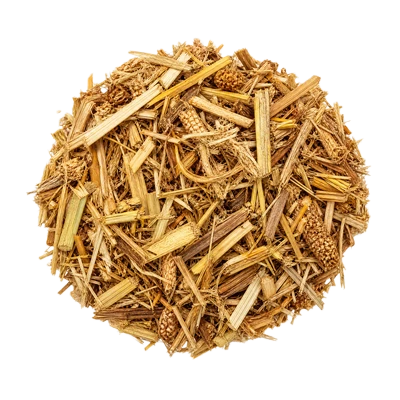
Crop & Plant Fibers
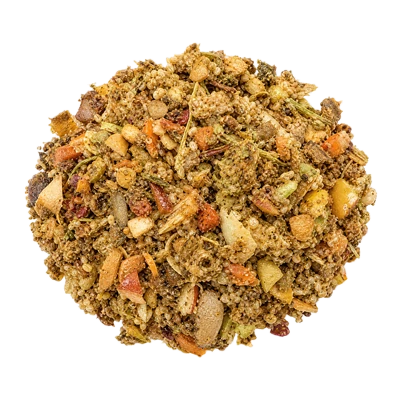
Organic Processing Waste
Slaughterhouse Waste
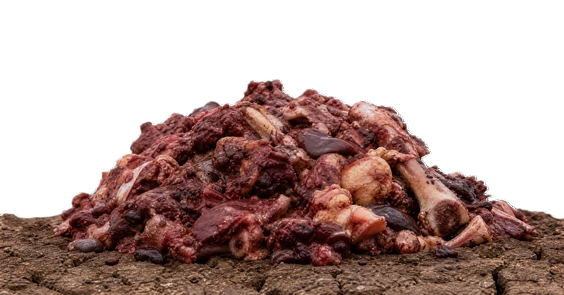
Slaughterhouse waste can include blood, bones, meat trimmings, offal, fat, feathers and other inedible animal by-products, appearing as fresh wet residues, separated solids, rendered meals, dried powders or blended fertilizer feedstock.
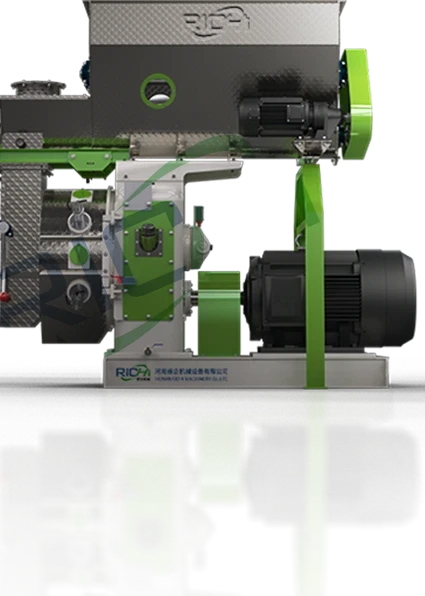
Inside the Slaughterhouse Waste Pellet Machine
Built around a heavy-duty ring-die granulation system, the slaughterhouse waste pellet machine is engineered for processed animal by-product meals and formulated organic fertilizer materials whose bulk density, fat content and flow behavior can vary considerably.
A precision gear drive, controlled forced feeding, reinforced working parts and service-oriented die assembly work together to maintain consistent material intake and pellet formation under continuous commercial operation.
Components exposed to the feed stream are selected with particular attention to wear, sealing, corrosion resistance and cleaning access, while overload protection safeguards the drive when operating conditions change unexpectedly.
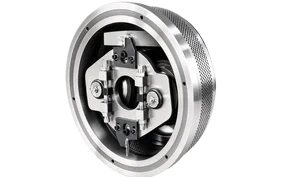
Reinforced ring dies are selected and heat-treated for abrasive animal-derived meals, supporting stable 4–12 mm pellet formation and longer service life.
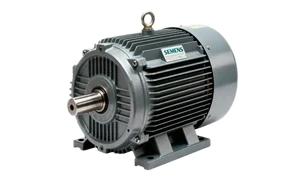
The Siemens motor supplies dependable power to the precision gear drive, supporting continuous granulation when bulk density and formulation change between batches.
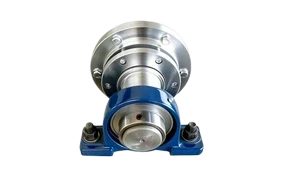
High-precision gears transfer power directly and efficiently to the working system, supporting stable operation under continuous pelletizing loads.
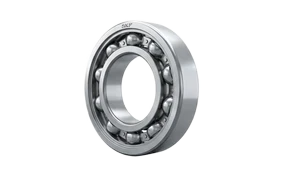
SKF bearings support the main transmission under sustained radial loads, helping maintain drive alignment, operating stability and reliable long-shift production.
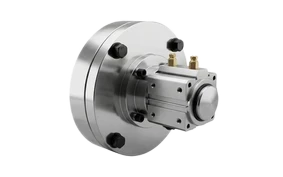
Mechanical overload protection helps isolate abnormal shock loads before they damage major transmission parts, reducing the risk of costly unplanned downtime.
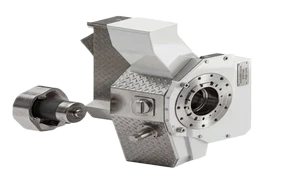
The powered feeder meters low-flow or bridging-prone animal meal blends into the pelleting chamber more consistently than gravity feeding alone.
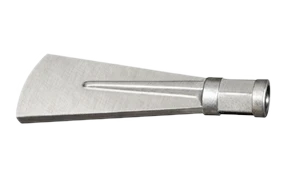
The cutter controls discharged pellet length at the die face, allowing fertilizer producers to match finished granules to handling and packaging requirements.
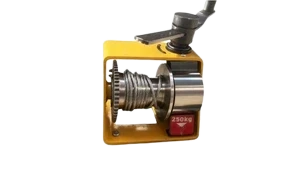
The clamp-mounted ring die and dedicated lifting mechanism simplify removal of this heavy wear component during die changes, inspection and scheduled maintenance.
Why Choose RICHI for Slaughterhouse Waste Pelletizing?
A slaughterhouse waste pellet machine has to do more than form pellets. It must work with prepared animal-derived materials whose density, fat level, fiber content and formulation can change significantly from one product to another. RICHI approaches each project from the actual feedstock and finished fertilizer specification, matching the pelletizer and surrounding process to the customer’s material supply, required output and existing plant. The result is equipment built for practical production—not a standard pellet mill sold into every waste application.

Customized Around Your Actual Material
RICHI does not select a pelletizer from capacity alone. We evaluate feedstock condition, moisture, residual fat, particle size, bulk density, formulation and target pellets, then configure the machine and necessary upstream or downstream sections accordingly.

Adaptable to Changing Animal By-Product Formulas
Process blood meal, bone meal, meat and bone meal, feather meal, poultry by-product meal and qualified blended fertilizers on one configurable platform. Die selection and operating setup can be matched to different formulations and pellet requirements.

More Value from Processed By-Products
Pelletizing can turn suitable loose animal-derived fertilizer powders into uniform, easier-to-handle products. For rendering plants and fertilizer producers, this creates another commercial product form while improving packing, storage, transport and distribution.

One Investment, Broader Fertilizer Production
A properly configured system is not restricted to a single slaughterhouse-derived formula. Customers can develop different animal-origin or compound organic fertilizer pellets using compatible manure, digestate, plant fibers and other approved organic ingredients as market demand changes.

Build Only the Processing Stages You Need
Already have rendering, drying or grinding equipment? Keep it. RICHI can integrate the pelletizing section with an existing plant or engineer a complete production line, avoiding unnecessary replacement of equipment that still meets the required process conditions.

How Does a Slaughterhouse Waste Pellet Machine Work?
Properly prepared animal by-product material is continuously metered into the pelleting chamber by the forced feeding system. Inside the slaughterhouse waste pellet machine, rotating rollers press the conditioned material against the inner surface of the ring die, forcing it through the selected die holes under mechanical pressure. The compacted material emerges as continuous strands, which are cut to the required length by an adjustable cutter. The hot pellets then leave the pelletizer for cooling and screening before qualified product is collected for packaging.
Technical Specifications
| Model | Capacity (t/h) | Main Motor Power (kW) | Anti-Bridging Feeder Power (kW) | Forced Feeder Power (kW) | Ring Die Inner Diameter (mm) | Finished Pellet Diameter (mm) |
|---|---|---|---|---|---|---|
| FZLH250 | 1–1.5 | 22 | 2.2 | 0.75 | 250 | 4–12 |
| FZLH320 | 2–3 | 22 | 2.2 | 0.75 | 320 | 4–12 |
| FZLH350 | 3–5 | 37 | 2.2 | 0.75 | 350 | 4–12 |
| FZLH420 | 6–8 | 90 | 3 | 1.5 | 420 | 4–12 |
| FZLH520 | 9–12 | 132 | 3 | 1.5 | 520 | 4–12 |
| FZLH678 | 18–22 | 200 | 3 | 1.5 | 673 | 4–12 |
| FZLH768 | 22–26 | 250 | 4 | 1.5 | 762 | 4–12 |
RICHI offers seven slaughterhouse waste pellet machine models for commercial pelletizing duties from 1 to 26 t/h, allowing the equipment to be matched to processed animal by-product availability rather than simply choosing a larger motor. The FZLH250 and FZLH320 suit lower-throughput fertilizer operations, while the FZLH420–FZLH768 provide the capacity required by larger rendering plants, slaughterhouses and animal-origin fertilizer producers.
Model selection should consider not only hourly output, but also the moisture, residual fat, bulk density, particle size and formulation of the prepared feedstock. Ring-die specifications, feeding arrangements and related process equipment can then be configured around the customer’s actual raw material and required 4–12 mm fertilizer pellets.
Slaughterhouse Waste Pelletizing Requirements
Successful pelletizing starts with the condition of the material entering the slaughterhouse waste pellet machine, not with the rated capacity of the pelletizer alone. Rendered animal meals, blood meal, bone meal, feather meal and mixed organic-fertilizer formulas can differ sharply in moisture, residual fat, particle size, fiber content and binding behavior.
For most projects, the material must therefore be dried, ground, screened and blended to a stable feed condition before the die specification and operating settings are finalized. The ranges below are practical engineering starting points rather than fixed limits: final moisture, die compression ratio and conditioning requirements should be confirmed from the customer’s actual formulation and, where necessary, pelletizing trials.
Raw Material Particle Size
1–5 mm
Raw Material Moisture Content
12–25%
Pelletizing Temperature
50–80℃
Compression Ratio
1:4–1:8
Pellet Length
5–30 mm
Pellet Formation Rate
85–95%
Finished Pellet Moisture
≤12–15%
Cooling Temperature
≤40℃
Screening Efficiency
≥95%
Fines Content
≤5–10%
Broken Pellet Rate
≤3–5%
Operating Mode
Continuous Operation
A rendering plant pelletizing meat and bone meal, a poultry processor working with feather-derived fertilizer, and an organic fertilizer producer blending animal meals with manure or crop residues can require different dies and preparation systems even at the same hourly capacity. Send us your raw-material composition, moisture, processed volume, desired pellet diameter and target output, and we can determine a more appropriate pelletizing window and equipment configuration.
Slaughterhouse Waste Pellet Machine Projects
A slaughterhouse waste pellet machine project should be designed from the material backward. A rendering company handling dry meat and bone meal may need little more than dosing, mixing and granulation, while a slaughterhouse receiving fresh blood and rumen contents needs a much more substantial preparation section. RICHI can configure the plant around the customer’s actual animal by-products, locally available organic materials, existing equipment and required fertilizer formulation instead of forcing every project into the same process.
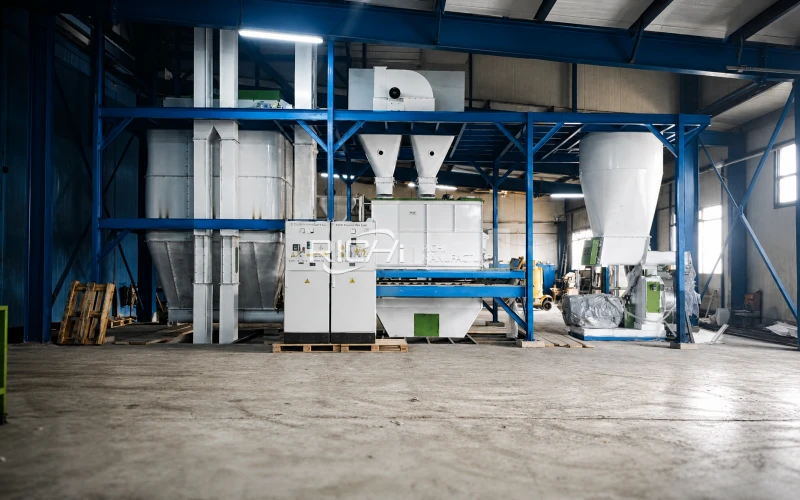

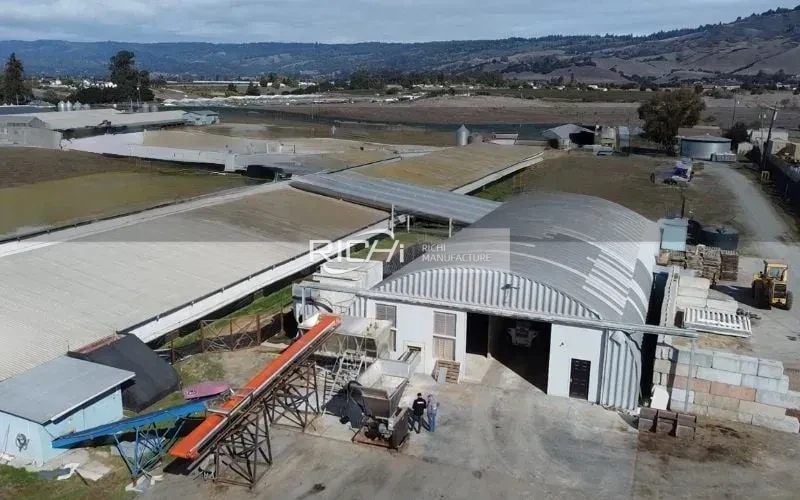
4 T/H
Rendering Meal Fertilizer Project in the United States
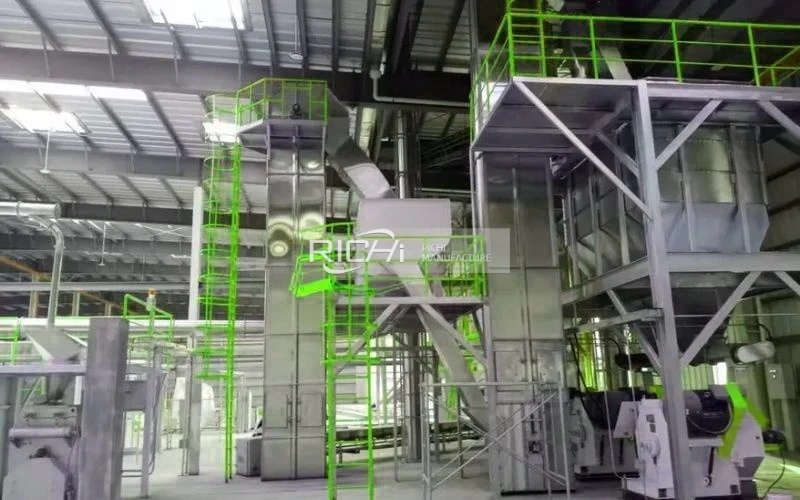
The customer already produced meat and bone meal at about 9–11% moisture. Its fertilizer formula used roughly 65% rendered meal, 25% composted poultry litter at 25–30% moisture and 10% dry sawdust. Because the rendering section was already operating, RICHI focused on ingredient dosing, secondary grinding, intensive mixing, pelletizing, cooling, screening and bagging rather than rebuilding the front end.
Equipment Used :FZLH350
Pellet Size :4 mm

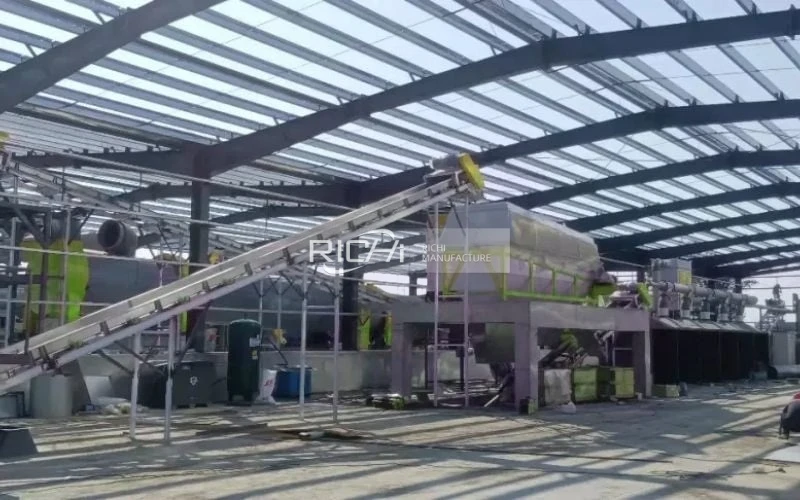
8 T/H
Cattle Slaughter Waste Fertilizer Project in Brazil
Blood, rumen contents and selected cattle-processing solids entered the recovery system at approximately 70–80% moisture, while fresh bagasse used elsewhere in the formulation was about 45–55%. After separate treatment, dewatering and drying, the formula used about 40% animal-derived material, 35% composted cattle manure and 25% prepared bagasse. RICHI configured the drying, crushing, batching, mixing and granulation sections around the wet front-end material.
Equipment Used :FZLH420
Pellet Size : 4-5 mm

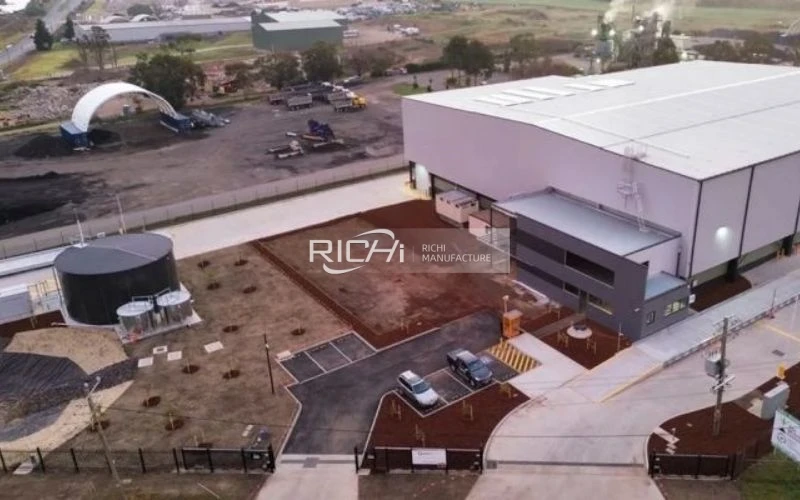
3 T/H
Abattoir Bedding Fertilizer Project in Australia
This project combined approximately 35% processed cattle and sheep by-product meal with 45% manure-rich bedding and 20% additional milled cereal straw. The rendered fraction entered at about 9–12% moisture, while collected bedding was typically around 30–40% before stabilization. RICHI used compost preparation, shredding, moisture reduction, fine grinding and blending ahead of the pelletizing section to accommodate the fibrous bedding fraction.
Equipment Used :FZLH320
Pellet Size : 5 mm

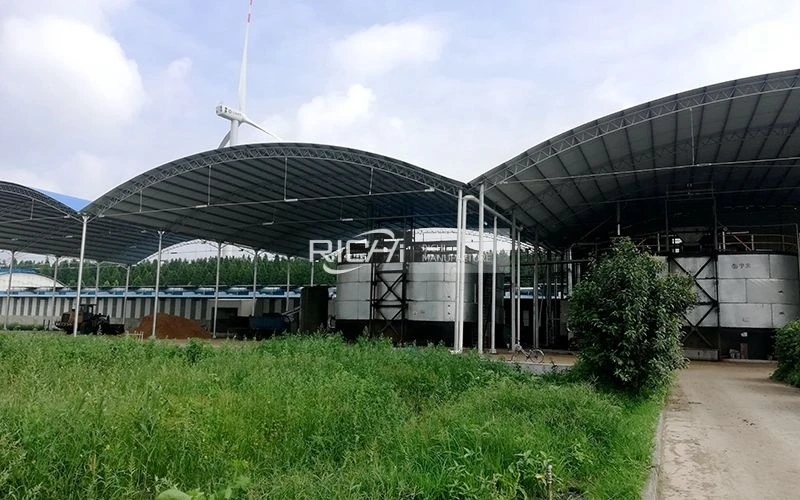
6 T/H
Meat & Bone Fertilizer Project in Argentina
The customer’s existing rendering plant supplied meat and bone meal at roughly 8–10% moisture. The selected fertilizer formulation contained about 55% rendered meal, 30% matured cattle-manure compost at 28–32% moisture and 15% dry wheat straw. RICHI retained the existing rendering system and added manure preparation, straw milling, accurate batching, mixing, pelletizing, cooling and screening for fertilizer production.
Equipment Used :FZLH420
Pellet Size : 4 mm

2 T/H
Blood & Rumen Recycling Project in Mexico
The main fresh streams were cattle blood and rumen contents, generally above 75% moisture when collected. Following the required treatment and moisture reduction, the fertilizer recipe used approximately 40% processed blood-and-rumen solids, 35% composted livestock manure and 25% milled maize residues. The project therefore required separate wet-material handling, dewatering, drying, crop-residue crushing and controlled formulation before the pellet mill.
Equipment Used :FZLH320
Pellet Size : 4 mm
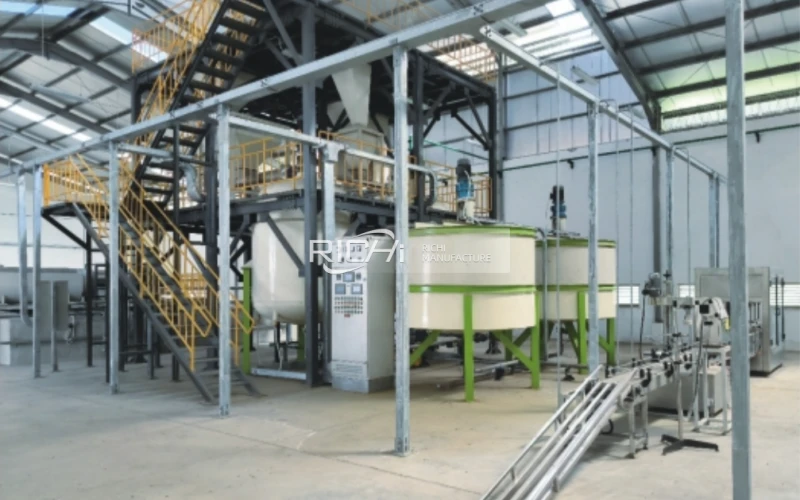

1.5 T/H
Blood & Rumen Fertilizer Project in India
Fresh blood entered the project at roughly 80–85% moisture and rumen contents at approximately 70–80%, creating a very different process from dry animal-meal projects. After appropriate treatment, dewatering and stabilization, about 35% prepared animal-derived solids were blended with 40% manure compost and 25% milled rice straw. RICHI configured a compact preparation, drying, crushing, mixing and pelletizing system for the relatively limited processed-material volume.
Equipment Used :FZLH250
Pellet Size : 4 mm
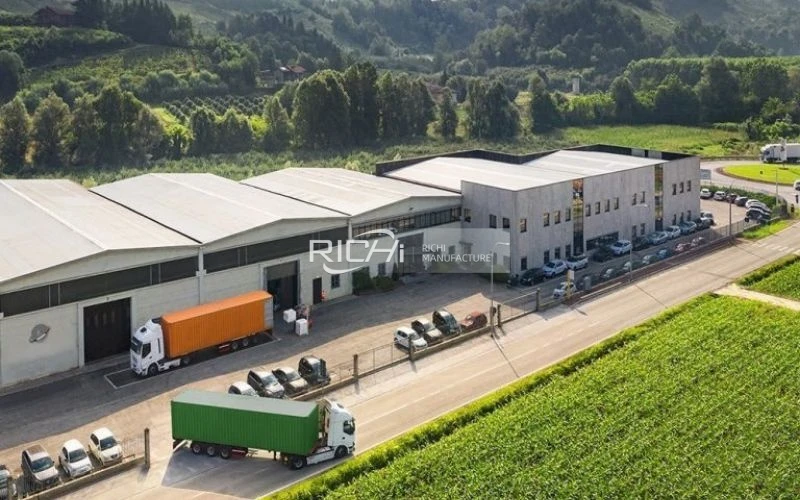

12T/H
Processed Animal Fertilizer Project in Germany
Rather than receiving fresh slaughter residues, this plant used compliant processed animal-derived material at approximately 8–10% moisture. A representative formula contained about 60% approved animal-derived meal, 25% prepared plant-based organic material and 15% permitted mineral or organic amendments. RICHI concentrated on enclosed storage, accurate dosing, homogeneous mixing, ring-die pelletizing, cooling and screening while integrating with the customer’s established compliant raw-material supply system.
Equipment Used :FZLH520
Pellet Size : 4-6 mm
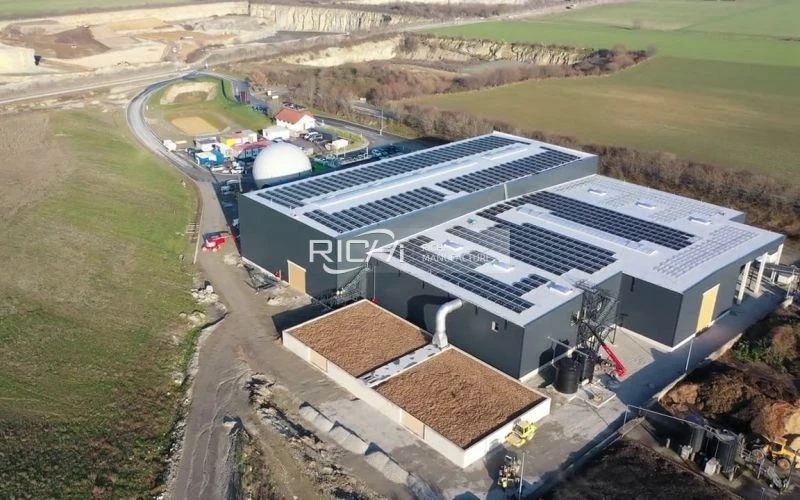

5 T/H
Animal Meal Fertilizer Project in France
The plant worked with processed feather meal and blood-derived fertilizer ingredients received at around 8–12% moisture rather than untreated slaughter waste. The selected formulation contained approximately 45% animal-derived meals, 35% matured plant compost and 20% dry plant-based meal or press-cake material. Since all main ingredients arrived pretreated, RICHI emphasized fine dosing, formula mixing, controlled pellet formation, cooling and fines recovery rather than wet-waste treatment.
Equipment Used :FZLH350
Pellet Size : 4 mm
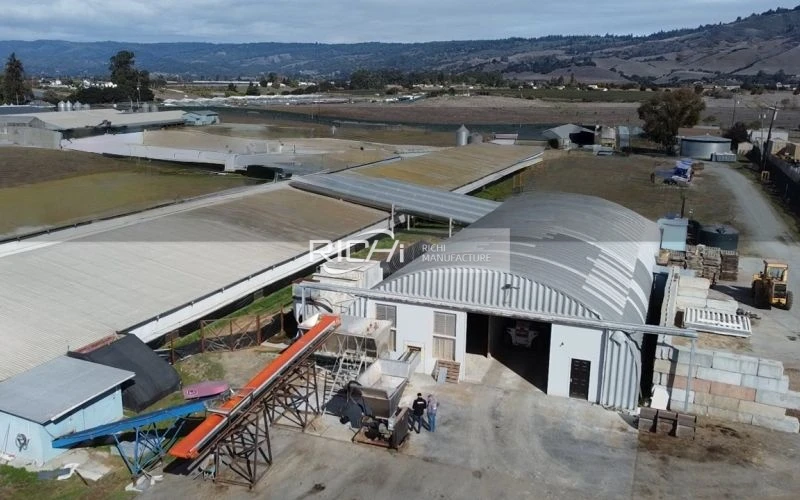

7 T/H
Poultry By-Product Fertilizer Project in Turkey
The company already converted feathers, blood and selected poultry tissues into feather meal and poultry by-product meal at approximately 8–11% moisture. Its fertilizer formula used around 50% processed poultry meals, 35% composted poultry manure at 25–30% moisture and 15% ground wheat straw. RICHI integrated manure preparation, straw milling, batching and pellet production downstream of the existing rendering operation.
Equipment Used :FZLH420
Pellet Size : 5 mm

3 T/H
Poultry Waste & Rice Husk Project in Indonesia
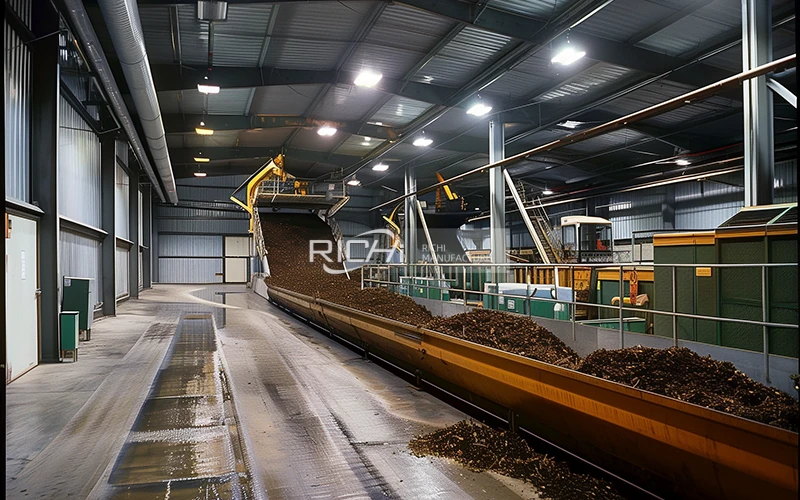
Processed poultry by-product meal at about 10–12% moisture accounted for 35% of the formula, combined with 35% composted poultry manure, 20% rice husk and 10% sawdust. The manure fraction entered preparation at approximately 28–35% moisture, while the fibrous ingredients were relatively dry. RICHI configured grinding and mixing to manage the low-density rice-husk and sawdust fraction before stable feeding and granulation.
Equipment Used :FZLH320
Pellet Size : 4 mm

4T/H
Animal By-Product & Cassava Project in Thailand
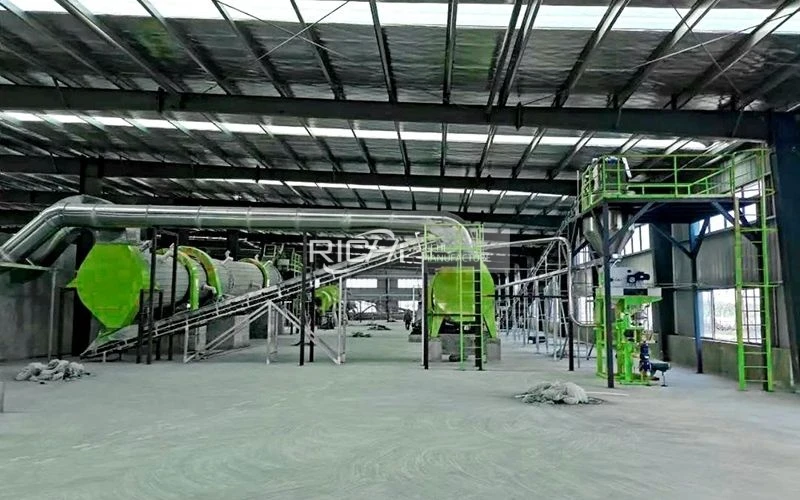
The formulation combined about 40% processed animal by-product meal, 30% cassava-processing residue, 20% poultry-manure compost and 10% rice husk. Fresh cassava residue could enter the preparation section at roughly 60–70% moisture, far higher than the 10–12% processed animal meal. RICHI therefore emphasized cassava dewatering and drying, separate dry-material preparation, formulation control and final pelletizing rather than treating all ingredients through one identical front-end process.
Equipment Used :FZLH350
Pellet Size : 5 mm

10 T/H
Multi-Source Fertilizer Project in Vietnam
This plant worked with several processed animal-derived streams rather than relying on a single slaughterhouse. The formula used approximately 40% animal meal at 9–12% moisture, 25% cassava-processing residue initially around 55–65% moisture, 20% livestock-manure compost and 15% rice husk. RICHI separated wet-residue drying from dry-meal handling before bringing the ingredients together for batching, mixing, pelletizing, cooling and screening.
Equipment Used :FZLH520
Pellet Size : 4 mm
The project conditions may differ, but the questions customers raise are often very practical: Will the machine handle our actual formulation? Can it connect with equipment already on site? Will the pellets remain stable after cooling and handling? The feedback below reflects how different users evaluate the slaughterhouse waste pellet machine, the process design and the support they received throughout their projects.

Canada Rendering Company
5 T/H Animal By-Product Fertilizer Project
“We already had a licensed rendering section, so we did not want to replace equipment that was working well. RICHI designed the new mixing and pelletizing section around our processed meat-and-bone material and made the integration much simpler than we expected.”
New Zealand Meat Processor
3 T/H Abattoir By-Product Pellet Project
“Our raw material changes between beef and sheep processing seasons, and that was our biggest concern from the beginning. The RICHI team tested the formula logic carefully and helped us adjust the feeding and die setup so both product mixes could run on the same line.”
South Africa Abattoir Recycler
2 T/H Blood & Manure Fertilizer Project
“We were dealing with wet blood-derived solids together with composted manure, so moisture control was more important than simply buying a pellet mill. Their engineers explained where dewatering and drying were actually necessary, and the finished line has been much easier for our operators to control.”
Spain Organic Fertilizer Producer
6 T/H Animal Protein Fertilizer Project
“We use processed animal-derived ingredients together with plant-based organic materials, and every formula behaves a little differently. RICHI gave us a flexible dosing and pelletizing arrangement, which has made product changes far easier without rebuilding the whole production section.”
Netherlands Circular Fertilizer Company
4 T/H Mixed Organic Pellet Project
“What impressed us was that they did not try to sell every machine in the catalogue. We already had drying and screening equipment, so they concentrated on the missing crushing, mixing and pelletizing stages and made the new section fit our existing material flow.”
Malaysia Poultry Processor
3 T/H Poultry By-Product Fertilizer Project
“Our formula contains poultry by-product meal, composted chicken manure and rice-processing residues, so feeding consistency was a real issue during planning. RICHI paid attention to the low-density fibrous materials and the line now feeds much more steadily than our previous trial setup.”
Chile Meat By-Product Processor
4 T/H Meat & Bone Fertilizer Pellet Project
“We needed compact pellets that could survive bagging and transport without creating too many fines, not just pellets that looked acceptable at the machine outlet. The cooling and screening arrangement they recommended made a noticeable difference to the product we finally send to customers.”
Kenya Integrated Livestock Processor
1.5 T/H Slaughterhouse Waste Fertilizer Project
“This was our first project combining treated slaughter by-products with manure and crop residues, so operator training mattered as much as the equipment itself. The commissioning team showed our staff how moisture, grinding and feed rate affected pellet quality, which gave us confidence to run the line ourselves..”
Slaughterhouse Waste Pellet Machine Price
The price of a slaughterhouse waste pellet machine ranges from USD 10,000 to USD 100,000. The actual machine price depends primarily on the selected FZLH model, required throughput, ring-die specification, feeding arrangement and project-specific configuration for the prepared animal by-product formula. A 1–1.5 t/h unit for a small rendering or fertilizer operation therefore requires a very different investment from a high-output pelletizer installed in an industrial animal by-product processing plant.
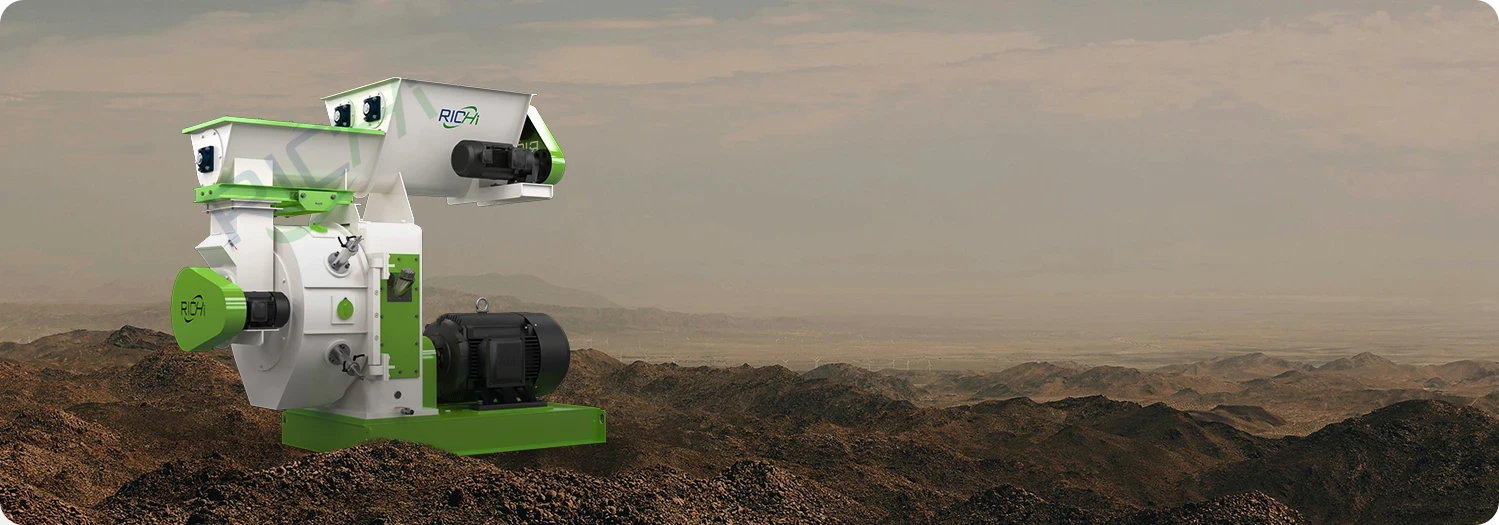
These figures refer to the pelletizing equipment rather than the total investment required for a complete slaughterhouse waste fertilizer production line. Customers starting with dried meat and bone meal, blood meal or other processed powders may need relatively little auxiliary equipment, while projects receiving wet slaughter residues can require treatment, dewatering, drying, crushing and additional material preparation before pelletizing. Send us your raw material condition and required output for a configuration-specific quotation.
Range for
Slaughterhouse Waste Pellet Machine Cost:
FZLH250 (22KW)
$10,000–$13,000
FZLH320 (22KW)
$15,000–$18,000
FZLH350 (37KW)
$18,000–$25,000
FZLH420 (90KW)
$26,000–$32,000
FZLH520 (132KW)
$43,000–$50,000
FZLH678 (200KW)
$64,000–$70,000
FZLH768 (315KW)
$75,000–$85,000
What Scale of Slaughterhouse Waste Pellet Processing Do You Need?
Choose your required hourly output as a starting point. RICHI will then match the pelletizer to the amount of prepared material actually available after treatment and drying, while considering formula composition, operating hours and the equipment already installed at your facility.
Customized Slaughterhouse Waste Fertilizer Processing design
A complete slaughterhouse waste fertilizer process can involve sorting and impurity removal, approved treatment or rendering where required, crushing, composting, drying, batching, mixing, pelletizing, cooling, coating, screening and packaging. There is no single sequence that suits every project. Fresh blood, offal and rumen residues require a very different front end from dried meat and bone meal, feather meal or other processed animal-derived powders, so the condition in which the material arrives at the plant determines how the production line should begin.
RICHI designs each system around the customer’s actual feedstock rather than around the slaughterhouse waste pellet machine alone. Material form determines whether wet-material crushing, dry grinding or fiber shredding is required; biological stability and fertilizer formulation determine whether composting is included; initial moisture determines whether dewatering and drying are necessary. We also consider ingredient ratios, pellet or powder fertilizer requirements, existing machinery, workshop dimensions, storage arrangement, dust control, automation level and investment budget before fixing the final process flow.
Complete Equipment for Slaughterhouse Waste Fertilizer Granulation
A complete slaughterhouse waste granulation plant requires far more than the slaughterhouse waste pellet machine itself. Depending on whether the project starts with rendered animal meal, wet blood-derived solids, manure-rich bedding, rumen material or a blended organic fertilizer formula, the line may require crushing, composting, dewatering, drying, batching, mixing, pelletizing, cooling, screening, coating and packaging equipment.
RICHI selects different machine types and capacities for each stage according to material condition, plant throughput, available floor space and investment level. Bale breakers, rotary screens, dewatering units, impurity-removal equipment, storage bins, elevators, conveyors and automated controls can be added where the process requires them rather than being forced into every project.
Slaughterhouse Compost Turner
Used where manure, bedding, rumen-derived organic matter or other biologically active ingredients require composting before entering the fertilizer formulation. Turner type is selected according to windrow dimensions, material volume and available fermentation area.
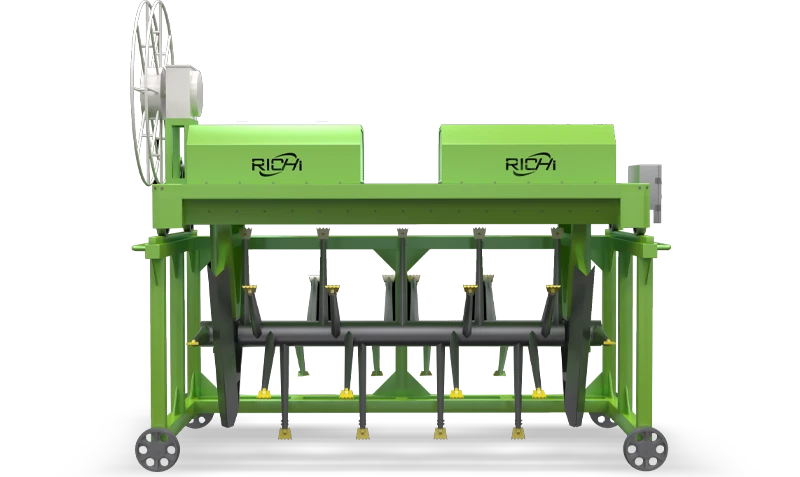
Turning Width
2–8 m
Turning Height
0.5–2.5 m
Slaughterhouse Waste Crusher
Used after composting or drying to break agglomerated manure, animal-derived fertilizer solids and other friable organic materials before mixing or pelletizing. It is more suitable for prepared fertilizer feedstock than for untreated bones or fresh slaughter residues.
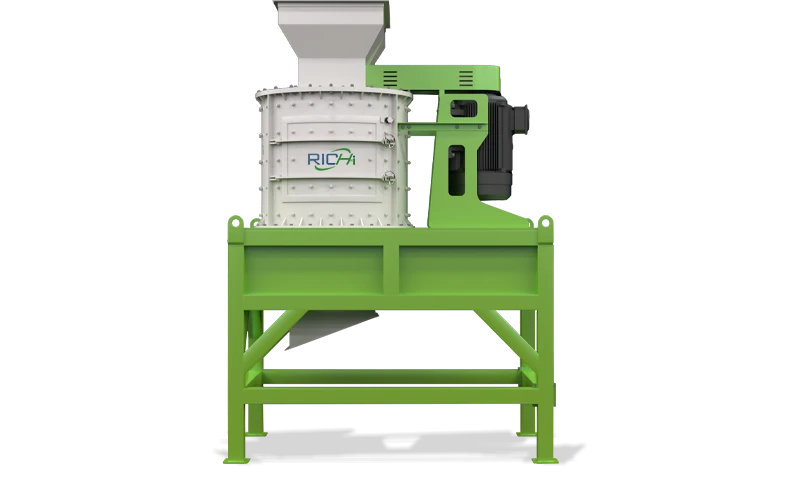
Capacity
1–30 T/H
Main Power
7.5–160 kW
Slaughterhouse Waste Mixer
Combines processed animal meals with manure compost, straw powder, sawdust, digestate solids or other fertilizer ingredients before granulation. Twin-shaft or paddle configurations are selected when formulations contain materials with very different bulk densities.
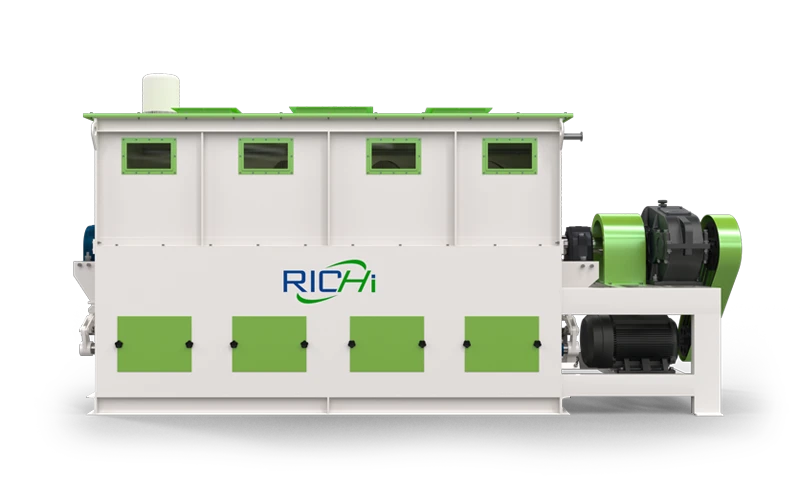
Capacity
250–2,000 kg/batch
Main Power
4-30KW
Slaughterhouse Waste Dryer
Required when dewatered slaughter-derived solids, manure compost, cassava residue or other wet components remain above the moisture range required by downstream processing. Dryer duty is calculated from evaporation load rather than pelletizer capacity alone.
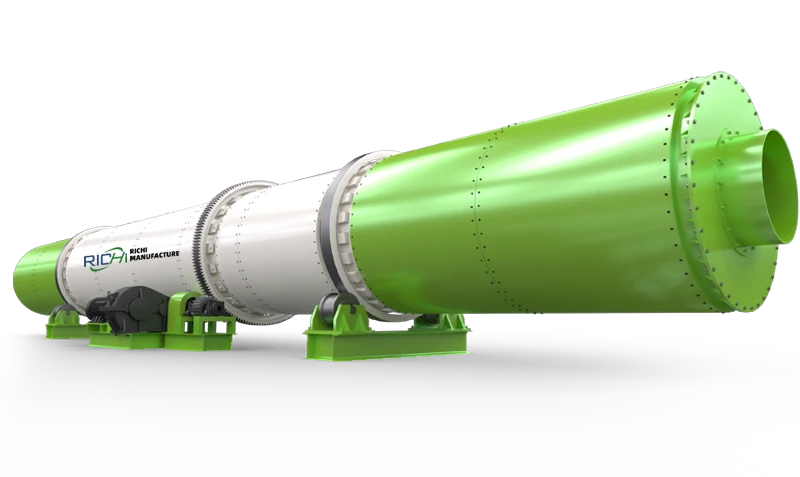
Capacity
1–30 T/H
Drying Temperature
60–250℃
Slaughterhouse Waste Screener
Separates oversized particles, qualified fertilizer pellets and fines after cooling, or classifies prepared material before formulation. Rotary and vibrating screens can be selected according to particle size, throughput and the number of required fractions.
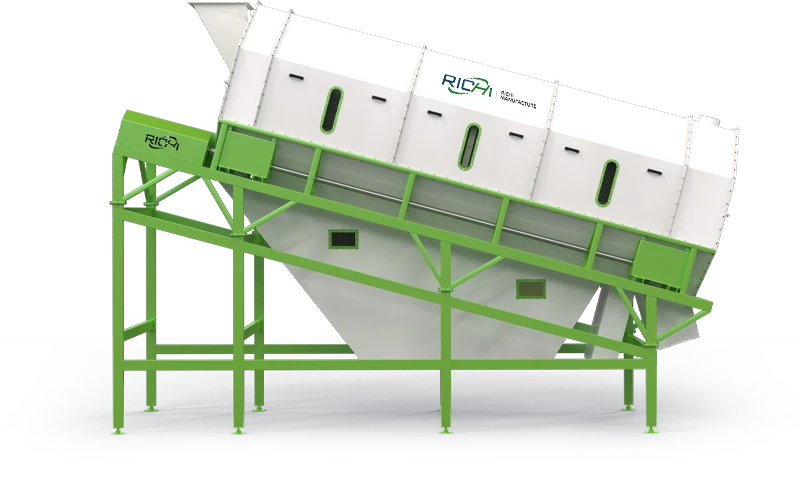
Capacity
3-50T/H
Screen Layers
1–3 Layers
Slaughterhouse Waste Bagger
Receives screened slaughterhouse-waste fertilizer pellets or powder and doses a preset quantity into commercial bags. The feeding mechanism is selected according to whether the finished material is a free-flowing granule or a lighter organic powder.
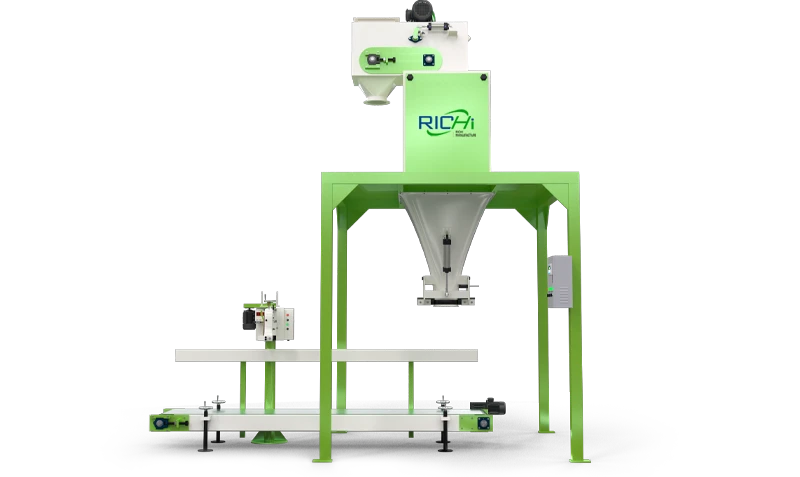
Packing Range
10–1000 kg/bag
Packing Speed
6–20 Bags/min
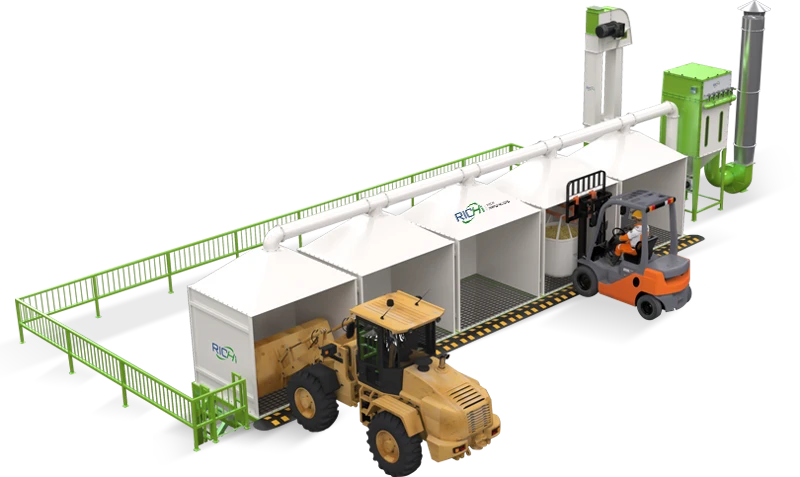
Feeding & Weighing System
Handles the major formulation components—such as processed animal meal, compost, manure or plant-derived organic material—and delivers them to the mixer according to recipe weight. Multiple bins can be installed for plants producing several fertilizer formulas.
Weighing Capacity
1–50 T/H
Weighing Accuracy
±0.5–1%
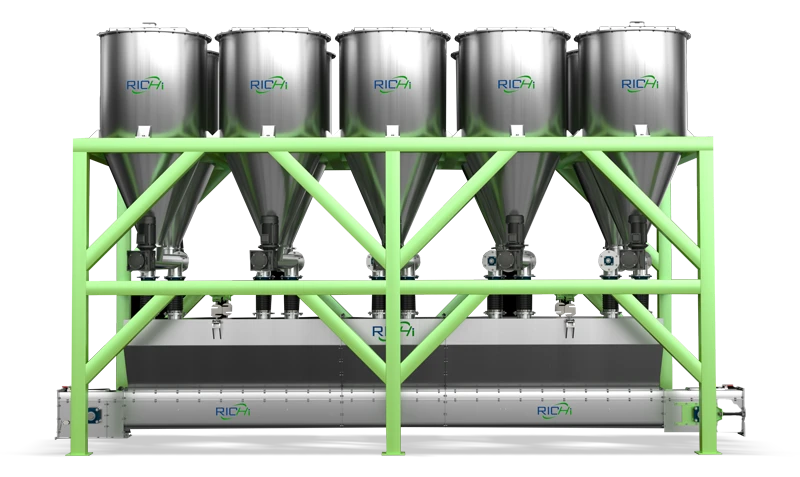
Trace Element Dosing System
Meters small quantities of mineral nutrients, micronutrients or other permitted formulation additives separately from the bulk organic ingredients. This is a precision dosing section and should not be confused with the main raw-material feeding system.
Dosing Accuracy
±0.1–0.5%
Hopper Volume
50–1000 kg
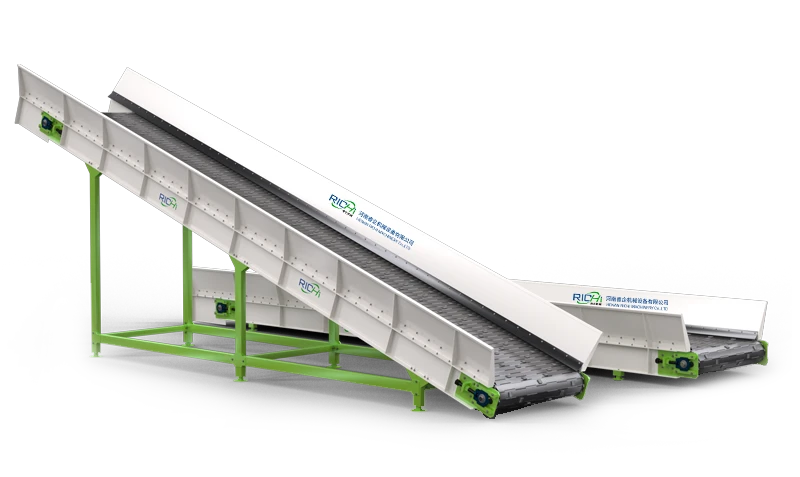
Slaughterhouse Waste Conveyor
Belt conveyors, screw conveyors, bucket elevators and other transfer equipment connect preparation, mixing, pelletizing and finishing sections. Selection depends heavily on moisture, particle size, dustiness, conveying angle and workshop layout.
Capacity
2-40T/H
Conveying Length
3–40 m
Projects beginning with fresh or high-moisture slaughterhouse material may also require screw presses, belt presses or other dewatering equipment; sorting and impurity-removal units; approved thermal-treatment or rendering systems; fat-separation equipment; storage tanks and bins; pumps; odor-management systems; coolers; silos; and automated process controls. A plant receiving dried meat and bone meal clearly needs a much shorter equipment train than one starting with blood, offal or rumen contents, so the final equipment list should always follow the material rather than a standard catalogue package.
Customized Slaughterhouse Waste Fertilizer Production Solutions
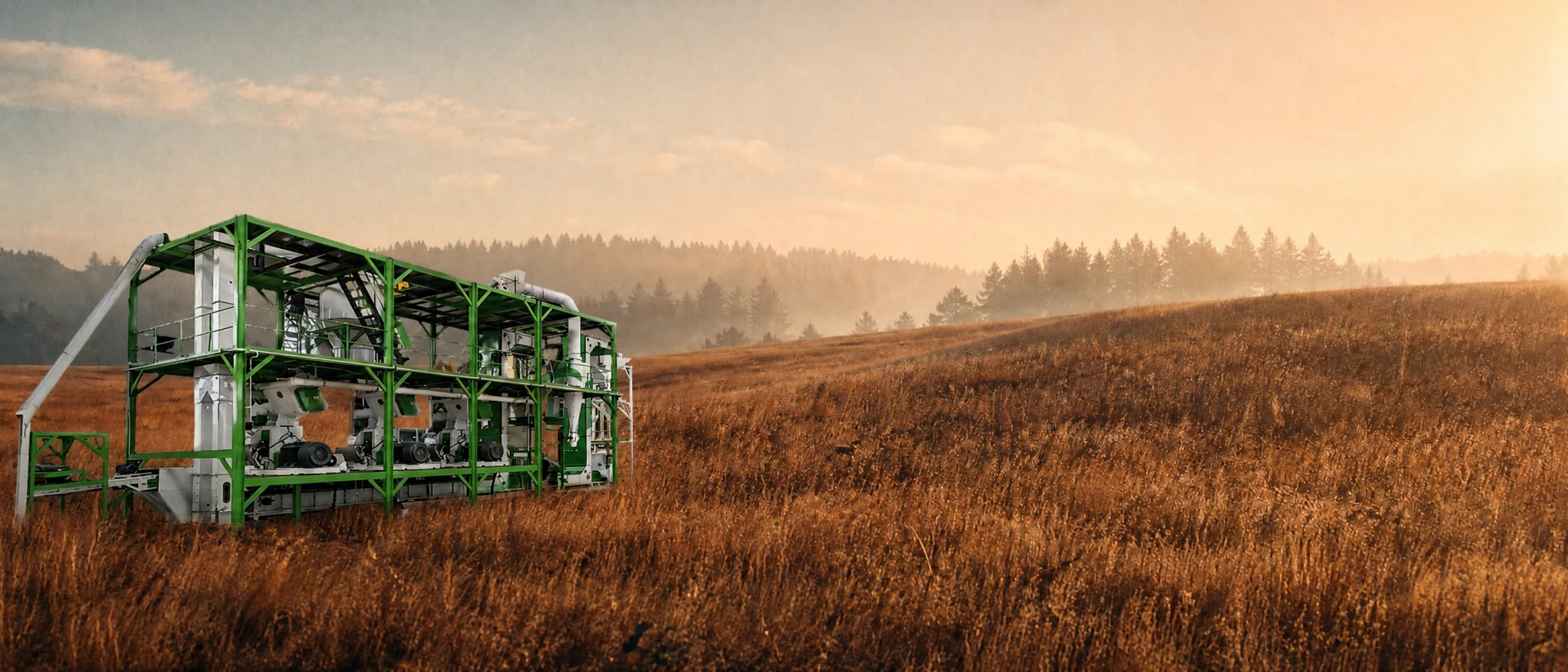
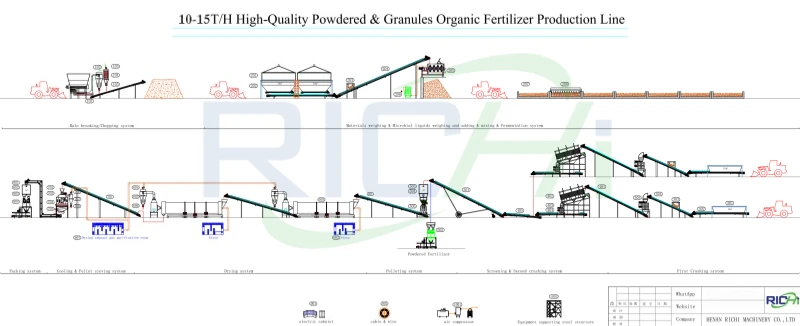
[Example Solution] 10–15 T/H Slaughterhouse Waste Powder & Pellet Fertilizer Line
This 10–15 t/h project was designed for an organic fertilizer producer using properly treated slaughterhouse-derived materials together with straw and other organic ingredients. The customer wanted one plant capable of producing both loose fertilizer and granulated fertilizer rather than building two independent systems. Finished powder could be customized according to the required classification, while the pellet section was designed for 2–12 mm fertilizer granules.
The front end begins with straw size reduction to approximately 20–30 mm, with dust collection around the chopping section. A large loader-fed receiving hopper accepts the major ingredients, while magnetic separation removes ferrous contaminants before processing. Water, microbial preparations or other required liquids can be stored and quantitatively introduced into the mixer, allowing treated slaughterhouse material, straw and other organic ingredients to be blended uniformly before the formulation enters the required fermentation or stabilization stage.
crushing & feeding
cleaning & addition
mixing & fermentation
crushing & screening
powder packing
pelletizing & drying
cooling & storage
pellet packing
After fermentation, another loader-fed hopper transfers the material through magnetic separation to a vertical crusher for wet-material size reduction. A rotary drum screen separates finer fertilizer material from oversized particles; the oversize fraction returns to a second crusher so the plant can maintain a more controlled powder specification. Material intended for sale as powder can then proceed directly to the 304 stainless-steel packing system for adjustable 10–50 kg bags, while the portion designated for granulation is routed to the slaughterhouse waste pellet machine section.
For granular fertilizer production, the prepared formulation is pelletized to the selected 2–12 mm specification and then dried to a target moisture of approximately 8–15%, depending on the fertilizer recipe and storage requirement. Cooling brings the pellets close to ambient temperature before vibrating screening removes undersized fines and off-spec particles; recoverable fines can be returned to the production process. Qualified pellets are collected in a finished-product bin and transferred to an adjustable 10–50 kg packing system for storage or shipment.
This layout is useful for slaughterhouses, animal by-product processors and fertilizer companies that do not want their plant restricted to one finished product. The same preparation section can support powder and pellet fertilizer production, while individual stages—including fermentation, drying, additional crushing or liquid dosing—can be retained, enlarged or removed according to the actual slaughterhouse waste condition, formulation and production target.
Market Prospects for Slaughterhouse Waste Pellet Production
The business case for slaughterhouse waste pelletizing comes from the combination of a continuing animal-processing industry, growing interest in resource recovery, and demand for practical fertilizer products made from permitted organic raw materials.
Global meat production remains substantial and is still expanding in several regions, particularly through poultry, creating a continuing supply of blood, bones, feathers, offal and other animal by-products that require controlled handling and utilization. Markets differ, however: North and South America have large slaughtering and rendering industries, Asia combines fast-growing meat processing with abundant agricultural residues, while European projects place greater emphasis on compliant processing and permitted end uses for animal-derived fertilizer ingredients.
For qualified materials, a slaughterhouse waste pellet machine allows processors to move beyond bulk powder or disposal-oriented handling and develop standardized fertilizer pellets that are easier to package, transport, meter and market. Profitability can be improved further when one flexible production line is designed to process several compatible streams—such as processed animal meals, manure, bedding, crop residues, digestate or food-processing by-products—into different fertilizer formulas rather than relying on one raw material or one finished product.
Stable Raw Material Supply
Slaughterhouses, rendering plants and poultry processors generate concentrated by-product streams as part of normal production, giving suitably scaled projects a repeatable source of fertilizer ingredients. Plants that also collect manure, bedding or agricultural residues can broaden the feedstock base and reduce dependence on a single material.
More Marketable Fertilizer Products
Processed animal-derived powders can be formulated into uniform pellets with controlled size and improved handling characteristics. Pelletization gives fertilizer producers another commercial product form for bagging, storage, transport and field distribution rather than limiting sales to loose powder.
Regional Opportunities Differ
Large meat-producing countries in the Americas and Asia offer strong raw-material potential, while European projects are driven more heavily by compliant animal-by-product processing and regulated fertilizer use. Category 2 and Category 3 materials may enter fertilizer or soil-improver routes in the EU only when applicable safety and processing requirements are met.
One Line, Multiple Revenue Streams
A well-configured plant can switch between animal-origin fertilizer, blended organic fertilizer, powder products and pellet products using compatible raw materials. This allows processors to respond to seasonal material availability and fertilizer demand without building a separate production line for every formulation.
Slaughterhouse Waste Pellet Machine FAQs
We only have about 6 tons of fresh slaughter waste per day. Is a 1 T/H line too large?
Probably, if those 6 tons/day are the only feedstock. Fresh blood, offal and rumen residues can contain roughly 65–85% moisture, so their mass after treatment and moisture reduction can be far below the incoming wet weight. A 1 t/h pellet section running 8 hours needs about 8 tons/day of prepared formulation; consider adding manure compost, bedding or crop residues, or operate the pelletizer fewer hours per day.
How much wet raw material do I need to keep a 1 T/H pelletizer running?
Calculate it from dry matter rather than wet tonnage. For example, 10 t/day of material at 75% moisture contains only 2.5 t/day of dry solids; after processing to a 12% moisture feed, that represents approximately 2.8 t/day before allowing for separation and process losses. A continuous 1 t/h operation therefore normally requires substantially more incoming wet material or additional dry ingredients.
Our cattle slaughterhouse handles blood, rumen contents and manure. Can they go into one mixer directly?
Not in their fresh states. Blood and rumen contents can exceed 70–80% moisture, while composted manure may be around 25–35%; the streams need appropriate treatment, dewatering/drying and stabilization before formulation. After preparation, a practical trial formula might contain 30–50% animal-derived solids and 50–70% compost or plant-based ingredients, but the final ratio should follow fertilizer specifications and pellet tests.
We already produce meat and bone meal. What equipment would we actually need?
Your project can be much shorter than a fresh-waste treatment plant. If the meal is already stable at roughly 8–12% moisture and suitably fine, the main additions may be storage/dosing, mixing, the slaughterhouse waste pellet machine, cooling, screening and packing. A grinder is added only if particle size or agglomeration requires it.
Can blood meal be pelletized without adding manure or straw?
Yes, but pure or very high blood-meal formulations should be tested before the line is finalized. Commercial fertilizer producers often blend animal protein ingredients with other organic or mineral components to control nutrient composition, handling and pellet properties. We therefore select the die and conditioning arrangement from the actual formula rather than assuming 100% blood meal will behave like a manure-based fertilizer.
Our meat and bone meal is difficult to pellet. Could the bone content be the reason?
It can be one factor. A mineral-rich formulation containing substantial bone fraction behaves differently from fibrous manure or plant-based fertilizer, and excessive coarse bone particles increase wear and interfere with uniform compaction. As a practical target, prepare most material to approximately 1–5 mm and select the die compression ratio through formula testing.
Our rendering meal still contains quite a lot of fat. Will that reduce pellet quality?
Potentially. Residual fat provides lubrication, so excessive free fat can reduce die friction and weaken pellet binding even though power demand may fall. There is no safe universal fat percentage for every formula; if pelleting becomes unstable, further fat separation or blending with drier, more absorbent ingredients is usually preferable to simply increasing die compression.
What moisture should the material have when it reaches the pellet mill?
For many dried animal-meal and organic-fertilizer blends, approximately 10–18% is a practical commissioning range. Bone-rich dry formulations may work toward the lower part, while fibrous/manure-containing blends may tolerate different conditions. RICHI normally determines the final operating window from formulation, residual fat, particle size and required pellet durability.
Our poultry plant has feathers as well as blood and offal. Can one line handle all three?
Yes, after appropriate separate upstream treatment. Feathers, blood and offal have very different structures and cannot simply be mixed fresh and sent to an animal by-product pellet machine; they can enter a common fertilizer formulation after conversion into suitable processed materials such as feather meal, blood-derived solids and poultry by-product meal.
We produce feather meal already. Do we still need a crusher before pelletizing?
Not automatically. If the feather meal has a sufficiently controlled particle size, no troublesome fibrous agglomerates and can be mixed uniformly, another crushing stage may add little value. We normally check the particle distribution first; approximately 1–5 mm or finer prepared feed is a practical reference for the pelletizing section.
Can we use slaughterhouse material together with poultry litter from our farms?
Yes, and this is particularly relevant to vertically integrated poultry businesses. Composted poultry litter can provide organic matter and fibrous material alongside processed poultry by-products; trial formulations may start around 30–60% processed animal-derived material with 40–70% composted litter and other ingredients. Nutrient targets, local fertilizer rules and pelletability determine the final formula.
We run a large pig operation and slaughter plant. Is pig manure useful in the same project?
Yes, once the manure has been appropriately separated, composted or otherwise stabilized for the intended fertilizer process. Fresh pig manure commonly contains roughly 70–85% moisture, so feeding it directly into a slaughterhouse waste granulator is impractical. The manure section should first reduce and stabilize the moisture load before it is blended with treated slaughter by-products.
Could a large cattle feedlot use bedding and manure to increase plant utilization?
Yes. For an integrated operation with access to processed slaughter by-products, manure-rich bedding, straw and similar dry fibrous materials can broaden the fertilizer formula and increase usable feedstock volume. Depending on collection conditions, bedding/manure mixtures around 25–45% moisture may require composting, shredding and moisture adjustment before fine grinding and pelletizing.
We have 100,000 broilers but no slaughterhouse. Does buying this machine make sense?
Not solely because of the farm size. A broiler farm mainly generates litter/manure rather than slaughterhouse by-products; unless you also operate a processing plant or reliably purchase treated animal-derived fertilizer ingredients, this product may not be the right positioning. For manure-only production, RICHI would evaluate an organic fertilizer line based primarily on litter volume and condition.
How large should an integrated poultry business be before considering a 2–3 T/H system?
Start from recoverable prepared material, not bird count alone. A 2 t/h pelletizer operated 8 hours/day requires roughly 16 tons/day of prepared fertilizer mixture, while 3 t/h requires about 24 tons/day. An integrated group can reach this volume through processed poultry by-products plus composted litter, but a small standalone farm generally cannot.
We have seasonal slaughter volumes. Do we have to run the pelletizer continuously all year?
No. Continuous operation describes how the machine runs during a production campaign, not an obligation to operate 365 days per year. Seasonal processors can accumulate properly stabilized/dried ingredients, schedule production in batches of operating days, or combine compatible manure and agricultural residues to improve annual equipment utilization.
Can the same machine make 4 mm and 6 mm fertilizer pellets?
Yes, by using the corresponding ring-die specification and making the necessary operating adjustments. The FZLH slaughterhouse waste pelletizer supports finished pellet diameters within the 4–12 mm range you have selected; 4–6 mm is a particularly practical range for many bagged granular fertilizer products.
We need harder pellets because our fertilizer travels long distances. What should be changed?
Do not solve durability by changing one setting alone. Start with stable feed moisture around the established formula window, consistent grinding, proper mixing and the correct die compression ratio; then check cooling and transfer damage. For a new formula, approximately 85–95%+ pellet durability can be used as an optimization target rather than assuming every recipe will achieve the same value.
Our current pellet mill produces too many fines. Can you replace only the pelletizing section?
Yes. RICHI can assess the existing feeder, mixer, pellet mill, cooler and screen rather than requiring a complete replacement line. If screened fines consistently exceed roughly 5–10%, we would investigate feed moisture, particle size, residual fat, die specification, cooling and conveying damage before deciding which equipment actually needs replacement.
Can your pelletizer connect to our existing rendering line?
Yes. This is a common retrofit arrangement for rendering plants already producing meat meal, meat and bone meal, blood meal or poultry by-product meal. We need the existing discharge capacity, material temperature/moisture, particle size, plant layout and control interface to size the new dosing, mixing, pelletizing and finishing sections correctly.
Our existing dryer is only 3 T/H but we want a 5 T/H pellet section. Will that work?
Only if the dryer does not have to process all 5 t/h of pelletizer feed. Dryer capacity must be checked from incoming moisture and water evaporation, not its nominal solids throughput alone. If only one wet ingredient requires drying and the remaining ingredients are already dry, a 3 t/h dryer can potentially support a larger final blended throughput.
Do we need a dryer if our incoming animal meal is already at 10–12% moisture?
Usually not for that ingredient alone. If all formulation components remain within the required pelletizing moisture window, installing a raw-material dryer would add unnecessary capital and energy cost. A downstream pellet dryer is also configuration-dependent; the need should be determined from actual pellet discharge moisture and the finished fertilizer specification.
How much floor space should I allow for a 1–3 T/H project?
For a relatively simple dry-material line, approximately 300–800 m² can be a useful preliminary equipment-area reference, excluding large raw-material storage and external utilities. A wet-material plant requiring composting, drying, odor control and substantial storage can require well over 1,000–2,000 m². Final dimensions depend heavily on whether equipment is arranged horizontally or vertically.
We only have a narrow existing workshop. Can the line be arranged vertically?
Often yes. Bucket elevators, elevated bins and gravity transfer can reduce horizontal conveyor length, but sufficient building height, maintenance access and structural loading capacity are required. Send us the internal length, width, clear height, column positions and door dimensions; we can design the slaughterhouse waste processing equipment around the usable envelope.
Can we install the pelletizer inside our existing fertilizer factory without moving the other machines?
Frequently. We first map existing crushing, drying, mixing, screening and packing equipment and identify usable transfer points. The new slaughterhouse waste pelletizing machine can then be installed as a modular section if existing machines have adequate capacity and the material flow does not create cross-contamination or bottlenecks.
What is the slaughterhouse waste pellet machine price for a commercial project?
The pelletizer itself is approximately USD 10,000–100,000 across the available range, with the listed FZLH models currently spanning about USD 10,000–85,000. A complete project can cost considerably more because wet slaughterhouse material may require treatment, dewatering, drying, crushing, mixing, cooling, screening, conveying, dust/odor control and packaging; quote the pelletizer and complete line separately.
We want powder fertilizer first and pellets later. Do we need to build two plants?
No. A sensible design is to establish common receiving, preparation, fermentation where required, crushing, screening, batching and mixing sections, then reserve a branch for future granulation. Powder can initially go directly to packing, while a slaughterhouse waste fertilizer pelletizer, cooler and final screen can be added when the pellet market develops.
Can one line switch between poultry-based and cattle-based fertilizer formulas?
Yes, provided both materials are legally suitable for the intended product and have been correctly processed before formulation. The main engineering issue is not the animal species but differences in protein, mineral content, residual fat, moisture and fiber; recipe bins, dosing control and replaceable die specifications make multi-formula production much more practical.
We also have sawdust. How much can we add without making weak pellets?
There is no universal optimum, but approximately 5–20% can be used as an initial trial range in some blended organic-fertilizer formulations when sawdust is clean, appropriately sized and suitable for the product. Higher proportions materially change nutrient concentration and pellet behavior, so formula targets and trials should determine whether additional fiber is beneficial.
Can rice straw or wheat straw be used instead of sawdust?
Yes. Dry straw can supply fiber and help formulate animal-derived fertilizer with manure or compost, but it should normally be chopped and then reduced to a suitable size before final mixing. A formulation trial might begin with approximately 10–30% prepared straw; nutrient requirements and pellet quality determine whether that percentage should be raised or reduced.
We have very wet cassava residue nearby. Is it worth adding to the fertilizer formula?
Potentially, but transport and drying economics matter. Fresh cassava residues can contain roughly 60–80% moisture, so a plant should calculate the amount of water being transported and evaporated before treating them as cheap feedstock. Where supply is close to the plant, dewatering followed by drying and blending can make the material more practical.
Can digestate from our biogas plant enter the same fertilizer line?
Solid digestate can be incorporated when its composition and local fertilizer requirements permit. Fresh separated digestate may still contain roughly 60–80% moisture, so further dewatering, drying or blending with dry animal meals and plant fibers is often required; the pelletizer should receive the formulated material only after moisture has been brought into its workable range.
What happens if metal or bone fragments reach the pelletizer?
They increase the risk of die/roller damage, blockage and abnormal wear. Projects handling heterogeneous recovered material should use appropriate sorting and magnetic separation upstream, while coarse bones require dedicated size reduction rather than relying on the slaughterhouse waste pellet making machine to crush them.
Do you recommend a chain crusher for bones?
No, not as the primary bone crusher. A fertilizer vertical chain crusher is better suited to prepared compost, fertilizer agglomerates and friable organic materials. Large or hard bones should first pass through equipment specifically suited to bone or animal by-product size reduction before the resulting processed material enters fine preparation and pelletizing.
We need trace minerals in the fertilizer. Can the line dose small additions accurately?
Yes. Keep micronutrient dosing separate from the bulk organic feeding/weighing system. Bulk animal meals, compost and fibers may be metered at tonnes per hour, whereas trace ingredients may represent roughly 0.1–10% of a formula; a dedicated precision dosing system provides much better recipe control for these smaller additions.
Our material smells strongly after storage. Will pelletizing solve the odor problem?
Pelletizing is not a substitute for proper treatment of unstable animal waste. Strong odor from fresh or decomposing material indicates that collection, treatment, rendering, fermentation/stabilization, drying or storage management needs attention upstream. Once properly processed and stabilized, granulation can improve handling and storage characteristics, but the slaughterhouse waste treatment equipment must address the underlying material condition first.
We want a 10 T/H plant but only 60% of our product will be pellets. How should the pelletizer be sized?
Size the pellet section from the actual pellet stream, not total plant throughput. If a 10 t/h plant sends approximately 60% of output to granulation, the nominal pelletizing load is around 6 t/h, making an FZLH420-class 6–8 t/h configuration a logical starting point; operating schedule, surge capacity and formulation still need to be checked.
We expect production to double in three years. Should we buy the largest machine now?
Not necessarily. Oversizing can leave the pelletizer operating inefficiently while tying up capital in oversized conveyors, coolers and electrical systems. A better approach may be to reserve workshop space, electrical capacity and conveying interfaces for a second unit, allowing a 3–5 or 6–8 t/h system to expand when actual prepared-material volume justifies it.
What information do you need before recommending a model?
Send the daily quantity of each raw material, initial moisture, whether the slaughter by-products are fresh or rendered, approximate ingredient ratios, operating hours, desired pellet diameter and target t/h. Also provide existing equipment and workshop dimensions; with these figures, RICHI can distinguish whether you need only an animal by-product pellet machine or a broader slaughterhouse waste processing line.
Can you test our actual formula before we order the complete line?
For unfamiliar or difficult formulas, material testing is the preferred engineering approach before finalizing the ring die and process configuration. Provide representative material information—or samples where project arrangements permit—especially for high-fat meals, blood-rich formulas, feather material or unusual mixed wastes; the objective is to confirm preparation requirements, pelletability and the appropriate equipment route before the final configuration is fixed.
We run an abattoir but send most by-products to a renderer. Is buying our own pellet machine worthwhile?
It can be, but first calculate how much processed material will actually return to your fertilizer section. An abattoir waste pellet machine starting at 1 t/h needs about 8 tonnes of prepared formulation for an 8-hour production shift; if your own rendered solids are insufficient, compatible manure compost, bedding or agricultural residues can be incorporated to build a commercially workable feedstock base.
We collect by-products from several slaughterhouses. Can one plant process material from different suppliers?
Yes, provided incoming materials are segregated, traceable and treated according to their characteristics and applicable requirements. For a slaughterhouse by-product recycling machine project, RICHI can design separate receiving/storage routes for blood-derived solids, rendered meals and other ingredients before controlled batching brings them together; this is much safer than mixing variable incoming wastes immediately.
Our meat cutting plant generates bones, fat trimmings and meat scraps. Which part can actually enter the fertilizer line?
These materials normally require appropriate animal by-product processing before pelletizing rather than entering a meat processing waste pellet machine directly. Bones need suitable size reduction, fatty material may require fat separation, and wet tissues require treatment and moisture reduction; once converted into stable processed material, they can be formulated with other permitted fertilizer ingredients.
Can we build a fertilizer plant around waste from several meat processing factories?
Yes, and centralized collection can provide a more stable material volume than relying on one small processor. A meat processing waste recycling machine system can receive appropriately controlled by-products from multiple plants, but the design should separate wet tissues, bones, fatty residues and already processed meals because their treatment routes, moisture loads and storage requirements differ significantly.
We want to compost part of the material and pelletize the rest. Can both routes share equipment?
Yes. A slaughterhouse waste composting machine can serve the manure, bedding, rumen-derived or other biodegradable fraction requiring stabilization, while properly processed animal meals may enter later formulation stages without repeating composting. Shared crushing, screening, batching or mixing equipment can often reduce investment, provided the two material routes are hygienically and technically compatible.
We currently pay another company to handle our slaughter waste. What should we compare before bringing recycling in-house?
Compare annual disposal cost with recoverable material volume, treatment cost, energy consumption, labor, fertilizer market value and capital investment—not the pelletizer price alone. A slaughterhouse waste recycling machine becomes commercially meaningful only when enough compliant material can be recovered and sold; for a 1 t/h pellet section running 2,000 hours/year, plan around roughly 2,000 tonnes/year of prepared formulation.
Our animal by-product meal comes from different species. Will that cause problems with the pellet mill?
Not automatically, but the formulas should not be treated as physically identical. An animal by-product pellet machine may process cattle-, pig- or poultry-derived meals after appropriate treatment, but differences in mineral content, protein, residual fat and bulk density can require different moisture adjustment or ring-die settings. Separate recipes are preferable when material properties vary substantially.
Can we turn slaughterhouse residues into both powder and granular fertilizer for different buyers?
Yes. A slaughterhouse waste fertilizer machine system can share preparation, crushing, batching and mixing equipment, then divide the product stream: powder proceeds to screening/packing, while the granular fraction enters pelletizing, cooling and final screening. This is useful when bulk agricultural customers prefer powder but distributors require 4–6 mm bagged pellets.
We have an old organic fertilizer line. Which machines should be checked before adding slaughterhouse-derived material?
Start with the receiving system, crusher, mixer, dryer, conveyors and dust/odor controls, then check whether their materials of construction and capacities suit the new feedstock. Slaughterhouse waste treatment equipment may need to be added upstream if the incoming material is wet or untreated; an existing manure line should never be assumed suitable for fresh animal by-products without this assessment.
We want to sell fertilizer rather than simply dispose of animal waste. What should be decided before ordering equipment?
Define the permitted raw materials, annual supply, fertilizer formula, powder-versus-pellet sales ratio, target nutrient specification, package size and local product requirements first. A slaughterhouse by-products fertilizer machine should then be configured backward from that finished product; for pellets, 4–6 mm is a practical commercial starting range, while the required t/h determines the appropriate FZLH model and downstream equipment.
Whether you already operate a rendering plant, are adding fertilizer production to a slaughterhouse, or want to combine processed animal by-products with manure, bedding and agricultural residues, the right solution starts with your actual material balance. Send RICHI your raw-material quantities, initial moisture, existing equipment, available space, required pellet size and target capacity; we can use these figures to recommend the slaughterhouse waste pellet machine, preprocessing equipment and line configuration that fit the project instead of quoting a standard package.


