
 0086-138 3838 9622
GOAT FEED MILL
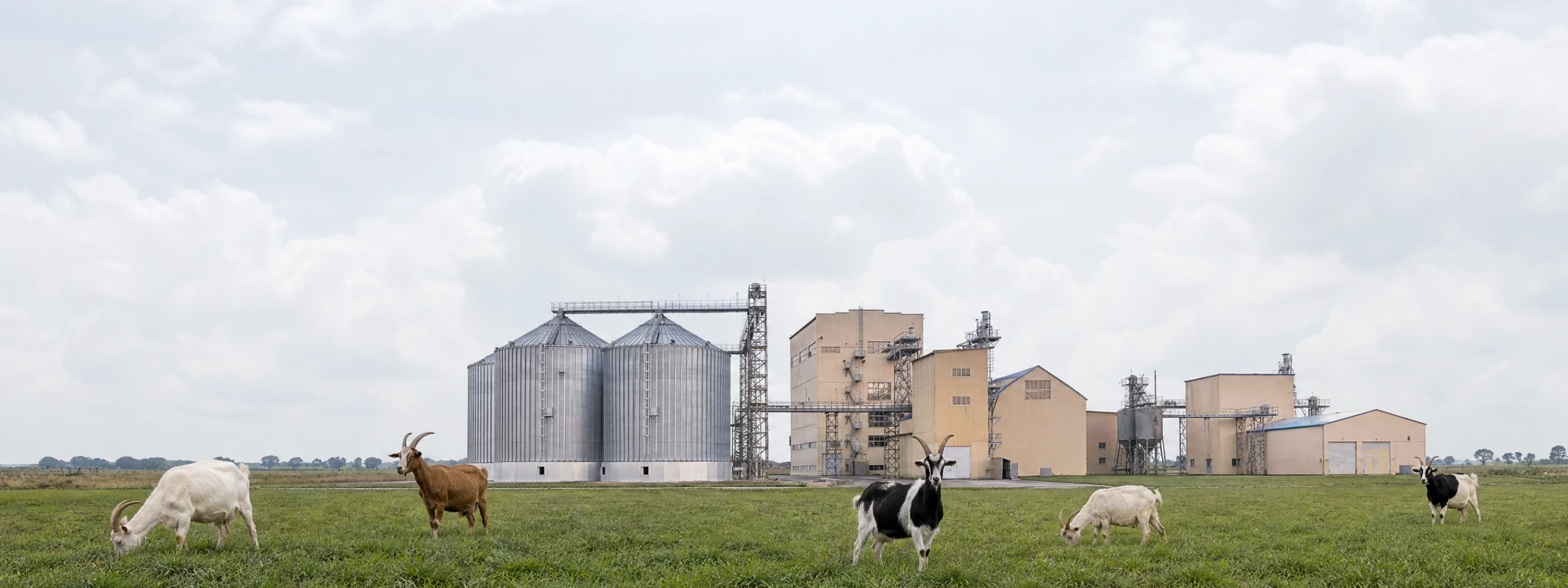
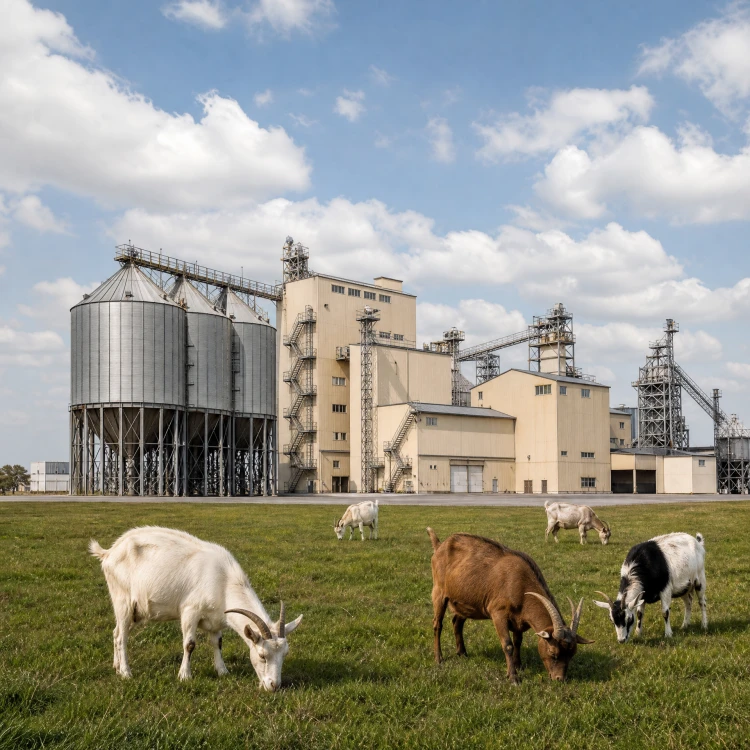
In agriculture-by-product markets, the goat feed manufacturing plant is more about wheat bran, rice bran, corn, and oilseed meal streams, usually requested by feed mills that already handle multi-species production. Then there’s the mixed commercial segment, where a goat feed production plant is configured for corn-protein-forage blends and complete pellet goat feed targeting both dairy and meat goat nutrition lines.
Across these categories, the buyers are usually not new entrants. They are established feed producers, expanding compound feed factories, or integrated livestock operations that already run poultry or cattle lines and now add goat feed manufacturing systems into the same facility logic. The requirement is rarely just equipment supply—it’s integration with existing feed plant workflows, shared batching systems, and stable pellet output across different formulations.
We’ve supplied goat feed processing plant configurations for projects moving from small farm-scale production to industrial complete goat feed mill layouts, including turnkey goat feed plant and automatic goat feed mill installations exported to regions like Africa, Central Asia, India, Mexico, Indonesia, and parts of Eastern Europe. The actual feed types vary—dairy goat ration, meat goat finishing feed, and mixed forage-concentrate formulations—but the expectation is always the same: one goat feed mill that can handle multiple raw material pathways without constant rework of the line.
Discuss Your Goat Feed Plant Layout & Capacity Planning
Goat Feed Mill Processing Capabilities
From a plant integration point of view, the goat feed production line is rarely built for a single formula. It is configured to cover multiple feed forms that sit in completely different physical and processing behaviors, from high-starch pellets to fiber-heavy roughage blends and micro-dosed premix materials.
What matters in real projects is not just “what feed,” but how many formats one goat feed processing line can switch between without rebuilding the system. Pellet size, grinding fineness, batching accuracy, even cooling time—all of these shift depending on the feed category. That is why a properly designed goat feed factory or goat feed manufacturing plant is usually planned as a flexible system, not a fixed recipe machine set.
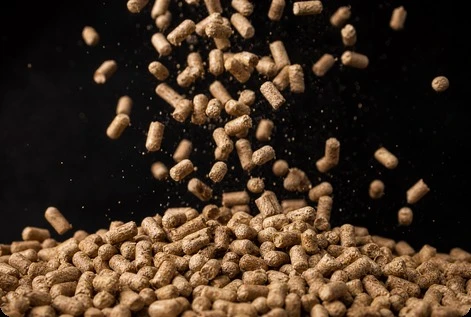
Pure Concentrate Pellet Feed (Grain-based High Energy Pellets)
This is typically the most stable product in a goat feed pellet mill, designed for high milk yield dairy goats or fast fattening stages. Pellet diameter is usually around 3–8 mm, with relatively smooth surface finish to improve intake consistency. Corn, barley, and other cereal grains dominate the formulation.
Pellet Size: 3-8mm
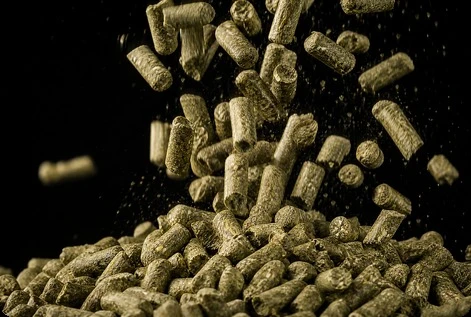
Forage / Legume Blended Pellet Feed (Fiber-Included Pellets)
This category introduces alfalfa meal, grass powder, or straw fiber into the mix. In many goat feed manufacturing systems, this is where mechanical resistance starts to show up.Pellet size is often 4–8 mm, slightly looser structure compared to pure grain pellets.
Pellet Size: 4-8mm
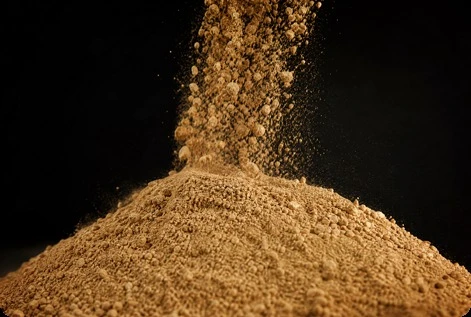
Protein Concentrate Feed (High-Protein Supplement Mix)
This is not always a final feed on its own. It’s used in goat feed production plants** where farmers mix local roughage separately. Soybean meal, oilseed meal, and protein-rich additives dominate. Usually processed into 2–4 mm pellets or coarse mash form, depending on whether the client wants pelleting or bulk blending.
Particle Size: coarse mash / 2-4mm (pellet)
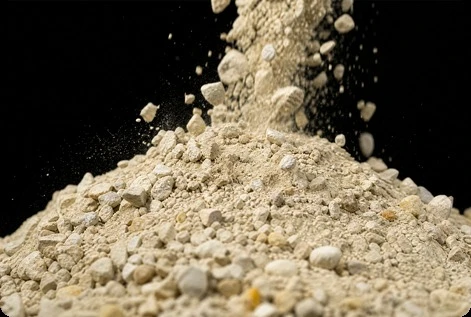
Mineral & Trace Element Supplement Feed (Block or Fine Powder)
This is a completely different behavior inside a goat feed factory setup. Instead of throughput focus, the concern is precision. Particle size is typically powder (<1 mm) or compressed block form depending on the final application. Used mainly for grazing systems where goats lack consistent mineral intake.
form: powder (<1mm) or compressed block
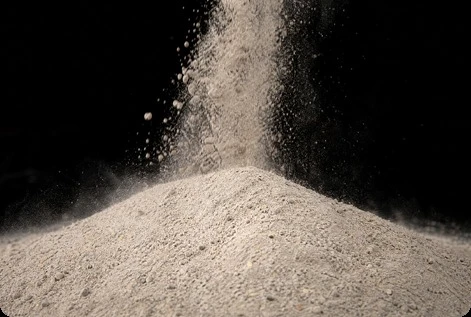
Premix Feed (Micro-Additive Formulation Base)
Premix is the most sensitive category in a goat feed mill plant. These are vitamin and trace element concentrates, usually added at very low inclusion rates.Particle size is extremely fine—often 0.5 mm or less—and production relies heavily on micro-dosing accuracy rather than mechanical force.
Particle Size: 0.5mm or less
A properly configured goat feed mill is not limited to a single feed form. In many real installations, one line is designed to handle both pellet and mash output, or even switch between goat feed and broader livestock feed categories such as cattle or poultry formulations depending on seasonal demand.
Customize My Feed Production Line

Goat Feed Mill Project Videos
The most convincing proof of a goat feed mill is never the equipment list—it’s the line running under real conditions in different countries, with different raw materials and operator habits.
Over the years, we‘’ve delivered multiple goat feed production line projects across mixed livestock farms, commercial feed factories, and integrated agricultural groups. Some are focused only on goat feed manufacturing, others combine cattle, sheep, poultry, or even multi-purpose feed systems in one plant.
The following project videos come from real installations where we handled full system design, manufacturing, commissioning, and production tuning.
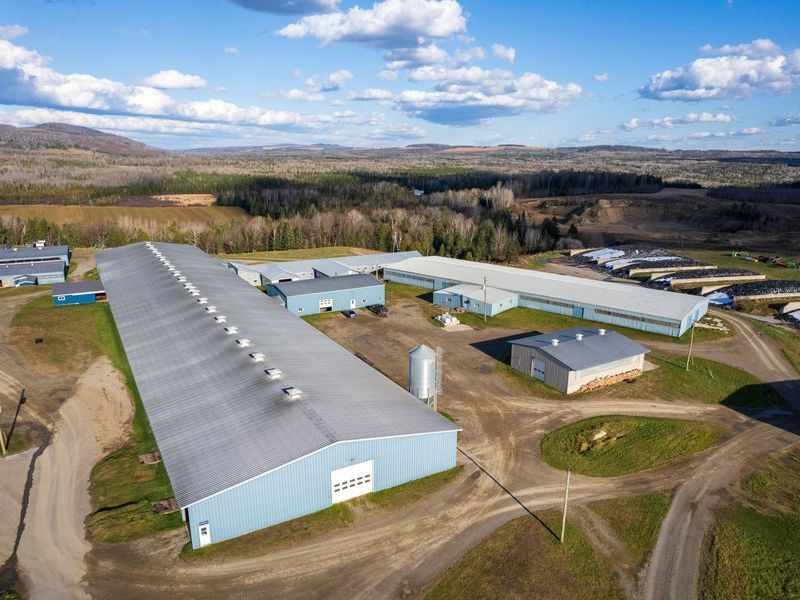

【6-8T/H Goat Feed Mill Plant in Mexico】This project was built for a commercial feed producer expanding into ruminant feed segments. The system handles corn, sorghum, soybean meal, alfalfa hay, and wheat bran, requiring flexible grinding and batching due to large variation in fiber content. Pellet size mainly ranges between 3–5 mm for goat feed and 4–6 mm for cattle feed.
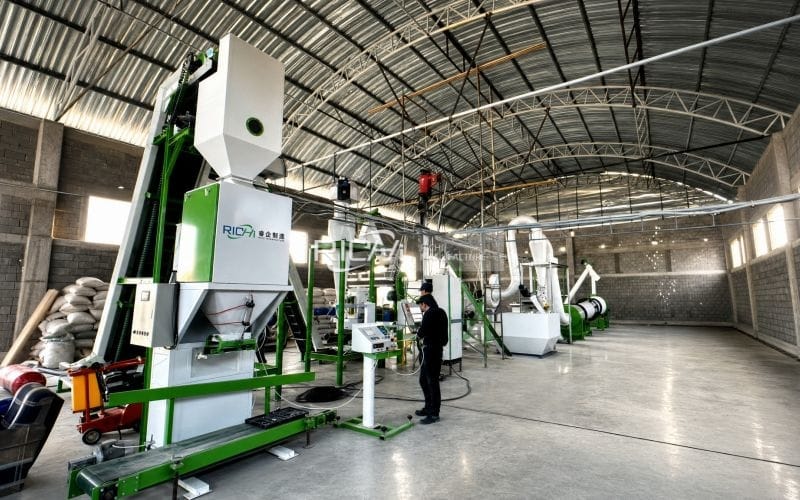
【1-2T/H Goat Feed Mill Plant in Uzbekistan】A small-to-medium livestock feed factory built around wheat bran, barley, corn, straw, and limited alfalfa. Straw content reaches up to 50–80% of total formulation, so a drying system was integrated before grinding.Pellet production is mainly 4–8 mm roughage-based goat feed pellets.
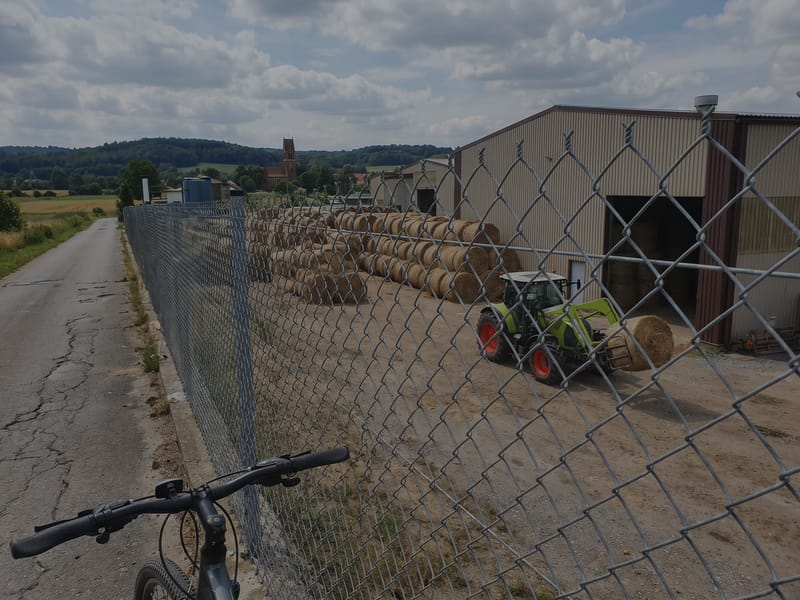
【10T/H Goat Feed Mill Plant in Russia】A large integrated feed mill producing goat, sheep, dairy cattle, and beef cattle feed. Raw materials include barley, oats, wheat bran, alfalfa hay, and straw pellets.Pellet sizes vary widely from 3 mm goat feed pellets to 6–8 mm cattle feed pellets, depending on formulation. The goat feed manufacturing plant here is part of a broader ruminant feed ecosystem, not a standalone line.
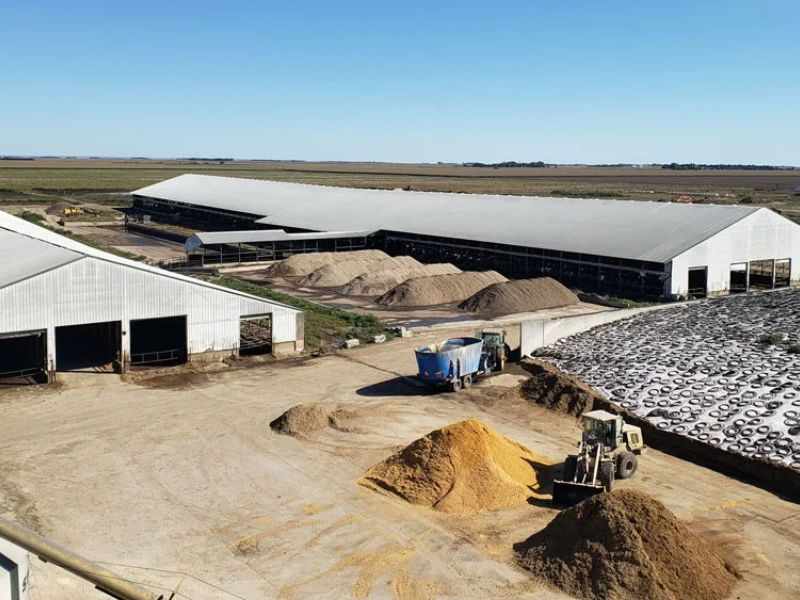
【5-6T/H Goat Feed Mill Plant in Zimbabwe】This installation includes a straw unpacking system for bale processing, which feeds directly into the grinding section. Raw materials include straw, maize, wheat bran, grass hay, and oilseed cake. The line is designed for goat feed, cattle feed, and poultry feed production. Pellet sizes range from 3–4 mm for poultry feed and 4–6 mm for goat feed pellets.
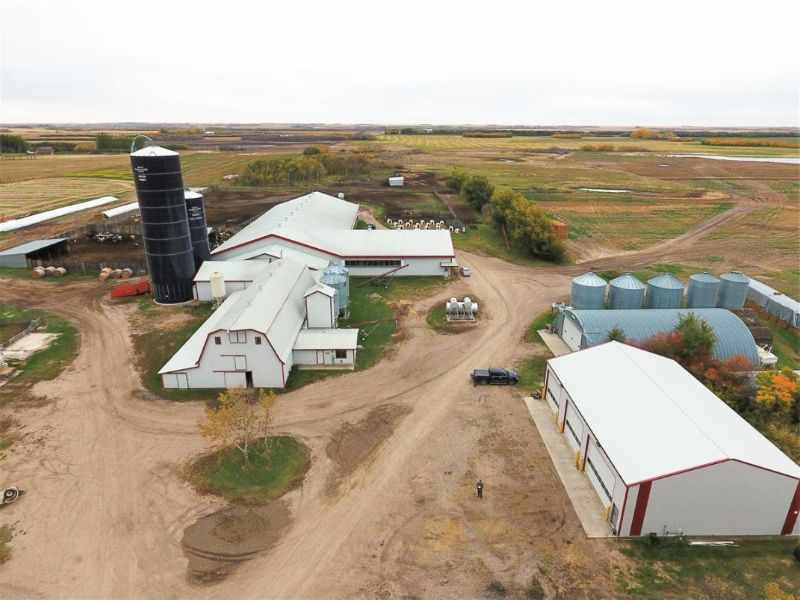
【5T/H Goat Feed Mill Plant in Kazakhstan】This project focuses on barley, wheat bran, alfalfa hay, straw, and limited corn input. The drying system plays a key role due to seasonal moisture variation in forage materials. Pellets are mainly 4–6 mm goat feed pellets designed for forage-based feeding programs. The goat feed production line is tuned for stable fiber retention, not high compression hardness.
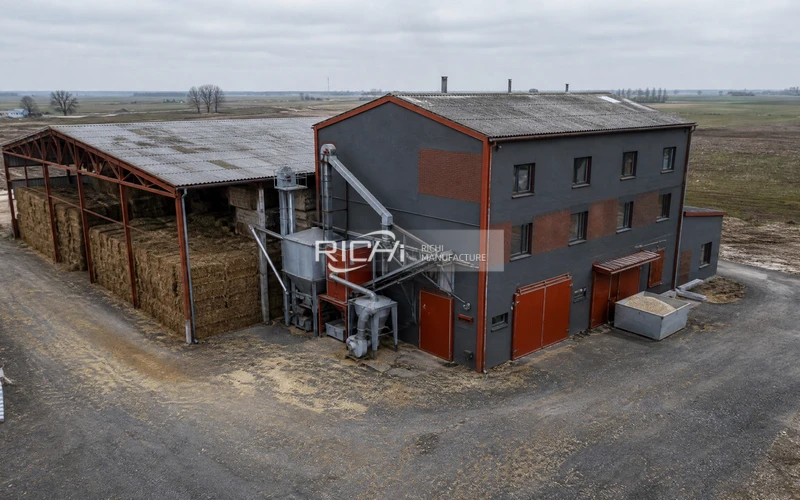
【1-2T/H Goat Feed Mill Plant in Indonesia】A compact feed production system serving local livestock markets. Raw materials include rice bran, corn, cassava meal, palm kernel cake, and soybean meal. Pellet sizes are typically 3–5 mm multi-purpose livestock feed pellets, and the system is configured for flexible switching between formulations. The client also customized the equipment color scheme, which is not standard for most goat feed factory installations.
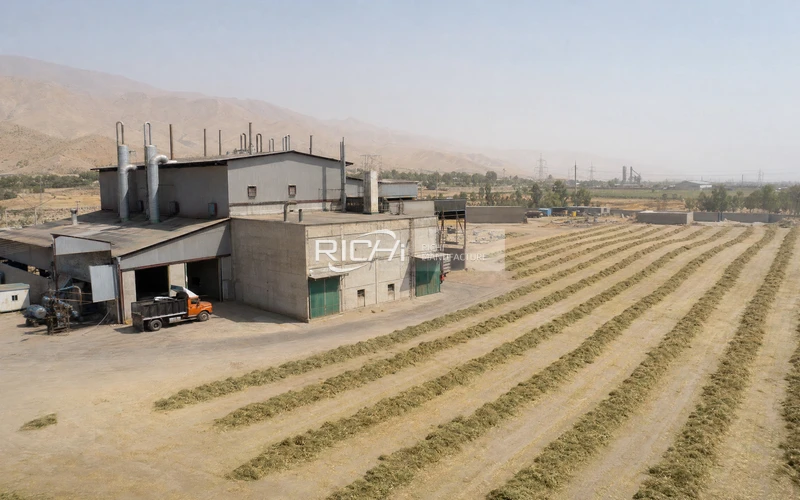
【1T/H Goat Feed Mill Plant in Afghanistan】A straightforward setup using wheat bran, barley, straw, and grass hay. Designed for local farm-level feed supply rather than industrial distribution. Pellet size is mainly 4–6 mm basic goat feed pellets. The system prioritizes simplicity and maintenance stability over automation level.
Goat Feed Mill Process Design & Customized Engineering Solutions
A goat feed mill is rarely defined by a fixed process flow. It’s more like a framework that gets reshaped once raw materials, plant layout, and product targets are confirmed on site. What looks simple on paper—crushing, batching, pelleting—changes quickly when you start aligning it with different goat feed production requirements, from forage-heavy pellets to grain-based concentrates or premix systems.
That’s why every goat feed processing plant we deliver is built around modular engineering logic. A typical goat feed production line can include raw material storage silos or warehouses, cleaning and pre-screening units, grinding systems (hammer mill or multi-stage crusher depending on straw or grain ratio), batching and weighing systems, mixing, pelletizing, cooling, screening, and final packing. In some goat feed factory layouts, liquid addition, dust removal, and drying sections are inserted or removed depending on formulation and moisture behavior.
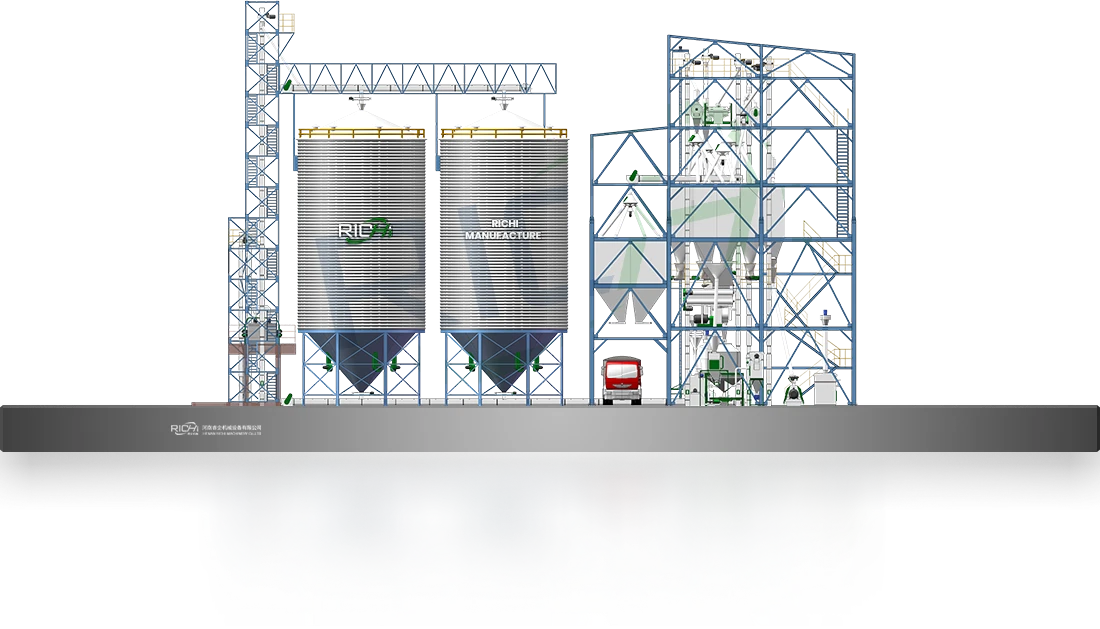
Across different projects, the core design logic stays modular. Storage silos or raw material bins → cleaning & dosing → crushing system (single or multi-stage depending on fiber content) → batching scale → mixing section → pelletizing or mash line → conditioning (if required) → cooling or natural cooling conveyor → screening → automatic packing or bulk loading.
Not every module is active in every project. Some lines skip pellet cooling towers entirely; others add pre-crushing for straw bundles or secondary grinding for high-fiber forage. Everything depends on what is actually coming into the plant — not what looks good on a flow chart.
The same applies to plant structure—ceiling height, equipment spacing, and even workshop width influence whether bulk storage, vertical conveying, or compact layout design is used. And yes, investment level also quietly defines how many optional modules are activated.
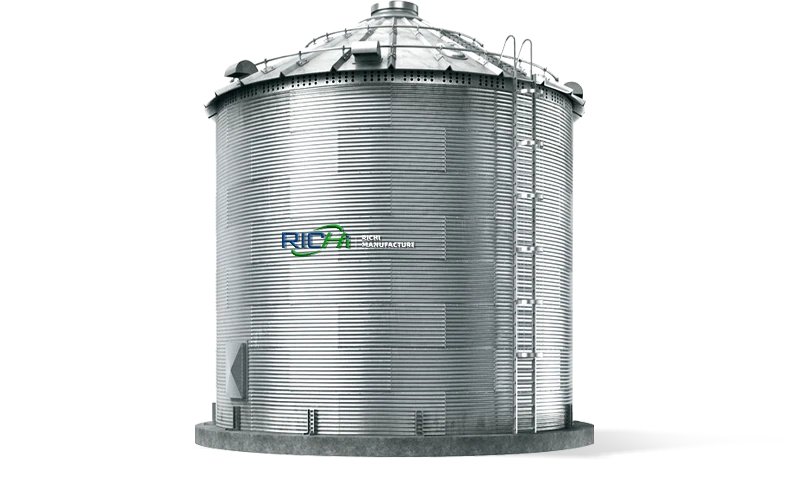
Silo system
01
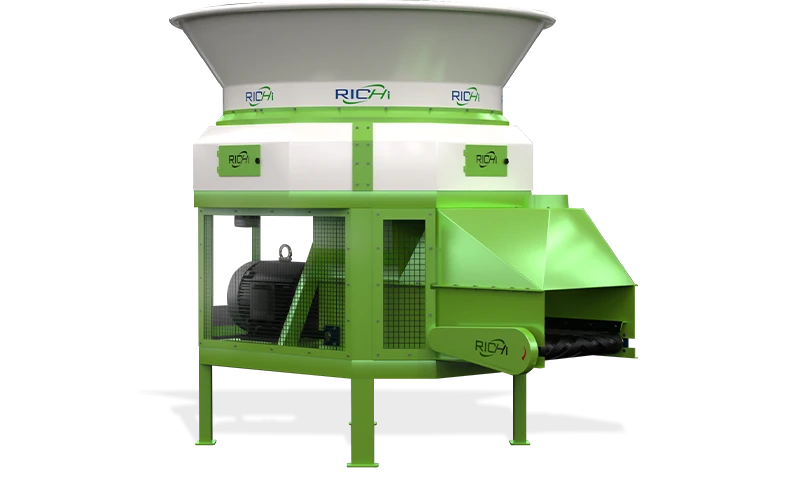
bale chopping
02
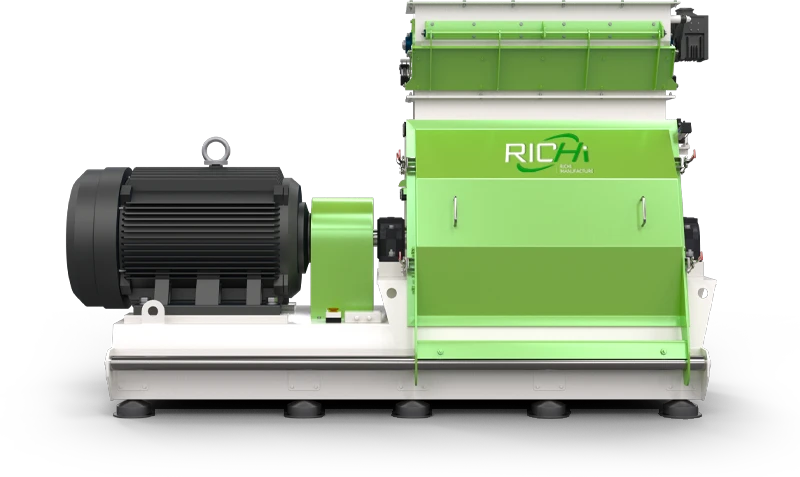
Grinding system
03
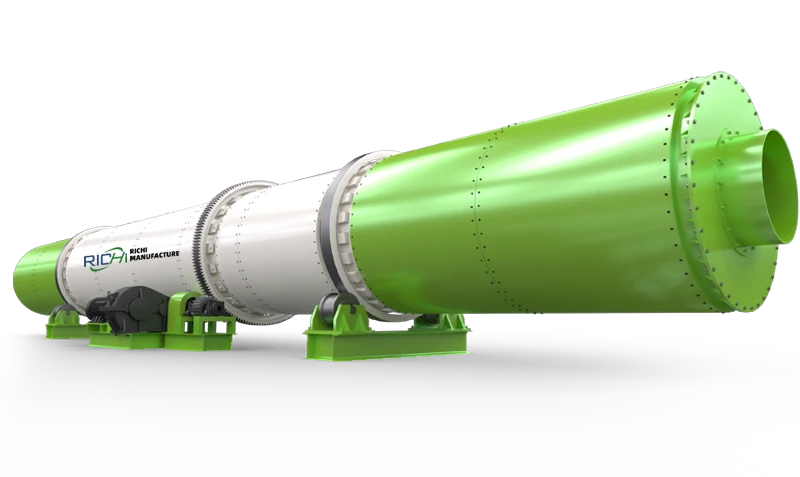
Drying system
04
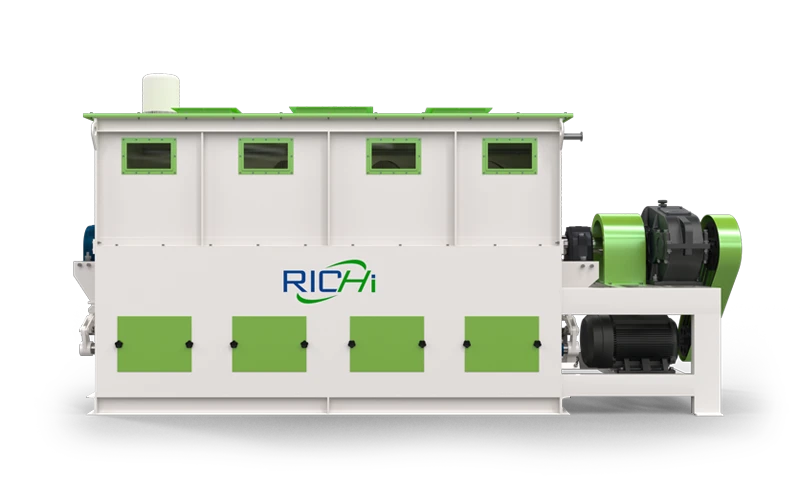
Mixing system
05
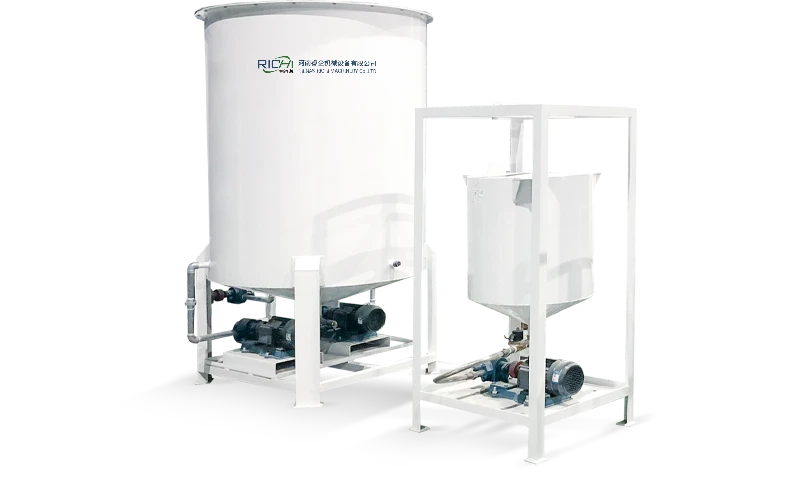
Liquid addition
06
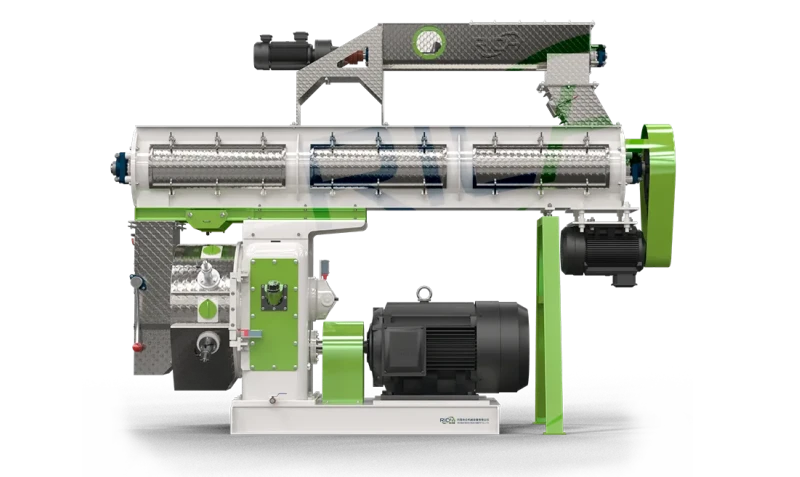
Pelleting system
07
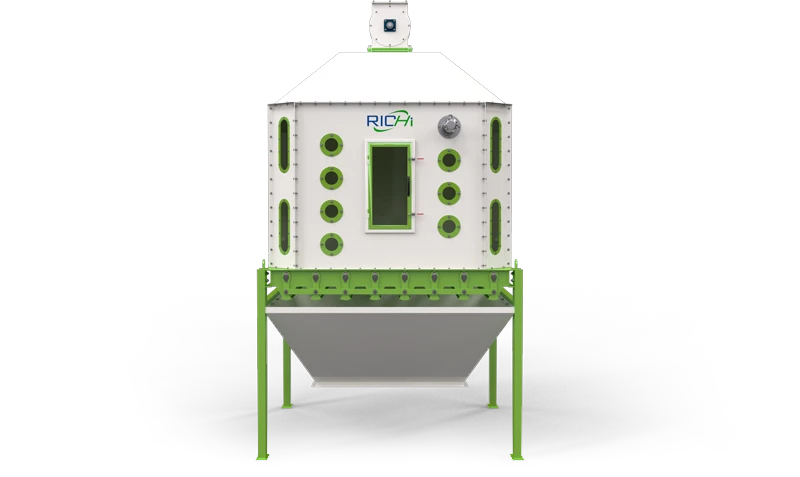
Cooling system
08
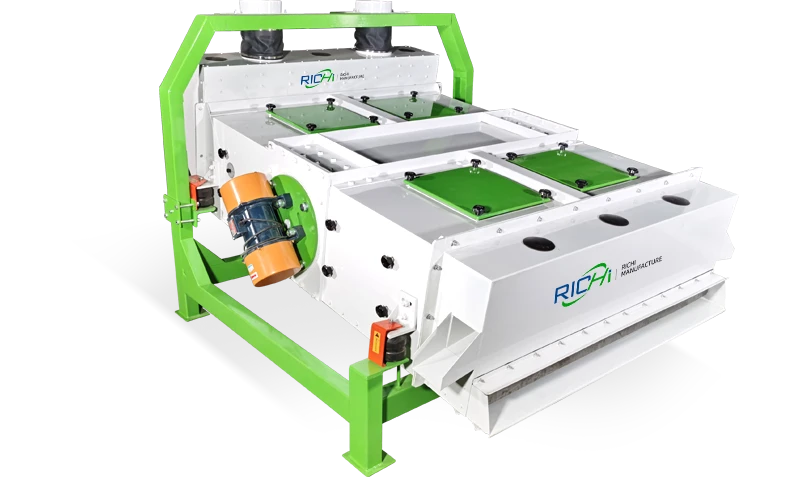
Screening system
09
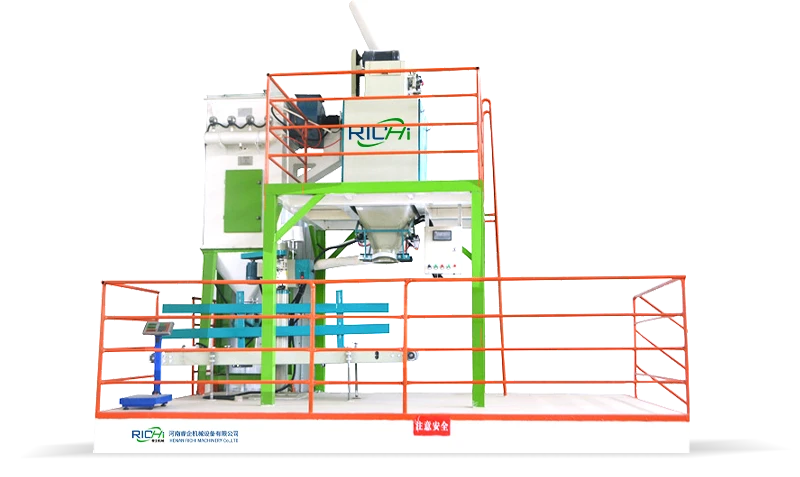
Packaging system
10
Customized Engineering & Modular System Design
Goat feed systems rarely come in a “standard shape.” One site is pushing straw-heavy rations with unstable moisture, another is running fine-ground grain mixes at higher density, and a third is trying to combine both into a single shift without stopping the line. That’s usually where a properly designed goat feed mill stops being just equipment and becomes a layout problem first, machine list second.
And that’s where design decisions become very “real.” Straw length, grain fineness, moisture fluctuation, even building height constraints — I’ve seen all of them force changes in the layout. A goat feed mill handling alfalfa hay behaves nothing like one processing cassava meal or rice bran blends. Some clients want mash feed, others insist on 4–6 mm pellets for feed consistency, and a few combine feed types in one system.
Below are real engineered configurations we’ve delivered for different regions and operating conditions.
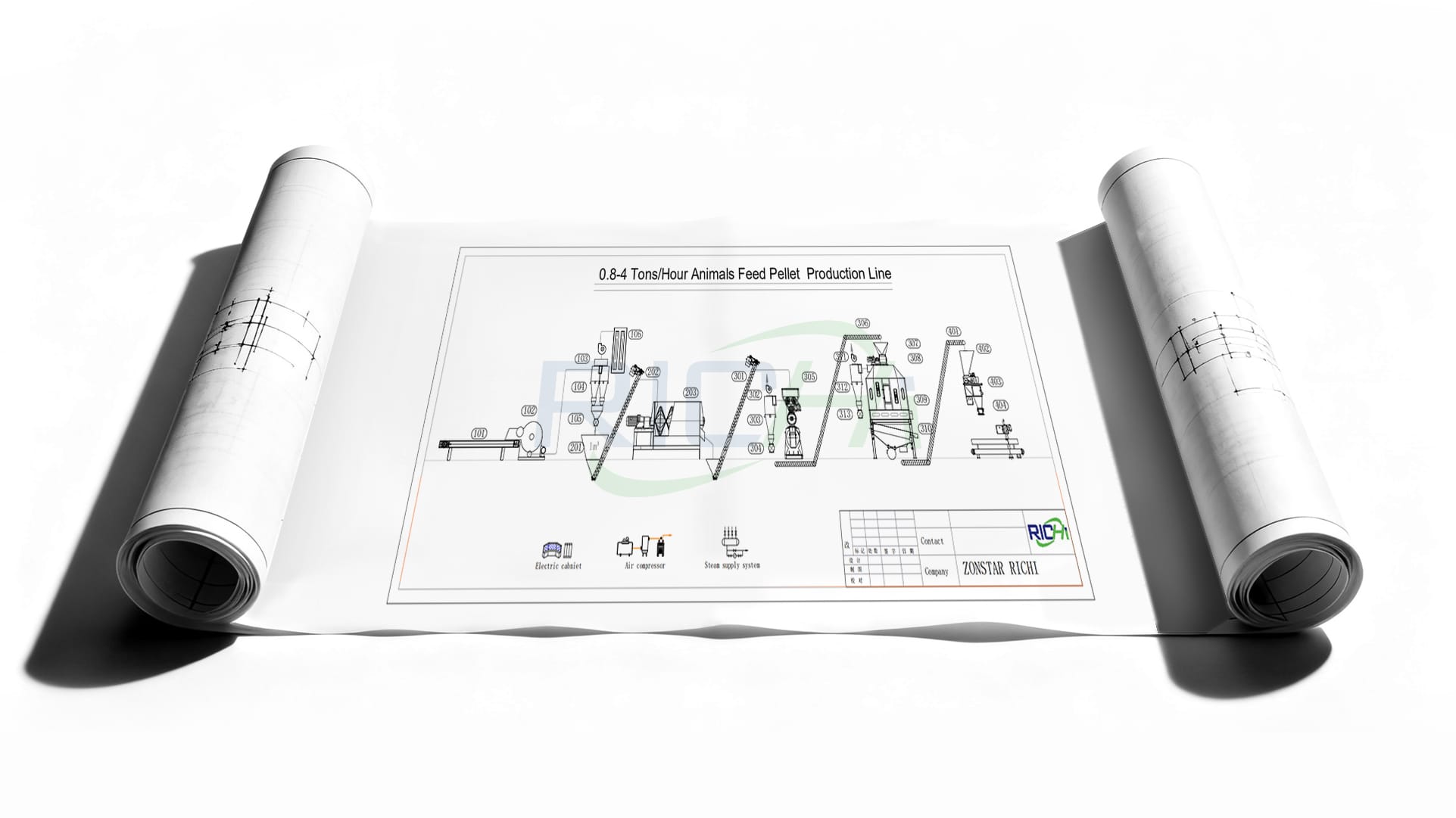
0.8–4T/H Automatic Goat Feed Mill Design (Crop + Grain Formula)
Process Flow: Grinding → Batching → Mixing → Pelletizing → Cooling → Screening → Packing
This setup is typical for mixed-use farms and small commercial feed producers. One project in Mexico (built 2025, stable production since commissioning) used corn, sorghum, soybean meal, alfalfa hay, and wheat bran in shifting formulations depending on herd stage.Pellet size mainly controlled at 4–8 mm depending on formulation density.
The key engineering point here was not capacity — it was height limitation. The workshop ceiling was low, so we replaced vertical conveying with a combined screw + scraper conveyor layout. It kept the line compact but added one trade-off: slightly higher maintenance frequency on transfer points.
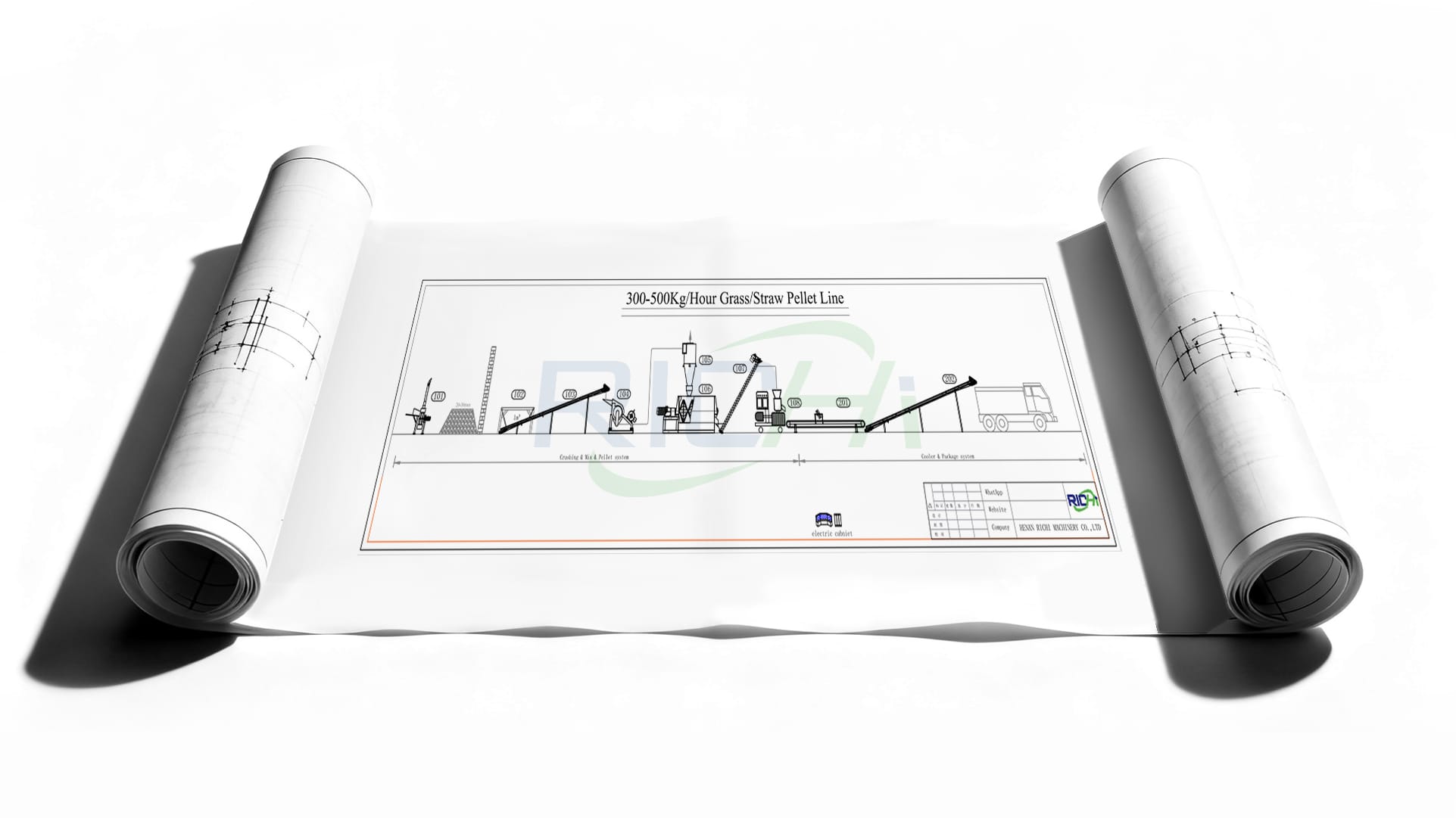
0.3–0.5T/H Small Goat Feed Mill Design (100% Grass + Straw Formula)
Process Flow: Chopping → Secondary Grinding → Mixing → Pelletizing → Natural Cooling Conveyor → Bulk Discharge.
A very “direct” system. No packing section, no complex cooling tower. Installed for a small livestock user in Uzbekistan (commissioned 2024) dealing almost entirely with wheat straw, barley residue, corn stover, and limited alfalfa. The main challenge wasn’t the machine — it was material variability. Straw moisture swings after drying were significant, so we added a secondary mixing stage just before pelletizing.
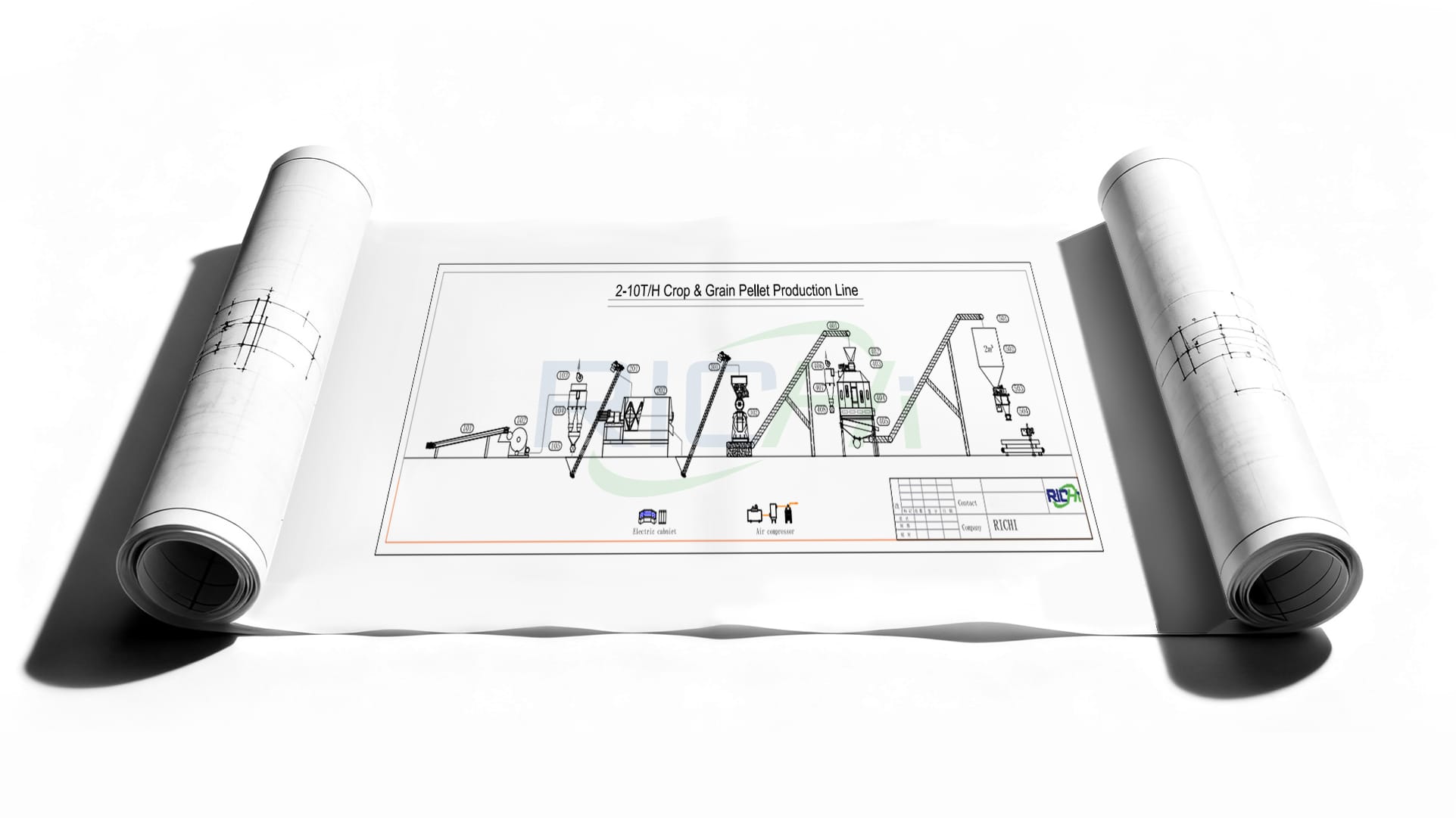
2–10T/H Fully Automatic Goat Feed Plant Design (Crop + Grain + Grass Blend)
Process Flow: Raw Material Receiving → Grinding (optional) → Batching → Mixing → Pelletizing → Cooling → Screening → Packing.
This is a multi-feed production model rather than a single formula line. A Russia project (commissioned 2025) used barley, oats, wheat bran, alfalfa hay, and straw pellets, producing feed for goats, sheep, and cattle on the same system. One interesting point — grain was pre-ground externally by the client. That changed everything inside the plant.
We removed one crushing stage and redistributed load toward batching accuracy instead. Pellet diameter fluctuates between 3–6 mm depending on livestock type. Operators usually switch recipes 3–5 times per day, which means mixing uniformity matters more than machine speed.
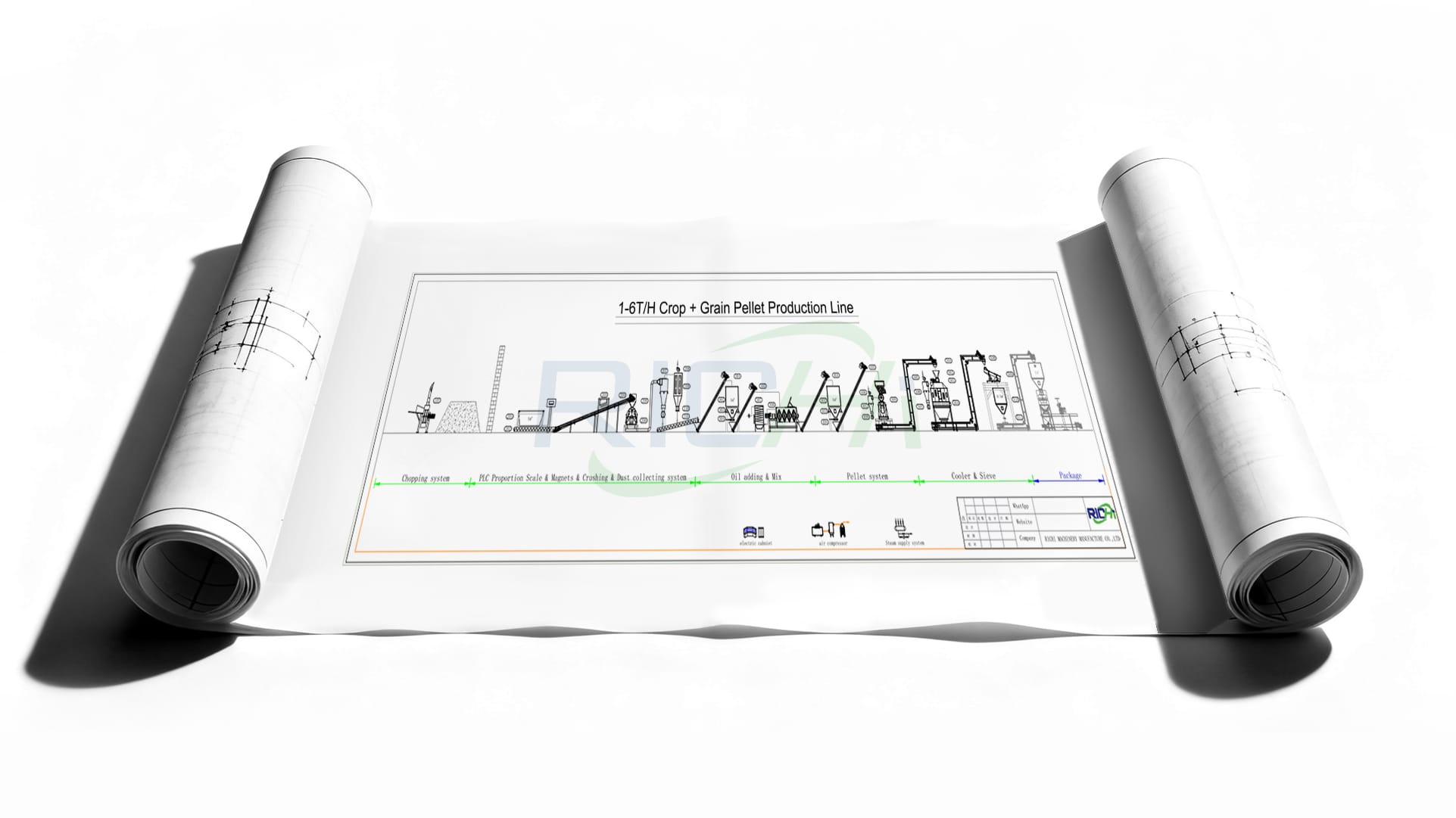
1–6T/H Goat Feed Unit Design (Crop Straw + Grain Formula)
Process Flow: Straw Chopping → Batch Grinding → Dosing → Mixing → Pelletizing → Cooling → Screening → Automatic Packing.
This configuration was implemented in Zimbabwe (2023 installation, full operation 2024). The defining feature was raw straw bundles — not pre-cut material. We had to introduce a dedicated straw chopping system before anything else. Without it, feeding stability drops immediately.
The client originally underestimated how inconsistent bale density would affect downstream grinding load.Pellet output mainly 5–8 mm. Mixing uniformity becomes critical because grain proportion varies widely depending on feed type (goat, cattle, poultry on same plant line).
Global Installed Goat Feed Production Lines
From small farms to commercial feed manufacturers, our goat feed mill projects have been designed for different production goals, local raw materials, and feeding systems in many countries. Each project is developed according to the customer’s available ingredients, target capacity, and final feed requirements — including goat pellets, mash feed, concentrate feed, grass-based feed, and mixed animal feed production. Whether the customer needs a compact goat feed factory for a farm or a large goat feed manufacturing plant for commercial production, we can customize the complete processing system from raw material handling to finished feed packing.
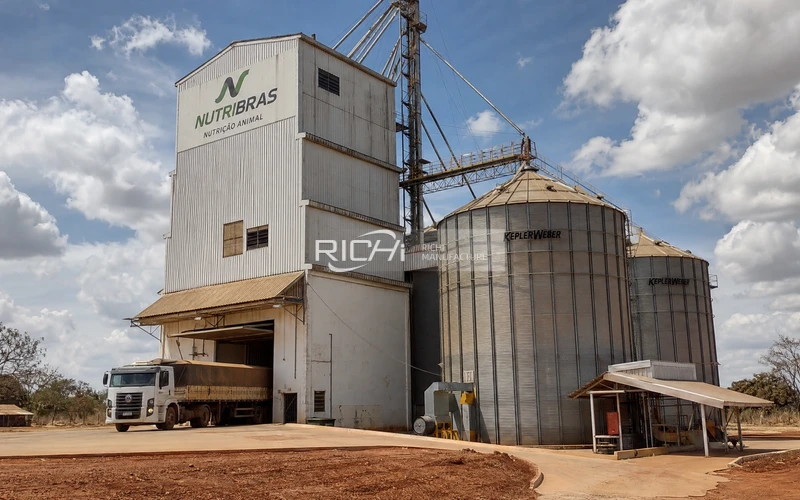
Mixed Animal Feed Plant
Brazil
This 8T/H feed production project was developed for a commercial livestock producer requiring multiple feed types. Besides goat feed pellets, the goat feed factory also handles cattle and sheep feed using corn, soybean meal, citrus pulp, and local agricultural by-products. The flexible design allows quick switching between different formulations.
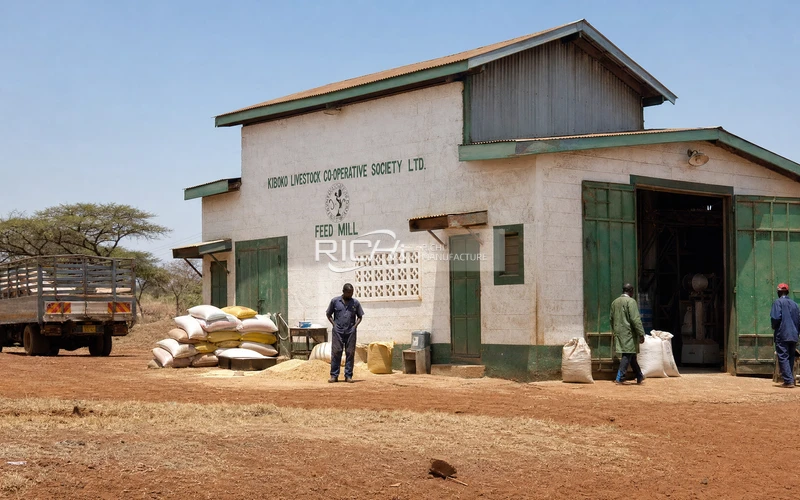
Straw Based Goat Feed Line
Nigeria
This 1-2T/H goat feed production plant was developed around local agricultural waste utilization. The customer uses maize straw, sorghum residue, wheat bran, and protein supplements to manufacture affordable goat pellets. The project focused on improving the value of local crop residues through a complete goat feed processing system.
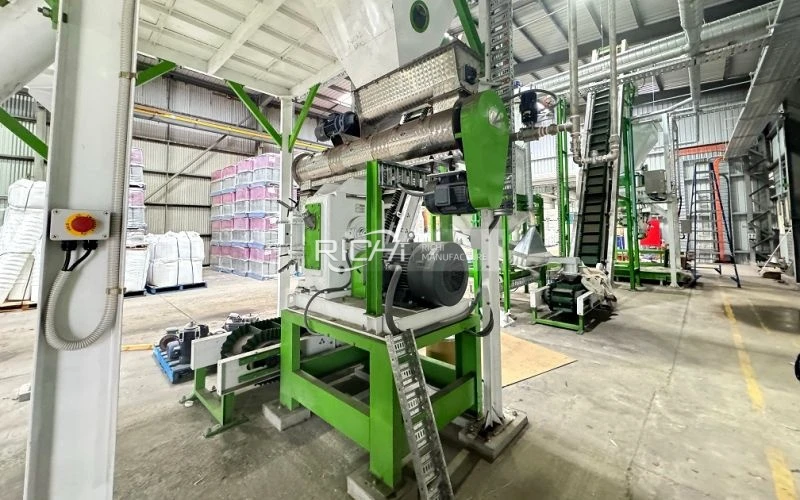
Barley Goat Feed Plant
Turkey
This 5T/H goat feed plant project was designed around local grain resources. The customer mainly uses barley, wheat, sunflower meal, and alfalfa to produce goat pellets and sheep feed. The goat feed machinery was configured for efficient processing of grain-based formulas with different pellet sizes.
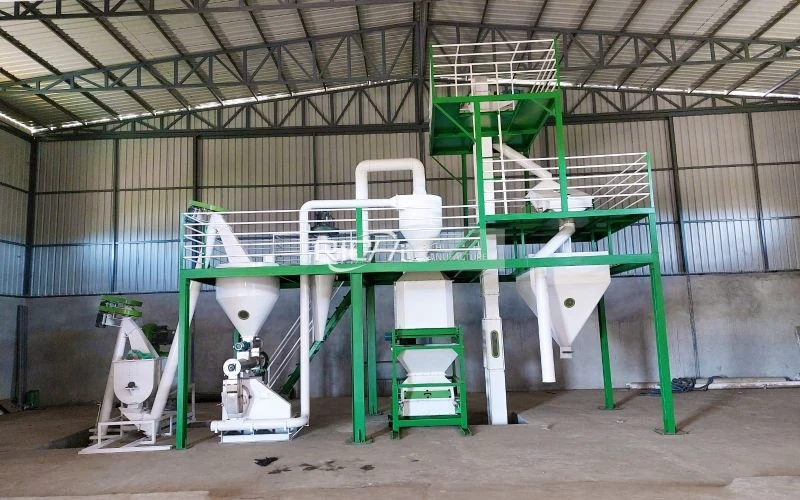
Small Farm Goat Feed Line
India
Designed for a local goat farm expanding from traditional feeding to commercial feed production, this 1-2T/H goat feed mill processes corn, wheat bran, soybean meal, groundnut cake, and mineral additives. The system produces small-diameter goat feed pellets and mash feed for different growth stages.
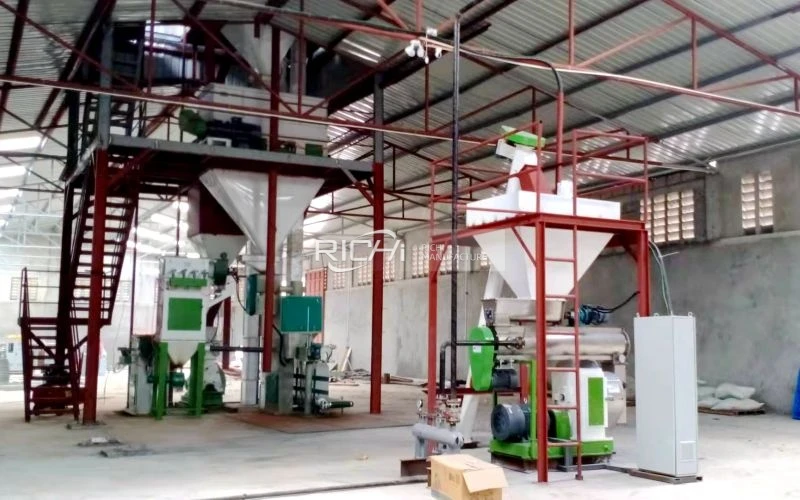
Corn Based Goat Feed Line
Philippines
For a growing livestock business, we supplied a 3T/H goat feed production line based on locally available corn, rice bran, copra meal, and soybean ingredients. The goat feed pellet plant was designed for producing energy-rich goat pellets suitable for small and medium goat farms.
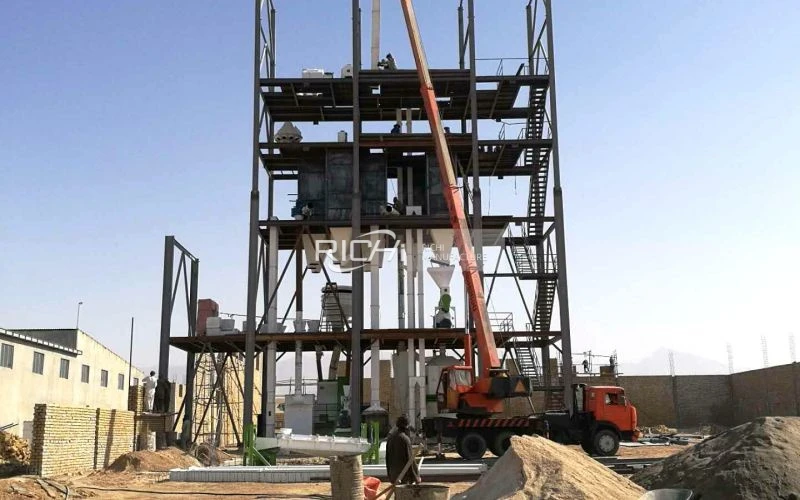
Multi Formula Feed Plant
Pakistan
A livestock feed producer invested in this 6T/H goat feed mill to manufacture different formulas for goats, sheep, and cattle. The complete goat feed production line includes crushing, mixing, pelletizing, cooling, and packing sections for processing wheat bran, maize, rice polish, cottonseed cake, and mineral mixtures.
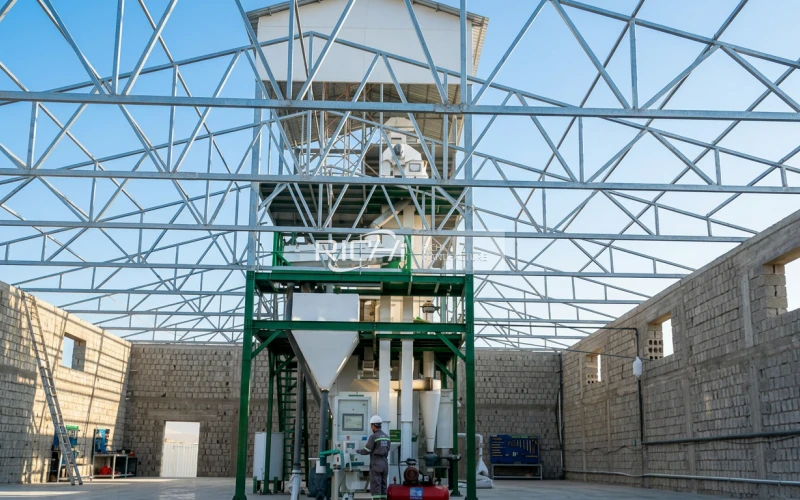
Desert Livestock Feed System
Sudan
For a livestock investment project in a dry region, we designed a 3T/H goat feed processing line using sorghum, sesame cake, wheat bran, and locally available crop residues. The goat feed factory solution combines concentrate feed and roughage pellet production according to local feeding conditions.
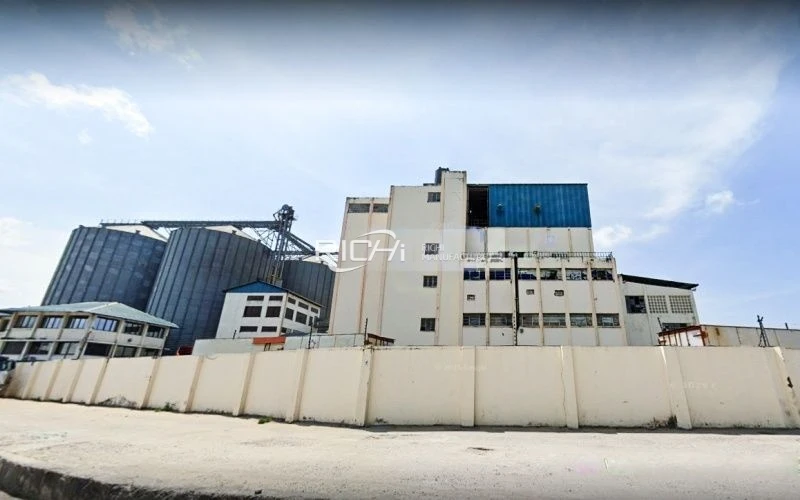
Commercial Goat Feed Factory
Egypt
This 12T/H goat feed manufacturing plant was built for a commercial feed producer supplying multiple farms. The production line supports goat feed pellets, cattle feed, and sheep feed using corn, wheat bran, soybean meal, and agricultural by-products.
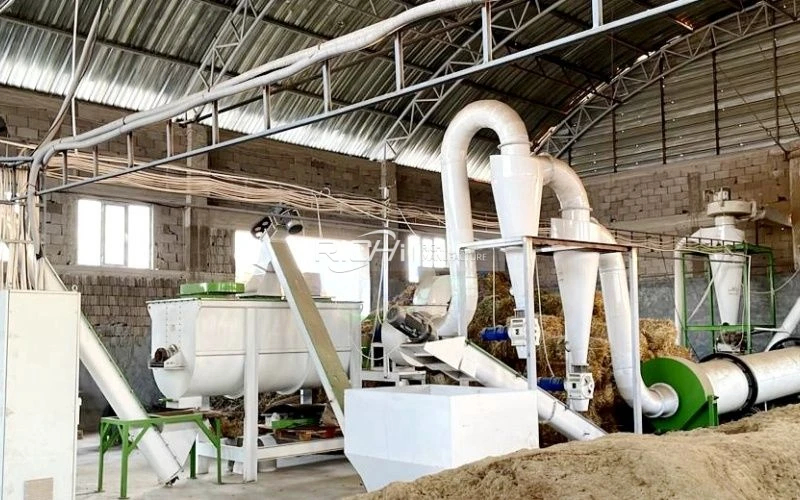
Grass Pellet Production Line
Kenya
This project focused on converting available forage resources into stable feed products. The 2T/H goat feed processing plant uses Rhodes grass hay, maize stalk, alfalfa, and supplementary ingredients to produce roughage-based pellets. The customized design considered the lower density and higher fiber content of grass materials.
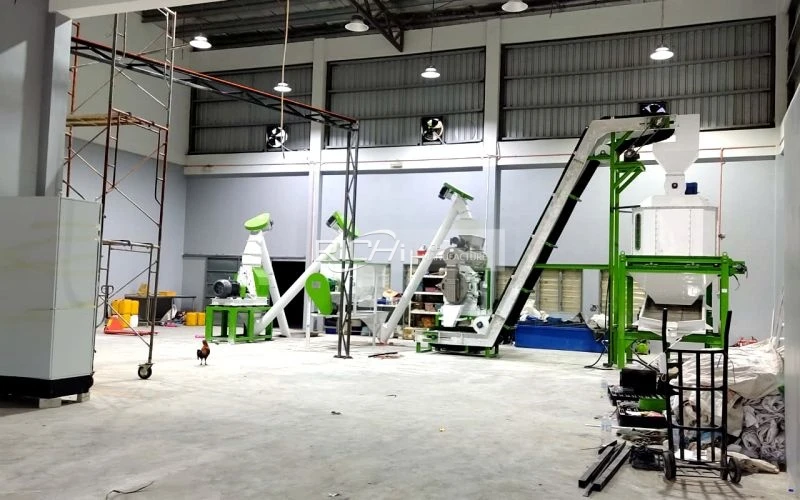
Rice Bran Goat Feed Line
Bangladesh
This 2T/H goat feed pellet production line was designed for a farm group using locally available rice bran, broken rice, soybean meal, and oil cake. The compact goat feed making machine configuration fits limited factory space while still providing stable pellet quality for daily goat feeding.
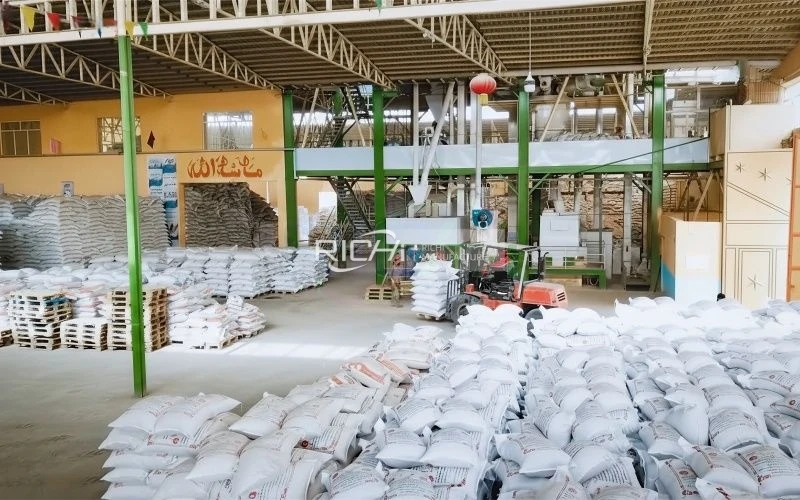
Farm Expansion Feed Project
Iraq
This 7T/H goat feed production plant was developed for a livestock farm upgrading from manual mixing to automated production. The complete goat feed mill handles corn, barley, wheat bran, soybean meal, and mineral premix, producing both goat pellets and mash feed.
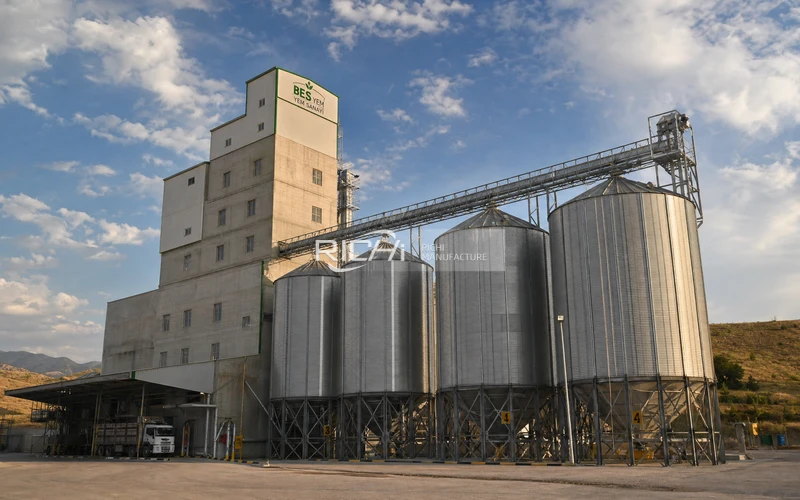
High Capacity Goat Feed Line
Saudi Arabia
Designed for a large livestock enterprise, this 20T/H goat feed mill includes advanced automation and large-scale material handling. The project focuses on producing concentrated goat feed using imported corn, barley, soybean meal, and alfalfa meal while maintaining consistent feed quality.
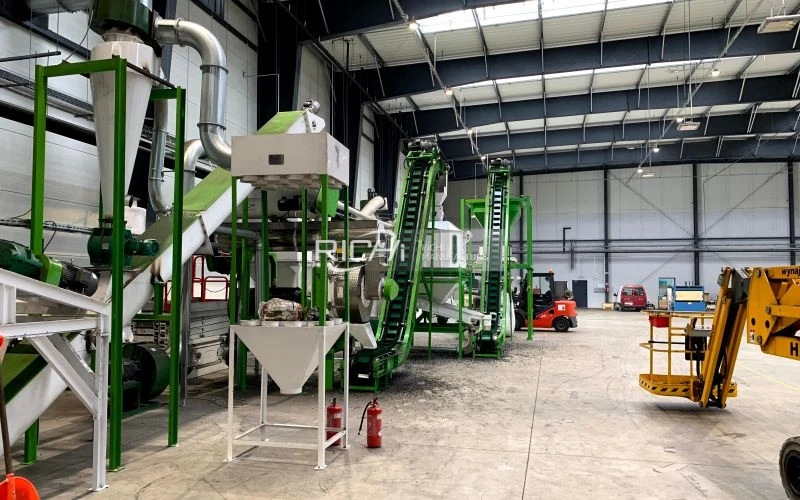
Compact Feed Factory
Vietnam
A 4T/H goat feed manufacturing line was designed for a livestock company producing goat concentrate feed and poultry feed together. The system handles rice bran, corn, cassava residue, soybean meal, and additives, allowing the customer to operate a complete goat feed factory with multiple product options.
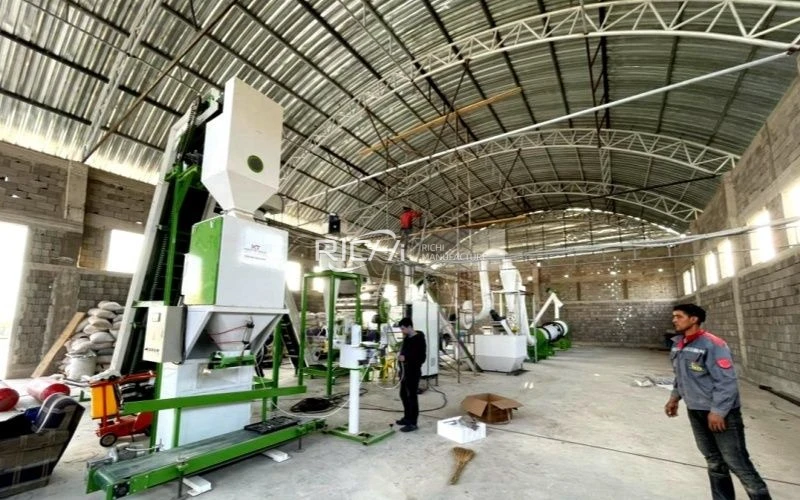
Industrial Goat Feed Mill
Iran
A larger livestock company selected this 10T/H goat feed manufacturing plant for commercial goat concentrate production. The system processes barley, corn, wheat bran, soybean meal, and alfalfa meal, with customized formulation handling for different goat production stages.
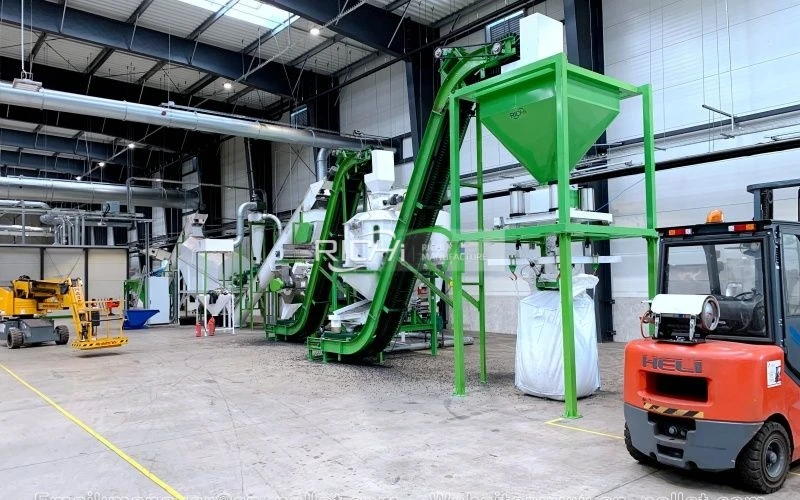
Alfalfa Goat Feed Line
Ethiopia
A 2T/H goat feed pellet plant was designed for processing alfalfa hay, teff straw, maize grain, and protein supplements. The customer needed a solution suitable for local forage conditions, so the goat feed production equipment was customized for higher-fiber materials.
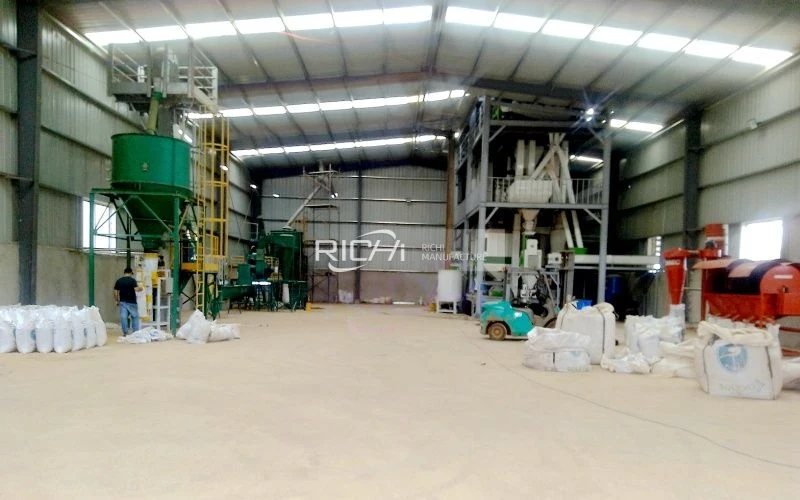
Tropical Feed Production Plant
Indonesia
This 4T/H goat feed production line was customized for a tropical livestock company using corn, palm kernel cake, rice bran, cassava, and soybean meal. The goat feed manufacturing system provides flexible production of goat pellets and other animal feed products from locally available materials.
Across Tunisia, Afghanistan, Morocco, and Sri Lanka, we’ve delivered goat feed mill systems ranging from small 0.5 t/h farm units to multi-feed integrated plants above 8 t/h. Pellet feed, mash feed, premix blending—all running on the same core design philosophy, just adjusted for local feed habits and material reality. What follows are direct customer-style feedback notes recorded after start-up and stabilization.

Tunisia – 3.5T/H Mixed Ruminant Line Feedback
- Role: Feed mill supervisor (mid-sized livestock cooperative)
- Project type: Multi-formula goat & sheep feed line
“We mainly process goat feed mixed with barley and olive by-products. At first, the problem was fiber separation—olive residue behaves differently from grain, it floats in the mixer. Your engineer adjusted the mixing time curve and changed the paddle angle. That fixed it.” He mentioned they now alternate between goat feed and sheep feed on the same goat feed mill system, switching formulas twice a day without stopping production.

Afghanistan – 1.2T/H Rural Goat Feed Line Feedback
- Role: Farm operations manager
- Project type: Small rural goat feed mill for local supply
“In our region, wheat bran and barley are not stable in moisture. Sometimes very dry, sometimes not. The pellet density used to change every batch before your system adjustment. We remember this site clearly—the main issue wasn’t capacity, it was inconsistent raw material moisture and straw content variation. After adding pre-conditioning tuning and adjusting die compression ratio, output stabilized around 1.1–1.3 t/h.”

Morocco – 4T/H Goat Feed Production Feedback
- Role: Plant technical engineer
- Project type: Crop-based goat feed mill plant
“We didn’t expect alfalfa hay to behave like this in summer. It gets too brittle. The hammer mill load fluctuated heavily in the first week.This was a crop-heavy formulation: corn, barley, alfalfa hay, sunflower meal. We adjusted airflow inside the grinding section and optimized feeding speed into the pellet mill. Not a textbook change—more like tuning under live production.” He specifically noted that pellet durability improved after recalibration, especially for transport over longer farm routes.

Sri Lanka – 2.5T/H Multi Feed System Feedback
- Role: Private feed business owner
- Project type: Multi-purpose feed production system (goat + mash feed)
“We are not only making goat feed. Sometimes fish feed mash, sometimes poultry feed. The flexibility was more important than speed.This site runs a goat feed mill plus mash feed production in parallel mode. The tricky part was cross-contamination between fine powder and pellet batches.We modified the discharge sequencing and added a buffer bin between grinding and mixing stages. Small change, but it reduced product mixing errors significantly.”

Goat Feed Mill Capacity-Based Solutions
Every goat feed mill project we deliver is designed around a very specific production scale, and each scale behaves like a different plant, not just a different machine size. A small farmer’s line, a commercial feed factory, or a multi-feed integrated plant — they don’t just differ in output, they differ in how investment is recovered, how much floor space gets blocked by conveyors, and how sensitive the system is to raw material inconsistency. In many cases, the same goat feed mill for sale configuration can be re-optimized simply by adjusting pre-processing and batching logic instead of replacing core equipment.
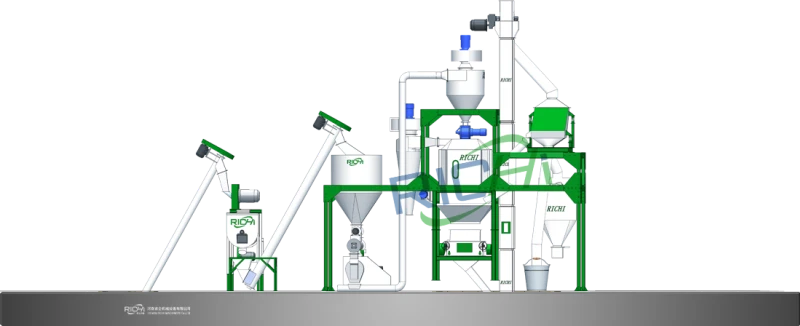
This scale is suitable for small and medium farms, local livestock operators, and new investors who want to produce their own goat feed instead of purchasing finished feed. The compact design requires lower investment and limited factory space while still allowing stable production of pellet or mash goat feed.
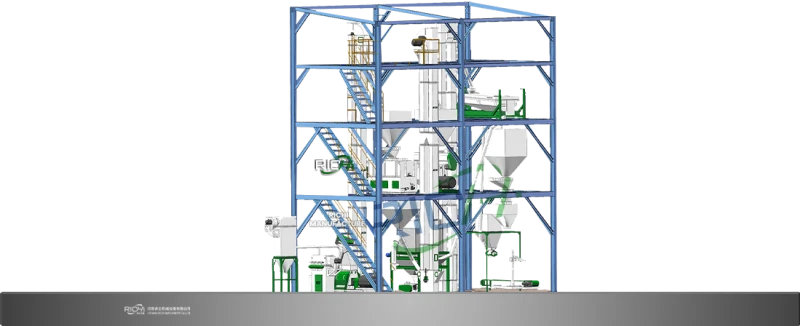
3-4 t/h animal feed production plant
This capacity is commonly selected by growing farms, agricultural cooperatives, and small commercial feed producers serving nearby livestock markets. It provides a balance between production efficiency and investment cost, making it suitable for customers planning regular goat feed manufacturing with moderate output demand.
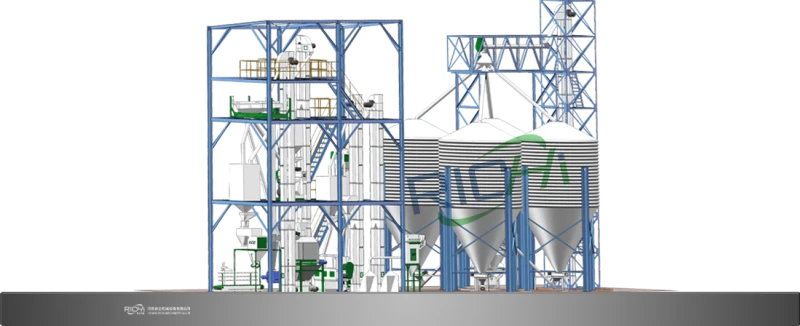
5-7 t/h animal feed pellet plant
This production scale is designed for established farms and feed businesses that need higher daily output and more flexible feed processing options. Customers choosing this capacity usually require larger raw material handling systems, improved automation, and dedicated space for continuous goat feed production.
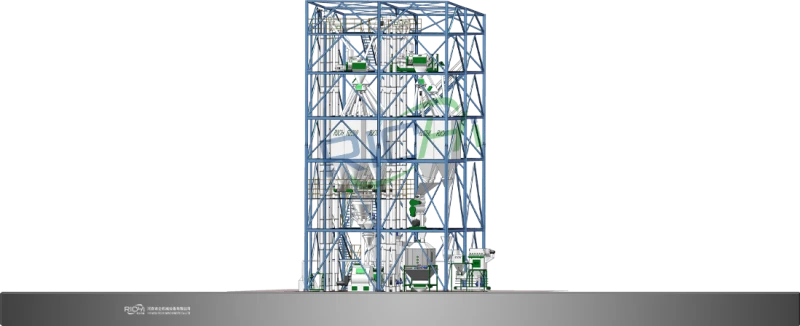
8-10 t/h animal feed processing plant
An 8-10T/H solution is suitable for commercial livestock feed manufacturers and large farming companies supplying multiple goat farms. This type of goat feed mill normally requires a more complete production layout, higher storage capacity, and stronger processing ability for different feed formulations.
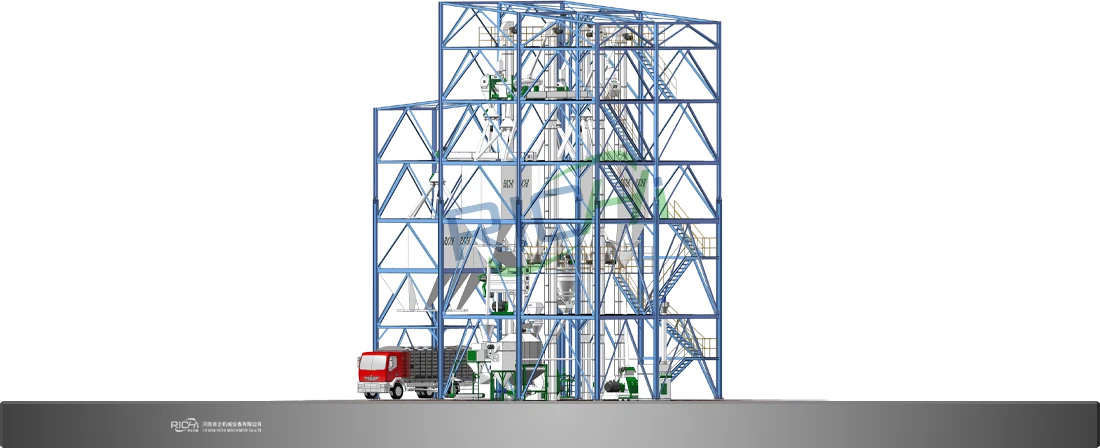
12-20 t/h feed preparation plant
This scale is often selected by regional feed suppliers and agricultural companies developing a professional goat feed production business. The larger production capacity allows customers to manufacture different feed types while improving equipment utilization and reducing production costs per ton.
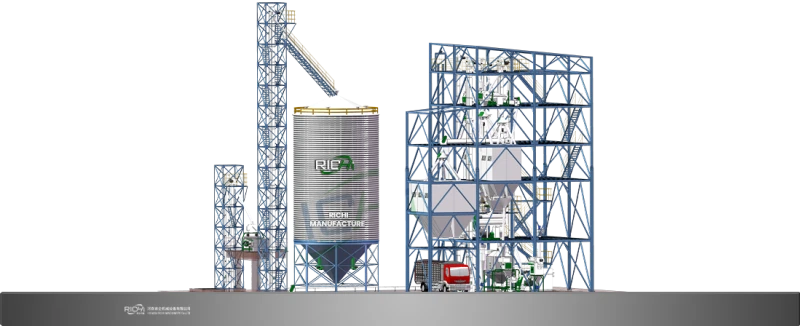
25-40 t/h feed pellet production line
A 25-40T/H plant is suitable for industrial feed manufacturers and companies with a wider livestock customer base. These projects usually involve complete production systems with advanced batching, larger warehouses, and customized processing functions for multiple animal feed products.
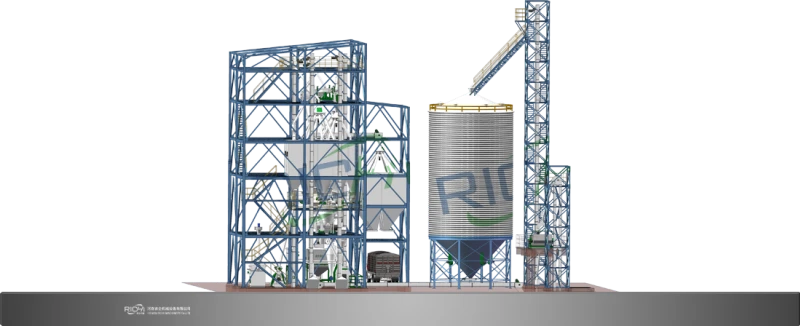
50-60 t/h commercial feed mill
This capacity is designed for large commercial feed factories requiring continuous production and strong market supply capability. A goat feed mill at this scale usually integrates high-efficiency equipment, automatic control systems, and large-scale raw material management facilities.
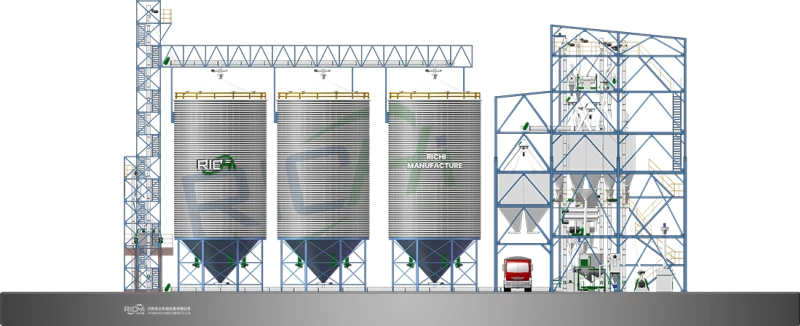
60-80t/h complete feed mill plant
This production range is suitable for major feed enterprises and integrated agricultural groups operating large livestock supply networks. These projects require professional factory planning, optimized equipment arrangement, and sufficient land area to support high-volume feed manufacturing.
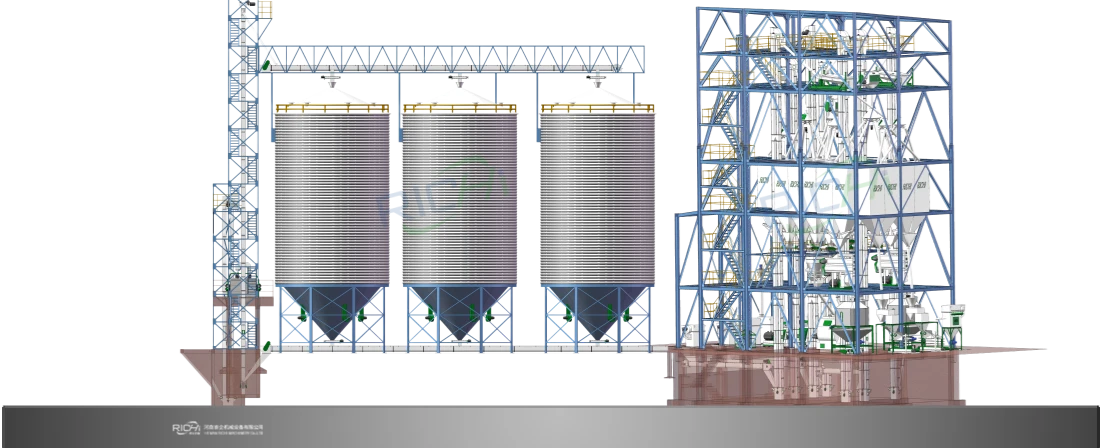
An 80-100T/H solution is developed for large-scale feed manufacturers producing for multiple farms, distributors, or regional markets. This level of production requires complete industrial facilities, advanced automation, and carefully designed logistics for raw materials and finished products.
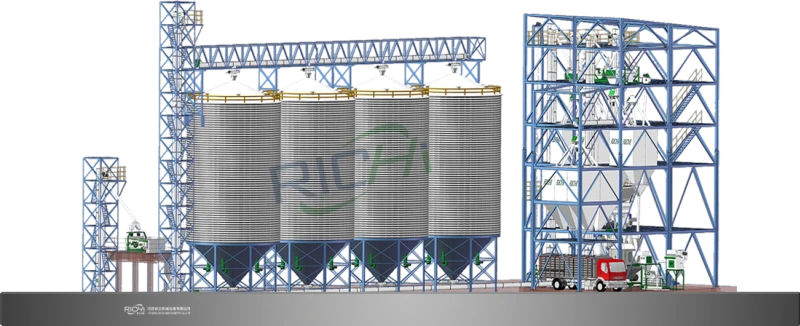
100-120 t/h feed mill engineering
This is a large industrial goat feed manufacturing solution designed for companies investing in high-capacity feed production plants. Projects of this scale normally include complete processing systems, extensive factory infrastructure, and customized engineering planning to meet long-term commercial production goals.
Goat Feed Mill Investment Cost Breakdown
Goat feed mill investment numbers are never just “equipment price + installation.I’ve seen goat feed mill projects fail not because of machines, but because someone underestimated civil works, or assumed raw material storage could be improvised with open yards. Once production starts, those gaps become expensive corrections.
So this breakdown is closer to what we actually see on site — real goat feed mill investment structure, from lowest-budget rural setups to fully industrial plants. The numbers below reflect global project variations, especially across Africa, South Asia, and Middle East conditions where infrastructure changes everything.
Whole Manual/Automatic goat feed plant set up investment : $37,000 – $40,000,000
Core Goat Feed Mill Equipment Investment :
Raw material cleaning & pre-treatment system price :
$1,500–$15,000
Grinding / crushing system Price :
$2,000–$40,000
Bale Breaking machine Price :
$5,000–$25,000
raw material Drying machine Price :
$8,000–$250,000
Batching & dosing system Price :
$2,000-$50,000
goat feed Mixing machine Price :
$2,000–$30,000
goat feed pellet machine Price :
$7,000-$80,000
Cooling equipment Price :
$1,500-$18,000
Screening / grading system price :
$2,000-$10,000
goat feed Packing systems Price :
$2,000–$30,000
Conveying machine Price :
$3,000-$40,000+
Dust Collection system Price :
$1,500–$25,000
Liquid/Molasses Addition Price :
$800–$15,000
Silo & storage system Price :
$5,000–$100,000
Control system & automation Price :
$5,000-$100,000
The most reliable way to define investment is not guessing equipment price. It’s testing your raw material first — moisture, fiber length, and grain composition decide everything downstream. If those inputs are clear, we can map the full goat feed mill configuration, optimize cost, and avoid oversizing equipment that never runs at full load. A direct technical discussion usually saves more money than adjusting machines later on-site.

Goat Feed Mill Engineering Services
When we step into a new goat feed mill project, the first thing that usually breaks the plan isn’t the machine — it’s the site itself. Power layout not ready, raw material storage too close to dust-sensitive zones, or civil construction slightly off from the drawing. Happens more often than people expect.
That’s why the service structure around a goat feed mill can’t be “one package fits all”. It’s a sequence — design, fabrication, installation, and then the long tail of operation support that usually decides whether the plant actually runs smoothly or just “runs”.
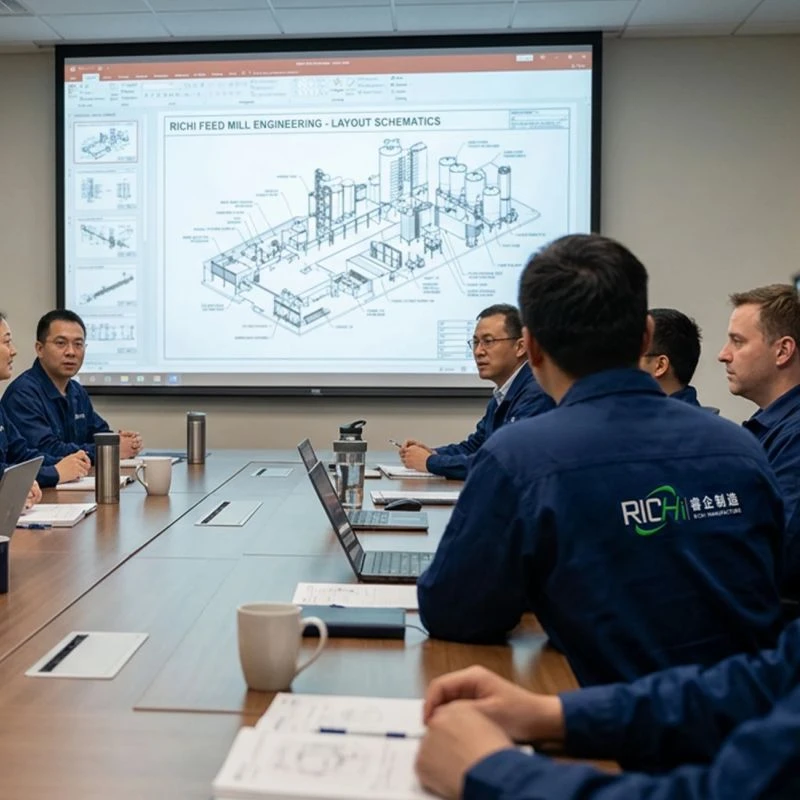
Engineering Design & Tailored Plant Planning
For goat feed mill projects, we don’t just draw a flowchart. We map raw material movement first. Alfalfa meal, corn, soybean cake, mineral premix — each behaves differently in humidity. We design full systems: civil foundation drawings, equipment elevation plans, airflow routing for dust control…
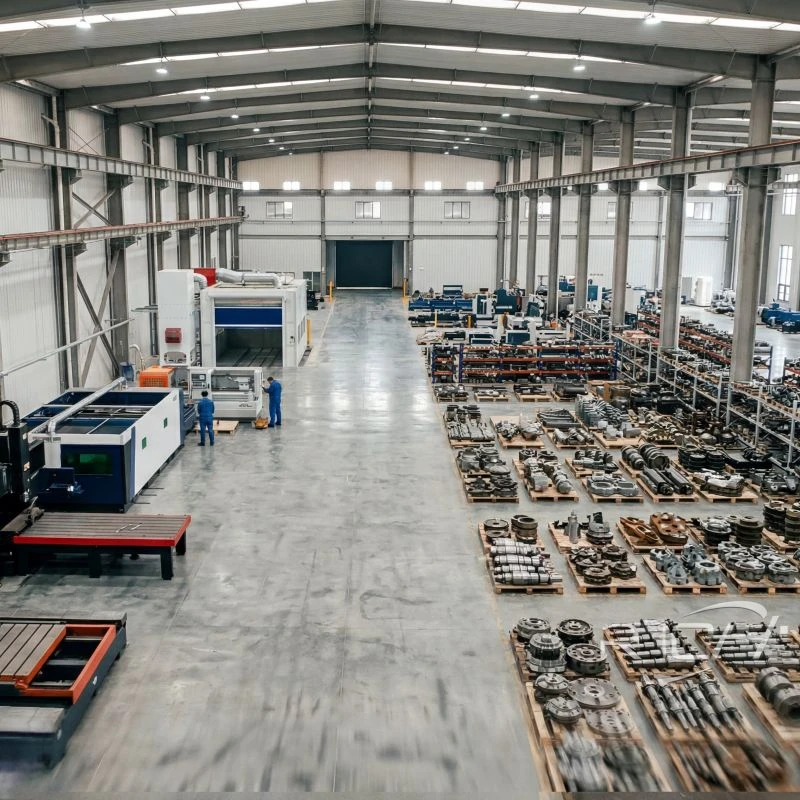
Equipment Manufacturing & Fabrication Control
All core goat feed mill equipment — grinder, mixer, pelletizer, cooler, conveyors — is produced in controlled workshops with CNC machining lines and standardized welding jigs. Not outsourced assembly. You can usually see the difference on site.
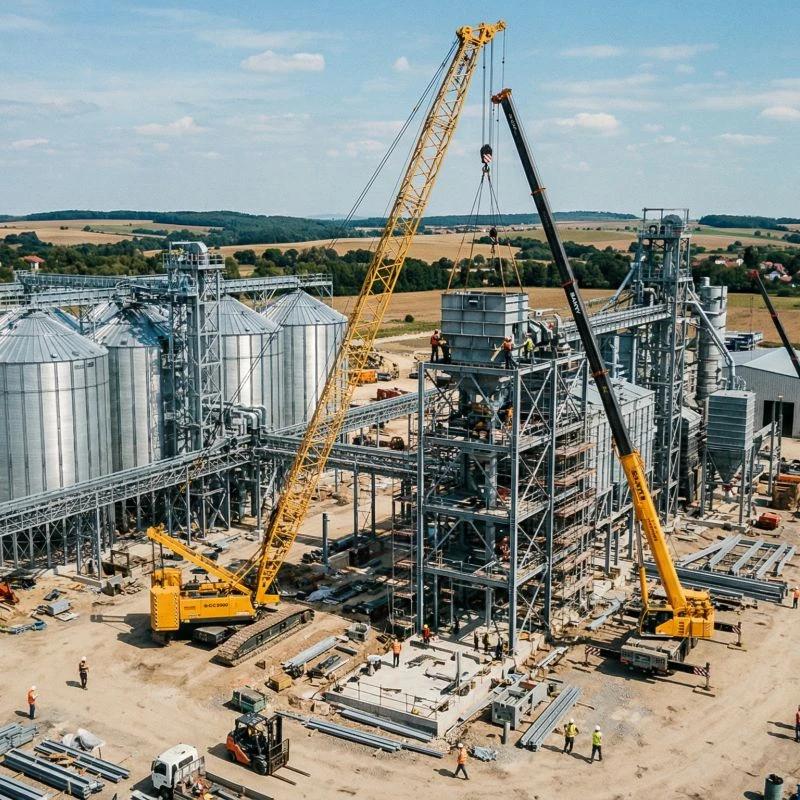
Installation, Commissioning & Operator Training
On-site, we don’t just “install”. We align, calibrate, and test under real raw material conditions. Training is practical. Operators are shown how to read motor load fluctuations instead of relying only on touchscreen values. Small detail, but it prevents overload shutdowns during peak production.
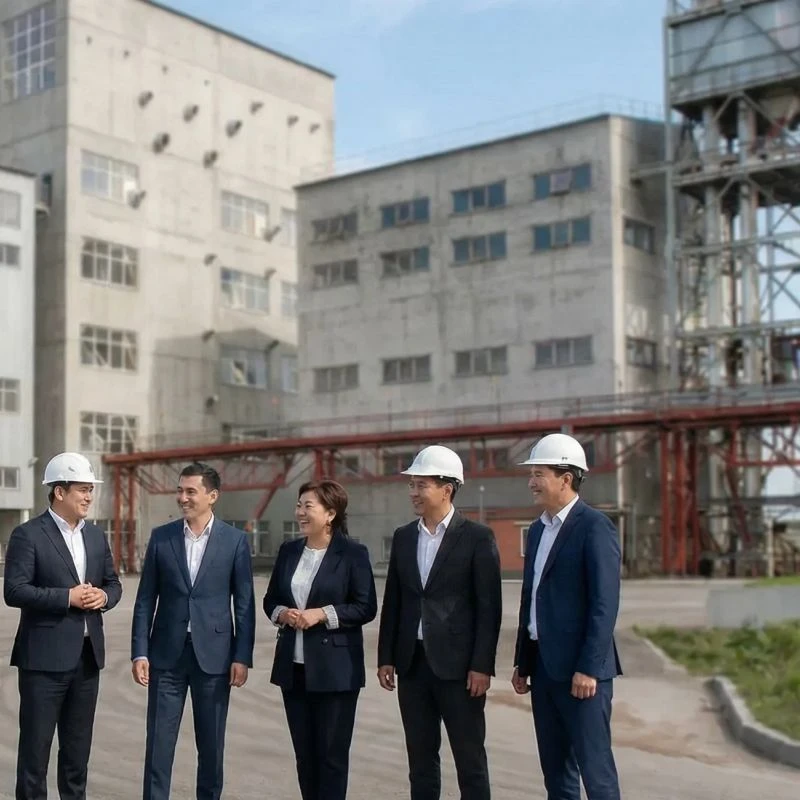
After-Sales Support & Lifecycle Engineering Follow-Up
Goat feed mill systems don’t fail dramatically — they degrade quietly. Output variation, gradual die wear, airflow imbalance in cooling sections. That’s why lifecycle support matters more than initial installation. We track replacement cycles for wear parts like rollers, dies, and bearing sets.
Free Engineering & Design Services
We don’t separate “service” from “engineering”. The so-called free services are basically the front layer of project control — the part that prevents rework later. Below is how we usually structure it on real goat feed mill site discussions.
These services come from accumulated engineering data across multiple goat feed mill installations — not theoretical design sheets, but actual commissioning records from different climates, raw materials, and operating habits.
If you’re planning a goat feed mill project, the most efficient step is usually sharing raw material details and capacity target first. Everything else — layout, cost, configuration — becomes much more precise after that.

Project Cost Estimation (Pre-Feasibility Budgeting)
Process Flow Design + 3D Layout + Engineering Drawings
Factory Engineering Package (Civil, Steel Structure & Electrical Layout)
Equipment Configuration & Project List Matching
Remote Installation Guidance (Lifetime Support Layer)
Operation Guidance & Process Stabilization
Long-Term Training & Workforce Development
Free Production Testing & Raw Material Trial Runs
Goat Feed Mill Equipment
A complete goat feed mill isn’t a single machine. It’s a chain that only works when every link is aligned in capacity and stability.
From raw material intake to final bagging, we typically integrate crushing, batching, mixing, pelleting, cooling, screening, conveying, dust removal, liquid addition systems, and storage silos.
Some clients start with simple lines, others go straight into fully automated systems. Both can work—but only if the configuration matches the actual feed formula and production rhythm.
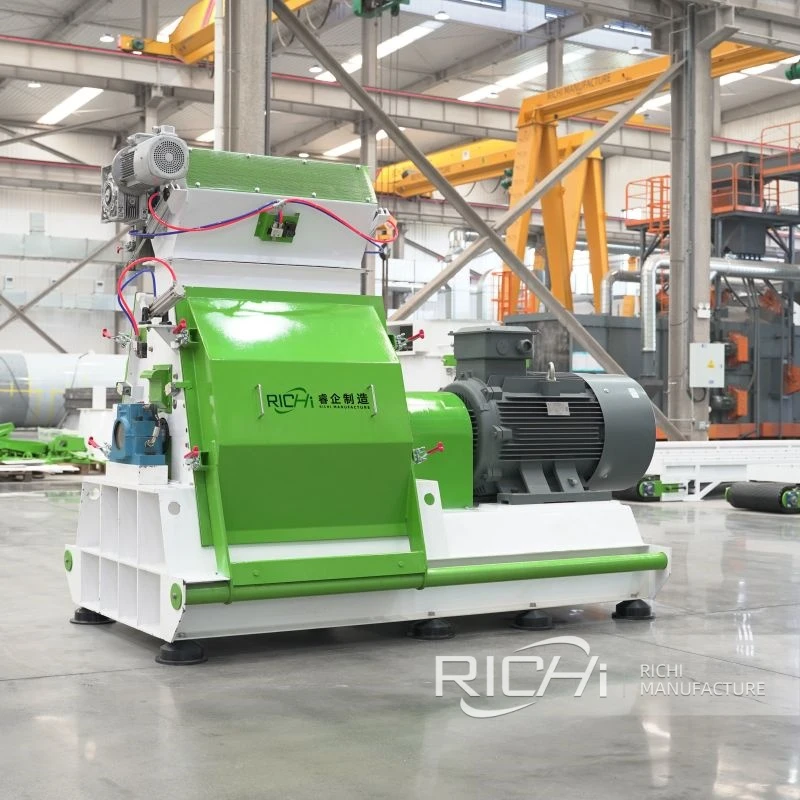
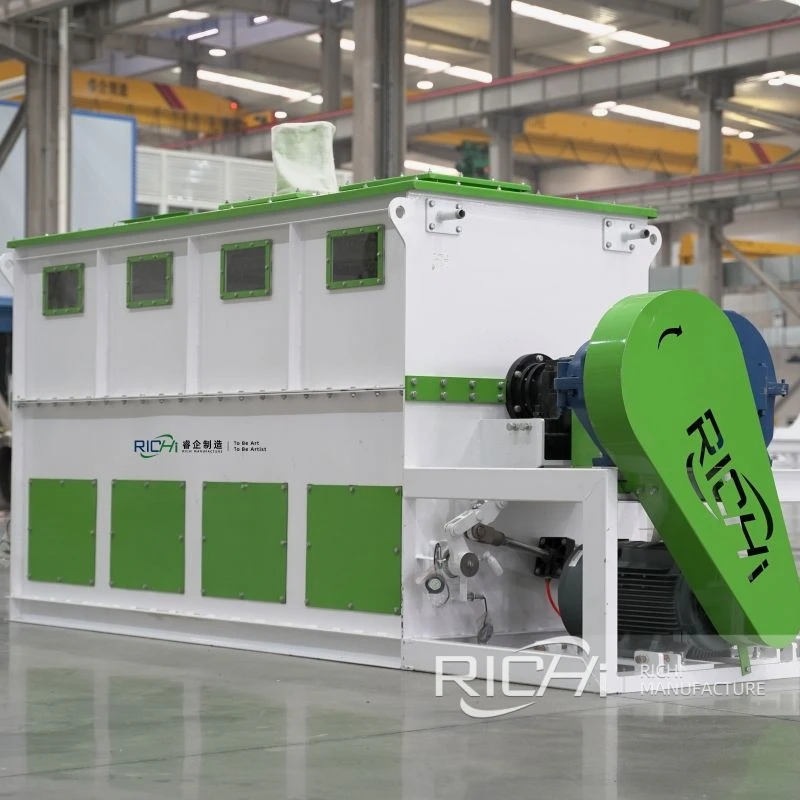
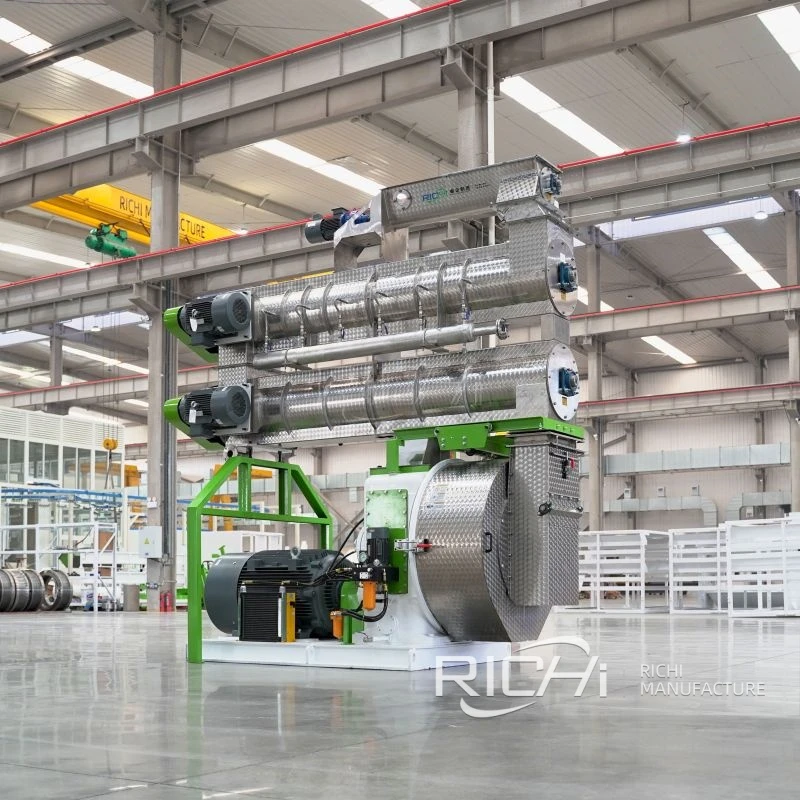
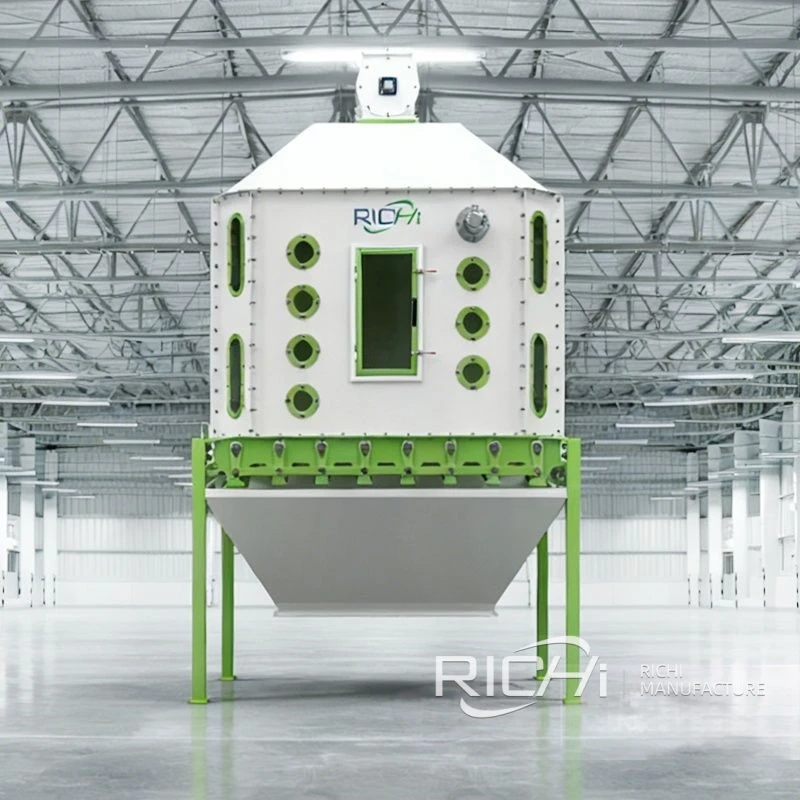
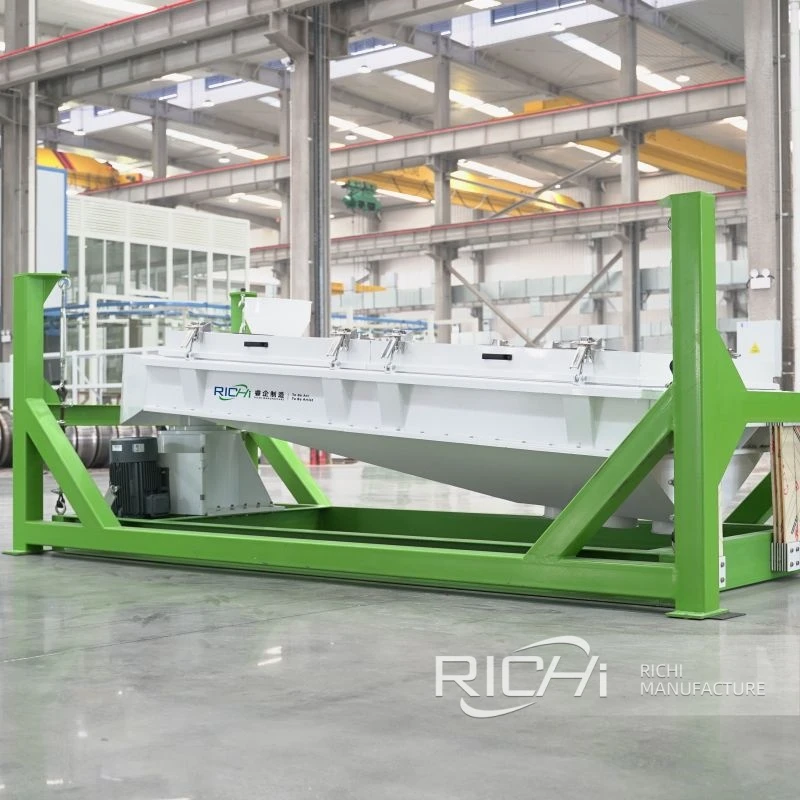
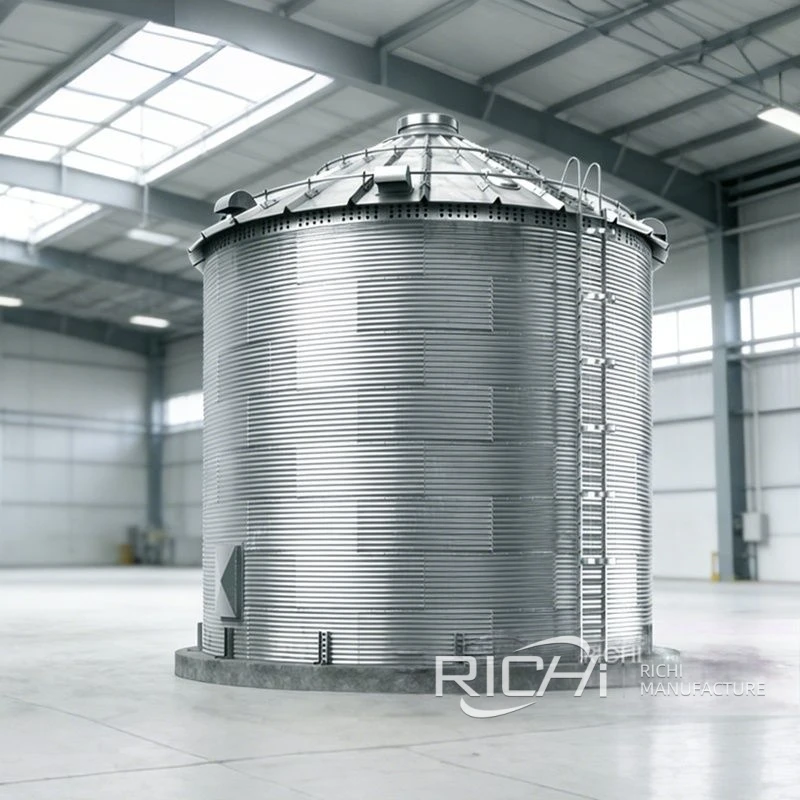
What’s shown above is a fraction of what’s actually running on a typical line — the full fully automatic cattle feed plant equipment list covers every machine, with specs, by category.
Why Invest in a Goat Feed Mill Project?
We often see the same shift happening in different regions—small livestock farms slowly turning into feed self-supply operators. Goat farming is one of the clearest examples. Feed cost volatility is usually the trigger. Corn, soybean meal, forage prices… they don’t stay stable long enough for farmers to ignore processing anymore. That’s where a goat feed mill starts to make sense, not as a luxury, but as control over cost and consistency.
The lines that survive long-term are rarely the most complex ones. They’re the ones designed around real operation behavior—stable raw material flow, simple changeover, and minimal downtime during cleaning. That’s also why integrated feed plants are starting to outperform single-purpose setups. Less idle time. More usable output per shift.
For those exploring entry into this space or scaling an existing feed operation, the next step is usually not theoretical—it’s layout, capacity matching, and cost modeling based on actual raw materials available locally. That’s where discussions usually start to become real.
Talk to an Engineer About Your Goat Feed Project
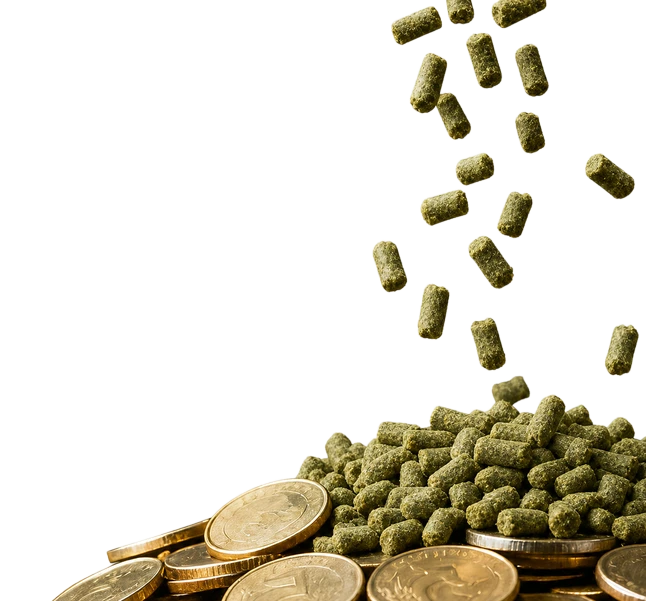
Goat Feed Types, Raw Materials and Processing Logic
When we step into a new goat feed mill project during commissioning, the first thing that always gets adjusted is not the machine—it’s the raw material reality. Corn, soybean meal, wheat bran, alfalfa meal, cottonseed cake, sometimes even unconventional inputs like palm kernel cake or brewery by-products. In some regions, operators insist on adding local fibrous materials that behave very differently inside the pellet die. That’s where the process starts to “talk back” to the design.
Every formulation we deal with ends up shaping the plant differently. Moisture fluctuation, fiber ratio, oil content… these aren’t textbook numbers on paper. They decide whether the line runs smooth at 5 tons per hour or starts choking at the cooler and screener. That’s why we always build the goat feed mill configuration around flexibility first, not just capacity.
Alfalfa Hay

Corn
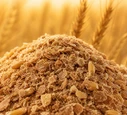
Wheat Bran
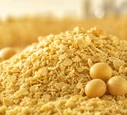
Soybean Meal
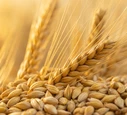
Barley

Sunflower Meal
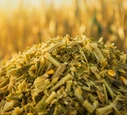
Corn Silage
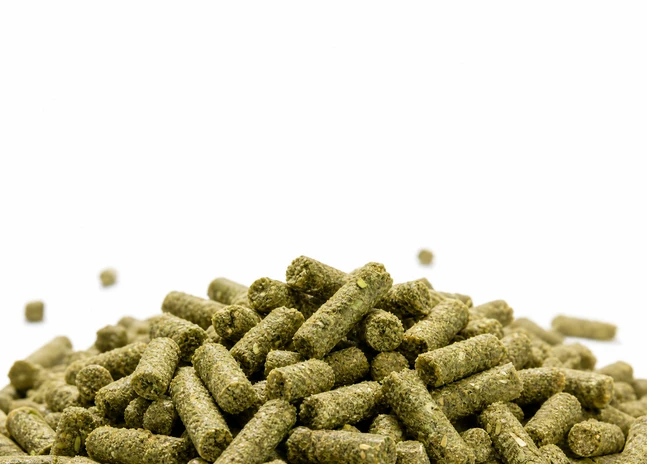
Kid Goat Feed
Young goat feed is sensitive—particle size usually controlled around 1.0–2.0 mm, sometimes even finer for early digestion stages. For this type, soft pelleting pressure is preferred, otherwise crumble rate goes too high after cooling.
Customize Kid Goat Feed Line
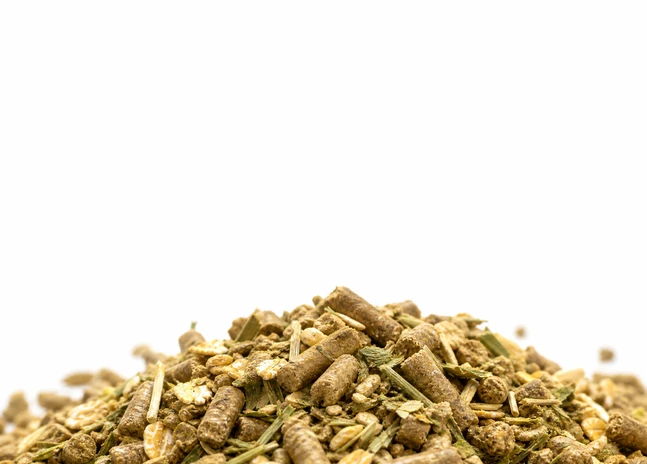
Growing Goat Feed
This stage feed is where fiber balance becomes tricky. Alfalfa meal starts entering in larger proportion, and the mill load becomes less predictable. Typical materials include corn, soybean meal, alfalfa, wheat bran.
Design Growing Goat Feed Line
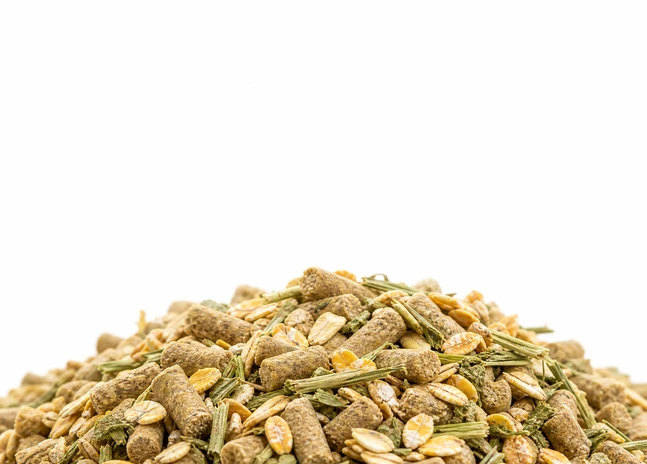
Dairy Goat Feed
Dairy goat formulations behave differently. Higher energy density, more oil inclusion. Sometimes we see molasses sprayed post-pelleting, sometimes mixed directly into conditioner—depends on operator experience, honestly. Corn-soybean base with cottonseed meal or rapeseed meal is common.
Get a Dairy Goat Feed Line Quote
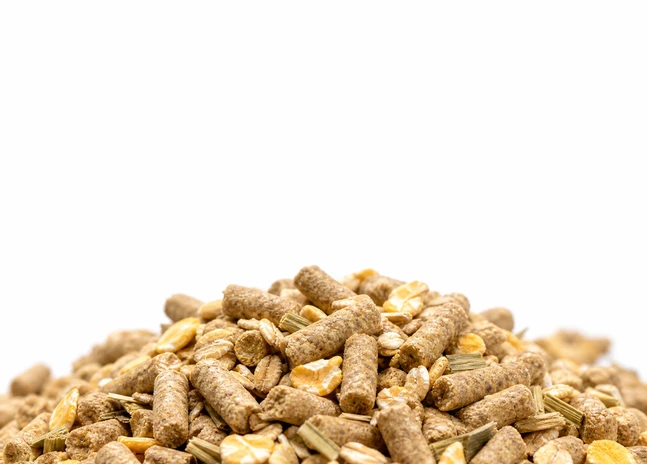
Fattening Goat Feed
This is where production speed matters more than precision. High throughput, dense pellets, less concern about extreme digestibility optimization. Common mix: corn, sorghum, soybean meal, distillers dried grains. In some Middle East projects, we’ve even integrated date palm by-products.
Plan Fattening Goat Feed Line
Typical Goat Feed Formulations
Kid Goat Feed Formula (Starter Type)
Corn meal
35%
Soybean Meal
28%
Whey powder
10%
Fish meal
8%
Wheat bran
15%
Premix
4%
…
…
Growing Goat Feed Formula (Development Stage)
Corn
40%
Soybean meal
22%
Alfalfa meal
18%
Wheat bran
15%
Molasses
3%
Additives
2%
…
…
Dairy Goat Feed Formula (Milk Production Focus)
Corn
38%
Soybean Meal
22%
Cottonseed meal
15%
Wheat Bran
10%
Mineral mix
7%
Fat source
5%
…
…
Fattening Goat Feed Formula (High Energy Type)
Corn
45%
Sorghum
20%
DDGS
18%
Soybean meal
10%
Mineral premix
5%
Additives
2%
…
…
These are not fixed recipes. They’re closer to what we actually see in commercial goat feed mill projects. Formulations shift depending on region, raw materials price, and available by-products.
Goat Feed Mill FAQs
What is the investment cost of a goat feed mill?
+
For a goat feed manufacturing plant / complete goat feed production line, cost depends heavily on capacity and formulation type.
- 1–2 T/H: $10,000–$50,000
- 3–4 T/H: $50,000–$120,000
- 5–7 T/H: $70,000–$250,000
- 8–10 T/H: $150,000–$300,000
- 12–20 T/H: $250,000–$580,000
- 25–40 T/H: $450,000–$850,000
- 50–60 T/H: $900,000–$1,400,000
- 80–100 T/H: up to $3,000,000+
For fiber-heavy formulas like crop residue or straw-based goat feed processing plant, the investment range is slightly different:
- 0.3–2 T/H: $37,000–$62,000
- 4–20 T/H: $300,000–$620,000
What matters more than price is configuration. A turnkey goat feed mill / complete goat feed plant with proper cleaning, grinding, pelleting, and cooling will always outperform a “low-cost stripped system” in real production stability.
Can the goat feed pellet mill handle high-fiber raw materials like alfalfa or straw?
+
Yes, but not with standard compression settings. For a goat feed pellet mill / industrial goat feed mill, fiber ratio changes everything—die wear, motor load, even pellet integrity after cooling.
We usually redesign the conditioning + die compression ratio when alfalfa exceeds 20%. Otherwise, you get loose pellets and high fines in storage silos.
What is the difference between goat feed pellet plant and goat feed factory?
+
A goat feed pellet plant usually focuses on pelleting only—grinding, mixing, pelleting, cooling.
A goat feed factory / goat feed manufacturing plant is broader. It may include raw material storage, batching automation, micro-ingredient dosing, liquid addition, and packaging lines.
In many cases, clients in Brazil and Saudi Arabia start with a goat feed pellet production line, then upgrade into a full goat feed processing system once demand stabilizes.
Do I need a pit or underground structure for installation?
+
Not always.
For a standard automatic goat feed plant, bucket elevators and conveyors are designed for above-ground layout. However, in older feed mills (especially retrofit projects), a shallow pit is sometimes used for hammer mill alignment.
In new turnkey projects, we usually avoid deep pits due to dust accumulation and maintenance difficulty.
What goat feed raw materials can be processed?
+
A goat feed manufacturing system / goat feed processing equipment can handle:
Corn, soybean meal, wheat bran, alfalfa, sorghum, cottonseed meal, palm kernel cake, DDGS, rice bran, and certain fibrous agricultural residues.
But one warning from field experience—high oil + high fiber combination is tricky. The pellet mill tends to slip, especially in humid climates like Indonesia or Nigeria.
What is the capacity range of a complete goat feed production line?
+
A complete goat feed production line / goat pellet feed production line typically ranges:
- Small farms: 0.3–2 T/H
- Medium feed factories: 5–20 T/H
- Industrial projects: 25–100+ T/H
Once you cross 40 T/H, system stability becomes more important than individual machine performance. Cooling and screening become bottlenecks, not the pellet mill itself.
How much space does a goat feed manufacturing plant need?
+
For a goat feed processing plant, space depends on layout:
- 1–5 T/H: ~300–800 m²
- 10–20 T/H: ~1,500–3,000 m²
- 40 T/H+: 5,000 m² and above
Height is often underestimated. A 12–18 meter building height is common for bucket elevator systems in a full goat feed manufacturing line.
Can one production line make different animal feeds?
+
Yes. A properly designed goat feed production line / goat feed processing line can also produce sheep feed, cattle feed, or even premix-based compound feed.
But cleaning cycle matters. Without proper flushing system, cross-contamination becomes a real operational complaint in mixed-feed factories.
What is the difference between automatic and manual goat feed mill?
+
An automatic goat feed mill / automatic goat feed plant uses PLC batching, auto-dosing, and controlled pelleting parameters.
Manual systems rely heavily on operator adjustment. In real commissioning, manual plants often suffer from inconsistent pellet hardness batch to batch.
For export-oriented goat feed manufacturing equipment, automation is no longer optional.
Can I expand the goat feed factory later?
+
Yes, and this is actually common.
A modular goat feed factory project / goat feed plant project is designed for expansion. We often leave space for extra grinding lines, second pellet mill, or future packing system.
The key is structural planning—once steel framework is fixed incorrectly, expansion becomes expensive.
What is included in a turnkey goat feed plant?
+
A turnkey goat feed plant / turnkey goat feed mill typically includes:
raw material intake, cleaning system, grinding machine, batching system, mixing unit, goat feed pellet machine, cooler, screener, packing system, dust control, and electrical control system.
Commissioning and operator training are usually part of delivery. Without training, even a high-end line will underperform.
What is the service life of goat feed machinery?
+
A goat feed machinery / goat feed production equipment line usually runs 8–15 years.
Pellet dies and rollers are consumables and need periodic replacement. However, frame structure, gearbox, and motor systems can last significantly longer if maintenance is consistent.
What countries usually invest in goat feed processing plants?
+
We see strong demand from Saudi Arabia, UAE, Egypt, Nigeria, Kenya, Brazil, and Uzbekistan.
In arid regions, goat feed formulation relies heavily on imported raw materials, so consistency of a goat feed processing plant is more important than raw material flexibility.
What is the biggest operational problem in goat feed factories?
+
Humidity fluctuation.
It sounds simple, but in real goat feed pellet mill operation, moisture changes 1–2% can shift pellet hardness dramatically. Cooling system becomes unstable, and fines increase.
This is usually where commissioning adjustments are most time-consuming.
Can I use local agricultural waste in goat feed production?
+
Yes, but carefully.
A goat feed processing equipment system can handle rice husk, straw, or palm residues, but pretreatment is critical. Without proper grinding and moisture control, die blockage becomes frequent.
We’ve seen cases in Africa where raw straw input reduced capacity by 30% until preprocessing was added.
What is the difference between goat feed pellet machine and full production line?
+
A goat feed pellet machine is only one stage—pelleting.
A goat feed pellet production line includes upstream and downstream systems. Without mixing and cooling control, pellet quality cannot be stabilized even if pellet machine is high-end.
How long does installation take?
+
For a medium goat feed manufacturing plant, installation usually takes 30–90 days depending on civil readiness.
Delays often come from power supply mismatch or building height deviation, not from equipment itself.
Can I produce high-protein goat feed pellets?
+
Yes. But high-protein formulations require careful conditioning temperature control. Otherwise protein denaturation reduces feed efficiency.
This is common in dairy goat feed systems where soybean meal ratio is high.
What power consumption should I expect?
+
A goat feed production plant / industrial goat feed mill typically consumes 60–120 kWh per ton depending on grinding intensity and formulation fiber level.
Fiber-heavy raw materials increase energy demand significantly at the hammer mill stage.
Why do pellet quality and hardness vary between batches?
+
Usually it’s raw material inconsistency, not machine fault.
Different moisture content, different particle size from grinding system, or uneven mixing in batching system all affect final pellet stability in a goat feed pellet manufacturing system.
Can the goat feed mill stabilize pellet quality when raw materials vary between corn, alfalfa, and palm kernel cake?
+
Yes, but only if the goat feed processing system is designed with flexible conditioning and adjustable die compression ratios.
In practice, alfalfa-heavy batches behave completely differently from corn-based formulas. Palm kernel cake adds fiber but also increases friction inside the pellet chamber. Without proper steam control, you will see unstable pellet hardness from one shift to another—this is usually what triggers complaints in early commissioning stages.
What production capacity is realistic when using high-fiber goat feed formulas?
+
For a goat feed pellet production line, nominal capacity is not always the real output when fiber is high.
For example, a 10 T/H line running corn-based feed may drop to 7–8 T/H when switching to alfalfa-heavy formulas. Fiber reduces throughput speed at the pellet mill and increases cooling time. Many clients in Africa and the Middle East underestimate this adjustment, thinking capacity is fixed. In reality, formulation directly reshapes output.
How does palm kernel cake affect goat feed pellet machine performance?
+
Palm kernel cake is common in Nigeria, Malaysia, and parts of West Africa, but it behaves aggressively inside the goat feed machinery.
It increases friction and die wear rate, especially under high compression ratios. If moisture is not controlled within a tight range (usually around 12–14%), you will see frequent die blockage or rough pellet surfaces. We often adjust roller pressure and die hole configuration specifically for PKC-based formulations.
Can one goat feed factory switch between dairy goat feed and fattening feed easily?
+
Yes, but only with proper batching and cleaning design inside the goat feed manufacturing system.
Dairy goat feed usually contains higher oil and protein levels, while fattening feed is starch-heavy. Switching between them without proper flushing causes residue buildup in the mixer and conditioning chamber. Over time, this leads to cross-contamination and inconsistent nutritional output—something serious feed mills try to avoid.
What happens if raw material moisture is unstable in goat feed production?
+
This is one of the most common commissioning issues in a goat feed production plant.
If incoming corn or bran moisture fluctuates beyond 2–3%, pellet quality becomes unstable. Too dry—pellets crack after cooling. Too wet—pellet mill load increases sharply and die temperature spikes. In real operation, operators often adjust steam addition manually during shifts, which is why automation becomes critical in medium and large-scale plants.
What capacity range is suitable for small vs industrial goat feed factories?
+
In real project planning:
- Small farms: 1–4 T/H
- Medium commercial feed factories: 5–20 T/H
- Industrial export-oriented plants: 25–100+ T/H
But here’s the real engineering insight: once you exceed 20 T/H, bottlenecks usually move from pelletizing to cooling and screening. Many buyers only upgrade the pellet mill, but forget downstream system balance.
Can a goat feed plant process locally available agricultural waste safely?
+
Yes, but it depends heavily on preprocessing.
A goat feed manufacturing equipment system can handle straw, rice husk, or corn stover—but only after controlled grinding and moisture stabilization. Without that, fiber length inconsistency causes unstable pellet formation and frequent blockage at the die inlet.
In Ethiopia and parts of India, we often add an extra pre-crushing stage specifically for this reason.
How much installation space and height is needed for a goat feed production line?
+
For a typical goat feed processing plant:
- 5–10 T/H: around 1,500–2,500 m²
- 20–40 T/H: 3,000–5,000 m²
- 60 T/H+: 5,000 m² and above
Height is often underestimated. Bucket elevator systems require 12–18 meters in many goat feed manufacturing line designs. If building height is limited, we must redesign flow layout—sometimes at the cost of higher civil engineering investment.
What is the biggest operational risk in goat feed pellet production?
+
From real commissioning experience, the biggest risk is not machine failure—it’s formulation inconsistency combined with operator adjustment habits.
In a goat feed pellet production line, operators often compensate for raw material variation by adjusting steam, pressure, or feed rate manually. Over time, this creates hidden instability: pellet hardness shifts, energy consumption rises, and die life shortens.
A properly designed system reduces this dependency. That’s why turnkey goat feed plant projects focus heavily on automation and control logic, not just equipment selection.