 0086-138 3838 9622
Wood and Rice Husk Pellet Plant in Côte d’Ivoire
RICHI MACHINERY
Project Overview and Customer Investment Plan
A biomass fuel producer in Côte d’Ivoire planned a medium-scale factory to turn clean wood-processing residues and rice husk into industrial fuel pellets. The Wood and Rice Husk Pellet Plant in Côte d’Ivoire is designed for 6–7 T/H of finished product and approximately 20,000 T/A. At about 330 operating days and 9 scheduled production hours per day, the annual plan averages roughly 61 tonnes per working day, leaving normal room for maintenance, material changes and short production interruptions rather than forcing every machine to run at maximum nameplate output.
The customer’s business model is commercial fuel supply. Clean sawdust, planer shavings and wood offcuts form the main woody feedstock, while rice husk gives the plant a second purchasing channel with a different moisture and particle profile. The production route is therefore organized around selective preparation: larger wood is reduced in size, wet wood is dried, qualified dry rice husk can bypass unnecessary stages, and prepared materials meet in the buffering and blending section before pelletizing. This keeps energy use tied to the condition of the material actually received.
Three RICHI MZLH678 biomass pellet mills form the pelletizing section. Each unit uses a 200 kW main motor and is rated at approximately 2.5–3 T/H under suitable biomass conditions, giving 7.5–9 T/H of installed pelletizing capacity. The complete line is rated at 6–7 T/H because drying, grinding, conveying, cooling, screening and raw-material behavior also determine saleable output. The reserve allows normal die and roller service without designing the whole factory around theoretical peak production.
The project uses customer-owned industrial land and a compact layout that separates raw-material receiving, drying, production, finished-product storage and vehicle movement. Total project investment is budgeted at USD 600,000, of which approximately USD 320,000 is allocated to the production equipment supplied for the line. The balance covers locally executed civil work, electrical connection, utilities, storage preparation, installation-related work and other site implementation costs. This investment level keeps the project within a realistic commercial range for a 6–7 T/H mixed-biomass plant without loading the budget with unnecessary buildings or duplicated machinery.
For SEO and buyer relevance, the biomass pellet project is positioned around the actual combination of wood residues and rice husk rather than a generic biomass factory. The wood and rice husk pellet plant can change its purchasing mix by season, but finished batches remain controlled by moisture, ash behavior, pellet durability and the combustion requirements of the receiving industrial boiler.
6–7 T/H
capacity
USD 600,000
project investment
Côte d’Ivoire
location
20,000 T/A
annual output
RICHI MACHINERY
Why This Fuel Mix Fits Côte d’Ivoire
The commercial case for this factory comes from linking two residue streams to industrial heat demand. Wood-processing residues can provide a relatively low-ash woody fraction when the supply is clean, while rice husk is a familiar agricultural by-product from milling operations and can reduce dependence on a single timber-residue source. The Wood and Rice Husk Pellet Plant in Côte d’Ivoire is therefore planned around qualified supply contracts and buyer specifications rather than an assumed national pellet price or a single fixed recipe.
Target customers include food and agro-processing factories, industrial steam users and biomass fuel distributors that can accept the agreed ash and combustion characteristics. A wood-rich batch can be produced where the buyer places greater emphasis on lower ash, while a controlled rice-husk share can be used where the receiving boiler and ash-removal system are suitable. The customer can also develop different packing formats for distributors and direct industrial users without changing the core production route.
| Buyer Group | Main Purchasing Concern | How the Plant Responds |
|---|---|---|
| Food and agro-processing plants | Stable feeding and predictable boiler fuel | Controlled moisture, diameter and blend |
| Industrial steam users | Reliable bulk fuel and repeatable combustion | Batch-based quality control and buyer-specific ash limits |
| Biomass fuel distributors | Consistent commercial product | Bagged or bulk dispatch with screened pellets |
| Rice and crop processors | Residue utilization and fuel substitution | Rice-husk-compatible preparation and pelletizing |
A useful advantage of the project is that feedstock is evaluated on delivered dry-matter cost, not only on the quoted wet-tonne price. Wet wood may appear inexpensive at the gate but can require substantial evaporation energy, while dry rice husk may carry a higher purchase price yet pass through a shorter preparation route. This purchasing discipline helps the customer protect conversion margin and is more important to long-term profitability than chasing the cheapest nominal raw-material price.
RICHI MACHINERY
Raw Materials and Moisture Management
Raw-material control begins before material reaches the processing equipment. The plant accepts clean sawdust, planer shavings, clean wood chips and offcuts, plus rice husk from qualified suppliers. Painted timber, chemically treated wood, laminated or glued panels and demolition wood are excluded from the standard fuel specification. The purpose is to protect both equipment and finished-fuel quality. Each delivery is checked for moisture, particle condition and visible contamination so that it can be directed to the correct preparation route instead of sending every tonne through the same machines.
| Raw Material | Planning Share | Typical Receiving Condition | Main Preparation |
|---|---|---|---|
| Clean sawdust and planer shavings | Major base material | Approx. 18–35% moisture depending on supplier and season | Screening; selective drying; fine grinding if required |
| Clean wood offcuts and chips | Supporting woody material | Approx. 20–40% moisture; larger particle size | Coarse crushing; selective drying; fine grinding |
| Rice husk | Major agricultural residue | Often around 9–14% moisture and naturally small | Cleaning and inspection; bypass drying when qualified |
| Other tested agro-residues | Supplementary only | Project-specific | Used only after fuel and pelletizing trials |
Annual as-received input is expected to be above finished output because wetter wood loses water during drying and a small amount of foreign material is rejected. The exact purchase tonnage therefore changes with the seasonal moisture of wood and the actual wood-to-rice-husk ratio. Procurement is managed from dry-matter yield rather than forcing one fixed annual tonnage for each material. This is particularly important in a tropical coastal climate, where covered storage and short stock rotation help prevent already-dry biomass from reabsorbing unnecessary moisture.
- Pellet-mill feed moisture is normally controlled around 10–15%, then fine-tuned during commissioning for the actual blend.
- Material requiring fine grinding is generally reduced below about 5–6 mm before pelletizing.
- Rice-husk inclusion is controlled by pellet formation, ash behavior, die performance and the buyer’s combustion system.
- Wet wood, dry rice husk and finished pellets are stored separately to avoid moisture transfer.
- Clean process fines may return to production under controlled rework rules; foreign material is removed from the production loop.
The preparation target is to give the wood pellet mill section a stable, flowable feed rather than trying to correct every raw-material problem inside the pellet chamber. Consistent moisture and particle size reduce motor-load swings, make die selection more predictable and help the operator maintain throughput as supplier conditions change.
RICHI MACHINERY
Site Layout Storage and Material Movement
The customer does not need an oversized industrial estate for this capacity. A practical site of approximately 8,000–10,000 m² provides enough room for covered raw-material storage, the main production hall, the external drying and hot-air section, finished-product storage, truck circulation, fire access and maintenance. The process building itself can be kept around 2,500–3,000 m², while the rest of the land is used for the functions that actually determine whether a biomass plant can operate smoothly during rainy periods and busy receiving days.
| Functional Area | Planning Area | Use |
|---|---|---|
| Main process hall | Approx. 2,500–3,000 m² | Grinding, buffering, pelletizing, cooling, screening and packing |
| Covered raw-material storage | Approx. 1,500–2,000 m² | Separate wet wood, dry biomass and rice husk |
| Finished-product warehouse | Approx. 800–1,200 m² | Protected pellet storage before dispatch |
| Office laboratory and staff area | Approx. 250–350 m² | Administration, basic quality control and staff facilities |
| External operating area | Balance of site | Dryer, hot-air system, utilities, truck circulation and fire access |
Material movement follows a direct route from receiving to preparation and then to finished-product dispatch. Wet feedstock is kept away from finished pellets, and the drying section is separated from the main pellet storage area. The layout also leaves access around the MZLH678 machines for die and roller service. This matters more than squeezing equipment tightly into a building, because routine maintenance and forklift movement become recurring operating tasks after commissioning.
RICHI MACHINERY
Equipment Configuration for 6–7 T/H Output
The equipment list is sized around the 6–7 T/H finished-output target and the fact that only part of the feedstock needs every preprocessing stage. Three MZLH678 units provide the pelletizing core, while crushing and drying capacity follow the actual proportion of oversized or wet wood. The configuration avoids the common mistake of assuming that 7 T/H of finished pellets means 7 T/H must always pass through the wood crusher and dryer. Rice husk and qualified dry sawdust can use shorter routes, reducing power and thermal demand.
| Equipment | Qty | Main Specification | Project Duty |
|---|---|---|---|
| Wood crusher | 1 | Selected for clean oversized wood | Coarse size reduction of offcuts and chips |
| SFSP-series wood pellet hammer mill | 1 | Duty selected from final grinding load | Fine grinding where required |
| Rotary drying system | 1 set | Evaporation duty matched to wet-wood load | Moisture reduction with dry-material bypass |
| Cyclone and pulse bag filtration | 1 main set | Matched to process airflow | Dust separation at grinding and transfer points |
| MZLH678 biomass pellet press | 3 | 200 kW each; 2.5–3 T/H each | 7.5–9 T/H installed pelletizing capacity |
| Prepared-material buffer and distribution | 1 set | Three-machine distribution | Stabilizes and distributes feed |
| Conveying system | Multiple | Belt, screw and bucket routes as required | Material transfer between process stages |
| Counterflow pellet cooler | 1 | Sized above normal line output | Rapid controlled cooling before screening |
| Pellet screen | 1 | Matched to cooler discharge | Separates qualified pellets and fines |
| Automatic packing system | 1 set | 25–50 kg; other formats optional | Commercial weighing and packing |
| Magnetic separators | Multiple | Permanent magnetic protection | Protects high-speed equipment |
| PLC/MCC control system | 1 set | Project-specific interlocks and alarms | Motor control and process protection |
The three biomass wood pellet machines give the operator useful redundancy. One unit can be stopped for routine die or roller work while the remaining machines continue at reduced output. The arrangement also allows operating parameters to be adjusted when wood species, rice-husk share or feed moisture changes. Equipment investment for the configured line is budgeted at approximately USD 320,000, while the complete project budget remains USD 600,000 including locally completed site work and utilities.
- Receiving and storage equipment is selected around the real truck-unloading and stock-rotation plan.
- Crushing and drying are sized for the material that actually needs those operations, not the total finished output.
- Three MZLH678 pellet mills provide adequate installed capacity and maintenance flexibility.
- Cooling, screening and packing are sized above normal finished throughput so downstream equipment does not restrict the pellet mills.
RICHI MACHINERY
Process Flow With Separate Dry and Wet Feedstock Routes
The process for the Wood and Rice Husk Pellet Plant in Côte d’Ivoire is deliberately split into wet-wood and dry-material routes before the prepared streams are combined. This is the key engineering feature of the project. Rice husk does not need to be chipped, and sufficiently dry rice husk should not be heated simply because the factory owns a dryer. Likewise, larger wood residues cannot be sent directly to a pellet mill. Each material follows the shortest route that brings it into the required moisture and particle-size window.
- Receiving and inspection: incoming wood residues and rice husk are unloaded separately. Moisture, visible contamination and particle condition determine the next route.
- Coarse size reduction: clean wood offcuts and larger chips enter the wood crusher. Sawdust, planer shavings and rice husk bypass this stage when already suitable.
- Selective drying: wet wood enters the rotary drying system. Dry rice husk and sufficiently dry wood bypass the dryer, so thermal energy follows actual evaporation demand.
- Fine grinding and magnetic protection: material above the target particle size passes through the hammer mill. Magnetic separators protect the grinding and pelletizing equipment from ferrous contamination.
- Buffering and blending: qualified material enters intermediate bins where flow is stabilized and the wood-to-rice-husk ratio can be controlled for each production batch.
- Pelletizing: three MZLH678 machines densify the prepared biomass. Feed rate, die compression, moisture and roller settings are matched to the actual formulation.
- Cooling and screening: hot pellets enter a counterflow cooler, then pass through a screen. Qualified pellets continue to packing while clean fines can return to production.
- Packing and dispatch: finished pellets are weighed, packed or prepared for bulk dispatch and stored under cover before shipment to industrial users.
The complete biomass pellet production line is balanced as one mass-flow system. During periods when wetter wood dominates the purchasing mix, the dryer can become the controlling section even if pelletizing capacity is available. When dry sawdust and rice husk make up more of the intake, the pellet mills carry a larger share of the operating load. Intermediate buffers prevent every short upstream fluctuation from immediately stopping the pelletizing section.
RICHI MACHINERY
Utilities Power and Drying Heat
Electricity is supplied from the local industrial grid, with the final transformer and incoming connection sized from the confirmed motor list, starting method and site utility conditions. The three pellet mills alone account for 600 kW of main-motor power, so the electrical design must also consider grinding, conveying, fans, cooling, packing and simultaneous operating factors. A realistic connected-load study is more useful than publishing one fixed annual kWh figure before the final raw-material mix and drying duty are known.
Drying heat is calculated separately from electrical load. For this project, a biomass-fired hot-air system using clean approved biomass fuel is a practical option because the plant already handles combustible biomass and does not need to assume pipeline natural gas availability. The hot-air system is sized from hourly water evaporation, not from the 6–7 T/H finished capacity alone. If a larger share of incoming material is already within the pelletizing moisture range, dryer fuel use falls accordingly. Rice husk that arrives dry can bypass the dryer completely.
| Utility | Design Basis | Project Approach |
|---|---|---|
| Electricity | Final motor list and simultaneous load | Industrial grid connection with appropriately sized transformer and protection |
| Drying heat | Hourly evaporation from wet-wood stream | Biomass-fired hot-air system or other locally permitted project-specific source |
| Process water | Limited use | No continuous water-intensive production process |
| Domestic water | Staff facilities and cleaning | Local approved supply |
| Compressed air | Packing and selected controls where required | Small project-specific compressor system |
This utility arrangement suits a medium-scale plant in a warm climate: there is no process-heating requirement for buildings and no reason to add a space-heating system that does not serve production. Electrical rooms, control cabinets and staff areas can instead use ventilation or cooling appropriate to local temperature and humidity. The objective is to protect motors, electrical components and stored pellets from heat and moisture without importing utility assumptions from another climate.
RICHI MACHINERY
Environmental Dust and Fire Control
Environmental measures are kept practical and directly connected to the process. Dust is controlled at grinding, transfer, screening and packing points through enclosed conveying where appropriate, cyclone separation and pulse bag filtration. Collected clean biomass dust can be returned to production when it remains uncontaminated. Noise control relies on equipment foundations, vibration isolation, enclosed process areas and sensible equipment layout. There is no continuous production wastewater stream from pelletizing; domestic wastewater and stormwater are handled through the site’s approved local systems.
- Keep the hot-air system and dryer separated from finished-pellet storage and maintain clear fire access.
- Use temperature monitoring and housekeeping around the dryer, dust collectors, conveyors and pellet mills.
- Prevent dust accumulation on motors, cable trays, structural surfaces and inside enclosed transfer points.
- Store lubricants and maintenance waste in designated areas and use authorized local disposal routes.
- Keep wet biomass, dry prepared material and finished pellets in separate storage zones to reduce both quality and fire risk.
Because biomass dust and dry pellets are combustible, fire prevention is treated as an operating discipline rather than a paragraph added after equipment selection. The local project team must confirm building, electrical, environmental and fire requirements for the actual site before construction and commissioning. RICHI supplies process information, equipment loads and layout interfaces so those local reviews can be completed around the real factory arrangement.
RICHI MACHINERY
Finished Pellet Quality and Buyer Acceptance
The standard commercial product is an industrial fuel pellet, with 8 mm used as the main planning diameter and other diameters within the machine’s suitable 4–12 mm range available where the buyer requires them. Product acceptance is not based on appearance alone. Moisture, ash, mechanical durability, fines, bulk density and calorific value are checked against the actual raw-material blend and the combustion system of the buyer. A higher rice-husk share can raise ash compared with a wood-rich formulation, so the plant should not market every batch as if it were a premium residential wood pellet.
| Quality Item | Operating Target / Control | Why It Matters |
|---|---|---|
| Pellet diameter | 8 mm standard; 4–12 mm available by application | Matches feeding equipment and buyer specification |
| Finished moisture | Normally controlled around ≤10–12% for storage stability | Reduces storage risk and supports combustion consistency |
| Fines | Controlled through cooling and screening | Improves handling and reduces dust at the buyer’s site |
| Ash | Batch-specific and strongly influenced by rice-husk share | Must suit the receiving boiler and ash-removal system |
| Durability | Confirmed through production testing | Limits breakage during handling and transport |
| Calorific value | Verified for the agreed blend | Supports fuel purchasing and boiler operation |
Before full commercial production, RICHI commissioning focuses on the interaction between feed moisture, screen size, die compression, feeder rate and the wood-to-rice-husk ratio. The rice husk pellet machine application within this mixed line is therefore managed as part of a controlled formulation rather than a separate fixed recipe. The same principle applies when the customer later tests another clean agricultural residue.
RICHI MACHINERY
Staffing Operating Schedule and Expansion Logic
A plant of this size does not require a large labor force if receiving, conveying, pelletizing and packing are reasonably mechanized. A lean one-shift operating team of approximately 8–12 people is practical, with exact staffing depending on how much raw-material handling and bag stacking is automated. Typical roles include a shift lead, loader or receiving operator, preparation operator, pelletizing operator, packing and warehouse staff, maintenance support and basic quality-control coverage. Management, sales and procurement can be shared with the customer’s wider business rather than duplicated inside the production shift.
| Operating Function | Typical Staffing | Main Responsibility |
|---|---|---|
| Shift supervision / control | 1 | Production coordination and operating records |
| Receiving and loader operation | 1–2 | Unloading, segregation and stock movement |
| Crushing / drying / grinding | 1–2 | Preparation route and moisture control |
| Pelletizing and cooling | 1–2 | MZLH678 operation, die/roller checks and downstream flow |
| Packing and warehouse | 2–4 | Bagging, palletizing and dispatch preparation |
| Maintenance / quality support | Shared or 1 | Preventive maintenance and basic product checks |
The 9-hour daily production schedule gives the customer a straightforward first-stage operating model. If market demand grows, the first expansion option is usually to increase effective operating hours after confirming raw-material supply and storage capacity, rather than immediately purchasing more pellet mills. Because the pelletizing section already has 7.5–9 T/H of installed capacity, upstream preparation, dryer duty, warehouse turnover and labor scheduling should be reviewed before adding another machine.
RICHI MACHINERY
Project Investment Logistics and RICHI Scope
The project budget is intentionally kept clear. Total investment is approximately USD 600,000, with about USD 320,000 assigned to the production equipment package. The remaining approximately USD 280,000 is reserved for locally completed civil work, electrical connection, utility interfaces, storage preparation, foundations, installation-related expenses and other implementation items. The exact split can move between categories, but the overall budget is kept aligned with a medium-scale 6–7 T/H factory rather than an unnecessarily large industrial complex.
| Budget Item | Planning Amount | Scope |
|---|---|---|
| Production equipment | Approx. USD 320,000 | Main processing, pelletizing, cooling, screening, conveying, packing and control equipment |
| Local site implementation | Approx. USD 280,000 | Civil works, electrical and utility interfaces, foundations, storage preparation and installation-related costs |
| Total project investment | Approx. USD 600,000 | Complete project planning budget |
Equipment is shipped by sea from Qingdao Port to the Port of Abidjan. RICHI’s project scope can cover process design, equipment manufacturing, electrical and control documentation, layout interfaces, packing and shipment, installation guidance, commissioning support, operator training and production-parameter optimization. Local civil construction, local permits and utility connection are coordinated with the customer’s local contractors and authorities according to the actual site.
For the customer, cost control comes from choosing the right route for each feedstock rather than deleting necessary process equipment. A dry rice-husk bypass reduces unnecessary thermal use; three appropriately sized pellet mills avoid excessive machine count; covered storage protects purchased dry matter; and the plant footprint is kept proportional to the actual 20,000 T/A business. This is the kind of configuration that makes the biomass pellet manufacturing plant easier to operate and easier to expand.
RICHI MACHINERY
Investment Outlook for Côte d’Ivoire
The Wood and Rice Husk Pellet Plant in Côte d’Ivoire is positioned for a market where industrial users can benefit from locally produced densified biomass when supply, fuel quality and boiler compatibility are managed together. The strongest opportunity is not simply that Côte d’Ivoire produces agricultural residues; it is that a commercial pellet producer can aggregate qualified residues, standardize their physical form and sell a more consistent fuel to users that do not want to manage loose sawdust, chips or rice husk themselves.
The wood pellet plant construction plan also gives the customer room to develop its raw-material portfolio without rebuilding the factory for every new residue. Any additional material must still pass moisture, ash, contamination and pelletizing tests, but the selective preparation concept makes controlled trials possible. This supports future sourcing from other clean agro-processing residues where they are technically and commercially suitable, while the main business remains anchored in wood residues and rice husk.
RICHI’s role is to convert that business plan into a workable biomass fuel pellet machine system: matching preparation to material condition, matching installed pelletizing capacity to the real line target, and leaving enough access for maintenance and future operating changes. Buyers considering a similar biomass pellet making plant can use the same engineering logic even when their feedstock mix, operating hours or packing format is different.
For projects requiring a different product diameter or higher compression, RICHI can select the appropriate ring die pellet machine configuration after raw-material evaluation. The same applies to projects searching for a biomass pellet making machine or wood pellet extruder machine: the machine is only one part of the answer. Moisture, size reduction, storage, conveying, cooling and buyer specification determine whether the complete plant performs as expected.
RICHI MACHINERY
Technical Summary and RICHI Scope
| Parameter | Final Project Basis |
|---|---|
| Core keyword | Wood and Rice Husk Pellet Plant in Côte d’Ivoire |
| Finished capacity | 6–7 T/H |
| Annual output | Approx. 20,000 T/A |
| Operating schedule | Approx. 9 h/day; 330 days/year |
| Main feedstocks | Clean wood residues and rice husk |
| Pelletizing section | 3 × MZLH678; 200 kW each; 2.5–3 T/H each |
| Installed pelletizing capacity | 7.5–9 T/H |
| Typical pellet diameter | 8 mm standard; 4–12 mm available by application |
| Project land | Approx. 8,000–10,000 m² |
| Typical one-shift staffing | Approx. 8–12 people depending on automation |
| Equipment investment | Approx. USD 320,000 |
| Total project investment | Approx. USD 600,000 |
| Shipping route | Qingdao Port → Port of Abidjan |
RICHI Machinery keeps capacity, land, labor, utilities and investment on the same scale. It also preserves room for practical production changes: the customer can alter the wood-to-rice-husk ratio, increase operating hours, strengthen storage or adjust packing without immediately replacing the core pelletizing section. That balance is the main engineering value of the project and the reason the line is designed as an integrated system rather than a collection of individually oversized machines.
● RICHI MACHINERY
RICHI Service

● Consulting
Customer Consultation
We want to have a deep understanding of your industrial process, to know your exact needs of feed, wood, biomass, fertilizer or other pellet processing.

● Design
biomass Pellet Plant Design
Based on your unique situation and industrial process, we will tailor complete pellet plant you need, and inform you of every additional detail that could facilitate operation, minimize total cost.
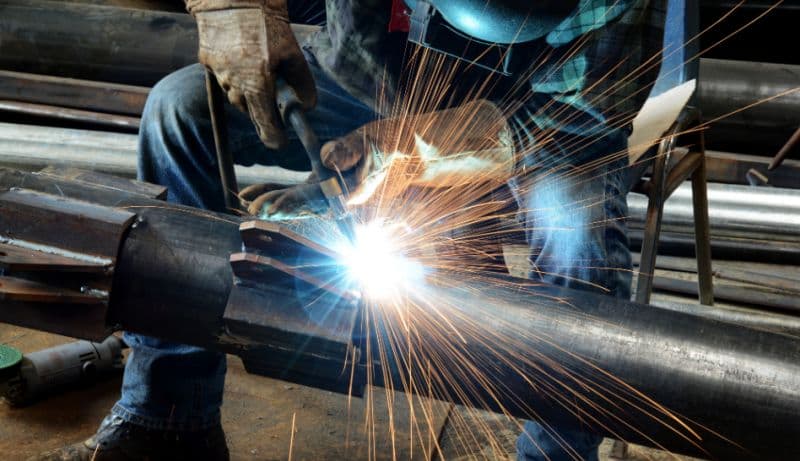
● Manufacturing
Equipment Manufacturing
The critical components of the of the complete pellet production line equipment are built in our own workshops in Asia. Additional equipment is manufactured by our worldwide network of reliable partners.

● Testing
Quality Inspection & Testing
Before leaving the factory, all equipment will be inspected by the quality inspection department. We can also provide customers with testing services from a single machine to a complete pellet plant system, and provide you with real actual data for “worry-free use.”

● Delivery
Equipment Delivery
In equipment boxing and packaging, we adopt professional packaging and modular solutions to ensure the safe and non-destructive delivery of pellet plant equipment.
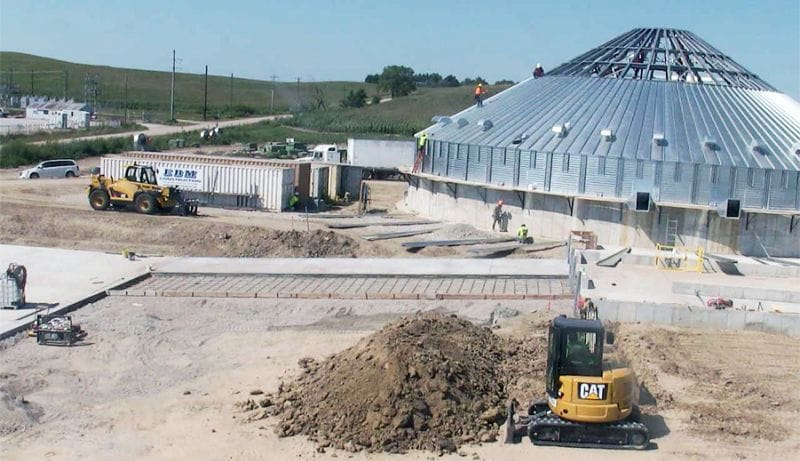
● Installation
Installation & Commissioning
Whether you choose your own subcontractor for the erection phase or you want to install everything together with us, a Richi supervisor will be around to make sure everything is mounted in a safe and thorough way.

● Training
Staff Training
We provide comprehensive training for the technicians of each project. We can also continue to provide support for the technicians during latter project operation.
● After-sales
Project Follow-Up
When everything is up and running our Richiers will help you further whenever needed. We are ready to answer your call 24/7.We’ll also visit you regularly to learn about your needs.
Who we are
RICHI Machinery supplies pellet production technology and engineering services for biomass fuel, animal feed, aqua feed, pet food and other pellet-processing industries worldwide.
Since 1995, RICHI’s vision to build a first-class enterprise, to foster first-class employees, and to make first-class contributions to society has never wavered.
In the past three decades, we have expanded our business to a wide range of areas, including animal feed mill equipment, aqua feed equipment, pet feed equipment, biomass pellet equipment, fertilizer equipment, cat litter equipment, municipal solid waste pellets equipment, etc.

1995
RICHI Established

2000+
Serving More Than 2000 Customers

120+
RICHI Employees

140+
Exported To 140 Countries