 0086-138 3838 9622
Industrial Swine Feed Mill in Colombia
RICHI MACHINERY
A 20 T/H Feed Mill Sized for an Integrated Colombian Swine Business
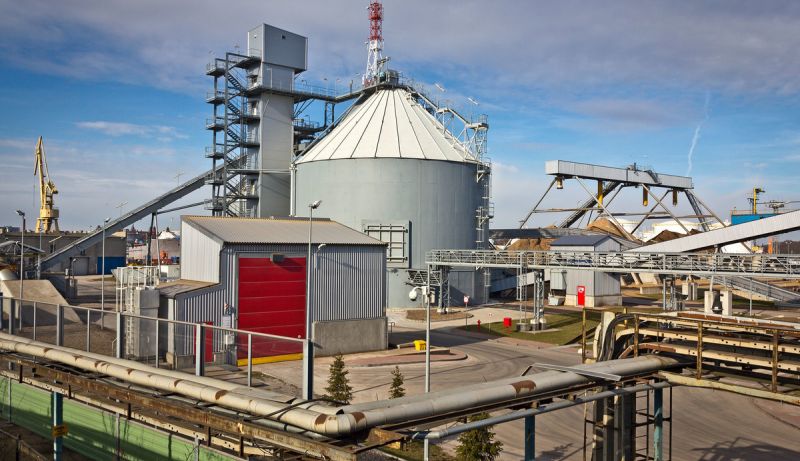
This Industrial Swine Feed Mill in Colombia is planned for an integrated pork producer that wants tighter control over feed cost, formula execution and delivery to its own farms. Instead of building a very large multi-line factory ahead of demand, the project uses one industrial pelleting line rated at about 20 T/H, supported by receiving, grinding, batching, mixing, steam conditioning, cooling, screening and dispatch systems sized around the same operating target.
At 10 effective production hours per day and 300 working days per year, the plant can produce approximately 60,000 T/A of finished swine feed, while a two-shift schedule remains available when seasonal demand or herd expansion requires additional operating time.
The customer uses its own industrial land and develops the feed mill as part of a broader swine supply chain rather than as a speculative merchant-feed factory. The plant is designed to manufacture nursery, grower, finisher, gestation and lactation feeds, with formula-specific grinding, micro-dosing, conditioning and pellet-size settings.
This scale is large enough to support several farm sites and centralized raw-material purchasing while keeping silo inventory, labor and utility demand proportionate to the customer’s operating model. The project budget is approximately USD 1.1 million for the complete investment, including around USD 650,000 for the main RICHI equipment package; local civil works, silos, utilities and installation scope determine the final split.
20 T/H
capacity
USD 1.1M
project investment
Colombia
location
60,000 T/A
annual output
RICHI MACHINERY
Why This Capacity Fits the Customer’s Feed Demand
The capacity decision starts with feed demand rather than with the maximum output of a pellet mill. Colombia has a substantial and expanding pork sector, but an individual integrated producer still needs a plant that matches its own herd, farm network, raw-material turnover and distribution radius.
A 20 T/H animal feed production line producing about 200 tonnes during a 10-hour effective production day can support a sizeable multi-farm operation without forcing the customer to carry the grain inventory, staffing and maintenance burden of several parallel pelleting trains. The production calendar also leaves room for sanitation, formula transitions, preventive maintenance and days when the line does not need to run at full rated output.
The business case is strengthened by Colombia’s dependence on feed grains, especially yellow corn, and by the importance of feed cost in pork production. The customer can consolidate purchasing, inspect incoming lots, separate ingredients by quality and produce feed against actual farm requirements. The Industrial Swine Feed Mill in Colombia is therefore configured first for internal supply security, with commercial sales treated as optional capacity rather than the assumption used to justify the factory.
- Own-farm demand first: production scheduling follows breeding, nursery, grower-finisher and sow requirements across the customer’s farm network.
- Formula flexibility: separate recipes can be produced without dedicating an entire line to one pig stage.
- Purchasing leverage: centralized corn, soybean meal and by-product procurement improves lot control and silo turnover.
- Expansion without oversizing: longer operating hours can increase annual output before the owner considers a second pelleting train.
RICHI MACHINERY
Raw Materials Are Planned by Pig Stage Not One Fixed Formula
The raw-material plan is built around yellow corn and soybean meal, with wheat bran, rice by-products, vegetable oil, mineral sources, amino acids, premixes and other approved micro-ingredients used according to the nutrition program.
Because nursery, gestation, lactation, grower and finisher feeds do not share one recipe, the table below is a purchasing basis for annual planning rather than a claim that every batch contains the same percentages. Incoming grain is sampled for moisture and impurities, soybean meal is checked against purchasing specifications, and sensitive premixes are kept in controlled dry storage away from bulk receiving traffic.
| Ingredient Group | Indicative Annual Requirement | Typical Supply Route | Storage and Handling |
|---|---|---|---|
| Yellow corn | 32,000–38,000 T/A | Imported and domestic commercial supply | Bulk grain silos with cleaning and magnetic protection |
| Soybean meal | 10,000–13,000 T/A | Imported and regional oilseed/feed suppliers | Dedicated meal bins or enclosed dry storage |
| Wheat bran and rice by-products | 5,000–8,000 T/A | Colombian milling and rice-processing suppliers | Separate bins according to flowability and turnover |
| Vegetable oil | 1,000–2,000 T/A | Approved edible/feed-grade oil suppliers | Dedicated liquid tank, pump and metering line |
| Minerals, amino acids, premixes and additives | Formula-dependent | Approved Colombian, regional and international suppliers | Bagged or micro-ingredient storage with controlled access |
For a 60,000 T/A plant, the practical issue is not simply how much ingredient can be stored, but how quickly each ingredient turns over. Corn receives the largest silo allocation because it commonly represents roughly half or more of swine diets, while soybean meal requires a smaller but still substantial bulk position. Low-inclusion ingredients are not put into oversized silos simply to make the plant look larger. This keeps capital tied to useful storage and reduces the risk of slow-moving material remaining in the system too long.
RICHI MACHINERY
One Process Route Handles Multiple Swine Feed Programs
The production process is kept in one coordinated route so the operator can see how a batch moves from receiving to farm dispatch. The main differences between pig stages are introduced through formulation, grinding screen selection, conditioning settings, pellet diameter and whether the finished pellets are crumbled for young animals. This avoids unnecessary duplication while still giving the customer enough flexibility to manufacture several feed programs during the same production week.
- Receiving, cleaning and storage: bulk corn and meals are unloaded through the receiving system, screened and protected by magnetic separation before entering assigned silos or bins. Bagged micro-ingredients use a separate controlled route.
- Grinding: cereal ingredients are reduced with hammer mill feed grinders. Screen selection is adjusted to the target pig stage and formula instead of using one unnecessarily fine grind for all products.
- Batching, micro-dosing and mixing: macro ingredients are weighed by batch, while lower-inclusion materials are added through a dedicated micro-dosing system. The Feed Mixer Machine is selected around batch size and cycle time, with mixing uniformity verified during commissioning.
- Steam conditioning and pelleting: mixed mash passes through the conditioner before the ring die pellet machine. Steam addition, retention time, die specification and feed rate are tuned to the customer’s formulas rather than fixed at one universal setting.
- Cooling, screening and crumbling: hot pellets are cooled close to ambient conditions before screening. Fines are returned in a controlled manner, and selected nursery products can pass through a crumbler to obtain the required particle size.
- Finished-feed dispatch: feed can move to bagging or bulk load-out according to farm delivery practice. Production records connect formula, batch, date and destination so the customer can manage internal feed supply more systematically.
The line can also produce mash feed when a farm program calls for it, allowing material to bypass pelleting after mixing. That option is useful because not every pig ration must be forced through the pellet mill simply to keep the machine busy. The process design of the Industrial Swine Feed Mill in Colombia therefore follows the customer’s feeding program first and equipment utilization second.
RICHI MACHINERY
Equipment Configuration Centers on One SZLH558 Pelleting System
The main equipment is sized as a 20 T/H-class integrated line rather than four duplicated trains. A single SZLH558 animal feed pellet mill provides the pelleting core; RICHI’s published specification for this model is approximately 20–22 T/H with a 185 kW main motor, 1.5 kW feeder, 11 kW conditioner and 558 mm ring-die inner diameter.
Actual swine-feed output still varies with formula, pellet diameter, conditioning and raw-material characteristics, so upstream and downstream systems are selected with operating margin rather than assuming every hour will equal the catalog maximum.
| Process Stage | Main Equipment | Configuration | Qty | Design Role |
|---|---|---|---|---|
| Receiving | Truck receiving, screen and magnetic separator | 20–25 T/H receiving duty | 1 set | Fast unloading with impurity control |
| Bulk storage | Ingredient silos and day bins | Volumes assigned by ingredient turnover | Project-specific | Separate corn, meal and secondary ingredients |
| Grinding | RICHI SFSP-series hammer mills | Parallel grinding capacity matched to grain share | 2 | Maintains throughput during screen changes and maintenance |
| Batching | Macro batch scale and micro-dosing system | PLC-controlled | 1 set | Formula-based weighing across different inclusion rates |
| Mixing | Large-batch feed mixer | Cycle matched to 20 T/H line balance | 1 | Uniform mash before pelleting or mash dispatch |
| Pelleting | RICHI SZLH558 | 185 kW main motor; 20–22 T/H nominal | 1 | Main swine-feed pelleting machine |
| Cooling | Counterflow cooler | Sized above normal line output | 1 | Stabilizes pellets before screening and storage |
| Post-processing | Screen and crumbler | By product program | 1 set | Fines separation and nursery-feed crumbling |
| Dispatch | Bagging and/or bulk load-out | Configured to farm delivery ratio | 1 set | Supports internal farm distribution and optional sales |
| Control | PLC/MCC and production control | Project-specific | 1 set | Interlocks, alarms, batch control and operating records |
RICHI does not size the rest of the feed mill equipment by copying the pellet-mill number onto every machine. Two hammer mills are useful because grinding demand is high and screen maintenance should not stop the entire plant, while one correctly sized mixer, cooler and pelleting train are sufficient for the selected capacity. This produces a cleaner equipment list, lower installed power and a layout that is easier for the customer’s maintenance team to understand.
RICHI MACHINERY
Buildings Utilities and Staffing Match a Medium-Large Feed Factory
The customer develops the project on approximately 8,000–12,000 m² of owned industrial land. The main production building requires roughly 1,800–2,500 m² depending on whether silos are arranged outside the workshop and whether finished feed is mainly dispatched in bulk or bags. Covered warehouse space is reserved for bagged ingredients, premixes, packaging materials and finished feed that cannot move directly to farms. Truck circulation, fire access, utility areas and a modest expansion reserve are included without turning the site into an unnecessarily large industrial estate.
| Item | Project Basis | Planning Logic |
|---|---|---|
| Total land | Approx. 8,000–12,000 m² | Production, silos, warehouse, utilities, roads and future interface |
| Main process building | Approx. 1,800–2,500 m² | Vertical or semi-vertical arrangement according to local construction plan |
| Warehouse and bagged-material area | Approx. 1,000–1,500 m² | Premix, packaging and finished-feed buffer |
| Power supply | Industrial grid connection; transformer sized after final motor list | Installed load includes grinding, pelleting, conveying, aspiration and auxiliaries |
| Steam | Approx. 1.5–2.0 T/H boiler duty | Final fuel selected from actual local utility availability and permit conditions |
| Water | Primarily boiler make-up, sanitation and staff use | No large continuous process-water demand |
| Permanent staffing | Approx. 16–20 people | Operations, QC, maintenance, warehouse and supervision; corporate functions can remain shared |
Staffing is deliberately lean because this is an automated feed plant, not a labor-intensive manual workshop. A normal shift can cover central control, receiving and silo handling, grinding/batching, pelleting, dispatch and quality checks with maintenance personnel shared across the plant.
The exact number changes with the customer’s bulk-versus-bagged dispatch ratio and whether laboratory, procurement, accounting and security are already provided by the parent swine business. No heating system is assumed for the production building; ventilation, electrical-room cooling and local equipment heat management are designed around the actual project location, altitude and ambient conditions.
RICHI MACHINERY
Investment Logistics and Project Delivery
The project is budgeted at approximately USD 1.1 million, with about USD 650,000 allocated to the main RICHI equipment package. This is a planning figure for a 20 T/H-class swine feed project, not a universal price for every Colombian feed mill.
The remaining budget covers customer-side silos and storage, local civil construction, transformer and electrical works, boiler and utility connections, installation-related work, laboratory basics, internal roads and commissioning preparation. The figure stays below the cost of a multi-line industrial complex because the capacity, buildings and auxiliary systems have all been reduced together rather than changing only the pellet-mill number.
RICHI equipment is shipped by sea from Qingdao Port to a Colombian seaport selected according to the final plant location and inland logistics plan. For a project serving central or western production areas, Buenaventura can be considered; Caribbean-side routing can use ports such as Cartagena when it produces a better total logistics route.
The case therefore does not lock the customer to one destination port without knowing the final site. After arrival, installation is coordinated with the customer’s civil, electrical and utility readiness so equipment does not sit on site waiting for foundations or power work to catch up.
A practical implementation period is approximately 7–10 months from confirmed engineering and order execution to installation and commissioning, depending on silo scope, local construction speed and import logistics. RICHI’s engineering work covers process design, equipment selection, layout coordination, electrical/control scope, installation guidance, commissioning and operator training. The objective is to hand over a line whose real bottlenecks have been considered before start-up rather than a collection of machines that only match on a quotation sheet.
RICHI MACHINERY
Why This Project Has Room to Grow in Colombia
The commercial foundation for the Industrial Swine Feed Mill in Colombia is stronger when it is tied to the customer’s own pork production rather than a broad claim about national feed demand. Colombia’s swine sector has continued to expand, while imported yellow corn remains a major feed input. That makes raw-material purchasing, feed conversion, formulation and dependable farm delivery economically important to integrated producers. Internal feed manufacturing gives the customer a direct operating tool for those issues, provided the plant is sized to real consumption and managed with disciplined procurement and quality control.
RICHI Machinery supports this type of project by connecting capacity planning with formula requirements, raw-material receiving, storage turnover, grinding duty, batch size, steam demand, pelleting, cooling, dispatch and future expansion. The value is not in making the factory as large as possible. It is in selecting enough capacity to cover current demand, leaving a credible growth path and avoiding equipment that the customer would pay for but rarely use.
Planning an industrial swine feed project in Colombia? Share your annual feed requirement, pig categories, typical formulas, corn and soybean sourcing, pellet sizes, bulk-versus-bagged delivery ratio, available land and utility conditions. RICHI Machinery can develop the process flow, animal feed mill equipment configuration, layout and quotation around the actual operating model instead of forcing the project into a standard capacity template.
● RICHI MACHINERY
RICHI Service

● Consulting
Customer Consultation
We want to have a deep understanding of your industrial process, to know your exact needs of feed, wood, biomass, fertilizer or other pellet processing.

● Design
Feed Pellet Plant Design
Based on your unique situation and industrial process, we will tailor complete pellet plant you need, and inform you of every additional detail that could facilitate operation, minimize total cost.
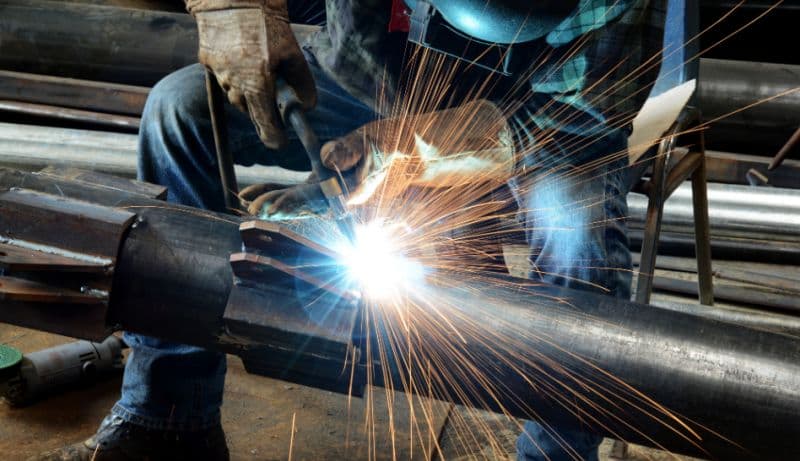
● Manufacturing
Equipment Manufacturing
The critical components of the of the complete pellet production line equipment are built in our own workshops in Asia. Additional equipment is manufactured by our worldwide network of reliable partners.

● Testing
Quality Inspection & Testing
Before leaving the factory, all equipment will be inspected by the quality inspection department. We can also provide customers with testing services from a single machine to a complete pellet plant system, and provide you with real actual data for “worry-free use.”

● Delivery
Equipment Delivery
In equipment boxing and packaging, we adopt professional packaging and modular solutions to ensure the safe and non-destructive delivery of pellet plant equipment.
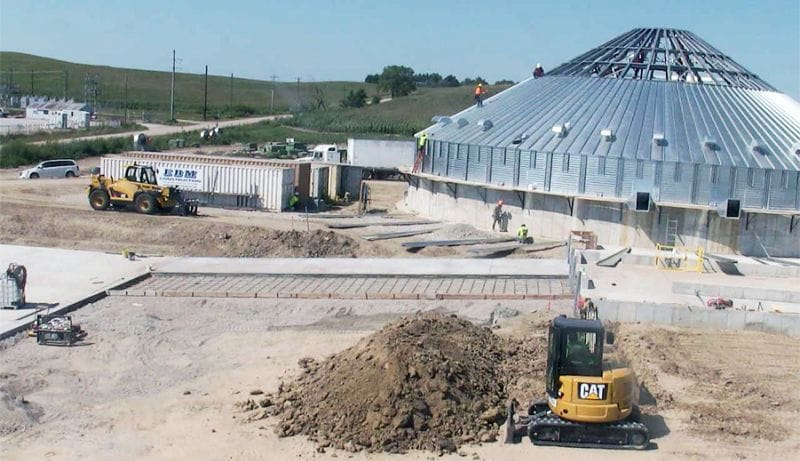
● Installation
Installation & Commissioning
Whether you choose your own subcontractor for the erection phase or you want to install everything together with us, a Richi supervisor will be around to make sure everything is mounted in a safe and thorough way.

● Training
Staff Training
We provide comprehensive training for the technicians of each project. We can also continue to provide support for the technicians during latter project operation.
● After-sales
Project Follow-Up
When everything is up and running our Richiers will help you further whenever needed. We are ready to answer your call 24/7.We’ll also visit you regularly to learn about your needs.
Who we are
RICHI Machinery supplies technology and engineering services for animal feed, aqua feed, pet food and pellet production projects in markets worldwide.
Since 1995, RICHI’s vision to build a first-class enterprise, to foster first-class employees, and to make first-class contributions to society has never wavered.
In the past three decades, we have expanded our business to a wide range of areas, including animal feed mill equipment, aqua feed equipment, pet feed equipment, biomass pellet equipment, fertilizer equipment, cat litter equipment, municipal solid waste pellets equipment, etc.

1995
RICHI Established

2000+
Serving More Than 2000 Customers

120+
RICHI Employees

140+
Exported To 140 Countries