0086-138 3838 9622
Swine Manure Powder Fertilizer Production Line in Serbia
RICHI MACHINERY
The Fertilizer Line Begins at the Separator
The project begins at the point where the pig farm stops handling manure as a dilute liquid and starts handling it as a recoverable solid. This swine manure powder fertilizer production line in Serbia is integrated with a commercial pig operation that already has, or can add, solid-liquid separation. The fertilizer plant accepts the separated solid fraction, while the liquid fraction remains in the farm’s own manure-liquid or wastewater system.
That boundary prevents the customer from paying to move and process water that has no value in the powder product.
After separation, the manure is still too wet and biologically active for direct crushing or bagging. It first passes through recipe adjustment, aerobic composting and maturation. Only stable, friable compost reaches the mechanical finishing section. The line is therefore a 4 T/H powder-finishing plant attached to a much slower biological process, not a 4 T/H fresh-manure treatment machine.
Finished output is planned at about 8,000–10,000 T/A. At 4 T/H, 250 days × 8 hours closes exactly at 8,000 tonnes, while 300 days × 8 hours gives 9,600 tonnes. Production close to 10,000 tonnes therefore requires a small amount of additional effective operating time rather than pretending that 4 × 8 × 300 equals 10,000. This keeps the annual-output statement consistent with the actual mechanical capacity.
The confirmed RICHI machinery and engineering supply basis is USD 120,000. It covers the core manure-composting support and powder-finishing package, not land, pig barns, unrelated wastewater treatment, local civil construction, freight, duties or working capital. Reusing the farm’s loader, laboratory, electrical service or separator can reduce the owner-side investment without changing the commercial output of the fertilizer section.
4 T/H
finishing capacity
USD 120,000
RICHI supply
Serbia
location
8,000–10,000 T/A
finished output
RICHI MACHINERY
Farm Records Decide Whether the Supply Is Large Enough
Serbia has a real swine-production base, but the project is not sized from the national herd. At the end of 2025 the country had about 2.4 million pigs, with Vojvodina holding the largest regional share. That confirms the country fit for manure-recycling projects. It does not tell the engineer how many tonnes of separated solids this particular farm can supply every day.
The useful design data come from the customer’s manure system: average daily separated-solid tonnage, moisture, pig categories, bedding where used, washing-water practice, separator performance and seasonal variation. A farm with the same number of pigs can send very different wet tonnage to the fertilizer area depending on housing and water management. Measured weights from the existing manure system therefore take priority over generic manure-per-head tables.
This is the supply check that determines whether the pig manure fertilizer production line should remain at 4 T/H or be sized differently.
That approach keeps the organic fertilizer production project tied to an actual farm instead of a theoretical national supply model. If manure availability expands later through neighboring farms, the project first checks biological capacity and storage before increasing the crusher or packing section.
RICHI MACHINERY
Wet Tonnes Are Not Finished Fertilizer Tonnes
A practical preliminary intake is around 60–80 tonnes per day of separated solid manure during active collection periods. That range should not be multiplied by the calendar and presented as finished fertilizer because the manure may still contain roughly half its weight as water. Composting also consumes part of the biodegradable dry matter. The project therefore closes its annual balance through measured moisture and dry matter, not only through truck scales.
| Mass-Balance Item | Planning Basis | Project Meaning |
|---|---|---|
| Separated swine manure | Approx. 60–80 T/day when available | Wet biological feedstock, not finished-product tonnage |
| Incoming moisture | Measured by batch; often around 50–60% | Determines dry-matter contribution and bulking demand |
| Structural material | Added only as required | Improves porosity and starting moisture |
| Biological loss | Variable | Water evaporation plus normal organic-matter decomposition |
| Finished powder | Approx. 8,000–10,000 T/A | Stable screened product after maturation and finishing |
| Mechanical finishing | Approx. 4 T/H | Crushing, screening, optional blending and packing |
For example, 70 tonnes of separated manure at 55% moisture contains only about 31.5 tonnes of dry matter before any composting loss. A drier batch contributes more solids; a wetter batch contributes less. Structural carbon material can add dry matter, but biological decomposition removes part of it again. This is why the project uses an operating envelope instead of publishing one false conversion factor for every season.
RICHI MACHINERY
The Compost Recipe Is Built for Airflow
Separated pig manure can still be dense enough to restrict airflow. The recipe is corrected before the pile is built, using clean chopped straw, suitable crop residue, dry bedding, mature-compost recycle or another approved local carbon source when the manure needs more structure. The dry material is not added to make the label look more complex; it is added so oxygen can reach the active composting mass.
A useful starting target is generally around 50–60% moisture with a carbon-to-nitrogen balance suitable for aerobic composting. The operator then adjusts from actual pile response. A wetter manure batch may need more dry structure, while a well-separated batch with bedding can need much less. Applying one permanent manure-to-straw percentage would make the process less accurate, not more standardized.
- Plastic, wire, stones and heavily soil-contaminated material are removed before recipe preparation.
- Clean straw or bedding is stored under cover so it remains useful as a dry structural material.
- Mature compost recycle can support structure without introducing a new outside raw material.
- Microbial additives remain optional process aids and never substitute for oxygen, moisture control or correct pile geometry.
RICHI MACHINERY
Residence Time Makes the Yard Larger Than the Workshop
The compost yard is sized from residence time. If the farm feeds 60–80 tonnes of separated manure per day and the combined active-composting plus maturation period holds several weeks of material, the biological inventory can easily reach well above one thousand tonnes. This is why a compact 4 T/H crusher room can sit beside a much larger horizontal composting area.
For preliminary planning, the active composting and maturation zones together should allow roughly 2,500–3,500 m² before final pile geometry is fixed. A dedicated fertilizer area of about 4,500–6,000 m² is more defensible for this scale when wet receiving, turning lanes, mature-compost storage, dry finishing, packing, access and drainage are included. Shared farm offices and utilities do not need to be duplicated.
The exact footprint still depends on pile height, turner type, mixed bulk density and how many days of manure the farm stores before entering the biological route. The project therefore finalizes civil dimensions after the compost-turning method is selected, rather than making equipment fit an arbitrary leftover corner of the pig-farm site.
RICHI MACHINERY
Weather Protection Is Part of Moisture Control
Serbian weather affects moisture management at both ends of the process. The country receives substantial annual precipitation and experiences cold winter periods, so open piles cannot be treated as if summer evaporation will always solve moisture. Covered or otherwise weather-protected composting and maturation reduce rainwater intrusion, while drainage keeps manure-contact water separated from clean roof runoff where the site layout permits.
Cold weather can slow biological activity, but the compost mass generates its own heat when the recipe and aeration are correct. The project therefore does not install a production boiler simply to warm the fermentation building. Instead, it controls pile size, structure, turning and protection from excess rain or snow. Only occupied office or control spaces need normal building heating.
A large rotary dryer is also not part of the base powder route. That keeps the pig manure composting line focused on pile management, maturation and dry finishing instead of adding thermal equipment before a measured moisture problem exists. If mature compost repeatedly enters the dry workshop above the acceptable moisture range, the first checks are recipe balance, covered maturation, turning and storage.
A dedicated drying system becomes a separate investment only when production records show a recurring water-removal load that natural and biological management cannot solve.
RICHI MACHINERY
One Process Route Ends before Granulation
The complete process is intentionally linear: manure separation → solid receiving → recipe adjustment → aerobic composting → turning → maturation → controlled feeding → crushing → screening → optional formula blending → powder buffer → weighing and packing. Fresh manure never jumps directly to the mechanical section, and mature compost never returns to the dirty receiving area unless it is deliberately used as recycle material.
- Verify separated-manure tonnage, moisture and visible contamination before each batch enters the compost area.
- Add only the amount of clean structural material needed for moisture and porosity control.
- Turn active piles according to temperature, oxygen distribution and moisture rather than a fixed calendar ritual.
- Move compost to maturation after active heating declines, then release it only when stability and handling condition are suitable.
- Crush mature lumps and screen the material to create a consistent commercial powder without unnecessary ultrafine grinding.
- Blend approved components only where the commercial fertilizer specification requires them.
- Pack 25 kg or 40 kg bags, identify the production lot and move the sealed product into dry storage.
This powder organic fertilizer production line deliberately stops before granulation. The same dry-finishing logic defines an organic fertilizer production line in Serbia when the commercial product is screened powder rather than pellets. The linked organic fertilizer production line architecture remains relevant, but granulation equipment is not part of this first-phase scope. There is no ring-die forming stage, pellet cooler or pellet screening loop in the first phase.
The customer is investing in a saleable powder product, so adding machines that only change physical form would raise cost without improving the chosen market route.
RICHI MACHINERY
Crushing and Screening Standardize the Powder
Mechanical finishing begins only after compost maturity is accepted. The crusher breaks agglomerates formed during composting and storage; it is not used to pulverize fresh manure. In practical terms, this is a manure powder fertilizer plant with biological stabilization upstream and particle-size control downstream. The screen then removes unsuitable oversize and controls the powder fraction.
This sequence improves flow through packing equipment and gives buyers a more repeatable product without turning the material into excessive dust.
| Dry-End Duty | Main Equipment | Project Basis |
|---|---|---|
| Mature-compost feed | Controlled hopper and conveyor | Stable feed to the finishing line |
| Crushing | Organic fertilizer crusher | Approx. 4 T/H normal duty |
| Screening | Fertilizer screening machine | Matches 4 T/H finished-product flow |
| Formula adjustment | Fertilizer mixer | Included when the commercial recipe requires blending |
| Finished buffer | Powder storage hopper | Separates screening from bagging rhythm |
| Packing | Quantitative automatic bagging machine | 25 kg and 40 kg bags |
| Dust control | Local extraction and bag filtration | Crusher, screen, transfer and packing points |
| Controls | Compact MCC/PLC system | Interlocks finishing equipment and protects motors |
At the top end of the annual plan, packaging deserves its own check. Ten thousand tonnes packed only in 25 kg bags would require about 400,000 bags per year; the same tonnage in 40 kg bags would require about 250,000. The customer can therefore change the sales mix without rebuilding composting, but bagger speed, pallet handling and finished storage must follow the actual package program.
RICHI MACHINERY
The Product Needs a Regulatory Identity
The project does not market the finished material only as “pig manure.” A commercial powder fertilizer or soil-improving product needs a defined composition, traceable batches and a label supported by analysis. Representative production should be checked for parameters relevant to the registered product, such as moisture, organic matter, nutrient content, pH, heavy metals and microbiological quality where required.
Serbia maintains a register of plant nutrition products and soil conditioners, and it separately identifies products that can be used in organic production. That distinction matters. A manure-derived fertilizer is not automatically an “organic certified” input simply because its carbon came from livestock manure. The customer has to place the product in the correct regulatory category and support the intended label and use.
Serbia’s new Organic Production Law entered application in June 2026 and strengthens registration and control in the organic-production chain. For this project, the practical rule is simple: the factory should not make an organic-production claim that is broader than the product registration and certification route actually allows. Physical processing, fertilizer registration and organic-use eligibility are related, but they are not the same thing.
RICHI MACHINERY
Utilities Stay Light because the Route Is Dry
The absence of pelletizing and thermal drying keeps the utility system modest. Main electrical consumers are the compost turner, conveyors, crusher, screen, optional mixer, dust collection and packing. A connected-load class of roughly 90–140 kW is a suitable preliminary planning basis before the final turner and crusher drives are fixed. Annual electricity is expected around 100–180 MWh depending on turning frequency and actual finishing hours.
Serbia’s power system operates at 50 Hz. Site voltage, transformer capacity, protection and motor starting are confirmed against the local connection and final motor list rather than copied from another project. The manure-separation equipment is included in the electrical balance only when RICHI supplies it as part of the fertilizer scope; an existing farm separator remains part of the farm’s utility system.
Fresh-water demand is low because separated manure already contains substantial moisture. Water is used for staff, cleaning, limited compost moisture correction and sanitation. A preliminary dedicated-fertilizer demand of about 200–400 m³/year is reasonable where offices and livestock utilities are shared. Fire-water and the pig farm’s animal-drinking or washing demand are separate from this figure.
A core operating team of about 5–7 people is appropriate for a normal shift when the project shares farm infrastructure. Roles cover supervision and quality records, loader/turner operation, finishing-line control, packing and warehouse work, plus shared maintenance. Laboratory testing, accounting, veterinary staff and wider farm management do not need to be duplicated inside the fertilizer department.
RICHI MACHINERY
Wet-Yard Controls and Dry-Workshop Controls Are Different
Environmental management is divided by process condition. Wet manure receiving and active composting use hard surfaces and controlled contact-water handling. Correct pile structure, oxygen and turning reduce the formation of long-lived anaerobic zones. Mature material is kept protected before dry finishing. In the workshop, dust extraction is concentrated at crushing, screening, transfer and bagging points.
The project does not promise zero odor or zero wastewater. Odor depends on manure condition, storage time, aeration and building ventilation, while runoff depends on the actual civil design and rainfall. The engineering objective is to prevent uncontrolled wet storage, separate cleaner water from manure-contact water where possible, capture dry dust at the source and keep the product route physically separated from fresh-manure traffic.
Serbia’s long-term normal precipitation is substantial and uneven across the country, which reinforces the need to design drainage from the actual site rather than copy one fixed tank volume. The customer also retains rejected plastic, stones and other contamination in a separate waste route so those materials do not circulate repeatedly through the crusher and screen.
RICHI MACHINERY
USD 120000 Covers the Core RICHI Supply
The USD 120,000 RICHI scope is intentionally narrower than a complete granulated fertilizer factory. It can include compost-turning equipment, mature-compost feeding, crushing, screening, optional mixing, powder buffering, quantitative packing, dust-control interfaces and electrical integration. A solid-liquid separator can be added when the pig farm does not already have adequate dewatering capacity.
Equipment ships from Qingdao. Because Serbia is landlocked, the final international freight route uses a regional seaport and then road or rail delivery according to the forwarder’s cost, border and schedule analysis. The case does not invent one seaport when the source project data does not identify it. Site civil work is coordinated so the compost area, drainage, foundations and dry finishing workshop are ready before installation.
Commissioning starts with mature compost. Engineers check hopper discharge, crusher load, screen return, powder flow and bagging accuracy using the customer’s own material. If the compost is too wet or biologically unstable, the response is to correct the biological process rather than increase crusher power. That separation of responsibilities helps the customer diagnose future problems without treating every production issue as a machine fault.
RICHI MACHINERY
Pelletizing Waits for a Real Market Signal
Future pelletizing is a market decision. The current plant does not need a pig manure pellet machine because the customer sells powder. If distributors later pay for higher bulk density and cleaner mechanical spreading, the existing mature-compost preparation can feed a new FZLH ring-die section after moisture and formula are confirmed.
The first expansion question is therefore where the proven bottleneck sits. If mature compost accumulates, the dry line or packing may need more hours. If the crusher waits for material, the customer needs more manure collection, composting floor or maturation capacity instead. If powder sales are strong but pellet demand is weak, buying a granulator would add cost without solving a commercial problem.
For another swine manure powder fertilizer production line in Serbia, the design should begin with daily separated-solid tonnage, measured moisture, housing and manure-collection method, current liquid-management system, composting area, winter operation, annual powder target, bag format, product-registration route, available power and equipment that can be reused. Those inputs determine whether 4 T/H is the right finishing capacity and how large the biological section must be.
This swine manure powder fertilizer production line in Serbia is therefore built around one practical boundary: biology stabilizes the manure first, mechanics standardizes the product second. Keeping those functions separate gives the pig farm a simpler first investment, a traceable fertilizer product and a clear path to add pelletizing only when the market justifies it.
● RICHI MACHINERY
RICHI Service

● Consulting
Customer Consultation
We want to have a deep understanding of your industrial process, to know your exact needs of feed, wood, biomass, fertilizer or other pellet processing.
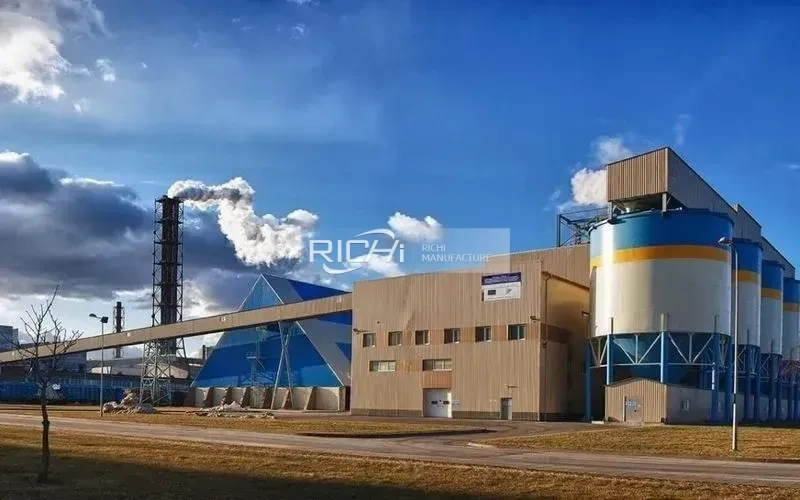
● Design
organic fertilizer Plant Design
Based on your unique situation and industrial process, we will tailor complete pellet plant you need, and inform you of every additional detail that could facilitate operation, minimize total cost.
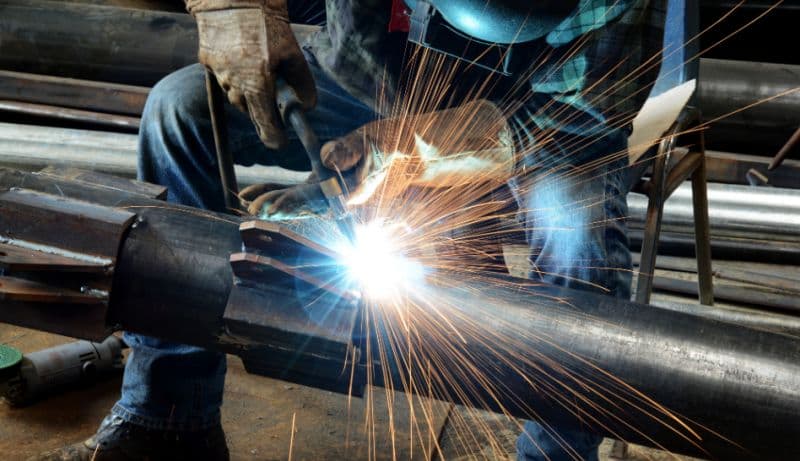
● Manufacturing
Equipment Manufacturing
The critical components of the of the complete pellet production line equipment are built in our own workshops in Asia. Additional equipment is manufactured by our worldwide network of reliable partners.

● Testing
Quality Inspection & Testing
Before leaving the factory, all equipment will be inspected by the quality inspection department. We can also provide customers with testing services from a single machine to a complete pellet plant system, and provide you with real actual data for “worry-free use.”

● Delivery
Equipment Delivery
In equipment boxing and packaging, we adopt professional packaging and modular solutions to ensure the safe and non-destructive delivery of pellet plant equipment.
● Installation
Installation & Commissioning
Whether you choose your own subcontractor for the erection phase or you want to install everything together with us, a Richi supervisor will be around to make sure everything is mounted in a safe and thorough way.

● Training
Staff Training
We provide comprehensive training for the technicians of each project. We can also continue to provide support for the technicians during latter project operation.
● After-sales
Project Follow-Up
When everything is up and running our Richiers will help you further whenever needed. We are ready to answer your call 24/7.We’ll also visit you regularly to learn about your needs.
Who we are
RICHI Machinery is one of the world’s leading suppliers of technology and services for the animal feed, aqua feed and pet food industries, also the largest pellet production line manufacturer in China.
Since 1995, RICHI’s vision to build a first-class enterprise, to foster first-class employees, and to make first-class contributions to society has never wavered.
In the past three decades, we have expanded our business to a wide range of areas, including animal feed mill equipment, aqua feed equipment, pet feed equipment, biomass pellet equipment, fertilizer equipment, cat litter equipment, municipal solid waste pellets equipment, etc.

1995
RICHI Established

2000+
Serving More Than 2000 Customers

120+
RICHI Employees

140+
Exported To 140 Countries