0086-138 3838 9622
Cattle and Sheep Manure Fertilizer Plant in Uruguay
RICHI MACHINERY
One Compost Base Feeds Two Different Fertilizer Businesses
At this scale, the most important line on the flow sheet is the fork after mature compost preparation. This cattle and sheep manure fertilizer plant in Uruguay does not force all 50,000 tonnes of annual product through the pellet mills. About 20,000 T/A is sold as screened powder fertilizer and 30,000 T/A continues to 6 mm pelletizing. The two products share collection, composting, maturation, crushing and most formulation work, then separate only where the market actually needs a different physical form.
The factory works about 300 days per year around one primary eight-hour production shift. Total finished output therefore averages about 20.8 T/H during scheduled mechanical hours. The dry finishing section is arranged for roughly 22–25 T/H, while the pellet branch uses two FZLH420 units with a combined project reference of 12–16 T/H. The powder branch handles about 8–10 T/H. Campaign scheduling lets both products move without treating every process section as if it carries the same hourly tonnage.
That distinction matters because the biological section follows a completely different clock. Fresh manure may remain in active composting and maturation for weeks, while a crusher, screen or pellet mill works in hours. The plant therefore carries biological inventory in the yard and keeps the mechanical workshop lean. Sizing the factory from those two time scales avoids the common mistake of buying more granulators when the actual bottleneck is compost maturity.
RICHI’s equipment and engineering supply is approximately USD 360,000. The figure covers the main compost-handling support, dry preparation, formulation, two FZLH420 pellet mills, cooling, screening, conveying, packing, dust-control interfaces and automation. Land, large-area civil works, local drainage, buildings, manure-collection vehicles, freight, duties and working capital remain owner-side items unless they are specifically included in the final contract.
22–25 T/H
finishing capacity
USD 360,000
RICHI supply
Uruguay
location
50,000 T/A
finished output
RICHI MACHINERY
Collectable Manure Matters More Than National Herd Size
Uruguay has a livestock base large enough to support a regional manure-recovery business, but national herd size is not the same as collectable manure. Official 2024 statistics show about 11.45 million cattle and 5.42 million sheep. Most of those animals are not continuously confined, so the customer does not calculate supply by multiplying national headcount by a theoretical manure rate. Only material generated where collection is practical belongs in the commercial feedstock plan.
The sourcing radius therefore focuses on dairy yards, cattle finishing or feeding areas, livestock holding facilities, sheltered sheep areas, winter housing where used, and farms where manure and bedding accumulate on recoverable surfaces. Extensive pasture manure remains on the land. That is both economically sensible and agronomically normal; the fertilizer plant is designed around concentrated recoverable streams, not around removing nutrients from every grazing hectare.
Several suppliers are contracted because a 50,000 T/A organic fertilizer production project cannot depend on one farm changing nothing for years. Each agreement records approximate availability, moisture, bedding, collection method, foreign-material limits and delivery rhythm. Supplier diversity also lets the customer blend wetter cattle manure with drier sheep manure or bedding-rich material when seasonal conditions change.
RICHI MACHINERY
The Annual Balance Is Closed on Dry Matter
Wet tonnage alone is a poor basis for sizing this business. Cattle manure that arrives at 55% moisture contains only 45% dry matter; a drier sheep-manure-and-bedding stream may contribute much more solids per truck. Composting then removes water and also consumes part of the biodegradable dry matter. For that reason, the plant uses a procurement envelope rather than promising a fixed one-to-one conversion from incoming manure to finished fertilizer.
| Mass-Balance Item | Planning Basis | Control Method |
|---|---|---|
| Finished powder | 20,000 T/A | Registered formula and sales plan |
| Finished pellets | 30,000 T/A | 6 mm main product |
| Total finished fertilizer | 50,000 T/A | Approx. 20.8 T/H average over 2,400 h |
| As-received manure/bedding | Approx. 85,000–100,000 T/A | Adjusted to measured moisture and dry matter |
| Dry structural material | As required by compost recipe | Straw, bedding fibre or other approved local material |
| Mineral/humic/formulation inputs | Formula dependent | Added after compost maturity where required |
| Composting loss | Not fixed by percentage | Confirmed through batch mass and moisture records |
A simple check shows why this matters. Ninety thousand tonnes of manure at 55% moisture contains about 40,500 tonnes of dry matter before composting. Finished fertilizer at 15–20% moisture contains about 40,000–42,500 tonnes of dry matter before considering mineral or humic additions. Because biological decomposition also removes dry matter, actual intake must be adjusted from measured batches instead of assuming that one annual wet-tonnage figure will always close the balance.
Because the cattle and sheep manure fertilizer plant in Uruguay uses both powder and pellet outlets, the raw-material balance is reviewed against the combined finished dry matter rather than against pellet tonnage alone.
RICHI MACHINERY
Cattle and Sheep Manure Do Different Jobs in the Mix
Cattle manure is the main volume stream, but sheep manure changes the physical behavior of the recipe. Collected cattle manure can be wetter and more cohesive. Sheep manure is often drier and may arrive with more fibrous bedding, depending on the collection system. The plant takes advantage of those differences rather than trying to make both raw materials look identical at receiving.
- Cattle manure is accepted from sites where scraping or mechanical collection limits excessive soil and free liquid.
- Sheep manure and bedding-rich material are checked for straw content, moisture and mineral contamination before blending.
- Clean crop residues or bedding fibre are added only when the pile needs more structure or a lower starting moisture.
- Plastic, wire, stones, chemical contamination and heavily soil-loaded manure are rejected before they enter the compost recipe.
Traceability follows each supplier and batch. That becomes especially useful when a finished product shows unusual ash, nutrient or moisture results. The plant can then separate a formulation issue from a raw-material issue instead of sending every problem to the cattle dung pellet making machine section and asking operators to compensate mechanically.
RICHI MACHINERY
Biological Inventory Sets the Real Site Scale
The biological yard is the largest process unit even though it contains the fewest motors. At roughly 85,000–100,000 tonnes of annual wet manure and bedding, average receiving can reach about 280–330 tonnes on an active delivery day. If active composting and early maturation together hold several weeks of material, thousands of tonnes can be on site before a single tonne reaches crushing.
A practical first layout reserves roughly 8,000–10,000 m² for wet receiving, active composting, turning lanes and maturation. Total land of about 16,000–20,000 m² is more realistic than trying to fit this biological inventory into a 1,500 m² compost corner. Final dimensions still depend on pile height, mixed-material bulk density, turning method, covered area and how much feedstock is held at suppliers before delivery.
Uruguay’s rainfall also makes weather protection part of process control. INUMET’s long-term climate records and recent annual data show substantial precipitation across the country, so the plant cannot count on a guaranteed dry season to finish compost outdoors. Clean roof runoff is separated from manure-contact water where practical, and mature material is protected before crushing and pelletizing so rain does not create a new drying problem at the end of the process.
RICHI MACHINERY
The Process Stays Shared Until the Product Split
The process stays unified until the product split. Fresh cattle and sheep manure is received, checked and blended with approved structural material. Aerobic composting and turning stabilize the mix, followed by maturation. Only mature material enters the dry workshop, where crushing, screening and formulation create one controlled fertilizer base.
From that point the powder product goes to packing while the pellet fraction continues through moisture adjustment, ring-die forming, cooling, screening and final packing.
- Record supplier, material type, moisture and visible contamination at receiving.
- Blend manure with only the structural material required by the current batch condition.
- Run aerobic composting with turning, pile-temperature observation and moisture control.
- Hold material through maturation until temperature trend, odor, texture and stability support mechanical finishing.
- Crush lumps, screen the mature compost and prepare the registered formulation.
- Send approximately 20,000 T/A to powder packing and route approximately 30,000 T/A to pelletizing.
- Cool and screen pellets, recycle clean fines where appropriate and pack both products by traceable lot.
This shared-front-end arrangement is what makes the organic fertilizer production line economical. The plant does not build two separate composting factories for powder and pellets. It makes one stable fertilizer base, then spends extra electricity and wear only on the portion of the market that pays for densification.
RICHI MACHINERY
Two FZLH420 Units Cover the Pellet Campaign
The pellet branch has to average about 12.5 T/H during scheduled hours to deliver 30,000 T/A. Two FZLH420 machines are retained because their combined project reference of 12–16 T/H fits that duty better than relying on one machine at its upper limit. Each unit uses a 90 kW main motor and supports the 6 mm first-phase product, while final sustainable output is confirmed with the customer’s actual compost formulation.
The two-machine arrangement is capacity sharing, not full redundancy. If one organic fertilizer pellet mill is stopped, the other can support limited production or commissioning work, but it cannot maintain the complete 12.5 T/H average by itself. That distinction keeps maintenance planning realistic and avoids selling the customer a false “100% backup” story.
| Pellet-Section Item | Project Basis | Engineering Note |
|---|---|---|
| Pellet mills | 2 × FZLH420 | Parallel operation during pellet campaigns |
| Main motor | 90 kW each | 180 kW combined main-drive power |
| Reference capacity | 6–8 T/H each | Actual throughput depends on formulation |
| Combined reference | 12–16 T/H | Matches 12.5 T/H scheduled average |
| Main pellet diameter | 6 mm | Other 4–12 mm dies remain available |
| Feed condition | Mature, crushed, screened and mixed compost | Fresh manure never enters the ring die |
| Cooling | Mechanical cooler after pelletizing | Stabilizes hot pellets before screening and packing |
The same FZLH platform is used in other manure applications, including a pig manure pellet machine, but model selection still starts from the Uruguay product split and material tests. Machine family alone does not determine real fertilizer output.
RICHI MACHINERY
Powder and Pellets Serve Different Buyers
The powder branch exists for a commercial reason, not because it is unfinished product. About 20,000 T/A leaves the plant after maturation, crushing, screening, formulation and final mixing. This route uses less electricity, avoids ring-die wear and gives customers a lower-processing-cost option where bulk density and dust are acceptable.
The pellet branch creates a denser, cleaner form for distributors and farms that value handling, metering and reduced loose dust. The organic fertilizer pellet making machine changes physical form; it does not create nutrients. Nutrient uniformity must already exist in the mixed feed before it reaches the die.
Functional microorganisms are handled according to the selected product claim. Heat-sensitive preparations should not be pushed through unnecessary hot steps merely because the word “bio-organic” appears on the label. For pellets, microbial addition can be positioned after cooling when the formulation and registration route require it. Powder products can receive controlled biological dosing after the main dry preparation stage.
RICHI MACHINERY
Common Preparation Must Feed Both Finished Routes
The dry mechanical area is sized for flow, not for the total biological inventory. Common mature-compost preparation is designed around roughly 25–30 T/H so the crusher, screen and formulation section can feed both product routes. The powder branch operates around 8–10 T/H, while the pellet branch is based on the 12–16 T/H FZLH pair. Separate packing points prevent one bagger from becoming the hidden bottleneck of the whole factory.
| Process Area | Main Equipment | Project Duty |
|---|---|---|
| Wet receiving | Loader, receiving floor and drainage | Collectable cattle and sheep manure |
| Compost preparation | Mixer and structural-material dosing | Batch moisture and porosity control |
| Biological treatment | Compost turner system | Active aeration and pile management |
| Mature material feed | Hoppers and conveyors | Stable supply to dry workshop |
| Crushing | Organic fertilizer crushers | Break mature compost lumps |
| Screening | High-capacity fertilizer screens | Control finished powder fraction and pellet feed |
| Formulation | Dosing and mixer system | Prepare registered product recipes |
| Powder route | Buffer and quantitative packer | Approx. 8–10 T/H |
| Pellet route | 2 × FZLH420 fertilizer granulator equipment | 12–16 T/H reference |
| Pellet stabilization | Cooler and final screen | Temperature control and fines removal |
| Dust control | Local extraction and filtration | Crusher, screen, mixing and packing points |
| Automation | MCC/PLC and interlocks | Route control and equipment protection |
Fertilizer pellets are formed by a ring die pellet machine after the material has been biologically stabilized and mechanically prepared. This sequencing is important: the pellet mill is a forming machine near the end of the process, not a manure-treatment shortcut.
RICHI MACHINERY
Utilities Follow the Mechanical Duty Not the Wet Tonnage
The factory is mainly electrically driven. The two 90 kW pellet mills are the largest continuous load group, followed by crushers, mixers, screens, conveyors, fans, coolers, packing and compost-turning equipment. A connected-load class of roughly 400–550 kW is a reasonable project basis before the final motor schedule is issued. Annual electricity is expected around 0.9–1.2 GWh, depending on pellet campaign hours, crusher duty and whether optional moisture-control equipment is used.
Uruguay’s electrical networks operate at 50 Hz. The final service voltage, transformer, starting method and protection scheme are confirmed with the local utility and the actual motor list rather than copied from another country. The pellet section alone should not be used to size the transformer because the common preparation line, cooler and dust-control system can operate at the same time.
Water is needed for staff, cleaning, vehicle control and occasional compost moisture correction, not for continuous wet granulation. About 1,200–2,000 m³/year is a practical non-fire planning range until the final civil design is confirmed. Fire-water storage and emergency supply are calculated separately.
A thermal dryer is not included as a permanent requirement; if mature compost repeatedly remains too wet, the customer first checks curing, cover and pile management before adding a heat system sized from real water removal.
A direct operating workforce of roughly 16–20 people suits one primary shift when loaders, turners, conveyors and quantitative packing are used. The roster covers receiving, biological-yard operation, mechanical production, pelletizing, packing, warehouse work, maintenance and quality records. Sales, laboratory testing, transport and some administration can be shared or contracted according to the customer’s wider business.
RICHI MACHINERY
Registration Starts with Repeatable Product Identity
Quality control begins before the manure truck enters the yard and ends after the bag is labeled. Incoming loads are recorded by supplier, livestock type, moisture and contamination. Mature compost is released by stability indicators rather than by a calendar date. Finished powder and pellets are then checked against the composition, moisture, physical form and microbiological requirements of the commercial product category.
Uruguay’s MGAP/DGSA framework specifically regulates agricultural inputs formulated from organic-origin raw materials. Resolution 97/018 establishes the registration and control framework, with dedicated categories for organic amendments, organic fertilizers, organo-mineral fertilizers and other organic inputs. Separate bioinput provisions also cover plant-growth-promoting microorganisms and other biological products.
The customer therefore has to align formulation, testing, labeling and claims with the category actually registered.
That is especially important for a microbial product. A pellet can look excellent and still fail the commercial specification if viable counts, nutrient declaration or contaminant limits are not supported. The factory is designed to make repeatable batches; the product registration and laboratory evidence define what those batches may legally claim in the market.
For the cattle and sheep manure fertilizer plant in Uruguay, registration work is therefore connected directly to formula control, batch records and the point at which microbial ingredients are introduced.
RICHI MACHINERY
Wet-Yard Risks and Dry-Workshop Risks Are Managed Separately
Environmental control is split between the wet yard and the dry workshop. Fresh-manure receiving uses controlled surfaces and drainage. Aerobic pile management, turning and rapid incorporation of new manure reduce prolonged anaerobic storage. Covered mature-compost areas stop rain from undoing moisture control. In the dry building, local dust extraction is concentrated around crushing, screening, mixing and packing.
The project does not promise zero odor, zero wastewater or a universal removal efficiency. Those claims would depend on site-specific civil design and permit conditions. Instead, the layout separates clean stormwater from manure-contact water where practical, collects contaminated runoff, controls dust at the source and keeps wet-manure traffic away from finished-product dispatch.
Screen oversize, clean fertilizer dust and pellet fines are recycled only when they remain compatible with the registered product. Stones, plastic, wire and other foreign material leave through a separate waste route. At 50,000 T/A, preventing one percent of avoidable product loss protects roughly 500 tonnes of annual output, so recovery systems have a real operating value.
RICHI MACHINERY
Commissioning and Expansion Follow the First Measured Bottleneck
The customer ships equipment from Qingdao to the Port of Montevideo, Uruguay’s main commercial port, then arranges inland transport to the final site. Foundations, turning lanes, drainage and building interfaces are prepared while machinery is in transit. Installation follows the process sequence so operators can identify wet-area equipment, common preparation, powder packing and pellet equipment before commissioning begins.
Loaded commissioning starts with the customer’s mature cattle-and-sheep compost. Engineers first stabilize crushing, screening and formulation, then load the two FZLH420 machines progressively. Motor current, feeder behavior, die discharge, pellet surface, fines, cooler performance and bagging accuracy are recorded while throughput is increased. The target is a sustainable operating window, not a short demonstration at the highest possible feed rate.
Expansion decisions are tied to a measured bottleneck. If powder demand grows, the customer may need more screening or packing without adding pellet capacity. If pellet orders grow, the first checks are FZLH utilization, cooling, final screening, transformer margin and finished storage. If mature compost is consistently short, the next investment belongs in collection and biological capacity, not in another granulator.
That is the commercial logic of this cattle and sheep manure fertilizer plant in Uruguay. It treats manure collection, compost inventory, powder sales and pellet sales as four linked but different capacity problems.
For another investor planning a livestock manure fertilizer plant, a cattle manure organic fertilizer plant, a sheep manure fertilizer production line or a mixed-product factory in Uruguay, organic fertilizer production line sizing should begin with collectable dry matter and the planned product split before any machine quantity is fixed.
● RICHI MACHINERY
RICHI Service

● Consulting
Customer Consultation
We want to have a deep understanding of your industrial process, to know your exact needs of feed, wood, biomass, fertilizer or other pellet processing.
● Design
fertilizer Pellet Plant Design
Based on your unique situation and industrial process, we will tailor complete pellet plant you need, and inform you of every additional detail that could facilitate operation, minimize total cost.

● Manufacturing
Equipment Manufacturing
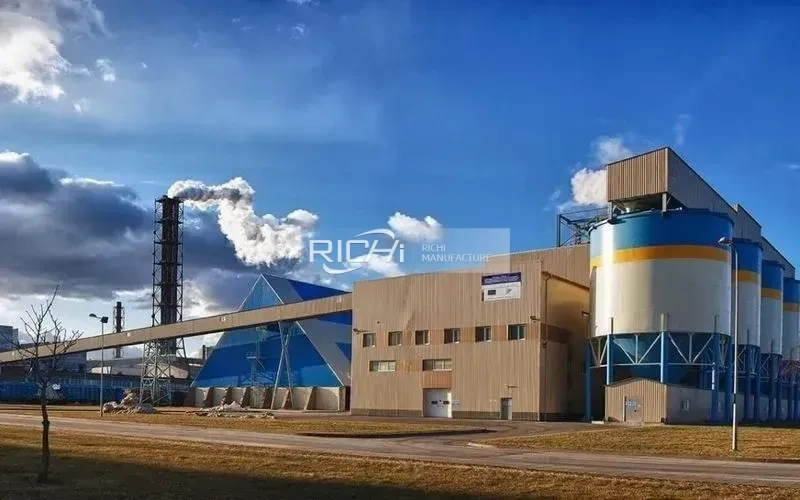
The critical components of the of the complete pellet production line equipment are built in our own workshops in Asia. Additional equipment is manufactured by our worldwide network of reliable partners.

● Testing
Quality Inspection & Testing
Before leaving the factory, all equipment will be inspected by the quality inspection department. We can also provide customers with testing services from a single machine to a complete pellet plant system, and provide you with real actual data for “worry-free use.”

● Delivery
Equipment Delivery
In equipment boxing and packaging, we adopt professional packaging and modular solutions to ensure the safe and non-destructive delivery of pellet plant equipment.
● Installation
Installation & Commissioning
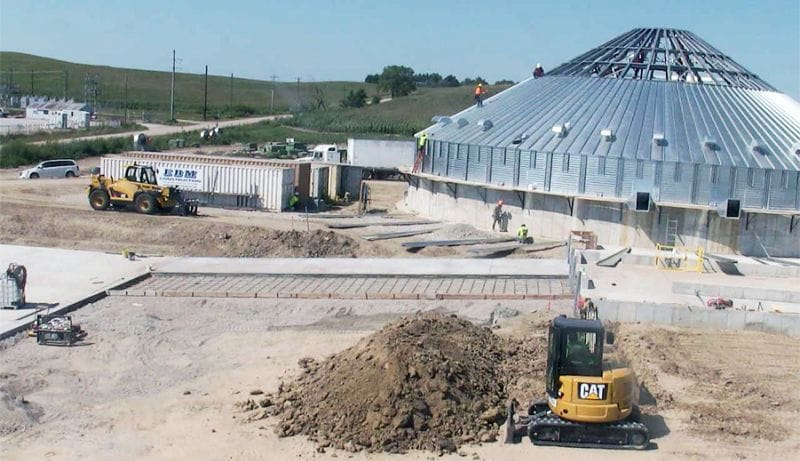
Whether you choose your own subcontractor for the erection phase or you want to install everything together with us, a Richi supervisor will be around to make sure everything is mounted in a safe and thorough way.

● Training
Staff Training
We provide comprehensive training for the technicians of each project. We can also continue to provide support for the technicians during latter project operation.
● After-sales
Project Follow-Up
When everything is up and running our Richiers will help you further whenever needed. We are ready to answer your call 24/7.We’ll also visit you regularly to learn about your needs.
Who we are
RICHI Machinery is one of the world’s leading suppliers of technology and services for the animal feed, aqua feed and pet food industries, also the largest pellet production line manufacturer in China.
Since 1995, RICHI’s vision to build a first-class enterprise, to foster first-class employees, and to make first-class contributions to society has never wavered.
In the past three decades, we have expanded our business to a wide range of areas, including animal feed mill equipment, aqua feed equipment, pet feed equipment, biomass pellet equipment, fertilizer equipment, cat litter equipment, municipal solid waste pellets equipment, etc.

1995
RICHI Established

2000+
Serving More Than 2000 Customers

120+
RICHI Employees

140+
Exported To 140 Countries