
 0086-138 3838 9622
Sunflower Husk Bedding Production Plant for Livestock in Ukraine
RICHI MACHINERY
Project Overview
A small agricultural entrepreneur reached out to RICHI Machinery about building a 1t/h sunflower husk bedding production plant for livestock in Ukraine with an annual capacity of 2,000 tons of animal bedding pellets (running 8 hours per day, 250 days per year — the client reduced days to match raw material availability and winter shutdown).
The facility produces soft, absorbent bedding pellets for dairy cattle, horses, and poultry from sunflower husks — a waste product of Ukraine’s massive sunflower oil industry.
The client is located in the Poltava Region of central Ukraine, one of the country’s largest sunflower production areas. Ukraine is the world’s largest producer of sunflower oil, generating about 5-6 million tons of sunflower seed hulls (husks) annually. Most of this material is currently burned in power plants or dumped in landfills. The client saw an opportunity to convert this waste into a valuable product for the livestock sector.
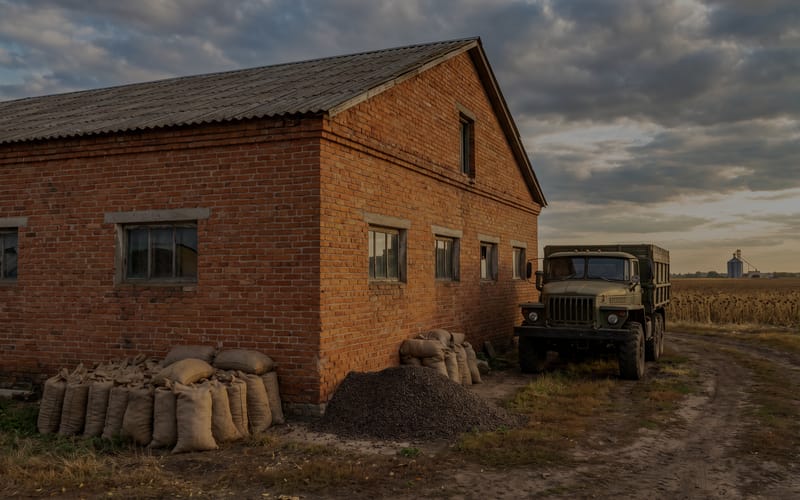
The client had very limited capital — only about $42,000 USD total. He couldn’t afford a large line with dryers, coolers, or conveyors. He needed the simplest possible setup. The facility uses a rented 800m² building (brick structure, 5m ceiling height — low, but sufficient for this small line). The client operates with only 3 staff, one shift per day.
1T/H
capacity
$42,000
investment
Ukraine
location
Bedding
project type
RICHI MACHINERY
Why Sunflower Husk Bedding?
Ukraine’s livestock sector is significant but recovering from war-related disruptions. Key markets for bedding pellets:
| Livestock type | Population (Ukraine, pre-war) | Bedding needs |
|---|---|---|
| Dairy cattle | 1.5-2 million head | High — need absorbent, low-dust bedding |
| Poultry (broilers, layers) | 200+ million birds | Very high — ammonia reduction is critical |
| Horses (recreational, working) | 300,000+ | Premium market for dust-free bedding |
Current bedding materials:
| Material | Market share | Problems |
|---|---|---|
| Straw | 60% | Mold issues, high storage space, inconsistent quality |
| Sawdust | 20% | Increasingly expensive (wood is valuable for reconstruction) |
| Imported bedding pellets | 5% | Expensive (€200-250/ton), long lead times |
| Other (peat, sand) | 15% | Environmental concerns |
The client’s sunflower husk pellets offer advantages:
- High absorbency (sunflower husks can absorb 2.5-3x their weight in water)
- Dust-free (important for animal respiratory health, especially horses)
- Soft texture (gentle on animal hooves)
- Renewable (sunflower husks are a waste product)
- Lower cost than imported products (the client sells at 6,000-7,000 UAH/ton ≈ $145-170)
Why sunflower husks work for bedding:
- Naturally absorbent (high cellulose content)
- Low lignin content (pellets remain soft — not as hard as wood pellets)
- Low ash (2-4% for clean husks)
- No mold issues if properly dried
RICHI MACHINERY
Raw Materials: Sunflower Husks
The client’s raw material is 100% sunflower seed husks from local oil extraction plants.
Sunflower husk characteristics:
| Parameter | Value | Notes |
|---|---|---|
| Moisture (as received, dried) | 10-14% | Oil mills dry husks for storage — no dryer needed |
| Bulk density (loose) | 120-150 kg/m³ | Fluffy |
| Ash content | 2-4% | Low — good for bedding |
| Oil residue | 1-2% | If not fully extracted — can cause staining |
| Cellulose | 45-50% | Provides absorbency |
| Lignin | 15-20% | Enough for binding when heated |
Why the client doesn’t need a dryer: Sunflower oil mills dry the husks before storage (to prevent self-heating and fire). By the time the client receives them, moisture is already 10-14% — perfect for pelletizing (target 10-15%). This saved the client about $8,000-10,000 in dryer equipment and eliminates fuel cost for drying.
Raw material supply:
| Source | Distance | Annual volume (tons) | Cost (UAH/ton) | USD/ton (42 UAH/USD) |
|---|---|---|---|---|
| Sunflower oil mill A | 15 km | 1,500 | 1,500 | $36 |
| Sunflower oil mill B | 30 km | 1,000 | 1,500 | $36 |
| Sunflower oil mill C | 45 km | 500 | 1,800 | $43 |
| Total input | — | 3,000 | — | — |
Wait, 3,000 tons input for 2,000 tons output? Yes. For sunflower husks, moisture loss is minimal (10-14% down to 8-12%), so the loss is about 5-10%. Let me correct: The client’s actual input is about 2,200-2,300 tons of dry husks to produce 2,000 tons of pellets (including dust collected and returned).
Raw material quality control:
The client only accepts sunflower husks that are:
- Dry (moisture <15% — tested with hand-held meter)
- Free from stones and metal (the client’s crusher and sunflower husk bedding pellet mill have magnetic separators)
- Not moldy (visual inspection)
RICHI MACHINERY
The Site and Building
The client have a brick building on the grounds of a former collective farm. The building is 800m², one story, 5m ceiling height — low for pellet production, but adequate for a 1 t/h line.
Building layout:
| Zone | Area (approx.) | Use |
|---|---|---|
| Raw material storage | 100m² (northeast corner) | Sunflower husks in bags |
| Processing area | ~500m² (center) | Dryer (rarely used), pellet mill, cooling |
| Finished product storage | ~150m² (south end) | Bagged pellets |
| Office, lunch room, toilet | ~50m² (southwest corner) | Admin |
Building height limitation: The 5m ceiling is low. The client can’t install tall bins or silos. The pellet mill is on the floor. Material moves by shovel (manual). This is not ideal, but it works for 1 t/h.
RICHI MACHINERY
Equipment Configuration
The client bought the minimum equipment needed:
| Equipment | Quantity | Power | Notes |
|---|---|---|---|
| Crusher | 1 | 22 kW | For oversize material (only 5% of input — the client may not use it) |
| Sunflower husk bedding pellet mill | 1 | 75 kW | Ring die type |
| Belt conveyor with screen | 1 | — | Transports and screens |
| Wet scrubber | 1 | — | For dryer exhaust (rarely used) |
| Magnetic separator | 1 | (integrated) | At pellet mill inlet |
RICHI’s solution for sunflower husks:
1. Removed dryer from main process. Sunflower husks are already dry (10-14% moisture from the oil mill). The client only uses the dryer during the wet season (if husks get wet during transport). The client kept the dryer as emergency backup but it’s not needed for normal operation.
2. Bypassed the crusher. 95% of sunflower husks are already the right size (1-5mm). Only 5% are oversized (larger husk pieces). The client uses the crusher occasionally, but for most production, material goes directly to the pellet mill.
3. Added a magnetic separator. Sunflower husks from oil mills can contain metal fragments (from processing equipment). The client’s sunflower husk bedding pellet mill has an integrated magnet to protect the die.
RICHI MACHINERY
Process Flow
Sunflower husks are much easier to process than wood. They are already small, already dry, and pelletize easily. The simple sunflower husk bedding production plant for livestock in Ukraine works well.)
Step 1: Raw Material Receiving and Storage
Trucks deliver sunflower husks in 25kg bags (or loose, covered) to the site. The client and his 5 workers unload bags into the raw material storage area (northeast corner, 100m²).
The storage area holds about 30 tons of bagged husks (15-20 days of production). During the sunflower harvest and processing season (August-November), the client builds inventory for the rest of the year.
Step 2: Crushing (Optional — For Oversize Only)
Only 5% of sunflower husks need crushing. Most go directly to the sunflower husk bedding pellet mill.)
If the client receives a batch with large husk pieces, he runs it through the crusher. The crusher has an integrated bag filter for dust control.
Crusher usage: About 5-10 hours per month, not daily.
Step 3: Drying (Emergency Only)
The client’s dryer is rarely used. Sunflower husks from the oil mill are 10-14% moisture. The client only runs the dryer:
- After heavy rain during transport (moisture >16%)
- During the wet season (November-March) if husks absorb humidity
- For about 10-15 days per year total
Dryer parameters (when used):
- Type: Rotary drum, electric heating
- Inlet temperature: 150°C
- Outlet moisture: 10-12%
- Exhaust passes through a wet scrubber (95% efficiency)
Step 4: Pelletizing
Sunflower husks pelletize at lower temperature than wood (60-80°C vs 80-100°C). The pellets stay softer — ideal for bedding.
Dry sunflower husks are fed into the sunflower husk bedding pellet mill.
Pellet mill parameters for sunflower husk bedding:
| Parameter | Value | Notes |
| Die diameter | 300-350 mm | Produces 6.5-7mm bedding pellets |
| Die hole diameter | 6 mm | |
| Compression ratio | 4:01 | Lower than fuel pellets (5:1) — keeps pellets soft |
| Die speed | 160-180 RPM | |
| Operating temperature | 60-80°C | Lower than wood pellets |
| Throughput | 1-1.2 t/h |
Bedding pellet specifications (corrected for animal bedding):
| Parameter | Target | Actual | Notes |
| Diameter | 6-8 mm | 6.5-7 mm | Correct size for bedding |
| Length | 10-25 mm | 12-20 mm | Correct length |
| Moisture | 8-12% | 9-11% | Softer than fuel pellets |
| Density | 900-1,000 kg/m³ | 950-1,000 kg/m³ | |
| Bulk density | 550-600 kg/m³ | 580 kg/m³ | |
| Durability (PDI) | >90% | 92-94% | Lower than fuel pellets (fine for bedding) |
| Ash content | <5% | 2-4% | Low |
| Absorbency | 250-300% | 250-280% | 2.5-2.8x weight in water |
Why lower compression ratio (4:1 vs 5:1 for fuel): Bedding pellets should be softer than fuel pellets. High compression makes hard, dense pellets that don’t absorb water well. The lower ratio produces softer pellets that break down when wet, absorbing more liquid.
Pellet mill operation: The client runs the mill at 1 t/h, monitoring die temperature with an infrared gun (kept below 80°C).
Step 5: Cooling
Hot pellets (60-70°C) drop onto the floor. The client spreads them in a thin layer (10-15cm deep) using a shovel.
Cooling time: 2-3 hours. Ukraine’s climate is cool (especially in the facility, which is not heated). The client doesn’t need a mechanical cooler.
Step 6: Packaging
Cooled pellets are shoveled into 25kg bags.
Packaging process:
- Operator shovels pellets into a 25kg bag
- Weighs on a hanging scale (accuracy ±200g)
- Sews bag closed with a portable sewing machine
- Stacks bags on pallets (40 bags × 25kg = 1,000kg per pallet)
The client’s sewing machine is electric (220V). He also has a few hand-crank machines as backup in case of power outages.
RICHI MACHINERY
Utilities and Consumption
| Utility | Annual consumption | Cost (UAH) | Cost (USD at 42 UAH/USD) |
|---|---|---|---|
| Electricity | 60,000 kWh | 180,000 | $4,290 |
| Water (domestic only) | 75 m³ | 5,250 | $125 |
Electricity breakdown (annual, 250 days, 8 hours/day = 2,000 hours):
| Equipment | kW average | Hours/day | kWh/day | kWh/year |
|---|---|---|---|---|
| Crusher (rarely used) | 5 (average) | 0.5 | 2.5 | 625 |
| Dryer (rarely used) | 0 (not used most days) | 0 | 0 | 0 |
| Pellet mill | 65 | 8 | 520 | 130,000 |
| Conveyor | 2 | 8 | 16 | 4,000 |
| Fans (dust collection) | 3 | 8 | 24 | 6,000 |
| Lighting, office | 1 | 8 | 8 | 2,000 |
| Total | 76 | — | 570 | 142,625 kWh |
The client’s ring die pellet machine is 75 kW × 8 hours × 250 days = 150,000 kWh just for the mill. The actual consumption is about 150,000-200,000 kWh/year.
Electricity cost per ton: 150,000 kWh ÷ 2,000 tons = 75 kWh/ton × 3 UAH/kWh (industrial rate) = 225 UAH/ton ($5.36).
RICHI MACHINERY
How RICHI Customized This Line for Sunflower Husk Bedding
The client had specific requirements that shaped the equipment design:
Requirement 1: Raw material is sunflower husks (already dry, already small). The client couldn’t afford a dryer and didn’t want the operating cost.
RICHI solution: Sunflower husks go directly from storage to the pellet mill. This saved the client about 8,000−10,000 in equipment and 2,000-3,000/year in electricity (if using an electric dryer) or fuel (if using a biomass dryer).
Requirement 2: The client needs bedding pellets (soft, absorbent), not fuel pellets. The specifications are different.
RICHI solution: Recommended:
- Die hole diameter: 6mm (produces 6.5-7mm pellets — correct size for bedding)
- Compression ratio: 4:1 (lower than fuel pellets) — produces softer pellets
- Target moisture: 10% (not <8% like fuel pellets)
- The client’s pellets are certified as “animal bedding” (lower standard than fuel pellets, which is fine for the market)
Requirement 4: The client has no prior pellet experience (he was a farmer). The client’s workers are local farmers with no technical training.
RICHI solution: Provided a 1-week on-site training program:
- Basic safety, machine startup/shutdown
- Daily checks (magnets, lubrication, die temperature)
- Adjusting the pellet mill die gap
- Provided a simple laminated “checklist” in Ukrainian
The client learned the system in 3 days.
RICHI MACHINERY
Market Outlook for Sunflower Husk Bedding Pellets in Ukraine
Ukraine’s livestock sector was disrupted by the war but is recovering. Key drivers:
1. Reconstruction demand. As farms rebuild, they need bedding materials. Sunflower husks are locally available and not affected by supply chain disruptions.
2. War-related logistics. Imported bedding pellets from Poland and Germany are now more expensive and slower to arrive (due to border delays). Local production has a cost advantage.
3. Growing awareness of animal welfare. Modern livestock farms (especially dairy and horse stables) are switching to dust-free bedding to reduce respiratory diseases.
4. Sunflower husks are abundant. Ukraine produces 5-6 million tons of sunflower seed hulls annually. Most are currently burned for energy or landfilled. Converting just 1% to bedding pellets would produce 50,000+ tons — 25x the client’s capacity.
Competition: There are 10-15 small pellet producers in Ukraine, most using wood waste. Only 1-2 use sunflower husks. The client is one of the first.
Challenges the client is managing:
| Challenge | Mitigation |
|---|---|
| Raw material price volatility | Lock in 12-month contracts with oil mills |
| War-related power outages | Small diesel generator (5 kW) for lighting and controls — the pellet mill runs on grid power, but outages are less frequent in Poltava region |
| Customer awareness of sunflower husk bedding | Offer free 100kg samples to large dairy farms; partner with veterinary associations |
| Competition from cheap straw | Educate farmers on total cost of ownership: less labor to clean stalls, better animal health |
The client’s breakeven point is 1,200 tons/year (60% capacity). At full capacity (2,000 tons/year), operating margin is about 20-25%. Payback on equipment is about 14 months.
RICHI MACHINERY
Why Sunflower Husk Bedding Makes Sense
Sunflower husks are one of the most underutilized agricultural residues in Ukraine and other sunflower-producing countries (Russia, Argentina, Turkey, Bulgaria, Romania). Here’s why you should consider this market:
The raw material is already dry. Sunflower oil mills dry the husks before storage. You don’t need a dryer — major cost saving.
The raw material is already small. Sunflower husks are 1-5mm particles. You don’t need a crusher or hammer mill for most of the material — just a pellet mill.
Bedding pellets are easier to make than fuel pellets. Lower standards for durability, lower density, lower compression ratio. The process is simpler and cheaper.
The market is growing. As livestock farms modernize, they switch from straw to pellets. Straw is dusty, moldy, and requires more storage space.
If you’re considering a sunflower husk bedding pellet line, RICHI can help. We’ve designed lines for sunflower husks in Ukraine, Russia, Argentina, and Turkey. We understand the unique characteristics (low moisture, small particle size, low lignin content) and can recommend the right equipment.
Contact us to discuss your pellet plant project. Tell us about your raw material (source, moisture, volume), site conditions, target capacity, and budget. We’ll prepare a customized process flow, equipment list, and budget estimate — no obligation.
● RICHI MACHINERY
RICHI Service

● Consulting
Customer Consultation
We want to have a deep understanding of your industrial process, to know your exact needs of feed, wood, biomass, fertilizer or other pellet processing.
● Design
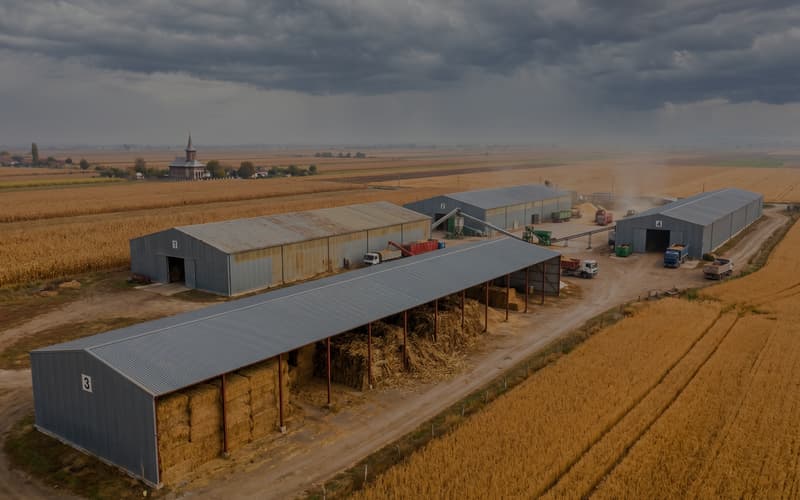
bedding Pellet Plant Design
Based on your unique situation and industrial process, we will tailor complete pellet plant you need, and inform you of every additional detail that could facilitate operation, minimize total cost.

● Manufacturing
Equipment Manufacturing
The critical components of the of the complete pellet production line equipment are built in our own workshops in Asia. Additional equipment is manufactured by our worldwide network of reliable partners.

● Testing
Quality Inspection & Testing
Before leaving the factory, all equipment will be inspected by the quality inspection department. We can also provide customers with testing services from a single machine to a complete pellet plant system, and provide you with real actual data for “worry-free use.”

● Delivery
Equipment Delivery
In equipment boxing and packaging, we adopt professional packaging and modular solutions to ensure the safe and non-destructive delivery of pellet plant equipment.

● Installation
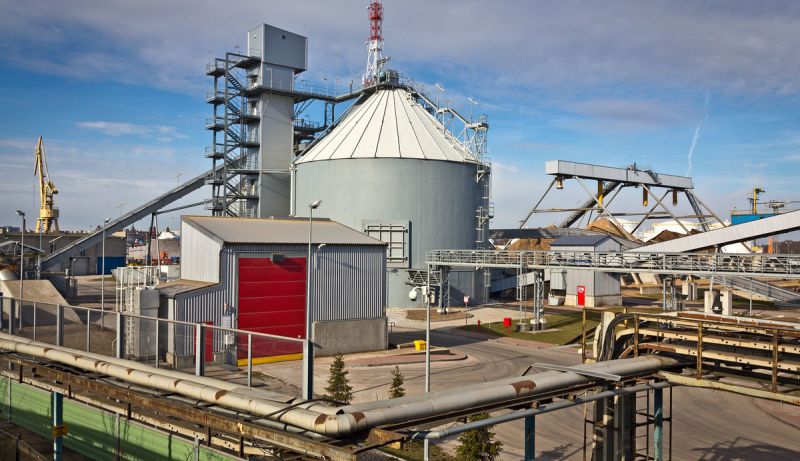
Installation & Commissioning
Whether you choose your own subcontractor for the erection phase or you want to install everything together with us, a Richi supervisor will be around to make sure everything is mounted in a safe and thorough way.

● Training
Staff Training
We provide comprehensive training for the technicians of each project. We can also continue to provide support for the technicians during latter project operation.
● After-sales
Project Follow-Up
When everything is up and running our Richiers will help you further whenever needed. We are ready to answer your call 24/7.We’ll also visit you regularly to learn about your needs.
Who we are
RICHI Machinery is one of the world’s leading suppliers of technology and services for the animal feed, aqua feed and pet food industries, also the largest pellet production line manufacturer in China.
Since 1995, RICHI’s vision to build a first-class enterprise, to foster first-class employees, and to make first-class contributions to society has never wavered.
In the past three decades, we have expanded our business to a wide range of areas, including animal feed mill equipment, aqua feed equipment, pet feed equipment, biomass pellet equipment, fertilizer equipment, cat litter equipment, municipal solid waste pellets equipment, etc.

1995
RICHI Established

2000+
Serving More Than 2000 Customers

120+
RICHI Employees

140+
Exported To 140 Countries