0086-138 3838 9622
Sugarcane Filter Cake Fertilizer Plant in Thailand
RICHI MACHINERY
The Expansion Boundary Is the First Engineering Decision
The expansion starts with a boundary question: which parts of the existing 10,000 T/A factory still deserve to stay, and which parts would become bottlenecks at 20,000 T/A? This Sugarcane Filter Cake Fertilizer Plant in Thailand is not a greenfield project. The customer already has buildings, storage, utilities, operators, supplier relationships and an established fertilizer market, so the new investment is concentrated where additional throughput and better process control are actually needed.
The upgraded factory targets about 20,000 tonnes of finished fertilizer per year, mainly as 6 mm pellets. Normal finished output is around 7–8 T/H. At 300 production days, the plant needs roughly 2,500–2,850 effective mechanical hours to achieve the annual target, equivalent to about 8.3–9.5 effective hours per production day. This leaves the staffed schedule enough room for cleaning, die changes, maintenance and formula changeovers.
Two FZLH350 ring-die fertilizer pellet mills form the expanded granulation section. Each machine uses a 37 kW main motor and has a reference capacity of 3–5 T/H, giving a combined reference range of 6–10 T/H. Running the pair around 7–8 T/H is therefore a realistic project duty rather than a claim that both machines will remain at their maximum on every filter-cake formula.
The confirmed RICHI machinery and engineering supply basis is approximately USD 250,000. This covers the principal expansion equipment and integration work, not the entire value of land, retained buildings, local civil modifications, freight, duties, raw-material inventory or working capital. That distinction matters in an expansion project because the customer is deliberately reusing assets that still have useful capacity.
7–8 T/H
normal finished output
USD 250,000
RICHI supply
Thailand
location
20,000 T/A
expanded output
RICHI MACHINERY
The Existing Factory Provides the Best Design Data
The customer does not increase capacity simply because larger equipment is available. Its existing 10,000 T/A operation already provides real information: which formulas sell, which raw materials arrive reliably, where labor is being consumed, which conveyors or storage areas are still useful and where downtime is occurring. The expansion turns those operating records into an engineering specification.
Before finalizing equipment, RICHI Machinery reviews the reusable boundary of the old plant. Existing warehouses, internal roads, offices, selected raw-material storage, laboratory space and utilities can remain where their capacity and condition are suitable. Sections that cannot support the new mass flow are replaced or bypassed rather than preserved for the sake of reducing initial cost.
| Existing Asset | Expansion Decision | Reason |
|---|---|---|
| Raw-material storage | Reuse where volume and weather protection remain adequate | Avoid unnecessary civil work |
| Fermentation area | Expand or reorganize | Wet-input inventory rises faster than machine footprint |
| Old conveyors / feeders | Retain only after throughput check | Prevents hidden bottlenecks |
| Electrical service | Audit and upgrade if needed | Two FZLH350 lines and thermal auxiliaries raise simultaneous load |
| Warehouse | Reuse / enlarge by dispatch plan | Finished-goods turnover matters more than nominal plant size |
| Laboratory / office | Reuse where practical | Quality control grows without duplicating administration |
RICHI MACHINERY
Seasonal Filter Cake Supply Has to Work before Capacity Is Added
Thailand’s sugar industry gives the project a real raw-material base. USDA’s 2026 Thailand Sugar Annual estimates the 2025/26 sugarcane crop at about 103 million tonnes, the highest level in several years. A fertilizer producer located within a practical hauling radius of sugar mills can therefore source filter cake at commercial scale, but the plant still contracts specific mills rather than treating national production as automatically available feedstock.
Filter cake, also called press mud or filter mud in different sugar operations, is not purchased as a standardized fertilizer ingredient. Moisture, ash, organic matter, pH, storage age and nutrient content can vary by mill and season. Supplier lots are sampled and recorded so the plant knows how much usable dry matter it is buying rather than paying only for wet tonnes.
Sugar milling is seasonal, so the receiving plan changes through the year. During peak crushing months, more filter cake can enter stabilization and maturation. Outside the peak season, the plant draws on mature inventory and secondary organic streams instead of storing unstable wet residue indefinitely. The biological yard is therefore part of procurement planning, not merely a treatment area behind the factory.
RICHI MACHINERY
Mushroom Substrate and Ash Play Different Roles
Spent mushroom substrate is used because it solves a different process problem from filter cake. It is generally more fibrous and can contribute structure to a wet compost mix. Its condition still varies with the original mushroom substrate, storage time and moisture, so it is received separately and only blended after the operator knows what the current filter-cake batch needs.
Clean biomass ash is treated more cautiously. Only ash from known acceptable biomass sources is considered, while ash from mixed waste, treated wood, painted timber or unknown industrial fuels is excluded. Ash can contribute minerals and influence pH, but too much of it can raise the inorganic fraction and change both pellet behavior and product analysis.
- Filter cake supplies the main sugar-industry organic fraction and usually carries the highest seasonal volume.
- Spent mushroom substrate contributes fibre and structure but may also bring substantial moisture.
- Clean biomass ash is a controlled formulation ingredient, not bulk filler.
- Other mineral or functional ingredients are added only when the registered commercial formula requires them.
RICHI MACHINERY
Wet Procurement Is Managed on Dry-Matter Yield
The annual material balance is closed on dry matter instead of wet truck weight. Producing 20,000 tonnes of finished fertilizer requires substantially more than 20,000 tonnes of incoming wet residue because filter cake and spent mushroom substrate can contain large amounts of water, and composting also removes part of the biodegradable dry matter.
| Material Stream | Preliminary Annual Envelope | Planning Logic |
|---|---|---|
| Sugarcane filter cake / suitable sugar residue | Approx. 32,000–38,000 T/A | Main wet organic input; adjusted by measured solids |
| Spent mushroom substrate | Approx. 14,000–18,000 T/A | Fibrous organic co-material |
| Clean biomass ash / mineral additions | Approx. 3,000–5,000 T/A | Formula controlled, not volume filler |
| Other approved dry ingredients | Formula dependent | Used for nutrient or physical adjustment |
| Total raw-material envelope | Approx. 50,000–60,000 T/A | Varies with moisture, dry matter and composting loss |
| Finished commercial fertilizer | Approx. 20,000 T/A | Mainly 6 mm pellets |
These figures are procurement planning ranges, not a fixed recipe. If filter cake arrives wetter, annual wet tonnage can increase without increasing saleable output. If more dry material is available, the same finished tonnage may require fewer inbound truckloads. The customer therefore records supplier weight, moisture, batch additions, biological loss and finished yield.
RICHI MACHINERY
Biological Inventory Sets the Site Scale
Biological capacity is larger than the mechanical capacity because the residence times are completely different. At a 50,000–60,000 T/A raw-material envelope, average intake over 300 active days can reach roughly 165–200 tonnes per day. Several weeks of active composting and maturation mean that thousands of tonnes may be in process while the pellet mills handle only a few tonnes each hour.
For the Sugarcane Filter Cake Fertilizer Plant in Thailand, a total site in the neighborhood of 10,000–13,000 m² is a defensible planning range when existing buildings and roads can be reused. Roughly 4,000–5,000 m² can be reserved for receiving, active composting, turning access and maturation. Final dimensions depend on pile geometry, bulk density, turning method, covered area and how much seasonal material is stabilized before storage.
Thailand’s wet-season conditions make drainage and cover part of process control. Wet receiving zones use controlled surfaces and contact-water collection, while clean roof runoff is kept separate where practical. Mature fertilizer and dry ash storage are protected from rainfall so downstream drying is not forced to remove water that entered only because of poor site management.
RICHI MACHINERY
Compost Maturity Is a Release Decision Not a Calendar Date
Fermentation is completed before the organic fertilizer pellet mill section. Fresh filter cake and mushroom substrate first enter a managed aerobic process in which operators control structure, moisture, oxygen distribution and turning. The objective is stable mature material, not a fixed number of calendar days.
Pile temperature is monitored because it shows whether biological activity is progressing, but the batch is not released simply because a target temperature was reached once. Operators also consider odor, moisture, physical structure, decomposition state and the product-specific laboratory checks required before material moves to the dry finishing area.
This separation protects both product quality and equipment. A pellet mill can form prepared fertilizer, but it cannot make an unstable compost batch mature. Keeping the biological release decision upstream prevents the customer from trying to solve odor, excessive moisture or incomplete decomposition with more motor power.
RICHI MACHINERY
The Process Becomes Mechanical Only after Stabilization
The mechanical route begins with mature compost feeding, lump and fibre reduction, screening and controlled formula mixing. The customer does not grind every kilogram into ultrafine powder. Crushing only goes far enough to remove agglomerates and long fibres that would destabilize feeding or ring-die compression.
- Receive filter cake, spent mushroom substrate and dry formula materials through separate storage routes.
- Prepare compost batches according to actual moisture, fibre and material condition.
- Run active aerobic fermentation and turning, then move stable material through maturation.
- Reduce mature lumps and excessive fibres, then remove unsuitable oversize or foreign material.
- Mix mature organic material with ash and other approved ingredients according to the commercial formula.
- Feed the two FZLH350 machines and form the main 6 mm fertilizer pellet.
- Dry only the remaining water load required for commercial storage, then cool the product.
- Screen whole pellets from fines and return compatible fines to the appropriate upstream point.
- Apply heat-sensitive biological ingredients after cooling where the registered product requires them.
- Pack qualified product into 25 kg or 40 kg bags and record the finished lot.
The process is deliberately shorter than the source page’s many separate sub-sections because the buyer needs to see the decision logic in one flow: stabilize first, formulate second, pelletize third, then protect final moisture and any sensitive biological claim.
RICHI MACHINERY
Two FZLH350 Units Match the Expanded Duty
The two FZLH350 organic fertilizer pellet making machines are selected around the expanded sales target rather than around maximum theoretical output. Each machine uses a 37 kW main motor, a 350 mm ring die and a 4–12 mm pellet-diameter range, with a 3–5 T/H reference capacity under suitable fertilizer conditions.
| FZLH350 Item | Project Specification | Why It Matters |
|---|---|---|
| Quantity | 2 units | Supports 7–8 T/H normal combined duty |
| Main motor | 37 kW each | 74 kW combined main-drive power |
| Reference capacity | 3–5 T/H each | Combined 6–10 T/H reference range |
| Ring die | 350 mm | Matches the FZLH350 platform |
| Pellet diameter | 4–12 mm configurable | 6 mm is the first commercial SKU |
| Operating strategy | Parallel main production | Allows load sharing and planned maintenance |
Two machines provide useful flexibility but are not described as full redundancy. If one pelletizer is stopped, the other can continue limited production or support a smaller campaign, but it cannot maintain the full 7–8 T/H plant target by itself under every formula. This is more realistic than promising that maintenance has no effect on output.
RICHI MACHINERY
The 6 mm Pellet Is a Product Choice Not a Machine Limit
The organic fertilizer granulator machine section changes physical form; it does not create the nutrient guarantee. The nutrient profile comes from mature organic inputs, ash or mineral additions and the registered formula. Pelletizing mainly improves bulk density, bag filling, warehouse handling, mechanical spreading and segregation control.
The first commercial product is standardized at 6 mm because one reference SKU simplifies commissioning and distributor communication. Other dies within the 4–12 mm range can be installed when a real market contract requires them. The plant does not advertise every possible diameter as if all sizes were produced at once.
If the customer sells a bio-organic or biological fertilizer with defined microorganisms, sensitive strains are handled after the major heat stages. The plant cools the pellet before post-addition or coating so microbial viability is not unnecessarily exposed to pelletizing or drying temperature. The exact microorganism, guarantee and addition rate follow the registered product rather than a generic recipe.
RICHI MACHINERY
Old and New Equipment Have to Behave as One Line
The expanded organic fertilizer production line is sized around the sections that can actually limit commercial output. Reusing an old building saves money only when the retained conveyor, mixer, electrical feeder and warehouse can also support the new throughput. Every reused asset is therefore checked against the 20,000 T/A mass flow before it is accepted into the final layout.
| Process Duty | Main Equipment / Asset | Expansion Basis |
|---|---|---|
| Wet receiving | Existing + modified receiving areas | Separate filter cake and mushroom substrate routes |
| Compost preparation | Heavy-duty mixers | Wet organic blending |
| Aerobic treatment | Compost turners | Multiple batches in different stages |
| Mature feed preparation | Crushers + screens | Lump/fibre and oversize control |
| Formula mixing | Fertilizer mixer | Ash and approved ingredient distribution |
| Pelletizing | 2 × FZLH350 | 7–8 T/H normal combined output |
| Final moisture control | Pellet dryer as required by real evaporation duty | Not a raw filter-cake dryer |
| Cooling | Fertilizer cooler | Prepares pellets for screening and packing |
| Final screening | Pellet screen + fines return | Commercial product grading |
| Biological finishing | Post-addition / coating where required | Protects heat-sensitive microorganisms |
| Packing | Automatic weighing / bagging | 25 kg and 40 kg formats |
| Dust / odor control | Local extraction + wet-side management | Different controls for dry and biological zones |
| Automation | Electrical / PLC integration | Coordinates new and retained systems |
RICHI MACHINERY
Power Heat Water and Staffing Are Recalculated for the Expansion
The utility plan is also divided between the biological yard and the dry finishing line. Electricity is used for mixers, turners, crushers, screens, conveyors, the two 37 kW FZLH350 machines, cooler fans, dust collection and packing. A connected-load class around 250–350 kW is suitable for early planning before the final dryer and material-handling motors are fixed.
Annual electricity around 450–650 MWh is a reasonable planning range for the expanded plant, depending on crusher duty, pelletizing hours, conveying layout, dust extraction and the final thermal system. Thailand’s grid operates at 50 Hz; final service voltage, transformer size and protection are confirmed against the local utility connection and actual motor schedule.
Thermal demand is concentrated in final product moisture control, not in heating the entire compost yard. The dryer is sized from kilograms of water that still need to be removed after maturation and formula preparation. Upstream moisture management therefore has a direct operating-cost effect: every avoidable kilogram of water kept out of the dryer saves purchased heat.
A direct workforce of about 22–28 people is a practical basis for the expanded operation when experienced staff are retained. Roles cover wet receiving, loader/turner operation, dry preparation, pelletizing, dryer/cooler, packing, QC, maintenance and warehouse work. Administration and some sales functions can remain shared with the existing business.
RICHI MACHINERY
Thai Registration Rules Shape the Finished Product
For the Sugarcane Filter Cake Fertilizer Plant in Thailand, Thai fertilizer rules influence the product route as much as the machine list. The Department of Agriculture’s licensing framework requires businesses manufacturing organic fertilizer or biological fertilizer for trade to hold the applicable fertilizer license, and product registration procedures exist for both organic and biological fertilizer under the Fertilizer Act and its amendments.
This means a bag cannot be called bio-organic or biological fertilizer merely because microorganisms were added. The formula, declared composition, biological claim, label and registration route have to match. If the customer also wants the input recognized for organic crop production, the Department of Agriculture operates a separate registration process for organic-production inputs.
The plant therefore keeps supplier lots, compost batches, formula records, production parameters, laboratory results and packing codes connected. A 20,000 T/A factory doubles not only tonnage but also the number of batches that need to be explained if a distributor or regulator questions one product result.
RICHI MACHINERY
Installation Is Planned around an Operating Factory
Expansion construction is planned around the fact that the customer may still be producing fertilizer while the project is installed. The first engineering milestone is therefore an interface map showing which buildings, conveyors, electrical feeders, roads and storage areas remain live and which sections can be isolated for construction.
- Survey the operating plant and confirm the equipment and buildings that can remain in service.
- Freeze the new mass flow, fermentation inventory, pelletizing duty and utility requirements.
- Issue civil and mechanical interface drawings for retained and new sections.
- Complete local foundations, structural modifications, drainage and utility upgrades while new machinery is manufactured.
- Ship equipment from Qingdao; Laem Chabang is a practical Thai gateway when it matches the final inland route and cargo plan.
- Install the new dry-preparation and FZLH sections in stages to minimize interference with remaining production.
- Run no-load checks first, then commission with mature fertilizer material and the main 6 mm formula.
- Increase throughput only after dryer, cooler, screening, fines return and packing remain stable together.
This schedule makes the project look less dramatic than a complete shutdown-and-rebuild, but it is commercially safer. The value of an expansion is not the number of new machines installed; it is the ability to add 10,000 tonnes of saleable capacity without destroying the value already created by the first 10,000 T/A operation.
RICHI MACHINERY
The Added 10000 Tonnes Must Be Commercially Justified
The USD 250,000 RICHI supply is concentrated on the machinery and engineering needed to remove expansion bottlenecks. A new fertilizer granulator equipment package alone would not solve a shortage of mature compost, insufficient screening, undersized electrical service or a warehouse that cannot dispatch the added tonnage. The expansion is therefore evaluated as one connected system.
The existing sales base reduces one risk that greenfield projects often face: the customer is not trying to prove raw-material sourcing, fertilizer manufacturing and market demand at the same time. Even so, the added 10,000 T/A must still be supported by new supplier contracts, sufficient composting inventory and actual distributor demand. The case does not use an invented payback period or guaranteed margin.
For another organic fertilizer production project built as an expansion, the most useful first information is current output, bottleneck equipment, usable buildings, existing fermentation area, raw-material moisture and seasonality, current product registrations, pellet size, actual sales growth, available power and the amount of construction that can occur without stopping the existing factory.
That is the central engineering logic of this Sugarcane Filter Cake Fertilizer Plant in Thailand: keep the assets that still solve a real problem, replace the sections that cap future output, and size the new FZLH350 pair around the additional sales that the customer can genuinely support.
● RICHI MACHINERY
RICHI Service

● Consulting
Customer Consultation
We want to have a deep understanding of your industrial process, to know your exact needs of feed, wood, biomass, fertilizer or other pellet processing.
● Design
fertilizer Pellet Plant Design
Based on your unique situation and industrial process, we will tailor complete pellet plant you need, and inform you of every additional detail that could facilitate operation, minimize total cost.

● Manufacturing
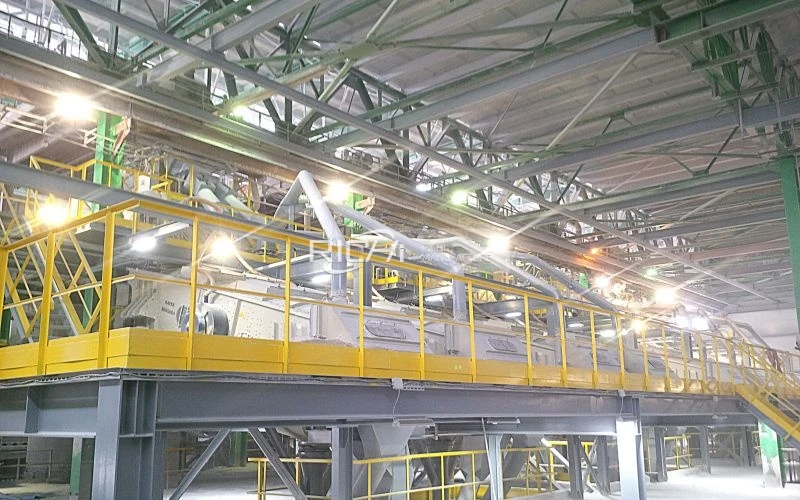
Equipment Manufacturing
The critical components of the of the complete pellet production line equipment are built in our own workshops in Asia. Additional equipment is manufactured by our worldwide network of reliable partners.

● Testing
Quality Inspection & Testing
Before leaving the factory, all equipment will be inspected by the quality inspection department. We can also provide customers with testing services from a single machine to a complete pellet plant system, and provide you with real actual data for “worry-free use.”

● Delivery
Equipment Delivery
In equipment boxing and packaging, we adopt professional packaging and modular solutions to ensure the safe and non-destructive delivery of pellet plant equipment.
● Installation
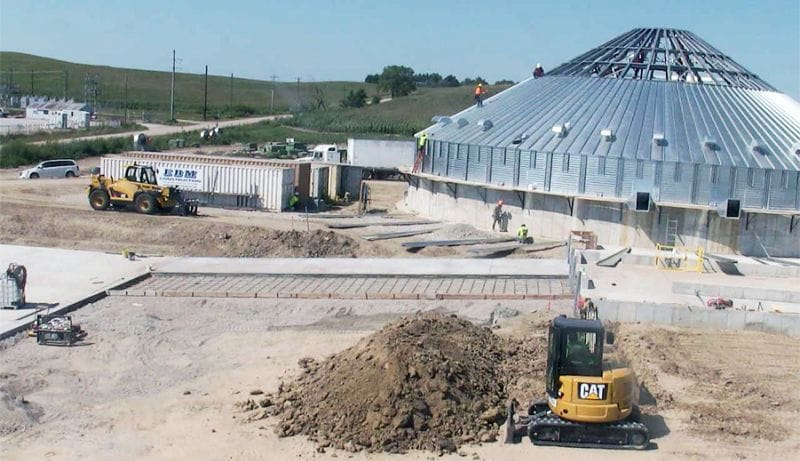
Installation & Commissioning
Whether you choose your own subcontractor for the erection phase or you want to install everything together with us, a Richi supervisor will be around to make sure everything is mounted in a safe and thorough way.

● Training
Staff Training
We provide comprehensive training for the technicians of each project. We can also continue to provide support for the technicians during latter project operation.
● After-sales
Project Follow-Up
When everything is up and running our Richiers will help you further whenever needed. We are ready to answer your call 24/7.We’ll also visit you regularly to learn about your needs.
Who we are
RICHI Machinery is one of the world’s leading suppliers of technology and services for the animal feed, aqua feed and pet food industries, also the largest pellet production line manufacturer in China.
Since 1995, RICHI’s vision to build a first-class enterprise, to foster first-class employees, and to make first-class contributions to society has never wavered.
In the past three decades, we have expanded our business to a wide range of areas, including animal feed mill equipment, aqua feed equipment, pet feed equipment, biomass pellet equipment, fertilizer equipment, cat litter equipment, municipal solid waste pellets equipment, etc.

1995
RICHI Established

2000+
Serving More Than 2000 Customers

120+
RICHI Employees

140+
Exported To 140 Countries