0086-138 3838 9622
Corn and Palm Kernel Meal Feed Ingredient Plant in Malaysia
RICHI MACHINERY
overview
This 120,000 T/A corn and palm kernel meal feed ingredient plant in Malaysia was developed for a commercial feed-material company supplying standardized mash ingredients to feed manufacturers, livestock businesses and agricultural distributors. The project combines a high-volume corn stream with palm kernel meal or palm kernel expeller, supported by controlled minor-ingredient dosing, to manufacture repeatable plant-based feed blends rather than one complete diet for a single animal species.
The plant is designed for approximately 20 T/H finished output, 300 operating days per year and around 20 effective production hours per day. RICHI uses vertical corn storage, dedicated handling for fibrous palm-kernel material, a compact grinding-batching-mixing building and separate bulk dispatch routes to keep the site within approximately 12,000–14,000 m². The design fits a regional Malaysian feed-material business that needs commercial volume, controlled formulas and room for later expansion without paying for a pelletizing section that its current product does not require.
20T/H
capacity
$1.18 million
investment
Malaysia
location
Feed
project type
RICHI MACHINERY
A 20 T/H Capacity Matches the Customer’s Sales Model
The customer needed a plant large enough to support contracted commercial deliveries but still proportionate to the purchasing, storage and working-capital requirements of a private regional processor. At 20 T/H, the main production numbers support one another instead of forcing the business to carry excessive equipment or inventory.
| Project Item | Final Design |
|---|---|
| Project | Corn and palm kernel meal feed ingredient plant |
| Country | Malaysia |
| Project nature | New-build |
| Finished capacity | 20 T/H |
| Daily output | Approx. 400 T/day |
| Annual output | Approx. 120,000 T/A |
| Operating days | Approx. 300 days/year |
| Effective production | Approx. 20 h/day |
| Main raw material | Corn |
| Secondary material | Palm kernel meal / palm kernel expeller |
| Representative minor ingredients | Approx. 0.5%, formula dependent |
| Product form | Mash feed ingredient blend |
| Main dispatch | Bulk + selected bagged products |
| Corn storage | Approx. 5,000–6,000 t |
| PKM/PKE working storage | Approx. 600–1,000 t |
| Site area | Approx. 12,000–14,000 m² |
| Normal staffing | Approx. 28–36 people |
| Expansion provision | Second 10–20 T/H module or downstream pellet section |
The capacity calculation is direct: 20 T/H × 20 effective h/day × 300 days/year = 120,000 T/A. The remaining hours in a normal day provide space for cleaning, formula changeover, preventive maintenance and unavoidable stops, rather than assuming 24 hours of uninterrupted production every day of the year.
RICHI MACHINERY
Raw Materials Reflect Malaysia’s Corn and Palm-Kernel Supply Structure
The raw-material plan is one of the reasons this project fits Malaysia. Corn is the dominant energy material and can be purchased through established international grain supply chains, while palm kernel meal or palm kernel expeller is linked to the country’s palm-processing sector. These materials are not treated as interchangeable: they differ in procurement cycle, bulk density, fibre level, residual oil, flow behavior and nutritional role, so receiving, storage and processing are designed separately.
| Material | Planning Share | Approx. Annual Requirement |
|---|---|---|
| Corn | 89.5% | 107,400 T/A |
| Palm kernel meal / PKE | 10.0% | 12,000 T/A |
| Premix / minor ingredients | 0.5% | 600 T/A |
| Total | 100% | 120,000 T/A |
This formula is an engineering basis for mass balance and storage planning, not a universal livestock diet. The customer can change the corn-to-PKM relationship or introduce other approved plant ingredients within the plant’s weighing and mixing capability. That flexibility is important because downstream buyers may request different feed bases according to species, price, fibre tolerance and their own final formulation.
RICHI MACHINERY
Finished Products Are Standardized Feed Bases for Further Formulation
The finished product is deliberately positioned as a commercial mash feed ingredient blend rather than a nutritionally complete feed for every animal. Corn primarily contributes energy, while palm kernel material contributes a different combination of fibre, energy and moderate protein. Its suitable inclusion depends on the customer’s target product and the complete ration in which the blend will eventually be used.
- Corn-dominant energy-base blends for customers requiring a prepared plant-based mash ingredient.
- Corn-PKM blends with controlled palm-kernel inclusion for appropriate downstream livestock-feed formulations.
- Customer-specific bulk blends manufactured within the approved ingredient, dosing and quality-control range of the plant.
This positioning matches the buyer profile behind the Corn and Palm Kernel Meal Feed Ingredient Plant in Malaysia: compound feed mills, cattle and dairy feed manufacturers, integrated agricultural companies, distributors and large farms that already manage their own final nutrition program. For these buyers, repeatable specification, traceability and reliable truck-scale supply matter more than retail presentation.
RICHI MACHINERY
Production Process for the 120,000 T/A Mash Ingredient Plant
The process is intentionally shorter than a complete pellet-feed factory because the current commercial product is mash. Every stage has a clear purpose: protect equipment, control particle size, weigh ingredients accurately, produce a uniform blend and separate production timing from truck dispatch. No conditioner, pellet mill, cooler, crumbler or pellet-screening recycle system is installed simply to make the line look more complete.
- Raw-material receiving: corn, PKM/PKE and minor ingredients enter through routes matched to their volume and physical form.
- Cleaning and magnetic separation: coarse impurities, stones and ferrous material are removed before sensitive downstream equipment.
- Storage: corn enters vertical silos; palm-kernel meal and smaller ingredients remain in dedicated storage designed around their flow behavior.
- Grinding where required: corn and other materials requiring size reduction enter the hammer-mill section, while material already within specification can bypass unnecessary milling.
- Batching and minor dosing: bulk ingredients are electronically weighed and low-inclusion materials are introduced through a controlled station.
- Mixing: two high-efficiency mixers produce uniform commercial mash blends according to stored formulas.
- Finished buffering and dispatch: product enters dedicated finished bins before bulk loading or selected bagging.
Keeping the route focused reduces connected power, wear parts and maintenance while leaving the grinding, batching and mixing sections capable of supporting a future downstream pellet module if the customer later develops a market for pellet feed.
RICHI MACHINERY
Equipment Configuration for the 20 T/H Feed Ingredient Plant
The equipment package is sized around the finished 20 T/H requirement and the actual load carried by each section. The design adds redundancy where an interruption would directly affect commercial delivery—especially grinding and mixing—without duplicating every conveyor, scale or storage bin.
| Section | Main Equipment | Qty. | Function |
|---|---|---|---|
| Receiving | Bulk corn receiving hopper | 1 set | Approx. 40–60 T/H truck unloading route |
| Receiving | PKM/PKE bulk meal intake | 1 set | Dedicated palm-kernel material receiving |
| Cleaning | Preliminary grain cleaner | 1 | Removes coarse impurities |
| Protection | Magnetic separator | 2 | Protects downstream equipment |
| Corn storage | Vertical grain silos | 2–3 | Approx. 5,000–6,000 t total |
| PKM storage | Dedicated meal bins/storage | 1 system | Approx. 600–1,000 t |
| Conveying | Bucket elevators and enclosed conveyors | Multiple | Storage and process transfer |
| Pre-grinding | Grinding bins and feeders | 2–4 | Stable hammer-mill loading |
| Grinding | Hammer mills | 2 | Main corn size reduction |
| Aspiration | Grinding aspiration systems | 2 | Airflow and dust management |
| Batching | Main/intermediate bins | 8–12 | Formula working buffers |
| Batching | Electronic batching scales | 2 | Bulk ingredient weighing |
| Minor dosing | Small-ingredient station | 1 set | Premix/mineral addition |
| Mixing | Double-shaft paddle mixers | 2 | High-uniformity mash mixing |
| Liquid | Liquid dosing system | 1 set | Formula-dependent addition |
| Finished feed | Finished-product bins | 3–4 | Production/dispatch buffering |
| Bulk dispatch | Truck loading points | 1–2 | Main commercial dispatch |
| Packaging | 25–50 kg packing line | 1 | Selected bagged product |
| Dust control | Pulse-jet collectors | Multiple | Localized dust capture |
| Utilities | Compressed-air system | 1 set | Pneumatic control |
| Automation | PLC-based control system | 1 set | Integrated operation |
The two hammer mill feed grinders share the principal corn grinding load and allow reduced-output operation during screen or hammer service on one unit. Two feed mixer machine systems provide similar flexibility for cleaning, maintenance and product scheduling. Final motor sizes, screen specifications, bin geometry and conveying capacity are confirmed from material tests and the customer’s required particle-size distribution.
RICHI MACHINERY
Receiving and Storage Are Sized for Working Inventory Rather Than Annual Volume
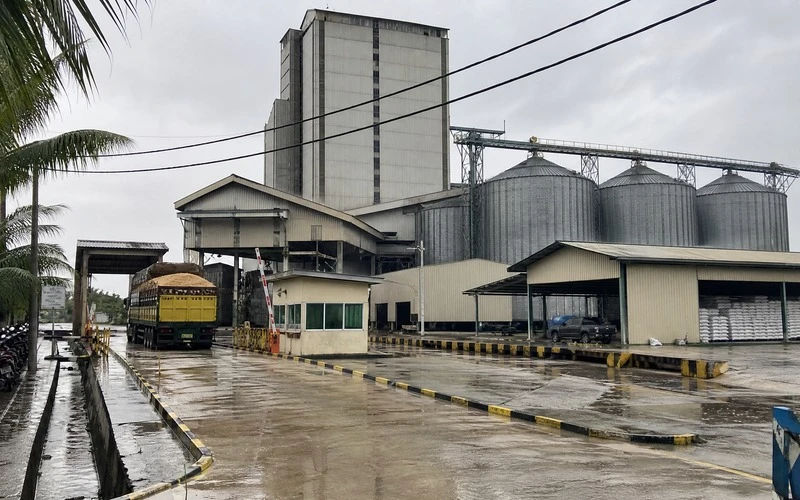
Storage is calculated from daily consumption and replenishment risk rather than annual tonnage. Under the representative formula, corn consumption averages about 358 tons per operating day. A 10-day buffer is roughly 3,580 tons and a 14-day buffer is close to 5,000 tons, so approximately 5,000–6,000 tons of silo capacity gives the customer a workable inventory without financing months of grain that is simply waiting on site.
PKM/PKE needs a different strategy. Depending on supplier, extraction process, moisture, fibre and residual oil, palm-kernel material may compact or bridge more readily than corn. Its storage section therefore uses discharge geometry and extraction equipment selected for the actual meal rather than copying grain-silo geometry. Approximately 600–1,000 tons of working storage is enough for the planned consumption rate when domestic or regional deliveries can be scheduled more frequently.
The receiving system is intentionally faster than the 20 T/H process line. Corn unloading is planned around approximately 40–60 T/H so trucks can discharge within a practical window instead of waiting while the factory consumes material at production speed. PKM/PKE and bagged minor ingredients use controlled routes suited to their handling requirements, keeping the high-volume grain stream separate from small-ingredient operations.
RICHI MACHINERY
Buildings and Site Layout Keep the Plant Compact but Maintainable
The 12,000–14,000 m² site is organized around short material routes, safe truck circulation and maintainable equipment access. Vertical silos reduce the land required for corn storage, while the process building uses gravity between selected bins, scales and mixers after material has been elevated to the required level. This limits unnecessary horizontal conveying without turning the production tower into a space that technicians cannot service.
| Area | Approximate Planning Space |
|---|---|
| Main production building/tower | 2,800–3,500 m² |
| Corn silo and receiving area | 1,800–2,200 m² |
| PKM/minor ingredient storage | 1,200–1,500 m² |
| Finished-product storage | 1,500–2,000 m² |
| Bulk loading/packing area | 700–900 m² |
| Utilities/maintenance | 500–700 m² |
| Office/laboratory | 350–500 m² |
| Roads, fire access and reserved expansion | Balance of site |
| Total site | Approx. 12,000–14,000 m² |
Raw-material arrival and finished-product dispatch are separated by function where site geometry allows. Corn unloading stays close to the silo transfer route; finished trucks load beside finished-product bins and bagged-product storage; minor ingredients enter from the warehouse side. The arrangement reduces vehicle conflicts and avoids carrying material back across the site after it has already passed through production.
RICHI MACHINERY
Public Works Utilities and Labor Match a Dry Automated Mash Plant
Because this is a dry mash process, utility demand is concentrated in grinding, conveying, mixing, aspiration and compressed air rather than steam conditioning or pellet cooling. A practical annual electricity-planning range is approximately 1.6–2.2 million kWh, depending on grinding fineness, actual utilization, the share of PKM that can bypass grinding and the operating demand of dust-control fans. Final transformer capacity is selected from connected and simultaneous motor loads after equipment is confirmed, not from annual energy consumption alone.
Routine process-water demand is limited because water is not continuously added as a major production input. Water is mainly required for personnel facilities, laboratory work and selected cleaning tasks, while fire-water requirements are treated separately in local civil and safety design. The plant also includes a compressed-air system for pneumatic gates, diverters and control components. No large process boiler is required for the current mash route, which reduces utility complexity and leaves the customer free to add steam infrastructure only if a future pelletizing section is built.
Normal staffing is approximately 28–36 people across management, control-room operation, raw-material receiving, warehouse and silo management, grinding/batching supervision, mixing and dispatch, laboratory quality control, mechanical and electrical maintenance, logistics, safety and administration. Automation reduces manual material movement; employees monitor routing, equipment condition and product quality rather than physically carrying bulk ingredients between machines.
RICHI MACHINERY
Environmental Measures Focus on Dust Noise and Clean Material Handling
Dust control is concentrated at the points where dry feed materials are actually released or accelerated. Receiving pits, cleaning equipment, hammer mills, elevators, transfer points, small-ingredient addition, mixing and bagging are connected to localized aspiration or pulse-jet collection as appropriate. Enclosed conveyors and sealed transfer interfaces reduce uncontrolled leakage, while collected clean feed dust can only be returned to an approved stream when the customer’s quality and traceability rules permit it.
Noise control focuses on high-speed equipment such as hammer mills, fans and air systems through equipment selection, enclosure, foundation design and maintenance. Solid residues from cleaning are separated from qualified feed material and managed according to their type rather than returned automatically to production. Because the current process has no wet production step and no steam conditioning, routine industrial wastewater generation remains limited; domestic wastewater and occasional cleaning water are managed through the site’s local utility arrangements.
The control philosophy also supports environmental performance. Interlocks stop upstream feeding when a downstream conveyor, bin or machine is unavailable, reducing spills and overfilling. Stable grinder feeding avoids unnecessary peaks in dust and motor load, and preventive filter maintenance keeps aspiration working as designed instead of treating dust collection as an accessory that can be ignored after commissioning.
RICHI MACHINERY
Quality Control and Automation Protect Repeatability from Receiving to Dispatch
Quality control begins before raw materials enter storage. Corn deliveries are checked against the customer’s acceptance program for moisture, impurities, abnormal odor, visible mould, insect activity and other relevant feed-safety indicators. PKM/PKE is evaluated separately because supplier lots can differ in moisture, fibre, residual oil, protein characteristics, shell or foreign material and particle condition. A low purchase price does not create savings if the material bridges in storage, destabilizes a formula or causes downstream complaints.
The PLC-based control system links routing, bin levels, grinder feeding, batching scales, mixer sequencing, optional liquid dosing, finished-bin selection and alarms. Approved formulas store target weights, while production records capture actual batch information. If a repeat buyer questions a shipment, the factory can trace the batch and raw-material lots instead of relying on operator memory.
- Incoming-material inspection and lot identification before storage.
- Magnetic protection and cleaning before sensitive downstream machines.
- Particle-size checks tied to screen selection and grinder load.
- Batch target/actual weight recording for main and minor ingredients.
- Mixing-uniformity verification during commissioning and when formulas materially change.
- Finished-product sampling before bulk loading or bag release.
- Scheduled cleanout or sequencing when a more sensitive formula requires contamination control.
This combination of purchasing control, physical processing and production records is more reliable than asking machinery alone to compensate for variable raw materials.
RICHI MACHINERY
Bulk Logistics Carry the Main Sales Volume While Bagging Remains Flexible
Most commercial tonnage leaves the plant in bulk because the customer’s principal buyers are other feed businesses. At approximately 400 tons of finished output on a full operating day, placing every ton into small bags would create unnecessary packaging, stacking and warehouse demand. Finished-product bins therefore sit between the mixers and truck loading so production can continue while vehicles are positioned, weighed or sampled.
The bulk loading rate is higher than the continuous 20 T/H production average. Product accumulates in the finished bins and can then be discharged quickly into a truck, preventing road logistics from dictating mixer cycle time. Three or four finished bins also allow approved commercial grades to remain separate while waiting for dispatch.
A 25–50 kg packing line remains available for distributor orders and smaller customers, with large bags possible where the buyer’s handling system supports them. The packaging route is a secondary sales channel rather than the constraint that determines the entire factory layout. This balance is important for a regional feed-material supplier serving both industrial buyers and smaller agricultural customers.
RICHI MACHINERY
Investment and Cost Control Are Built Around the Product the Customer Actually Sells
The approximately USD 1.18 million investment reference covers the RICHI machinery and core production-system scope represented in this project, including major receiving, conveying, grinding, batching, mixing, finished buffering, bulk loading, packing, dust-control and automation equipment. It is not presented as the customer’s entire land-development budget. Civil works, local steel or buildings outside the supply boundary, freight, installation, local utilities, raw-material inventory and working capital need to be planned separately.
Cost control comes from matching equipment to the product rather than removing functions that matter. The customer avoids a pelletizing section because no current sales requirement justifies it, yet retains two grinding and two mixing routes because downtime there would directly affect contracted deliveries. Corn storage is sized for roughly two weeks of working stock rather than months of annual demand, reducing capital tied up in inventory.
The operating economics are also influenced by particle-size targets, supplier quality, PKM bypass rate, formula complexity, bagged-versus-bulk sales and production scheduling. During early operation, the customer records grinder screens, motor loads, throughput, mixing cycles, energy use and interruptions so the plant can identify the lowest practical cost per ton while maintaining the required product specification.
RICHI MACHINERY
Project Timeline Coordinates Civil Work Equipment Manufacturing and Commissioning
The implementation plan is organized so civil work and equipment preparation can proceed in parallel. Layout, foundation loads, silo interfaces and utility requirements are confirmed early enough for local construction to begin while machinery is being manufactured. For a project of this scale, the total schedule is governed as much by local civil progress and utility readiness as by equipment fabrication, so the customer’s site team and RICHI engineering team work from shared interface drawings rather than waiting for machines to arrive before resolving building details.
- Basic engineering and layout confirmation: material data, formulas, capacity, storage days, dispatch mode and site boundaries are frozen for detailed design.
- Civil and structural preparation: foundations, building structure, silo bases, roads and utility interfaces progress against approved drawings.
- Equipment manufacturing and inspection: major machines, control components and interfaces are checked before dispatch.
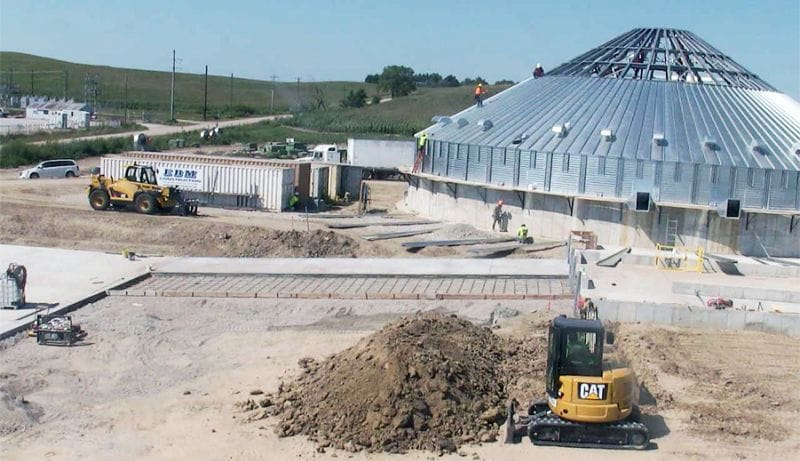
- Shipment and site erection: large bins, mixers and primary structures are positioned before access becomes restricted by smaller equipment and ducting.
- Electrical and automation integration: motors, sensors, scales, gates and interlocks are connected and verified section by section.
- Commissioning and training: material routing is proven first, then batching/mixing accuracy and finally sustained throughput toward the 20 T/H target.
A realistic overall implementation window for a new 20 T/H plant is commonly measured in months rather than weeks, and the exact completion date depends on local permitting, civil construction, import logistics and the customer’s readiness. Commissioning therefore begins with correct material flow and safe interlocks before maximum tonnage is attempted.
RICHI MACHINERY
RICHI Scope Covers Process Engineering Equipment Integration and Start-Up Support
For this Corn and Palm Kernel Meal Feed Ingredient Plant in Malaysia, RICHI Machinery starts engineering from the customer’s material and sales model rather than from a fixed equipment list. The design team reviews annual tonnage, daily schedule, formula range, incoming moisture and particle condition, required finished particle distribution, storage days, bulk-versus-bag sales, available land, electrical conditions and future expansion before final machine sizing.
The scope extends beyond individual machines. RICHI coordinates process flow, storage logic, equipment sizing, transfer routes, dust collection, access platforms, automation interfaces and the space needed to maintain major equipment. Before shipment, pre-delivery checks focus on drives, rotors, mixers, load-cell preparation, gates, diverters, control cabinets, motors, sensor logic and equipment interfaces so problems are not discovered only after erection.
Installation support follows the vertical-building sequence: main structure and large equipment first, then elevators, conveyors, scales, dust ducting, electrical systems and dispatch equipment. During commissioning, operators are trained to route corn to the correct silo, stabilize grinder feed, calibrate scales, confirm mixer cycles, manage PKM variability and use formula records. The goal is a production team that understands why each setting matters rather than one that can only press start and stop.
RICHI MACHINERY
Risk Control Links Raw-Material Behavior to Practical Engineering Decisions
Several project risks are addressed through the design rather than left for operators to solve after start-up. Imported corn requires enough silo buffer to absorb delivery variation, but not so much storage that working capital is trapped. PKM/PKE needs discharge equipment suited to fibrous meal rather than grain geometry. Commercial buyers need repeatable formulas, so weighing and batch records replace loader-based proportioning. Truck arrival times should not stop mixing, so finished bins separate production from dispatch.
| Buyer Risk | Design Response |
|---|---|
| Corn delivery variation | Approx. 5,000–6,000 t working silo capacity |
| PKM/PKE bridging or poor flow | Dedicated storage/discharge geometry and controlled extraction |
| Variable incoming particle condition | Grinding route with bypass where material already meets specification |
| Grinder maintenance stopping production | Two hammer mills sharing the load |
| Formula or batching inconsistency | Electronic weighing, separate minor dosing and stored recipes |
| Mixer cleaning/maintenance delay | Two mixing routes and planned changeover sequence |
| Truck delays interrupting production | Finished-product buffer bins and faster bulk loading |
| Dust at multiple transfer points | Localized aspiration and enclosed conveying |
| Future sales growth | Reserved interfaces for a second 10–20 T/H module or pellet section |
These responses make the project more credible as a long-term commercial plant. The design does not attempt to eliminate every possible operating problem with extra machinery; it concentrates capital on bottlenecks and risks that can realistically reduce tonnage, product consistency or customer service.
RICHI MACHINERY
Expansion Is Reserved for Proven Demand Instead of Oversizing the First Stage
The current plant is sized to reach approximately 120,000 T/A without occupying the entire site with unused future equipment. If sales grow, the first expansion decision is based on the actual bottleneck—grinding, mixing, storage, dispatch or packing—rather than automatically duplicating the whole factory. Space and transfer interfaces can support an additional 10–20 T/H processing module if the market eventually justifies that step.
A pellet-feed section is another possible expansion, but it is treated as a separate business decision. The existing preparation system could potentially feed a future route of prepared mash → conditioning → ring-die pelletizing → cooling → screening → storage and dispatch, provided its formula and capacity remain suitable. Steam supply, pellet equipment, cooling and additional power would then be designed for the new product instead of being installed unused from the beginning.
This staged approach gives the customer a plant that is commercially useful on day one and technically ready for growth. The Corn and Palm Kernel Meal Feed Ingredient Plant in Malaysia therefore balances regional raw-material supply, 20 T/H production, manageable working inventory, bulk logistics, traceable formulation and future expansion within one coherent project rather than treating each machine as an isolated purchase.
RICHI MACHINERY
Planning a Corn and Palm Kernel Meal Feed Ingredient Plant in Malaysia
A buyer planning a similar corn and palm kernel meal feed ingredient plant in Malaysia should begin with the sales product and raw-material condition, not with a copied equipment list. The most important inputs are annual sellable tonnage, corn and PKM/PKE proportions, incoming meal condition, target particle distribution, storage days, required batching accuracy, bulk-versus-bag dispatch, site dimensions, electrical supply and whether future pellet production is a real commercial objective.
For this project, those inputs lead to a 20 T/H mash ingredient system with approximately 120,000 T/A output, 5,000–6,000 tons of corn storage, dedicated palm-kernel material handling, two hammer mills, controlled batching, two mixers and bulk-first dispatch. The result is large enough for professional regional supply but still focused enough to avoid the cost and complexity of equipment that does not contribute to the customer’s present product.
If your raw materials, product form or local logistics differ, the same capacity does not automatically mean the same process. RICHI can re-calculate storage, grinding load, bin numbers, mixing cycles, conveying routes and expansion interfaces around the material you can actually source and the feed ingredient you intend to sell.
● RICHI MACHINERY
RICHI Service

● Consulting
Customer Consultation
We want to have a deep understanding of your industrial process, to know your exact needs of feed, wood, biomass, fertilizer or other pellet processing.

● Design
Feed Pellet Plant Design
Based on your unique situation and industrial process, we will tailor complete pellet plant you need, and inform you of every additional detail that could facilitate operation, minimize total cost.

● Manufacturing
Equipment Manufacturing
The critical components of the of the complete pellet production line equipment are built in our own workshops in Asia. Additional equipment is manufactured by our worldwide network of reliable partners.

● Testing
Quality Inspection & Testing
Before leaving the factory, all equipment will be inspected by the quality inspection department. We can also provide customers with testing services from a single machine to a complete pellet plant system, and provide you with real actual data for “worry-free use.”

● Delivery
Equipment Delivery
In equipment boxing and packaging, we adopt professional packaging and modular solutions to ensure the safe and non-destructive delivery of pellet plant equipment.
● Installation
Installation & Commissioning
Whether you choose your own subcontractor for the erection phase or you want to install everything together with us, a Richi supervisor will be around to make sure everything is mounted in a safe and thorough way.

● Training
Staff Training
We provide comprehensive training for the technicians of each project. We can also continue to provide support for the technicians during latter project operation.
● After-sales
Project Follow-Up
When everything is up and running our Richiers will help you further whenever needed. We are ready to answer your call 24/7.We’ll also visit you regularly to learn about your needs.
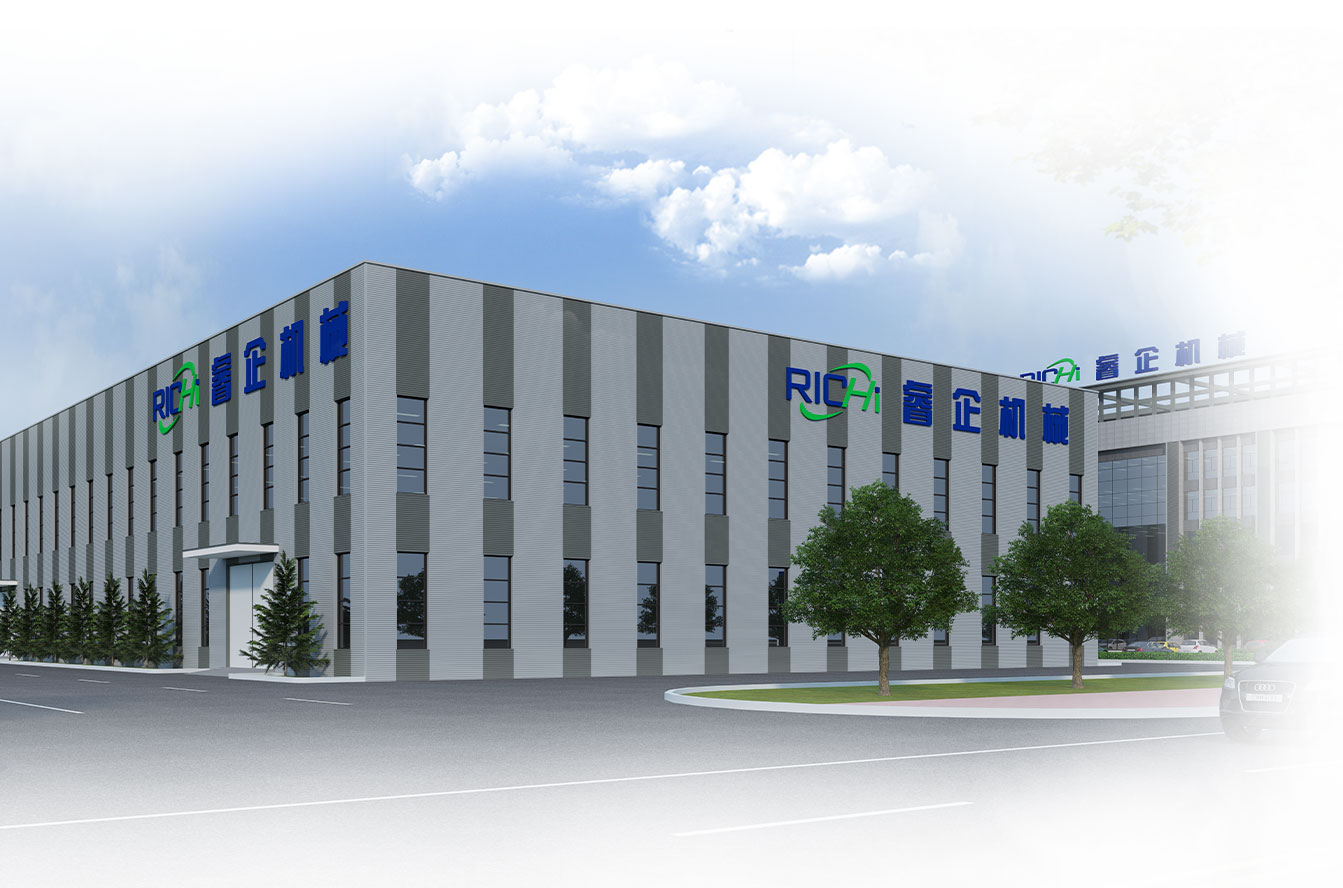
Who we are
RICHI Machinery is one of the world’s leading suppliers of technology and services for the animal feed, aqua feed and pet food industries, also the largest pellet production line manufacturer in China.
Since 1995, RICHI’s vision to build a first-class enterprise, to foster first-class employees, and to make first-class contributions to society has never wavered.
In the past three decades, we have expanded our business to a wide range of areas, including animal feed mill equipment, aqua feed equipment, pet feed equipment, biomass pellet equipment, fertilizer equipment, cat litter equipment, municipal solid waste pellets equipment, etc.

1995
RICHI Established

2000+
Serving More Than 2000 Customers

120+
RICHI Employees

140+
Exported To 140 Countries