 0086-138 3838 9622
Soybean Extrusion Production Line in India
Whole soybeans enter the soybean extrusion production line in India through an 8 T/H route combining preparation, wet extrusion and controlled finishing. RICHI matches the equipment, steam supply and product checks to the customer’s full-fat feed ingredient.

RICHI MACHINERY
An 8 T/H Soybean Extrusion Production Line in India
The soybean extrusion production line in India is arranged for an 8 T/H finished-product duty in Madhya Pradesh, connecting local soybean aggregation with customers buying full-fat feed ingredients. Two extrusion modules share receiving, finishing and dispatch services, while each module has its own controlled feeder and conditioner.
RICHI’s equipment scope covers preparation, wet extrusion, moisture removal, cooling and packing. The customer’s main concern is consistent treatment from one bean delivery to the next, with laboratory release before material enters poultry, pig or other approved feed formulations.
8 T/H
capacity
USD 560,000
investment
India
location
Soybean extrusion
project type
RICHI MACHINERY
Moving Beyond Grain Trading in Madhya Pradesh
The customer is an agricultural trading and feed-ingredient business. Its supplier relationships provide access to whole soybeans, but processing introduces responsibilities that grain trading alone does not cover. Bean moisture, damaged kernels, heat treatment and storage stability now affect whether the finished ingredient meets a feed mill’s purchasing specification.
For the soybean extrusion production line in India, the production target is 48,000 tonnes a year. That figure follows from 8 tonnes of finished material per net processing hour, 20 net hours a day and 300 operating days. Receiving, cleaning and maintenance require their own time; the annual figure does not assume that every calendar hour produces saleable material.
Two modules are selected around a 4 T/H whole-soybean duty each. This arrangement follows the selected machine size and required combined output. It also allows separate adjustment when bean lots differ, without presenting the second machine as unnecessary standby capacity. Common equipment downstream is sized for both modules running together.
The commercial value lies in offering an identified, tested ingredient to regional feed manufacturers. Full-fat soybean retains its oil, so buyers must account for both energy and protein in the diet. Substitution for soybean meal and added oil is calculated by a nutritionist using the actual analysis; it is not a fixed one-for-one replacement.
RICHI MACHINERY
A Clear Route Across the Customer’s Industrial Site
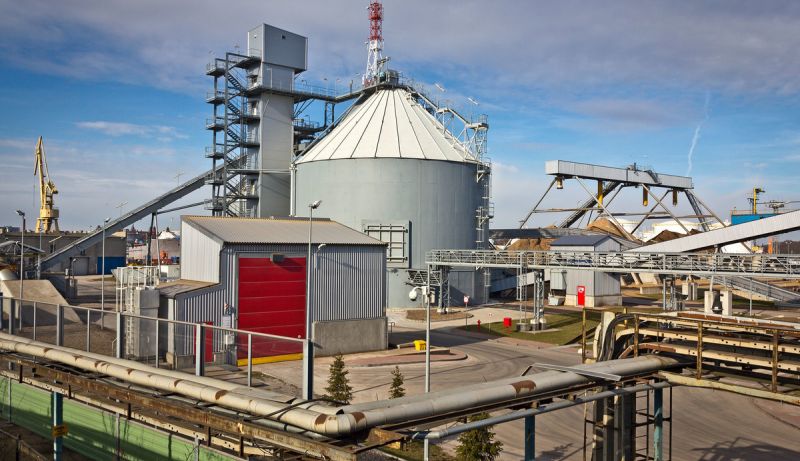
The soybean extrusion production line in India uses a 13,768 m² industrial site, with 5,390 m² allocated to the covered functions listed below. The investment basis uses the customer’s land and usable building shells. It covers the selected plant installation and building adaptation rather than the purchase of a new industrial estate.
Incoming soybean vehicles stop at the receiving side. Screenings and rejected lots leave through a separate handling route, while clean beans move toward preparation. Finished bags travel toward the dispatch side, keeping loading traffic away from the extruder service space. This distinction matters when grain deliveries and feed-ingredient collections occur during the same operating period.
The design also leaves room around motors, screw-removal positions, lifting points and access platforms. A short conveyor route is helpful only when technicians can still remove wearing parts. Foundation loads, lifting clearance and the actual building survey therefore form part of the installation drawings before equipment positions are released for construction.
What Happens Inside the Production Hall
The 1,500 m² processing hall brings cleaning, grinding, conditioning, extrusion and product finishing into one supervised area. The two extruders are placed so operators can see feeder behaviour and conditioner discharge without crossing moving conveyors. Local isolation points allow maintenance on one module while the other is handled under the plant’s approved operating procedure.
At the soybean extrusion production line in India, cleaning protects the entire process. A receiving screen removes coarse foreign material, a stone-removal stage addresses dense contamination, and magnets collect ferrous metal. These devices have different jobs. A magnet alone cannot make a dirty soybean load suitable for the grinder or for feed use.
The grinding section prepares grits around 1–2 mm for the selected wet process. Operators check the ground material with a sieve sample rather than assuming that the hammer-mill screen opening equals the finished particle size. Feed rate, screen condition and bean moisture are recorded together when the grist distribution changes.
Floor cleaning is concentrated around controlled collection points. Dry residues are removed before washing, and electrical equipment is protected from cleaning water. Raw-bean dust extraction and warm product exhaust are handled separately so that condensation from finishing does not return to the dry receiving system.
Buildings That Support Production and Dispatch
| Covered function | Area | Working purpose |
|---|---|---|
| Production hall | 1,500 m² | Preparation, two extrusion modules and finishing |
| Raw soybean warehouse | 1,700 m² | Identified lots awaiting release and use |
| Finished ingredient warehouse | 1,000 m² | Released full-fat soybean product |
| Packing and dispatch building | 1,000 m² | Empty bags, pallet preparation and loading |
| Boiler and service room | 100 m² | Steam equipment and accessible service points |
| Segregated waste rooms | 40 m² | Separate general and controlled wastes |
| Office and production records | 50 m² | Scheduling, traceability and administration |
The layout of the soybean extrusion production line in India separates unapproved material from released product. Warehouse capacity is established from the actual bag or bulk arrangement, stacking limit and fire access. Floor area is not converted directly into a promised tonnage without those checks.
Large covered stores allow planned deliveries, but long storage is not automatically desirable for an oil-rich ingredient. Dispatch uses batch identity and release dates. The packing area holds the next loading requirement, while longer holding remains in the designated finished warehouse. This keeps the processing hall available for operation and maintenance.
RICHI MACHINERY
Bean Acceptance Before Extrusion
The annual soybean supply allowance is 49,100 tonnes. For material-balance planning, the reference is 11% incoming moisture, 10% finished moisture and approximately 1% dry-material loss through cleaning and handling. Actual intake follows measured moisture and rejects; the purchasing allowance is not an instruction to process contaminated beans.
Each delivery to the soybean extrusion production line in India is identified by supplier and lot. Sampling covers moisture, foreign material, damaged beans and relevant feed-safety hazards. Suspect loads remain isolated. Heating cannot be relied upon to make mycotoxin-contaminated grain acceptable, and a clean visual appearance does not replace the required testing.
Whole beans normally enter the approved recipe within a 10–12% moisture window. Lots outside that window require a defined handling decision before they reach the conditioner. Feeders are recalibrated when bulk density changes, because an unchanged screw speed can deliver a different mass of beans after a supplier or crop change.
Local aggregation helps procurement, but the plant still needs purchasing specifications and delivery schedules. The business checks usable bean volume, seasonal storage and transport availability against its feed-ingredient orders. That is more useful to daily production than assuming that a soybean-growing region will provide identical material throughout the year.
RICHI MACHINERY
A Full-Fat Ingredient With a Defined Release Specification
The soybean extrusion production line in India produces full-fat extruded soybean material for further feed manufacture. The normal dispatch form is a cooled, screened grist around 1–2 mm, packed in identified 50 kg bags. A downstream mill buying a different texture receives a separate agreed specification.
Finished moisture is targeted within 10–12%, with 10% used in the annual mass calculation. Protein and fat are measured from the processed lot and declared on an agreed basis. Processing retains soybean oil; it does not turn whole beans into the same ingredient as solvent-extracted soybean meal or guarantee a fixed protein concentration from every bean variety.
Release checks combine residual trypsin-inhibitor testing with an appropriate urease method and a protein-quality measure such as protein dispersibility or solubility. Results must use stated methods and units. A low urease reading alone cannot establish that protein escaped excessive heat damage.
Sample handling at the soybean extrusion production line in India follows a written sequence. The team identifies the module and production period, cools and protects the sample appropriately, and records the analytical method used. Results from different methods are compared only with the necessary interpretation. When a bean supplier changes, the operator checks both the treatment response and the finished grist before applying the established operating setting to a regular delivery programme.
A feed customer can also specify how the lot will be received. Bag markings, delivered weight, sample retention and the agreed holding period form part of the order. The processor can then organise a run around a confirmed requirement, with a product form and dispatch schedule suited to the receiving feed mill.
For a feed manufacturer considering a full fat soybean extrusion line, these controls make the purchasing discussion concrete: which bean is being processed, what analysis is required, what physical form the mixer accepts and how long the ingredient will be stored before use.
RICHI MACHINERY
Equipment Sized for the Whole-Soybean Duty
| Equipment | Selected quantity and parameter | How it fits the process |
|---|---|---|
| Receiving cleaner and stone separator | One preparation set, at least 10 T/H | Covers combined bean intake |
| Magnetic protection | At preparation and extrusion feed | Protects grinding and extrusion equipment |
| Hammer mill | One, 110 kW; selected 10 T/H preparation duty | Supplies grits to both modules |
| Wet whole-soybean extruders | Two, 160 kW main drive each; selected 4 T/H each | Provides the combined 8 T/H product duty |
| Feeders and steam conditioners | One dedicated set per extruder | Controls the treatment of each stream |
| Flash and air-finishing system | One combined train; 700 kg/hour water-removal design allowance | Handles expansion vapour and residual moisture |
| Finishing air heater | 400 kW thermal allowance | Provides controlled assistance when ambient air is insufficient |
| Product cooler and grist finishing | One combined system, at least 8 T/H | Stabilises product before storage |
| Steam boiler | One, 1,500 kg/hour rated steam output | Serves conditioning and finishing heat |
| Bagging equipment | Two 50 kg stations, at least 2 bags/minute each | Combined packing capacity of 12 T/H |
The soybean extrusion production line in India has a 700 kW connected electrical allowance. Conveyors, extraction fans, pumps and controls are included when checking the supply. The thermal heater rating is supplied through steam and is not added again as electrical resistance heating.
RICHI MACHINERY
From Whole Beans to Released Feed Ingredient
Receive, clean and identify
Operators record the delivered lot, sample it and remove foreign material before storage. Approved beans enter the clean route; rejected screenings are segregated from saleable feed ingredients. The lot identity continues through the soybean processing equipment to the finished bag.
Grind and meter the grits
The grinder produces the agreed grist, and controlled feeders divide supply between the two modules. A steady mass flow gives the conditioner and screw a more consistent load. An operator investigates feed surging before increasing the extrusion setting to compensate.
Condition with measured steam
Steam adds heat and moisture before extrusion. The selected process normally starts within a 14–17% conditioned-moisture window, then uses trial results to establish the working setting. Steam pressure, condensate removal and feed moisture are checked together; steam temperature at the boiler is not treated as product temperature.
Extrude to the agreed treatment target
The wet soybean extruder applies heat, pressure and shear. Discharge temperature is monitored alongside throughput, moisture and the screw arrangement. A working investigation may cover 130–150°C, but laboratory results determine the accepted settings for the actual beans and product specification.
Remove moisture and cool actively
Expansion releases vapour as material leaves the extruder. Controlled air finishing removes the remaining moisture, with the heater used when required. The cooler then reduces product temperature before storage. Operators check both temperature and moisture instead of assuming that a cool surface means the centre is ready to bag.
Screen, sample and pack
The final grist is screened, sampled and placed in identified bags. Product awaiting results remains on hold. Only released batches enter the dispatch queue, with supplier lot, operating settings and laboratory results available for a feed customer’s traceability request.
The soybean extrusion production line in India therefore treats heat processing and product release as connected operations. Neither the extruder display nor the appearance of the grist replaces the customer’s feed-safety specification.
RICHI MACHINERY
Utilities, People and Delivery Preparation
The planning allowance for the soybean extrusion production line in India is 2,500 MWh of electricity and 4,600 m³ of fresh water a year. Water covers boiler makeup, sanitary use and controlled cleaning. Steam entering the process and condensate returning from the air heater are accounted for separately when checking boiler demand.
Annual steam planning is approximately 3,500 tonnes, including conditioning, finishing assistance and service losses. Biomass-fuel planning is around 900 tonnes for the selected fuel condition and boiler efficiency. The customer confirms fuel moisture, heating value and ash before the boiler supplier finalises its operating estimate and exhaust arrangement.
Thirty roles cover production and support: three rotating production teams of six, four warehouse and receiving staff, two quality staff, four maintenance staff and two administration staff. The roster distributes these roles across the two daily operating periods, handover and maintenance access.
Shipment planning uses equipment weights, lifting points and the final inland route from the selected Indian port. Installation preparation includes foundations, electrical capacity, steam testing and verified rotation of driven equipment. Specific arrival dates follow the freight booking and customs documents rather than a standard transit promise.
RICHI MACHINERY
Investment That Follows the Equipment Scope
For the soybean extrusion production line in India, the equipment budget is USD 340,000 and the total project budget is USD 560,000. The total covers the selected equipment, delivery allowances, installation, local connections, foundations and adaptation of the customer’s usable premises. Land purchase and construction of an entirely new warehouse estate are outside this budget basis.
Before committing to a soybean extrusion plant, buyers should compare the complete scope: bean preparation, steam supply, moisture removal, cooling, bagging and electrical integration. A price for extrusion machines alone cannot represent all of those functions. The building survey and raw-material tests determine whether an existing utility or handling system can be reused.
Expansion also needs an order-based decision. A larger hourly nameplate brings no benefit if laboratory release, warehouse turnover or customer collections cannot support it. The customer can assess additional operating hours or another module against actual repeat demand, while the current equipment remains tied to a clearly defined product and annual schedule.
Maintenance planning for the soybean extrusion production line in India includes a record of screw and liner condition, bearing observations and the operating tonnes associated with each inspection. Steam traps, feeder calibration and the finishing-air route are checked alongside the extrusion parts. This gives the customer a practical spare-parts discussion based on its material and work pattern, with planned access before a worn component interrupts a committed ingredient delivery.
RICHI MACHINERY
Discuss Your Soybean Requirement With RICHI
Send RICHI Machinery your bean moisture, required full-fat product analysis, daily volume and available steam supply. Include a building drawing and the packaging sizes your customers buy. We can then prepare a soybean extrusion production line in India around the actual material and installation conditions, with the equipment and local-work boundaries clearly stated.
The proposal can include preparation, wet extrusion, finishing, controls and operator training, together with the samples and acceptance checks needed before production settings are approved.
● RICHI MACHINERY
RICHI Service

● Consulting
Customer Consultation
We want to have a deep understanding of your industrial process, to know your exact needs of feed, wood, biomass, fertilizer or other pellet processing.

● Design
Extrusion Plant Design
Based on your unique situation and industrial process, we will tailor complete pellet plant you need, and inform you of every additional detail that could facilitate operation, minimize total cost.
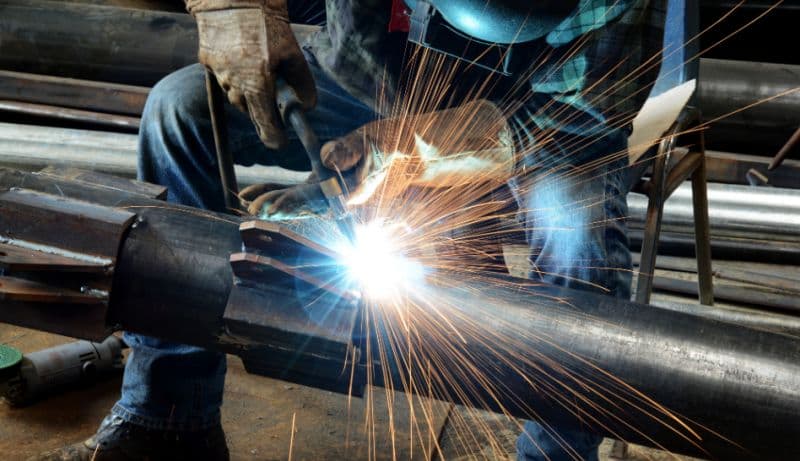
● Manufacturing
Equipment Manufacturing
The critical components of the of the complete pellet production line equipment are built in our own workshops in Asia. Additional equipment is manufactured by our worldwide network of reliable partners.

● Testing
Quality Inspection & Testing
Before leaving the factory, all equipment will be inspected by the quality inspection department. We can also provide customers with testing services from a single machine to a complete pellet plant system, and provide you with real actual data for “worry-free use.”
● Delivery
Equipment Delivery
In equipment boxing and packaging, we adopt professional packaging and modular solutions to ensure the safe and non-destructive delivery of pellet plant equipment.
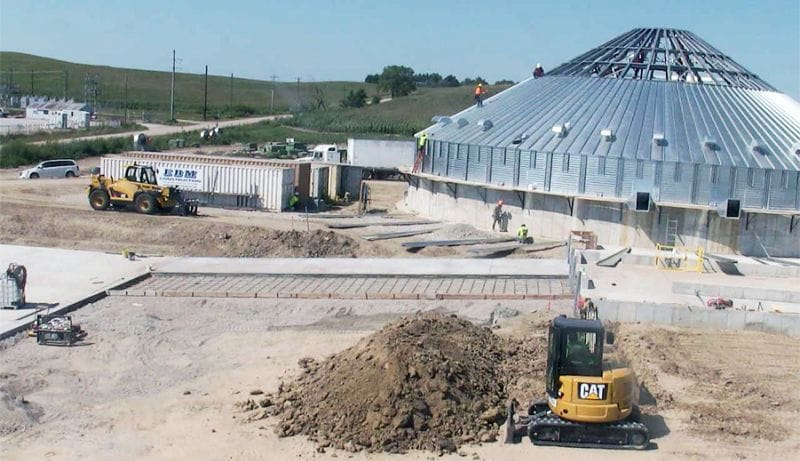
● Installation
Installation & Commissioning
Whether you choose your own subcontractor for the erection phase or you want to install everything together with us, a Richi supervisor will be around to make sure everything is mounted in a safe and thorough way.

● Training
Staff Training
We provide comprehensive training for the technicians of each project. We can also continue to provide support for the technicians during latter project operation.
● After-sales
Project Follow-Up
When everything is up and running our Richiers will help you further whenever needed. We are ready to answer your call 24/7.We’ll also visit you regularly to learn about your needs.
Who we are
RICHI Machinery is one of the world’s leading suppliers of technology and services for the animal feed, aqua feed and pet food industries, also the largest pellet production line manufacturer in China.
Since 1995, RICHI’s vision to build a first-class enterprise, to foster first-class employees, and to make first-class contributions to society has never wavered.
In the past three decades, we have expanded our business to a wide range of areas, including animal feed mill equipment, aqua feed equipment, pet feed equipment, biomass pellet equipment, fertilizer equipment, cat litter equipment, municipal solid waste pellets equipment, etc.

1995
RICHI Established

2000+
Serving More Than 2000 Customers

120+
RICHI Employees

140+
Exported To 140 Countries