0086-138 3838 9622
0.6 T/H Small Scale Wood Pellet Plant in Finland
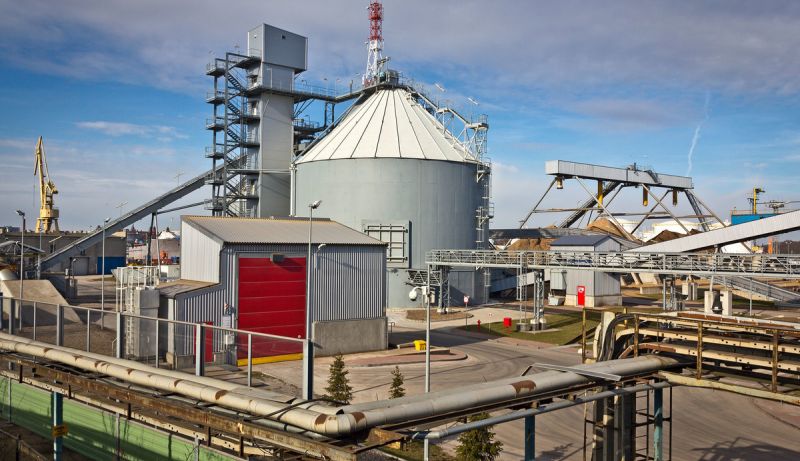
A completed 1,500 T/Y Finnish wood-residue project built around two smaller pellet mills, selective drying and short-haul heating-fuel sales.

RICHI MACHINERY
Project Overview
0.6 T/H was not the number that defined this Finland project. The harder number was 1,800 tons: that was the annual wood-residue stream available from several carpentry shops, small sawmills and furniture processors, and it did not arrive evenly. Some weeks brought steady pine sawdust; other periods were dominated by light spruce shavings or wetter mixed chips. A larger line would have spent too much time waiting for material, while a single oversized pellet mill would have tied the whole plant to one machine.
The customer therefore chose a 0.6 T/H small wood pellet plant built for variable supply rather than maximum nameplate output. Two MZLH350 pellet mills form the production core. Each machine is rated at about 0.3–0.5 T/H for biomass, giving 0.6–1.0 T/H of installed pellet capacity. One unit can carry lighter production days; both can run when dry feedstock and orders are available. That operating flexibility matters more here than forcing every ton through one larger press.
The completed small scale wood pellet plant in Finland produces about 1,500 T/Y of 6 mm and 8 mm wood fuel pellets from approximately 1,800 T/Y of clean wood residues. Normal production is organized around one 8-hour shift for roughly 300 working days, while drying duty changes with incoming moisture. Total fixed investment is about US$120,000, including the equipment package, local installation, wiring, delivery-related work, commissioning and essential startup spares.
0.6 T/H
capacity
USD 120,000
investment
Finland
location
Biofuel
project type
RICHI MACHINERY
Why Two Smaller Pellet Mills Made More Sense
The engineering choice was deliberately different from the usual “one line, one large press” approach. Feedstock supply was fragmented, and the customer already knew that material volume would rise and fall with local woodworking activity.
Two smaller pellet mills made the plant easier to match to that reality. When only one dry material stream is available, one MZLH350 can run while the second machine remains available for maintenance. When the covered storage area is full and orders are scheduled, both presses can operate together. The dryer, cooler, screening and packing sections are sized around this staggered operating pattern rather than around a short peak test. The arrangement also gives maintenance more freedom: one press can be inspected, cleaned or fitted with a different die without turning every upstream and downstream machine into idle equipment.
The configuration was summarized in one operating rule:
Run one pellet mill when residue supply is light; run both when material and orders justify it. At this scale, redundancy is more useful than an oversized single machine.
That rule shaped the entire Finland wood pellet production line: compact conveying, shared cooling and dust control, selective drying, and two parallel pellet machines that can be scheduled independently.
RICHI MACHINERY
A Recycling Business Before It Became a Pellet Business
The buyer was already collecting wood residues in southern Finland before pellet production was added. That matters because the project did not begin with a pellet-sales forecast and then search for raw material. It began with an existing collection network, known suppliers and recurring disposal costs. The feedstock base includes four practical streams:
- Dry pine sawdust from small sawmills and woodworking shops
- Spruce shavings and trimming waste from furniture and joinery production
- Clean softwood sawdust from local carpentry and machining operations
- Sorted clean wood chips and untreated demolition-wood fractions accepted only after inspection
Sending these small lots to distant large pellet factories made little sense. Transport cost was high relative to the value of the residue, and waiting for a full truckload often meant storing bulky low-density material for too long. Processing close to the collection area changed the economics: the customer could consolidate residues by quality, dry only the wetter batches, and sell a denser finished fuel inside the same regional market.
The business model therefore shifted from paying to move loose wood waste toward earning from a standardized local fuel product.
Finished pellets from this wood waste pellet plant in Finland are supplied to buyer groups that can take relatively small, repeat deliveries rather than export-scale vessel lots:
- Municipal and private local heating stations using solid biomass
- Greenhouse operators with pellet-compatible heat systems
- Small industrial and commercial boilers within trucking distance
- Rural heating cooperatives and building operators that buy in seasonal batches
RICHI MACHINERY
Feedstock Mix Changes With the Season
The raw-material challenge in this biomass pellet project is not contamination-heavy waste; it is variation in density, particle form and moisture. Pine sawdust is the most stable stream. Spruce shavings are lighter and can bridge in hoppers. Furniture residues need stricter metal and coating checks. Mixed chips enter less frequently but carry the highest moisture and require the most size reduction. The plant is therefore operated by material condition, not by a fixed assumption that every delivery behaves the same way.
Annual Feedstock Basis
| Raw Material | Annual Supply (t) | Moisture Content | Processing Note |
|---|---|---|---|
| Pine sawdust | 800 | 10–18% | Main stable feedstock; usually needs only screening and moisture checking |
| Spruce shavings | 500 | 12–20% | Low bulk density requires controlled feeding and good hopper design |
| Clean furniture wood waste | 300 | 8–15% | Accepted only as untreated material; metal detection is mandatory |
| Mixed clean wood chips | 200 | 15–25% | Pre-crushing and seasonal drying are required before pelleting |
A compact rotary dryer with low-temperature hot-air operation is included, but it is not treated as a full-time step. Dry sawdust can bypass heavy drying, while wetter shavings or chip-rich batches are conditioned before grinding and pelleting. The biomass hot-air furnace supplies the dryer without forcing the customer to buy a large thermal system that would sit idle for much of the year.
This selective-drying strategy is one of the reasons the sawdust pellet plant in Finland remains economical at only 0.6 T/H. Covered storage and incoming-moisture checks reduce unnecessary heat use, while the dryer gives the operator a way to handle seasonal peaks instead of rejecting every lot above the preferred pelleting range.
RICHI MACHINERY
Two Pellet Sizes for Two Local Buyer Groups
The plant does not try to sell one generic pellet to every customer. Its 1,500 T/Y output is divided by pellet diameter and use, which makes production scheduling simpler and gives the customer a clearer sales route for a small Finland wood pellet plant.
| Product Type | Output (t/year) | Specification |
|---|---|---|
| Bagged heating wood pellets | 1000 | 6 mm diameter; clean softwood-based fuel for smaller heating users |
| Industrial boiler pellets | 500 | 8 mm diameter; denser handling format for commercial and industrial heat users |
Finished moisture is normally controlled around 8–10% after cooling.
No routine binder is required when clean softwood, moisture and die compression remain within the working range. The page does not claim a certification grade; ash and durability are controlled against the actual feedstock and customer specification.
RICHI MACHINERY
Compact Equipment With Parallel Pellet Capacity
The equipment package is compact, but it is not stripped down. Two smaller pellet mills are the defining feature. Together they provide 0.6–1.0 T/H of installed biomass-pellet capacity while allowing the operator to reduce production without stopping the complete line. The dryer is seasonal, the hammer mill only handles material that needs size correction, and cooling plus dust collection remain in the route even though this is a small project.
| Equipment | Function | Quantity |
|---|---|---|
| Compact rotary dryer | Low-temperature seasonal moisture adjustment | 1 set |
| Biomass hot air furnace | Heat source for wetter feedstock batches | 1 set |
| Hammer mill | Reduce chips and coarse residues to pelleting size | 1 set |
| Bucket elevator | Compact vertical transfer inside the workshop | 2 sets |
| Wood pellet mill | MZLH350, 37 kW each, about 0.3–0.5 T/H per machine | 2 sets |
| Cooling and screening system | Stabilize pellets and remove loose fines | 1 set |
| Packaging system | Bagged finished-product handling | 1 set |
| Dust collection unit | Extraction at grinding, transfer and screening points | 1 set |
The resulting wood pellet production line is rated at 0.6 T/H as a project, even though the two MZLH350 machines provide a wider 0.6–1.0 T/H installed pellet range. That distinction leaves operating margin for die wear, feedstock changes and maintenance without inflating the published line capacity.
RICHI MACHINERY
Process Route Built Around Selective Drying
The process changes slightly with the incoming lot. Dry pine sawdust may need little more than screening and controlled feeding; mixed chips can require both size reduction and drying. The final route is therefore short, but it has bypass logic rather than forcing every material through every machine:
- Receiving and acceptance
Each load is checked for moisture, visible contamination and material type. Painted, chemically treated or unsuitable demolition wood is excluded from the pellet route. - Size correction only where needed
Coarse chips and oversized furniture residues go through the hammer mill; suitable sawdust and shavings are not ground again without a process reason. - Selective low-temperature drying
Higher-moisture batches are dried toward the pelleting range.
Dry sawdust can move forward with minimal thermal treatment, which keeps heat consumption proportional to actual moisture load. This bypass logic is especially useful when pine sawdust and wetter chip fractions arrive in the same week. - Parallel pelleting
Prepared material enters the small wood pellet machine section. One or both MZLH350 units are scheduled according to raw-material availability, product diameter and order volume. No routine binder is used. - Cooling and fines control
Fresh pellets are cooled before storage. Screening removes loose fines, and suitable fines can be returned to the process rather than entering finished bags. - Packaging and dispatch
6 mm and 8 mm products are kept by batch and moved to dry finished-product storage before short-haul delivery to local heating users.
The practical operating note from commissioning was simple:
When the feedstock changes, adjust moisture and die conditions before chasing output. A small line loses more from unstable batches than it gains from a short peak-capacity run.
That discipline is especially important when two pellet mills share the same upstream preparation and downstream cooling equipment.
RICHI MACHINERY
What the US$120,000 Fixed Investment Covered
This was a completed small industrial project, so the investment is presented as a fixed project amount rather than an open planning range. The customer used an existing operating base, which kept land and new-building costs outside the machinery-centered investment.
- Equipment package: about USD 85,000, including drying, size reduction, two MZLH350 pellet mills, cooling, packing, conveying and dust-control equipment
- Local installation, electrical wiring and workshop adaptation: about USD 20,000
- Freight, local handling, commissioning and startup spares: about USD 15,000; completed fixed investment: USD 120,000
At this scale, the economics are different from a large biomass pellet plant. The customer is buying the ability to densify a known local residue stream, shorten transport distance and control fuel quality—not trying to compete with a 10–20 T/H export factory on production volume.
RICHI MACHINERY
Built in Time for the 2024 Heating Season
- March 2024: confirm annual residue volume, moisture range and local pellet buyers
- May 2024: finalize two-machine pellet section, selective drying route and workshop layout
- June 2024: sign the equipment and engineering contract
- July–August 2024: manufacture pellet mills, dryer, cooler, conveying and dust-control equipment
- September 2024: complete site installation, wiring and material-flow checks
- October 2024: trial both 6 mm and 8 mm pellets and move into routine one-shift production
The schedule was deliberately compact so the customer could commission before the main cold-season demand period instead of carrying the new system unfinished through winter.
RICHI MACHINERY
Winter Operation Sets the Utility Strategy
The plant uses dry mechanical compression for pellet formation and adds heat only when incoming moisture requires it. Electricity is the main continuous utility: the two 37 kW MZLH350 motors are the largest regular pellet-section loads, while the hammer mill, dryer fan, cooler, elevators, packing machine and dust collector operate according to the selected material route. There is no wet production stage, so process-water demand is minimal; water use is mainly for staff, cleaning and fire protection.
Operating priorities for the Finland biomass pellet plant are:
- Use mechanical densification without routine chemical binder addition
- Run the low-temperature dryer only when incoming moisture justifies the energy use
- Use two MZLH350 pellet mills so production can continue at reduced rate during maintenance or low-feedstock periods
- Keep untreated softwood streams separated from questionable recycled-wood material before processing
- Control dust, pellet temperature and moisture before finished product enters storage
The compact layout is designed around four operating roles per shift—material receiving/loader work, line control, packaging/forklift handling, and shared maintenance/QC—with administrative support shared with the customer’s existing recycling business. This staffing approach fits Finland’s higher labor-cost environment better than building a labor-heavy manual line.
RICHI MACHINERY
Qingdao to Helsinki Without Oversized Logistics
Core equipment for the 0.6 T/H small scale wood pellet plant in Finland was shipped from Qingdao Port in China. The machines were designed as compact modules so local unloading and installation could be handled without the heavy logistics normally associated with a large biomass factory.
Final arrival port: Port of Helsinki
After customs clearance, the equipment moved inland by road to the customer’s existing site. For a project of this size, keeping the shipment compact matters: every extra conveyor, oversized structure or unnecessary duplicate unit adds freight and installation cost that the 1,500 T/Y business would have to recover from a relatively small annual sales volume.
RICHI MACHINERY
Why a 0.6 T/H Plant Fits This Finnish Supply Radius
Finland already has established wood-pellet use in heat and power plants, large buildings, households and agricultural applications. That matters for a small producer because the project does not need an export-scale customer to justify production. Its commercial logic is built around nearby residue suppliers and nearby heat users, where transport savings can matter almost as much as the pellet price itself.
- Local heat demand gives 6 mm and 8 mm pellets more than one practical buyer route
- Short-haul sales reduce the logistics penalty that would undermine a 1,500 T/Y plant
- Wood residues are available from many small sources, making decentralized processing more practical than long-distance transport
- Two pellet mills let the customer match output to uneven feedstock supply instead of running an oversized machine below its useful range
That is why the strongest sales argument for a small scale wood pellet plant in Finland is not “bigger capacity.” It is the combination of secured local raw material, low unnecessary hauling, selective drying and buyers that can take repeat seasonal deliveries. For another buyer, the same 0.6 T/H headline could lead to a completely different equipment package if the residue is wetter, the supply radius is wider, or most finished product must be exported rather than delivered locally.
RICHI MACHINERY
What Operators Watch Instead of Chasing Peak Output
Small pellet plants usually lose stability through feedstock changes, poor housekeeping or delayed wear-part replacement long before they reach a true mechanical capacity limit. This Finland line is therefore managed by a short list of operating checks rather than by pushing both pellet mills at maximum rate every hour.
The four checks that matter most are:
- Incoming moisture and whether the dryer should be used for the current batch
- Hopper flow, especially when low-density spruce shavings make up a larger share of the blend
- Pellet-mill current, die condition and feed rate on each MZLH350 rather than only total line tonnage
- Cooler discharge temperature, fines level and bag condition before product is released to storage
One operating rule is worth keeping visible near the control panel:
If the sawdust changes, change the settings before the pellets change.
The shift log links each material batch to moisture, dryer use, pellet-mill loading and product diameter so the operator can repeat a stable setting instead of rediscovering it every time.
RICHI MACHINERY
Expansion Without Rebuilding the Whole Line
If the customer later processes more than the current 1,800 T/Y residue base, expansion should follow the real bottleneck rather than automatically adding another pellet mill. The two existing MZLH350 units already provide more installed pellet capacity than the 0.6 T/H headline rating. The first upgrades would normally be considered around storage, drying duty, cooling, packing and material buffering.
- Add covered raw-material storage if supplier volume grows faster than daily processing capacity
- Increase dryer or pre-drying capacity only if wetter chip and shaving fractions become a larger part of the feedstock mix
- Upgrade cooling and finished-product buffering if both pellet mills begin operating together for longer periods
- Increase packing or bulk-loading capacity when dispatch, rather than pelleting, becomes the production bottleneck
This makes the wood pellet processing plant in Finland expandable without pretending that growth must begin with a larger press. Capacity should move where the next real constraint appears.
RICHI MACHINERY
Before Copying This Finland Configuration
This configuration works because several conditions come together: the customer already controls a local residue-collection network, most feedstock is clean softwood, the wetter fraction is limited, and finished pellets can be sold within a regional heating market. A buyer with fresh green chips, long transport distances or export-only sales would need a very different plant even if the requested headline capacity were also 0.6 T/H.
- First confirm annual feedstock volume by material type, not just the best month of supply.
- Then measure moisture and particle size by season so the dryer and hammer mill are sized for real duty.
- Finally define pellet diameter, packaging, operating hours and customer distance before fixing the equipment package and investment.
● RICHI MACHINERY
RICHI Service

● Consulting
Customer Consultation
We want to have a deep understanding of your industrial process, to know your exact needs of feed, wood, biomass, fertilizer or other pellet processing.
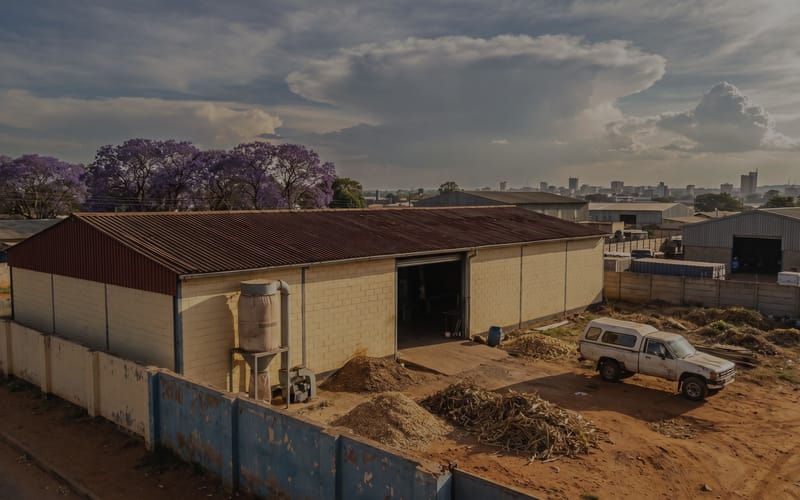
● Design
biomass Pellet Plant Design
Based on your unique situation and industrial process, we will tailor complete pellet plant you need, and inform you of every additional detail that could facilitate operation, minimize total cost.
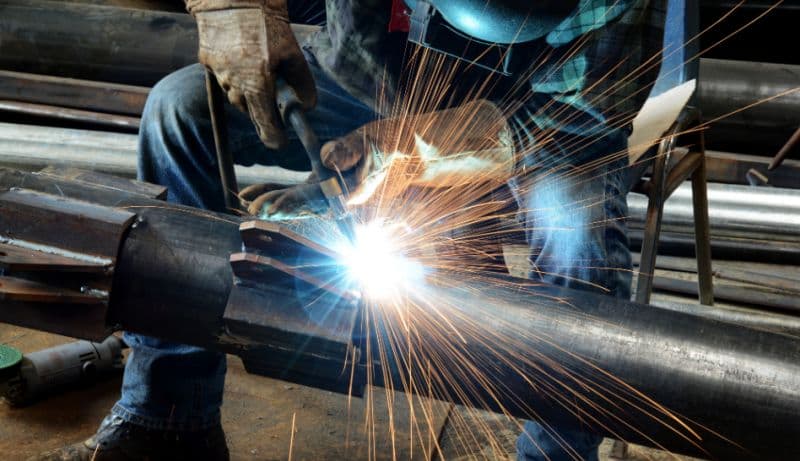
● Manufacturing
Equipment Manufacturing
The critical components of the of the complete pellet production line equipment are built in our own workshops in Asia. Additional equipment is manufactured by our worldwide network of reliable partners.

● Testing
Quality Inspection & Testing
Before leaving the factory, all equipment will be inspected by the quality inspection department. We can also provide customers with testing services from a single machine to a complete pellet plant system, and provide you with real actual data for “worry-free use.”

● Delivery
Equipment Delivery
In equipment boxing and packaging, we adopt professional packaging and modular solutions to ensure the safe and non-destructive delivery of pellet plant equipment.
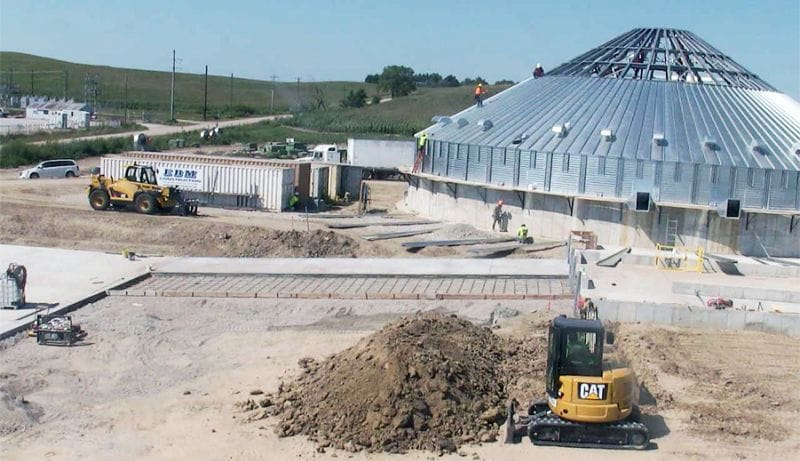
● Installation
Installation & Commissioning
Whether you choose your own subcontractor for the erection phase or you want to install everything together with us, a Richi supervisor will be around to make sure everything is mounted in a safe and thorough way.

● Training
Staff Training
We provide comprehensive training for the technicians of each project. We can also continue to provide support for the technicians during latter project operation.
● After-sales
Project Follow-Up
When everything is up and running our Richiers will help you further whenever needed. We are ready to answer your call 24/7.We’ll also visit you regularly to learn about your needs.
Who we are
RICHI Machinery is one of the world’s leading suppliers of technology and services for the animal feed, aqua feed and pet food industries, also the largest pellet production line manufacturer in China.
Since 1995, RICHI’s vision to build a first-class enterprise, to foster first-class employees, and to make first-class contributions to society has never wavered.
In the past three decades, we have expanded our business to a wide range of areas, including animal feed mill equipment, aqua feed equipment, pet feed equipment, biomass pellet equipment, fertilizer equipment, cat litter equipment, municipal solid waste pellets equipment, etc.

1995
RICHI Established

2000+
Serving More Than 2000 Customers

120+
RICHI Employees

140+
Exported To 140 Countries