 0086-138 3838 9622
Wood Sawdust Pellet Plant in Cambodia
RICHI MACHINERY
Project Overview
A 2-2.5t/h wood sawdust pellet plant in Cambodia was completed in early 2024, but the story starts two years earlier with a failed operation. The client purchased an existing biomass fuel business that was losing money – poor dust control, no cooling system, inefficient equipment, and unhappy neighbors.
After 14 months of planning and a $300,000 USD investment ($141,000 equipment, the rest building upgrades and working capital), the facility now produces 12,000 tons annually of biomass pellets from four feedstocks: wood sawdust 2,000 t/yr, rice husks 3,000 t/yr, wheat straw 3,000 t/yr, and waste wood boards – 4,000 t/yr. The plant runs two shifts per day, 300 days per year, with 12 employees.
What makes this 2-2.5t/h wood sawdust pellet plant in Cambodia worth talking about isn’t the equipment. It’s the turnaround. The previous owner had the right idea but the wrong execution. No dust collection to speak of. No cooling. No screening. Pellets came out hot, soft, and dusty. The new owner bought the operation for almost nothing, then called us to fix what was broken.
2-2.5T/H
capacity
$141,000
investment
Cambodia
location
Biofuel
project type
RICHI MACHINERY
The Backstory – Buying a Failing Operation
The client had been running a small agricultural trading business in Kampong Speu province, about 50km west of Phnom Penh. He knew biomass. He’d been selling rice husks to brick kilns for years. Saw the pellet market growing as factories looked for alternatives to imported coal.
In late 2022, he found a pellet operation for sale. The previous owner had started with good intentions – built out a 4,000m² site with a 600m² production building, 300m² finished goods area, 500m² raw material storage, and a 1,000m² semi-finished storage. But the operation was a mess.
Here’s what the client walked into:
- No dust collection on the crusher or pellet mills. The building was coated in sawdust.
- No cooler. Pellets were bagged hot and fell apart within two weeks.
- A grading screen that kept breaking.
- Complaints from neighboring businesses about dust drifting onto their properties.
- The previous owner had installed one crusher, one pellet mill, minimal conveyors, and called it a day.
The client paid $25,000 for the existing equipment and the lease on the building. Then he called us.
His question: “Can you help me turn this into a real 2-2.5t/h wood sawdust pellet plant in Cambodia? I have $300,000 total. I need to add capacity and fix the dust problems.”
We told him yes, but he had to be patient. The rebuild took 14 months.
RICHI MACHINERY
What Was Broken – And How We Fixed It
Problem 1 – No dust collection at all.
The previous owner’s crushing process and pelletizing process had no collection. Dust just blew around the building. The neighbors in the industrial park (a plastic cup factory and a fuel oil storage facility) had filed complaints.
The fix: We designed a new dust collection system with two collection hood feeding into one baghouse filter with a 15m exhaust stack. Total airflow 16,000 m³/hr. Cost $21,000 installed. The baghouse captures about 98% of the dust from crushing and pelleting.
Problem 2 – No cooling system.
Pellets came out of the mill at 85-90°C and went straight into bags. Within 48 hours, the moisture trapped inside caused mold and cracking. The previous owner had a 30% return rate from customers.
The fix: We added a counterflow cooling system – forced air, 15-minute retention time. Pellets now exit at 35°C. No more mold complaints. The client also added a simple mesh screen to replace the broken screener. The screen catches oversized pellets and drops them to the floor for re-grinding.
Problem 3 – Insufficient capacity.
The old wood pellet production line had one crusher and one pellet mill. Output was about 0.8 t/h. The client needed 2-2.5 t/h.
The fix: We added a second crusher and three additional pellet mills. Total now: 2 crushers, 4 wood pellet mills. The client runs three mills at a time, keeps one as a spare. Added belt conveyors and screw conveyors to connect everything.
Problem 4 – Poor layout.
The previous owner had raw materials on one side of the building and finished goods on the other, with production in the middle. But the flow didn’t make sense – materials crossed paths constantly.
The fix: We reorganized.Raw material area at the north end. crushing area next to it. semi-finished storage in the middle for material waiting to be pelleted. production area on the west side. Finished product area at the south end. Straight line flow. No backtracking.
RICHI MACHINERY
Raw Materials – Four Feedstocks, One Plant
The client made a smart decision early: don’t rely on one raw material. Cambodia has multiple biomass sources, but each one has seasonal availability. Rice husks are abundant after harvest (November-January). Wheat straw comes from the northern provinces. Wood sawdust is available year-round but more expensive. waste wood board from furniture factories are cheap but need crushing.
| Raw Material | Annual Input (tons) | Moisture (as-received) | Cost (USD/ton) | Source |
|---|---|---|---|---|
| Wood sawdust | 2,000 | 12-18% | $28 | Local sawmills |
| Rice husks | 3,000 | 10-14% | $15 | Rice mills, Kampong Speu |
| Wheat straw | 3,000 | 15-20% | $18 | Northern provinces |
| Waste wood boards | 4,000 | 12-16% | $22 | Furniture factories |
| Total | 12,000 | Avg 14% | $20 avg |
The rice husks are the cheapest, but they produce higher ash pellets (about 4-5% vs 1.5% for pure wood). The client blends them at 25% maximum to keep ash under 3%. The wheat straw adds fiber length – helps with binding but requires more energy to grind.
Total input 12,000 tons, output 12,000 tons. The client doesn’t lose much mass because the incoming moisture is already low (10-18%). Nodrying step needed – the previous owner had a dryer but removed it after a fire risk assessment. Good call.
RICHI MACHINERY
Equipment List – Before and After
| Equipment | Before | After | Change |
|---|---|---|---|
| Wood pellet hammer mill | 1 | 2 | +1 |
| Wood pellet extruder machine | 1 | 4 | +3 |
| Grading screen | 1 | 0 | Removed (replaced with mesh screen) |
| Belt conveyor | 2 | 4 | +2 |
| Screw conveyor | 1 | 5 | +4 |
| Baghouse filter | 0 | 1 | New |
| Counterflow cooler | 0 | 1 | New |
| Dust hoods | 0 | 2 | New |
Equipment cost (all sources): $141,000 USD – this includes the new crusher, three pellet mills, conveyors, baghouse, cooler, and dust hoods. The client already owned the building and the original equipment from the purchase.
The wood pellet presses are MZLH models – each rated for 0.8-1.0 t/h on wood sawdust. Running three mills at 70-80% capacity gives the client 2.2-2.4 t/h sustained output. The fourth mill is a hot spare – when a die needs changing, he swaps in the spare mill and keeps running.
RICHI MACHINERY
Process Flow – The Rebuilt Line
Here’s how the 2-2.5t/h wood sawdust pellet plant in Cambodia runs now.
Step 1 – Raw material reception.
Trucks dump sawdust, rice husks, and straw into separate bays. Waste wood boards go to the crushing area. All raw materials are stored under cover – the client added a roof over the raw materials area after seeing how much moisture rain added to the piles.
Step 2 – Crushing (for waste wood only).
The scrap wood planks go through two CY800 crushers in parallel. Output size: 10-20mm chips. The crushed wood then joins the other feedstocks.
Step 3 – Grinding.
All materials go through the grinding system. The client runs the crushers at different speeds depending on the feedstock – slower for rice husks (they’re fragile), faster for straw (needs more energy). This took some tuning. The first week, they ran everything at the same speed and ended up with rice husk powder (too fine) and straw chunks (too coarse).
Step 4 – Blending.
The client manually adjusts the blend based on what’s available. Typical mix: 40% waste wood, 25% sawdust, 20% rice husks, 15% straw. He uses a front-end loader to scoop from each pile into a blending hopper. Not automated, but it works for his volume.
Step 5 – Pelleting.
The wood granulator machine running simultaneously. Die size: 8mm for industrial boilers. The client keeps the dies at a 1:5 compression ratio – longer than standard (1:4) because the rice husks need more pressure to bind. He learned this after the first batch of rice husk pellets fell apart in the cooler.
Step 6 – Cooling.
Pellets from all three mills drop onto a common belt conveyor feeding the counterflow cooler. Retention time: 15 minutes. Exit temperature: 35-40°C.
Step 7 – Screening and bagging.
A simple mesh screen separates fines (about 3% of output). Fines go back to the pellet mill feed. Good pellets go to the bagging station – 25kg woven bags, sealed by hand. The client sells about 70% of output in bags, 30% in bulk to a nearby cement plant.
RICHI MACHINERY
The Dust Collection System – Why It Cost $21,000
The client initially balked at the price. “Twenty-one thousand dollars just for dust?”
We explained the math. Without collection, he’d be losing about 85 tons of material per year as fugitive dust (based on 0.7% loss rate). At $110/ton selling price, that’s $9,350 in lost product. Plus the neighbors were already complaining. One more complaint and the provincial authorities could shut him down.
The system we installed:
- Two capture hood over the crushers and pellet mills
- One DMC-240 baghouse filter with 240 filter bags
- One 15m exhaust pipe
- Total airflow 16,000 m³/hr
- Collection efficiency: 98% on crushers, 96% on pellet mills
The collected dust (about 4.2 tons/month) gets mixed back into the feedstock. Nothing wasted.
RICHI MACHINERY
Operating Costs – After the Rebuild
The wood pellet manufacturing plant has been running steadily since February 2024. Here are the numbers from April 2024 (the client’s best month so far).
| Cost Category | Monthly (USD) | Annual (USD) | Notes |
|---|---|---|---|
| Raw materials | $8,000 | $96,000 | 1,000 tons at average $8/ton (he buys low) |
| Electricity | $2,800 | $33,600 | 15,000 kWh/month at $0.187/kWh |
| Labor (12 people) | $1,800 | $21,600 | $150/month per person (Cambodia) |
| Maintenance & spares | $1,200 | $14,400 | Dies, hammers, bearings, bags |
| Building lease | $1,500 | $18,000 | 4,000m² site |
| Total monthly | $15,300 | $183,600 |
Revenue:
| Product | Monthly Output (tons) | Price (USD/ton) | Monthly Revenue |
|---|---|---|---|
| Industrial pellets | 1,000 | $115 | $115,000 |
Monthly net profit: $99,700 USD. Annual net profit (projected): $1.2 million USD.
The client’s total investment was $300,000 (including the $25,000 purchase of the failing operation). Payback period: 3 months.
RICHI MACHINERY
Shipping and Logistics
All new equipment for this 2-2.5t/h wood sawdust pellet plant in Cambodia shipped from Qingdao Port, China, to Sihanoukville Port, Cambodia (the country’s only deep-sea port, about 185km southwest of Phnom Penh). Departure November 15, 2023. Arrival December 10, 2023. Sea freight for two 40-foot containers: $3,800 USD. Customs clearance and inland trucking to Kampong Speu added $1,200 USD.
The client handled the container unpacking with a rented forklift. No issues.
RICHI MACHINERY
What the Previous Owner Did Wrong (And What the New Owner Did Right)
The previous owner made three mistakes that killed his business.
Mistake 1 – No dust collection.
He saved maybe $15,000 upfront. Lost customers, got complaints, and eventually had to sell the business at a loss. The new owner spent $21,000 on dust collection and has zero complaints.
Mistake 2 – No cooling.
Hot pellets crack and mold. His return rate was 30%. The new owner spent $8,000 on a cooler (used unit from Thailand) and has a return rate under 2%.
Mistake 3 – Single feedstock.
He only used wood sawdust. When sawdust prices spiked, his margins disappeared. The new owner uses four feedstocks. When rice husks are cheap, he uses more rice husks. When wood is expensive, he uses less.
The new owner also did something smart: he kept the old owner’s equipment that still worked, replaced what was broken, and added capacity incrementally. He didn’t try to build a perfect line from scratch. He fixed what was there.
RICHI MACHINERY
The Cambodian Market for Biomass Pellets
Cambodia’s biomass market is young but growing fast. The country has:
- Abundant rice husks (over 1 million tons annually)
- Growing wood processing industry (sawdust and offcuts)
- Increasing industrial demand for alternative fuels
The government has been promoting renewable energy under the National Policy on Electricity Development, but biomass pellets aren’t directly subsidized. That’s fine. The client doesn’t need subsidies. He just needs factories that want to save money.
His customers include:
- A cement plant in Kampot (500 tons/month)
- Three brick kilns in Kampong Speu (300 tons/month combined)
- A garment factory’s boiler (200 tons/month)
- Retail customers in Phnom Penh (small but growing)
He can’t keep up with demand. He’s already planning to add a fifth pellet mill in 2025.
RICHI MACHINERY
What the Client Learned
We sat down with him in May 2024. Asked for honest feedback on the rebuild.
What worked well:
- The dust collection system. “Worth every dollar. No complaints from neighbors.”
- The cooler. “Pellets are hard and dry. No returns.”
- Four-feedstock strategy. “When rice husks are cheap, I buy more. When they’re expensive, I buy less.”
What he’d change:
- “I should have bought a moisture meter earlier.” He ran without one for three months. His pellet quality was inconsistent until he started measuring moisture at the crusher inlet.
- “The manual blending takes too much time.” He’s looking at an automated blending system – about $12,000. Not urgent, but on his list.
- “I need a spare die for each mill.” He has one spare for four mills. When a die cracks, he has to shut down that mill while waiting for a replacement. He’s ordering three more.
He also said something interesting: “The previous owner told me pellets were easy. They’re not easy. But they’re worth it.”
RICHI MACHINERY
Is This Replicable?
If you’re looking at a 2-2.5t/h wood sawdust pellet plant in Cambodia – or anywhere in Southeast Asia – here’s what we’ve learned from this project:
- Start with dust collection. Don’t skip it. Your neighbors will complain, and your workers will get sick.
- Cool your pellets. Hot pellets crack. Cracked pellets lose value. A cooler pays for itself in six months.
- Use multiple feedstocks. Don’t be locked into one supplier. Rice husks, straw, sawdust, waste wood – use what’s cheap this month.
- Buy used equipment if it’s in good condition. The client’s building, crushers, and one pellet mill were used. He saved at least $50,000.
The client in Kampong Speu turned a failing operation into a profitable business in less than a year. Not because he had a huge budget – because he fixed the fundamentals.
If you’re thinking about buying an existing pellet operation (or starting from scratch), send us a message. We’ll tell you what’s worth keeping and what needs to go.
● RICHI MACHINERY
RICHI Service

● Consulting
Customer Consultation
We want to have a deep understanding of your industrial process, to know your exact needs of feed, wood, biomass, fertilizer or other pellet processing.
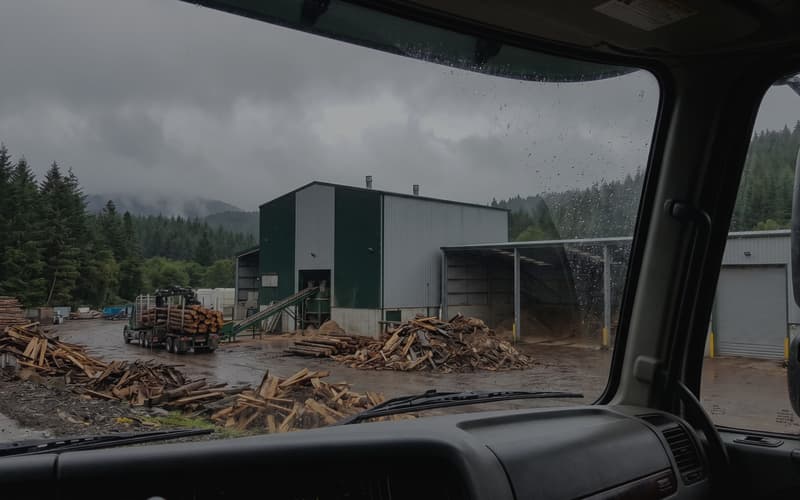
● Design
biomass Pellet Plant Design
Based on your unique situation and industrial process, we will tailor complete pellet plant you need, and inform you of every additional detail that could facilitate operation, minimize total cost.
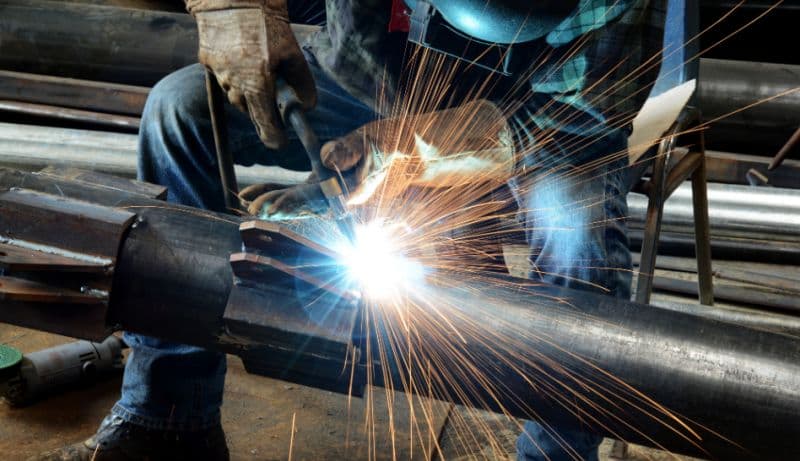
● Manufacturing
Equipment Manufacturing
The critical components of the of the complete pellet production line equipment are built in our own workshops in Asia. Additional equipment is manufactured by our worldwide network of reliable partners.
● Testing
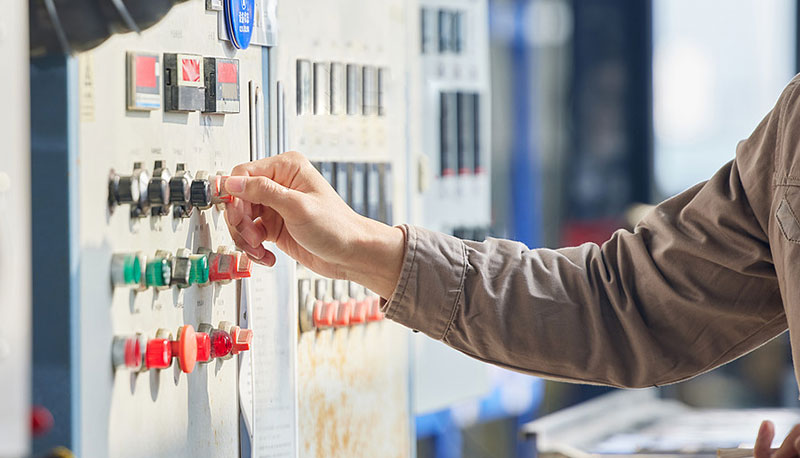
Quality Inspection & Testing
Before leaving the factory, all equipment will be inspected by the quality inspection department. We can also provide customers with testing services from a single machine to a complete pellet plant system, and provide you with real actual data for “worry-free use.”

● Delivery
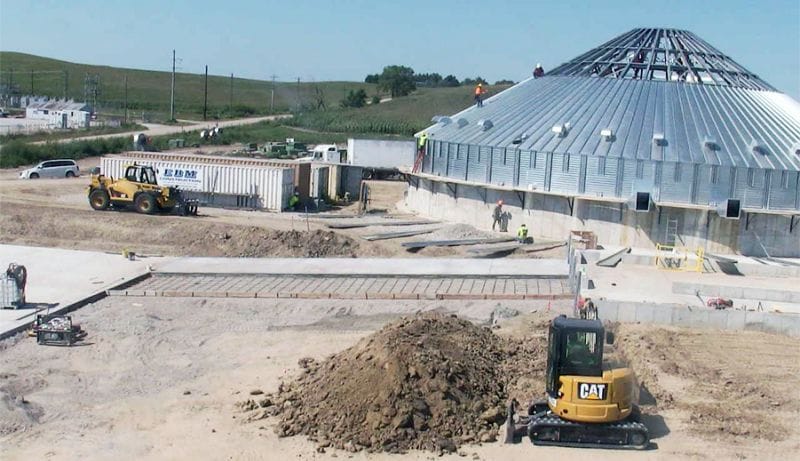
Equipment Delivery
In equipment boxing and packaging, we adopt professional packaging and modular solutions to ensure the safe and non-destructive delivery of pellet plant equipment.
● Installation
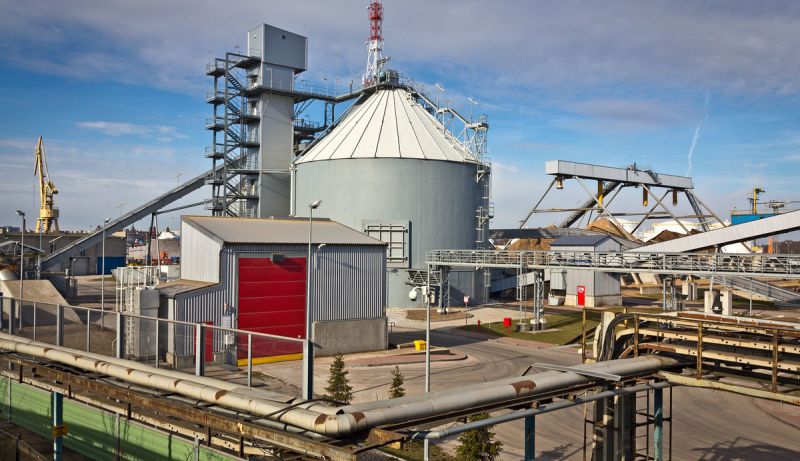
Installation & Commissioning
Whether you choose your own subcontractor for the erection phase or you want to install everything together with us, a Richi supervisor will be around to make sure everything is mounted in a safe and thorough way.

● Training
Staff Training
We provide comprehensive training for the technicians of each project. We can also continue to provide support for the technicians during latter project operation.
● After-sales
Project Follow-Up
When everything is up and running our Richiers will help you further whenever needed. We are ready to answer your call 24/7.We’ll also visit you regularly to learn about your needs.
Who we are
RICHI Machinery is one of the world’s leading suppliers of technology and services for the animal feed, aqua feed and pet food industries, also the largest pellet production line manufacturer in China.
Since 1995, RICHI’s vision to build a first-class enterprise, to foster first-class employees, and to make first-class contributions to society has never wavered.
In the past three decades, we have expanded our business to a wide range of areas, including animal feed mill equipment, aqua feed equipment, pet feed equipment, biomass pellet equipment, fertilizer equipment, cat litter equipment, municipal solid waste pellets equipment, etc.

1995
RICHI Established

2000+
Serving More Than 2000 Customers

120+
RICHI Employees

140+
Exported To 140 Countries