 0086-138 3838 9622
Small Biomass Pellet Line in Zambia
RICHI MACHINERY
Project Overview
A 1t/h small biomass pellet line in Zambia was commissioned in early 2024 for a client in the Lusaka Province, about 40km east of the capital. The facility processes 3,000 tons of biomass feedstock annually into 3,000 tons of pellets for industrial boilers, schools, and households.
The plant operates one 8-hour shift per day, 300 days per year (2,400 total operating hours), with 10 employees. Total investment was $105,000 USD, of which $8,500 was allocated to environmental protection (baghouse filters, exhaust stacks, and wastewater treatment).
What makes this 1t/h small biomass pellet line in Zambia interesting is the feedstock blend. The client uses bamboo powder – 1,500 t/yr and sawdust – 1,500 t/yr.
Zambia has abundant bamboo resources in the northern provinces, and sawdust is available from Lusaka’s furniture factories. The client chose this blend because bamboo has higher calorific value than sawdust, but sawdust binds better. Together, they produce a premium pellet.
1T/H
capacity
$58,000
investment
Zambia
location
Biofuel
project type
RICHI MACHINERY
The First Call – “I Have Bamboo and Sawdust”
The client called us in August 2023. He had been running a small agricultural trading business for years. He noticed that charcoal prices in Lusaka had doubled in two years. At the same time, bamboo was being harvested for construction but the offcuts and powder were being dumped.
He had a building (1,100m² total) in an industrial area. He had water and electricity. He had saved about $110,000 over ten years.
His question: “Can I buy a 1t/h small biomass pellet line in Zambia that runs on bamboo powder and sawdust?”
We asked about moisture content. He sent samples. Bamboo powder from the milling process was 18-22% moisture – too wet for direct pelleting. Sawdust from furniture factories was 12-15% moisture – acceptable. The average was about 16-18%. He needed a dryer.
We told him yes. A 1t/h small biomass pellet production line in Zambia would need a biomass dryer for the bamboo material. But the dryer could burn self-produced pellets as fuel, keeping operating costs low.
RICHI MACHINERY
Raw Materials – Two Feedstocks, One Blend
The client set up collection agreements with two bamboo processing plants and three furniture factories in Lusaka.
| Raw Material | Annual Input (tons) | As-Received Moisture | Cost (USD/ton) | Source |
|---|---|---|---|---|
| Bamboo powder | 1,500 | 18-22% | $25 | Bamboo processing plants |
| Sawdust | 1,500 | 12-15% | $20 | Furniture factories |
| Total | 3,000 | Avg 15-18% | $22.50 avg |
The client pays per ton delivered. Bamboo powder is more expensive because it requires drying. But the final pellet has higher calorific value (4,500 kcal/kg vs 4,200 kcal/kg for pure sawdust).
The client also uses about 240 tons of self-produced pellets per year as fuel for the dryer – about 8% of total output.
RICHI MACHINERY
Why Drying Is Necessary – And How We Designed It
At 18-22% moisture, bamboo powder cannot be pelleted directly. Pellets would crack, mold, and fall apart. The client needed a dryer.
We specified a small rotary drum dryer (1.5m diameter x 6m length) fired by a biomass furnace burning self-produced pellets. The dryer consumes about 0.08 tons of pellets per ton of dry output. For 3,000 tons of finished pellets, the dryer uses about 240 tons – 8% of total output.
Dryer specifications:
- Type: Rotary drum, direct heating
- Length: 6 meters
- Diameter: 1.5 meters
- Heat source: Biomass furnace (30 kg pellets/hour)
- Inlet moisture: 18-22%
- Outlet moisture: 10-12%
- Retention time: 15-20 minutes
The dryer is the single most expensive piece of equipment in this 1t/h small biomass pellet line in Zambia – $18,000 including the furnace and ductwork. But without it, the client couldn’t use bamboo powder.
RICHI MACHINERY
Equipment List – Complete Small Line
| Equipment | Quantity | Power | Function |
|---|---|---|---|
| Trommel screen | 1 | 2.2kW | Raw material screening |
| Crusher/Hammer mill | 1 | 37kW | Fine grinding |
| Rotary drum dryer | 1 | 7.5kW + furnace | Moisture reduction |
| Biomass pellet mill | 1 | 45kW each | Main pelleting (0.5 t/h each) |
| Conveyors | 4 | 1.5kW each | Material transfer |
| Air compressor | 1 | 7.5kW | Pneumatic controls |
| Baghouse filter | 1 | 3.7kW | Dust collection |
| Exhaust stack (1#) | 15m | — | Treated air discharge |
| Exhaust stack (2#) | 20m | — | Dryer exhaust discharge |
Equipment price (EXW Qingdao port): $58,000 USD
The client bought the air compressor locally in Lusaka – cheaper than importing.
Shipping: Two 40-foot containers. Departed Qingdao October 15, 2023. Arrived Dar es Salaam Port, Tanzania on November 28, 2023 (Zambia is landlocked). Sea freight: $4,200 USD. Rail freight from Dar es Salaam to Lusaka (about 1,800km) via TAZARA Railway added $3,500 USD and 14 days. Inland trucking from the rail terminal to the site added $500 USD.
RICHI MACHINERY
Facility Layout – 1,100m² Total
The client’s building was already standing – a former warehouse on a 1,100m² plot. Total built area 1,100m². We divided it into zones.
| Area | Size (m²) | Function |
|---|---|---|
| Production workshop | 900 | Screens, crusher, dryer, pellet mills, bagging |
| Raw material warehouse | 100 | Bamboo powder and sawdust storage |
| Finished goods warehouse | 100 | Bagged pellets |
| Office | Included in 900m² | Admin, sales |
RICHI MACHINERY
Process Flow – Complete Production Line
Here’s how the 1t/h small biomass pellet line in Zambia actually runs.
Step 1 – Screening
Bamboo powder and sawdust are fed into the trommel screen. Screen holes are about 10mm. Oversize material (large chunks) goes to the crusher. Undersize material goes directly to the dryer.
Step 2 – Crushing
Oversize material is fed into the hammer mill. The mill reduces material to 3-5mm particles. Output is mixed with the undersize material.
Step 3 – Drying
Material passes through the rotary drum dryer. Retention time is 15-20 minutes. Inlet moisture: 18-22%. Outlet moisture: 10-12%. The dryer furnace burns self-produced pellets – about 240 tons per year.
Step 4 – Pelleting
Dried material is fed into biomass granulator. Output: 1 t/h. Die size: 8mm for industrial boilers. The pelleting process uses friction heat (80-100°C) to soften the lignin in the bamboo and wood, which acts as a natural binder.
Step 5 – Cooling
Pellets drop onto a conveyor and cool naturally during transport to the bagging area. No forced-air cooler – the client found that ambient cooling works fine for his volumes. Pellets reach 35°C within 2 hours.
Step 6 – Bagging and storage
Manual bagging station. The client uses 25kg woven polypropylene bags. Bags are stacked on pallets in the finished goods warehouse.
Step 7 – Dust collection
A baghouse filter captures dust from the screen, crusher, dryer, and biomass pellet press. Collected dust is returned to the process. The client has two exhaust stacks: 1# (15m) for process dust, 2# (20m) for dryer exhaust.
RICHI MACHINERY
The Zambian Market for Biomass Pellets
Zambia is an emerging market for biomass pellets. The country has:
- Abundant bamboo resources (over 500,000 hectares of natural bamboo)
- Growing industrial sector (textiles, food processing, tobacco curing)
- Rising charcoal prices (charcoal is the primary cooking fuel in Lusaka)
The client’s current customers:
- A tobacco curing plant in Lusaka (100 tons/month)
- Two schools (uses pellets for kitchen stoves) – 50 tons/month combined
- Retail customers in Lusaka (household stoves) – 100 tons/month
He can’t keep up with demand. He’s already planning to add a third pellet mill in 2025 to reach 1.5 t/h.
RICHI MACHINERY
What the Client Learned
We spoke with the client in July 2024, five months after startup. Here are his observations.
What worked well:
- The dryer. “Without it, I couldn’t use bamboo powder. Bamboo pellets sell for $10/ton more than sawdust pellets.”
- The baghouse. “ZEMA inspected once. We passed with no issues.”
What he would change:
- “I should have bought a moisture meter.” He runs the dryer without measuring output moisture. Sometimes pellets are too dry (8% moisture) and crack. He’s ordering a meter ($200).
- “The manual bagging is slow.” He’s looking at a small bagging scale ($1,500).
RICHI MACHINERY
What We Provided
For this 1t/h small biomass pellet line in Zambia, we delivered:
- Process design – Including dryer sizing and dust collection integration.
- Equipment package – Screen, crusher, dryer, furnace, two pellet mills, conveyors, baghouse.
- Installation supervision – Our engineer spent 14 days in Lusaka.
- Operator training – Two days on moisture management, die changes, and dryer operation.
- Spare parts kit – One spare die, five sets of hammer mill screens, bearings, belts, and filter bags.
We also provided a simple temperature controller for the dryer ($400). The client bought this from us as an add-on.
RICHI MACHINERY
Thinking About a Small Pellet Line in Zambia?
If you’re looking at a 1t/h small biomass pellet line in Zambia – or anywhere in Southern Africa – here’s what we’ve learned from this project:
- Drying is necessary for bamboo. Bamboo powder arrives at 18-22% moisture. Budget for a dryer if you want to use bamboo.
- Blending improves pellet quality. Bamboo has higher calorific value; sawdust binds better. The 50/50 blend works well.
- Self-produced fuel for the dryer makes economic sense. The client’s dryer burns pellets that cost him $30/ton to produce. That’s cheaper than buying diesel.
- Start with local customers. Tobacco curing and schools buy consistently and pay on time.
The client in Lusaka is already profitable. He’s expanding. If you have access to bamboo or sawdust and a market for industrial heat, this model works.
Contact us for a site assessment or equipment quote. We can provide references from this biomass pellet project upon request.
● RICHI MACHINERY
RICHI Service

● Consulting
Customer Consultation
We want to have a deep understanding of your industrial process, to know your exact needs of feed, wood, biomass, fertilizer or other pellet processing.
● Design
biomass Pellet Plant Design
Based on your unique situation and industrial process, we will tailor complete pellet plant you need, and inform you of every additional detail that could facilitate operation, minimize total cost.
● Manufacturing
Equipment Manufacturing
The critical components of the of the complete pellet production line equipment are built in our own workshops in Asia. Additional equipment is manufactured by our worldwide network of reliable partners.

● Testing
Quality Inspection & Testing
Before leaving the factory, all equipment will be inspected by the quality inspection department. We can also provide customers with testing services from a single machine to a complete pellet plant system, and provide you with real actual data for “worry-free use.”

● Delivery
Equipment Delivery
In equipment boxing and packaging, we adopt professional packaging and modular solutions to ensure the safe and non-destructive delivery of pellet plant equipment.
● Installation
Installation & Commissioning
Whether you choose your own subcontractor for the erection phase or you want to install everything together with us, a Richi supervisor will be around to make sure everything is mounted in a safe and thorough way.

● Training
Staff Training
We provide comprehensive training for the technicians of each project. We can also continue to provide support for the technicians during latter project operation.
● After-sales
Project Follow-Up
When everything is up and running our Richiers will help you further whenever needed. We are ready to answer your call 24/7.We’ll also visit you regularly to learn about your needs.
Who we are
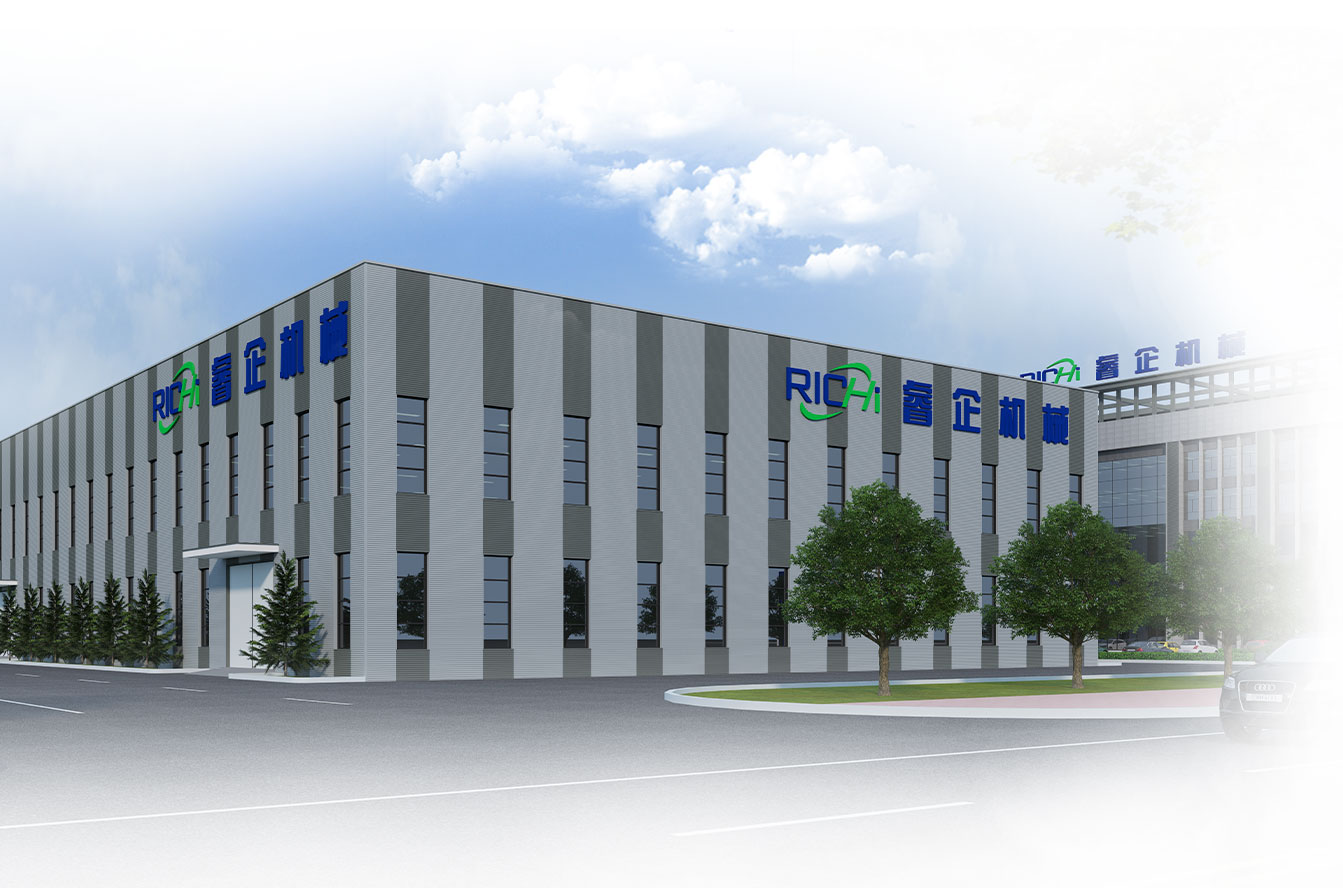
RICHI Machinery is one of the world’s leading suppliers of technology and services for the animal feed, aqua feed and pet food industries, also the largest pellet production line manufacturer in China.
Since 1995, RICHI’s vision to build a first-class enterprise, to foster first-class employees, and to make first-class contributions to society has never wavered.
In the past three decades, we have expanded our business to a wide range of areas, including animal feed mill equipment, aqua feed equipment, pet feed equipment, biomass pellet equipment, fertilizer equipment, cat litter equipment, municipal solid waste pellets equipment, etc.

1995
RICHI Established

2000+
Serving More Than 2000 Customers

120+
RICHI Employees

140+
Exported To 140 Countries