 0086-138 3838 9622
Ruminant Feed Factory in Turkey
RICHI MACHINERY
Project Overview
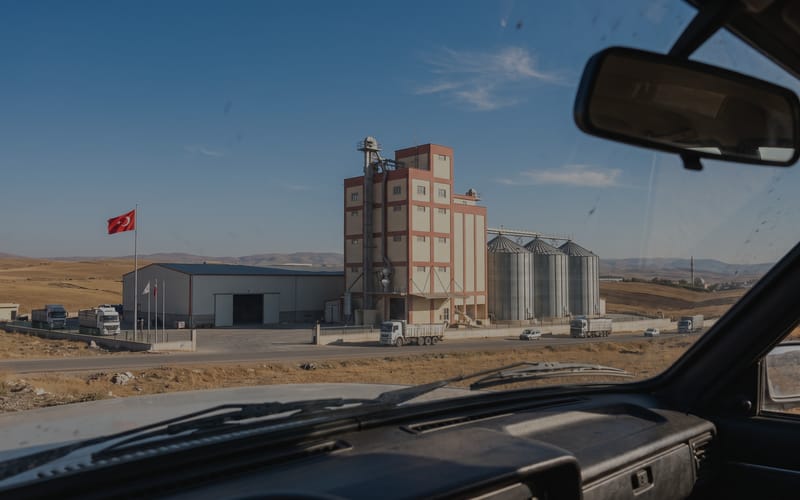
25T/H ruminant feed factory in Turkey — this project represents a typical upgrade case where an existing small-scale livestock feed workshop transitions into a structured, automated pellet production line with stable output and better formulation control. The plant was designed to reach an annual output of 60,000 tons of ruminant feed, mainly for cattle and sheep farming in central Anatolia.
Instead of building from scratch, the client chose to reorganize and upgrade the existing facility, keeping usable infrastructure while introducing a new pelletizing line and optimized material handling system. The result is not just higher capacity, but more consistent pellet quality, lower dust emissions, and easier daily operation.
25T/H
capacity
$285,000
investment
Turkey
location
Feed
project type
RICHI MACHINERY
A Conversation That Started With a Simple Question
The first inquiry came in March 2025. It wasn’t a formal RFQ at the beginning.
The client asked something very direct:
“We already produce feed, but the quality is unstable. Some batches are too powdery, some too hard. Can we fix this without rebuilding everything?”
That question usually means one thing — the process is the problem, not just the equipment.
By May 2025, after several rounds of material analysis and layout discussions, the project moved into contract stage. Equipment manufacturing started in June, and shipment was arranged in late August.
RICHI MACHINERY
Who Is the Client and Why This Project Happened
The client operates a mid-sized livestock business in central Turkey, mainly focused on cattle fattening and dairy feed supply.
Originally:
- Annual output: about 24,000 tons
- Products: poultry and pig feed (limited formulation flexibility)
- Equipment: aging hammer mills, basic mixers, manual batching
Problems they were facing:
- Inconsistent grinding size → affects digestion for ruminants
- Poor mixing uniformity → uneven nutrition
- High dust → material loss + complaints from workers
- No proper pelletizing control
At some point, expanding livestock operations forced them to rethink the feed section. Buying feed externally was too expensive, and internal production wasn’t stable enough.
So the decision was made:
Upgrade to a 25t/h ruminant feed factory in Turkey with a proper pellet production line.
RICHI MACHINERY
Production Targets and Output Plan
This new cattle feed production line focuses entirely on ruminant feed, replacing the previous mixed-use system.
| Product Type | Annual Output (t/year) |
|---|---|
| Ruminant Feed | 60,000 |
Capacity design:
- 25 tons/hour (instant capacity)
- 8 hours/day
- 300 working days/year
RICHI MACHINERY
Raw Materials — What Actually Goes Into This Feed
Turkey has relatively good access to grain and oilseed by-products, which shaped the formulation design.
The client’s material mix looks like this:
| Raw Material | Annual Consumption (t) | Notes |
|---|---|---|
| Corn | 37,636.1 | Main energy source |
| Soybean Meal | 7,525 | Protein |
| Cottonseed Meal | 6,841 | Locally available |
| Rapeseed Meal | 3,421 | Protein supplement |
| DDGS | 3,421 | Fermentation by-product |
| Dicalcium Phosphate | 1,026 | Mineral |
| Trace Elements | 20.5 | Additives |
| Vitamins | 3.4 | Micro additives |
| Methionine | 37.6 | Amino acid |
| Lysine | 68.4 | Amino acid |
| Water | 120 m³/year | Cleaning + minimal use |
| Electricity | 200,000 kWh/year | Production |
A small but practical note — cottonseed meal moisture fluctuates a lot in this region. That influenced the grinding and mixing configuration more than expected.
RICHI MACHINERY
Equipment Configuration — What Was Actually Installed
Instead of overloading the system with too many machines, the configuration was kept compact but functional.
| Equipment Name | Quantity |
|---|---|
| Pulse Dust Collectors | 5 |
| Feeding Hopper | 1 |
| Screw Conveyor | 1 |
| Hammer Mill Feed Grinder | 1 |
| Bucket Elevator | 4 |
| Batching Bins | 8 |
| Buffer Bin | 1 |
| Single Shaft Mixer | 1 |
| Finished Product Bin | 1 |
| Packing Scale | 1 |
One detail worth mentioning — the client initially wanted two hammer mills. After checking actual throughput and material type, a single properly configured unit was enough. That saved both investment and maintenance effort.
RICHI MACHINERY
Process Design — Not Complicated, But Needs To Be Right
The process flow looks standard on paper, but small adjustments were made based on material behavior.
1. Raw Material Receiving
- Manual inspection + sampling
- Moisture and contamination check
- Unqualified materials rejected immediately
2. Feeding
- Manual feeding into hopper
- Screening to remove large impurities
- Dust collected via pulse system
3. Grinding
- Hammer mill with adjustable screen size
- Target: uniform particle size for ruminant digestion
- Slightly coarser than poultry feed
4. Batching
- Computer-controlled weighing
- Each batch precisely measured
- Avoids overuse of expensive additives
5. Mixing
- Single shaft ribbon mixer
- Mixing time adjusted based on oil addition
- This is where consistency improved significantly
6. Pelletizing (Core Step)
- Steam conditioning
- Starch gelatinization improves digestibility
- Pellet density adjusted for ruminants
7. Cooling & Screening
- Reduce temperature
- Remove fines and recycle them
8. Packing
- Semi-automatic packing
- Flexible bag sizes
RICHI MACHINERY
Workshop Layout — Using What Was Already There
The Ruminant Feed Factory in Turkey sits on a 5,000 m² site, with about 1,000 m² production workshop.
Instead of redesigning everything:
- Existing storage buildings were reused
- New line installed parallel to old system
- Material flow simplified (less back-and-forth transport)
This reduced installation time quite a bit.
RICHI MACHINERY
Utilities and Operation
| Item | Details |
|---|---|
| Power Supply | Local grid |
| Water Supply | Municipal |
| Working Hours | 8 hours/day |
| Working Days | 300 days/year |
| Staff Added | 10 workers |
One noticeable improvement:
- Lower labor intensity compared to old system
- Operators mainly monitor rather than manually adjust
RICHI MACHINERY
Investment and Cost
The client was cautious about budget.
- Equipment cost: approx. $285,000
- Total project investment: controlled within a reasonable range for Turkey’s market conditions
The key was not overdesigning the system.
RICHI MACHINERY
Shipping and Delivery
- Departure port: Qingdao Port (China)
- Arrival port: Mersin Port (Turkey)
Transport was straightforward. Installation started about two weeks after equipment arrival.
RICHI MACHINERY
What Changed After the Upgrade
After commissioning, several things became obvious:
- Pellet durability improved
- Dust levels reduced significantly
- Feed consistency stabilized
- Production planning became predictable
The client mentioned something interesting during follow-up:
“Now we can actually plan feed for 3 weeks ahead. Before, it depended on how the machines behaved that day.”
RICHI MACHINERY
Market Perspective — Why This Matters in Turkey
Livestock farming in Turkey has been growing steadily, especially in cattle and dairy sectors.
Feed demand is:
- Increasing
- Becoming more quality-sensitive
- Moving toward pelletized feed
A 25t/h ruminant feed factory in Turkey fits right into this trend:
- Local raw materials are available
- Transportation costs for feed are high → local production makes sense
- Farmers prefer stable, digestible pellets
There’s still a gap between small workshops and fully industrial plants. Projects like this sit right in the middle — practical, scalable, and not overly expensive.
RICHI MACHINERY
Final Thoughts From an Engineering Perspective
This wasn’t the biggest project, but it was a very typical one.
Not every client needs a massive automated plant. Sometimes the real value comes from:
- fixing process flow
- choosing the right equipment (not more equipment)
- understanding raw materials properly
That’s where experience matters.
From initial discussion to final commissioning, this project showed how an animal feed pellet plant upgrade can be done step by step, without unnecessary complexity.
For anyone considering a ruminant feed pellet production line, the first question is not “what machine to buy,” but:
“What is happening with your material before it even reaches the machine?”
That usually decides everything else.
● RICHI MACHINERY
RICHI Service

● Consulting
Customer Consultation
We want to have a deep understanding of your industrial process, to know your exact needs of feed, wood, biomass, fertilizer or other pellet processing.

● Design
Feed Pellet Plant Design
Based on your unique situation and industrial process, we will tailor complete pellet plant you need, and inform you of every additional detail that could facilitate operation, minimize total cost.
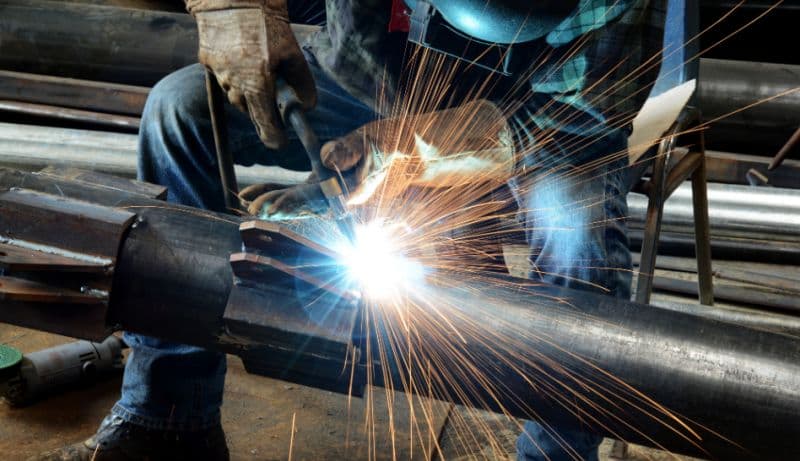
● Manufacturing
Equipment Manufacturing
The critical components of the of the complete pellet production line equipment are built in our own workshops in Asia. Additional equipment is manufactured by our worldwide network of reliable partners.
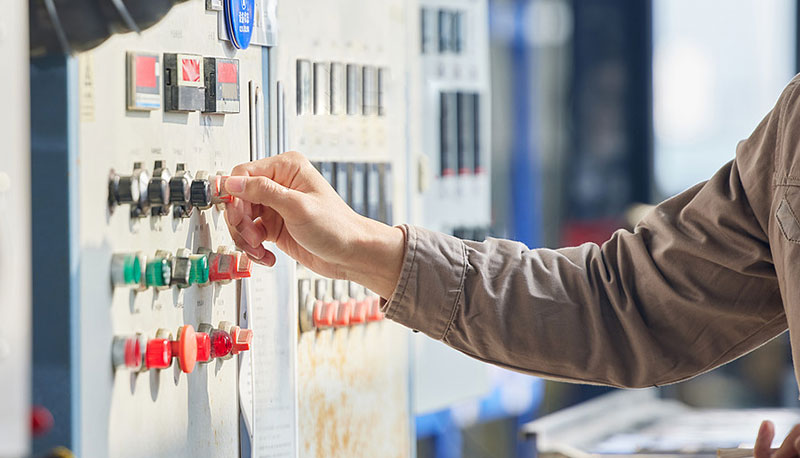
● Testing
Quality Inspection & Testing
Before leaving the factory, all equipment will be inspected by the quality inspection department. We can also provide customers with testing services from a single machine to a complete pellet plant system, and provide you with real actual data for “worry-free use.”

● Delivery
Equipment Delivery
In equipment boxing and packaging, we adopt professional packaging and modular solutions to ensure the safe and non-destructive delivery of pellet plant equipment.
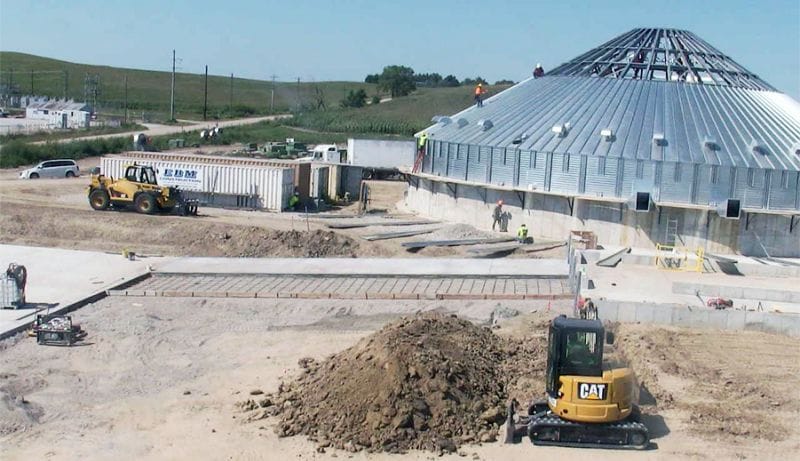
● Installation
Installation & Commissioning
Whether you choose your own subcontractor for the erection phase or you want to install everything together with us, a Richi supervisor will be around to make sure everything is mounted in a safe and thorough way.

● Training
Staff Training
We provide comprehensive training for the technicians of each project. We can also continue to provide support for the technicians during latter project operation.
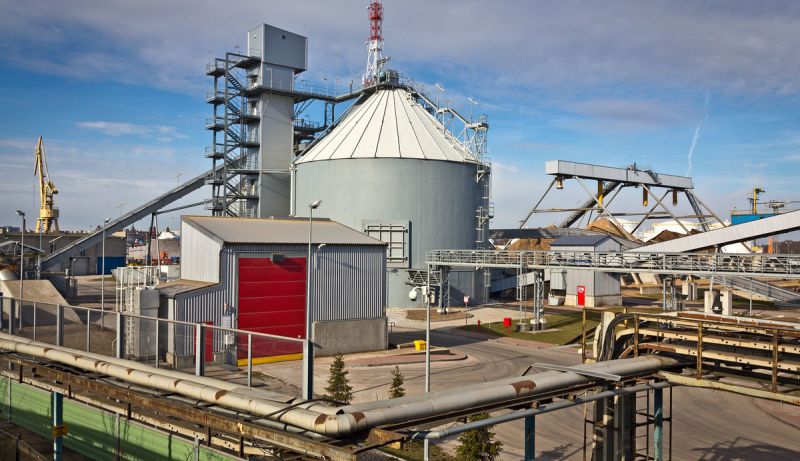
● After-sales
Project Follow-Up
When everything is up and running our Richiers will help you further whenever needed. We are ready to answer your call 24/7.We’ll also visit you regularly to learn about your needs.
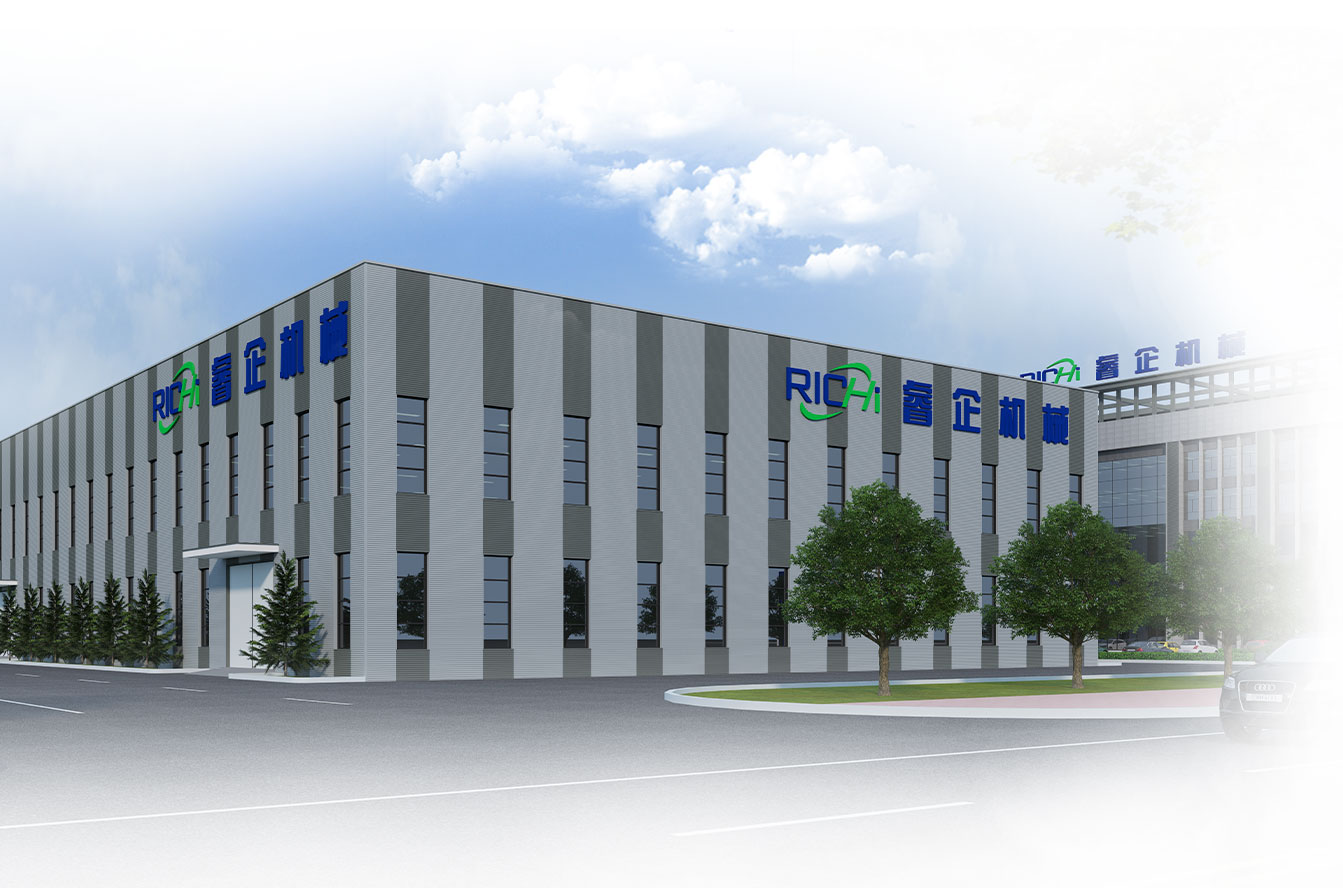
Who we are
RICHI Machinery is one of the world’s leading suppliers of technology and services for the animal feed, aqua feed and pet food industries, also the largest pellet production line manufacturer in China.
Since 1995, RICHI’s vision to build a first-class enterprise, to foster first-class employees, and to make first-class contributions to society has never wavered.
In the past three decades, we have expanded our business to a wide range of areas, including animal feed mill equipment, aqua feed equipment, pet feed equipment, biomass pellet equipment, fertilizer equipment, cat litter equipment, municipal solid waste pellets equipment, etc.

1995
RICHI Established

2000+
Serving More Than 2000 Customers

120+
RICHI Employees

140+
Exported To 140 Countries