

 0086-138 3838 9622
Sawmill Residue Pellet and Biochar Plant in Uruguay
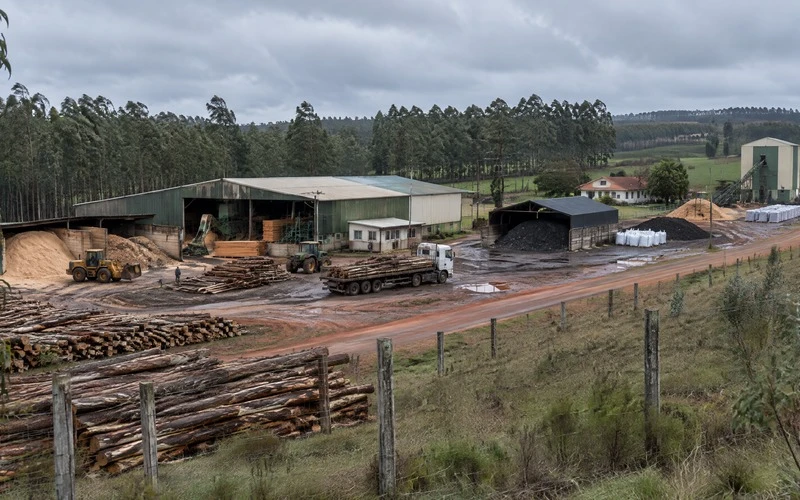
A completed wood-processing project combining industrial pellet production with a separate biochar route for clean eucalyptus and pine residues.
RICHI MACHINERY
From Sawmill Residues to Two Finished Products
This sawmill residue pellet and biochar plant in Uruguay was developed for a wood-processing business seeking more than a conventional fuel-pellet route. The completed project is designed around approximately 16,000 T/A of industrial wood pellets together with about 7,000 T/A of biochar. Instead of sending every tonne of clean residue through the same process, incoming eucalyptus and pine residues are classified by size, moisture and intended use before being allocated to pellet production or the carbonization route. This gives the customer two outlets for the same underlying wood-processing resource while keeping the very different mechanical and thermal processes properly separated.
Uruguay is particularly suitable for this type of project because plantation forestry, sawmilling and downstream wood processing provide concentrated sources of sawdust, shavings, chips and clean offcuts. For the customer, that changes the economics of the project: purchasing decisions can be made around delivered dry matter, moisture and processing requirement rather than relying on dispersed forestry residues. The plant therefore combines flexible receiving, selective crushing and drying, two MZLH678 pellet mills and a dedicated carbonization section instead of building two completely independent factories.
5–6 T/H
pellet capacity
$520,000
total investment
Uruguay
location
23,000 T/A
finished products
RICHI MACHINERY
Raw Material Plan Built Around Uruguay’s Wood Industry
The raw-material system of the sawmill residue pellet and biochar plant in Uruguay accepts only controlled clean wood residues suitable for the intended finished product. Eucalyptus and pine sawdust, planer shavings, clean chips and untreated offcuts form the main supply base. Painted timber, preservative-treated wood, demolition wood, soil-contaminated residues and material containing excessive metal or mineral contamination are excluded. Supplier contracts are evaluated not only by wet-ton purchase price but also by moisture, particle size, contamination, monthly availability and transport distance because these factors determine the actual usable dry matter delivered to the plant.
| Raw Material | Typical Incoming Condition | Pre-processing Decision | Main Route |
|---|---|---|---|
| Eucalyptus sawdust | Fine material with supplier-dependent moisture | Screen and remove metal; bypass coarse crushing when suitable | Pellet or biochar feed preparation |
| Pine sawdust and shavings | Low-density fine residue | Moisture check followed by grinding only when required | Primarily pellet production |
| Clean wood chips | Coarser and often wetter | Crushing, grinding and selective drying | Pellet or carbonization preparation |
| Clean sawmill offcuts | Irregular larger pieces | Coarse size reduction before hammer milling | Both routes after preparation |
Moisture is handled by stream rather than by forcing the entire feedstock volume through a dryer. Material already close to the pelletizing moisture window can move through a bypass route, while wetter chips and residues are dried before fine conditioning. This reduces unnecessary thermal consumption and is particularly useful when the plant receives residues from several sawmills with different timber-processing and storage practices. The final raw-material allocation between pellets and biochar is adjusted according to orders and actual carbonization yield, so purchasing can follow production demand rather than a rigid annual percentage.
RICHI MACHINERY
Production Targets and Operating Schedule
The mechanical pellet section has an installed capacity of 5–6 T/H based on two MZLH678 pellet mills, each rated at approximately 2.5–3 T/H for suitable biomass feedstock. The completed project does not need to operate both machines at full nameplate output every hour to reach its annual pellet target. Approximately 16,000 tonnes of pellets can be produced through planned campaigns with allowance for die changes, cleaning, preventive maintenance, raw-material changes and production interruptions. The separate carbonization section is scheduled around batch or modular operating cycles to produce approximately 7,000 T/A of biochar.
| Item | Project Basis |
|---|---|
| Pellet section capacity | 5–6 T/H |
| Annual wood pellet output | 16,000 T/A |
| Annual biochar output | 7,000 T/A |
| Main operating system | Two production shifts with maintenance windows |
| Pellet diameter | 8 mm typical; 6–12 mm available according to contract |
| Pellet length | Approximately 15–35 mm |
| Packaging | Small bags, jumbo bags or bulk dispatch according to buyer |
This operating arrangement also provides useful redundancy. During lower-demand periods one pellet mill can handle part of the production requirement while the second unit is maintained or prepared for another raw-material blend. During concentrated production campaigns both machines can operate together. For a business selling into industrial fuel markets, this is more useful than designing the annual output around uninterrupted theoretical nameplate operation, because actual throughput changes with wood species, particle size, moisture, die specification and the condition of wearing parts.
RICHI MACHINERY
Plant Layout and Functional Areas
The plant layout separates ordinary mechanical processing from carbonization rather than treating biochar production as another machine added beside the pellet mills. Covered raw-material storage is positioned close to receiving and size reduction, followed by grinding, selective drying, pelletizing, cooling, screening and dispatch. The carbonization feed-preparation route branches from the prepared clean-wood stream and enters its own hot-process area. Finished biochar is cooled and handled in a dedicated zone away from loose dry biomass. Truck movement, fire access and maintenance space are retained between the principal production and storage areas.
| Functional Area | Approximate Area | Main Use |
|---|---|---|
| Raw-material receiving and covered storage | 900 m² | Separate sawdust, shavings, chips and offcuts by condition |
| Crushing, grinding and preparation | 250 m² | Size reduction, metal removal and intermediate handling |
| Drying and thermal preparation | 300 m² | Selective drying of wet material |
| Pelletizing, cooling and screening | 350 m² | Two MZLH678 pellet mills and downstream handling |
| Pellet storage and dispatch | 500 m² | Bagged, jumbo-bag and dispatch preparation |
| Carbonization and biochar handling | 700 m² | Feed preparation, carbonization, cooling and packing |
| Utility, maintenance and staff areas | 300 m² | Electrical, spare parts, workshop and staff functions |
The production and storage buildings occupy only part of the industrial plot. Additional outdoor area is retained for truck turning, loading, internal roads, fire separation and service access, so the project is not presented as fitting the entire operation into a 2,000 m² site. This distinction is important for a combined pellet and biochar facility because loose dry biomass, hot carbonization equipment and finished char have different handling and fire-control requirements.
RICHI MACHINERY
Complete Pellet and Biochar Process
The sawmill residue pellet and biochar plant in Uruguay begins with receiving and classification. Fine sawdust and shavings that already meet the required size can bypass coarse crushing, while chips and clean offcuts are reduced before entering hammer milling. Magnetic separation is arranged ahead of critical equipment to reduce the risk of metal entering grinders and pellet mills. Prepared material is checked for moisture; only streams above the required processing range enter the rotary drying system, while suitably dry residues use a bypass. After drying and fine preparation, the pellet stream enters the two MZLH678 biomass pellet mills, followed by cooling, screening and packaging. Screened fines are returned to production where their condition remains suitable.
The biochar route branches from controlled clean wood material and uses separately prepared feedstock. Depending on the selected carbonization feed form, prepared biomass is densified before entering sealed carbonization units. Heating removes residual moisture and progressively releases volatile compounds before stable char is formed under oxygen-limited conditions. Recoverable combustible gas can be returned to the thermal system when the installed carbonization technology allows controlled recovery, while condensable fractions are collected and handled according to the process design. Finished biochar must be cooled to a safe handling temperature before screening, storage and packing; it is not discharged hot directly into the finished-product warehouse.
- Receive, inspect and separate clean eucalyptus and pine residues according to size, moisture and contamination.
- Crush large chips and offcuts, grind material where necessary and remove ferrous contamination before downstream equipment.
- Route wet material through drying while allowing suitably dry sawdust and shavings to bypass unnecessary thermal treatment.
- Pelletize the designated stream, then cool, screen, recycle suitable fines and pack the finished industrial wood pellets.
- Prepare the biochar feed stream separately, carbonize it under controlled conditions, recover usable thermal energy where applicable, then cool and package the finished char safely.
RICHI MACHINERY
Main Equipment Configuration
Equipment was selected around the difference between incoming residue forms rather than assuming that every tonne needs identical preprocessing. The two MZLH678 units provide the 5–6 T/H pelletizing capacity, while upstream equipment has enough operating margin to prevent grinding or material preparation from becoming a persistent bottleneck. The carbonization section remains functionally independent from the pellet mills so its batch cycle, thermal control and maintenance do not determine the mechanical pellet line’s operating rhythm.
| Equipment | Quantity | Specification | Function |
|---|---|---|---|
| Wood crusher / chipper | 1 | Selected for clean offcuts and chips | Coarse size reduction before grinding |
| Hammer mill | 2 | Screen selected according to pellet feed requirement | Fine grinding of prepared wood |
| Magnetic separation | Multiple points | Permanent magnetic protection | Protects grinding and pelletizing equipment |
| Rotary drying system | 1 | Duty based on water evaporation | Selective drying of wetter residue streams |
| MZLH678 biomass pellet making machine | 2 | 185–200 kW each | Combined rated pelletizing capacity of 5–6 T/H |
| Counterflow cooler | 1 | Matched to pellet output | Reduces pellet temperature before screening |
| Pellet screening system | 1 | Matched to line capacity | Separates fines for controlled recycle |
| Packaging system | 1 set | Configured to customer sales format | Finished pellet weighing and packing |
| Briquetting / feed-forming system | 1 set | Matched to carbonization route | Prepares consistent carbonization feed where required |
| Sealed carbonization system | 1 modular system | Sized to annual biochar output | Controlled thermal conversion of clean wood feedstock |
| Gas recovery and cooling system | 1 set | Integrated with carbonization section | Handles process gas, vapors and finished biochar cooling |
The pelletizing core uses two MZLH678 biomass pellet press units rather than one oversized machine. Besides matching the required throughput, the parallel arrangement gives the customer greater flexibility during maintenance and lower-output production periods. The biomass pellet production line is therefore sized around practical annual production rather than simply multiplying rated hourly output by every available operating hour.
RICHI MACHINERY
Power Water and Thermal Energy
Electricity is supplied from the local grid and the plant’s electrical design is based on the connected motor list, starting sequence and actual simultaneous load. The two MZLH678 machines alone account for 370–400 kW of installed pelletizing power, so transformer and distribution capacity must also cover grinding, conveying, fans, cooling, packaging and carbonization auxiliaries without assuming that every motor operates at full load continuously. Annual electricity consumption is therefore managed through production hours and equipment utilization rather than a simple connected-power multiplication.
Thermal demand comes mainly from drying and carbonization. The dryer heat requirement changes substantially with incoming moisture, which is why fuel use is calculated from the actual amount of water that must be evaporated. Clean biomass residue can provide the primary dryer fuel where permitted by the installed thermal system. The carbonization section can recover part of the combustible process gas for useful heat after stable operation is established, reducing auxiliary fuel demand without assuming that carbonization provides unlimited free energy. Process water demand is comparatively low because neither wood pelletizing nor carbonization requires a continuous high-volume water stream; water is mainly required for domestic use, cleaning where applicable and fire protection.
RICHI MACHINERY
Dust Control Fire Safety and Environmental Measures
Environmental control is integrated into the process without turning the project into an environmental-report description. Dust extraction is arranged around grinding, transfer and screening points, with cyclones or pulse filters selected according to the air-handling duty. Clean collected wood fines can return to production where suitable. The dryer and carbonization exhaust route is configured around the installed heat source and local permitting requirements. Noise control relies on equipment foundations, enclosed processing areas and maintenance of rotating machinery. More importantly for this particular project, dry biomass storage and carbonization are physically separated, hot biochar is cooled before storage, and housekeeping, temperature monitoring, fire access and emergency procedures are incorporated into normal plant operation.
RICHI MACHINERY
Lean Staffing for an Automated Uruguayan Plant
The project uses a lean operating structure rather than assigning a large workforce to each machine. A normal production shift requires operators for receiving and material preparation, pelletizing and downstream handling, carbonization supervision and finished-product movement, while electrical and mechanical maintenance can be shared across the facility. With two shifts, approximately 8–10 direct production and maintenance employees are sufficient for normal operation, supported by a small number of management, quality and logistics personnel as required by the customer’s business. Forklift and loader duties can also be combined with material-handling roles instead of creating separate positions for every movement inside the plant.
RICHI MACHINERY
Project Investment and Cost Control
The completed sawmill residue pellet and biochar plant in Uruguay represents a total project investment of approximately USD 520,000. This covers the main pellet-processing and carbonization equipment together with the supporting systems required to turn several forms of clean sawmill residue into two saleable products. The investment level is consistent with a 5–6 T/H biomass pellet project while accounting for the additional thermal conversion section. It does not assume an unnecessarily large civil construction scope or oversized auxiliary systems, which is important because the customer’s annual pellet target is substantially below the theoretical maximum output of the two pellet mills.
Cost control begins upstream. Fine dry sawdust is allowed to bypass equipment it does not need, wet residues are isolated before drying, and only large material is sent through coarse size reduction. This reduces electricity, thermal demand and unnecessary wear. Two parallel pellet mills also allow production to follow actual orders rather than operating the entire installed capacity continuously. For the carbonization business, the customer can allocate clean residue according to biochar orders and product quality instead of permanently sacrificing pellet production. These decisions have a larger long-term impact on operating cost than simply selecting the lowest-priced individual machine.
RICHI MACHINERY
Engineering the Two Routes as One Practical Project
The central engineering question was not simply how to add carbonization equipment to an existing biomass pellet plant. RICHI first separated the functions that could reasonably be shared from those that should remain independent. Receiving, metal removal, part of the crushing and grinding system, material conveying and selected preparation equipment can serve both routes. Pelletizing, pellet cooling and screening remain dedicated to fuel production, while carbonization, process-gas handling and biochar cooling are isolated as a thermal section. This avoids duplicating every upstream machine without creating operational dependence between two fundamentally different processes.
For the pellet route, die specification and operating parameters are matched to the actual eucalyptus and pine blend rather than fixed only by nominal pellet diameter. For the carbonization route, feed moisture, physical form, residence time and final carbon properties determine operating settings. This distinction matters commercially: industrial pellets are sold primarily as a standardized solid fuel, while biochar value depends much more heavily on its intended application and verified product properties. The plant therefore gives the customer the flexibility to change production allocation without pretending that pellets and biochar are interchangeable products.
RICHI MACHINERY
Product Quality and Commercial Flexibility
Pellet quality is controlled from the raw material forward. Clean wood selection helps limit ash and contamination, grinding controls particle-size distribution, moisture is adjusted before the biomass granulator, and cooling stabilizes pellets before storage. An 8 mm product is the normal production specification, while 6–12 mm pellets can be produced when the customer’s contract and die configuration require another diameter. Final moisture, durability, ash and calorific value are verified against the actual production blend instead of being assumed from the wood species alone.
| Product | Annual Output | Key Quality Control | Potential Market |
|---|---|---|---|
| Industrial wood pellets | 16,000 T/A | Diameter, moisture, durability, fines, ash and calorific value | Industrial heat users, biomass fuel distributors and suitable commercial boiler users |
| Biochar | 7,000 T/A | Moisture, ash, fixed carbon, contaminants and physical form according to application | Qualified soil amendment, horticultural, industrial carbon or further-processing markets |
The two-product model also protects the customer from depending entirely on one sales channel. It does not mean that biochar automatically earns a fixed premium over pellets; its achievable price depends on product analysis, certification, physical form and end use. The practical advantage is optionality. Clean residues can be allocated according to contracted demand, while the pellet section continues to provide an established densified-fuel route for material that meets the fuel specification.
RICHI MACHINERY
Building a Similar Project Around Your Own Wood Residues
A successful biomass pellet project cannot be copied only from another plant’s hourly capacity. A sawmill producing dry planer shavings needs a different preparation system from a processor receiving wet chips and large offcuts, even when both want 5 T/H of pellets. The same applies to biochar: feed form, moisture, desired carbon properties and the selected carbonization technology change the mass balance and thermal system. RICHI therefore starts a new project with the customer’s monthly material volumes, wood species, moisture ranges, incoming sizes, product targets, utility conditions and available site rather than selecting machines from capacity alone.
For customers considering a sawmill residue pellet and biochar plant in Uruguay or another forestry market, RICHI Machinery can provide raw-material evaluation, process design, mass balance, equipment selection, plant layout, manufacturing, installation guidance, commissioning and operator training. Equipment manufactured in China can be shipped from Qingdao to the Port of Montevideo for delivery to the project site. Send your residue types, daily or annual volumes, moisture, largest incoming size, pellet specification, biochar target, site drawing and available power, and our engineers can configure the production route around the material you actually have rather than an assumed standard wood-pellet factory.


