0086-138 3838 9622
Agricultural Residue Pellet Plant in Romania

RICHI MACHINERY
From Seasonal Field Residues to a Year-Round Fuel Business
The customer profile for this project is a Romanian agricultural cooperative and grain-handling business with access to cereal straw, corn residues and sunflower-processing by-products. Rather than treating every available residue as guaranteed feedstock, the Agricultural Residue Pellet Plant in Romania is designed for up to 15 T/H nominal finished-pellet capacity.
The commercial production plan is approximately 90000–100000 T/A, allowing for seasonal feedstock changes, maintenance, die service and periods when wetter material limits dryer throughput. The principal products are industrial-grade pellets made from wheat straw, corn stalks and sunflower residues, with clean woody biomass used only when the customer’s fuel specification or combustion behavior benefits from blending.
The site is planned in Brăila County in southeastern Romania, where large arable farms and grain logistics make cereal residues commercially relevant. The business case is not based on the assumption that all field residue can be removed: part must remain on farmland for soil protection and nutrient management. The procurement radius and annual collection contracts are therefore sized around recoverable surplus residue, while sunflower husks are sourced as a denser, more uniform by-product from oilseed processing.
The site is sufficient for the processing halls, covered bale storage, finished-pellet storage, truck circulation, fire separation, utilities and future expansion. Instead of forcing four separate processing buildings into the layout, the plant uses one main production hall with external drying and dust-control equipment plus dedicated storage zones:
| Building | Size (m²) | Function |
|---|---|---|
| Main production hall | 2400 | Grinding, buffering, four pellet mills, cooling and screening |
| Covered bale storage | 1000 | Seasonal wheat straw and corn-residue inventory |
| Loose material and finished fuel warehouse | 1000 | Sunflower residues, clean wood blendstock and finished pellets |
| Utility and maintenance area | 1000 | Hot-air system, electrical room, workshop and spares |
For project planning, a 15 T/H class agricultural-residue pellet project in Romania is budgeted within approximately USD 630,000, depending on the drying load, storage scope, civil works, automation, dust control and whether the customer purchases only the processing equipment or a broader turnkey package. The final project budget is therefore tied to the confirmed site and supply boundary rather than one fixed figure.
15 T/H
capacity
USD 630,000
investment
Romania
location
Biomass
project type
RICHI MACHINERY
Why This Feedstock Mix Works in Southeastern Romania
Romania is a credible location for an agricultural-residue pellet project because its arable sector produces large volumes of wheat, maize and sunflower. The key engineering question is not the theoretical national residue total but how much clean, contractable material can reach one plant at an acceptable delivered cost.
| Parameter | Value |
|---|---|
| Wheat straw | Major seasonal residue stream from cereal farming; procurement is based on recoverable surplus after field-retention requirements |
| Corn residues | Available after maize harvest, but collection economics depend strongly on moisture, baling method and transport density |
| Sunflower residues | Useful regional supplement, especially processing by-products such as husks that arrive in a denser and more uniform form |
| Vineyards/orchards | Not used as a base feedstock for this project |
| Total crop residues | No fixed national residue figure used for plant sizing |
| Current field burning | Field burning is prohibited under GAEC requirements; this does not mean all residues are collectible |
Collection constraint: Romanian farmers subject to GAEC requirements cannot simply burn arable stubble and crop residues. Pellet production can create an outlet for part of the recoverable material, but the plant still needs field-by-field collection agreements and rules for contamination, bale moisture and storage.
Fuel-market fit: Agricultural pellets are better positioned for industrial combustion systems designed or adjusted for non-woody biomass than for premium residential wood-pellet markets. Higher ash-forming minerals in straw and stalks make customer boiler capability and fuel specification part of the sales strategy.
Practical offtake routes:
| Customer segment | Location | Annual demand (tons) | Current fuel |
|---|---|---|---|
| District heating plants | Bucharest, Brăila, Galati | Contract-based | Natural gas/coal |
| Industrial boilers (food processing) | Brăila, Constanța | Contract-based | Natural gas |
| Power plants (co-firing) | Romanian industrial energy users | Project-specific | Coal |
| Regional export where fuel specification is accepted | — | Project-specific | Wood pellets |
No fixed three-year payback is assumed. Project economics are tested against delivered dry-matter cost, drying energy, plant utilization, pellet quality, contract price and transport distance; these variables can move the return far more than nominal pellet-mill capacity.
RICHI MACHINERY
Raw Material Plan Starts With Recoverable Dry Matter
For this biomass pellet project, annual as-received procurement is planned at roughly 115000–135000 tons, depending on the seasonal mix and moisture. Most of the incoming dry matter remains in the finished fuel; normal losses come from water removal, screening, dust and rejected contamination rather than a 70% mass loss.
| Raw Material | Annual (tons) | Moisture (%) | Source | Cost (RON/ton) | USD/ton (4.5 RON/USD) |
|---|---|---|---|---|---|
| Wheat straw | 45,000–55,000 | 12–18% | Cooperative members and contracted cereal farms | Contract-based | Evaluated as delivered dry-matter cost |
| Corn stalks | 25,000–35,000 | 15–28% | Contracted maize farms after grain harvest | Contract-based | Baling and transport strongly affect cost |
| Sunflower husks and residues | 20,000–25,000 | 9–14% | Regional oilseed processors | Contract-based | Dense by-product reduces preprocessing demand |
| Clean woody biomass for blending | 10,000–20,000 | 20–40% | Sawmills and wood processors | Contract-based | Used when fuel quality or pelletability requires it |
| Total as-received input | 115,000–135,000 | Seasonal | Multiple contracted sources | — | Supports about 90,000–100,000 T/A finished pellets depending on moisture and losses |
The client’s raw material collection system: The client has invested in a fleet of agricultural equipment:
- Self-propelled or tractor-mounted straw collection equipment for the contracted harvest area
- High-density balers or shredder-balers selected for the local collection method
- Bale protection equipment where outdoor temporary storage is unavoidable
- Dedicated and contracted trucks for harvest-season transfer
- Loaders and forklifts for bale yards and finished-product handling
Collection is organized in zones around the plant and expanded only where delivered dry-matter cost remains competitive. A fixed 50 km radius is not imposed because bale density, road access and back-haul opportunities can change the economical distance.
RICHI MACHINERY
Equipment Configuration Built Around Four MZLH768 Pellet Mills
The pelleting section uses four MZLH768 biomass ring die pellet machines. At a typical rated basis of 3–4 T/H per machine, the installed pelleting capacity is 12–16 T/H; the project is marketed as a 15 T/H class plant because actual throughput varies with straw-to-husk ratio, moisture, particle size, die specification and bulk density. The upstream preparation and drying sections are shared and sized as plant systems rather than duplicated four times.
Main plant equipment:
| Equipment | Quantity per line | Total | Power (each) | Function |
|---|---|---|---|---|
| Bale breaker / straw receiving system | 2 sets | 2 | Project-specific | Opens wheat-straw and corn-residue bales before size reduction |
| Coarse straw crusher | 2 sets | 2 | Project-specific | Reduces long fibrous material before fine grinding |
| SFSP-series hammer mills | 3–4 units | 3–4 | Selected by duty | Produces a pelletizing particle size generally below 6 mm |
| Magnetic and screening equipment | Multiple points | — | Project-specific | Removes tramp metal, stones and excessive field contamination |
| Rotary drying system | 1 shared system | 1 | Thermal load by moisture balance | Dries only feedstocks above the pelletizing moisture window |
| Buffer bins and mixer | 1 system | 1 | Project-specific | Balances feed and blends residues when required |
| MZLH768 biomass pellet mill | 4 units | 4 | 250–315 kW each | 3–4 T/H rated basis per machine; 6–10 mm industrial fuel pellets |
| Counterflow pellet coolers | 2–4 units | 2–4 | Selected by line balance | Reduces pellet temperature before storage |
| Pellet screens | 2–4 units | 2–4 | Project-specific | Separates fines for return to production |
| Jumbo-bag and bulk dispatch system | 1 system | 1 | Project-specific | Supports industrial customers and export logistics |
| Conveying and dust collection | Plant-wide | — | Project-specific | Connects process stages and controls dust at transfer points |
Three decisions that materially change operating cost:
1. Four pellet mills create redundancy without duplicating the entire factory. One biomass pellet mill can be stopped for die or roller service while the other units continue. Receiving, size reduction, drying and finished-product handling remain common systems, which avoids the capital and maintenance penalty of four fully independent factories.
2. Drying heat is selected from site energy economics, not assumed to be electric resistance heating. For this scale, resistance-electric drying would create an unnecessarily high electrical load. The base design therefore uses a biomass-fired hot-air furnace or another locally permitted thermal source, with heat input modulated to incoming moisture. Electricity remains the main energy source for motors, fans, conveying and controls.
3. Storage and receiving are designed around the harvest calendar. Wheat straw, corn stalks and sunflower residues arrive in different months and forms. Covered bale inventory, loose-material bays and separate receiving routes prevent the biomass pellet plant from becoming dependent on daily field collection.
RICHI MACHINERY
Process Route Changes With Moisture and Material Form
The plant does not force every feedstock through every machine. Baled straw and stalks require bale opening and coarse size reduction; sunflower husks can bypass that stage. Dry material can also bypass the dryer. This routing flexibility is essential for keeping energy use under control.
Step 1: Seasonal Collection and Receiving
Collection follows the actual harvest calendar and weather window. The receiving plan separates field operations from year-round plant operation:
- Recoverable straw is windrowed only after the farm has retained the residue required for its field-management plan
- Baling equipment compacts the selected residue for economical transport and storage
- Bales are protected from rainfall by covered storage or suitable temporary protection
- Trucks move the bales to fire-separated covered storage at the pellet site
Step 2: Bale Opening and Coarse Size Reduction
Bales are stored in covered, fire-separated bays. Loaders feed the bale-opening system according to the production recipe and measured incoming moisture.
Step 3: Primary Size Reduction
( Straw and stalks are long and fibrous. The wood chipper reduces them to 1-3cm pieces before the hammer mill.)
Opened bales pass through a dedicated straw crusher or coarse cutting system before fine grinding.
Coarse size-reduction target:
- Typical intermediate size: approximately 15–40 mm, adjusted to the hammer-mill duty
- Capacity: sized above the combined downstream demand with maintenance margin
Step 4: Fine Grinding
Pre-cut fibrous material is conveyed to SFSP-series hammer mills; naturally short sunflower residues can enter the fine-grinding route directly.
Fine-grinding basis:
- Screen selection: typically around 4–6 mm depending on feedstock
- Output: <6mm particles
- Installed grinding capacity: balanced to the 15 T/H class plant, not one grinder per pellet mill
Step 5: Contaminant Removal and Buffering
Field residues can carry soil, stones and metal. Contamination control is therefore placed before fine grinding and again where required by the receiving route.
Screening, aspiration and magnetic separation remove unacceptable contaminants. Rejected mineral material is managed according to its actual composition; it is not automatically returned to fields.
Step 6: Moisture Conditioning
Only material above the target moisture window enters the shared rotary drying system. Naturally dry sunflower husks and dry stored straw can bypass or receive minimal drying, which materially reduces thermal energy use.
Drying control basis:
- Heat source: biomass-fired hot-air system or another locally approved thermal source
- Hot-air temperature: controlled according to material type, fire risk and moisture load
- Outlet condition: set to protect fiber quality and achieve stable downstream moisture
- Residence time: controlled by pellet temperature, airflow and bed depth
- Dryer outlet moisture: normally controlled around 10–15%, then fine-adjusted before pelletizing according to the actual blend and pellet quality
Why one shared dryer? Drying is the largest variable energy load. A shared system allows wet feedstocks to be dried while dry by-products bypass the dryer, avoiding four separate heat systems and unnecessary power consumption.
Step 7: Pelletizing
Conditioned material is fed to the agri pellet machinery using four MZLH768 ring-die pellet mills. Feed moisture is controlled to the range confirmed by material testing rather than forced below 10% for every straw, stalk, husk and wood blend.
Pelleting basis:
- Pellet mill model: MZLH768
- Typical die hole diameter: 6–10 mm; 8 mm is suitable for the planned industrial fuel product
- Compression ratio: selected after raw-material testing; it is not fixed across straw, stalk, husk and wood blends
- Rated capacity basis: 3–4 T/H per machine, depending on material and pellet specification
Pellet specifications (fuel pellets):
| Parameter | Value | Project acceptance basis |
|---|---|---|
| Diameter | 8 mm target | 6–10 mm available according to the industrial fuel contract |
| Moisture | Typically 8–12% | Final limit set by the fuel specification and storage requirement |
| Ash content | Feedstock-dependent | Test the actual agricultural blend; do not apply wood-pellet ash limits to non-woody fuel |
| Net calorific value | Feedstock- and moisture-dependent | Confirmed by fuel analysis before the offtake specification is finalized |
| Mechanical durability | Contract-based | Verified on the selected raw-material blend and die configuration |
Step 8: Counterflow Cooling
Hot pellets enter counterflow cooling equipment sized to the actual pelleting load.
Cooling target:
- Type: counterflow cooling
- Outlet temperature: normally no more than about 5–10°C above ambient under suitable conditions
- Residence time: controlled by pellet temperature, airflow and bed depth
Step 9: Screening and Fines Return
Cooled pellets are screened to remove fines before storage or dispatch.
- On-spec pellets → finished-product storage or dispatch
- Fines → return to the pelletizing feed circuit where suitable, avoiding unnecessary regrinding of already fine material
- Abnormal oversize → removed or reprocessed according to the cause
Step 10: Bulk and Jumbo-Bag Dispatch
Industrial pellets can be loaded in jumbo bags or dispatched in bulk, depending on the customer’s receiving system. Finished fuel is kept dry and separated by specification.
RICHI MACHINERY
Utilities Sized From the Final Heat Balance
| Utility | Planning basis | Why it varies | Design response |
|---|---|---|---|
| Electricity | Final connected load calculated from motors and auxiliaries | Grinding duty, pellet-mill loading, fans and conveying | Transformer and MCC sized after equipment selection |
| Drying heat | Calculated from hourly water evaporation | Incoming moisture and percentage of material requiring drying | Shared thermal system with dryer bypass |
| Water | Low process demand plus domestic and fire-water requirements | Dust suppression, cleaning and local fire code | Separate domestic, process and fire-water planning |
Electricity breakdown (annual, 300 days, 24 hours/day = 7,200 hours):
| Load group | Operating characteristic | Main sizing factor | Engineering note | Cost treatment |
|---|---|---|---|---|
| Bale opening and coarse crushing | Seasonal feedstock dependent | Bale form and fiber length | Not required for sunflower husks | Electricity |
| Fine grinding | High motor load | Screen size and fiber toughness | One of the main electrical consumers | Electricity |
| Drying | Variable thermal load | kg of water evaporated per hour | Dry feedstocks bypass the dryer | Thermal fuel plus fan electricity |
| Four MZLH768 | Continuous under production | Feedstock and die specification | 250–315 kW motor range per machine | Electricity |
| Cooling screening conveying | Continuous auxiliaries | Actual pellet flow | Balanced to pelleting capacity | Electricity |
| Dust collection and utilities | Process-dependent | Air volume and transfer points | Included in final plant load list | Electricity |
A fixed annual electricity bill is not published because the largest thermal load has been moved away from resistance-electric drying. Motor electricity is calculated from the final equipment list and duty cycle, while dryer energy is calculated separately from kilograms of water evaporated per hour. This gives the buyer a usable utility basis instead of multiplying nameplate power by 7200 hours.
RICHI MACHINERY
Why the Line Is Not a Standard Wood Pellet Layout
The difficult part of the Agricultural Residue Pellet Plant in Romania is not pelletizing one clean material; it is keeping a mixed agricultural-residue plant stable through seasonal changes:
- Material challenge 1: bale density and particle form change by feedstock. Wheat straw and corn residues need bale opening and coarse cutting, while sunflower husks can enter farther downstream.
- Engineering response: Use flexible bypasses and shared preparation systems, then split conditioned material across four biomass pellet presses. This is more economical than four complete independent lines.
- Material challenge 2: incoming moisture can change faster than pellet-mill settings. The client needed efficient drying.
- Engineering response: Use moisture measurement, dryer bypass and variable feed control so dry sunflower residue is not heated simply because wetter corn residue also enters the factory.
- Utility challenge: the site cannot assume pipeline gas is available. They needed an alternative to gas-fired drying.
- Engineering response: Size a biomass-fired hot-air system around the worst credible moisture load, with the final heat source confirmed during permitting and utility review.
- Supply challenge: residue is seasonal and geographically dispersed. They didn’t want to rely on third-party suppliers.
- Engineering response: RICHI’s scope starts at the plant interface: bale receiving, storage turnover, loader access, buffer capacity and intake rate are calculated from the customer’s collection plan. Agricultural harvest machinery remains outside the pellet-equipment supply package.
- Operating challenge: three-shift production needs enough people for material handling, process control, maintenance and fire watch. They needed high automation.
- Engineering response: The plant uses centralized PLC control for process interlocks and alarms, but automation does not eliminate yard, maintenance and safety staffing. For a highly automated 15 T/H plant, a lean operating plan is approximately 18–26 employees in total, including shift operators, loader and warehouse personnel, electrical/mechanical maintenance, quality control and basic management. The exact number depends on whether bale collection, trucking, security and some maintenance work are outsourced rather than kept on the plant payroll.
RICHI MACHINERY
Fuel Specification Is Set by the Offtake Contract
These pellets should not be marketed as ENplus wood pellets. Agricultural and other non-woody pellets are covered by EN ISO 17225-6-type fuel classification logic, and the final sales specification must reflect the actual feedstock blend and the receiving boiler’s limits for moisture, ash, chlorine, nitrogen, sulfur and ash behavior.
| Parameter | Project Basis | Control Logic |
|---|---|---|
| Diameter | 8 mm target | 6–10 mm can be configured for industrial users |
| Length | Controlled by cutter setting | Matched to handling and combustion requirements |
| Moisture | Typically 8–12% | Confirmed by storage and fuel contract |
| Ash | Feedstock-dependent | Tested for each commercial blend |
| Mechanical durability | Contract-based | Optimized through particle size, moisture and die selection |
| Calorific value | Feedstock-dependent | Confirmed by laboratory fuel analysis |
Commercial pricing is contract-based. For this project, the producer should quote industrial users only after the pellet blend, moisture, ash behavior, delivery distance, packaging format and annual offtake volume are defined. This avoids presenting a temporary market quotation as a permanent project fact.
Before accepting an offtake contract, the producer compares the delivered energy cost of its pellets with the buyer’s existing fuel while also accounting for boiler efficiency, ash disposal, emissions control, unloading equipment and any combustion-system modification. A lower price per ton alone does not establish a lower useful-heat cost.
The plant does not rely on a universal fuel-price comparison. Each industrial buyer evaluates pellet price together with boiler efficiency, ash handling, emissions, transport and any required fuel-system modification.
RICHI MACHINERY
The Sales Strategy Favors Industrial Heat Users
The strongest market fit is not a generic claim that every Romanian boiler can burn straw pellets. Non-woody biomass has different ash chemistry from clean wood, so the customer qualifies industrial users by combustion system, ash handling, emission controls and fuel acceptance before committing production.
1. Industrial users can accept a broader fuel specification than residential pellet stoves. This makes non-woody pellets potentially relevant where the combustion and emission-control system is designed for their ash chemistry.
2. Agricultural pellets do not need to compete directly with premium wood pellets. The project targets heat users that value bulk energy fuel and can handle agricultural ash, rather than assuming a residential ENplus market.
3. Crop-residue management creates a feedstock opportunity, but not unlimited removal. Romania’s GAEC rules prohibit burning arable stubble and crop residues. Pellet production can be one outlet for recoverable residues while agronomic residue-retention needs are respected.
4. Constanța provides an additional logistics route. Road and rail can serve regional buyers, while the Port of Constanța gives the producer an option for larger export programs when freight and contracts justify it.
Challenges the client is managing:
| Challenge | Mitigation |
|---|---|
| Agricultural residues can have materially higher and more variable ash than clean wood | Test each commercial blend and target combustion systems that are designed to handle the resulting fuel specification |
| Seasonal raw material availability | Size covered inventory from monthly procurement and consumption rather than assuming one fixed six-month storage period |
| Drying load can dominate operating cost when wet residues enter the plant | Use a shared thermal dryer, moisture-based routing and dryer bypass for naturally dry feedstocks |
| Regional and export logistics | Use road or rail for suitable regional contracts and the Port of Constanța when sea freight is commercially justified |
No fixed operating margin or payback is stated. A serious feasibility model should test residue collection cost, moisture, heat consumption, electricity, labor, maintenance, financing, pellet selling price and freight under conservative and high-utilization scenarios.
RICHI MACHINERY
What Makes This Project Bankable
The biomass pellet making plant project becomes credible when three contracts are aligned before equipment is finalized: recoverable residue supply, drying-energy supply and pellet offtake. RICHI’s engineering scope starts from those constraints rather than from a nominal pellet-mill number.
- Residue economics depend on collection, not only the farm-gate price. For straw and stalk projects, baling, loading, seasonal storage and transport can cost as much as the residue itself. The project therefore evaluates delivered cost per dry ton rather than publishing a fixed national purchase price.
- EU agricultural rules restrict the burning of arable stubble, but this does not make all residues available for pellet production. The project therefore treats recoverable biomass supply and industrial fuel demand as separate commercial questions.
- Romania’s EU membership supports intra-EU trade, while the commercial feasibility of pellet exports still depends on fuel specification, transport cost, buyer acceptance and contract volume.
- The project can use road and rail for regional distribution and the Port of Constanța for suitable sea-export programs. Route choice is made from actual freight quotations and customer destinations rather than a fixed transit-time promise.
If you’re planning an Agricultural Residue Pellet Plant in Romania, RICHI Machinery can develop the biomass pellet production line around your actual bale moisture, annual recoverable residue, industrial fuel specification and storage period. We’ve designed lines for wheat straw, corn stalks, sunflower husks, and other crop residues. We understand the challenges (variable moisture, high ash, seasonal feedstock) and can recommend the right equipment.
Send the data that changes the design. Provide monthly residue volumes, bale dimensions, moisture by season, contamination level, required pellet diameter, buyer fuel specification, available heat source, site plan and intended annual operating hours. Those inputs determine the dryer, storage, grinding, pellet-mill and dust-control configuration.
RICHI equipment can be shipped from Qingdao to the Port of Constanța for onward delivery to the Romanian site. Ocean transit and installation schedules are confirmed against the actual shipping route, equipment scope, customs process and site readiness rather than promised as fixed day counts.
● RICHI MACHINERY
RICHI Service

● Consulting
Customer Consultation
We want to have a deep understanding of your industrial process, to know your exact needs of feed, wood, biomass, fertilizer or other pellet processing.
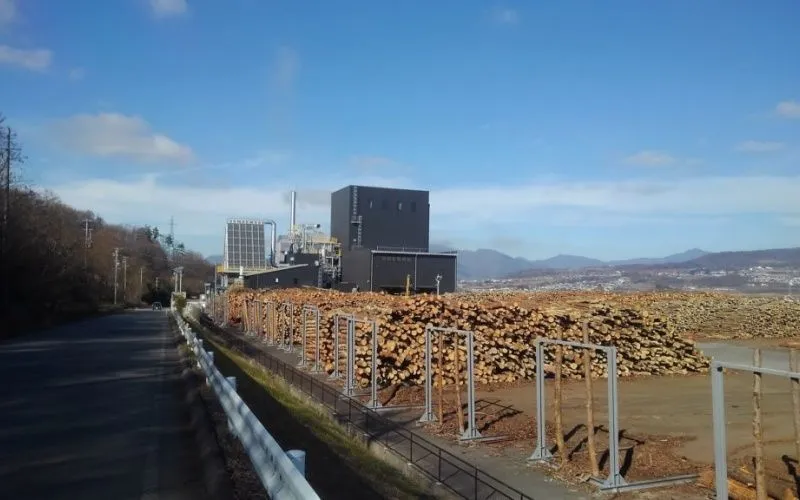
● Design
biomass Pellet Plant Design
Based on your unique situation and industrial process, we will tailor complete pellet plant you need, and inform you of every additional detail that could facilitate operation, minimize total cost.

● Manufacturing
Equipment Manufacturing
The critical components of the of the complete pellet production line equipment are built in our own workshops in Asia. Additional equipment is manufactured by our worldwide network of reliable partners.

● Testing
Quality Inspection & Testing
Before leaving the factory, all equipment will be inspected by the quality inspection department. We can also provide customers with testing services from a single machine to a complete pellet plant system, and provide you with real actual data for “worry-free use.”

● Delivery
Equipment Delivery
In equipment boxing and packaging, we adopt professional packaging and modular solutions to ensure the safe and non-destructive delivery of pellet plant equipment.
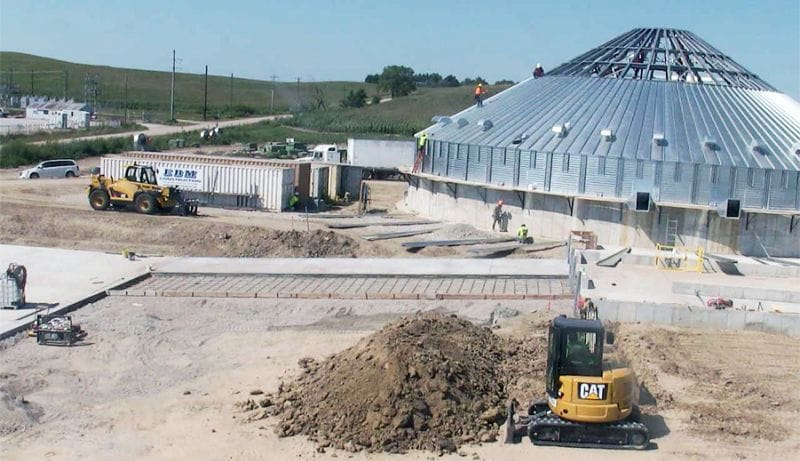
● Installation
Installation & Commissioning
Whether you choose your own subcontractor for the erection phase or you want to install everything together with us, a Richi supervisor will be around to make sure everything is mounted in a safe and thorough way.

● Training
Staff Training
We provide comprehensive training for the technicians of each project. We can also continue to provide support for the technicians during latter project operation.
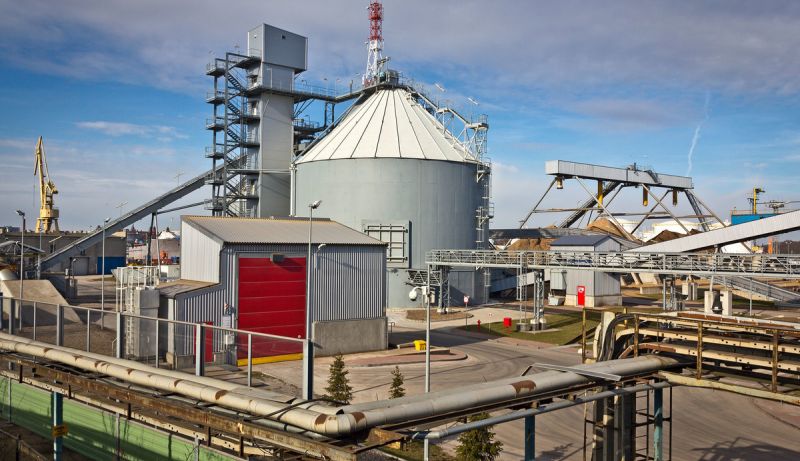
● After-sales
Project Follow-Up
When everything is up and running our Richiers will help you further whenever needed. We are ready to answer your call 24/7.We’ll also visit you regularly to learn about your needs.
Who we are
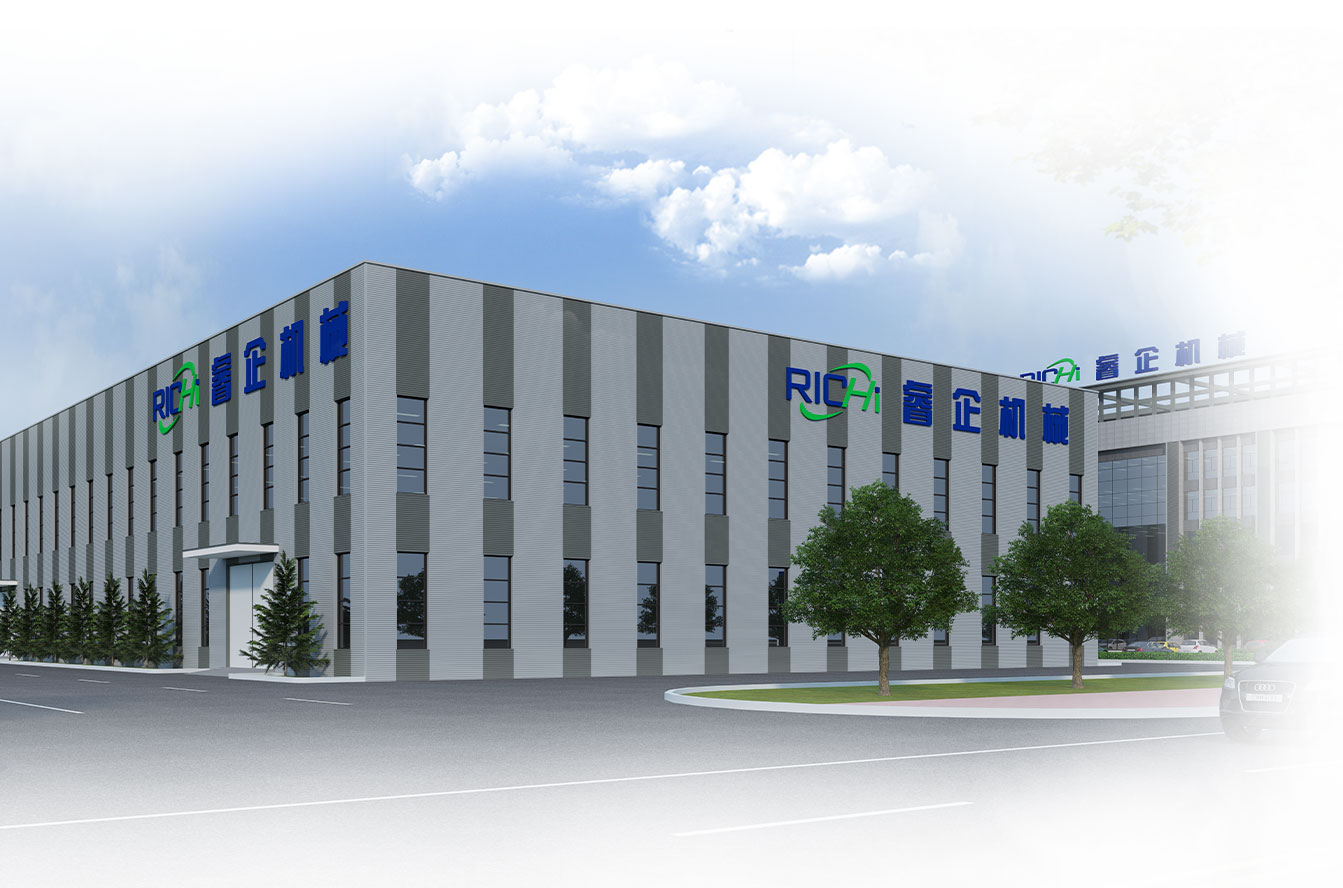
RICHI Machinery is one of the world’s leading suppliers of technology and services for the animal feed, aqua feed and pet food industries, also the largest pellet production line manufacturer in China.
Since 1995, RICHI’s vision to build a first-class enterprise, to foster first-class employees, and to make first-class contributions to society has never wavered.
In the past three decades, we have expanded our business to a wide range of areas, including animal feed mill equipment, aqua feed equipment, pet feed equipment, biomass pellet equipment, fertilizer equipment, cat litter equipment, municipal solid waste pellets equipment, etc.

1995
RICHI Established

2000+
Serving More Than 2000 Customers

120+
RICHI Employees

140+
Exported To 140 Countries