

 0086-138 3838 9622
Poultry Pig and Dairy Feed Mill in Russia
20 T/H multi-species feed mill for poultry pig and dairy cattle feed production
RICHI MACHINERY
A Multi-Species Feed Mill Built Around One Raw Material Platform
This poultry pig and dairy feed mill in Russia was developed for an integrated agricultural company managing crop procurement together with poultry, pig and dairy operations. Instead of operating separate small mills for each livestock business, the customer selected a common 20 T/H feed-processing platform that could share grain receiving, cleaning, grinding, batching and mixing while changing formulas, pellet sizes and downstream processing according to the animal group being supplied.
The completed project is planned for approximately 80000 tons of compound feed per year. That annual output leaves enough production time for formula changes, cleaning, die replacement, maintenance and the lower throughput that can occur with some high-fiber cattle formulas. It also gives the customer reserve hourly capacity during seasonal periods when poultry or pig feed demand rises, without forcing the factory to operate continuously at its nominal 20 T/H rating.
20 T/H
capacity
80000 T/A
annual output
Russia
location
Feed
project type
Producing three feed families in one factory changes the engineering priorities. Poultry starter feed may need crumbling, grower and finisher diets require controlled pellet production, pig formulas use their own grinding and conditioning settings, while dairy concentrate can be produced as mash or pellets and may contain a higher proportion of fibrous ingredients. The project therefore relies on flexible routing and recipe management rather than treating every ton of feed as an identical product.
RICHI MACHINERY
Why the Client Chose Centralized Feed Production
The customer operates at a scale where feed is not simply another purchased farm input. Grain procurement, formulation control, feed availability and delivery scheduling directly influence the performance of several livestock businesses. A centralized animal feed mill plant gives the group one controlled route from incoming grain inspection to finished-feed dispatch while retaining different recipes and production settings for poultry, pigs and dairy cattle.
- Crop-to-feed integration: wheat, barley and other approved grains can move from company or contracted supply into controlled storage and feed production.
- Multi-species scheduling: poultry, pig and dairy formulas are arranged in production campaigns to reduce unnecessary changeovers and carryover.
- Quality control: incoming materials, formula authorization, micro-ingredient addition and finished-feed lots are managed through one production system.
- Production resilience: parallel capacity at critical processing stages allows maintenance to be scheduled with less disruption to farm feed supply.
- Commercial flexibility: surplus production capacity can support regional feed sales when internal livestock demand does not occupy the full production schedule.
This operating model is particularly useful for a vertically integrated agricultural business because it connects grain purchasing decisions with actual feed demand. The customer can plan storage, formulations and production campaigns around livestock requirements instead of maintaining excessive stocks of finished feed for each species.
RICHI MACHINERY
Raw Materials Matched to Russian Feed Production
The raw-material system is centered on wheat and barley, with maize used according to formula and procurement conditions. Protein ingredients include sunflower meal and soybean meal, while wheat bran and other approved milling by-products can be incorporated into suitable pig or cattle formulas. Vegetable oil, calcium sources, salt, amino acids and vitamin-mineral premixes are stored and dosed separately. This ingredient mix gives the poultry pig and dairy feed mill in Russia enough flexibility to use regional grain and oilseed-processing resources without locking every product into one formulation.
| Raw Material Group | Typical Role | Storage and Handling | Production Consideration |
|---|---|---|---|
| Wheat | Main energy grain | Bulk silo storage | Cleaned and ground according to formula |
| Barley | Energy and fiber source | Separate bulk storage | Use varies between pig and cattle formulas |
| Maize | Energy ingredient | Dedicated silo or grain cell | Included according to nutrition and procurement plan |
| Sunflower Meal | Protein and fiber source | Enclosed bulk or warehouse storage | Relevant to Russian oilseed-processing supply |
| Soybean Meal | Concentrated protein source | Dry enclosed storage | Formula-dependent inclusion |
| Wheat Bran | Fibrous feed ingredient | Dedicated bin | Useful in selected pig and dairy formulations |
| Vegetable Oil | Energy and formulation adjustment | Insulated tank system | Winter viscosity and transfer temperature considered |
| Premix and Minerals | Micro ingredients | Dry controlled storage | Separate weighing and traceability required |
Incoming grain is inspected before release to production, with moisture, foreign material and relevant quality risks checked according to the customer’s acceptance program. Storage capacity is based on procurement cycles and required stock days rather than an oversized annual-consumption figure. This keeps silo investment proportionate while giving the business enough inventory to manage seasonal grain purchasing and winter logistics.
RICHI MACHINERY
One Process Platform With Different Product Routes
The processing line shares receiving, cleaning, grinding, batching and mixing equipment where this is technically appropriate, then changes downstream routing according to the feed being produced. The distinction is important: poultry starter crumble, pig pellets and dairy concentrate do not need identical physical processing. The control system therefore combines recipe management with equipment-route selection so each production campaign uses the required grinding, conditioning, pelleting and post-processing settings.
- Receiving and cleaning: bulk grain enters through the truck intake and passes through pre-cleaning, aspiration and magnetic separation before silo storage. Meals and bagged ingredients use separate receiving routes.
- Grinding: released grain is processed through the hammer mill feed grinder. Screen size and operating parameters are changed according to formula instead of applying one particle-size target to all three animal groups.
- Batching and micro-dosing: major ingredients are weighed from formula bins while premixes, minerals, amino acids and other low-inclusion materials are handled through a separate micro-ingredient system.
- Mixing and liquid addition: weighed materials enter high-capacity mixers. Oil and other approved liquids are metered according to recipe, with mixing time and sequence selected to achieve consistent distribution.
- Conditioning and pelleting: products requiring pellets are steam-conditioned before entering the ring die pellet machine section. Conditioning settings and die specifications change with formula and required pellet size.
- Cooling, crumbling and screening: pellets are cooled before screening. Poultry starter products can be routed through the crumbler, while pig and other pellet products bypass it when crumbling is not required.
- Finished-feed dispatch: feed is directed to the appropriate finished-product bin before bulk loading or bagging, with lot identification maintained through storage and dispatch.
Dairy concentrate adds another production consideration. Some cattle formulas contain more fibrous ingredients than cereal-rich poultry diets, which can reduce grinding or pelletizing throughput. The 20 T/H figure is therefore a plant design capacity rather than a promise that every formula will run at exactly the same hourly rate. Production planning accounts for the actual SKU mix and its processing characteristics.
RICHI MACHINERY
20 T/H Equipment Configuration
The equipment arrangement is built around balanced throughput rather than a large number of duplicated machines. Two grinding routes provide flexibility for different grain and particle-size requirements, while two pelleting trains share the required pelleted-feed duty. Dairy mash products can bypass the pellet section, leaving pellet capacity available for poultry and pig feed when the production schedule requires it.
| Process Stage | Equipment | Quantity | Design Function |
|---|---|---|---|
| Receiving | Truck receiving and conveying system | 2 routes | Separates major grain and meal receiving where required |
| Cleaning | Pre-cleaner and magnetic separator | 2 sets | Removes impurities before storage and grinding |
| Grinding | Hammer Mill Feed Grinder | 2 | Parallel grinding with screen selection by product |
| Batching | Macro ingredient weighing system | 2 | Supports batch cycle required for 20 T/H production |
| Micro Dosing | Micro-ingredient dosing system | 1 set | Premix minerals amino acids and additives |
| Mixing | SLHSJ-series feed mixer | 2 | Alternating batches maintain continuous downstream supply |
| Pelleting | SZLH-series pellet mill | 2 | Parallel pellet production for poultry and pig feed duty |
| Cooling | SKLN-series counterflow cooler | 2 | Matched to the two pelletizing routes |
| Crumbling | Feed crumbler | 1 | Starter and other selected poultry products |
| Screening | Rotary screener | 2 | Separates finished feed from fines |
| Liquid Addition | Oil storage and metering system | 1 set | Controlled liquid addition with winter protection |
| Packing | Automatic weighing and packing system | 2 | Supports different bagged feed products |
| Dust Control | Pulse-jet aspiration systems | By dust point | Receiving grinding batching transfer and packing control |
The final SZLH model selection is based on the proportion of poultry, pig and cattle products, pellet diameter, formula characteristics and required redundancy. This is more reliable than assigning one nominal pellet-mill capacity to every product. The same capacity-balance calculation is applied to coolers, screeners, elevators and conveyors so downstream handling does not restrict the pellet section.
RICHI MACHINERY
Site Layout and Winter Operating Design
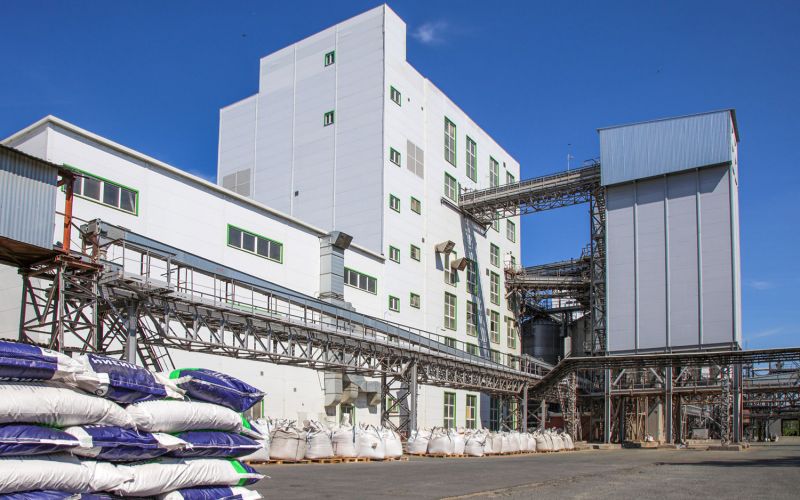
The feed mill is arranged as a compact industrial site rather than a sprawling grain complex. Bulk silos and truck receiving are positioned beside the process building, while bagged ingredients, micro ingredients and finished products use enclosed warehouse areas. Vertical material transfer reduces the building footprint, but sufficient platforms and maintenance clearances are retained around hammer mills, mixers, pellet mills, coolers and elevators.
- Bulk grain zone: receiving pits, cleaning equipment and silos arranged for truck access and seasonal grain intake.
- Main production building: grinding, batching, mixing, pelleting, cooling, crumbling and screening on coordinated operating levels.
- Ingredient warehouse: enclosed storage for meals, premixes, minerals and other moisture-sensitive materials.
- Finished-feed area: separate bulk and bagged dispatch routes according to the customer’s farm and commercial sales mix.
- Utility and maintenance area: electrical equipment, compressed air, steam support equipment, workshop and critical spare parts.
Russian winter conditions directly affect several parts of the design. The main production building and sensitive dosing areas are enclosed and insulated to maintain workable internal conditions. Water lines and steam-condensate routes receive appropriate freeze protection, while vegetable-oil tanks and transfer lines are insulated and provided with controlled heating where low temperature would make pumping unreliable. Outdoor conveyors are not automatically heated; protection is applied only where condensation, freezing or material behavior creates an actual operating requirement.
Air intake, roof loads, doors, truck access and drainage also need to suit the local site. The result is a poultry pig and dairy feed mill in Russia that remains serviceable during cold-weather operation without turning climate adaptation into unnecessary equipment cost.
RICHI MACHINERY
Power Steam Water and Plant Utilities
Electricity supplies grinding, batching, mixing, pelleting, cooling, screening, conveying, packing, aspiration and compressed-air systems. Rather than deriving consumption from a generic annual figure, the electrical design is based on the final motor schedule, simultaneous operating load and starting requirements of large drives. The plant uses three-phase industrial power with transformer and distribution capacity selected for the confirmed connected load plus a practical reserve.
| Utility | Main Use | Project Design Consideration |
|---|---|---|
| Electricity | Processing conveying aspiration and packing | Calculated from final motor list and simultaneous load |
| Steam | Feed conditioning before pelleting | Demand varies with formula and pelleted-feed output |
| Water | Steam make-up sanitation and domestic use | Feed production itself has limited direct water demand |
| Compressed Air | Pulse filters and pneumatic controls | Central system sized to actual installed consumers |
| Heating | Occupied and temperature-sensitive areas | Building-specific rather than heating the whole process indiscriminately |
Steam for conditioning can be supplied from the customer’s approved boiler or central thermal system. Fuel selection is confirmed against the actual site energy infrastructure and applicable requirements rather than assuming a particular fuel source. Condensate recovery is incorporated where technically and economically appropriate, while boiler-water treatment protects steam equipment and conditioning performance.
RICHI MACHINERY
Staffing Production Schedule and Quality Control
The plant is organized around approximately 25–30 employees across production, warehouse handling, quality control, maintenance and supervision, with administrative and procurement functions shared with the customer’s wider agricultural business where appropriate. Automation reduces manual weighing and repetitive material transfer, but a multi-species feed factory still requires trained people to manage raw-material approval, formula changes, production routing, maintenance, cleaning and finished-feed release.
Annual output of approximately 80000 tons can be achieved without forcing the factory into permanent 24-hour operation. The customer can use a two-shift schedule during normal production periods and adjust operating hours according to livestock demand, ingredient availability and maintenance planning. This gives the installed 20 T/H capacity enough reserve to absorb seasonal peaks while avoiding unnecessary staffing during lower-demand periods.
- Incoming inspection for grain meals premixes and other purchased ingredients.
- Recipe authorization and controlled batching before each production campaign.
- Process checks covering grinding mixing conditioning pelleting cooling and screening.
- Finished-feed sampling and lot identification before warehouse release.
- Cleaning and sequencing plans when switching between species or sensitive formulas.
RICHI MACHINERY
Dust Feed Safety and Environmental Control
Environmental measures are concentrated on the sources created by feed production. Receiving, cleaning, grinding, batching and packing points use enclosed transfer and local aspiration connected to pulse filters. High-noise machines are installed with appropriate isolation and enclosure measures, while dry housekeeping reduces accumulated dust around processing equipment. Process wastewater is limited because compound-feed manufacturing is predominantly dry, with water demand mainly associated with steam generation, sanitation and domestic use.
- Magnetic separation and pre-cleaning protect machinery and finished feed from foreign material.
- Dust collection is sized by actual aspiration points instead of applying one filter specification to the entire factory.
- Clean traceable process fines can return through the controlled production route where suitable.
- Rejected ingredients contaminated material and maintenance waste are segregated from usable feed materials.
- Fire protection housekeeping and safe maintenance access are incorporated into the final plant layout.
RICHI MACHINERY
Project Investment and Delivery Scope
The completed poultry pig and dairy feed mill in Russia represents an overall project investment of approximately USD 1.6 million, covering the principal feed-processing equipment, bulk handling and storage systems, electrical and automation works, utility interfaces, buildings, installation and commissioning associated with the project scope. The investment level reflects a 20 T/H multi-species factory rather than the cost structure of a much larger 60 T/H industrial complex.
RICHI Machinery’s work covers more than supplying an animal feed pellet mill. The project requires the complete material balance, process route, equipment selection and interface design to work together so that the customer’s three feed businesses can share infrastructure without losing the flexibility that makes centralized production worthwhile.
- Raw-material and finished-product requirement analysis.
- Process flow and 20 T/H capacity balance.
- Grinding batching mixing and pelleting equipment selection.
- Bulk storage conveying and finished-feed routing design.
- Winter operating and utility interface engineering.
- Electrical control recipe management and equipment interlocks.
- Manufacturing inspection and shipment preparation.
- Installation guidance commissioning and operator training.
The customer’s formula matrix remains central throughout detailed engineering. Pellet diameter, crumble ratio, mash-feed share, ingredient bulk density and annual tonnage by species all influence machine selection. This prevents the project from being sized only from a headline hourly capacity and gives the customer a production system that reflects what it actually intends to manufacture.
RICHI MACHINERY
Three Feed Businesses Supported by One Flexible Factory
The commercial value of this project comes from using common infrastructure where sharing makes sense and retaining separate production controls where feed requirements diverge. Grain receiving and storage do not need to be duplicated for every species, but poultry starter still needs a different downstream route from dairy mash. The same principle applies to grinding fineness, conditioning, pellet diameter, liquid addition and production sequencing.
With 20 T/H of installed capacity and an annual production plan of approximately 80000 tons, the poultry pig and dairy feed mill in Russia gives the agricultural group enough scale for centralized procurement and feed manufacturing without creating an unnecessarily oversized factory. Future growth can first be absorbed through longer operating hours and production scheduling before the customer needs another major processing line.
For a similar feed mill engineering project, RICHI can work from your annual poultry pig and cattle feed demand, formulas, raw-material list, pellet sizes, mash and crumble ratios, grain-storage requirements, available site area, winter temperature, electrical supply, steam conditions and packing requirements to develop the process, equipment configuration, layout and project quotation.
● RICHI MACHINERY
RICHI Service

● Consulting
Customer Consultation
We evaluate feed products, formulas, raw materials, capacity, site conditions and utilities before defining the production system.

● Design
Feed Mill Design
Process flow, equipment configuration, plant layout and utilities are matched to the customer’s real production plan.
● Manufacturing
Equipment Manufacturing
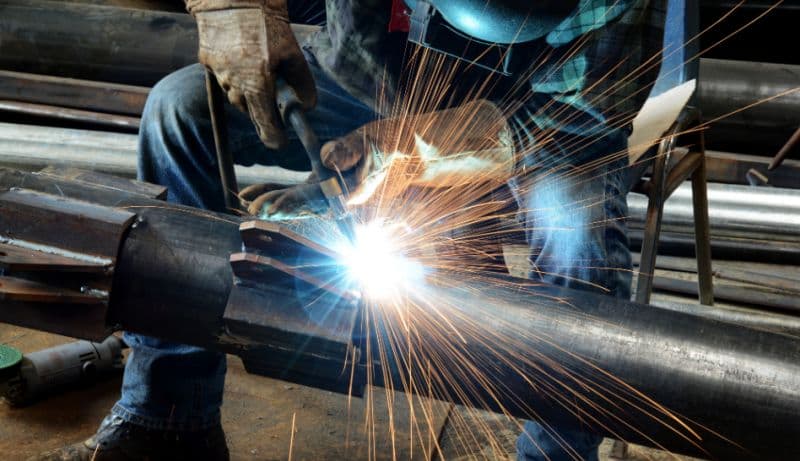
Main machines and supporting systems are manufactured around the confirmed capacity, process and project interface requirements.

● Testing
Quality Inspection & Testing
Equipment is inspected before shipment to check assembly, mechanical condition and applicable operating functions.


