 0086-138 3838 9622
Mixed Biomass Bedding Pellet Line in Croatia
RICHI MACHINERY
overview
The 4t/h mixed biomass bedding pellet line in Croatia came out of a very straightforward operational problem rather than a long-term investment plan. The client was already handling agricultural residues from nearby farmlands and small wood workshops, but most of the material was either sold loosely at very low margins or stored in conditions that caused seasonal losses.
The first conversation in February 2025 was not about pellet machines at all. It was more like a practical question from the client side: “Is there a way to stabilize this material so farms can actually use it directly instead of dealing with loose straw every time?”
That question slowly shaped the entire direction of this mixed biomass bedding pellet line in Croatia. Instead of designing for fuel pellets, the focus shifted toward bedding applications—something more sensitive to dust control, absorbency, and handling convenience.
By June 2025, the project had already moved from discussion into engineering layout. The final configuration became a 4t/h mixed biomass bedding pellet line in Croatia, running on a relatively simple but stable process route, designed for continuous production with minimal downtime.
4T/H
capacity
Croatia
investment
Croatia
location
Bedding
project type
RICHI MACHINERY
Project Background
Croatia has a mixed agricultural structure. In some regions, crop farming dominates, while in others small livestock farms are more active. During early discussions, one detail stood out:
- Straw is available, but not centralized
- Wood residues come from scattered small workshops
- Transportation cost is often higher than material value
That combination usually leads to the same situation—low-value biomass piling up with no stable downstream use.
At first, the client considered selling raw straw bundles. That model worked only during harvest peaks. After that, pricing dropped sharply, sometimes below transport cost.
So the discussion naturally shifted toward processing.
Not fuel. Not industrial biomass power.
But something simpler:
bedding pellets that farms can store, transport, and use directly.
That was the turning point for this 4t/h mixed biomass bedding pellet line in Croatia.
RICHI MACHINERY
Raw Materials – Practical Supply Reality
One thing that influenced the final design was how inconsistent the raw materials actually were. Theoretical composition looks simple on paper, but in real operation it varies a lot.
Some batches were dry straw. Some had higher moisture after rain. Wood sawdust also changed depending on the processing source.
Raw Material Configuration
| Material Type | Annual Usage (t) | Max Storage (t) | Source |
|---|---|---|---|
| Wheat & corn straw | 8000 | 1000 | Local farms |
| Wood sawdust | 2000 | 200 | Small wood workshops |
During trial mixing, a few practical observations were recorded:
- Straw fiber length needed pre-crushing below 5mm for stable feeding
- Too much sawdust improved binding but reduced absorbency slightly
- Moisture variation required buffer storage instead of direct feeding
The final mixing ratio was not fixed by formula alone. It was adjusted after several pilot runs inside the workshop, especially during the commissioning stage.
RICHI MACHINERY
Product Definition – Bedding Pellet Logic
The most important decision in this mixed biomass bedding pellet line in Croatia was to clearly separate it from fuel pellet thinking.
Fuel pellets aim for calorific value.
Bedding pellets behave differently.
In field use, farmers care about:
- how fast it absorbs moisture
- whether it generates dust
- how easily it breaks down after use
- storage stability in barns
So the product design followed these requirements directly.
Final Product Specification
| Product Name | Annual Output (t) | Moisture | Diameter | Length |
|---|---|---|---|---|
| Biomass bedding pellets | 10,000 | 8%–12% | 6–8 mm | 10–20 mm |
One small issue appeared during early testing: overly dry straw produced more fines during compression. That was corrected by adjusting feeding stability and improving blending uniformity before pelletizing.
RICHI MACHINERY
Equipment Configuration – 4t/h Mixed Biomass Bedding Pellet Line in Croatia
The biomass pellet plant equipment layout was designed with one principle in mind: avoid unnecessary complexity, keep flow stable.
Instead of overloading the system with advanced modules, the focus was on consistent feeding, crushing stability, and dust control.
Main Equipment List
| Equipment Name | Quantity |
|---|---|
| Multi-function crusher | 2 sets |
| Pellet machine | 4 sets |
| Belt conveyor system | 8 sets |
| Screw feeder bin | 6 sets |
| Dust collection system | 6 sets |
| Induced draft fan | 6 sets |
| Electrical control unit | 6 sets |
During installation, one practical issue appeared:
Material bridging inside the feed bin during high-moisture straw batches.
The solution was not redesigning the whole system, but slightly adjusting:
- inlet angle of feeding section
- vibration support on hopper bottom
- airflow balance in crushing zone
Small adjustments, but they made the system stable enough for continuous operation.
RICHI MACHINERY
Process Flow – How the Line Actually Runs
The process of this 4t/h mixed biomass bedding pellet line in Croatia is relatively straightforward, but each stage was tuned based on real material behavior rather than theoretical design.
- Raw material receiving
- Straw and sawdust are stored separately
- Initial inspection removes oversized or wet material
- Crushing stage
- Straw is reduced to below 5mm fiber length
- Ensures stable feeding into pellet machine
- Mixing stage
- Wood sawdust blended with straw
- Ratio adjusted depending on fiber condition
- Pelletizing stage
- Mechanical compression through biomass pellet mill system
- No binders or additives used
- Cooling & stabilization
- Natural cooling after extrusion
- Prevents cracking and improves durability
- Packaging & storage
- Finished pellets transferred via conveyor system
- Stored in finished product warehouse
RICHI MACHINERY
Production Capacity and Operation Conditions
- Installed capacity: 4t/h
- Annual production: 10,000 tons
- Working days: 300 days/year
- Working mode: single shift, 8 hours/day
- Total electricity consumption: approx. 240,000 kWh/year
- Water usage: 300 m³/year (mainly cleaning and domestic use)
The biomass pellet production line was intentionally designed for stable mid-scale operation rather than high-pressure continuous industrial output. This reduces maintenance frequency and improves long-term operational consistency.
RICHI MACHINERY
Project Timeline (Croatia Case)
- February 2025 – Initial inquiry and raw material discussion
- March 2025 – Site survey and preliminary layout planning
- April 2025 – Process confirmation (bedding pellet direction finalized)
- June 2025 – Contract signed and production planning completed
- August 2025 – Equipment manufacturing and shipment from Qingdao Port
- September 2025 – Installation and commissioning on site
RICHI MACHINERY
Logistics Note
All equipment for this 4t/h mixed biomass bedding pellet line in Croatia was shipped via Qingdao Port. Sea freight was selected due to stable scheduling and cost efficiency for full-line equipment transport.
RICHI MACHINERY
Engineering Observations from Commissioning
During trial operation, a few real-world points stood out:
- Straw behavior changes significantly with storage time
- Even small moisture differences affect pellet density
- Blending consistency matters more than crusher power
- Operators adapt quickly, but feeding stability is critical in the first week
One technician on site mentioned something quite practical:
“The machine itself is not complicated. The real challenge is keeping the raw material consistent.”
That statement actually reflects most biomass bedding projects.
RICHI MACHINERY
Market Potential in Croatia – Practical View
The demand for bedding materials in Croatia is gradually shifting. Traditional loose straw is still widely used, but larger farms are slowly moving toward processed bedding due to:
- lower labor demand
- easier storage
- cleaner barn environment
- reduced waste handling cost
In this context, a 4t/h mixed biomass bedding pellet line in Croatia sits in a relatively stable niche. It is not speculative. It is tied directly to agricultural consumption behavior.
Another factor is logistics. Croatia’s agricultural zones are distributed, which makes centralized processing more efficient than raw material transport.
RICHI MACHINERY
Engineering Perspective on Investment Value
From a manufacturing point of view, this type of project is not about chasing high complexity. It is about matching:
- raw material variability
- local consumption habits
- simple but stable process design
That is where most successful bedding pellet projects actually come from.
RICHI’s role in this 4t/h mixed biomass bedding pellet line in Croatia was not limited to equipment supply. It included:
- process design based on raw material testing
- layout planning inside existing workshop structure
- full equipment manufacturing
- on-site installation guidance
- operator training during commissioning
RICHI MACHINERY
Final Technical Reflection
Looking at this 4t/h mixed biomass bedding pellet line in Croatia, the interesting part is not the machinery itself, but how the system adapts to material inconsistency.
Straw is not a stable industrial input. Sawdust is not always uniform. But when these two are managed correctly, they form a surprisingly stable bedding product.
And that is usually what decides whether a biomass pellet project stays experimental—or becomes a long-term production system.
● RICHI MACHINERY
RICHI Service

● Consulting
Customer Consultation
We want to have a deep understanding of your industrial process, to know your exact needs of feed, wood, biomass, fertilizer or other pellet processing.
● Design
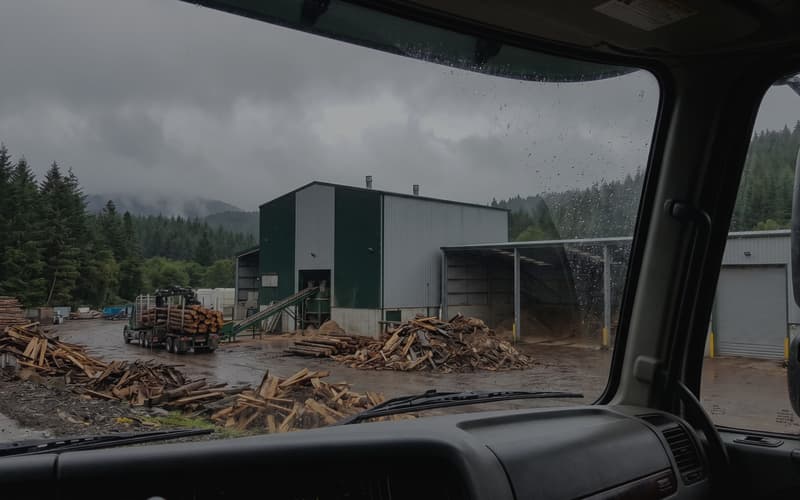
biomass Pellet Plant Design
Based on your unique situation and industrial process, we will tailor complete pellet plant you need, and inform you of every additional detail that could facilitate operation, minimize total cost.
● Manufacturing
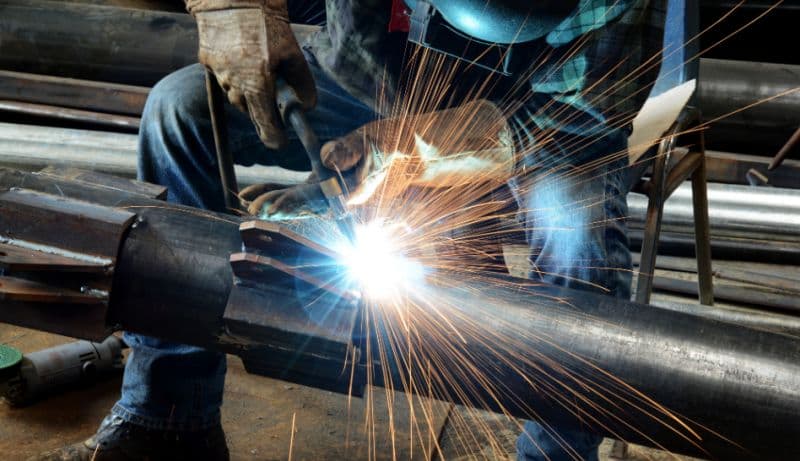
Equipment Manufacturing
The critical components of the of the complete pellet production line equipment are built in our own workshops in Asia. Additional equipment is manufactured by our worldwide network of reliable partners.

● Testing
Quality Inspection & Testing
Before leaving the factory, all equipment will be inspected by the quality inspection department. We can also provide customers with testing services from a single machine to a complete pellet plant system, and provide you with real actual data for “worry-free use.”

● Delivery
Equipment Delivery
In equipment boxing and packaging, we adopt professional packaging and modular solutions to ensure the safe and non-destructive delivery of pellet plant equipment.
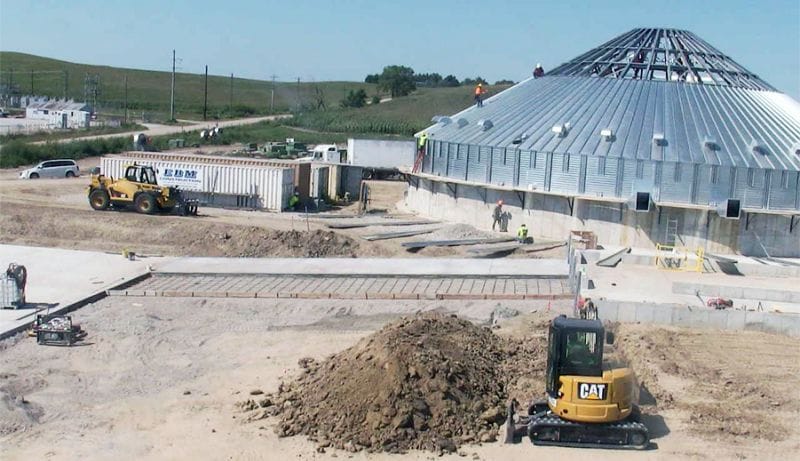
● Installation
Installation & Commissioning
Whether you choose your own subcontractor for the erection phase or you want to install everything together with us, a Richi supervisor will be around to make sure everything is mounted in a safe and thorough way.

● Training
Staff Training
We provide comprehensive training for the technicians of each project. We can also continue to provide support for the technicians during latter project operation.
● After-sales
Project Follow-Up
When everything is up and running our Richiers will help you further whenever needed. We are ready to answer your call 24/7.We’ll also visit you regularly to learn about your needs.
Who we are
RICHI Machinery is one of the world’s leading suppliers of technology and services for the animal feed, aqua feed and pet food industries, also the largest pellet production line manufacturer in China.
Since 1995, RICHI’s vision to build a first-class enterprise, to foster first-class employees, and to make first-class contributions to society has never wavered.
In the past three decades, we have expanded our business to a wide range of areas, including animal feed mill equipment, aqua feed equipment, pet feed equipment, biomass pellet equipment, fertilizer equipment, cat litter equipment, municipal solid waste pellets equipment, etc.

1995
RICHI Established

2000+
Serving More Than 2000 Customers

120+
RICHI Employees

140+
Exported To 140 Countries