 0086-138 3838 9622
Furniture Sawdust Pellet Plant in Ecuador

RICHI MACHINERY
10000 T/A Furniture Wood Residue Project in Cuenca
This furniture sawdust pellet plant in Ecuador was built for a private investor in Cuenca who wanted to convert clean residues from furniture and woodworking businesses into a consistent industrial fuel. The project does not depend on harvesting roundwood specifically for pellet production.
Its main feedstock is dry furniture sawdust and planer shavings, supported by selected untreated solid-wood offcuts that can be reduced before fine grinding. The completed line has a design capacity of 3–4 T/H and an annual finished-pellet target of 10000 tonnes.
The annual production plan is based on about 300 operating days and roughly 3000 effective line-hours rather than an unrealistic assumption that 3–4 T/H equipment can make 10000 tonnes in only 2400 hours. An average output of about 3.3 T/H across those effective hours reaches the annual target while leaving practical room for die service, cleaning, lubrication, supplier changes and routine stoppages.
Production hours can be arranged through the customer’s normal roster with supplemental operating periods when orders require them, rather than treating a 10-hour shift as a fixed labor rule.
The completed project investment is USD 380,000. The customer reused a suitable industrial property instead of building an oversized new complex, and the principal raw material is normally dry enough to avoid a permanent full-scale thermal dryer.
Capital was therefore directed toward receiving, impurity removal, selective size reduction, two pellet mills, cooling, screening, dust collection, conveying, packing, electrical control and the installation work needed to place the line into commercial operation. This keeps the wood pellet plant construction scope aligned with the actual feedstock and output.
3–4 T/H
capacity
$380,000
investment
Ecuador
location
Biofuel
project type
RICHI MACHINERY
Why Cuenca Works for This Project
Cuenca has a recognized wood-furniture manufacturing base, which gives this project a more specific feedstock logic than a generic biomass plant. The customer organizes supply from several furniture and woodworking businesses instead of assuming that one neighboring factory can provide the entire annual requirement.
This spreads procurement risk and gives the plant access to sawdust, shavings and clean offcuts generated from wood that has already passed through furniture-production drying and machining. The business model still treats residue as a contracted input; it does not assume that sawdust will remain permanently free.
The commercial advantage is lower preparation demand when clean dry residue is available close to the factory. Fine sawdust can bypass coarse crushing, planer shavings need only fine size reduction, and larger offcuts follow a separate crushing route before entering the hammer mill. That reduces unnecessary electricity and wear without removing equipment needed for stable pellet quality.
Industrial buyers remain the main market focus, but each buyer must qualify pellet dimensions, moisture, ash behavior, packaging and delivery according to its own combustion and fuel-handling system instead of relying on a generic fuel-price comparison.
| Project Factor | Design Basis | Project Effect |
|---|---|---|
| Feedstock cluster | Furniture and woodworking businesses in Cuenca and nearby areas | Creates several potential residue suppliers instead of one source |
| Material condition | Predominantly dry clean sawdust and shavings | Avoids a permanent full-size dryer under the current supply plan |
| Additional feedstock | Untreated solid-wood offcuts | Adds supply after selective crushing and grinding |
| Finished product | Industrial wood fuel pellets | Specification is agreed with qualified heat users |
| Logistics | Regional supplier collection and road delivery to buyers | Keeps the project focused on manageable inland transport distances |
RICHI MACHINERY
Raw Materials and Supplier Acceptance
The raw-material plan for the furniture sawdust pellet plant in Ecuador is built around clean untreated solid wood. Furniture sawdust forms the largest share, with planer shavings and selected offcuts used to improve supply continuity. Sanding residues are accepted only when they come from verified solid-wood processing and are not mixed with coatings, engineered-board dust or other contaminants.
Painted wood, preservative-treated timber, unsuitable MDF or particleboard residues, laminated material and mixed demolition wood are excluded because resins, coatings and additives can alter ash characteristics and combustion emissions.
| Raw Material | Typical Condition | Processing Decision |
|---|---|---|
| Furniture sawdust | Fine, loose and generally dry | Screening and magnetic separation; suitable material can bypass coarse crushing |
| Planer shavings | Dry and low-density | Fine grinding before pelletizing |
| Clean wood offcuts | Irregular pieces | Coarse crushing followed by hammer milling |
| Clean sanding residues | Very fine and dusty | Controlled blending after supplier verification |
Incoming moisture is checked by lot rather than assumed from the supplier’s description. Residue from kiln-dried furniture wood can often arrive around 8–14% moisture, but transport, uncovered storage and rainy periods can move individual batches above the preferred range.
Material that is clearly too wet is segregated instead of being pushed through the pellet mills with aggressive parameter changes. This receiving discipline is what makes a dryer-free wood pellet processing plant practical under the current feedstock plan.
Annual as-received demand is planned above the 10000-tonne finished output because incoming moisture and normal handling or screening losses prevent a one-to-one conversion from delivered residue to saleable pellets. A practical purchasing plan is roughly 10500–11500 tonnes of qualified dry wood residue per year, subject to the measured moisture and production yield.
The customer therefore keeps several suppliers active and maintains buffer inventory based on delivery frequency rather than storing an excessive share of annual consumption at one time.
RICHI MACHINERY
Complete Process for Dry Furniture Residues
The process is kept in one coordinated route: receiving and inspection → screening and magnetic separation → selective coarse crushing → fine grinding where required → buffer storage and controlled feeding → pelletizing → counterflow cooling → screening and fines return → weighing and packing → finished-product storage. Fine sawdust that already meets the size requirement does not pass through a crusher.
Planer shavings enter the hammer mill, while larger untreated offcuts are reduced first so that the fine grinder receives material within its intended feed size. Local aspiration is applied at the main dust points to keep the preparation area cleaner and reduce uncontrolled airborne fines.
Prepared material is collected in a buffer system before pelletizing so short fluctuations in grinding or receiving do not immediately disturb the pellet mills. Two MZLH520 units form the core of the wood pellet production line. Each has a 132 kW main motor and a typical biomass capacity basis of 1.5–2 T/H, giving a combined nominal range of 3–4 T/H.
Feed rate, die compression ratio and roller setting are finalized with the customer’s actual wood mix during commissioning. The plant normally targets 6–8 mm fuel pellets, while the exact diameter is confirmed with the buyer and selected through the ring-die specification.
Pellets leave the ring die pellet machine hot and are transferred directly to a counterflow cooler. Mechanical cooling stabilizes temperature and moisture before the material reaches the screen, which is more reliable than spreading commercial volumes across a floor. The screen removes loose fines after cooling, and clean recoverable fines return to the process through the designed recycle route.
Qualified pellets are weighed into 25–50 kg bags as the standard retail or small-industrial format, while jumbo-bag or bulk handling can be used for larger buyers when their receiving system supports it.
- Inspect incoming residue for moisture, contaminants and physical form before unloading into the assigned storage area.
- Route only oversized clean offcuts through coarse crushing; allow suitable sawdust to bypass unnecessary size reduction.
- Grind shavings and coarse prepared wood to the particle distribution required for stable pelletizing.
- Feed the two MZLH520 pellet mills through a controlled buffer, then cool and screen pellets before storage.
- Return qualified clean fines to production and pack the accepted finished product by lot for dispatch.
RICHI MACHINERY
Equipment Configuration for 3–4 T/H
The equipment list is based on the percentage of material that actually requires each preparation step. This is important because furniture sawdust may arrive ready for fine conditioning, whereas planer shavings and offcuts need more work.
The pelletizing, cooling and screening sections are sized for the full finished-product flow, but the crusher and wood pellet hammer mill are selected for their real duty rather than oversized to the nominal plant capacity. The result is a compact system without removing the protection and quality-control equipment required for commercial operation.
| Equipment | Qty | Project Basis | Function |
|---|---|---|---|
| Receiving screen and magnetic separation | 1 set | Matched to supplier unloading | Removes oversize impurities and ferrous contamination |
| Wood crusher | 1 | Selected for offcut fraction | Reduces clean large offcuts before fine grinding |
| SFSP-series hammer mill | 1 | Duty-matched | Processes shavings and prepared coarse material |
| Buffer and feeding system | 1 set | Variable feed control | Stabilizes flow to the pellet mills |
| MZLH520 biomass pellet mill | 2 | 132 kW each; 1.5–2 T/H each | Combined 3–4 T/H pelletizing capacity |
| Counterflow pellet cooler machine | 1 | Matched to total pellet output | Reduces pellet temperature before screening |
| Pellet screener | 1 | 3–4 T/H basis | Separates fines from qualified product |
| Dust collection system | 1 set | Multi-point aspiration | Controls grinding and transfer dust |
| Semi-automatic packing system | 1 set | 25–50 kg standard bags | Weighs and packs finished pellets |
| Conveying and control system | 1 set | Project-specific | Connects preparation, pelletizing, cooling and packing |
Two wood pellet mills also give the owner more operating flexibility than one unit carrying the entire production duty. During planned die or roller work, one machine can be isolated while the second remains available for commissioning checks, limited production or maintenance sequencing.
The arrangement does not mean the plant must run both machines at maximum output continuously; it provides the installed capacity needed to achieve the annual target while accommodating the interruptions that occur in a real one-line factory.
RICHI MACHINERY
Factory Layout Utilities and Staffing
The customer uses a compact industrial property instead of a large sawmill-style yard. A practical total site is about 1500–2200 m², with roughly 900–1200 m² enclosed for raw-material staging, preparation, pelletizing, packing and finished-product storage. The remaining area supports truck movement, loading, fire access and utilities.
Because loose sawdust and shavings occupy much more volume than finished pellets, raw-material storage is sized from supplier delivery frequency and required buffer days rather than annual tonnage alone. The wood pellet production plant follows a mainly one-directional material flow so receiving traffic does not repeatedly cross finished-product dispatch.
| Area | Planning Basis | Main Function |
|---|---|---|
| Raw-material receiving and storage | 250–350 m² | Separate sawdust, shavings and offcuts by condition |
| Preparation and buffering | 180–250 m² | Screening, magnets, crushing, grinding and buffer bins |
| Pelletizing, cooling and screening | 250–350 m² | Two MZLH520 units and downstream product stabilization |
| Packing and finished-product storage | 250–350 m² | Bagging, pallet staging and dispatch inventory |
| Electrical, maintenance and control | 80–120 m² | Control cabinets, tools, spare parts and maintenance functions |
The plant is electrically driven. The two 132 kW MZLH520 main motors are the largest individual load group, followed by grinding, aspiration, cooling, screening and conveying. Ecuador’s power system operates at 60 Hz, but the plant’s service voltage, transformer and protection arrangement are confirmed from the local connection conditions and final motor list rather than copied from another country.
Annual kWh is also not treated as a fixed design fact: it depends on actual production hours, how much material bypasses grinding and the simultaneous operating load. Process water use is low because there is no washing or continuous wet-processing step; water is mainly needed for staff, cleaning, fire protection and minor conditioning adjustment if commissioning shows it is necessary.
A lean core team of about five production personnel can operate the line during an active production period because conveying and pellet handling are mechanized. Roles cover line supervision, material handling, production operation, packing and warehouse work, plus flexible maintenance or quality duties. Administration, sales, transport and specialist electrical work do not all need to sit permanently on the line payroll.
The customer can organize supplemental production hours or overlapping coverage when annual orders require more than a standard daily shift, keeping labor aligned with actual utilization instead of building a large permanent workforce around the nameplate capacity.
RICHI MACHINERY
Finished Pellets and Commercial Acceptance
The project is configured for industrial wood fuel pellets rather than claiming a premium certification grade before the producer has completed the required testing or certification process. A typical diameter range is 6–8 mm, with length commonly controlled around 15–35 mm through the cutter setting. Finished moisture is normally kept within the range agreed with the buyer and verified before dispatch.
Ash, calorific value, bulk density and mechanical durability are not published as invented project facts; they are measured from representative production because wood species, contamination, bark content and operating parameters all influence the result.
| Parameter | Project Basis | Control Method |
|---|---|---|
| Pellet diameter | 6–8 mm typical | Selected by ring-die specification |
| Pellet length | Approx. 15–35 mm | Adjusted by cutter setting |
| Finished moisture | Typically ≤10–12% | Verified by representative sampling |
| Ash | Based on the actual clean-wood blend | Laboratory testing |
| Mechanical durability | Buyer or contract specification | Agreed test method |
| Calorific value | Declared from tested production | Representative fuel analysis |
The wood pellet manufacturing plant can supply small industrial bags, jumbo bags or bulk product depending on the buyer’s receiving system. Commercial pricing is contract-based and must include the actual packaging format, freight distance and annual volume. Buyers are encouraged to compare delivered useful heat rather than only price per tonne, because boiler efficiency, fuel feeding, ash handling and storage can materially change the real operating cost of a fuel switch.
For this reason, the customer does not depend on unsupported claims about Ecuador’s pellet-market size or a fixed national selling price. The sales plan starts with industrial and commercial heat users that can qualify the product in their own combustion equipment.
Consistent supplier control, lot-based production records and verified fuel analysis become part of the commercial proposition, which is more valuable to repeat buyers than publishing an assumed density or heating value that may not match the wood mix actually supplied.
RICHI MACHINERY
Environmental and Operating Risk Control
The environmental scope is deliberately compact because this is a dry-residue project without a permanent dryer or process boiler. The main production issue is wood dust around screening, grinding, transfer, cooling and screening points. Enclosed transfer where practical, local aspiration and pulse filtration are therefore integrated into the line, while clean collected fines can return to production when they remain within the feedstock specification.
Equipment foundations and enclosed workshop construction help limit mechanical noise, and housekeeping reduces both dust accumulation and fire risk. There is no continuous process-wastewater stream; domestic wastewater, stormwater and maintenance waste are handled separately according to the site arrangements.
- Keep clean wood residues separated from painted, treated and engineered-board waste.
- Use local aspiration and dust filtration at grinding, transfer, cooling and screening points.
- Return only clean traceable fines to production and remove contaminated waste from the feedstock stream.
- Maintain clear fire access, housekeeping and routine inspection around dry-residue storage and processing areas.
RICHI MACHINERY
USD 380000 Project Investment and Delivery Scope
The completed furniture sawdust pellet plant in Ecuador represents a total project investment of USD 380,000. The figure is appropriate to a 3–4 T/H dry-residue route because the project avoids the large rotary dryer, hot-air furnace and thermal-fuel handling systems required by wet-wood plants while still retaining the equipment that protects commercial operation.
Investment covers the pellet production equipment and the supporting electrical, conveying, dust-control, installation and site-integration scope needed to make the factory operable. Reusing a suitable industrial building also keeps civil construction proportionate to the size of the business.
The main cost-saving decisions are process decisions rather than simple equipment deletion. Fine sawdust bypasses coarse crushing, shavings use the wood pellet hammer mill only when needed, and the project omits a full dryer because the approved supplier base is built around relatively dry furniture residues.
Mechanical cooling, screening, magnetic separation and dust control remain in the line because removing them would shift cost into product instability, manual handling or maintenance. That balance is the central engineering logic behind the compact wood pellet making line.
Project execution follows a practical sequence: process and layout confirmation, equipment manufacturing, shipment, inland delivery to Cuenca, mechanical installation, electrical connection, no-load inspection, material commissioning and operator training. Imported project equipment can enter Ecuador through the Port of Guayaquil before inland transport to the site.
The exact calendar depends on building readiness, utility connection and shipment timing, so the case does not invent a historical completion date that is not supported by the project information.
Commissioning uses the customer’s actual residues rather than one theoretical sawdust recipe. Technicians check feeding stability, grinding demand, moisture, pellet-mill amperage, die and roller settings, cooler airflow, screening performance and bagging accuracy. Operators are trained to recognize how a change in supplier, shavings content or moisture can alter line behavior.
Space can also be reserved for future moisture-control equipment if the customer later begins accepting wetter feedstock, while additional operating hours can be used before another pelletizing line is considered.
RICHI MACHINERY
Engineering a Similar Dry Sawdust Pellet Project
The value of this project is not simply that it uses two pellet mills. It is that the processing route starts from the residue the customer can actually collect. A project dominated by wet sawmill chips would require a different moisture balance and probably a dryer; a business receiving mostly large offcuts would need heavier size reduction; and an export-oriented plant might need different finished-product testing, storage and packaging.
The same annual output therefore does not automatically justify the same equipment list. RICHI uses the monthly feedstock volume, moisture range, material form, buyer specification, available power and building geometry to determine what the wood granulator machine system really needs.
For customers evaluating a similar biomass pellet project, the most useful starting data are monthly sawdust and shavings volume, largest offcut size, incoming moisture by supplier, wood types, planned annual pellet sales, required diameter, packaging method, building drawing and available electrical connection.
Those figures allow RICHI to calculate the real mass balance, grinding duty, pelletizing capacity, storage requirement and connected load instead of applying a generic wood-pellet factory package.
If you are planning a furniture sawdust pellet plant in Ecuador, RICHI Machinery can provide feedstock evaluation, process design, equipment configuration, layout engineering, manufacturing, installation guidance, commissioning and operator training.
The project can also be reviewed for later changes such as wetter residues, larger supplier radius, jumbo-bag handling or longer operating hours. The aim is to make the first-stage factory commercially useful without closing off practical expansion routes as the customer’s supplier network and pellet sales develop.
A well-designed fuel pellet plant should convert a real residue problem into a controlled fuel product without adding process stages simply because they appear in another project. In Cuenca, relatively dry furniture residues make a compact route possible.
The customer’s investment is therefore concentrated where it changes production reliability and product quality: clean feedstock acceptance, correct particle preparation, stable pelletizing, mechanical cooling, screening, dust management and disciplined finished-product handling.
● RICHI MACHINERY
RICHI Service

● Consulting
Customer Consultation
We review your raw materials, target products, capacity, site conditions and operating requirements before defining the pellet-processing solution.
● Design
Biomass Pellet Plant Design
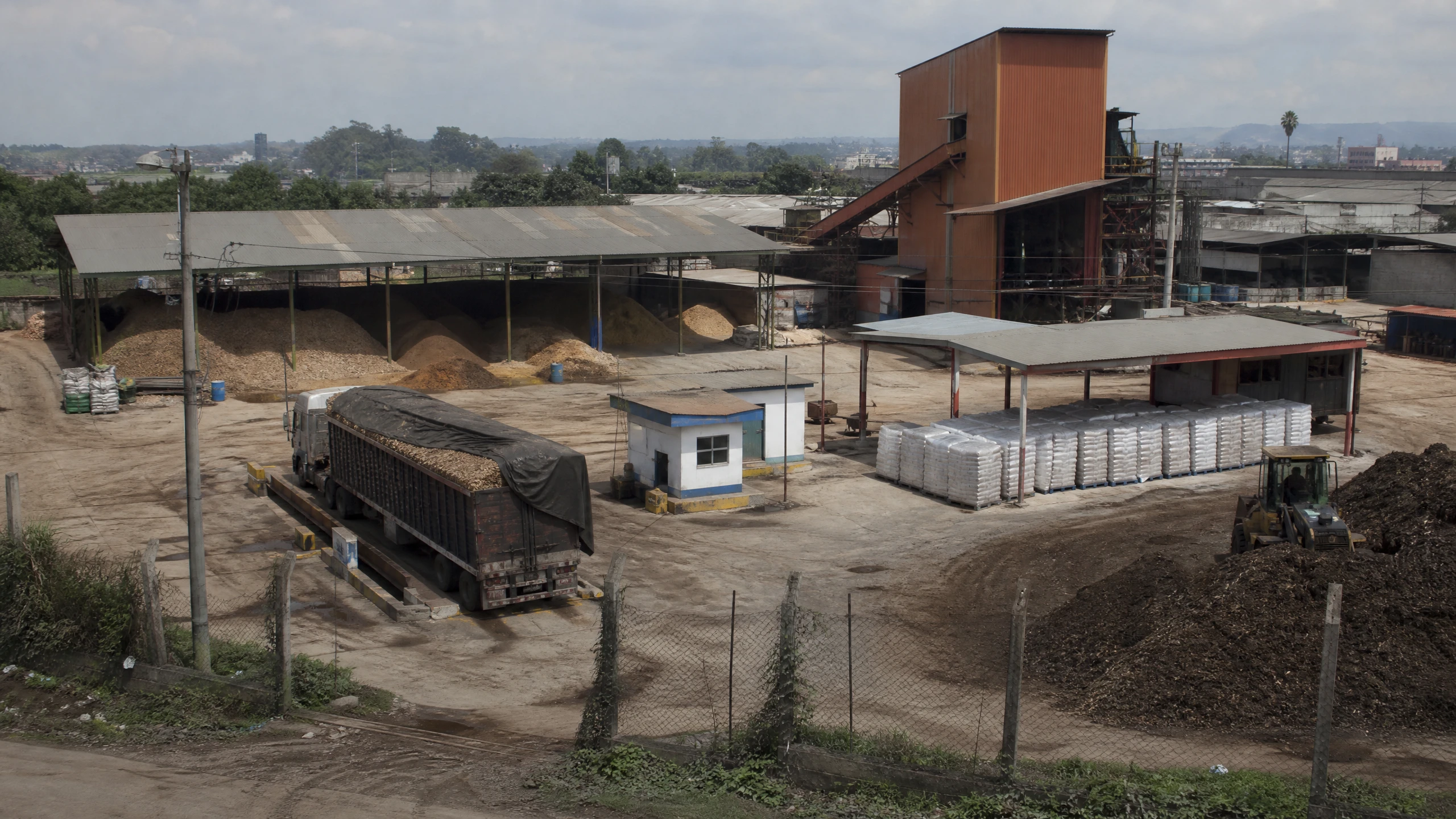
Based on the confirmed feedstock, capacity and site conditions, we develop the process flow, equipment configuration and layout needed for reliable operation and controlled project cost.
● Manufacturing
Equipment Manufacturing
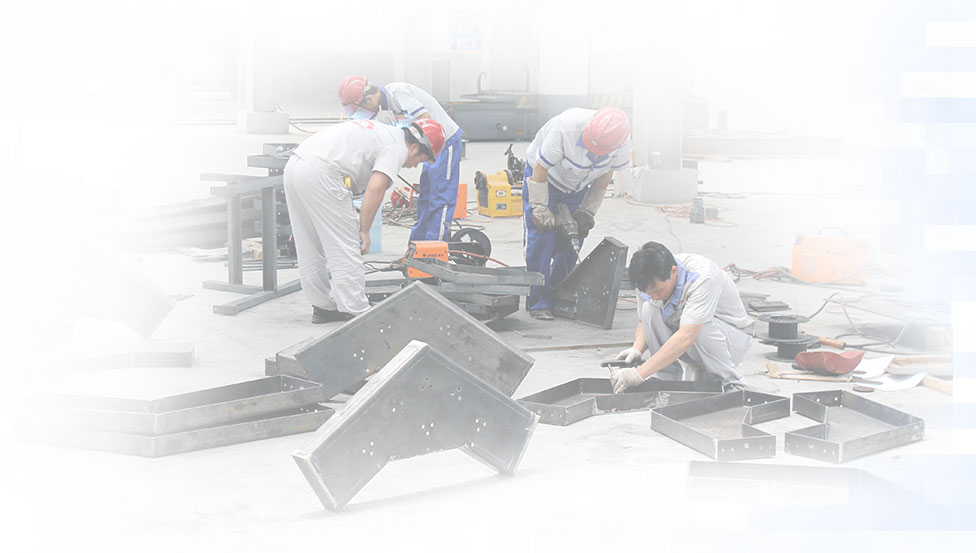
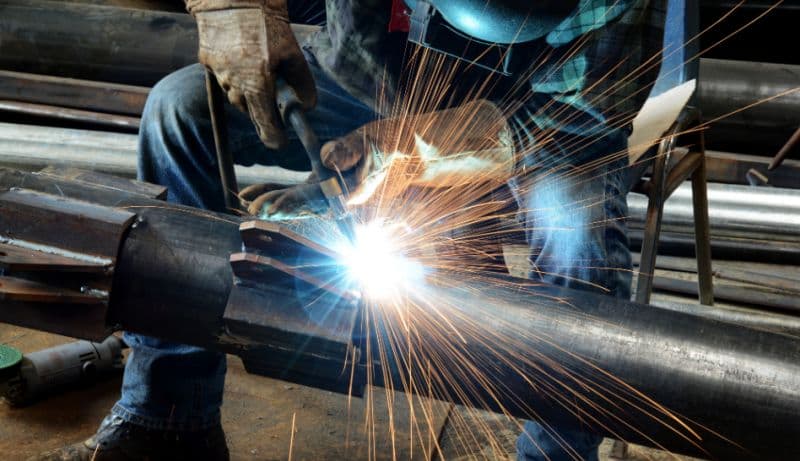
Critical pellet-line components are manufactured and inspected in our own workshops, while selected supporting equipment is sourced through qualified manufacturing partners.

● Testing
Quality Inspection & Testing
Before shipment, equipment is inspected according to the confirmed project requirements. Individual machines and complete process sections can also be tested where the project scope requires it.

● Delivery
Equipment Delivery
Equipment is packed according to its dimensions, transport conditions and installation sequence to protect key components and simplify handling at the project site.
● Installation
Installation & Commissioning
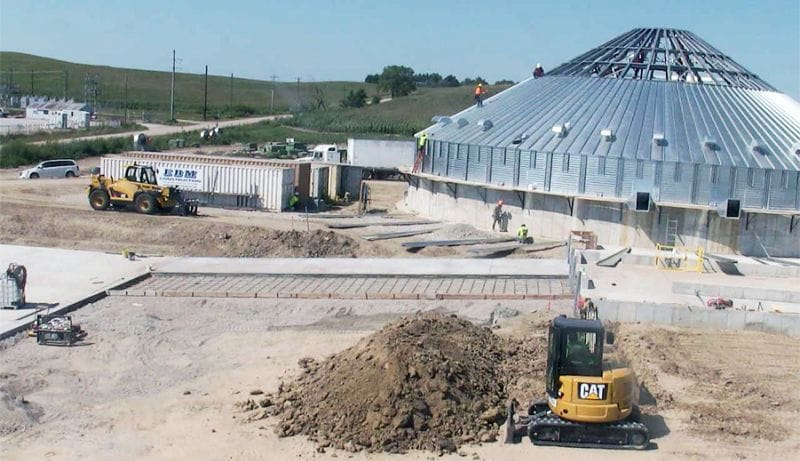
RICHI provides installation guidance and commissioning support so mechanical, electrical and process systems can be checked before stable production begins.

● Training
Staff Training
Operators receive practical training covering start-up, shutdown, adjustment, routine inspection, maintenance points and coordination of the complete production line.
● After-sales
Project Follow-Up
Technical support continues after commissioning, including operating questions, maintenance planning, spare parts and future production-line adjustments.
Who we are
RICHI Machinery provides equipment, engineering and project services for animal feed, aqua feed, pet food, biomass pellets, fertilizer, cat litter and other pellet-processing applications.
Since 1995, RICHI has focused on developing complete pellet-processing systems for customers with different raw materials, capacities and site conditions.
Over the past three decades, our project capabilities have expanded across animal feed mill equipment, aqua feed equipment, pet feed equipment, biomass pellet equipment, fertilizer equipment, cat litter equipment, municipal solid waste pellets equipment, etc.

1995
RICHI Established

2000+
Serving More Than 2000 Customers

120+
RICHI Employees

140+
Exported To 140 Countries