 0086-138 3838 9622
Dairy Feed Factory in Uzbekistan
RICHI MACHINERY
overview
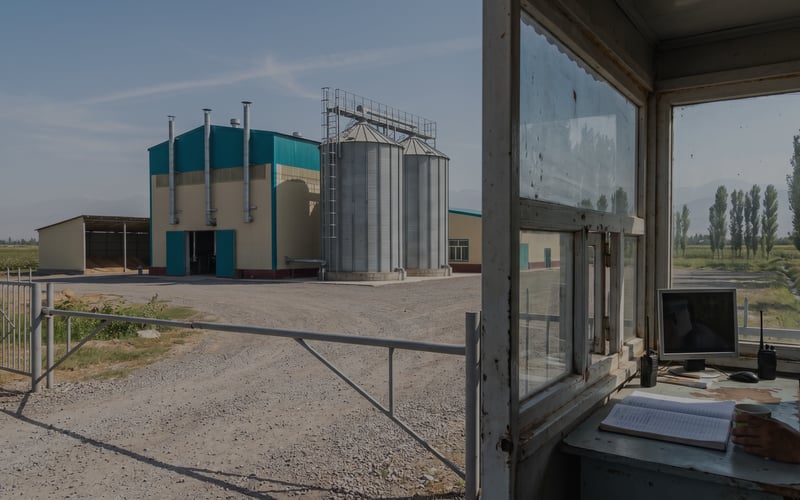
20T/H dairy feed factory in Uzbekistan — this project was designed as a full-scale feed pellet production line delivering 150,000 tons/year of dairy feed, including both concentrate and supplement feed for large-scale cattle farms.
The plant consists of two independent but interconnected production lines: one focused on dairy concentrate feed (25,000 t/year) and the other on dairy supplement feed (125,000 t/year). The facility integrates raw material storage, batching, grinding, mixing, pelleting, and packaging into a continuous, highly automated feed pellet plant system.
20T/H
capacity
100+
investment
Uzbekistan
location
Feed
project type
RICHI MACHINERY
Before the Project Even Started
When the client first contacted us in March 2024, the conversation didn’t begin with equipment—it started with a problem.
They were operating a mid-to-large dairy farming cluster in central Uzbekistan. Milk yield was stable, but feed costs were creeping up year after year. Most of their feed was sourced externally, and consistency was always an issue.
One sentence from their technical manager stuck with me:
“Sometimes the cows eat everything, sometimes they leave half. Same formula on paper, but not the same feed in reality.”
That’s usually a sign of poor mixing uniformity or inconsistent raw materials.
By May 2024, after several rounds of raw material analysis and layout discussions, the client decided to move forward with a 20t/h dairy feed factory in Uzbekistan, aiming to fully control feed quality and reduce long-term costs.
Contract was signed in July 2024.
RICHI MACHINERY
Why Uzbekistan for This Type of Feed Pellet Plant?
Uzbekistan has a growing dairy industry, but feed processing infrastructure is still uneven. Raw materials are available—corn, bran, soybean meal—but processing capacity is fragmented.
The client had access to:
- Local corn and DDGS
- Imported soybean derivatives
- Regional agro by-products
Instead of selling raw materials, they chose to upgrade into a value-added pelletizing line.
RICHI MACHINERY
Production Targets and Operation Plan
| Item | Value |
|---|---|
| Total capacity | 150,000 tons/year |
| Supplement feed | 125,000 tons/year |
| Concentrate feed | 25,000 tons/year |
| Daily operation | 300 days/year |
| Shift system | 3 shifts, 8 hours each |
| Total staff | 45 people |
RICHI MACHINERY
Raw Materials (Actual Annual Consumption)
The formulation is quite typical for dairy feed, but proportions were adjusted based on local availability.
| Raw Material | Annual Usage (tons) |
|---|---|
| Corn | 42,000 |
| DDGS | 21,000 |
| Soybean meal | 28,000 |
| Cottonseed meal | 14,000 |
| Palm meal | 700 |
| Corn germ meal | 1,150 |
| Wheat bran | 6,300 |
| Corn gluten meal | 6,000 |
| High-grade corn | 17,000 |
| Soybean cake | 13,000 |
| Extruded soybean | 1,000 |
| High-grade bran | 900 |
| Extruded soybean (standard) | 3,200 |
| Fat powder | 1,400 |
| Fermented soybean meal | 400 |
| Additives | 320 |
| Packaging materials | 320 |
One small detail we noticed during commissioning:
The DDGS moisture fluctuated more than expected. First few batches came out slightly uneven. We adjusted the grinding screen size and mixing time—problem solved within a day.
RICHI MACHINERY
Product Output
| Product | Output |
|---|---|
| Dairy supplement feed | 125,000 t/year |
| Dairy concentrate feed | 25,000 t/year |
These are mainly used for:
- High-yield dairy cows
- Nutritional balancing in large farms
- Stable protein-energy ratio feed
RICHI MACHINERY
How the Process Was Designed (Pellet Production Line Logic)
This 20t/h dairy feed factory in Uzbekistan follows a typical crushing–batching–mixing–pelleting system, but with some customization.
Process Flow (Simplified)
- Raw Material Intake
- Bulk materials stored in silos
- Bagged materials stored in warehouse
- Cleaning Section
- Pre-cleaner removes impurities
- Magnetic separator removes metal
- Grinding
- Hammer mills reduce particle size
- Separate grinding lines for different materials
- Batching
- Multiple batching bins (12–15 m³)
- Automatic weighing system (PCS-1000 / PCS-500)
- Mixing
- High-efficiency mixer ensures uniformity
- Liquid addition system included
- Pelleting
- Conditioning with steam
- Pelletizing through ring die cattle feed pellet machine system
- Cooling
- Counterflow cooler reduces temperature
- Packaging
- Automatic bagging machine and palletizing system
RICHI MACHINERY
Equipment Configuration
We simplified the list for readability, but all key units are included.
Workshop 1
| Equipment | Quantity |
|---|---|
| Feeding inlets | 3 |
| Pulse dust collectors | 6 |
| Elevators (various types) | 6 |
| Pre-cleaner | 1 |
| Magnetic separator | 1 |
| Hammer mill | 1 |
| Batching bins (15 m³) | 12 |
| Batching scale | 1 |
| Mixer | 1 |
| Packing scale | 1 |
| Bulk storage bins | 2 |
Workshop 2
| Equipment | Quantity |
|---|---|
| Feeding inlets | 3 |
| Dust collectors | 7 |
| Elevators | 6 |
| Cleaning screens | 2 |
| Magnetic separators | 2 |
| Hammer mills | 2 |
| Batching bins | 16 |
| Mixing system | 1 |
| Animal feed pellet mill | 1 |
| Cooler | 1 |
| Packing scales | 2 |
| Air compressor system | 1 |
| Automatic palletizer | 1 |
RICHI MACHINERY
Plant Layout and Construction Notes
Total land area: 91,102 m²
Building area: 17,744 m²
What mattered most in layout:
- Material flow without backtracking
- Separation of dusty and clean areas
- Space reserved for expansion (3,600+ m² warehouse)
We also grouped high-dust sections (grinding, packaging) together to simplify dust control.
RICHI MACHINERY
Utilities and Consumption
| Item | Value |
|---|---|
| Electricity | 1.57 million kWh/year |
| Water usage | 17.4 m³/day |
| Wastewater | 12.18 m³/day |
| Boiler | 2 × 2-ton biomass boilers |
Steam is used for conditioning before pelleting.
No open steam leakage—fully enclosed system.
RICHI MACHINERY
Timeline
| Stage | Time |
|---|---|
| Initial inquiry | March 2024 |
| Technical discussions | April–May 2024 |
| Contract signing | July 2024 |
| Equipment production | Aug–Nov 2024 |
| Shipment (Qingdao → Port of Tashkent via transit) | December 2024 |
| Installation | Jan–Feb 2025 |
| Commissioning | March 2025 |
RICHI MACHINERY
Investment Overview
| Item | Value |
|---|---|
| Equipment cost | ~$480,000 |
| Total project investment | ~$1.8 million |
| Annual revenue | ~$7.5 million |
| Payback period | ~2.5 years |
We deliberately kept equipment selection practical—not oversized, not over-automated.
RICHI MACHINERY
A Few Observations From Commissioning
- First 2 days: moisture control was tricky due to DDGS variation
- Pellet durability improved after adjusting conditioner retention time
- Workers adapted quickly to automated batching system
One operator told us:
“Before, we guessed. Now the machine tells us what to do.”
That’s usually when you know the system is working.
RICHI MACHINERY
Market Outlook in Uzbekistan
Dairy farming in Uzbekistan is expanding steadily. Feed demand is growing faster than supply, especially for high-quality pellet feed.
Key advantages for this type of animal feed factory project:
- Stable raw material availability
- Increasing demand for high-yield dairy cows
- Government support for agriculture modernization
A 20t/h dairy feed factory in Uzbekistan is not just a fully automatic cattle feed plant—it’s a strategic investment in the supply chain.
RICHI MACHINERY
Final Thoughts From Our Side
This cattle feed plant project wasn’t about selling a single machine. It was about building a complete pellet plant system that actually works day after day.
From layout design to installation, we stayed involved. That’s usually what makes the difference between “installed equipment” and “running factory.”
If you’re considering a similar feed pellet production line, it’s worth starting from your raw materials and production goals first. Equipment comes later.
We’ve seen too many cattle feed production line projects fail because they started the other way around.
● RICHI MACHINERY
RICHI Service

● Consulting
Customer Consultation
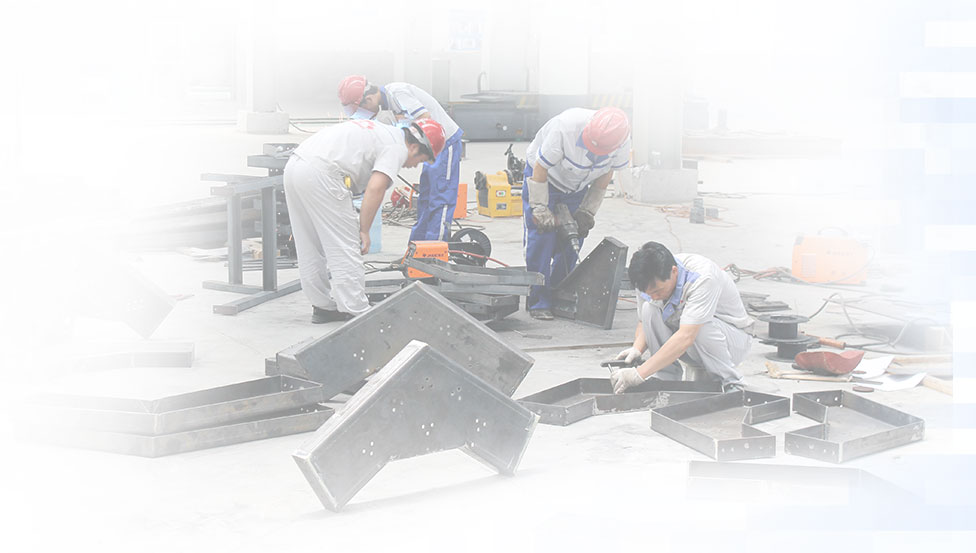
We want to have a deep understanding of your industrial process, to know your exact needs of feed, wood, biomass, fertilizer or other pellet processing.

● Design
feed Pellet Plant Design
Based on your unique situation and industrial process, we will tailor complete pellet plant you need, and inform you of every additional detail that could facilitate operation, minimize total cost.
● Manufacturing
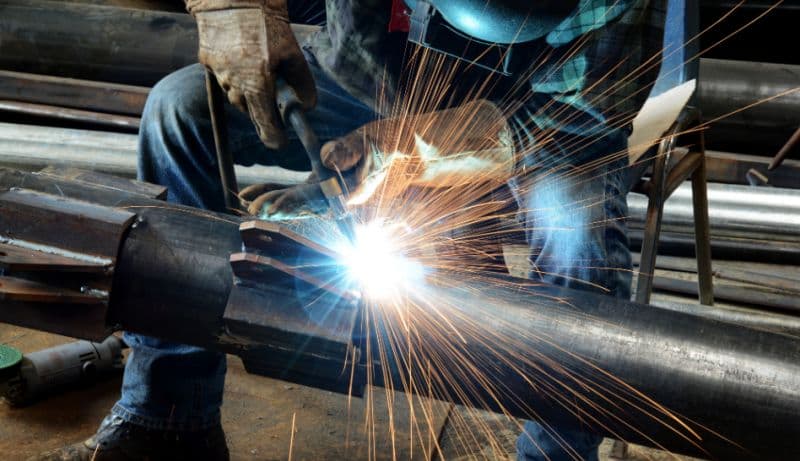
Equipment Manufacturing
The critical components of the of the complete pellet production line equipment are built in our own workshops in Asia. Additional equipment is manufactured by our worldwide network of reliable partners.
● Testing
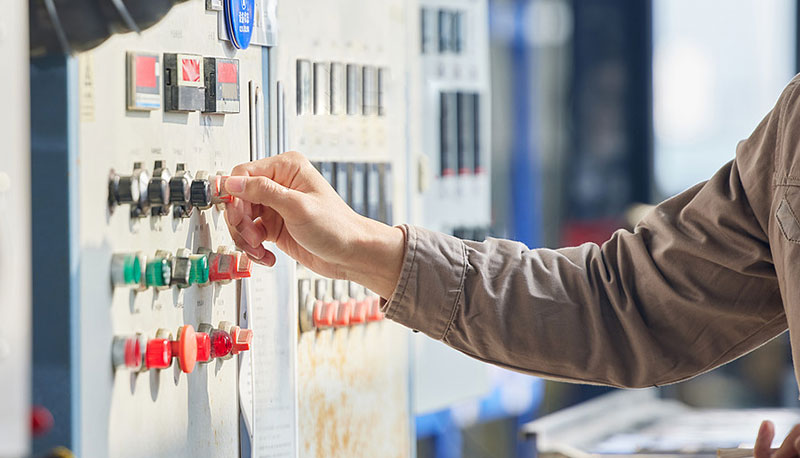
Quality Inspection & Testing
Before leaving the factory, all equipment will be inspected by the quality inspection department. We can also provide customers with testing services from a single machine to a complete pellet plant system, and provide you with real actual data for “worry-free use.”

● Delivery
Equipment Delivery
In equipment boxing and packaging, we adopt professional packaging and modular solutions to ensure the safe and non-destructive delivery of pellet plant equipment.
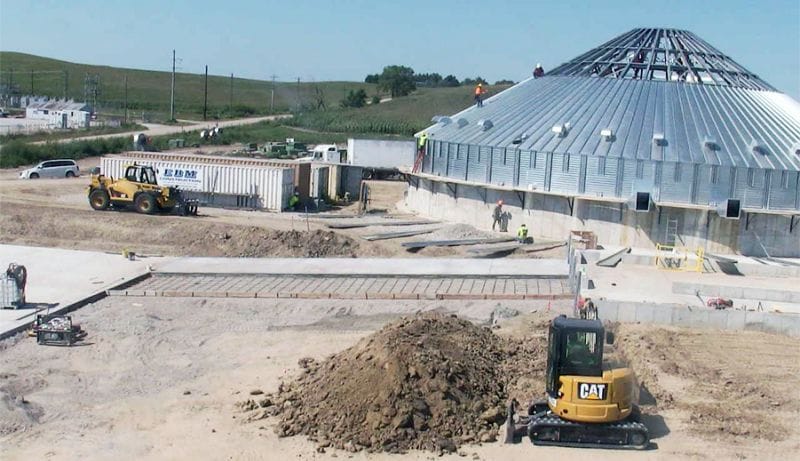
● Installation
Installation & Commissioning
Whether you choose your own subcontractor for the erection phase or you want to install everything together with us, a Richi supervisor will be around to make sure everything is mounted in a safe and thorough way.

● Training
Staff Training
We provide comprehensive training for the technicians of each project. We can also continue to provide support for the technicians during latter project operation.
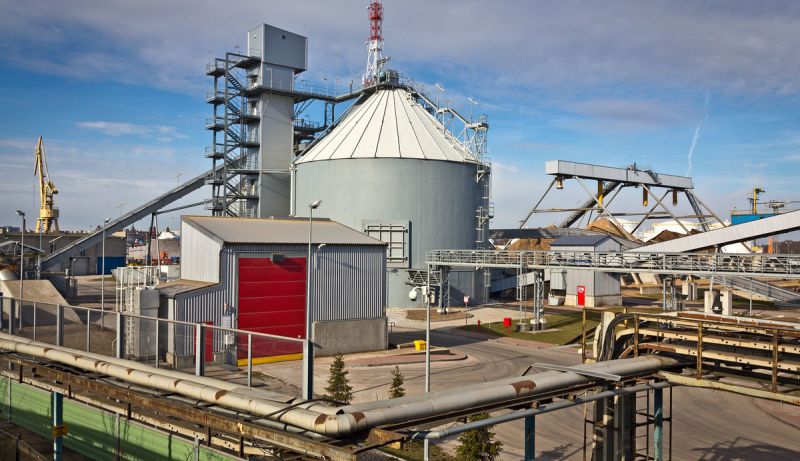
● After-sales
Project Follow-Up
When everything is up and running our Richiers will help you further whenever needed. We are ready to answer your call 24/7.We’ll also visit you regularly to learn about your needs.
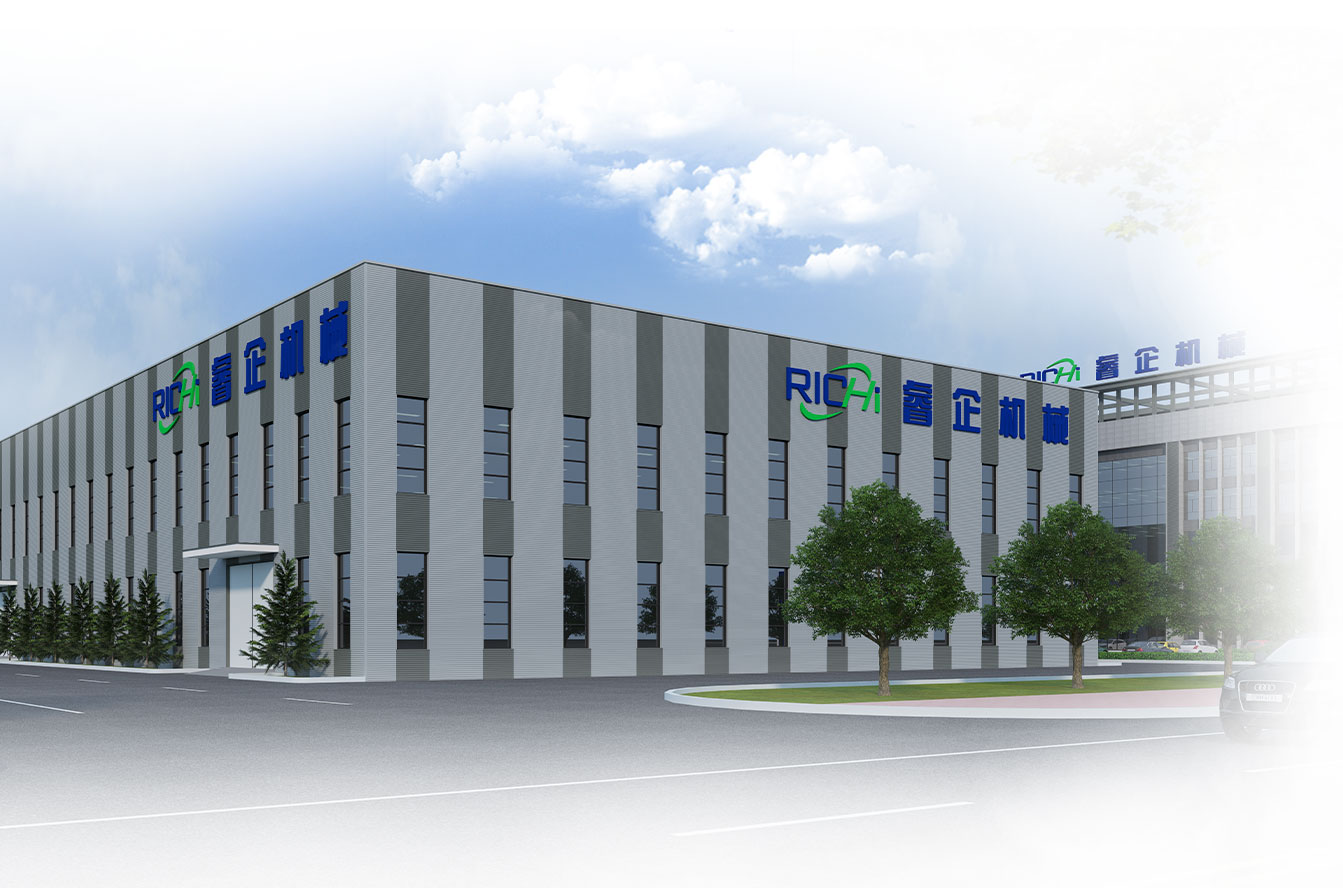
Who we are
RICHI Machinery is one of the world’s leading suppliers of technology and services for the animal feed, aqua feed and pet food industries, also the largest pellet production line manufacturer in China.
Since 1995, RICHI’s vision to build a first-class enterprise, to foster first-class employees, and to make first-class contributions to society has never wavered.
In the past three decades, we have expanded our business to a wide range of areas, including animal feed mill equipment, aqua feed equipment, pet feed equipment, biomass pellet equipment, fertilizer equipment, cat litter equipment, municipal solid waste pellets equipment, etc.

1995
RICHI Established

2000+
Serving More Than 2000 Customers

120+
RICHI Employees

140+
Exported To 140 Countries