 0086-138 3838 9622
Commercial Biomass Pellet Plant in Poland
RICHI MACHINERY
overview
As a professional manufacturer of feed equipment, pellet production systems, biomass pellet lines, organic fertilizer equipment and cat litter processing plants, RICHI Machinery has delivered dozens of medium-scale industrial pellet projects worldwide.
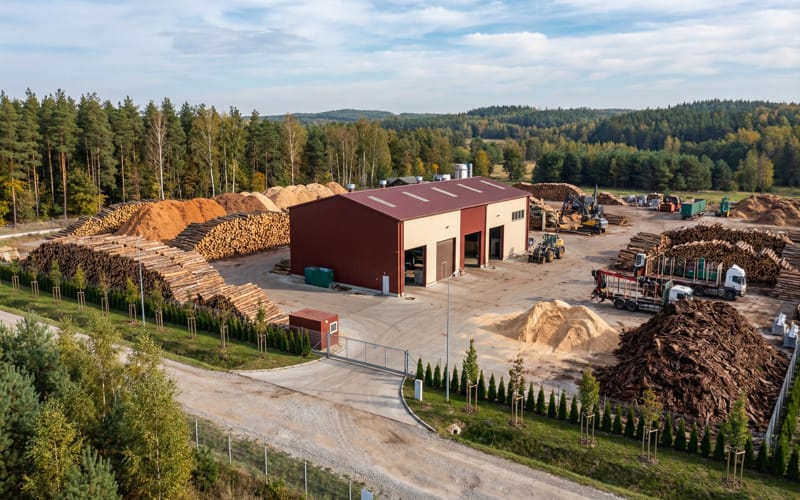
This case presents a commercial biomass pellet plant in Poland with a design capacity of 1.5–2 tons per hour and an annual output of 15,000 tons of solidified biomass fuel pellets.
The project is located in an industrial zone in eastern Poland, where agricultural residues and wood processing by-products are abundant. The customer invested approximately USD 720,000 in total, including equipment, installation, civil adjustment, environmental systems, and commissioning. The production line equipment supplied by RICHI accounted for approximately USD 310,000 of the total investment.
The plant operates 330 working days per year, in a two-shift system, with specific production scheduling optimized for local energy tariff policies and labor management:
- Crushing and grinding: 7:00–19:00
- Pelletizing: 24:00–6:00
- Screening: Continuous operation
- Total annual running hours: 7,920 hours
This commercial biomass pellet plant in Poland produces standardized biomass solid fuel pellets primarily for industrial boilers and district heating systems.
1.5–2T/H
capacity
USD 720,000
investment
Poland
location
Biofuel
project type
RICHI MACHINERY
Client Background
The investor is a mid-sized agricultural and wood processing entrepreneur operating in the Lublin region of Poland. The region is characterized by:
- High availability of straw from grain production
- Strong forestry and furniture industries generating wood residues
- Growing demand for renewable heating fuel due to EU decarbonization targets
Poland remains one of the largest biomass energy markets in Europe. With increasing coal phase-out pressure and rising fossil fuel prices, biomass pellet demand has steadily increased, particularly in rural heating networks and small industrial boilers.
The client previously operated a small-scale 9,000 t/year pellet facility. Due to market expansion and secured supply contracts with two regional heating companies, production capacity was expanded to 15,000 tons per year, forming a modernized commercial biomass pellet plant in Poland.
The goal of this biomass pellet project was:
- Increase annual output from 9,000 tons to 15,000 tons
- Improve dust collection efficiency
- Optimize material handling layout
- Enhance product consistency and screening accuracy
- Reduce energy consumption per ton
RICHI MACHINERY
Production Capacity and Product Scheme
The upgraded plant is designed as follows:
| No. | Production Line | Product Name | Capacity Before Expansion | Capacity After Expansion | Increase | Annual Operating Hours |
|---|---|---|---|---|---|---|
| 1 | Biomass Pellet Production Line | Biomass Solid Fuel Pellets | 9,000 tons/year | 15,000 tons/year | +6,000 tons | 7,920 hours |
Hourly capacity: 1.5–2 T/H
The product specification:
- Diameter: 6–8 mm
- Length: 20–30 mm
- Bulk density: 600–680 kg/m³
- Moisture content: ≤10%
- Application: Industrial boilers, district heating plants, commercial heating systems
RICHI MACHINERY
Raw Materials
In Poland, the project relies primarily on locally available agricultural residues and wood industry by-products. Due to strong grain production and furniture manufacturing industries, the raw material supply is stable year-round.
Raw Material Structure
| Raw Material | Annual Consumption (Tons) | Source | Average Moisture | Remarks |
|---|---|---|---|---|
| Straw | 202 | Local farms | 15–20% | Pre-crushed |
| Wood offcuts | 5,800 | Wood processing factories | 12–15% | Furniture scraps |
| Wood sawdust | 2,972 | Sawmills | 10–12% | Direct input |
Total annual raw material input matches the production output of 15,000 tons considering process losses and dust recovery.
The raw materials are delivered by truck and stored in designated storage areas within the facility.
RICHI MACHINERY
Plant Layout and Infrastructure
The factory occupies 2,308.8 m², including:
| Area | Floor Area (m²) | Function |
|---|---|---|
| Production workshop | 2,308.8 | Main production |
| Raw material storage | 100 | Northwest of workshop |
| Finished product warehouse | 200 | Northeast of workshop |
| General solid waste storage | 50 | Southeast |
| Hazardous waste storage | 5 | Southeast |
Material flow is arranged from west to east:
- Crushing
- Grinding
- Magnetic separation
- Screening
- Pelletizing
- Cooling & final screening
The layout ensures short internal logistics routes and smooth forklift movement.
RICHI MACHINERY
Utility Consumption
The commercial biomass pellet plant in Poland is connected to municipal utilities.
Water Supply
Annual water consumption: 300 m³/year
Used for:
- Domestic use (20 workers)
- Minor equipment cleaning
Wastewater
Domestic wastewater: 240 m³/year
Pretreated via septic tank before discharge into municipal sewage network in compliance with Polish industrial standards.
Power Supply
Annual electricity consumption: 400,000 kWh
Power supplied from the national grid.
RICHI MACHINERY
Main Equipment Configuration
The biomass pellet manufacturing plant supplied by RICHI includes the following equipment:
| No. | Equipment | Specification | Quantity |
|---|---|---|---|
| 1 | Crusher | 2 T/H | 1 |
| 2 | Grinder | 2 T/H | 1 |
| 3 | Magnetic separator shaft | 30 cm diameter, 1 m length | 1 |
| 4 | Vibrating screen | 2 T/H | 1 |
| 5 | Biomass Pellet Mill | 2 T/H | 4 (2 operating, 2 standby) |
| 6 | Industrial fan | 30 kW | 1 |
| 7 | Central dust collection system with bag filter | Custom | 1 |
| 8 | Bucket elevator | 2 T/H | Multiple |
| 9 | Cyclone | Matching capacity | 1 |
The pelletizing section uses two machines simultaneously, while two remain standby to ensure continuous operation and reduce downtime risk.
RICHI MACHINERY
Process Flow Description
The commercial biomass pellet plant in Poland adopts a conventional mechanical densification process, optimized for straw and wood mixtures.
Step 1: Raw Material Feeding
Raw materials are transported by forklift into the feeding hopper. Coarse straw is first pre-crushed to reduce fiber length.
Step 2: Crushing
Wood offcuts and large straw pieces enter the crusher, reducing size to <30 mm.
Step 3: Grinding
Material enters the grinder, reducing particle size to <5 mm suitable for pelletizing.
Step 4: Magnetic Separation
A magnetic shaft removes metal impurities, protecting downstream equipment.
Step 5: Screening
Material is sieved to remove oversized or unqualified particles.
Step 6: Pelletizing
Conditioned material is compressed under high pressure in ring die pellet machines. Friction generates heat (70–90°C), naturally binding lignin.
Step 7: Cooling and Final Screening
Pellets pass through cooling and screening units to remove fines before storage.
Step 8: Storage
Finished pellets are stored in a 200 m² warehouse before bulk dispatch.
RICHI MACHINERY
Environmental Protection Measures
The upgraded commercial biomass pellet plant in Poland incorporates improved environmental control systems.
Dust Control
- Central dust collection system
- Bag filter unit
- 15-meter exhaust stack
- Workshop ventilation fans
Total environmental investment: USD 85,000
Dust emission levels comply with Polish industrial emission standards.
Noise Control
- Low-noise equipment selection
- Foundation vibration damping
- Workshop sound insulation
Noise reduction: approximately 20 dB(A)
Solid Waste Management
| Waste Type | Treatment |
|---|---|
| Scrap metal | Sold to recyclers |
| Waste lubricating oil | Authorized disposal company |
| General solid waste | Stored in 50 m² warehouse |
RICHI MACHINERY
Market Outlook for Commercial Biomass Pellet Plant in Poland
Poland remains one of Europe’s strongest biomass markets due to:
- Coal transition policies
- EU renewable directives
- Rising natural gas prices
- Rural heating system upgrades
Straw and wood residue availability ensures stable feedstock supply.
A 15,000 t/year commercial biomass pellet plant in Poland is considered medium-scale and financially sustainable, especially with:
- Stable industrial contracts
- Controlled raw material sourcing
- Efficient dust recovery
ROI period is typically 2.5–3 years under stable pellet market prices.
Why RICHI Machinery
For this commercial biomass pellet plant in Poland, RICHI provided:
- Customized process engineering
- Complete equipment manufacturing
- Electrical control integration
- Installation supervision
- Commissioning and operator training
Our experience in feed, biomass, organic fertilizer and cat litter processing allows us to optimize each system for durability, energy efficiency and long-term stability.
The success of this biomass pellet project demonstrates that a properly designed 1.5–2 T/H pellet production line can achieve strong commercial returns without excessive capital investment.
For investors considering building a commercial biomass pellet plant in Poland or other European markets, RICHI Machinery provides cost-effective and technically reliable turnkey solutions.
● RICHI MACHINERY
RICHI Service

● Consulting
Customer Consultation
We want to have a deep understanding of your industrial process, to know your exact needs of feed, wood, biomass, fertilizer or other pellet processing.

● Design
biomass Pellet Plant Design
Based on your unique situation and industrial process, we will tailor complete pellet plant you need, and inform you of every additional detail that could facilitate operation, minimize total cost.
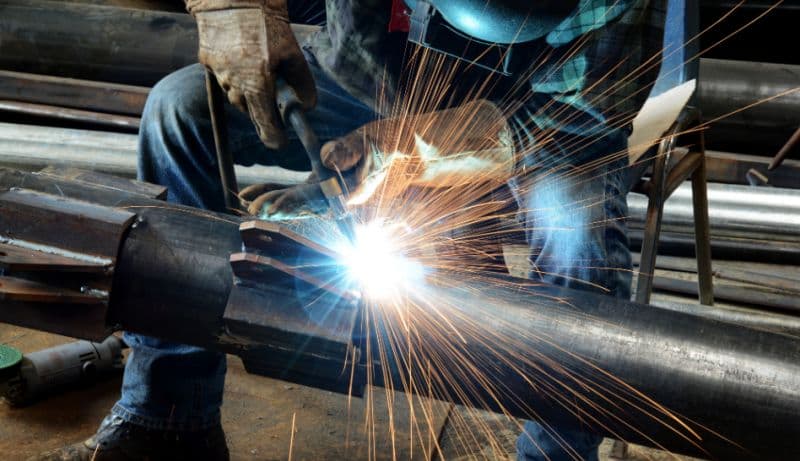
● Manufacturing
Equipment Manufacturing
The critical components of the of the complete pellet production line equipment are built in our own workshops in Asia. Additional equipment is manufactured by our worldwide network of reliable partners.
● Testing
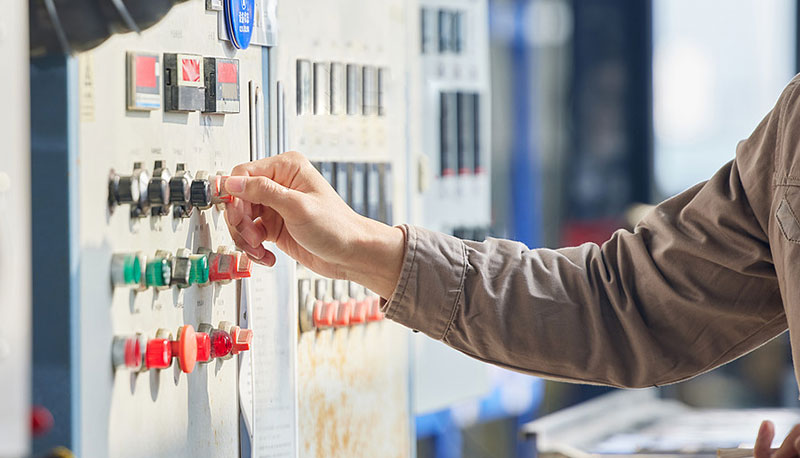
Quality Inspection & Testing
Before leaving the factory, all equipment will be inspected by the quality inspection department. We can also provide customers with testing services from a single machine to a complete pellet plant system, and provide you with real actual data for “worry-free use.”

● Delivery
Equipment Delivery
In equipment boxing and packaging, we adopt professional packaging and modular solutions to ensure the safe and non-destructive delivery of pellet plant equipment.
● Installation
Installation & Commissioning
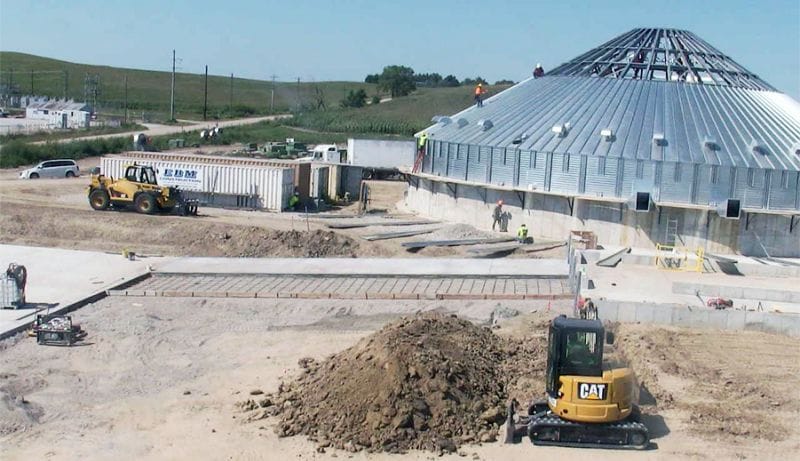
Whether you choose your own subcontractor for the erection phase or you want to install everything together with us, a Richi supervisor will be around to make sure everything is mounted in a safe and thorough way.

● Training
Staff Training
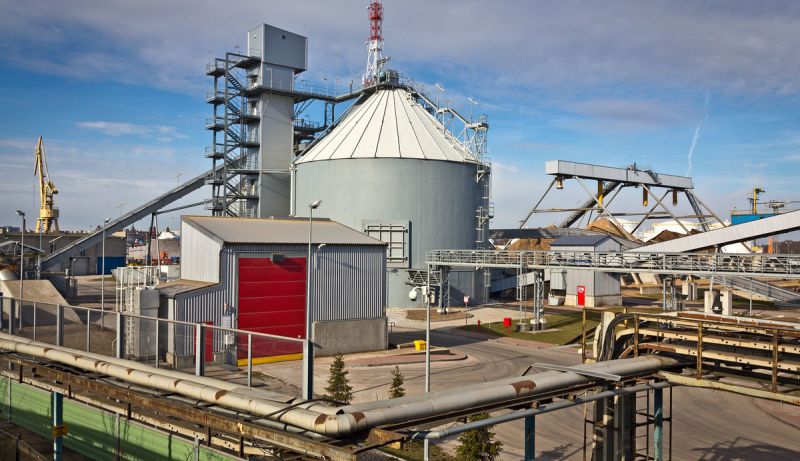
We provide comprehensive training for the technicians of each project. We can also continue to provide support for the technicians during latter project operation.
● After-sales
Project Follow-Up
When everything is up and running our Richiers will help you further whenever needed. We are ready to answer your call 24/7.We’ll also visit you regularly to learn about your needs.
Who we are
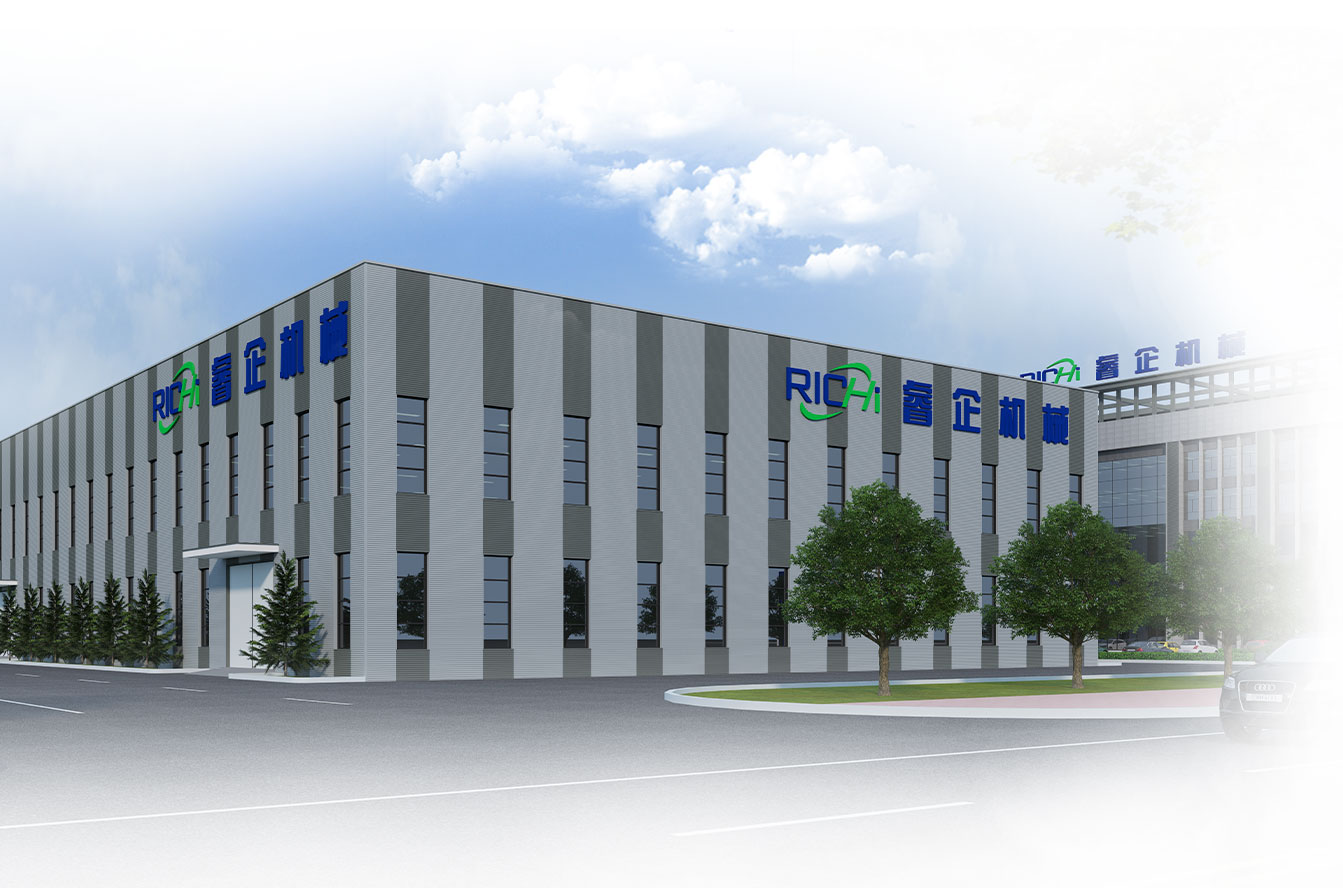
RICHI Machinery is one of the world’s leading suppliers of technology and services for the animal feed, aqua feed and pet food industries, also the largest pellet production line manufacturer in China.
Since 1995, RICHI’s vision to build a first-class enterprise, to foster first-class employees, and to make first-class contributions to society has never wavered.
In the past three decades, we have expanded our business to a wide range of areas, including animal feed mill equipment, aqua feed equipment, pet feed equipment, biomass pellet equipment, fertilizer equipment, cat litter equipment, municipal solid waste pellets equipment, etc.

1995
RICHI Established

2000+
Serving More Than 2000 Customers

120+
RICHI Employees

140+
Exported To 140 Countries