0086-138 3838 9622
8000 T/A Rice Husk Fuel Pellet Plant in Italy
RICHI MACHINERY
The Buyer’s Boiler Decides Whether the Project Makes Sense
The first commercial decision in this rice husk fuel pellet plant in Italy is not which die to install. It is which boilers should receive the fuel. Rice husk is a cereal-processing residue with far more mineral matter than clean wood, and its ash is strongly associated with silica. That difference changes ash volume, deposit behavior, wear and the way a combustion plant has to manage the fuel.
The customer therefore builds the project around industrial and agricultural heat users that can approve a non-woody pellet specification before long-term sales are signed.
The factory converts about 8000 tonnes of finished product per year through one 3–4 T/H biomass pellet mill module. With roughly 300 operating days and an eight-hour daily production window, the annual target requires an average of about 3.3 T/H during scheduled hours. That sits inside the line’s working range and leaves time for startup, die checks, cleaning and short stoppages without adding parallel pellet mills simply to create unused nameplate capacity.
The process is intentionally compact. Clean rice husk from a covered milling or storage system is already small enough to bypass routine coarse crushing and hammer milling. When moisture is within the commissioning window, the standard project also bypasses thermal drying. Receiving, screening, magnetic protection, buffering, controlled moisture adjustment, pelletizing, cooling, final screening and industrial dispatch form the normal route.
The RICHI machinery and engineering supply is USD 120,000 for this configuration. The figure covers the project equipment package and associated engineering scope rather than being presented as a fabricated all-in Italian land-and-building investment. Customer-side civil works, utility connection, permitting and any existing rice-mill infrastructure remain separate unless they are explicitly included in the final contract.
3–4 T/H
capacity
USD 120,000
RICHI supply
Italy
location
8000 T/A
finished output
RICHI MACHINERY
Northern Italy Makes the Residue Logistics Work
Italy gives the project a credible raw-material base. Istat reports that Italy accounted for 52.8% of EU rice output in 2025, and the industry remains concentrated in the north. Piemonte alone reports about 114,000 hectares of rice, with 71,000 hectares in Vercelli province. A pellet plant linked to this milling geography can source husk where it is already concentrated instead of trucking very low-density loose material over long distances before densification.
That logistics logic is the reason the Fuel Pellet Plant should sit near the residue source rather than beside a distant boiler at any cost. Loose husk occupies much more volume per tonne than pellets. Densifying it close to the rice mill converts a bulky by-product into a fuel that is easier to meter, store and move over a wider delivery radius.
| Business Question | Project Answer | Why It Matters |
|---|---|---|
| Where should the line be located? | Near a stable rice-milling residue source | Avoids long-haul transport of low-density loose husk |
| Who should buy the fuel? | Users with approved non-woody biomass systems | Reduces ash and combustion compatibility disputes |
| How much should be pelletized? | Only the volume with a stronger densified-fuel outlet | Loose husk may already have local uses |
| What is the first product? | 8 mm industrial rice husk pellet | Keeps commissioning and customer qualification focused |
| What is not assumed? | ENplus residential wood-pellet positioning | Rice husk is non-woody biomass |
RICHI MACHINERY
One Raw Material Still Needs a Receiving Specification
The incoming specification is simple in material type but strict in condition. The Rice Husk Pellet Plant uses rice husk as its principal feedstock, so there is no need to manage dozens of biomass recipes. Operators still reject avoidable problems before they reach the ring die: stones, ferrous objects, sand, wet or mold-damaged lots, compacted foreign material and excessive contamination from poor storage.
Moisture is checked by batch because direct transfer from a milling operation and outdoor-stored husk can behave very differently. A lot that has absorbed rain is isolated instead of being blended blindly into dry inventory. A very dry lot is also identified because pellet formation may improve with controlled moisture addition. The goal is not to force every batch through the same pretreatment; it is to keep material entering the pellet mill inside a repeatable operating window.
- Covered rice-mill husk can often move directly from cleaning to the buffer and pelletizing section.
- Rain-affected material is segregated and evaluated before it enters the normal production route.
- Foreign mineral contamination is removed early because rice husk is already abrasive enough without added sand or stones.
- Abnormal odor, visible mold or water damage triggers a separate quality decision rather than automatic blending.
RICHI MACHINERY
The Missing Machines Are an Engineering Decision
Two common biomass machines are absent from the base design for a reason. Rice husk is already a thin, relatively small milling by-product, so routine hammer milling adds power, dust and wear without providing the same size-reduction value it would for chips, branches or coarse shavings. Likewise, a rotary dryer is not installed simply because it appears in many biomass flowcharts. When the mill supplies suitably dry husk, thermal drying would solve a problem the project does not normally have.
The engineering decision is conditional rather than absolute. If the customer later begins buying wet husk from outside suppliers, a dryer can be evaluated from the actual moisture balance. If compacted or oversized foreign biomass becomes a recurring part of supply, a small size-reduction stage can be added. The line therefore leaves room for future pretreatment without paying for it before the feedstock requires it.
Very dry material creates the opposite problem. Small moisture adjustment upstream of pelletizing can improve binding and stabilize motor load when trials show it is necessary. That is a low-volume conditioning task, not a reason to introduce steam conditioning or a production boiler. The operator controls the adjustment from real pellet formation, fines, surface condition and current draw rather than from one fixed water-addition percentage.
RICHI MACHINERY
Seven Operations Turn Loose Husk into a Dispatchable Fuel
The process is short enough to be managed as one continuous operating chain rather than a series of isolated mini-sections. Material flows from receiving into protection and quality checks, then into the pelletizing module and immediately through mechanical stabilization. Every transfer point has a purpose because dry husk and freshly made pellets both create dust if they are handled carelessly.
- Receive covered rice husk from the milling operation or approved bulk storage and record the production or supplier lot.
- Screen the material and remove ferrous contamination before it reaches the pelletizing system.
- Verify moisture and route acceptable husk into a controlled buffer; isolate wet or abnormal lots for separate handling.
- Apply only the small moisture correction needed by actual pelletizing behavior, then meter material steadily to the ring die.
- Compress the husk through the MZLH768 rice husk pellet machine into the 8 mm first-phase product.
- Cool hot pellets mechanically, screen out fines and return clean recoverable fines through the designed recycle path.
- Transfer qualified pellets to bulk loading, FIBC or industrial bagging according to the buyer’s receiving system.
Mechanical cooling remains necessary even though the plant has no dryer. Friction and compression raise pellet temperature inside the die, so freshly formed pellets are not sent directly into closed storage. A counterflow cooler stabilizes temperature before screening and dispatch. The cooler is sized to finished-pellet flow rather than the much larger volumetric flow of loose husk.
RICHI MACHINERY
One Pelletizing Module Covers the 8000 T/A Target
One MZLH768 biomass pellet making machine is enough for the annual sales plan. The project uses one 8 mm die during initial commissioning so operators can establish a stable feeding, compression and wear pattern before adding extra product variants. The machine is treated as a 3–4 T/H biomass pelletizing unit for project planning, which aligns with the 3.3 T/H average needed to reach 8000 T/A over the scheduled calendar.
| Equipment Section | Project Configuration | Why It Is Included |
|---|---|---|
| Receiving | Hopper and enclosed transfer | Moves low-density husk without uncontrolled spillage |
| Impurity control | Screen and magnetic separator | Protects die, rollers and downstream handling |
| Buffering | Rice-husk buffer bin with controlled discharge | Separates irregular upstream delivery from steady pellet feeding |
| Moisture adjustment | Low-volume controlled addition point | Corrects only when pellet trials require it |
| Pelletizing | 1 × MZLH768 | 3–4 T/H project basis for 8000 T/A |
| Cooling | Counterflow cooler | Stabilizes hot pellets before screening |
| Final screening | Pellet screen and fines return | Protects delivered product from excessive loose fines |
| Dispatch | Bulk/FIBC/industrial bag interface | Matches commercial fuel users rather than retail assumptions |
| Dust collection | Local pulse filtration by dust point | Controls receiving, transfer, cooling and screening dust |
| Electrical control | MCC/PLC and interlocks | Coordinates feeding, pelletizing and downstream equipment |
The main motor for this project is 250 kW in the supplied configuration, with feeder and auxiliary drives added around the pelletizer. Final protection, starting method and cable sizing are therefore based on the actual motor list rather than a generic biomass-line total. The line does not multiply small pellet mills to reach the same output because that would add feeders, bearings, lubrication points and controls without improving the 8000 T/A business case.
RICHI MACHINERY
Silica Moves Wear Management into the Operating Plan
Rice husk changes maintenance priorities because its mineral fraction is far more abrasive than clean softwood sawdust. Scientific reviews consistently identify rice husk ash as silica-rich, and that mineral load affects wear surfaces as well as combustion ash behavior. The customer therefore tracks ring-die condition, roller-shell wear, feeder surfaces, transfer bends and screen condition as normal operating data rather than assuming wear-part life from a wood-pellet reference.
The biomass pellet project is therefore judged on cost per saleable tonne, not simply initial machine price. If a cheaper operating setup produces unstable feed, excessive fines or rapid die wear, the apparent capital saving disappears into downtime and spare parts. Commissioning focuses on the sustainable operating window that balances output, pellet integrity and wear.
Production trials start below maximum feed rate. Engineers observe arching, feeder stability, motor current, die load, pellet surface, fines and cooler performance, then raise output in controlled steps. This makes the final operating recipe specific to the customer’s husk instead of copying a wood-pellet parameter sheet.
RICHI MACHINERY
The Product Is a Non-Woody Fuel Pellet
The finished fuel is sold as a non-woody biomass pellet. ENplus certification applies only to pellets made from woody biomass, so an 8 mm rice husk pellet should not be branded as an ENplus wood pellet. ISO 17225-6 is the more relevant international specification framework for graded non-woody pellets, including by-products from grain and seed-crop processing.
That standard also explains why buyer qualification matters: non-woody pellets can carry higher ash, chlorine, nitrogen, sulfur and major-element levels than wood pellets and are better suited to appliances or industrial combustion systems designed or adjusted for that fuel. The customer therefore agrees ash, moisture, dimensions, fines, durability and other contract values from representative laboratory testing rather than publishing wood-pellet limits that the material is not intended to meet.
| Finished-Product Item | Project Basis | Commercial Control |
|---|---|---|
| Pellet diameter | 8 mm first-phase product | Confirmed with buyer feeding equipment |
| Optional diameter | 4–12 mm machine range where justified | Introduced only for a real contract requirement |
| Pellet length | Controlled by cutter and buyer specification | Verified during commissioning |
| Moisture | Tested before dispatch | Contract value based on representative production |
| Ash | Rice-husk-specific and materially higher than clean wood | Laboratory declaration by lot or agreed sampling plan |
| Mechanical integrity | Transport and handling requirement | Validated through cooling, screening and delivery trials |
| Fuel class reference | Non-woody pellet | Buyer specification may reference ISO 17225-6 where appropriate |
RICHI MACHINERY
Storage Is Designed around Volume Rather Than Tonnage Alone
The site is compact because there is no large grinder building, dryer train or thermal-energy yard. The biggest spatial difference is between loose husk and finished pellets: incoming husk needs more volume per tonne, while densified product can be stored and shipped more efficiently. The layout therefore gives more volumetric buffer to covered raw-material storage than the finished-product tonnage alone would suggest.
| Functional Area | Planning Range | Layout Purpose |
|---|---|---|
| Covered rice-husk storage | 700–900 m² | Low-density raw-material buffer close to the mill |
| Receiving and screening | 200–300 m² | Protection, sampling and controlled transfer |
| Pelletizing and cooling | 350–450 m² | MZLH768, cooler, access and maintenance clearance |
| Finished-product storage | 450–600 m² | Bulk, FIBC or industrial packed pellets |
| Dispatch area | 200–300 m² | Truck loading without blocking raw-material handling |
| Utilities and maintenance | 150–250 m² | Electrical, spares and workshop functions |
| Office and QC | 100–150 m² | Sampling, records and site administration |
| Roads and fire access | Balance of site | Circulation, emergency access and outdoor service space |
A total site of about 2500–3500 m² is therefore a practical planning range. If the pellet line is integrated into an existing rice mill, the customer may reuse laboratory, maintenance, staff and part of the storage infrastructure, reducing duplicated floor area. The exact building footprint is finalized from current mill geometry rather than forcing a greenfield layout onto an operating food-processing site.
RICHI MACHINERY
Electricity Dominates the Utility Balance
Electricity is the main production utility. The 250 kW biomass fuel pellet machine is the dominant load, followed by cooling, aspiration, conveying, screening and packing. A practical annual electricity planning basis is about 0.55–0.70 GWh for 8000 T/A, but final consumption depends on motor load, actual operating hours, fines recycling and the auxiliary equipment running at the same time.
Transformer sizing is a separate calculation from annual energy use. The connection has to carry the biomass granulator and downstream motors together and accommodate the selected starting method. A 400–500 kVA class can be evaluated during preliminary design, but the final rating follows the confirmed motor list and the local distribution connection. Italy uses 50 Hz; site service voltage and protection are confirmed with the relevant utility rather than assumed from another plant.
Water demand remains low. It is used for small moisture corrections where pellet trials require them, routine cleaning and staff facilities rather than continuous wet processing. Around 200–400 m³/year is adequate as an early non-fire planning range for this project size. There is no routine process-wastewater stream from pelletizing itself, while fire-water and emergency arrangements are designed separately from ordinary consumption.
A lean team of about 5–7 direct production and warehouse roles is sufficient for a single-shift line when the project shares administration, laboratory and maintenance resources with the parent rice mill. An independent standalone plant may keep additional support personnel. This is more realistic for a small Italian industrial project than copying a large biomass-factory headcount into a line that has no dryer or grinding department.
RICHI MACHINERY
Dust Fire and Buyer Compatibility Define the Risk Controls
Environmental control is concentrated on dry particulate, noise, fire prevention and orderly fuel storage. Covered raw-husk storage prevents rain from creating an avoidable moisture problem. Local extraction is applied at receiving, transfer, cooling and screening points, while clean recoverable fines can return through the controlled process. The pellet mill and fan systems receive normal acoustic and maintenance attention, and housekeeping limits combustible dust accumulation around motors and bearings.
The project does not claim a universal Italian emission limit for the customer’s downstream boiler because the pellet producer does not control the buyer’s combustion permit. Instead, the sales team qualifies the end user’s fuel specification, ash-handling system and permitted biomass category before supply. That keeps product engineering tied to the combustion plant that will actually use the pellets.
No process boiler is installed in the base project. If future raw-material sourcing creates a recurring drying need, thermal equipment becomes a separate engineering and permitting decision. Until that condition exists, adding a burner and dryer would increase capital, maintenance and emissions obligations without helping the normal covered rice-husk stream.
RICHI MACHINERY
The First Investment Is Kept Narrow on Purpose
The USD 120,000 RICHI scope is concentrated on densification: receiving protection, buffer feeding, one MZLH768, mechanical cooling, finished screening, fines return, dust-control interfaces, dispatch equipment and electrical integration. Omitting routine crushing and thermal drying is not a marketing shortcut; it is the result of matching equipment to a milling by-product that is already small and can be suitably dry when stored correctly.
Installation planning begins with the existing rice-mill interface. The customer confirms husk discharge location, available floor space, electrical connection, truck access and the fuel buyer’s specification before the final layout is frozen. Equipment ships from Qingdao, while the Italian entry port and inland route are selected from the real project location and freight plan rather than inserted into the case without evidence.
Expansion is deliberately left open. If long-term orders exceed 8000 T/A and the MZLH768 is operating near its sustainable duty, the customer first checks raw-husk availability, cooler and screen capacity, finished storage, dust collection, transformer margin and truck loading before adding another pelletizer. A second machine is justified by a proven bottleneck, not by the existence of empty floor space.
For another rice husk fuel pellet plant in Italy, RICHI Machinery needs the annual husk volume, actual moisture range, current use of the husk, storage condition, target pellet diameter, buyer boiler type, laboratory fuel data, operating hours, available power and existing mill layout. Those inputs determine whether the project can use the same short direct-pelletizing route or whether real feedstock conditions justify additional preparation equipment.
● RICHI MACHINERY
RICHI Service

● Consulting
Customer Consultation
We want to have a deep understanding of your industrial process, to know your exact needs of feed, wood, biomass, fertilizer or other pellet processing.
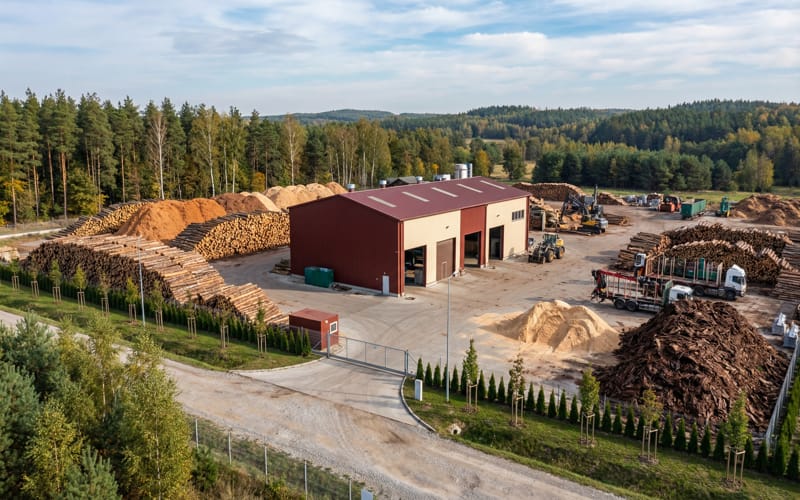
● Design
biomass Pellet Plant Design
Based on your unique situation and industrial process, we will tailor complete pellet plant you need, and inform you of every additional detail that could facilitate operation, minimize total cost.
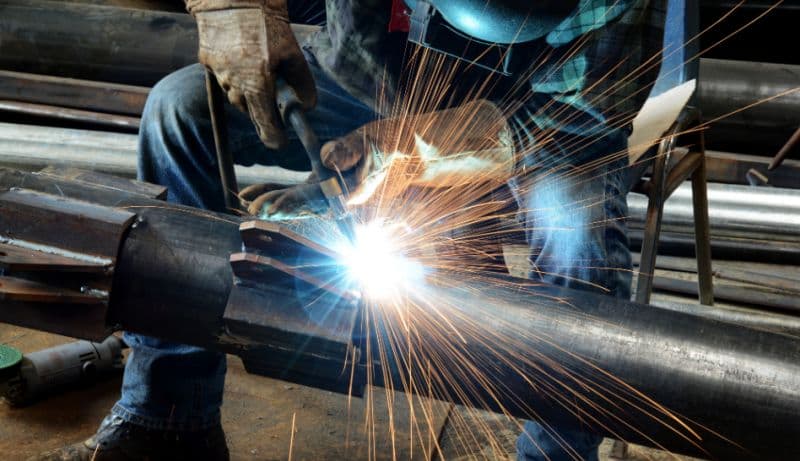
● Manufacturing
Equipment Manufacturing
The critical components of the of the complete pellet production line equipment are built in our own workshops in Asia. Additional equipment is manufactured by our worldwide network of reliable partners.

● Testing
Quality Inspection & Testing
Before leaving the factory, all equipment will be inspected by the quality inspection department. We can also provide customers with testing services from a single machine to a complete pellet plant system, and provide you with real actual data for “worry-free use.”

● Delivery
Equipment Delivery
In equipment boxing and packaging, we adopt professional packaging and modular solutions to ensure the safe and non-destructive delivery of pellet plant equipment.
● Installation
Installation & Commissioning
Whether you choose your own subcontractor for the erection phase or you want to install everything together with us, a Richi supervisor will be around to make sure everything is mounted in a safe and thorough way.

● Training
Staff Training
We provide comprehensive training for the technicians of each project. We can also continue to provide support for the technicians during latter project operation.
● After-sales
Project Follow-Up
When everything is up and running our Richiers will help you further whenever needed. We are ready to answer your call 24/7.We’ll also visit you regularly to learn about your needs.
Who we are
RICHI Machinery is one of the world’s leading suppliers of technology and services for the animal feed, aqua feed and pet food industries, also the largest pellet production line manufacturer in China.
Since 1995, RICHI’s vision to build a first-class enterprise, to foster first-class employees, and to make first-class contributions to society has never wavered.
In the past three decades, we have expanded our business to a wide range of areas, including animal feed mill equipment, aqua feed equipment, pet feed equipment, biomass pellet equipment, fertilizer equipment, cat litter equipment, municipal solid waste pellets equipment, etc.

1995
RICHI Established

2000+
Serving More Than 2000 Customers

120+
RICHI Employees

140+
Exported To 140 Countries