 0086-138 3838 9622
Vermicompost Microbial Organic Fertilizer Production Plant in Spain
RICHI MACHINERY
overview
A Spanish agricultural-input company developed this Vermicompost Microbial Organic Fertilizer Production Plant in Spain to turn stabilized vermicompost and humus-rich organic materials into two commercial products. The annual plan is 200,000 T/A: approximately 150,000 T/A of powder microbial organic fertilizer and 50,000 T/A of 4–6 mm ring-die pellets. The powder route carries most of the volume, while the pellet route is reserved for customers that value cleaner handling, mechanical spreading and a more standardized physical form.
The plant operates around 300 days per year on two 8-hour shifts. At 4,800 scheduled hours, the powder section averages about 31 T/H and the pellet section about 10 T/H. Two FZLH420 fertilizer pellet mills provide 12–16 T/H of installed pelletizing capacity, leaving practical reserve for formulation changes, raw-material variation and maintenance. The 1,865 m² enclosed workshop is treated as the core process building rather than the entire site; external raw-material storage, finished-product warehousing, truck roads, utilities and fire access bring the realistic site requirement to approximately 10,000–14,000 m².
10T/H
pellet capacity
US$420,000
investment
Spain
location
Fertilizer
project type
RICHI MACHINERY
A 200,000 T/A Factory with Two Different Product Routes
The project was sized from the product split rather than from one headline capacity. Powder fertilizer accounts for 75% of annual output and bypasses pelletizing, cooling and final pellet classification. The remaining 25% enters the ring-die route. That difference prevents the customer from paying for 40 T/H of pelletizing capacity when only about 10 T/H is actually required.
| Project Item | Design Basis |
|---|---|
| Project type | New-build commercial fertilizer plant |
| Total finished output | 200,000 T/A |
| Powder fertilizer | 150,000 T/A; approx. 31 T/H average |
| Pellet fertilizer | 50,000 T/A; approx. 10 T/H average |
| Operating calendar | 300 days/year; 2 × 8-hour shifts |
| Pellet mills | 2 × FZLH420 |
| FZLH420 capacity | 6–8 T/H each |
| Pellet diameter | Mainly 4–6 mm; machine range 4–12 mm |
| Core enclosed workshop | Approx. 1,865 m² |
| Overall site planning | Approx. 10,000–14,000 m² |
| Workforce | Approx. 30–38 people |
| Electricity | Approx. 2.5 million kWh/year |
| Fresh water | Approx. 3,054 m³/year |
| Shipment | Qingdao Port → Port of Valencia |
| RICHI machinery/core supply | USD 420,000 |
The 10 T/H value shown in the project card therefore refers to the pellet section, not the total throughput of the factory. The complete plant handles more than 40 T/H of finished product when powder and pellet production operate at their planned average rates.
RICHI MACHINERY
Spain Provides a Large Agricultural Market for Differentiated Fertilizer Products
The customer serves commercial agriculture rather than one crop. Spain had approximately 2.945 million hectares under organic production at the end of 2024, equal to about 12.31% of utilized agricultural area. That does not mean every product from this factory can automatically be sold as an input for certified organic production, but it confirms a large market in which soil organic matter, biological inputs and traceable fertilizer formulations are commercially relevant.
The company positions powder and pellet products differently. Powder fertilizer is the volume product for farms and distributors that prioritize organic matter and cost per applied ton. Pellet fertilizer targets users that value cleaner storage, more predictable metering and compatibility with mechanical spreading. The organic fertilizer production project therefore gains two sales routes without building two independent factories.
RICHI MACHINERY
Raw-Material Planning Is Managed by Dry Matter Not Only Wet Tons
Annual procurement is planned around approximately 150,000 tons of stabilized vermicompost and 59,000 tons of humus-rich organic material, with smaller quantities of nutrient ingredients and functional microbial preparations. These are wet-basis purchasing figures, not a fixed one-to-one recipe for every finished ton. Vermicompost commonly arrives around 20–30% moisture, while the humus-rich fraction is generally drier, so formulation and moisture control are based on dry matter.
| Material | Annual Planning | Typical Project Condition | Role |
|---|---|---|---|
| Stabilized vermicompost | Approx. 150,000 T/A | Usually 20–30% moisture; no free liquid | Main organic base |
| Humus-rich organic material | Approx. 59,000 T/A | Generally drier than vermicompost | Organic matter / formula balance |
| Macro/secondary/micronutrients | Approx. 1,000 T/A | Dry concentrated ingredients | Declared nutrient adjustment |
| Functional microbial preparation | Approx. 100 T/A | Concentrated carrier-based product | Biological function |
The powder route can retain more moisture when the applicable product specification permits it, whereas the pellet route is dried and cooled to a much tighter storage condition. This distinction closes the dry-matter balance more realistically than assuming every incoming organic material is permanently at 30% moisture and every finished product leaves at 11–12%.
RICHI MACHINERY
Receiving Control Protects Both Product Quality and Equipment
The word vermicompost does not guarantee uniform industrial feedstock. Supplier substrate, stabilization, screening and storage conditions can change moisture, particle structure and contaminant risk. The factory therefore accepts stabilized material only after receiving checks. Fresh manure, free-draining slurry and strongly heating organic material are outside the normal manufacturing route.
- supplier and batch traceability;
- moisture and visible stabilization condition;
- stones, metal, plastics and other physical contaminants;
- oversized fibrous or compacted material;
- periodic laboratory verification of organic matter, nutrient profile, pathogens and relevant contaminants.
This protects the organic fertilizer pellet mills, but it also stabilizes crusher load, reduces screen blockage and makes downstream dosing more predictable.
RICHI MACHINERY
The Compact Process Building Depends on External Storage and Fast Logistics
The 1,865 m² enclosed workshop and 2,076 m² core process-building zone are retained as project data, but they are not treated as the entire property. A 200,000 T/A factory moves roughly 667 tons of finished product per full production day and receives a similar order of magnitude of raw material. That traffic cannot be supported by a 290 m² raw-material area and 100 m² finished area if those figures are interpreted as total warehouses.
In the final layout, 290 m² is the immediate receiving/feeding buffer beside the process line and 100 m² is the line-side dispatch buffer. Covered raw-material storage, finished-product warehousing, truck circulation, fire access, utilities and drainage sit outside the process building, bringing the overall site to approximately 10,000–14,000 m². Several days of protected feedstock reserve are maintained so production is not dependent on perfectly timed truck arrivals.
This preserves the source building data while making the operating model credible for industrial throughput.
RICHI MACHINERY
The 150,000 T/A Powder Route Is Designed for Continuous High-Volume Flow
Powder fertilizer is the dominant product and averages about 31 T/H. Its process remains deliberately short: receiving → controlled feeding → crushing → screening → formulation adjustment → mixing where required → microbial addition → quantitative packing. The objective is to standardize stabilized organic material without adding pelletizing steps that the market does not require.
Crushing breaks compacted lumps rather than pulverizing every particle. Screening removes oversize and contaminants while improving product appearance. Nutrient ingredients are dosed according to the commercial formula. Where microbial preparations are used, addition takes place after aggressive mechanical preparation so the biological component is not exposed unnecessarily to earlier process stress.
Because the powder route carries three quarters of annual output, conveyor, screen and packing capacity are sized from the 31 T/H duty rather than copied from the smaller pellet section.
RICHI MACHINERY
The 50,000 T/A Pellet Route Starts with Formula and Moisture Control
The pellet section averages about 10 T/H. Its core forming equipment is the vermicompost pellet machine section, but stable production still depends on upstream preparation. The complete route is: receiving → crushing → screening → proportioning → mixing → moisture adjustment → FZLH pelletizing → cooling → screening → post-cooling microbial application where required → packing and palletizing. The organic fertilizer pellet production line uses five formula bins to buffer major components before mixing.
Material assigned to pelletizing is conditioned into a workable moisture window based on actual formula behavior. Drier incoming lots do not receive the same thermal treatment as wetter vermicompost. The pellet mills are not expected to correct poor upstream preparation.
After ring-die forming, hot pellets are cooled and screened. Qualified 4–6 mm pellets move to final finishing. Clean fines return to the appropriate upstream point. Heat-sensitive microbial preparations can be applied after cooling through a controlled coating or application system so addition rate, adhesion and viable count can be verified.
RICHI MACHINERY
Two FZLH420 Machines Match the Real Pellet Requirement
The project needs approximately 10.42 T/H of average finished pellet output. Two FZLH420 organic fertilizer granulator machines provide 12–16 T/H of nominal installed capacity. Each unit uses a 90 kW main motor and is rated at 6–8 T/H for fertilizer applications, which gives the line useful operating reserve without moving to an unnecessarily larger single machine.
| FZLH420 Parameter | Project Configuration |
|---|---|
| Quantity | 2 |
| Rated capacity | 6–8 T/H per unit |
| Combined installed capacity | 12–16 T/H |
| Average project pellet duty | Approx. 10 T/H |
| Main motor | 90 kW × 2 |
| Pellet diameter range | 4–12 mm |
| Main product | 4–6 mm |
The two-machine arrangement also improves maintenance flexibility. Ring dies, rollers and feeding components can be serviced without making the entire pellet business dependent on one compression chamber.
RICHI MACHINERY
Packing Capacity Is Sized from Bags per Hour Not Only Tons per Year
The source planning figure of four million bags per year is best understood as roughly four million 50 kg-equivalent bags. If the sales mix shifts toward 20 kg or 25 kg packages, the actual number of bags rises sharply even though annual tonnage does not change. Packaging is therefore treated as a real production section.
At about 31 T/H, the powder route requires two parallel quantitative packing positions when 50 kg bags dominate; two lines rated up to approximately 400 bags/h each provide sufficient nominal capacity. The 10 T/H pellet route uses its own packing line and palletizing section. Dust extraction is concentrated around powder bagging, while pellet transfer uses controlled drop heights to reduce breakage.
This prevents the common error of installing a high-throughput fertilizer process only to create a bottleneck at the final bagging spout.
RICHI MACHINERY
Main Equipment Configuration Supports Separate Powder and Pellet Duties
Shared receiving, conveying and environmental systems reduce duplication, while the pellet route receives the extra equipment needed for formulation, moisture control, ring-die forming and cooling.
| Section | Main Equipment | Project Duty |
|---|---|---|
| Powder | Receiving hopper + organic-material crusher | High-volume stabilized feedstock intake |
| Powder | Screening system | Product uniformity / contaminant removal |
| Powder | Microbial/formula dosing | Controlled additive application |
| Powder | 2 quantitative bagging systems | Approx. 31 T/H packing duty |
| Pellet | Receiving + crusher + screening | Prepares pellet feed |
| Pellet | 5 × approx. 3 m³ formula bins | Ingredient buffering/proportioning |
| Pellet | Mixer | Formula homogenization |
| Pellet | Moisture-control equipment | Pre-pellet conditioning |
| Pellet | 2 × FZLH420 fertilizer granulator equipment | 12–16 T/H installed pelletizing |
| Pellet | Cooler + finished screen | Pellet stabilization/classification |
| Pellet | Post-cooling microbial application | Heat-sensitive biological additives |
| Pellet | Packing + palletizing | Distributor/farm dispatch |
| Shared | Cyclones + bag filtration + odor control | Dust/process-air management |
| Shared | PLC/MCC control | Interlocks, alarms and recipes |
Auxiliary capacities are finalized against actual supplier moisture, bag sizes, additive rates and the confirmed building layout rather than selected only from the annual tonnage.
RICHI MACHINERY
Power Water and Environmental Systems Match a Dry Fertilizer Process
Annual electricity planning remains approximately 2.5 million kWh. The two FZLH420 main motors account for 180 kW, but crushers, screens, mixers, dryers, conveyors, coolers, dust extraction, packing and palletizing create a much larger connected load. A preliminary 1,000–1,250 kVA electrical service is reasonable for project planning, with the final transformer confirmed from the complete motor and simultaneous-load schedule.
Fresh-water consumption is approximately 3,054 m³/year, mainly for staff facilities, housekeeping, limited equipment cleaning and controlled process-moisture adjustment. The plant is not a slurry process and does not rely on continuous wet washing. Fire-water storage and firefighting demand are designed separately from routine consumption.
Dust is captured at feeding, crushing, screening, transfer and packing points. Suitable recovered product fines can return to production; stones, plastics and other genuine contaminants do not. Odor control is applied to collected air where the actual stabilized material and permit conditions require it.
RICHI MACHINERY
Product Quality and Microbial Claims Need a Defined Compliance Route
The factory cannot treat the words microbial organic fertilizer as a marketing label independent of product regulation. Under Spain’s national fertilizer framework, relevant organic and microorganism-containing products are subject to requirements for raw materials, pathogens, heavy metals, technical documentation and registration. Depending on the product and marketing strategy, the manufacturer may also evaluate the EU fertilising-product route under Regulation (EU) 2019/1009.
For pelletized organic products marketed under the applicable Spanish national categories, Annex V of Real Decreto 506/2013 sets a general maximum moisture content of 14% unless the specific product type states otherwise. This project therefore targets approximately 11–13% for the main pellet product, with the reference tested batch at about 11.5%.
Microbial strains, concentration and claimed agronomic function must be documented under the relevant route. RICHI Machinery therefore treats microbial dosing as a calibrated process step, while the customer remains responsible for the final product registration, label and market authorization.
RICHI MACHINERY
Thirty to Thirty-Eight Employees Support Two-Shift Operation
Approximately 30–38 employees is a practical total headcount for a plant of this scale when long-distance trucking and specialist laboratory analysis are outsourced. Spain’s higher labor cost favors mechanized material transfer and packaging, but the operation still requires enough people to manage receiving, two product routes, packing, maintenance and dispatch.
- production and shift supervision;
- raw-material receiving and loader operation;
- powder-line and pellet-line operators;
- control-room and formulation responsibility;
- packing/palletizing and warehouse staff;
- quality-control personnel;
- mechanical/electrical maintenance;
- procurement, inventory and dispatch coordination.
Automation is concentrated where it protects throughput or formulation accuracy rather than used simply to minimize headcount on paper.
RICHI MACHINERY
Shipping through Valencia and a 7–10 Month Implementation Window
The agreed equipment route is Qingdao Port → Port of Valencia. Main machines, control cabinets and auxiliary equipment are packed and identified against installation drawings so the Spanish installation team can separate powder-line, pellet-line and shared systems immediately after delivery.
- Confirm material data, formulas, process balance and final layout.
- Complete equipment/electrical engineering and manufacturing.
- Proceed with Spanish civil works, warehouse preparation and utility connection in parallel.
- Inspect, pack and ship equipment from Qingdao to Valencia.
- Complete mechanical and electrical installation.
- Commission first without load, then with the customer’s vermicompost, formulations and selected bag sizes.
A practical overall implementation range is approximately 7–10 months, subject to permitting, civil-work progress, utility readiness, shipping and the customer’s installation arrangement.
RICHI MACHINERY
USD 420,000 Is the RICHI Machinery and Core-System Supply Value
For the production equipment, conveying, two FZLH420 pellet mills, cooling, screening, three packing positions, environmental collection, electrical/control integration and associated engineering described here, the reference RICHI supply value is approximately USD 420,000. This figure is not presented as the owner’s full development budget.
Land, external warehouses, Spanish civil construction, foundations, local utilities, permits, taxes, freight, local erection labor, raw-material inventory and working capital remain outside the machinery value unless specifically included in the contract. Keeping that boundary clear is especially important in this project because the realistic 10,000–14,000 m² site is much larger than the 2,076 m² core process-building zone.
RICHI MACHINERY
The Dual-Product Strategy Keeps Future Expansion Flexible
The customer does not need to increase total factory tonnage before changing the product mix. If distributors demand more pellet fertilizer, the pellet share can rise toward the installed FZLH capacity. If powder remains the stronger volume product, the customer avoids unnecessary compression energy and wear.
Future investment can therefore target the real bottleneck: additional raw-material warehousing, more finished-product storage, faster packaging, another formula bin group, greater pellet capacity or expanded microbial-finishing equipment. The plant is not locked into one expansion path.
For another investor planning a Vermicompost Microbial Organic Fertilizer Production Plant in Spain, the engineering should start with annual stabilized feedstock supply, real moisture by supplier, powder-versus-pellet sales demand, regulatory product route, pellet size, bag formats, site logistics and utility capacity. Equipment selection comes after those commercial and material conditions are defined.
● RICHI MACHINERY
RICHI Service

● Consulting
Customer Consultation
We want to have a deep understanding of your industrial process, to know your exact needs of feed, wood, biomass, fertilizer or other pellet processing.
● Design
organic fertilizer Plant Design
Based on your unique situation and industrial process, we will tailor complete pellet plant you need, and inform you of every additional detail that could facilitate operation, minimize total cost.
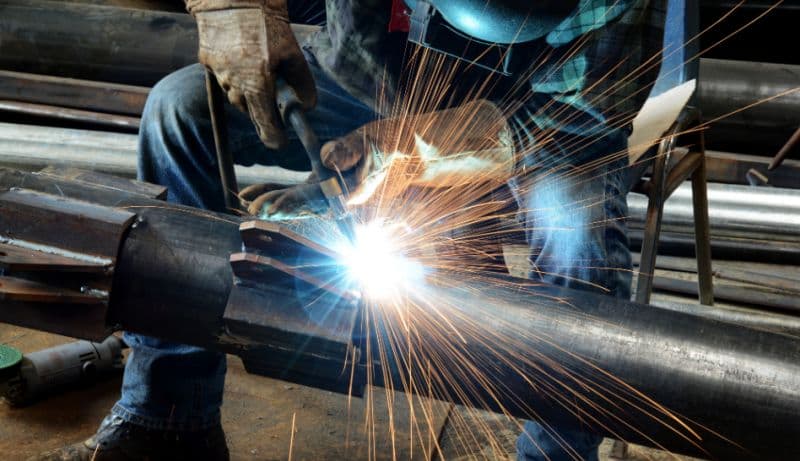
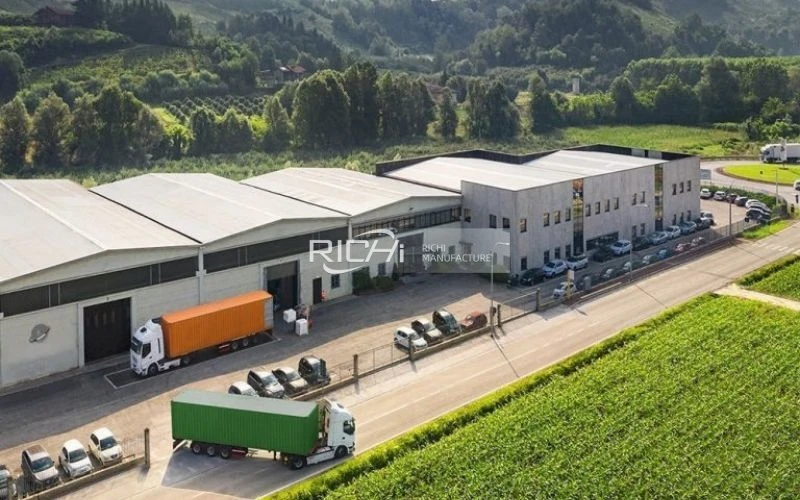
● Manufacturing
Equipment Manufacturing
The critical components of the of the complete pellet production line equipment are built in our own workshops in Asia. Additional equipment is manufactured by our worldwide network of reliable partners.

● Testing
Quality Inspection & Testing
Before leaving the factory, all equipment will be inspected by the quality inspection department. We can also provide customers with testing services from a single machine to a complete pellet plant system, and provide you with real actual data for “worry-free use.”

● Delivery
Equipment Delivery
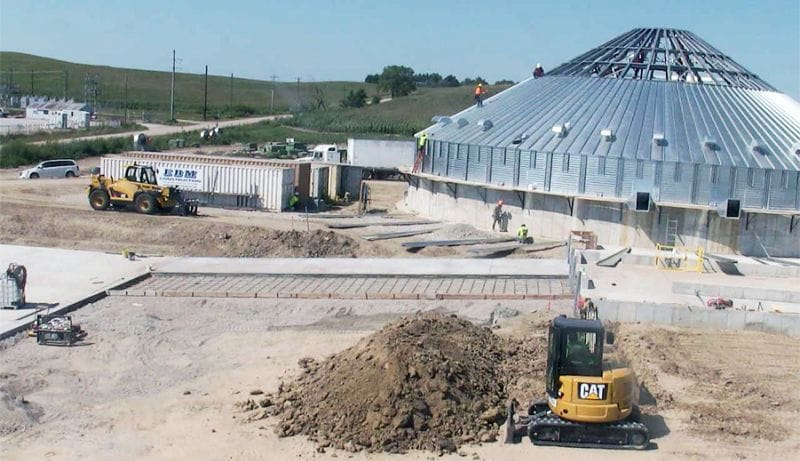
In equipment boxing and packaging, we adopt professional packaging and modular solutions to ensure the safe and non-destructive delivery of pellet plant equipment.
● Installation
Installation & Commissioning
Whether you choose your own subcontractor for the erection phase or you want to install everything together with us, a Richi supervisor will be around to make sure everything is mounted in a safe and thorough way.

● Training
Staff Training
We provide comprehensive training for the technicians of each project. We can also continue to provide support for the technicians during latter project operation.
● After-sales
Project Follow-Up
When everything is up and running our Richiers will help you further whenever needed. We are ready to answer your call 24/7.We’ll also visit you regularly to learn about your needs.
Who we are
RICHI Machinery is one of the world’s leading suppliers of technology and services for the animal feed, aqua feed and pet food industries, also the largest pellet production line manufacturer in China.
Since 1995, RICHI’s vision to build a first-class enterprise, to foster first-class employees, and to make first-class contributions to society has never wavered.
In the past three decades, we have expanded our business to a wide range of areas, including animal feed mill equipment, aqua feed equipment, pet feed equipment, biomass pellet equipment, fertilizer equipment, cat litter equipment, municipal solid waste pellets equipment, etc.

1995
RICHI Established

2000+
Serving More Than 2000 Customers

120+
RICHI Employees

140+
Exported To 140 Countries