

 0086-138 3838 9622
Vermicompost Pellet Machine
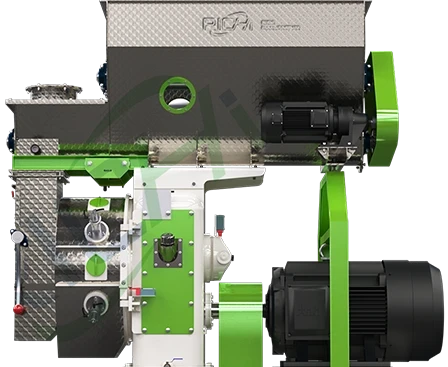
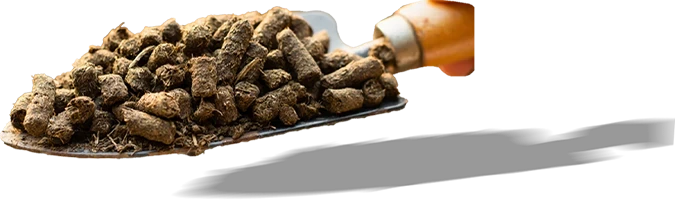
Vermicompost Pellet Machine converts mature vermicompost and worm castings into uniform 4–12 mm fertilizer pellets for commercial packaging, storage and sale. Suitable for standalone pelletizing or integration into a complete vermicompost fertilizer production line, with equipment configured around your material condition, formula and required output.
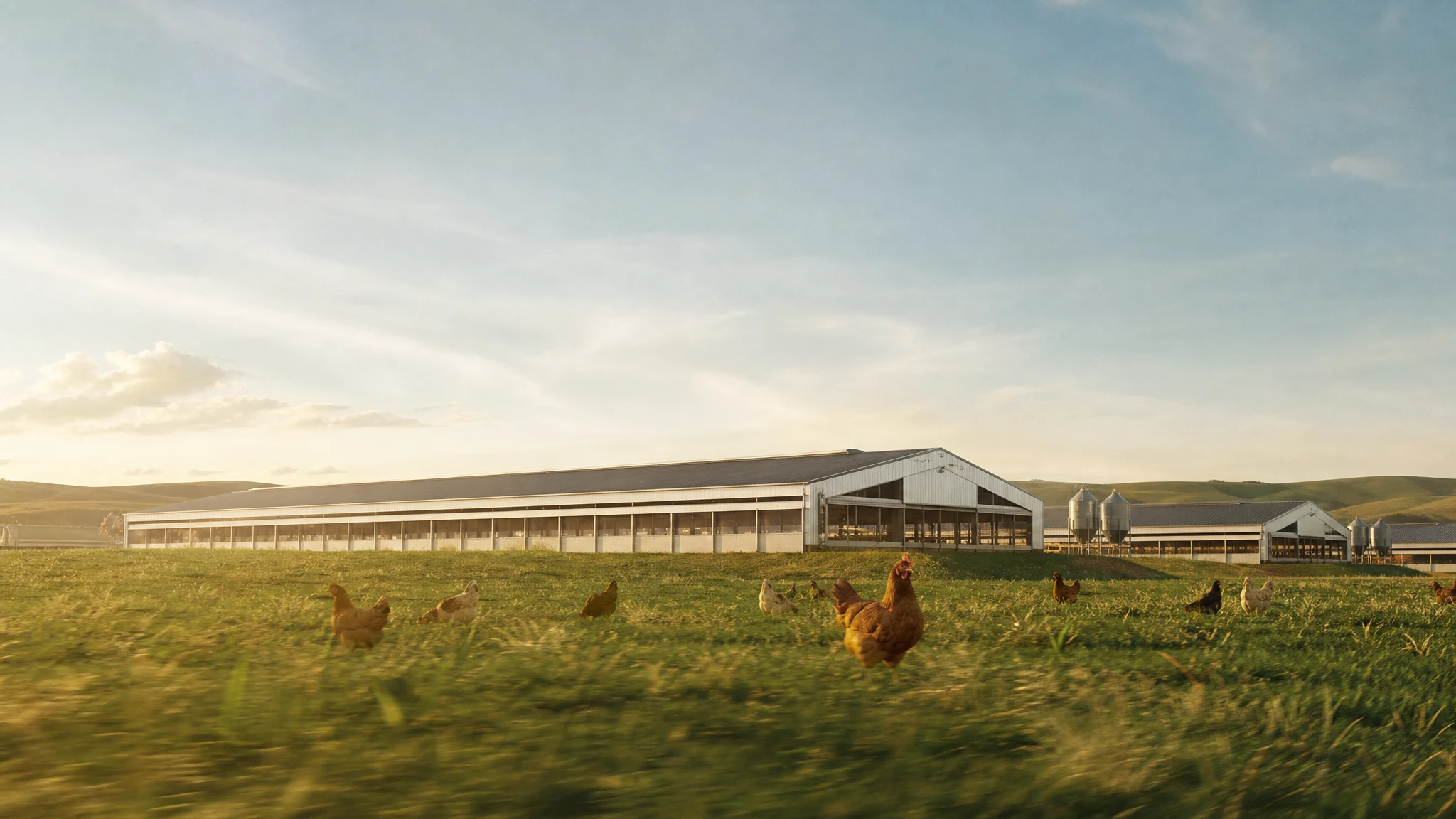
Turn Vermicompost into Marketable Fertilizer Product
For commercial vermicompost producers, fertilizer manufacturers, recycling companies, and larger agricultural operations, a vermicompost pellet machine provides the controlled forming step needed to turn mature worm castings and vermicompost blends into consistent, sale-ready fertilizer pellets.
RICHI configures the pelletizer around the material actually entering the machine—not simply its name. Screened fine vermicompost, fibrous material, partially agglomerated product, and formulated blends can behave very differently as moisture, particle size, bulk density, and added ingredients change, so feeding, conditioning, die selection, and upstream preparation must be matched accordingly.
The pelletizer, however, is only one part of what we can supply. Drawing on fertilizer pelletizing projects delivered for customers in different countries, RICHI can provide standalone machines, modular processing sections, or complete vermicompost fertilizer systems according to the condition of the feedstock and the products a customer intends to make. The same facility can be engineered to process different organic fertilizer raw materials and produce both pellet and powder products where required.
Who Needs Vermicompost Pellet Machine?
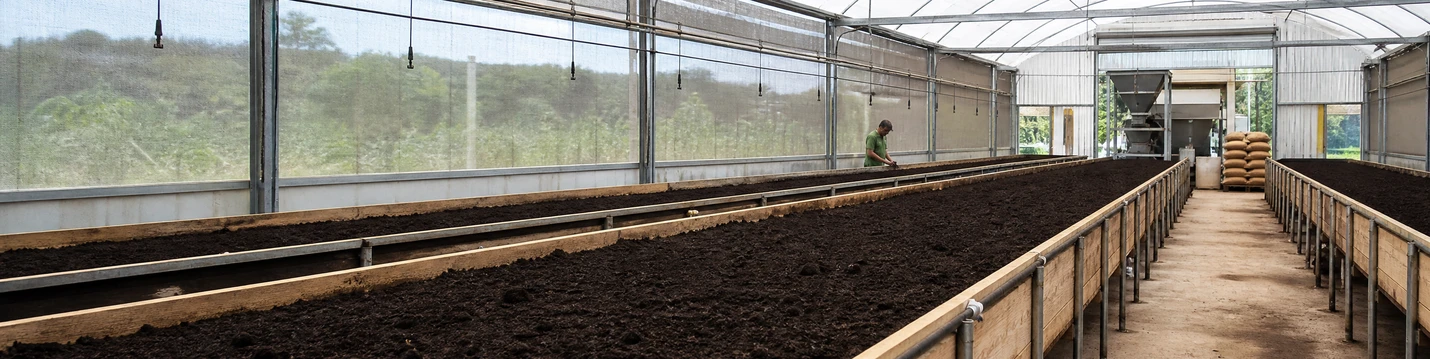
Commercial Vermicompost Producers
Commercial vermicompost producers are the most direct users of a vermicompost pellet machine, particularly those already selling substantial volumes of screened worm castings or loose vermicompost. Their finished material is generally fine and organic-rich, but moisture, residual fibers, lumps and particle distribution can vary with the feedstock and harvesting method.
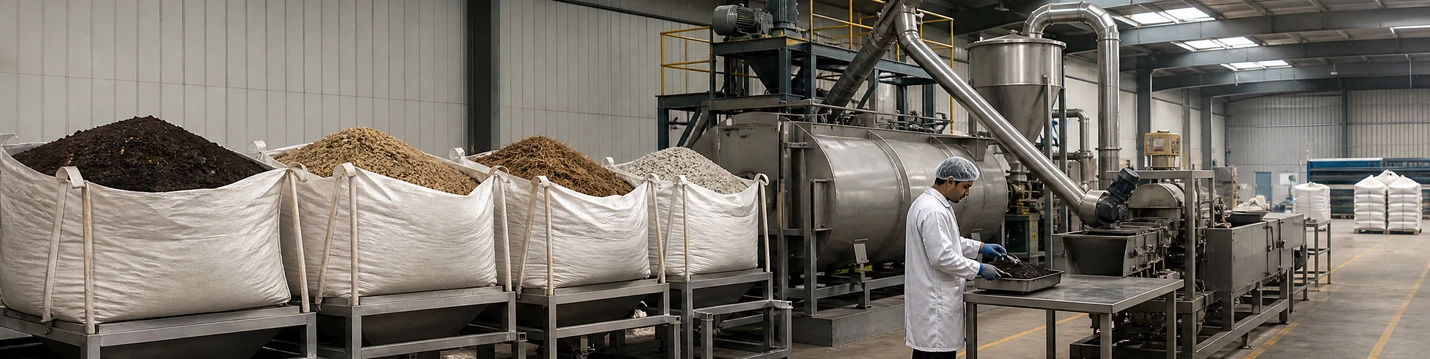
Organic Fertilizer Manufacturers
Fertilizer manufacturers often purchase vermicompost or worm castings and combine them with mature manure compost, other organic materials or permitted mineral ingredients to produce formulated fertilizers. Our vermicompost pellet machine provides a stable forming stage for these prepared blends, allowing manufacturers to develop uniform pellet fertilizers in different specifications while retaining flexibility for multiple formulas.
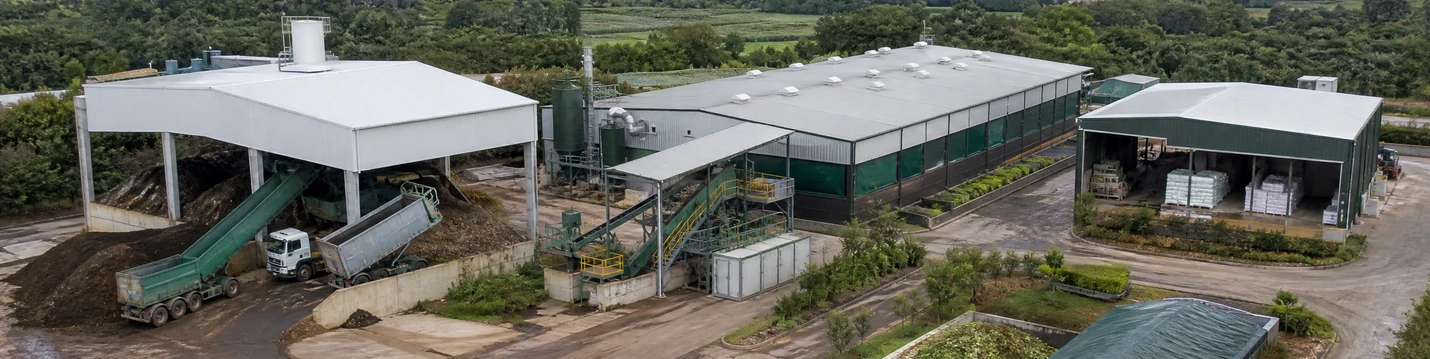
Waste Recycling & Vermicomposting Companies
Organic recycling companies commonly receive manure, food-processing residues, fruit and vegetable waste, crop residues and other biodegradable materials before stabilization and vermicomposting. The material reaching the pelletizing stage should already be mature vermicompost—not untreated waste—and its physical condition may range from fine castings to material containing residual plant fibers or agglomerates.
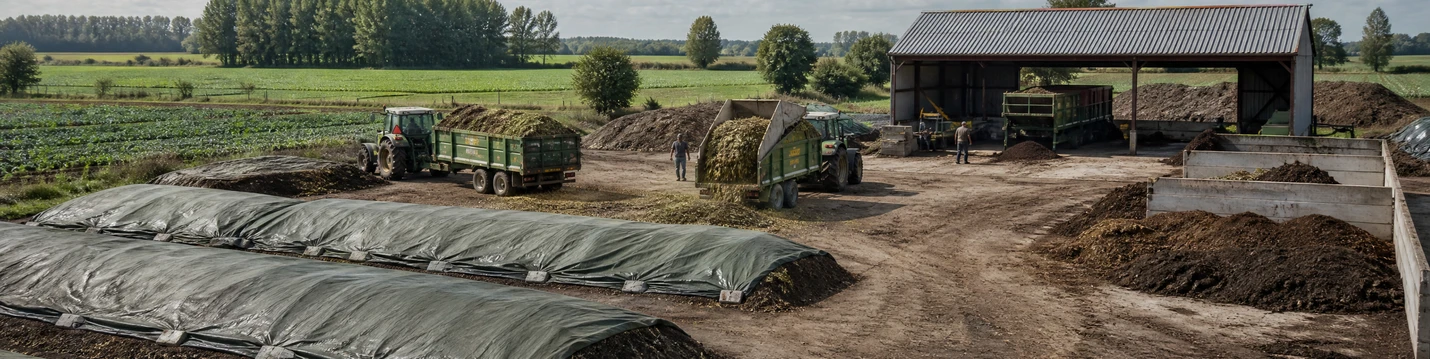
Agricultural Cooperatives & Farm Groups
Regional cooperatives and organized farm groups can become suitable buyers when manure and crop residues are collected centrally, converted through composting and vermicomposting, and produced at a volume sufficient for a commercial pellet plant. Once mature, screened material is available in adequate quantities, our pelletizing system can turn it into consistent fertilizer pellets for use across member farms or packaged sales.
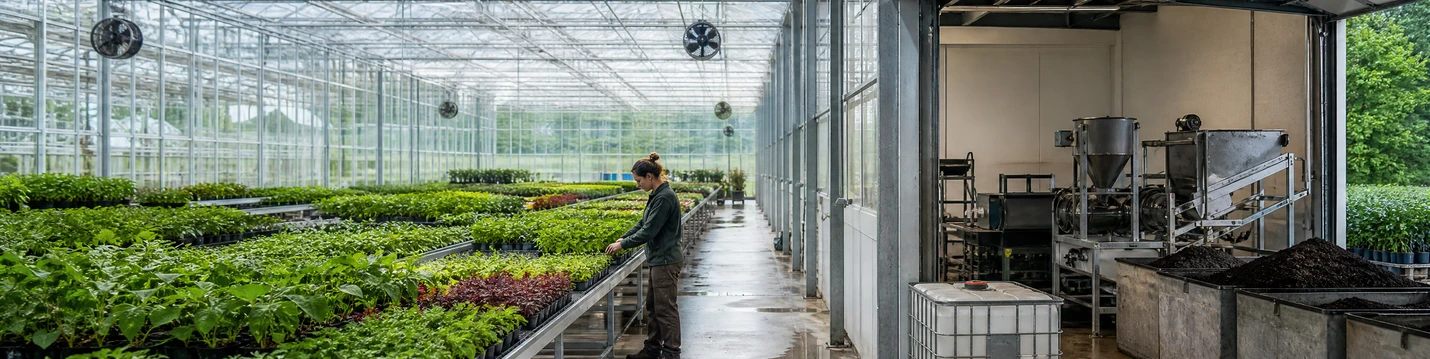
Greenhouse & Horticultural Enterprises
Large greenhouse groups, nurseries, orchard businesses and integrated horticultural companies are relevant when they operate their own organic-waste recovery and vermicomposting systems rather than simply purchasing vermicompost for field application. Their vermicompost may originate from crop residues, plant waste, selected manure streams or other suitable organic feedstocks and can vary noticeably in fineness, fiber content and moisture.
Large livestock and layer farms with centralized manure treatment and established vermicomposting operations, integrated organic fertilizer plants, agricultural waste processors, soil-amendment manufacturers, bio-organic fertilizer producers, contract fertilizer processors and other enterprises may also be suitable customers. Tell us what your vermicompost is made from, its moisture and physical condition, your available quantity, required pellet size and existing equipment, and we can determine the appropriate pelletizing configuration.
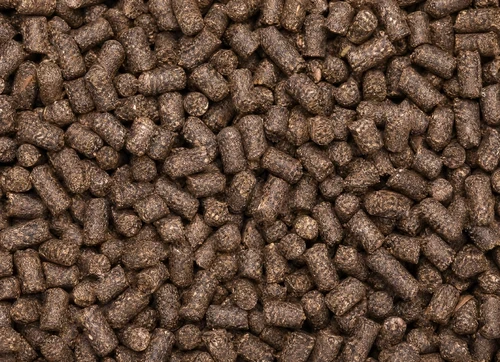
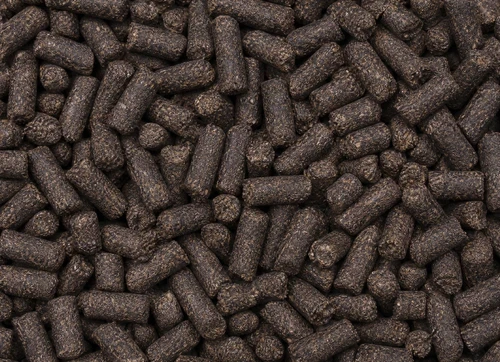
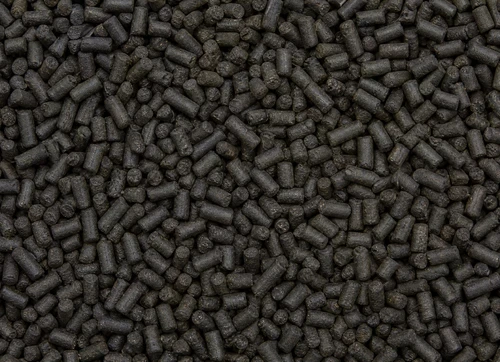
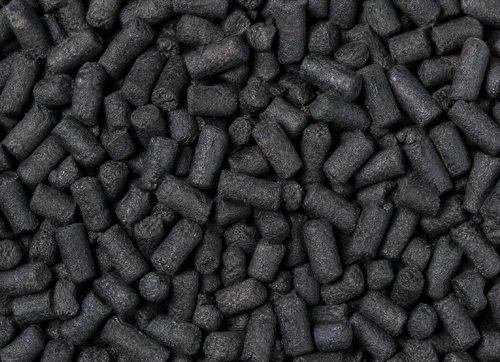
What Materials Can a Vermicompost Pellet Machine Process?
A vermicompost pellet machine is designed primarily for mature vermicompost, worm castings, and vermicompost-based fertilizer blends, but the material entering the pelletizer can differ considerably from project to project. Moisture content, particle size, residual fibers, impurities, bulk density, and the proportion of added ingredients all influence feeding and pellet formation. RICHI therefore configures screening, crushing, moisture adjustment, mixing, and pelletizing according to the actual feedstock rather than requiring every customer to prepare an identical formula.
Vermicompost can also be combined with suitable materials already available at farms or fertilizer plants, including processed manure compost, crop residues, bedding-derived organic matter, plant fibers, and other fertilizer ingredients. Agricultural and forestry residues, food and kitchen organic waste, suitable organic sludge, and animal manure may also become part of a vermicompost-based fertilizer system after the necessary composting, stabilization, drying, size reduction, impurity removal, or formulation steps. These materials should not be interpreted as universally suitable for direct feeding into the pelletizer in their original state.
Animal Manure Compost
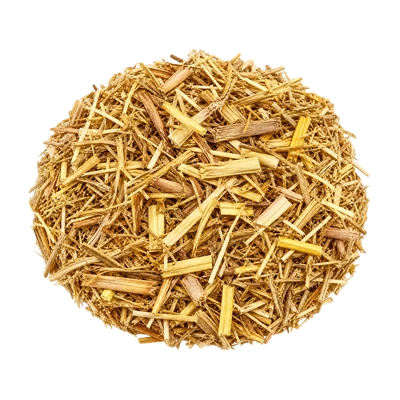
Crop Straw & Stalks
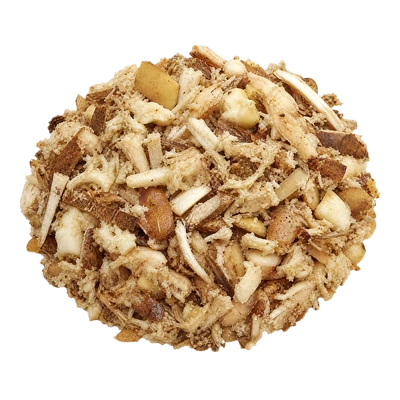
Root & Tuber Residues
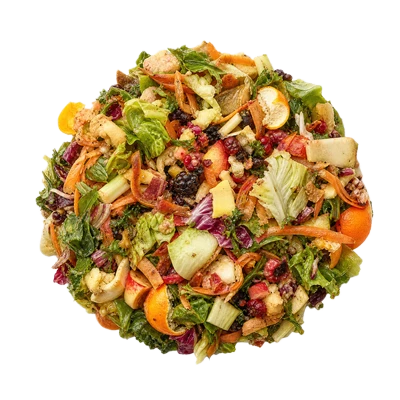
Fruit & Vegetable Residues
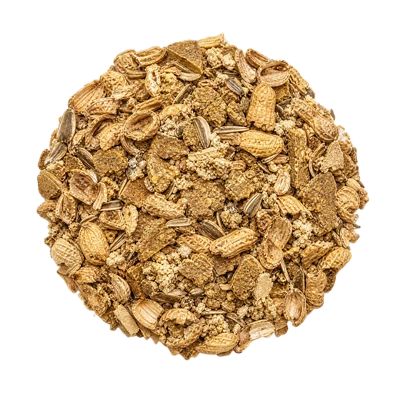
Oilseed Processing Residues
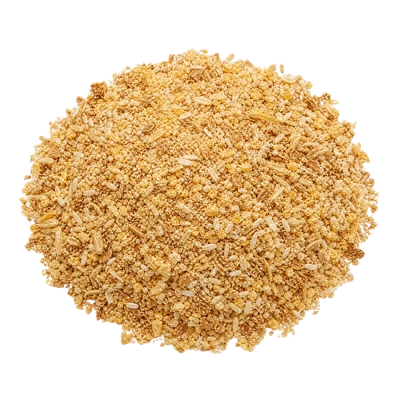
Grain & Milling Residues
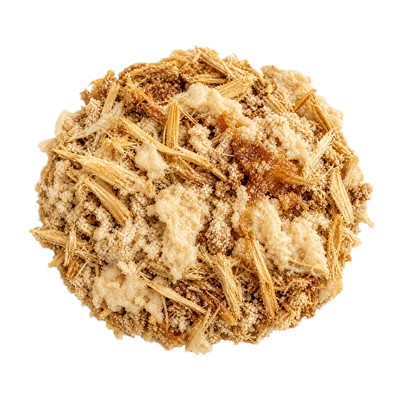
Sugar & Starch Residues
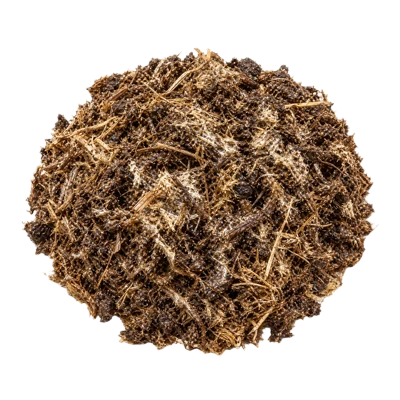
Mushroom Growing Residues
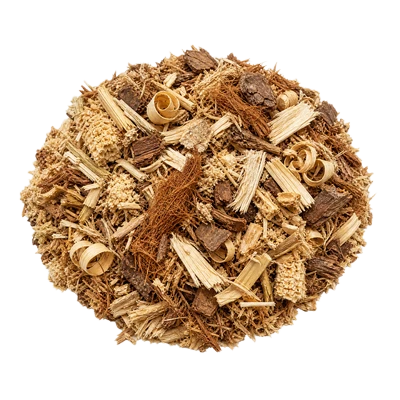
Wood & Plant Fibers
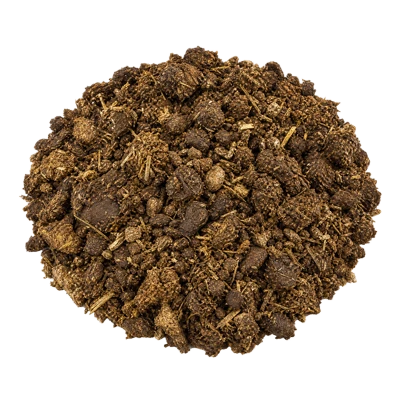
Vermicompost & Worm Castings
This is the principal raw material for the machine. Mature vermicompost may be fine and relatively uniform, or it may contain fibrous particles, small agglomerates, residual bedding material, and different levels of moisture depending on the original feedstocks, worm-processing system, harvesting method, and storage conditions. Screened vermicompost can be pelletized alone, while other products may require crushing, moisture conditioning, or blending before granulation.
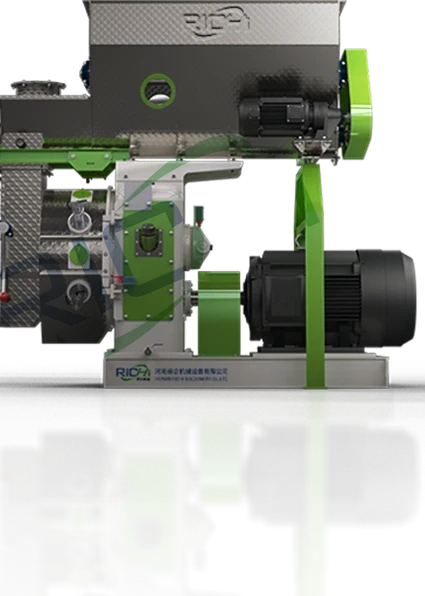
Built for Stable Organic Fertilizer Granulation
The RICHI vermicompost pellet machine uses a ring-die granulation structure engineered for continuous processing of prepared vermicompost and organic fertilizer blends. Because these materials can be relatively loose, low in bulk density, fibrous, or variable in flowability, stable feeding and consistent compression are as important as installed power.
The machine combines forced feeding, gear-driven transmission, a precision-manufactured ring die and roller assembly, controlled pellet cutting, and overload protection to maintain dependable operation under changing fertilizer formulations. Components exposed to material contact or sustained mechanical loads are selected with wear resistance, corrosion control, maintenance access, and long-term production in mind.
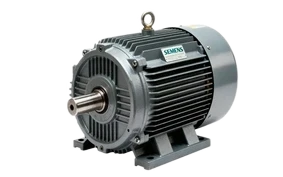
The Siemens main motor provides dependable power for continuous granulation, paired with the transmission system according to the selected machine model.
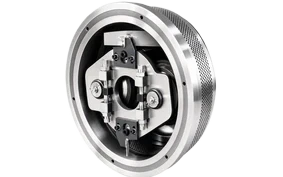
The heat-treated ring die is engineered for sustained fertilizer granulation, with die specifications selected for vermicompost formulation and required pellet diameter.
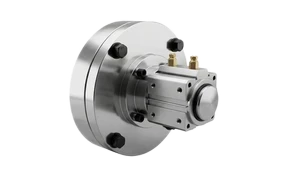
The protection system responds to abnormal overload conditions in the pelleting chamber, helping protect key transmission and working components from damage.
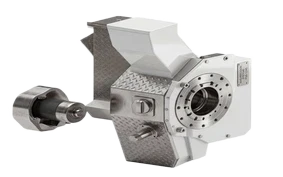
A dedicated forced feeder delivers loose, low-density vermicompost blends steadily into the pelleting chamber, reducing irregular feed under changing material conditions.
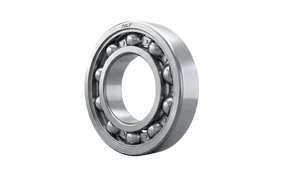
SKF bearings support critical rotating components under continuous pelleting loads, helping maintain transmission stability and reliable long-term operation.
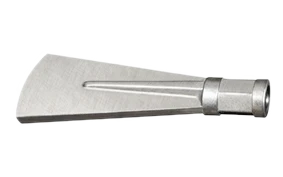
The cutter controls pellet discharge length after extrusion through the ring die, allowing finished vermicompost pellets to be produced to the required specification.
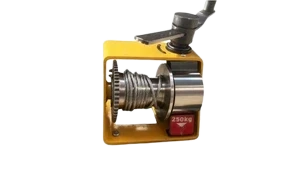
The lifting mechanism assists with handling the heavy ring die during replacement and maintenance, reducing manual work and improving service accessibility.
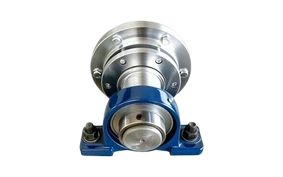
The high-precision gear drive transfers power efficiently to the pelleting system, providing stable torque for continuous compression of prepared fertilizer mixtures.
Why Choose RICHI Vermicompost Pellet Machine?
A profitable vermicompost project depends on more than forming pellets. The machine must suit the actual worm castings, product formula, production target, and existing plant. RICHI combines fertilizer pelletizing experience with flexible machine and line engineering, helping commercial producers turn available organic resources into stable, market-ready products without paying for unnecessary equipment.

One Machine, More Product Options
Process pure vermicompost or prepared blends with manure compost and other fertilizer ingredients, giving producers greater flexibility as formulas change.

Built Around Your Vermicompost
Moisture, fibers, density and formulation vary by producer. We match feeding, die specifications and operating parameters to your prepared material.

Better Value from Existing Resources
Pelletizing turns bulk vermicompost into a standardized product suited to controlled sizing, bagging and commercial sale, creating more ways to market existing output.

Engineering Support Beyond Delivery
RICHI draws on global fertilizer pelletizing projects to match capacity, raw material preparation and equipment configuration to practical production requirements.

Customized from Pelletizer to Plant
Choose a standalone vermicompost pellet machine or a tailored line integrating only the crushing, mixing, drying, cooling and packing stages you need.

How Does a Vermicompost Pellet Machine Work?
Prepared vermicompost or a formulated fertilizer blend is delivered continuously into the pelleting chamber by the feeding system. Inside the vermicompost pellet machine, the rotating working assembly distributes and compresses the material between the rollers and ring die. Under mechanical pressure, the conditioned material is forced through the die holes and formed into continuous strands. An adjustable cutter trims the extruded material to the required pellet length before discharge. Stable pellet formation depends on matching feed rate, material moisture and particle condition with the selected die specification and operating settings.
Technical Specifications
| Model | Capacity (t/h) | Main Motor Power (kW) | Anti-Bridging Feeder Power (kW) | Forced Feeder Power (kW) | Ring Die Inner Diameter (mm) | Finished Pellet Diameter (mm) |
|---|---|---|---|---|---|---|
| FZLH250 | 1–1.5 | 22 | 2.2 | 0.75 | 250 | 4–12 |
| FZLH320 | 2–3 | 22 | 2.2 | 0.75 | 320 | 4–12 |
| FZLH350 | 3–5 | 37 | 2.2 | 0.75 | 350 | 4–12 |
| FZLH420 | 6–8 | 90 | 3 | 1.5 | 420 | 4–12 |
| FZLH520 | 9–12 | 132 | 3 | 1.5 | 520 | 4–12 |
| FZLH678 | 18–22 | 200 | 3 | 1.5 | 673 | 4–12 |
| FZLH768 | 22–26 | 250 | 4 | 1.5 | 762 | 4–12 |
Model selection should be based on more than hourly output: the moisture, flowability and formulation of the prepared vermicompost, required 4–12 mm pellet diameter, operating hours, and upstream preparation all affect the final configuration. For projects with special formulas, plant layouts, feeding requirements, or integration needs, the pelletizing system and supporting equipment can be customized around the actual production conditions.
Vermicompost Pelletizing Requirements
Good vermicompost pellets start with the condition of the material before it reaches the die. Moisture, particle distribution, residual fibers, formulation, and die size interact with one another, so a vermicompost pellet machine should not be operated from one fixed recipe. RICHI uses material testing and project-specific die selection to establish the working window for each customer, whether the plant is producing 1 T/H of straight vermicompost pellets or operating a larger industrial line with blended organic fertilizer formulas.
Raw Material Particle Size
1–5 mm
Raw Material Moisture Content
12–30%
Pelletizing Temperature
50–80℃
Compression Ratio
1:4–1:8
Pellet Length
5–30 mm
Pellet Formation Rate
85–95%
Finished Pellet Moisture
≤12–15%
Cooling Temperature
≤40℃
Screening Efficiency
≥95%
Fines Content
≤5–10%
Broken Pellet Rate
≤3–5%
Operating Mode
Continuous Operation
A practical production sequence is Screening / Size Reduction → Moisture Adjustment → Formula Mixing if required → Pelletizing → Cooling → Screening → Fines Return or Packing. Not every project needs every stage: clean, well-conditioned worm castings may require little preparation, while wetter or fiber-rich blends can need additional crushing, drying, or conditioning before entering the pelletizer.
The most reliable specification is therefore not a generic number copied from another fertilizer plant. Send us your vermicompost source, current moisture, particle condition, formulation, hourly volume, and required pellet size, and RICHI can match the model, die, preparation requirements, and downstream equipment to your actual material.
Vermicompost Pellet Machine Projects
RICHI has developed fertilizer pelletizing solutions around very different vermicompost conditions, from relatively dry screened worm castings to wetter blends containing manure compost, crop residues, bedding fibers, and agro-processing by-products. A vermicompost pellet machine is therefore rarely selected by capacity alone. Material availability, initial moisture, fiber content, blending ratio, required preparation, and finished fertilizer specification all affect the final configuration. For many commercial projects, we supply not only the pelletizer but also the necessary screening, crushing, drying, mixing, cooling, recycling, and packing equipment to form a complete vermicompost fertilizer production line.
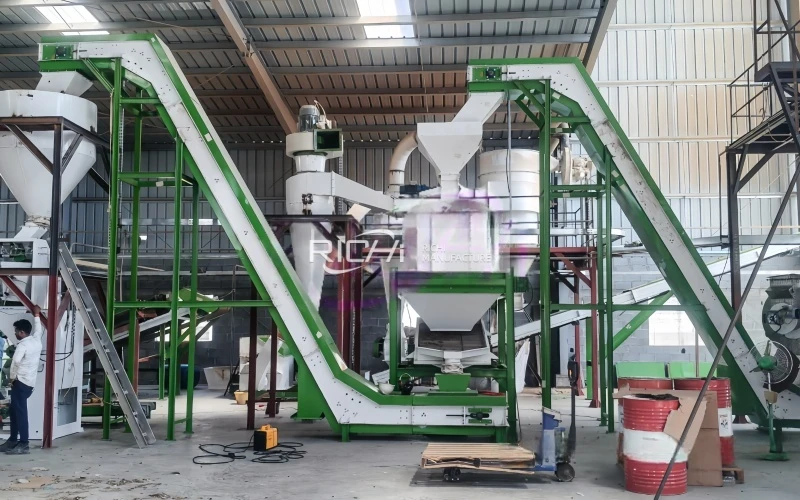

3 T/H
Cow-Manure Vermicompost Project in India
The plant processes a blend of approximately 70% cow-manure vermicompost, 20% composted crop straw, and 10% press-mud compost. The incoming mixture typically contains 34–40% moisture and some residual straw fiber, so RICHI configured screening, fine crushing, controlled moisture reduction, batching, mixing, pelletizing, cooling, screening, and bagging for continuous fertilizer production.
Equipment Used :FZLH350
Pellet Size :4 mm
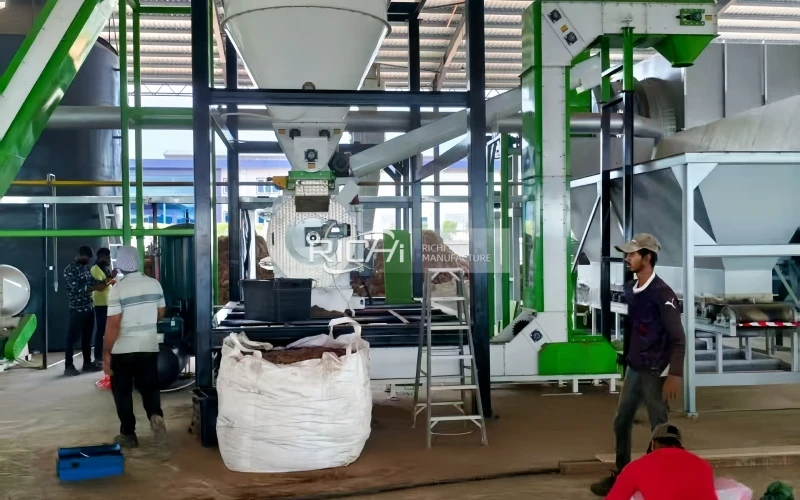

2-3 T/H
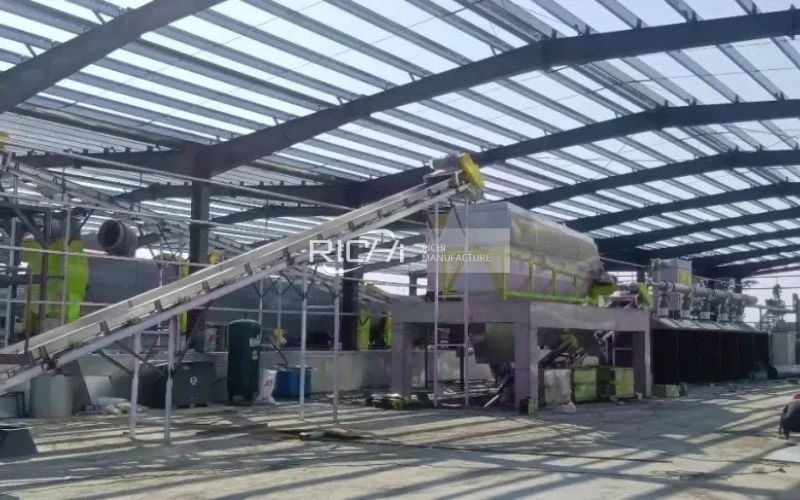
EFB Vermicompost Fertilizer Project in Malaysia
The formula contains about 50% vermicompost, 30% composted EFB, and 20% mature poultry-manure compost, with initial moisture around 42–48%. Because the EFB fraction remains fibrous while the manure-derived material carries more moisture, RICHI included fiber size reduction, drying, controlled mixing, pelletizing, cooling, screening, and fines recycling.
Equipment Used :FZLH320
Pellet Size : 4 mm

4 T/H
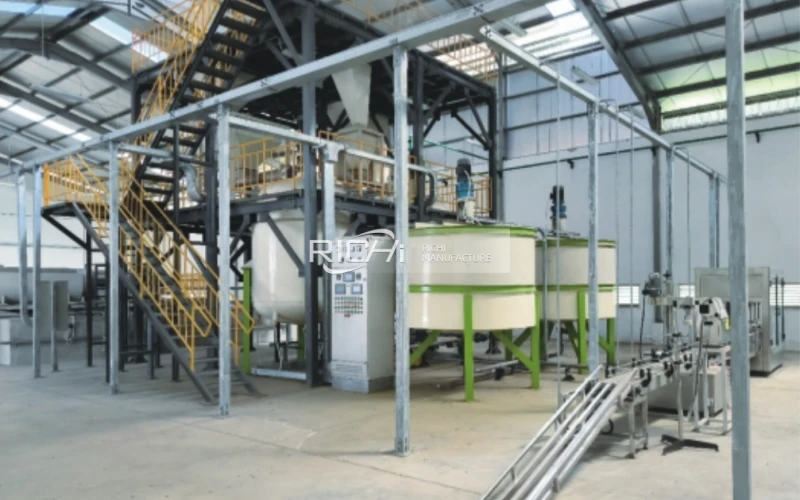
Cattle-Bedding Vermicompost Project in Argentina
Around 65% cattle-manure vermicompost is blended with 20% composted wheat straw and 15% aged sawdust bedding. Storage and the relatively dry bedding keep initial moisture at about 21–26%, so intensive drying is unnecessary; the system instead focuses on screening, fiber crushing, batching, mixing, moisture conditioning, pelletizing, cooling, and packing.
Equipment Used :FZLH350
Pellet Size : 4-6 mm

1-1.5 T/H
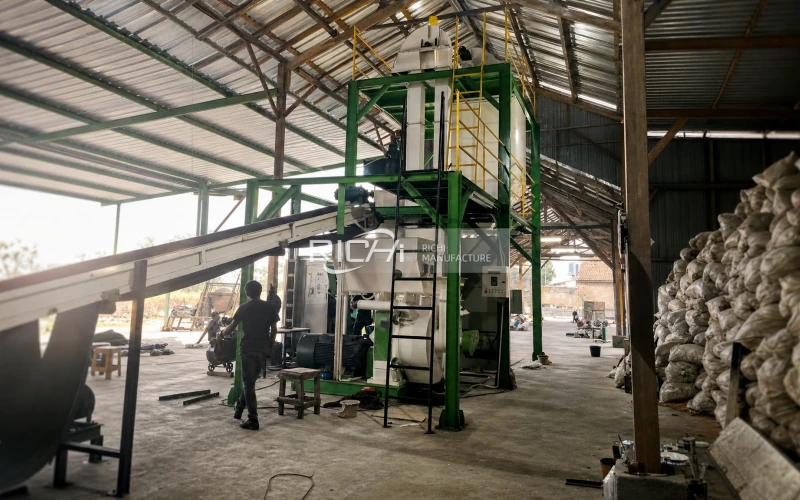
Pure Worm Castings Project in Australia
This project uses 100% mature worm castings that have already been harvested, screened, and partially dried, arriving at approximately 16–20% moisture. With no coarse co-materials in the formula, RICHI designed a compact system using controlled moisture conditioning, steady feeding, pelletizing, cooling, screening, fines return, and small-bag packing rather than installing an unnecessary dryer.
Equipment Used :FZLH350
Pellet Size : 3-4 mm

3-4 T/H
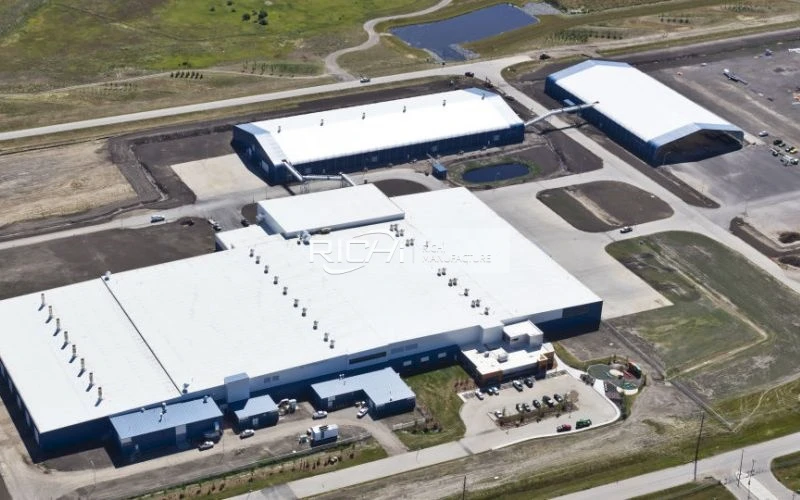
Cassava-Rice Vermicompost Project in Indonesia
The fertilizer blend uses roughly 55% vermicompost, 25% stabilized cassava-processing residue, and 20% rice-husk compost. Initial moisture of about 36–43%, combined with differences in particle density and structure, requires moisture reduction, screening, crushing where needed, ratio-controlled mixing, pelletizing, cooling, screening, and recycle handling.
Equipment Used :FZLH350
Pellet Size : 3-5 mm

4-5 T/H
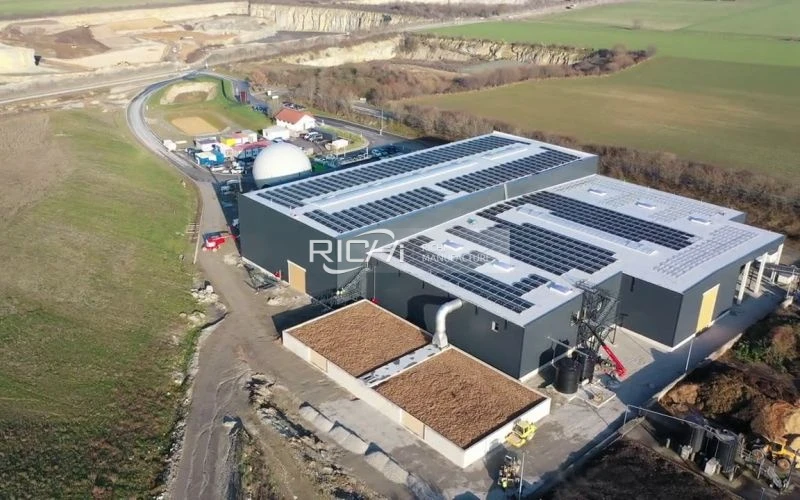
Green-Waste Vermicompost Project in Germany
The manufacturer combines approximately 60% screened vermicompost with 25% mature green-waste compost and 15% processed wood fiber. The material arrives at around 24–30% moisture, but its main challenge is particle-size variation rather than excessive water, so the supplied section emphasizes screening, fiber milling, precise mixing, pelletizing, cooling, and final classification.
Equipment Used :FZLH350
Pellet Size : 4 mm

6T/H
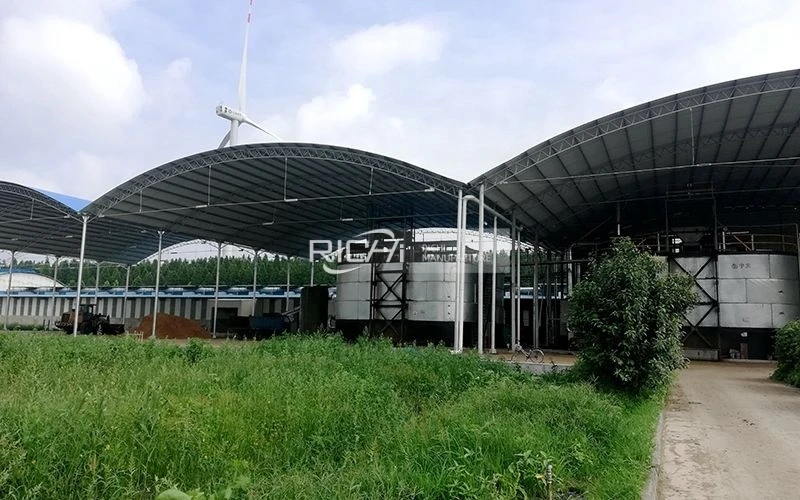
Vineyard Vermicompost Fertilizer Project in France
The plant formulates fertilizer from about 60% vermicompost, 25% mature compost derived from vineyard and grape-processing residues, and 15% other stabilized plant-based organic material. At roughly 28–35% initial moisture, the mixture requires screening, agglomerate reduction, moisture balancing, accurate blending, pelletizing, cooling, screening, and fines return before commercial packing.
Equipment Used :FZLH420
Pellet Size : 4 mm

7 T/H
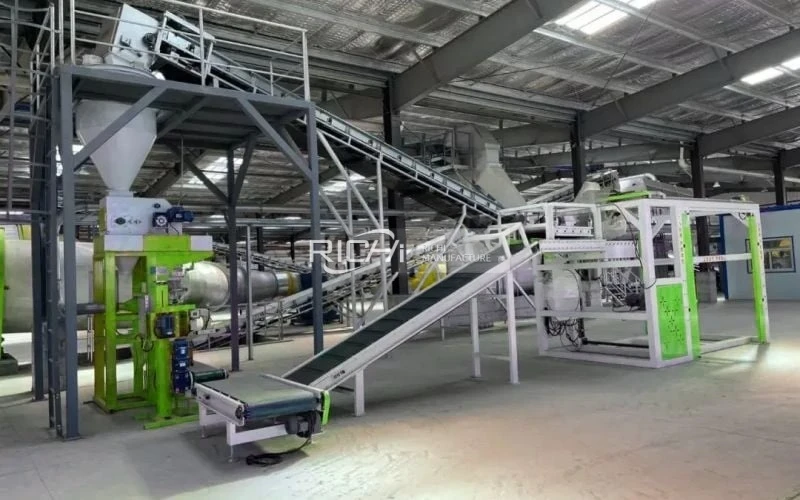
Agave-Fiber Vermicompost Project in Mexico
Approximately 50% vermicompost is combined with 30% composted agave fiber and 20% mature cattle-manure compost. The incoming blend typically ranges from 30–38% moisture, while the agave fraction introduces longer and less uniform fibers; RICHI therefore configured size reduction, screening, moisture adjustment, mixing, pelletizing, cooling, screening, and recycling.
Equipment Used :FZLH420
Pellet Size : 4-6 mm

9 T/H
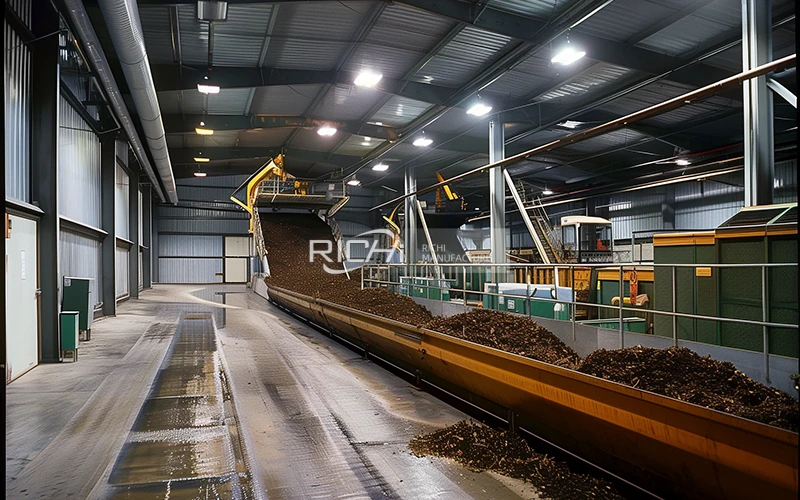
Poultry-Bedding Vermicompost Project in South Africa
The formulation consists of roughly 40% vermicompost, 35% mature poultry-manure compost, and 25% composted sawdust bedding. Depending on bedding storage and compost maturity, the mixed feed enters at around 32–40% moisture; drying adjustment, bedding-fiber crushing, proportioning, intensive mixing, pelletizing, cooling, screening, and automated packing form the main processing stages.
Equipment Used :FZLH520
Pellet Size : 3-4 mm

6 T/H
Food-Derived Vermicompost Project in South Korea
The customer’s formula contains approximately 50% vermicompost, 30% stabilized food-derived compost, 10% rice bran, and 10% sawdust-based structural material. The incoming blend can reach 38–46% moisture, largely because of the food-derived fraction, so RICHI incorporated moisture reduction, dosing, homogeneous mixing, pelletizing, cooling, screening, fines return, and packing.
Equipment Used :FZLH420
Pellet Size : 4 mm

10T/H
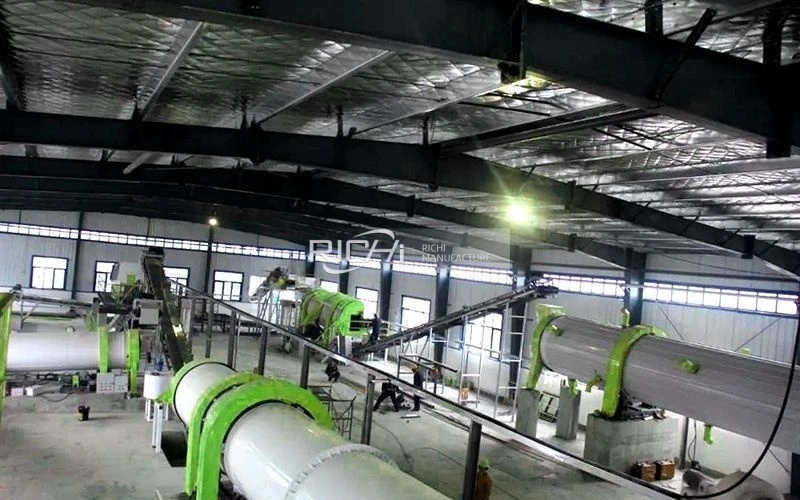
Cassava Vermicompost Fertilizer Project in Thailand
This is one of the wetter formulations: approximately 45% vermicompost is mixed with 35% stabilized cassava-processing residue and 20% rice-husk compost, giving an initial moisture level of about 46–55%. RICHI therefore placed greater emphasis on moisture reduction and drying before crushing, controlled mixing, pelletizing, cooling, screening, recycling, and packing.
Equipment Used :FZLH520
Pellet Size : 6 mm

12 T/H
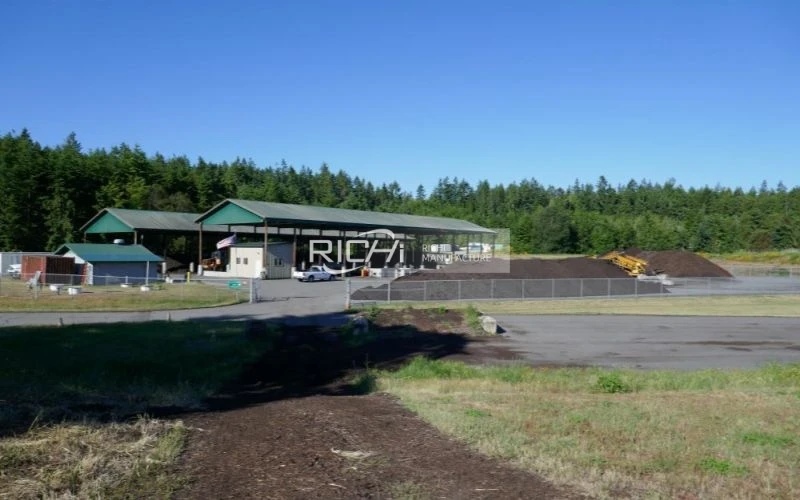
Rice-Straw Vermicompost Project in Vietnam
The centralized plant combines about 40% vermicompost, 30% composted rice straw, 20% mature cattle-manure compost, and 10% processed rice-husk material. At approximately 30–38% initial moisture, the key challenge is balancing fine vermicompost with fibrous, lower-density crop residues, so the line includes straw size reduction, screening, dosing, mixing, moisture adjustment, pelletizing, cooling, and packing.
Equipment Used :FZLH520
Pellet Size : 4 mm
Different feedstocks create different challenges, so the value of a vermicompost pellet machine is often best seen after it enters real production. The following customer experiences focus on the issues that matter after purchase—from handling fibrous bedding and wet compost blends to installation, operator training, process adjustment, and integration with existing fertilizer equipment.

US 3 T/H Dairy Bedding Vermicompost Pellet Project
“We were worried that the wood-shaving bedding left in our cattle-manure vermicompost would make feeding unstable, but the crushing and mixing arrangement solved that before pelleting. During commissioning, the engineers adjusted the moisture and feeding rate with our operators until the 4 mm pellets ran consistently.”
Canada 2 T/H Worm Castings Blending & Pelletizing Project
“Our existing plant already had screening and bagging equipment, so we did not want to buy another complete line just to add pellets. RICHI designed the new section around what we already owned, and the vermicompost pellet machine integrated without forcing us to rebuild the whole workshop.”
Brazil 5 T/H Bagasse-Vermicompost Fertilizer Pellet Project
“The difficult part of our formula was not the worm castings but the composted bagasse, because the fibers were still uneven after storage. RICHI helped us change the crushing and blending sequence before shipment, and that made the material much easier to pellet when the line started running.”
UK 1.5 T/H Food-Waste Vermicompost Pellet Project
“We process stabilized food-derived material through vermicomposting, so our incoming product can change in moisture from one batch to another. The training was useful because the team showed us what to adjust at the feeder and conditioner instead of treating every batch as if it were the same material.”
Netherlands 4 T/H Green-Waste Vermicompost Fertilizer Project
“Our product combines fine vermicompost with composted horticultural residues, and keeping the blend uniform was more difficult than we expected. The dosing and mixing setup gave us much better control before granulation, while the cooling and screening section reduced the amount of loose fines reaching the packing area.”
Kenya 2.5 T/H Coffee-Husk Vermicompost Pellet Project
“We use cattle-manure vermicompost together with composted coffee husk, so the material is light and fibrous rather than behaving like ordinary fertilizer powder. RICHI paid particular attention to particle preparation and feeding, and the installation guidance helped our local team understand where moisture changes were affecting pellet quality.”
Japanese 1 T/H Food-Residue Worm Castings Pellet Project
“We needed a compact system because our raw-material volume does not justify a large fertilizer plant, but we still required controlled pellet quality and clean operation. The equipment arrived well organized, and the commissioning work focused carefully on feed consistency, cutter adjustment, cooling, and screening rather than simply running the machine at maximum output.”
New Zealand 3.5 T/H Manure-Bedding Vermicompost Project
“Our vermicompost comes from dairy manure mixed with bedding, and the moisture changes noticeably between storage periods, so a fixed setting was never going to work for us. The RICHI team explained how to adjust preparation and feeding around those changes, and our operators became comfortable with the process quite quickly.”
Vermicompost Pellet Machine Price
Vermicompost pellet machine prices generally range from USD 10,000 to USD 100,000, depending primarily on the selected model, output requirement, and project-specific configuration. A producer pelletizing screened worm castings at 1–2 T/H will require a very different investment from a fertilizer manufacturer processing several blended organic materials at industrial scale.
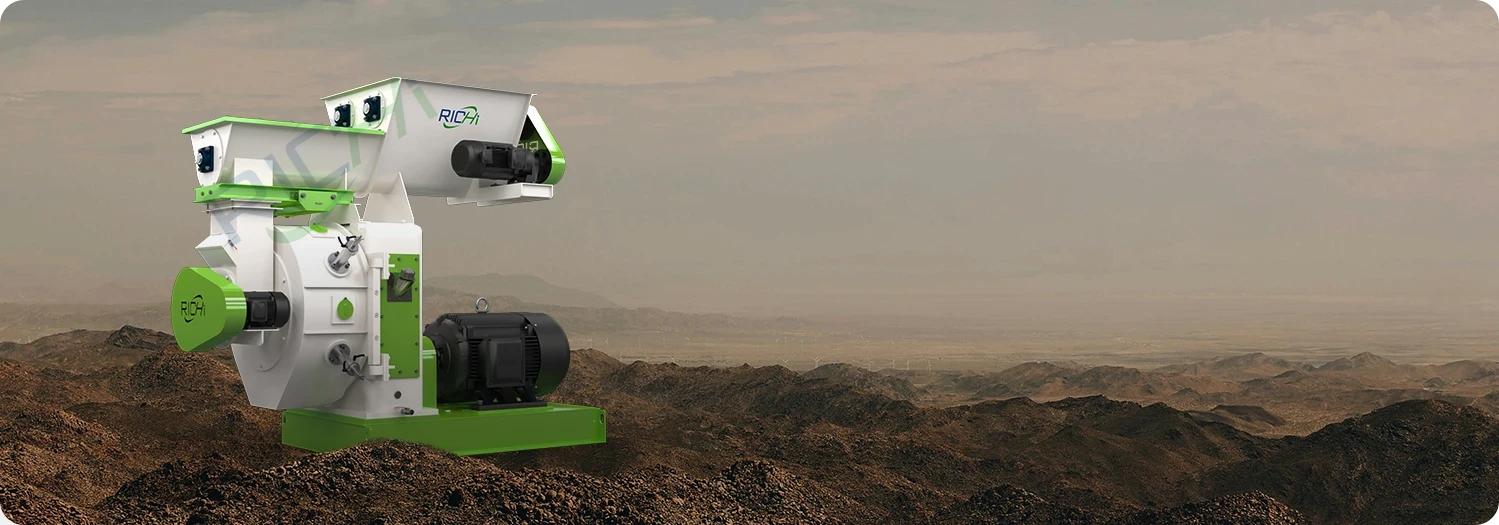
The figures below refer to the pelletizer itself rather than the cost of a complete vermicompost fertilizer production line. If the incoming material requires drying, crushing, dosing, mixing, cooling, screening, conveying, or packing, those systems are priced separately according to the actual vermicompost condition, plant layout, automation level, and required finished product.
Range for
Vermicompost Pellet Machine cost:
FZLH250 (22KW)
$10,000–$13,000
FZLH320 (22KW)
$15,000–$18,000
FZLH350 (37KW)
$18,000–$25,000
FZLH420 (90KW)
$26,000–$32,000
FZLH520 (132KW)
$43,000–$50,000
FZLH678 (200KW)
$64,000–$70,000
FZLH768 (315KW)
$75,000–$85,000
What Scale of Vermicompost Pellet Production Are You Planning?
Choose the capacity range closest to your available vermicompost volume and planned operating schedule. If your material includes manure compost, bedding, crop residues, or other blended ingredients, send us the formulation and daily raw materials availability so we can determine whether the selected capacity and model are appropriate.
From Vermicompost to Finished Fertilizer
A complete vermicompost fertilizer process can include composting, impurity removal, crushing, drying or moisture adjustment, batching, mixing, granulating, cooling, coating, screening, and packaging. The exact sequence depends on what the customer actually receives as feedstock. Mature screened worm castings may bypass composting and require only limited preparation, while manure, bedding, crop residues, food-derived organics, or other raw materials must first be stabilized and conditioned before they become suitable fertilizer ingredients.
RICHI therefore designs the process around raw-material condition rather than forcing every project into one standard layout. We consider whether the material is loose, fibrous, lumpy, wet, dry, or already composted; select crushing equipment to match its structure; determine whether fermentation or drying is necessary; and configure dosing and mixing around the required fertilizer formula. Available building dimensions, storage requirements, automation level, dust and impurity control, future product plans, and investment budget also influence the final arrangement.
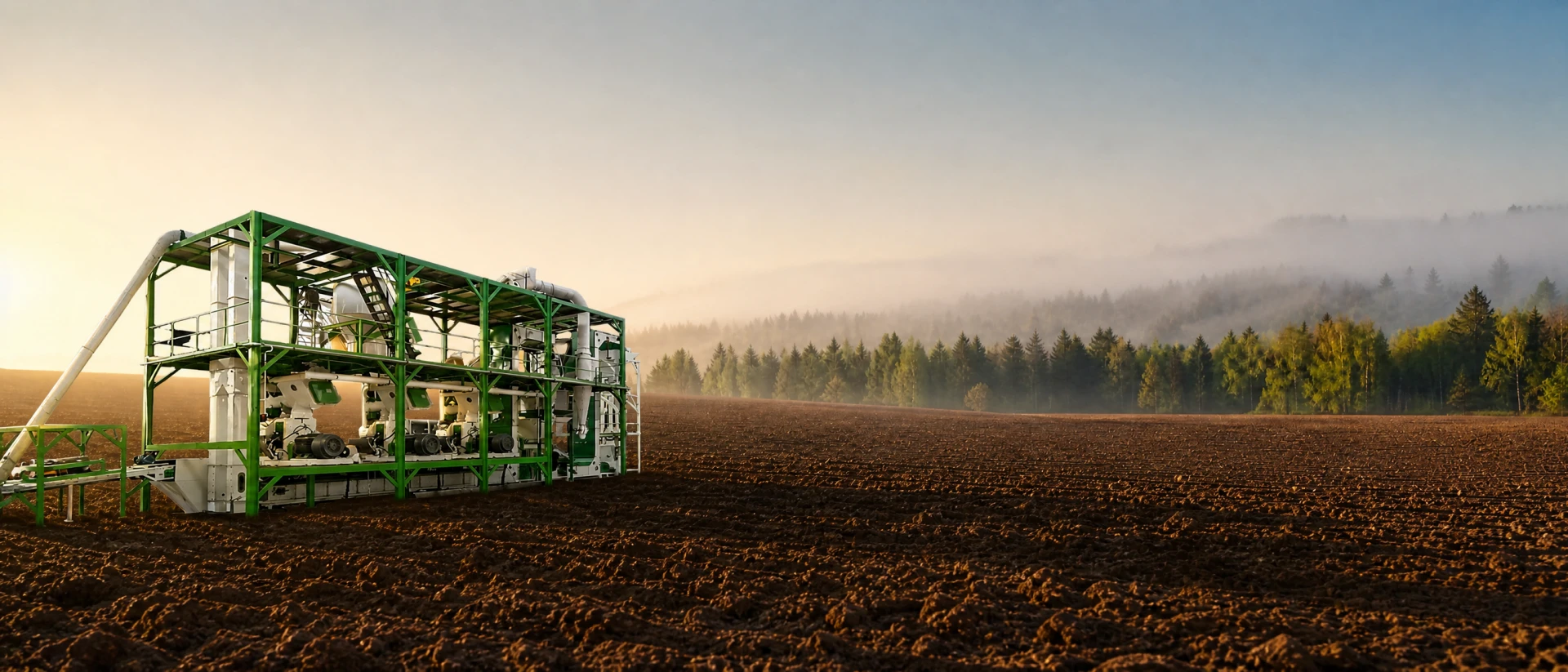
Complete Equipment for Vermicompost Pellet Production
RICHI can configure the vermicompost pellet machine together with crushers, mixers, dryers, screens, weighing systems, conveyors, coating units, and automation, while alternative machine types are available for the same process stage when material behavior, plant space, or budget calls for a different solution.
Vermicompost Turner
A compost turner is required when the project starts with manure, crop residues, bedding, or other organic feedstocks that still need aerobic composting before vermicomposting or fertilizer processing.
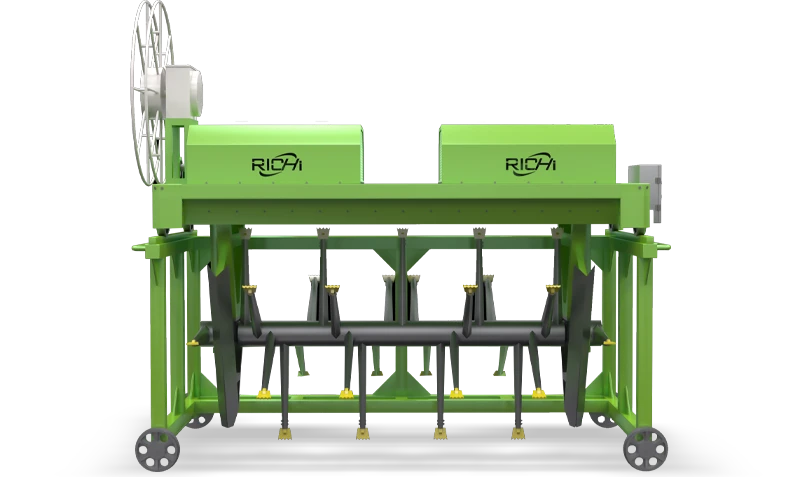
Turning Width
2–8 m
Turning Height
0.5–2.5 m
Vermicompost Crusher
A vertical chain crusher breaks agglomerates and suitable softer organic materials before batching, while highly fibrous straw, bedding, or woody residues may require a different crusher selected specifically for fiber reduction.
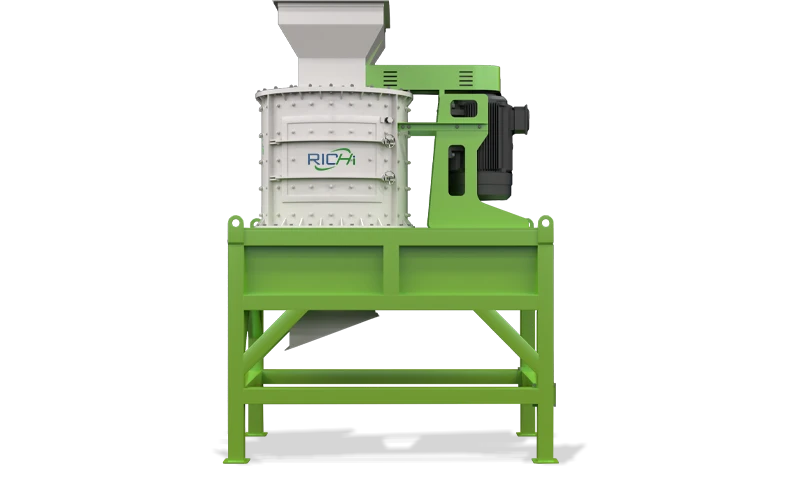
Capacity
1–30 T/H
Main Power
7.5–160 kW
Vermicompost Mixer
The mixer homogenizes vermicompost with mature manure compost, plant fibers, mineral amendments, recycled fines, or other formula ingredients before they reach the vermicompost pellet machine.
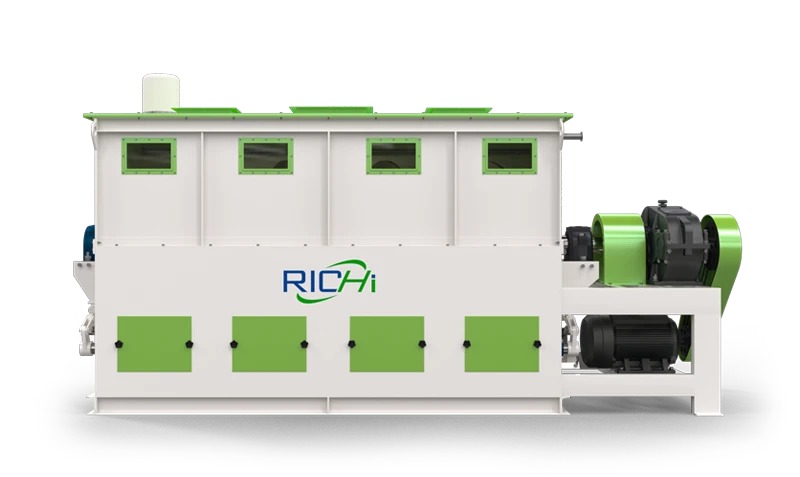
Capacity
250–2,000 kg/batch
Main Power
4-30KW
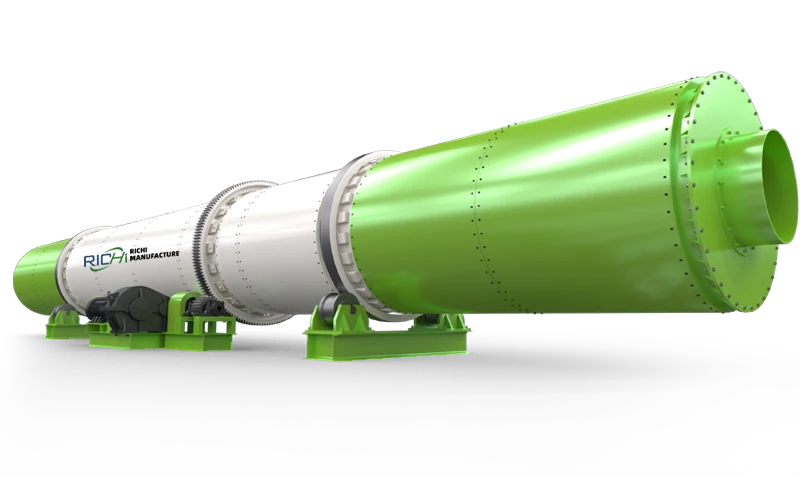
Vermicompost Dryer
A dryer is used only when the incoming vermicompost or blended fertilizer is too wet for stable pelletizing. It is especially relevant when worm castings are mixed with wetter manure compost, cassava residues, EFB compost, food-derived compost, or similar materials.
Capacity
1–30 T/H
Drying Temperature
60–250℃
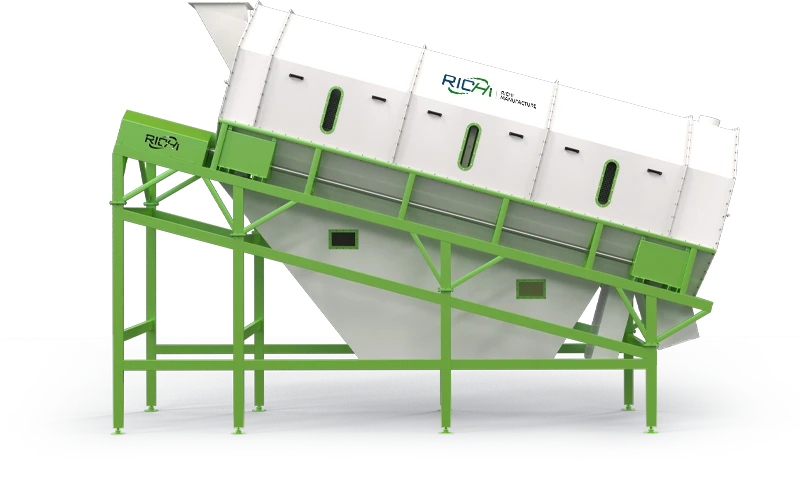
Vermicompost Screener
Screening can be used before pelletizing to remove oversized material and again after cooling to separate saleable pellets from fines and off-size product. Screen aperture are matched to the required pellet range and to whether fines are returned to the production process.
Capacity
3-50T/H
Screen Layers
1–3 Layers
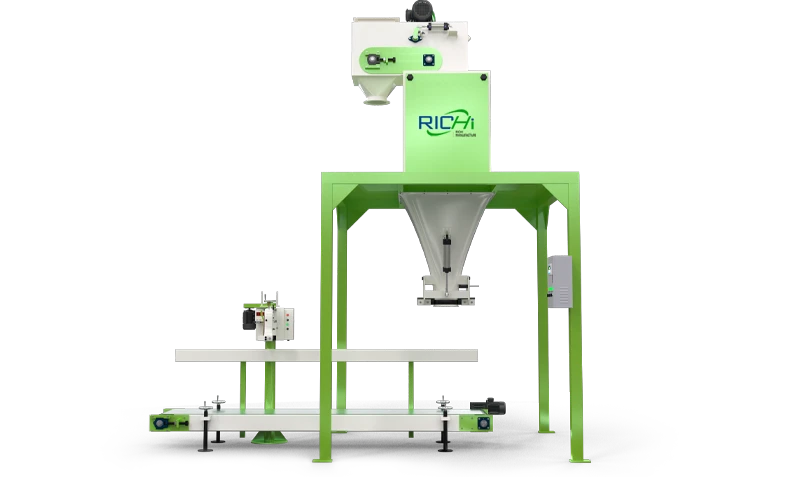
Vermicompostudge Bagger
The bagging scale weighs finished vermicompost pellets or powder fertilizer into commercial bags after screening. Semi-automatic systems suit moderate production, while higher-output plants can integrate automatic bag feeding, filling, sewing or sealing, conveying, and palletizing.
Packing Range
10–1000 kg/bag
Packing Speed
6–20 Bags/min
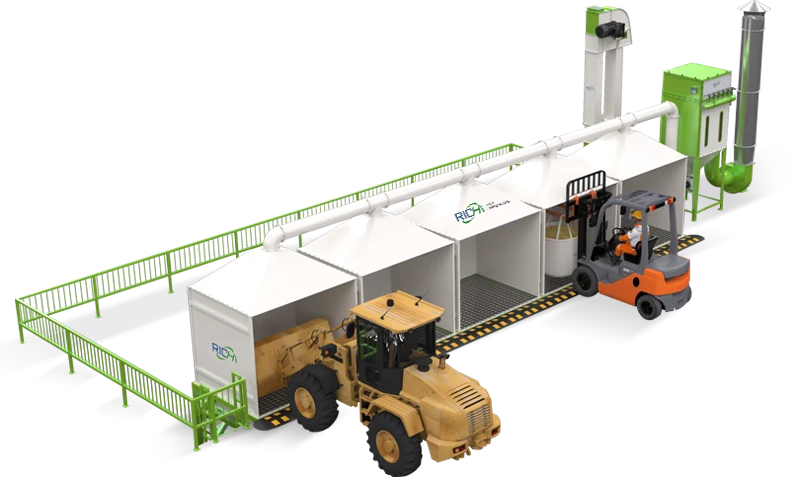
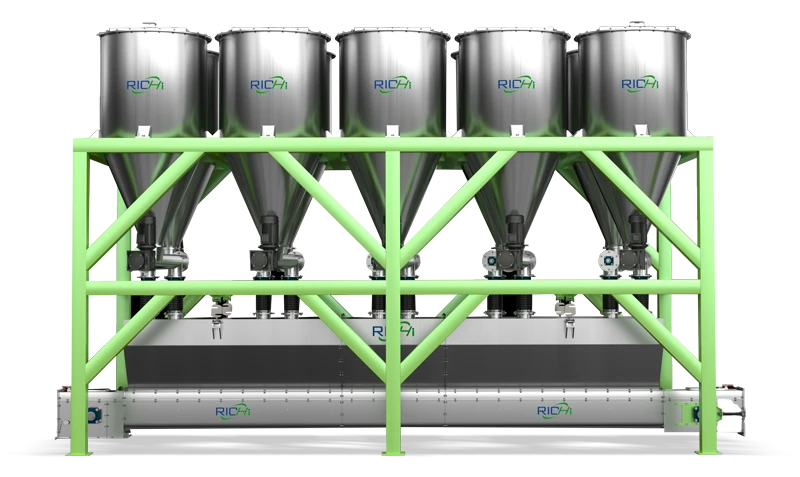
Feeding & Weighing System
Unlike the trace-element system, this unit handles the main bulk fertilizer ingredients—such as vermicompost, manure compost, or prepared plant-based material—in much larger proportions. Weigh hoppers or continuous weigh feeders control each main component before mixing so that changing formulas can be reproduced more consistently.
Weighing Capacity
1–50 T/H
Weighing Accuracy
±0.5–1%
Trace Element Dosing System
This system meters relatively small additions such as permitted micronutrient or mineral components into formulated vermicompost fertilizer. Because the addition rate can be far below the main organic-material flow, gravimetric weighing is normally preferred where repeatable recipe accuracy is important.
Dosing Accuracy
±0.1–0.5%
Hopper Volume
50–1000 kg
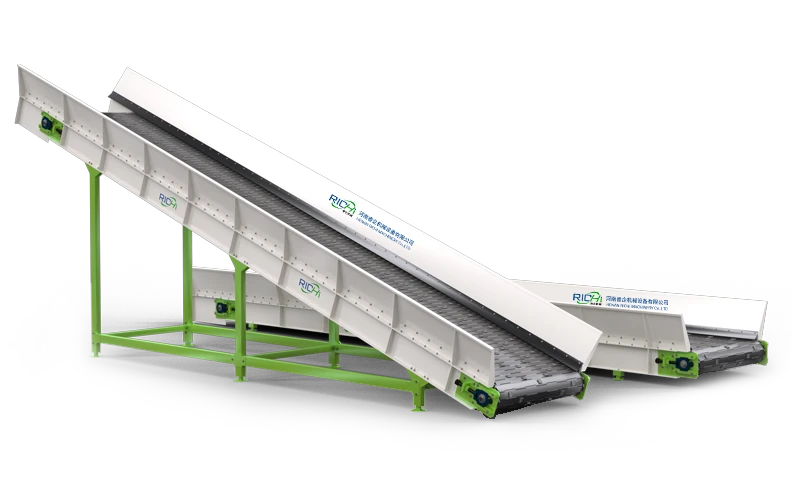
Vermicompost Conveyor
Belt, screw, bucket-elevator, and other conveying systems connect the individual processing stages and are selected according to whether the material is loose vermicompost, fibrous compost, powder, or finished pellets. Enclosed conveying can also be used where dust containment and cleaner workshop conditions are priorities.
Capacity
2-40T/H
Conveying Length
3–40 m
Beyond these units, a vermicompost fertilizer plant may also require manure dewatering equipment, raw-material cleaners, magnetic or impurity-removal devices, fermentation beds, storage bins, silos, bale breakers, rotary pre-screens, cooling equipment, recycling conveyors, liquid-addition systems, automatic controls, palletizing equipment, and dust-tight transfer points. The final equipment list should be defined only after the feedstock, initial moisture, formulation, required pellet size, available building dimensions, production target, and investment level are known.
Customized Vermicompost Fertilizer Production Solutions
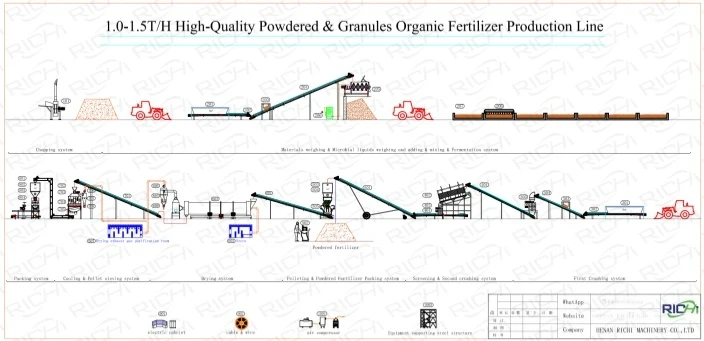
[Example Solution] 1–1.5 T/H Vermicompost Powder & Pellet Production Line
The following 1–1.5 T/H system is an example solution developed for a customer who needed one plant to handle vermicompost and other organic ingredients while producing both powdered fertilizer and granulated fertilizer. Finished powder size can be adjusted , while pellet products can be produced within a 2–12 mm specification range according to the selected die and market requirement.
The customer processes vermicompost together with straw-based and other organic fertilizer ingredients rather than relying on a single raw material. Because part of the incoming plant material is fibrous and the formulas require both dry ingredients and controlled liquid additions, the preparation section begins with straw cutting to approximately 20–30 mm, supported by dust collection.
A large receiving hopper accepts different materials from a loader, while magnetic separation removes ferrous contaminants before water, microbial liquids, or other specified liquid ingredients are metered into the mixer. Where incoming organic materials have not already reached the required level of biological stability, the mixed material proceeds through fermentation before downstream fertilizer processing.
crushing & feeding
cleaning & addition
mixing & fermentation
crushing & screening
powder packing
pelletizing & drying
cooling & storage
pellet packing
After maturation, another receiving hopper feeds the fertilizer material through magnetic separation and a first vertical crusher, which breaks wet agglomerates and prepares the material for a rotary drum screen. Fine material within the required range can continue toward the powder-product route, while oversize material is returned through a second vertical crusher for further size reduction. This arrangement allows the plant to produce and pack powdered vermicompost-based fertilizer directly into adjustable 10–50 kg bags while also preparing a controlled feed fraction for pellet production.
For granulated fertilizer, the prepared blend enters the vermicompost pellet machine and is formed into the specified pellet diameter. Fresh pellets then pass through drying to reduce moisture to a storage-appropriate level—typically adjustable around 8–15% where the formulation and local storage conditions require it—followed by cooling toward ambient temperature. A vibrating screen removes fines and off-size particles, which can be collected and returned to the process rather than discarded. Qualified pellets are buffered in a finished-product bin and packed into adjustable 10–50 kg bags for storage and sale.
This dual-product layout gives a commercial vermicompost producer or organic fertilizer manufacturer more flexibility than a pellet-only installation. Powder fertilizer can be sold or used when granulation is unnecessary, while the pellet route supports customers requiring a more standardized physical product. The same basic process can also be modified if the customer’s vermicompost arrives drier, contains fewer fibers, is already fermented, or needs additional impurity removal, drying, storage, automated dosing, or dust-control equipment.
Tell us what your vermicompost is made from, its initial moisture, available daily volume, other ingredients you plan to add, and whether you want powder, pellets, or both. We can use those conditions to build a process diagram and equipment list around your actual production rather than forcing this example layout onto a different material.
Market Prospects for Vermicompost Pellet Processing
Vermicompost already has recognized value as an organic fertilizer and soil amendment, while interest in recycled nutrients, organic fertilizers, and circular use of agricultural and food-derived wastes continues to expand in major agricultural markets. USDA notes the soil-structure and water-holding benefits of worm castings, while the EU has opened more market space for organic and waste-based fertilisers and is continuing to promote circular nutrient use.
For commercial producers, pelletization adds a practical product format for bagged fertilizer, soil amendments, horticultural products, orchard and field applications, and formulated organic fertilizers. The opportunity is particularly attractive where a producer can use one flexible line to process vermicompost alongside mature manure compost, crop residues, bedding-derived fibers, agro-processing by-products, or other suitable stabilized materials instead of depending on worm castings alone.
Growing Demand for Recycled Fertilizers
Europe is pushing greater use of organic and waste-based fertilizers, while commercial organic and biofertilizer activity is also expanding in parts of Africa and other agricultural regions. Producers able to convert local organic resources into consistent fertilizer products are better positioned to serve this shift toward nutrient recycling.
More Value from Vermicompost
Loose worm castings already have agricultural value, but pellets offer another saleable format for fertilizer distributors, farms, nurseries, orchards, landscaping, and soil-improvement markets. A vermicompost pellet machine lets established producers add standardized pellet products without abandoning their existing powder or bulk fertilizer business.
One Line, Multiple Organic Resources
Profitability does not have to depend on a limited supply of pure vermicompost. A properly configured line can also use suitable mature manure compost, crop residues, bedding, plant-processing wastes, and other stabilized fertilizer ingredients, allowing production to follow locally available raw materials and changing formulas.
Flexible Growth from Local to Industrial
Commercial plants can begin with lower-capacity pellet production where worm-casting supply is limited, then add drying, dosing, blending, powder production, or larger pelletizing modules as raw-material volume and sales expand. This makes capacity planning more closely tied to actual feedstock availability and market demand rather than oversized initial investment.
Frequently Asked Questions
We produce about 6 tons of worm castings per day. Is a 1 T/H machine too large?
Probably yes if 6 tons/day is your total pellet-ready material and you do not plan to add other ingredients. A 1 T/H vermicompost pellet machine running 8 hours needs roughly 8 tons/day of prepared feed, so you would either operate fewer hours or increase feedstock through suitable fertilizer blending.
How much vermicompost do I actually need for a 1 T/H line?
As a practical minimum, plan for about 8–10 tons/day of prepared material for one 8-hour shift, allowing some margin for screening losses and recycle. At 16 operating hours, the requirement rises to roughly 16–20 tons/day, so a very small worm farm is usually not suitable.
Can a layer farm justify its own vermicompost pelletizer?
Only when the manure treatment operation is large enough. As a preliminary project screen, a commercial layer farm generally needs tens of thousands of birds—and often well above 50,000–100,000 layers—plus a mature vermicomposting system or additional co-materials to support a 1 T/H fertilizer line continuously; the decisive figure is mature vermicompost output, not bird count alone.
We have around 600 dairy cows. Could that support a commercial line?
Potentially, especially if manure is centrally collected and combined with bedding, straw, or other organic materials. For a 1 T/H line, first confirm whether the farm can consistently produce at least about 8–10 t/day of screened, stabilized fertilizer feed after composting/vermicomposting losses rather than calculating from fresh manure alone.
Would a 2,000-head pig farm be large enough?
It may still be marginal if the project relies only on finished vermicompost from pig manure, because pig manure enters treatment at very high moisture and loses considerable mass during stabilization and drying. Many such projects improve utilization by blending mature pig-manure vermicompost with straw, sawdust, crop residues, or purchased compost rather than sizing the worm manure pellet machine from fresh slurry volume.
What moisture should material have immediately before pelletizing?
For many vermicompost and compost-based formulas, approximately 20–30% moisture is a useful commissioning range. Fine pure worm castings may work toward the lower part of that range, while fiber-rich blends may need different conditioning; if material enters at 40–55%, drying or other moisture reduction is normally required before the vermicompost pelletizer.
Our worm castings leave the beds at 45% moisture. Can they go straight into the pelletizer?
Normally not. Material at roughly 40–45% moisture is generally too wet for stable ring-die pelletizing, so the vermicompost processing equipment should first reduce and equalize moisture, usually toward approximately 20–30% before final trial adjustment.
What if our vermicompost is only 14–16% moisture?
Very dry material can also pellet poorly because it may generate more fines and insufficient binding during compression. Rather than installing a dryer, we would usually test controlled water or liquid addition and raise the feed toward a workable range, often around 18–25% depending on formula and die.
We still have 20–40 mm straw pieces in the castings. Is screening enough?
Usually not if long fibers remain in significant quantities. For stable feeding into a vermicompost granulator, coarse straw should generally be reduced before final mixing; a practical preparation target for the actual pellet feed is commonly around 1–5 mm, although fibrous components may require their own crushing stage.
Can we pellet 100% worm castings without adding manure compost or binders?
Yes, provided the mature castings have suitable moisture, particle condition, and forming behavior. A worm castings pellet machine does not inherently require dilution with manure compost, but pure-material projects commonly operate at lower commercial volumes because available worm-casting supply is often the limiting factor.
We want a 70% vermicompost and 30% cattle-compost formula. Is that workable?
That is a technically reasonable starting formulation if both materials are mature and compatible with the intended fertilizer product. We would check the combined moisture, particle distribution, bulk density, and pellet strength before selecting the die and final settings for the vermicompost fertilizer pelletizer.
Can poultry litter with sawdust bedding be mixed into vermicompost pellets?
Yes, after the poultry litter has been properly stabilized and prepared. A formula such as 50–70% vermicompost with 20–40% mature poultry-litter compost and a smaller bedding-derived fiber fraction can be evaluated, but untreated litter or coarse fresh bedding should not be fed directly into the vermicompost granulating machine.
We have rice husk and rice straw available. How much can we add?
There is no universal maximum, but a preliminary commercial blend might contain 10–30% prepared rice-husk or straw-derived compost with the balance made up of vermicompost and other mature fertilizer materials. Higher fibrous fractions generally increase the need for crushing and recipe testing because they affect density, feeding, and pellet strength.
Can we use sawdust bedding from our cattle sheds?
Yes, if it has passed through the appropriate manure-composting or vermicomposting route and is sufficiently decomposed. A vermicompost compost pellet machine can handle bedding-containing formulas, but undecomposed woody material may require finer size reduction and a lower inclusion ratio to avoid unstable feeding.
Our cassava residue is still around 60% moisture. Can we blend it directly with worm castings?
Not at a high proportion. Even if dry vermicompost lowers the average moisture, a large amount of 60% wet cassava residue can leave the mixture far above the practical pelletizing window; dewatering, drying, fermentation, or a lower inclusion rate is normally required before the worm compost pelletizer.
Can stabilized food-waste compost be included in the formula?
Yes. A common engineering approach is to combine a controlled fraction—perhaps 15–35%—of mature food-derived compost with vermicompost and drier structural ingredients, then adjust final moisture before the worm castings pelletizing machine; raw kitchen waste should not enter the pelletizer directly.
Can sewage or food-processing sludge be used with vermicompost?
Only where the sludge is legally suitable for fertilizer use and has been properly dewatered, stabilized, tested, and formulated. The earthworm castings pellet machine handles prepared fertilizer feed, not untreated sludge, so local contaminant limits and fertilizer regulations must be confirmed before equipment selection.
We need both powder fertilizer and pellets. Do we need two factories?
No. A single vermicompost fertilizer production system can be designed with a powder branch after crushing/screening and a separate pellet branch through the vermicompost fertilizer pellet machine, allowing both products to share receiving, preparation, batching, and some packing infrastructure.
Can we switch between pure worm castings and blended fertilizer on the same machine?
Usually yes if both formulas fall within the mechanical capability of the selected machine. Recipe changes may require adjustments to moisture, feeder settings, die choice, or conditioning, which is why the vermicompost pellet making machine should be selected around your full product plan rather than one recipe only.
We currently make powder fertilizer. What equipment must we add to start pellet production?
If your existing powder is already correctly sized and conditioned, the retrofit may require mainly controlled feeding, a vermicompost pellet production machine, cooling, screening, fines return, and pellet packing. We review existing crushers, mixers, dryers, conveyors, electrical controls, and building layout before recommending replacements.
Our old granulator produces too many fines. Can we replace only the pelletizer?
Often yes. Before replacing it, we check whether the problem comes from the old granulator itself or from feed moisture, particle size, formula, cooling, or screening; otherwise a new worm castings granulator may inherit exactly the same problem.
Which model should I use for around 3 tons per hour?
For a genuine 3 T/H requirement, FZLH320 sits at approximately 2–3 T/H while FZLH350 covers approximately 3–5 T/H. If you expect formula changes, future expansion, or difficult fiber-rich feed, FZLH350 generally offers more capacity margin than operating the smaller machine continuously at its upper limit.
Is FZLH250 enough for a commercial worm farm?
Yes when pellet-ready feed supply is around 1–1.5 T/H. At an 8-hour shift, that means approximately 8–12 tons/day of prepared material, so FZLH250 is a small commercial vermicompost pelletizing machine—not a machine intended for hobby-scale worm production.
We need 4 T/H now but may reach 6 T/H later. Which machine makes more sense?
FZLH350 covers approximately 3–5 T/H, while FZLH420 covers approximately 6–8 T/H. If the 6 T/H expansion is confirmed soon, designing utilities and downstream equipment for the larger future capacity can avoid rebuilding cooling, screening, conveying, and packing later.
Can FZLH520 handle a 10 T/H blended organic fertilizer project?
Yes. Its stated capacity range is approximately 9–12 T/H, making it suitable for a medium-to-large vermicompost fertilizer machine project where sufficient blended feedstock is available; verify that drying, mixing, cooling, screening, and packing are also sized for the same sustained throughput.
When would FZLH678 or FZLH768 actually be justified?
FZLH678 at approximately 18–22 T/H and FZLH768 at approximately 22–26 T/H make sense mainly for integrated fertilizer plants using vermicompost as one component of a larger organic-material stream. Pure worm-castings operations rarely have enough feedstock to keep these large vermicompost fertilizer pellet machines fully loaded.
How much floor space should I reserve for a 1–3 T/H project?
For a compact pellet section using already prepared material, approximately 150–300 m² can be a practical early planning range. A full line with compost receiving, drying, crushing, mixing, cooling, packing, storage, maintenance access, and dust control can easily require 500–1,500 m² or more, excluding outdoor composting areas.
What site area is realistic for a 6–12 T/H complete line?
As an early planning reference, the indoor processing area can commonly reach approximately 1,000–3,000 m² once raw-material storage, drying, pelletizing, cooling, packing, circulation, and maintenance access are included. Fermentation yards and bulk storage can increase the total site requirement substantially.
My workshop ceiling is only 6 meters. Can the line still fit?
Possibly, but equipment routing needs to be designed horizontally rather than relying heavily on gravity flow and tall bucket elevators. We use your building length, width, clear height, column positions, doors, and existing equipment to determine whether the vermicompost processing machine layout can be adapted without major civil reconstruction.
How many operators are needed for a 1–3 T/H line?
A reasonably automated line typically needs about 2–4 operators per shift for feeding, control, packing, inspection, and material handling, excluding compost-yard labor. Manual bagging, loader operation, frequent recipe changes, or low automation can raise the requirement to roughly 4–6 people.
How many workers would a 10–12 T/H plant normally need?
Approximately 4–8 operators per shift is a useful planning range for a well-integrated line, excluding upstream composting and warehouse labor. Automatic dosing, bagging, palletizing, and centralized control reduce labor, while manual raw-material handling increases it.
Can I buy the pelletizer now and add the dryer and packing line later?
Yes. We can design the first-stage worm manure pelletizer installation with future connection points, electrical capacity, conveying interfaces, and floor space reserved for later modules, provided the expansion plan is discussed before the initial layout is finalized.
We already own a rotary dryer. Will you integrate it instead of selling us another one?
Yes, if its throughput, heat duty, discharge moisture, dimensions, and control interface match the new process. As a fertilizer equipment manufacturer, we prefer to verify usable existing assets and integrate them into the vermicompost processing equipment layout rather than duplicate equipment unnecessarily.
What pellet diameter should I choose for commercial vermicompost fertilizer?
Your machines cover 4–12 mm, but 4–6 mm is generally the most practical range for many bagged agricultural and horticultural fertilizer products. Larger pellets may be selected for specific application methods or slower physical breakdown, so die choice should follow the target market rather than appearance alone.
How much product do I lose as fines during screening?
A well-conditioned project commonly targets final fines in the approximately 5–10% or lower range before recycle, although formulation and handling strongly affect the result. The important point is that screened fines can normally be returned to mixing or pelletizing instead of becoming a total material loss.
How dry should pellets be before they go into bags?
For many bagged vermicompost-based fertilizers, approximately 8–15% finished moisture is a useful storage target after drying and cooling. The final requirement should be set according to formulation, local humidity, packaging barrier properties, storage duration, and applicable fertilizer specifications.
Do I need a coating drum for ordinary worm-castings pellets?
Usually not. A coating drum becomes more relevant when the worm castings fertilizer machine is producing formulated specialty products requiring an anti-caking treatment, liquid additive, surface treatment, or another controlled coating step; straightforward vermicompost pellets can often bypass it.
What information do you need before recommending a machine?
Send the material source, photographs, current moisture, approximate particle size, daily available tonnage, ingredient ratios, target pellet diameter, operating hours, available building dimensions, voltage/frequency, and whether you already own crushers, dryers, mixers, screens, or packing equipment. That is enough for us to begin matching a vermicompost processing machine and complete system.
Can you test my material before I commit to the full line?
For unfamiliar or difficult formulas, material testing is the safest way to confirm preparation requirements and pellet-forming behavior before finalizing the plant. This is particularly useful for a worm manure granulator, earthworm castings pelletizer, or vermiculture waste pellet machine handling unusual bedding, fibers, wet residues, or high-percentage co-materials.
If you already have mature worm castings, operate a commercial vermicomposting facility, manage a large livestock-waste project, or plan to manufacture vermicompost-based fertilizer, send us your material condition and required output. RICHI can help you determine whether you need only a vermicompost pellet machine or a complete system covering preparation, granulation, drying, cooling, screening, and packing—and size the equipment around the material you can actually supply.


