0086-138 3838 9622
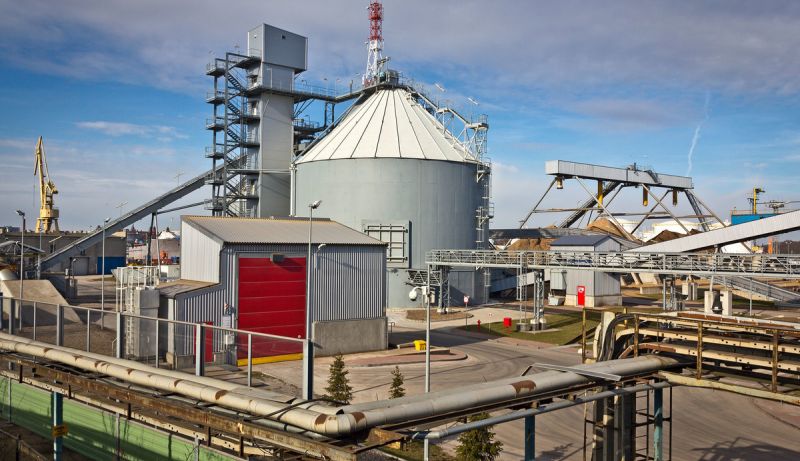
Sawmill Residue Pellet Plant in Bosnia and Herzegovina
RICHI MACHINERY
From 60000 T/A of Wet Residue to 45000 T/A of Pellets
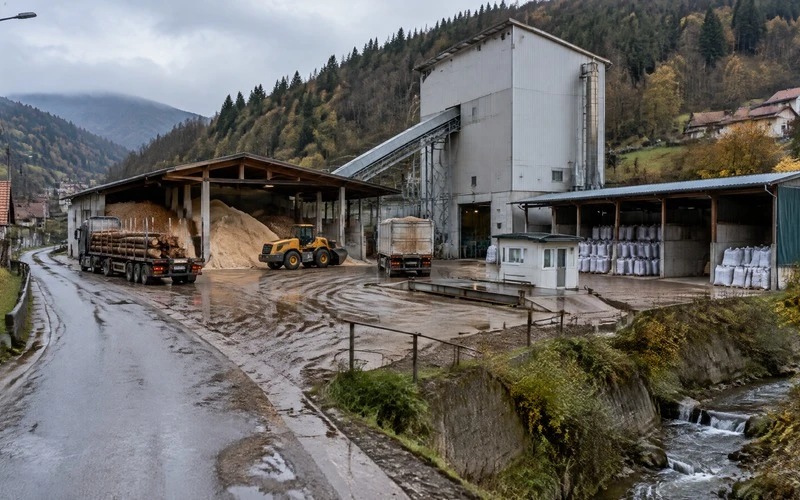
This sawmill residue pellet plant in Bosnia and Herzegovina was developed for a sawmill operator that wanted to convert its own wet sawdust and nearby clean wood residues into a saleable fuel product instead of continuing to move low-value by-products off site. The completed project targets 45000 T/A of wood pellets. Its commercial line is rated at 9–10 T/H, with three MZLH768 pellet mills providing additional nominal pelletizing reserve above the normal finished-line output.
The annual schedule uses two 8-hour shifts and about 315 operating days, giving roughly 5040 scheduled production hours. Producing 45000 tonnes over that calendar requires an average finished output of about 8.9 T/H, so the line can meet the annual target without assuming that every hour runs at its maximum nameplate capacity. Maintenance, die work and cleaning are planned around the sawmill’s residue flow, with production campaigns adjusted when incoming moisture or customer orders change.
The project is integrated with an existing sawmill compound in central Bosnia rather than built as a remote greenfield pellet factory. Roads, loaders and part of the storage infrastructure are reused, while the pellet section separates wet raw-material handling from dry finished-product storage.
The design also reflects Bosnia and Herzegovina’s continental and mountain climate: covered storage prevents rain and snow pickup, but winter cold is not treated as a drying method. Moisture is measured and removed by the dryer whenever the feed remains above the pelletizing window.
Total completed project investment is USD 680,000. The equipment supply portion accounts for about USD 425,000, while the balance covers building adaptation, electrical works, foundations, installation, dust and fire-control integration, utility connections and commissioning.
This distinction keeps the case consistent with the real scope of a 9–10 T/H project that includes wet-residue drying, three pellet mills, mechanical cooling and finished-product handling rather than presenting the machine package alone as the cost of the entire factory.
9–10 T/H
capacity
USD 680,000
investment
Bosnia and Herzegovina
location
Biofuel
project type
RICHI MACHINERY
Why Bosnia and Herzegovina Fits the Project
Bosnia and Herzegovina gives this project a credible industrial residue base because forestry and wood processing are established parts of the national economy. Recent investment-promotion data put forests and forest land at about 3.23 million hectares, around 63% of national territory, with wood stock of roughly 435 million m³.
The same source reports a long-standing export-oriented wood industry, so the project is tied to an existing sawmill and wood-processing chain rather than a speculative plan to harvest trees solely for pellet production.
The country’s wood industry exported about KM 1.62 billion in 2024, with Germany, Croatia, Serbia and Italy among the sector’s leading markets. Those figures describe the broader wood industry rather than guaranteeing pellet sales, but they support the logic of locating a residue-upgrading project close to existing processors and regional transport routes. Pellet contracts still depend on product certification, buyer specification, freight and seasonal heating demand.
| Project Driver | Design or Commercial Effect |
|---|---|
| Existing sawmill residue stream | Provides a base load of sawdust before external purchasing is considered |
| Nearby wood processors | Supply chips and clean offcuts when the client’s own residue is insufficient |
| Export-oriented wood sector | Makes traceability, documentation and cross-border logistics familiar to local operators |
| Continental and mountain climate | Requires covered storage and winter operating measures but does not eliminate drying duty |
| Regional road access | Supports domestic and neighboring-market deliveries without depending on one distant export route |
For the sawmill residue pellet plant in Bosnia and Herzegovina, the commercial priority is to convert a predictable by-product stream into a tested pellet specification. The customer therefore manages raw-material moisture, electricity, dryer fuel, wear parts, packing and freight on a dry-finished-ton basis. This prevents wet sawdust from appearing artificially cheap and allows each domestic or cross-border sales contract to be evaluated on the real cost of usable pellets.
RICHI MACHINERY
Raw Materials and the Moisture Mass Balance
The raw-material plan retains the client’s 60000 T/A residue basis but separates material form and moisture because the three streams do not enter the line in the same condition. About 50000 T/A is wet sawdust generated by the client’s own sawmill. Around 5000 T/A of chips and 5000 T/A of clean solid-wood offcuts are sourced from nearby processors. Painted, preservative-treated, demolition and adhesive-rich engineered-wood residues are excluded from the fuel feedstock.
| Raw Material | Annual Quantity | Typical Moisture | Primary Preparation |
|---|---|---|---|
| Sawmill sawdust | 50000 T/A | About 28–32% | Screening, moisture control and drying; fine fractions can bypass coarse crushing |
| Wood chips | 5000 T/A | About 30–45% | Size check, grinding and drying as required |
| Clean solid-wood offcuts | 5000 T/A | About 25–40% | Chipping, grinding and drying |
| Total as-received feedstock | 60000 T/A | Weighted average near 30% | Supports the 45000 T/A finished-pellet target after water removal and normal dry-matter loss |
The mass balance closes only when moisture is handled correctly. Sixty thousand tonnes of material at an average 30% moisture contains about 42000 tonnes of dry wood solids. Forty-five thousand tonnes of finished pellets at 10% moisture contains about 40500 tonnes of dry solids.
The difference allows roughly 1500 tonnes of dry-material loss through screening, dust, bark rejection and normal process losses, while about 13500 tonnes of water must be removed before finished product leaves the plant.
Across roughly 5040 scheduled production hours, the average water-removal requirement is about 2.7 T/H. That is why the project needs a real industrial dryer rather than the earlier assumption that covered storage or winter freezing can replace thermal drying. Storage is used to protect material and smooth supplier delivery.
The dryer and its biomass hot-air furnace are sized around actual evaporation duty, with lower burner load when material arrives drier and higher duty after wet-weather deliveries.
- Every incoming lot is checked for moisture, visible contamination and material form before it is routed to storage or preparation.
- Fine sawdust bypasses the coarse chipper; only oversize chips and clean offcuts are reduced by coarse crushing.
- Magnetic separation is placed ahead of sensitive size-reduction and pelletizing equipment to remove ferrous contamination.
- Bark-rich, painted, treated or otherwise unsuitable material is rejected or managed separately instead of being blended into saleable pellets.
RICHI MACHINERY
Existing Sawmill Site Buildings and Storage
The existing sawmill property provides about 7500 m² of usable project area. Rather than describing the entire property as one enclosed building, the pellet project uses roughly 3300 m² of covered production and storage space, with the balance retained for truck movement, outdoor utility areas, fire access and sawmill operations. Wet raw material and finished pellets are physically separated so moisture, dust and loader traffic from the receiving side do not interfere with dry-product storage.
| Zone | Approx. Covered Area | Use |
|---|---|---|
| Wet raw-material storage | 1000 m² | Sawdust, chips and clean offcuts with short-term buffer capacity |
| Preparation drying and pelletizing | 1200 m² | Chipping, grinding, dryer, dry buffer, three pellet mills, cooling and screening |
| Finished-product storage and packing | 700 m² | Bagged pellets, big bags and dispatch staging |
| Maintenance electrical and utility rooms | 200 m² | Electrical distribution, spare parts, tools and controls |
| Office laboratory and staff area | 200 m² | Administration, sampling, quality checks and staff facilities |
| Total covered area | Approx. 3300 m² | Within an existing sawmill compound of about 7500 m² |
The building has a concrete floor and enough clear height for elevators, bins, ducting and cooling equipment. Winter design focuses on protected conveyors, enclosed electrical equipment and reliable access around snow or freezing conditions; summer operation needs ventilation and dust management. The raw-material store is not intended to hold several months of annual consumption.
Because the owner’s sawmill supplies material continuously, storage is sized as an operating buffer, while external suppliers deliver against planned weekly requirements.
RICHI MACHINERY
Complete Process for Sawdust Chips and Offcuts
Different wood forms take different routes, but the whole process remains one coordinated line: receiving and inspection → magnetic separation → selective chipping → hammer milling → moisture measurement → rotary drying when required → dry-material buffering → pelletizing → counterflow cooling → screening → packing and storage.
This route avoids sending fine sawdust through unnecessary coarse equipment while still bringing chips and offcuts into the particle-size range needed for uniform drying and stable pellet formation.
Clean offcuts and oversize chips enter the wood chipper only when their dimensions exceed the hammer mill feed limit. Prepared chips, coarse sawdust and other material requiring further reduction then pass through the wood pellet hammer mill. Fine sawdust can bypass the chipper and, when already within specification, may also bypass intensive grinding.
The objective is generally a controlled fibrous particle distribution around 3–5 mm rather than forcing every tonne through identical size-reduction energy.
Material above the commissioned moisture limit enters the wood chip dryer. A biomass hot-air furnace uses approved low-grade clean wood residues such as bark and non-product sawmill fuel rather than consuming high-value finished pellets as the default heat source. Dryer control is based on inlet moisture, outlet moisture and fire-safety limits. For an average 30% inlet and about 10–12% dry feed, the line needs roughly 2.5–3 T/H of average water evaporation and enough reserve for wetter batches.
Dried material is buffered before pelletizing so short changes in the dryer or grinder do not immediately destabilize all three pellet mills. The mills are operated in parallel and can be sequenced according to feedstock condition and maintenance needs. Fresh pellets then enter mechanical cooling, not floor cooling. Counterflow cooling reduces temperature before screening, limits condensation risk in storage and allows fines to be removed before bagging or bulk dispatch.
- Inspect and segregate sawdust, chips and offcuts by moisture, contamination and size.
- Chip only oversize clean wood, then grind the fractions that need finer particle preparation.
- Measure moisture and send wet prepared material through the rotary dryer; route suitably dry material through the controlled bypass where the line design allows it.
- Feed dry material to the three parallel pellet mills through a stable buffer and controlled distribution system.
- Cool, screen and recycle qualified clean fines before finished pellets enter bagging, big-bag or bulk storage.
RICHI MACHINERY
Equipment Configuration for 9–10 T/H
Three MZLH768 units form the pelletizing core. Each machine is configured at 315 kW with a typical wood-pellet capacity of about 3–4 T/H on properly prepared feedstock. The three-machine nominal window is therefore about 9–12 T/H, while the complete project is operated as a 9–10 T/H commercial line after allowance for dryer behavior, raw-material variation and downstream handling.
This gives the operator enough reserve to maintain annual output without advertising a theoretical pellet-mill sum as guaranteed finished-line throughput.
| Equipment | Qty | Key Design Basis | Function |
|---|---|---|---|
| Wood chipper machine | 1 | 55–75 kW class | Reduces clean oversize offcuts and large chips |
| Hammer mill | 1 | 90–110 kW class | Produces the controlled particle size required for drying and pelletizing |
| Rotary dryer and biomass hot-air furnace | 1 set | Approx. 2.5–3 T/H average water evaporation duty | Reduces variable wet residue to the pelletizing moisture window |
| MZLH768 Wood pellet mill | 3 | 315 kW each; 3–4 T/H each | Parallel production of 8 mm fuel pellets |
| Counterflow cooler | 1 | Sized above 10 T/H | Mechanical cooling before screening and storage |
| Pellet screener | 1 | 9–10 T/H finished-line basis | Removes fines and oversize after cooling |
| Dust and aspiration system | 1 system | Multiple controlled pickup points | Controls chipper, hammer mill, transfer and pellet-area dust |
| Packing system | 1 set | Retail bags plus big-bag capability | Weighs and packs finished pellets |
| Conveying and electrical control | 1 set | Project-matched | Connects wet preparation, drying, dry buffering and finished-product handling |
The three machines are not three identical isolated lines. Material distribution, dry buffering, cooling and screening are shared so operators can stop one wood pellet extruder machine for planned maintenance while the remaining units continue at reduced output. This arrangement is more useful to a sawmill owner than forcing one very large pelletizer to carry the entire annual duty and gives the project a practical route for die service, roller work and raw-material trials.
Total project investment is USD 680,000, including the approximately USD 425,000 equipment supply package and the additional project costs required for installation in the existing sawmill compound. The total includes building and foundation work, electrical integration, dryer heat-source installation, fire and dust-control measures, internal material handling and commissioning. Keeping both figures separate prevents the equipment contract from being mistaken for the finished project cost.
RICHI MACHINERY
Electricity Dryer Heat Water and Labor
Electrical design is dominated by the three pellet mills. Their combined main-motor load is 945 kW before the hammer mill, chipper, dryer drives and fans, cooler, dust collection, conveyors, screen and packing equipment are added.
The connected load therefore falls roughly in the 1.3–1.5 MW class, with final transformer and protection sizing based on the simultaneous-load calculation, motor-starting method and local utility connection. Bosnia and Herzegovina’s network nominal frequency is 50 Hz, so motors and controls are specified accordingly.
| Utility | Planning Basis | Engineering Note |
|---|---|---|
| Electricity | Approx. 4–5 GWh/year | Actual use depends on pellet-mill loading, drying hours and the percentage of material requiring size reduction |
| Dryer heat | Biomass hot-air furnace sized to evaporation duty | Fuel demand depends on inlet moisture, fuel moisture and furnace efficiency |
| Water | Low process demand | Mainly domestic use, cleaning, fire protection and limited utility needs |
| Compressed air | Project-specific | For pneumatic gates, controls and packing equipment where fitted |
An annual electricity figure cannot be calculated by multiplying every connected motor by every scheduled hour because the chipper, hammer mill, dryer and pellet mills do not all remain at full load continuously. A planning range of 4–5 GWh corresponds to roughly 90–110 kWh per tonne of finished pellets, which is credible for a line with heavy pelletizing and substantial drying support.
The customer verifies the actual specific consumption after commissioning and uses the contracted local electricity tariff rather than a fixed web-page EUR/kWh assumption.
Dryer energy is tracked separately because moisture dominates the heat balance. At the project’s average mass balance, about 13500 tonnes of water are removed annually. If incoming sawdust becomes wetter, thermal fuel consumption rises even when finished tonnage does not change. This is why feedstock contracts record moisture and why the operator does not treat a wet tonne of residue as economically equivalent to a dry tonne.
The line uses a lean two-shift operating team rather than the five-person total assumed in the draft. Around 7–8 production personnel per active shift cover receiving and loader work, line operation, pelletizing, packing and warehouse duties. Maintenance and quality functions can be shared with the existing sawmill, giving roughly 16–18 direct roles around the pellet operation without duplicating every support position.
RICHI MACHINERY
Finished Pellet Specification and Sales Routes
The standard commercial product is an 8 mm fuel pellet made from clean sawmill residues. The project does not claim ENplus certification simply because the pellets are intended for European buyers. Certification is a separate audited scheme covering product requirements, traceability, handling and company procedures.
If the producer pursues ENplus A2, the official specification requires 6 ± 1 mm or 8 ± 1 mm diameter, 3.15–40 mm length, moisture no higher than 10%, ash no higher than 1.20% on a dry basis, mechanical durability of at least 97.5% and bulk density of 600–750 kg/m³.
| Finished Product Parameter | Project Target | Verification Basis |
|---|---|---|
| Diameter | 8 mm nominal | Ring-die specification and finished-product measurement |
| Length | Within buyer or certification limit | Cutter setting and sampling |
| Moisture | Typically ≤10% for certification-oriented product | Moisture test after cooling and before release |
| Mechanical durability | Buyer or certification requirement | Laboratory test using the agreed method |
| Ash | Depends on clean-wood blend; ≤1.20% required for ENplus A2 | Representative laboratory analysis |
| Bulk density | Measured by lot; 600–750 kg/m³ if targeting ENplus classes | Laboratory or standardized bulk-density test |
| Net calorific value | Declared from test; ≥4.6 kWh/kg if targeting ENplus | Representative fuel analysis |
Actual product claims are based on laboratory results from the sawmill’s wood mix, not assumed species values. Bark content and contamination have a direct effect on ash, while moisture and fines influence storage and combustion behavior. The customer can sell through domestic distributors, industrial users or cross-border contracts, but each route requires its own packaging, delivery and quality documentation.
Retail-sized bags, 500–1000 kg big bags and bulk dispatch are all technically possible within the same finished-product section.
The broader wood industry in Bosnia and Herzegovina is strongly export-oriented, but this page does not convert general wood-export statistics into guaranteed pellet demand. Germany, Croatia, Serbia and Italy are among the important markets for the country’s wood sector, while actual pellet sales depend on contract pricing, certification status and freight.
The wood pellet production line is therefore designed first around reliable 45000 T/A production and product consistency, leaving the sales team to choose the best domestic or regional channel.
RICHI MACHINERY
Environmental Measures and Fire Control
Environmental control is centered on combustible wood dust, dryer exhaust, noise, fire risk and material storage. Local aspiration is installed at chipping, grinding, dry transfer, pelletizing and screening points. The dryer and biomass furnace use spark control, cyclone separation and filtration selected for the actual gas temperature and permit requirements.
Instead of stating that Bosnian law requires three identical 18 m stacks, the final exhaust arrangement and stack heights are set by the applicable environmental permit, emission limits and site dispersion assessment.
The plant has no continuous process-water discharge from pellet production. Domestic wastewater and stormwater are handled separately, while the yard and raw-material areas are graded so runoff does not enter finished-pellet storage. Housekeeping is part of fire prevention because settled wood dust can become an ignition and explosion hazard.
Magnets, temperature monitoring, accessible fire points and separation of wet raw material from hot drying and pelletizing equipment are included in operating procedures.
Bosnia and Herzegovina has entity-level environmental permitting procedures, so the applicable authority depends on the project location and scope. The case does not copy an emission concentration, chimney height or permit threshold from another plant. Where production capacity, combustion equipment or later expansion triggers additional environmental assessment or permit conditions, those requirements are addressed through the project’s current local approval process.
RICHI MACHINERY
RICHI Scope Commissioning and Expansion
The project is built around mixed sawmill residues, so RICHI’s engineering scope starts with the water balance and material form rather than only the number of pellet mills. The biomass wood pellet machine section can only perform consistently when wet sawdust, chips and offcuts arrive at a stable particle size and moisture.
Layout work therefore coordinates raw-material routes, dryer residence time, dry buffers, cooler capacity, dust pickup points, maintenance clearances and finished-product traffic before equipment installation begins.
Commissioning is carried out with the customer’s actual wood residues. Operators check moisture before and after drying, hammer-mill screen performance, dry-buffer behavior, pellet-mill amperage, die and roller condition, cooler airflow, fines return and packing accuracy. The three pellet mills are balanced as a system rather than tuned independently to three different output targets.
Training also covers spark and fire response, dust housekeeping, lubrication, wear-part inspection and safe isolation procedures.
The sawmill residue pellet plant in Bosnia and Herzegovina also retains practical expansion options without designing an oversized first-stage plant. If future sawmill throughput rises, the owner can first extend operating hours, storage and drying duty before considering more pelletizing capacity.
If raw-material moisture falls because more kiln-dried residues enter the blend, the dryer load and specific energy use decline. This makes the plant responsive to the sawmill’s real residue profile instead of locking the business into one theoretical moisture assumption.
For a similar biomass pellet project, the information that changes the design most is annual residue volume, moisture by season, percentage of sawdust versus chips and offcuts, bark and contamination level, required pellet specification, site power, building dimensions, storage days and sales format. Those inputs determine dryer size, grinding duty, pellet-mill quantity, cooler selection, electrical load and the finished project investment.
RICHI MACHINERY
Why the Project Is Commercially Practical
The economics of this sawmill residue pellet plant in Bosnia and Herzegovina come from vertical integration rather than from assuming that raw material is free. The owner’s sawdust already exists as a by-product, but it still carries handling, storage, drying and opportunity costs. Purchased chips and offcuts must be evaluated on a moisture-adjusted basis.
The business gains value when a controlled 45000 T/A fuel product sells for enough to cover those costs plus electricity, thermal energy, labor, wear parts, packing, maintenance and freight.
This is also why the project uses a full industrial process instead of a simplified seasonal line. A 60000 T/A wet-input balance requires substantial water removal, three parallel pellet mills need mechanical cooling and screening, and export-oriented customers require repeatable product testing.
The Wood pellet processing plant therefore combines residue-specific preprocessing with commercial downstream handling rather than relying on natural air drying and floor cooling to carry a 9–10 T/H factory.
Customers planning a comparable plant should provide monthly sawdust volume, moisture range, chip and offcut percentage, wood species, bark content, target pellet class, building layout, electricity conditions and intended packing. With those data, RICHI can calculate the mass balance, dryer evaporation duty, equipment configuration, power demand, storage requirement and investment scope before the project is frozen.
That is more useful than copying a standard capacity package from a dry-sawdust project into a wet sawmill-residue site.
● RICHI MACHINERY
RICHI Service

● Consulting
Customer Consultation
We want to have a deep understanding of your industrial process, to know your exact needs of feed, wood, biomass, fertilizer or other pellet processing.

● Design
biomass Pellet Plant Design
Based on your unique situation and industrial process, we will tailor complete pellet plant you need, and inform you of every additional detail that could facilitate operation, minimize total cost.
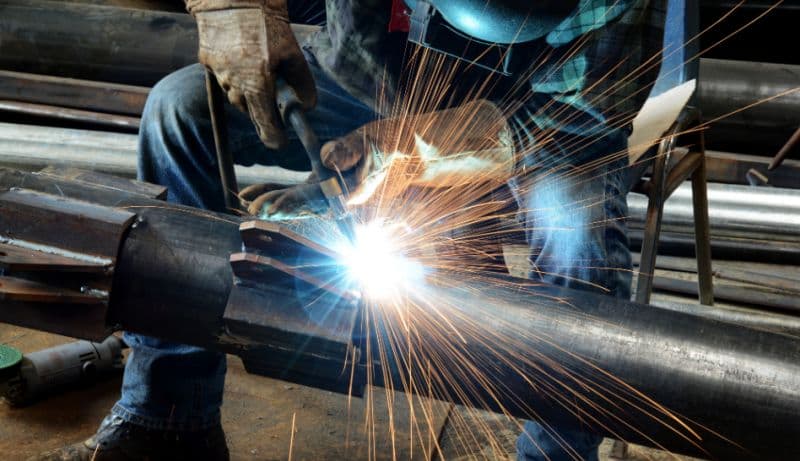
● Manufacturing
Equipment Manufacturing
The critical components of the of the complete pellet production line equipment are built in our own workshops in Asia. Additional equipment is manufactured by our worldwide network of reliable partners.

● Testing
Quality Inspection & Testing
Before leaving the factory, all equipment will be inspected by the quality inspection department. We can also provide customers with testing services from a single machine to a complete pellet plant system, and provide you with real actual data for “worry-free use.”

● Delivery
Equipment Delivery
In equipment boxing and packaging, we adopt professional packaging and modular solutions to ensure the safe and non-destructive delivery of pellet plant equipment.
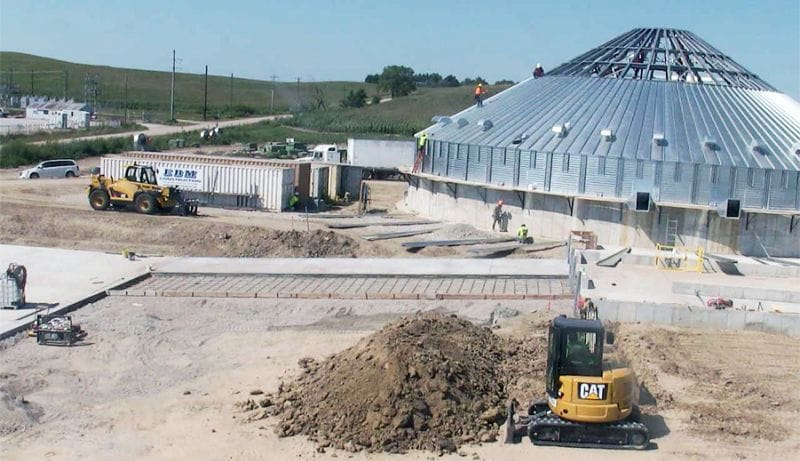
● Installation
Installation & Commissioning
Whether you choose your own subcontractor for the erection phase or you want to install everything together with us, a Richi supervisor will be around to make sure everything is mounted in a safe and thorough way.

● Training
Staff Training
We provide comprehensive training for the technicians of each project. We can also continue to provide support for the technicians during latter project operation.
● After-sales
Project Follow-Up
When everything is up and running our Richiers will help you further whenever needed. We are ready to answer your call 24/7.We’ll also visit you regularly to learn about your needs.
Who we are
RICHI Machinery is one of the world’s leading suppliers of technology and services for the animal feed, aqua feed and pet food industries, also the largest pellet production line manufacturer in China.
Since 1995, RICHI’s vision to build a first-class enterprise, to foster first-class employees, and to make first-class contributions to society has never wavered.
In the past three decades, we have expanded our business to a wide range of areas, including animal feed mill equipment, aqua feed equipment, pet feed equipment, biomass pellet equipment, fertilizer equipment, cat litter equipment, municipal solid waste pellets equipment, etc.

1995
RICHI Established

2000+
Serving More Than 2000 Customers

120+
RICHI Employees

140+
Exported To 140 Countries