
 0086-138 3838 9622
Ruminant Feed Mill
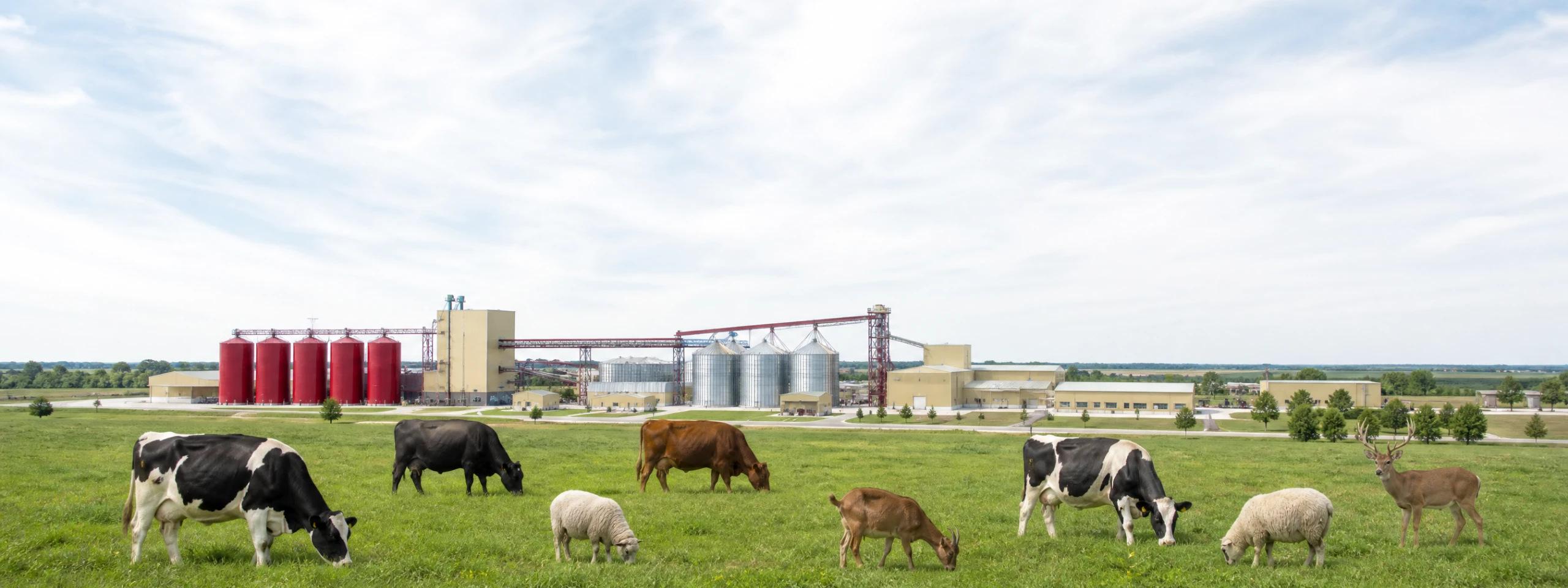
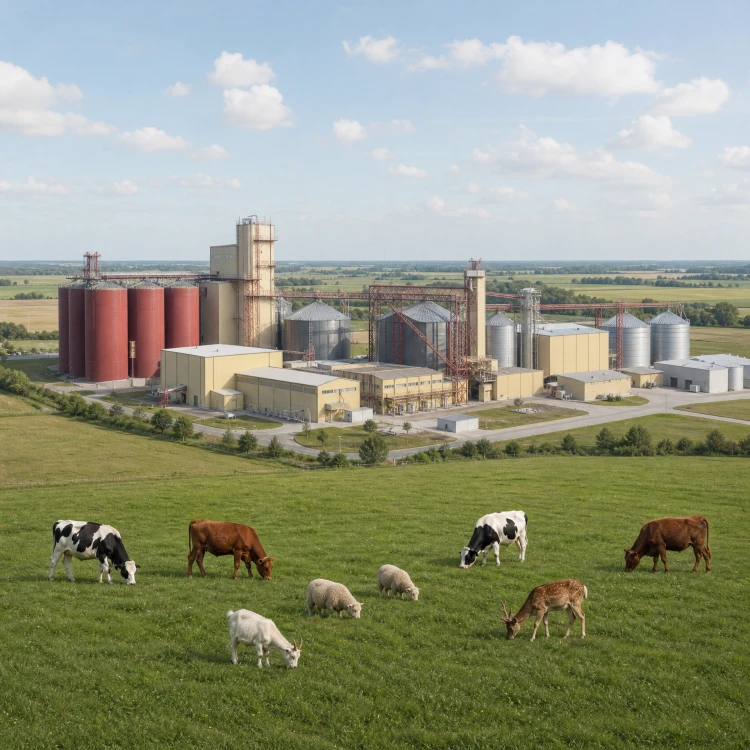
With years of experience in global feed mill projects, we have supplied ruminant feed production lines to customers across Asia, the Middle East, Africa, Europe, and South America. Our ruminant feed manufacturing systems are used to process various formulations, including dairy cattle feed, beef cattle feed, sheep and goat feed, forage-based pellets, and mixed ruminant feed products.
By integrating practical process design with reliable ruminant feed equipment, we help customers build efficient production facilities that improve feed quality, reduce labor requirements, and support long-term livestock development.
Customize Your Ruminant Feed Mill
Feed Types Produced by Our Ruminant Feed Mill
A modern ruminant feed mill is not limited to producing a single type of pellet. Depending on animal nutrition goals, available raw materials, and farm management methods, different feed structures require different formulations and processing technologies.
Our ruminant feed production lines are designed to handle a wide range of products, from complete balanced pellets to high-fiber feeds, concentrates, and functional supplements, allowing commercial feed manufacturers and livestock enterprises to develop products for various ruminant feeding systems.
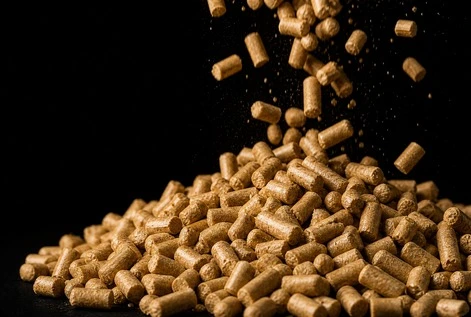
Complete Ruminant Pellets
Complete ruminant pellets combine energy sources, protein ingredients, minerals, vitamins, and other nutrients into a balanced feed product suitable for dairy cattle, beef cattle, sheep, goats, and other ruminants. The ruminant feed production line typically includes precise batching, grinding, mixing, pelletizing, cooling, and screening processes to ensure each pellet delivers consistent nutrition.
4–12mm Pellet Size
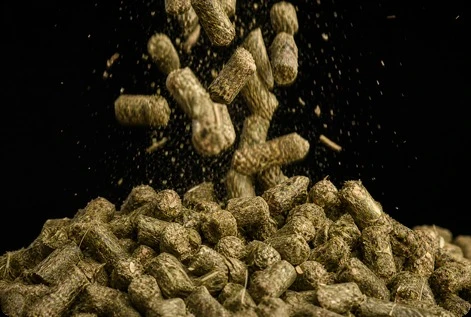
High-Fiber Ruminant Pellets
High-fiber pellets are formulated with materials such as grass meal, alfalfa, straw, hay, and agricultural by-products, usually containing around 15–25% crude fiber. These products require specialized grinding and conditioning processes in a ruminant feed mill to maintain fiber structure while achieving good pellet durability for cattle, sheep, and goat feeding.
6–18mm Pellet Size
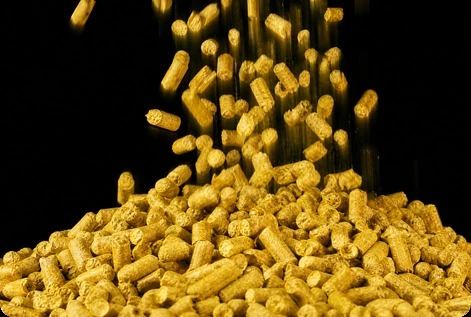
High-Energy Fattening Pellets
Designed for intensive beef cattle and meat-producing ruminants, high-energy fattening pellets commonly use corn, barley, grains, and energy-rich by-products to support rapid growth and improved feed conversion. The ruminant feed pellet mill configuration is optimized for higher starch formulas, stable pellet formation, and efficient production of energy-dense feed.
4–10mm Pellet Size
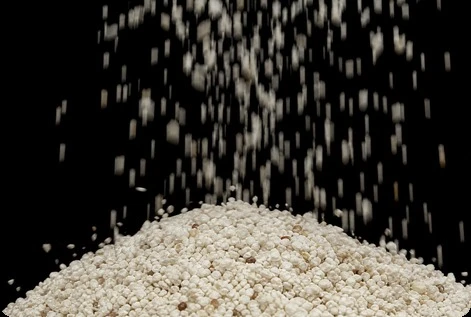
Ruminant Concentrate Feed
Ruminant concentrate feed is usually a high-protein supplement containing ingredients such as soybean meal, rapeseed meal, minerals, and additives, with protein levels often exceeding 32%. It is designed to be combined with farm-produced roughage, and the processing system can be configured for either pellet production or mash feed manufacturing according to customer requirements.
2–6mm Pellet or Mash Size
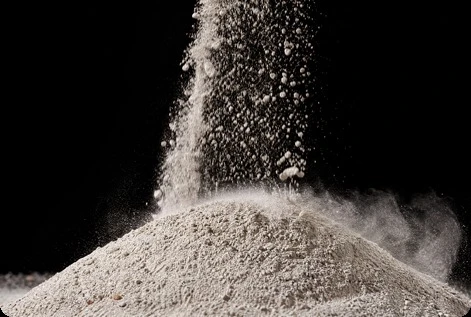
Ruminant Premix Feed
Premix products contain concentrated minerals, vitamins, trace elements, and rumen function regulators, normally added at a low inclusion rate of around 1–5%. Due to the precise dosage requirements, a dedicated ruminant feed processing line requires accurate weighing, micro-dosing, and mixing systems to achieve uniform nutrient distribution.
0.8–2.5mm Particle Size
For customers seeking broader business opportunities, the same production platform can also be customized to process ruminant feed together with livestock feed, poultry feed, or aquatic feed, creating a more versatile and cost-effective investment.
Design Your Customized Ruminant Feed Mill

Ruminant Feed Mill videos
Every ruminant feed mill project has its own challenges, from local raw material availability and seasonal forage supply to final feed specifications and production targets. The following project videos show how our team designs and manufactures complete feed processing systems according to real operating conditions.
From dry hay and alfalfa pellet production to mixed grain and forage processing, each ruminant feed plant integrates practical process planning, suitable equipment selection, and production support to help customers achieve stable and efficient feed manufacturing.
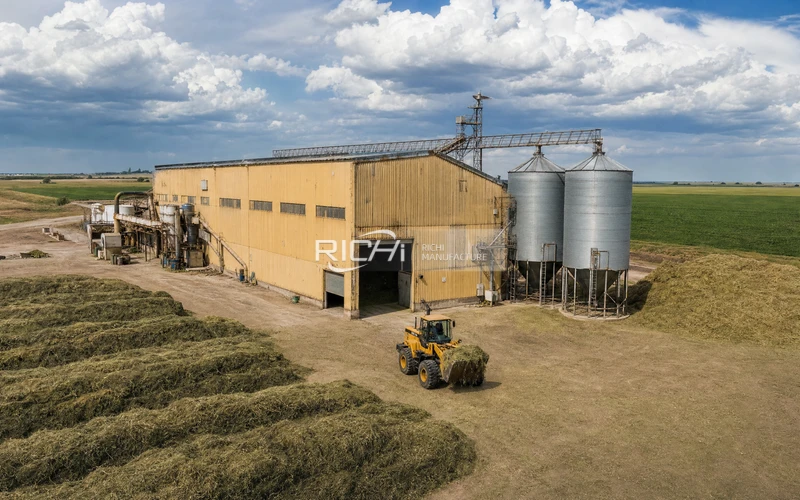

【5T/H Ruminant Feed Mill In Argentina】Built for a commercial cattle feed producer, this project processes 100% dry round hay bales without requiring a drying system. The engineering focused on stable bale handling, two-stage fiber size reduction, and continuous pellet production while keeping energy consumption low. The finished 8 mm cattle feed pellets are automatically packed for local distributors and beef farms, demonstrating how a relatively simple process can still achieve reliable commercial output.
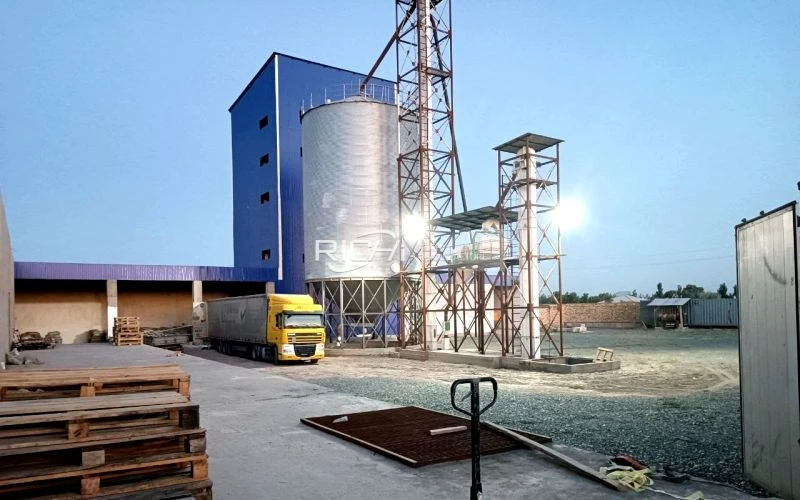
【10-15T/H Ruminant Feed Factory In Uzbekistan】This integrated project was designed for a regional feed manufacturer supplying both dairy and beef cattle operations. The customer combines locally available grains with forage, straw, and seasonal crop residues, requiring a flexible production process capable of switching formulas throughout the year. The modular layout allows different raw material combinations while maintaining consistent batching accuracy and pellet quality across multiple product lines.
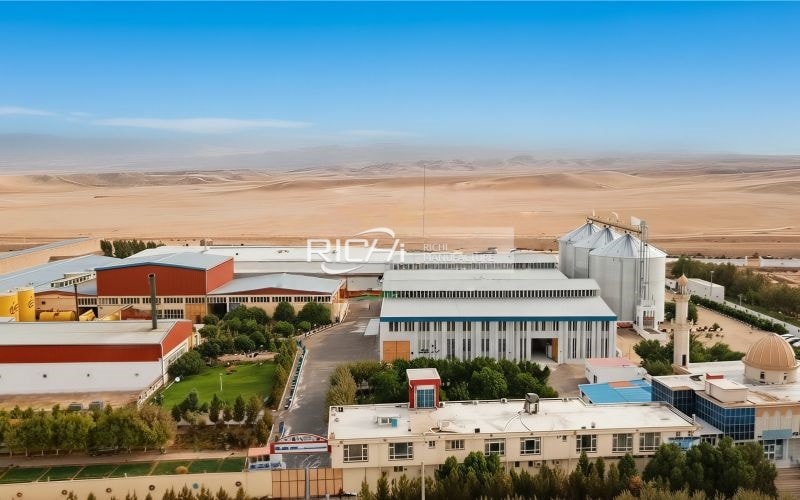
【10T/H Ruminant Feed Manufacturing Plant In Afghanistan】Developed for an agricultural investment company, this plant produces complete ruminant feed using mixed grains, chopped forage, and locally sourced crop residues. Because raw material quality varies significantly between seasons, the production line was designed with flexible grinding and mixing stages to maintain consistent feed performance. The project also considered limited workshop infrastructure, making equipment arrangement and maintenance access an important part of the overall engineering solution.
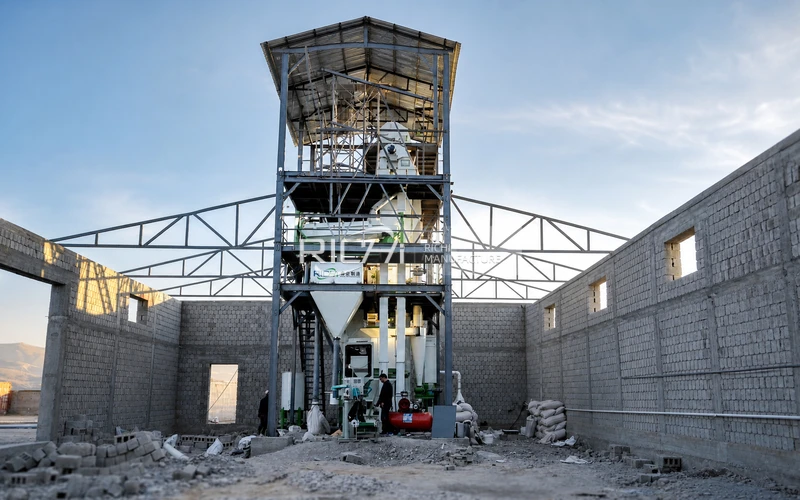
【5-6T/H Complete Ruminant Feed Plant In Zimbabwe】This project supplies pellet feed for both the customer’s own cattle farm and neighboring livestock producers. Processing 100% dry hay bales, the production line emphasizes reliable fiber preparation, stable pellet formation, and efficient automatic packaging. The compact plant layout minimized construction costs while leaving sufficient space for future capacity expansion as the customer’s commercial feed business continues to grow.
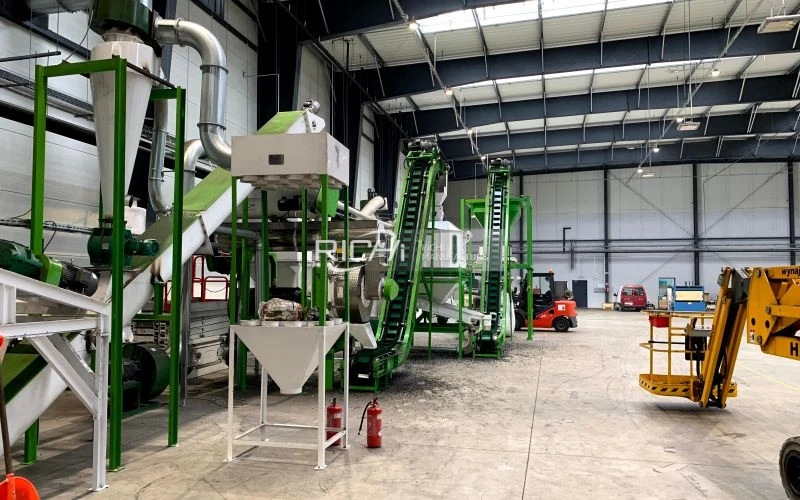
【2-3T/H Ruminant Feed Processing Plant In Russia】Designed for a livestock enterprise specializing in premium forage feed, this project uses alfalfa and clover with naturally high moisture content. A dedicated drying system was incorporated before secondary grinding to protect pellet quality and storage stability. The finished feed is produced in multiple pellet sizes for dairy cattle and breeding animals, while the process was optimized to preserve fiber characteristics throughout production.
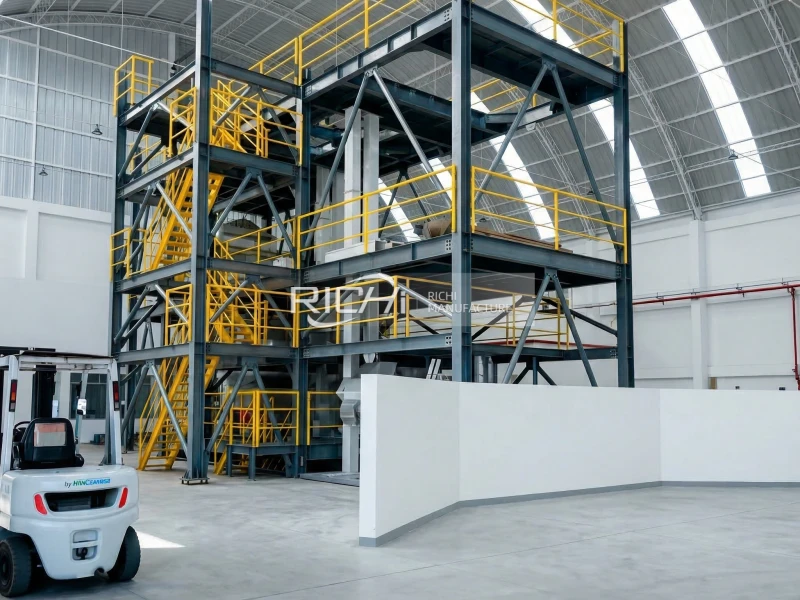
【5T/H Commercial Ruminant Feed Plant In Peru】This commercial feed project combines grains with grass and crop residues to produce balanced feed for both dairy and beef cattle farms. The customer required frequent formula changes to meet different market demands, so the production line was designed for rapid material switching and accurate batching. Finished pellets are packed in multiple bag sizes for wholesalers, agricultural cooperatives, and independent livestock producers.
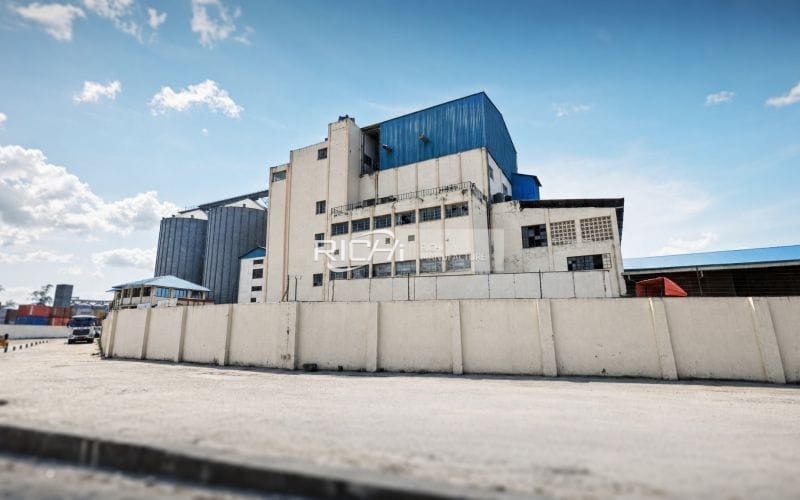
【15T/H Ruminant Feed Plant In Oman】Constructed for a large livestock operation, this high-capacity project processes imported grains together with locally available forage materials. The customer requested a highly automated production system to reduce labor while maintaining continuous operation during peak production periods. The engineering design includes efficient material handling, centralized control, and high-capacity packing to support year-round commercial feed manufacturing.
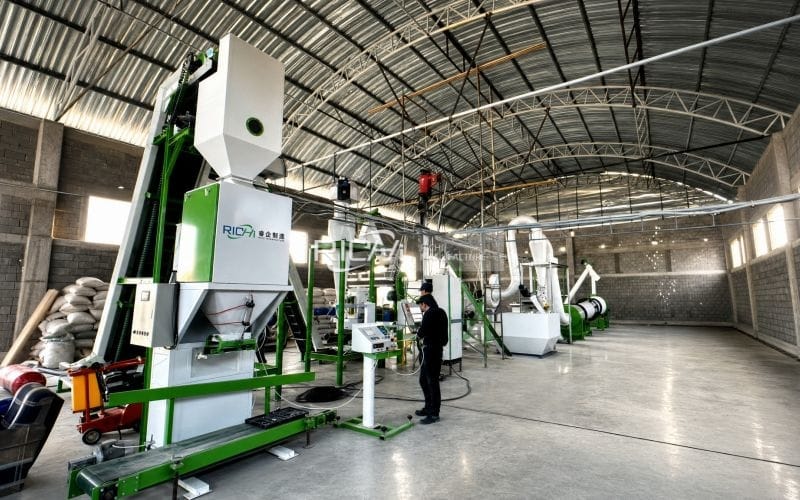
【1-2T/H Ruminant Feed Pellet Plant In Kyrgyzstan】This small commercial installation was developed for a customer using formulas containing 50–80% grass together with grain ingredients. Because the forage moisture fluctuates considerably throughout the harvesting season, a drying module was integrated into the process before grinding and pelletizing. The flexible configuration enables the customer to manufacture different feed formulas for cattle and sheep while keeping investment at an economical level for a growing regional business.
complete Ruminant Feed Processing Solutions
A successful ruminant feed mill depends on more than selecting individual machines—it requires a processing system designed around the characteristics of the raw materials, feed formulas, production goals, and operating environment. RICHI Machinery provides complete technical support for ruminant feed projects, including process planning, factory layout design, equipment manufacturing, installation guidance, commissioning, operator training, and long-term spare parts support.
Whether the project involves cattle feed, sheep and goat feed, forage-based pellets, or specialized ruminant nutrition products, each production line is developed with a flexible modular structure to match the customer’s actual requirements.
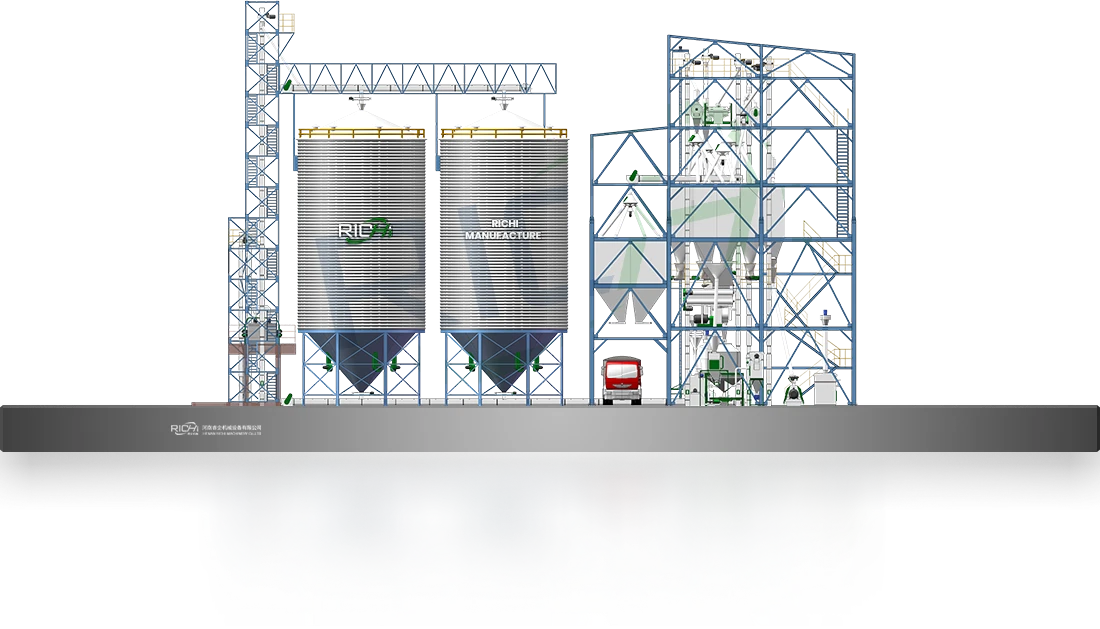
Complete ruminant feed production line can include raw material storage, cleaning, crushing, batching, mixing, conditioning, pelletizing, cooling, screening, packing, and automation systems. For ruminant feed processing, additional equipment such as molasses addition systems and specialized liquid mixing units are often integrated to improve palatability, energy value, and pellet quality.
The final configuration varies according to the materials and products being processed, such as grain-based pellets, extruded feed, forage-inclusive formulas, whole-grain feed, mash feed, or premix products.
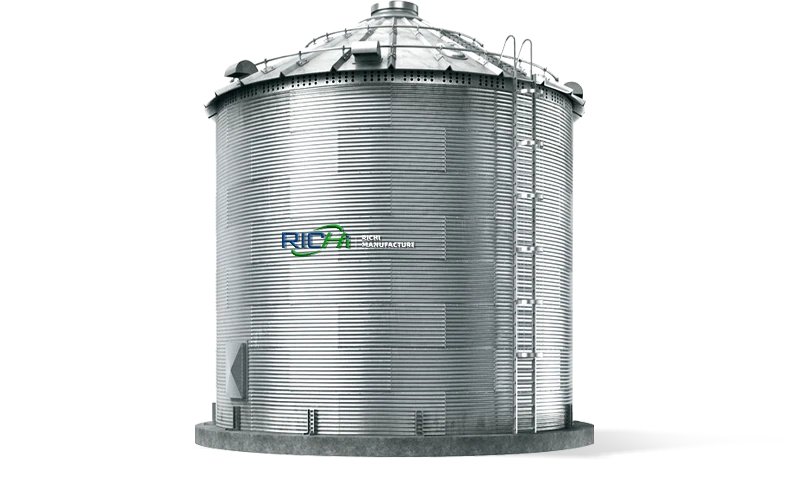
Silo system
01
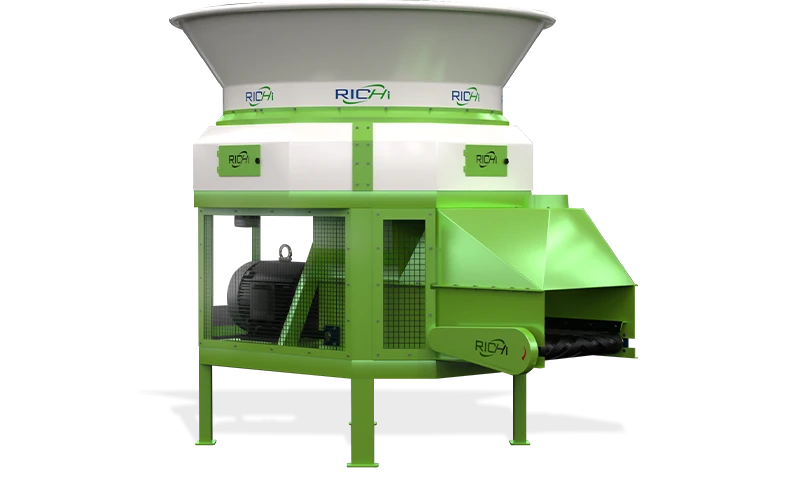
bale chopping
02
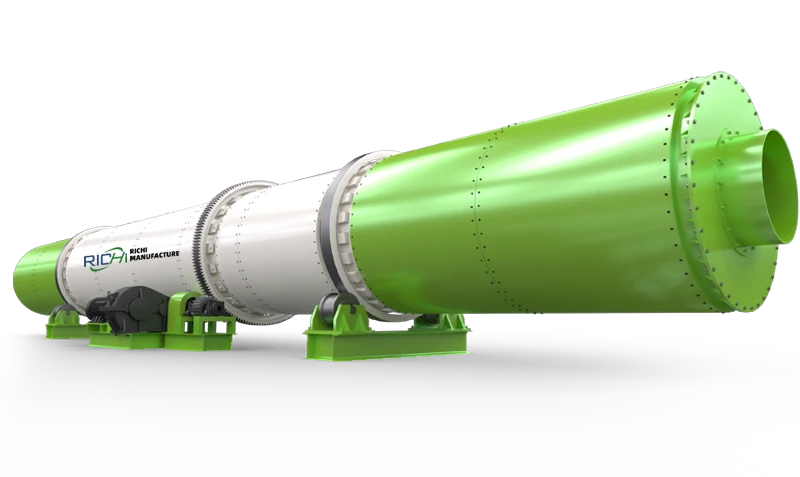
Drying system
03
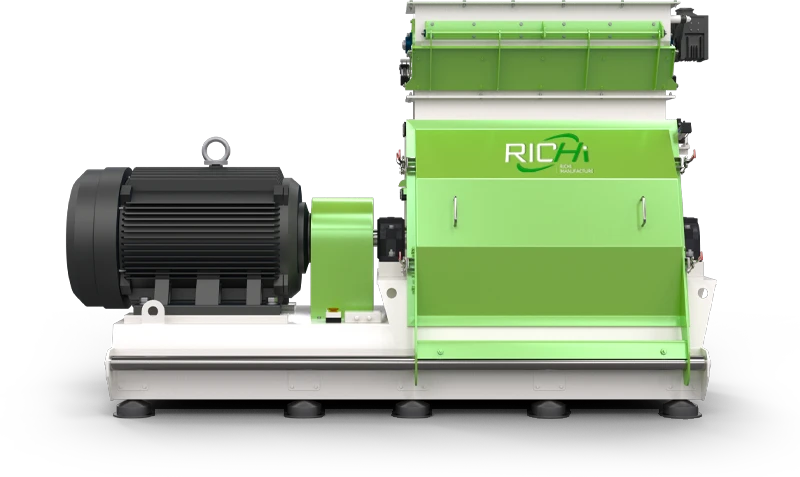
Grinding system
04
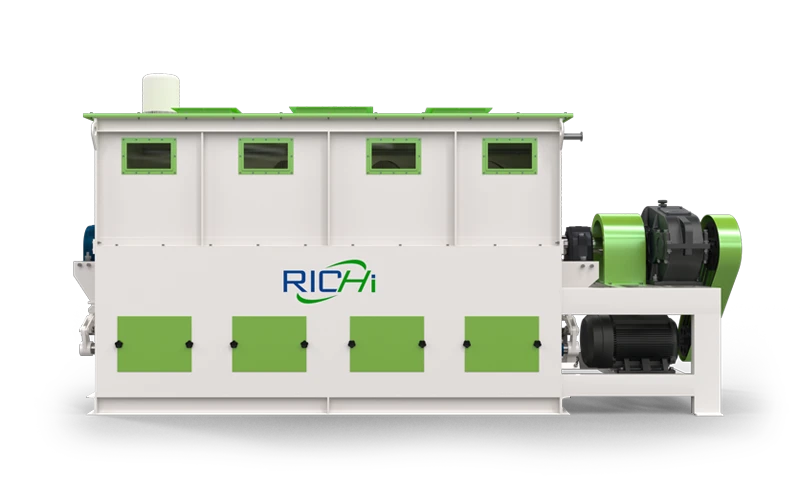
Mixing system
05
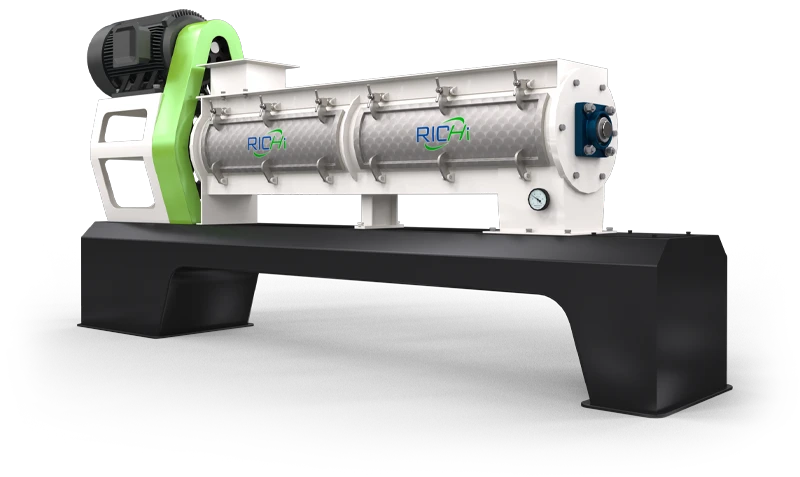
Molasses mixer
06
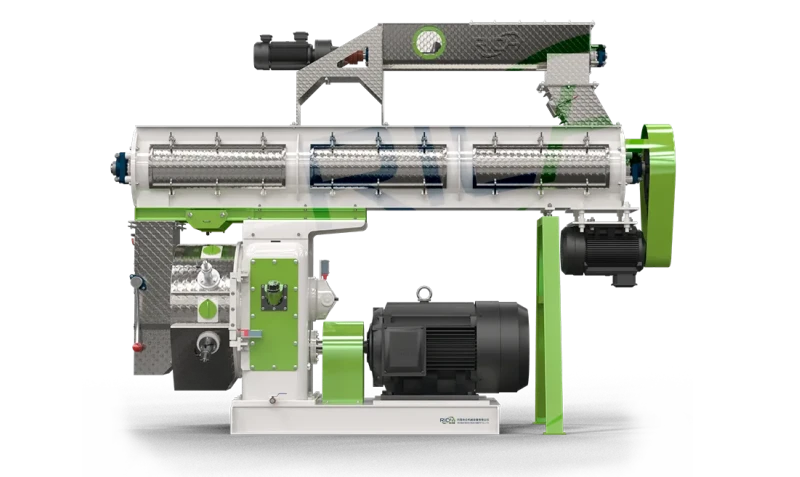
Pelleting system
07
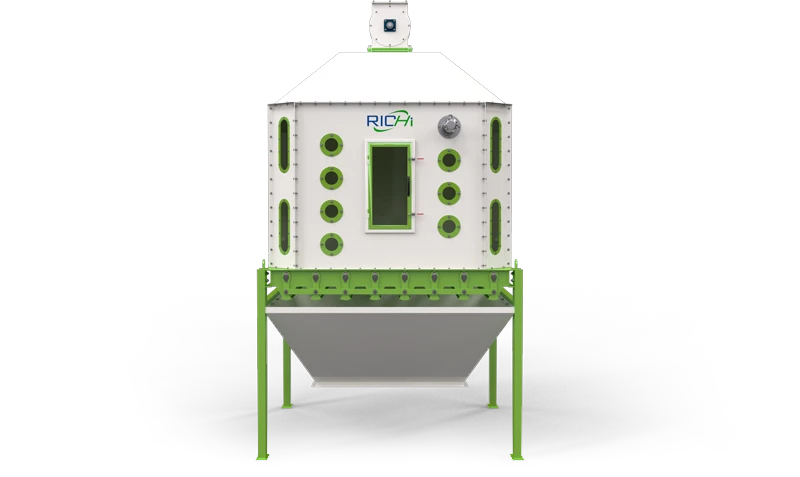
Cooling system
08
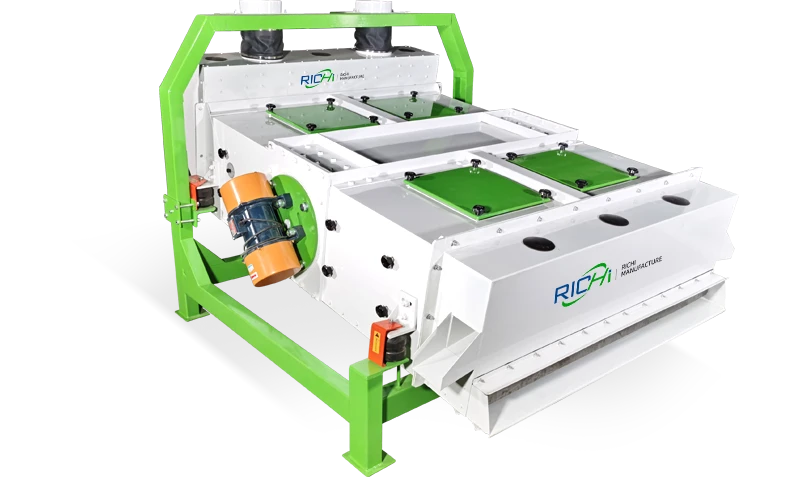
Screening system
09
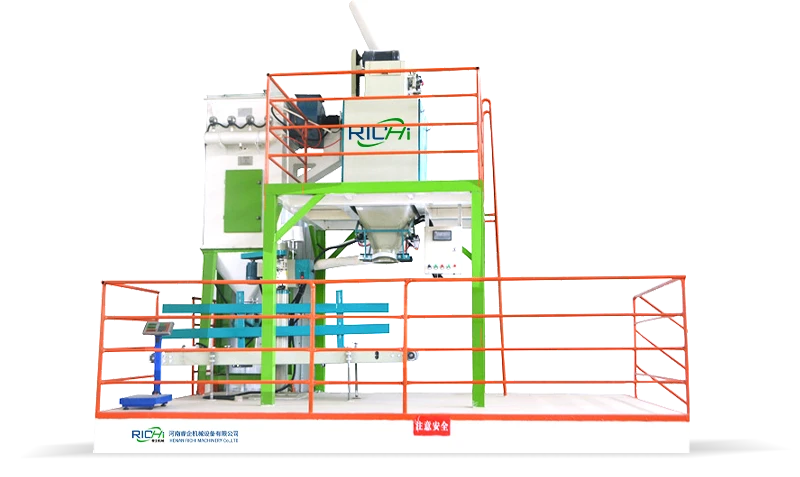
Packaging system
10
Customized Ruminant Feed Mill Process Designs
The process schemes below are based on real engineering projects completed for customers in different countries. Each design demonstrates how RICHI Machinery adapts equipment configuration, process flow, and system modules to match local raw materials, investment plans, and production objectives. Some lines focus on 100% forage pellets, others combine grains with crop residues, while several are designed to manufacture multiple feed products on the same production line.
By comparing these solutions, you can clearly see how a customized ruminant feed mill delivers higher operating efficiency, better feed quality, and a more practical long-term investment than a standardized production line.
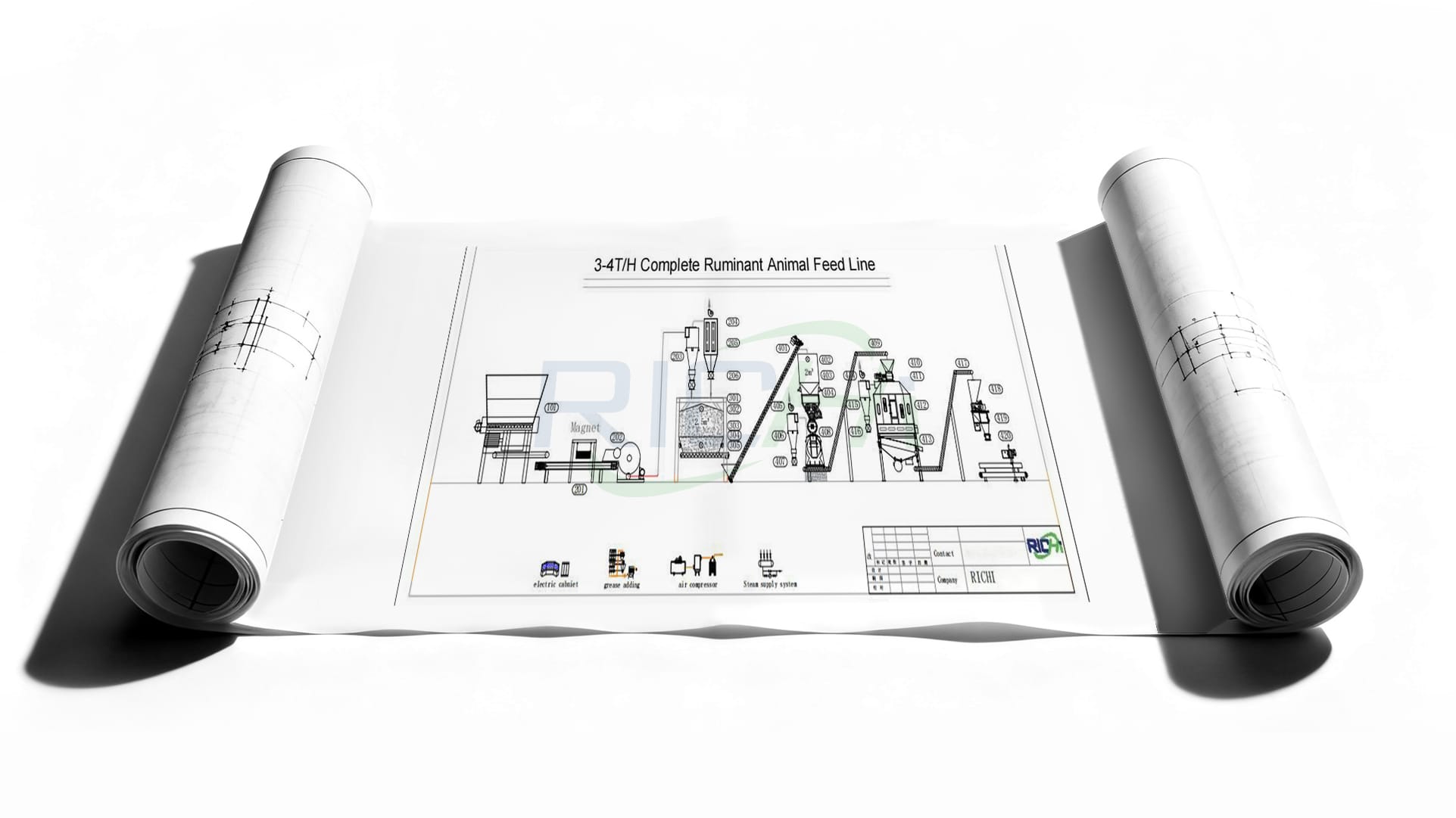
3-4 t/h Complete Ruminant Feed Mill Design
This 3–4 T/H ruminant feed mill was designed for a Romanian livestock feed producer specializing in grass-based ruminant feed pellets. Unlike grain-based systems, this project uses 100% dry round hay bales as the only raw material, requiring a dedicated forage handling process before pelletizing.
The production flow was customized as bale breaking → coarse crushing → fine grinding → temporary storage → pelletizing → cooling → screening → automatic packing. Since the hay moisture was already suitable for pellet production, no drying system was required. The finished pellets are mainly supplied to local cattle farms in standardized bags, and the compact process design helped the customer reduce unnecessary investment while maintaining stable commercial production.
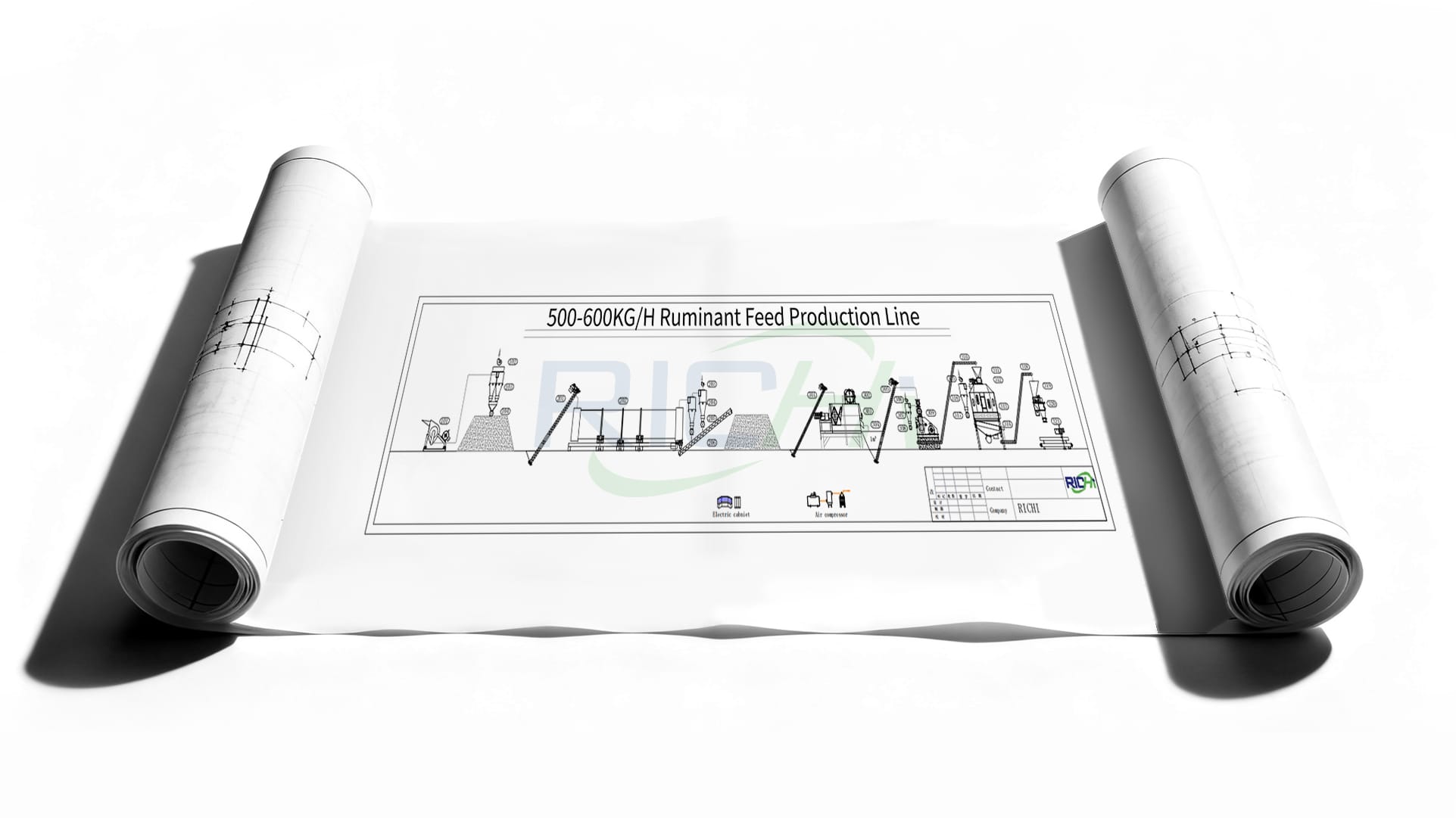
0.5-0.6 t/h Small Ruminant Feed Mill Design
This small-scale ruminant feed mill project was developed for a customer who wanted to produce commercial ruminant pellets using locally available grass and grain resources. Although the capacity is only 0.5–0.6 T/H, the project was designed as a commercial production system rather than only a farm feeding solution.
The customer supplied pre-opened forage, so the process did not require a bale breaker. The customized flow included grass fine crushing → drying → temporary storage → weighing of grains and additives → mixing → pelletizing → cooling → screening → packing**. Because the grass moisture was relatively high, a drying module was added to ensure stable pellet quality. The flexible design allows the customer to produce different formulas according to local market demand.
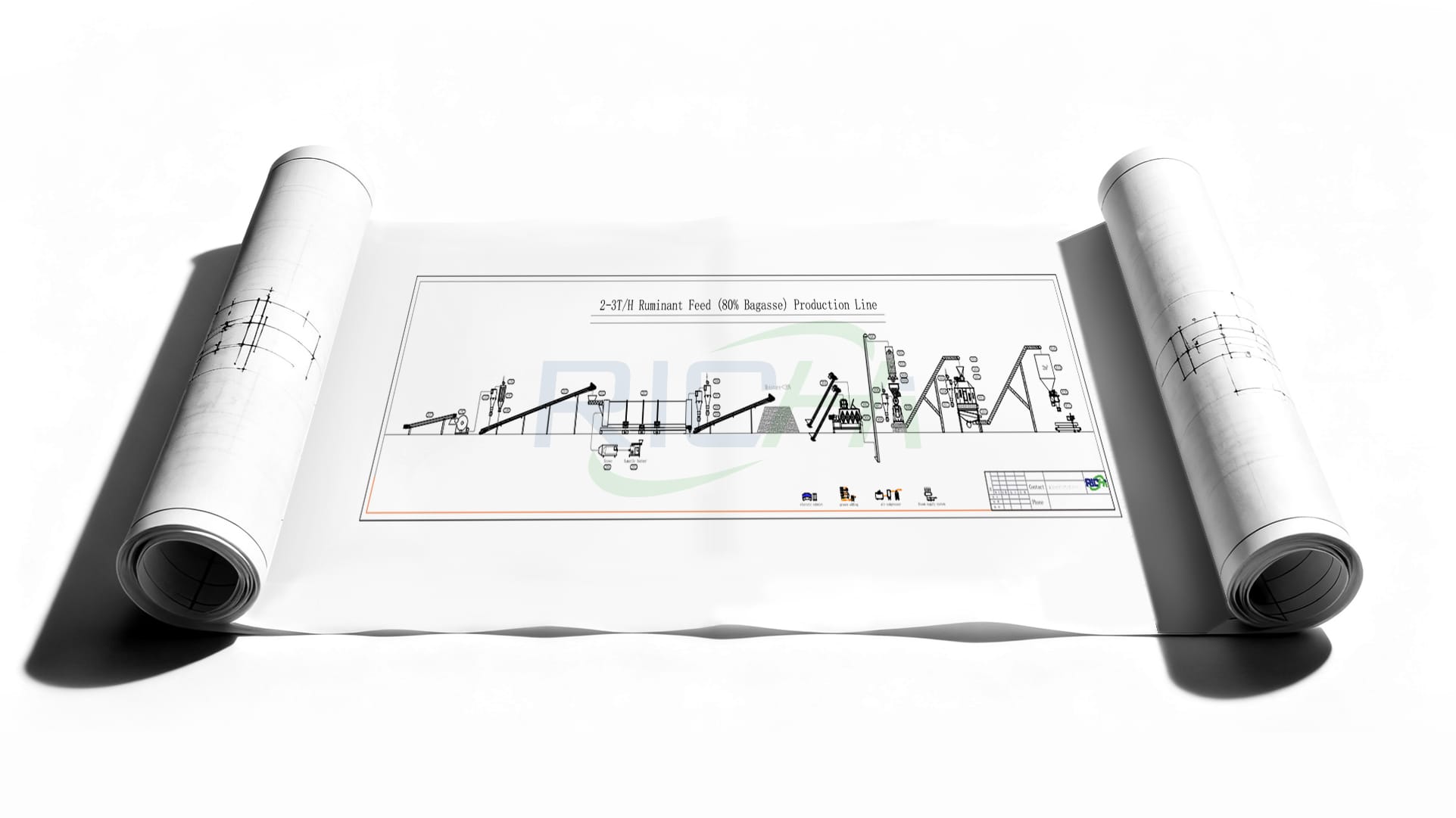
2–3 t/h Ruminant Feed Pellet Plant Design
This ruminant feed pellet plant was designed for a customer using bagasse as the primary ingredient, with bagasse accounting for approximately 80% of the formula. Since bagasse is a fibrous agricultural by-product with high moisture content, this project required a different process compared with conventional grass pellet production.
The complete process was designed as bagasse crushing → high-moisture drying → ingredient mixing → pelletizing → cooling → screening → packing. The customer’s bagasse moisture reached 60–70%, so a drying system was integrated before pellet production. After drying, bagasse was mixed with accurately weighed grains and premix ingredients to produce balanced ruminant feed pellets. This customized solution demonstrates how a ruminant feed mill can utilize local agricultural waste resources and convert them into valuable feed products.
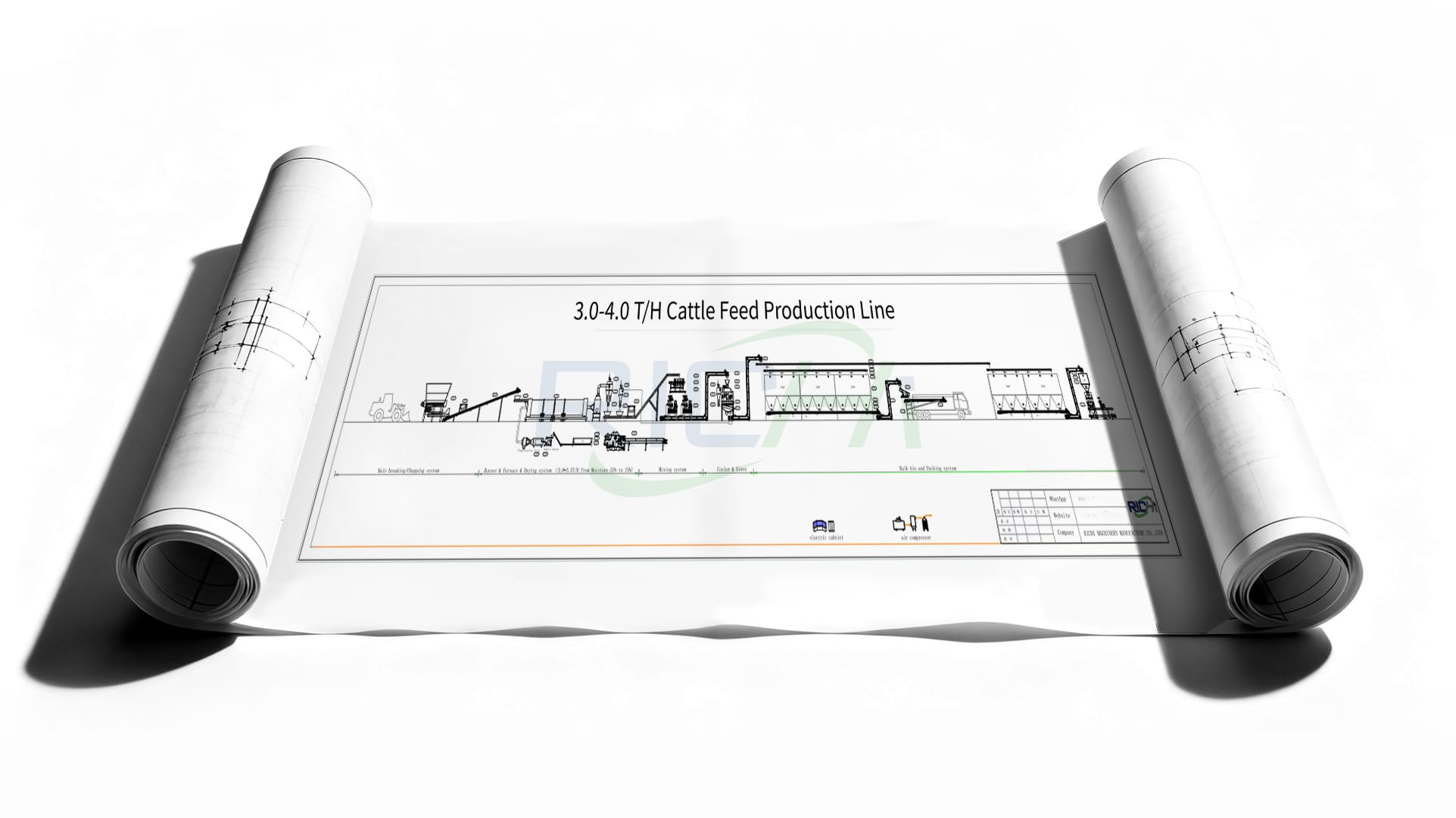
3-4 T/H Ruminant Feed Manufacturing Plant Design
This 3–4 T/H ruminant feed manufacturing plant was developed for a Madagascar cattle farm using fresh alfalfa as the main raw material. Although the production capacity is similar to the Romania project, the process design is completely different because the customer handled both baled alfalfa and loose alfalfa with moisture levels of 50–60%.
The customized system included bale opening → chopping → drying → secondary grinding → mixing → pelletizing → cooling → screening → finished product storage. Baled alfalfa was fed into the bale breaker by forklift, while loose alfalfa entered through a chopping system before drying. The finished pellets can be either packed by automatic packing equipment or directly loaded from the finished product bin into bulk transport vehicles, giving the customer more flexibility for farm supply and commercial sales.
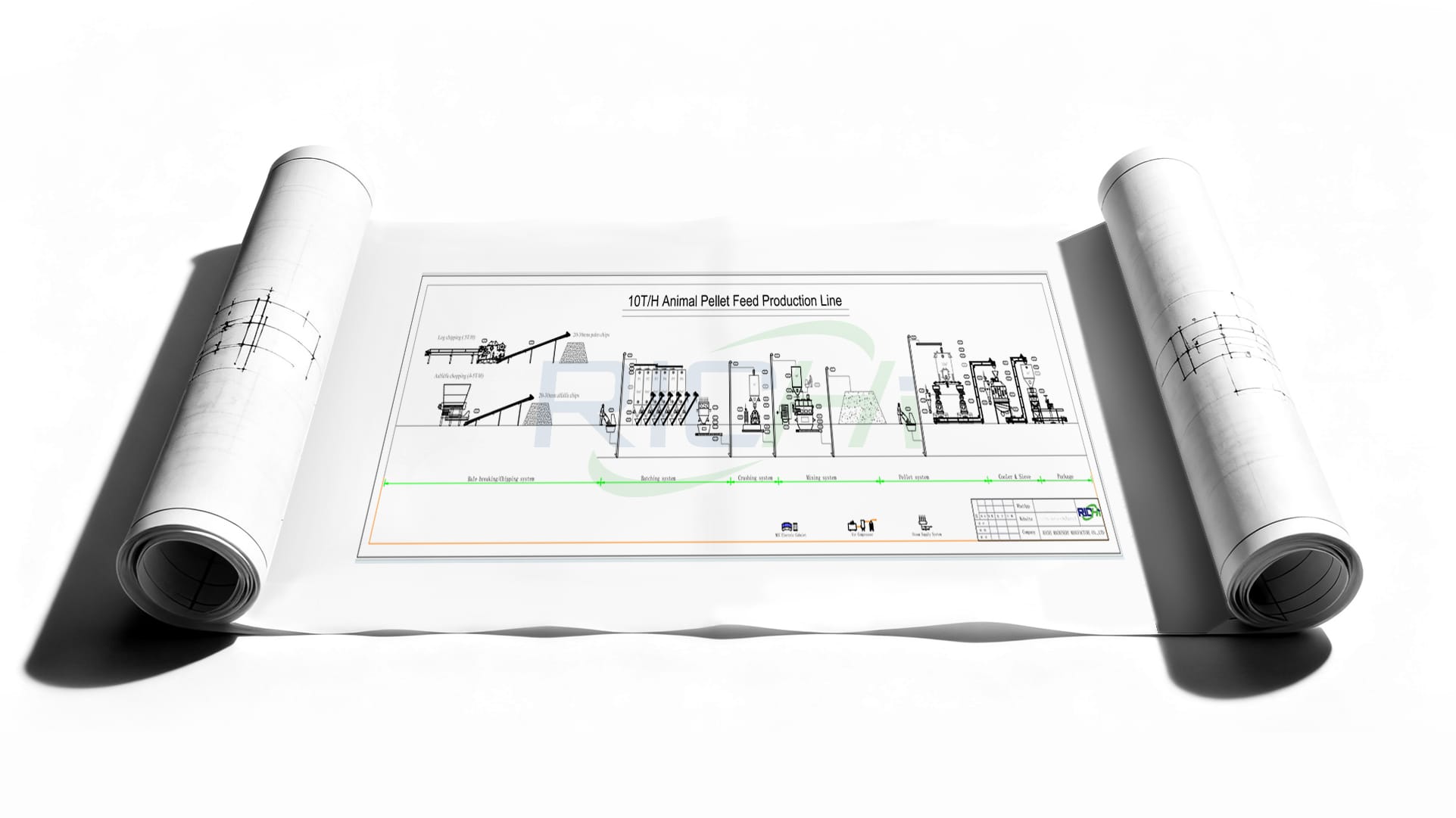
10 T/H Complete Ruminant Feed Factory Design
This 10 T/H complete ruminant feed factory project was completed for a Tunisian customer in October 2025. The customer operates both a cattle farm and a commercial feed business, requiring a production system capable of supplying internal livestock demand while also producing feed for external sales.
The process was designed around dry hay bales combined with grain ingredients: bale breaking → forage crushing → manual feeding with grains → batching → hammer mill grinding → conveying → pelletizing → cooling → screening → packing. After batching, the mixed hay and grain materials are ground together to improve particle uniformity before pellet production. In addition to the ruminant feed production line, the project also included a wood chip processing system, where wood materials are processed into bedding material for the customer’s cattle farm using their existing hammer mill equipment.
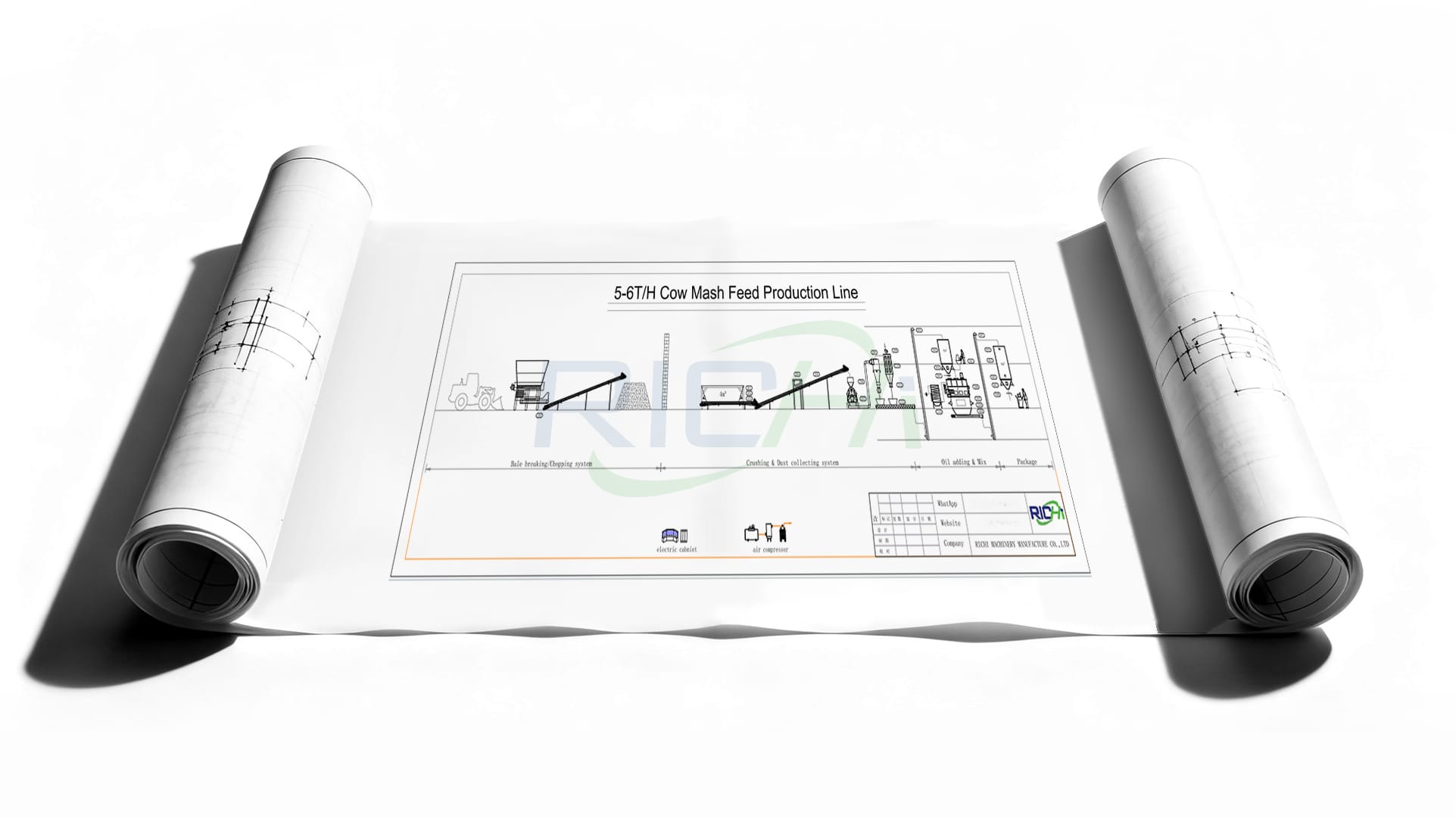
5-6 t/h Ruminant Feed Processing Plant Design
This 5–6 T/H ruminant feed processing plant was designed for a customer who wanted to produce mash feed instead of pellets. The customer mainly uses hay bales and grains, with the final product supplied directly to cattle farms without pelletizing requirements.
The simplified process includes hay bale breaking → forage crushing → temporary storage → weighing → secondary grinding with hammer mill → mixing → manual packing. Unlike pellet production lines, this design removes pelletizing, cooling, and screening equipment, significantly reducing investment costs. This type of ruminant feed processing line is suitable for customers who already have stable local sales channels and prefer a lower-cost production model.
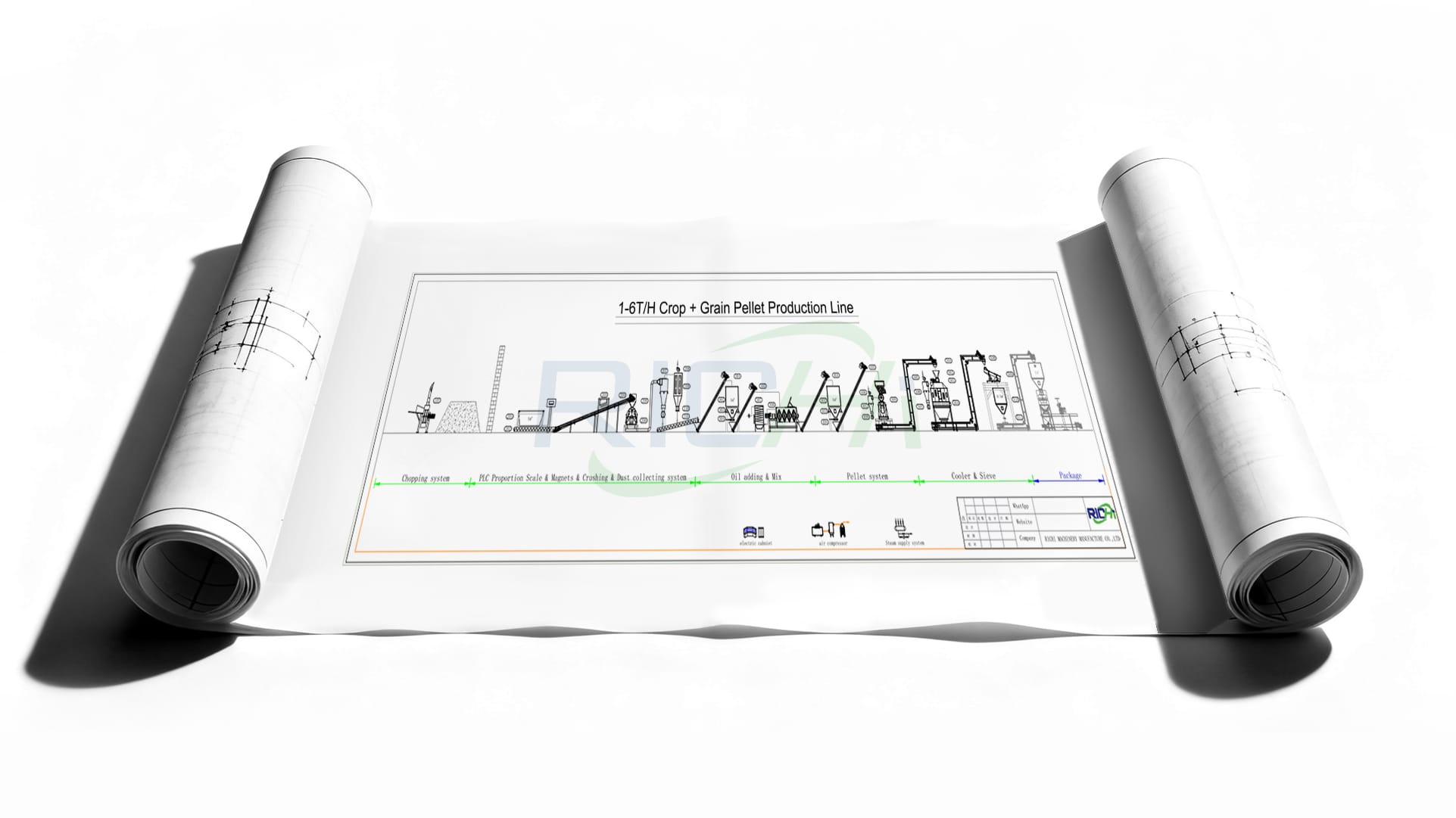
1-6 T/H Commercial Ruminant Feed Plant Design
This commercial ruminant feed plant was designed for a customer processing long crop straw rather than pre-baled straw. The customer wanted one production system capable of producing different ruminant feed formulas for different animal growth stages.
The process includes straw chopping → batching → grinding → mixing → pelletizing → cooling → screening → automatic packing. The wide capacity range is related to the customer’s flexible production strategy. Depending on the formula, the line can process full-grain feed, high-forage feed, or mixed straw and grain formulas with different ratios. This modular design allows the customer to adjust production according to seasonal raw material availability and market demand.
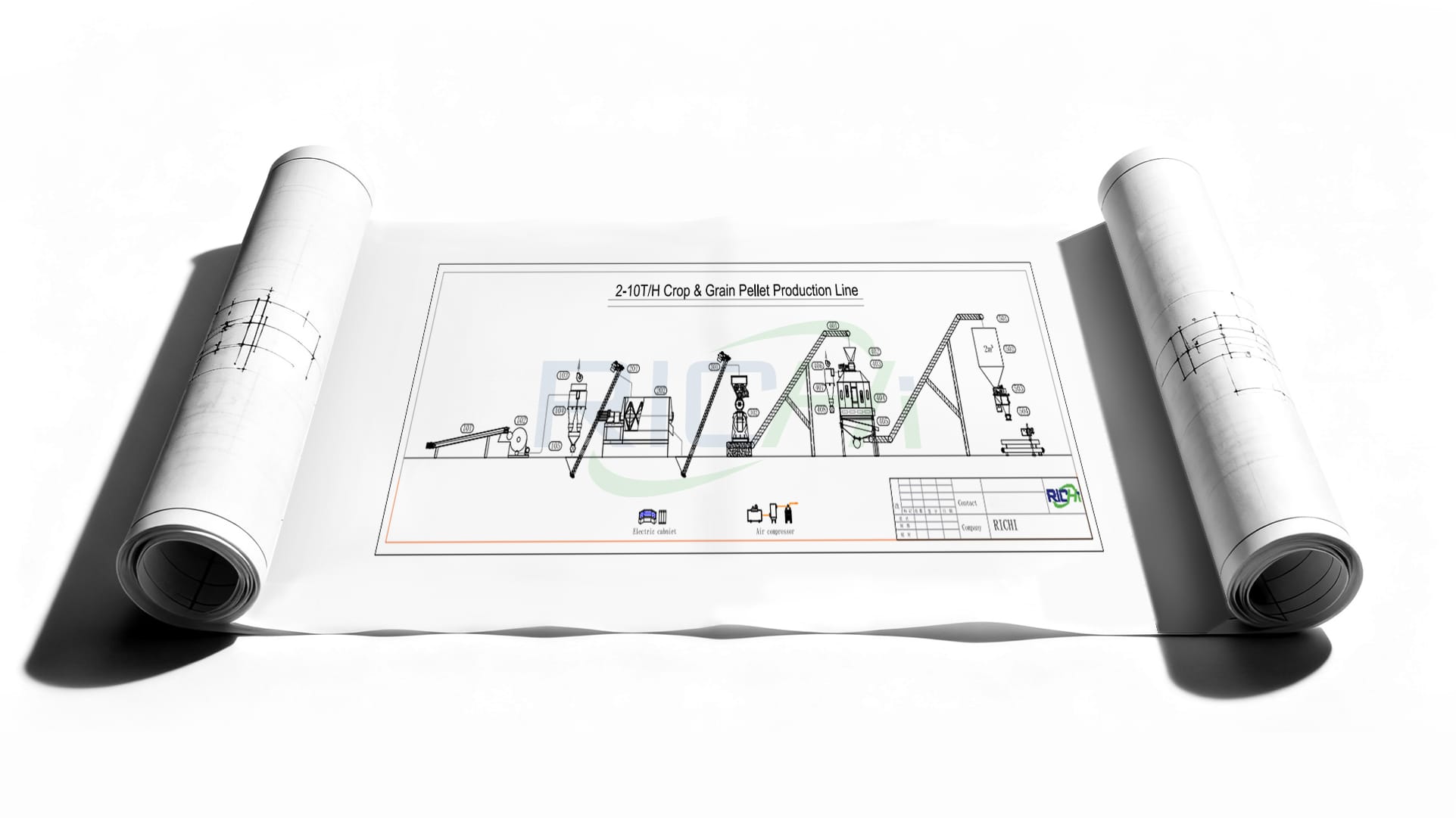
2-10 t/h Complete Ruminant Feed Production Line Design
This 2–10 T/H complete ruminant feed production line was developed for a customer using low-moisture crop residues, grass, and pre-ground grains. Because the customer already owned a grain grinding system, the new production line was designed only for material mixing, pelletizing, and finishing processes.
The customized flow included prepared forage and grain receiving → mixing → pelletizing → cooling → screening → automatic packing. The flexible production capacity allows the customer to manufacture multiple ruminant feed products, including grain-based formulas, forage-rich pellets, and mixed feed depending on livestock requirements. By removing unnecessary equipment modules, the customer achieved a more economical investment while maintaining future expansion possibilities.
Global Ruminant Feed Mill Projects
Our ruminant feed mill projects cover a wide range of applications, from family-owned livestock operations to commercial feed manufacturers and integrated agricultural enterprises. With experience in different countries, raw materials, formulas, and production requirements, we have developed solutions for cattle, sheep, goats, buffaloes, camels, and other ruminants.
Beyond standard pellet production, our project portfolio includes single-product facilities and flexible production systems capable of handling multiple feed forms and animal categories. Each ruminant feed mill solution is designed around local ingredients, feeding practices, investment plans, and future expansion requirements.
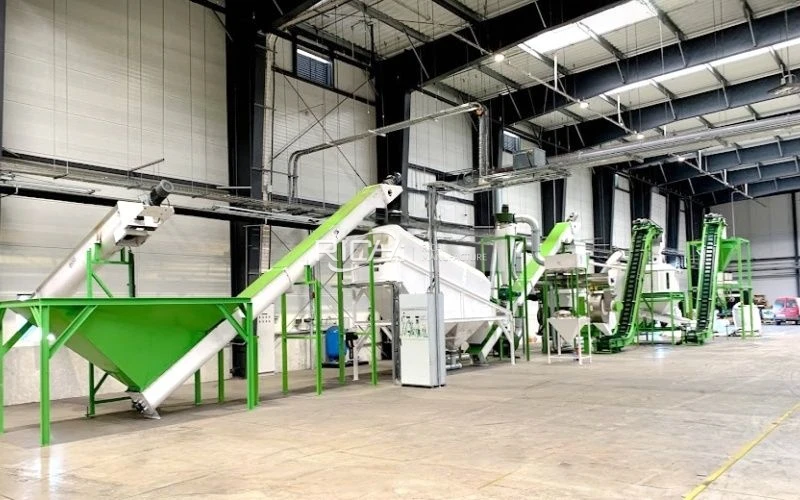
3 T/H Ruminant Feed Mill
France
Developed for a French dairy cooperative producing balanced cattle feed pellets. The line processes corn, wheat, soybean meal, alfalfa meal, and minerals into 6–8 mm dairy cattle feed. The customized system focuses on accurate batching, uniform mixing, and stable pellet quality for medium-scale dairy farms.
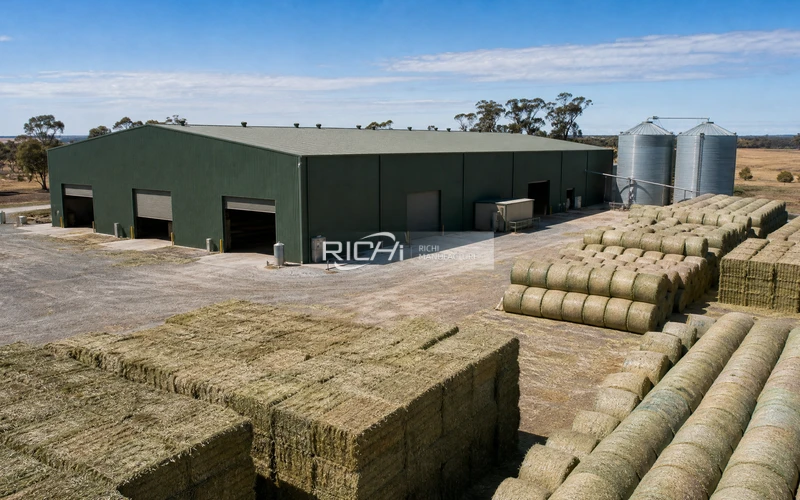
8 T/H Ruminant Feed Mill
Australia
Designed for an agricultural company producing cattle and sheep feed from local forage resources. The system handles lucerne hay, pasture grass, wheat, and barley to manufacture high-fiber pellets. The customized process improves forage utilization, reduces storage challenges, and provides stable feed supply during seasonal pasture shortages
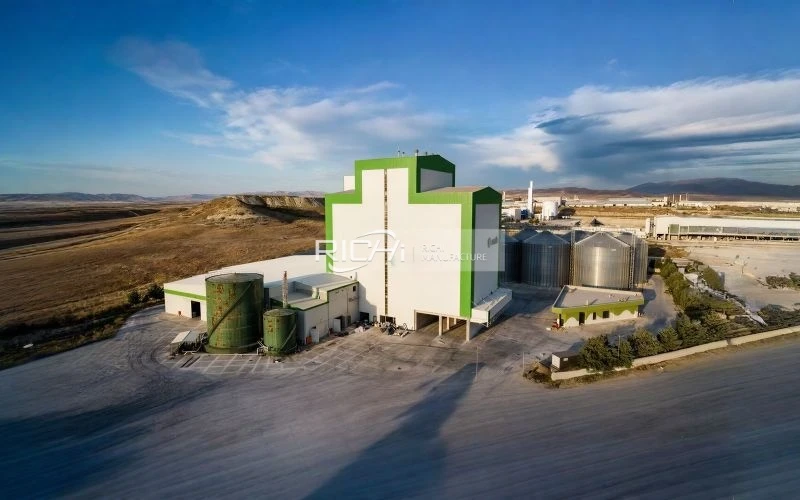
6 T/H Ruminant Feed Mill
Poland
Designed for a dairy feed supplier producing complete cattle rations. The line uses corn, wheat, rapeseed meal, alfalfa, and mineral additives to manufacture dairy cattle pellets and concentrate feed. The process design focuses on accurate ingredient dosing, consistent nutrition, and reliable operation for commercial farms.
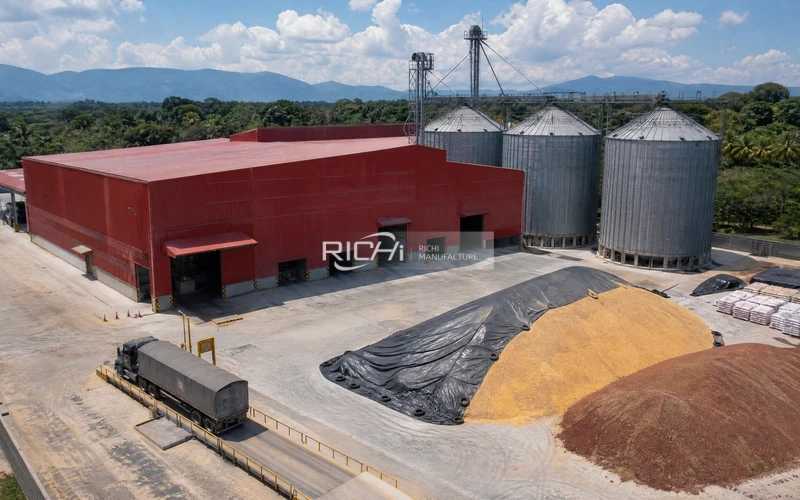
15 T/H Multi-Animal Feed Plant
Colombia
Developed for a commercial feed producer manufacturing feed for cattle, dairy farms, and other livestock operations. The system processes corn, sorghum, soybean meal, and forage ingredients through shared production equipment. The multi-purpose design allows flexible switching between ruminant feed and other animal feed products.
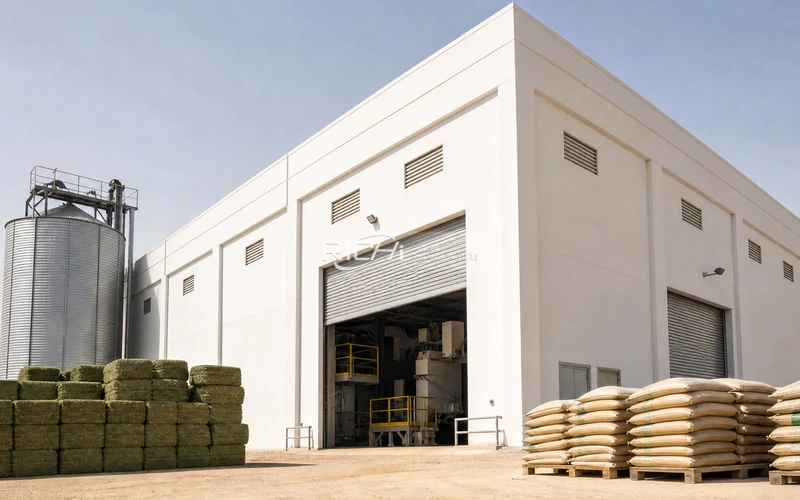
4 T/H Ruminant Feed Mill
Saudi Arabia
Designed for a Saudi livestock enterprise producing feed for camels and sheep. The system uses barley, alfalfa, wheat bran, corn, and mineral additives to manufacture pellet and mash feed. The flexible design supports different formulas for dairy camels, racing camels, and small ruminants.
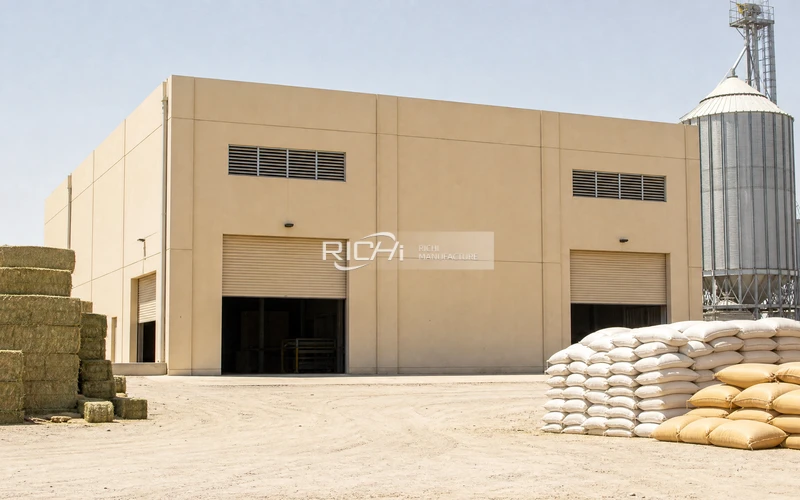
5 T/H Ruminant Feed Mill
Qatar
Developed for a livestock investment project requiring specialized camel and cattle feed production. The line combines grain processing and extrusion technology to produce high-value feed products using corn, barley, alfalfa, and nutritional additives. The flexible configuration supports different formulas and pellet sizes for various ruminant feeding programs.
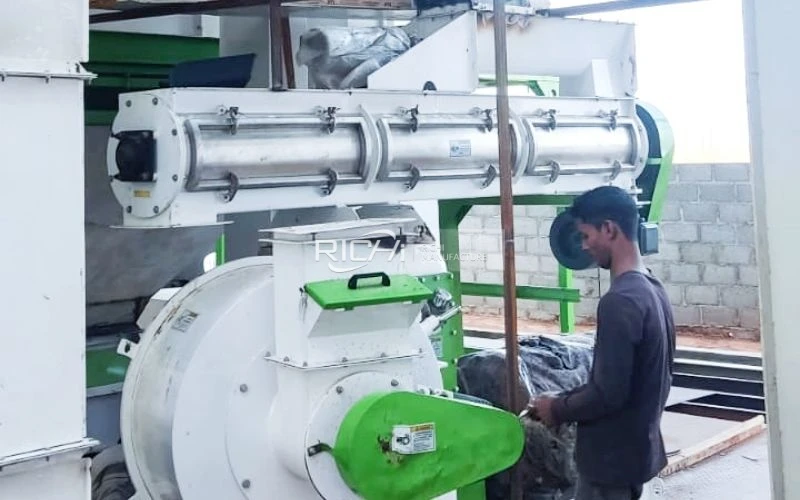
5 T/H Ruminant Feed Mill
Jordan
Developed for a livestock farm producing sheep and goat feed locally. The production line processes barley, wheat bran, alfalfa meal, soybean meal, and mineral supplements into balanced pellets. The customized medium-scale system helps farmers reduce dependence on external feed suppliers while maintaining consistent feed quality.
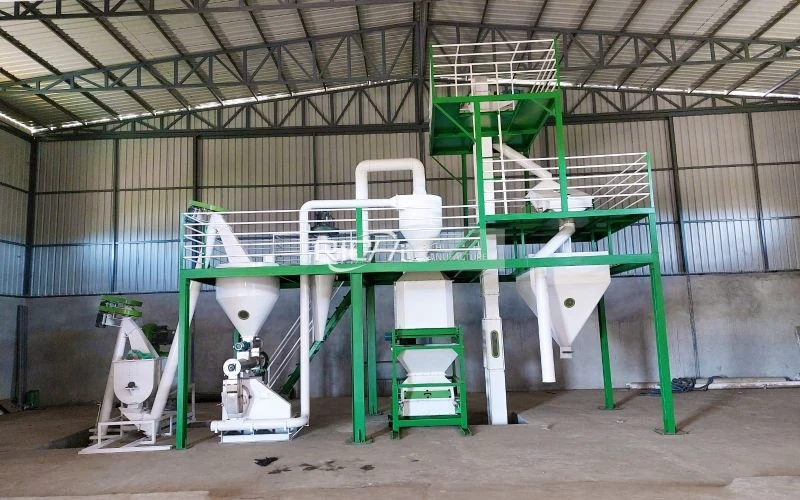
1.5 T/H Small Farm Feed Project
Yemen
Created for a Yemeni livestock business establishing local goat and sheep feed production. The compact line uses barley, wheat bran, alfalfa, and agricultural residues to produce affordable pellets. The project was designed around limited investment conditions while maintaining reliable operation and simple maintenance requirements.
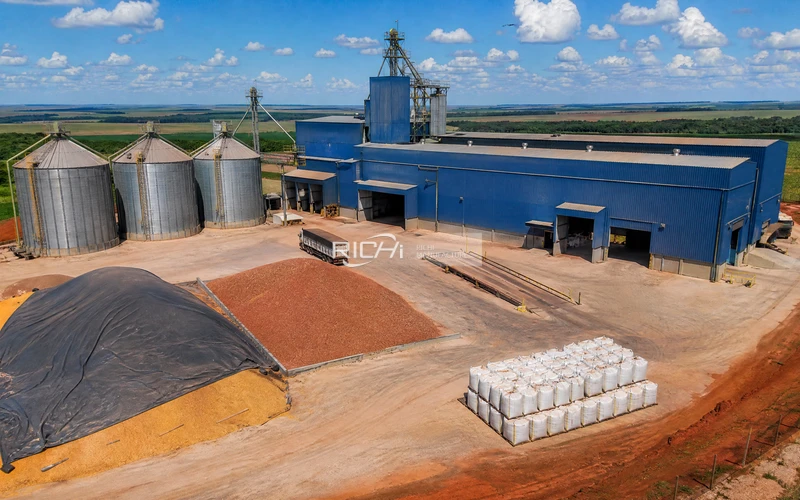
20 T/H Ruminant Feed Mill
Brazil
Built for a commercial feed producer serving beef cattle farms. The plant processes corn, soybean meal, sorghum, cottonseed meal, and agricultural by-products into high-energy cattle feed pellets. Automated batching and continuous pellet production help meet large-volume commercial feed supply requirements.
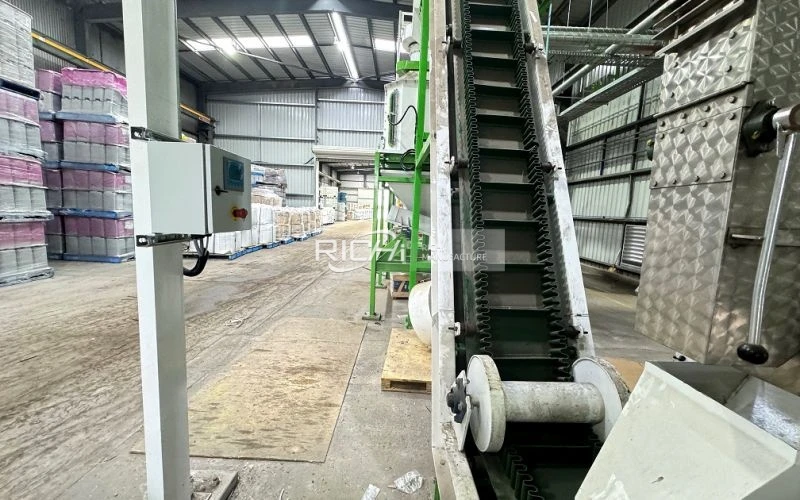
3 T/H Ruminant Feed Mill
Uruguay
Created for a cattle farming enterprise using local pasture resources and grain supplements. The production line processes corn, barley, soybean meal, and grass-based ingredients into beef cattle pellets. The compact design provides efficient feed production for grazing farms seeking improved nutrition control and reduced feed purchasing costs.
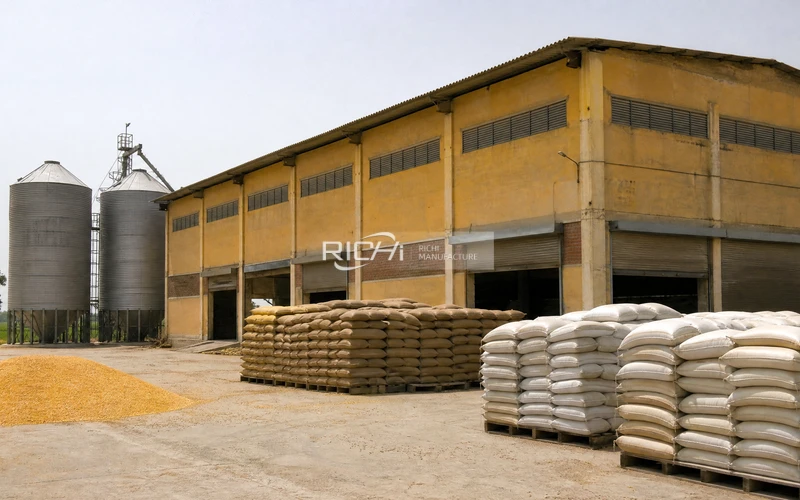
10 T/H Buffalo Feed Line
India
Built for an Indian dairy enterprise producing feed for buffalo and cattle farms. The system processes corn, rice bran, soybean meal, cottonseed cake, and mineral mixtures into complete feed products. The flexible production line supports different formulas according to animal stages and regional feeding practices.
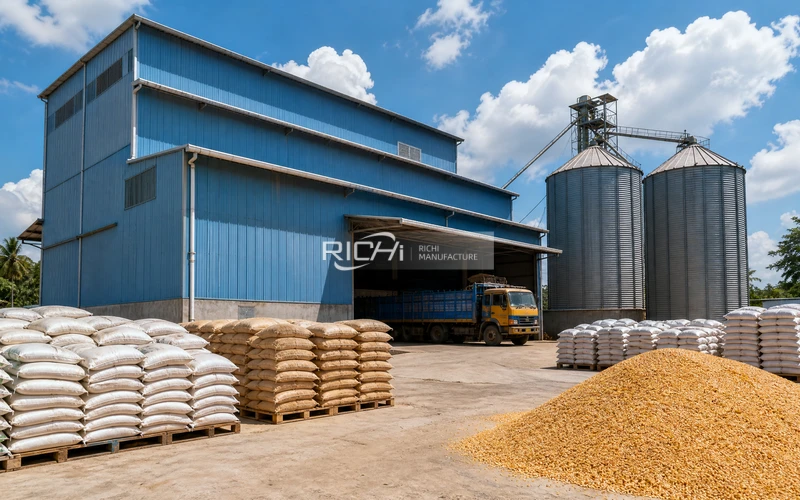
12 T/H Ruminant Feed Mill
Bangladesh
Built for a Bangladesh agricultural company producing cattle, goat, and poultry feed. The flexible plant processes corn, rice bran, soybean meal, and forage materials with shared equipment systems. The project allows multiple feed forms and supports diversified production for different animal farming markets.
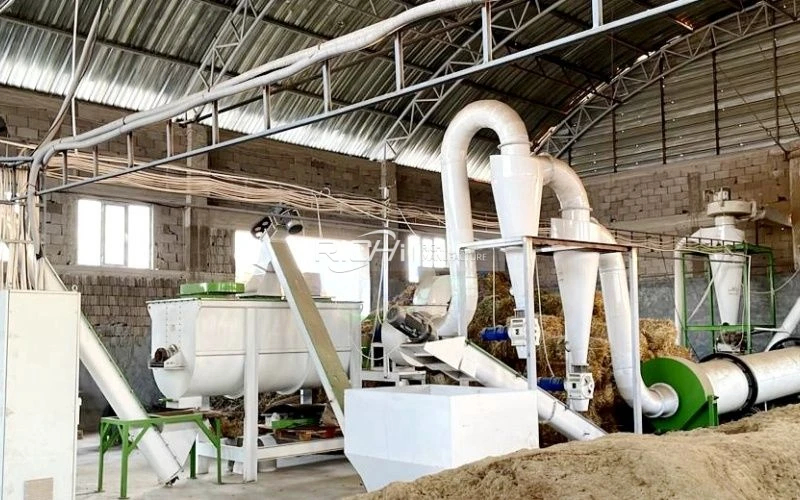
2 T/H Ruminant Feed Mill
United Arab Emirates
Created for a camel breeding farm requiring specialized forage-based nutrition. The line processes alfalfa hay, barley, corn, and mineral premixes into compact pellets. The customized solution improves feed storage efficiency while supporting different feeding programs for dairy and performance camels.
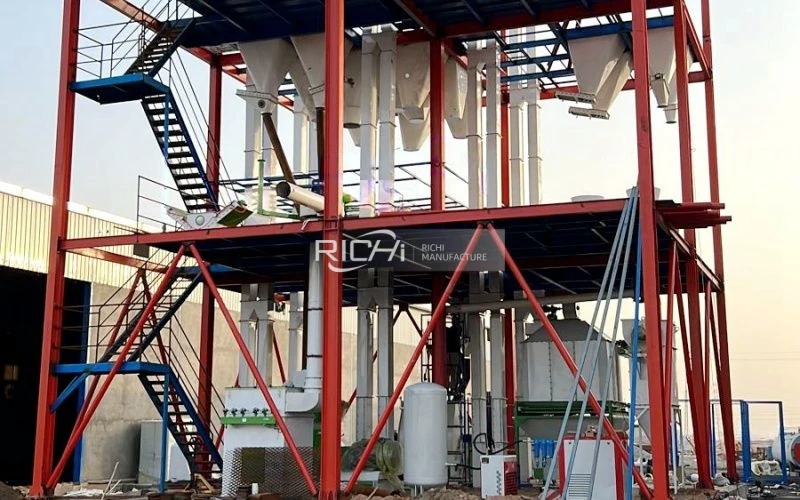
12 T/H Ruminant Feed Mill
Iraq
Built for a commercial feed manufacturer supplying cattle, sheep, and goat farms. The plant processes wheat, barley, corn, wheat bran, straw meal, and protein ingredients into complete ruminant feed. The customized system supports multiple formulas and stable production for different livestock feeding requirements.
4 T/H Grass Pellet System
New Zealand
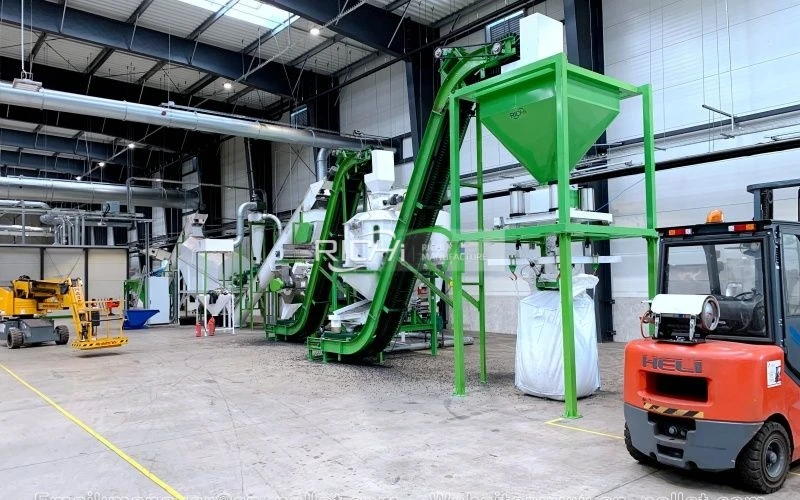
Designed for a forage company converting pasture resources into commercial feed pellets. The line processes ryegrass, hay, lucerne, and supplementary grains for cattle and sheep applications. The customized solution improves forage handling efficiency and creates a convenient stored feed product for year-round livestock management.
5 T/H Ruminant Feed Mill
Romania
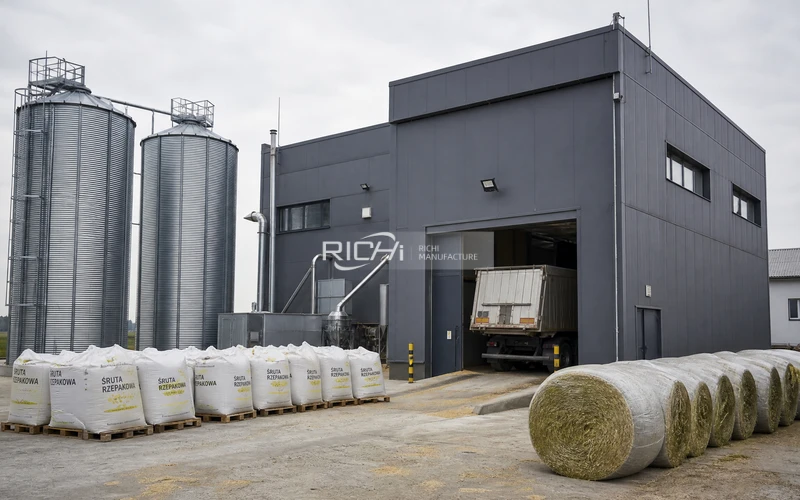
Developed for a livestock producer combining local grains and forage materials. The line processes corn, wheat, barley, sunflower meal, and grass hay into cattle and sheep feed pellets. The customized configuration balances grain efficiency with fiber requirements to meet different livestock nutrition targets.
Customers from different regions and livestock industries have chosen our ruminant feed mill solutions for their ability to match local raw materials, production goals, and feeding requirements. The following feedback reflects the experience of clients who worked with us on customized feed processing projects, from initial design and equipment supply to installation support and production guidance.

Sri Lanka — Dairy Feed Production Success
- Dairy Farm Owner
- 3 T/H Ruminant Feed Mill Project
“Before building our ruminant feed mill, we depended heavily on purchased feed. The new line allows us to produce dairy cattle pellets using rice bran, corn, coconut meal, and soybean meal. The equipment design was suitable for our farm conditions, and the technical support helped us achieve stable production.”

Ethiopia — Expanding Livestock Feed Supply
- Commercial Feed Producer
- 5 T/H Ruminant Feed Mill Project
“We needed a reliable solution for producing cattle, sheep, and goat feed with locally available materials. The ruminant feed mill processes maize, wheat bran, teff residue, and forage ingredients efficiently. The complete service from process design to installation guidance made our investment much easier.”

Italy — Premium Forage Feed Processing
- Agricultural Enterprise Manager
- 4 T/H Ruminant Feed Mill Project
“Our goal was to produce high-quality forage pellets for dairy cattle farms. The system handles alfalfa hay, grass, and grain supplements while maintaining consistent pellet quality. We appreciated the customized layout design and professional communication throughout our ruminant feed mill project.”

Senegal — Local Feed Manufacturing Development
- Livestock Feed Investor
- 2 T/H Ruminant Feed Mill Project
“We selected this ruminant feed mill to establish local feed production for cattle and small ruminants. The line uses millet by-products, corn, peanut shells, and mineral ingredients to produce affordable pellets. The compact design and equipment training helped us start operation smoothly.”

Bulgaria — Balanced Cattle Feed Solution
- Dairy Farm Director
- 6 T/H Ruminant Feed Mill Project
“Our farm required a flexible feed production system for different cattle groups. The ruminant feed mill processes wheat, corn, sunflower meal, alfalfa, and additives into complete dairy cattle feed. We were satisfied with the accurate design, manufacturing quality, and after-sales support provided during the project.”

Kenya — Multi-Raw Material Feed Plant
- Agricultural Business Owner
- 3 T/H Ruminant Feed Mill Project
“We invested in this ruminant feed mill to improve feed supply for cattle and goats. The production line handles maize, sorghum, hay meal, and protein ingredients for pellet production. The customized solution helped us reduce feed costs and produce more consistent nutrition for local livestock farms.”

Ruminant Feed Mill Solutions for Different Production Capacities
Every ruminant feed mill project starts with understanding the customer’s expected output, market demand, available investment, and factory conditions. We provide customized feed processing solutions across different capacity ranges, allowing small livestock farms, commercial feed producers, agricultural companies, and large-scale industrial investors to select a production scale that matches their business goals.
From compact feed production units to fully automated high-capacity plants, each solution is designed around realistic processing requirements, facility space, and future expansion plans.
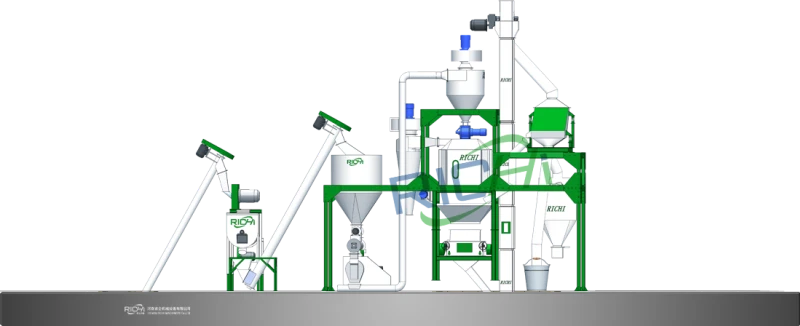
Suitable for small farms, livestock cooperatives, and first-time investors.This compact ruminant feed mill solution is ideal for customers producing feed for their own cattle, sheep, goats, or small local markets. It requires limited factory space and investment while providing flexible production of basic pellets or mash feed.
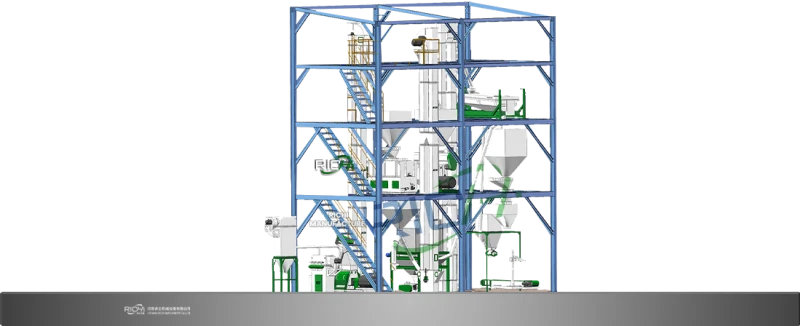
3-4 t/h animal feed production plant
Suitable for growing farms and small commercial feed businesses. This capacity range fits livestock enterprises looking to move from on-farm feed preparation into commercial production. It provides enough output for regional cattle, sheep, and goat farms while maintaining manageable operation and investment costs.
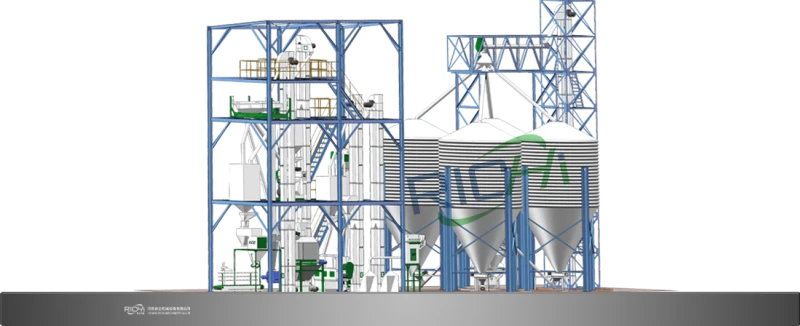
5-7 t/h animal feed pellet plant
Suitable for medium livestock farms and local feed suppliers. Designed for businesses requiring regular commercial feed production, this scale can process multiple formulas such as dairy cattle feed, beef cattle feed, and sheep or goat pellets. It offers a good balance between production efficiency and investment flexibility.
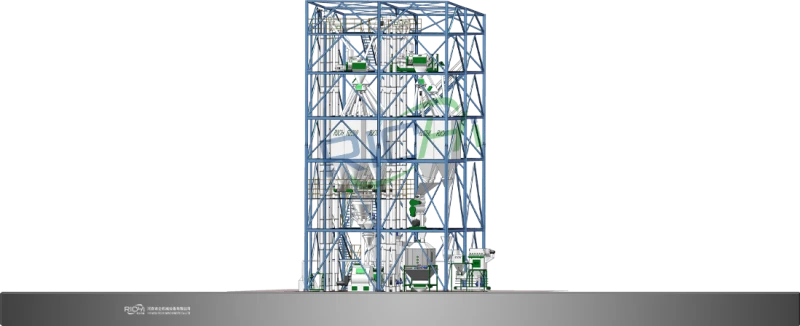
8-10 t/h animal feed processing plant
Suitable for established feed producers and larger farming operations. This production level supports customers serving multiple farms or expanding their livestock feed business. The system can handle more diverse raw materials, larger batch production, and customized feed formulations for different ruminant groups.
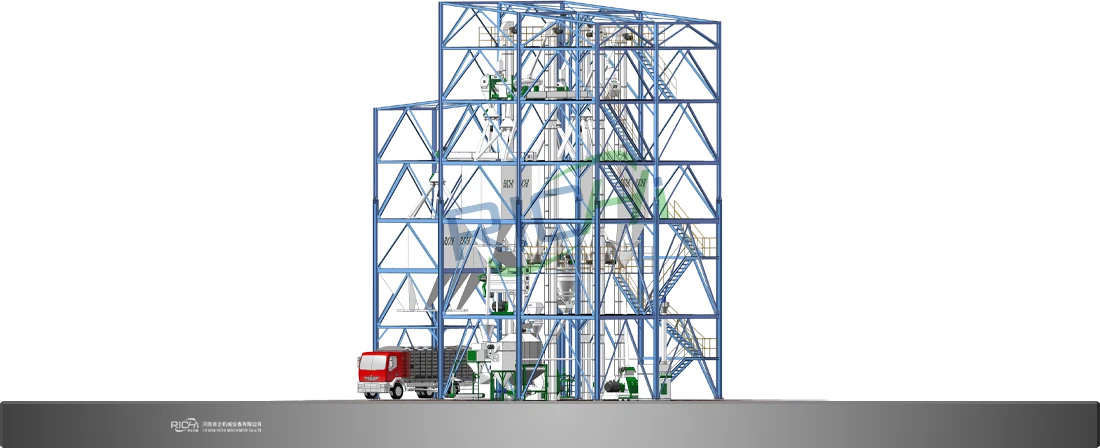
12-20 t/h feed preparation plant
Suitable for commercial feed factories and regional suppliers. A 12–20 T/H ruminant feed mill is commonly selected by companies entering professional feed manufacturing markets. These systems provide higher output, improved automation, and the ability to produce different ruminant feed products for wider distribution.
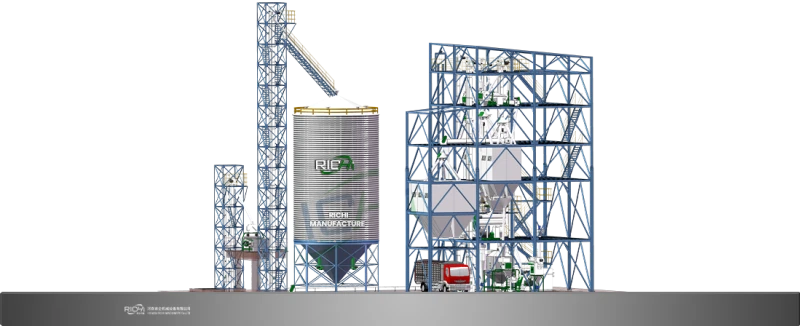
25-40 t/h feed pellet production line
Suitable for large commercial feed manufacturers. This capacity range is designed for businesses requiring continuous production and stable supply for large livestock farming areas. The plant can support multiple product lines, including cattle feed, sheep feed, goat feed, and mixed animal feed production.
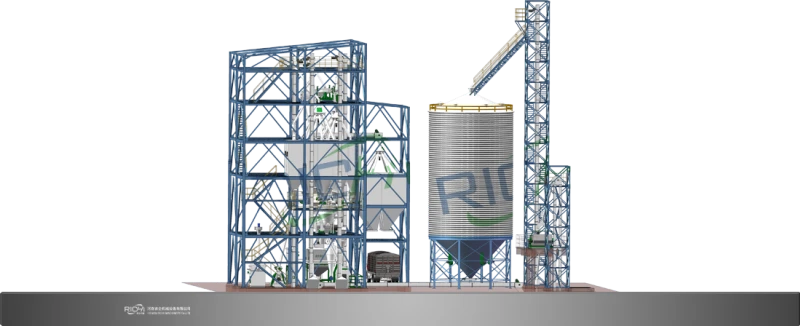
50-60 t/h commercial feed mill
Suitable for industrial feed producers and large agricultural enterprises. These high-output systems are developed for investors operating large-scale feed businesses. They provide efficient raw material handling, automated production processes, and strong market supply capability for commercial livestock industries.
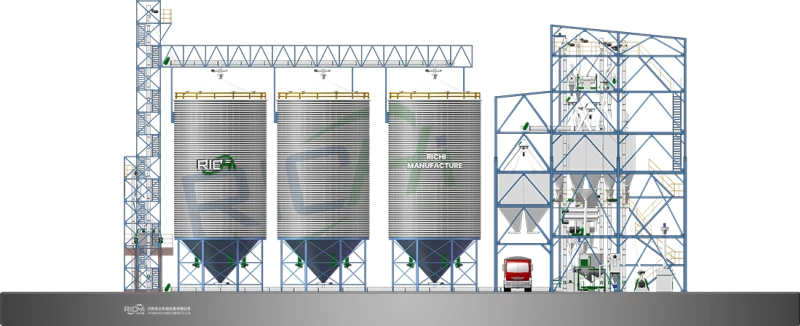
60-80t/h complete feed mill plant
Suitable for major feed companies and integrated livestock groups. This scale is suitable for customers requiring industrial-level production capacity with advanced automation and centralized feed manufacturing. The system can support large cattle, dairy, and multi-species feed production operations.
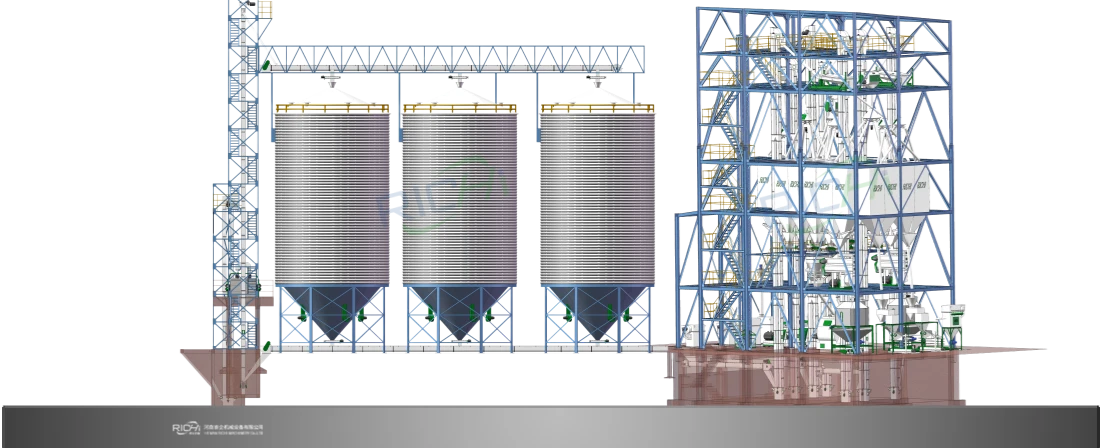
Suitable for national-level feed suppliers and large agricultural corporations. An 80–100 T/H solution is designed for companies with significant market demand and distribution networks. These projects usually involve larger facilities, advanced control systems, and long-term production planning.
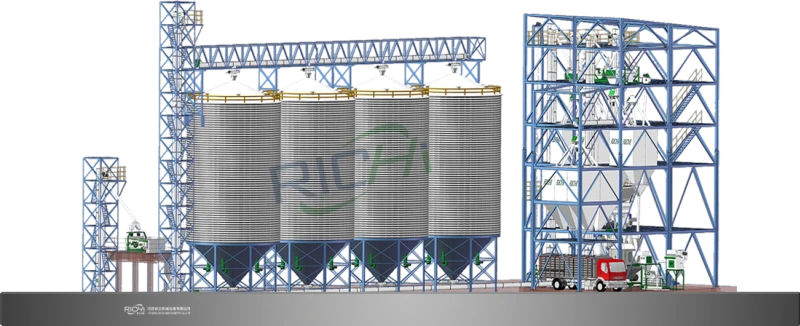
100-120 t/h feed mill engineering
Suitable for large industrial feed enterprises and strategic investments. The largest capacity range is developed for customers planning large-scale commercial feed manufacturing. These ruminant feed mill projects require comprehensive planning, including factory layout, automation, logistics, and future production expansion.
Ruminant Feed Mill Investment Budget Overview
TThe total investment can range from tens of thousands of dollars for a small customized production unit to several million dollars for a large automatic ruminant feed factory. The final budget depends on whether the customer needs a simple pellet production system, a complete ruminant feed manufacturing plant with multiple processes, or a fully integrated commercial facility.
Whole Manual/Automatic ruminant feed plant set up investment : $37,000 – $40,000,000
Equipment Costs :
Raw Material Cleaning machine price :
$1,000–$30,000
Ruminant Feed Grinding Equipment Price :
$2,000–$80,000
Bale Breaking machine Price :
$5,000–$25,000
raw material Drying machine Price :
$8,000–$250,000
Batching & Weighing System Price :
$2,000-$50,000
Molasses Addition & Liquid Mixing System Price :
$3,000–$50,000
Ruminant Feed Pellet Machine Price :
$7,000-$80,000
Conditioning & Steam System Price :
$5,000–100,000
Cooling equipment Price :
$1,500-$15,000
Screening equipment price :
$2,000-$8,000
Bagging & Packing System Price :
$5,000–100,000
Conveying machine Price :
$3,000-$25,000+
Dust Collection system Price :
$3,000–$20,000
Storage Silos & Bins Price :
$5,000–$500,000
Electrical Control & Automation System Price :
$5,000-$100,000
The above investment ranges are summarized from cost data collected across more than 1,000 feed mill projects in different countries and market conditions. However, every ruminant feed mill project has different requirements. The most practical approach is to discuss your raw materials, target capacity, feed formulas, factory conditions, and investment plan with our technical team. We can provide a customized production solution, accurate equipment quotation, investment analysis, and a complete project proposal based on your actual situation.

Complete Services
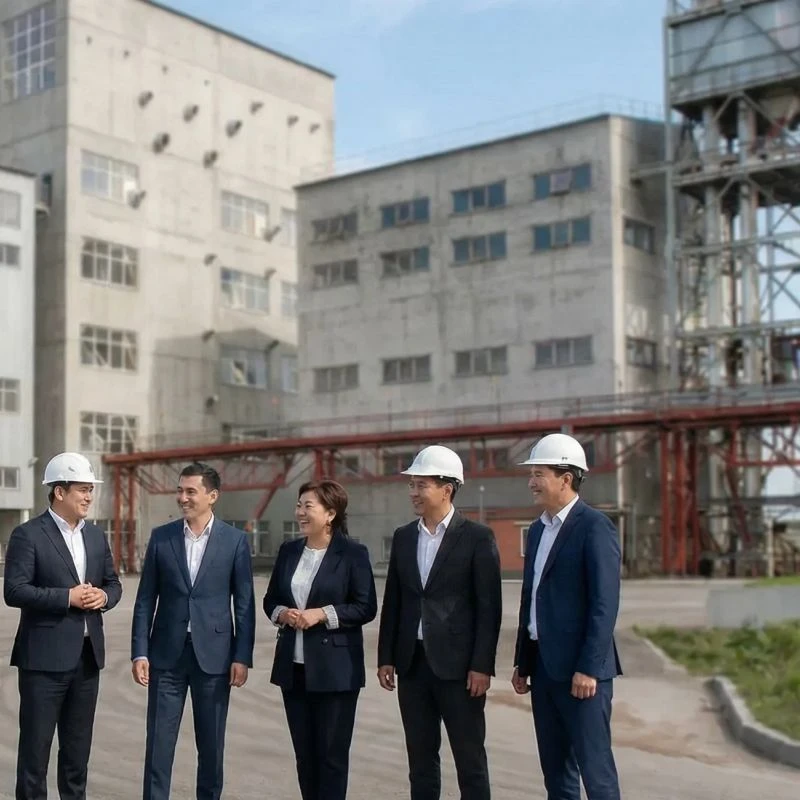
Building a successful ruminant feed mill requires more than supplying individual machines. From the first project discussion to long-term operation, we provide integrated support covering engineering design, equipment manufacturing, installation guidance, production commissioning, and after-sales service. Our team works with customers worldwide to develop feed production systems that match local raw materials, factory conditions, production targets, and investment plans.
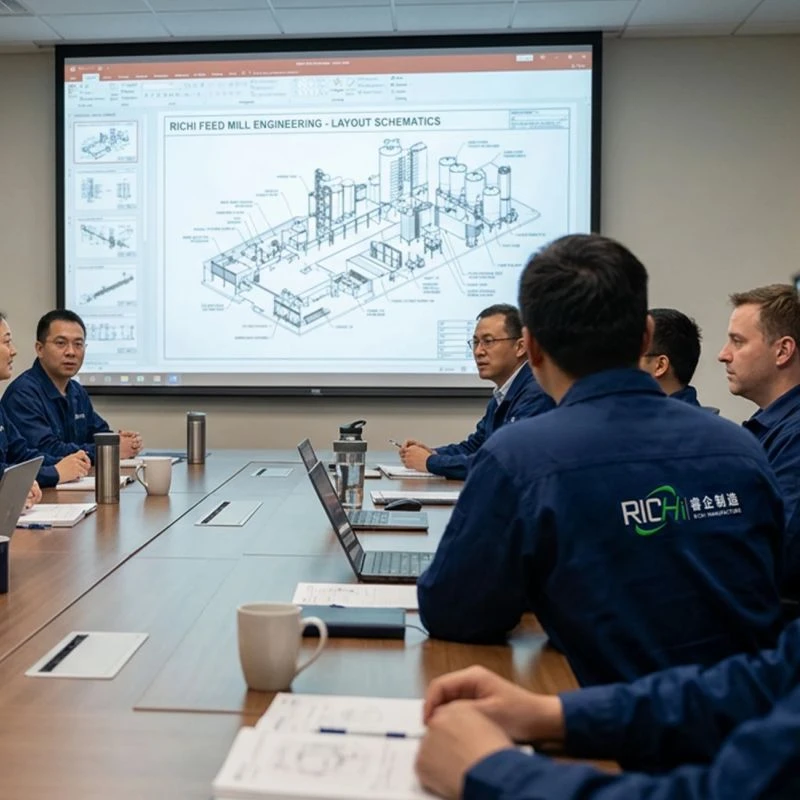
Customized Design & Engineering Solutions
Each ruminant feed mill project starts with detailed planning based on customer requirements. We provide process flow design, equipment layout, civil engineering drawings, factory planning, and customized equipment configurations to ensure the production line fits the available space, materials, and final feed products.
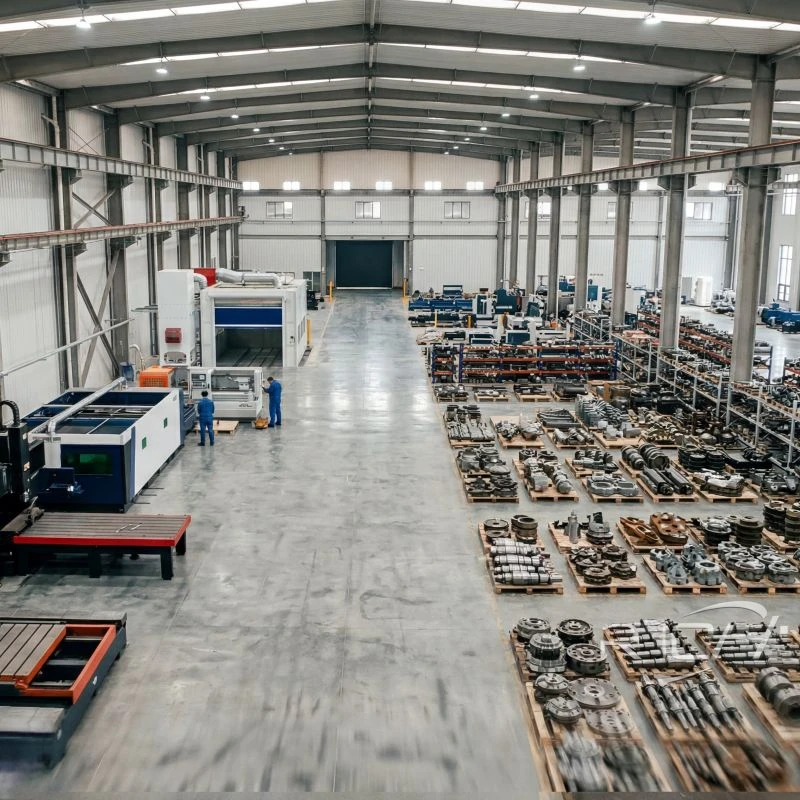
In-House Equipment Manufacturing
We manufacture key feed processing equipment within our own production facilities, including pellet machines, grinders, mixers, conveyors, and complete line components. With patented technologies, certified products, and advanced manufacturing equipment, our machines are prepared for installation in feed projects across global markets.
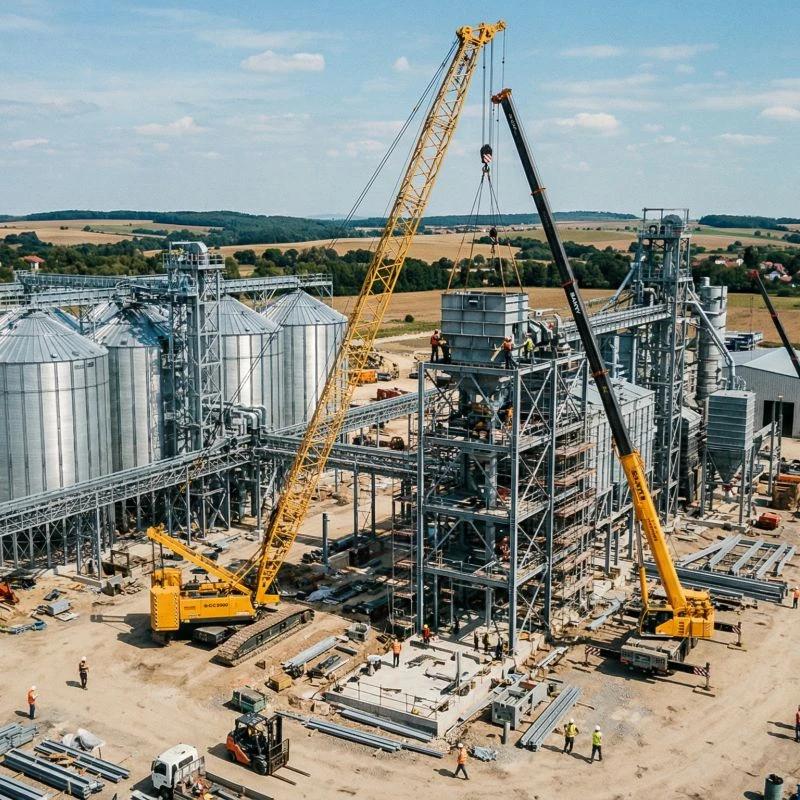
Installation, Commissioning & Training
After equipment delivery, we provide technical support for installation, commissioning, and operation. Our service helps customers correctly adjust the ruminant feed mill production process, train operators, and achieve stable output according to the designed capacity and feed requirements.
Lifetime After-Sales Support
Our relationship continues after project completion through ongoing technical assistance, spare parts supply, operation guidance, and follow-up support. We maintain long-term project tracking to help customers keep their ruminant feed production system operating efficiently throughout its service life.
Free Customization Services
Every ruminant feed mill requires different planning based on production capacity, raw materials, factory conditions, and final feed products. To help customers evaluate and prepare their projects more efficiently, we provide a range of complimentary customization services before and after investment, supporting everything from initial planning to production preparation.

Free Project Cost Assessment
Free Process Flow Design
Free 3D Plant Visualization
Free Factory Layout Planning
Free Engineering Drawing Package
Free Electrical Design Support
Free Equipment Configuration List
Free Installation & Operation Support
The Equipment Behind Every Fully Automatic Cattle Feed Plant We Build
A modern ruminant feed mill requires coordinated equipment across every stage of production, from raw material preparation to finished feed packaging.
We provide complete sets of ruminant feed production equipment, including raw material cleaning systems, grinders, crushers, batching systems, mixers, molasses and liquid addition equipment, pellet mills, conditioners, coolers, screeners, conveyors, packing machines, dust collection systems, storage silos, and automation controls.
Each equipment combination can be configured according to feed type, capacity, raw material characteristics, and production requirements.
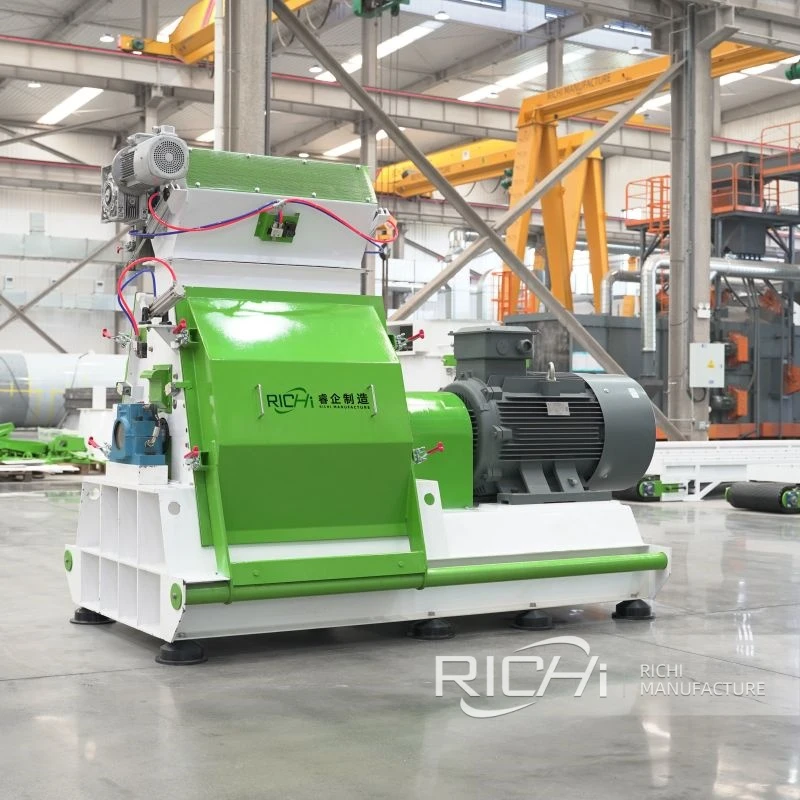
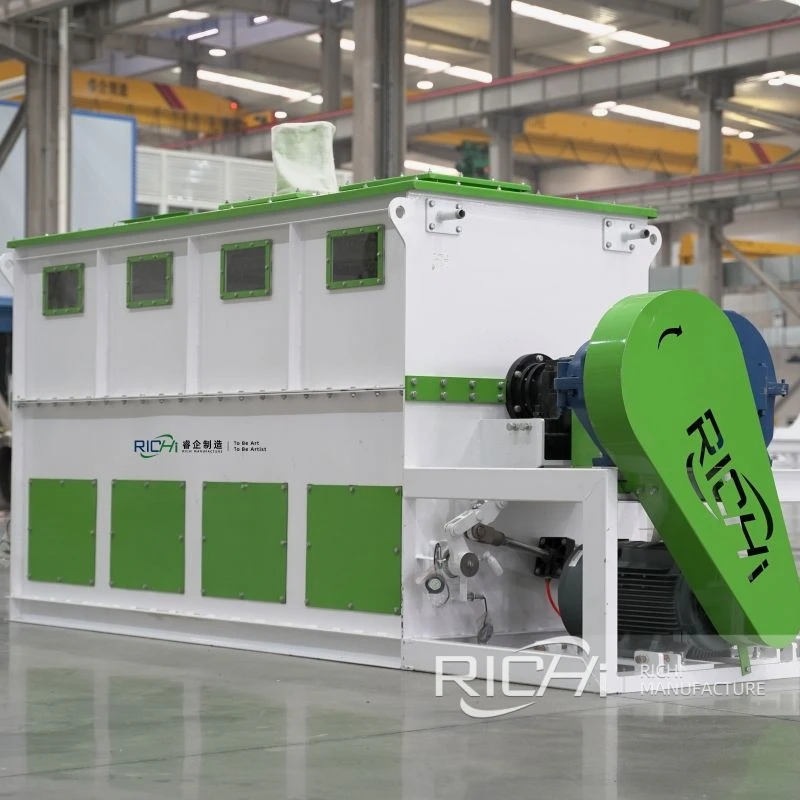
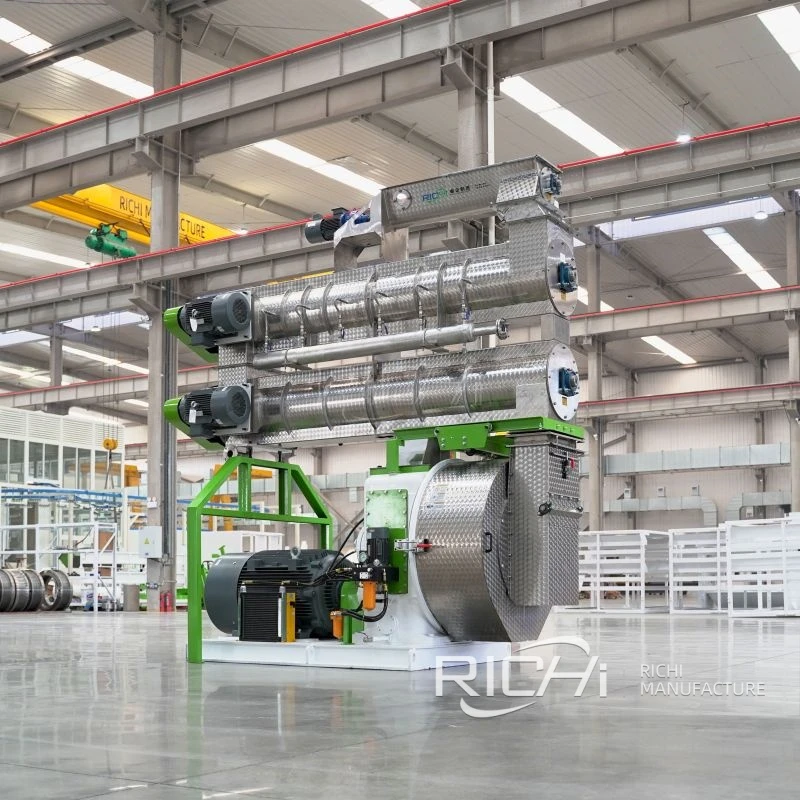
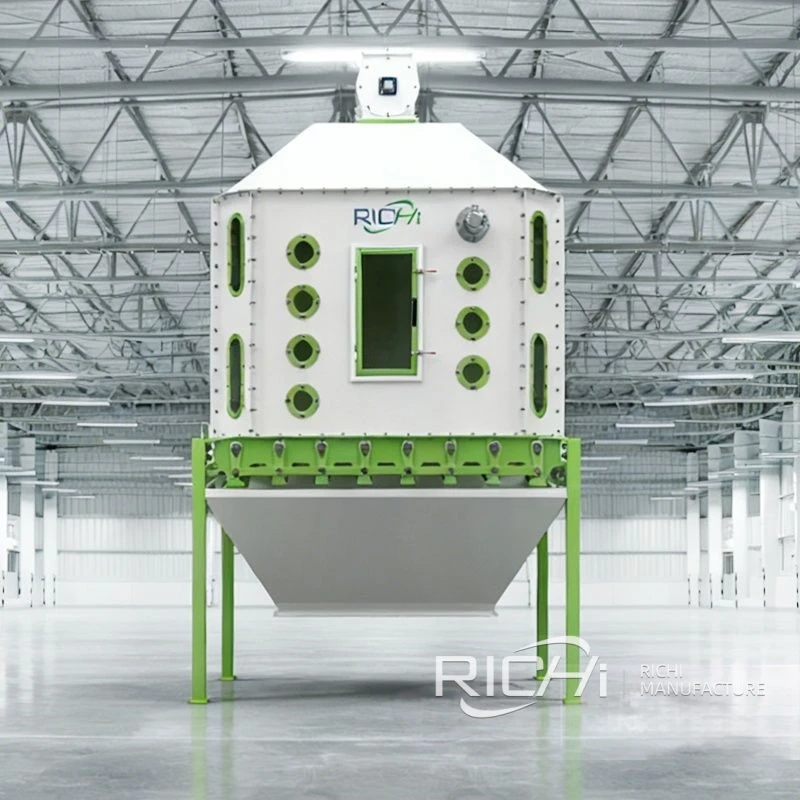
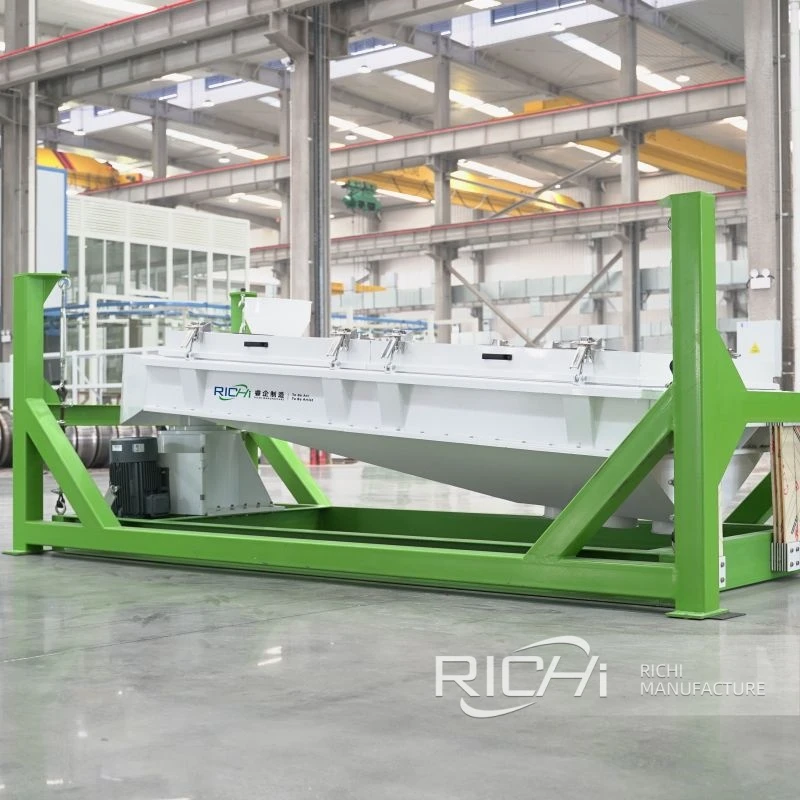
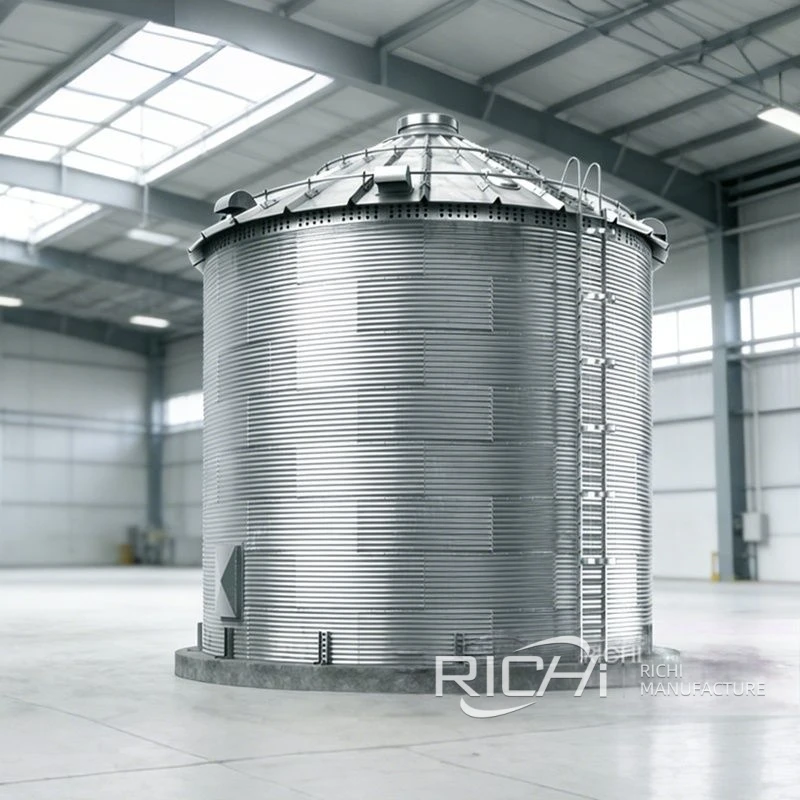
Click below to check detailed equipment information or discuss the right configuration for your ruminant feed mill project.
Build a Profitable Future with Ruminant Feed Processing
The growing demand for high-quality animal nutrition is creating new opportunities for investors entering the ruminant feed industry. As livestock farming becomes more commercialized, farms and feed suppliers need reliable sources of balanced feed for dairy cattle, beef cattle, sheep, goats, buffaloes, and camels. A well-designed ruminant feed mill allows businesses to transform local grains, forage resources, and agricultural by-products into valuable commercial feed products.
Profitability in ruminant feed processing depends not only on production volume but also on flexibility. A single production system can be configured to manufacture different products, such as cattle pellets, sheep and goat feed, forage-based pellets, mash feed, or even other animal feed categories when required. This multi-purpose approach helps investors respond to changing market demand, improve equipment utilization, and create additional revenue opportunities.
With the right process design, equipment selection, and investment planning, a ruminant feed mill can become a long-term business opportunity in both developing and established livestock markets. RICHI Machinery provides customized project consultation to help customers evaluate production capacity, raw material advantages, and suitable processing solutions before starting their investment.
Discuss Your Ruminant Feed Mill Investment Plan
Ruminant Feed Types & Raw Materials
A successful ruminant feed mill begins with understanding the relationship between raw materials, animal nutrition requirements, and processing technology. Ruminant feed production may involve traditional ingredients such as corn, wheat, barley, soybean meal, alfalfa, grass, and straw, as well as region-specific materials including bagasse, peanut hulls, sunflower seed hulls, sugar beet pulp, rice bran, cottonseed meal, and other agricultural by-products.
RICHI Machinery develops customized processing solutions based on each customer’s available ingredients, feed formulas, and target products. Whether processing standard grain-based cattle feed, high-fiber forage pellets, camel feed, sheep and goat feed, or specialty ruminant products, our engineering team evaluates material characteristics such as moisture content, fiber structure, particle size, and density to design suitable crushing, mixing, pelletizing, and handling systems.

Corn

Alfalfa Hay
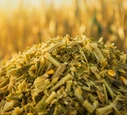
Corn Silage
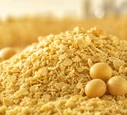
Soybean Meal
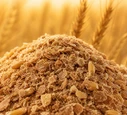
Wheat Bran
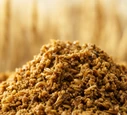
Brewers Grain

Cottonseed Meal
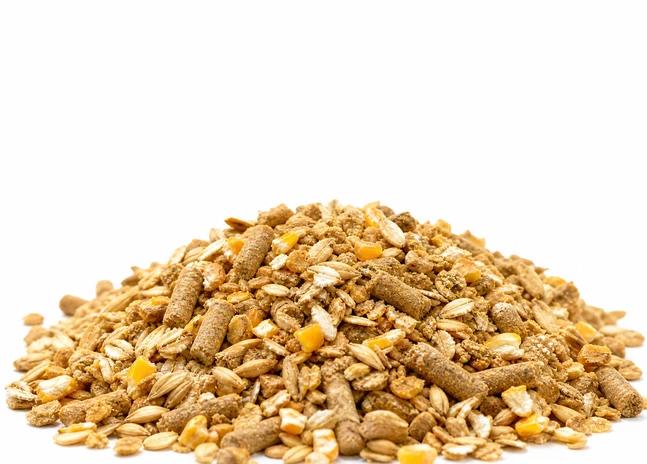
Dairy Cattle Feed
Dairy cattle feed usually requires precise nutrient distribution to support milk yield, energy supply, and animal health. Common raw materials include corn, barley, wheat, soybean meal, rapeseed meal, alfalfa, grass meal, minerals, and additives. Depending on the feeding system, our ruminant feed mill solutions can produce 4–10 mm pellets, concentrate feed, or mash products.
In regions such as Europe, the Middle East, and Asia, customers often combine local forage resources with commercial ingredients. Materials like alfalfa hay, rice bran, cottonseed meal, and beet pulp may require customized grinding and mixing processes to maintain consistent feed quality.
Customize Dairy Cattle Feed Production Line
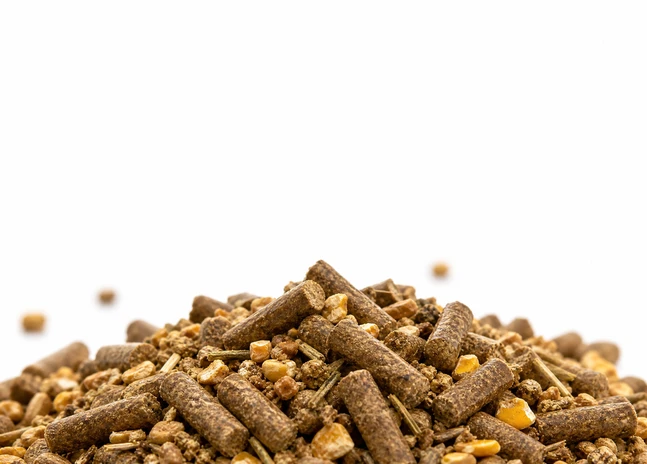
Beef Cattle Feed
Beef cattle feed commonly focuses on energy density and efficient weight gain. Typical ingredients include corn, sorghum, barley, soybean meal, wheat bran, molasses, and agricultural by-products. High-energy formulas often require careful grinding control to balance starch utilization and pellet durability.
Our production systems can manufacture beef cattle pellets in different sizes, usually 6–12 mm, while also supporting mash feed production for farms with traditional feeding methods.
Design Your Beef Cattle Feed Plant
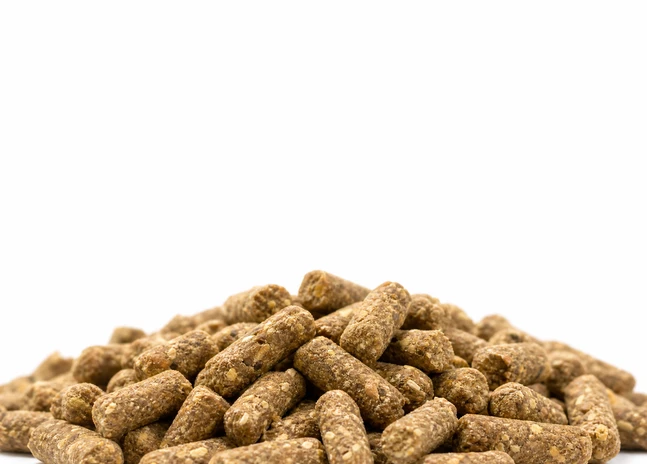
Sheep Feed
Sheep feed production often combines grain ingredients with high-fiber materials to match grazing conditions and seasonal feed availability. Common materials include barley, wheat bran, corn, alfalfa, grass meal, straw powder, and mineral supplements.
For customers processing forage-based formulas, the production line may require additional crushing stages to handle fibrous materials. Pellet sizes typically range from 4–8 mm, suitable for different sheep feeding applications.
Build Your Sheep Feed Production Line
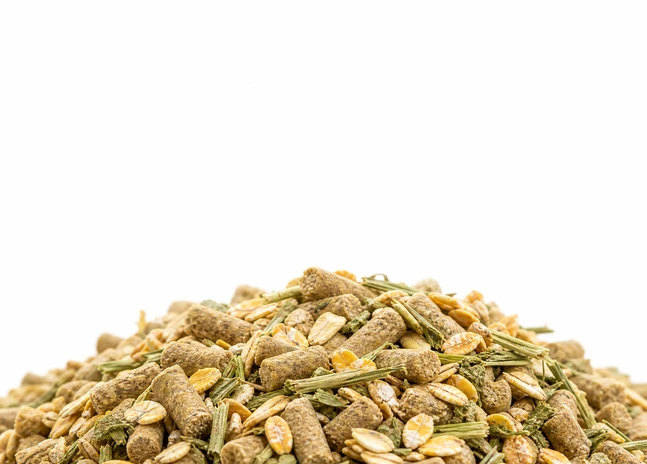
Goat Feed
Goats can utilize a wide range of feed resources, making flexibility an important factor in production design. Goat feed formulas may include corn, soybean meal, alfalfa, peanut shells, sunflower seed hulls, crop residues, and other local ingredients.
RICHI Machinery has designed systems capable of processing both conventional grain formulas and fiber-rich goat feed pellets, with equipment configurations adjusted according to material hardness, moisture, and final product requirements.
Create Your Goat Feed Solution
Camel Feed
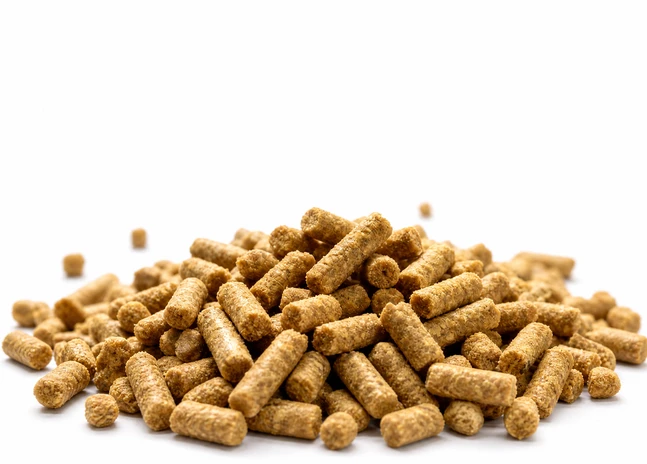
Camel feed production requires consideration of local resources and animal performance requirements. Common ingredients include barley, alfalfa, dates by-products, wheat bran, corn, and mineral additives. In Middle Eastern markets, camel feed may be produced as pellets, mash, or specially formulated mixed feed.
Our ruminant feed processing solutions can include liquid addition systems for ingredients such as molasses, improving feed palatability and helping produce stable pellets typically ranging from 6–12 mm.
Customize Your Camel Feed Mill
Deer Feed
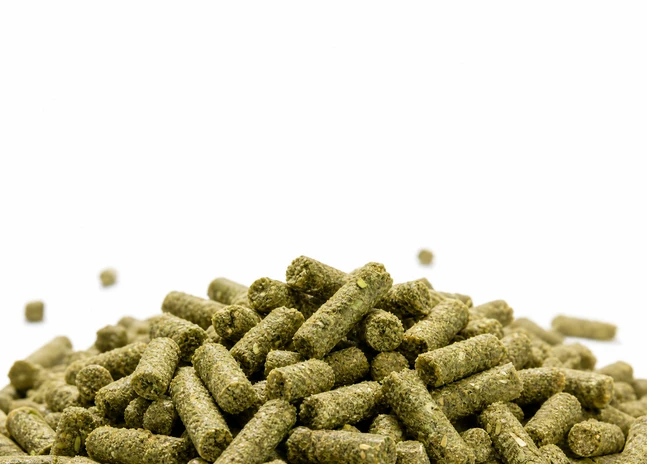
Deer feed is often produced for farms, wildlife parks, and specialty breeding operations. Formulas may include corn, oats, barley, alfalfa, soybean meal, grass pellets, minerals, and trace nutrients.
Because deer feed markets are usually smaller and more specialized, production lines are often designed for flexible batch production, allowing customers to adjust formulas and pellet sizes according to different growth stages.
Explore Deer Feed Processing Solutions
Typical Ruminant Feed Formulations
Feed formulas vary significantly depending on animal type, climate, available ingredients, and feeding objectives. The following formulations are only examples of common ruminant feed combinations used in different markets. Actual formulas should be adjusted according to local raw materials, nutritional requirements, and production goals.
Dairy Cattle Feed Pellet (Common Formula)
Corn
35%
Wheat Bran
20%
Soybean Meal
18%
Alfalfa Meal
15%
Mineral Additives
5%
…
…
Beef Cattle Fattening Feed (Common Formula)
Corn
45%
Barley
20%
Soybean Meal
15%
Wheat Bran
10%
Molasses
5%
…
…
Sheep Feed Pellet (Common Formula)
Barley
30%
Wheat Bran
25%
Alfalfa Meal
20%
Corn
15%
Mineral Premix
5%
…
…
Goat Feed Pellet (Common Formula)
Corn
30%
Soybean Meal
20%
Grass Meal
25%
Peanut Hull Meal
15%
Mineral Additives
5%
…
…
Camel Feed Pellet (Common Formula)
Barley
35%
Alfalfa Meal
25%
Wheat Bran
15%
Date By-products
10%
Mineral Premix
5%
…
…
Deer Feed Pellet (Common Formula)
Oats
30%
Corn
25%
Alfalfa Meal
20%
Soybean Meal
15%
Minerals
5%
…
…
As a feed machinery manufacturer, RICHI Machinery focuses on understanding how different ingredients influence processing performance. This knowledge allows us to design suitable grinding, mixing, pelletizing, and material handling systems for different ruminant feed applications.
Questions We Actually Get From Buyers
How much does a ruminant feed mill cost?
+
The investment depends mainly on capacity, feed type, raw materials, automation level, and factory requirements. For grain-based production lines, equipment costs are generally:
- 1–2 T/H: $10,000–$50,000
- 3–4 T/H: $50,000–$120,000
- 5–7 T/H: $70,000–$250,000
- 8–10 T/H: $150,000–$300,000
- 12–20 T/H: $250,000–$580,000
- 25–40 T/H: $450,000–$850,000
- 50–60 T/H: $900,000–$1,400,000
- 60–80 T/H: $1.45M–$1.8M
- 80–100 T/H: $2M–$3M
- 100–120 T/H: Usually above $2.5M
For forage, straw, or crop residue-based systems, investment may start from approximately $37,000 for small lines and increase according to capacity and processing requirements:
0.3-2t/h —- from 37,000 $ to 62,000 $
0.5-4t/h —- from 80,000 $ to 200,000 $
1-6t/h —- from 99,000 $ to 220,000 $
2-10t/h —- from 190,000 $ to 400,000 $
3-12t/h —- from 220,000 $ to 450,000 $
4-20t/h —- from 300,000 $ to 620,000 $
What factors affect the price of a ruminant feed production line?
+
The main cost factors include production capacity, feed formula, raw material characteristics, automation requirements, and final product type. A simple cattle pellet line using grains requires fewer processes than a complete ruminant feed processing line handling hay, straw, molasses, and multiple feed formulas.
Other factors include factory height, storage requirements, packing method, electrical standards, and whether customers need a fully automatic system. Our engineers analyze these details before recommending the most suitable configuration.
Can you design a ruminant feed plant according to my available raw materials?
+
Yes. Raw material conditions are one of the first factors we consider when designing a project. Corn, wheat, barley, soybean meal, alfalfa, straw, grass, bagasse, and agricultural by-products all have different crushing and processing requirements.
For example, grain-based formulas usually focus on grinding and mixing efficiency, while high-fiber materials may require stronger grinding systems or drying equipment. We customize the ruminant feed plant process according to your actual ingredients.
What capacity is suitable for starting a commercial ruminant feed factory?
+
The suitable capacity depends on your target market and business model. Small investors and livestock farms often choose 1–5 T/H systems, while regional feed suppliers commonly select 10–30 T/H production lines.
For customers planning national distribution or large livestock supply contracts, an industrial ruminant feed mill with higher automation and storage capacity may be more suitable. We help customers balance current demand with future expansion.
What equipment is included in a complete ruminant feed mill?
+
A complete system usually includes raw material cleaning, grinding, batching, mixing, pelletizing, cooling, screening, conveying, packing, dust removal, and electrical control systems.
Depending on the feed type, additional equipment may include molasses addition systems, drying systems, silos, premix dosing units, or extrusion equipment. The final configuration is designed around the customer’s products rather than using the same equipment combination for every project.
Can your ruminant feed pellet mill process high-fiber materials?
+
Yes. High-fiber materials such as alfalfa, grass meal, straw powder, sugar beet pulp, and crop residues require specific processing methods. The grinding size, moisture level, conditioning process, and pellet die selection all affect the final pellet quality.
Our engineers evaluate the physical characteristics of these materials before designing the ruminant feed pellet mill system to ensure stable operation.
Do I need a dryer for a forage-based ruminant feed pellet plant?
+
A dryer is not required for every project. If customers use properly stored dry hay or forage meal with suitable moisture content, the production process may not require drying.
However, fresh grass, wet alfalfa, or some agricultural residues often contain excessive moisture and may require drying before pelletizing. We determine the need for drying according to raw material tests and production goals.
Can one production line produce both cattle feed and sheep/goat feed?
+
Yes. Many customers choose flexible systems because livestock markets often require different products. A properly designed ruminant feed manufacturing line can produce dairy cattle feed, beef cattle feed, sheep pellets, and goat feed by changing formulas and operating parameters.
For commercial producers, this flexibility helps improve equipment utilization and allows faster response to market changes.
What is the difference between a pellet line and a mash feed line?
+
Pellet feed requires additional processes including conditioning, pelletizing, cooling, and screening. It provides better storage, transportation convenience, and reduced feed separation.
Mash feed requires fewer processing steps and usually has lower investment costs. Some customers choose a combined system that allows both pellet and mash production according to different customer requirements.
Can you upgrade an existing feed factory instead of building a new one?
+
Yes. Many customers already have operating plants but need higher capacity, better automation, or improved pellet quality.
We can evaluate existing equipment, identify bottlenecks, and provide upgrade solutions such as replacing pellet machines, improving batching accuracy, adding cooling systems, or expanding production capacity.
How much factory space is required for a ruminant feed mill?
+
The required space depends on capacity, equipment arrangement, storage needs, and production type. A small farm-based system may only require a compact workshop, while a complete ruminant feed factory requires additional areas for raw materials, finished products, and operation access.
We provide layout drawings before construction to help customers plan the factory efficiently.
Does a ruminant feed plant require a tall building?
+
Not always. Traditional multi-level layouts use vertical space to reduce conveyor length and improve material flow, especially for larger plants.
However, if customers have height limitations, we can design horizontal layouts with adjusted conveying systems. The final design depends on site conditions and investment plans.
Are underground pits necessary for conveyors?
+
Underground pits are optional, not mandatory. Some large factories use pits for cleaner material transfer and better layout efficiency, while others choose above-ground solutions to reduce civil construction costs.
We design the material handling system according to local construction conditions and customer preferences.
What pellet sizes can your equipment produce?
+
Most ruminant feed pellets are produced between 4 mm and 12 mm, while larger forage pellets may reach 18 mm or more.
The suitable pellet size depends on animal type, feeding method, and formula characteristics. We select suitable pellet machines and dies according to the customer’s target products.
Can you add molasses into ruminant feed?
+
Yes. Molasses addition is common in many ruminant feed applications because it improves palatability and provides additional energy.
We can integrate liquid addition and mixing equipment into the production system to ensure uniform distribution and stable pellet quality.
Can a ruminant feed mill produce camel feed and other special ruminant feeds?
+
Yes. A properly designed ruminant feed mill can be customized for cattle, sheep, goats, buffalo, camels, deer, and other ruminants. Although these animals belong to the same category, their feed requirements and raw material conditions can be different.
For example, camel feed projects in the Middle East may use barley, alfalfa, wheat bran, and date by-products, while deer feed may require more specialized formulas. We adjust grinding, mixing, pelletizing, and liquid addition systems according to the customer’s target feed products.
What is the difference between a dairy cattle feed mill and a beef cattle feed plant?
+
The main difference is usually the feed formula and production objective. Dairy cattle feed focuses more on balanced nutrition, energy supply, and long-term milk production, while beef cattle feed often emphasizes energy density and weight gain.
From an equipment perspective, both can use similar processing systems, but the configuration may change according to ingredients, additives, pellet size, and production requirements. We design each project based on the customer’s actual formula rather than using one standard solution.
Can your ruminant feed production line make premix and concentrate feed?
+
Yes. Besides complete pellet feed, we can design systems for concentrate feed, premix products, and other specialized ruminant nutrition products.
Premix production usually requires higher dosing accuracy and better mixing performance because minerals, vitamins, and additives are included at small percentages. For these projects, we configure precision weighing, batching, and mixing systems according to the customer’s formula requirements.
How do you process difficult materials such as straw, bagasse, or peanut hulls?
+
Different agricultural by-products require different preparation methods. Straw usually requires chopping and crushing, while bagasse or peanut hulls may require moisture control and stronger grinding capability.
Before designing the ruminant feed processing system, we evaluate material hardness, fiber structure, moisture content, and final feed requirements. This allows us to select suitable crushers, dryers, mixers, and pellet machines for stable production.
Can the same ruminant feed factory produce different formulas without changing equipment?
+
Yes. Many commercial customers require production flexibility because livestock markets change throughout the year.
A well-designed ruminant feed factory can produce different formulas by adjusting ingredient ratios, adding or removing raw materials, and modifying production parameters. For customers producing multiple products, we can design additional storage, batching, and automation systems to improve efficiency.
What automation level can you provide for a ruminant feed manufacturing plant?
+
We provide different automation levels according to customer budgets and operating requirements. Small projects may use semi-automatic systems with manual feeding, while larger factories often require automatic batching, centralized control, automatic packing, and production monitoring.
An automatic ruminant feed plant can reduce labor requirements, improve formula accuracy, and provide more stable production performance for commercial operations.
Do you provide complete engineering services for overseas ruminant feed projects?
+
Yes. Our service covers the complete project process, including technical consultation, process design, equipment manufacturing, installation guidance, commissioning support, and operator training.
We have supplied feed production equipment to customers in Asia, Africa, Europe, the Middle East, and South America. Each overseas project is designed according to local raw materials, electrical standards, and operating conditions.
How long can your ruminant feed machinery operate?
+
The service life of feed equipment depends on operation conditions, maintenance, and production intensity. With proper operation and regular maintenance, high-quality pellet production equipment can provide many years of stable service.
We manufacture key equipment with strict production standards and provide technical guidance and spare parts support to help customers maintain long-term operation.
What information should I provide before requesting a quotation?
+
To prepare an accurate quotation, we usually need information including target capacity, raw materials, feed type, pellet size, factory dimensions, automation requirements, and expected investment range.
If customers provide raw material pictures, formula information, or existing factory drawings, our engineers can develop a more precise ruminant feed mill solution.
Can you provide a ruminant feed mill project proposal before purchase?
+
Yes. For customers planning a new investment, we can provide a project proposal including process flow, equipment configuration, layout design, estimated investment, and production recommendations.
This helps investors understand the feasibility of the project before making construction decisions and reduces unnecessary investment risks.
Why should customers choose your ruminant feed mill for sale instead of buying individual machines?
+
A complete feed project requires more than purchasing separate machines. The performance of the entire system depends on equipment matching, process design, and material handling.
As one of China’s largest manufacturers of pellet production lines and related equipment, we provide complete engineering solutions with extensive project experience. Customers benefit from a coordinated system instead of managing multiple unrelated suppliers.
Can you design a ruminant feed mill project for a farm with limited production demand?
+
Yes. Many livestock farms do not need large commercial production capacity but still want to reduce feed costs and improve feed quality.
For these customers, we design compact solutions such as small pellet lines, mash feed systems, or combined processing systems based on available raw materials and daily feed consumption.
Can your equipment be integrated with my existing grain grinding or storage system?
+
Yes. Many customers already have part of the production equipment or existing agricultural processing facilities.
We can integrate new equipment with existing systems, such as connecting a new pellet production line with existing grain mills, silos, warehouses, or feeding systems. Before design, our engineers evaluate the current equipment condition and connection requirements.
What makes your complete ruminant feed mill plant suitable for international projects?
+
International projects require consideration of more than equipment capacity. Factors such as climate, raw material availability, labor conditions, electricity standards, and maintenance capability all affect the final design.
Our experience with different countries allows us to provide practical solutions for various environments, from dry regions requiring forage processing to agricultural areas with abundant crop residues.
How do I start a new ruminant feed factory project?
+
The first step is to define your business objective: whether you plan to supply your own livestock farm, sell commercial feed, or develop a regional feed business.
After understanding your raw materials, target capacity, and investment plan, our engineers can recommend a suitable ruminant feed production line, equipment configuration, and project approach. We help customers move from an initial idea to a complete production solution.