 0086-138 3838 9622
Compost Fertilizer Plant in Argentina
RICHI MACHINERY
Powder for One Buyer, Granules for Another
This compost fertilizer plant in Argentina gives a regional manure processor two ways to sell the same mature organic base: screened powder for nearby growers and granules for buyers using granular spreaders. The Buenos Aires Province configuration combines six covered composting bays with a 3 T/H powder route and a 2 T/H granule route.
Local manure and qualified processing residues supply the organic base. Clean bulking material provides structure, with amendments selected for each formulation.
A 6,000 m² existing industrial site separates contained receiving, composting and clean product handling:
- A 2,340 m² composting building with six bays
- A 450 m² workshop for powder and granule finishing
- A 350 m² finished-product warehouse
- A 150 m² receiving and additive store
- A combined 140 m² office and staff area
Equipment investment is budgeted at USD 185,000. Total project investment is budgeted at USD 320,000, covering equipment, freight, import clearance, installation, repairs to existing compost bays, contained drainage, modest building adaptation, utilities and contingency. The scope reuses the covered premises; land purchase, new buildings and operating stock are excluded.
Each product route serves a distinct handling requirement:
| Route | Rated finishing duty | Schedule | Buyer application |
|---|---|---|---|
| Granules | 2 T/H | Campaign operation | Mechanical spreading |
| Powder | 3 T/H | Alternative campaign | Soil amendment and blending |
Powder + granules
Product routes
Six bays
Composting layout
Argentina
Location
Organic fertilizer
Project type
RICHI MACHINERY
Start with the Grower’s Application Method
Growers need to understand handling, application and nutrient contribution alongside the delivered quantity.
| Supply context | Procurement question | Material role | Acceptance basis |
|---|---|---|---|
| Livestock operations | Collectable manure volume | Compost base | Composition and contaminants |
| Maize processing | Available clean residue | Carbon and structure | Moisture and size |
| Wheat handling | Competing uses | Bulking material | Cleanliness |
| Horticulture | Separated organic residues | Qualified blend component | Foreign matter and salts |
| Mushroom production | Local deliveries | Substrate component | Analysis and traceability |
Procurement concentrates on collectable livestock and processing streams, leaving room for the soil-protection role of field residues. Tested composition and maturity give the sales team a product growers can relate to their crop and soil programme. The customer groups place different demands on the product:
| Buyer | Product consideration | Commercial focus |
|---|---|---|
| Nearby arable farms | Tested nutrient and organic matter contribution | Application and transport |
| Maize growers | Soil-based application plan | Delivered quantity |
| Horticultural farms | Maturity and salts | Consistent small batches |
| Orchard operators | Spreading and storage | Product form |
| Specialist growers | Scheme-specific input eligibility | Documentation |
Powder serves suitable nearby users; granules suit customers equipped for controlled granular spreading. The finishing machines run in campaigns supplied by released mature compost, rather than demanding fresh material continuously at their nameplate rates.
RICHI MACHINERY
Build the Product from Suitable Local Materials
Manure and qualified agro-processing residues provide the organic base. Clean bulking material supplies structure, while individual amendments are included for the intended formulation. Each ingredient has a purpose rather than simply contributing weight.
| Material | Supply basis | Role | Acceptance |
|---|---|---|---|
| Livestock manure | Qualified local receipts | Organic base | Moisture and contaminants |
| Crop-derived bulking material | Available clean lots | Structure and carbon | Particle size |
| Qualified biomass ash | Controlled addition | Mineral amendment | Metals, salts and alkalinity |
| Spent mushroom substrate | Local supplier lots | Organic blend component | Salinity and foreign matter |
| Humic amendment | Product-specific dosing | Formulation component | Supplier analysis |
| Process inoculant | Only where justified | Biological process aid | Declared specification |
| Combined blend | Weighed batch | Composting feed | Recorded recipe |
The intake basis is 14 tonnes/day of prepared wet blend at about 55% moisture. Allowing 25% dry-matter loss through composting leaves roughly 4.7 tonnes/day of solids, equivalent to about 5.6 tonnes of granules at 15% moisture. This balance governs intake and stock space.
- Manure supplies organic material and nutrients
- Clean crop-derived material improves structure and carbon balance
- Qualified ash contributes a controlled mineral addition
- Suitable spent mushroom substrate adds another organic stream
- Humic amendments serve specific product formulations
- Water adjusts the mixture’s working moisture
- Mature compost becomes the common base for both finished products
Structure, absorbency and water addition work together to produce an aerated mixture suitable for turning. Material selection considers the following characteristics:
| Material | Moisture check | Blend role | Chemical check | Handling check |
|---|---|---|---|---|
| Manure | Measure each lot | Nitrogen and organic matter | Salts and contaminants | Contained unloading |
| Bulking residue | Measure before blending | Air space and carbon | Feedstock suitability | Clean particle structure |
| Ash | Keep dry | Restricted mineral addition | Alkalinity and metals | Dust control |
| Mushroom substrate | Measure each lot | Qualified organic component | Salinity | Remove packaging |
| Humic amendment | Supplier specification | Product formulation | Declared composition | Accurate dosing |
RICHI MACHINERY
Six Composting Bays Ahead of the Finishing Workshop
Three 50 m bays and one 35 m bay serve active processing; the other two 35 m bays serve curing. At 4 m width and 1.5 m working depth, gross volumes are 1,110 m³ active and 420 m³ curing. Usable allocations are 850 and 320 m³ respectively, leaving operating clearance.
The building schedule is:
| Building | Area (m²) | Arrangement | Function |
|---|---|---|---|
| Composting | 2,340 | Covered bays | Active treatment and curing |
| Finishing | 450 | Enclosed workshop | Powder and granule routes |
| Finished warehouse | 350 | Protected storage | Released stock |
| Receiving and additive store | 150 | Separated materials | Short-term buffer |
| Office | 80 | Staff and laboratory | Administration and checks |
| Staff facilities | 60 | Support space | Breaks and changing |
| Electrical room | 40 | Controlled access | Power distribution |
| Total listed buildings | 3,470 | Within 6,000 m² site | Circulation outside buildings |
The covered composting area serves both long and short bays: The bay arrangement includes:
- Three bays measuring 50 m × 4 m
- Three bays measuring 35 m × 4 m
The six bays provide 1,530 m³ gross volume. Active and curing stock occupy separate allocations within that total. The roof limits rainfall. Turning supports aerobic processing, followed by curing before product finishing.
RICHI MACHINERY
RICHI Equipment Connecting Composting and Finishing
Shared preparation feeds two finishing routes, giving the owner a clear division of biological and mechanical duties.
| Equipment | Selection basis | Quantity | Duty |
|---|---|---|---|
| Compost turner | 4 m bay width | 1 | Turn and aerate |
| Blending mixer | Material trial | 1 | Prepare consistent blend |
| Organic fertilizer granulator machine | 2 T/H product | 1 package | Form granules |
| Gas-fired hot-air system | Evaporation heat balance | 1 | Dryer heat |
| Rotary dryer | Up to 0.6 T/H evaporation | 1 | Controlled water removal |
| Cooler | Granule duty | 1 | Cool before storage |
| Crusher | Mature compost and recycle | 1 | Break lumps |
| Screens | Powder and granule duties | 2 | Classification |
| Weighing and closing system | 25 kg and 50 kg formats | 1 | Campaign packing |
| Conveyors | Coordinated route | 8 positions | Material transfer |
| Cyclones | Exhaust duty | 1 | Coarse separation |
| Collection chambers | Accessible collection | 1 | Accessible separation |
| Wet treatment units | Matched exhaust | 1 | Air treatment |
| Packing filter | Local dust loading | 1 | Dry dust capture |
| Exhaust outlet | Site-specific design | 1 arrangement | Controlled discharge |
Turning, fertilizer granulation, drying, cooling and packing form one coordinated equipment package.
The main equipment choices follow the process:
Turning across six bays. A transfer arrangement lets the turner serve both bay lengths. The machine works within the defined width and depth, while the batch schedule determines which bay is serviced next.
A defined granule route. Fertilizer granulation targets 2–5 mm saleable granules. Forming, screening and recycle handling are selected for up to 4 T/H gross flow, supporting 2 T/H finished output with circulating material.
One controlled drying route. A single rotary dryer handles the required evaporation, followed by a cooler. Feed rate, hot-air input and discharge moisture are controlled together; a second dryer is unnecessary for the selected duty.
Air treatment follows the main handling points:
- Coarse-particle collection on appropriate exhaust streams
- Accessible ducts and collection chambers
- Wet treatment matched to the selected exhaust route
- Local extraction beside powder and bag filling
Accessible ducts simplify cleaning and filter service.
Delivered LPG supplies the hot-air generator, avoiding dependence on an assumed local gas-main connection. A modulating burner around 0.8 MW thermal input provides capacity for up to 0.6 T/H water removal, including operating margin above the normal drying balance.
RICHI MACHINERY
The Shared Process and the Product Split
Mature compost is the shared base for both product routes.
Bring Each Material to Its Own Receiving Position
Wet residues unload on contained surfaces; dry amendments remain protected and separately identified.
The receiving arrangement provides:
- Enclosed or protected handling for dusty amendments
- Contained drainage under wet organic material
- Supplier and batch identification before blending
Mix for Structure as Well as Moisture
The starting blend targets 50–60% moisture and a carbon-to-nitrogen ratio around 25–30:1. Recipe changes respond to the manure analysis and bulking material, so adding water is not the automatic answer to every uneven batch.
The blending stage establishes:
- A batch within the mixer’s working capacity
- Even distribution of wet and dry components
- Moisture suited to the selected organic mixture
Extraction also serves dry amendment charging before the materials become a moist blend.
Aerobic Processing in Identified Batches
The active schedule allows about 28 days before a separate 14–21-day curing period. Temperature and maturity results can extend either stage; the intake rate is reduced if material needs longer residence.
At 14 tonnes/day and 550 kg/m³ blend density, 28 days of active stock occupy about 713 m³, below the 850 m³ usable allocation. With 35% moisture after active processing, the same solids balance gives about 278 m³ of curing stock over 21 days at that density.
The main biological operating variables are:
| Parameter | Working basis | Control |
|---|---|---|
| Bay lengths | Three × 50 m and three × 35 m | 4 m width |
| Working depth | 1.5 m calculation basis | Turner and clearance limits |
| Starting condition | Batch-specific starting measurement | Record loading time |
| Active temperature | Common thermophilic working zone: 55–65°C | Multiple measurement positions; manage aeration |
| Exposure period | Documented product-specific time and temperature | Validated exposure |
| Residence | About 28 days active, followed by 14–21 days curing | Maturity release |
| Turning | Condition-based schedule | Oxygen, moisture and temperature |
The turner supports four functions:
- Travel along the selected bay
- Mixing across the working width
- Aeration through the permitted depth
- Repeatable movement with guarded drives
Turning redistributes material and restores air space.
Moisture control and aeration limit anaerobic pockets.
The transition to curing follows:
- The temperature response after turning
- The material’s odour and physical condition
- The required maturity assessment
- Product-specific laboratory release requirements
Prepare the Mature Compost for Sale
Mature material is released using stability, maturity and contaminant checks. The powder route takes compost at no more than about 25% moisture; wetter batches receive further controlled moisture reduction before crushing and screening.
Powder production follows crushing, screening and packing.
Lump reduction prepares the screen feed. Excessively wet material is conditioned before crushing.
Classification separates:
- Oversize returning to preparation
- Accepted powder moving to packing
Powder campaigns bypass the granulator and thermal finishing train.
Shape the Granular Product
A fertilizer granulator equipment combines screened mature compost, controlled liquid addition and return fines. Binder use is determined by the formulation trial; the configuration does not assume every compost will form durable granules with water alone.
Granule formation is controlled through:
- Feed distribution
- The selected forming configuration
- Speed and residence
- A finished-product duty of 2 T/H
Weekly finishing is approximately forty tonnes of granules or forty-four tonnes of powder on this intake basis. That means about twenty granulating hours or fifteen powder-processing hours, scheduled over five days. Mixed orders share those hours and the same mature stock; the two rates are never added together.
Consistent formation depends on:
- Even moisture addition
- A prepared feed with repeatable particle character
- Formulation suited to the desired granule
Remove Moisture Before Long-Term Storage
Evaporation duty connects wet feed, heat input and the required product discharge condition.
At 2 T/H product and 15% moisture, the dry-solids flow is 1.7 T/H. At 30% inlet moisture, wet feed is about 2.43 T/H and evaporation about 0.43 T/H before losses. The 0.6 T/H evaporation selection provides margin for feed variation; return fines are included in the gross equipment flow.
The dryer inlet arrangement provides:
- Steady introduction of wet granules
- Contact between hot air and moving material
- Heat input matched to the evaporation load
- Separate observation of product temperature
- The main moisture-removal duty
- Residence through the rotating drum
The dryer discharge controls provide:
- Continuous transfer toward the cooler
- Heat input adjusted to outlet moisture
- Product-temperature observation
- Stable discharge through the drum outlet
- Residence and airflow adjustment within the same dryer
The drying route follows:
- Wet granules entering at a controlled rate
- Hot air supplying evaporation energy
- Drum movement exposing the material
- Continuous movement through the drying drum
- Discharge toward cooling
Exhaust handling combines:
- Coarse-particle separation
- Accessible collection equipment
- Wet treatment where selected for the exhaust
The wet-treatment system retains a defined water and solids circuit separate from clean fertilizer.
Bring the Granules Toward Storage Temperature
Cooling follows drying while the product remains in the enclosed process route. The cooler prepares granules for classification and packing without leaving hot stock waiting on the workshop floor.
Its operating arrangement provides:
- Even material exposure to air
- Residence matched to discharge rate
- Access around drives and service points
- Airflow appropriate to the ambient conditions
- Product approaching a suitable packing temperature
- Moisture retained within the release specification
Dust from cooling is handled within the designated collection circuit. The clean finishing area remains separate from incoming organic residues.
Classify a Consistent Granule Fraction
The product screen works with the granulator’s circulating load. Its role is to send saleable granules forward while returning unsuitable fractions through the appropriate process route.
The screen arrangement includes:
- Capacity for the gross flow including recycle
- Access for cleaning and replacement
- Apertures selected for the marketed granule range
Three streams leave classification:
- Oversize to crushing and reprocessing
- Accepted granules to finished packing
- Fine material to granulation return
Weigh and Label by Product Campaign
Powder and granules enter packing through their assigned campaigns. Product identity, packaging and batch information change together, helping the warehouse keep the two ranges distinct.
The packing system provides:
- Bags suited to the product and storage period
- Throughput matched to the finishing route
- Repeatable net-weight control
- Secure closure and clear identification
Local extraction beside powder filling improves housekeeping where operators handle bags. The collection route is accessible for regular service.
Keep Released Stock Ready for Dispatch
The 350 m² warehouse separates powder and granule batches with clear loader aisles. Production follows confirmed orders and released mature stock.
RICHI MACHINERY
Utilities Follow the Powder–Granule Sales Mix
| Utility | Duty | Sizing basis | Operating record |
|---|---|---|---|
| Fuel gas | Drying heat | Evaporation plus losses | Gas meter |
| Electricity | Drives and fans | Connected and running demand | Section metering |
| Treatment water | Exhaust system | Make-up and purge balance | Water record |
| Process water | Blend adjustment | Incoming moisture | Batch addition |
The compact line has a preliminary connected electrical load of 120–160 kW on a three-phase 50 Hz supply. Routine water provision is 1–3 m³/day for staff, blend adjustment and treatment-system make-up; fire-water provision is separate.
Utility duties are divided by equipment group:
| Section | Electrical duty | Operating pattern | Main control | Record |
|---|---|---|---|---|
| Turner | Travel and agitation | Condition-based | Bay schedule | Hours per batch |
| Mixer | Blending | Batch | Recipe and uniformity | Batches |
| Compost pellet making machine | Product formation | Granule campaigns | Feed and recycle | Net tonnes |
| Crusher | Size reduction | Both routes | Load and moisture | Throughput |
| Dryer and fans | Rotation and air | Granule campaigns | Temperature and moisture | Dryer hours |
| Cooler | Movement and air | With granules | Release temperature | Outlet checks |
| Screens | Classification | Route-dependent | Size separation | Reject ratio |
| Weighing | Packing | Dispatch schedule | Net weight | Bags |
| Conveyors | Transfer | Interlocked | Level and flow | Run hours |
| Treatment systems | Air and water | With process | Pressure and flow | Inspection log |
| Office and lighting | Support | Occupied hours | Separate load | Metering |
| Whole plant | Demand study | Campaign schedule | Campaign operation | Metered consumption |
Route-specific operating records separate powder preparation from the extra forming and thermal work required for granules.
RICHI MACHINERY
Where the Dual-Product Layout Adds Value
Shared preparation gives the customer flexibility while avoiding duplication of every part of the plant. The two finishing routes create different products from an organized common supply of mature compost.
Powder orders. The shorter route serves buyers who value the organic material in a screened form.
The product split directs prepared material toward:
- Powder screening and packing
- Granulation, drying, cooling and final classification
Variable organic materials. The mixer gives the operator a controlled place to combine wet residues, structural material and selected amendments. Recipe records link supplier variation with compost behaviour and finished composition.
Different bay lengths. The turner arrangement serves the composting building without forcing every batch into identical space. Assigned transfers keep active material away from released mature stock.
Clean product handling. Dry finishing and packing are kept away from wet receiving activity. Extraction covers:
- Dryer exhaust
- Cooling and dry transfers
- Powder classification and filling
An eight-person team. Responsibilities span compost handling, process operation, maintenance, laboratory work and dispatch. Training connects the two parts of the business:
- Mixture preparation, bay management and curing
- Granule formation and recycle
- Drying, cooling and product condition
- Collection-system and water-circuit service
RICHI MACHINERY
Give the Grower Useful Product Information
Product declarations describe the material actually supplied: organic matter, nutrient content, pH, salts, moisture and the relevant contaminant results. Those details support agronomic decisions and give the sales team a concrete product to discuss.
Granular-product information includes:
| Property | Product declaration | Role |
|---|---|---|
| Organic matter | Dry-basis analysis | Agronomic value |
| Nutrients | Individual contents | Application planning |
| Organic nitrogen | Analytical result | Product composition |
| pH | Measured value | Soil suitability |
| Moisture | Storage specification | Packing |
| Granule size | 2–5 mm target | Spreading |
| Salmonella | Product-release requirement | Hygiene |
| Indicator organisms | Laboratory requirement | Hygiene |
| Heavy metals | Applicable limits | Material acceptance |
Powder-product information includes:
| Property | Release basis |
|---|---|
| Organic matter | Measured on declared basis |
| Nutrients | Tested product composition |
| pH and salts | Suitable for intended use |
| Moisture and maturity | Storage and agronomic specification |
| Particle size | Product-specific screened fraction |
Packing choices reflect the buyer’s handling system:
| Format | Handling | Product control |
|---|---|---|
| Granules in bags | Palletized dispatch | Size and moisture |
| Granules in large packs | Suitable filling arrangement | Pack strength |
| Powder in bags | Dust-controlled filling | Moisture and closure |
| Powder in bulk packs | Buyer-compatible unloading | Flow and storage |
The two routes serve different commercial needs:
| Route | Processing | Buyer handling | Quality focus |
|---|---|---|---|
| Powder | Crush and screen | Suitable spreader or blending | Maturity and salts |
| Granules | Form, dry and cool | Granular spreading | Size and strength |
| Shared base | Mature compost | Traceable batch | Composition and stability |
Each delivery identifies composition, batch, quantity and product format.
RICHI MACHINERY
Develop the Market Around Repeatable Product Quality
Nearby growers can evaluate consistent product within their own crop and soil programmes.
- Organic matter. A stated analytical basis makes the declaration meaningful alongside product moisture.
- Nutrient contribution. Individual nutrient results support application alongside other inputs.
- Application suitability. Product form and composition are considered together with the grower’s equipment and cropping system.
- Batch traceability. Ingredient and process records follow the material through to the bag or bulk delivery.
Additional orders need released mature stock before more finishing hours. The operation addresses these practical constraints:
| Constraint | Response |
|---|---|
| Variable organic receipts | Adjust blend using analysis and measured moisture |
| Odour | Aerobic processing and contained handling |
| Drying demand | Balance evaporation against product schedule |
| Transport-sensitive customers | Choose product format and delivery radius together |
Eight staff cover processing, packing, quality and administration, with specialist maintenance contracted. Compost checks continue daily; finishing follows a five-day order schedule.
RICHI MACHINERY
Configure Your Compost Fertilizer Plant in Argentina
RICHI Machinery can connect your material-handling and finishing requirements in one process proposal. The most useful starting information is the condition and weekly quantity of the organic material, followed by the product your customers need.
- Material analyses. Moisture, salts, organic matter and relevant contaminants guide the process route.
- Heat and electrical supply. The available services define how the drying and drive systems connect to the premises.
- Product formats. Powder, granules and packing sizes determine the finishing and dispatch scope.
- Site arrangement. Receiving, bays, curing and warehouse positions show how material can move through the facility.
Request an organic fertilizer production line proposal that compares the compost granulation line and powder fertilizer plant on the same material basis. RICHI can identify the shared fertilizer plant equipment and the additional machinery needed for each product route.
Send the material analyses and site drawing for a coordinated process proposal.
● RICHI MACHINERY
RICHI Service

● Consulting
Customer Consultation
We want to have a deep understanding of your industrial process, to know your exact needs of feed, wood, biomass, fertilizer or other pellet processing.
● Design
fertilizer Pellet Plant Design
Based on your unique situation and industrial process, we will tailor complete pellet plant you need, and inform you of every additional detail that could facilitate operation, minimize total cost.

● Manufacturing
Equipment Manufacturing
The critical components of the of the complete pellet production line equipment are built in our own workshops in Asia. Additional equipment is manufactured by our worldwide network of reliable partners.

● Testing
Quality Inspection & Testing
Before leaving the factory, all equipment will be inspected by the quality inspection department. We can also provide customers with testing services from a single machine to a complete pellet plant system, and provide you with real actual data for “worry-free use.”

● Delivery
Equipment Delivery
In equipment boxing and packaging, we adopt professional packaging and modular solutions to ensure the safe and non-destructive delivery of pellet plant equipment.
● Installation
Installation & Commissioning
Whether you choose your own subcontractor for the erection phase or you want to install everything together with us, a Richi supervisor will be around to make sure everything is mounted in a safe and thorough way.

● Training
Staff Training
We provide comprehensive training for the technicians of each project. We can also continue to provide support for the technicians during latter project operation.
● After-sales
Project Follow-Up
When everything is up and running our Richiers will help you further whenever needed. We are ready to answer your call 24/7.We’ll also visit you regularly to learn about your needs.
Who we are
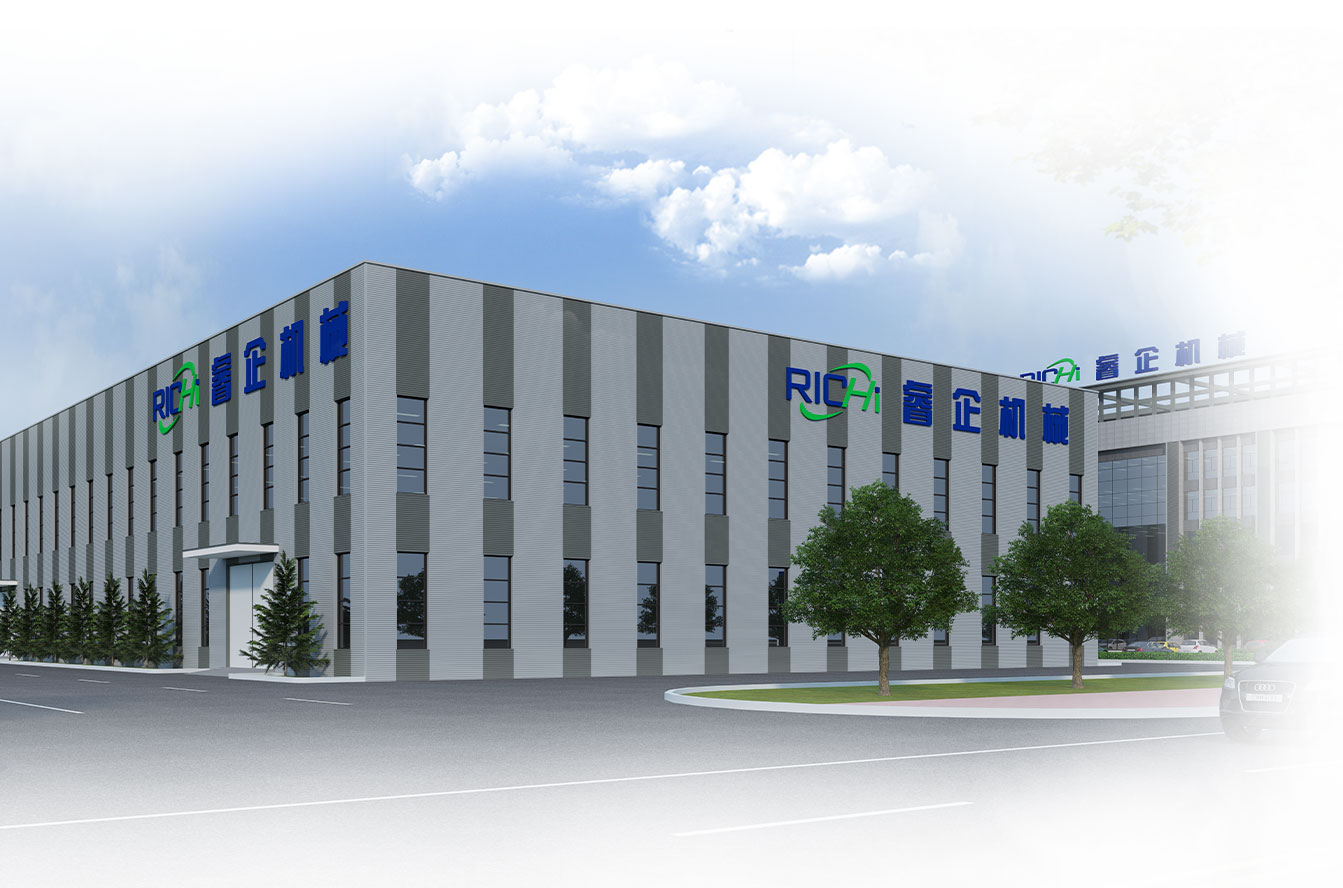
RICHI Machinery is one of the world’s leading suppliers of technology and services for the animal feed, aqua feed and pet food industries, also the largest pellet production line manufacturer in China.
Since 1995, RICHI’s vision to build a first-class enterprise, to foster first-class employees, and to make first-class contributions to society has never wavered.
In the past three decades, we have expanded our business to a wide range of areas, including animal feed mill equipment, aqua feed equipment, pet feed equipment, biomass pellet equipment, fertilizer equipment, cat litter equipment, municipal solid waste pellets equipment, etc.

1995
RICHI Established

2000+
Serving More Than 2000 Customers

120+
RICHI Employees

140+
Exported To 140 Countries