

 0086-138 3838 9622
Vegetable Waste Pellet Machine
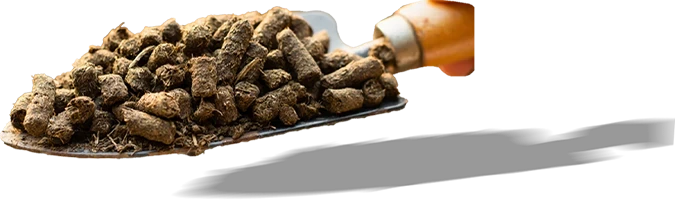
Vegetable Waste Pellet Machine turns properly pretreated vegetable processing residues, farm waste and market produce waste into uniform 4–12 mm fertilizer pellets. Built for continuous organic waste recycling, it supports flexible formulations and production needs from processing plants, farms and commercial fertilizer producers.
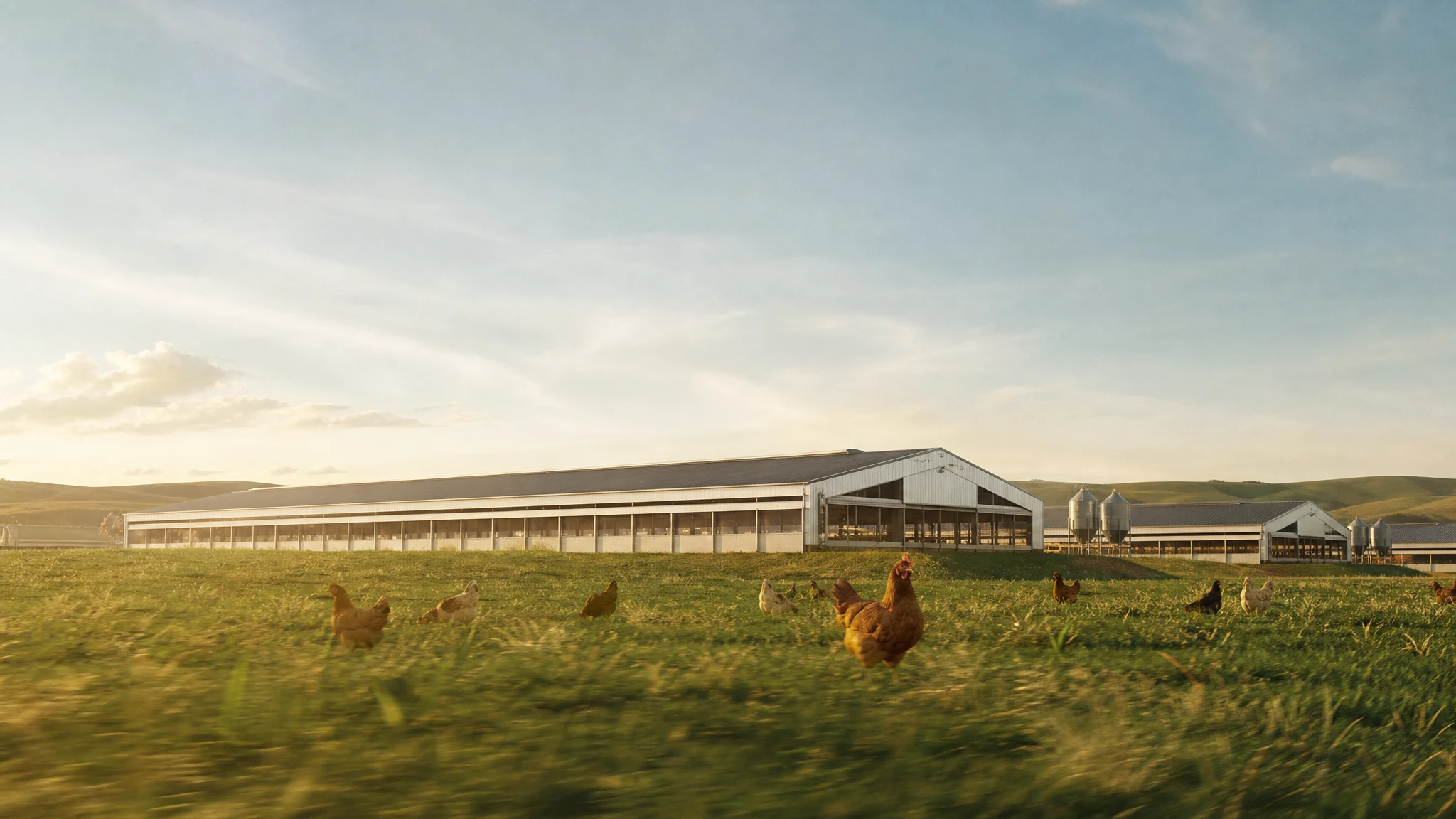
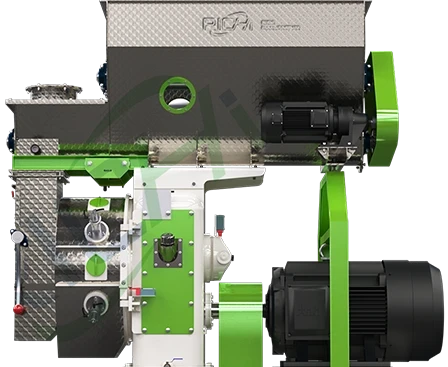
Turn Vegetable Waste into a More Usable Fertilizer Product
The vegetable waste pellet machine is designed for commercial operations that need a practical way to recover vegetable leaves, stems, roots, trimmings, sorting rejects and other plant-based residues as fertilizer products. Feedstock can arrive with very different moisture levels and physical characteristics—from soft, freshly generated processing waste to fibrous crop residues or dried and composted material—so successful pelletizing depends on matching pretreatment and feeding conditions to the actual material rather than treating all vegetable waste the same way.
Drawing on extensive experience with fertilizer pelletizing projects for customers worldwide, RICHI Machinery can configure the pelletizer around the customer’s feedstock and finished-product requirements and, where required, supply the complete vegetable waste fertilizer production line.
The same plant can be engineered to accommodate different organic raw materials and produce either granular or powdered fertilizer, while individual crushers, mixers, dryers and other modular processing systems are also available for customers who only need to upgrade a particular processing stage. This flexibility makes the equipment suitable not only for waste disposal projects, but also for businesses seeking to build a more stable, commercially useful route for vegetable waste recovery.
Who Needs Vegetable Waste Pellet Machine?
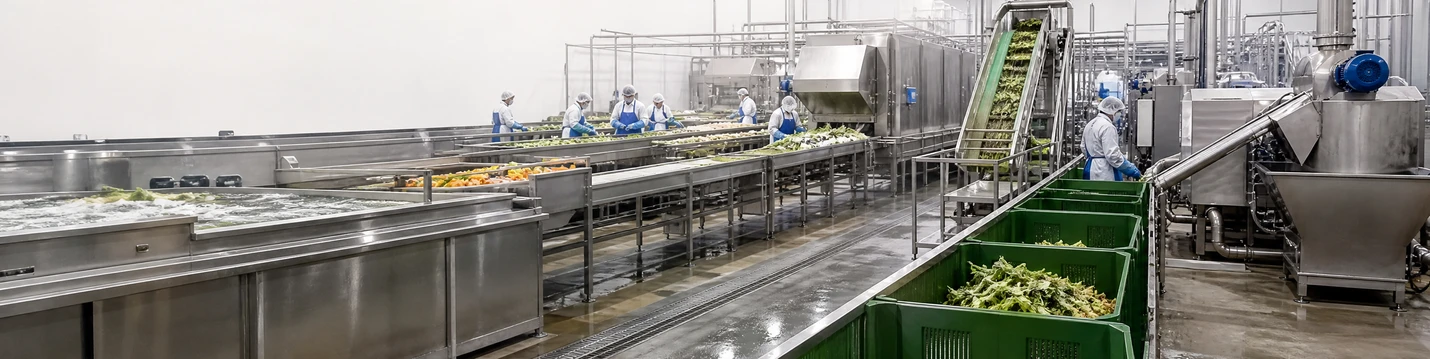
Vegetable Processing Plants
Frozen, canned, pickled and fresh-cut vegetable plants generate concentrated streams of trimmings, outer leaves, stems, roots, damaged produce and cutting residues. Because much of this material is fresh, soft and moisture-rich, it normally requires controlled dewatering, composting or fermentation, drying and formulation before pelletizing. A vegetable waste pellet machine gives processors with sufficient daily waste volume a route to convert prepared residues into uniform fertilizer pellets instead of continually paying to transport or dispose of bulky organic waste.s
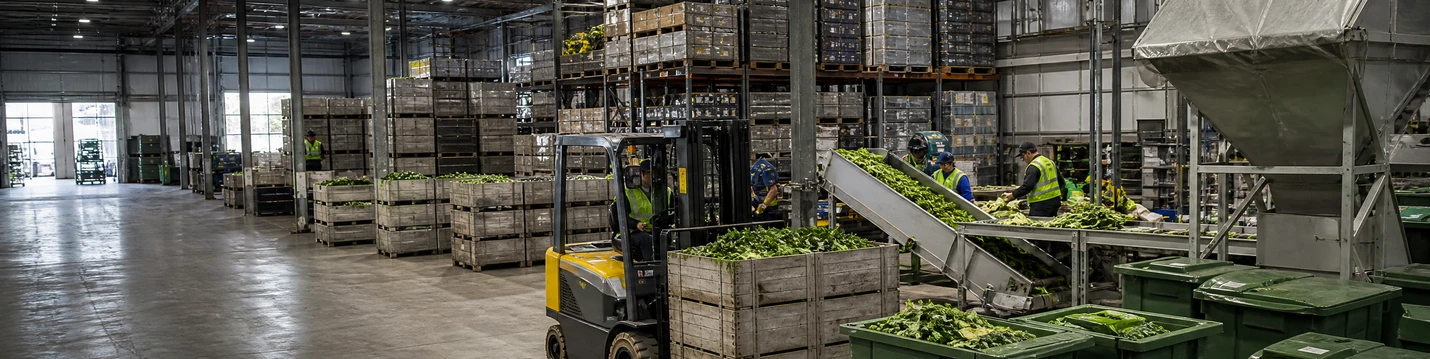
Produce Markets & Distribution Centers
Wholesale markets, produce hubs and large distribution warehouses accumulate unsold, damaged, overripe and sorting-rejected vegetables from many suppliers in one location. The feedstock is usually heterogeneous and highly variable in moisture, so non-organic contaminants and unsuitable material must first be removed before fertilizer processing. For facilities able to collect vegetable residues at commercial scale, our pelletizing solution helps turn a disposal stream into denser, easier-to-handle fertilizer granules while reducing the volume of loose material requiring storage and transportation.
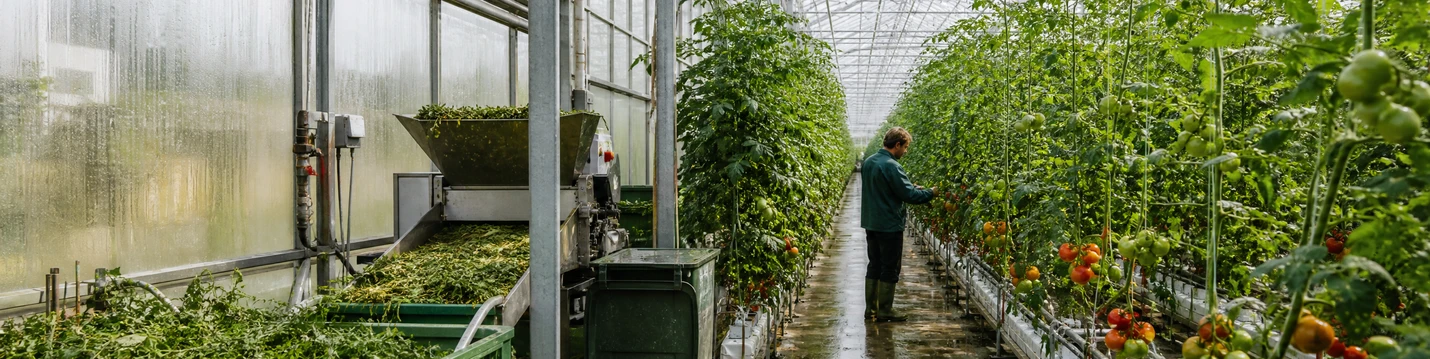
Commercial Farms & Greenhouse Operations
Large vegetable farms, greenhouse complexes and agricultural cooperatives generate leaves, stalks, crop tops, rejected vegetables and post-harvest residues, often with strong seasonal fluctuations in volume and moisture. Fibrous stalks may require size reduction, while fresh leaves and rejected vegetables generally need moisture adjustment and can be blended with drier agricultural materials. The vegetable waste pellet machine is particularly relevant where enough material is available to support production from 1 t/h and the operator wants to return processed organic matter to fields or produce a standardized fertilizer product.
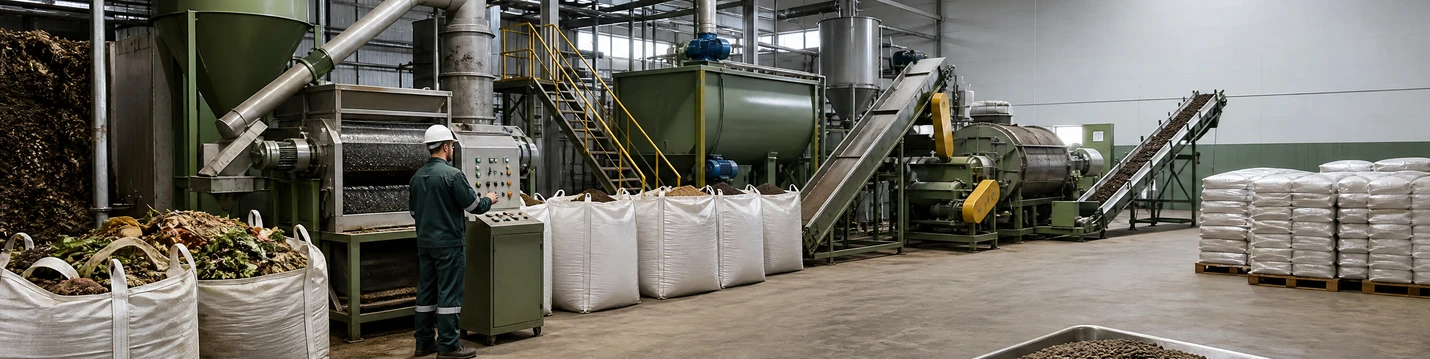
Organic Fertilizer Manufacturers
Commercial fertilizer producers are not limited to waste generated at their own sites; they can source vegetable residues alongside fruit waste, composted manure, crop residues and other suitable organic feedstocks. This makes formulation flexibility especially important, since moisture, fiber content, bulk density and nutrient composition can change from batch to batch. RICHI configures the vegetable waste pelletizing system around these actual feedstock conditions, helping manufacturers produce consistent 4–12 mm commercial fertilizer pellets while retaining the flexibility to manufacture other organic fertilizer formulations on the same production line.
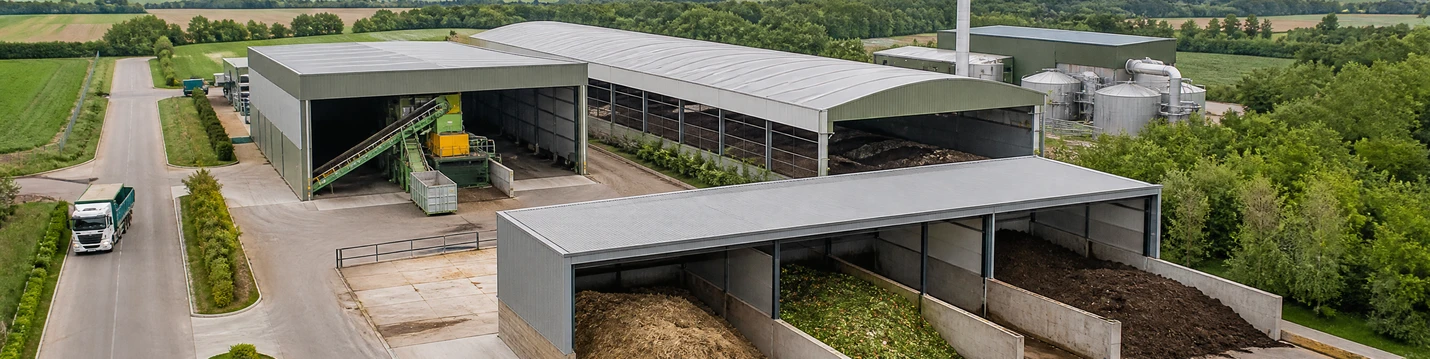
Agricultural Waste Recycling Companies
Organic waste recyclers and regional treatment centers commonly receive mixed streams of vegetable waste, fruit residues, crop straw, food-processing by-products and manure rather than one uniform raw material. Their challenge is therefore not simply pellet formation, but preparing variable materials so that moisture, particle size and physical structure are suitable for stable feeding and granulation. Our vegetable waste pellet machine can be integrated with the required pretreatment and conditioning equipment, giving recycling operators a practical route from recovered organic material to transportable, storable and commercially usable fertilizer pellets.
Integrated crop-and-livestock farms, composting businesses, horticultural enterprises, food processors, municipal or private organic-waste recovery facilities, soil conditioner producers and agricultural cooperatives may also need vegetable waste pelletizing when they generate or collect sufficient suitable feedstock. Livestock farms are relevant primarily when vegetable residues are available from an associated crop operation or are intentionally blended with properly treated manure and other organic materials for fertilizer production—not simply because livestock are present. If your raw material, moisture level, existing process or intended fertilizer differs from the examples above, RICHI can evaluate it and configure a suitable standalone pelletizer or customized processing system.
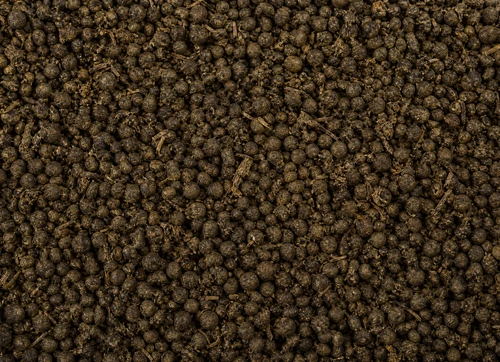
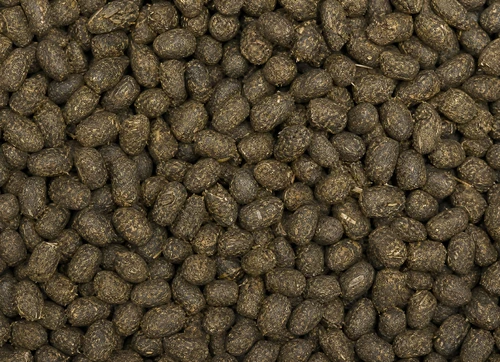
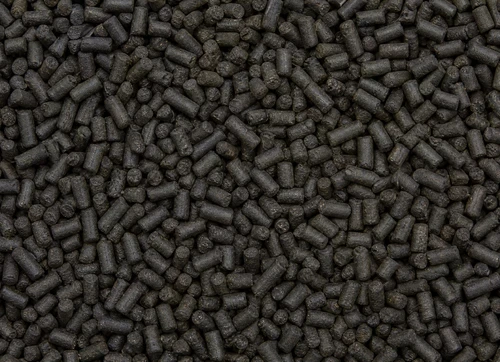
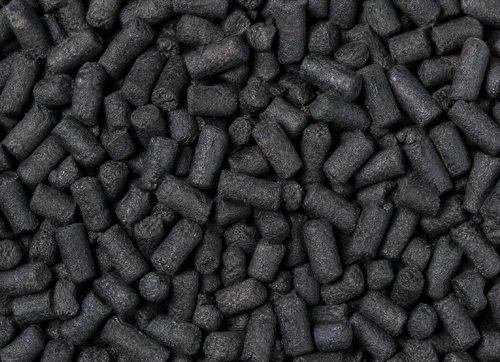
Raw Materials for Vegetable Waste Pellet Production
Vegetable waste varies widely from one operation to another. Fresh leaves and rejected produce may contain considerable moisture and form a soft, sticky mass, while stalks, peels, husks and dried processing residues can be much more fibrous or free-flowing. Impurity levels, particle size and the proportion of each material also change with the source and season.
A vegetable waste pellet machine therefore works best as part of a material-specific preparation system: wet feedstocks can be dewatered or dried, coarse material reduced in size, and dry agricultural residues added where necessary to improve the physical condition of the pelletizing mixture. Vegetable waste can also be formulated with other fertilizer-grade organic materials, allowing producers to use locally available feedstocks rather than depend on one fixed recipe.
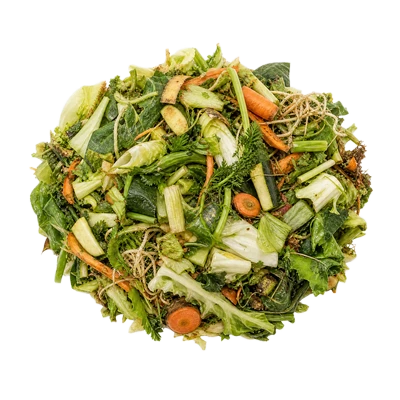
Vegetable Trimmings
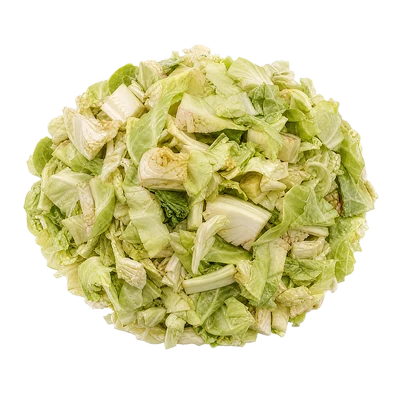
Cabbage Residues
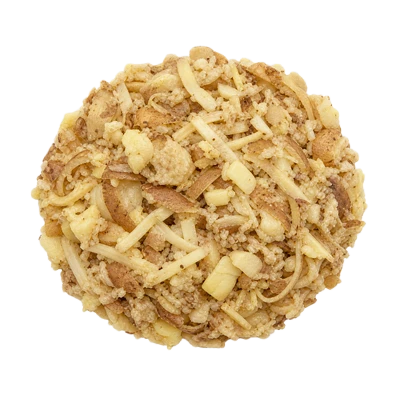
Potato Residues
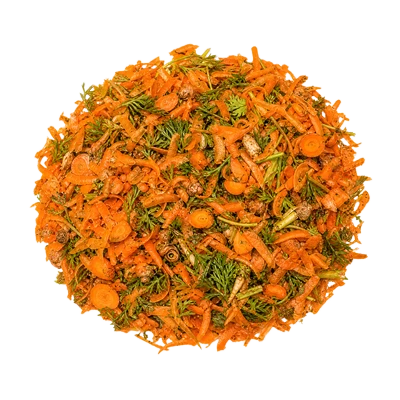
Carrot Residues
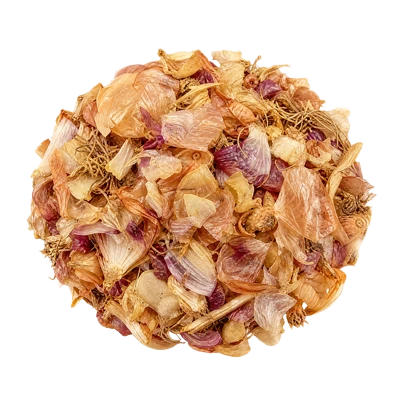
Onion Residues
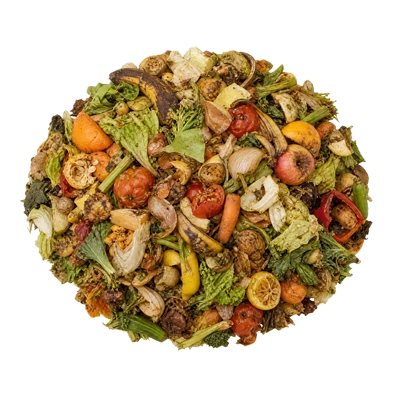
Market Produce Waste
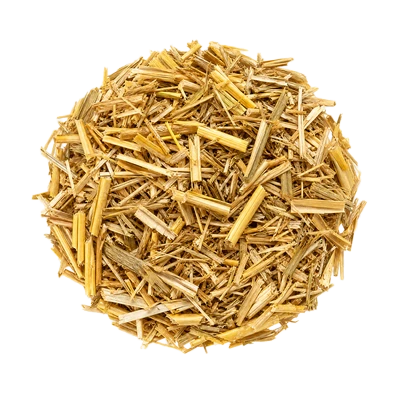
Crop Straw & Stalks
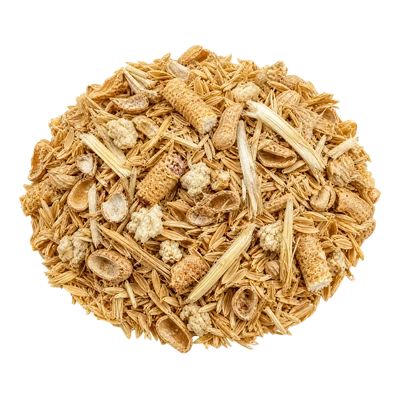
Agro-Industrial Residues
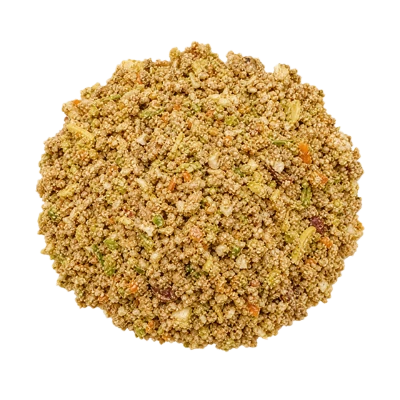
Food Processing Residues
Vegetable Wastes
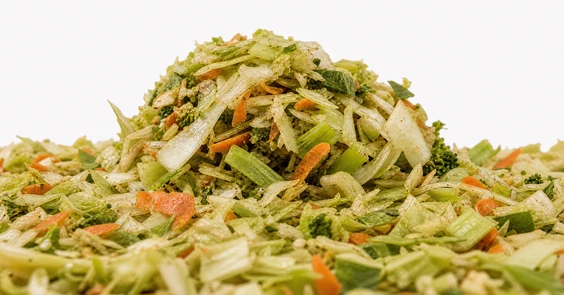
From leafy trimming waste and fibrous stalks to peels, rejected vegetables and mixed produce residues, vegetable waste can differ substantially in moisture, texture, bulk density and cleanliness.
Inside the Vegetable Waste Pellet Machine
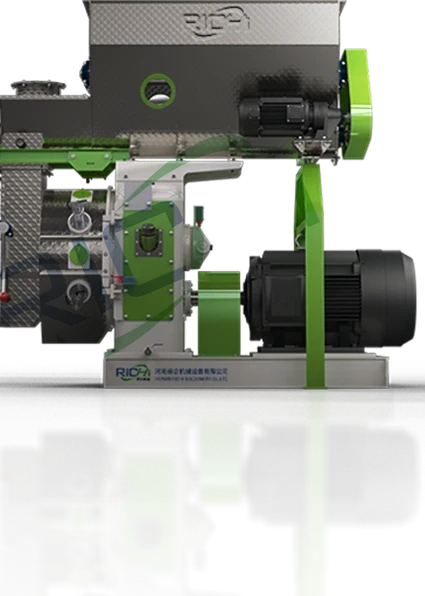
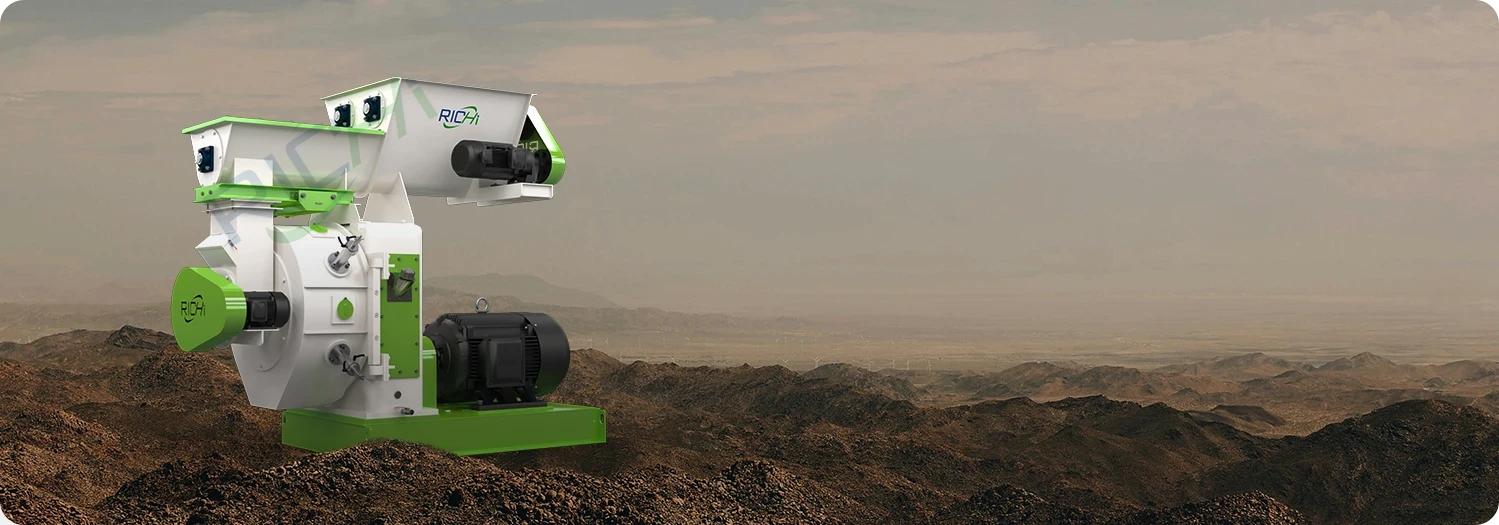
Built around a heavy-duty ring-die granulation system, the vegetable waste pellet machine is engineered for the feeding and compression characteristics of prepared vegetable-based fertilizer mixtures. A forced feeder delivers low-density or less free-flowing material into the pelleting chamber, while the precision gear drive, reinforced working parts and stable die-and-roller assembly support continuous production under changing formulations.
The structure also emphasizes overload protection, corrosion-resistant material-contact areas and easier die servicing—important for fertilizer plants processing vegetable residues together with manure, crop fiber and other organic ingredients.
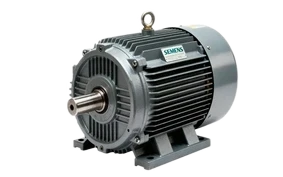
A Siemens motor supplies dependable main-drive power for continuous granulation, matched to the selected FZLH vegetable waste pellet machine model.
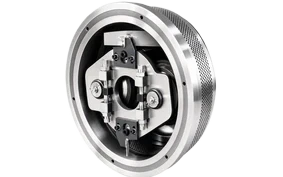
Heat-treated ring dies provide a stable compression zone for prepared vegetable fertilizer mixtures and support 4–12 mm pellet production.
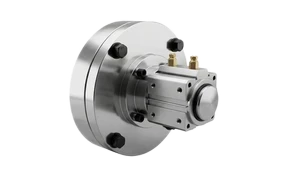
Mechanical overload protection helps protect the transmission and working components when abnormal loads or unexpected feed resistance occur..
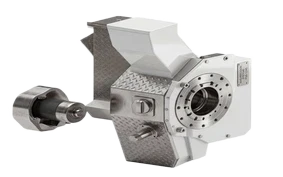
The powered forced feeder actively moves light or poorly flowing vegetable-based mixtures into the pelleting chamber for steadier die loading..
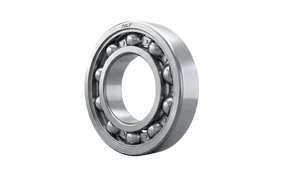
SKF bearings support critical rotating assemblies, helping maintain alignment and reliable operation under the sustained loads of ring-die pelletizing.
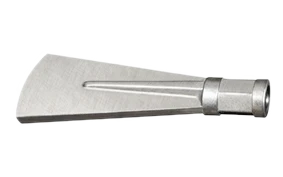
An adjustable cutter controls pellet length as material exits the ring die, allowing the finished fertilizer granules to meet different product requirements..
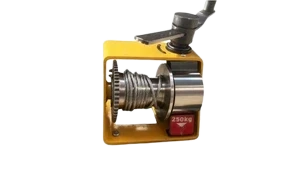
The lifting device assists with handling the heavy ring die during replacement and maintenance, reducing manual effort and simplifying routine servicing.
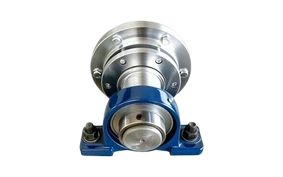
High-precision gear transmission transfers power efficiently to the pelleting system, supporting stable operation under continuous fertilizer production loads.
Why Choose RICHI for Vegetable Waste Pelletizing?
Vegetable waste projects rarely begin with identical feedstocks, moisture conditions or production goals. RICHI configures each vegetable waste pellet machine around the customer’s prepared material, required pellet specification and operating scale, rather than forcing every project into one standard setup. From a standalone pelletizer to a customized fertilizer plant, our engineering approach focuses on dependable production, practical use of locally available raw materials and investment that matches the customer’s actual processing needs.

Flexible for Changing Formulations
Process vegetable waste with suitable manure, straw, husks, compost or other fertilizer-grade organics, giving plants more flexibility when seasonal feedstock availability changes.

Built Around Your Vegetable Waste
Machine selection and operating parameters are matched to your prepared leaves, stems, peels, trimmings or blended fertilizer material—not a generic feedstock assumption.

Customized to the Existing Plant
RICHI can supply a standalone pelletizer or configure crushing, drying, mixing and other stages around equipment you already operate, avoiding unnecessary duplication of investment.

More Value from Collected Waste
Pelletizing turns properly prepared vegetable residues into a denser, uniform fertilizer product that is easier to package, transport, store and sell than loose processed material.

Engineering Support from RICHI
From raw-material evaluation and model selection to line layout and commissioning support, RICHI develops the solution around capacity, site conditions and finished-product targets.

How the Vegetable Waste Pellet Machine Works
After vegetable waste has been properly prepared to the required moisture, particle size and formulation, it is metered into the pelletizing chamber by the feeding system. Inside the vegetable waste pellet machine, rotating rollers press the conditioned fertilizer mixture against the ring die, forcing it through the die openings under continuous mechanical compression. The formed strands are cut to the required length as they leave the die, producing hot fertilizer pellets that are then ready for downstream cooling and screening.
Technical Specifications
| Model | Capacity (t/h) | Main Motor Power (kW) | Anti-Bridging Feeder Power (kW) | Forced Feeder Power (kW) | Ring Die Inner Diameter (mm) | Finished Pellet Diameter (mm) |
|---|---|---|---|---|---|---|
| FZLH250 | 1–1.5 | 22 | 2.2 | 0.75 | 250 | 4–12 |
| FZLH320 | 2–3 | 22 | 2.2 | 0.75 | 320 | 4–12 |
| FZLH350 | 3–5 | 37 | 2.2 | 0.75 | 350 | 4–12 |
| FZLH420 | 6–8 | 90 | 3 | 1.5 | 420 | 4–12 |
| FZLH520 | 9–12 | 132 | 3 | 1.5 | 520 | 4–12 |
| FZLH678 | 18–22 | 200 | 3 | 1.5 | 673 | 4–12 |
| FZLH768 | 22–26 | 250 | 4 | 1.5 | 762 | 4–12 |
RICHI offers seven vegetable waste pellet machine models with rated capacities from 1–1.5 t/h to 22–26 t/h, covering commercial residue recovery, medium-capacity fertilizer plants and large industrial processing projects. Model selection should be based not only on the required output, but also on the condition of the prepared vegetable feedstock, formulation, pellet diameter and upstream material balance. For projects using mixed vegetable residues, manure, crop fiber or other fertilizer ingredients, the pelletizing system and supporting equipment can be configured around the actual recipe, site conditions and production target.
Vegetable Waste Pelletizing Specifications
Vegetable waste must reach a stable physical condition before it enters the pellet mill. Fresh leaves, roots, trimmings and rejected vegetables usually require moisture reduction, while stalk-rich or blended formulas may need crushing and further mixing to obtain a uniform feed. For the vegetable waste pellet machine, particle size, moisture, die geometry and formulation are evaluated together because each affects feeding stability, extrusion resistance and pellet quality. RICHI offers models from 1–1.5 t/h to 22–26 t/h and can adjust die specifications and operating arrangements for different vegetable-based fertilizer formulas and finished-product requirements.
Raw Material Particle Size
2–5 mm
Raw Material Moisture Content
12–25%
Pelletizing Temperature
50–80℃
Compression Ratio
1:4–1:8
Pellet Length
5–30 mm
Pellet Formation Rate
85–95%
Finished Pellet Moisture
≤12–15%
Cooling Temperature
≤40℃
Screening Efficiency
≥95%
Fines Content
≤5–10%
Broken Pellet Rate
≤3–5%
Operating Mode
Continuous Operation
Good vegetable waste pellets are not produced by the pellet mill alone. Consistent results begin with suitable sorting, moisture adjustment, crushing and formulation; the prepared mixture is then pelletized through a matched ring die before cooling and screening. Because cabbage residues, potato waste, vegetable stalks, market waste and manure-containing formulas can behave very differently, RICHI determines the final operating window from the customer’s actual material rather than applying one standard recipe to every project.
Vegetable Waste Fertilizer Projects
Vegetable waste does not define a single fertilizer process. A 92%-moisture market stream in Indonesia requires a very different front end from drained factory residues in Germany, while greenhouse waste in Spain or the Netherlands brings its own challenges with fibrous stems and cultivation contaminants. RICHI selects the vegetable waste pellet machine and supporting equipment from the actual material condition, available co-materials, existing plant infrastructure and required fertilizer specification rather than copying one standard configuration from project to project.
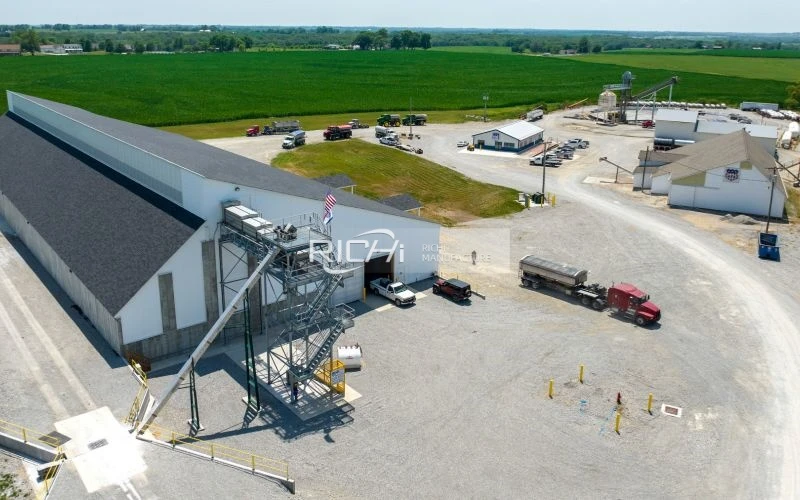

12 T/H
Fresh-Cut Vegetable Waste Fertilizer Project in the United States
The initial formula contains about 65% lettuce, broccoli and cabbage trimming waste, 20% poultry litter with bedding and 15% clean sawdust. The fresh vegetable fraction arrives at approximately 88% moisture. Because leafy trimming waste retains considerable free water, the proposed system emphasizes dewatering before composting and drying; the bedding and sawdust also provide dry structural material before final crushing, formulation and pellet production.
Equipment Used :FZLH520
Pellet Size :4-5 mm
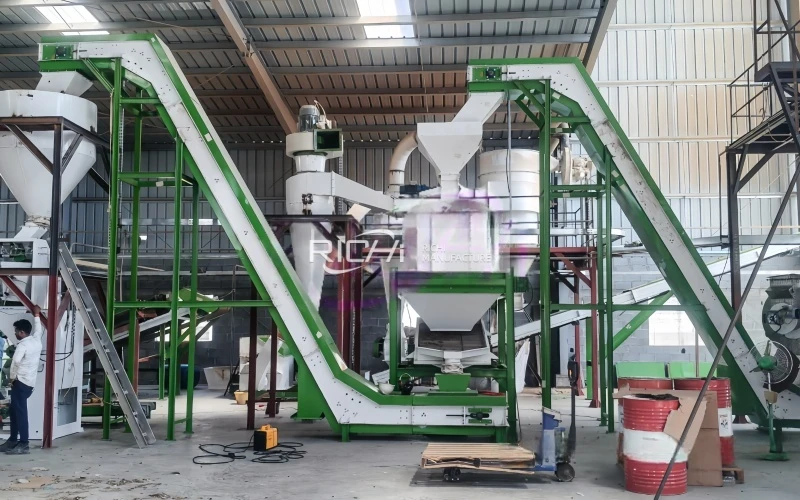

4 T/H
Market Vegetable Waste Fertilizer Project in India
The incoming recipe consists of roughly 55% cabbage, cauliflower, leafy vegetable and other market rejects, 30% cattle manure and 15% chopped crop straw. Vegetable waste enters at around 87% moisture and contains considerable variation between collection batches. Sorting is therefore followed by dewatering and composting, while the manure and straw are incorporated according to actual moisture and compost conditions before drying, crushing and pelletizing.
Equipment Used :FZLH350
Pellet Size : 4 mm
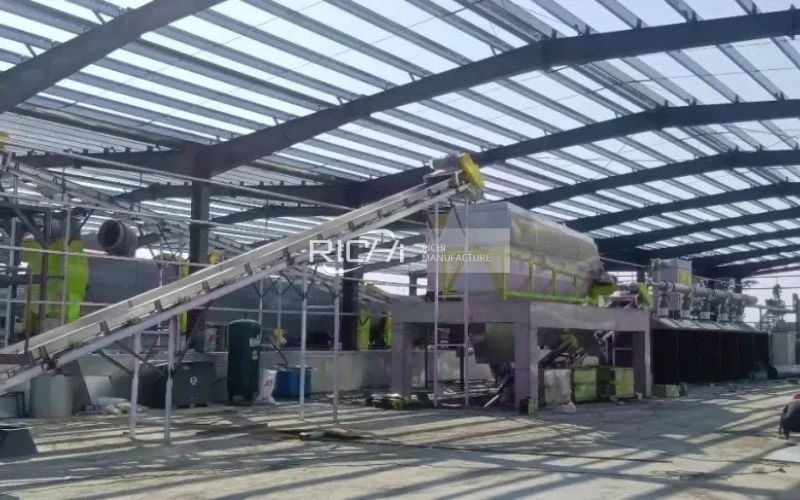

7 T/H
Greenhouse Vegetable Residue Project in the Netherlands
Around 70% of the raw-material stream consists of tomato, sweet-pepper and cucumber crop residues and rejected produce, supplemented with 20% mature green compost and 10% clean woody fiber. Fresh greenhouse material is approximately 90% moisture. The project requires separation of cultivation plastics, strings and clips before shredding and moisture reduction, followed by controlled composting, drying and preparation of a homogeneous fertilizer feed.
Equipment Used :FZLH420
Pellet Size : 3-4 mm
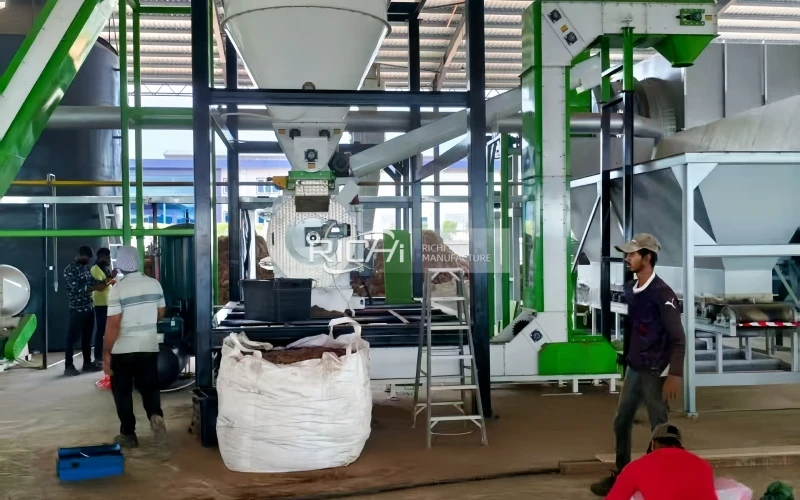

3 T/H
Wholesale Vegetable Waste Fertilizer Project in Thailand
Approximately 50% of the initial formulation is leafy vegetable, cabbage and mixed produce waste, combined with 20% rice husk, 20% cassava-processing residue and 10% poultry manure. The vegetable fraction can reach about 90% moisture. Rapid sorting and dewatering are prioritized because the tropical climate accelerates deterioration, after which rice husk and other local agricultural materials are incorporated during compost preparation and moisture adjustment.
Equipment Used :FZLH320
Pellet Size : 4 mm
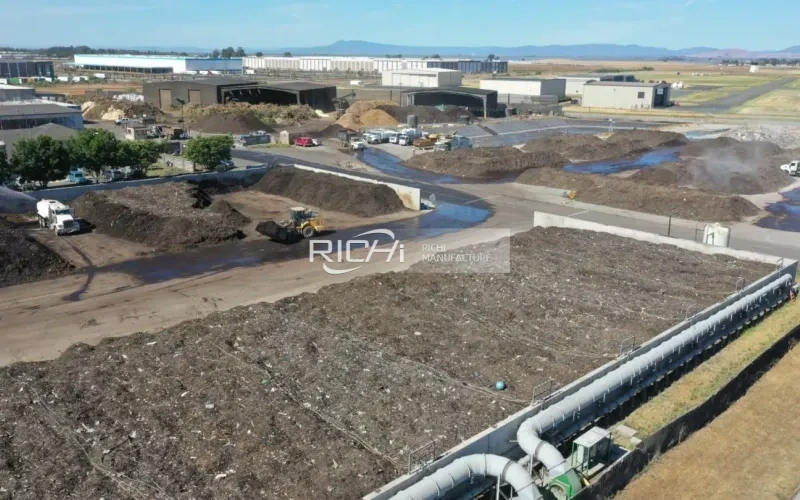

8 T/H
Tomato and Pepper Processing Project in Turkey
The formulation uses approximately 60% tomato and pepper sorting and processing residues, 25% wheat straw and 15% composted cattle manure. Fresh vegetable residues enter at roughly 89% moisture and have a soft, easily compacted structure. Mechanical moisture reduction and biological stabilization handle the wet fraction first, while crushed wheat straw improves the physical structure of the compost mixture before controlled drying and pelletizing.
Equipment Used :FZLH420
Pellet Size : 3-6 mm
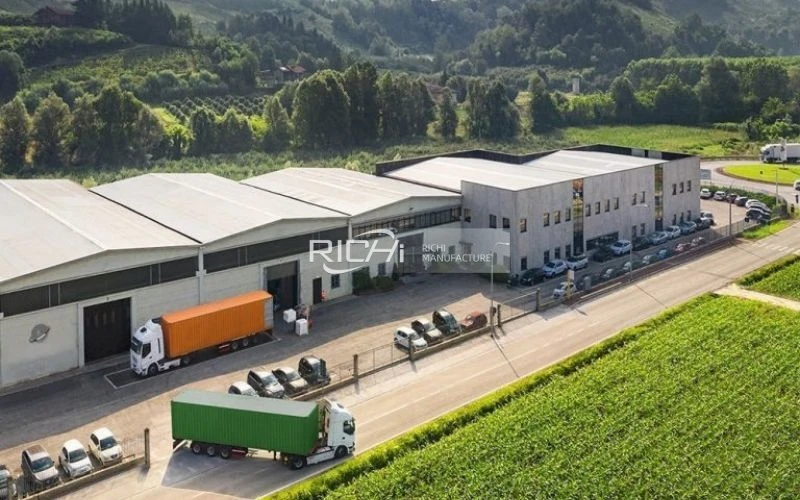

10 T/H
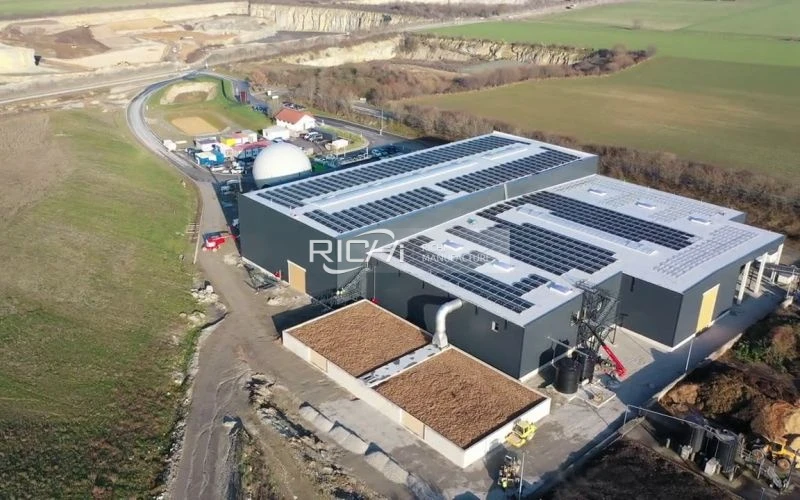
Processed Vegetable Fertilizer Project in Germany
This plant uses about 45% drained vegetable-processing residues, 35% mature compost and 20% cereal straw. Unlike the fresher market-waste projects, the vegetable fraction arrives at approximately 72% moisture because free liquid has already been reduced at the source. The fertilizer plant therefore relies less on intensive dewatering and more on controlled compost maturation, straw size reduction, final drying, fine crushing and accurate formulation before granulation.
Equipment Used :FZLH520
Pellet Size : 4 mm

4T/H
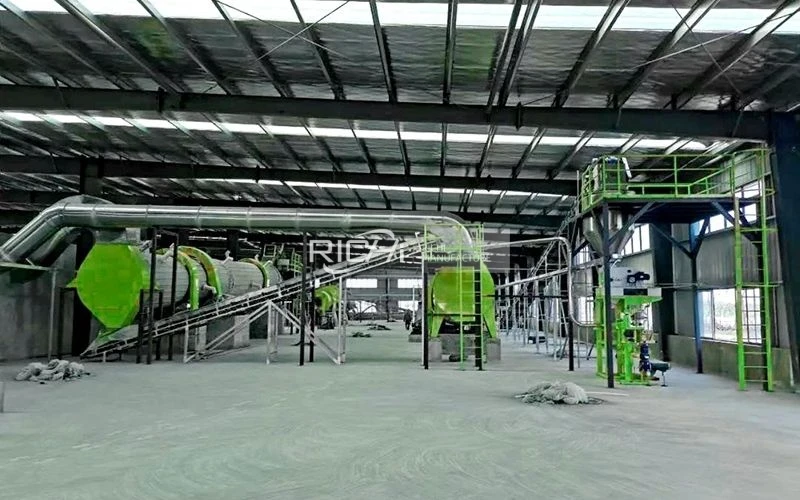
Cabbage Processing Waste Project in South Korea
The recipe contains approximately 65% fresh, unsalted cabbage leaves, stems and trimming rejects, 20% rice husk and 15% sawdust. Initial moisture in the cabbage fraction is about 91%, making direct pelletizing unsuitable. The proposed preparation section shreds and dewaters the leafy material before stabilization, with dry rice husk and sawdust used to improve structure and moisture balance ahead of drying, crushing and fertilizer pellet production.
Equipment Used :FZLH350
Pellet Size : 4 mm

9-10 T/H
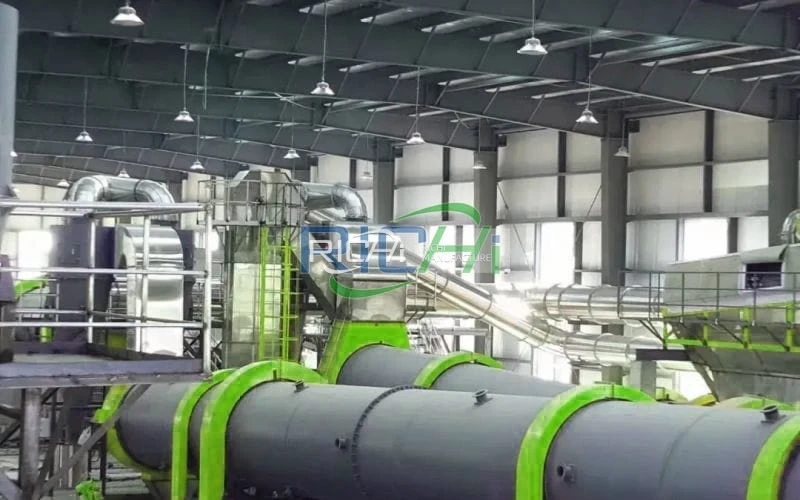
Frozen Vegetable Residue Project in France
Approximately 55% of the formulation comes from pea, bean, carrot and mixed vegetable grading or preparation residues, combined with 25% cereal straw and 20% composted poultry manure. The vegetable fraction enters at around 80% moisture. Because the raw-material mix changes with processing campaigns, separate storage and dosing are incorporated so the plant can adjust straw and manure addition after composting and moisture reduction rather than relying on one year-round formula.
Equipment Used :FZLH520
Pellet Size : 4-6 mm

6 T/H
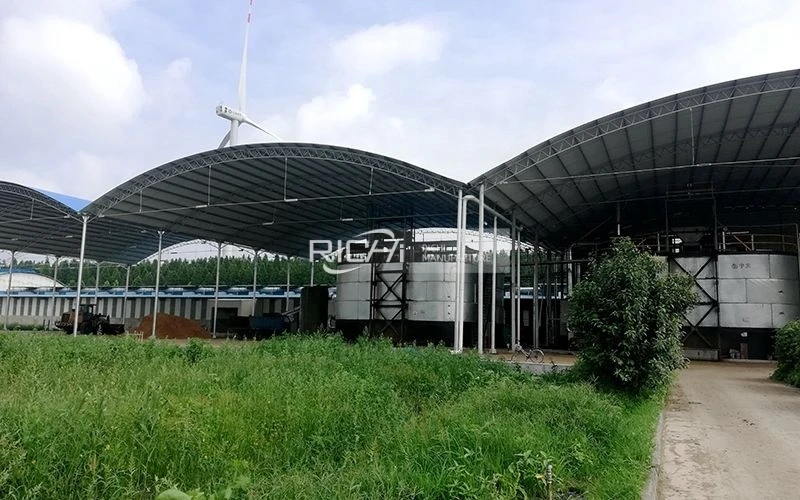
Produce and Bagasse Fertilizer Project in Brazil
The initial recipe combines approximately 50% vegetable and produce sorting waste, 30% dry sugarcane bagasse and 20% poultry litter. Fresh produce waste is about 85% moisture, while bagasse provides a substantially different fibrous fraction. The processing design handles wet organics and dry agricultural residues separately at the front end, then combines them during composting and formulation before final moisture adjustment, size reduction and fertilizer pelletizing.
Equipment Used :FZLH420
Pellet Size : 5 mm

3 T/H
Vegetable Packing Waste Project in Mexico
About 60% of the feedstock consists of tomato, pepper, cucumber and leafy vegetable packing rejects, with 25% chopped corn stalk and 15% composted cattle manure. Fresh rejects enter at approximately 88% moisture. Sorting removes packaging and foreign material, while dewatering controls the wet vegetable fraction; separately crushed corn stalk is then introduced during compost formulation to provide a more manageable structure before drying and granulation.
Equipment Used :FZLH320
Pellet Size : 4 mm
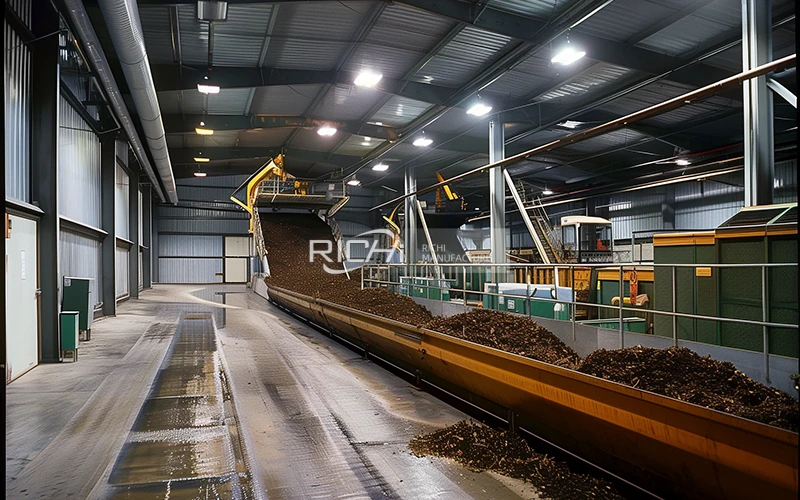

8T/H
Greenhouse Crop Residue Project in Spain
The feedstock is approximately 75% tomato, pepper, cucumber, zucchini and eggplant residues, 15% mature compost and 10% dry plant-based bulking material. Fresh greenhouse residues enter at around 86% moisture. The front end is designed to remove raffia, clips and plastic before shredding; the organic fraction is then composted and moisture-adjusted before drying, fine crushing and conversion into commercial fertilizer pellets.
Equipment Used :FZLH420
Pellet Size : 4 mm
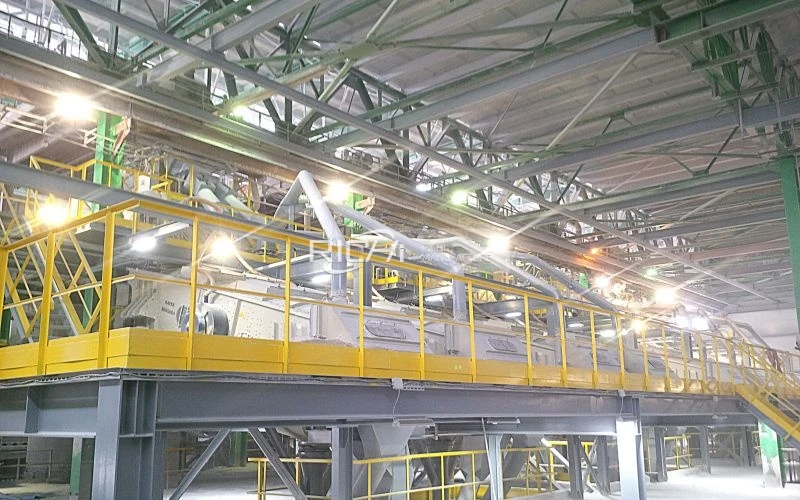

11 T/H
Canning Vegetable Residue Project in Italy
The production formula contains about 60% tomato and mixed vegetable preparation residues, 20% wheat straw and 20% composted cattle manure. The vegetable fraction arrives at approximately 83% moisture after factory collection. The project separates wet processing residues from dry structural ingredients initially, using dewatering and composting before the materials are combined under controlled ratios for drying, crushing, mixing and continuous fertilizer pellet production.
Equipment Used :FZLH520
Pellet Size : 3-6 mm
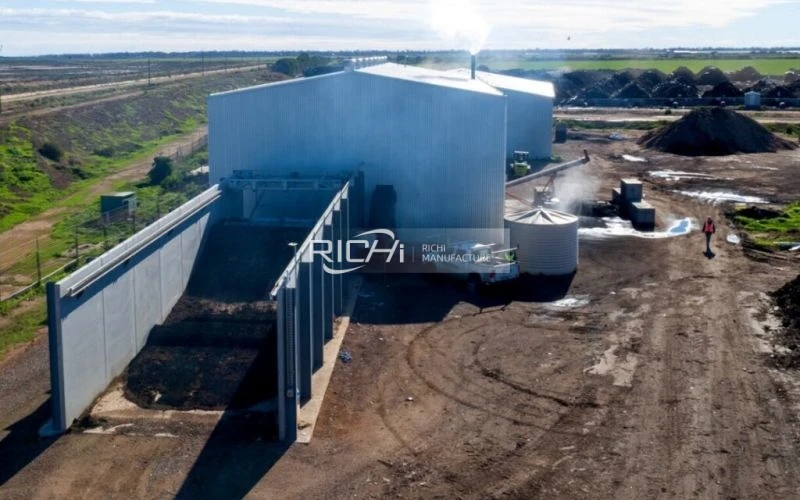
2 T/H
Traditional Market Waste Project in Indonesia
Approximately 55% of the recipe is sorted leafy vegetables, cabbage and other unsold market produce, blended with 25% rice husk and 20% suitable dry agricultural residues. Initial vegetable moisture is about 92%, the highest among these configurations. The project therefore gives priority to contaminant removal, rapid dewatering and stabilization; locally available dry materials are added according to actual moisture before final drying and fertilizer granulation.
Equipment Used :FZLH320
Pellet Size : 4 mm
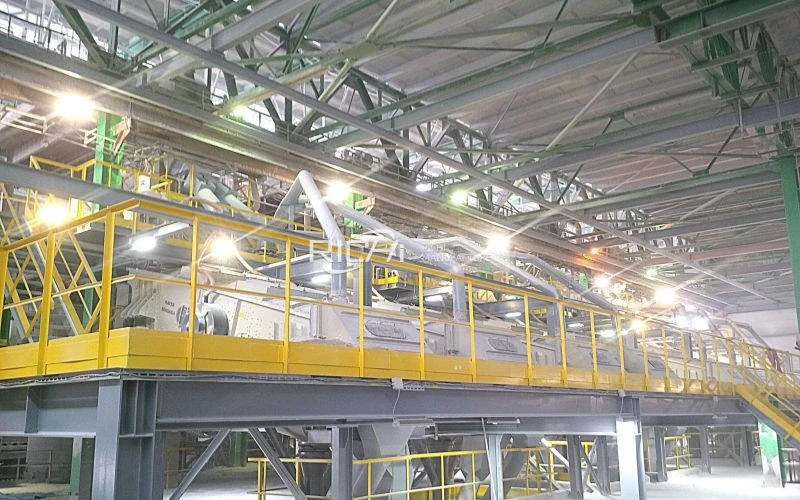
6 T/H
Vegetable and Rice-Straw Fertilizer Project in Egypt
The formulation consists of approximately 50% tomato, onion and mixed vegetable residues, 35% chopped rice straw and 15% poultry manure. Vegetable waste enters at about 84% moisture, while the straw fraction is dry and highly fibrous. Separate crushing of the straw and moisture reduction of the vegetable fraction allow both streams to be prepared correctly before composting, final drying, formulation and pellet production.
Equipment Used :FZLH420
Pellet Size : 5 mm
7T/H
Root Vegetable Processing Project in Poland
Around 65% of the feedstock consists of potato trimmings, carrot residues and cabbage processing waste, supplemented with 20% cereal straw and 15% poultry litter containing bedding. The mixed vegetable fraction enters at approximately 78% moisture. Because root-vegetable residues differ considerably from leafy waste, the system focuses on controlled crushing and homogenization after moisture reduction and composting, followed by drying and preparation for stable ring-die pelletizing.
Equipment Used :FZLH420
Pellet Size : 4 mm
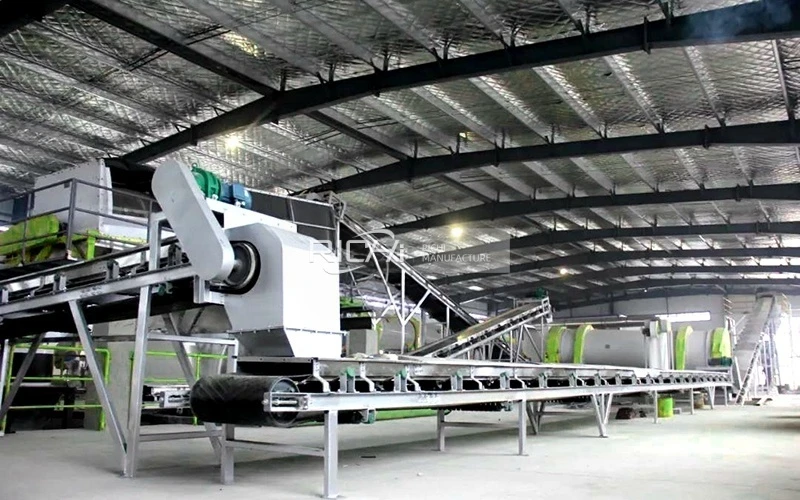

1.5 T/H
Farm and Packing Residue Project in Australia
The raw-material mix contains approximately 50% vegetable grading rejects and harvest residues, 30% wheat straw and 20% clean livestock bedding from an integrated agricultural operation. Fresh vegetable material enters at about 81% moisture. Because the customer already operates a composting system, the proposed configuration retains the existing biological treatment stage and adds only the required moisture adjustment, crushing, mixing, pelletizing, cooling and screening equipment.
Equipment Used :FZLH250
Pellet Size : 4 mm
The projects above show how widely vegetable waste conditions can differ; customer feedback reveals another side of the work—how the equipment performs once it reaches the plant, how well the process fits existing operations, and how effectively our team responds during installation and commissioning. From wet greenhouse residues to market waste and mixed organic fertilizer formulas, these experiences show why selecting the right vegetable waste pellet machine involves far more than choosing a capacity from a catalogue.

5T/H Canada Greenhouse Grower & Compost Pellet Project
“We already had a composting operation, so we did not want to replace equipment that was working well. RICHI connected the new crushing, mixing and pelletizing section to our existing process and helped us stabilize pellets made from tomato and cucumber residues blended with mature compost.”
6T/H Morocco Tomato Packing & Fertilizer Company Project
“Our tomato sorting waste was much wetter than the straw and dry crop residues available locally, and that difference caused problems in our original process concept. RICHI revised the moisture-control and mixing arrangement before manufacture, which gave us a much more practical route from wet vegetable residues to consistent fertilizer pellets.”
3T/H Vietnam Organic Waste Recycling Company Project
“We process changing quantities of leafy vegetables and market rejects, while rice husk is available to us as a dry agricultural material. The RICHI team showed our operators how to adjust the preparation and feeding conditions when the raw-material mix changed, instead of treating every batch as the same formula.”
2T/H New Zealand Vegetable Farm & Compost Pellet Project
“What mattered to us was adding pellet production without rebuilding the composting section we already used for crop residues and vegetable rejects. The equipment arrived as planned, and the installation guidance made it straightforward to connect the pelletizer, cooler and screen with our existing material-handling system.”
4T/H Chile Vegetable Packing Waste Fertilizer Pellet Project
“Our main concern was the variation between leafy trimming waste, rejected vegetables and drier field residues through different harvest periods. RICHI did not give us one fixed recipe; they helped us set practical operating ranges so we could change the blend while keeping the 4 mm fertilizer product stable.”
8T/H UK Commercial Vegetable Compost Pelletizing Project
“We were already producing screened compost, but loose material was not the product format some of our agricultural customers wanted. RICHI helped us add the fertilizer pelletizing, cooling and screening stages while retaining our front-end compost process, which kept the expansion much simpler than installing another complete plant.”
3T/H Japan Fresh Vegetable Trimming Fertilizer Project
“We paid particular attention to cleanliness, stable feeding and easy access for routine maintenance because our vegetable trimming stream changes frequently. During commissioning, RICHI worked through the settings with our operators carefully, and the training was focused on the actual material we were running rather than general machine instructions.”
7T/H South Africa Mixed Vegetable Waste Fertilizer Project
“Our feedstock combines vegetable-market residues with dry crop material and composted poultry manure, so uniform mixing was more important than simply buying a larger pellet mill. RICHI considered the whole material balance, and the final system gave us much better control over preparation, pelletizing and downstream cooling as one continuous process.”
Vegetable Waste Pellet Machine Pricee
A vegetable waste pellet machine typically costs between $10,000 and $100,000, depending on the model, output requirement, die specification and selected configuration. For vegetable fertilizer projects, the pelletizer should be sized according to the amount of material that actually reaches the granulation stage after dewatering, composting, drying and formulation—not simply according to the tonnage of fresh vegetable waste collected each day.
The prices below refer to the pellet mill itself rather than a complete vegetable waste fertilizer production line. If your project also requires sorting, crushing, dewatering, fermentation, drying, mixing, cooling, screening or packing equipment, RICHI can calculate the complete configuration separately based on your feedstock condition, existing equipment and required production scale.
Range for
Vegetable Waste Pellet Machine cost:
FZLH250 (22KW)
$10,000–$13,000
FZLH320 (22KW)
$15,000–$18,000
FZLH350 (37KW)
$18,000–$25,000
FZLH420 (90KW)
$26,000–$32,000
FZLH520 (132KW)
$43,000–$50,000
FZLH678 (200KW)
$64,000–$70,000
FZLH768 (315KW)
$75,000–$85,000
What Scale of Vegetable Waste Pellet Production Do You Need?
Choose the output range that matches your prepared fertilizer material, or send us your daily vegetable waste volume and material condition so we can help determine a suitable machine size.
Customized Vegetable Waste Fertilizer Processing design
A complete vegetable waste fertilizer process may include impurity removal, crushing, mixing, composting, drying, pelletizing, cooling, coating, screening and packaging, but these steps are not arranged identically for every project. Fresh cabbage leaves, market rejects and vegetable trimmings may require substantial moisture reduction, while stalk-heavy material calls for more intensive size reduction; material that has already been composted or partially dried can enter much later in the process. The purpose of process design is therefore to prepare each incoming material for stable fertilizer production rather than simply place a vegetable waste pellet machine behind a fixed sequence of equipment.
Customers can purchase a complete vegetable waste fertilizer production line, a dedicated pelletizing section or individual modules for crushing, drying, mixing, batching and other operations. RICHI supports the project from material evaluation and process design through equipment manufacture, installation guidance, commissioning, operator training and spare-parts supply. This allows a new fertilizer plant to be designed as an integrated system while existing processors can add only the stages needed to expand into vegetable waste pellets, powder fertilizer or additional organic fertilizer formulations.
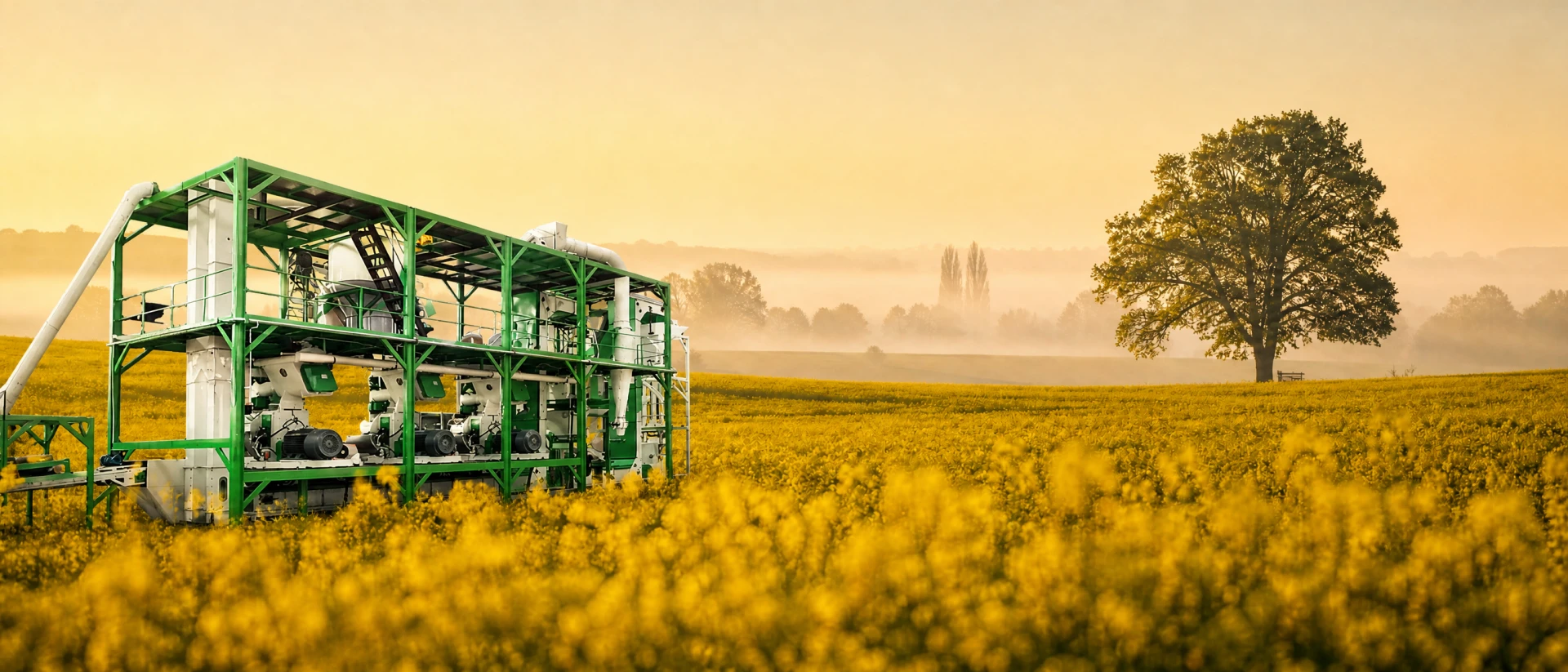
Equipment for Vegetable Waste pellet production
RICHI configures each line around the actual process rather than a fixed equipment list, and even within the same production stage we can select different machine types to match raw-material behavior, factory space, required automation level and investment budget. Additional equipment such as bale breakers, rotary screens, storage bins, conveyors, impurity-removal systems and centralized controls can be added where the project requires them.g systems can be used to suit the actual material rather than forcing every project into one standard line.
Vegetable Waste Compost Turner
Used during aerobic composting to turn vegetable residues blended with manure, straw or other organic material, helping redistribute moisture and air through the composting mass before downstream fertilizer processing.
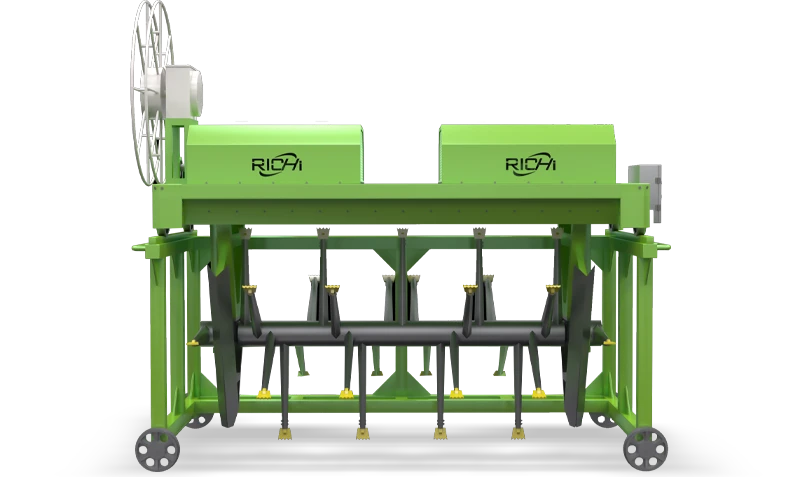
Turning Width
2–8 m
Turning Height
0.5–2.5 m
Vegetable Waste Crusher
Used after composting or preliminary drying to break agglomerated vegetable compost, manure-containing mixtures and other relatively soft fertilizer materials into a more uniform feed for mixing and pelletizing.
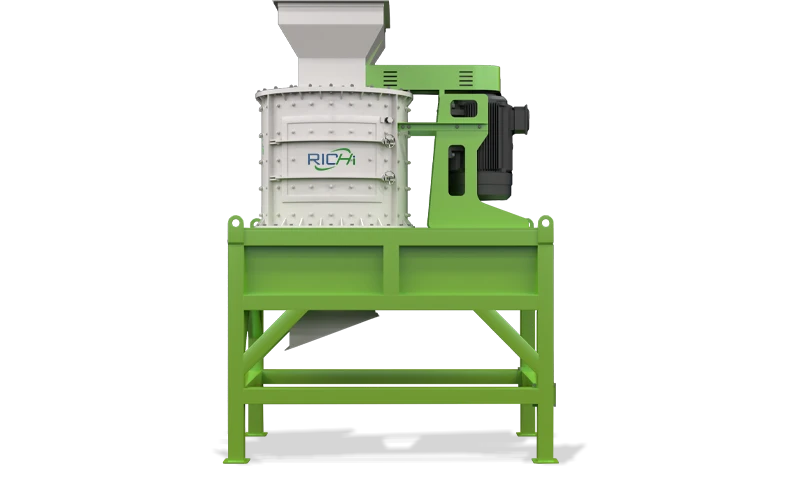
Capacity
1–30 T/H
Main Power
7.5–160 kW
Vegetable Waste Mixer
Blends composted vegetable waste with dry agricultural residues, manure, recycled fines or other fertilizer ingredients before pelletizing. Paddle or double-shaft designs are useful where the formulation changes between batches.
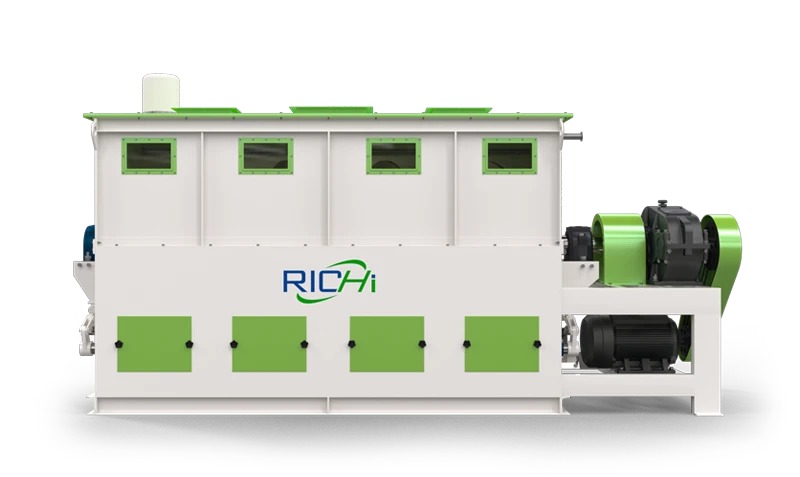
Capacity
250–2,000 kg/batch
Main Power
4-30KW
Vegetable Waste Dryer
Reduces residual moisture after composting when the material remains too wet for stable grinding or pelletizing. Dryer sizing depends on evaporation load rather than pellet-line tonnage alone.
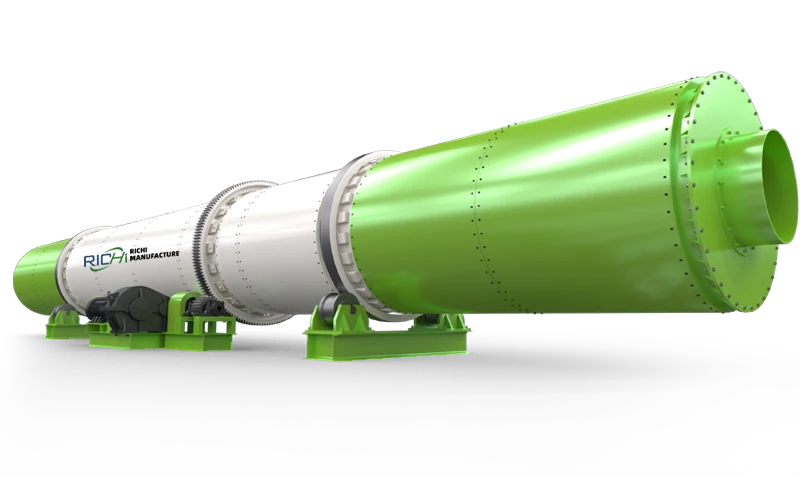
Capacity
1–30 T/H
Drying Temperature
60–250℃
Vegetable Waste Screener
Separates oversize material and fines from finished vegetable fertilizer pellets or screens compost before downstream processing. Screen aperture is selected according to the required pellet specification.
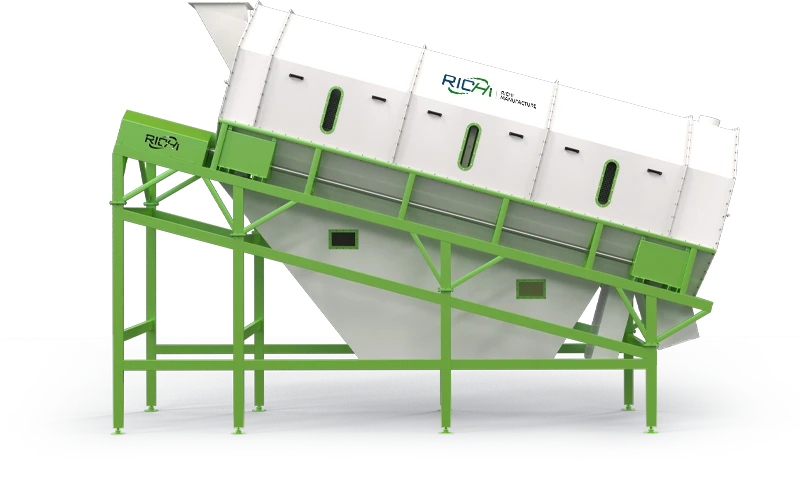
Capacity
3-50T/H
Screen Layers
1–3 Layers
Vegetable Waste Bagging Scale
Weighs and fills finished fertilizer pellets into open-mouth bags after cooling and screening. The selected feeding mechanism depends on pellet flowability, bag size and required packing speed.
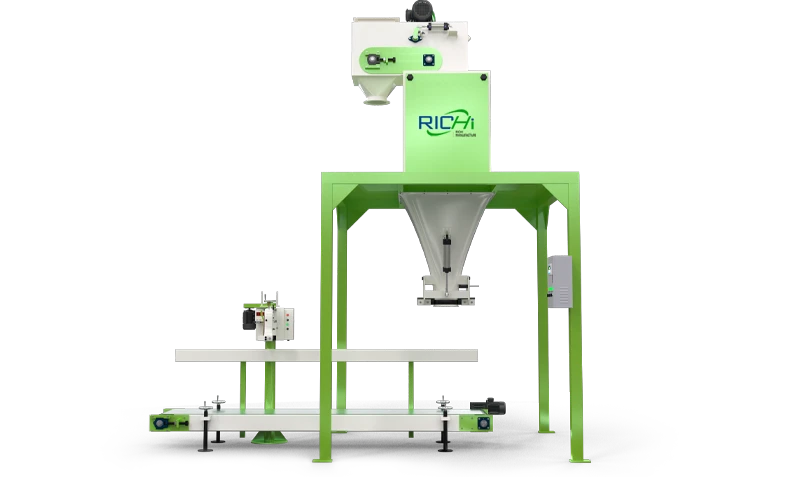
Packing Range
10–1000 kg/bag
Packing Speed
6–20 Bags/min
Feeding & Weighing System
Handles bulk ingredients such as composted vegetable waste, manure, straw powder or recycled fertilizer fines and meters them into the main formulation according to recipe weight.
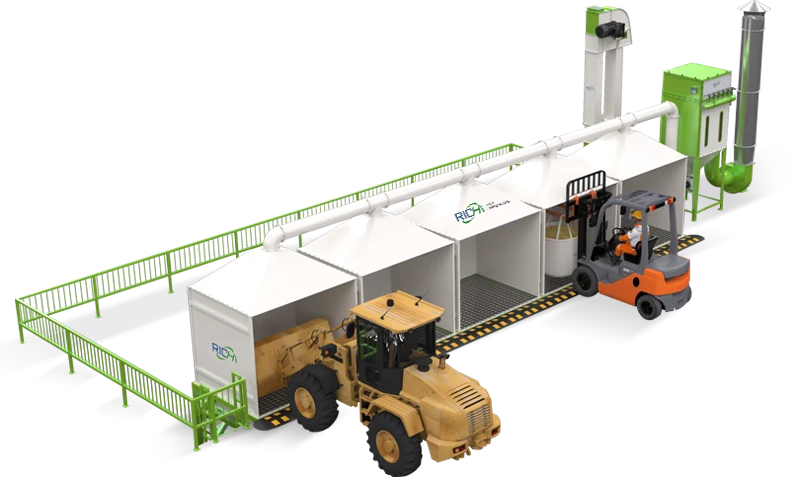
Weighing Capacity
1–50 T/H
Weighing Accuracy
±0.5–1%
Trace Element Dosing System
Meters low-dose mineral or functional ingredients into a fertilizer formula where the finished product specification requires them. This unit is designed for precision dosing rather than bulk raw-material feeding.
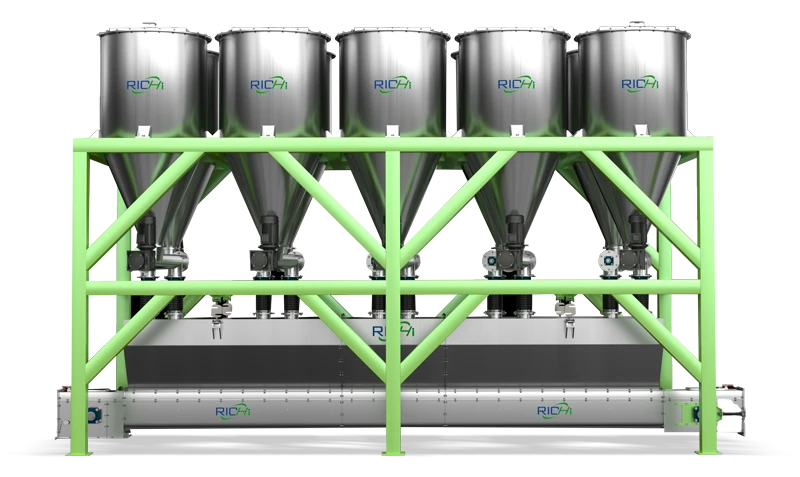
Dosing Accuracy
±0.1–0.5%
Hopper Volume
50–1000 kg
Vegetable Waste Conveyor
Transfers wet vegetable residues, compost, dry additives or finished pellets between process stages. Belt, screw, bucket and other conveyor types are selected according to moisture, bulk density and inclination.
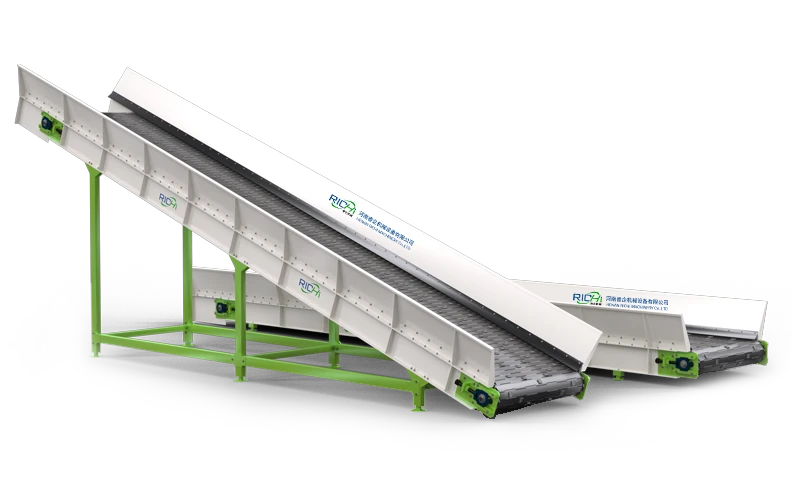
Capacity
2-40T/H
Conveying Length
3–40 m
A complete vegetable waste fertilizer plant may also include screw presses or other dewatering machines, shredders, bale breakers, magnetic separators, manual or mechanical sorting stations, rotary pre-screens, compost feed hoppers, intermediate storage bins, silos, cooling machines, recycled-fines systems, bucket elevators, screw conveyors, belt conveyors, dosing hoppers, liquid-addition systems, odor-control equipment, automatic control cabinets and finished-product storage systems. The final equipment list depends on where the material enters the process and which stages the customer already has in operation.
Customized Vegetable Waste Fertilizer Production Line
[Example Solution] 10–15T/H Vegetable Waste Fertilizer Process Design
The following 10–15 t/h example shows a customized system developed for a commercial organic fertilizer project requiring both screened powder products and fertilizer pellets from vegetable waste, straw and other organic ingredients. Where pellet output above the practical range of a single vegetable waste pellet machine is required, the granulation section can be configured with parallel units or designed around the customer’s actual pellet-production target.
The customer needed one plant capable of receiving several organic raw materials and directing the processed compost into two finished-product routes. Vegetable residues and other moist organic materials were combined with chopped straw and formula ingredients, while water or microbial liquids could be accurately introduced during mixing. The system was designed to produce screened loose fertilizer in customized grades as well as 2–12 mm fertilizer pellets, allowing the operator to change products without constructing two completely independent processing plants.
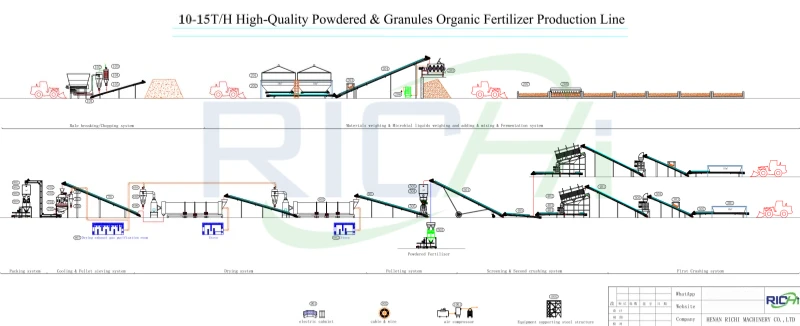
crushing & feeding
cleaning & addition
mixing & fermentation
crushing & screening
powder packing
pelletizing & drying
cooling & storage
pellet packing
The result is not a fixed “vegetable waste line,” but a dual-product fertilizer system in which reception, contamination control, straw preparation, liquid dosing, mixing, composting, crushing, screening and packing are shared wherever practical. The pellet route is added only when granular fertilizer is required, while the screened fertilizer route can continue independently. This arrangement is especially useful for fertilizer manufacturers and large vegetable-waste processors that need to respond to seasonal raw-material changes or sell more than one fertilizer format from the same plant.
Send us your vegetable waste type, initial moisture, daily input, available co-materials, existing equipment, target products and plant dimensions. RICHI can use those details to develop a process flow, equipment list and capacity configuration that fits your project rather than forcing your material into a standard layout.
Market Potential of Vegetable Waste Fertilizer Pellet Production
Vegetable processing, wholesale distribution, greenhouse production and large-scale farming generate concentrated organic residues in every major agricultural region, while fertilizer producers are increasingly looking for locally available feedstocks that can be converted into standardized commercial products.
The opportunity is especially strong where disposal costs are high, vegetable processing is concentrated, or organic fertilizer demand is well established—such as Europe and North America—while Asia, Latin America and parts of Africa offer additional potential through large agricultural output and abundant co-materials such as straw, rice husk, bagasse and manure.
A vegetable waste pellet machine allows properly treated residues to be converted into compact fertilizer pellets for vegetable farms, orchards, greenhouses, field crops, landscaping and soil-improvement applications. Profitability improves further when one plant is designed to accept several compatible organic wastes and produce different fertilizer formulations instead of depending on one seasonal vegetable stream.
Turn Disposal into a Saleable Product
Vegetable trimmings and rejected produce can become a packaged fertilizer product after proper stabilization and processing. This creates a revenue route where the original material may otherwise carry collection, transport or disposal costs.
Use More Than One Local Feedstock
A line can combine vegetable residues with suitable manure, straw, husks, compost or agro-industrial by-products. Multi-material capability helps maintain production when vegetable supply changes with harvest or processing seasons.
Serve Several Fertilizer Markets
The same project can be configured for organic fertilizer pellets, bio-organic formulations, compost-based products or soil-conditioner pellets. Different recipes and pellet specifications allow producers to target farms, greenhouses, orchards and distribution channels.
Scale with Raw Material Supply
Projects can begin with commercial capacities and expand as collection networks or fertilizer sales grow. RICHI can configure the pelletizing section and upstream process around actual feedstock volume rather than forcing an oversized investment from the start.
Practical FAQs About Vegetable Waste Pellet Machines
We collect 25 tons of fresh vegetable waste a day. Is that enough for a 1 T/H pellet plant?
Not necessarily. A 1 t/h vegetable waste pellet machine refers to prepared material entering pelletizing, not 1 t/h of fresh vegetables. If 25 t/day of waste contains 85–90% moisture, substantial mass is removed during dewatering, composting and drying. As a practical reference, a stable 1 t/h pellet section running 8 hours/day may require roughly 8 t/day of conditioned feed, so we first calculate dry matter, added manure/straw/compost and operating hours before recommending FZLH250.
Our cabbage waste is around 90% moisture. How far must we dry it before pelletizing?
Do not feed 90% moisture cabbage directly into a vegetable waste pelletizer. After dewatering and composting, the material normally requires further moisture conditioning; for ring-die pelletizing, approximately 15–25% moisture is a practical starting range, with the optimum determined by compost maturity, fiber content and formulation. If the material remains sticky above this range, additional drying or dry bulking material is usually required.
We already compost our vegetable residues. Which equipment can we leave out?
If your compost is mature, screened and already within the required moisture range, the fermentation and heavy dewatering sections may be unnecessary. A compact vegetable waste fertilizer machine setup may consist of feeding, crushing, batching/mixing, the vegetable waste pelletizing machine, cooling, screening and packing. We normally review compost moisture, particle size and contaminants before deciding what existing equipment can remain.
Can one line handle lettuce waste this month and carrot or potato residues next month?
Yes, but the pretreatment settings should change with the material. Leafy waste can exceed 85–90% moisture and compress easily, whereas carrot and potato processing residues are denser and may require different crushing and dewatering conditions. A flexible vegetable processing waste fertilizer machine can use common downstream equipment while allowing adjustments in dewatering, dry-material addition, crushing and formulation.
Our material contains plastic labels and packaging. Can the line tolerate some contamination?
It should be removed rather than intentionally passed through the vegetable waste processing equipment. For wholesale-market or packing-house material, we normally place manual/mechanical sorting, screening and magnetic separation ahead of fine processing; the required arrangement depends on whether contamination is film, metal, stones or packaging. Cleaner feed protects crushers, dies and downstream fertilizer quality.
Can I mix vegetable waste with chicken manure and poultry bedding?
Yes. For a poultry operation, manure plus bedding can be useful because bedding contributes relatively dry fibrous material to wet vegetable residues. As an initial engineering trial, formulations might contain roughly 30–60% vegetable-derived material and 20–50% composted manure/bedding, with the balance supplied by compost or other dry organics; the final ratio must be corrected using actual moisture, C/N and nutrient analyses rather than copied as a fixed recipe.
We run a pig farm. How large would the operation need to be to justify this equipment?
A small pig farm normally cannot keep a 1 t/h vegetable waste fertilizer pelletizer continuously supplied from its own manure and vegetable residues. An 8-hour shift requires about 8 t/day of prepared pelletizing feed; because fresh manure and vegetable waste lose substantial water and organic mass during treatment, considerably more wet input is required. In practice, this type of project is better suited to a large intensive farm, a farm cooperative, or a plant collecting manure and vegetable residues from several sources.
We have 4 T/H of prepared compost. Should we choose FZLH320 or FZLH350?
Choose FZLH350. Your confirmed equipment range places FZLH320 at 2–3 t/h and FZLH350 at 3–5 t/h, so 4 t/h falls directly within the FZLH350 range. We would still check bulk density, moisture, formulation and die specification because the nominal capacity of a vegetable waste granulator is affected by the material being compressed.
Is FZLH420 suitable if our target is 6 T/H now but we expect to reach 8 T/H?
Yes. FZLH420 is rated at 6–8 t/h in this vegetable fertilizer application range, making it the logical model for that planned increase. Before finalizing the vegetable processing waste pellet machine, however, the upstream crusher, mixer, dryer, cooler and screen should also be sized for the future 8 t/h target; otherwise the pelletizer will not be the limiting equipment.
We only have about 300 m² available. Can a 2–3 T/H line fit?
Possibly for a compact pelletizing section, but 300 m² is generally restrictive for a complete fresh-vegetable-waste plant that includes reception, composting and drying. As a planning reference, a 2–3 t/h downstream processing section may fit within several hundred square metres, while a complete project can require roughly 800–2,000+ m² once raw-material storage, composting, utilities and finished-product areas are included. A layout drawing is needed before equipment is ordered.
Our vegetable waste supply drops sharply outside harvest season. How do we keep the line running?
Design the plant around multiple compatible feedstocks rather than one crop. A vegetable farm waste fertilizer machine can process conditioned formulas containing vegetable residues plus manure, straw, rice husk, sawdust, compost or suitable agro-industrial residues. This lets a fertilizer producer change formulations seasonally, provided every new feedstock is assessed for moisture, contaminants, nutrients and fertilizer suitability.
Can rotten wholesale-market vegetables be used, or are they already too degraded?
They can be used when they remain suitable organic feedstock and contamination is controlled, but heavily decomposed market waste requires rapid handling. A market vegetable waste recycling machine project normally starts with sorting and moisture management before controlled composting; uncontrolled putrefaction is not a substitute for composting. Loads contaminated with excessive plastics, chemicals or unsuitable materials should be rejected or cleaned before fertilizer processing.
We want both powder fertilizer and pellets. Do we need two complete lines?
Usually not. After composting, crushing and screening, conditioned material can be diverted to a powder-fertilizer packing route or continue through the vegetable waste fertilizer pelletizer, followed by cooling/screening and pellet packing. Sharing the front-end vegetable waste treatment equipment can reduce duplicated machinery, although separate storage and dosing may be needed when the two finished products use different formulations.
Can potato peels and vegetable trimmings run through the same pelletizing section?
Yes, after suitable preparation. Potato peels and wet trimming residues can both be processed through a vegetable processing residue pellet machine, but their water content, starch content and physical behavior differ, so dewatering and formulation should be adjusted before they reach the common pelletizing section. For mixed processing plants, we normally design receiving and dosing so the operator can control each feedstock rather than dumping everything into one hopper.
Our old pellet mill keeps blocking when the compost formula changes. Would replacing only the pelletizer solve it?
Not always. Blockage can come from excessive moisture, inconsistent particle size, poor mixing, unstable feeding, an unsuitable die compression ratio or insufficient feeder control—not simply from the main machine. Before recommending a replacement vegetable waste pellet making machine, RICHI would review your existing feeder, crusher, mixer, die specification and operating data; sometimes retaining part of the old line is more economical than replacing everything.
How much raw vegetable waste would a 10 T/H pellet section actually consume?
A 10 t/h pellet section operating 8 hours requires about 80 t/day of prepared feed, but the fresh vegetable requirement cannot be calculated from that figure alone. For example, 100 t of vegetables at 85% moisture contains only about 15 t of dry matter before processing; manure, straw, compost and other ingredients can add substantial solids to the formula. For a large vegetable waste fertilizer production project, we therefore size the plant from a daily mass balance rather than using fresh-waste tonnage as pellet output.
What pellet diameter should we choose for commercial vegetable-based fertilizer?
For most agricultural fertilizer applications, approximately 4–6 mm is the practical mainstream range, although your vegetable residue pelletizer supports 4–12 mm according to the confirmed machine specification. A 4 mm product is useful where smaller granules and easier distribution are preferred, while 5–6 mm can suit general bulk or bagged fertilizer products. Die selection should also consider formulation, required strength and application equipment.
Can we make bio-organic fertilizer by adding microbes before the pellet mill?
This requires more care than simply dosing microbes into the mixer. Pelletizing and especially drying can expose microorganisms to temperatures that reduce viable counts, so microbial addition may need to occur after high-temperature stages, for example through a suitable post-process coating or blending route. If your vegetable peel fertilizer machine project targets a regulated bio-organic fertilizer, we design the addition point around the microbial product, process temperature and local finished-product requirements.
We are planning 20 T/H. Should we buy one FZLH678 or two smaller pelletizers?
FZLH678 is rated at 18–22 t/h in your current model range, so 20 t/h falls within its nominal capacity. However, an industrial vegetable waste granulating machine project should also consider redundancy: two parallel units can offer maintenance flexibility, while one larger unit reduces equipment count and supporting connections. We compare operating schedule, expected feed variation, downtime tolerance, factory space and investment before recommending the final arrangement.
We wash vegetables before cutting, so our waste stream contains a lot of free water. Should we dewater before composting?
Usually, yes. Washing and cutting residues can exceed 85–90% moisture when leaves, peelings and rejected vegetables carry additional process water. A vegetable waste processing machine system can place a screw press or other suitable dewatering unit before composting; reducing excessive free water lowers the downstream drying load and makes it easier to combine the waste with straw, husks or other dry structural materials.
Our factory generates onion skins, roots and wet trimming waste together. Can they use the same line?
Yes, but they should not necessarily enter the line at identical settings. Dry onion skins behave very differently from wet roots and fleshy trimming residues, so a vegetable processing waste pelletizing machine may use separate receiving or batching before the materials are combined. This gives you better control over moisture and fiber content instead of allowing the daily mix to fluctuate unpredictably.
We make frozen vegetables and already have a wet by-product handling system. Can your equipment connect to it?
In many cases, yes. Rather than replacing the existing front end, we can start the vegetable processing by-product pellet machine system after your current collection, drainage or dewatering stage. We would need the discharge capacity, moisture range, particle size, equipment elevation and available interface points to determine which existing machines can remain.
Is a compost turner enough for high-moisture vegetable waste, or do we still need a dryer?
They perform different jobs. A vegetable waste composting machine supports aerobic biological treatment, while a dryer removes moisture when the stabilized material is still too wet for downstream processing. For example, compost leaving fermentation at 30–40% moisture may still require drying toward roughly 15–25% before ring-die pelletizing, depending on the formulation and pelletizing conditions.
Can we pelletize only vegetable peels without adding manure?
Potentially, but a 100% peel formula should be tested rather than assumed suitable. Potato, carrot, onion and other peel streams differ substantially in moisture, starch, fiber and ash; a vegetable peel pellet machine may therefore require moisture adjustment or blending with compost, straw, husks or another compatible organic material. RICHI can evaluate the actual peel mixture before determining the die and pretreatment configuration.
We process potatoes and carrots. How do we stop wet peel material from sticking in the feeding system?
The first control is moisture—not simply increasing feeder power. Wet peel material should be dewatered and conditioned before reaching the vegetable peel recycling machine and pelletizing section; approximately 15–25% moisture is a useful pelletizing reference after preparation. Anti-bridging and forced feeding are then used to maintain a stable feed when the conditioned material still has poor flowability.
Our vegetable scraps change every day. Do we need to analyze every batch before running the pelletizer?
Not every truckload normally requires a full laboratory analysis, but operating limits should be established for the major feedstock groups. For a vegetable scraps pelletizer, operators can routinely monitor moisture, contamination and formulation ratio, while periodic laboratory tests check nutrients, organic matter, salinity and other parameters relevant to the fertilizer product. A sudden change in material source should trigger additional testing.
Can damaged vegetables from supermarkets be mixed with wholesale-market waste?
Yes, after packaging and unsuitable contaminants are removed. A vegetable scraps recycling machine can receive unsold vegetables from several commercial sources, but supermarket material often contains more plastic film, labels and packaging than farm or processing-plant residues. Centralized sorting should therefore come before shredding, composting and fertilizer production.
We operate a vegetable market with 60–80 tons of waste per day. What pelletizing capacity should we consider?
Do not select a 7.5–10 t/h pelletizer simply by dividing the incoming waste by an eight-hour shift. If the market waste averages 85–90% moisture, much of its incoming mass is water; a market vegetable waste pellet machine should be sized from the conditioned compost output plus any straw, manure, husks or other solids added to the formula. A material-balance calculation is required before selecting FZLH350, FZLH420, FZLH520 or a larger configuration.
Our market waste is collected from hundreds of vendors. How should we deal with inconsistent feedstock?
Build consistency before the pelletizer rather than expecting the pelletizer to correct it. A vegetable market waste processing machine system normally needs centralized sorting, size reduction, moisture control, composting and homogenization; intermediate storage can also buffer daily fluctuations. Once the stabilized mixture reaches a controlled specification, pellet production becomes considerably easier to manage.
Can a vegetable farm use crop stalks and rejected produce in the same fertilizer formula?
Yes, and this can be useful because the two fractions have complementary physical characteristics. Rejected vegetables may contain 80–95% moisture, while dried stalk material contributes more fiber and dry matter; a vegetable farm waste pelletizer can process the combined material after chopping, composting and moisture conditioning. The ratio should be calculated from actual moisture and fertilizer targets rather than fixed by volume.
We have greenhouse vines and stems, not just rejected vegetables. Will they damage the pellet mill?
Properly prepared plant stems are suitable, but long fibrous material should not enter the die untreated. A farm vegetable residues pellet machine project normally includes shredding or chopping followed by composting and, where necessary, finer crushing. Strings, clips, wires and plastic used in greenhouse cultivation must be separated because these contaminants can damage processing equipment and reduce fertilizer quality.
We want to collect vegetable residues from several farms. How should we calculate whether the project is large enough?
Start with annual recoverable tonnage rather than the number of participating farms. For the minimum 1 t/h vegetable farm waste pellet machine operating 8 hours/day and 300 days/year, the pelletizing section would process about 2,400 t/year of prepared material. Because fresh vegetable residues lose water and mass during treatment, the required annual wet collection can be several times higher, depending on initial moisture and added dry ingredients.
We already make compost but lose sales because the product is bulky. Will pelletizing actually change logistics?
It can. Loose compost has relatively low bulk density and can generate dust or segregation during handling, whereas properly formed pellets provide a more uniform physical product for weighing, bagging and mechanical application. A vegetable residue pellet machine is therefore often added by existing compost producers that want a standardized commercial format rather than a completely new fertilizer process.
Can we recycle the fines from screening instead of treating them as waste?
Normally, yes. Properly collected fines from the same fertilizer formulation can usually be returned upstream of the vegetable residue fertilizer machine or pelletizing stage, reducing product loss. The return ratio should be controlled because excessive recycled fines can change moisture and flow characteristics; contaminated floor sweepings should not automatically be returned.
Our current granulator makes irregular particles and too much return material. Can a ring-die system improve this?
It may, particularly if you want cylindrical 4–12 mm fertilizer pellets rather than irregular granules. A vegetable industry waste pellet machine uses a defined ring-die hole size and cutter setting, giving tighter control over pellet diameter and length. Before replacement, however, we would compare your current material moisture, formulation and desired product shape to confirm that ring-die pelletizing is the right process.
Can a 10 T/H vegetable factory install the line without stopping its existing production?
Often the fertilizer section can be constructed separately and tied into the waste-handling system during a planned shutdown. For a vegetable production waste pellet machine project, RICHI can design receiving points, conveyors and equipment elevations around the existing factory layout. The exact installation sequence depends on access, civil works, utilities and whether existing waste collection must remain operational during construction.
We want to sell fertilizer, not just solve a waste problem. What should we decide before ordering equipment?
Define the finished product first: powder or pellets, target diameter, bag size, nutrient formulation, intended market and applicable local fertilizer requirements. A vegetable production waste fertilizer machine should then be configured backward from those specifications. This prevents investing in a line that disposes of vegetable waste efficiently but cannot consistently make the fertilizer product your customers actually buy.
Can the same plant process fruit waste when vegetable residues are unavailable?
Yes, provided the alternative feedstock is suitable for the intended fertilizer and the process is adjusted accordingly. A vegetable residue recycling machine system can often accommodate fruit residues, manure, crop waste and other biodegradable materials, but high-sugar or very wet fruit streams may require different blending, moisture control and composting conditions. Multi-feedstock capability is especially valuable for seasonal processors.
We are replacing an old line. What information do you need before recommending new equipment?
Send the existing flow diagram, equipment list, actual throughput, raw-material moisture range, finished-product specification, major operating problems, plant dimensions and photos or drawings of the installation. RICHI can then determine whether the vegetable waste treatment machine requires a full replacement or only targeted upgrades to feeding, crushing, drying, pelletizing, cooling, screening or automation.
Whether you are starting with wet vegetable scraps, farm residues, processing by-products, market waste or an existing compost operation, the equipment should be selected from the material balance and finished-product target—not from a standard equipment package. Send us your raw-material data and required output, and we can help identify the vegetable waste processing equipment you actually need.


