

 0086-138 3838 9622
Mushroom Waste Pellet Machine
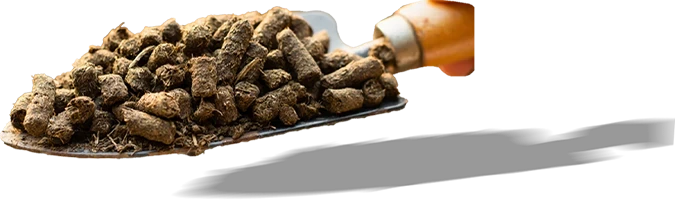
Mushroom waste pellet machine turns prepared spent mushroom substrate and mushroom farm residues into uniform fertilizer pellets. RICHI supplies ring-die pelletizers and complete systems covering bag opening, plastic separation, mixing, pelletizing and finishing.
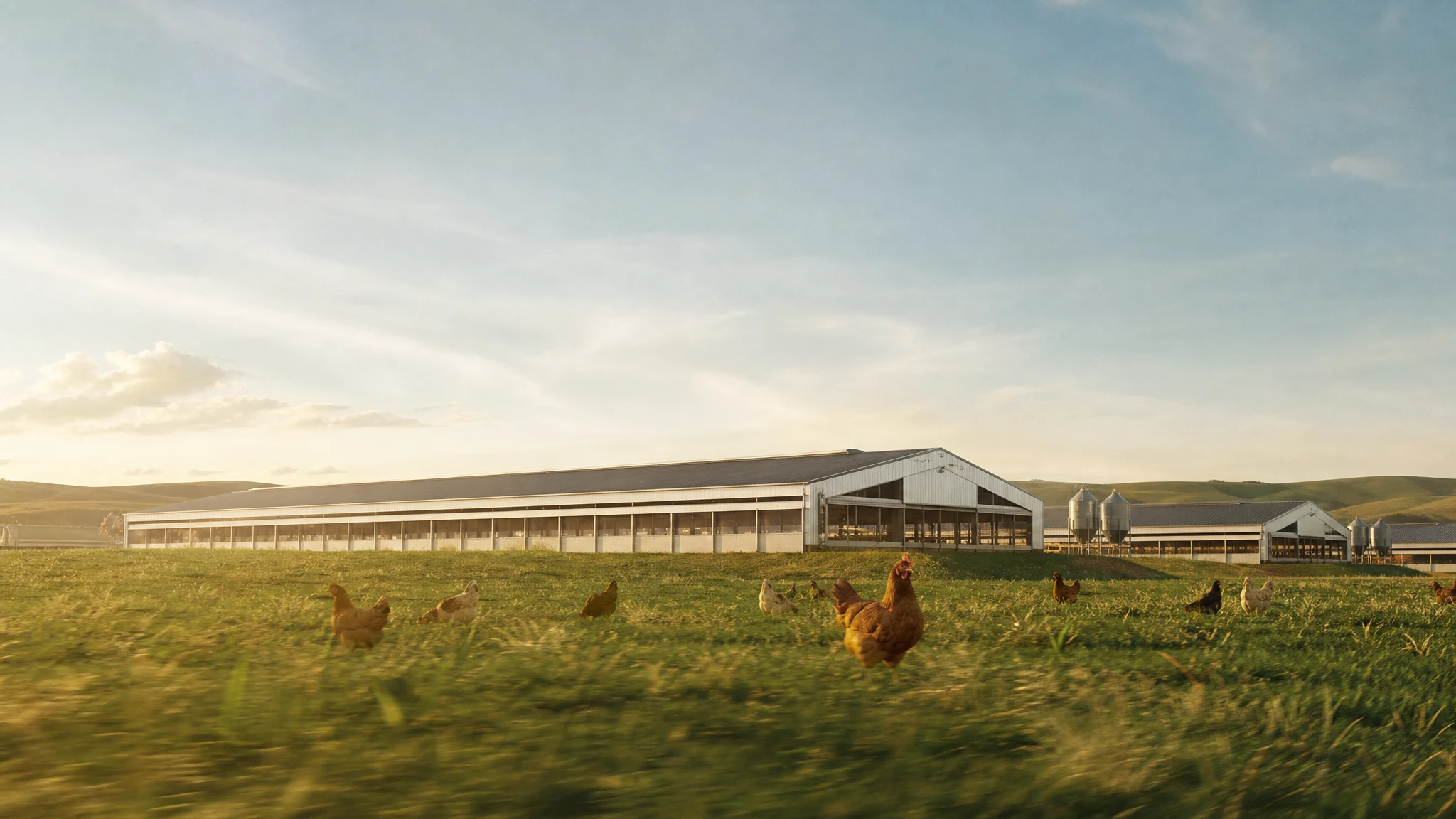
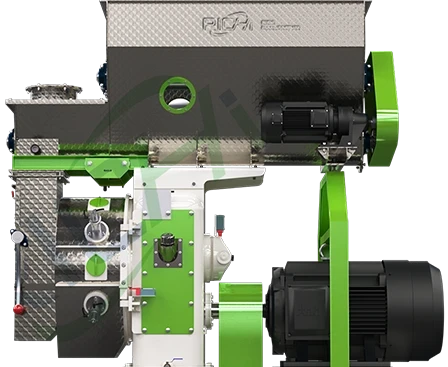
Turn Mushroom Waste into a Practical Fertilizer Product
A mushroom waste pellet machine gives mushroom growers, compost producers, and fertilizer manufacturers a practical way to turn spent mushroom substrate into a denser, easier-to-handle fertilizer product instead of continually paying to store, transport, or dispose of bulky residues.
RICHI configures the pelletizer around the material that actually comes from your operation—whether the waste originates from straw, sawdust, corn cob, cottonseed hull, casing materials, or mixed substrates, and whether it arrives loose, fibrous, lumpy, composted, or with relatively high moisture. Materials that are too wet, contaminated with spent cultivation bags, or unsuitable for direct granulation are first separated, crushed, dried, blended, or otherwise conditioned before pelletizing.
Depending on the intended product, we can configure systems for mushroom-based fertilizer pellets or powder fertilizer, while one plant can be designed to process multiple organic raw materials and fertilizer formulations. If your current requirement stops at bag opening and separation, crushing, mixing, drying, screening, or another preparation stage, standalone machines and modular processing sections are also available rather than requiring investment in a complete pelletizing line.
Who Needs Mushroom Waste Pellet Machine?
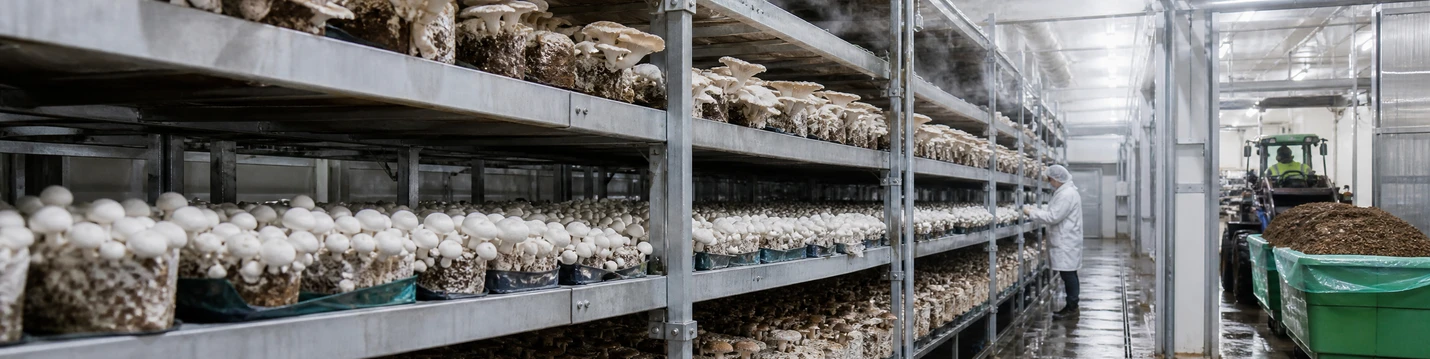
Commercial Mushroom Farms
Button, oyster, shiitake, and other commercial mushroom operations continuously generate spent mushroom substrate, spent blocks, mycelium-rich residues, damaged cultivation material, and used mushroom bags. Once plastics and foreign matter are removed and moisture is properly conditioned, a mushroom waste pellet machine can convert this bulky residue into uniform pellets.
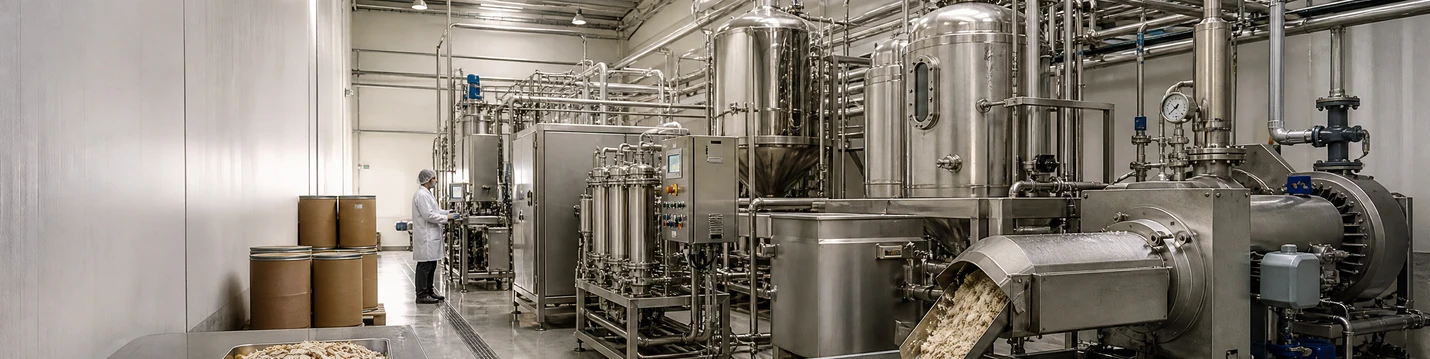
Mushroom Processing Companies
Mushroom processors, ingredient manufacturers, and extraction businesses can generate trimmings, damaged material, mushroom pulp, extraction residue, and other spent mushroom biomass. These residues differ from cultivation SMS and may require dewatering, drying, blending, or stabilization according to their condition.
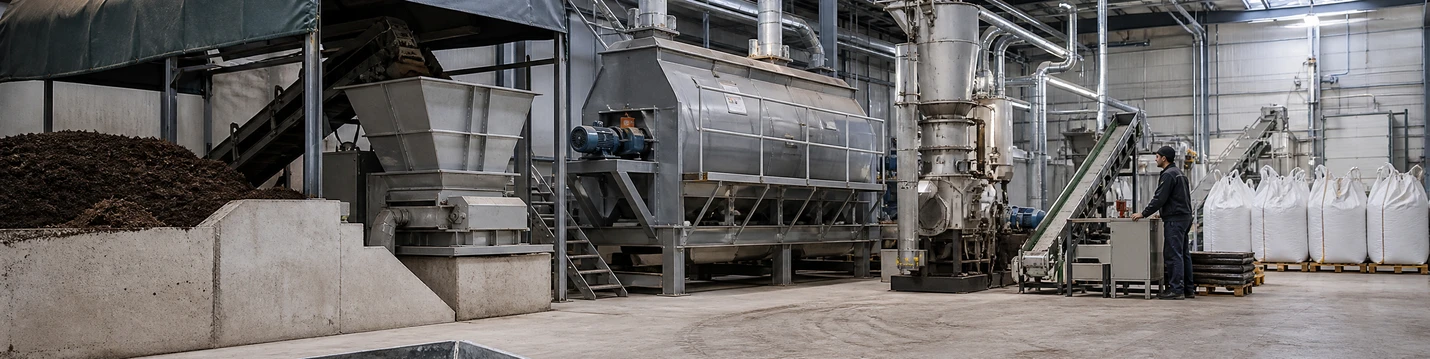
Organic Fertilizer Producers
Organic fertilizer manufacturers are strong users of mushroom waste because they can formulate spent mushroom substrate with manure, composted organics, crop residues, and other suitable ingredients rather than treating SMS as a single-feedstock product.
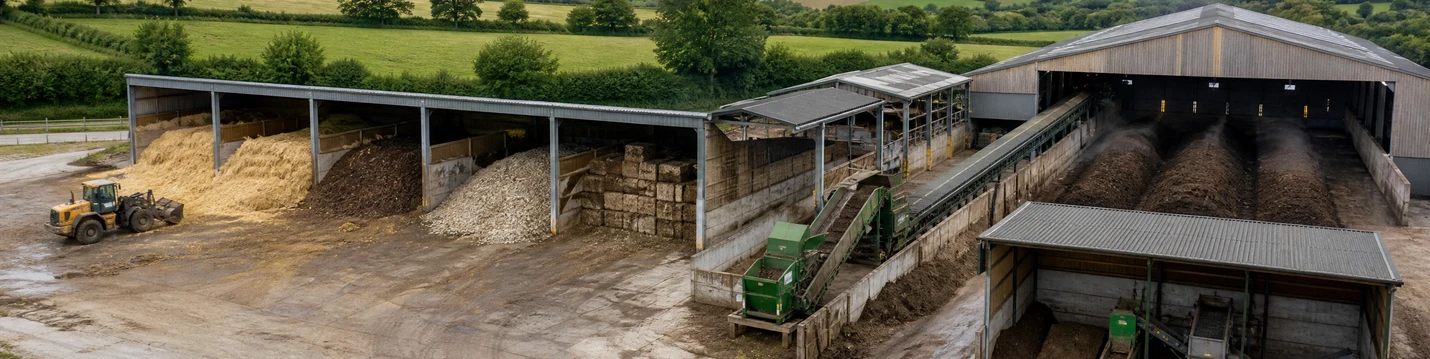
Agricultural Waste Recyclers
Agricultural recycling plants and regional organic waste processors often receive mushroom substrate alongside vegetable residues, fruit-processing waste, crop by-products, manure, and other organics. Because these materials differ greatly in moisture, fiber content, particle size, and bulk density, they require preparation before granulation.
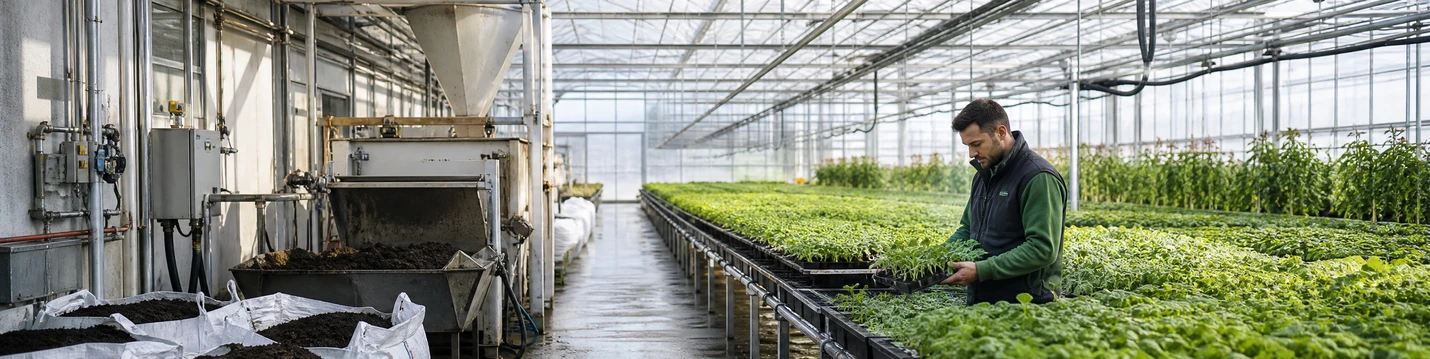
Compost & Fermentation Plants
Composting companies already have one of the most important upstream stages in place: biological stabilization of organic material. For facilities composting spent mushroom substrate alone or with manure and agricultural residues, adding crushing, formulation, pelletizing, cooling, screening, and packing can upgrade loose compost into a standardized granular product.
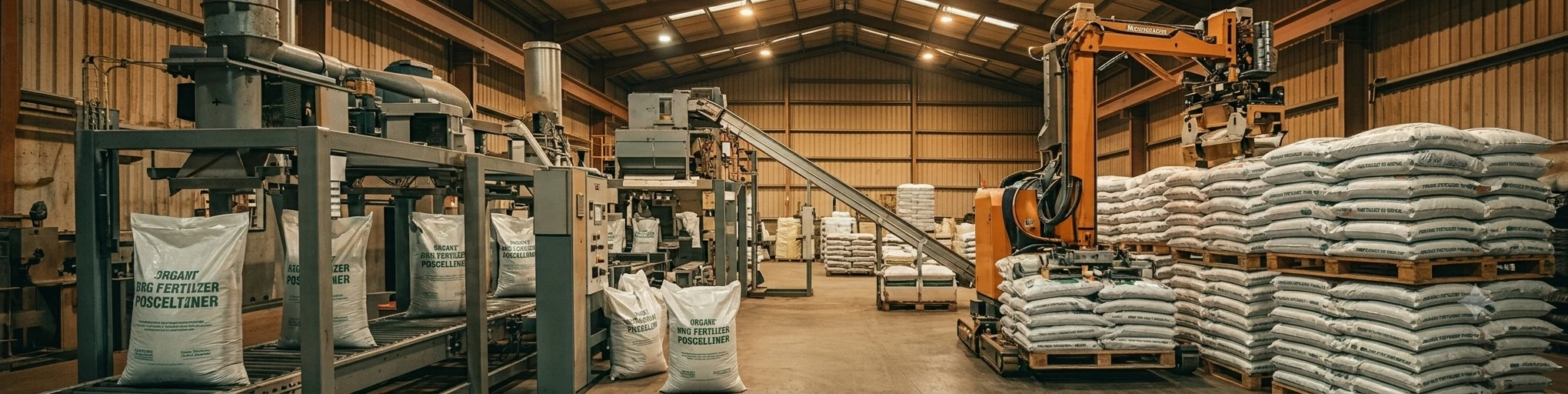
Greenhouse & Organic Farms
Greenhouse operators, vegetable growers, organic farms, and agricultural cooperatives become suitable users when they have a stable source of spent mushroom substrate and enough fertilizer demand to justify on-site processing. SMS can be conditioned and, where appropriate, blended with manure or other farm organics before pelletizing.
Livestock farms with a dependable external supply of spent mushroom substrate, manure management projects, soil conditioner producers, compost distributors, agricultural cooperatives, environmental engineering companies, and integrated organic waste treatment facilities may also have suitable applications. If you already generate or collect mushroom waste—or plan to combine SMS with other organic materials—RICHI can evaluate the material condition, available volume, moisture, contamination, existing equipment, desired fertilizer product, and required capacity before recommending a standalone mushroom waste pellet machine or a customized processing configuration.
What Materials Can Mushroom Waste Pellet Machine Process?
A mushroom waste pellet machine is designed around spent mushroom substrate and related mushroom-growing residues, but the final fertilizer formula does not have to rely on SMS alone. Depending on the cultivation substrate, mushroom species, storage condition, moisture level, impurity content, and target fertilizer, SMS can be processed alone or blended with manure, crop residues, agro-industrial by-products, digestate solids, and other suitable organic materials.
Wet, fibrous, contaminated, or uneven feedstocks are conditioned before pelletizing so the machine receives a stable mixture with suitable moisture, particle size, and flow characteristics. This gives fertilizer producers considerably more flexibility when local raw materials change from season to season.
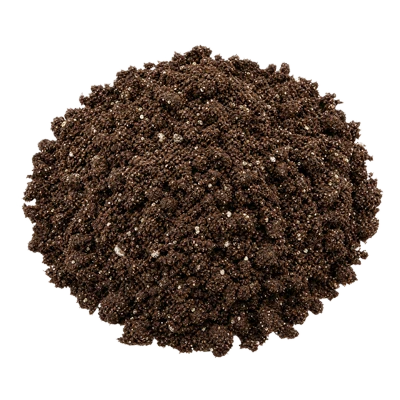
Casing & Cover Materials
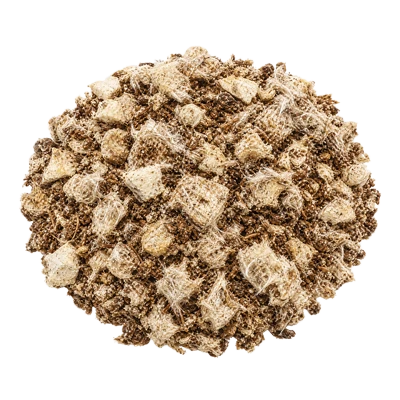
Mycelium-Rich Residues
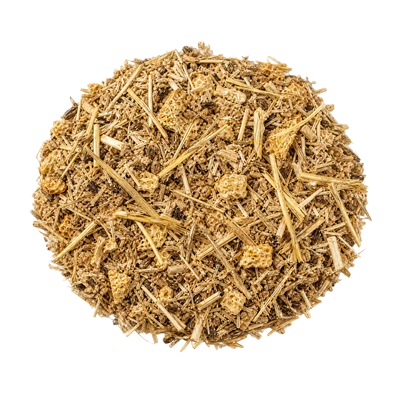
Cultivation Substrate Materials
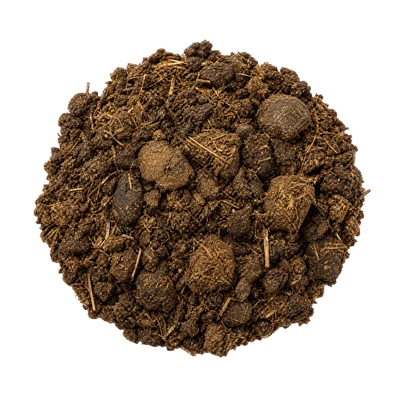
Livestock & Poultry Manure
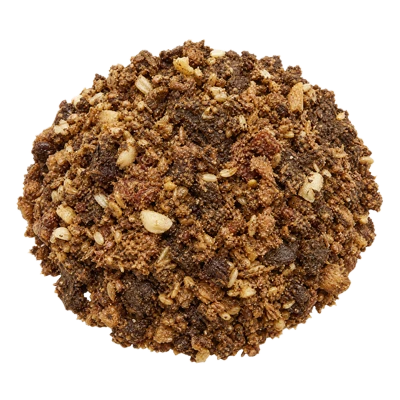
Food Processing By-products
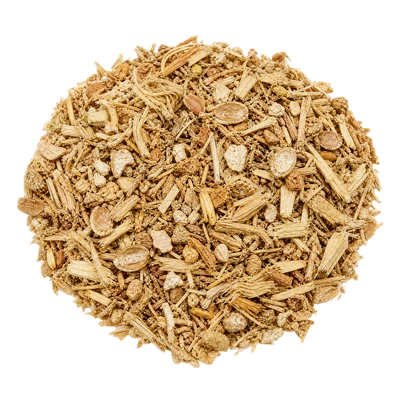
Agro-Industrial Residues
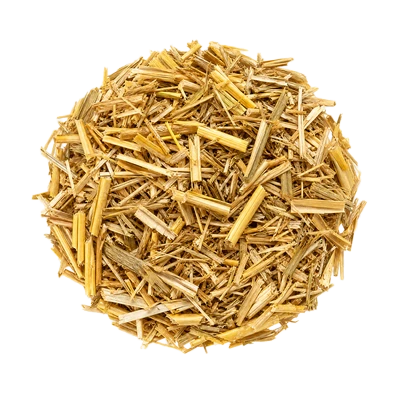
Crop Straw & Stalks
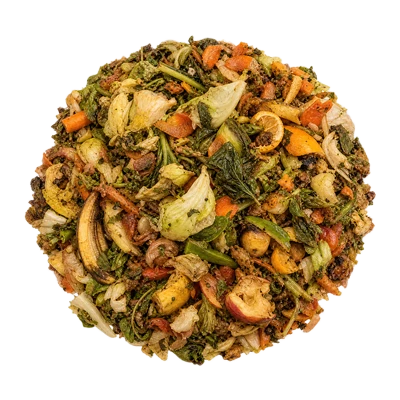
Municipal Organic Residues
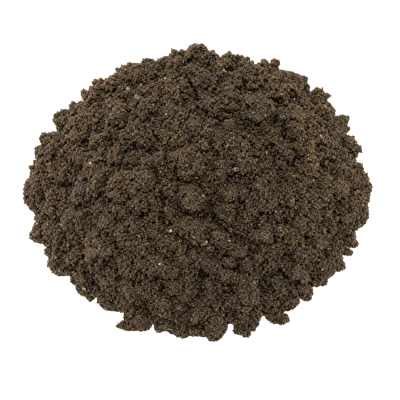
Municipal Organic Sludge
Mushroom Waste & Spent Mushroom Substrate
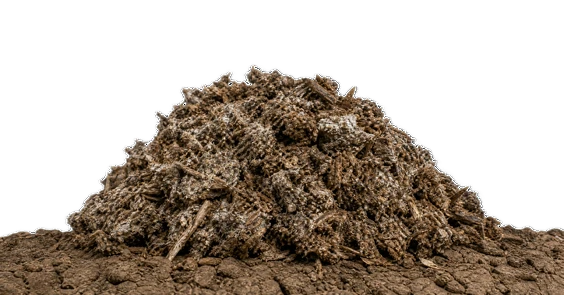
Spent mushroom substrate is the principal feedstock for this application. It may come from button, oyster, shiitake, and other commercial mushroom production and can appear as loose SMS, broken cultivation blocks, mycelium-rich residue, spent compost, used casing material, or substrate removed from cultivation bags. Its composition varies widely because the original growing medium may contain straw, corn cob, cottonseed hull, sawdust, manure, gypsum, limestone, or other locally available ingredients.
Engineered Structure
The mushroom waste pellet machine uses a heavy-duty ring-die structure designed for conditioned SMS and mushroom-based fertilizer blends. Its forced feeding, gear drive and reinforced granulation components help manage fibrous, low-density and formulation-variable materials while maintaining controlled feeding, stable pellet formation and practical access for die and wear-part maintenance.
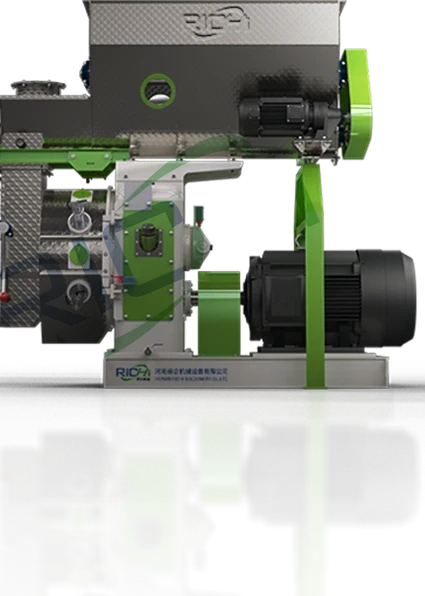
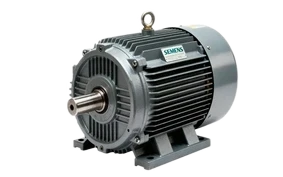
Siemens motor provides dependable drive power for continuous granulation when SMS density and fertilizer formulations vary during production.
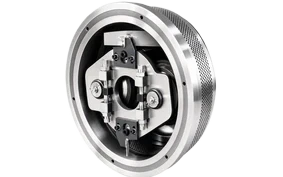
Heat-treated ring die supports 4–12 mm pellets and is matched to fibrous SMS blends for stable forming and controlled die wear.
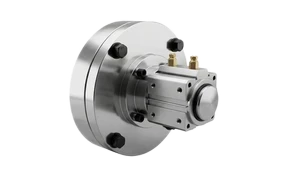
Overload protection limits drivetrain damage if foreign matter, feed surges or abnormal resistance causes a sudden load increase..
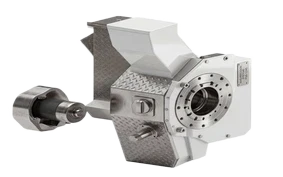
Powered forced feeding delivers fluffy, low-density mushroom substrate into the pelleting chamber more evenly than gravity feeding alone.
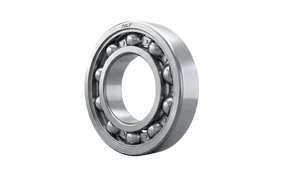
SKF bearings support the main transmission under sustained radial loads, helping maintain shaft stability during continuous fertilizer pelletizing.
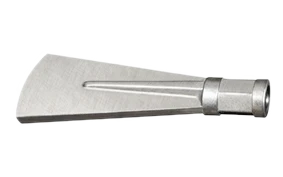
An adjustable cutter controls discharged pellet length, allowing mushroom fertilizer pellets to be matched to packing and application needs..
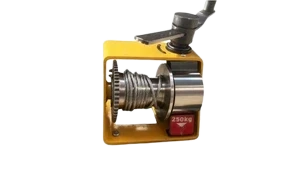
The lifting device assists ring-die removal and installation, reducing manual handling during die replacement and routine maintenance.
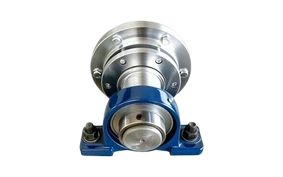
High-precision gears transfer power directly and efficiently to the working system, supporting stable operation under continuous pelletizing loads.
Why Choose RICHI for Mushroom Waste Pelletizing?
A mushroom waste pellet machine should do more than form pellets—it must work reliably with the changing density, fiber content and formulations common in spent mushroom substrate processing. RICHI combines configurable ring-die pelletizing equipment with practical fertilizer engineering experience, helping customers turn conditioned mushroom residues into stable products without investing in functions their project does not need.

One Machine, More Formula Flexibility
The mushroom waste pellet machine can process properly prepared SMS alone or formulated blends containing manure, crop residues and other suitable organics. This gives fertilizer producers more freedom to adjust recipes as raw-material supply or product requirements change.

Built Around Your Mushroom Waste
SMS from straw, sawdust, corn cob or mixed substrates behaves differently during feeding and granulation. We match feeding design, die specification and operating parameters to your actual material, moisture condition and target pellet size.

Better Value from Mushroom Residues
Pelletizing converts conditioned, loose mushroom fertilizer material into a denser and more uniform form that is easier to screen, pack, transport, meter and sell. For mushroom growers and recyclers, this creates another utilization route for a residue that otherwise carries handling and disposal costs.

Engineering Support Beyond the Pelletizer
RICHI draws on fertilizer pelletizing experience across different organic raw materials and plant scales. From material evaluation and equipment selection to layout and line integration, the system is configured around your production target rather than a fixed catalogue solution.

Configuration Without Unnecessary Investment
RICHI can supply only the pelletizer, add the preparation equipment your existing plant lacks, or engineer a complete fertilizer line. Customers can retain usable crushers, mixers or dryers instead of replacing equipment simply to fit a standard package.

How the Mushroom Waste Pellet Machine Works
Once mushroom waste has been cleaned, conditioned, and mixed to the required formulation, it is delivered at a controlled rate into the pelleting chamber. Inside the mushroom waste pellet machine, the rollers continuously press the prepared material against the rotating ring die, forcing it through the die holes under mechanical pressure. The compacted material emerges as continuous strands, which are cut to the required length before leaving the machine for subsequent cooling and screening. Feed rate, material moisture, particle size, die specification, and formulation are coordinated to maintain consistent pellet formation when processing spent mushroom substrate and mushroom-based fertilizer blends.
Technical Specifications
| Model | Capacity (t/h) | Main Motor Power (kW) | Anti-Bridging Feeder Power (kW) | Forced Feeder Power (kW) | Ring Die Inner Diameter (mm) | Finished Pellet Diameter (mm) |
|---|---|---|---|---|---|---|
| FZLH250 | 1–1.5 | 22 | 2.2 | 0.75 | 250 | 4–12 |
| FZLH320 | 2–3 | 22 | 2.2 | 0.75 | 320 | 4–12 |
| FZLH350 | 3–5 | 37 | 2.2 | 0.75 | 350 | 4–12 |
| FZLH420 | 6–8 | 90 | 3 | 1.5 | 420 | 4–12 |
| FZLH520 | 9–12 | 132 | 3 | 1.5 | 520 | 4–12 |
| FZLH678 | 18–22 | 200 | 3 | 1.5 | 673 | 4–12 |
| FZLH768 | 22–26 | 250 | 4 | 1.5 | 762 | 4–12 |
RICHI offers seven mushroom waste pellet machine models, with rated capacities from 1–1.5 t/h to 22–26 t/h, covering farm-based SMS utilization, commercial fertilizer production, and large industrial recycling projects. Model selection should be based not only on required output, but also on the bulk density, moisture, fiber content and formulation of the prepared mushroom waste. Feeding systems, die specifications, pellet diameter and supporting equipment can be configured around the actual feedstock and finished fertilizer requirements.
Mushroom Waste Pelletizing Specifications
Successful SMS pelletizing depends on how the material is prepared before it reaches the ring die. The following reference ranges cover the key conditions from feed preparation and die compression to pellet cooling and screening. Actual settings are adjusted according to mushroom substrate composition, moisture, fiber content and fertilizer formulation.
Raw Material Particle Size
2–5 mm
Raw Material Moisture Content
12–25%
Pelletizing Temperature
50–80℃
Compression Ratio
1:4–1:8
Pellet Length
5–30 mm
Pellet Formation Rate
85–95%
Finished Pellet Moisture
≤12–15%
Cooling Temperature
≤40℃
Screening Efficiency
≥95%
Fines Content
≤5–10%
Broken Pellet Rate
≤3–5%
Operating Mode
Continuous Operation
These figures are practical reference ranges, not fixed requirements for every mushroom waste pellet machine. RICHI determines the appropriate material preparation, die configuration and operating conditions from the actual SMS composition and fertilizer formula, especially when manure, casing material or other organic residues are included.
Mushroom Waste Pellet Machine Projects Worldwide
No two mushroom waste projects begin with exactly the same feedstock. Mushroom species, cultivation substrate, casing content, storage time, available co-materials and initial moisture all influence the equipment required before the pelletizer. RICHI supplies mushroom waste pellet machine systems for commercial mushroom farms, fertilizer manufacturers, composting businesses and agricultural waste recyclers in different markets. We can configure a standalone mushroom waste pellet machine or integrate separation, crushing, fermentation, drying, dosing, mixing, cooling, screening and packing according to the material already available at the customer’s site.
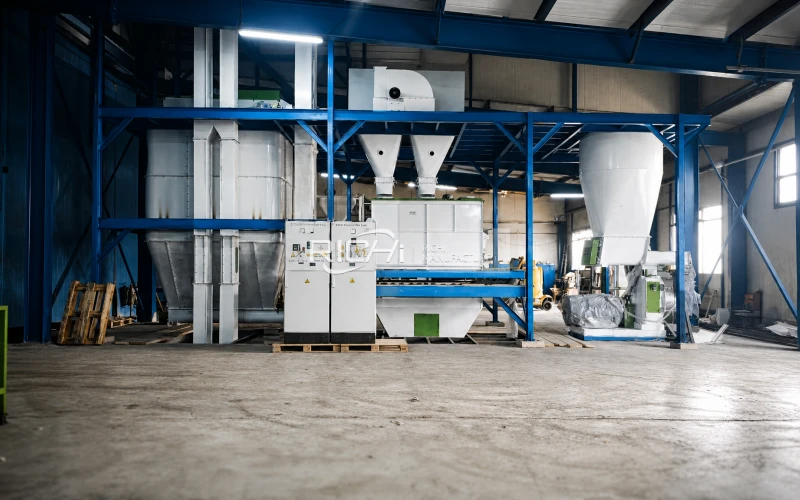

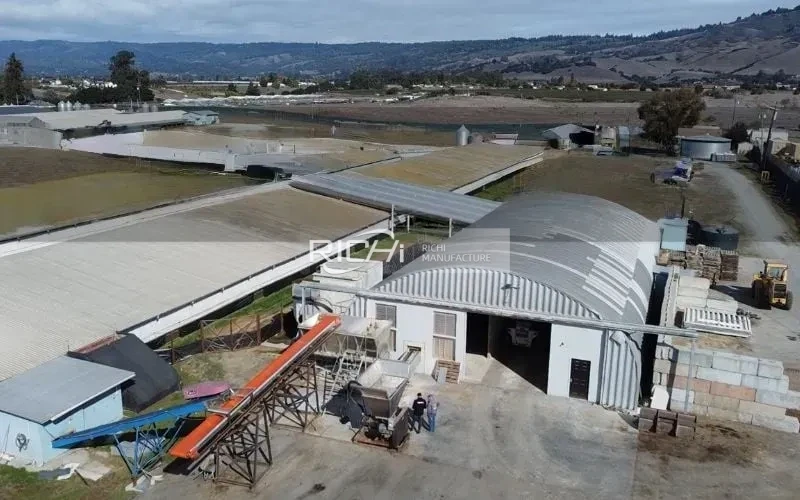
3 T/H
Mushroom Waste Fertilizer Plant in the United States
The farm generated fresh button-mushroom SMS containing approximately 70% spent straw/manure substrate and 30% casing and cultivation residues, with initial moisture around 58–62%. RICHI configured separation, crushing, drying, mixing, pelletizing, cooling and screening so the farm could process its continuously generated substrate into packaged organic fertilizer.
Equipment Used :FZLH350
Pellet Size :4 mm

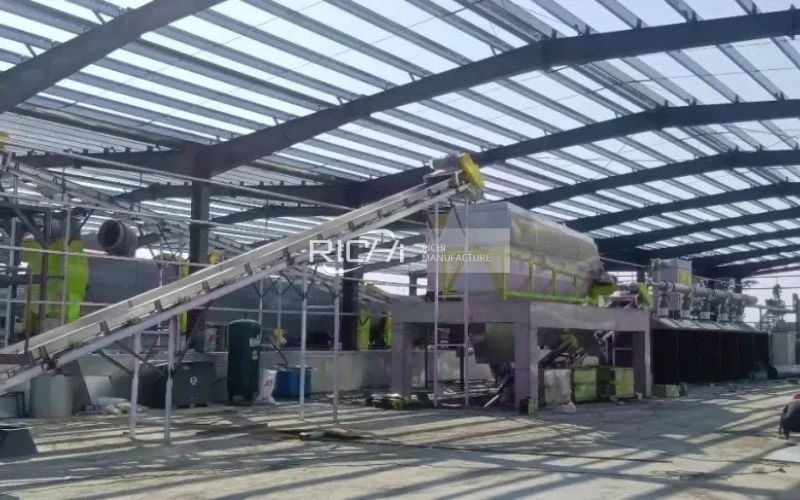
2 T/H
Spent Mushroom Substrate Plant in the Netherlands
The client handled approximately 80% spent mushroom compost and 20% dry bedding-derived and fibrous organic material. Incoming SMS averaged about 45–50% moisture after storage, so the system emphasized controlled drying, material homogenization and fine crushing before granulation, followed by counterflow cooling and screening for a consistent commercial fertilizer product.
Equipment Used :FZLH320
Pellet Size : 4 mm

4 T/H
Mushroom Compost Fertilizer Plant in Poland
The fertilizer formula used about 65% spent mushroom substrate, 20% composted poultry manure and 15% chopped wheat straw. The mushroom waste entered at approximately 48–52% moisture, while the added straw was considerably drier. RICHI designed the line around crushing, proportioned mixing, moisture balancing, pelletizing, cooling and fines recycling to handle the contrasting feed characteristics.
Equipment Used :FZLH350
Pellet Size : 4-5 mm


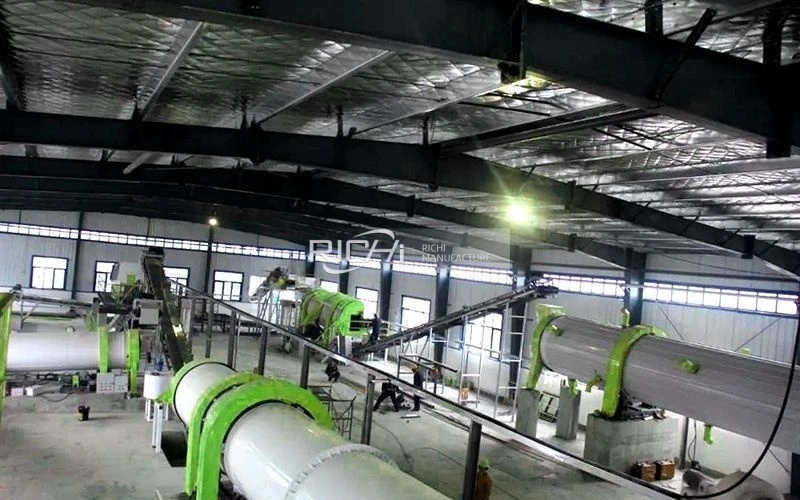
3 T/H
Mushroom Waste Fertilizer Plant in France
This project used approximately 75% aged mushroom compost with 15% agricultural green-waste compost and 10% dry cereal-straw material. The stored mushroom fraction arrived at roughly 35–40% moisture and was already biologically stabilized. The configuration therefore concentrated on screening, secondary crushing, accurate blending and final moisture adjustment before pelletizing, cooling and product classification.
Equipment Used :FZLH350
Pellet Size : 3-4 mm

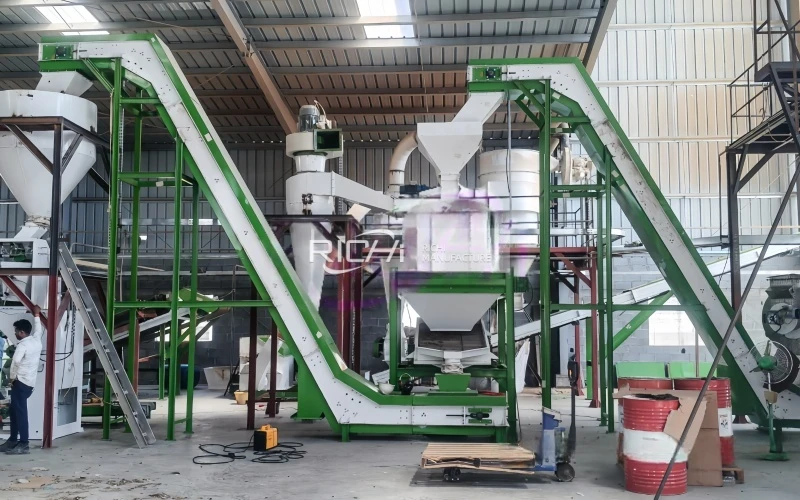
12T/H
Organic Waste Pellet Plant in Germany
The recycler planned a multi-feedstock fertilizer product based on roughly 55% mushroom substrate, 25% composted cattle manure and 20% selected crop and fibrous residues. Incoming SMS fluctuated between about 42% and 50% moisture depending on storage time. RICHI supplied a larger integrated system with metered feeding, crushing, mixing, moisture conditioning, granulation, cooling and screening for continuous production.
Equipment Used :FZLH520
Pellet Size : 3-6 mm

2 T/H
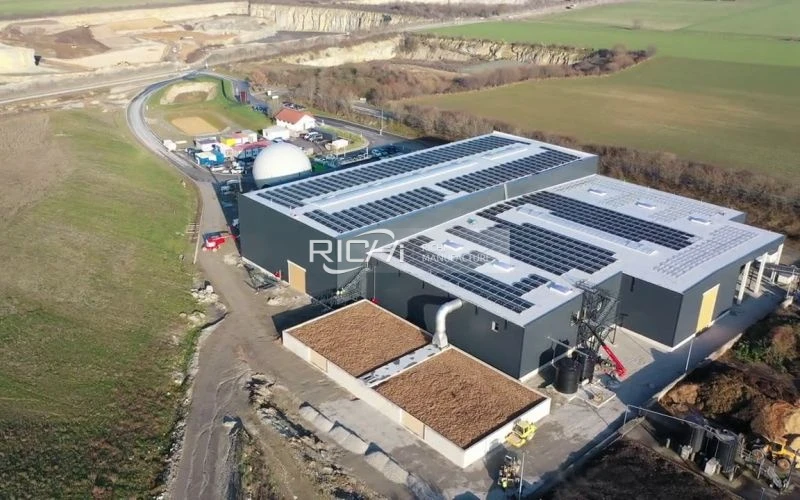
Straw-Based Mushroom Waste Plant in India
The cooperative collected oyster-mushroom waste dominated by paddy and wheat straw substrate, blended at approximately 70% SMS, 20% composted cattle manure and 10% dry crop residues. Fresh substrate waste was about 55–60% moisture. The proposed system used shredding and crushing, fermentation where required, drying, formula mixing and pellet production to manage the long-fiber feedstock.
Equipment Used :FZLH320
Pellet Size : 4 mm

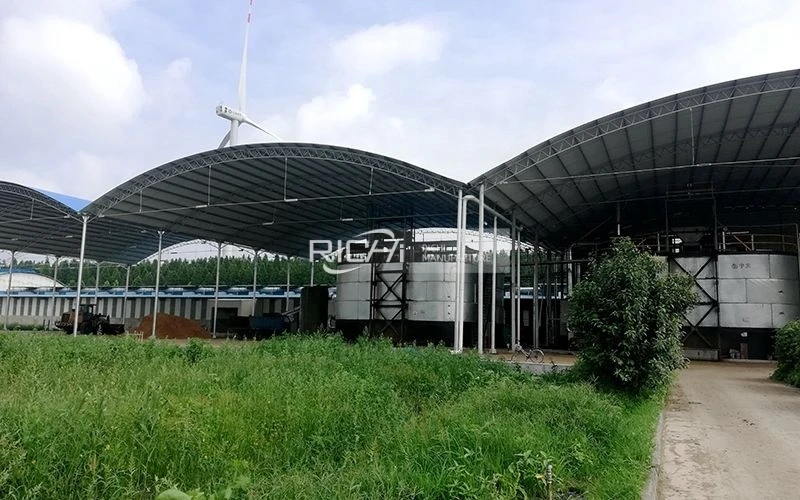
4T/H
Sawdust-Based Mushroom Waste Plant in Australia
The grower processed approximately 75% spent sawdust-based mushroom blocks with 15% clean dry sawdust and 10% agricultural bedding material sourced from nearby operations. Initial block moisture was around 38–43%. RICHI configured block breaking, screening, fine crushing and controlled blending ahead of the mushroom waste pellet machine, with cooling and screening after granulation.
Equipment Used :FZLH350
Pellet Size : 5 mm

8 T/H
Mushroom & Agro-Waste Fertilizer Plant in Turkey
The plant combined about 60% spent mushroom substrate with 15% wheat straw, 15% processed cassava-derived residue and 10% other clean agricultural organics. The mushroom fraction entered at approximately 45–50% moisture, while auxiliary materials varied substantially in density. Separate preparation and dosing sections allowed the client to control particle size and formulation before mixing, pelletizing, cooling and screening.
Equipment Used :FZLH450
Pellet Size : 5 mm
Different mushroom operations bring very different materials to a fertilizer project. These customer experiences show how RICHI mushroom waste pellet machine systems have been applied around varying substrate types, moisture conditions, plant layouts and production goals—from improving an existing compost operation to building a new fertilizer processing line.

Canada Mushroom Farm
3T/H Spent Mushroom Compost Pellet Project
“Our spent button-mushroom compost still contained straw, casing material and uneven fibrous pieces, so we were concerned about feeding stability before choosing the equipment. RICHI went through our material condition in detail and supplied the crushing, mixing, pelletizing, cooling and screening equipment as one workable system.”
UK Compost Producer
4T/H Mushroom Compost Fertilizer Project
“We already had composting equipment and did not want to replace machinery that was still doing its job, which RICHI understood from the beginning. They integrated the mushroom waste pellet machine with our existing process and trained our operators on feeding, die adjustment and daily production checks without overcomplicating the line.”
Italy Organic Fertilizer Producer
5T/H SMS & Poultry Manure Pellet Project
“Our formula changes between spent mushroom compost, composted poultry manure and dry agricultural material, so a fixed recipe would not have worked for us. RICHI helped us establish practical mixing and moisture ranges, and the 5 mm pellets remain much more consistent when we switch between the fertilizer formulas we sell.”
Spain Agricultural Recycler
6T/H Mushroom & Crop Residue Pellet Project
“We process mushroom residue together with chopped straw and other agricultural by-products, and the difference in density between those materials used to make feeding difficult. The forced feeding and proportioning arrangement recommended by RICHI gave us a much steadier process, while cooling and screening noticeably reduced loose fines before bagging.”
Japan Specialty Mushroom Grower
2T/H Sawdust SMS Fertilizer Project
“Our waste is mainly spent sawdust-based mushroom blocks rather than loose button-mushroom compost, so block breaking and particle preparation were important to us. RICHI paid attention to that difference, and the installation team showed our staff how to control preparation and pelletizing instead of treating the substrate like ordinary fertilizer powder.”
South Korea Mushroom Cooperative
3T/H Mixed Mushroom Substrate Pellet Project
“We collect substrate from several growers, which means the moisture and fiber content are not exactly the same from one batch to the next. What we appreciated was that RICHI did not give us one fixed setting—they explained how to adjust feeding and moisture control when the incoming mushroom waste changes.”
Brazil Organic Waste Processor
8T/H Mushroom & Agro-Waste Fertilizer Project
“Our plant uses mushroom substrate together with bagasse and other locally available agricultural residues, so we needed a line that could handle more than one raw material combination. RICHI coordinated the equipment shipment well and gave us a clear commissioning sequence for crushing, dosing, mixing, pelletizing, cooling and screening.”
South Africa Compost & Fertilizer Company
4T/H Mushroom Waste Pellet Processing Project
“We wanted to move beyond selling loose compost and produce a fertilizer that was easier for our customers to handle and pack, but our mushroom waste varied from relatively dry stored material to wetter fresh batches. RICHI designed the preparation section around that variation and stayed involved through installation, operator training and initial production adjustments.”
Mushroom Waste Pellet Machine Price
The price of a mushroom waste pellet machine ranges from $10,000 to $100,000 USD. The final equipment cost depends mainly on the selected model, required output, ring-die configuration, feeding requirements, material characteristics, and the level of customization needed for spent mushroom substrate or blended fertilizer formulas.
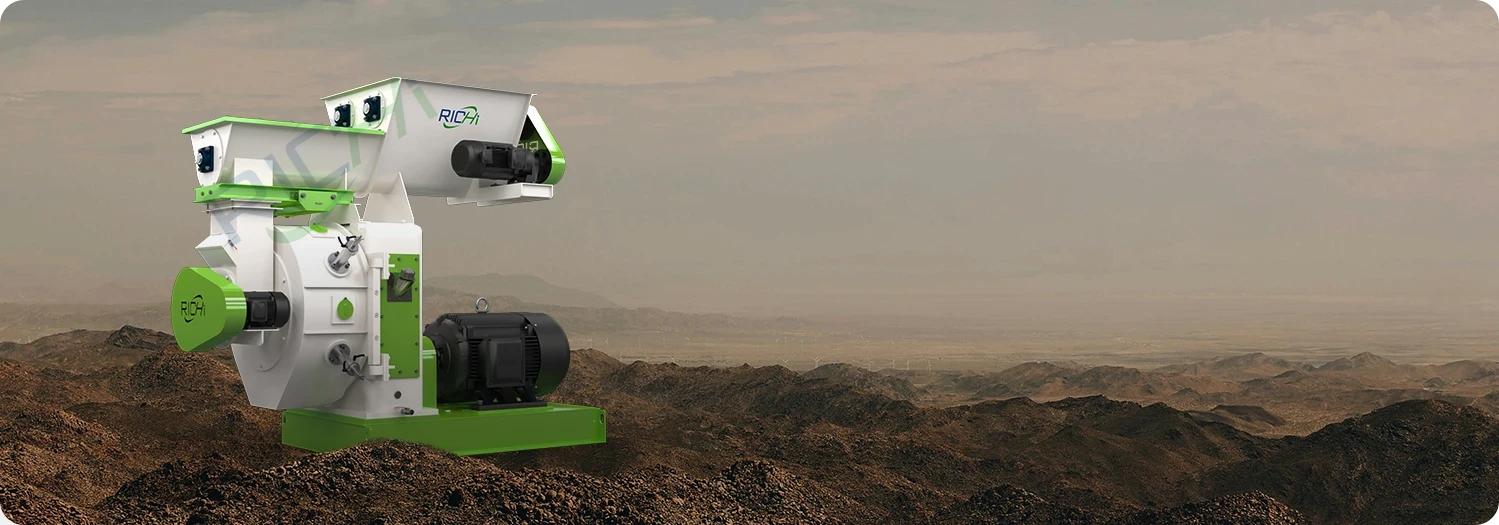
For customers purchasing only the pellet mill, model selection is usually the main factor affecting the quotation. If the incoming mushroom waste requires bag separation, crushing, drying, mixing, cooling, screening, or other supporting equipment, these items are quoted separately according to the actual raw material condition and the existing equipment already available at the plant.
Range for
Mushroom Waste Pellet Machine cost:
FZLH250 (22KW)
$10,000–$13,000
FZLH320 (22KW)
$15,000–$18,000
FZLH350 (37KW)
$18,000–$25,000
FZLH420 (90KW)
$26,000–$32,000
FZLH520 (132KW)
$43,000–$50,000
FZLH678 (200KW)
$64,000–$70,000
FZLH768 (315KW)
$75,000–$85,000
What Scale of Mushroom Waste Pellet Production Do You Need?
From smaller mushroom farms processing their own spent substrate to industrial fertilizer plants handling multiple organic feedstocks, choose your required output range and contact us for a configuration and quotation matched to your actual material.
Complete Mushroom Waste Fertilizer Processing Solutions
A mushroom waste pellet machine is only one stage in a complete fertilizer processing system. Depending on whether the feedstock is fresh spent mushroom substrate, aged compost, bagged cultivation waste, sawdust-based blocks, or SMS blended with manure and agricultural residues, the plant may include bag opening, impurity separation, crushing, mixing, fermentation, drying, pelletizing, cooling, coating, screening, storage and packing. SMS composition and moisture can vary considerably with mushroom species, cultivation substrate and post-harvest handling, so the same process configuration is not suitable for every project.ctual feedstock rather than around the organic sludge pellet machine alone.
RICHI designs mushroom waste fertilizer plants around the material entering the factory, not around a fixed process design. Different substrate forms may require different crushing combinations; plastic-containing spent bags need separation before size reduction; wet material may require dewatering or drying; and fertilizer formulas containing fresh manure or other unstable organic materials may require controlled composting before final processing. Composting is a recognized route for stabilizing spent mushroom substrate, but whether it is required depends on the condition of the incoming material and the intended fertilizer product. RICHI therefore builds the process around the customer’s mushroom waste rather than adding every possible machine to every line.
Equipment for Mushroom Waste Pellet Production
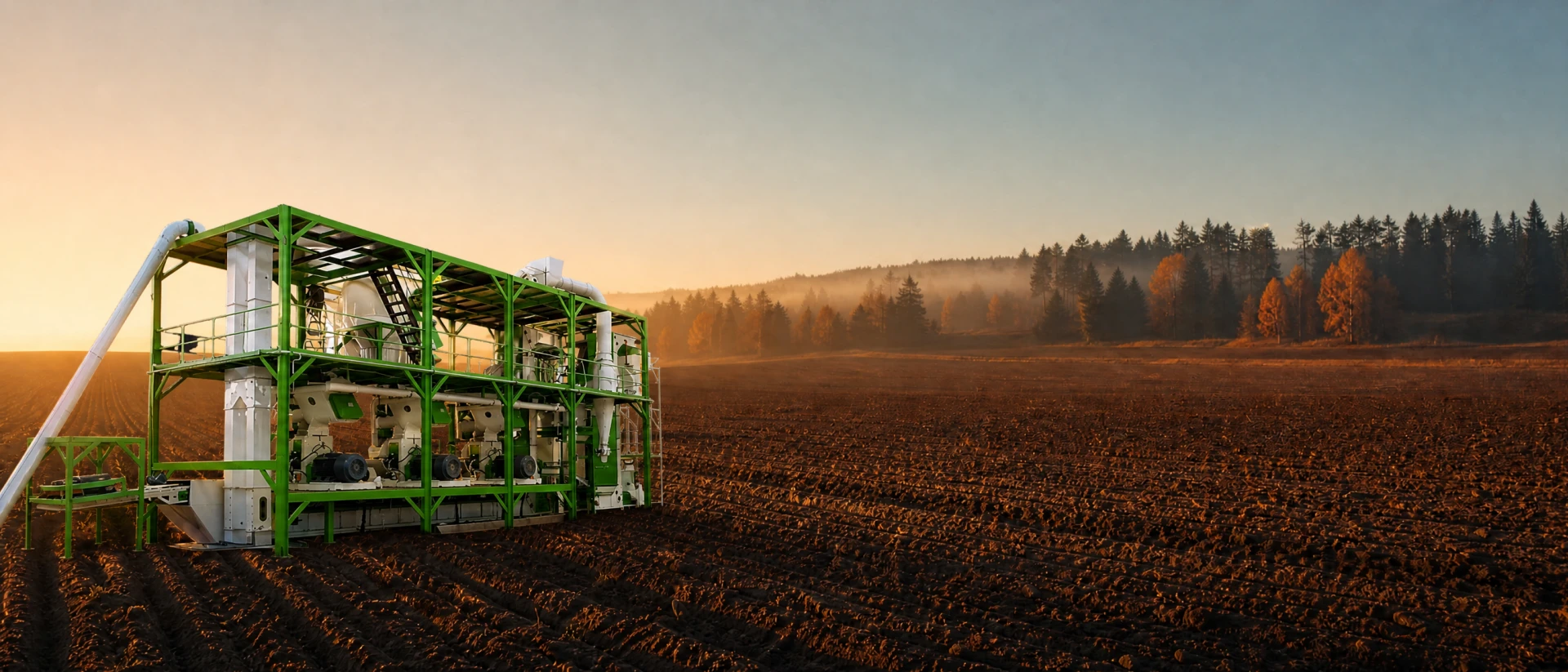
A complete mushroom waste fertilizer plant is built around the mushroom waste pellet machine, but the equipment before and after granulation changes with the feedstock. Fresh SMS, spent cultivation blocks, composted mushroom substrate, plastic-containing bags, manure blends and dry agricultural residues each require different preparation. RICHI therefore selects crushers, separation equipment, fermentation systems, dryers, dosing units, mixers, screens and handling equipment according to the actual process instead of applying one fixed equipment package.
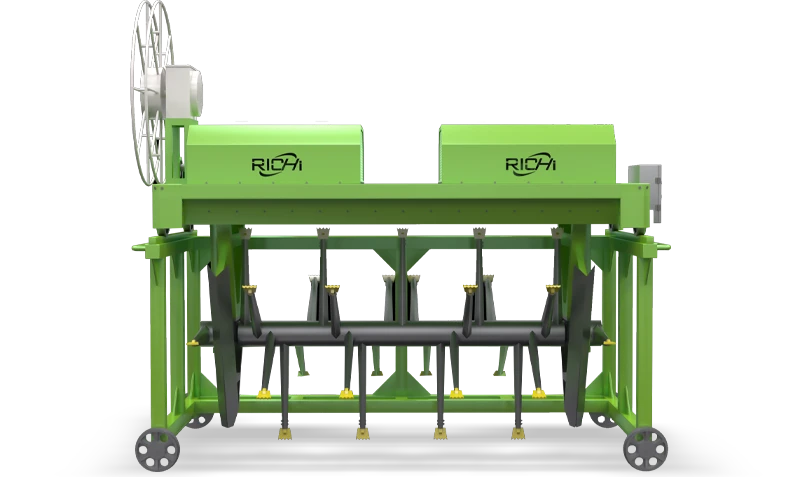
Mushroom Waste Compost Turner
Used when fresh mushroom waste, manure or other biologically active materials require aerobic composting. Turner selection depends on pile geometry, material volume and available fermentation space.
Turning Width
2–8 m
Turning Height
0.5–2.5 m
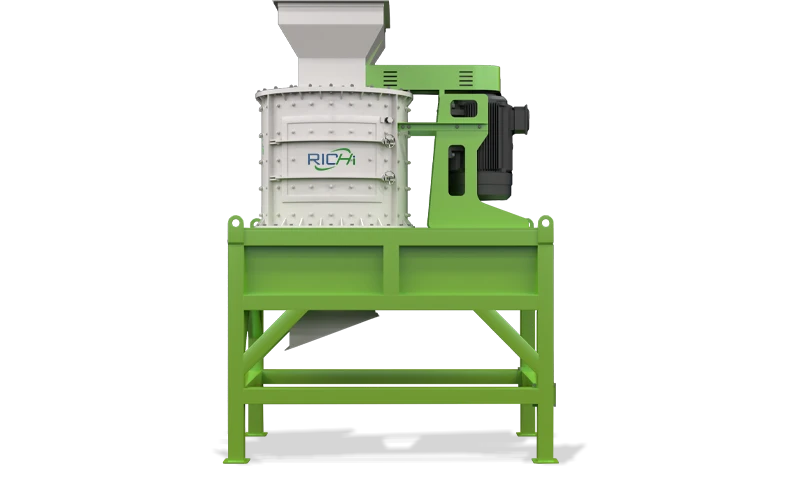
Mushroom Waste Crusher
Used after composting or preliminary separation to break compacted SMS, manure blends and other fertilizer materials into a more uniform feed before mixing and pelletizing.
Capacity
1–30 T/H
Main Power
7.5–160 kW
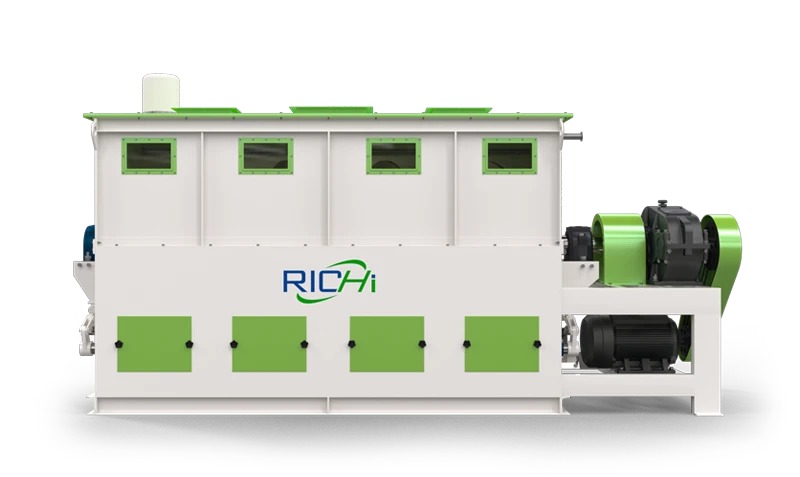
Mushroom Waste Mixer
Blends spent mushroom substrate with manure, straw powder, dry organics or formulation ingredients while reducing batch-to-batch differences before the pelletizing stage.
Capacity
250–2,000 kg/batch
Main Power
4-30KW
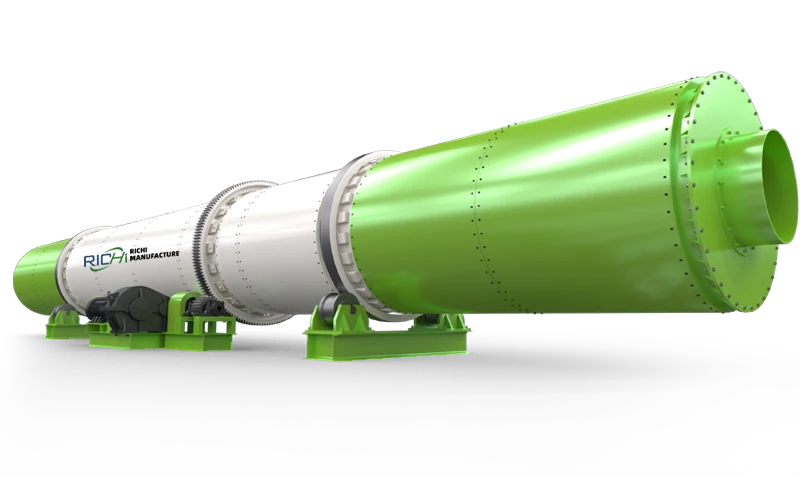
Mushroom Waste Dryer
Applied when incoming mushroom waste remains too wet for stable granulation. The drying load is calculated from initial moisture, target moisture and hourly material throughput.
Capacity
1–30 T/H
Drying Temperature
60–250℃
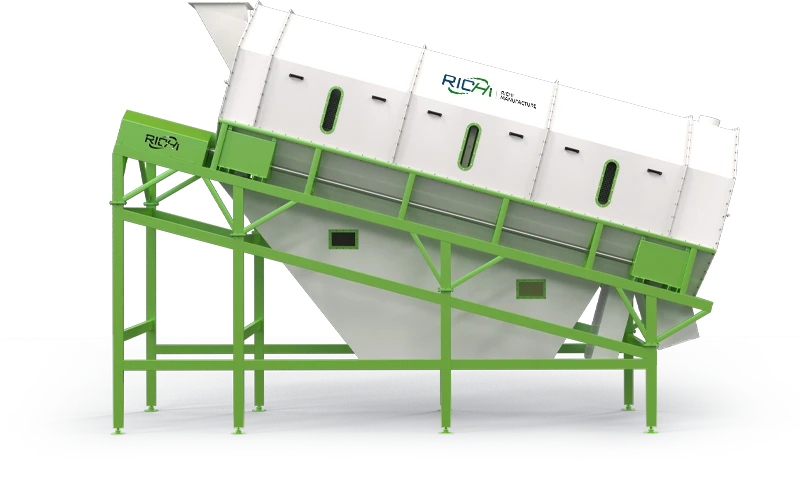
Mushroom Waste Screener
Separates fines, qualified pellets and oversize material after cooling; rotary or vibrating screens can be selected according to pellet specification and plant throughput.
Capacity
3-50T/H
Screen Layers
1–3 Layers
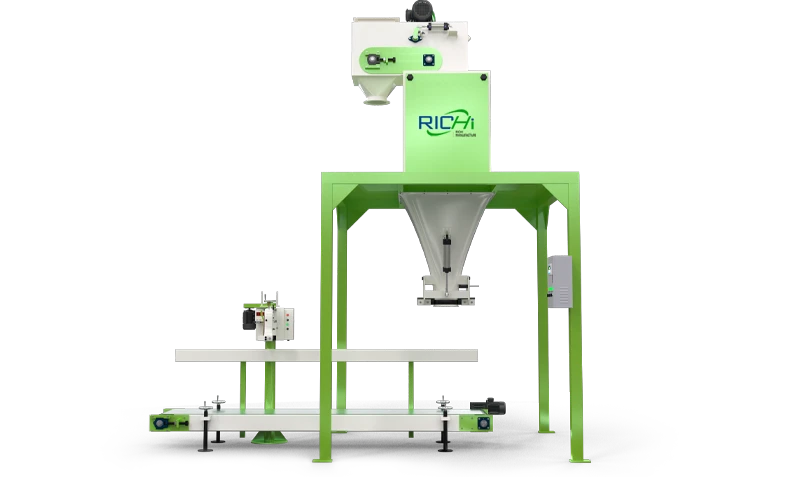
Mushroom Waste Bagging Scale
Weighs and fills finished mushroom fertilizer pellets or powder into commercial bags, with the packing system selected according to bag size and required automation level.
Packing Range
10–1000 kg/bag
Packing Speed
6–20 Bags/min
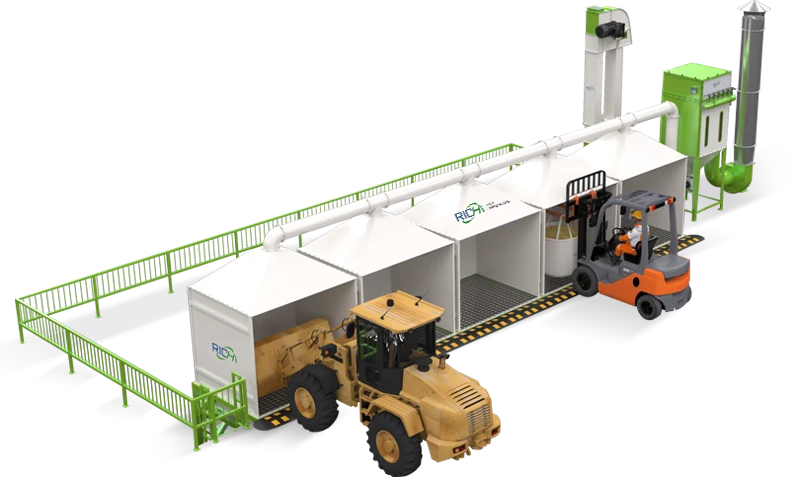
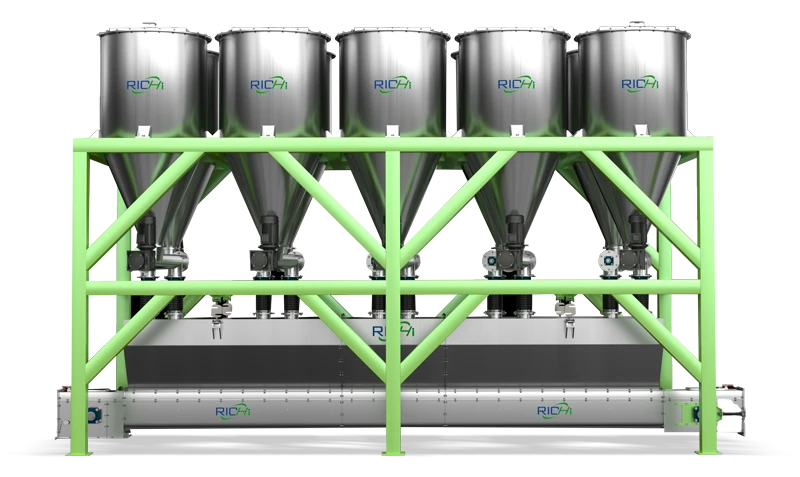
Feeding & Weighing System
Handles bulk ingredients such as SMS, composted manure, straw powder or other major formula components, providing controlled proportioning before they enter the mixer.
Weighing Capacity
1–50 T/H
Weighing Accuracy
±0.5–1%
Trace Element Dosing System
Meters low-volume additives such as mineral ingredients or permitted micronutrient components into a fertilizer recipe; it is intended for small-dose formulation, not bulk SMS feeding.
Dosing Accuracy
±0.1–0.5%
Hopper Volume
50–1000 kg
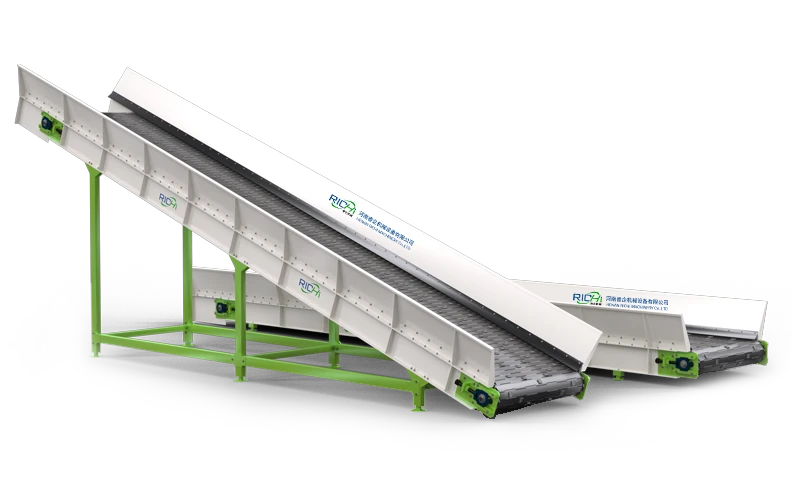
Mushroom Waste Conveyor
Connects crushing, drying, mixing, pelletizing, cooling and packing sections while reducing unnecessary manual transfer of bulky mushroom-based fertilizer materials.
Capacity
2-40T/H
Conveying Length
3–40 m
A commercial plant may also require screw presses or other dewatering equipment, bag breakers, trommel cleaners, wind separators, magnetic separators, straw shredders, block breakers, hammer mills, fermentation bins, hot-air systems, storage silos, buffer bins, bucket elevators, screw conveyors, pellet coolers, liquid-addition systems, fines-return conveyors, automatic packing lines and PLC control systems.
The final equipment list is determined by what arrives at the plant. Wet fresh SMS may justify dewatering and drying; spent mushroom bags need opening and plastic separation; long-fiber straw substrates require different size reduction from crumbly composted SMS; and a fertilizer factory blending several bulk ingredients needs separate feeding and weighing from the high-accuracy system used for trace additives.
Customized Mushroom Waste Fertilizer Production Line Design
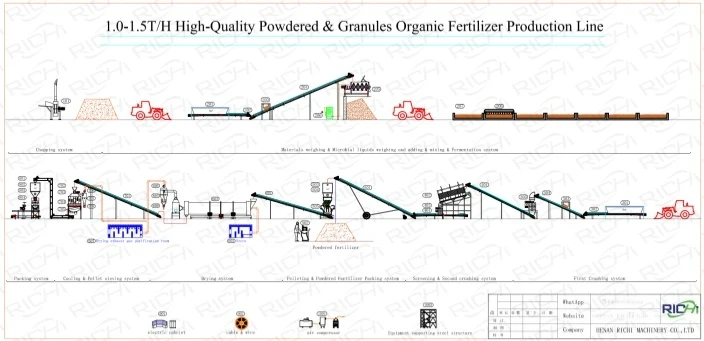
[Example Solution] 1–1.5 T/H Mushroom Waste Powder & Pellet Fertilizer Line
RICHI designs mushroom waste fertilizer production lines from 1 to 60 T/H, with the process selected around the condition of the spent mushroom substrate, available co-materials and required finished product. This 1–1.5 T/H project was developed for a customer who wanted one compact system capable of producing both mushroom-based powdered fertilizer and pellet fertilizer, while retaining enough flexibility to handle straw and other organic formulation ingredients.
The incoming materials included mushroom waste together with fibrous straw and other fertilizer ingredients. Straw was first chopped to approximately 20–30 mm with dust collection, while a large receiving and batching hopper allowed loader feeding of different bulk materials. Magnetic separation removed ferrous contaminants before mixing, and an automatic liquid addition system accurately introduced water or microbial liquids where required. After uniform mixing, materials requiring biological stabilization entered the fermentation stage before further fertilizer processing.
crushing & feeding
cleaning & addition
mixing & fermentation
crushing & screening
powder packing
pelletizing & drying
cooling & storage
pellet packing
After fermentation, the material passed through a second receiving hopper and magnetic separator before wet crushing. A vertical crusher reduced the material, a rotary screen separated the finer fraction from oversized pieces, and a second crusher returned the oversize material to the required size. At this point, qualified material could be directed to the powder fertilizer route and packed in adjustable 10–50 kg bags, allowing the same plant to produce a saleable powdered product without requiring pelletization.
For pellet fertilizer production, prepared material is fed to the mushroom waste pellet machine and formed into the required granules according to the fertilizer specification. The pellets then pass through drying to approximately 8–15% moisture where required, followed by cooling, vibrating screening, fines recovery, finished-product storage and 10–50 kg bagging. The project can produce customized powder fertilizer and fertilizer granules within the specified 2–12 mm range, while actual pellet dimensions, hardness and operating settings are matched to the customer’s SMS formulation and market requirements.
If your mushroom waste is wetter, contains spent cultivation bags, uses a different substrate base, or needs to be combined with manure or agricultural residues, this exact flow does not have to be copied. RICHI can retain the useful parts of the scheme and change the separation, fermentation, drying, crushing, dosing, pelletizing or packing sections around your raw materials, workshop and investment plan.
Market Prospects for Mushroom Waste Pellet Production
Spent mushroom substrate is increasingly being treated as a recoverable agricultural resource rather than a disposal burden. Research and commercial initiatives already support its use in compost, organic fertilizer and soil-amendment applications, while European circular-economy projects have specifically explored pelletized fertilizer made from SMS.
For mushroom farms, compost producers and organic fertilizer manufacturers, a mushroom waste pellet machine creates a route to convert conditioned substrate into a denser, more uniform product for agriculture, horticulture, soil improvement and packaged fertilizer markets. The opportunity is strongest where mushroom production is concentrated and disposal, transport or storage of wet SMS is costly; in other regions, profitability can be improved further by using the same line for manure, crop residues and other suitable organic wastes rather than relying on one feedstock alone.
Lower Waste Handling Costs
Fresh SMS can be bulky and moisture-rich, making storage and transport expensive. Processing it into a stable fertilizer product can shift part of the business from waste handling toward resource recovery and commercial use.
Broader Fertilizer Applications
Mushroom-based fertilizer products can be used in field crops, vegetable production, orchards, horticulture and soil-conditioning programs where the formulation meets agronomic and regulatory requirements. SMS is particularly valued for adding organic matter and supporting soil structure.
Multi-Raw-Material Production
A mushroom waste pellet machine does not have to depend on SMS alone. A properly designed line can also process formulated blends containing manure, straw, crop residues, digestate solids and other suitable organics, allowing the plant to respond to seasonal raw-material availability and different fertilizer recipes.
Stronger Product Commercialization
Loose SMS and bulk compost are often difficult to standardize for packing and distribution. Pelletizing creates a more consistent physical product that is easier to meter, bag, transport and position for commercial fertilizer sales, while formula adjustment can support different end-market requirements.
Frequently Asked Questions
We generate about 8–10 tons of wet mushroom substrate per day. Is a 1 T/H line too large?
Not necessarily. A 1 T/H line running one 8-hour shift processes roughly 8 tons of prepared material per day, but wet SMS loses substantial mass during drying and preparation. As a practical reference, a plant producing 2,000–2,400 tons of pellets annually may require roughly 3,000–5,000 tons/year of incoming wet material, depending mainly on its 35–60% initial moisture, additives and operating days.
What moisture should SMS reach before it enters the pelletizer?
For most conditioned mushroom fertilizer formulas, approximately 15–22% moisture is a practical starting range before pelletizing. Fresh SMS at 45–65% moisture normally requires dewatering, drying, dry-material blending or a combination of these; the final setting is confirmed according to fiber content, manure ratio and pellet-forming behavior.
Can I pelletize fresh spent mushroom substrate directly?
Usually not if it is freshly removed at 50–65% moisture or still contains bags, strings and coarse blocks. A spent mushroom substrate pellet machine normally receives cleaned and conditioned material at approximately 15–22% moisture and about 2–5 mm particle size; wet SMS therefore needs appropriate separation, size reduction and moisture control first.
How do you remove plastic from spent mushroom bags?
For bag-grown oyster, shiitake and similar mushrooms, the normal route is bag opening → substrate release → screening/separation → secondary cleaning as required. A mushroom waste processing machine system can combine a debagger, trommel screen, conveyors and optional air separation or manual sorting; plastic should be removed before fine crushing and pelletizing rather than allowed to enter the granulator.
Our SMS contains a lot of straw and long fibers. Will it feed properly?
Yes, but long fibers should normally be shortened before granulation. For straw-rich button or oyster mushroom waste, we typically target roughly 2–5 mm material entering the pelletizing stage after coarse chopping and secondary crushing; arch-breaking and forced feeding then help manage the lower bulk density and poorer flowability of the prepared mixture.
Can sawdust-based shiitake blocks use the same system as straw-based SMS?
They can use the same type of ring-die mushroom waste pelletizer, but the preparation section should not simply be copied. Sawdust-based blocks often need block breaking and screening, while straw-rich SMS may need stronger fiber cutting; moisture, ash/mineral content and bulk density are checked before selecting the crusher, feeder and die configuration.
What SMS-to-manure ratio should we start with for organic fertilizer?
There is no universal fertilizer recipe, but an initial engineering trial might use approximately 50–80% conditioned SMS with 20–50% composted manure or other suitable organics. The actual ratio should be determined from nutrient analysis, C/N balance, moisture, maturity and the intended fertilizer specification—not simply from what produces the easiest pellet.
We have a poultry farm near a mushroom grower. Can we process both wastes?
Yes, this can be a practical co-processing project if both streams are available at commercial volume. SMS can be formulated with composted poultry manure and, where present, suitable bedding; for example, a preliminary formula may contain roughly 50–70% SMS and 30–50% manure-based material before laboratory analysis and production trials establish the final recipe.
What about a pig farm that can obtain mushroom substrate locally?
Pig manure and SMS can be used in the same fertilizer project, but fresh pig manure should not simply be mixed with SMS and sent to the mushroom waste granulator. The manure/SMS mixture normally requires controlled fermentation or stabilization followed by moisture adjustment; a practical formulated starting range can be around 40–70% SMS and 30–60% manure-derived material, subject to analysis and local fertilizer standards.
How much raw material do we need to justify the smallest line?
Our smallest mushroom waste pellet machine is rated at 1–1.5 T/H. At 8 hours/day and 300 days/year, that corresponds to approximately 2,400–3,600 tons/year of pelletizer feed; if the incoming SMS is wet, the required raw tonnage can be substantially higher, so we normally evaluate annual waste generation and moisture rather than farm acreage alone.
Which model should I use for a 3 T/H mushroom fertilizer project?
FZLH320 covers approximately 2–3 T/H, while FZLH350 covers approximately 3–5 T/H. If 3 T/H is a firm continuous requirement rather than an occasional peak, FZLH350 generally provides more capacity margin; final selection also considers formula density, pelletability, operating hours and whether future expansion is planned.
How much floor space should I reserve for the plant?
For preliminary planning, a compact 1–3 T/H crushing/mixing/pelletizing system may require roughly 300–600 m² of process area, while a 3–5 T/H line with fermentation, drying, cooling, screening and storage can require around 800–1,500 m² or more. Fermentation yards, raw-material storage and finished-product warehouses can increase the total site requirement substantially, so we develop the final layout from your building dimensions and material flow.
We already have a crusher, mixer and composting area. Can you use them?
Yes. You do not need to purchase a complete mushroom waste fertilizer machine line if usable upstream equipment is already installed. We can check its throughput, discharge size, material-contact parts, interface height and control logic, then supply only the missing sections—for example feeding, pelletizing, cooling, screening and packing.
Do we need a dryer if our mushroom compost is already stored outdoors?
Not automatically. If stored or composted SMS is still around 30–45% moisture and the target before pelletizing is approximately 15–22%, drying or blending with suitable dry ingredients may still be necessary; if material already reaches the required condition consistently, a large dryer may be unnecessary and should not be added simply as a standard line item.
Can one plant make both powder fertilizer and mushroom fertilizer pellets?
Yes. A mushroom substrate fertilizer machine project can be designed with a branch after crushing and screening: qualified powder can go directly to 10–50 kg packing, while another stream proceeds to pelletizing, drying/cooling as required, screening and packing. This is useful for fertilizer producers serving customers who buy both bulk powder and granular products.
Can the same line process mushroom waste when SMS supply drops seasonally?
Usually yes, provided the alternative materials are suitable for fertilizer production and the preparation system is designed for them. Manure, straw, crop residues, digestate solids and selected agro-industrial organics can be incorporated, but changing feedstocks may require different crushing, moisture control and formulations; this flexibility should be planned before the mushroom recycling equipment is manufactured.
What pellet quality should we expect from mushroom compost?
With properly prepared material, a practical project target is approximately 85–95% pellet formation and around 90–98% pellet durability, but these are reference ranges rather than unconditional guarantees. Moisture, SMS fiber structure, casing/mineral content, manure ratio, particle size and ring-die specification all affect the performance of a spent mushroom compost pellet machine.
What information do you need before designing our mushroom waste plant?
Send us your daily or annual SMS volume, initial moisture, mushroom type, original substrate composition, photos or videos of the waste, available co-materials, desired powder or pellet product, operating hours, workshop dimensions and available utilities. With those inputs, RICHI can determine whether you need a standalone spent mushroom substrate pelletizer, several preparation machines or a complete processing line instead of quoting unnecessary equipment.
How do we know whether our mushroom waste project is worth developing?
Start with four numbers: annual SMS availability, initial moisture, disposal or handling cost, and expected fertilizer output. Send these together with your raw-material composition and target market to RICHI; we can assess the appropriate capacity, process route and mushroom waste pellet machine configuration and prepare an equipment list and layout for a more realistic investment decision.
Can we pelletize spent mushroom substrate without adding manure?
Yes. If the SMS itself meets your intended fertilizer specification, it can be processed without manure after the necessary cleaning, stabilization, size reduction and moisture conditioning. A spent mushroom substrate pellet making machine does not require manure for pellet formation, although formulation trials may be needed to optimize durability and commercial fertilizer properties.
Our mushroom bags contain a lot of plastic. How clean must the substrate be?
Visible plastic film, strings, labels and other foreign matter should be removed as thoroughly as practical before fine crushing and pelletizing. For heavily contaminated mushroom farm waste, we normally configure debagging plus trommel separation and, where necessary, air separation or manual inspection rather than allowing plastics to pass through the mushroom waste treatment equipment.
Can the machine process spent oyster mushroom substrate made from cottonseed hull?
Yes. Cottonseed-hull-based SMS can be handled by a mushroom growing substrate pellet machine after the material is broken down and conditioned; mixtures containing sawdust, bran, corn cob or straw can also be processed. We normally check moisture, fiber length, particle distribution and bulk density before selecting the feeding and die configuration.
We grow shiitake in sawdust bags. Do we need a hammer mill?
Not always. Spent shiitake blocks first need breaking and bag separation; if the released substrate is already sufficiently fine, intensive secondary grinding may be unnecessary. If coarse wood particles or compacted pieces remain above roughly 5 mm, a suitable crusher can be added before the spent mushroom substrate pelletizing machine.
Can mushroom waste be mixed with cow manure and rice straw?
Yes. A practical trial formula might start around 50–70% SMS, 20–40% composted cattle manure and 10–20% prepared rice straw, then be corrected according to nutrient analysis, C/N balance and moisture. The mushroom waste fertilizer pelletizer processes the stabilized, crushed and conditioned formula rather than fresh manure and long unprocessed straw.
What if our mushroom waste arrives at 65–70% moisture?
That is too wet for direct ring-die pelletizing. At 65–70% initial moisture, the mushroom waste treatment machine system would normally require substantial dewatering and/or thermal drying before the material is adjusted toward roughly 15–22% for granulation; the actual water-removal load should be calculated from hourly wet-feed tonnage.
Can we use vegetable-market waste together with SMS?
Potentially, but source-separated vegetable waste often contains 70–90% moisture and decomposes quickly, so it should not simply be added to the pelletizer. A mushroom waste recycling machine project using this material may require sorting, dewatering, fermentation or composting, and blending with drier SMS or crop residues before fertilizer pellet production.
Can your line handle both button mushroom compost and oyster mushroom waste?
Yes, but the preparation requirements differ. Button-mushroom SMS may contain straw/manure-derived compost and casing material, while oyster substrate can be more fibrous and may contain straw, corn cob, cottonseed hull or sawdust; a flexible mushroom cultivation waste processing machine line therefore needs suitable crushing, dosing and moisture-control capacity.
We already sell loose SMS as compost. Is pelletizing still useful?
It can be if your buyers need a more standardized product for bagging, transport, metered application or retail distribution. A spent mushroom compost fertilizer machine adds a commercial processing route, but whether pelletizing improves profitability should be evaluated against your current bulk selling price, drying cost, packaging cost and target pellet market.
Can one mushroom compost machine produce different fertilizer formulas?
Yes, provided the upstream dosing and mixing system is designed for recipe changes. A mushroom substrate granulator can process different conditioned formulas containing SMS, composted manure and suitable agricultural residues; recipe storage and automatic weighing are especially useful when a fertilizer factory produces several grades during the same week.
How do you prevent casing soil from causing excessive wear?
First, we determine how much casing and mineral matter is actually present rather than treating all SMS alike. Where abrasive mineral content is significant, the mushroom substrate pelletizer can be paired with better upstream separation and wear-resistant working components, while die selection and inspection intervals are adjusted to the actual ash and grit level.
Can we recycle fines instead of throwing them away?
Yes. Fines separated after cooling and screening can generally be returned to the process if they remain clean and within the fertilizer formulation. A well-designed mushroom waste granulating machine line therefore includes a fines-return route, reducing product loss instead of treating every screened particle as waste.
Our SMS supply changes by season. Can we run the plant below rated capacity?
Yes, within a practical operating range, but continuously running a large pellet mill far below its design load is not always economical. If annual mushroom production fluctuates sharply, we size the mushroom production waste fertilizer machine around realistic average and peak feed availability rather than choosing the largest model solely for future capacity.
Can we add microbial products to mushroom-based fertilizer?
Yes, where the intended bio-organic fertilizer formulation and local regulations permit them, but temperature exposure matters. Microbial products should not automatically be added before a high-temperature drying or other heat-intensive stage; depending on the organism and process, dosing or coating may be positioned later to protect biological activity.
Do mushroom fertilizer pellets need a coating system?
Not for every product. A standard mushroom waste fertilizer production line can operate without coating, while customers producing specialized fertilizers may add liquid or powder coating for functional ingredients, anti-caking treatment or product differentiation; the coating step is therefore selected from the actual fertilizer specification.
Can digestate from mushroom waste and manure enter the same line?
Yes, if the digestate is suitable for fertilizer use and meets applicable contaminant requirements. Because digestate can contain high moisture, the solid fraction normally requires separation/dewatering and may need drying or blending before entering a spent mushroom substrate fertilizer machine together with SMS or other prepared organics.
We want 10 T/H now but may expand later. How should we configure the plant?
A 10 T/H requirement falls within the FZLH520’s 9–12 T/H rated range based on the current series data. If expansion is planned, we can reserve conveyor capacity, electrical load, building space and interfaces for a second mushroom waste pelletizing machine or larger downstream equipment rather than rebuilding the complete plant later.
Can the system process mushroom blocks with the cultivation bags still attached?
Yes at the receiving end, but not by feeding intact bagged blocks directly into the pellet mill. A mushroom farm waste recycling machine system first opens the bags and separates plastic from the substrate; block breaking, screening and secondary crushing then prepare the recovered mushroom material for subsequent fertilizer processing.
How much dry material is needed to reduce wet SMS moisture?
It can be calculated from a simple mass balance. For example, blending 1,000 kg of SMS at 40% moisture with a completely dry ingredient would theoretically require about 333 kg of dry material to reach 30% moisture; real formulations use materials that already contain moisture, so we calculate the actual addition from both materials’ measured moisture contents rather than using a fixed blending percentage.
Can you design the entire spent mushroom substrate recycling project for us?
Yes. RICHI can develop spent mushroom substrate fertilizer production from raw-material reception through debagging, cleaning, fermentation where required, crushing, drying, formulation, pelletizing, cooling, screening and packing. Whether you need a single mushroom waste pellet machine, mushroom recycling equipment for an existing factory, or a new complete plant, we configure the equipment list around your material tests, required output, available building and intended fertilizer product.


