 0086-138 3838 9622
Wood Pellet Production Line in Singapore
RICHI MACHINERY
overview
This is a wood pellet production line in Singapore project.
Today, urban resource regeneration and clean energy have gradually become a global consensus, and Singapore, one of the most urbanized countries in Asia, is no exception. In this dual transformation of energy structure and environmental protection concept, a local company took the initiative to explore and practice renewable energy.
The company is a company focusing on recycling and reusing urban solid waste. In the past few years, it has accumulated a large amount of waste wood resources, such as transport pallets, old wooden boxes, and construction scraps.
For a long time, most of these wood wastes have been treated by incineration or stacking, which not only wastes resources but also burdens the environment.
Therefore, the company began to look for ways to efficiently convert these resources into clean energy, and finally targeted the technical path of “wood pellets”.
2T/H
capacity
$97,150
investment
Singapore
location
Biofuel
project type
RICHI MACHINERY
From inquiry to transaction
On December 28, 2021, the company contacted us through its official website and left a highly targeted project consultation email:
“Shredded wood chips (Pallet, Crates, Boxes, Construction)
We are a Singapore based company looking for a wood pelletizing machine – 2 ton per hour capacity and the output size should be 6 mm to 8 mm dia.
We have shredded wood chips made from wooden pallets, crates, boxes, construction logs and is dry.”
This email clearly expresses the customer’s raw material status, production capacity expectations and pellet specifications, laying a precise foundation for subsequent project planning.
After more than two months of communication and design polishing, the two parties officially signed a contract on March 18, 2022 to purchase a complete 2t/h wood pellet production line in Singapore with a total transaction price of US$97,150.
RICHI MACHINERY
Project background: the exploration of the road from waste wood to clean energy
The client is a medium-sized enterprise engaged in industrial solid waste recycling and resource utilization. As the business covers multiple fields such as ports, warehousing, logistics, and construction, the company generates a large amount of wood waste every year, such as pallets, boxboards, and wood strips for construction.
Although these wood materials can no longer be used directly, their physical structure and cellulose content still have high utilization value.
As the emphasis on carbon emission control in Southeast Asia continues to increase, customers hope to achieve further “resource closed loop” utilization on the basis of the original waste recycling business, that is, to directly process wood waste into biomass fuel for local market heating, industrial boilers, power plants and other fields, or export to major clean energy importing countries such as Japan and South Korea.
The reason why the production capacity of wood pellet production line in Singapore is positioned at 2 tons per hour is based on the balance point between daily output and market demand estimated based on its existing wood waste supply capacity.
RICHI MACHINERY
Raw material type of wood pellet production line in Singapore
Unlike countries with abundant forest resources, the wood raw materials of Singaporean customers mainly come from “secondary wood” in cities, including:
- Waste wooden pallets (usually made of pine or eucalyptus)
- Abandoned transport wooden boxes and packaging boards
- Wooden beams, formwork, and wooden floors in demolished buildings
- Cargo transportation and container lining boards
- Waste wood materials in urban renovation
These raw materials are usually initially crushed and sorted in the recycling process, with low moisture content (mentioned as “dry” in the email), uniform particles, and easy to handle later.
However, because the raw materials are complex and changeable, the wood pellet production line in Singapore must be able to adapt to different material densities, fiber structures, and impurity levels, while achieving a balance in terms of production capacity, stability, and pelletizing consistency.
RICHI MACHINERY
Simple and efficient production process layout: a new model for urban projects
Taking into account the scarcity of land resources, strict environmental supervision and the particularity of raw materials in Singapore, this project adopts a set of “moderate simplification, efficiency first” wood pellet processing technology, the specific processvof wood pellet production line in Singapore is as follows:
Wood chip crushing – stacking buffer – pelletizing – cooling – screening
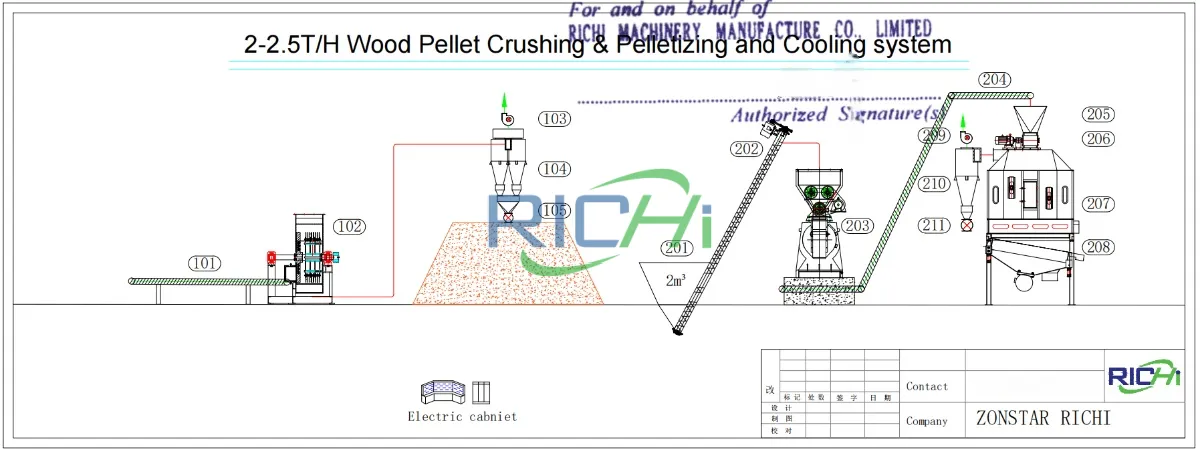
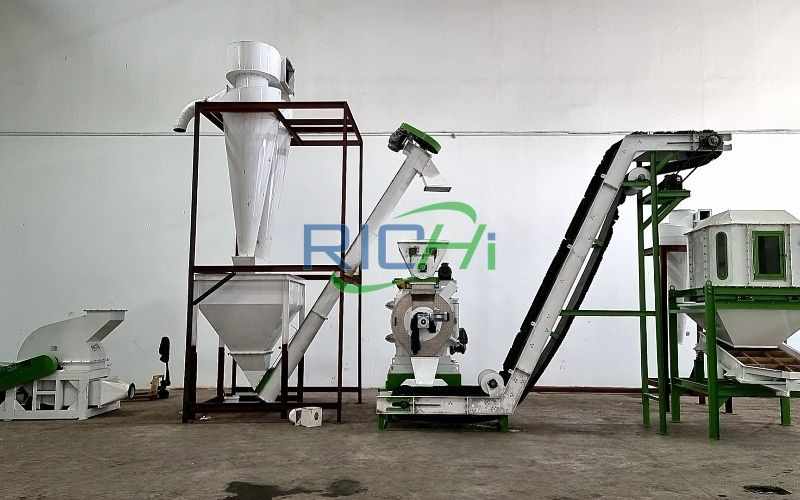
Before the implementation of the wood biomass pellet production line in Singapore project, the customer has configured a set of shredding equipment to initially crush waste wood from various sources into small pieces of 2-5cm. On this basis, we designed the following structure:
Wood chip crushing: The raw materials are further processed into pelletizing particle size (less than 6mm) through the elevator and pre-screening system to ensure consistent material density.
Stacking buffer: The horizontal conveyor line and the intermediate silo are used for temporary accumulation of raw materials so as to continuously feed the pelletizing equipment when it is running.
Pelletizing system: Equipped with MZLH520 wood pellet machine, the core pressing device can stably achieve 6-8mm diameter pellet forming, meeting export standards.
Cooling system: Use counter-current cooling tower to ensure that the pellets cool down quickly after high temperature and high pressure die exit, thus improving pellet hardness and stability.
Screening system: Remove unqualified powder and small debris, and choose whether to send them back to the pelletizer for secondary pressing.
It is worth noting that in order to save space and energy consumption, the customer clearly stated that there is no need to configure dryers, packaging equipment and other sections, because the dryness of the raw materials has reached the standard, and the finished products are mostly used for batch bagging/bulk shipment.
RICHI MACHINERY
Equipment selection for wood pellet production line in Singapore
The list of key wood pellet making equipment used in this wood pellet production line in Singapore project is as follows:
- MZLH520 wood pellet mill machine: main machine, production capacity 2t/h, strong stability, suitable for a variety of particle materials
- Vibrating screen: used for finished product screening to ensure uniform particle specifications
- Countercurrent cooler: high cooling efficiency, can effectively control the discharge temperature and particle hardness
- Screw conveyor and belt conveyor: ensure efficient transportation of materials in each section
- Automatic control system: centralized operation interface, suitable for one-person management, all-weather operation mode
The design of the entire wood pellet line fully considers the high labor cost and labor shortage in Singapore, and supports semi-automatic and remote monitoring operations.
RICHI MACHINERY
Multi-functional compatibility: one line opens up a variety of biomass resource utilization
Although the wood pellet production line in Singapore is mainly used for wood waste pellet processing, its equipment structure determines that it has good adaptability. Only minor adjustments to the raw material pretreatment and die aperture are required to make the following pellet types compatible:
- Straw pellets (rice husks, corn cobs, coconut shell powder)
- Building board chips, wood shavings
- Agricultural and horticultural waste (vines, branches)
- Mixtures of tropical woods such as rubber wood and coconut shell wood
- Small coal powder, carbon powder additives and pellet combustion aids
This lays the foundation for customers to expand other urban solid waste utilization methods in the future.
RICHI MACHINERY
Prospects for starting wood pellet production line in Singapore
Although Singapore has a small land area and scarce forest resources, the biomass pellet market has great potential:
- Industrial boiler replacement: Many food processing, pharmaceutical, and energy projects in Singapore use small boiler systems, and biomass pellets can partially replace diesel and natural gas.
- Regional export channels: Singapore Port is a biomass pellet export hub in Southeast Asia, and its products can be exported to fuel importing countries such as Japan and South Korea.
- Carbon tax and green subsidies: Singapore is implementing a carbon tax system to regulate corporate energy use, and the use of pellet fuel is expected to obtain green certification and points incentives.
- Solid waste reduction and reuse policy: encourage the construction and logistics industries to convert wood packaging and structural parts into fuel to achieve a green closed loop.
In addition, in the context of smart city construction, combining blockchain and carbon asset trading, incorporating pellet processing output into “carbon credit” management has also become a feasible direction in the future.
RICHI MACHINERY
Conclusion: Only 80 days from demand expression to project implementation
It took only two and a half months from the first project demand from the customer on December 28, 2021 to the official signing on March 18, 2022.
In this process, we have an in-depth understanding of the raw material situation, site planning, capacity estimation and future market plans of the customer’s recycling yard, and finally opened a new track for urban resource regeneration for customers with a 2t/h wood pellet production line in Singapore that is “efficient, energy-saving, and suitable for urban use scenarios”.
This wood pellet production line in Singapore project not only demonstrates our company’s design and manufacturing capabilities in dealing with complex raw material backgrounds, but also proves the huge potential of biomass pellet energy in urban applications.
In the future, Singapore will not only be a data center and financial center, but also a model for Asia’s green energy transformation.
● RICHI MACHINERY
RICHI Service

● Consulting
Customer Consultation
We want to have a deep understanding of your industrial process, to know your exact needs of feed, wood, biomass, fertilizer or other pellet processing.

● Design
wood Pellet Plant Design
Based on your unique situation and industrial process, we will tailor complete wood pellet plant you need, and inform you of every additional detail that could facilitate operation, minimize total cost.
● Manufacturing
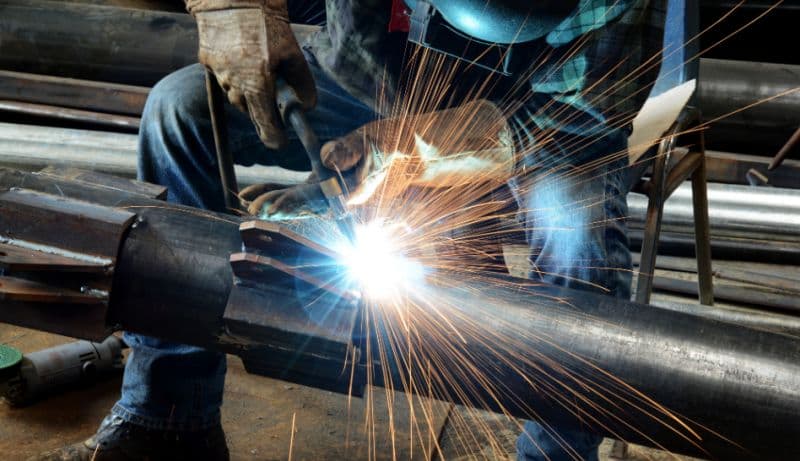
Equipment Manufacturing
The critical components of the of the complete wood pellet production plant equipment are built in our own workshops in Asia. Additional equipment is manufactured by our worldwide network of reliable partners.
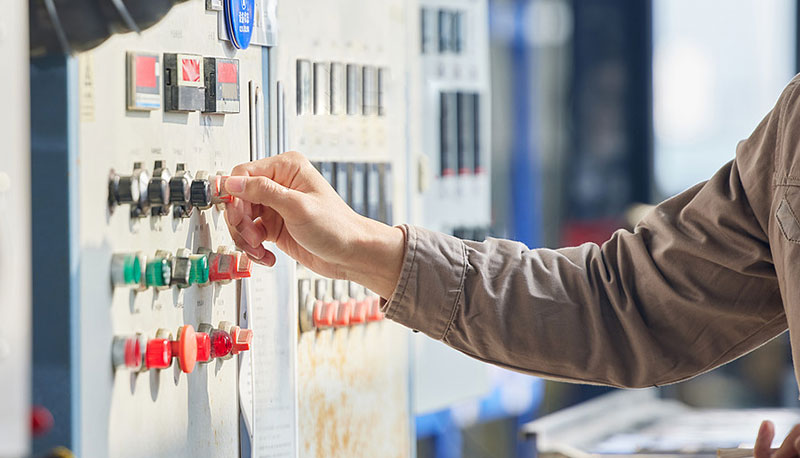
● Testing
Quality Inspection & Testing
Before leaving the factory, all equipment will be inspected by the quality inspection department. We can also provide customers with testing services from a single machine to a complete pellet plant system, and provide you with real actual data for “worry-free use.”

● Delivery
Equipment Delivery
In equipment boxing and packaging, we adopt professional packaging and modular solutions to ensure the safe and non-destructive delivery of wood pellet processing equipment.
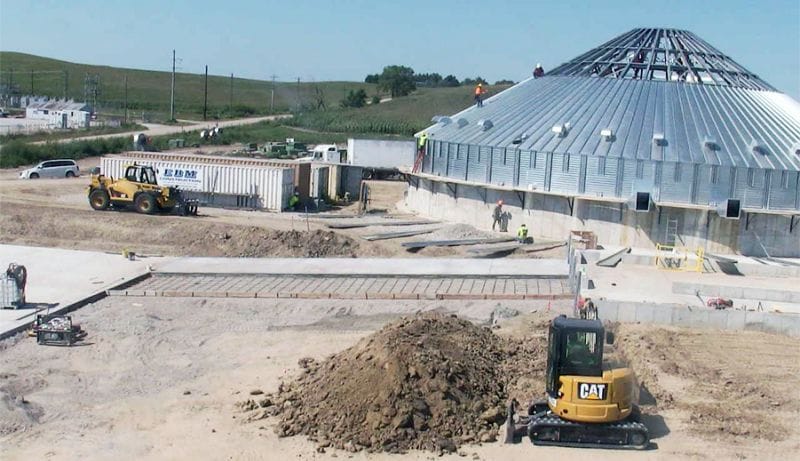
● Installation
Installation & Commissioning
Whether you choose your own subcontractor for the erection phase or you want to install everything together with us, a Richi supervisor will be around to make sure everything is mounted in a safe and thorough way.

● Training
Staff Training
We provide comprehensive training for the technicians of each wood pellet production line in Singapore project. We can also continue to provide support for the technicians during latter project operation.
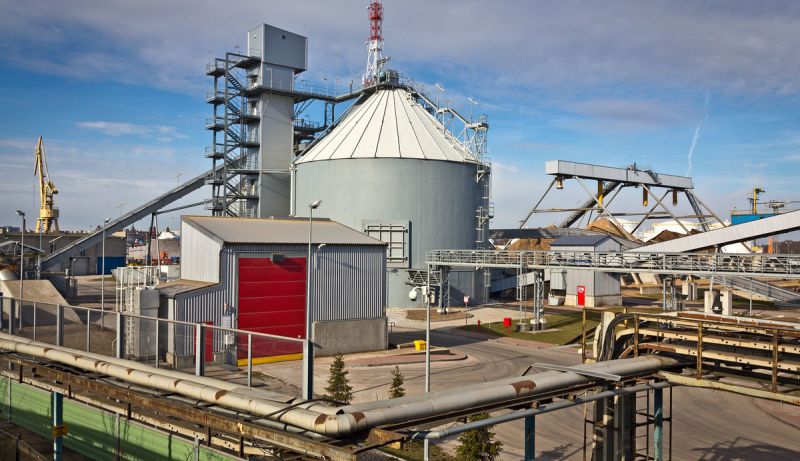
● After-sales
Project Follow-Up
When everything is up and running our Richiers will help you further whenever needed. We are ready to answer your call 24/7.We’ll also visit you regularly to learn about your needs.
Who we are
RICHI Machinery is one of the world’s leading suppliers of technology and services for the animal feed, aqua feed and pet food industries, also the largest pellet production line manufacturer in China.
Since 1995, RICHI’s vision to build a first-class enterprise, to foster first-class employees, and to make first-class contributions to society has never wavered.
In the past three decades, we have expanded our business to a wide range of areas, including animal feed mill equipment, aqua feed equipment, pet feed equipment, biomass pellet equipment, fertilizer equipment, cat litter equipment, municipal solid waste pellets equipment, etc.

1995
RICHI Established

2000+
Serving More Than 2000 Customers

120+
RICHI Employees

140+
Exported To 140 Countries