 0086-138 3838 9622
Wood Crushing System for Wood Chips Production in Sweden

RICHI MACHINERY
Project Overview
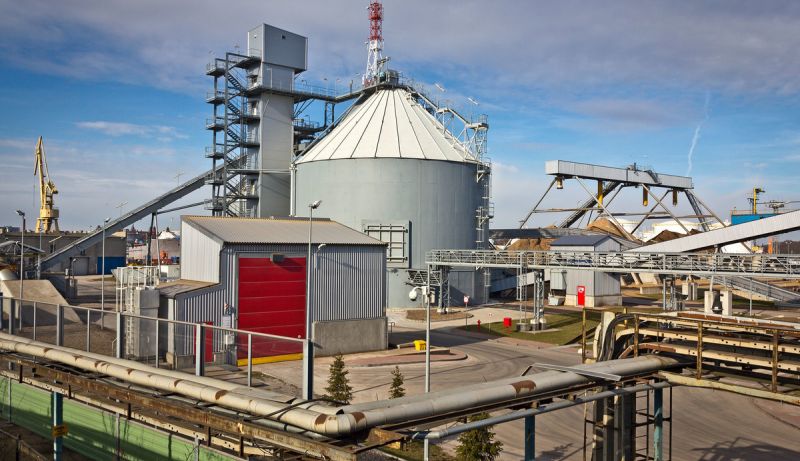
A Västra Götaland arborist turned a recurring disposal problem into a small wood-recovery business. Municipal pruning crews, landscaping contractors and storm-clearance teams were generating branches and tree sections that still had fuel value, while local wood-energy users needed a cleaner and more consistent chip fraction than mixed green waste. The completed Wood Crushing System for Wood Chips Production in Sweden was built around that gap: receive clean woody material, remove contamination, chip it to a controlled size, screen the product and dispatch it without adding unnecessary drying or fine grinding.
The plant is rated at 7.5 T/H and runs about 8 hours per day for 300 days, which closes at 18,000 T/A of finished chips. Because a real recovery stream contains rejects, the annual gross receiving plan is higher than finished output. Around 18,700–19,000 tons of woody material is scheduled each year so the factory can still ship about 18,000 tons after sorting out plastic, metal, soil, treated wood and other non-product material.
The 6,000 m² site lies roughly 60 km northeast of Gothenburg and uses a 3,264 m² steel-framed building for receiving, sorting, chipping, screening and covered finished-chip storage. Total completed-project investment was USD 90,000. Of that amount, USD 58,000 covered the core RICHI equipment package; the balance went to building modification, local electrical work, loader interfaces, acoustic treatment and initial working capital.
7.5T/H
capacity
$90,000
investment
Sweden
location
Wood Chips
project type
RICHI MACHINERY
Why Sweden Rewards Clean and Consistent Wood Chips
Sweden is a strong setting for a wood chip production line because wood energy is already embedded in the country’s heating and forest-industry system. The commercial opportunity, however, is not that every form of green waste can become the same fuel. Buyers distinguish material by origin, contamination, moisture, chip size and ash risk. Clean arboricultural wood has a different value from mixed demolition timber or plastic-contaminated municipal waste.
For this client, the most realistic outlets are local biomass heat users, wood-fuel traders and selected Biomass pellet plants that already have downstream drying and fine-grinding equipment. Pulp mills and board plants are treated as specification-dependent buyers rather than guaranteed customers because fiber quality, species, bark content and contamination limits can be much tighter than fuel-market requirements.
The business therefore earns value from sorting and consistency, not simply from accepting low-cost waste. Clean branches and untreated wood are converted into a repeatable chip product; unsuitable material is removed before it can downgrade an entire stockpile.
RICHI MACHINERY
Raw Material Control Starts before the Chipper
Three woody streams make up the annual supply plan: arboricultural branches and tree sections, storm-damaged wood, and a smaller quantity of verified untreated wood offcuts or pallets. Construction-derived material is not accepted simply because it is made of wood. Painted timber, preservative-treated wood, MDF, coated boards and mixed demolition wood are kept out of the graded fuel-chip stream.
| Incoming Stream | Gross Annual Plan | Typical Condition | Acceptance Rule |
|---|---|---|---|
| Tree branches and pruning wood | Approx. 10,500 T/A | Fresh, irregular, often 30–50% moisture | Clean woody fraction; soil and plastic removed |
| Storm-damaged trunks and limbs | Approx. 5,200 T/A | Mixed diameters, variable moisture | Origin logged; excessive soil rejected |
| Untreated wood offcuts and pallets | Approx. 3,000 T/A | Usually drier than green branches | Only verified chemically untreated wood |
| Gross receipts | Approx. 18,700 T/A | Before sorting losses | Supports about 18,000 T/A finished chips |
- Loads with paint, preservatives or unidentified coatings are segregated.
- Excessive soil and stones are rejected because they increase ash and wear.
- Long wire, straps and plastic are removed before chipping.
- Oversized trunks are pre-cut to the chipper’s allowable feed dimensions.
- Bark-rich or fine fractions can be separated when a buyer has tighter ash requirements.
RICHI MACHINERY
The Site Is Arranged around Loader and Stockpile Movement
The 6,000 m² site is sufficient because the plant is designed for steady turnover rather than long-term storage of several months of fresh green wood. Trucks unload into a receiving and inspection zone, accepted material moves toward short-term storage, and finished chips are kept away from incoming mixed material so the loaders do not constantly cross paths.
| Zone | Approx. Area | Use |
|---|---|---|
| Incoming wood / sorting | 1,350 m² | Branches, logs and untreated offcuts awaiting inspection |
| Chipping and screening | 550 m² | Chipper, magnetic protection, conveyor and sizing screen |
| Finished wood chips | 1,000 m² | Short-term covered stock before dispatch |
| Maintenance / spares | 100 m² | Knives, screens, bearings and service tools |
| Office / staff | 200 m² | Administration and welfare |
| Flexible covered / circulation area | Approx. 64 m² + aisles | Loader clearance and internal access |
Fresh chips can self-heat when stored wet in deep compact piles for too long. The site therefore controls stock rotation, pile size, ventilation and residence time instead of treating the covered warehouse as a seasonal storage bunker. Fire access around the chip pile remains clear.
RICHI MACHINERY
The Equipment Package Is Built for Chipping Not Fine Grinding
The core machine is a heavy-duty Wood chipper machine, not a rotary hammer mill. The finished product is a coarse wood chip, so sharp-tool chipping is the correct primary operation. Metal protection and post-chipping sizing are added because the feedstock comes from recovered woody streams rather than a uniform sawmill flow.
| Equipment | Qty | Typical Duty | Function |
|---|---|---|---|
| Heavy-duty wood/drum chipper | 1 | Approx. 110–160 kW | Produces coarse chips from branches and untreated wood |
| Infeed magnetic protection | 1 set | Project-specific | Reduces ferrous damage risk |
| Sizing screen | 1 set | Project-specific aperture | Separates marketable chips from oversize |
| Oversize return route | 1 set | Conveyor / re-feed | Returns large pieces for re-chipping |
| Localized dust extraction | 1 set | Dry-fines points | Controls airborne fines where generated |
| Feed loader | 1 | Mobile | Feeds accepted woody material |
| Product loader | 1 | Mobile | Loads finished chips to trucks |
The fixed equipment cost for the RICHI core processing package is USD 58,000. The two loaders, site civil works and other locally sourced items are outside that equipment number unless specifically included in the supply contract.
A main wood chip dryer is not installed. The factory sells green or semi-green chips only to customers whose receiving specification allows the actual moisture range or who have downstream drying. This is a commercial boundary, not a claim that 30–50% moisture is acceptable to every pellet plant or heating system.
RICHI MACHINERY
From Mixed Woody Residues to a Saleable Chip Fraction
The process is short, but every step protects the value of the finished product. The plant does not add drying, fine grinding or pelletizing because its commercial product leaves as screened wood chips.
1. Receiving and Source Identification
Loads are recorded by supplier and material type before unloading. Municipal pruning wood, arborist residues and storm material are kept traceable from verified untreated recovered wood so the sales team can match the chip batch to a buyer’s acceptance rules.
2. Sorting and Metal Control
Plastic, wire, stones, painted wood and other visible contaminants are removed before chipping. Ferrous protection is installed ahead of the cutting rotor. Magnets do not replace visual sorting because stones, stainless steel, aluminum and treated wood still need upstream control.
3. Controlled Chipping
A front-end loader feeds prepared wood into the chipper. Knife condition, feed rate and sizing configuration are monitored because wet fibrous branches and drier wood offcuts cut differently. Operators avoid forcing oversize trunks into the machine just to maintain hourly tonnage.
4. Screening and Oversize Return
Marketable chips pass to the finished-product conveyor. Oversize returns to the chipper. Fine material is monitored because excessive fines increase dust and can reduce handling quality for some fuel users.
5. Stockpiling and Dispatch
Finished chips are stored by batch and loaded into trucks with a dedicated loader. High-moisture chips are moved quickly rather than stored in deep piles for long periods.
This wood chip processing line standardizes size and cleanliness. It does not claim to improve moisture or calorific value because the process itself does not dry the wood.
RICHI MACHINERY
The Utility Balance Reflects a Real Chipping Duty
The original source contained two contradictory electricity figures. A 50,000 kWh annual total cannot support a 100 kW-class chipper operating across thousands of production hours. The equipment schedule gives the more credible basis: annual electricity is approximately 220,000–240,000 kWh, equal to about 12–13 kWh per ton of finished chips.
| Utility | Completed-Project Planning Value | Note |
|---|---|---|
| Electricity | Approx. 230,000 kWh/year | Chipper, screen, conveyors, extraction and lighting |
| Specific electricity | Approx. 12–13 kWh/t | Varies with wood diameter, moisture and knife condition |
| Water | Approx. 60–100 m³/year | Staff and limited housekeeping only |
| Process heat / steam | None | No dryer or thermal conditioning |
| Loader fuel | Tracked separately | Not part of factory electricity |
The low specific energy demand is one reason the project works economically: it stops at coarse chipping rather than drying and pelletizing. Electricity cost is not tied to one temporary Swedish tariff because commercial energy contracts vary by grid area, tax treatment and time period.
RICHI MACHINERY
Customization Focused on Contamination Size Control and Safe Operation
The engineering work concentrated on contamination, wet fibrous feed behavior, chip-size control, noise and fire risk rather than adding unnecessary equipment.
- A controlled receiving area and magnetic protection are placed ahead of the chipper.
- The infeed geometry is selected for irregular branches and short timber, while pieces outside the allowable envelope are pre-cut.
- A sizing screen and oversize return route are used so saleable chip size does not depend on one pass.
- Dust extraction is concentrated at transfer and dry-fines points instead of treating wet green wood as if it behaves like dry sawdust.
- Acoustic treatment, knife maintenance and correct rotor loading reduce both noise peaks and unnecessary power draw.
Five staff can run the plant when receiving, loader operation, chipping, stockpile management and administration are combined efficiently. Training covers safe feeding, lockout, knife inspection, magnet cleaning, screen checks, jam clearing and fire response. The case does not claim a new operator becomes fully proficient after exactly one week.
Environmental compliance follows the actual Swedish permit and local authority requirements for the site. The article therefore does not repeat an unsupported universal dust limit or a fixed collection-efficiency promise without the final filter and permit basis.
RICHI MACHINERY
Product Quality Is Defined by Origin Size Moisture and Contamination
Swedish wood-fuel classification is now based on the EN ISO 17225 series rather than the old claim that one simple national table automatically covers all wood chips. EN ISO 17225-4 applies to graded wood chips from virgin wood, wood-processing residues and chemically untreated used wood. The project therefore keeps treated or unidentified demolition timber out of the fuel-grade stream.
| Property | Project Target | Buyer Relevance |
|---|---|---|
| Main chip fraction | Approx. 20–50 mm | Handling, feeding and downstream processing |
| Oversize | Controlled by screen | Reduces bridging and buyer rejection |
| Fines | Controlled through screening and knife condition | Important for dust and combustion handling |
| Moisture | Typically 30–50% for green-wood batches | Must match buyer specification |
| Contamination | No visible plastic / treated wood in accepted fuel batches | Protects fuel quality and downstream equipment |
| Ash risk | Managed through source control, bark and soil limits | Cannot be guaranteed from size alone |
The client does not sell every batch to every market. A pellet producer may accept wet chips because it already owns a dryer, while another buyer may require drier chips. Pulp and board mills may reject the same material because species, bark or recovered-wood content does not fit their fiber specification. This buyer-by-buyer qualification is more realistic than presenting one generic chip as suitable for fuel, pellets, pulp and board at the same time.
RICHI MACHINERY
The Market Strategy Is Local and Specification-Driven
Transport economics matter as much as chip price because green wood carries a large amount of water. That makes Västra Götaland and the Gothenburg region the primary commercial radius. Local district-energy users, fuel traders and processors with their own drying or secondary size-reduction equipment are more practical targets than shipping wet chips long distances.
| Buyer Type | Best-Fit Material | Commercial Condition |
|---|---|---|
| Biomass heat user | Clean green or semi-green chips | Boiler must accept moisture and particle class |
| Pellet producer | Clean untreated chips | Buyer needs drying and hammer-milling capacity |
| Wood-fuel trader | Consistent traceable batches | Resale specification agreed in advance |
| Pulp / board processor | Only qualified clean fiber | Species, bark and recovered-wood rules can be restrictive |
Seasonality is handled through contracting and stock rotation rather than building several months of wet-chip inventory. Storm events and municipal pruning seasons can increase supply sharply, so the client maintains flexible receiving hours and short-term buffer space while avoiding long-term deep-pile storage.
RICHI MACHINERY
The Fixed Investment Matches a Small Existing-Building Project
This is a completed project, so the investment is stated as one fixed amount. Total project investment was USD 90,000, including USD 58,000 for the RICHI processing package. The remaining amount covered building modification, electrical work, acoustic treatment, local installation, loader interfaces and startup working capital.
The relatively low project cost is credible because there is no dryer, hammer mill, pellet mill, boiler or automated packing system. The plant is a focused wood crushing and screening system, not a full biomass pellet factory.
Equipment moved from Qingdao to the Port of Gothenburg and then by road to the Västra Götaland site. The import route is consistent with the project’s location and avoids adding an unnecessary inland port transfer.
RICHI MACHINERY
Why This Project Is Different from a Biomass Pellet Plant
The commercial boundary of this plant is important. It creates a standardized wood chip from irregular woody residues, then stops. The customer is not paying for moisture reduction, fine grinding, pellet density or packaging because the downstream buyer performs those steps when required.
That makes this Wood Crushing System for Wood Chips Production in Sweden a lower-capital entry point into biomass processing, but only when the customer already has reliable outlets for screened chips. If buyers require dry material, narrow particle classes or pellets, the process architecture must expand.
For a new wood chip production line, RICHI Machinery would first confirm raw-material origin, maximum log/branch diameter, moisture range, contamination risk, required chip class, hourly capacity, local dust/noise conditions, storage time and buyer specification. Those inputs determine whether the project needs only chipping and screening or should add drying, fine grinding or further biomass processing.
● RICHI MACHINERY
RICHI Service

● Consulting
Customer Consultation
We want to have a deep understanding of your industrial process, to know your exact needs of feed, wood, biomass, fertilizer or other pellet processing.
● Design
biomass Plant Design
Based on your unique situation and industrial process, we will tailor complete pellet plant you need, and inform you of every additional detail that could facilitate operation, minimize total cost.
● Manufacturing
Equipment Manufacturing
The critical components of the of the complete pellet production line equipment are built in our own workshops in Asia. Additional equipment is manufactured by our worldwide network of reliable partners.

● Testing
Quality Inspection & Testing
Before leaving the factory, all equipment will be inspected by the quality inspection department. We can also provide customers with testing services from a single machine to a complete pellet plant system, and provide you with real actual data for “worry-free use.”

● Delivery
Equipment Delivery
In equipment boxing and packaging, we adopt professional packaging and modular solutions to ensure the safe and non-destructive delivery of pellet plant equipment.
● Installation
Installation & Commissioning
Whether you choose your own subcontractor for the erection phase or you want to install everything together with us, a Richi supervisor will be around to make sure everything is mounted in a safe and thorough way.

● Training
Staff Training
We provide comprehensive training for the technicians of each project. We can also continue to provide support for the technicians during latter project operation.
● After-sales
Project Follow-Up
When everything is up and running our Richiers will help you further whenever needed. We are ready to answer your call 24/7.We’ll also visit you regularly to learn about your needs.
Who we are
RICHI Machinery is one of the world’s leading suppliers of technology and services for the animal feed, aqua feed and pet food industries, also the largest pellet production line manufacturer in China.
Since 1995, RICHI’s vision to build a first-class enterprise, to foster first-class employees, and to make first-class contributions to society has never wavered.
In the past three decades, we have expanded our business to a wide range of areas, including animal feed mill equipment, aqua feed equipment, pet feed equipment, biomass pellet equipment, fertilizer equipment, cat litter equipment, municipal solid waste pellets equipment, etc.

1995
RICHI Established

2000+
Serving More Than 2000 Customers

120+
RICHI Employees

140+
Exported To 140 Countries