 0086-138 3838 9622
Pig Feed Plant for Large Scale Farming in Spain
RICHI MACHINERY
Project Overview
A large-scale pig farming corporation reached out to RICHI Machinery about building a 20-25t/h pig feed plant for large scale farming in Spain with an annual capacity of 200,000 tons of pig feed (running 24 hours per day, 350 days per year, 3 shifts). The facility produces high-quality pelleted feed for the company’s own pig farms across the Castilla y León and Aragón regions. The feed is not sold externally — it is used exclusively for the corporation’s integrated pork production system.
The client is located in the Burgos Province of northern Spain, about 250km north of Madrid. Spain is the European Union’s largest pork producer (50+ million pigs annually) and the second-largest pork exporter in the world. The country has a highly integrated pork industry, with large corporations controlling everything from breeding to processing.
The client owned 150,000+ pigs across multiple farms. Before this project, they purchased feed from commercial suppliers at a cost of €280-320/ton delivered. By producing their own feed, they estimated their cost would drop to €230-250/ton — a saving of €30-70/ton. Over 200,000 tons/year, that’s €6-14 million in annual savings.
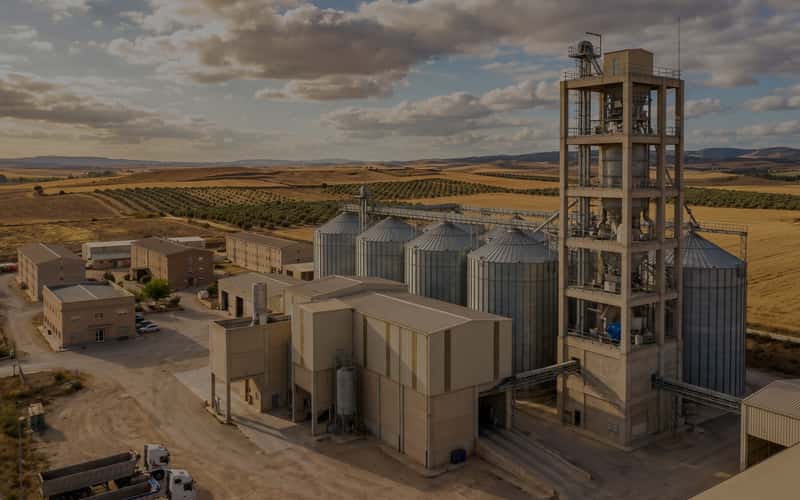
The pig feed mill is built on a 35,406m² site with a 6-story main production building (37m high, 523m² footprint), plus:
| Building | Size (m²) | Use |
|---|---|---|
| Main production building | 3,120 (6 floors) | All processing (2 lines) |
| Raw material warehouse | 2,500 | Bagged ingredients |
| Finished product warehouse | 1,000 | Bagged feed |
| Cylindrical silos | 3,050 | Bulk corn, wheat storage |
| Office and lab | 669 | Admin, quality control |
| Dormitories (2 buildings) | 2,090 | Staff housing |
| Canteen | — | Meals |
| Boiler house | 100 | 3 t/h gas boiler |
| Loading center, wash stations | 495 | Logistics |
Total investment was about 3.5 million USD (including buildings, equipment, and working capital), of which 1.65 million USD was the equipment cost.
20-25T/H
capacity
$2.5 million
investment
Spain
location
Feed
project type
RICHI MACHINERY
Why Spain?
Spain has the largest pig population in the European Union and a highly integrated pork industry:
| Parameter | Value |
|---|---|
| Pig population | 50+ million head |
| Pork production | 5+ million tons/year |
| Number of pig farms | 80,000+ (mostly large-scale) |
| Feed consumption (pig feed) | 10+ million tons/year |
| Vertical integration | High (major producers control feed, breeding, processing) |
| Export markets | China, France, Germany, Italy, Japan |
Key drivers for in-house feed production:
| Driver | Impact |
|---|---|
| Quality control | Consistent feed quality improves pig growth rates (FCR) |
| Cost savings | 10-20% cheaper than commercial feed |
| Supply security | No disruptions from external suppliers |
| Traceability | Full control from grain to pork (export requirement) |
| EU regulations | Stringent feed safety standards (Regulation 183/2005/EC) |
The client’s breakeven point is 120,000 tons/year (60% capacity). At full capacity (200,000 tons/year), operating margin is about 15-20%.
RICHI MACHINERY
Raw Materials: Corn, Wheat, Soybean Meal, and Additives
The client’s raw materials are sourced from Spanish farmers and international suppliers:
| Raw Material | Annual (tons) | Storage | Source | Cost (EUR/ton) | USD/ton (1.05 EUR/USD) |
|---|---|---|---|---|---|
| Corn | 88,071 | Cylindrical silos (3,050m²) | Local (Castilla y León) | 180 | $189 |
| Wheat | 61,820 | Cylindrical silos | Local | 170 | $179 |
| Soybean meal | 24,925 | Bagged, warehouse | Imported (South America) | 350 | $368 |
| Wheat flour | 4,390 | Bagged | Local | 200 | $210 |
| Wheat bran | 6,830 | Bagged | Local | 150 | $158 |
| Soy flour | 3,575 | Bagged | Local | 400 | $420 |
| Limestone | 2,140 | Bagged | Local | 50 | $53 |
| Dicalcium phosphate | 1,337 | Bagged | Imported | 500 | $525 |
| Monocalcium phosphate | 151 | Bagged | Imported | 550 | $578 |
| Lysine | 1,572 | Bagged | Imported (China) | 2,000 | $2,100 |
| Methionine | 220 | Bagged | Imported | 2,500 | $2,625 |
| Threonine | 458 | Bagged | Imported | 2,200 | $2,310 |
| Tryptophan | 46 | Bagged | Imported | 5,000 | $5,250 |
| Salt | 686 | Bagged | Local | 100 | $105 |
| Choline chloride | 241 | Bagged | Imported | 1,200 | $1,260 |
| Fish meal | 516 | Bagged | Imported (Peru) | 1,500 | $1,575 |
| Premix/additives | 1,179 | Bagged | Group supply | 2,000 | $2,100 |
| Cottonseed meal | 2,081 | Bagged | Imported | 300 | $315 |
| Total input | ~200,000 | — | — | — | — |
The client’s advantage: The client doesn’t need to source from multiple suppliers. Premix already contains trace elements; no separate addition required.
RICHI MACHINERY
The Site and Building
Building layout:
| Building | Size (m²) | Floors | Height | Construction |
|---|---|---|---|---|
| Main production building | 523 footprint / 3,120 total | 6 | 37m | Concrete/steel |
| Raw material warehouse | 2,500 | 1 | 8.1m | Steel frame |
| Finished product warehouse | 1,000 | 1 | 8.1m | Steel frame |
| Cylindrical silos | 3,050 footprint | 1 | 12m | Steel |
| Office + lab | 334 | 2 | 6.6m | Concrete |
| Administration building | 407 | 3 | 11.7m | Concrete |
| Dormitory 1 | 454 | 4 | 13.2m | Concrete |
| Dormitory 2 (canteen on ground floor) | 454 | 5 | 16.8m | Concrete |
| Boiler house | 100 | 1 | 3.9m | Concrete |
| Loading center | 322 | 1 | 8.1m | Concrete |
| Wash stations (2) | 173 | 1 | 8.1m | Concrete |
| Guard houses (2) | 48 | 1 | 3.6m | Concrete |
| Quality control center (Phase 2) | 793 | 6 | 19.8m | Concrete |
| Steel structure sheds (3, Phase 2) | 2,066 | 1 | 8.1m | Steel |
| Fire pond, septic tank, grease trap | 206 | — | — | Underground |
| Total | ~12,700 | — | — | — |
The 6-story production building (37m high) layout:
| Floor | Function | Equipment |
|---|---|---|
| 6th floor (top) | Raw material intake & cleaning | Intake hoppers, pre-cleaners, magnetic separators, distributors |
| 5th floor | Grinding | Hammer mills (SPSD56, SPSD112) |
| 4th floor | Batching bins | (4 large bins), Feeding auger, feeding hopper |
| 3rd floor | Batching scales & mixing | Ingredient weighing scale, mixer (2 units) |
| 2nd floor | Conditioning & pelleting | Conditioners, pellet mills, extruders (2 units) |
| 1st floor (ground) | Cooling, screening, packaging | Cooler, screener, bagging scales |
This vertical design allows gravity flow — material falls from floor to floor, reducing conveying equipment and energy consumption by 20-30%.
RICHI MACHINERY
Equipment Configuration
The client chose two complete animal feed pellet production lines inside the 6-story building:
| Section | Equipment | Quantity | Power (each) | Model |
| Intake & cleaning | Bucket elevators | 3 | 15-30 kW | TDTG36/18, TDTG48/23, TD130 |
| Screw conveyors | 2 | 5.5 kW | LX16 | |
| Trough screw conveyors | 2 | 7.5 kW | LX20 | |
| Grinding | Hammer mill | 1 | 110-160 kW | SPSD56 |
| Hammer mill | 1 | 160-250 kW | SPSD112 | |
| Batching | Batching bins | 4 | — | PLLC-108×108×92 |
| Batching hoppers | 2 | — | LC-D1.5 | |
| Batching scales | 2 | — | PT650C | |
| Mixing | Mixer | 2 | 45-75 kW | SSHJ1000 (1,000kg/batch) |
| Pelleting | Pellet mill | 2 | 200-250 kW | SZLH |
| Extruder | 2 | 160-250 kW | SPHS135 | |
| Utility | Gas boiler | 1 | 3 t/h | For steam conditioning |
| Low-NOx burner | 1 | — | For boiler (compliance) |
Why this configuration for pig feed (20-25 t/h, 200,000 tons/year):
1. Two complete lines. Redundancy is critical for a 24/7 operation serving pig farms. If one line is down for maintenance, the other line continues at 50% capacity (10-12 t/h).
2. 6-story vertical building (37m high). Gravity flow reduces energy consumption. Material moves from top to bottom, with only one bucket elevator lift to the 6th floor.
3. Two hammer mills. The client runs both for high capacity, or one for lower demand. The larger mill handles corn and wheat.
4. Two animal feed pellet mills and two extruders. The client can produce standard pelleted feed and extruded feed (for piglets) on the same line.
5. 3 t/h gas boiler. Spain has natural gas infrastructure. The boiler provides steam for conditioning (70-85°C, 3-5% steam addition).
RICHI MACHINERY
Process Flow
This is a large-scale, highly automated feed mill factory designed for 24/7 operation with 70 staff in 3 shifts.
Step 1: Raw Material Receiving
Bulk grains (corn, wheat): Trucks deliver to the cylindrical silos area (3,050m²). The driver reverses into the receiving pit. A screw conveyor moves material to a bucket elevator, which lifts it to the top of the silos.
Bagged ingredients (soybean meal, additives, minerals): Forklifts unload pallets into the raw material warehouse (2,500m²). Operators manually dump bags into a small intake hopper with a dust hood.
Step 2: Cleaning (6th Floor)
Cleaning protects downstream equipment. Stones break hammer mill screens. Metal damages pellet mill dies.
Material from the receiving pits (or bag intake) passes through:
- Pre-cleaners — removes stones, twine, debris
- Magnetic separators — removes nails, staples, metal fragments
Step 3: Grinding (5th Floor)
Clean corn and wheat are fed into two hammer mill feed grinders.
Hammer mill parameters:
| Parameter | SPSD56 | SPSD112 |
|---|---|---|
| Screen size | 3 mm | 3-4 mm |
| Rotor speed | 2,900 RPM | 2,900 RPM |
| Motor power | 110-160 kW | 160-250 kW |
| Throughput | 8-10 t/h | 15-18 t/h |
Particle size target for pig feed: 800-1,200 microns (80% passing 1,500 microns).
Step 4: Batching (4th and 3rd Floors)
Batching accuracy is critical. A 1% over-dosing of soybean meal costs the client €175,000/year.
Ground material is lifted to the 4th floor and distributed to 4 large batching bins by rotary distributors.
From the bins, screw feeders discharge material into batching hoppers and batching scales on the 3rd floor.
Batching sequence (automated, per scale):
| Stage | Duration | Action |
|---|---|---|
| 1 | 5 sec | Scale tares |
| 2 | 90-120 sec | Major ingredients feed (high speed) |
| 3 | 20-30 sec | Dribble feed (final 50-100kg) |
| 4 | 30 sec | Minor ingredients feed |
| 5 | 20 sec | Micro ingredients (manual addition) |
| 6 | 15 sec | Discharge to mixer |
Batching accuracy (RICHI guarantee):
- Major ingredients: ±0.1% of target
- Minor ingredients: ±0.2%
- Micro ingredients: ±0.5%
Step 5: Mixing (3rd Floor)
The batch drops into one of two twin-shaft paddle feed mixer machines.
Mixer parameters (each):
- Capacity: 1,000 kg/batch
- Mix time: 90-120 seconds
- Coefficient of variation (CV): <5%
- Discharge time: 30 seconds
Step 6: Conditioning and Pelleting (2nd Floor)
Mixed feed drops into conditioners where steam from the 3 t/h gas boiler is injected.
Conditioning parameters for pig feed:
| Parameter | Value |
|---|---|
| Steam temperature (boiler outlet) | 150-160°C |
| Material temperature after conditioning | 70-85°C |
| Steam addition | 3-5% of feed mass |
| Retention time | 30-45 seconds |
Pellet mill parameters (KLPS, 200-250 kW each):
| Parameter | Value |
|---|---|
| Die diameter | 500-550 mm |
| Die hole diameter | 4mm (pig grower), 5mm (pig finisher) |
| Compression ratio | 8:1 to 10:1 |
| Die speed | 180-220 RPM |
| Throughput per mill | 10-12 t/h (combined 20-24 t/h) |
Extruder (for piglet feed): The client also has two twin screw extruders for producing highly digestible feed for piglets.
Step 7: Cooling and Screening (1st Floor)
Hot pellets (75-85°C) drop into a counterflow cooler. The cooler uses ambient air fans to reduce temperature to 30-35°C in 10-15 minutes.
Pellets then pass through a screener:
- Acceptable pellets: 4-8mm length
- Fines (<2mm) → return to mixer
- Oversize (>10mm) → return to ring die feed pellet machine
Step 8: Packaging (1st Floor)
Finished pellets are bagged (40kg bags) or loaded into bulk trucks.
The client’s distribution: Feed is delivered to the corporation’s pig farms by the company’s own fleet of trucks.
RICHI MACHINERY
Utilities and Consumption
| Utility | Annual consumption | Cost (EUR) | Cost (USD at 1.05 EUR/USD) |
|---|---|---|---|
| Electricity | 2,000,000 kWh | 240,000 | $252,000 |
| Natural gas (boiler) | 720,000 m³ | 360,000 | $378,000 |
| Water | 4,620 m³ | 11,550 | $12,128 |
Electricity breakdown (annual, 350 days, 24 hours/day = 8,400 hours):
| Equipment | kW average | Hours/day | kWh/day | kWh/year |
|---|---|---|---|---|
| Bucket elevators (3) | 30 | 24 | 720 | 252,000 |
| Hammer mills (2) | 200 (100 each avg) | 20 | 4,000 | 1,400,000 |
| Screw conveyors (4) | 15 | 24 | 360 | 126,000 |
| Mixers (2) | 40 | 24 | 960 | 336,000 |
| Animal feed granulators (2) | 300 (150 each avg) | 24 | 7,200 | 2,520,000 |
| Pig feed extruders (2) | 200 (100 each avg) | 8 (intermittent) | 1,600 | 560,000 |
| Coolers, fans | 30 | 24 | 720 | 252,000 |
| Bagging scales | 10 | 16 | 160 | 56,000 |
| Lighting, office | 20 | 24 | 480 | 168,000 |
| Total | ~845 | — | 16,200 | 5,670,000 kWh |
Natural gas consumption: 720,000 m³/year for the 3 t/h boiler (running 14 hours/day).
Water consumption: 4,620 m³/year (4.62 m³/day), including boiler make-up, lab water, cooling tower, etc.
RICHI MACHINERY
Laboratory and Quality Control
The client has an on-site laboratory and a larger quality control center (Phase 2, 6 floors, 3,794m²) for testing:
| Test | Method | Equipment |
|---|---|---|
| Moisture | Drying oven | Balance, oven |
| Crude protein | Kjeldahl | Digestion unit, distillation unit |
| Fat | Soxhlet extraction | Fat analyzer |
| Fiber | Acid-alkali digestion | Fiber analyzer |
| Calcium, phosphorus | Spectrophotometry | UV-Vis spectrophotometer |
| Amino acids | HPLC | Liquid chromatograph |
| Mycotoxins | ELISA | Reader |
| Salmonella | Culture | Incubator, autoclave |
Laboratory chemicals:
| Chemical | Annual use (kg) | Use |
|---|---|---|
| Sulfuric acid | 20 | Protein digestion |
| Sodium hydroxide | 20 | Protein titration |
| Ether | 15 | Fat extraction |
| Methanol | 50 | Toxin analysis |
| Hydrochloric acid | 1.5 | Mineral analysis |
| Nitric acid | 2 | Mineral analysis |
| Other reagents | Various | Calcium, phosphorus, etc. |
Laboratory waste management:
- Acid/alkali wastes → neutralized in a 2m³ Nakawa Pond
- Organic solvents → collected as hazardous waste
- Laboratory wastewater → treated in the lab’s wastewater system before discharge
RICHI MACHINERY
How RICHI Customized This Line for Pig Feed Production
The client had specific requirements that shaped the feed mill equipment design:
Requirement 1: The feed is for internal use only (not for sale). Quality standards are still high, but the client doesn’t need to worry about customer specifications — only their own pig farms.
RICHI solution: Designed the line for consistent quality rather than maximum flexibility. The client uses a limited number of formulations (starter, grower, finisher, sow, piglet). The batching system stores 50 recipes (not 200+).
Requirement 2: 24/7 operation (24 hours/day, 350 days/year). The client needed high reliability.
RICHI solution: Two complete animal feed production lines. If one line is down, the other continues at 50% capacity. The client also keeps spare parts on site (dies, screens, bearings, motors).
Requirement 3: The client has a 6-story building (37m high). They wanted to use gravity flow.
RICHI solution: Designed the layout from top to bottom:
- 6th floor: Intake, cleaning
- 5th floor: Grinding
- 4th floor: Batching bins
- 3rd floor: Batching scales, mixing
- 2nd floor: Pelleting, extruding
- 1st floor: Cooling, screening, packaging
Only one bucket elevator lift (from ground to 6th floor). Material flows by gravity thereafter.
Requirement 4: The client has 70 staff, many with no prior feed mill experience. The client’s workers are from the pig farms.
RICHI solution: Centralized PLC control system with touchscreen interface (in Spanish). The client runs 3 shifts with 2 operators per shift in the control room. The rest of the 70 staff are for maintenance, logistics, lab, and administration.
Requirement 5: The client is located in a region with natural gas availability. They wanted to use gas for the boiler (cleaner than diesel or biomass).
RICHI solution: 3 t/h gas boiler with low-NOx burner (to meet Spanish NOx limits of 100 mg/m³). The boiler has an 85% efficiency rating.
RICHI MACHINERY
Product Specifications
The client’s pig feed formulations meet Spanish Ministry of Agriculture standards and the corporation’s internal specifications.
| Parameter | Starter (0-10kg) | Grower (10-30kg) | Finisher (30-60kg) | Sow |
|---|---|---|---|---|
| Crude protein (min) | 20% | 18% | 15% | 16% |
| Crude fat (min) | 5% | 4% | 3% | 4% |
| Crude fiber (max) | 5% | 6% | 7% | 8% |
| Moisture (max) | 13% | 13% | 13% | 13% |
| Pellet diameter | 3mm | 4mm | 5mm | 4mm |
| Calcium | 0.8-1.2% | 0.7-1.0% | 0.6-0.9% | 0.8-1.2% |
Pricing (internal transfer, not for sale):
| Product | Internal cost (EUR/ton) | Comparable commercial price (EUR/ton) |
|---|---|---|
| Pig feed (all types) | 230-250 | 280-320 |
The client’s savings are €30-70/ton × 200,000 tons/year = €6-14 million/year.
RICHI MACHINERY
Market Outlook for Integrated Pig Feed in Spain
Spain’s pig industry is highly integrated and efficient. Key drivers for in-house feed production:
1. Vertical integration. Major Spanish pork producers (Grupo Jorge, Vall Companys, Costa Food Group) own their own feed mills. The client is following this model.
2. Quality control for export. China (the largest pork importer) has strict requirements for feed additives and traceability. In-house production gives full control.
3. Cost savings. Commercial feed margins are 10-20%. Producing in-house captures that margin.
4. EU regulations (Regulation 183/2005/EC). Feed mills must meet GMP+ or FAMI-QS standards. The client’s facility meets these.
Competition: There are 500+ feed mills in Spain (10,000-200,000 tons/year). The client’s 200,000 tons/year puts them in the top tier.
Challenges the client is managing:
| Challenge | Mitigation |
|---|---|
| Raw material price volatility | Long-term contracts with grain suppliers (6-12 months) |
| Energy costs (electricity, natural gas) | 24/7 operation spreads fixed costs; energy-efficient gravity-flow design |
| 70 staff (high labor cost) | Highly automated line with only 2 operators/shift in control room |
| Logistics (transport to 150,000+ pigs) | Own fleet of trucks; centralized feed mill location |
RICHI MACHINERY
Why a Pig Feed Plant Makes Sense in Spain
Spain is the EU’s largest pig producer. Integrated pork producers increasingly own their own feed mills. Here’s why you should consider this market:
Raw materials are available. Spain produces 15+ million tons of corn, 6+ million tons of wheat, and 8+ million tons of barley annually.
Natural gas is available. Spain has a well-developed natural gas network. The client’s 3 t/h gas boiler is efficient (85%) and clean.
The market is large and stable. Spain produces 5+ million tons of pork annually. Feed demand is 10+ million tons/year.
The export market is growing. Spain exports pork to China, France, Germany, Italy, and Japan. In-house feed production helps meet export requirements.
If you’re considering a pig feed plant in Spain (or any country with a large pork industry), RICHI can help. We’ve designed lines for pig feed, poultry feed, and other livestock. We understand the requirements for 24/7 operation, high reliability, and EU compliance.
Contact us to discuss your animal feed factory project. Tell us about your target species (pigs, poultry, cattle), raw materials, site conditions, and budget. We’ll prepare a customized process flow, equipment list, and budget estimate — no obligation.
RICHI Machinery – Pig feed plants from 10 t/h to 30 t/h. Shipping from Qingdao to Valencia port: 20-25 days. Installation support available in Spain within 2 weeks.
● RICHI MACHINERY
RICHI Service

● Consulting
Customer Consultation
We want to have a deep understanding of your industrial process, to know your exact needs of feed, wood, biomass, fertilizer or other pellet processing.

● Design
feed Pellet Plant Design
Based on your unique situation and industrial process, we will tailor complete pellet plant you need, and inform you of every additional detail that could facilitate operation, minimize total cost.
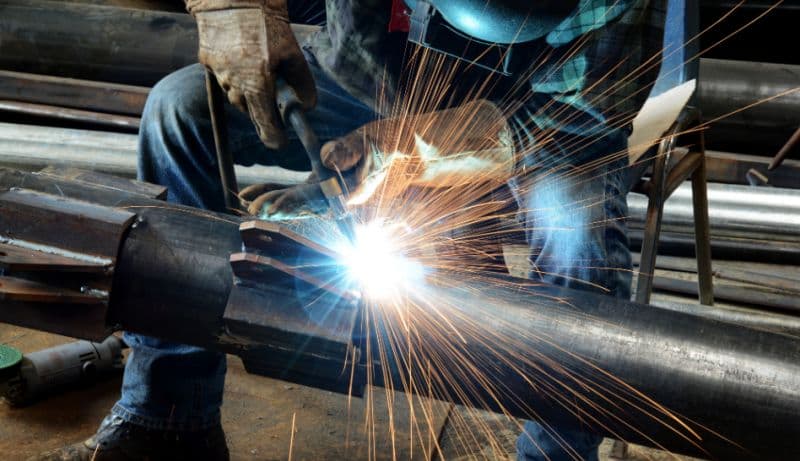
● Manufacturing
Equipment Manufacturing
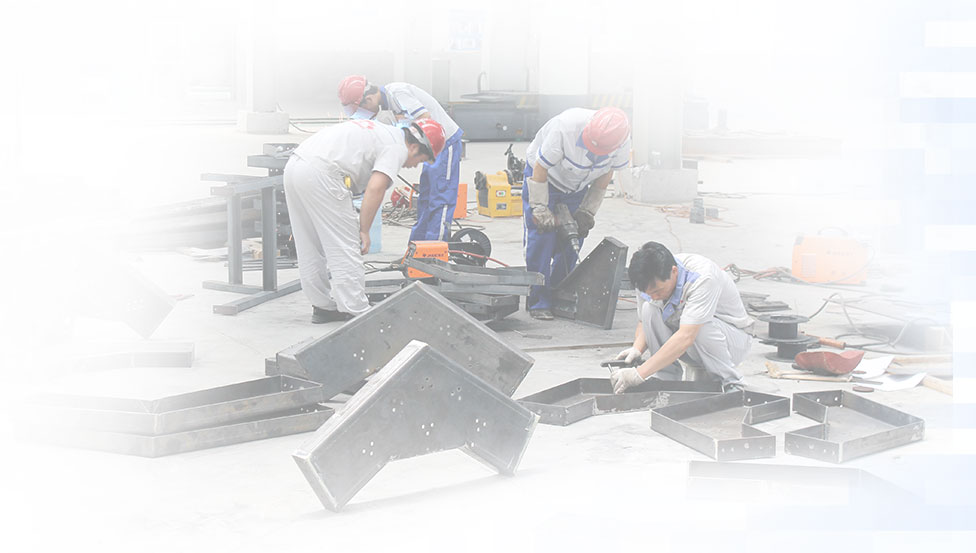
The critical components of the of the complete pellet production line equipment are built in our own workshops in Asia. Additional equipment is manufactured by our worldwide network of reliable partners.
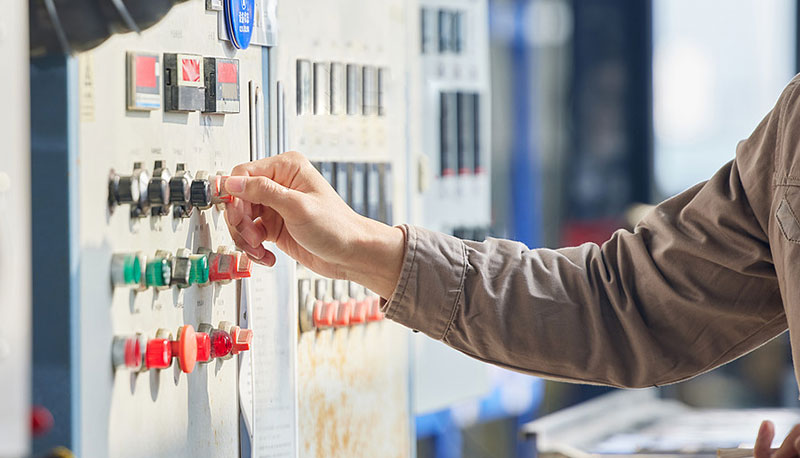
● Testing
Quality Inspection & Testing
Before leaving the factory, all equipment will be inspected by the quality inspection department. We can also provide customers with testing services from a single machine to a complete pellet plant system, and provide you with real actual data for “worry-free use.”

● Delivery
Equipment Delivery
In equipment boxing and packaging, we adopt professional packaging and modular solutions to ensure the safe and non-destructive delivery of pellet plant equipment.
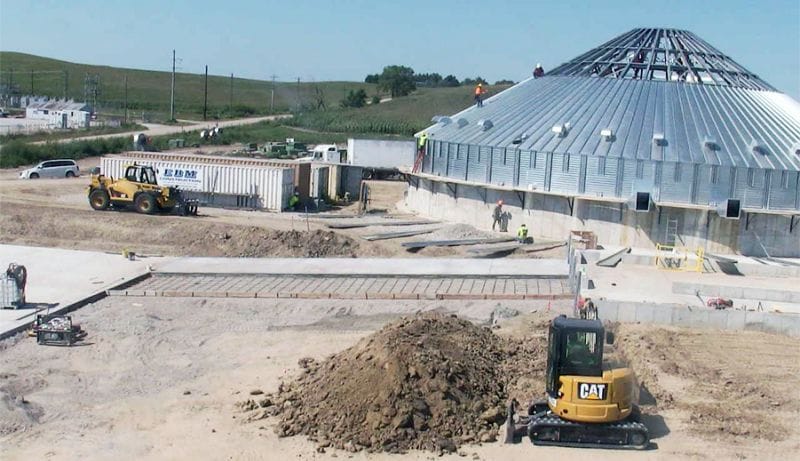
● Installation
Installation & Commissioning
Whether you choose your own subcontractor for the erection phase or you want to install everything together with us, a Richi supervisor will be around to make sure everything is mounted in a safe and thorough way.

● Training
Staff Training
We provide comprehensive training for the technicians of each project. We can also continue to provide support for the technicians during latter project operation.
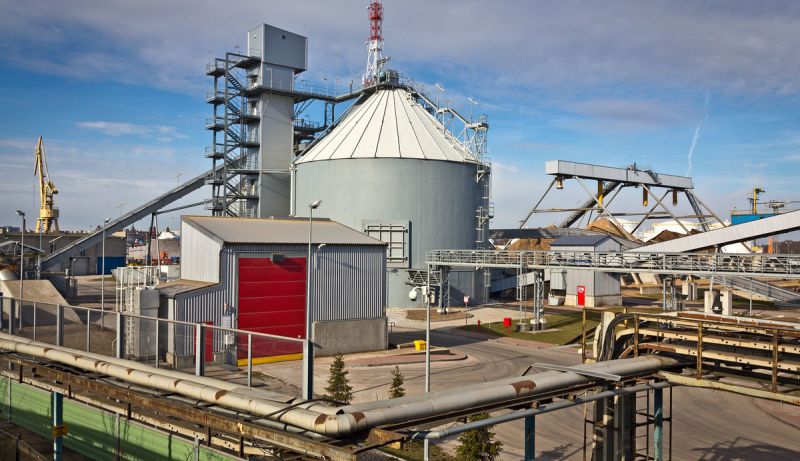
● After-sales
Project Follow-Up
When everything is up and running our Richiers will help you further whenever needed. We are ready to answer your call 24/7.We’ll also visit you regularly to learn about your needs.
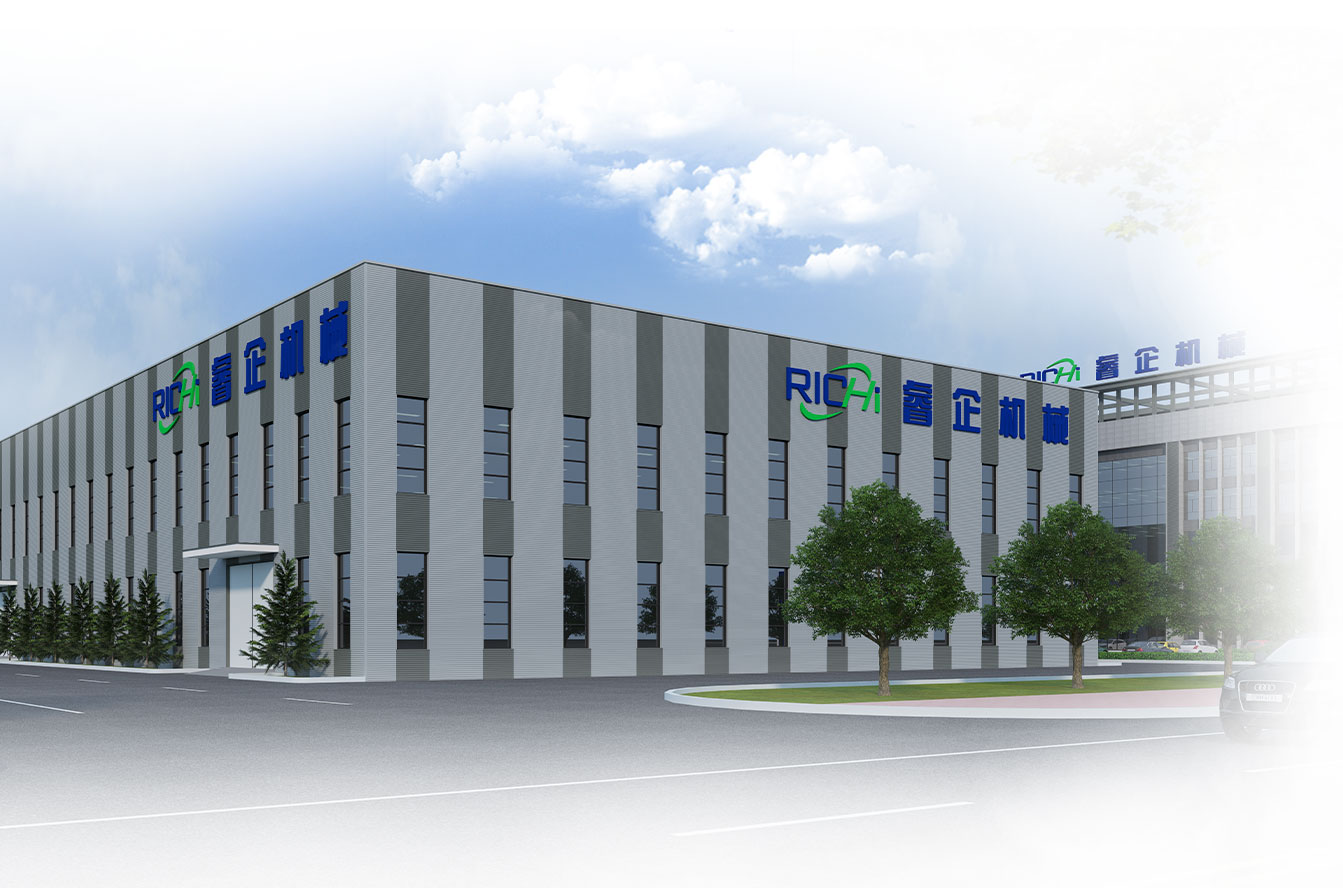
Who we are
RICHI Machinery is one of the world’s leading suppliers of technology and services for the animal feed, aqua feed and pet food industries, also the largest pellet production line manufacturer in China.
Since 1995, RICHI’s vision to build a first-class enterprise, to foster first-class employees, and to make first-class contributions to society has never wavered.
In the past three decades, we have expanded our business to a wide range of areas, including animal feed mill equipment, aqua feed equipment, pet feed equipment, biomass pellet equipment, fertilizer equipment, cat litter equipment, municipal solid waste pellets equipment, etc.

1995
RICHI Established

2000+
Serving More Than 2000 Customers

120+
RICHI Employees

140+
Exported To 140 Countries