 0086-138 3838 9622
Biomass Pellet Factory Setup for Agricultural Waste in Bolivia
RICHI MACHINERY
Project Overview
An agricultural waste processing startup reached out to RICHI Machinery about a 10-15t/h biomass pellet factory setup for agricultural waste in Bolivia with an annual capacity of 30,000 tons of biomass pellets (running 8 hours per day, 300 days per year). The facility produces fuel pellets from soybean residues (stems, pods), corn stalks and cobs, and rice husks for industrial boilers, brick kilns, and heating systems in eastern Bolivia.
The client is located in Santa Cruz de la Sierra, Bolivia’s largest city and the center of the country’s agricultural industry. The Santa Cruz region produces about 70% of Bolivia’s soybeans (3+ million tons annually) and significant corn and rice. The client noticed that most farmers burn their crop residues after harvest (May-June for soybeans, July-August for corn, April-May for rice), creating air quality problems in the dry season.
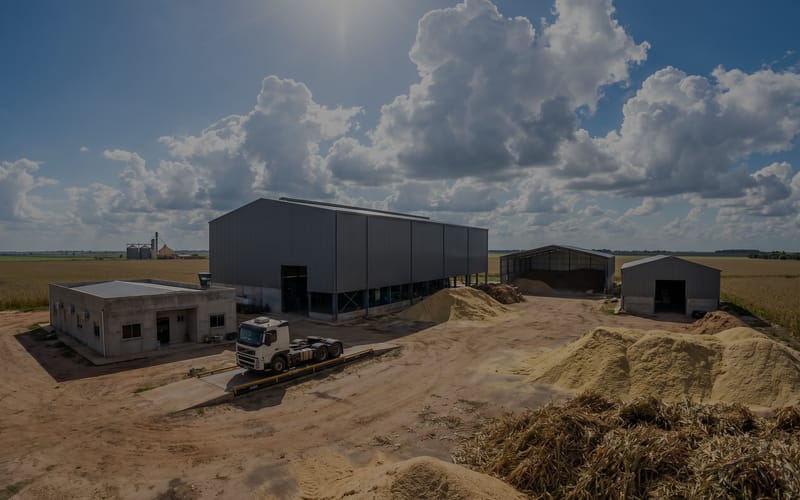
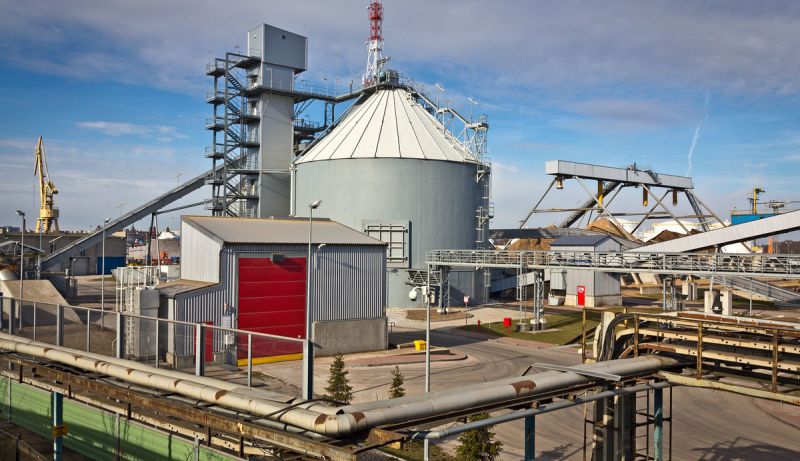
The biomass pellet plant is built on a 6,661m² site (about 1.6 acres) with a 1,500m² production building (steel frame, 8m ceiling height), an 800m² raw material warehouse, and a 300m² finished goods warehouse. The client converted an existing steel structure – originally used for grain storage – into the production building.
Total investment was about 325,000 USD (including equipment,building modifications,and working capital),of which 162,000 was the equipment cost. The client operates with only 6 staff (all local, no on-site accommodation), one shift per day.
This case study walks through how RICHI designed a simple, low-cost biomass pellet factory for a small startup in Bolivia.
10-15T/H
capacity
$325,000
investment
Bolivia
location
Biofuel
project type
RICHI MACHINERY
Bolivia Market Context for Agricultural Waste Pellets
Bolivia’s agricultural sector is concentrated in the eastern lowlands (Santa Cruz, Beni, Pando). Key crops and their residues:
| Crop | Annual production (Santa Cruz region) | Residue type | Residue volume (million tons) |
|---|---|---|---|
| Soybeans | 3+ million tons | Stems, pods, leaves | 4-5 |
| Corn | 1-1.5 million tons | Stalks, cobs, husks | 2-3 |
| Rice | 500,000+ tons | Husks, straw | 0.5-1 |
| Sunflower | 200,000+ tons | Stalks, heads | 0.2-0.3 |
Total agricultural residue: 7-9 million tons annually. Current utilization rate: less than 10%. Most is burned in the field.
The problem: Field burning during the dry season (May-October) creates heavy smoke (“humo de biomasa”) that blankets Santa Cruz city, causing respiratory problems and flight cancellations at Viru Viru International Airport. The government has imposed burning restrictions and fines.
The opportunity: The client pays farmers 200-300 BOB per ton ($29-43) for baled soybean residue and corn cobs. That’s enough to make collection worthwhile.
Target customers:
| Customer segment | Location | Annual pellet demand | Current fuel |
|---|---|---|---|
| Industrial boilers (food processing) | Santa Cruz | 50,000 tons | Natural gas/diesel |
| Brick kilns | Santa Cruz, Cochabamba | 30,000 tons | Wood/diesel |
| Rice mills (parboiling) | Santa Cruz, Beni | 20,000 tons | Rice husks (inefficient) |
| Grain dryers (corn, soy) | Santa Cruz | 15,000 tons | Natural gas |
RICHI MACHINERY
Raw Materials: Soybean Residue, Corn Stalks, Rice Husks
The client’s raw material mix is designed to use what’s available seasonally:
| Raw Material | Annual (tons) | Moisture (%) | Ash content (%) | Season | Cost (BOB/ton) | USD/ton (6.9 BOB/USD) | |
|---|---|---|---|---|---|---|---|
| Soybean residue (stems, pods) | 15,000 | 10-15 | (after sun drying) | 4-6% | May-June | 250 | $36 |
| Corn stalks and cobs | 10,000 | 12-18 | (after sun drying) | 3-5% | July-August | 220 | $32 |
| Rice husks | 8,000 | 10-12 | (already dry) | 15-20% | April-May | 200 | $29 |
| Total input | 33,000 | — | — | — | — | — |
Raw material preparation required:
The client’s raw material arrives at variable moisture:
- Soybean residue: 25-35% when baled – needs sun drying
- Corn stalks/cobs: 20-30% when fresh – needs sun drying
- Rice husks: 10-12% – ready to use (no drying)
The client built a 500m² sun drying pad (concrete, with a polycarbonate roof) on the site. Wet material is spread 10-15cm thick for 1-3 days during the dry season (May-October). Bolivia’s dry season has very low rainfall (0-20mm/month), making sun drying effective. During the wet season (November-April), the client reduces production or buys pre-dried material.
Raw material quality control:
- The client only accepts residue that is baled and stored under cover (to prevent mold)
- Moisture test on every incoming load – reject if >35%
- Visual inspection for metal, plastic, stones
- The client’s crusher and hammer mill have magnetic separators for nails and staples
RICHI MACHINERY
The Site and Building (6,661m² Total, 3,000m² Buildings)
The client’s site is on agricultural land (now industrial use) in the outskirts of Santa Cruz. The site was previously used for grain storage – the building was in good condition.
Layout:
| Building | Size (m²) | Construction | Use |
|---|---|---|---|
| Production building | 1,500 | Steel frame, 8m high | Screening, crushing, grinding, pelleting |
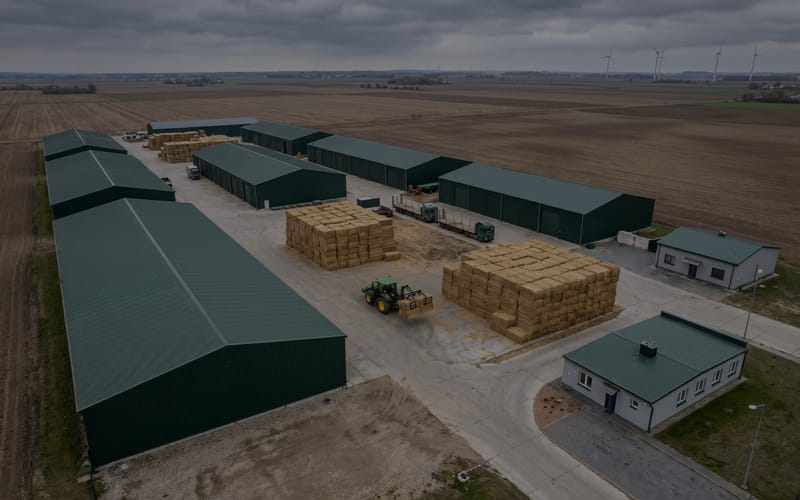
| Raw material warehouse | 800 | Steel frame | Storage for soybean residue, corn stalks, rice husks |
| Finished goods warehouse | 300 | Steel frame | Bagged pellets |
| Office | 370 | Concrete block | Admin, control room, break area |
| Weighboridge | 20 | Concrete | At entrance |
| Electrical room | 10 | Concrete | |
| Total | 3,000 | — | — |
Production building layout (1,500m², 8m ceiling):
The building is single story. The client uses bucket elevators and belt conveyors to move material between equipment:
| Position | Area (approx.) | Equipment |
|---|---|---|
| North end (intake) | 300m² | Infeed hopper, belt conveyor, screener |
| North-central | 300m² | Crusher (2 units), hammer mills (2 units) |
| Central | 300m² | Buffer storage (floor pile) |
| South-central | 300m² | Pellet mills (3 units) |
| South end | 300m² | Finished product cooling area (floor), bagging station |
The building is fully enclosed. All biomass pellet processing equipment is indoors to contain dust.
RICHI MACHINERY
Equipment Configuration
The client chose RICHI’s basic equipment for a 10-15 t/h biomass pellet production line. The client’s target is 30,000 tons/year, so they run two shifts (16 hours/day) at 4 t/h.
| Equipment | Quantity | Power | Notes |
|---|---|---|---|
| Infeed hopper | 1 | — | With grate |
| Belt conveyor | 1 | 3 kW | Moves material from hopper to screener |
| Rotary screener | 1 | 3 kW | Removes stones, oversize |
| Crusher | 2 | Unknown (approx 45 kW each) | For soybean stalks, corn cobs |
| Hammer mill | 2 | 55 kW each | Grinds to <5mm |
| Electric dryer | 1 | — | For wet material (emergency backup) |
| Pellet mill | 3 | Unknown (approx 90 kW each) | Ring die type |
| Bagging station | 1 | — | Manual |
| Cyclone + bag filter | 1 set | — | Dust control |
Equipment cost (FOB Qingdao): $162,000 USD
Why this configuration for a low-budget startup:
1. No automated batching – material flows continuously from screener to crusher to hammer mill to biomass pellet mills. The client uses floor piles for buffer storage between steps. This is cheap but requires more labor (operators feed the mills with front-end loaders).
2. Two crushers and two hammer mills for redundancy. The client has 2 crushers, 2 hammer mills, and 3 biomass pellet presses. If one crusher or mill fails, the line can continue at reduced capacity (about 60-70%). This is critical for a remote site where spare parts may take weeks to arrive.
3. Electric dryer (emergency backup). The client’s raw material is mostly sun-dried. The electric dryer is only used during the wet season or if the client receives wet material. The dryer is not integrated into the main line – it sits in a corner of the building and is used as needed.
4. No automated packaging. The client uses manual bagging (a simple scale and a sewing machine). This saves about $10,000 in equipment cost.
RICHI MACHINERY
Process Flow
This is a simple, low-cost biomass pellet manufacturing plant. No biomass dryer for most of the year, no pellet cooler, manual bagging. It works because Bolivia’s dry season has low humidity and the client uses sun drying.
Step 1: Raw Material Receiving and Pre-Storage
Trucks deliver baled soybean residue, loose corn cobs, and bagged rice husks. The driver unloads into the raw material warehouse (800m²).
The client’s receiving process:
- Bales are stacked 2-3 high using a front-end loader
- Rice husks are kept separate (they don’t need drying)
- The client has a 500m² sun drying pad outside the warehouse – wet material is spread there for 1-3 days during the dry season
Step 2: Screening
Don’t skip screening. Stones in the hammer mill damage screens and can destroy a pellet mill die.
Raw material is fed (by front-end loader) into the infeed hopper. A belt conveyor moves material to the rotary screener.
Screener parameters:
- Type: Rotating drum
- Screen mesh: 10mm
- Rotation speed: 18 RPM
The screener removes:
- Stones (>10mm)
- Soil clods
- Plastic and other debris
Rejected material (impurities) is about 0.5% of input – landfilled.
Step 3: Crushing
Soybean stalks are tough and stringy. The crusher reduces them to 1-2cm pieces so the hammer mill can work efficiently.
Screened material (stalks, cobs) goes to two crushers. The crushers use rotating hammers to break down the material.
Crusher parameters (each):
- Motor: approx 45 kW
- Output size: 1-2cm pieces
- Built-in magnetic separator (removes nails and staples) – critical for soy stalks
The client runs both crushers simultaneously for soybean residue (high volume period, May-June). For corn cobs (which are smaller and already broken), the client runs one crusher or bypasses the crushers entirely.
Step 4: Grinding (Hammer Milling)
Crushed material (or material that bypassed the crusher) goes to two hammer mills (55 kW each).
Hammer mill parameters (each):
- Screen size: 5mm (for soybean residue, corn cobs)
- Rotor speed: 2,900 RPM
- Throughput: 3-4 t/h per mill (combined 6-8 t/h)
Particle size target: <5mm. For good pelletizing, 70% should pass a 2mm screen.
Step 5: Buffer Storage
Ground material (now “meal”) drops onto a pile on the floor of the production building (approx 300m² area). The client uses a front-end loader to move material from the pile to the pellet mills.
This is the simplest possible buffer storage – no bin, no level sensors, just a pile on the floor. The client has 2-3 hours of buffer (about 10-15 tons). The operator monitors the pile and starts/stops the hammer mills as needed.
Step 6: Drying (Emergency Only)
The client only uses the dryer during the wet season or if they receive wet material. For most of the year, the dryer sits idle.
The electric biomass dryer is in the corner of the production building. If ground material has moisture >15%, the client runs it through the dryer before pelleting.
Dryer parameters:
- Type: Electric rotary drum
- Inlet temperature: 150-180°C
- Retention time: 5-10 minutes
- Moisture reduction: 15-18% down to 10-12%
The dryer is used about 20-30 days per year (during the wet season, November-April). The client tries to avoid wet material by only buying from farmers who sun-dry their residue.
Step 7: Pelletizing
Ground material (10-12% moisture) is fed into three biomass granulators.
Pellet mill parameters (each):
| Parameter | Value |
|---|---|
| Die diameter | 550-600 mm |
| Die hole diameter | 8 mm (produces 8.5-9mm pellets) |
| Compression ratio | 5:1 (standard for agricultural residues) |
| Die speed | 180 RPM |
| Operating temperature | 80-100°C (from friction) |
| Throughput per mill | 3-4 t/h (combined 9-12 t/h) |
Pellet specifications:
| Parameter | Target | Actual |
|---|---|---|
| Diameter | 8-9 mm | 8.5-9 mm |
| Length | 20-40 mm | 25-35 mm |
| Moisture | 8-10% | 9-11% |
| Density | >1,000 kg/m³ | 1,050-1,100 kg/m³ |
| Bulk density | 600-650 kg/m³ | 620 kg/m³ |
| Ash content | 4-6% (soy/corn) | 4-5% |
| Calorific value | >16 MJ/kg | 16.5-17.5 MJ/kg |
Step 8: Cooling
Hot pellets (80-90°C) drop onto a pile on the floor of the production building (south end, 300m² area).
No mechanical cooler. The client spreads pellets in a layer 20-30cm deep using a front-end loader. Cooling time: 4-6 hours (natural convection). Bolivia’s dry season humidity is low (20-40%), so pellets cool and dry effectively.
The client bags pellets the next morning. Pellets produced on Monday are bagged on Tuesday.
Step 9: Bagging
Cooled pellets are shoveled into the bagging station (simple scale + manual sewing machine).
Packaging process:
- Operator shovels pellets into the bag (25kg woven poly bag)
- Bags are weighed on a hanging scale (accuracy ±200g)
- Operator sews bag closed
- Bags are stacked on pallets (40 bags × 25kg = 1,000kg per pallet)
The client sells pellets in:
- 25kg bags (retail – small farms, shops)
- Bulk (20-30 ton truckloads) to large customers (industrial boilers, brick kilns)
RICHI MACHINERY
Utilities and Consumption
| Utility | Annual consumption | Cost (BOB) | Cost (USD at 6.9 BOB/USD) |
|---|---|---|---|
| Electricity | 400,000 kWh | 240,000 | $34,800 |
| Water (domestic only) | Negligible | — | — |
| Diesel (loader, forklift) | 5,000 liters | 19,000 | $2,750 |
Electricity breakdown (annual, 300 days, 16 hours/day = 4,800 hours – two shifts):
| Equipment | kW average | Hours/day | kWh/day | kWh/year |
|---|---|---|---|---|
| Screener | 2.5 | 16 | 40 | 12,000 |
| Crushers (2) | 60 (30 each avg) | 10 (intermittent) | 600 | 180,000 |
| Hammer mills (2) | 80 (40 each avg) | 16 | 1,280 | 384,000 |
| Pellet mills (3) | 150 (50 each avg) | 16 | 2,400 | 720,000 |
| Conveyors | 5 | 16 | 80 | 24,000 |
| Cyclone + bag filter fan | 10 | 16 | 160 | 48,000 |
| Lighting, office | 3 | 16 | 48 | 14,400 |
| Total | 310 | — | 4,608 | 1,382,400 kWh |
For a 10-15 t/h line, the consumption is about 1.4 million kWh annually. The client operates 16 hours/day (two shifts) to reach 30,000 tons/year.
Electricity cost per ton: 1,382,400 kWh ÷ 30,000 tons = 46 kWh/ton × 0.60 BOB/kWh = 27.6 BOB/ton ($4.00) – very efficient.
RICHI MACHINERY
How RICHI Customized This Line for Bolivia
The client had specific requirements that shaped the equipment design:
Requirement 1: Raw material is seasonal (soy residue only in May-June, corn residue July-August). The client needed to process different materials at different times of the year.
RICHI solution: Designed the line with adjustable screen sizes on the hammer mills (5mm for soy, 6mm for corn). The client runs soy residue from May-June (60% of production), then corn residue from July-August (30%), then rice husks from September-October (10%). The facility operates at full capacity only 5-6 months per year; the rest of the year, the client builds inventory and does maintenance.
Requirement 2: The client has only 6 staff (no prior pellet experience). The client’s workers are general laborers.
RICHI solution: Provided a 2-week on-site training program:
- Week 1: Basic safety, machine startup/shutdown, daily checks (screens, magnets, lubrication)
- Week 2: Adjusting the hammer mill screens, changing dies on the pellet mill, troubleshooting common problems
- Provided a simple laminated “checklist” in Spanish
The client’s lead operator (a former farm mechanic) became proficient within 3 weeks.
Requirement 3: The client has no natural gas (Bolivia has natural gas, but the client’s rural location doesn’t have pipeline access). They needed an alternative to gas-fired drying.
RICHI solution: Recommended sun drying (free) during the dry season and an electric dryer as emergency backup. The client built a 500m² sun drying pad (concrete + polycarbonate roof) for about $5,000. During the dry season (May-October), sun drying reduces moisture from 25-35% to 10-15% in 1-3 days.
RICHI MACHINERY
Product Specifications
The client’s pellets meet informal standards for industrial boilers (Bolivia has no official biomass pellet standard yet).
| Parameter | Value |
|---|---|
| Diameter | 8.5-9 mm |
| Length | 25-35 mm |
| Moisture | 9-11% |
| Density | 1,050-1,100 kg/m³ |
| Bulk density | 600-650 kg/m³ |
| Ash content (soy residue) | 4-5% |
| Ash content (corn residue) | 3-4% |
| Ash content (rice husk) | 15-18% |
| Calorific value (soy/corn) | 16.5-17.5 MJ/kg |
| Calorific value (rice husk) | 14-15 MJ/kg |
| Durability (PDI) | 95-96% |
Pricing (as of June 2025):
| Format | Price (BOB/ton) | Price (USD/ton at 6.9 BOB/USD) |
|---|---|---|
| Bulk (20-30 ton truckload) | 1,200 | $174 |
| 25kg bags | 1,400 | $203 |
Comparison with other fuels:
| Fuel | Price (BOB/ton equivalent) | Cost per MJ |
|---|---|---|
| Biomass pellets (client) | 1,200 | ~70 BOB |
| Natural gas (industrial) | 800 | ~50 BOB |
| Diesel | 4,500 | ~350 BOB |
Biomass pellets are more expensive than natural gas but cheaper than diesel. For industries without gas access (rural areas), pellets are an attractive alternative.
RICHI MACHINERY
Market Outlook for Biomass Pellets in Bolivia
Bolivia’s biomass pellet market is in its infancy – maybe 5,000-10,000 tons/year currently. But the potential is significant.
Key drivers:
1. Natural gas is cheap but not everywhere. Bolivia has abundant natural gas, but pipeline infrastructure is concentrated in urban areas. Rural industries (brick kilns, rice mills) still use diesel or firewood.
2. Burning restrictions. The Santa Cruz government has been cracking down on field burning. Fines for illegal burning can reach 10,000 BOB ($1,450). Farmers need alternatives.
3. Industrial growth. Santa Cruz is Bolivia’s industrial hub. Food processing, textile, and manufacturing plants need steam.
4. Export potential. Bolivia borders Brazil, Argentina, Paraguay, Chile, and Peru – all with growing biomass markets. But export requires quality certification, which the client doesn’t have yet.
Competition: There are 5-10 small pellet producers in Bolivia (most using wood waste). The client is one of the first to focus on agricultural residues.
Challenges the client is managing:
| Challenge | Mitigation |
|---|---|
| Raw material seasonality | Build inventory during harvest months (May-August); run at 50-60% capacity rest of year |
| Sun drying requires dry weather | Operate at reduced capacity during wet season (November-April); use electric dryer for emergency |
| Low awareness of biomass pellets | Offer free 1-ton samples to potential customers; partner with local industrial associations |
| Competition from cheap natural gas | Target rural customers without gas access (rice mills, brick kilns) |
RICHI MACHINERY
Why an Agricultural Waste Pellet Factory Makes Sense in Bolivia
Bolivia has abundant agricultural residues, low-cost labor, and a climate suitable for sun drying. Here’s why you should consider this market:
Raw material is cheap and available. Soybean residue costs 200-250 BOB/ton. The client’s raw material cost is about 15-20% of their selling price.
Sun drying works. Bolivia’s dry season (May-October) has 200+ sunny days and very low rainfall. The client built a 500m² sun drying pad for $5,000 – much cheaper than a mechanical dryer.
Labor is affordable. The client pays 2,500-3,000 BOB/month ($360-435) for skilled operators. Less than China, less than Brazil.
Demand is growing. As natural gas prices increase and burning restrictions tighten, industrial customers will switch to biomass.
If you’re considering an agricultural waste pellet factory in Bolivia, RICHI can help. We’ve designed lines for soybean residue, corn residue, rice husks, and other agricultural wastes. We understand the challenges (seasonal raw material, variable moisture, sun drying) and can recommend the right equipment.
Contact us to discuss your biomass pellet project. Tell us about your raw materials (type, moisture, volume), site conditions, target capacity, and budget. We’ll prepare a customized process flow, equipment list, and budget estimate – no obligation.
● RICHI MACHINERY
RICHI Service

● Consulting
Customer Consultation
We want to have a deep understanding of your industrial process, to know your exact needs of feed, wood, biomass, fertilizer or other pellet processing.
● Design
biomass Pellet Plant Design
Based on your unique situation and industrial process, we will tailor complete pellet plant you need, and inform you of every additional detail that could facilitate operation, minimize total cost.

● Manufacturing
Equipment Manufacturing
The critical components of the of the complete pellet production line equipment are built in our own workshops in Asia. Additional equipment is manufactured by our worldwide network of reliable partners.

● Testing
Quality Inspection & Testing
Before leaving the factory, all equipment will be inspected by the quality inspection department. We can also provide customers with testing services from a single machine to a complete pellet plant system, and provide you with real actual data for “worry-free use.”

● Delivery
Equipment Delivery
In equipment boxing and packaging, we adopt professional packaging and modular solutions to ensure the safe and non-destructive delivery of pellet plant equipment.
● Installation
Installation & Commissioning
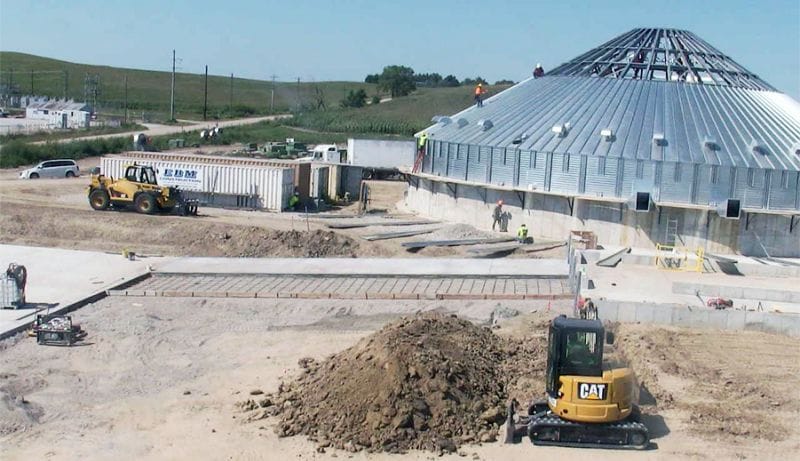
Whether you choose your own subcontractor for the erection phase or you want to install everything together with us, a Richi supervisor will be around to make sure everything is mounted in a safe and thorough way.

● Training
Staff Training
We provide comprehensive training for the technicians of each project. We can also continue to provide support for the technicians during latter project operation.
● After-sales
Project Follow-Up
When everything is up and running our Richiers will help you further whenever needed. We are ready to answer your call 24/7.We’ll also visit you regularly to learn about your needs.
Who we are
RICHI Machinery is one of the world’s leading suppliers of technology and services for the animal feed, aqua feed and pet food industries, also the largest pellet production line manufacturer in China.
Since 1995, RICHI’s vision to build a first-class enterprise, to foster first-class employees, and to make first-class contributions to society has never wavered.
In the past three decades, we have expanded our business to a wide range of areas, including animal feed mill equipment, aqua feed equipment, pet feed equipment, biomass pellet equipment, fertilizer equipment, cat litter equipment, municipal solid waste pellets equipment, etc.

1995
RICHI Established

2000+
Serving More Than 2000 Customers

120+
RICHI Employees

140+
Exported To 140 Countries