 0086-138 3838 9622
Biomass Pellet Plant for Crop Residue and Wood Waste in Bulgaria
RICHI MACHINERY
Project Overview
A mid-sized biomass energy company reached out to RICHI Machinery about building a 5t/h biomass pellet plant for crop residue and wood waste in Bulgaria with an annual capacity of 25,000 tons of pellets (running 16 hours per day, 2 shifts, 300 days per year). The facility produces fuel pellets from wood waste (sawdust, wood chips) and crop residues (wheat straw, corn stalks) for industrial boilers and district heating plants across southeastern Europe.
The client is located in the Burgas Region of southeastern Bulgaria, near the Black Sea coast. Bulgaria has abundant forestry resources (3+ million hectares of forest) and is a major grain producer (6+ million tons of wheat annually), generating significant wood processing waste and crop residues. The client already operated a small wood processing business and decided to diversify into pellet production.
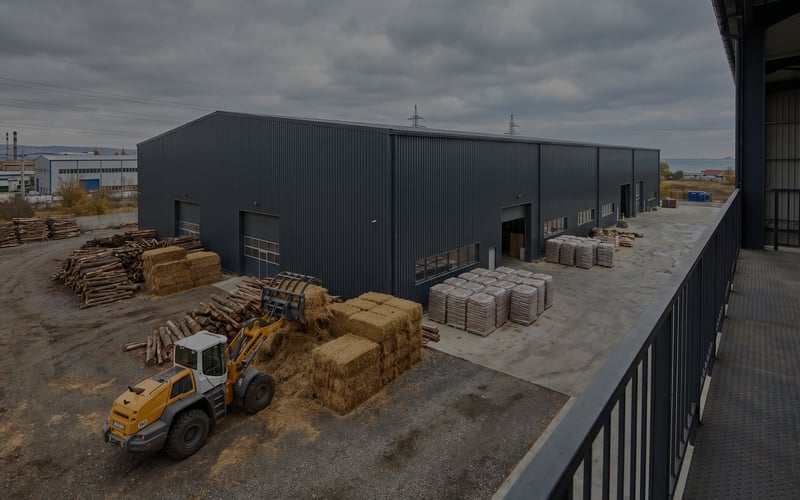
The facility is built on a 5,333m² leased site (about 1.3 acres) with a single 3,000m² production building (steel frame, 8m ceiling height). The building includes production equipment, raw material storage, finished product storage, an office (200m²), and a canteen (150m²).
Total investment of this biomass pellet plant was about $520,000 USD (including equipment, building modifications, and working capital), of which $168,000 was the equipment cost.
5T/H
capacity
$520,000
investment
Bulgaria
location
Biofuel
project type
RICHI MACHINERY
Why Bulgaria?
Bulgaria has significant biomass resources and growing energy demand:
| Parameter | Value |
|---|---|
| Forest area | 3+ million hectares (35% of land) |
| Annual wood processing waste | 1+ million tons |
| Wheat production | 6+ million tons/year → 6+ million tons straw |
| Corn production | 3+ million tons/year → 3+ million tons stalks |
| Current pellet production | 50,000-100,000 tons/year |
| District heating plants | 20+ major plants (Sofia, Plovdiv, Burgas) |
The opportunity: Bulgarian district heating plants are required to increase renewable energy share. Pellets can co-fire with coal and natural gas.
Target customers:
| Customer segment | Location | Annual demand (tons) | Current fuel |
|---|---|---|---|
| District heating | Burgas, Varna, Sofia | 200,000+ | Natural gas/coal |
| Industrial boilers | Burgas, Plovdiv | 50,000+ | Heavy fuel oil |
| Wood processing (dryers) | Nationwide | 30,000+ | Natural gas |
| Export to Romania/Greece | — | 100,000+ | Wood pellets |
RICHI MACHINERY
Raw Materials: Wood Waste and Crop Residues
The client processes three types of raw material:
| Raw Material | Annual (tons) | Moisture (%) | Source | Cost (BGN/ton) | USD/ton (1.8 BGN/USD) |
|---|---|---|---|---|---|
| Wood logs | 10,000 | 30-40% | Local forests | 60 | $33 |
| Sawdust | 12,500 | 15-20% | Sawmills | 40 | $22 |
| Straw | 5,500 | 15-20% | Wheat farms | 30 | $17 |
| Total input | 28,000 | — | — | — | — |
The client’s challenge: Wood logs (30-40% moisture) need chipping and drying. Sawdust (15-20% moisture) only needs grinding. Straw (15-20% moisture) needs chipping and grinding. The client uses a single line for all three — shared equipment saves capital cost.
Drying requirement: The client’s hand-fired furnace burns self-produced pellets (72 tons/year) to dry material. The dryer reduces moisture from 21% (average) to 12%.
RICHI MACHINERY
The Site and Building
The client’s site is in an industrial zone in Burgas. The building is a single-story steel frame structure.
Building layout (3,000m²):
| Zone | Size (approx.) | Equipment |
|---|---|---|
| Chipping area | ~200m² | Wood chipper machine |
| Grinding area | ~300m² | Hammer mill, cyclone, bag filter |
| Drying area | ~300m² | Hand-fired furnace, rotary dryer (SG-20), cyclone |
| Pelletizing area | ~500m² | 3 biomass pellet presses |
| Screening/cooling | ~200m² | Screener, conveyors |
| Raw material storage | ~800m² | Wood logs, sawdust, straw bales |
| Finished product storage | ~500m² | Bagged pellets (25kg, 50kg, 1-ton bulk) |
| Office/canteen | 350m² | Admin, staff |
RICHI MACHINERY
Equipment Configuration
The client chose a multi-stage biomass pellet production line with shared equipment for all feedstocks:
| Equipment | Quantity | Power | Function |
| Chipping system | |||
| Infeed belt conveyor | 1 | 5.5 kW | Feeding wood logs |
| Wood chipper machine | 1 | 55 kW | Chipping logs to 2-3cm |
| Magnetic separator | 1 | — | Removing metal |
| Grinding system | |||
| Hammer mill | 1 | 90 kW | Grinding to <6mm |
| Double cyclone | 1 set | 15 kW fan | Dust collection |
| Discharge belt conveyor | 1 | 3 kW | Transport |
| Drying system | |||
| Buffer hopper | 1 | — | Temporary storage |
| Hand-fired furnace | 1 | — | Burning pellets (72 t/year) |
| Infeed belt conveyor + magnet | 1 | 3 kW | Feeding dryer |
| Screw conveyor | 1 | 2.2 kW | Feeding dryer |
| Rotary dryer | 1 | 30 kW + heater | Drying to <12% moisture |
| Double cyclone | 1 | — | Primary dust |
| Fan | 1 | 37 kW | Airflow |
| Discharge belt conveyor | 1 | 3 kW | Transport |
| Pelletizing system | |||
| Infeed pit + belt conveyor (W600×10m) | 1 | 3 kW | Feeding pellets |
| Cleaner screen | 1 | 3 kW | Removing fines |
| Bucket elevator | 1 | 7.5 kW | Lifting to bins |
| Distribution screw | 1 | 4 kW | Distributing to 3 bins |
| Biomass pellet mills | 3 | 132 kW each | Producing 8mm pellets |
| Dehumidifier + dust collector | 1 | 7.5 kW | Cooling/dust |
| Belt conveyor + skirt belt conveyor | 2 | 4 kW each | Transport |
| Screener | 1 | 5.5 kW | Grading |
| Finished bins | 1 | — | Storage |
| Control system | |||
| Control panels | 3 | — | For each section |
RICHI MACHINERY
Process Flow
This line processes three different feedstocks. The flow changes slightly depending on the material.
Step 1: Raw Material Receiving
Trucks deliver wood logs (from forests), sawdust (from sawmills), and straw bales (from farms). The client stores wood logs and straw in the raw material area (800m²). Sawdust is stored separately.
Step 2: Chipping (for Wood Logs and Straw Only)
Sawdust doesn’t need chipping. Wood logs and straw need size reduction before grinding.
Wood logs (10,000 t/year) are fed into the wood chipper via the infeed belt conveyor. The chipper reduces logs to 2-3cm chips.
Chipper parameters:
- Output size: 2-3cm
- Throughput: 4-5 t/h
Magnetic separator: The conveyor has a magnet to remove nails and staples.
The chipped wood joins the sawdust and straw (which go directly to grinding).
Step 3: Grinding (Hammer Mill)
All material (wood chips, sawdust, straw) is fed into the hammer mill.
Hammer mill parameters:
- Rotor diameter: 660mm
- Rotor width: 1,000mm
- Screen size: 6mm
- Throughput: 5-6 t/h
Step 4: Drying
The raw material is 21% moisture on average. It needs to be dried to <12% for pelletizing.
The ground material is fed into the rotary dryer via the buffer hopper and screw conveyor.
Hand-fired furnace: The furnace burns self-produced pellets (72 tons/year) to generate hot air at 400°C. The hot air enters the dryer.
Dryer parameters:
- Type: Rotary drum
- Inlet temperature: 400°C
- Retention time: 10-15 minutes
- Moisture in: 21%
- Moisture out: <12%
Step 5: Pelletizing
Dried material (<12% moisture) is fed into the pelletizing system via the infeed pit and belt conveyor.
Pre-cleaning: The material passes through a cleaner screen to remove fines.
Pellet mill system (3 independent mills):
| Parameter | Value |
|---|---|
| Model | QF420 |
| Die diameter | 420 mm |
| Die hole diameter | 8 mm |
| Power per mill | 132 kW |
| Throughput per mill | 1.7-2 t/h |
| Total throughput | 5-6 t/h |
Pellettization process:
- Material is lifted to the distribution screw via bucket elevator
- Distribution screw distributes material to 3 bins
- Three pellet mills operate in parallel
- Pellets exit the mills at 80-90°C
- Material passes through dehumidifier + dust collector for cooling and dust control
Pellet specifications:
| Parameter | Wood pellets | Straw pellets |
|---|---|---|
| Diameter | 8-9 mm | 8-9 mm |
| Length | 20-40 mm | 20-40 mm |
| Moisture | 8-10% | 9-11% |
| Density | >1,000 kg/m³ | 950-1,000 kg/m³ |
| Ash content | 1-2% | 4-6% |
| Calorific value | 17-18 MJ/kg | 14-15 MJ/kg |
Step 6: Cooling and Screening
Pellets are conveyed to the cooler (natural cooling in the conveyor system. Cooling time: 10-15 minutes.
Screening: Pellets pass through a screener to remove fines:
- Acceptable pellets: 6-40mm → packaging
- Fines (<3mm) → return to pellet mill
- Oversize (>40mm) → return to pellet mill
Step 7: Packaging
Finished pellets are stored in finished bins then packaged.
Packaging process:
- The client uses a bagging scale (automatic)
- Bag sizes: 25kg, 50kg, 1-ton bulk bags
- The client also sells bulk (30-ton truckloads)
RICHI MACHINERY
Utilities and Consumption
| Utility | Annual consumption | Cost (BGN) | Cost (USD at 1.8 BGN/USD) |
|---|---|---|---|
| Electricity | 1,500,000 kWh | 300,000 | $166,667 |
| Water (domestic only) | 780 m³ | 1,560 | $867 |
| Pellets (for dryer) | 72 tons | Self-produced | opportunity cost |
Electricity breakdown (annual, 300 days, 16 hours/day = 4,800 hours):
| Equipment | kW average | Hours/day | kWh/day | kWh/year |
|---|---|---|---|---|
| Wood chipper | 40 | 6 | 240 | 72,000 |
| Hammer mill | 70 | 12 | 840 | 252,000 |
| Dryer fan + drum | 50 | 10 | 500 | 150,000 |
| Pellet mills (3) | 300 (100 each avg) | 16 | 4,800 | 1,440,000 |
| Cyclones, fans | 30 | 16 | 480 | 144,000 |
| Conveyors, elevator | 20 | 16 | 320 | 96,000 |
| Screener, bagging | 15 | 8 | 120 | 36,000 |
| Lighting, office | 10 | 16 | 160 | 48,000 |
| Total | 535 | — | 7,460 | 2,238,000 kWh |
Electricity cost per ton: 2,238,000 kWh ÷ 25,000 tons = 89 kWh/ton × 0.20 BGN/kWh = 17.8 BGN/ton ($9.90).
RICHI MACHINERY
How RICHI Customized This Line for Multi-Raw Material Processing
The client had specific requirements that shaped the equipment design:
Requirement 1: The client processes three different feedstocks (wood logs, sawdust, straw). They didn’t want separate equipment for each material.
RICHI solution: A single line with shared chipping, grinding, drying, and pelletizing equipment. The client changes the configuration:
- Wood logs: chipper → hammer mill → dryer → pellet mill
- Sawdust: bypass chipper → hammer mill → dryer (optional) → pellet mill
- Straw: chipper (for bales) → hammer mill → dryer → pellet mill
Requirement 2: Wood logs have high moisture (30-40%) and need drying. The client couldn’t afford a large gas or electric dryer.
RICHI solution: A hand-fired furnace burning self-produced pellets (72 tons/year). The dryer uses hot air at 400°C to reduce moisture from 21% to 12%. The furnace cost is low (no complex burner controls).
Requirement 3: The client produces two product lines (wood pellets and straw pellets). Wood pellets command a higher price (higher calorific value) than straw pellets.
RICHI solution: The client runs wood pellets during the winter (higher demand for heating) and straw pellets during the summer (when straw is available from harvest). The same equipment is used for both; the client adjusts the dryer temperature and pellet mill compression ratio.
Requirement 4: The client has 26 staff, running 2 shifts (16 hours/day). They needed a line that can run semi-automatically.
RICHI solution: Three control panels — one for each section (grinding, drying, pelletizing). The client has one operator per shift monitoring the line.
Requirement 5: The client’s building is only 3,000m² — tight for a 5 t/h line with three pellet mills.
RICHI solution: Compact layout: equipment arranged in a U-shape. Raw material enters at one end, finished pellets exit at the same end. The client uses vertical space (elevators) to reduce footprint.
RICHI MACHINERY
Product Specifications
The client’s pellets meet Bulgarian standards (based on ENplus, adapted for agricultural residues).
Wood pellets (20,000 t/year):
| Parameter | Value |
|---|---|
| Diameter | 8-9 mm |
| Length | 20-40 mm |
| Moisture | 8-10% |
| Density | >1,000 kg/m³ |
| Ash content | 1-2% |
| Calorific value | 17-18 MJ/kg |
| Durability | 96-97% |
Straw pellets (5,000 t/year):
| Parameter | Value |
|---|---|
| Diameter | 8-9 mm |
| Length | 20-40 mm |
| Moisture | 9-11% |
| Density | 950-1,000 kg/m³ |
| Ash content | 4-6% |
| Calorific value | 14-15 MJ/kg |
| Durability | 94-95% |
Pricing (as of August 2025):
| Product | Price (BGN/ton) | Price (USD/ton at 1.8 BGN/USD) |
|---|---|---|
| Wood pellets (bulk) | 250 | $139 |
| Wood pellets (25kg bags) | 280 | $156 |
| Straw pellets (bulk) | 180 | $100 |
| Straw pellets (25kg bags) | 210 | $117 |
RICHI MACHINERY
Market Outlook for Wood and Straw Pellets in Bulgaria
Bulgaria’s biomass pellet market is growing. Key drivers:
1. EU coal phase-down. Bulgaria has committed to reduce coal use. Co-firing biomass at coal plants is the cheapest compliance path.
2. District heating modernization. Sofia, Plovdiv, Varna, and Burgas are upgrading district heating plants. Pellets can replace natural gas.
3. Wood processing waste is abundant. Bulgaria has 3+ million hectares of forest. Sawdust is cheap (40 BGN/ton = $22).
4. Straw is even cheaper. Wheat straw costs 30 BGN/ton ($17) — much less than wood.
Competition: There are 30-40 pellet producers in Bulgaria (1,000-20,000 tons/year). The client’s 25,000 tons/year makes them one of the larger producers.
Challenges the client is managing:
| Challenge | Mitigation |
|---|---|
| Wood logs have high moisture (30-40%) | Dryer reduces moisture to 12%; furnace uses self-produced pellets (72 t/year) |
| Straw pellets have higher ash (4-6%) | Sell straw pellets at a discount (180 BGN/ton vs 250 for wood); target industrial customers with ash removal systems |
| Raw material seasonality (straw only after harvest) | Build 3-month inventory (1,500 tons) during harvest (July-August) |
| Competition from cheap wood pellets from Ukraine | Emphasize quality and local delivery (1-2 days vs 2-3 weeks) |
The client’s breakeven point is 15,000 tons/year (60% capacity). At full capacity (25,000 tons/year), the operating margin is about 15–20%. Payback on equipment ($168,000) is about 2 years, and payback on total investment ($1.4 million) is about 4 years.
RICHI MACHINERY
Why a Multi-Raw Material Pellet Plant Makes Sense in Bulgaria
Bulgaria has abundant wood waste and crop residues, EU regulations favoring biomass, and a growing industrial boiler market. Here’s why you should consider this market:
Wood logs are cheap (60 BGN/ton = $33). Bulgaria has extensive forests. Wood waste from sawmills is even cheaper (sawdust at 40 BGN/ton = $22).
Straw is even cheaper (30 BGN/ton = $17). The client pays farmers to remove straw from fields — farmers are happy to get paid for something they used to have to dispose of.
The EU supports biomass. The EU’s Renewable Energy Directive (RED II) incentivizes biomass use for industrial heat.
Bulgaria has good logistics. Burgas port (Black Sea) exports pellets to Turkey, Greece, and Romania. Rail connections to Central Europe.
If you’re considering a multi-raw material pellet plant in Bulgaria (or any country with wood processing and grain farming), RICHI can help. We’ve designed lines for wood waste, straw, corn stalks, and other biomass. We understand the challenges (different moisture levels, different fiber characteristics, drying requirements) and can recommend the right equipment for your budget.
Contact us to discuss your project. Tell us about your raw materials (type, moisture, volume), target customers (industrial boilers, district heating, export), site conditions, and budget. We’ll prepare a customized process flow, equipment list, and budget estimate — no obligation.
RICHI Machinery – Multi-raw material fuel pellet plants from 0.2 t/h to 10 t/h. Shipping from Qingdao to Burgas port: 20-25 days. Installation support available in Bulgaria within 2 weeks.
● RICHI MACHINERY
RICHI Service

● Consulting
Customer Consultation
We want to have a deep understanding of your industrial process, to know your exact needs of feed, wood, biomass, fertilizer or other pellet processing.
● Design
biomass Pellet Plant Design
Based on your unique situation and industrial process, we will tailor complete pellet plant you need, and inform you of every additional detail that could facilitate operation, minimize total cost.
● Manufacturing
Equipment Manufacturing
The critical components of the of the complete pellet production line equipment are built in our own workshops in Asia. Additional equipment is manufactured by our worldwide network of reliable partners.

● Testing
Quality Inspection & Testing
Before leaving the factory, all equipment will be inspected by the quality inspection department. We can also provide customers with testing services from a single machine to a complete pellet plant system, and provide you with real actual data for “worry-free use.”

● Delivery
Equipment Delivery
In equipment boxing and packaging, we adopt professional packaging and modular solutions to ensure the safe and non-destructive delivery of pellet plant equipment.
● Installation
Installation & Commissioning
Whether you choose your own subcontractor for the erection phase or you want to install everything together with us, a Richi supervisor will be around to make sure everything is mounted in a safe and thorough way.

● Training
Staff Training
We provide comprehensive training for the technicians of each project. We can also continue to provide support for the technicians during latter project operation.
● After-sales
Project Follow-Up
When everything is up and running our Richiers will help you further whenever needed. We are ready to answer your call 24/7.We’ll also visit you regularly to learn about your needs.
Who we are
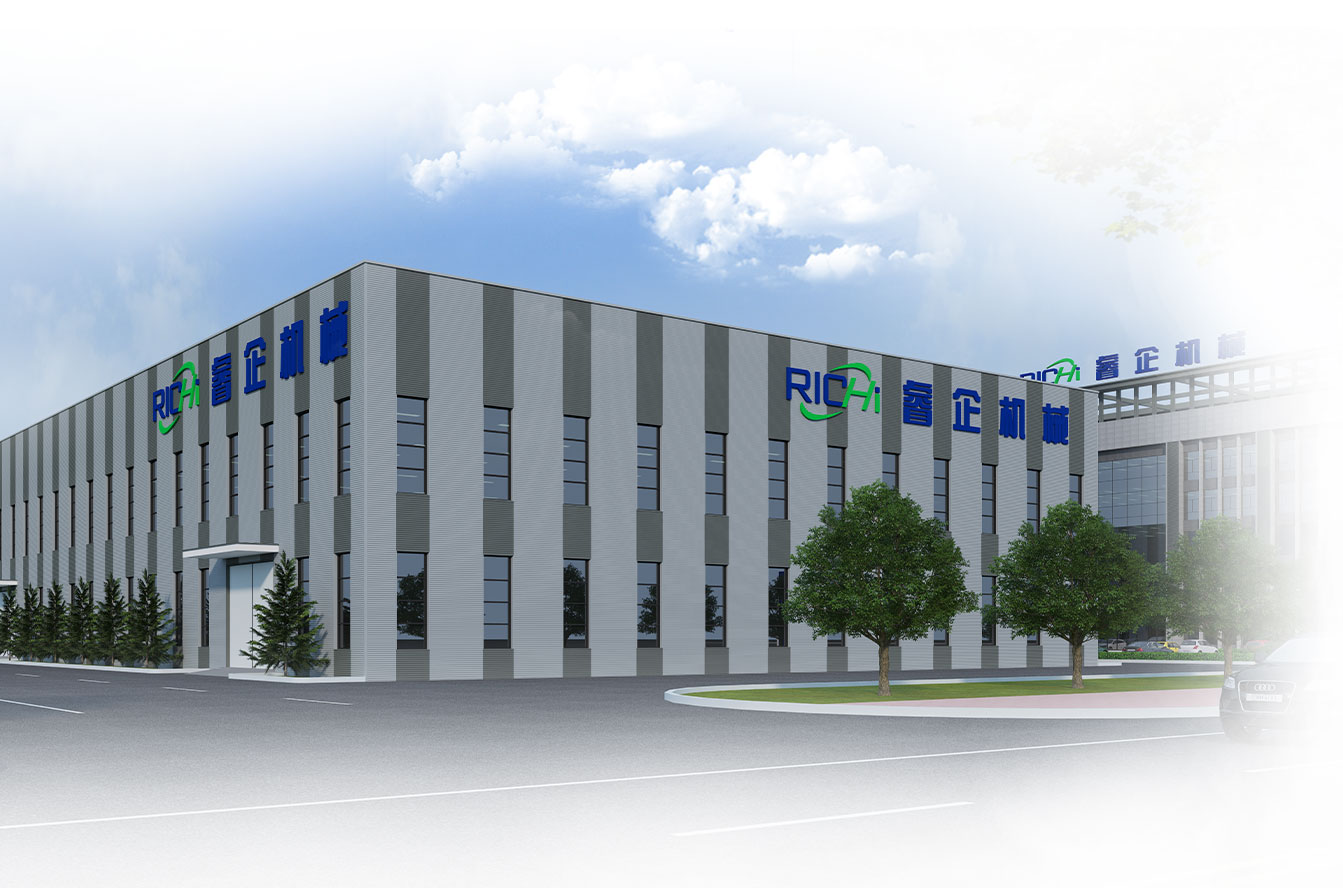
RICHI Machinery is one of the world’s leading suppliers of technology and services for the animal feed, aqua feed and pet food industries, also the largest pellet production line manufacturer in China.
Since 1995, RICHI’s vision to build a first-class enterprise, to foster first-class employees, and to make first-class contributions to society has never wavered.
In the past three decades, we have expanded our business to a wide range of areas, including animal feed mill equipment, aqua feed equipment, pet feed equipment, biomass pellet equipment, fertilizer equipment, cat litter equipment, municipal solid waste pellets equipment, etc.

1995
RICHI Established

2000+
Serving More Than 2000 Customers

120+
RICHI Employees

140+
Exported To 140 Countries