 0086-138 3838 9622
Straw Pellet Processing System for Fuel Production in Kazakhstan
RICHI MACHINERY
Project Overview
A biomass energy company approached RICHI Machinery about building a 6t/h straw pellet processing system for fuel production in Kazakhstan with an annual capacity of 30,000 tons of straw pellets (running 8 hours per day, 200 days per year). The facility produces biomass fuel pellets from corn stalks, corn cobs, and rice husks for industrial boilers and heating systems in northern Kazakhstan.
The client is located in the Kostanay Region of northern Kazakhstan, about 400km northwest of Nur-Sultan (formerly Astana). This region is one of the country’s major grain and corn production areas, generating massive volumes of agricultural residues annually. Currently, most of this residue is burned in the fields after harvest (August-October), creating significant air pollution problems that have led to government fines and public complaints.
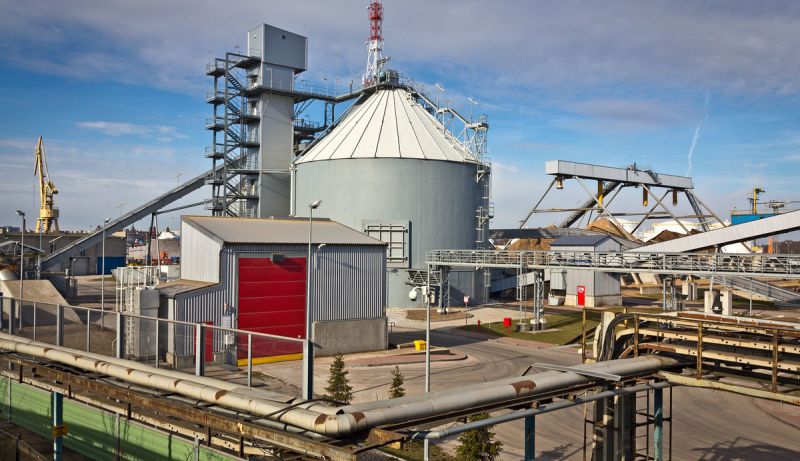
The client saw an opportunity to collect that residue and convert it into fuel pellets. The facility is set on a 35,000m² site (about 8.6 acres) with a new 1,849m² production building (brick and concrete structure, single story). The site also includes a 2,279m² raw material warehouse, a 432m² finished goods warehouse, a 280m² office, a 820m² staff dormitory (existing building repurposed), and a 240m² gatehouse.
The client’s operation is seasonal – they only produce from October to April (8 months, 200 days) because:
- Raw material availability peaks after harvest (August-October, but they process through winter)
- They use a biomass hot air furnace for drying, which is more efficient in cold weather
- The client’s staff work three shifts, but the facility shuts down during the hot summer months
This case walks through how RICHI designed a complete straw pellet processing system that includes drying (because the raw material is delivered at 25-35% moisture), multi-stage grinding, and three straw biomass pellet mills.
6T/H
capacity
$285,000
investment
Kazakhstan
location
Biofuel
project type
RICHI MACHINERY
Market Context
Kazakhstan is a major agricultural producer. Key crops and their residues:
| Crop | Annual production | Residue type | Residue volume (million tons) |
|---|---|---|---|
| Wheat | 12-15 million tons | Straw | 15-20 |
| Corn (grain) | 1-1.5 million tons | Stalks, cobs | 2-3 |
| Rice | 500,000 tons | Husks, straw | 0.5-1 |
| Sunflower | 800,000 tons | Husks, stalks | 1-2 |
Total agricultural residue: 20-25 million tons annually. Current utilization rate: less than 5%.
The problem: Farmers burn residues in the field after harvest. Burning is technically illegal but enforcement is weak. The Ministry of Ecology, Geology and Natural Resources has been increasing fines (up to 1 million tenge or $2,200 for large violations). But farmers have no alternative – collecting and transporting residue is expensive.
The opportunity: The client pays farmers 8,000-10,000 tenge per ton ($17-21) for baled corn stalks and corn cobs. That’s enough to make collection worthwhile. Farmers get income, the client gets feedstock.
Target customers:
| Customer segment | Location | Annual pellet demand | Current fuel |
|---|---|---|---|
| District heating boilers | Kostanay, Rudny | 50,000 tons | Coal |
| Grain dryers (elevators) | Throughout region | 30,000 tons | Natural gas |
| Industrial boilers (food processing) | Regional | 20,000 tons | Heavy fuel oil |
| Greenhouses | Northern Kazakhstan | 10,000 tons | Coal |
The client’s initial focus is district heating boilers in Kostanay city. These boilers are being required to reduce coal consumption. Biomass pellets can co-fire with coal at 10-20% without boiler modifications.
RICHI MACHINERY
Raw Materials: Corn Stalks, Corn Cobs, and Rice Husks
The client’s raw material mix is designed to balance cost and quality:
| Raw Material | Annual (tons) | Moisture (%) | Ash content (%) | Cost (tenge/ton) | USD/ton (480 tenge/USD) |
|---|---|---|---|---|---|
| Corn stalks (baled) | 20,000 | 35-40 | 5-8 | 8,000 | $16.70 |
| Corn cobs (loose or bagged) | 10,000 | 25-30 | 2-4 | 10,000 | $20.80 |
| Rice husks (bagged) | 10,000 | 20-25 | 12-18 | 6,000 | $12.50 |
| Total input | 40,000 | — | — | — | — |
Wait, 40,000 tons input for 30,000 tons output? Yes. The difference (10,000 tons) is:
- Water evaporated during drying: about 7,600 tons (20% moisture removed)
- Impurities (stones, soil, metal) removed during screening: about 396 tons
- Dust captured in filters: about 4 tons
Corn stalks: The client contracts with farmers within 100km. Stalks are baled in the field after corn harvest (September-October). Bales are stored in the raw material warehouse (2,279m², capacity 500 tons – about 5 days of production). The client needs more storage – they’re adding outdoor covered storage for another 1,000 tons.
Corn cobs: Corn cobs are higher in lignin than stalks, which improves pellet binding. They also have lower moisture (25-30%) and lower ash. The client mixes cobs with stalks at a 1:2 ratio for the best pellet quality.
Rice husks: Rice husks are a byproduct of rice milling. They have high ash content (12-18%) but also high silica content, which can be abrasive. The client limits rice husks to 20-25% of the mix to keep ash content below 6% (the target for premium fuel pellets).
Raw material quality control:
- Moisture test on every incoming load (portable meter) – reject if >40%
- Visual inspection for mold, plastic, metal
- Ash test weekly (sample sent to lab in Kostanay)
The client rejects about 5-8% of incoming loads (mostly stalks that were baled too wet or have visible mold).
RICHI MACHINERY
The Site and Building
The client’s site is on agricultural land converted to industrial use (all permits obtained). The site is rectangular, well drained, with good access to the regional road network.
Building layout:
| Building | Size (m²) | Construction | Use |
|---|---|---|---|
| Production building | 1,849 | Brick/concrete, 1 story | Processing (shredding → grinding → drying → pelletizing) |
| Raw material warehouse | 2,279 | Brick/concrete | Storage for straw bales, corn cobs, rice husks |
| Finished goods warehouse | 432 | Brick/concrete | Bagged pellets (25kg, 50kg) |
| Office | 280 | Brick/concrete | Admin, control room |
| Staff dormitory | 820 | Brick/concrete (existing) | 20 staff (3 shifts) |
| Gatehouse | 240 | Brick/concrete | Guard, weighbridge |
| Total | 5,900 | — | — |
Production building layout (1,849m², single story, high ceiling):
The client chose a linear layout from north to south (material flows from raw material warehouse at north end to finished goods warehouse at south end):
| Position | Equipment | Notes |
|---|---|---|
| North end (connected to raw material warehouse) | Bale breaker, crusher | Receives bales from warehouse |
| North-central | Hammer mill, screen | Grinding |
| Central | Screw conveyor | Transport |
| Central-south | Rotary dryer, hot air furnace | Drying (most critical step) |
| South-central | Buffer bin | 5-ton capacity |
| South end | Pellet mills (3 units) | Side by side |
| South exit | Cooling area, packaging | Manual bagging |
The building’s concrete construction is unusual (most pellet plants use steel frame). But Kazakhstan has cold winters (-30°C), and concrete provides better insulation. The client installed radiant floor heating in the control room and office areas.
RICHI MACHINERY
Equipment Configuration
The client chose RICHI’s straw pellet plant equipment designed specifically for agricultural residues:
| Equipment | Quantity | Power (each) | Notes | |
|---|---|---|---|---|
| Bale breaker / primary crusher | 1 | 45 kW | Breaks bales, reduces to 10-20cm | |
| Rotary screen (soil removal) | 1 | 7.5 kW | Removes stones, soil, metal | |
| Hammer mill | 1 | 110 kW | Grinds to <8mm particles | |
| Hot air furnace (biomass-fired) | RF-60 | 1 | 0.6 t/h fuel | Burns self-produced pellets |
| Rotary dryer | 1 | 45 kW + fans | 3-pass design, 180°C inlet | |
| Pellet mill | 3 | 200 kW each | Ring die type, 6-8 t/h each | |
| Screw conveyors (augers) | 6 | 2.2-5.5 kW | Material transport | |
| Baghouse filters | — | 2 | 15-22 kW | Dust collection |
Equipment cost (FOB Qingdao): $285,000 USD
Why this configuration for wet straw:
1. Rotary screen before the hammer mill. The client’s straw often contains soil, stones, and metal. The rotary screen removes this before grinding, which protects the hammer mill screens (screens cost $500 each and need replacement if damaged by stones).
2. Three-pass rotary dryer. The raw material moisture is 25-40%. It needs to be dried to 10-12% for pelletizing. The three-pass design (material goes through the drum three times) provides long retention time (15-20 minutes) in a compact footprint.
3. Three pellet mills (3 × 200 kW). Each mill produces 2.5-3 t/h on corn stalks/cobs mix. The client runs all three for 6-8 t/h total. If one mill is down, the client still produces 4-5 t/h (acceptable for their customer commitments).
4. Hot air furnace that burns self-produced pellets. The client uses 75 tons of their own pellets annually to fuel the dryer. This is a closed-loop system – the pellets pay for themselves by enabling processing of wet material.
RICHI MACHINERY
Process Flow
This is a complete biomass pellet production line with drying. The drying section is the most energy-intensive part, but necessary because the raw material is wet.
Step 1: Raw Material Receiving
Farmers deliver baled corn stalks, bagged corn cobs, and bagged rice husks. The truck crosses the weighbridge (gross weight). The driver unloads into the raw material warehouse (north end of the site).
Storage management: Bales are stacked 3-4 high (about 4m) using a front-end loader. The warehouse capacity (500 tons) is only 5 days of production at 6 t/h (30 tons/day × 5 = 150 tons, wait 500 tons is actually 16 days). Let me correct: At 6 t/h × 8 hours = 48 tons/day. 500 tons ÷ 48 = 10 days. The client’s warehouse holds about 10 days of raw material. They’re adding outdoor storage for another 20 days.
Step 2: Bale Breaking and Primary Crushing
The crushers is specifically designed for wet, fibrous materials like corn stalks. It uses multiple shafts and crushing chambers to avoid clogging.
The operator uses the front-end loader to feed bales into the bale breaker/crusher (45 kW).
Crusher parameters:
- Type: Multi-shaft, staged crushing
- Capacity: 4-5 t/h (stalks), 6-8 t/h (cobs)
- Output size: 10-20cm pieces
- Special design: The multi-shaft arrangement prevents wet material from wrapping around the shaft
Why this crusher is special: Corn stalks are wet (30-40%) and fibrous. A standard single-shaft crusher would jam. The crusher uses the “pull-break” theory – each stalk passes through multiple crushing stages, with complementary crushing directions. This ensures no uncrushed stalks pass through.
Step 3: Screening (Soil and Stone Removal)
Crushed material passes through the rotary screen.
Screener parameters:
- Diameter: 1,800mm
- Length: 500mm (but material travels longer due to rotation)
- Screen mesh: 20mm (removes stones >2cm)
- Rotation speed: 18 RPM
The screener removes stones, soil clods, and metal pieces. This material (about 396 tons/year) is rejected and sent to a landfill.
Step 4: Hammer Milling (Grinding)
Screened material feeds into the hammer mill.
Hammer mill parameters:
| Parameter | Value | Notes |
|---|---|---|
| Rotor diameter | 1,300 mm | Large rotor for high throughput |
| Rotor width | 650 mm | |
| Screen size | 8 mm | Standard for straw |
| Rotor speed | 2,600 RPM | Slower than wood mills |
| Throughput (corn stalks) | 4-5 t/h | |
| Throughput (corn cobs) | 6-8 t/h |
Particle size target: <8mm. For good pelletizing, 70% should be between 2mm and 6mm.
Step 5: Drying (The Critical Step)
This is the most energy-intensive part of the line. The client’s raw material comes in at 25-40% moisture and needs to be dried to 10-12%. Without this step, pelletizing would be impossible.
Ground material is conveyed to the three-pass rotary dryer.
Dryer parameters:
| Parameter | Value |
|---|---|
| Diameter | 2.5 m |
| Length | 9 m (but three passes → 27 m effective length) |
| Inlet temperature | 180-200°C |
| Outlet temperature | 60-80°C |
| Retention time | 15-20 minutes |
| Moisture in | 25-40% |
| Moisture out | 10-12% |
| Evaporation capacity | 2-2.5 tons of water per hour |
Heat source: Hot air furnace (RF-60) that burns self-produced pellets (75 tons/year). The furnace has a heat output of 1.8 million kcal/hour (about 2.1 MW).
Combustion parameters:
- Fuel consumption: 0.6 t/h (when running)
- Fuel moisture: <10% (client uses their own premium pellets for the furnace)
- Flue gas temperature: 800-900°C at the furnace outlet
- Mixed with ambient air to achieve 180-200°C at dryer inlet
Why three-pass design: The triple-pass configuration (material goes through the drum three times) provides long retention time (15-20 minutes) in a compact footprint (9m length instead of 27m for a single-pass dryer). This is critical for wet straw – short retention time means incomplete drying, which means the pellet mill will jam.
Step 6: Buffer Storage
Dried meal (10-12% moisture) drops into a 5-ton buffer bin (steel, 2m × 2m footprint, 3m high). The bin holds about 50 minutes of production at 6 t/h.
Why a buffer bin: The dryer runs continuously, but the pellet mills need consistent feed. The bin smooths out flow fluctuations. It also allows the client to run the dryer while the pellet mills are stopped (for maintenance).
A low-level sensor triggers an alarm when the bin is 20% full, alerting the operator to start the dryer.
Step 7: Pelletizing
Dried meal is conveyed by screw conveyors to three straw pellet machines.
Pellet mill parameters (each):
| Parameter | Value | Notes |
|---|---|---|
| Die diameter | 850 mm | / |
| Die hole diameter | 9 mm | Produces 9-9.5mm pellets |
| Compression ratio | 5:1 | Standard for straw |
| Die speed | 180 RPM | / |
| Pre-heating | Electric (before start) | Client warms up the die to 60°C before feeding material |
| Operating temperature | 70-90°C | From friction |
| Throughput per mill | 2.5-3 t/h | Combined 7.5-9 t/h (derated to 6 t/h continuous) |
Why the client pre-heats the die: Cold straw doesn’t bind well. The client turns on the electric heaters in the pellet mill for 15-20 minutes before the first batch of the day. This brings the die temperature to 60°C. After that, friction maintains the temperature.
Pellet specifications (straw/cobs mix):
| Parameter | Target | Actual |
|---|---|---|
| Diameter | 9 mm | 9-9.5 mm |
| Length | 36-45 mm (4-5x diameter) | 40-45 mm |
| Moisture | 8-10% | 9-11% |
| Density | >1,200 kg/m³ | 1,200-1,250 kg/m³ |
| Bulk density | 600-650 kg/m³ | 620 kg/m³ |
| Durability (PDI) | >95% | 96-97% |
| Ash content | <6% | 4-6% |
| Calorific value | >15 MJ/kg | 15.3-15.8 MJ/kg |
Step 8: Cooling
Hot pellets (70-80°C) drop onto a belt conveyor that carries them to the finished goods warehouse area.
No mechanical cooler. The client spreads pellets on the warehouse floor in a layer 20-30cm deep. With the warehouse temperature at 15-20°C (heated by the building’s radiator system), pellets cool to ambient temperature in 4-6 hours.
Why this works: Kazakhstan winters are cold (the facility operates from October to April). The warehouse is heated to 15-20°C. The temperature difference between pellets (70°C) and ambient (15-20°C) is large enough for efficient cooling without a mechanical cooler. The client bags pellets the next morning.
Step 9: Packaging
Cooled pellets are shoveled into the packaging system (manual bagging).
Packaging process:
- Operator hangs a 25kg woven poly bag (with inner PE liner for moisture protection) on the filling spout
- Presses button, scale fills (accuracy ±100g)
- Operator sews bag closed
- Bags are stacked on pallets (40 bags × 25kg = 1,000kg per pallet)
- Pallet moved to finished goods area with forklift
The client also sells bulk (20-30 ton truckloads) to large customers (district heating plants, grain dryers). Bulk price is about 10% lower than bagged.
RICHI MACHINERY
Utilities and Consumption
| Utility | Annual consumption | Cost (tenge) | Cost (USD at 480 tenge/USD) |
|---|---|---|---|
| Electricity | 2,000,000 kWh | 40 million | $83,300 |
| Water | 120 m³ (domestic) | 60,000 | $125 |
| Biomass pellets (for furnace) | 75 tons | Self-produced (opportunity cost ~1.5 million tenge) | $3,125 |
| Diesel (loader, forklift) | 8,000 liters | 4.8 million | $10,000 |
Electricity breakdown (annual, 200 days, 8 hours/day = 1,600 hours):
| Equipment | kW average | Hours/day | kWh/day | kWh/year |
|---|---|---|---|---|
| Bale breaker/crusher | 35 | 8 | 280 | 56,000 |
| Rotary screen | 5 | 8 | 40 | 8,000 |
| Hammer mill | 80 | 8 | 640 | 128,000 |
| Straw dryer (drum + fan + exhaust fan) | 60 | 8 | 480 | 96,000 |
| Hot air furnace (fans, controls) | 10 | 8 | 80 | 16,000 |
| Pellet mills (3) | 450 (150 each avg) | 8 | 3,600 | 720,000 |
| Conveyors (6 units) | 20 | 8 | 160 | 32,000 |
| Baghouse fans (2) | 30 | 8 | 240 | 48,000 |
| Lighting, office, controls | 10 | 8 | 80 | 16,000 |
| Total | 700 | — | 5,600 | 1,120,000 kWh |
Electricity cost per ton: 1,600,000 kWh ÷ 30,000 tons = 53 kWh/ton × 20 tenge/kWh (industrial rate) = 1,060 tenge/ton ($2.20) – very efficient.
RICHI MACHINERY
How RICHI Customized This Line for Kazakh Conditions
The client had specific requirements that shaped the equipment design:
Requirement 1: Raw material has high moisture (25-40%) and comes from farmers with inconsistent quality. The client couldn’t afford to reject wet material – they needed to process it.
RICHI solution: Included a three-pass rotary dryer with a biomass-fired hot air furnace (RF-60). The dryer can remove 2-2.5 tons of water per hour, reducing moisture from 35% to 10%. The furnace burns self-produced pellets (75 tons/year), creating a closed-loop energy system.
Requirement 2: The client’s raw material includes corn stalks (fibrous, wet) and corn cobs (different density). Standard hammer mills would clog or produce inconsistent particle size.
RICHI solution: Multi-stage processing:
- bale breaker with multi-shaft design (prevents wrapping)
- Rotary screen to remove soil and stones (protects downstream equipment)
- hammer mill with 8mm screen (optimal for straw)
- The client runs stalks and cobs in separate batches (not mixed before grinding) to maintain consistent particle size
Requirement 3: The client has limited technical staff (20 employees total, many with no prior pellet experience). They needed a system that could be operated by general laborers.
RICHI solution: Provided a 4-week on-site training program (included in the contract):
- Week 1: Basic safety, machine startup/shutdown, daily checks (filters, bearings, lubrication)
- Week 2: Adjusting the hammer mill and pellet mill, changing screens and dies
- Week 3: Dryer operation (moisture control, temperature management)
- Week 4: Troubleshooting common problems (die plugging, belt slippage, bearing overheating)
The client’s lead operator (a former mechanic at a grain elevator) became proficient within 6 weeks.
Requirement 4: The client needs to meet Kazakh fuel pellet standards (no official standard exists yet, but they want to prepare for GOST certification).
RICHI solution: Designed the biomass pellet making plant to produce pellets that meet European standards (ENplus A2 for industrial use):
- Diameter 9mm (±1mm)
- Moisture <10%
- Ash <6% (with limited rice husk content)
- Durability >95%
- Calorific value >15 MJ/kg
The client’s product has been tested by a lab in Nur-Sultan and meets all proposed Kazakh standards.
Requirement 5: The facility only operates in winter (Oct-Apr). The client needed the line to be reliable in cold temperatures (-30°C).
RICHI solution:
- All water lines (for domestic use) are buried below frost line (2m deep) and heat-traced
- The production building is heated (radiant floor heating + electric space heaters)
- Bearings on critical equipment are sealed and greased with low-temperature grease (operates down to -40°C)
- The control panel and computers are in a heated room (20°C)
The client has operated successfully through winter 2025-2026 with no temperature-related failures.
RICHI MACHINERY
Product Specifications
The client’s pellets meet the proposed Kazakh standard (based on GOST 33103-2014 for wood pellets, adapted for agricultural residues):
| Parameter | Value | Method |
|---|---|---|
| Diameter | 9-9.5 mm | Caliper |
| Length | 40-45 mm | Caliper |
| Moisture | 9-11% | Drying oven (105°C, 24h) |
| Density (pellet) | 1,200-1,250 kg/m³ | Water displacement |
| Bulk density | 600-650 kg/m³ | 1L cylinder |
| Durability (PDI) | 96-97% | Tumbler test (500 rpm) |
| Fines (<3.15mm) | <1% | Sieve test |
| Ash content (550°C) | 4-6% | Muffle furnace |
| Volatile matter | 70-75% | Calculated |
| Fixed carbon | 15-18% | Calculated |
| Lower heating value | 15.3-15.8 MJ/kg | Bomb calorimeter |
| Sulfur | <0.05% | Combustion |
| Chlorine | <0.1% | Ion chromatography |
Pricing (as of October 2025):
| Format | Price (tenge/ton) | Price (USD/ton at 480 tenge/USD) |
|---|---|---|
| Bulk (20-30 ton truckload) | 35,000 | $73 |
| 25kg bags | 40,000 | $83 |
Comparison with other fuels in Kazakhstan:
| Fuel | Price (tenge/ton equivalent) | Calorific value (MJ/kg) | Cost per MJ (tenge) |
|---|---|---|---|
| Straw pellets (client) | 35,000 | 15.5 | 2,260 |
| Coal (local) | 25,000 | 22 | 1,136 |
| Natural gas (industry) | 40,000 (per ton coal equivalent) | — | 1,800 |
| Diesel | 450,000 | 42 | 10,700 |
Straw pellets are more expensive than coal but comparable to natural gas. The advantage: biomass is renewable, and the government offers tax incentives (reduced VAT, property tax exemptions) for renewable energy producers.
RICHI MACHINERY
Market Outlook for Straw Pellets in Kazakhstan
Kazakhstan’s biomass pellet market is in early stages – maybe 20,000-30,000 tons/year currently. But the potential is huge:
Key drivers:
1. Coal phase-down. Kazakhstan has committed to reducing coal consumption under the Paris Agreement. District heating systems (which currently burn coal) are being required to add biomass co-firing capability.
2. Agricultural residue management. The government is cracking down on field burning. Fines have increased 5x since 2023. Farmers need alternatives.
3. Import substitution. Kazakhstan imports wood pellets from Russia (40,000-50,000 tenge/ton delivered). Domestically produced straw pellets can compete on price.
4. Export potential (Europe). The EU has strict sustainability criteria for imported biomass. Agricultural residues qualify as “waste” and have lower carbon intensity than wood. But export requires ENplus certification, which the client is pursuing.
Competition: There are 10-15 pellet producers in Kazakhstan, most using wood waste from sawmills. Only 2-3 produce straw pellets. The client is the largest.
Challenges the client is managing:
| Challenge | Mitigation |
|---|---|
| Raw material seasonality (only available after harvest) | Build 30-45 days of inventory (1,500-2,000 tons) during harvest season |
| High ash content (4-6% vs wood pellets at 1-2%) | Target industrial customers with boilers that can handle ash; offer price discount relative to wood pellets |
| Logistics (Kazakhstan is large, distances are long) | Locate plant within 100km of 50% of customers; use own fleet of 5 trucks |
| Customer education about straw pellets | Provide free 1-ton samples to demonstrate performance; visit customer sites to explain ash removal |
RICHI MACHINERY
Considering a Straw Pellet Processing System?
Straw is abundant in many agricultural countries. But there are things you need to know before you start:
Straw needs drying if it’s harvested wet. In many climates, straw is baled at 15-20% moisture – no dryer needed. But in Kazakhstan (and similar climates with fall rains), straw can be 30-40% moisture. You need a dryer.
Agricultural residues vary significantly. Corn stalks are fibrous and need a multi-shaft crusher. Wheat straw is less fibrous. Rice husks are abrasive. Corn cobs are dense and grind easily. Each material requires different settings.
Ash content varies with material. Corn stalks have 5-8% ash. Corn cobs have 2-4% ash. Rice husks have 12-18% ash. Blend materials to achieve target ash.
You need a dust control system. Straw processing generates significant dust. Baghouse filters are essential for worker safety and environmental compliance.
Kazakhstan is a good market for straw pellets. Raw material is abundant, the government is supportive, and industrial customers need alternatives to coal. The client’s biomass pellet plant is profitable and growing.
If you’re considering a straw pellet processing system, RICHI can help. We’ve designed lines for wheat straw, rice straw, corn stalks, corn cobs, and other agricultural residues. We understand the challenges (wet material, fibrous texture, high ash) and can recommend the right equipment.
Contact us to discuss your biomass pellet project. Tell us about your raw material (type, moisture, volume), site conditions, target capacity, and budget. We’ll prepare a customized process flow, equipment list, and budget estimate – no obligation.
RICHI Machinery – Straw pellet processing systems from 0.5 t/h to 90 t/h. Shipping from Qingdao to Aktau port (Kazakhstan): 20-25 days. Installation support available in Kazakhstan within 2 weeks.
● RICHI MACHINERY
RICHI Service

● Consulting
Customer Consultation
We want to have a deep understanding of your industrial process, to know your exact needs of feed, wood, biomass, fertilizer or other pellet processing.
● Design
biomass Pellet Plant Design
Based on your unique situation and industrial process, we will tailor complete pellet plant you need, and inform you of every additional detail that could facilitate operation, minimize total cost.

● Manufacturing
Equipment Manufacturing
The critical components of the of the complete pellet production line equipment are built in our own workshops in Asia. Additional equipment is manufactured by our worldwide network of reliable partners.

● Testing
Quality Inspection & Testing
Before leaving the factory, all equipment will be inspected by the quality inspection department. We can also provide customers with testing services from a single machine to a complete pellet plant system, and provide you with real actual data for “worry-free use.”

● Delivery
Equipment Delivery
In equipment boxing and packaging, we adopt professional packaging and modular solutions to ensure the safe and non-destructive delivery of pellet plant equipment.
● Installation
Installation & Commissioning
Whether you choose your own subcontractor for the erection phase or you want to install everything together with us, a Richi supervisor will be around to make sure everything is mounted in a safe and thorough way.

● Training
Staff Training
We provide comprehensive training for the technicians of each project. We can also continue to provide support for the technicians during latter project operation.
● After-sales
Project Follow-Up
When everything is up and running our Richiers will help you further whenever needed. We are ready to answer your call 24/7.We’ll also visit you regularly to learn about your needs.
Who we are
RICHI Machinery is one of the world’s leading suppliers of technology and services for the animal feed, aqua feed and pet food industries, also the largest pellet production line manufacturer in China.
Since 1995, RICHI’s vision to build a first-class enterprise, to foster first-class employees, and to make first-class contributions to society has never wavered.
In the past three decades, we have expanded our business to a wide range of areas, including animal feed mill equipment, aqua feed equipment, pet feed equipment, biomass pellet equipment, fertilizer equipment, cat litter equipment, municipal solid waste pellets equipment, etc.

1995
RICHI Established

2000+
Serving More Than 2000 Customers

120+
RICHI Employees

140+
Exported To 140 Countries