 0086-138 3838 9622
Automatic Chicken Feed Pellet Production Line in Egypt
RICHI MACHINERY
The Call That Changed Their Business
Mid-2024. A feed manufacturer in Egypt’s Nile Delta region reached out. They had a problem – not technical, but strategic.
The company had been making vitamin premixes for layer hens for nearly a decade. Operated out of a 12,333 m² facility. Had the equipment, had the customers, had the reputation. But the premix market was shrinking. Farmers were moving away from buying separate vitamin packs and base mixes. They wanted complete pelleted feed – ready to pour into the hopper.
The client had watched this trend for two years. Small poultry farms around them were closing because they couldn’t compete on feed conversion ratios. The ones thriving were using commercial pelleted feed. The client’s own customers kept asking: “Can you just sell us the finished pellets?”
So they decided to pivot. Shut down the premix line. Convert the entire operation to an 10-15 t/h automatic chicken feed pellet production line in Egypt.
We got involved in August 2024. By October, we had a signed contract. Equipment shipped from Qingdao in December. Commissioning finished in March 2025 – just before Ramadan, when feed demand spikes.
10-15T/H
capacity
$620,000
investment
Egypt
location
Feed
project type
RICHI MACHINERY
Why Egypt? The Poultry Feed Math
Egypt has one of the largest poultry sectors in the Middle East and North Africa. Over 1.4 billion broilers produced annually. That’s roughly 4-5 million tons of feed per year.
But here’s the catch: most of that feed is still mash (unpelleted). Pellets are gaining ground because:
- Pellets reduce feed waste (less dust, less sorting by birds)
- Pellets improve digestibility (the conditioning process gelatinizes starches)
- Pellets allow inclusion of liquid fats (sprayed on after cooling)
The client had done their homework. They knew that a modern chicken feed pelletizing line running at 10-15 t/h could serve 200-300 medium-scale poultry farms within a 150 km radius. They had the relationships already – just needed the product.
The existing facility was well-located. Industrial zone near the Cairo-Ismailia highway. Good power supply (industrial rate at $0.07 per kWh). City water. No need to build new buildings – they already had a 7-story premix feed mill structure (23 meters high) originally built for premix production. We just had to repurpose it.
RICHI MACHINERY
Site Assessment: What We Inherited
We flew to Egypt in September 2024 to see the facility myself. The building was solid – reinforced concrete, good headroom, decent floor load capacity. But a premix plant is not a pellet plant. We had to change almost everything.
The good:
- Building height (23m over 7 floors) – perfect for gravity-flow layout
- Existing bins and silos (could be cleaned and reused for grain storage)
- Steam line from the nearby industrial park (they were already paying for steam for other processes)
- Loading dock and warehouse space (2,000 m² each for raw materials and finished goods)
The not-so-good:
- The existing dust collection was undersized (premix dust is less aggressive than grain dust)
- No cooling system (premix doesn’t need cooling – pellets do)
- No liquid addition system (they wanted to spray animal fat and oil on finished pellets)
- The elevator legs were too small for 15 t/h throughput
We gave the client a detailed retrofit plan. Cost was lower than building from scratch – about 60% of greenfield construction. They approved the budget within two weeks.
RICHI MACHINERY
Project Overview
| Parameter | Value |
|---|---|
| Project location | Industrial zone, Ismailia Road, Egypt (within Greater Cairo region) |
| Plant capacity | 10-15 t/h (100,000 t/year, single shift, 300 days, 24h operation possible) |
| Main products | Broiler starter (crumble), grower pellet, finisher pellet, layer mash |
| Facility area | 12,333 m² total (building footprint 5484 m², 7 stories) |
| Staff | 30 total (operators, maintenance, logistics, management) |
| Operation hours | 16 hours/day, 2 shifts initially (can expand to 24h) |
| First inquiry | August 2024 |
| Contract signed | October 2024 |
| Equipment shipped | December 2024 (from Qingdao) |
| Commissioning completed | March 2025 |
Equipment investment (delivered, excluding local work): $620,000 USD.
Total poultry feed mill project cost (including building modifications, local electrical, installation, training): $890,000 USD.
The client funded this through retained earnings from their premix business plus a equipment loan from an Egyptian bank at 14% interest (standard for industrial equipment here). Payback period estimated at 18 months.
RICHI MACHINERY
Raw Materials: What Goes Into Egyptian Chicken Feed
Egypt grows a lot of corn and wheat. The Nile Delta produces millions of tons annually. But quality varies – summer corn can be high moisture (16-18%) if not dried properly. The client set up contracts with local grain traders who supply dried corn (≤14% moisture).
The full raw material list looks like this:
| Material | Form | Annual usage (tons) | Storage method | Notes |
|---|---|---|---|---|
| Corn | Whole grain | 30,000 | 150-ton silos (2) | Local, dried to 14% max |
| Wheat | Whole grain | 20,000 | 150-ton silos | Local, for energy and protein |
| Soybean meal | Flakes, 50kg bags | 3,000 | Palletized in warehouse | Imported from Brazil |
| Peanut meal | Flakes, 50kg bags | 5,000 | Palletized in warehouse | Local (Egypt grows peanuts) |
| Corn germ meal | Flakes, 50kg bags | 9,000 | Palletized in warehouse | Byproduct of oil extraction |
| Rice flour | Powder, 25kg bags | 10,000 | Palletized in warehouse | Local (Egypt is a rice exporter) |
| Wheat flour | Powder, 25kg bags | 10,000 | Palletized in warehouse | Low-grade (not for human consumption) |
| Corn flour | Powder, 25kg bags | 8,000 | Palletized in warehouse | Milled locally |
| Premix (vitamins/minerals) | Powder, 2.5kg pails | 1,000 | Small containers | They still make this in-house |
| Glucose | Powder, 2.5kg bags | 2,000 | Small containers | For starter feed palatability |
| Animal fat (mixed) | Liquid, tank | 4,000 | 20-ton tank | For spray-on coating |
Total annual raw material input: about 102,000 tons – slightly higher than output due to moisture loss and dust collection.
The client still produces some premix for their own use (about 1,000 tons/year). That’s smart – they control the quality and save margin.
RICHI MACHINERY
Equipment Configuration: Retrofitting a Premix Building
The original 7-story structure determined a lot of our design decisions. We couldn’t change floor heights or column spacing. So we worked around it.
Floor allocation (top to bottom):
- 7th floor (top): Receiving and cleaning – corn and wheat intake, drum screens, magnets
- 6th floor: Raw material bins – gravity feed to the floor below
- 5th floor: Hammer mills (2 units) – one for corn, one for wheat/beans
- 4th floor: Batching and mixing – 20-bin scale system, 4-ton mixer
- 3rd floor: Conditioner and pellet mills (2 units, 200kW each)
- 2nd floor: Coolers (2 units), crumbler, screener, fat coater
- 1st floor: Finished product bins, bagging scales, palletizing robot
This vertical arrangement means material moves mostly by gravity. We only use bucket elevators to lift from receiving to the top floor and from mixing to conditioning. Saves power – about 30% less electricity than a horizontal layout.
Here’s the actual equipment list (no model numbers, just what matters):
| Equipment | Qty | Key specification |
|---|---|---|
| Bucket elevator (intake to silos) | 2 | 30 t/h capacity, self-cleaning cups |
| Corn/wheat silos (existing, cleaned) | 2 | 150 m³ each (about 120 tons of grain) |
| Receiving hopper with grate | 2 | 10 m³, below-floor pit |
| Drum cleaner (corn/wheat) | 2 | Removes husks, dirt, fines |
| Permanent magnetic separator | 4 | 10,000 Gauss |
| Hammer mill (corn) | 1 | 160kW, 3mm screen for broiler feed |
| Hammer mill (beans/wheat) | 1 | 132kW, 2mm screen for finer grind |
| Ground material bin | 4 | 8 m³ each, with level sensors |
| Batching scale (main) | 1 | 4 tons/batch, electronic load cells |
| Batching scale (micro) | 1 | 500 kg/batch for premix and additives |
| Ribbon mixer | 1 | 4-ton capacity, 7.5kW, 6-min cycle |
| Surge bin (before pelleting) | 2 | 8 m³ each |
| Conditioner (with steam injection) | 2 | 2.5m length, 1.2m diameter |
| Ring die feed pellet machine | 2 | 200kW main motor, 4mm/5mm dies |
| Counterflow cooler | 2 | 12 m² cooling area, 15 min retention |
| Crumble rolls | 1 | For starter feed (breaks 5mm pellets to 2-3mm) |
| Vibrating screener | 2 | 3 decks, removes fines and overs |
| Fat coater (batch type) | 1 | 2 tons/batch, vacuum spray |
| Finished product bin | 2 | 8 m³ each |
| Automatic bagging scale | 2 | 25-50kg bags, 8-10 bags/min |
| Palletizing robot | 1 | 4-axis, 600 bags/hour |
| Dust collection system (central) | 1 | 25,000 m³/h, pulse-jet baghouse |
| Deodorizing scrubber (biological) | 1 | For cooling exhaust (odor control) |
The chicken feed pellet machines are the workhorses. Each can do 5-7 t/h of chicken feed with a 4.5mm die. Running both gives them 10-14 t/h comfortably. They can push to 15 t/h if needed, but that shortens die life.
RICHI MACHINERY
Process Flow: Step by Step Through 7 Floors
Here’s how the line runs on a normal day. Each step happens on a different floor – operators monitor from a central control room on the 4th floor.
Step 1: Intake and cleaning (7th floor)
Trucks dump corn and wheat into below-grade pits. A screw conveyor moves grain to bucket elevators, which lift it to the top floor. Drum screens remove husks, broken kernels, and field dirt. Magnets pull out any metal. Clean grain drops into the silos on the 6th floor.
Step 2: Grinding (5th floor)
From the silos, grain flows by gravity to the hammer mills. One mill is dedicated to corn (coarser grind, 3mm screen). The other handles wheat and beans (finer, 2mm screen). Ground material is pneumatically conveyed to bins on the 4th floor.
Why two mills? Different particle sizes. Corn for broilers can be 800-1000 microns. Soybean meal needs to be finer (500-600 microns) for better mixing. Using separate mills lets them optimize each grind.
Step 3: Batching and mixing (4th floor)
The control system calls up a recipe (the client has 12 different formulas for different bird ages and purposes). Twenty bins feed into two scales – one for major ingredients (corn, wheat, meal), one for micro ingredients (premix, glucose, minerals). Each batch is 4 tons. Mixing takes 6 minutes. That’s 10 batches per hour – 40 t/h of mixing capacity, plenty for a 15 t/h line.
Step 4: Conditioning and pelleting (3rd floor)
Mixed mash drops into a surge bin, then feeds into two conditioners. Steam from the industrial park (4 bar, 150°C) is injected. Target temperature: 80-85°C. Moisture after conditioning: 17-18%. Retention time in the conditioner: about 45 seconds.
The pellet mills take over. Each mill uses a 4.5mm die for grower/finisher feed or a 3mm die for starter feed. Die speed is 120-140 RPM. Pellet temperature at exit: 80-85°C.
Step 5: Cooling and crumbling (2nd floor)
Hot pellets fall into the counterflow coolers. Ambient air is pulled up through the pellet bed. Cooling time: 12-15 minutes. Exit temperature: within 5°C of ambient (so about 30-35°C in Egypt’s summer).
For starter feed (chicks 0-14 days), pellets pass through a pellet crumbler machine – two rolls that crack the pellets into smaller pieces (2-3mm). For grower and finisher feed, they bypass the crumbler.
Step 6: Screening and fat coating (2nd floor)
A vibrating screener removes fines (which go back to the mixer) and overs (which go back to the crumbler or mill). Good pellets drop into the fat coater. The coater sprays liquid animal fat (heated to 60°C to keep it fluid) onto the pellets under vacuum. Target fat addition: 2-3% by weight. This improves energy density and reduces dust.
Step 7: Bagging and palletizing (1st floor)
Finished pellets drop to two bagging scales. Most customers want 25kg or 50kg woven bags. The scale fills, the operator (or automatic sewer) closes the bag, and the palletizing robot stacks bags on pallets (40 bags per pallet for 50kg, 80 for 25kg). Forklifts move pallets to the 2,000 m² warehouse.
RICHI MACHINERY
What the Client Learned (The Hard Way)
Commissioning wasn’t smooth. Here are three real problems we ran into – and fixed.
Problem 1: Steam quality was inconsistent.
The industrial park’s steam line delivered saturated steam, but pressure fluctuated from 3 to 5 bar depending on time of day. When pressure dropped, the conditioner couldn’t reach 80°C. Pellets were brittle. We installed a small electric superheater (50 kW) after the steam inlet. It maintains temperature regardless of line pressure. Cost $4,000. Worth every penny.
Problem 2: The fat coater clogged the first week.
They were spraying fat at 8% inclusion – too high for the coating system. Fat pooled at the bottom and solidified overnight. We adjusted the recipe to 3% fat in the coater and added the remaining fat as a dry powder (fat-coated corn) in the mixer. Problem solved. The client’s nutritionist was happy with the change.
Problem 3: Dust collector filters blinded after two months.
Egypt has fine desert dust in the air. The pulse-jet baghouse was pulling in ambient air for cooling the motors, and that air carried sand. Sand stuck to the filter bags. We added a pre-filter (simple G4 panel) on the combustion air intake. Filters now last 8-10 months.
The client’s production manager told me: “I was worried when the fat coater failed. But your guy stayed until 10 PM fixing it. That’s service.”
RICHI MACHINERY
Quality Control: What They Test, How Often
Chicken farmers are picky. If feed quality drops, they notice within days – slower weight gain, more feed consumption, more mortality. The client set up a small lab in the warehouse.
| Parameter | Target | Test method | Frequency |
|---|---|---|---|
| Pellet durability | ≥95% | Tumbling can | Every shift |
| Moisture content | ≤12.5% | Moisture meter | Every 2 hours |
| Fat content (coated pellets) | 2-3% | Solvent extraction | Daily |
| Crude protein | 18-22% (depends on formula) | Kjeldahl | Weekly (send to lab) |
| Pellet size (diameter) | 3mm, 4.5mm, or 5mm | Caliper | Every shift |
| Fines percentage | ≤2% | Sieve test | Every shift |
The first month, fines were running 4-5% – too high. We traced it to worn die holes (some were 4.8mm instead of 4.5mm). New die fixed it. Fines now at 1.5-2%.
RICHI MACHINERY
Financial Performance: The Numbers They’re Seeing
The client shared rough numbers after 4 months of operation (March-June 2025).
Production cost per ton (fully loaded):
| Cost component | USD/ton |
|---|---|
| Raw materials (corn, meal, premix, fat) | $245 |
| Steam (purchased from industrial park) | $8 |
| Electricity (85 kWh/ton at $0.07/kWh) | $6 |
| Labor (15 people on shift, total) | $5 |
| Maintenance (dies, rollers, bearings) | $4 |
| Packaging (woven bags) | $6 |
| Depreciation (equipment over 10 years) | $7 |
| Overhead (admin, rent, insurance) | $5 |
| Total | $286 |
- Selling price: They sell broiler feed at $340-360 per ton delivered within 100 km. Lower price for bulk pickup ($320/ton), higher for bagged small orders ($380/ton). Average realized price: $345/ton.
- Gross margin per ton: $59
- Monthly production (single shift, 22 days): 3,500 tons
- Monthly gross margin: $206,500
- Annual production target (100,000 tons): Gross margin $5.9 million
- Loan payment (5 years, 14% on $620,000 equipment loan): $14,400/month
- Net monthly after loan (first 5 years): $192,000
Payback on the chicken poultry feed mill equipment investment? About 10-12 months at current utilization.
The client is already talking about adding a second shift. That would double output without doubling equipment cost – just more labor and raw materials.
RICHI MACHINERY
Environmental Compliance: What Egypt Requires
Egypt’s environmental law (Law 4/1994, amended) regulates industrial emissions. For feed mills, the main concerns are particulate matter and odor.
- Particulate limit: 50 mg/m³ for existing facilities. Our baghouse keeps stack emissions below 15 mg/m³.
- Odor control: Cooling exhaust can smell like heated grain. The biological scrubber (洗涤塔+生物除臭塔) uses water and microbes to absorb volatile organics. It’s required in industrial zones near residential areas.
- Wastewater: The scrubber discharges about 2.4 m³/day. That goes to the client’s existing wastewater treatment plant (originally built for the premix line) – a simple activated sludge system. Treated water is reused for landscape irrigation (Egypt is dry – every drop counts).
- Noise: Hammer mills are loud (95 dB). The building is concrete, and we added acoustic panels on the 5th floor. Fenceline noise is under 55 dB – acceptable for industrial zones.
No river discharge. No open burning. No hazardous waste. The client passed their first environmental inspection in April 2025 with no violations.
RICHI MACHINERY
Training: Teaching Ex-Premix Operators to Make Pellets
The client kept 12 of their premix operators and hired 8 new people. None had made pellets before. We ran a two-week training program.
Week 1 (classroom, at our training center in Qingdao – we flew 4 key people over):
- Raw material quality for pelleting (moisture, particle size, fat content)
- Pellet mill operation (die and roller adjustment, die change procedure)
- Conditioner control (temperature, moisture, steam quality)
- Cooler and screener troubleshooting
Week 2 (on-site in Egypt, during commissioning):
- Startup and shutdown sequences
- Adjusting recipes for pellet quality (not just nutrition)
- Changing dies (they practiced on a spare – got it down to 25 minutes)
- Daily maintenance (greasing, belt tension, hammer rotation)
The best trainee was a former premix operator named Ahmed. He’s now the shift supervisor. When we left, he could diagnose a pellet quality problem just by looking at the pellets and feeling the moisture.
RICHI MACHINERY
Market Outlook for Chicken Feed Pellets in Egypt
Egypt’s poultry sector is growing at 5-7% annually. The government wants self-sufficiency in poultry production by 2030. That means more feed.
Three trends driving pellet demand:
- Small farms are consolidating. The average flock size is increasing. Larger farms buy pelleted feed because it’s more efficient. They’re willing to pay $20-30/ton more than mash.
- Corn prices are volatile. Egypt imports 5-6 million tons of corn annually. When prices spike, farmers look for feed with better conversion ratios. Pellets give better conversion than mash (by 5-8%). That margin matters.
- Export opportunities to Libya and Sudan. Both countries have growing poultry sectors but limited feed manufacturing. Egyptian-made pellets are competitive on price and quality. The client is exploring export – they’re only 200 km from the Libyan border.
The client’s location is strategic. Ismailia Road gives them access to Cairo (the largest feed market) and the Sinai (growing poultry production). They’re also close to the Suez Canal Economic Zone, which offers export incentives.
RICHI MACHINERY
Why RICHI for Your Feed Mill Conversion
We’ve done this before – taking a premix plant or flour mill and converting it to a 10-15 t/h automatic chicken feed pellet production line. Each project is different because buildings are different. But we know what works.
What we offer:
- Retrofit design. We work with your existing structure. No need to demolish and rebuild. We fit equipment into your floor plan, not the other way around.
- Local voltage and frequency support. Egypt uses 380V/50Hz. Our motors match that. No transformer needed.
- Steam system integration. Whether you have industrial steam, a package boiler, or a waste heat source, we design the conditioner system to work with it.
- Spare parts in Cairo. We keep dies, rollers, bearings, and belts at a warehouse near Cairo International Airport. Two-day delivery anywhere in Egypt.
- Arabic documentation. All manuals, control panel labels, and safety signs are in Arabic and English.
Not what we do: We don’t sell you a line and disappear. We stay until you’re making good pellets. Period.
RICHI MACHINERY
Thinking of Converting Your Facility?
If you’re running a premix plant, a flour mill, or even an old feed mill with outdated equipment, talk to us. The shift to pellets is happening everywhere – Egypt, Algeria, Nigeria, Kenya. Farmers want pellets. The economics work.
Send us your building dimensions. Send us your raw material list. We’ll give you a retrofit proposal with real numbers – not guesses.
Shipping: All equipment ships from Qingdao, China. For Egypt, the nearest major port is Alexandria Port (also called El Dekheila). Shipping takes 25-30 days. From Alexandria, trucking to Cairo and the Delta region takes 1-2 days. We handle the logistics to Alexandria. You handle customs clearance (we provide all documents).
RICHI MACHINERY
One Last Thing
The client’s owner told me something during our final site visit. He said: “We should have done this three years ago. We wasted time worrying about the transition. The premix business was dying. Now we have a product people actually want to buy.”
That’s the real story. Not the equipment. Not the technology. Just a business that recognized a change in the market and made the leap.
If you’re in a similar spot – sitting on a facility that’s not earning what it could – give us a call.
● RICHI MACHINERY
RICHI Service

● Consulting
Customer Consultation
We want to have a deep understanding of your industrial process, to know your exact needs of feed, wood, biomass, fertilizer or other pellet processing.

● Design
Feed Pellet Plant Design
Based on your unique situation and industrial process, we will tailor complete pellet plant you need, and inform you of every additional detail that could facilitate operation, minimize total cost.
● Manufacturing
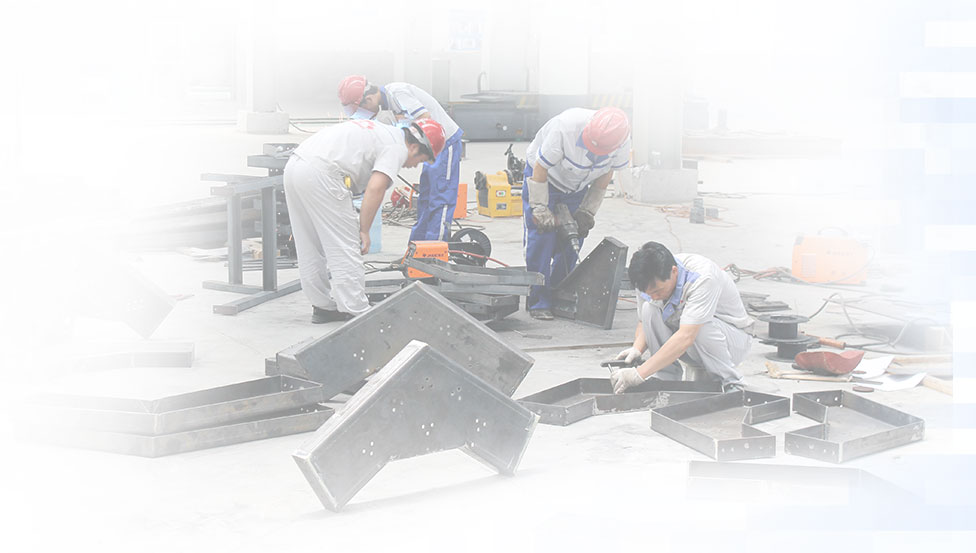
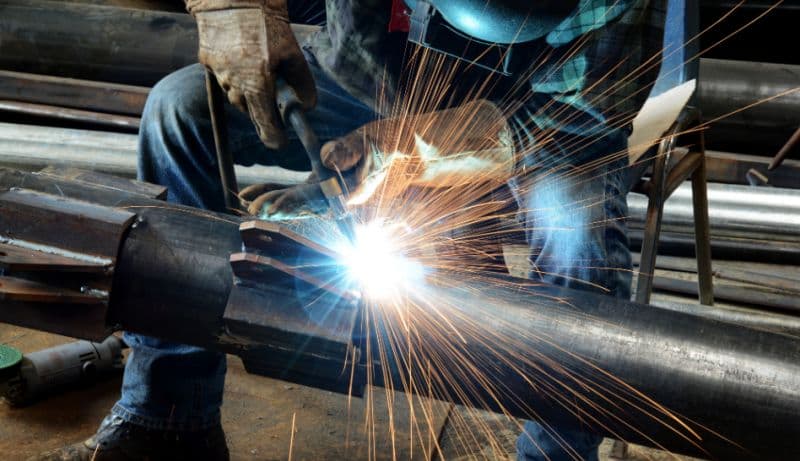
Equipment Manufacturing
The critical components of the of the complete pellet production line equipment are built in our own workshops in Asia. Additional equipment is manufactured by our worldwide network of reliable partners.
● Testing
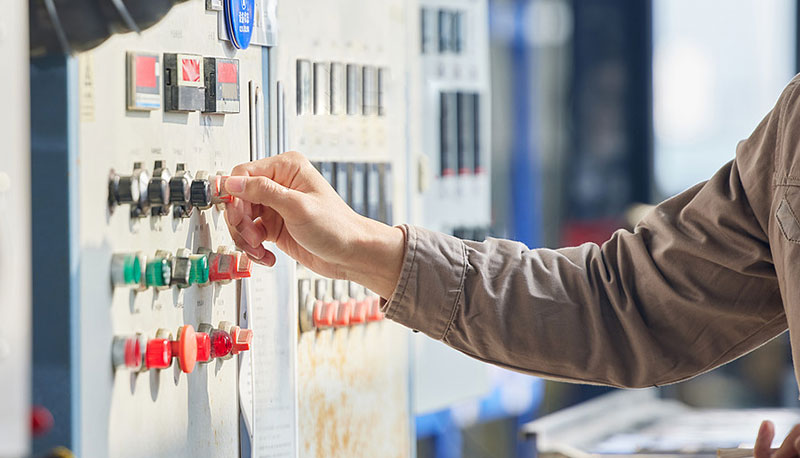
Quality Inspection & Testing
Before leaving the factory, all equipment will be inspected by the quality inspection department. We can also provide customers with testing services from a single machine to a complete pellet plant system, and provide you with real actual data for “worry-free use.”

● Delivery
Equipment Delivery
In equipment boxing and packaging, we adopt professional packaging and modular solutions to ensure the safe and non-destructive delivery of pellet plant equipment.
● Installation
Installation & Commissioning
Whether you choose your own subcontractor for the erection phase or you want to install everything together with us, a Richi supervisor will be around to make sure everything is mounted in a safe and thorough way.

● Training
Staff Training
We provide comprehensive training for the technicians of each project. We can also continue to provide support for the technicians during latter project operation.
● After-sales
Project Follow-Up
When everything is up and running our Richiers will help you further whenever needed. We are ready to answer your call 24/7.We’ll also visit you regularly to learn about your needs.
Who we are
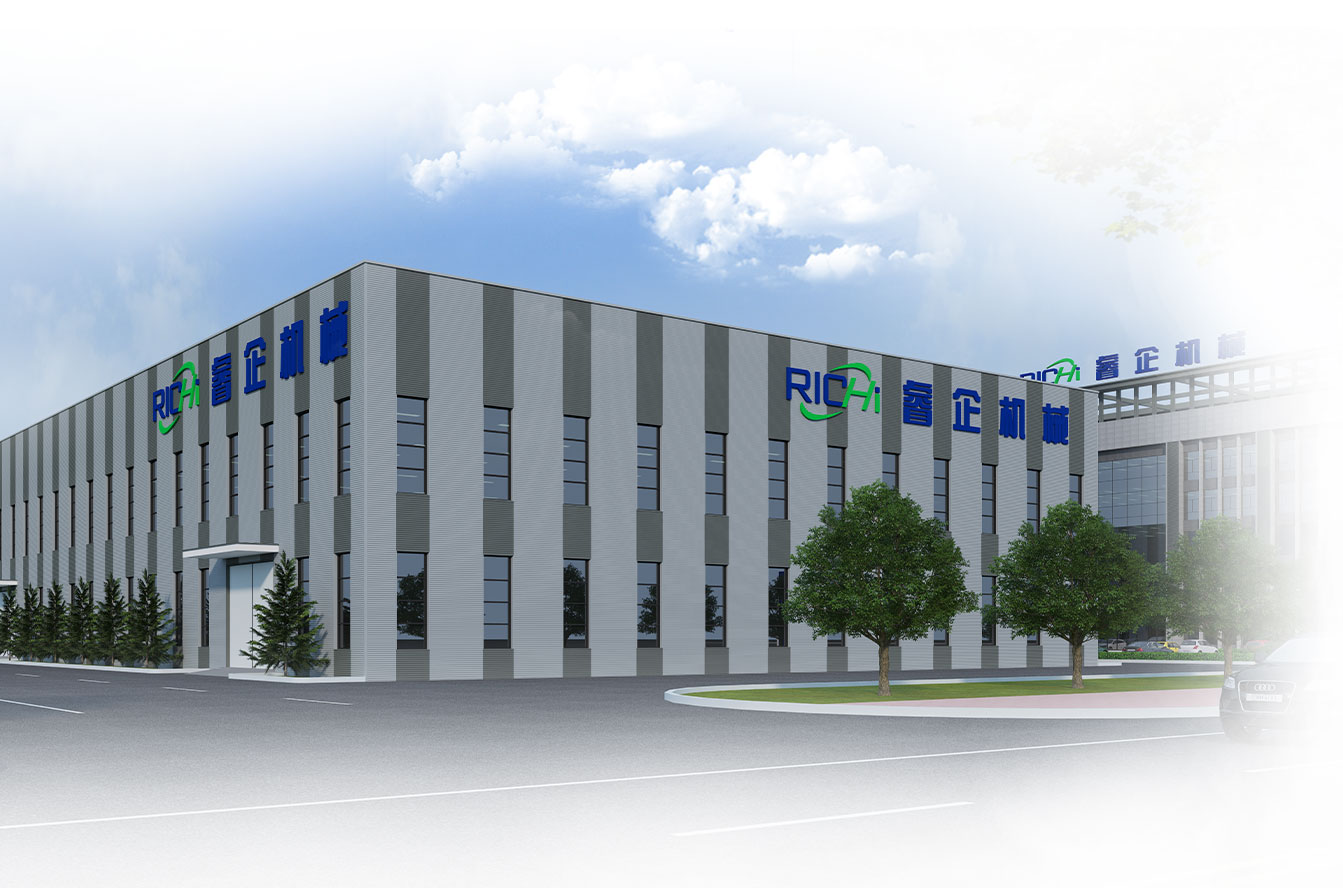
RICHI Machinery is one of the world’s leading suppliers of technology and services for the animal feed, aqua feed and pet food industries, also the largest pellet production line manufacturer in China.
Since 1995, RICHI’s vision to build a first-class enterprise, to foster first-class employees, and to make first-class contributions to society has never wavered.
In the past three decades, we have expanded our business to a wide range of areas, including animal feed mill equipment, aqua feed equipment, pet feed equipment, biomass pellet equipment, fertilizer equipment, cat litter equipment, municipal solid waste pellets equipment, etc.

1995
RICHI Established

2000+
Serving More Than 2000 Customers

120+
RICHI Employees

140+
Exported To 140 Countries