 0086-138 3838 9622
Complete Wood Pellet Plant in South Africa
RICHI MACHINERY
Project Overview
A 0.5t/h complete wood pellet plant in South Africa was commissioned in late 2024 for a client in Gauteng Province, but here’s the twist – the pellets aren’t for heating or animal bedding. They’re for asphalt. The client produces lignocellulosic fiber used as a stabilizing additive in SMA (Stone Mastic Asphalt) for road construction.
The plant outputs two products: 2,000 tons per year of fluffy wood fiber and another 2,000 tons per year of pelletized wood fiber. Total production 4,000 t/yr from a single 0.5t/h complete wood pellet plant in South Africa running 4,000 hours annually (two shifts, 250 days).
The facility operates from a 1,200 m² leased building in an industrial park. Total investment was $65,000 USD for equipment plus local installation. What makes this project unusual isn’t the scale – it’s the raw material.
The client doesn’t use sawdust or wood chips. He uses cotton gin waste and waste paper powder. Cotton trash. Stuff most people throw away. And he turns it into a high-value additive for premium asphalt mixes.
0.5T/H
capacity
$65,000
investment
South Africa
location
Biofuel
project type
RICHI MACHINERY
The Road Connection – Why Asphalt Needs Fiber
Most people don’t think about what’s in the road they drive on.
SMA – Stone Mastic Asphalt – is a high-performance paving mix used on highways, airport runways, and heavy-traffic roads. It contains about 6-7% binder (bitumen), 70-75% crushed stone, and 0.3-0.5% fiber stabilizer. That fiber prevents the bitumen from draining off the stone during transport and laydown. Without it, the asphalt mix separates. With it, you get a durable, rut-resistant road surface that lasts 50% longer than conventional asphalt.
South Africa has been rolling out SMA on major routes since the early 2000s. The N3, N1, N4 – all use fiber-stabilized asphalt. Traditionally, that fiber came from imported cellulose products or specialized wood fibers. Expensive. Then someone figured out that cotton gin waste (the lint, sticks, and trash left over after ginning) has the right fiber characteristics. And paper waste adds bulk.
The client – a former civil engineer who worked on road construction projects – saw the opportunity. He knew the specifications. He knew the suppliers. He just needed a 0.5t/h complete wood pellet plant in South Africa that could process these unusual feedstocks into the two required product forms: fluffy fiber for direct dosing into asphalt plants, and pelletized fiber for easier handling and longer storage life.
He called us in January 2024.
RICHI MACHINERY
Raw Materials – Cotton Waste and Old Newspaper
Here’s what goes into this 0.5t/h complete wood pellet plant in South Africa.
| Raw Material | Annual Usage (tons) | Form | Packaging | Source | Cost (USD/ton) |
|---|---|---|---|---|---|
| Cotton gin waste | 3,611 | Fluffy, dusty | 150kg bags | Cotton gins in Limpopo and North West | $18-22 |
| Waste paper | 400 | Powder | 100kg bags | Recycling center in Johannesburg | $35 |
| Total | 4,011 |
The cotton waste is the key. South Africa grows cotton in the Limpopo, North West, and Mpumalanga provinces. Each ginning operation produces 5-10 tons of waste per day – mostly short fibers, immature seeds, leaf fragments, and dirt. Most of it gets landfilled or burned. The client negotiated long-term contracts with three gins to take their waste for $20/ton delivered. That’s cheap.
The paper waste is shredded newspaper and office paper, ground to powder. It acts as a filler and helps with fiber dispersion in the asphalt mix. The client buys this from a recycling facility that separates paper grades.
Notice the math: 3,611 + 400 = 4,011 tons input. Output is 4,000 tons (2,000 fluffy + 2,000 pelletized). The 11-ton difference is moisture loss and dust collection fines that get recycled back into the process.
RICHI MACHINERY
Equipment Configuration – Small Scale, Smart Design
The client needed two production lines sharing space and dust collection. Here’s what we supplied for this 0.5t/h complete wood pellet plant in South Africa.
| Equipment | Quantity | Power | Function |
|---|---|---|---|
| 75kW hammer mill | 1 | 75kW | Primary grinding for fluffy fiber line |
| 90kW hammer mill | 1 | 90kW | Secondary/finer grinding |
| Mixer | 1 | 15kW | Blending cotton waste with paper powder |
| Hydraulic baling press | 1 | 22kW | Compressing fluffy fiber into bales |
| Fiber shredder/disintegrator | 1 | 30kW | Breaking up cotton waste before mixing |
| 3/500 ribbon blender | 1 | 18.5kW | Mixing for pellet line |
| 75kW pellet mill | 1 | 75kW | Pelletizing the fiber (0.5 t/h sustained) |
| Fans (dust collection) | 4 | 7.5kW each | Pneumatic conveying and filtration |
| Baghouse filter | 1 | Shared | 5,000 m³/hr capacity, 99% efficiency |
Equipment price (EXW Qingdao port): $58,000 USD
Yes, that’s low. The client didn’t need automation. No PLC. No touchscreen. Manual start-stop switches. Local sourcing for conveyors. He wanted simple, repairable machines that local electricians could troubleshoot.
The wood pellet mill is the heart of the 0.5t/h complete wood pellet plant in South Africa. Model RICHI 320 – a smaller ring-die unit designed for fibrous, low-density materials. Cotton waste is fluffy. It doesn’t feed like sawdust. We had to add a force-feeding screw (custom modification, added $2,800) to push material into the pelleting chamber. Without it, the mill would starve and run at 0.2 t/h.
RICHI MACHINERY
Process Flow – Two Products from One Raw Material
The plant runs two parallel lines. Line one makes fluffy fiber. Line two makes pelletized fiber. They share raw material storage and dust collection.
Line One: Fluffy Wood Fiber
This is the simpler line. The output looks like coarse cotton wool – not pellets.
*Step 1 – Manual De-bagging*
Workers cut open 150kg cotton waste bags and dump material onto a vibrating feeder. They manually pull out obvious trash: rocks, metal wire, plastic. The empty bags (about 4 tons/year) get baled and sold to a recycler.
Step 2 – Primary Grinding
The 75kW hammer mill with a 20mm screen reduces the cotton waste to a fluffy, open texture. Not powder – more like shredded insulation. The mill runs at 2,800 RPM.
Step 3 – Mixing
Ground cotton waste moves by screw conveyor to the ribbon blender. Workers add paper powder (about 10% by weight) from 100kg bags. The blender runs for 8-10 minutes per batch. Batch size is 500kg.
Step 4 – Secondary Grinding
The blended material passes through the 90kW hammer mill with an 8mm screen. This opens up the fibers further and ensures uniform size.
Step 5 – Baling
The finished fluffy fiber drops into a hydraulic baling press. Each bale is about 80cm x 60cm x 40cm and weighs 25-30kg. Bales get shrink-wrapped on a pallet – 40 bales per pallet.
Line Two: Pelletized Wood Fiber
This line takes the same blended material and compresses it into pellets. The pellets are about 8mm diameter and 15-25mm long. They look like standard biomass pellets but feel different – softer, more fibrous.
*Step 1 – Same de-bagging and primary grinding as Line One*
Step 2 – Shredding
Before mixing, the ground cotton waste goes through a dedicated shredder/disintegrator. This breaks down the long cotton fibers that tend to wrap around the pellet mill rolls. We learned this the hard way – first test run without shredding caused the pellet mill to jam every 20 minutes.
Step 3 – Mixing
The 3/500 ribbon blender mixes shredded cotton waste with paper powder. Mix time is 12-15 minutes – longer than Line One because the pellet mill needs a more uniform blend.
Step 4 – Pelleting
The 75kW wood pellet extruder machine with a 6mm die (compression ratio 1:5). The force-feeding screw pushes material into the die at a controlled rate. Die temperature runs 80-95°C from friction. No external heat. The lignin in the cotton waste and paper provides natural binding.
Output rate: 0.5-0.6 t/h consistently. The client runs this line for 8 hours per day, producing 4-5 tons daily.
Step 5 – Bagging
Pellets drop into 25kg plastic-lined paper bags. No cooling conveyor – the client found that pellets cool sufficiently in the bags during storage. Not ideal for high-volume production, but fine for 0.5 t/h.
RICHI MACHINERY
The Dust Problem We Had to Solve
This feedstock is dusty. Really dusty.
The original dust collection design had one baghouse handling all points: both hammer mills, the mixer, the shredder, and the pellet mill. Total airflow 5,000 m³/hr. The filter would blind within 4 hours of operation. Pressure drop would spike to 2,500 Pa. Then the fans would stall.
The client was frustrated. So were we.
We flew a service tech to Johannesburg. He spent two days measuring static pressure at every pickup point. The conclusion: the 5,000 m³/hr fan was undersized by about 40%. Cotton dust is finer than wood dust. It packs tighter. Needs more air velocity to stay entrained.
The fix: upgrade to a 7,500 m³/hr fan (cost $1,200, client paid locally) and add a secondary cyclone pre-separator before the baghouse. The cyclone knocks out the coarse dust (about 70% of the total), so the baghouse only sees the fine fraction. Now the system runs 16 hours without needing a pulse-jet cleaning cycle.
Lesson: don’t assume wood dust engineering rules apply to cotton waste. Different material. Different behavior.
RICHI MACHINERY
Operating Costs – The Numbers That Matter
After three months of steady operation (September-November 2024), here’s what the 0.5t/h complete wood pellet plant in South Africa costs to run.
| Cost Category | Monthly (USD) | Annual (USD) | Notes |
|---|---|---|---|
| Cotton waste (delivered) | $5,400 | $64,800 | 300 tons/month at $18 |
| Waste paper | $1,170 | $14,040 | 33 tons/month at $35 |
| Electricity | $1,250 | $15,000 | 15,000 kWh/month at $0.083/kWh |
| Labor (8 people, 2 shifts) | $3,200 | $38,400 | $400/month average |
| Maintenance & spares | $600 | $7,200 | Dies, hammers, bags, filters |
| Rent (building) | $800 | $9,600 | 1,200 m² |
| Total monthly | $12,420 | $149,040 |
Revenue – and this is where the project makes sense:
| Product | Monthly Output (tons) | Price (USD/ton) | Monthly Revenue |
|---|---|---|---|
| Fluffy fiber | 167 | $320 | $53,440 |
| Pelletized fiber | 167 | $380 | $63,460 |
| Total | 334 | $116,900 |
Monthly net profit: $104,480 USD. Annual net profit (projected): $1.25 million USD.
Yes, the margins look huge. The client sells directly to asphalt plants and bitumen suppliers. No middleman. His costs are low because the raw material is agricultural waste that others pay to dispose of. The pelletized fiber commands a premium because it’s easier to handle and stores longer.
Total equipment investment was $58,000. Plus $7,000 for shipping and customs. Plus $15,000 for local installation, electrical work, and the dust collection upgrade. Call it $80,000 all-in. Payback period: less than one month. That’s not a typo.
RICHI MACHINERY
Shipping and Logistics
All equipment for this 0.5t/h complete wood pellet plant in South Africa shipped from Qingdao Port, China, to Durban Port, South Africa (the busiest port in sub-Saharan Africa). Departure March 15, 2024. Arrival April 20, 2024. Sea freight for two 40-foot containers: $4,600 USD. Customs clearance and inland trucking to Gauteng (about 600km) added $2,400 USD.
The client handled the container unpacking with a rented forklift. No issues.
RICHI MACHINERY
What the Client Figured Out (That You Should Know)
This customer wasn’t a pellet expert. He was a road construction guy who learned processing.
Here’s what he got right:
He started with the customer. He knew asphalt plants needed fiber. He knew the specifications (SANS 3001, equivalent to international SMA standards). He built the 0.5t/h complete wood pellet plant in South Africa to meet those specs, not to maximize pellet output.
He chose cheap, abundant raw material. Cotton waste is everywhere in cotton-growing regions. Paper waste is everywhere, period. His input cost is under $25/ton. That’s less than half the cost of sawdust in Gauteng.
He kept it simple. No dryer. No cooler. No automated controls. His operators are former farm workers who learned on the job. They don’t need a touchscreen. They need machines they can fix with a wrench.
He built two revenue streams. Fluffy fiber sells to asphalt plants with their own fiber dosing systems. Pelletized fiber sells to smaller plants that prefer the easier handling. If one market softens, the other keeps him busy.
RICHI MACHINERY
The South African Market for Road Fibers
South Africa has an extensive national road network – about 21,000 km of paved highways plus thousands more kilometers of provincial and municipal roads. SANRAL (South African National Roads Agency) has been specifying SMA for major rehabilitation projects since 2005.
But here’s the opportunity: most fiber stabilizers are imported from Europe or China. That means long lead times, currency risk, and premium prices. A local supplier with consistent quality and competitive pricing can take market share quickly.
The client’s 0.5t/h complete wood pellet plant in South Africa currently supplies asphalt plants within a 300km radius of Johannesburg. He’s already talking to buyers in Mpumalanga and Free State provinces. He could easily sell double his current output.
The only constraint is raw material. Cotton ginning is seasonal (May to October). He’s building a covered storage area to stockpile 6 months of cotton waste during the ginning season. That’s his next capital project – about $25,000 for a simple pole barn.
RICHI MACHINERY
What We Learned (And What We’d Change)
If we did this project again:
- Bigger dust collection from the start. The upgrade cost the client time and money. We should have recognized that cotton dust is more challenging than wood dust.
- Force-feeding screw as standard, not an option. The 0.5t/h complete wood pellet plant in South Africa needs it for cotton waste. We now include it automatically for any fibrous feedstock.
- On-site training for the wood pellet press die adjustments. The client’s operator cracked one die (about $800) by over-tightening the roll gap. We’ve since created a simple video guide for die changes.
But the client is happy. He’s already talking about a second line – same capacity, same feedstock – to serve the Western Cape market. Different port (Cape Town this time). Different cotton gins. Same model.
RICHI MACHINERY
Is This Replicable?
If you have access to cotton gin waste, paper waste, or similar fibrous agricultural residues – and you have a local market for fiber additives (asphalt, composites, insulation, animal bedding) – this model works.
The 0.5t/h complete wood pellet plant in South Africa proves you don’t need massive scale. You don’t need perfect raw material. You need a customer with a problem, and a process that turns low-value waste into a solution.
We’ve since quoted similar lines for:
- Cotton waste in Zimbabwe (for animal bedding)
- Hemp waste in Lesotho (for composite board filler)
- Kenaf fiber in Mozambique (for erosion control mats)
Each one needed different hammer mill screens, different die specs, different dust collection sizing. But the core equipment is the same.
RICHI MACHINERY
Thinking About Your Raw Material?
Not every biomass pellet plant needs to make fuel pellets. This client makes road fiber. Someone else might make animal bedding. Someone else might make industrial absorbent.
The equipment is flexible. The 0.5t/h complete wood pellet plant in South Africa runs on cotton waste today. It could run on sawdust, straw, or paper sludge tomorrow with minor adjustments.
If you have a fibrous waste stream – anything with cellulose – and you have a buyer for a processed product, let’s talk. Send us a sample. We’ll test it in our lab. Tell you honestly if it will pelletize and what modifications you need.
● RICHI MACHINERY
RICHI Service

● Consulting
Customer Consultation
We want to have a deep understanding of your industrial process, to know your exact needs of feed, wood, biomass, fertilizer or other pellet processing.

● Design
biomass Pellet Plant Design
Based on your unique situation and industrial process, we will tailor complete pellet plant you need, and inform you of every additional detail that could facilitate operation, minimize total cost.
● Manufacturing
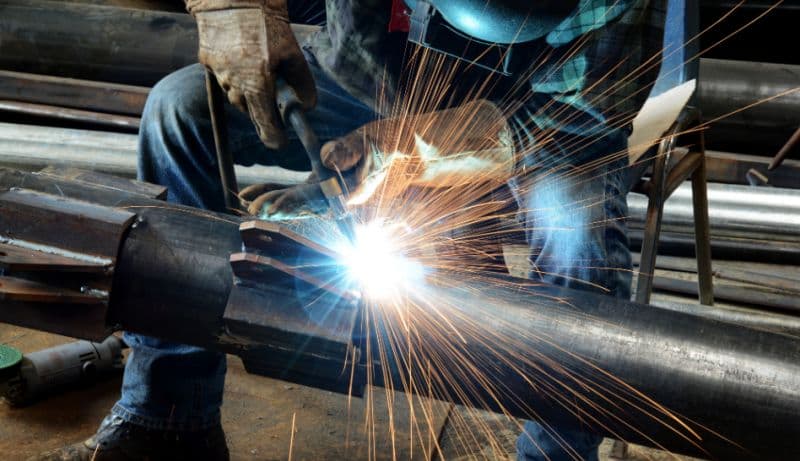
Equipment Manufacturing
The critical components of the of the complete pellet production line equipment are built in our own workshops in Asia. Additional equipment is manufactured by our worldwide network of reliable partners.
● Testing
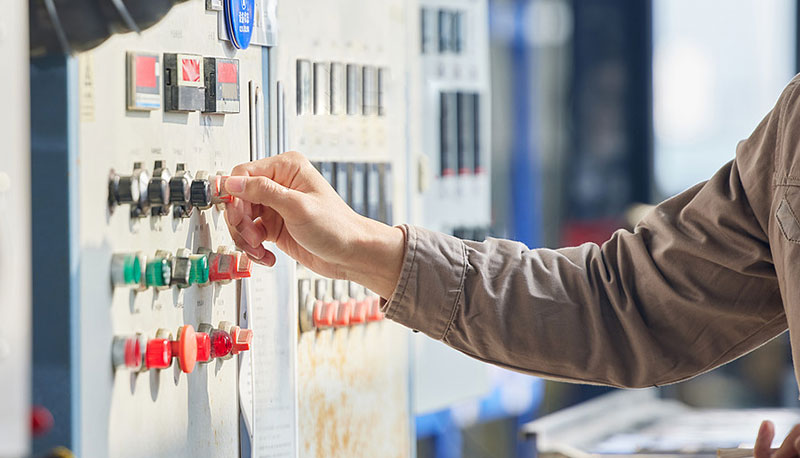
Quality Inspection & Testing
Before leaving the factory, all equipment will be inspected by the quality inspection department. We can also provide customers with testing services from a single machine to a complete pellet plant system, and provide you with real actual data for “worry-free use.”

● Delivery
Equipment Delivery
In equipment boxing and packaging, we adopt professional packaging and modular solutions to ensure the safe and non-destructive delivery of pellet plant equipment.
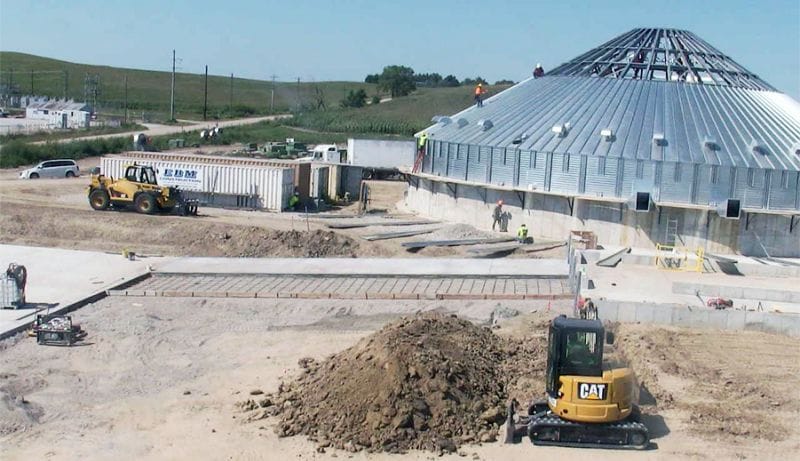
● Installation
Installation & Commissioning
Whether you choose your own subcontractor for the erection phase or you want to install everything together with us, a Richi supervisor will be around to make sure everything is mounted in a safe and thorough way.

● Training
Staff Training
We provide comprehensive training for the technicians of each project. We can also continue to provide support for the technicians during latter project operation.
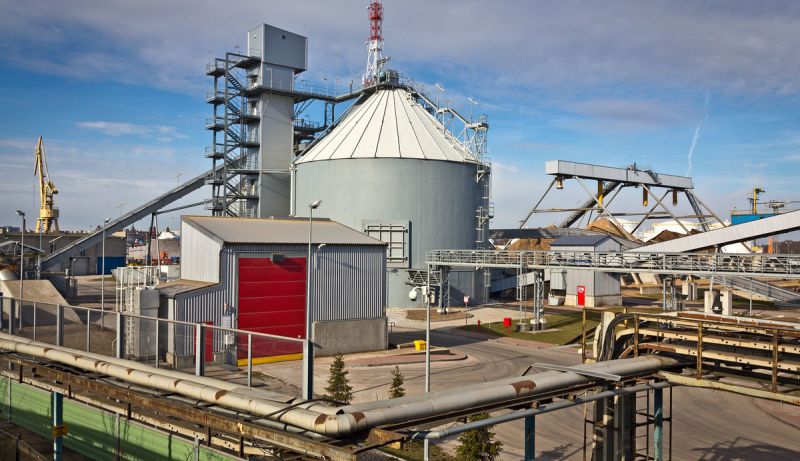
● After-sales
Project Follow-Up
When everything is up and running our Richiers will help you further whenever needed. We are ready to answer your call 24/7.We’ll also visit you regularly to learn about your needs.
Who we are
RICHI Machinery is one of the world’s leading suppliers of technology and services for the animal feed, aqua feed and pet food industries, also the largest pellet production line manufacturer in China.
Since 1995, RICHI’s vision to build a first-class enterprise, to foster first-class employees, and to make first-class contributions to society has never wavered.
In the past three decades, we have expanded our business to a wide range of areas, including animal feed mill equipment, aqua feed equipment, pet feed equipment, biomass pellet equipment, fertilizer equipment, cat litter equipment, municipal solid waste pellets equipment, etc.

1995
RICHI Established

2000+
Serving More Than 2000 Customers

120+
RICHI Employees

140+
Exported To 140 Countries