0086-138 3838 9622
Poultry and livestock feed mill in Oman
Ali’s family farming business needed control over the feed supplied to its own birds and livestock, together with a product it could offer nearby farms. RICHI configured this poultry and livestock feed mill in Oman around a 15 T/H reference compound-feed duty, controlled batching and one ring-die pellet mill. Grain-based poultry feeds and formulated livestock concentrates share the main route, with separate preparation for fibrous or hard ingredients.
RICHI MACHINERY
The enquiry became a defined project scope
On July 29, 2020, Ali contacted RICHI about establishing an animal feed production line in Oman. His family already had poultry and livestock farming experience. The requirement was to organise feed manufacture for those operations while serving neighbouring farms through identified product batches. RICHI developed the equipment and material route around that mixed farming brief.
The contract followed on January 25, 2021. The practical design questions concerned ingredient preparation, recipe changes and the duty of the complete line. Grinding a grain blend, handling dry hay and reducing hard date pits are different tasks. The project therefore defines the reference production rate alongside the formula type, instead of applying one hourly figure to every possible poultry or livestock recipe.
| Project item | Defined scope |
|---|---|
| Customer | Ali; family poultry and livestock farming business |
| First enquiry | July 29, 2020 |
| Contract date | January 25, 2021 |
| Reference line duty | 15 T/H grain-based compound feed |
| Pelleting selection | One SZLH508; 160 kW main motor |
| Contract boundary | Turnkey animal feed factory project; steel structure excluded |
15T/H
reference capacity
USD 410,000
contract value
Oman
location
Compound feed
project type
RICHI MACHINERY
Ingredients take different routes before they reach the mixer
The livestock feed production line uses both traded ingredients and selected local by-products. Grain and soybean-meal deliveries remain important to the formulation programme, while wheat bran and suitable date ingredients offer additional options. Local manufacture gives the customer control over batching and product form; it does not remove the need to manage ingredient purchasing, supplier quality and transport lead times.
The receiving specification separates ingredient form from nutritional use. This distinction determines what needs ordinary grain milling, fibre cutting, dedicated hard-material grinding or no further size reduction:
| Ingredient form | Preparation route | Use and boundary |
|---|---|---|
| Maize and barley | Clean, remove metal and mill to formula-specific grind | Energy ingredients; intake quality and actual analysis govern the recipe |
| Soybean meal | Inspect and meter; mill coarse fractions where necessary | Protein ingredient; not a complete diet alone |
| Wheat bran | Inspect, screen where needed and meter | Local flour-milling by-product; moisture and condition checked |
| Dry pitted date meal | Specify dry form; control sticky or oversized pieces | Formulated livestock ingredient; wet pulp is outside this dry route |
| Clean date pits | Dedicated hard-material reduction and suitable milling | A separate ingredient from sugary date flesh; suitability assessed nutritionally |
| Dry alfalfa hay | Fibre cutting and forage milling before controlled addition | Livestock formula ingredient; hay-rich diets require a throughput review |
| Vitamins, minerals and premixes | Separate accurate weighing and premixing | Dose by the issued formula; manage carryover between feed grades |
Wheat bran, date flesh and date pits are not interchangeable low-cost fillers. Their moisture, sugar, fibre and nutrient profiles affect formulation and machine behaviour. Wet sticky date pulp is outside the dry-meal feed route unless separately prepared. Hard pits require suitable grinding before release to a formulated ration. The customer sets inclusion levels through nutritional evaluation and ingredient analysis, rather than a fixed percentage inferred from local availability.
RICHI MACHINERY
A controlled batch becomes a cooled feed product
For this 15 T/H animal feed plant in Oman, the reference duty is a grain-based compound formula under the agreed die and conditioning conditions. A higher hay fraction, a smaller die or a more demanding grind changes the process load. The plant makes those distinctions before a production run so that an easier poultry formula is not used to promise an identical rate on a fibrous livestock product.
The process scope behind this poultry feed plant for sale arrangement follows six connected duties. Each transfer needs to supply the next assembly at the required material condition and rate:
| Stage | Equipment duty | Operator check |
|---|---|---|
| Receiving and grinding | Ingredient-specific cleaning, grain milling and separate fibre or pit preparation | Correct stock, moisture, foreign material and prepared-particle condition |
| Batch weighing and mixing | Weighed macro-ingredients, prepared small additions and controlled liquids | Formula issue, batch identity, mixing cycle and complete discharge |
| Steam conditioning and pressing | One SZLH508 livestock feed pellet machine with 160 kW main motor; matched conditioner | Feed continuity, steam quality, motor load and pellet formation |
| Cooling | Counterflow cooler matched to discharge and intake-air condition | Product heat and moisture before storage release |
| Screening | Separate loose fines; return clean reusable material in a controlled quantity | Released pellet fraction and changing fines load |
| Packing | Weighing, closure, lot identification and finished-stock transfer | Net quantity, grade identity and dispatch order |
Steam conditioning is part of the pelleted-feed route even though it is separate from grinding and mixing. The service interface covers steam quality, condensate separation, stable delivery and the operating controls at the conditioner. Mixer and press settings follow the issued formula. Feed can only bypass pelleting when a mash product has its own defined discharge and packing route; the main pellet line does not automatically establish that bypass.
RICHI MACHINERY
Product form is selected with the animal and formula
The poultry feed pellet making machine is selected here as one SZLH508 with a 160 kW main motor. Its 15–16 T/H published feed range supports a 15 T/H reference grain-feed duty. The product programme distinguishes poultry diets from livestock concentrates; a concentrate pellet is not a complete replacement for the animal’s required forage allocation.
These product routes describe suitable configuration choices and design sizes. They are not a claim that the customer already sells every listed grade:
| Feed route | Design form or size | Capacity interpretation |
|---|---|---|
| Poultry mash | Formula-specific grind; separate bypass and packing connection required | Grinding, batching and packing duty; not automatically supplied by the pellet outlet |
| Poultry grow-out pellets | 2–4 mm diameter | 15 T/H is the reference grain-feed duty, subject to recipe and die |
| Cattle, sheep and goat concentrates | 4–8 mm pellets | Balanced concentrates; adequate forage remains a feeding requirement |
| More fibrous livestock pellets | 4–8 mm design range | Preparation, die and fibre content determine a separate trial-based rate |
Goat, sheep and camel formulas can be assessed within the livestock concentrate route, using appropriate nutritional specifications and die selection. Equine feed requires a separate formulation and carryover review rather than a species-label change. Floating fish feed requires extrusion, drying and matched finishing; it is not included as a minor add-on to this compound-pellet scope. A poultry crumble grade would also require a crumbler and classification arrangement beyond the listed basic pellet route.
RICHI MACHINERY
Equipment duties must support the reference throughput
The feed mill equipment configuration in Oman follows the form of each ingredient and the released product. Machine access, motor loading, ingredient transfer and cooling-air condition are considered with the equipment sizes. Hot intake air sets a practical limit on cooler outlet temperature: the objective is controlled cooling toward the available air condition and suitable storage moisture, not an unsupported promise of a fixed low temperature.
One main press serves the selected reference duty. The supporting assemblies are checked on the relevant grind, batch and packing conditions:
| Assembly | Selection or task | Duty boundary |
|---|---|---|
| Ingredient preparation | Grain hammer milling with separate forage/pit preparation as needed | Sized for actual grind and recipe; not one identical setting for all materials |
| Batch mixer and dosing | Horizontal mixing, small-addition preparation and controlled liquids | Complete batch cycle includes weighing, addition, mixing, discharge and transfer |
| Conditioning and pelleting | One SZLH508; 160 kW main motor | Published feed range 15–16 T/H; project reference 15 T/H on grain compound feed |
| Counterflow cooler | Matched pellet bed, air system and discharge control | Review summer intake-air condition and moisture-removal task |
| Finished-product screen | Separate acceptable pellets and controlled fines return | Recirculation is not counted as extra saleable output |
| Semi-automatic packing line | Combined weighing, filling, closure and handling task | Station count and labour arrangement must meet the selected bag rate |
RICHI arranged the animal feed mill plant around receiving, batch preparation, press service space and finished-feed movement. The customer’s building interface includes foundations, vertical clearances, access for maintenance and the routes for steam and electricity. The steel structure is outside the stated contract scope. No unsupported building area, land requirement or workforce total is assigned to this machinery configuration.
RICHI MACHINERY
Reference calculations make equipment comparisons useful
The poultry and livestock feed mill in Oman has a 15 T/H reference hourly duty, not an independently verified annual output. The following calculations show how batching, steam addition and packing relate to that rate. They are sizing examples; the actual formula, operating calendar and final equipment schedule determine the working settings.
For the moisture example, mash and finished pellets are both balanced at 12% moisture. A 4% steam addition is counted as incoming water, and the same water mass leaves during cooling on this simplified no-dry-matter-loss basis. Reusable fines are internal circulation. The balance does not prove cooler performance; the selected unit must still be checked against air condition, discharge temperature and the required moisture removal.
| Reference calculation | Result | Interpretation |
|---|---|---|
| 2-ton batch every 8 minutes | 15 T/H | Illustrative complete cycle; not a claim of the installed mixer volume |
| 50 kg bags at 15 T/H | 300 bags/hour; 5 bags/minute | Combined packing and handling duty |
| 25 kg bags at 15 T/H | 600 bags/hour; 10 bags/minute | Requires an appropriate station and handling arrangement |
| 1,000 kg mash at 12% moisture plus 40 kg steam | 1,040 kg conditioned feed before moisture removal | Sizing example with no external dry-matter loss |
| Finished feed balanced at 12% moisture | 1,000 kg product plus 40 kg evaporated water | Dry solids remain 880 kg on both sides |
| Same balance at 15 T/H finished output | 15 T/H mash plus 0.6 T/H steam; 0.6 T/H water removed | Steam-service and cooler duty basis; not measured site consumption |
RICHI MACHINERY
Grade changes need an operating sequence
The enquiry in July 2020 and contract in January 2021 establish the project’s commercial sequence. RICHI’s engineering scope connects the selected machinery with the customer’s poultry and livestock feed requirements. Within that scope, grade changes require an issued formula, ingredient verification, suitable die settings and a defined product identity. They are not reduced to simply pouring a different raw material into the same hopper.
The livestock concentrate feed line in Oman uses batch records to distinguish grain blends from recipes containing prepared forage or date ingredients. Operators check the preceding product, remaining material in transfer points and the receiving bin before releasing a new batch. Small additions follow the formula issue, with mixing and discharge steps checked for completeness. Product identification continues through bagging and loading so the farm receives the intended diet.
RICHI MACHINERY
Purchasing and storage remain part of feed manufacture
Imported ingredients and local deliveries need different ordering and receiving arrangements. The raw-material plan connects purchasing lead times with usable covered stock, while batch sizes and dispatch orders govern finished inventory. Ingredient condition is checked at receipt and before use after storage. The project does not assume that proximity to ports eliminates disruption or that local by-products remain suitable through unlimited storage.
For this poultry compound feed plant in Oman, storage and handling protect ingredients from rewetting, contamination and deterioration. Bran, oil-bearing meals and premixes retain their supplier identity and release information. Date products are kept in the form specified for the mixer rather than substituting wet pulp for dry meal without review. Packed feed rotates by identified lot, with product shelf life established by the formulation, packaging and storage assessment.
RICHI MACHINERY
A feed business needs a matched process rather than a larger model label
This poultry and livestock feed mill in Oman links one properly selected press with preparation, weighing, mixing, steam conditioning and finishing. The 15 T/H reference applies to the agreed grain-based compound-feed duty; recipes with more fibre or different physical requirements receive their own capacity review. The arrangement gives Ali a defined manufacturing scope for his family farming operation and nearby feed customers.
RICHI’s project contribution includes material-route design, equipment selection, installation interfaces and operator instruction. The customer’s responsibilities include ingredient qualification, nutritional formulation, building provision outside the machinery scope and production records. That division makes the equipment package easier to assess: the buyer can see what enters the mill, which preparation step it needs and the form of feed leaving the packing station.
For a comparable commercial feed mill project in Oman, useful enquiry details include target animals, feed forms, expected hay or date-product inclusion, required hourly output and available steam and building services. RICHI uses that information to review the complete route, including preparation and packing limits, before confirming a machine configuration. The result is an equipment discussion tied to usable feed output and the customer’s actual operating brief.
● RICHI MACHINERY
RICHI Service

● Consulting
Customer Consultation
We want to have a deep understanding of your industrial process, to know your exact needs of feed, wood, biomass, fertilizer or other pellet processing.

● Design
feed Pellet Plant Design
Based on your unique situation and industrial process, we will tailor complete pellet plant you need, and inform you of every additional detail that could facilitate operation, minimize total cost.

● Manufacturing
Equipment Manufacturing
The critical components of the of the complete poultry livestock feed mill equipment are built in our own workshops in Asia. Additional equipment is manufactured by our worldwide network of reliable partners.

● Testing
Quality Inspection & Testing
Before leaving the factory, all equipment will be inspected by the quality inspection department. We can also provide customers with testing services from a single machine to a complete pellet plant system, and provide you with real actual data for “worry-free use.”

● Delivery
Equipment Delivery
In equipment boxing and packaging, we adopt professional packaging and modular solutions to ensure the safe and non-destructive delivery of poultry feed mill equipment.
● Installation
Installation & Commissioning
Whether you choose your own subcontractor for the erection phase or you want to install everything together with us, a Richi supervisor will be around to make sure everything is mounted in a safe and thorough way.

● Training
Staff Training
We provide comprehensive training for the technicians of each poultry and livestock feed mill in Oman project. We can also continue to provide support for the technicians during latter project operation.
● After-sales
Project Follow-Up
When everything is up and running our Richiers will help you further whenever needed. We are ready to answer your call 24/7.We’ll also visit you regularly to learn about your needs.
Who we are
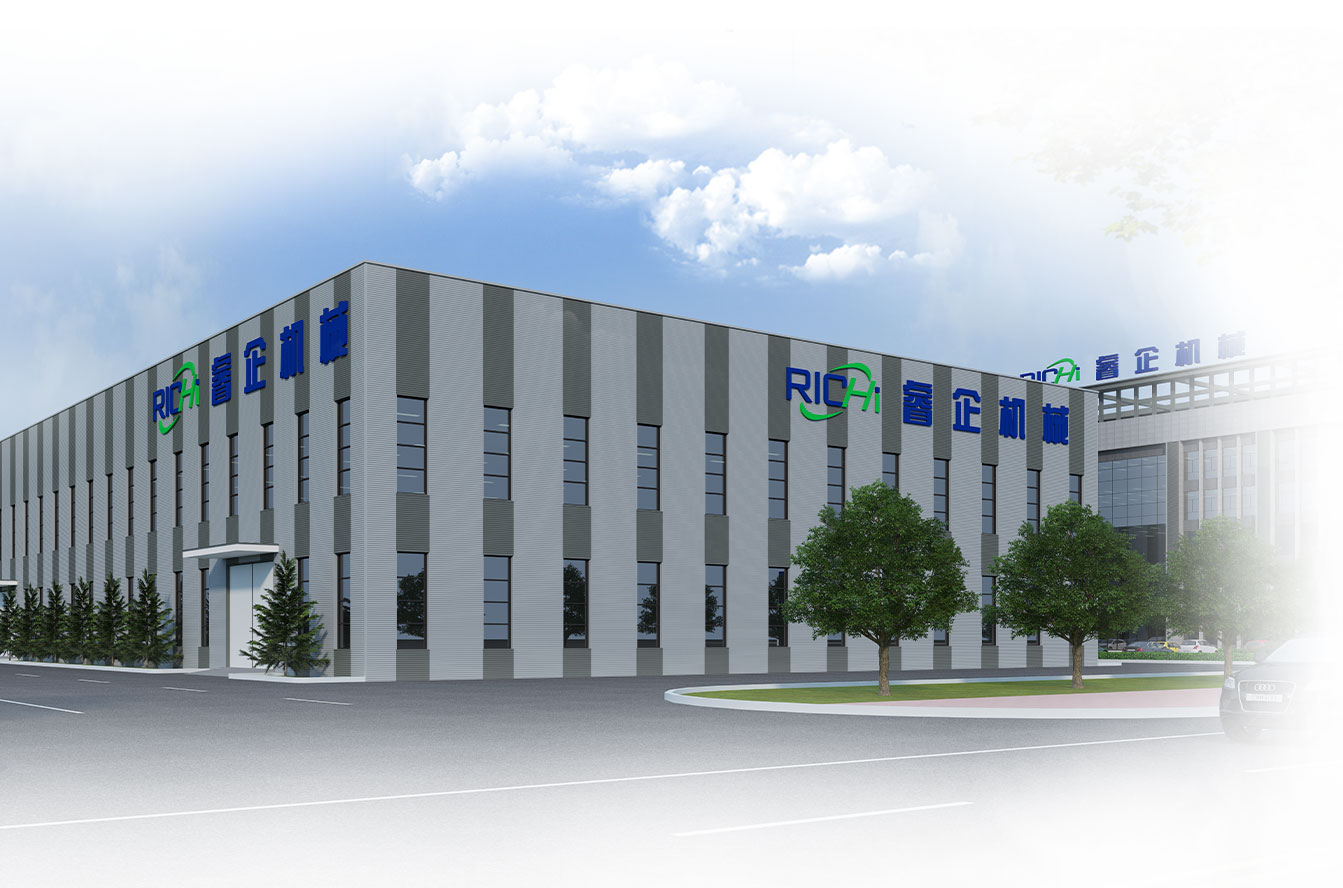
RICHI Machinery is one of the world’s leading suppliers of technology and services for the animal feed, aqua feed and pet food industries, also the largest pellet production line manufacturer in China.
Since 1995, RICHI’s vision to build a first-class enterprise, to foster first-class employees, and to make first-class contributions to society has never wavered.
In the past three decades, we have expanded our business to a wide range of areas, including animal feed mill equipment, aqua feed equipment, pet feed equipment, biomass pellet equipment, fertilizer equipment, cat litter equipment, municipal solid waste pellets equipment, etc.

1995
RICHI Established

2000+
Serving More Than 2000 Customers

120+
RICHI Employees

140+
Exported To 140 Countries