

 0086-138 3838 9622

Pellet Making Machine in Zimbabwe
We’ve shipped quite a few pellet making machine in Zimbabwe installations over the years. Walk through our project list and you’ll see them running on everything from wood and grass to animal feed, organic fertilizer, waste paper, even pesticide pellets for farmers dealing with rodents or snails. Municipal waste, crop residues, pet food, extruded fish feed — the range is broader than most people expect. This page pulls together those Zimbabwe projects, covering whatever raw material the customer brought to the table.


70+ Units
Ring die pellet mills delivered
Some went into standalone setups for small-scale producers. Others became the core of larger production lines. We’ve serviced them in Mashonaland, Matabeleland, the Midlands – pretty much everywhere there’s demand for densifying raw material into fuel or feed.
30+ Projects
Complete pellet plants installed
Not just selling equipment. These were full jobs – layout drawings, steel structure coordination, wiring, startup, training the operators. Some lines run 24 hours when orders are backed up. Others are smaller, family-run operations producing feed for their own livestock and selling the surplus.
10+years
Supplying equipment in the country
First machine went in back in 2012 or early 2013. Since then it’s been steady – replacements, upgrades, new players entering the market. The early adopters are still running, still calling for spare parts, still expanding when the numbers make sense.
Zimbabwe Project Portfolio
Walk through any decent-sized farming operation in Zimbabwe these days and you’ll likely find one of our machines running somewhere on the property. Over the past decade, we’ve installed pellet making machine in Zimbabwe setups across every province – from commercial feedlots outside Bulawayo to smaller mixed farms near Gweru, from tobacco farmers repurposing their curing barn waste to ranchers looking to stretch their winter feed. What follows are some of the more interesting installations. Not the biggest necessarily, but the ones that show the range of what people are doing with densified materials around the country.
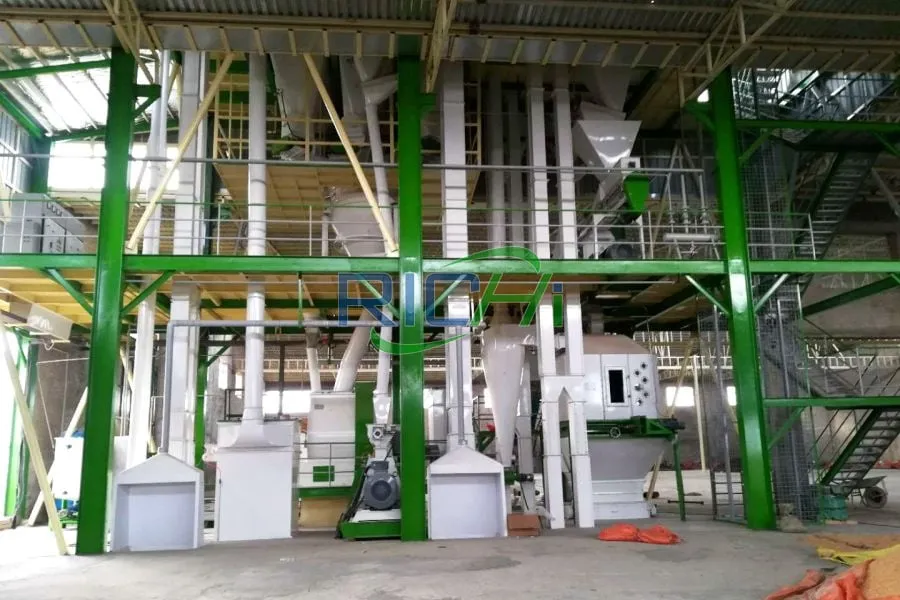
Mashonaland East Province
5-6 t/h poultry feed pellet machine in Zimbabwe
Commercial layer operation outside Harare, running about 80,000 birds. Previously bought feed from a mill in Chitungwiza but got tired of quality swings and delivery delays during rainy season when roads get bad.
- What they bought: SZLH350 ring die pellet machine in Zimbabwe configuration, but the whole line included a hammer mill, horizontal mixer, counterflow cooler, and automatic bagging station. They wanted independence from suppliers.
- Raw material situation: Mixed ration – yellow maize grown on their own fields, plus soybean meal and limestone sourced from Chegutu. Maize comes in at 14-16% moisture, ground to 3mm before mixing. They run a standard layer mash formulation but wanted it pelleted to reduce waste.
- Project cost: Around $145,000 USD for the complete feed plant in Zimbabwe installation.

2 t/h forestry waste pellet machine in Zimbabwe
Commercial forestry operation near Mutare, primarily growing pine and eucalyptus for timber. They were sitting on mountains of sawdust, bark, and offcuts from their sawmill. Burning it was getting them in trouble with EMA.
- What they bought: MZLH520 ring die pellet mill in Zimbabwe setup. This one’s a direct-drive unit – handles the abrasive bark better than belt-driven alternatives. Full line included a drum chipper, hammer mill, rotary dryer, and a packing auger.
- Raw material: Mixed softwood residues – sawdust at 45-50% moisture straight from the saws, plus dry planer shavings at 12-15%. They blend them to hit around 18% before pelleting.
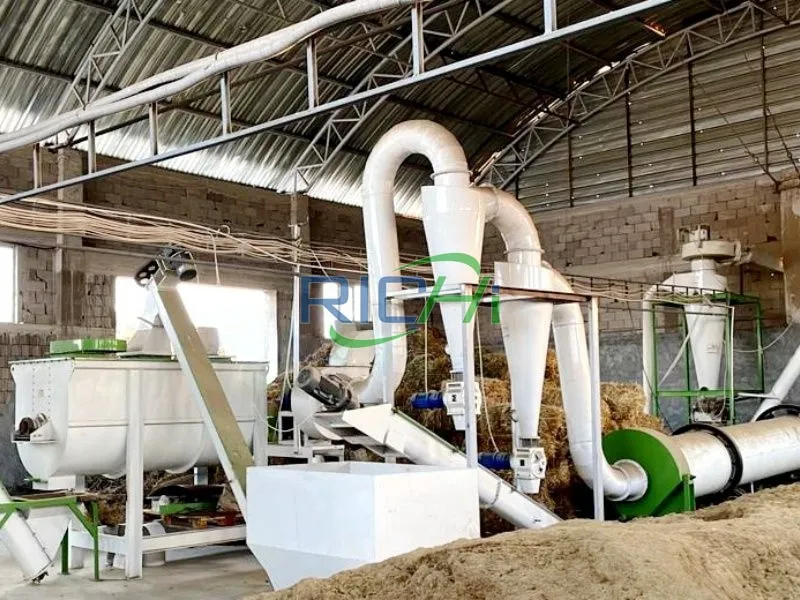
Manicaland Province
Mashonaland West Province
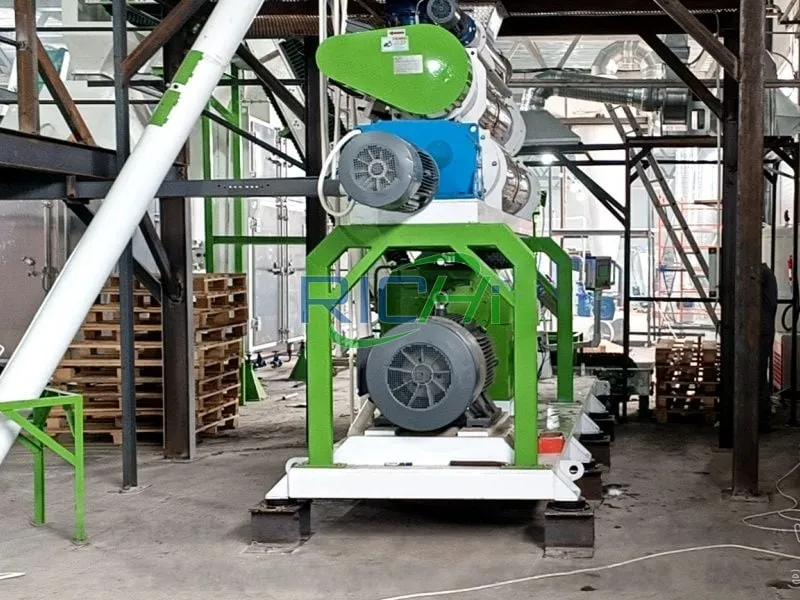
2 t/h tilapia floating feed extruder in Zimbabwe
Aquaculture operation near Kariba, supplying feed to their own cages plus independent farmers around the lake. Floating feed was all imported from South Africa – expensive and sometimes stuck at border for weeks.
- What they bought: SPHS120*2 twin-screw extruder. Different machine entirely from the pellet manufacturing equipment in Zimbabwe we usually sell – this one’s for floating aquafeed. Line included a fine grinder, mixer, extruder, dryer, and oil coater.
- Raw material: Fishmeal imported from Namibia, plus local soybean, maize, and wheat bran. They run two formulations – starter crumbles for fingerlings and 4mm sinking pellets for table fish.
- Why twin-screw: Single-screw couldn’t handle the fat content they wanted. With twin-screw, they can run 22% oil in the final feed without the pellets falling apart.
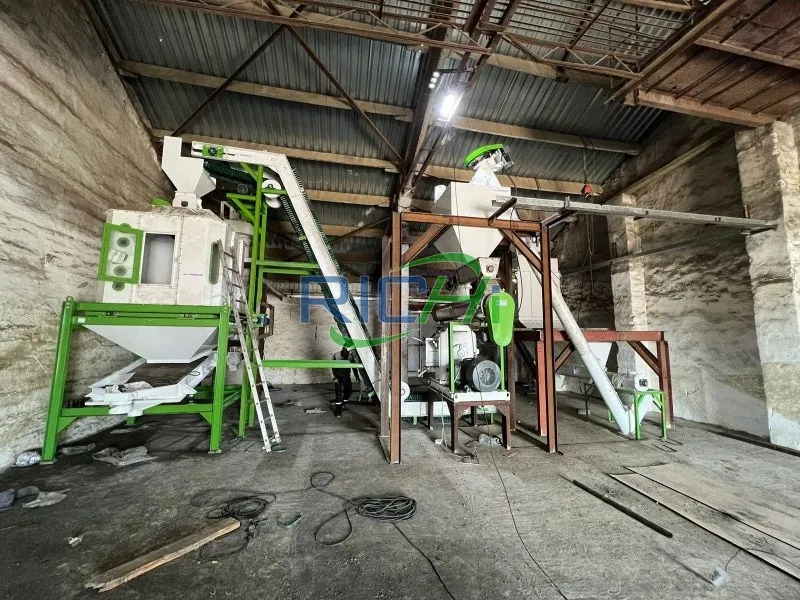
6 t/h crop residue pellet machine in Zimbabwe
Large-scale commercial farmer in Chegutu area, growing maize, sorghum, and soybeans across 2,500 hectares. After harvest, he was baling the stover anyway for cattle bedding. Decided to turn some into feed.
- What they bought: CZLH768 biomass pellet mill in Zimbabwe – big machine for big volumes. Full line: bale breaker, hammer mill with 4mm screen, mixer, pellet mill, counterflow cooler, and a bulk bin for truck loading.
- Raw material: Corn stover, sorghum stalks, millet straw – whatever came out of the fields. Moisture runs 12-15% after field drying. They chop the bales first, hammer mill, then mix with molasses and urea before pelleting.
- Project cost: Approximately $120,000 USD for the complete line.
Mashonaland West Province
Matabeleland North Province
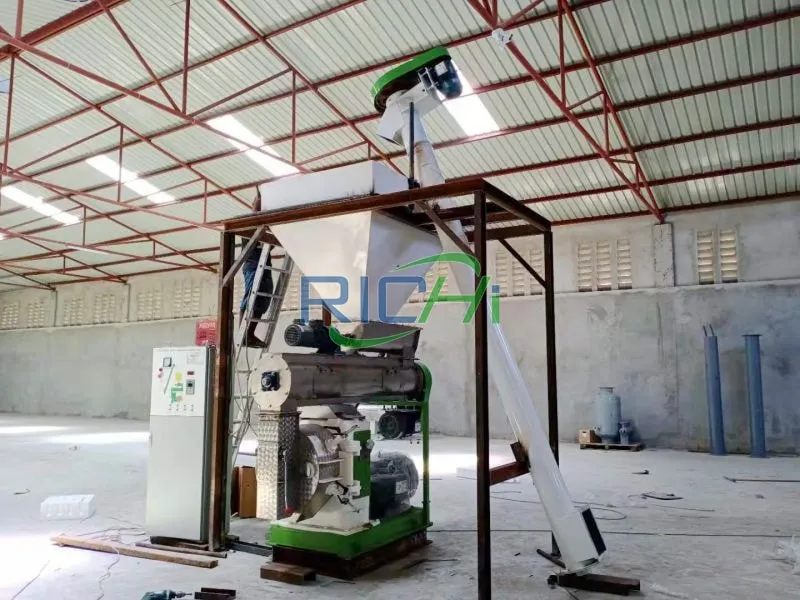
3-4 t/h pig feed pellet machine in Zimbabwe
Family operation outside Bulawayo, farrowing-to-finish with about 400 sows. They’d been grinding and mixing their own meal feed for years but were losing too much to dust and selective eating.
- What they bought: SZLH320 pellet press machine in Zimbabwe with a small batch mixer and a vertical cooler. Compact line – fits under one roof.
- Raw material: Homegrown maize, plus protein concentrates bought from a supplier in Harare. Maize is around 13% moisture, ground to 2.5mm for weaners, 3.5mm for growers.
- The improvement: Feed conversion dropped noticeably after switching to pellets. Less waste in the pens, and they can now add a liquid binder to hold the fines together.
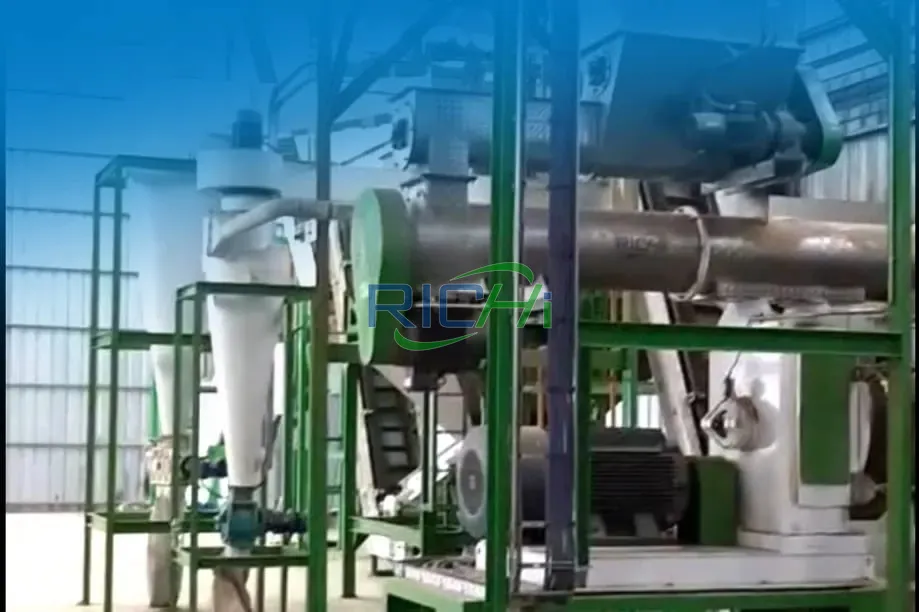
5 t/h grass pellet machine in Zimbabwe
Rancher near Gweru running beef cattle on veld grazing. Drought years were killing him – hay was expensive and hard to find. He had natural grass stands but no way to preserve the quality.
- What they bought: CZLH678 pelletizer for sale Zimbabwe installation. This was a full feed factory in Zimbabwe setup – mower-conditioner, baler (they already had those), plus our side: bale shredder, hammer mill, pellet mill, cooler, and bagging conveyor.
- Raw material: Mixed veld grass – primarily Hyperthelia and Hyparrhenia species. Cut at late vegetative stage, field-dried to 18-20%, baled, then processed. Protein is low (6-8%) so they add urea and molasses in the mixer.
- The trick: Grass pellets pack denser than hay bales. One truckload now carries three times the feed value. He’s selling pellets to neighboring farms during dry months.
Midlands Province

Manicaland Province
1 t/h wood pellet machine in Zimbabwe
Small-scale operator in Nyanga, collecting sawdust from local carpentry shops and selling bagged pellets for chicken brooding and household heating in the winter months.
- What they bought: MZLH420 industrial pellet mill in Zimbabwe – entry-level industrial machine. Line included a hammer mill, vertical dryer (gas-fired), pellet mill, and manual bagging chute.
- Raw material: Mixed softwood sawdust from pine and cypress. Moisture varies wildly – some shops deliver wet sawdust at 40%, others bring dry planer shavings at 10%. They blend in a mixer before drying.
- The reality: Startup was rough. They underestimated how much drying capacity they needed. We went back and added a holding bin so the dryer could run continuously even when the pellet making machine in Zimbabwe wasn’t running.
10-12 t/h cattle feed pellet mill in Zimbabwe
Commercial feedlot near Chinhoyi, finishing 8,000 head at a time. They were buying meal feed from three different mills but couldn’t get consistent quality. Decided to build their own animal feed mill plant in Zimbabwe.
- What they bought: SZLH420 ring die feed pellet machine in Zimbabwe as the centerpiece. Full plant: intake pit, cleaning screens, hammer mills (two, running parallel), vertical cooler, bulk load-out bins, and a control room with PLC.
- Raw material: High-fiber ration – maize stover, cottonseed hulls, wheat bran, plus maize grain and protein supplements. The fiber sources run 12-15% moisture, ground to 4-5mm.
- Project cost: Approximately $180,000 USD complete.
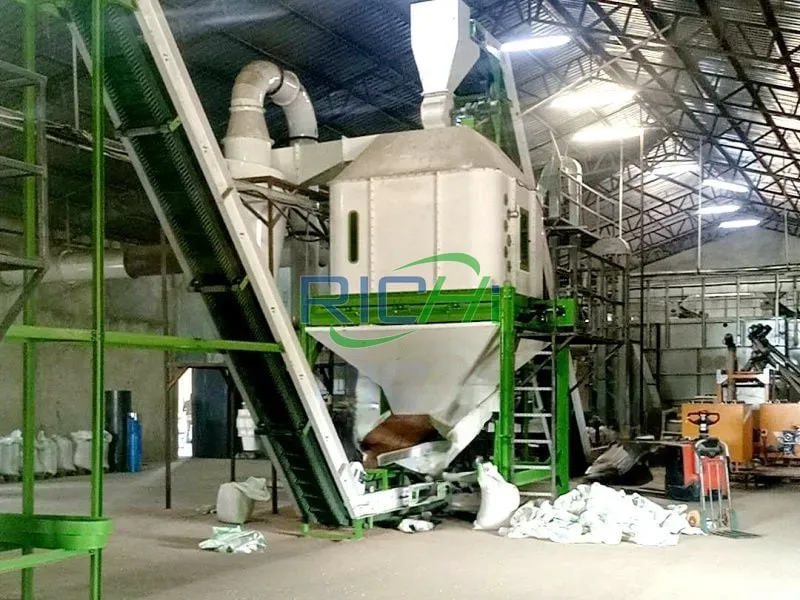
Mashonaland West Province
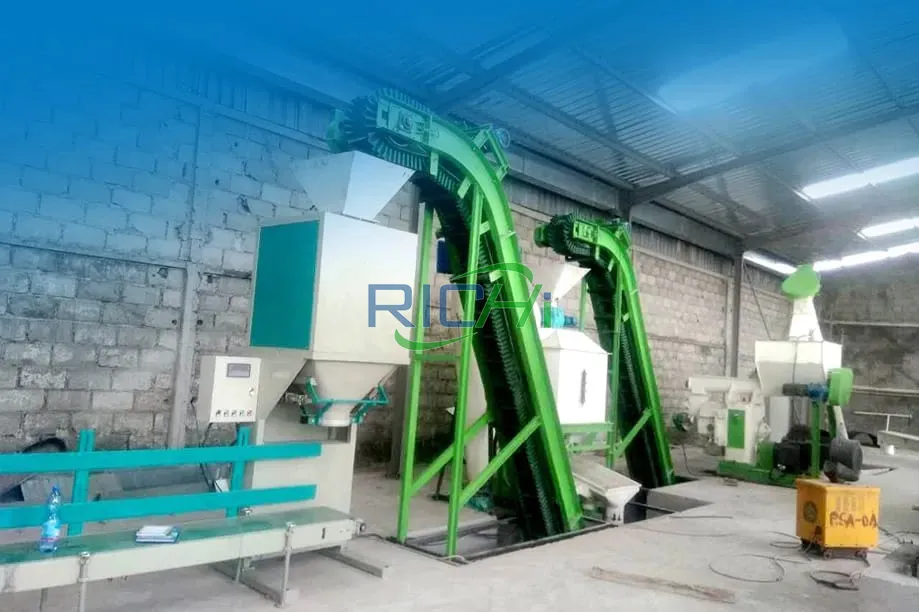
Mashonaland West Province
3-5 t/h chicken manure pellet making machine in Zimbabwe
Broiler operation outside Norton, producing about 50,000 birds per cycle. The litter buildup was becoming an environmental headache – piles of manure with no easy disposal.
- What they bought: FZLH350 fertilizer granulator equipment in Zimbabwe. Different setup from feed lines: mixer, granulator, dryer, cooler, screener. They also added a deodorizing biofilter because the neighbors were complaining.
- Raw material: Deep litter – pine shavings mixed with chicken manure, scraped out after each batch. Moisture runs 30-35% fresh, but we dry it to 18% before granulating.
- The market: Turns out tobacco farmers love this stuff as a basal fertilizer. They’re selling bags at the local co-op for a decent margin.
6-8 t/h wheat straw pellet machine in Zimbabwe
Large wheat farmer near Chegutu, 1,200 hectares under irrigation. After combine harvesting, the straw was either burned or baled for low-value bedding. He wanted to turn it into feed.
- What they bought: Complete pellet production machine in Zimbabwe line based around a CZLH678. Included bale shredder, hammer mill with 6mm screen for roughage, paddle mixer for adding molasses and urea, pellet mill, counterflow cooler, and bagging scale.
- Raw material: Wheat straw only – uniform material from his own fields. Moisture 10-12% after combining, but we add steam in the conditioner to hit 16-17% for better binding.
- Why it works: Straw alone is poor feed. But with urea-ammoniation treatment before pelleting, crude protein jumps from 3% to 9-10%. He’s selling it as drought feed to smaller farmers.

Mashonaland West Province
Additional Zimbabwe Installations
Not every installation makes it into the case study brochures. Some are smaller, some are experimental, some just tick along without drama. But they all add up to the full picture of what pellet making machine in Zimbabwe operations look like on the ground. Here’s a rundown of other lines we’ve commissioned over the past few years – from dairy rations in Marondera to shrimp feed near the Mozambique border.

5 t/h cattle fattening feed pellet machine in Zimbabwe
Commercial feedlot outside Masvingo needed consistent rations for their finishing cattle. Installed a SZLH350 as the core of their new feed mill in Zimbabwe, running maize, cottonseed cake, and wheat bran. The pellet mill in Zimbabwe produces 6mm cylinders that hold together better during transport to the pens.
Model
SZLH350
Pellet Size
6mm

1 t/h wood waste pellet machine in Zimbabwe
Furniture workshop cooperative in Bulawayo had sawdust and offcuts piling up with nowhere to go. They bought a small MZLH320 ring die pellet mill in Zimbabwe to convert the waste into heating pellets. The line includes a hammer mill and a simple bagging chute. They sell bags to local households for winter cooking.
Model
MZLH320
Pellet Size
8 mm

1 t/h aquafeed pellet machine in Zimbabwe
Tilapia farmer near Mutare wanted to produce his own feed instead of buying from South Africa. He went with a single-screw wet extruder – different from the dry pellet production machine in Zimbabwe setups we usually do. The feed plant in Zimbabwe processes soybean, maize, and fishmeal into 3mm sinking pellets for his ponds.
Model
DSP-135B
Pellet Size
3mm
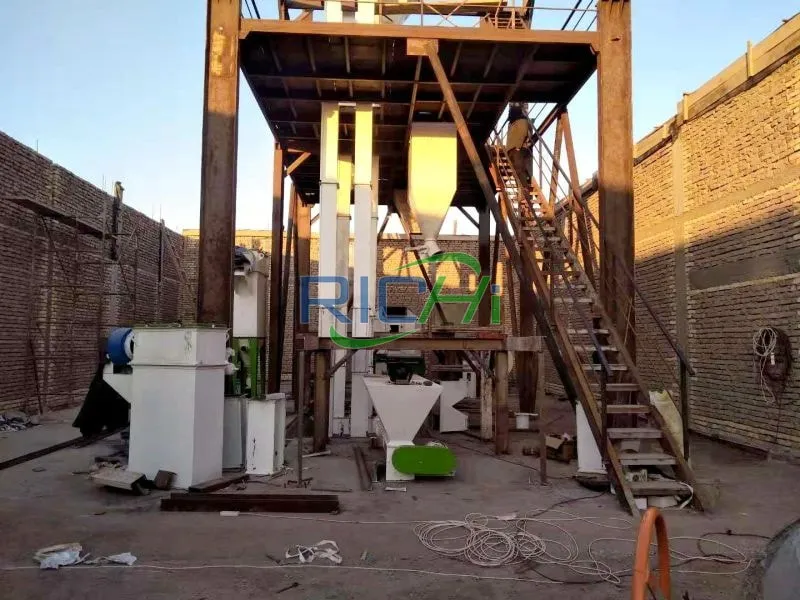
4 t/h livestock feed pellet machine in Zimbabwe
Mixed farmer in Gweru runs sheep and goats alongside his crops. He needed a flexible pellet manufacturing equipment in Zimbabwe setup that could switch between formulations. The SZLH320 handles his small grain rations, producing 4mm pellets that the animals clean up without waste.
Model
SZLH320
Pellet Size
4mm
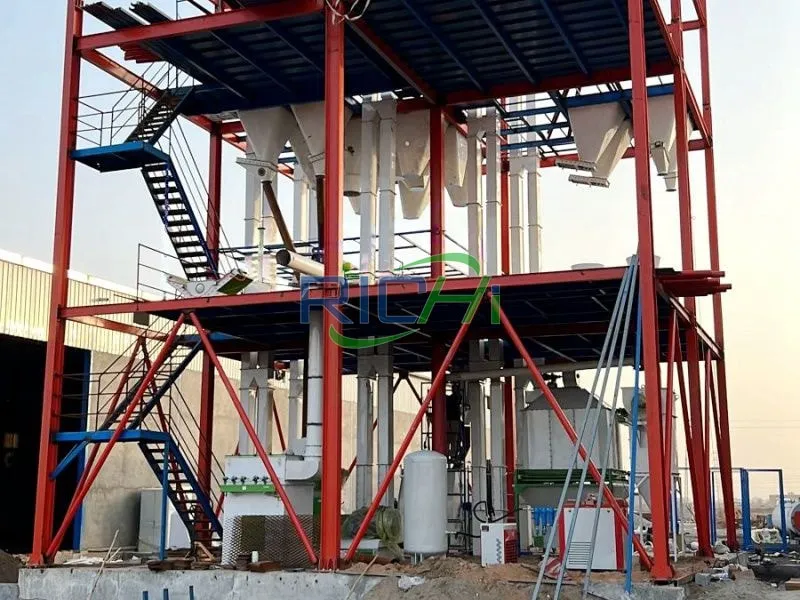
10 t/h dairy feed pellet machine in Zimbabwe
Large dairy operation near Marondera was struggling with inconsistent milk yields linked to feed quality. Their new industrial pellet mill in Zimbabwe – a SZLH420 – runs a consistent TMR pellet using maize silage, haylage, and concentrates. The pellet plant equipment in Zimbabwe includes a steam conditioner to handle the higher fiber.
Model
SZLH420
Pellet Size
8 mm

15 t/h chicken feed pellet mill in Zimbabwe
Integrated poultry operation north of Harare processes feed for their own broilers and layers plus sells to outgrowers. The SZLH520 chicken feed pellet machine in Zimbabwe runs 16 hours daily, producing 3.5mm starter crumbles and 4.5mm grower pellets. They’ve got two lines now.
Model
SZLH520
Pellet Size
3.5mm / 4.5mm

2 t/h sawdust pellet machine in Zimbabwe
Sawmill in Nyanga had been selling raw sawdust for chicken litter but wanted higher value. Installed a MZLH420 biomass pellet press in Zimbabwe with a small dryer to handle moisture swings. The 6mm wood pellets now go to tobacco farmers for curing barns.
Model
MZLH420
Pellet Size
6 mm
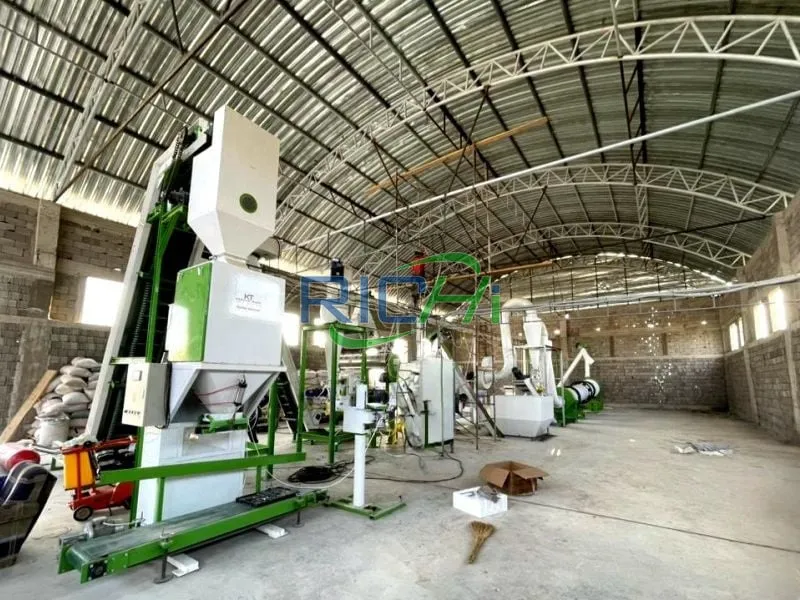
4 t/h alfalfa pellet machine in Zimbabwe
Hay producer near Chegutu had good alfalfa stands but lost leaf shatter during baling. Switching to a pellet press machine in Zimbabwe let them capture the leaves. The CZLH350 produces 8mm pellets for horse owners and dairy farmers who prefer consistent forage.
Model
CZLH350
Pellet Size
8mm
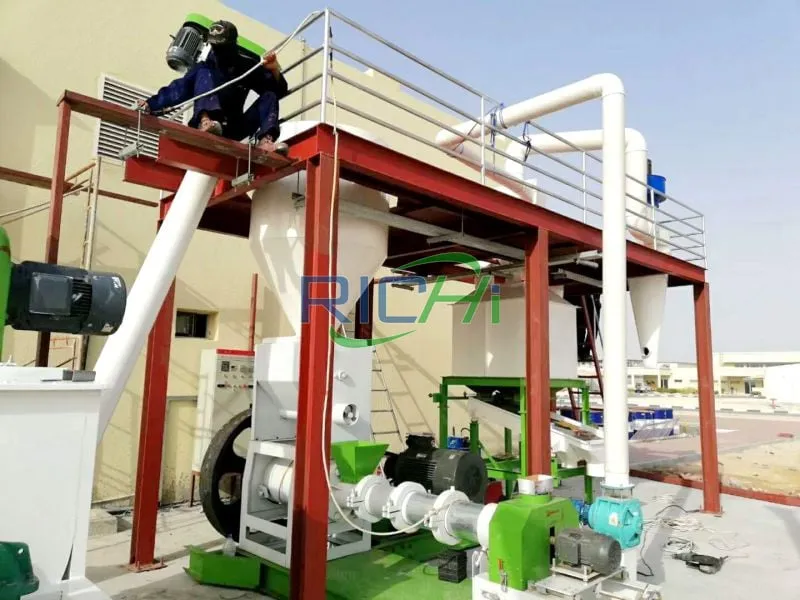
500 kg/h fish feed pellet machine in Zimbabwe
Small-scale catfish farmer in Karoi started with floating feed but his fish preferred sinking. He swapped to a single-screw extruder setup, part of a compact feed factory in Zimbabwe that also mixes his own premix. The 2mm micro-pellets work well for his fingerlings.
Model
DGP-120B
Pellet Size
2mm

5 t/h compost pellet machine in Zimbabwe
Municipal waste contractor in Mutare collects green waste from parks and gardens, composts it, then turns it into uniform pellets. The FZLH350 pelletizing machine in Zimbabwe processes the screened compost with added binder. Local nurseries buy it as organic soil conditioner.
Model
FZLH350
Pellet Size
6mm
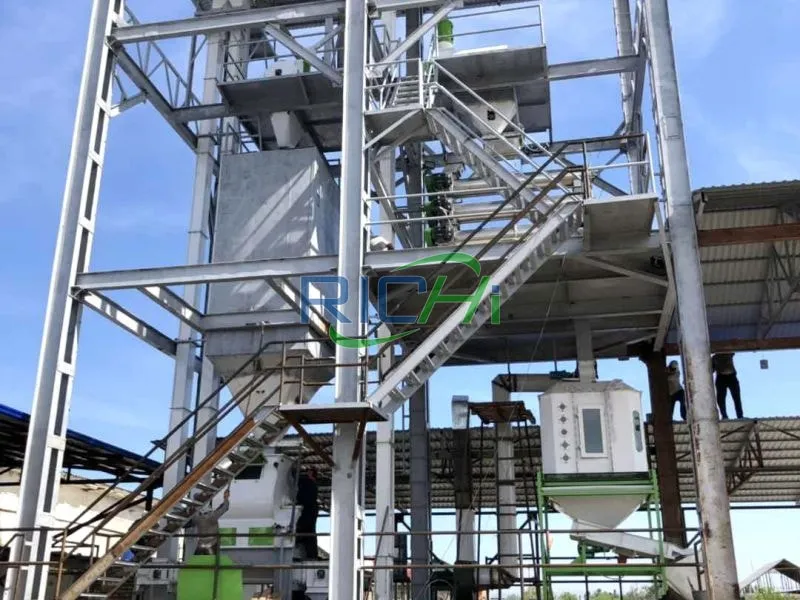
5 t/h sinking fish feed pellet mill in Zimbabwe
Commercial fish farmer near Kariba grew tired of imported feed quality swings. They built their own pellet plant in Zimbabwe around a SZLH420 running a high-protein sinking formulation. The 4mm pellets hold together in water for 10-15 minutes, enough for the bream to find them.
Model
SZLH420
Pellet Size
4mm
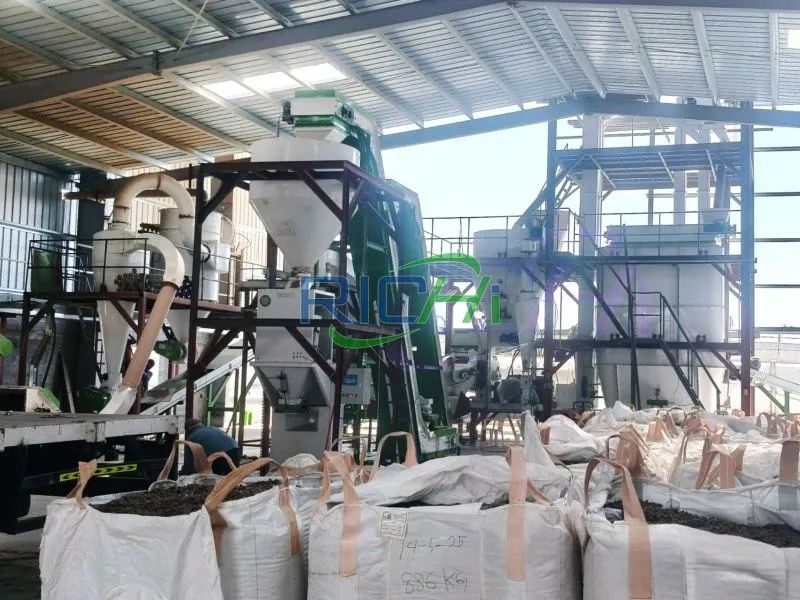
9-12 t/h cow manure pellet machine in Zimbabwe
Large dairy near Chinhamora had manure lagoons reaching capacity. They installed a FZLH520 organic fertilizer line as part of a complete pellet factory in Zimbabwe setup. The dried pellets test at 3-3-2 NPV and sell to tobacco farmers for field application.
Model
FZLH520
Pellet Size
5 mm
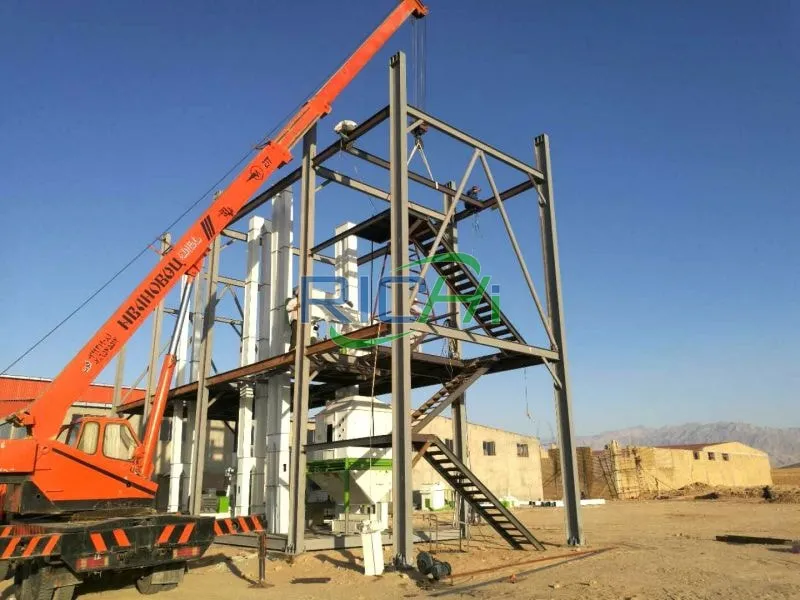
3T/H alfalfa hay pellet mill in Zimbabwe
Alfalfa dehydrator in Macheke processes high-quality hay into 10mm forage pellets for export to Botswana. The CZLH420 pellet mill in Zimbabwe runs on steam-conditioned material to preserve protein content. They ship in bulk containers.
Model
CZLH420
Pellet Size
10mm
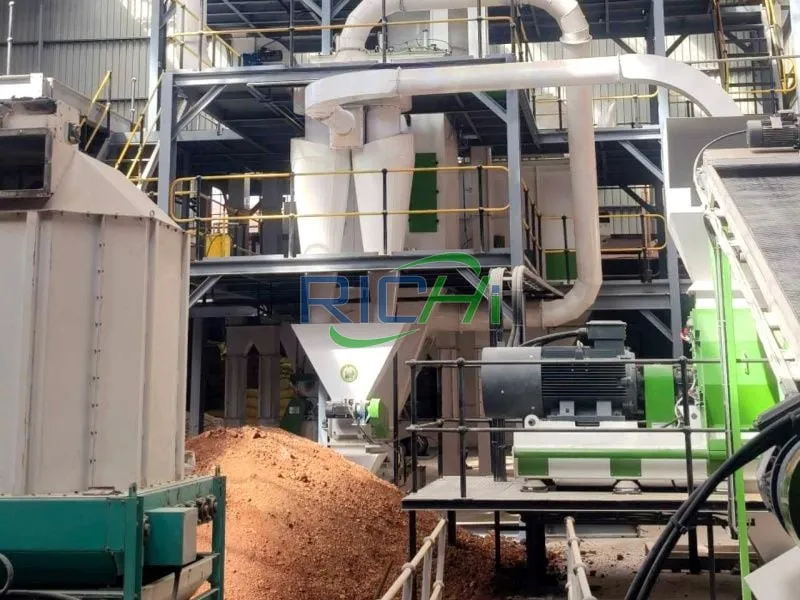
5 t/h agricultural waste pellet machine in Zimbabwe
Mixed farm in Banket collects maize stalks, groundnut shells, and soybean residue after harvest. The CZLH678 biomass pellet mill in Zimbabwe turns this mix into 8mm fuel pellets for on-farm boilers and local sale.
Model
CZLH678
Pellet Size
8 mm
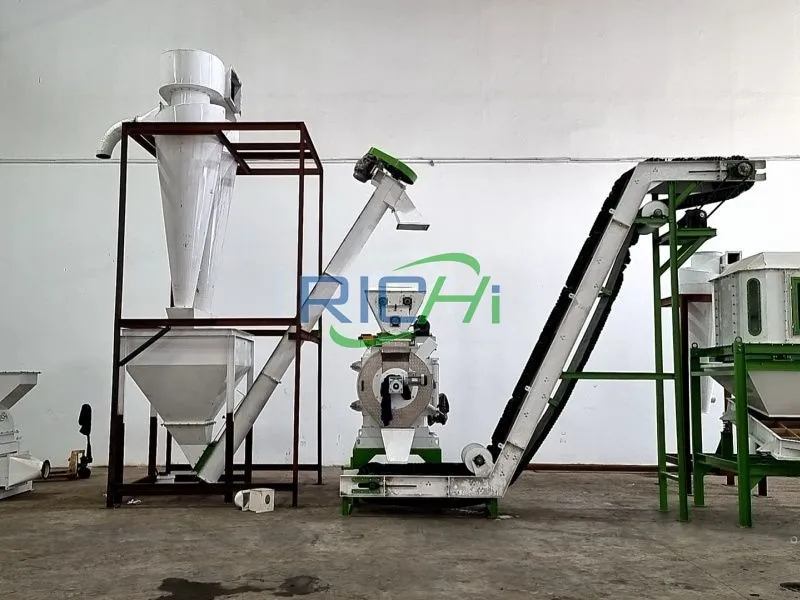
2-3 t/h pig slurry pellet mill in Zimbabwe
Intensive pig operation near Norton had slurry handling issues and odor complaints. The FZLH320 pellet plant equipment in Zimbabwe line processes separated solids with added bulking agent. The 4mm organic pellets go to nearby maize farmers.
Model
FZLH320
Pellet Size
4mm
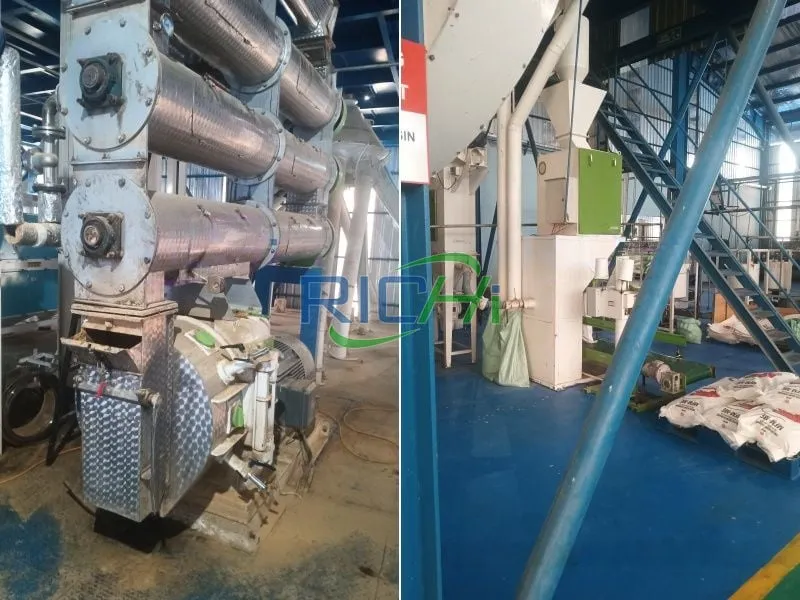
2 t/h shrimp feed pellet machine in Zimbabwe
Emerging aquaculture operation in the Lowveld is experimenting with shrimp in lined ponds. They needed a dedicated feed mill in Zimbabwe for high-protein sinking pellets. The SZLH420 produces 2mm micro-pellets with good water stability.
Model
SZLH420
Pellet Size
2mm
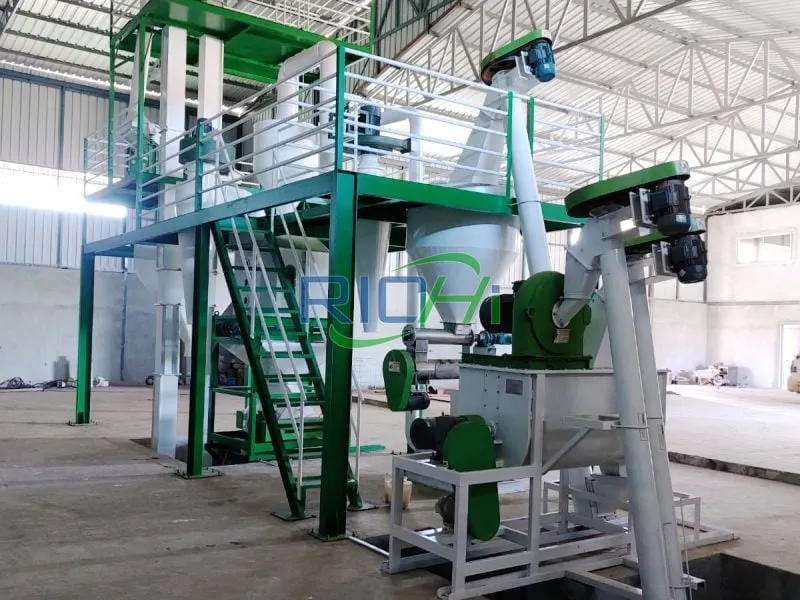
1.0-1.5 t/h beef cattle supplement pellet mill in Zimbabwe
Smallholder cooperative in Bikita pools resources to buy minerals and protein concentrates in bulk. Their SZLH250 pellet press machine in Zimbabwe blends these with local maize to make 10mm supplement blocks for dry season feeding.
Model
SZLH250
Pellet Size
10mm

3 t/h animal bedding pellets machine in Zimbabwe
Horse breeder near Harare was importing wood pellets for stable bedding from South Africa – expensive and delayed. The MZLH768 industrial pellet mill in Zimbabwe now processes pine shavings and sawdust into 8mm absorbent bedding pellets.
Model
MZLH768
Pellet Size
8mm
Project Walkthrough Videos
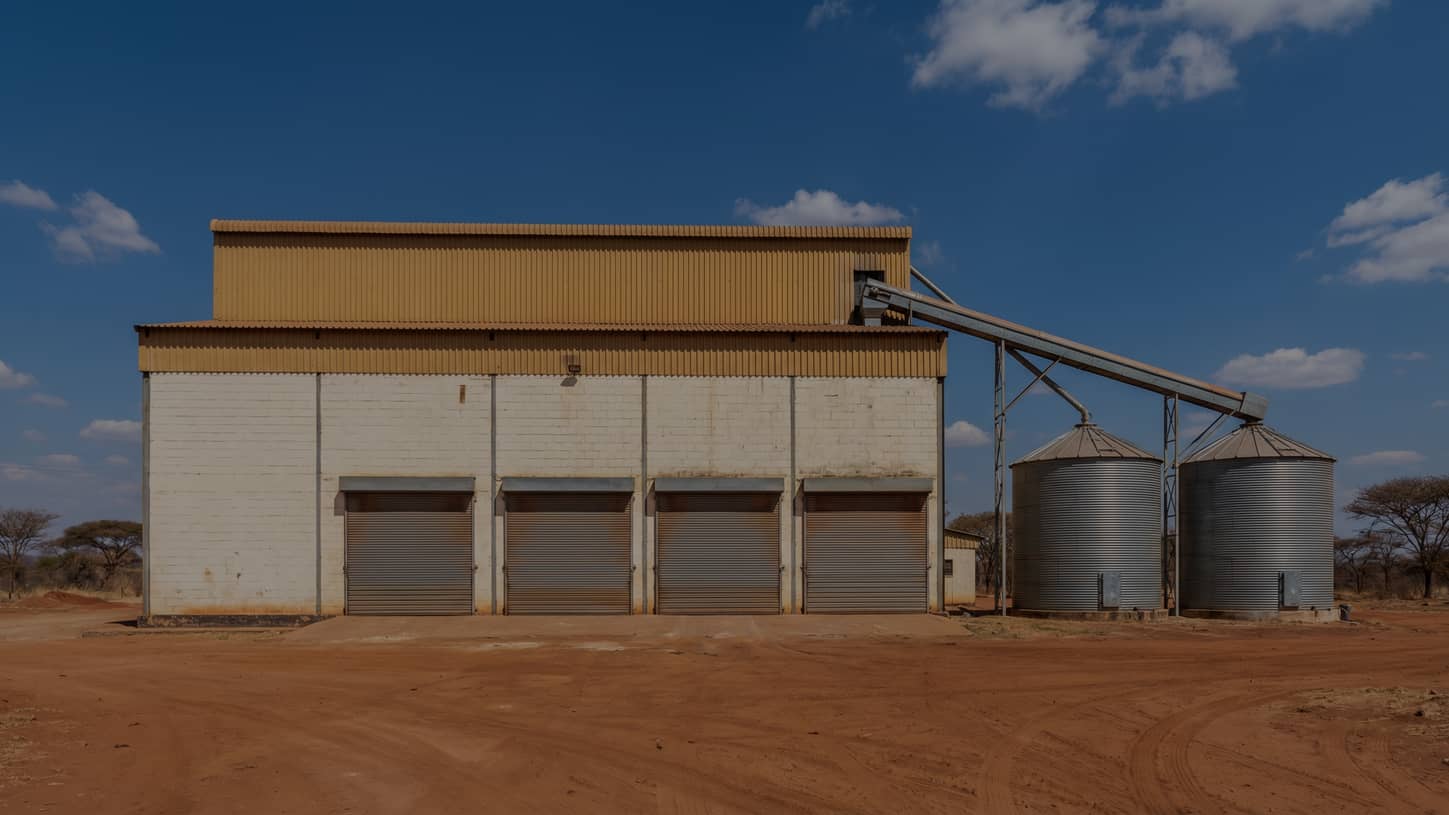
5-6 TPH Mash and Pellet Dual-Purpose Feed Mill in Zimbabwe
This one’s a SZLH350 setup outside Harare that can switch between mash and pellets depending on what the birds need that week. The video shows a run of 3.5mm broiler starter – you can see the crumbles breaking clean at the cooler discharge.
They keep a separate mixer for layers mash when orders come in. The chicken feed mill plant in Zimbabwe runs on maize from their own fields, ground to 2.5mm for the young birds.
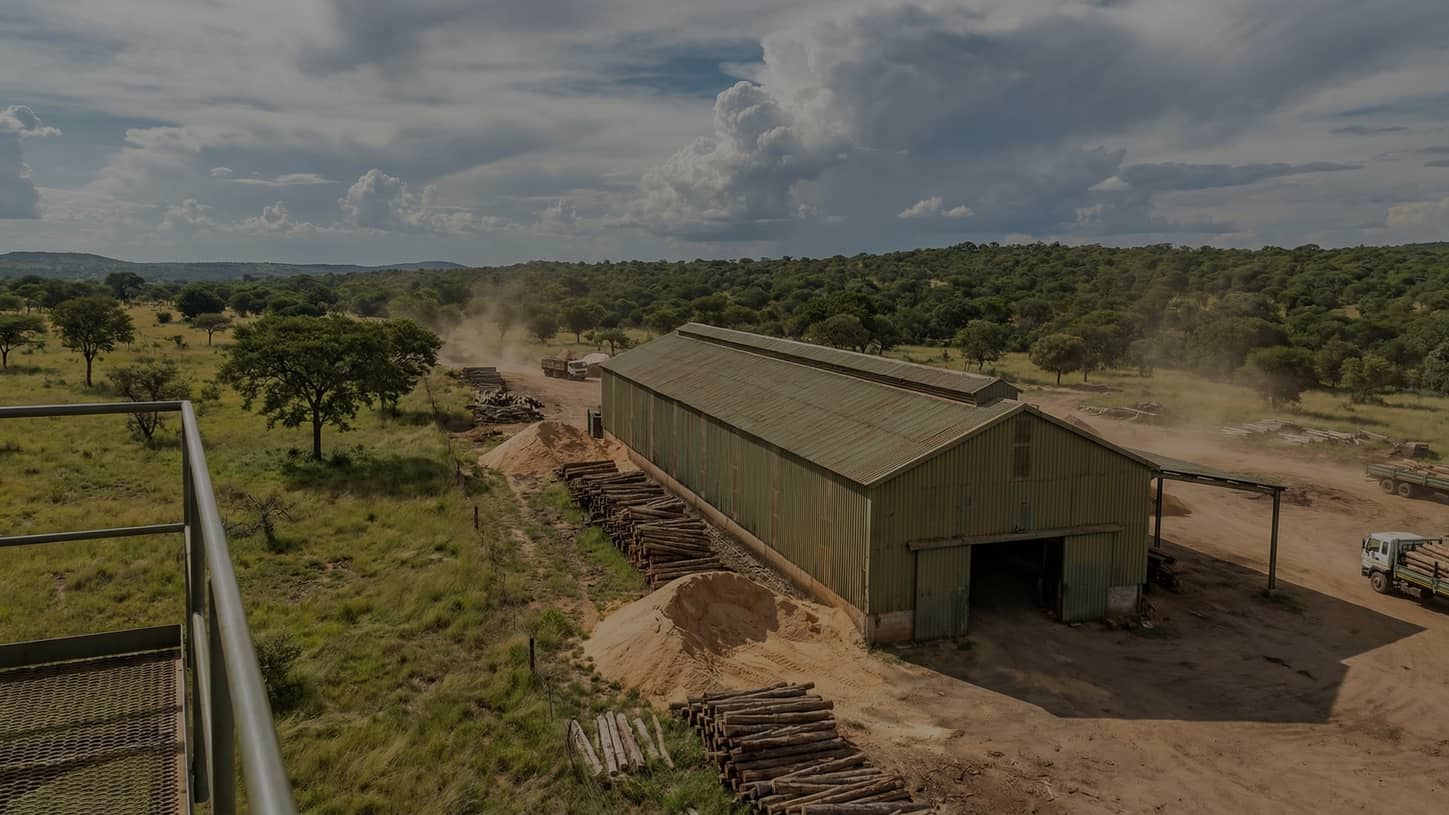
3 TPH Sawdust Pellet Line in Zimbabwe
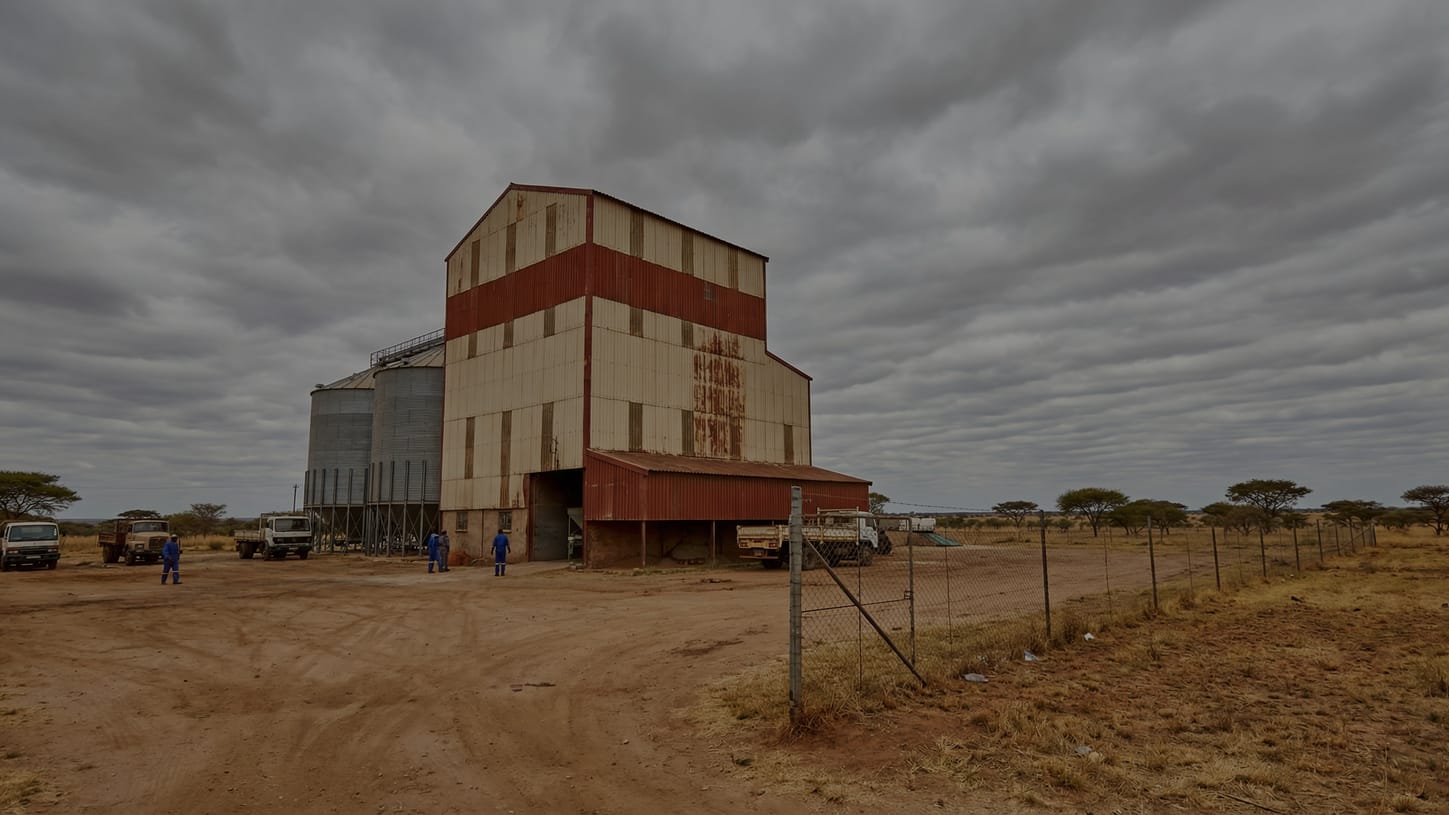
Walk through of a MZLH520 industrial pellet mill in Zimbabwe installation at a commercial sawmill near Mutare.
The video follows material from the wet sawdust pile through the rotary dryer (takes it from 45% down to 14%) and into the pellet mill. Watch the discharge – the 6mm wood pellets come out dark, almost black, from the pine resin. They cool on a counterflow unit before bagging.
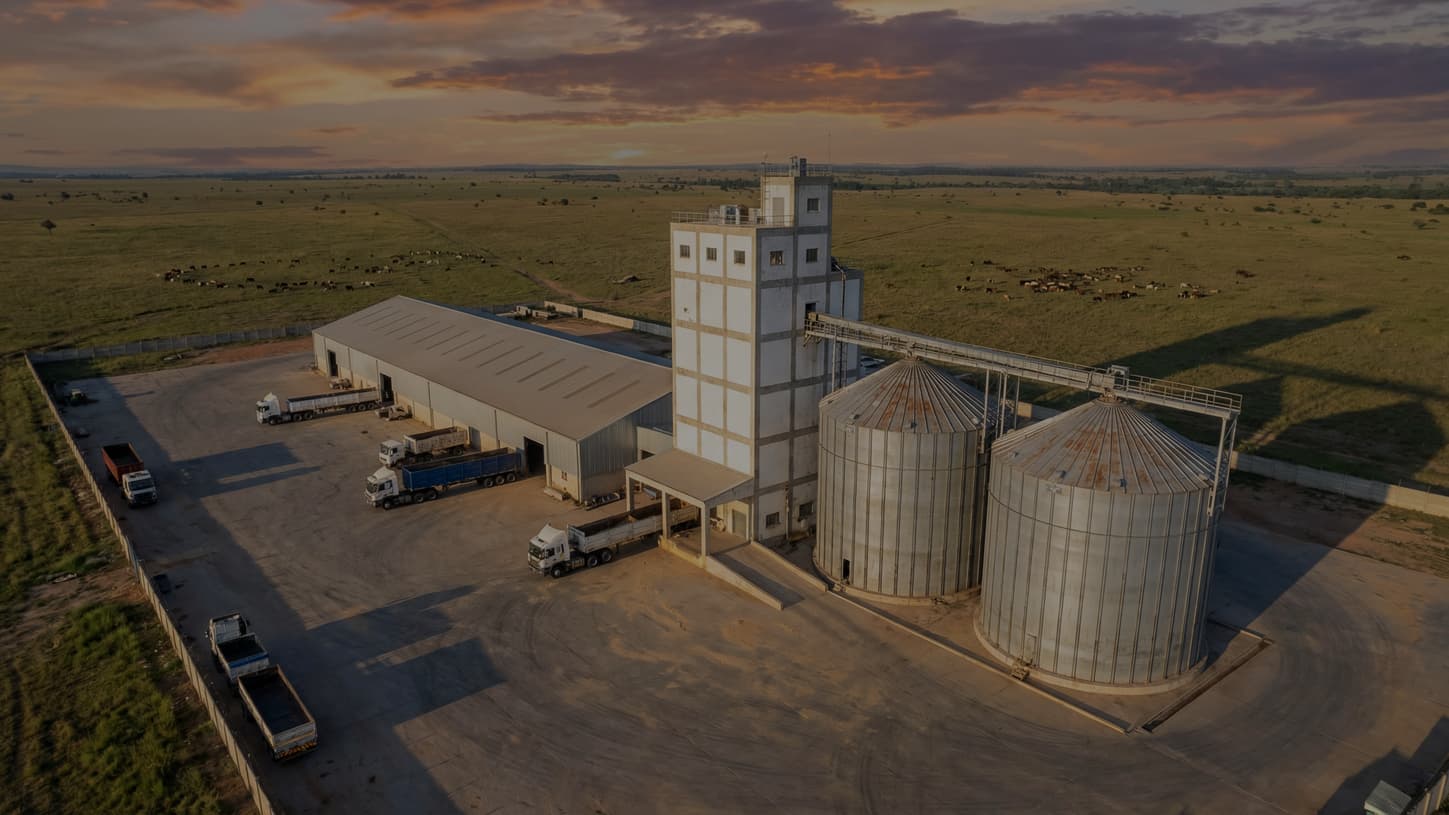
3-4 TPH Broiler Feed Manufacturing Plant in Zimbabwe
This feed plant in Zimbabwe near Norton runs a SZLH420 for grower pellets and a smaller die set for starter crumbles.
The video shows a formulation change – they flush the system with maize bran before switching from starter to finisher. The 4.5mm pellets hold together well; you can see minimal fines at the bagging station.
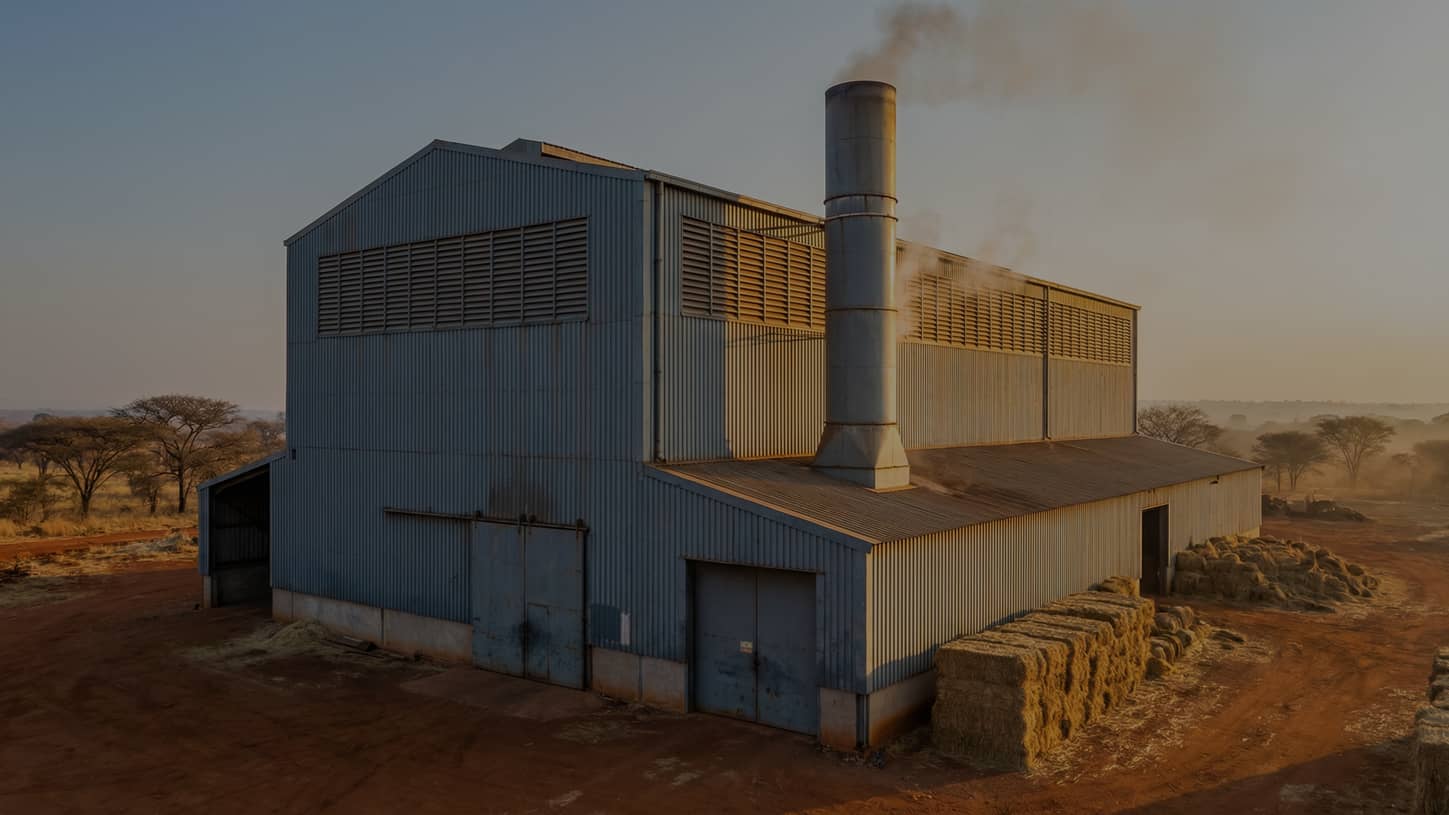
15 TPH Cattle Feed Pellet Plant in Zimbabwe
Big operation near Chinhoyi, filmed during a maintenance shutdown so you can see inside the SZLH520 ring die cattle feed pellet machine in Zimbabwe.
The video walks through the intake pit (maize and cottonseed coming in), the hammer mills running parallel, and the conditioner where steam softens the fiber. They run 8mm pellets for finishing cattle. The cooler discharge is worth watching – steady flow, even temperature.
1 TPH Straw Grass Rotary Dryer in Zimbabwe
This one’s not a pellet making machine in Zimbabwe but feeds into one. Footage from a Chegutu farm showing their rotary dryer handling chopped wheat straw and grass.
Inlet moisture runs 35-40% on a bad day; outlet is steady at 14% going into the pellet mill. You can see the flame adjustment in the burner housing – they’re running on crop residues to save LPG costs.

What Our Customers Say

Our first pellet machine, a CZLH678 for grass, went in back in 2019. I was skeptical about it handling tropical fiber, but we’ve pushed maybe 4,000 tons through it now. It runs on anything: veld hay, maize stover, even soybean trash.
We use 8mm dies mostly, and add molasses in the dry months—the cows come running when they hear the auger. Last year, a bearing noise came up. I sent a WhatsApp video to their tech and had a part number and fix within the hour. That matters when you’re 200km from anywhere.
Tawanda Mukarati
Mixed Farm Operations, near Gweru

Processing Opportunities in Zimbabwe
Walk around any farming area in this country and you’ll see piles of stuff that could be going through a pellet making machine in Zimbabwe. Sawdust at milling centers, maize stalks after harvest, grass that’s too coarse for grazing, manure behind cattle pens. The question is always the same: what’s the cheapest way to turn this into something saleable? Over the years we’ve helped set up lines for all sorts of materials. Here’s where we’re seeing traction.
WOOD PELLET PRODUCTION
WOOD PELLET SOLUTION
Sawmills around Mutare and Nyanga sit on mountains of pine and eucalyptus residues. Some burn it for heat, some let it rot. The ones running biomass pellet mill in Zimbabwe equipment are selling into tobacco curing and chicken brooding. Decent margin, steady demand.

GRASS PELLET PRODUCTION
GRASS PELLET SOLUTION
Veld grass is everywhere but cattle won’t touch it once it’s stemmy. Cut early, pellet it, and you’ve got winter feed that moves. Ranchers near Gweru and Masvingo are starting to look at pellet press machine in Zimbabwe setups for exactly this.


STRAW PELLET PRODUCTION
STRAW PELLET SOLUTION
Maize stalks, wheat straw, sorghum residue – after harvest it’s either baled for bedding or burned. With urea treatment in the conditioner, it becomes maintenance feed. A few feed mill in Zimbabwe operations are blending it with molasses and selling to smallholders.


RUMINANT FEED PELLET PRODUCTION
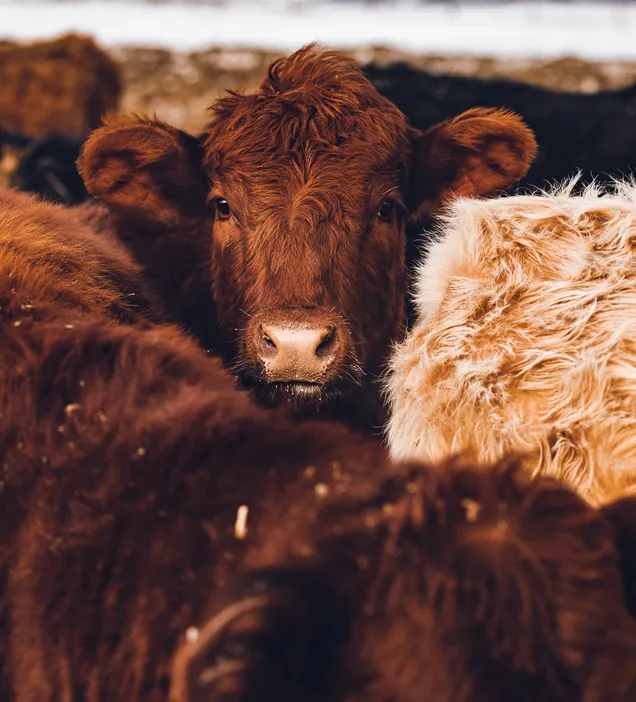
CATTLE FEED PELLET SOLUTION
Commercial feedlots need consistent roughage. The industrial pellet mill in Zimbabwe installations we’ve done for cattle operations run on cottonseed hulls, maize stover, and protein concentrates. 8mm pellets, high fiber, low dust.

POULTRY FEED PELLET PRODUCTION
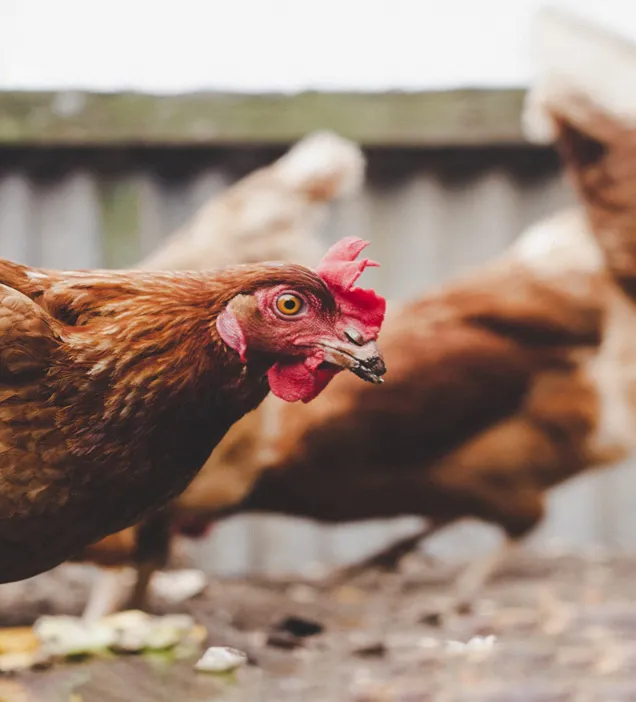
POULTRY FEED PELLET SOLUTION
Layer and broiler operations around Harare and Norton mostly want their own feed plant in Zimbabwe to control quality. Maize, soybean, limestone – ground fine, pelleted, cooled. Standard stuff but volume is increasing.

LIVESTOCK FEED PELLET PRODUCTION
LIVESTOCK FEED PELLET SOLUTION
Pigs, sheep, goats – smaller operations need flexibility. A pellet production machine in Zimbabwe that can switch formulations between batches makes sense. We see mixed farmers running one mill for everything.


FERTILIZER PELLET PRODUCTION
FERTILIZER PELLET SOLUTION
Chicken litter from broiler sheds was a disposal problem. Now it’s a product. The pelletizing machine in Zimbabwe lines we’ve put in produce 4-5mm organic pellets that tobacco farmers buy for basal dressing. NPK blending is next.

FISH FEED PELLET PRODUCTION
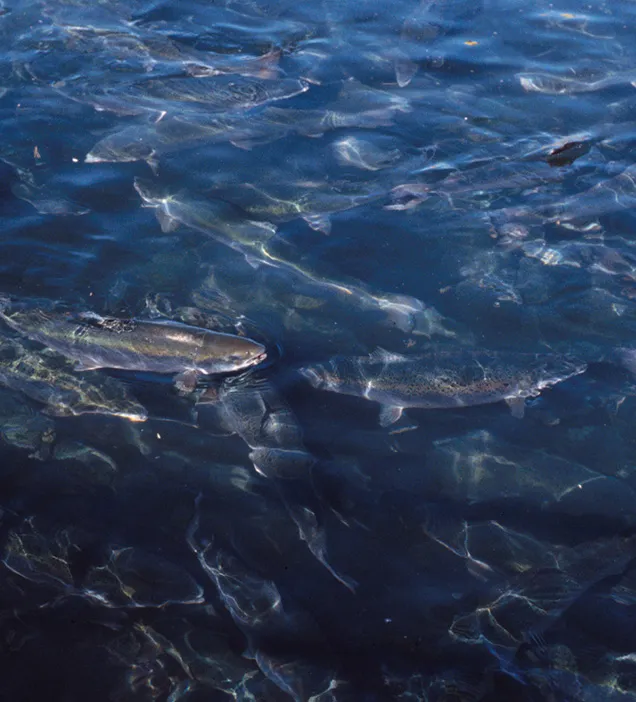
FISH FEED PELLET SOLUTION
Tilapia and catfish farming around Kariba and the eastern highlands is growing. Floating extruders are expensive; many start with sinking pellet manufacturing equipment in Zimbabwe using local ingredients. 3mm pellets, water stable for 10 minutes.

PET FOOD PELLET PRODUCTION
PET FOOD PELLET SOLUTION
Small but growing. A few operations are making dog food pellets using meat meal and maize. Not huge volume yet but the pellet factory in Zimbabwe concept is there.
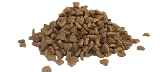

cat litter PELLET PRODUCTION
cat litter PELLET SOLUTION
Sawdust, paper, sometimes maize cobs. Grind, pellet, dry. A couple of small pellet plant equipment in Zimbabwe setups are selling to pet shops in Harare and Bulawayo. Import substitution play.


paper PELLET PRODUCTION
paper PELLET SOLUTION
Offices and schools generate waste paper. Baled and pelletized, it burns hot with low ash. A few pelletizer for sale Zimbabwe inquiries came from people looking at industrial boiler fuel.


ANIMAL BEDDING PELLET PRODUCTION
ANIMAL BEDDING PELLET SOLUTION
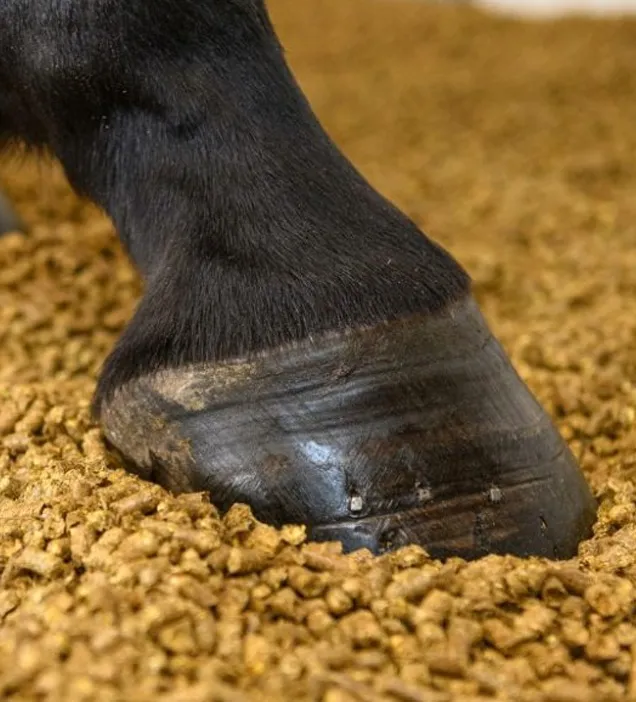
Horse owners prefer pellets to loose shavings – less dust, easier handling. Pine sawdust through a ring die pellet mill in Zimbabwe, 8mm, high absorbency. We’ve done a few lines near stables.
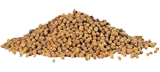
RDF PELLET PRODUCTION
RDF PELLET SOLUTION
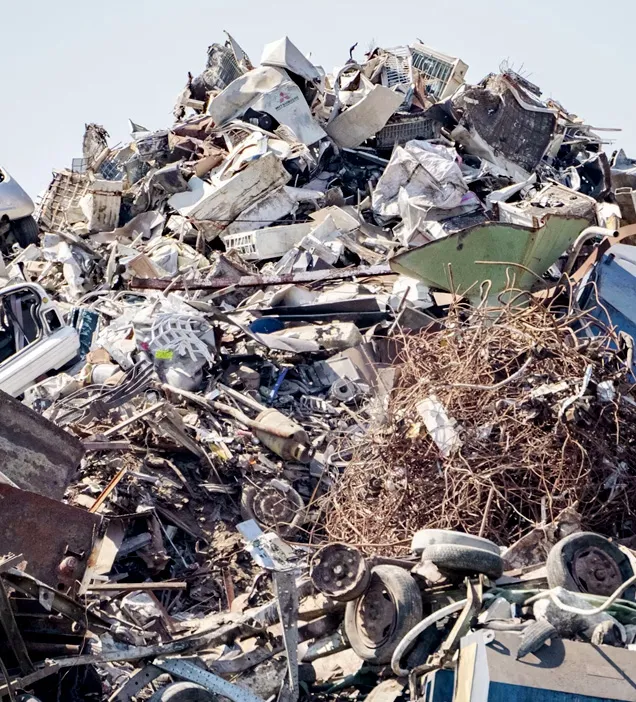
Industrial waste – plastics, paper, textiles – shredded and densified for cement kilns. One pellet making machine in Zimbabwe project we quoted never went ahead, but inquiries keep coming.

Raw grain puffing PRODUCTION
Raw grain puffing SOLUTION
Not pellets, but related. Full-fat soybean extrusion for feed mills. A couple of feed factory in Zimbabwe operations are running extruders to replace imported soybean meal.


Pyrolytic carbon PELLET PRODUCTION
Pyrolytic carbon PELLET SOLUTION
Charcoal fines from traditional kilns can be pelletized with binder. Burns cleaner than raw charcoal. Experimental stage here but we’ve seen it work elsewhere.


Rat poison PELLET PRODUCTION
Rat poison PELLET SOLUTION
Zinc phosphide mixed with grain bait, pelleted for field rats. Sensitive material, need dedicated pellet mill in Zimbabwe with strict cleaning protocols. One project near Mashonaland Central.


solid waste PELLET PRODUCTION
solid waste PELLET SOLUTION
Municipal solids – separated organics – can be composted and pelletized. A few local authorities have asked about pellet production line in Zimbabwe costs. Long-term play but material is free.


Equipment Moving into Zimbabwe
When we pull together shipments for Zimbabwe, it’s rarely just one pellet making machine in Zimbabwe. Usually it’s a container mix – a pellet mill here, a grinder there, some drying equipment, conveyors, the bits and pieces that make a line work. Here’s what’s been crossing the border regularly and what customers are doing with it.
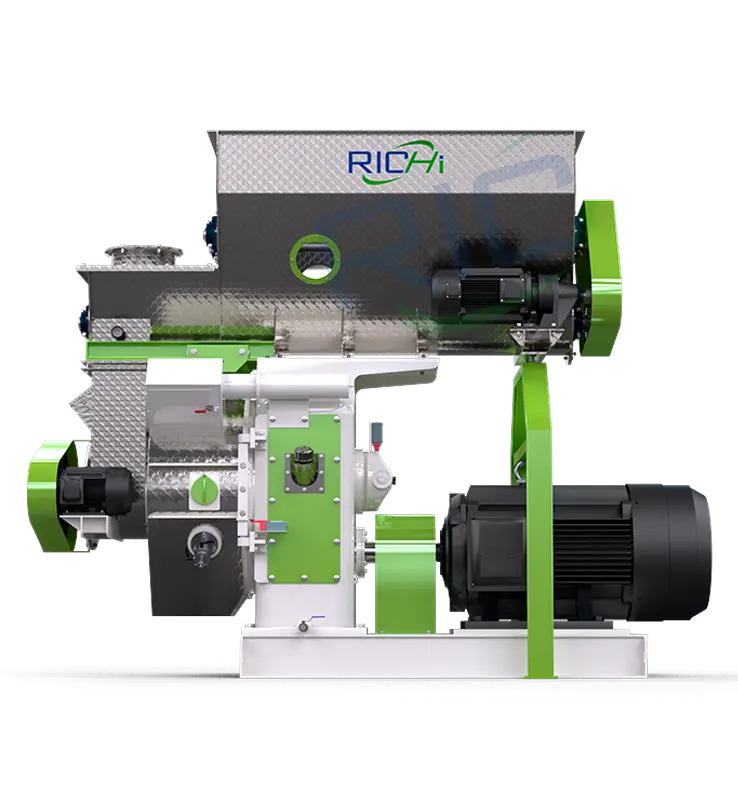
biomass pellet mill
Mostly going to sawmills in Manicaland for pine and eucalyptus residues. The MZLH series handles the abrasive bark better than standard industrial pellet mill in Zimbabwe setups. Output is 6-8mm fuel pellets for tobacco curing and industrial boilers.

grass pellet machine for sale USA
Ranchers in the Midlands are the main buyers. The CZLH series runs on standing hay – Hyperthelia, Hyparrhenia, whatever’s in the veld. Cut early, field dried to 18%, pelleted with molasses. The biomass granulator in Zimbabwe market for grass is picking up.

feed mill pellet machine
Standard equipment for any feed mill in Zimbabwe operation. SZLH series in various sizes. Poultry farmers around Harare use them for 3.5mm broiler crumbles. Feedlots near Chinhoyi run 8mm cattle pellets. Dies change based on formulation.
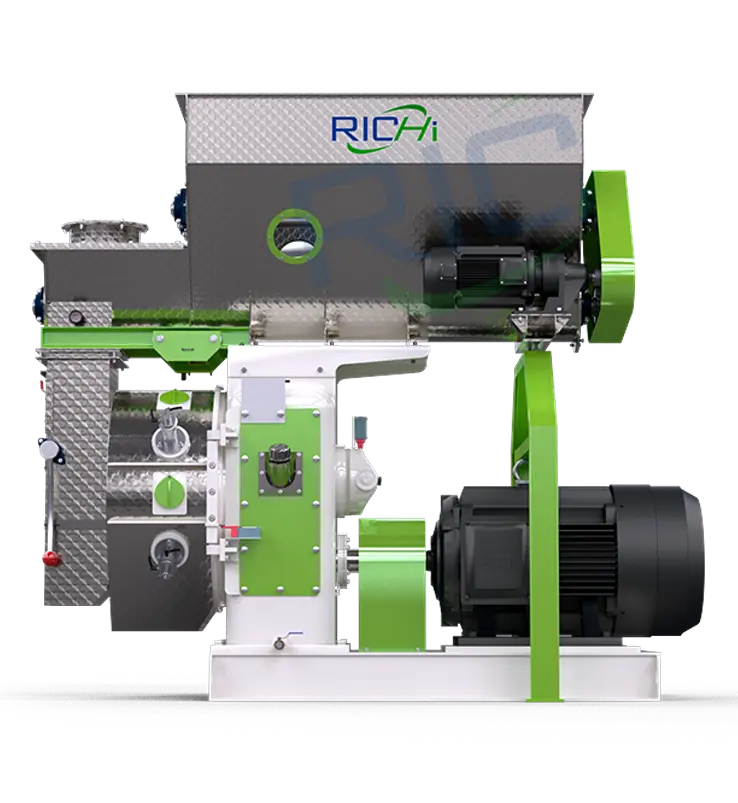
fertilizer granulator equipment
FZLH series with stainless steel contact parts. Chicken litter from broiler operations near Norton, cow manure from dairies around Marondera, even some composted municipal waste. The pelletizing machine in Zimbabwe fertilizer lines produce 4-5mm organic pellets.

twin screw extruder
Aquaculture operations near Kariba and the eastern highlands. Floating fish feed – tilapia and catfish. Higher investment than dry pellet production machine in Zimbabwe setups but necessary for floating pellets. Running 2-4mm sizes with 20%+ oil content.
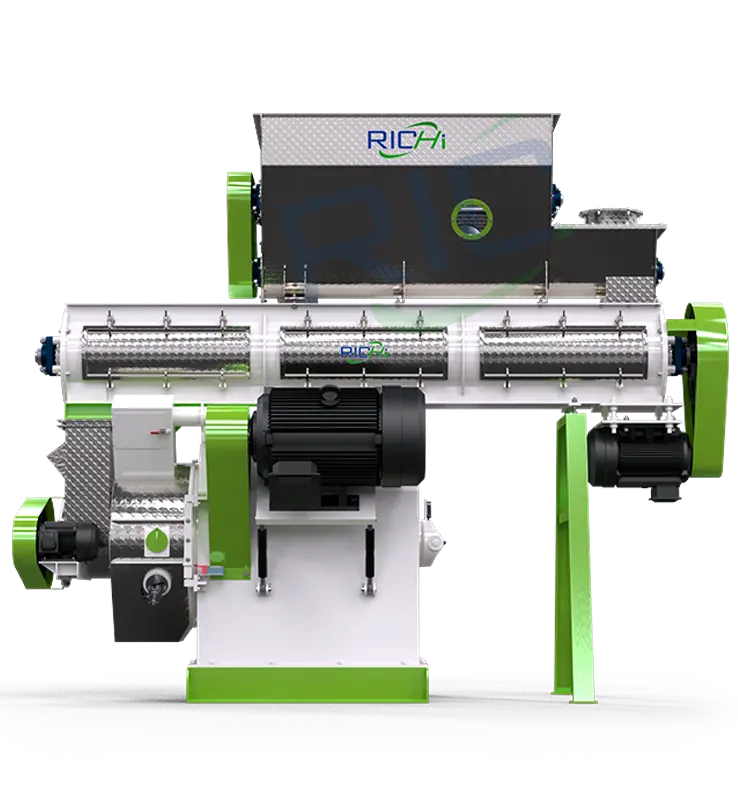
straw pellet machine
Large-scale crop farmers in Mashonaland West. Maize stalks, wheat straw, sorghum residue. With urea treatment in the conditioner, the pellet press machine in Zimbabwe lines turn low-quality straw into maintenance cattle feed. 8mm pellets.

shrimp feed pellet machine
Experimental but growing. A few operations in the Lowveld trying shrimp in lined ponds. Need small dies – 2mm or less – with good water stability. The feed plant in Zimbabwe setups for shrimp are specialized but we’ve done them.

cat litter pellet machine
Small operators in Bulawayo and Harare. Pine sawdust, waste paper, sometimes maize cobs. The pellet manufacturing equipment in Zimbabwe for cat litter runs 4-6mm, then dried to low moisture. Import replacement – SA litter is expensive.
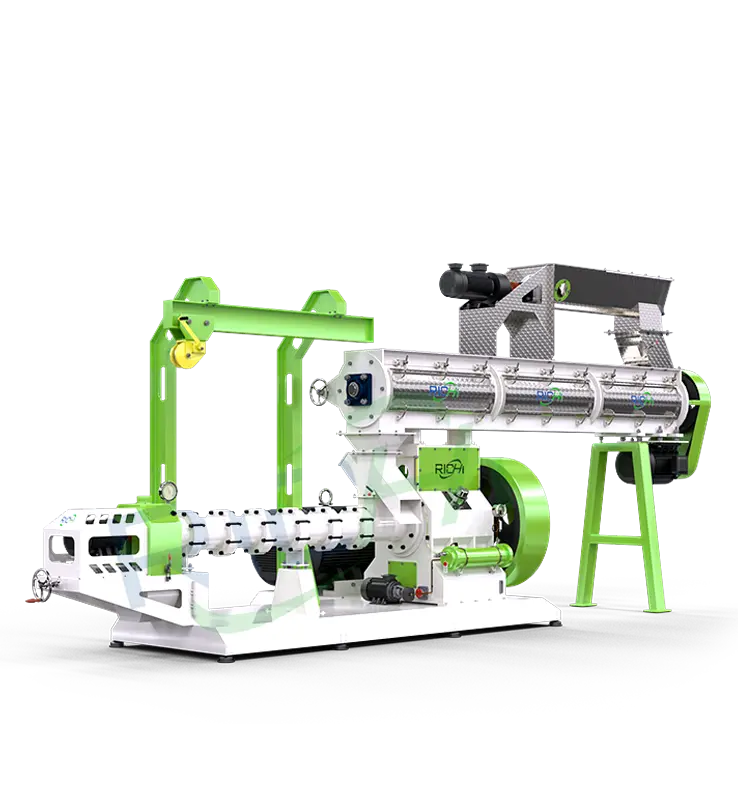
single screw extruder machine
Smaller fish farms, pet food startups. Wet extruders for sinking pellets, dry extruders for expanded pet food. A few pellet factory in Zimbabwe operations are using them for dog food.

Grain extruder machine
Full-fat soybean processing for feed mills. Also maize meal pre-cooking for breakfast cereals. Not pellet lines but related. A couple of feed mill in Zimbabwe operations have added them to replace imported soybean meal.
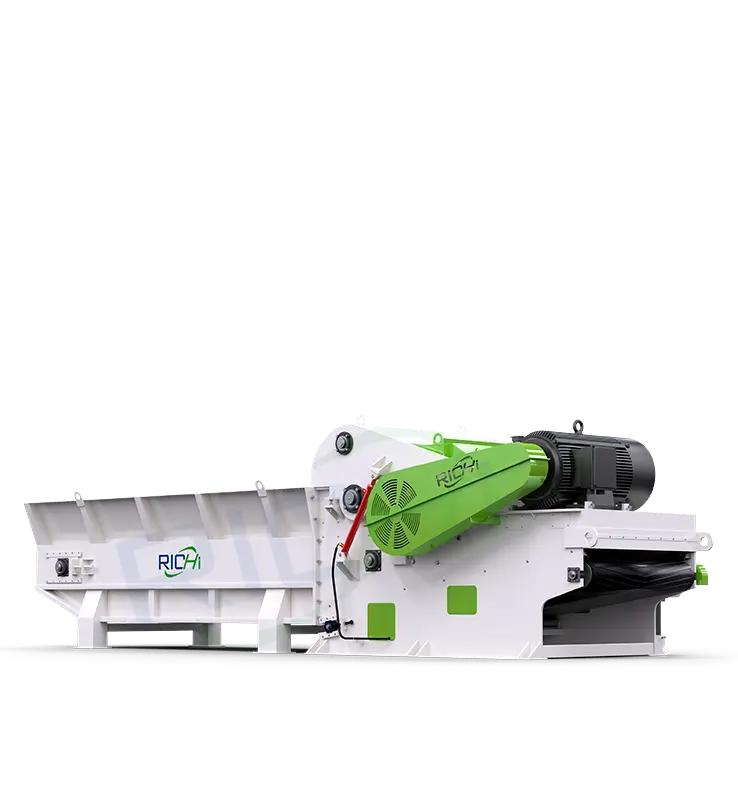
wood chipper machine
Sawmills, tobacco farmers, anyone with branch wood. Disc chippers for 30-50mm chips going into wood pellet extruder machine in Zimbabwe lines. Drum chippers for higher volume. Standard equipment.

shredder machine
Single-shaft shredders for mixed waste – plastic, paper, textiles, light metal. Used in pellet plant equipment in Zimbabwe setups for RDF or waste-to-energy. Also for breaking bales before grinding.

Wood Chip Dryer
Critical for high-moisture materials. Sawdust at 45% needs to hit 14% before pelleting. The industrial pellet mill in Zimbabwe lines with dryers run on wet sawmill residues or green crop materials. Gas-fired or biomass-fired options.

bale crusher
First step for baled straw or hay. Feeds into hammer mills for pellet production line in Zimbabwe operations. Simple machine but saves labor – no need to unbale by hand.

hammer mill
Standard grinder for feed mills. Maize, soybean, small grains. 2-3mm screens for poultry feed, 4-6mm for cattle. Every feed plant in Zimbabwe has one. It can also be used to crush wood chips.

mesh belt dryer
Gentler drying for heat-sensitive materials. Used for fish feed after extrusion, or for organic fertilizers that can’t take high temperatures. A few pelletizer for sale Zimbabwe inquiries have included belt dryers for specialty products.

Feed mixer machine
Horizontal ribbon mixers for mash feeds, paddle mixers for adding molasses or liquids. Essential for consistent feed mill in Zimbabwe operation. Sizes from 500kg to 3-ton batches.

fertilizer crusher machine
For lumpy organic materials – dried manure, compost, cake materials. Breaks down before granulation. Common in pellet making machine in Zimbabwe fertilizer lines.

grass straw crusher machine
Heavier construction than standard feed grinders. Handles fibrous materials without clogging. Used ahead of biomass pellet mill in Zimbabwe lines for fuel or forage.

vibrating screening machine
Multi-deck vibratory screens for classifying pellets after cooling. Also used for raw material cleaning – removing stones, fines, oversize. Standard in any pellet plant equipment in Zimbabwe setup.

storage silos
Flat-bottom or hopper silos for raw material storage or finished pellets. Common sizes 50-500 tons. A few feed factory in Zimbabwe operations have added silos to reduce bagging labor.
Common Questions About Pellet Production in Zimbabwe
Over the years, we’ve answered a lot of questions from farmers, sawmill owners, feed millers, and entrepreneurs across Zimbabwe. Some want to know if their specific material will work. Others need help sizing equipment for their target output. Many ask about power requirements, installation, and what a complete line includes. Here are the real questions we hear – from commercial feedlots in Chinhoyi to tobacco farmers in Norton, from sawmills in Mutare to cattle ranchers in Gweru.
We’re looking at setting up a pellet production operation somewhere in Mashonaland. Not sure yet whether we’ll focus on animal feed, biomass fuel, or maybe both. Can you give me the specs on your different pellet mills?
+
Gets to the heart of what equipment fits which scenario. We’ve put enough pellet making machine in Zimbabwe installations into the ground to have a pretty clear picture of what works at different scales. Here’s the breakdown by machine family.
Feed Pellet Mills (SZLH Series)
These are your standard feed mill in Zimbabwe machines. Used for poultry, pig, cattle, and aquaculture feeds. The dies are designed for compressible materials with some fat content – maize, soybean, wheat bran, that sort of thing. We’ve put SZLH units everywhere from small mixed farms to large commercial feedlots.
| Model | SZLH250 | SZLH320 | SZLH350 | SZLH420 | SZLH508 | SZLH558 | SZLH678 | SZLH768 |
|---|---|---|---|---|---|---|---|---|
| Main motor (kW) | 22 | 37 | 55 | 110 | 160 | 185 | 250 | 315 |
| Feeder (kW) | 1.1 | 1.5 | 1.5 | 1.5 | 1.5 | 1.5 | 1.5 | 2.2 |
| Conditioner (kW) | 1.5 | 4 | 4 | 7.5 | 7.5 | 11 | 11 | 11 |
| Die diameter (mm) | 250 | 320 | 350 | 420 | 508 | 558 | 673 | 762 |
| Pellet size (mm) | 2-12 | 2-12 | 2-12 | 2-12 | 2-12 | 2-12 | 2-12 | 2-12 |
| Output (t/h) | 1.0-1.5 | 3-4 | 5-6 | 10-12 | 15-16 | 20-22 | 30-33 | 38-40 |
A poultry operation near Norton runs the SZLH350 animal feed granulator for 5-6 t/h of broiler feed. The feedlot outside Chinhoyi uses the SZLH420 for 10-12 t/h of cattle rations. If you’re starting smaller, the SZLH250 does 1-1.5 t/h – enough for a medium mixed farm.
Wood Pellet Mills (MZLH Series)
For sawdust, shavings, and wood residues. These have heavier bearings and different die metallurgy to handle the abrasion. The wood pellet press in Zimbabwe installations we’ve done are mostly at sawmills in Mutare and Nyanga, processing pine and eucalyptus.
| Model | MZLH320 | MZLH350 | MZLH420 | MZLH520 | MZLH678 | MZLH768 |
|---|---|---|---|---|---|---|
| Main motor (kW) | 22 | 37 | 90 | 132 | 185 | 250 |
| Anti-bridge feeder (kW) | 2.2 | 2.2 | 3 | 3 | 3 | 4 |
| Force feeder (kW) | 0.75 | 0.75 | 1.5 | 1.5 | 1.5 | 1.5 |
| Die diameter (mm) | 320 | 350 | 420 | 520 | 673 | 762 |
| Pellet size (mm) | 4-12 | 4-12 | 4-12 | 4-12 | 4-12 | 4-12 |
| Output (t/h) | 0.2-0.3 | 0.3-0.5 | 1.0-1.2 | 1.5-2.0 | 2.5-3.0 | 3.0-4.0 |
The MZLH420 is the most common – 1-1.2 t/h from sawmill residue. The smaller units like the MZLH320 are for carpentry shops or small-scale operators doing 200-300 kg/h.
Straw & Grass Pellet Mills (CZLH Series)
Designed for fibrous materials – maize stover, wheat straw, veld grass, alfalfa. Used in feed plant in Zimbabwe setups for ruminant feed or biomass fuel. The key difference is the cutter mechanism before the die; fibrous material needs shearing, not just compression.
| Model | CZLH320 | CZLH350 | CZLH420 | CZLH520 | CZLH678 | CZLH768 |
|---|---|---|---|---|---|---|
| Main motor (kW) | 22 | 37 | 90 | 132 | 185 | 250 |
| Anti-bridge feeder (kW) | 2.2 | 2.2 | 3 | 3 | 3 | 4 |
| Force feeder (kW) | 0.75 | 0.75 | 1.5 | 1.5 | 1.5 | 1.5 |
| Die diameter (mm) | 320 | 350 | 420 | 520 | 673 | 762 |
| Pellet size (mm) | 4-12 | 4-12 | 4-12 | 4-12 | 4-12 | 4-12 |
| Output (t/h) | 0.5-0.6 | 1.0-1.2 | 1.8-2.0 | 2.8-3.0 | 4-5 | 6-8 |
A ranch near Gweru runs a CZLH678 on veld grass at 4-5 t/h. The CZLH350 at 1-1.2 t/h is popular with smaller mixed farms doing their own forage.
Cat Litter Pellet Mills (MSZLH Series)
Same basic platform as feed mills but with modifications for absorbent materials – sawdust, paper, maize cobs. The pellet manufacturing equipment in Zimbabwe for cat litter needs clean surfaces and often stainless steel contact parts to avoid contamination.
| Model | MSZLH250 | MSZLH320 | MSZLH350 | MSZLH420 | MSZLH508 | MSZLH558 | MSZLH678 | MSZLH768 |
|---|---|---|---|---|---|---|---|---|
| Main motor (kW) | 22 | 37 | 55 | 110 | 160 | 185 | 250 | 315 |
| Feeder (kW) | 1.1 | 1.5 | 1.5 | 1.5 | 1.5 | 1.5 | 1.5 | 2.2 |
| Conditioner (kW) | 1.5 | 4 | 4 | 7.5 | 7.5 | 11 | 11 | 11 |
| Die diameter (mm) | 250 | 320 | 350 | 420 | 508 | 558 | 673 | 762 |
| Pellet size (mm) | 2-12 | 2-12 | 2-12 | 2-12 | 2-12 | 2-12 | 2-12 | 2-12 |
| Output (t/h) | 1.0-1.5 | 3-4 | 5-6 | 10-12 | 15-16 | 20-22 | 30-33 | 38-40 |
The outputs look similar to feed mills but the material is different. A small operator in Bulawayo runs an MSZLH250 at 1-1.5 t/h from waste paper and sawdust. The pellets go to pet shops in town.
Fertilizer Pellet Mills (FZLH Series)
Stainless steel or special coatings for corrosive materials. Used for chicken litter, cow manure, compost, and NPK blends. The organic fertilizer pellet mill in Zimbabwe fertilizer lines we’ve done handle high-moisture organic materials with added binders.
| Model | FZLH250 | FZLH320 | FZLH350 | FZLH420 | FZLH520 | FZLH678 | FZLH768 |
|---|---|---|---|---|---|---|---|
| Main motor (kW) | 22 | 22 | 37 | 90 | 132 | 185 | 250 |
| Anti-bridge feeder (kW) | 2.2 | 2.2 | 2.2 | 3 | 3 | 3 | 4 |
| Force feeder (kW) | 0.75 | 0.75 | 0.75 | 1.5 | 1.5 | 1.5 | 1.5 |
| Die diameter (mm) | 250 | 320 | 350 | 420 | 520 | 673 | 762 |
| Pellet size (mm) | 4-12 | 4-12 | 4-12 | 4-12 | 4-12 | 4-12 | 4-12 |
| Output (t/h) | 1-1.5 | 2-3 | 3-5 | 6-8 | 9-12 | 18-22 | 22-26 |
A broiler operation near Norton runs an FZLH350 on chicken litter at 3-5 t/h. The dairy outside Marondera uses an FZLH420 manure pellet mill for cow manure at 6-8 t/h. The output sells to tobacco farmers as organic fertilizer.
These are the main pellet mill in Zimbabwe families we’ve been shipping, but they’re not the whole range. We also do custom configurations – different die materials for abrasive stuff, stainless for corrosive materials, special feeders for difficult raw materials. If you’ve got a specific material in mind, we can match a machine to it. Or if you’re still deciding which direction to go, we can walk through the options based on what you have available locally.
The tables give you the mechanical specs and output ranges. The real question is what you’re planning to run through it. That drives the model choice more than anything.
I’ve been looking around at different options for a pellet operation here in Matabeleland. Can you give me an idea of the cost of pellet making machine in Zimbabwe?
+
The cost of pellet making machine in Zimbabwe depends on what you’re planning to run through it and how much you want to produce per hour. Feed, wood, grass, fertilizer – each has its own machine family with different price points. Here’s what we’re currently quoting for single machines FOB Qingdao. Keep in mind these are base prices for the main unit with standard controls. Shipping to Zimbabwe, duty, and installation are separate.
Feed Pellet Machines (SZLH Series)
These are your standard feed mill in Zimbabwe machines. Used for poultry, pig, cattle, and fish feed. The price includes the main motor, feeder, conditioner, and control cabinet. Dies are extra depending on hole size.
| Model | Power | Output | Price Range (USD) |
|---|---|---|---|
| SZLH250 | 22kW | 1-2 t/h | $6,500 – $8,500 |
| SZLH320 | 37kW | 3-4 t/h | $15,000 – $18,000 |
| SZLH350 | 55kW | 5-6 t/h | $26,000 – $32,000 |
| SZLH420 | 110kW | 10-12 t/h | $28,000 – $33,000 |
| SZLH508 | 160kW | 15-16 t/h | $38,000 – $46,000 |
| SZLH558 | 185kW | 20-22 t/h | $45,000 – $55,000 |
| SZLH678 | 250kW | 30-33 t/h | $60,000 – $74,000 |
| SZLH768 | 315kW | 38-40 t/h | $72,000 – $88,000 |
If you’re asking about small animal feed pellet machine price in Zimbabwe, the SZLH250 is usually where people start. Does 1-2 tons per hour, enough for a medium mixed farm or a small commercial operation.
Wood Pellet Machines (MZLH Series)
For sawdust, wood shavings, and forestry residues. These have anti-bridging feeders and force feeders to handle the light, fluffy material. The price includes the anti-arching feeder, force feeder, pelletizer, and control cabinet. Used in wood granulator machine in Zimbabwe installations at sawmills and wood processors.
| Model | Power | Output | Price Range (USD) |
|---|---|---|---|
| MZLH320 | 22kW | 0.2-0.3 t/h | $13,500 – $16,500 |
| MZLH350 | 37kW | 0.3-0.5 t/h | $18,500 – $22,500 |
| MZLH420 | 90kW | 1.0-1.2 t/h | $26,500 – $32,500 |
| MZLH520 | 132kW | 1.5-2.0 t/h | $40,000 – $50,000 |
| MZLH678 | 200kW | 2.5-3.0 t/h | $60,000 – $74,000 |
| MZLH768 | 315kW | 3.0-4.0 t/h | $72,000 – $88,000 |
For small wood pellet machine price in Zimbabwe, look at the MZLH320. 200-300 kg per hour from sawmill waste or carpentry shop residues. We’ve put a few of these into smaller operations around Mutare.
Grass & Straw Pellet Machines (CZLH Series)
Designed for fibrous materials – veld grass, maize stover, wheat straw, alfalfa. Used in feed plant in Zimbabwe setups for ruminant feed or biomass fuel. The price includes anti-bridging feeder, conditioner, force feeder, pelletizer, and control cabinet.
| Model | Power | Output | Price Range (USD) |
|---|---|---|---|
| CZLH250 | 22kW | 0.3-0.5 t/h | $7,000 – $9,000 |
| CZLH320 | 22kW | 0.5-1.0 t/h | $17,500 – $21,500 |
| CZLH350 | 37kW | 1.0-1.5 t/h | $22,500 – $27,500 |
| CZLH420 | 90kW | 1.8-2.5 t/h | $27,500 – $33,500 |
| CZLH520 | 132kW | 2.8-3.5 t/h | $46,500 – $56,500 |
| CZLH678 | 200kW | 4.0-6.0 t/h | $66,500 – $81,500 |
| CZLH768 | 315kW | 6.0-8.0 t/h | $78,500 – $96,000 |
The CZLH250 is the entry point for grass. Does 300-500 kg per hour. We’ve seen ranchers near Gweru use these for veld grass pellets. Gives them winter feed without investing in a big line.
Fertilizer Pellet Machines (FZLH Series)
Stainless steel or coated contact parts for corrosive materials. Used for chicken litter, cow manure, compost, and NPK blends. The price includes anti-bridging feeder, force feeder, pelletizer, and control cabinet. Common in pelletizing machine in Zimbabwe fertilizer operations.
| Model | Power | Output | Price Range (USD) |
|---|---|---|---|
| FZLH250 | 22kW | 1.0-1.5 t/h | $13,500 – $16,500 |
| FZLH320 | 22kW | 2.0-3.0 t/h | $15,500 – $19,500 |
| FZLH350 | 37kW | 3.0-5.0 t/h | $21,000 – $26,000 |
| FZLH420 | 90kW | 6.0-8.0 t/h | $34,000 – $42,000 |
| FZLH520 | 132kW | 9.0-12.0 t/h | $52,000 – $64,000 |
| FZLH678 | 200kW | 18.0-22.0 t/h | $71,000 – $87,000 |
| FZLH768 | 250kW | 22.0-26.0 t/h | $79,000 – $96,000 |
Cat Litter Pellet Machines (MSZLH Series)
Same basic platform as feed mills but with modifications for absorbent materials – sawdust, paper, maize cobs. The price includes feeder, conditioner, pelletizer, and control cabinet. Used in pellet manufacturing equipment in Zimbabwe setups for pet product manufacturers.
| Model | Power | Output | Price Range (USD) |
|---|---|---|---|
| MSZLH250 | 22kW | 1.0-1.5 t/h | $8,500 – $11,500 |
| MSZLH320 | 37kW | 3.0-4.0 t/h | $18,500 – $23,500 |
| MSZLH350 | 55kW | 5.0-6.0 t/h | $29,500 – $36,500 |
| MSZLH420 | 110kW | 10.0-12.0 t/h | $32,500 – $40,000 |
| MSZLH508 | 160kW | 15.0-16.0 t/h | $44,000 – $54,000 |
| MSZLH558 | 185kW | 20.0-22.0 t/h | $52,000 – $64,000 |
| MSZLH678 | 250kW | 30.0-33.0 t/h | $69,000 – $85,000 |
| MSZLH768 | 315kW | 38.0-40.0 t/h | $83,000 – $102,000 |
A Note on Small Machines
If you’re just starting out, the small pellet machine price in Zimbabwe question comes up a lot. For feed, the SZLH250 at $6,500-8,500 gets you 1-2 tons per hour. For wood, the MZLH320 at $13,500-16,500 does 200-300 kg. For grass, the CZLH250 at $7,000-9,000 does 300-500 kg. These are real entry-level industrial machines, not the toys you see online. They’ll run 8-10 hours a day without issues if maintained.
These are the main pellet production machine in Zimbabwe families we quote. But they’re not the whole range. We also do custom configurations – different die metallurgy for abrasive materials, stainless for corrosive stuff, variable speed drives for difficult feeds. The price moves with the specifications. If you want to run something unusual, or you need a complete pellet plant equipment in Zimbabwe package with dryers, grinders, and coolers, the numbers change.
Best approach: tell us what you’re planning to process and how much you want to make per hour. Then we can give you a precise quote for the right machine. The prices above are a starting point – they’ll get you in the ballpark for budget planning.
We’re looking at producing our own floating feed for tilapia. Imported stuff is expensive and delivery is unreliable. Can you give me an idea of floating fish feed machine price in Zimbabwe for a complete line?
+
Imported feed costs are killing margins for a lot of fish farmers here. The floating fish feed machine price in Zimbabwe for a complete line depends on two main things: how much you want to produce per hour and whether you go with single-screw or twin-screw extrusion. Single-screw is cheaper, twin screw extruder gives you more flexibility with high-oil formulations and better floating control.
We’ve put both types into operation around Kariba and the eastern highlands. Here’s what complete lines have been running, installed and commissioned. These are FOB Qingdao prices for the full system – grinder, mixer, extruder, dryer, oil coater, cooler, control panels. Shipping and site work are separate.
Single-Screw Floating Fish Feed Lines
Single-screw is where most people start. Good for standard tilapia and catfish feeds with moderate oil content. The fish feed making machine in Zimbabwe lines we’ve done at this level handle maize, soybean, fishmeal, and wheat formulations.
200-400 kg/h complete line
*Price range: $60,000 – $80,000 USD*
This is entry-level commercial. Includes a hammer mill (15-22kW), ribbon mixer, single-screw extruder with 3-4mm dies, gas-fired dryer, oil coater, and control cabinet. A farmer near Mutare runs one of these at 300 kg/h for his own ponds and sells surplus to neighbors. Takes about 100-150 square meters.
500-600 kg/h complete line
*Price range: $70,000 – $100,000 USD*
Stepping up to medium scale. Bigger extruder motor (55-75kW), wider dryer, more automation. An operation near Kariba put one in last year running at 600 kg/h. They’re doing 3mm pellets for tilapia, 4mm for catfish. The fish feed machine in Zimbabwe market around the lake is strong enough they’re running two shifts.
800-1000 kg/h complete line
*Price range: $130,000 – $170,000 USD*
This is serious commercial production. 90-110kW extruder, multi-stage dryer, automated fat coating. One of the larger fish feed production machine in Zimbabwe installations we’ve done supplies multiple farms from a central location. They run 18 hours during peak season.
Twin-Screw Floating Fish Feed Lines
Twin-screw is for higher production volumes and feeds with higher fat content – 18-22% oil. Better control over expansion, more consistent buoyancy. The fish feed production machine in Zimbabwe lines at this level are what you see supplying commercial cage operations.
0.5-1.0 t/h complete line
*Price range: $150,000 – $200,000 USD*
Entry-level twin-screw. Handles 500-1000 kg per hour with good expansion control. A floating fish feed machine in Zimbabwe operation near Kariba started with this scale – they’re now supplying 15 smallholders around the lake. The twin-screw lets them run starter crumbles and grower pellets on the same line with a die change.
1.5-2.0 t/h complete line
*Price range: $440,000 – $560,000 USD*
Mid-range commercial. Twin-screw extruder in the 110-160kW range, full automation, multi-stage drying. One of these went into a cooperative operation supplying cage farmers. They run a 2mm starter for fingerlings and a 4mm grower for table fish. The floating fish feed machine price in Zimbabwe at this level reflects the industrial-grade components.
3.0-4.0 t/h complete line
*Price range: $530,000 – $650,000 USD*
Large-scale commercial. 200-250kW twin-screw extruder, continuous dryer, automated fat application. This is for operations supplying multiple farms or doing contract manufacturing. We quoted one for a proposed feed mill near Harare targeting both aquaculture and poultry.
5.0-6.0 t/h complete line
*Price range: $670,000 – $840,000 USD*
Industrial scale. 315kW+ twin-screw, complete conditioning systems, automated recipe control. The kind of floating fish feed machine in Zimbabwe investment that makes sense when you’re supplying a whole region. High efficiency, low labor per ton.
8.0-10.0 t/h complete line
*Price range: $880,000 – $1,200,000 USD*
This is big industrial. Multiple extruders or one very large unit, full automation, integrated quality control. Not many operations in Zimbabwe need this scale yet, but we’ve had inquiries from groups looking at export markets.
Larger capacities available on request
What’s Actually Included
When we talk about fish feed making machine in Zimbabwe prices, people sometimes think it’s just the extruder. It’s not. A complete line includes:
- Raw material intake and cleaning
- Hammer mill (fine grinding for aquafeed)
- Batch or continuous mixer
- Extruder (single or twin-screw)
- Dryer (belt dryer for gentle handling)
- Cooler
- Fat coater (vacuum or atmospheric)
- Control system
- Conveyors between each stage
The prices above cover all of that as a integrated system, designed to run together, not a collection of random machines.
What Affects the Price
The fish feed machine price in Zimbabwe varies based on:
- Die configuration – more dies, more cost. You’ll want different hole sizes for different fish stages.
- Automation level – manual controls are cheaper, PLC with recipe memory costs more.
- Dryer type – belt dryers cost more but handle delicate pellets better than vertical.
- Material of construction – stainless steel contact parts for corrosive fishmeal adds cost but lasts longer.
- Spare parts package – we usually recommend a starter set of dies, knives, and wear parts.
These are the main floating fish feed machine in Zimbabwe configurations we’ve been quoting. They’re not the only options. If you’re working with unusual ingredients, or you want to combine floating and sinking production, or you need a layout that fits an existing building – we can adjust.
Best next step: tell us your target output (tons per hour) and what ingredients you have available locally. Then we can give you a precise quote for a fish feed production machine in Zimbabwe that matches your situation. The ranges above are real project numbers – they’ll get you in the ballpark for budget discussions.
We’re looking at setting up a feed mill somewhere in Mashonaland. Not sure yet whether to start with poultry, cattle, or mixed. Can you give me an idea of what different scale feed lines cost?
+
The investment in a feed mill depends entirely on what you want to produce and how much. We’ve put in everything from small farm-scale lines doing a couple hundred kilos per hour up to industrial pellet making machine in Zimbabwe installations running 30-40 tons per hour for commercial feedlots. Here’s what different scale operations have been running, FOB Qingdao for complete lines.
Small Capacity Lines (Flat Die Systems)
These are for farmers who want to produce their own feed but don’t need huge volume. The lines include a hammer mill, horizontal mixer, and flat die pellet machine. They can run mash feed without pelleting, or switch to pellets when needed. We’ve put these into mixed farms around Gweru, Masvingo, and Marondera.
Complete flat die production line prices:
| Configuration | Output (Mash + Pellets) | Price Range (USD) |
|---|---|---|
| Basic line | 1 t/h mash + 0.2-0.3 t/h pellets | $12,000 – $15,000 |
| Medium line | 1 t/h mash + 0.5-0.6 t/h pellets | $13,500 – $16,500 |
| Larger line | 1 t/h mash + 0.8-1.0 t/h pellets | $14,500 – $17,500 |
A farmer near Chegutu runs the 0.5-0.6 t/h setup for his own poultry and pigs. He grinds maize from his fields, mixes with bought concentrate, and pellets about half of it. The poultry feed plant for sale Zimbabwe at this scale cost him around $15,000 landed.
Medium to Large Capacity Lines (Ring Die Systems)
This is where you get into serious commercial production. Ring die systems with full automation, weighing, conditioning, cooling, and bagging. The price range is wide because you can go basic or fully automated, steel structure or concrete, indoor or outdoor layout.
Complete ring die animal feed production line prices:
| Capacity | Price Range (USD) | What You Typically Get |
|---|---|---|
| 1-2 t/h | $30,000 – $60,000 | Basic line: hammer mill, mixer, ring die pellet mill, cooler, manual bagging. Good for a starting feed pellet line in Zimbabwe operation. |
| 3-4 t/h | $60,000 – $200,000 | Bigger spread here. Lower end is manual operation, upper end adds automation, better conditioners, more durable dies. |
| 5-6 t/h | $80,000 – $250,000 | Commercial scale. The feed production equipment in Zimbabwe at this level runs 8-10 hours daily. We’ve put several of these into operations near Harare. |
| 10 t/h | $170,000 – $320,000 | This is where you’re feeding multiple farms. The animal feed manufacturing machine in Zimbabwe at this scale includes PLC control, multiple mixers, dedicated intake. |
| 15 t/h | $240,000 – $400,000 | Large commercial. One of these went into a feedlot near Chinhoyi running 15 t/h of cattle rations. They’ve got two lines now. |
| 20 t/h | $440,000 – $600,000 | Industrial scale. The feed manufacturing plant in Zimbabwe at this level supplies multiple districts. Fully automated, minimal labor per ton. |
| 30 t/h | $600,000 – $700,000 | You’re looking at a major investment. The feed mill equipment in Zimbabwe at this scale runs 24 hours when demand is high. |
| 40 t/h | $700,000 – $800,000 | Serious industrial production. One operation near Norton runs at this level for poultry feed. They’ve got their own maize intake and drying. |
| 60 t/h | From $1,100,000 | This is big. Multiple lines, storage silos, full automation. We’re quoting a few at this level for groups looking at export. |
| 80-120 t/h | Quote on request | At this scale, everything is custom. Plant engineering, site layout, material handling all designed around your specific needs. |
What Drives the Price Range
When you see a wide range like 3-4 t/h from $60,000 to $200,000, you might wonder what the difference is. Here’s what moves the number:
- Automation level – manual controls are cheaper. PLC with recipe storage, automatic start-stop, and remote monitoring adds cost but reduces labor.
- Building vs outdoor – some customers already have a shed. Others need us to supply the steel structure. That changes the feed plant machinery in Zimbabwe quote significantly.
- Raw material intake – manual tipping is cheap. Truck dumpers, pre-cleaning, and storage bins add cost.
- Conditioning – basic steam conditioning is standard. High-shear conditioners for difficult formulations cost more.
- Die material – standard steel is fine for most feeds. Stainless or high-chrome for abrasive or corrosive materials adds cost but lasts longer.
- Spare parts package – we usually recommend a starter set. Some customers buy nothing, some want a full warehouse.
- Installation scope – some customers have their own fitters. Others want our team to do everything. That affects the animal feed processing plant in Zimbabwe total investment.
Real Examples from Zimbabwe
The industrial feed production equipment in Zimbabwe we’ve installed gives us a good sense of what works at different scales:
- A poultry operation near Norton runs a 5-6 t/h line at the lower end of the price range. They do basic broiler and layer feed, manual bagging, one shift. Cost them around $95,000 for the equipment.
- A feedlot near Chinhoyi put in a 15 t/h line at the higher end – fully automated, three mixers, two pellet mills running in parallel. That was closer to $380,000 for the feed mill equipment for sale Zimbabwe package.
- A cooperative in Mashonaland West did a 10 t/h line in the middle range. They had their own building, so no structure cost. Around $240,000 for the feed factory setup in Zimbabwe equipment.
What’s Not Included
These prices are FOB Qingdao for complete lines. They don’t include:
- Shipping to Zimbabwe (get a quote from your freight forwarder)
- Customs clearance and duty
- Site preparation and foundations
- Local electrical installation
- Building or shed (if you don’t already have one)
The feed preparation plant engineering in Zimbabwe part we can help with – we’ll do the layouts, recommend concrete specs, show you where everything goes. But the local construction work is usually handled by your team.
Next Steps
The ranges above are real numbers from recent animal feed making machine for sale Zimbabwe quotes. They’ll get you in the ballpark for budget planning. But every project is different – your raw materials, your target species, your existing infrastructure all affect the final design and price.
If you want to get serious about animal feed plant machinery Zimbabwe, tell us:
- What species you’re feeding (poultry, pigs, cattle, mixed)
- Your target output in tons per hour
- What ingredients you have available locally
- Whether you have a building already or need structure
Then we can put together a proper feed mill for sale Zimbabwe proposal with a firm price for your exact situation. The numbers above are a starting point – they’ll help you decide which scale makes sense for your market.
We’re setting up a feed operation and need to grind maize stover, veld grass, and maybe some alfalfa. Looking for something that can handle 3-5 tons per hour of these materials. What’s the straw grass hammer mill price in Zimbabwe for something that size?
+
The grinder is where a lot of feed lines succeed or fail – if it can’t handle your material at the right size, nothing else matters. We’ve put quite a few of these SFSP series hammer mills into pellet making machine in Zimbabwe operations over the years, grinding everything from dry maize stalks to green hay. Here’s what different models run, FOB Qingdao, and what they’ll actually do with your local materials.
SFSP Series Water-Drop Hammer Mills
These are our standard grinders for feed mills and pellet plants. The “water-drop” shape gives good airflow and prevents clogging – important when you’re grinding fibrous stuff like grass and straw. They take material up to about 50mm (2 inches) and can grind down to anything from 0.5mm to 20mm depending on the screen you put in.
How they work: Material goes in, hammers spinning at around 103 m/s beat it until it’s small enough to pass through the screen. Change the screen, change the particle size. Simple, robust, been running for decades.
Model Specifications & Price Ranges
| Model | Rotor Dia. | Chamber Width | Power Options | Grass/Straw Output | Price Range (USD) |
|---|---|---|---|---|---|
| SFSP56*40 | 560mm | 400mm | 37kW | 0.8-1.0 t/h | $4,500 – $6,500 |
| SFSP66*60 | 660mm | 600mm | 55-75kW | 1.0-1.5 t/h | $7,500 – $11,000 |
| SFSP66*80 | 660mm | 800mm | 75-90kW | 2.0-2.5 t/h | $9,500 – $14,500 |
| SFSP66*100 | 660mm | 1000mm | 90-132kW | 3.0-4.0 t/h | $12,000 – $19,000 |
| SFSP66*120 | 660mm | 1200mm | 132-220kW | 5.0-6.0 t/h | $18,000 – $28,000 |
| SFSP66*150 | 660mm | 1500mm | 220-315kW | 7.0-8.0 t/h | $28,000 – $42,000 |
Breaking Down the Options
SFSP56*40 – Small Scale Entry
*Price: $4,500-6,500 | Output: 0.8-1.0 t/h on grass/straw*
This is for smaller operations. A mixed farmer near Gweru runs one of these for his own feed – grinds maize stover and veld grass for his cattle, plus maize grain for his poultry. Takes material about 50mm, puts out whatever size he needs by swapping screens. Good crusher machine Zimbabwe option if you’re processing 5-10 tons per day.
SFSP66*60 – Farm Scale
*Price: $7,500-11,000 | Output: 1.0-1.5 t/h on grass/straw*
Popular size for medium farms and small scale feed mills. We’ve sold several of these as part of straw hammer mill Zimbabwe setups for operations doing 2-3 tons of feed per shift. Handles dry maize stalks, hay, even a bit of alfalfa. The 55kW or 75kW motor gives you flexibility – smaller motor for softer stuff, bigger if you’re running tougher material.
SFSP66*80 – Commercial Entry
*Price: $9,500-14,500 | Output: 2.0-2.5 t/h on grass/straw*
This is where you start getting into commercial volumes. 2-2.5 tons per hour of ground grass or straw – enough for a decent sized feedlot or a Grass Hammer Mill in Zimbabwe operation supplying multiple farms. The 75-90kW motor handles continuous running well.
SFSP66*100 – Your 3-5 t/h Range
*Price: $12,000-19,000 | Output: 3.0-4.0 t/h on grass/straw*
This is the one you asked about. The SFSP66*100 with 90-132kW motor will put out 3-4 tons per hour on grass and straw – right in your target range. A Grass Hammer Mill in Zimbabwe at this scale will handle most of what you throw at it. We’ve got one running near Norton grinding maize stover for a 10 t/h feed line. They run it 6-8 hours a day, keeps up fine.
If you need the full 5 t/h, look at the SFSP66*120 below. But the 66*100 at the upper end of its power range (110-132kW) will do 4 t/h comfortably on most dry materials.
SFSP66*120 – High Volume
*Price: $18,000-28,000 | Output: 5.0-6.0 t/h on grass/straw*
This is for serious volume. 5-6 tons per hour of ground material. The Industrial Grass Grinding Machine in Zimbabwe at this scale is what you put in front of a big pellet line. We’ve quoted these for operations doing 10-15 t/h of final feed. The 132-220kW motor gives you options – 132kW for standard stuff, 220kW if you’re grinding really tough material or want higher throughput.
SFSP66*150 – Industrial Scale
*Price: $28,000-42,000 | Output: 7.0-8.0 t/h on grass/straw*
This is a big machine. 7-8 tons per hour of ground material. The Grass Hammer Mill for Feed Production in Zimbabwe at this level is for major commercial operations. 220-315kW motor, heavy-duty bearings, built to run all day every day.
What Affects the Price
The ranges above cover the base machine with standard screens and motor. Here’s what moves the number up or down:
- Motor size – within each model, you can choose different power ratings. More power costs more but lets you run tougher material or higher volumes.
- Screen sets – we usually include one screen (say 4mm or 6mm). Extra screens for different particle sizes cost extra. A Grass Grinding Machine in Zimbabwe operator might want 3mm for poultry feed and 8mm for cattle – that’s two screens.
- Material of construction – standard mild steel is fine for most things. Stainless steel contact parts for corrosive materials (like high-moisture green chop) adds cost.
- Feeding system – manual feed is standard. Rotary valve or screw feeder for automated lines adds cost.
- Base frame – some customers want a simple base. Others want a heavy-duty frame with vibration damping.
- Spare hammers – we recommend a spare set. They wear, especially on abrasive stuff like straw with soil contamination.
Real Zimbabwe Applications
We’ve put these grinders into all sorts of Grass Crusher Machine in Zimbabwe setups:
- A Grass Pulverizer Machine in Zimbabwe operation near Chegutu uses an SFSP66*100 to grind veld grass for cattle feed pellets. They run a 4mm screen, get consistent particle size, feed their 5 t/h pellet line.
- A Grass Milling Machine in Zimbabwe installation outside Marondera processes alfalfa for horse feed. They use an SFSP66*80 with 3mm screen – the fine grind helps the pellets hold together.
- A Grass Grinder Machine in Zimbabwe setup near Mutare runs an SFSP66*120 on pine needles and forest litter for biomass pellets. The material is abrasive but the machine handles it.
- An Alfalfa Hammer Mill in Zimbabwe operation in Mashonaland East uses an SFSP66*100 to grind baled alfalfa for a 4 t/h feed line. They run 6mm screen for cattle feed, 4mm for horses.
Matching the Machine to Your Material
A Hay Hammer Mill in Zimbabwe needs to account for your specific conditions. Dry material (12-15% moisture) grinds easy. Fresh-cut material (20%+) can clog if you don’t have good airflow. The SFSP series has a fan effect that pulls air through, helping clear the screen.
For Straw Hammer Mill in Zimbabwe applications with maize stalks or wheat straw, the material tends to be more fibrous. You might need a slightly coarser screen (6-8mm) to keep throughput up. The hammers last longer too.
A Grass Straw Hammer Mill in Zimbabwe setup running mixed materials – some grass, some stalks, maybe some grain – the SFSP series handles the mix fine. Just set the screen for your target particle size and let it run.
Industrial & Commercial Options
For Industrial Grass Hammer Mill in Zimbabwe operations doing high volume, the larger models (66*120 and 66*150) are the ones. Heavy-duty construction, big motors, designed for continuous operation.
For Commercial Grass Grinding Machine in Zimbabwe applications at 2-5 t/h, the 66*80 and 66*100 hit the sweet spot. Good balance of cost and capacity.
A Heavy Duty Grass Hammer Mill in Zimbabwe for tough material – maybe you’re grinding stalky stuff with some soil contamination – we’d recommend going up a motor size within the model. The 66*100 with 132kW instead of 90kW gives you reserve power.
For High Capacity Grass Hammer Mill in Zimbabwe needs over 5 t/h, step up to the 66*120. It’s designed for volume.
Complete System Integration
A Grass Hammer Mill for Feed Plant in Zimbabwe is rarely a standalone machine. It’s part of a system:
- Intake: bale breaker or conveyor
- Grinding: the hammer mill itself
- Discharge: cyclone or filter receiver to collect material
- Conveying: auger or pneumatic system to mixer or pellet mill
We can supply all of that as a package. A Forage Hammer Mill in Zimbabwe setup for a feed plant might include the grinder, cyclone, airlock, and control panel – all matched to work together.
For a Grass Grinding Machine for Pellet Plant in Zimbabwe, we’ll size the grinder to feed your pellet mill continuously. If your pellet mill needs 2 t/h of ground material, we don’t put in a 5 t/h grinder – right-sized is better.
A Forage Feed Hammer Mill in Zimbabwe for a mixed operation might need to switch between grains and forages. The SFSP series handles both – just change the screen.
Next Steps
The prices above are FOB Qingdao for the base machines. They’ll get you in the ballpark for budget planning. For a firm quote, we need to know:
- What material(s) you’re grinding (grass type, moisture, contamination)
- Your target output in tons per hour
- Desired finished particle size (screen size)
- Whether you need feeding and discharge accessories
- If this is part of a larger line or standalone
Then we can spec the right straw grass hammer mill in Zimbabwe for your operation. The ranges are real numbers from recent quotes – they’ll help you figure out which scale makes sense.
We’re looking at biomass pellets as an alternative to imported coal and firewood. Lots of sawdust available locally, plus crop residues. Can you give me an idea of biomass wood pellet plant price in Zimbabwe for different scales?
+
Biomass pellets are gaining traction here – tobacco farmers need consistent fuel for curing, chicken operations need heating, and industrial users are tired of coal quality swings. We’ve put quite a few pellet making machine in Zimbabwe installations into biomass production over the years. Here’s what complete biomass pellet plants have been running, FOB Qingdao, from small startup scale to serious industrial production.
The ranges are wide because every plant is different. Your raw material, your site, your automation needs – all affect the final price.
Biomass Wood Pellet Plant Prices by Capacity
| Capacity | Price Range (USD) | Typical Configuration |
|---|---|---|
| 0.2-0.3 t/h | $20,000 – $140,000 | Smallest commercial scale. Wide range because some customers want a basic line, others add dryers, screens, automation. |
| 0.3-0.5 t/h | $28,000 – $160,000 | Entry-level for sawmills or farms. Can run on sawdust or shavings if moisture is right. |
| 1.0-1.2 t/h | $39,000 – $220,000 | Popular size for medium operations. A wood pellet production line in Zimbabwe at this level might supply several tobacco farmers. |
| 1.5-2.0 t/h | $56,000 – $270,000 | Solid commercial scale. Good for dedicated pellet operations selling into industrial markets. |
| 2.5-3.0 t/h | $78,000 – $350,000 | This is where you start getting serious volume. The industrial biomass pellet plant in Zimbabwe at this scale runs continuously. |
| 3.0-4.0 t/h | $95,000 – $430,000 | High-volume production. We’ve put these into sawmill complexes with their own residue supply. |
| 5.0-6.0 t/h | $160,000 – $570,000 | Large commercial. A wood pellet production line in Zimbabwe would be in this range or higher depending on configuration. |
| 6.0-8.0 t/h | $190,000 – $690,000 | Serious industrial output. Multiple lines or one big line with full automation. |
| 10-12 t/h | $280,000 – $1,100,000 | Major investment. The biomass pellet line project in Zimbabwe at this level supplies regional markets. |
| 12-15 t/h | $470,000 – $1,430,000 | Large-scale industrial. Export-quality production. |
| 20-24 t/h | $570,000 – $2,100,000 | Very large. Multiple lines, storage silos, full automation. |
| Higher capacities | Quote on request | Custom engineered for specific requirements. |
Why Such Wide Price Ranges?
You look at 1.0-1.2 t/h and see $39,000 to $220,000. That’s a huge spread. Here’s what moves the number:
Raw material condition – If your sawdust is already dry (below 15% moisture), you might not need a dryer. That cuts cost massively. If it’s wet (45%+ from the sawmill), you need a dryer – rotary drum or belt dryer – and that adds $50,000-150,000 depending on size.
Material type – Clean pine sawdust is easy. Maize cobs are fibrous but work. Tobacco waste can be corrosive. A waste recycling pellet machine in Zimbabwe handling difficult materials needs stainless steel contact parts, special die metallurgy, maybe different conditioning. That adds cost.
Automation level – Manual controls are cheaper. PLC with touchscreen, recipe storage, automatic start-stop, remote monitoring – that’s more expensive but reduces labor costs long-term.
Size reduction – If your material comes in as chips or chunks, you need a hammer mill. If it’s already fine sawdust, you might not. A hammer mill adds $10,000-50,000 depending on size.
Screening – Do you need to classify raw material? Screen finished pellets? Each screen deck adds cost.
Bagging vs bulk – Manual bagging is cheap. Automatic bagging lines with weighing and sealing add cost. Bulk load-out systems cost more.
Building vs outdoor – Some customers have a shed. Others need us to supply steel structure. That changes the agricultural waste recycling equipment Zimbabwe quote significantly.
Spare parts – We recommend a starter set of dies, rollers, screens. Some customers buy minimal spares, some want a full warehouse.
Real Zimbabwe Biomass Applications
We’ve put biomass lines into various wood waste recycling pellet mill in Zimbabwe scenarios:
Sawmill residue – A timber operation near Mutare runs a 2.5-3.0 t/h line on pine sawdust and shavings. They had wet material (45% moisture) so needed a rotary dryer. Their biomass fuel production equipment Zimbabwe package came in around $280,000. They sell to tobacco farmers and a local hospital.
Maize cobs – A maize cob pellet plant Zimbabwe operation near Chegutu processes cobs from surrounding farms. Cobs are around 15% moisture after field drying – no dryer needed. Their 1.5-2.0 t/h line cost about $140,000. Pellets go to chicken farmers for brooding.
Coffee husks – A coffee husk pellet production in Zimbabwe project in the eastern highlands uses waste from coffee processing. Material is dry but abrasive. They needed special dies. Their 1.0-1.2 t/h line ran about $180,000 with the upgrades.
Tobacco waste – A renewable energy pellet line in Zimbabwe using tobacco stalks and curing waste needed stainless steel contact parts – the material is corrosive. Their 3-4 t/h line was on the higher end of the range.
Mixed agricultural waste – A straw pellet plant for sale Zimbabwe operation near Norton processes maize stalks, wheat straw, and soybean residue. They run a 5-6 t/h line with a hammer mill for the fibrous material. Cost around $450,000 complete.
Grass pellets – A grass pellet line for sale Zimbabwe installation near Gweru processes veld grass for cattle feed (different from fuel pellets but similar equipment). Their 2.5 t/h line runs about $220,000.
Hay pellets – A hay pellet plant in Zimbabwe operation in Mashonaland East makes alfalfa pellets for horse feed. They needed a gentler dryer – went with a belt dryer instead of rotary. That pushed their 3 t/h line to around $380,000.
Rice husks – A rice husk pellet plant in Zimbabwe we quoted near Kwekwe needed special handling because rice husks are abrasive and don’t compress well. Added a binder system and heavier dies. Quote was on the upper end.
Wood chips – A wood chip pellet plant in Zimbabwe at a commercial plantation processes chips from their own thinnings. They needed a hammer mill to reduce chips to sawdust first. Their 4 t/h line ran about $410,000.
What’s Included in These Prices
When we quote an agricultural pellet plant for sale Zimbabwe, it’s not just the pellet mill. A complete biomass line typically includes:
- Raw material reception – intake hopper, conveyor
- Size reduction – hammer mill or chipper as needed
- Drying – if required (rotary drum or belt dryer)
- Pellet mill – MZLH series with feeder and conditioner
- Cooling – counterflow cooler
- Screening – vibrating screen for fines removal
- Bagging or bulk load-out – depending on your market
- Control system – from basic to fully automated
- Conveyors – between every stage
- Dust collection – cyclones, filters, ducting
The biomass pellet manufacturing plant Zimbabwe price covers all of that as an integrated system, designed to run together.
Factors Specific to Zimbabwe
A few things that affect biomass wood pellet plant price in Zimbabwe beyond the equipment itself:
Power supply – If your site has unreliable power, we can spec larger motors or add soft starters. Adds cost but protects the equipment.
Local support – We can include extra spares knowing that shipping takes time. Adds to upfront cost but saves downtime later.
Material variability – If you’re running multiple feedstocks (sawdust sometimes, maize cobs sometimes), the plant needs more flexibility. That adds cost.
Moisture management – Zimbabwe’s climate varies. Wet season vs dry season material moisture can swing 20%. Your dryer needs to handle the range. That affects price.
Next Steps
The ranges above are real numbers from recent wood pellet production line in Zimbabwe quotes and installations. They’ll get you in the ballpark for budget discussions. But every project is different – your raw material, your site, your target market all affect the final design.
If you want to move forward, tell us:
- What materials you have available (sawdust, chips, cobs, straw, etc.)
- Typical moisture content of each
- Your target output in tons per hour
- Your power availability
- Whether you have a building already
Then we can put together a proper industrial biomass pellet making plant in Zimbabwe proposal with a firm price for your exact situation. The numbers above are a starting point – they’ll help you figure out which scale makes sense for your market.
We’ve got plenty of grass – veldt grass, some planted alfalfa, even crop residues after harvest. Right now we’re just baling hay, but we lose a lot to mold in wet years and the cattle waste a lot. Thinking about pelletizing for winter feed. What’s the grass pellet production line price in Zimbabwe for different scales?
+
You’re describing exactly what a lot of ranchers here are realizing. Hay is fine, but pellets don’t rot, cattle don’t sort through them, and you can add supplements easily. We’ve put quite a few pellet making machine in Zimbabwe installations into grass and forage operations over the years – from small family farms to large commercial ranches. Here’s what complete grass pellet lines have been running, FOB Qingdao.
The ranges are wide because your starting material – how it’s baled, how dry it is, what type of grass – changes the equipment you need.
Grass & Forage Pellet Line Prices by Capacity
| Capacity | Price Range (USD) | What You Can Process |
|---|---|---|
| 0.3-2 t/h | $37,000 – $62,000 | Entry-level for small farms. Handles baled or loose grass up to about 2 tons per hour final pellets. |
| 0.5-4 t/h | $80,000 – $200,000 | Medium scale. Good for a ranch doing their own feed plus selling to neighbors. Wide range depending on automation and whether you need a dryer. |
| 1-6 t/h | $99,000 – $220,000 | Commercial scale. This is where most dedicated grass pellet operations start. Can handle multiple grass types. |
| 2-10 t/h | $190,000 – $400,000 | Large commercial. The pellet plant at this level supplies multiple farms or export markets. |
| 3-12 t/h | $220,000 – $450,000 | Serious volume. Fully automated, continuous operation. |
| 4-20 t/h | $300,000 – $620,000 | Industrial scale. Multiple lines, storage silos, full quality control. |
| Higher capacities | Quote on request | Custom engineered for large-scale commercial operations. |
Why the Wide Ranges?
A grass pellet line at 1-6 t/h can cost anywhere from $99,000 to $220,000. Here’s what moves the number:
What form is your grass in?
- Round bales need a bale breaker – adds $15,000-30,000
- Square bales are easier – simpler intake, less cost
- Loose grass or haylage needs different handling
- Already chopped material saves you the grinder cost
What grass type?
- Alfalfa is high-protein, compresses well – standard equipment works fine
- Veldt grass (Hyperthelia, Hyparrhenia) is fibrous – might need heavier hammers
- Clover is similar to alfalfa – standard is fine
- Mixed native grasses – the equipment needs to handle variability
- Crop residues (maize stalks, wheat straw) – more abrasive, might need stronger dies
Moisture content matters
- Field-dried grass at 15% – no dryer needed, saves $50,000-150,000
- Green chop at 40-50% – you need a dryer, big cost addition
- Rain-damaged hay at 20-25% – might need a light dryer or just good conditioning
Bale density
- Tight, well-made bales process easier
- Loose, weathered bales need more power to break
Automation level
- Basic manual controls are cheaper
- PLC with recipe storage, automatic start-stop adds cost but reduces labor
Particle size requirements
- Cattle need 4-8mm – standard screens work
- Horses need finer grind (2-4mm) – more grinding passes, more cost
- Rabbits need very fine -might need additional grinding
Real Zimbabwe Grass Applications
We’ve put grass pellet lines into various Zimbabwe scenarios:
Veldt grass for cattle – A ranch near Gweru runs a 2-4 t/h line on native grass. They bale in late spring when protein is highest, field-dry to 15%, no dryer needed. Their line cost about $145,000. They add molasses in the mixer for winter feed. The forage pellet machine Zimbabwe runs 6mm pellets, cattle clean them up.
Alfalfa for horses – An alfalfa pellet production line Zimbabwe operation near Harare processes irrigated alfalfa. They cut earlier for higher protein, need a gentler dryer – went with a belt dryer instead of rotary. Their 3-5 t/h line ran about $280,000. They produce 4mm pellets for the equine market.
Mixed grass for sheep – A sheep feed pellet line Zimbabwe setup in Masvingo processes mixed veldt grass with added protein. They run a 1-2 t/h line, cost around $95,000. Sheep do well on 5mm pellets, less waste than loose hay.
Hay pellets for dairy – A dairy forage pellet line Zimbabwe operation near Marondera processes hay from their own fields. They add grain and minerals in the mixer. Their 4-6 t/h line with automation cost about $310,000. Milk response has been good.
Straw pellets for maintenance – A straw pellet production line Zimbabwe installation near Chegutu processes maize stalks with urea treatment. The material is abrasive, needed special dies. Their 2-3 t/h line ran about $190,000 with the upgrades.
Round bale processing – A round bale hay pellet line Zimbabwe operation near Mutare had all their grass in big round bales. They needed a heavy-duty bale breaker first. Added about $25,000 to their line cost.
Square bale efficiency – Another square bale hay pellet plant Zimbabwe near Norton had square bales – simpler intake, saved them $15,000 compared to round bale handling.
What’s Included in a Complete Grass Pellet Line
When we quote a grass pellet manufacturing plant Zimbabwe, it’s not just the pellet mill. A complete forage line typically includes:
- Bale intake – bale breaker or debaler (depending on your bale type)
- Size reduction – hammer mill with screens sized for your target particle size (2-8mm typical for forage)
- Optional dryer – if your material is over 18% moisture
- Mixer – for adding molasses, protein, minerals, or urea
- Conditioner – steam or water addition to soften fiber
- Pellet mill – CZLH series designed for fibrous materials
- Cooler – counterflow or vertical, depending on volume
- Screen – to remove fines before bagging
- Bagging or bulk load-out – manual or automatic
- Conveyors – between every stage
- Control system – from basic to fully automated
The grass pellet line equipment Zimbabwe price covers all of this as an integrated system.
Material Forms We Handle
Grass comes in many forms in Zimbabwe. Our lines handle them all:
- Round bales – up to 1.5m diameter, any density
- Square bales – any size, any compression
- Loose hay – from fields or storage
- Chopped material – if you already have a chopper
- Green chop – fresh-cut, needs drying
- Silage – fermented material, needs different handling
- Haylage – wrapped bales, needs careful moisture management
- Grass meal – already ground, just needs pelleting
- Crop residues – maize stalks, wheat straw, soybean stubble
- Mixed forage – grass plus legumes plus supplements
Grass Types We’ve Processed
Zimbabwe has diverse forage. Our grass pellet mill Zimbabwe installations have handled:
- Alfalfa / Lucerne – high protein, excellent for pellets
- Red clover – similar to alfalfa
- White clover – good for mixed stands
- Veldt grass – native species, variable quality
- Rhodes grass – planted pasture, good yield
- Star grass – common in wetter areas
- Bermuda grass – drought tolerant
- Teff grass – fine-stemmed, good for horses
- Oats hay – planted as forage
- Barley hay – similar to oats
- Wheat hay – from dual-purpose varieties
- Maize stover – after grain harvest
- Sorghum stover – more fibrous than maize
- Millet stover – similar to sorghum
- Soybean residue – leaves and stems after harvest
- Groundnut hay – peanut vines, good protein
- Cowpea hay – legume forage, high protein
- Lablab – planted legume forage
What Affects Your Specific Price
To give you a firm grass pellet production equipment Zimbabwe price, we need to know:
- What grass types? Alfalfa is easy. Veldt grass with seed heads is harder.
- What form? Round bales need more equipment than square bales.
- Moisture content? Under 18% saves you a dryer.
- Target capacity? Tons per hour of finished pellets.
- Pellet size? 4mm for horses, 6-8mm for cattle, 10mm for maintenance.
- Additives? Molasses, urea, minerals all affect the mixer and conditioner.
- Bagging or bulk? Manual bagging is cheaper than automatic.
- Building? Do you have a shed or need structure?
Next Steps
The ranges above are real numbers from recent grass pellet line for sale Zimbabwe quotes and installations. They’ll get you in the ballpark for budget planning. But every operation is different – your grass, your bales, your target market all affect the final design.
If you want to move forward, tell us:
- What grasses you have (alfalfa, veldt, mixed)
- How you bale them (round, square, loose)
- Typical moisture at processing time
- How many tons per hour you want to produce
- What animals you’re feeding (cattle, horses, sheep, rabbits)
- Whether you’ll add supplements
Then we can put together a proper grass pellet manufacturing plant Zimbabwe proposal with a firm price for your exact situation. The numbers above are a starting point – they’ll help you figure out which scale makes sense for your ranch.
We’re expanding our operation and need a new hammer mill. Currently grinding maize, sorghum, sometimes cottonseed cake. Might also do some wood chips later for biomass. Looking at different sizes. Can you give me hammer mill prices in Zimbabwe for the SFSP series?
+
The hammer mill is the heart of any feed operation – if it can’t handle your ingredients at the right size, nothing else matters. We’ve put dozens of these SFSP series mills into pellet making machine in Zimbabwe installations over the years. They’re what we call “water-drop” shaped – the design helps air flow and prevents clogging, which matters when you’re grinding oily stuff like cottonseed or fibrous material like sunflower hulls.
Here’s what different models run, FOB Qingdao, and what they’ll actually do with your materials. The ranges are wide because you can configure them differently – motor size, screen options, feeding system all affect the price.
SFSP Series Hammer Mill Specifications & Prices
| Model | Rotor Dia. | Chamber Width | Power Options | Grain Output | Wood Chip Output | Price Range (USD) |
|---|---|---|---|---|---|---|
| SFSP56*40 | 560mm | 400mm | 37kW | 3-5 t/h | 0.5-0.6 t/h | $4,500 – $6,500 |
| SFSP66*60 | 660mm | 600mm | 55-75kW | 5-7 t/h | 1.0-1.2 t/h | $7,500 – $11,000 |
| SFSP66*80 | 660mm | 800mm | 75-110kW | 8-12 t/h | 2.0-2.5 t/h | $9,500 – $15,000 |
| SFSP66*100 | 660mm | 1000mm | 110-160kW | 15-22 t/h | 3.0-4.0 t/h | $12,000 – $20,000 |
| SFSP66*120 | 660mm | 1200mm | 160-220kW | 25-32 t/h | 4.0-6.0 t/h | $18,000 – $28,000 |
| SFSP66*150 | 660mm | 1500mm | 220-315kW | 40-50 t/h | 7.0-8.0 t/h | $28,000 – $45,000 |
Breaking Down the Models
SFSP56*40 – Entry Level
*Price: $4,500-6,500 | Grain: 3-5 t/h | Wood: 0.5-0.6 t/h*
This is where small feed mills start. A hammer mill for sale zimbabwe at this size handles 3-5 tons per hour of maize or sorghum – enough for a small poultry operation or a mixed farm doing their own feed. We’ve put these into operations around Gweru and Masvingo. The 37kW motor runs on standard 3-phase. Good for grinding grain for mash feed or for feed grinding machine in Zimbabwe setups feeding into a pellet line.
SFSP66*60 – Farm Scale
*Price: $7,500-11,000 | Grain: 5-7 t/h | Wood: 1.0-1.2 t/h*
Popular size for medium feed mills. The 55kW or 75kW option lets you match power to your materials – 55kW for grain, 75kW if you’re doing some fibrous stuff. A maize hammer mill for feed in Zimbabwe at this scale will keep up with a 3-4 t/h pellet line easily. We’ve sold several to operations near Norton doing poultry feed.
SFSP66*80 – Commercial Scale
*Price: $9,500-15,000 | Grain: 8-12 t/h | Wood: 2.0-2.5 t/h*
This is where you get into serious volume. 8-12 tons per hour on grain means you can run a 5-6 t/h pellet line continuously without waiting for grinding. The 75-110kW motor range lets you push harder if needed. A feed hammer mill in Zimbabwe at this level is what you put in front of a medium commercial feed line.
SFSP66*100 – High Volume
*Price: $12,000-20,000 | Grain: 15-22 t/h | Wood: 3.0-4.0 t/h*
This is the workhorse of large feed mills. 15-22 tons per hour on grain – enough for a 10-15 t/h pellet line running full shifts. The 110-160kW motor gives you reserve power for tough materials. An industrial hammer mill in Zimbabwe at this scale runs 16 hours a day in commercial operations.
SFSP66*120 – Industrial Scale
*Price: $18,000-28,000 | Grain: 25-32 t/h | Wood: 4.0-6.0 t/h*
Serious volume. 25-32 tons per hour on grain means you can run multiple pellet lines or supply a large feedlot with mash. The 160-220kW motor handles continuous operation easily. A wood hammer mill in Zimbabwe at this size would do 4-6 t/h of chips – enough for a biomass plant.
SFSP66*150 – Heavy Industrial
*Price: $28,000-45,000 | Grain: 40-50 t/h | Wood: 7.0-8.0 t/h*
This is a big machine. 40-50 tons per hour on grain – you’re looking at major commercial production. The 220-315kW motor is serious power. A biomass grinding machine in Zimbabwe at this scale would feed a large pellet plant. We’ve quoted these for operations doing 20+ t/h of final product.
Why Grain vs Wood Output Is Different
You’ll notice the same hammer mill does 15-22 t/h on grain but only 3-4 t/h on wood chips. That’s not a mistake. Grain is brittle, shatters easily. Wood is fibrous, needs more energy to tear apart. A cracked maize grinder for sale Zimbabwe running maize at 3mm screen will flow fast. The same machine with wood chips at 6mm screen will run much slower because the material is harder to break.
If you’re planning to switch between materials, you need to size the mill for your toughest job. A wheat bran crushing machine in Zimbabwe running soft material can be smaller. A sorghum grinding mill for animal feed in Zimbabwe handling tougher grain might need more power.
Real Zimbabwe Applications
We’ve put these grinders into all sorts of operations:
Maize for poultry feed – A hammer mill prices in zimbabwe installation near Harare runs an SFSP66*80 on maize for broiler feed. They use a 3mm screen, get consistent particle size. Their 75kW motor runs 8 hours daily, keeps up with their 5 t/h pellet line.
Cottonseed cake – A cottonseed cake crusher in Zimbabwe operation near Gweru needed to grind cottonseed cake for cattle feed. The material is oily, tends to clog some mills. The SFSP66*100 with 132kW motor handles it fine. They run a 4mm screen, get good flow.
Sunflower meal – A sunflower meal hammer mill in Zimbabwe setup near Mutare processes sunflower extraction meal. The material is fibrous but not too hard. Their SFSP66*80 with 90kW motor does 6-8 t/h on a 3.5mm screen.
Sorghum – A sorghum grinding mill for animal feed in Zimbabwe operation in Masvingo runs an SFSP56*40 on sorghum for pig feed. Sorghum is harder than maize, so they run at the lower end of the capacity range. Still does 3-4 t/h, enough for their scale.
Mixed grains – A feed grinding machine in Zimbabwe operation near Norton runs an SFSP66*100 on maize, sorghum, and wheat. They switch screens based on target particle size. The 132kW motor handles the variation.
Soybean meal – A soybean meal grinder for feed in Zimbabwe installation near Marondera processes soybean meal for protein concentrates. The material grinds easily – their SFSP66*60 does 6-7 t/h on a 2.5mm screen.
Wood chips – A wood hammer mill in Zimbabwe operation near Mutare runs an SFSP66*120 on pine chips for a biomass pellet machine line. They get 5-6 t/h at 6mm screen, feeding their 4 t/h pellet mill continuously.
What Affects the Price
The ranges above are for the base machine with standard motor and one screen. Here’s what moves the number up or down:
- Motor size – within each model, you can choose different power ratings. More power costs more but lets you run tougher material or higher volumes. A hammer mill for sale zimbabwe with 160kW instead of 110kW might add $3,000-5,000.
- Screen sets – we usually include one screen (say 4mm). Extra screens for different particle sizes cost extra. A hammer mill in Zimbabwe operator might want 2mm for poultry, 4mm for pigs, 6mm for cattle – that’s three screens.
- Material of construction – standard mild steel is fine for grain. Stainless steel contact parts for corrosive materials (high-moisture, acidic stuff) adds cost.
- Feeding system – manual feed is standard. Rotary valve or screw feeder for automated lines adds $2,000-5,000.
- Discharge system – cyclone and airlock for pneumatic conveying adds cost. Gravity discharge is cheaper.
- Base frame – some customers want a simple base. Others want heavy-duty with vibration damping.
- Spare hammers – we recommend a spare set. They wear, especially on abrasive stuff like sorghum or cottonseed.
Matching the Machine to Your Materials
For grain only (maize, sorghum, wheat) – the SFSP66*60 or *80 is usually plenty. A maize hammer mill for feed in Zimbabwe at this size will handle most farm-scale operations.
For grain plus some fibrous material – step up one size or one power level. A hammer mill zimbabwe operation doing grain and sunflower meal might want the 90kW option instead of 75kW.
For wood or biomass – you need to size by the wood output column, not grain. A biomass grinding machine in Zimbabwe doing 3 t/h of chips needs at least the SFSP66*100.
For cottonseed cake or other oily materials – the water-drop design helps with flow. You might need more power than grain because the material is dense. A cottonseed cake crusher in Zimbabwe should be sized conservatively.
For high-moisture material – above 18% moisture, grain grinds differently. You might need more power or a different screen. Let us know your moisture when quoting.
Particle Size Flexibility
All these mills can produce from 0.5mm to 20mm just by changing the screen. A cracked maize grinder for sale Zimbabwe for cattle feed might run an 8mm screen for coarse grind. The same mill for poultry feed switches to a 2.5mm screen. The machine doesn’t care – just swap screens and go.
For a wheat bran crushing machine in Zimbabwe, you might want finer grind (1-2mm) to expose more surface area. The SFSP series handles it fine.
Next Steps
The prices above are FOB Qingdao for the base machines. They’ll get you in the ballpark for budget planning. For a firm quote, we need to know:
- What materials you’re grinding (maize, sorghum, cottonseed, wood, etc.)
- Typical moisture content
- Your target output in tons per hour
- Desired finished particle size (screen size)
- Whether you need feeding and discharge accessories
- If this is part of a larger line or standalone
Then we can spec the right hammer mills for sale in zimbabwe for your operation. The ranges are real numbers from recent quotes – they’ll help you figure out which model makes sense for your feed mill.
We’ve got a cotton gin near Gweru with tonnes of cottonseed hulls going to waste. Can these be pelleted for cattle feed? Looking at 4-5 tonnes per hour. What’s the right pellet mill in Zimbabwe for fibrous material with high oil content?
+
Cottonseed hulls are actually quite suitable for cattle feed pellets. They’re fibrous but have some oil content which helps with binding. The main challenge is the fuzzy lint still attached to the hulls, which can slow down flow. For 4-5 t/h, we’d recommend our CZLH678 forage series pellet mill with 185kW motor. It’s designed for fibrous agricultural residues and handles the oil content well.
You’ll need a hammer mill first – SFSP66*100 with 110kW motor and 6mm screens to break up the hulls. A vertical cooler like our SKLF20×20 works well for oily materials. We’ve supplied similar lines to cotton gins in Zambia. Budget around $110,000-280,000 for complete equipment.
Running a small feed mill outside Bulawayo doing 2 tonnes per hour of pig feed. Want to expand to 6-8 tonnes for pigs and poultry. Need a feed mill machine in Zimbabwe quote for the whole line – grinding, mixing, pelleting, cooling, bagging.
+
Moving from 2 t/h to 6-8 t/h is a significant step. You’ll need a hammer mill like our SFSP66*80 with 90kW motor for grains, plus a separate SFSP66*60 for maize if you do both simultaneously. Mixing – a SLHSJ2.0 double-shaft paddle mixer with 18.5kW motor handles 1000kg batches.
The pellet mill should be SZLH420 with 110kW motor – does 8-10 t/h on pig and poultry feed. Cooler SKLF17×17, bagger DCS-50P. Complete line with conveyors and control panel runs $280,000-350,000 FOB. We can handle installation supervision and training.
Have access to waste paper from offices in Harare – maybe 5-6 tonnes per week. Looking at making fuel pellets or cat litter. What’s the right pellet press in Zimbabwe for paper? Does it need binder?
+
Paper can be pelleted for either fuel or cat litter. For fuel, it burns well but you’ll want to mix with 10-20% sawdust to improve combustion. For cat litter, pure paper works but needs to be shredded fine and possibly have baking soda added for odour control.
At 5-6 tonnes per week (less than 1 t/h), a small MZLH320 wood pellet mill with 22kW motor would work – does 200-300 kg/h so you’d run 20-25 hours per week. Paper alone often lacks lignin, so you may need a binder like starch or just mix with woody material. Budget $16,000-22,000 for the pellet mill plus shredder.
Our dairy operation near Marondera has 800 cows. Want to make our own TMR pellets including maize silage, hay, and concentrates. Looking at 8-10 tonnes per hour. What equipment handles silage in a feed pellet line in Zimbabwe?
+
Silage in pellets is tricky because of the moisture. You can’t pellet wet silage directly – it needs to be partially dried or you’ll get mold. For TMR pellets, many dries use dry hay and add molasses instead of wet silage. But if you want to use your silage, you’ll need a belt dryer first to bring moisture from 60-70% down to 15%.
A QHG-1000 belt dryer with steam heating works well. Then grind with a SFSP66*100 hammer mill, mix with concentrates in a SLHSJ2.0, and pellet with a SZLH558 (185kW motor) doing 8-10 t/h. Complete line with dryer runs $220,000-550,000.
We’re a group of tobacco farmers near Norton looking at communal pellet production for curing fuel. Have access to eucalyptus woodlots. Need 5-6 tonnes per hour of wood pellets. What’s the complete wood pellet plant in Zimbabwe setup including chipper and dryer?
+
For 5-6 t/h of eucalyptus pellets from woodlots, you need: drum chipper (XPJ850×500 with 132kW motor) to chip whole trees, hammer mill (SFSP66×120 with 200kW motor) to reduce chips to sawdust, rotary dryer (φ1.8×20 with 200kW motor and biomass burner) to dry from 45% to 15%, pellet mill (MZLH678 with 185kW motor or two MZLH520 units running parallel), cooler (SKLF20×20), screener, and bagging system.
Eucalyptus is harder than pine so expect slightly lower output. Complete plant budget $280,000-520,000 FOB. We can provide full layout and installation support.
Have a sunflower oil pressing operation near Mvurwi with tonnes of sunflower husks. Can these be pelleted for boiler fuel? Looking at 2-3 tonnes per hour. What biomass pellet machine in Zimbabwe works for husks?
+
Sunflower husks pellet well but they’re light and fibrous. For 2-3 t/h, use our CZLH520 forage series with 132kW motor. The forced feeder with anti-bridging handles the fluffy husks better than standard wood pellet mills. You’ll need a hammer mill first – SFSP66×80 with 90kW motor and 6mm screens.
Husks usually come at 10-12% moisture from the oil press, so no dryer needed. They have natural oil content that helps binding. Budget $40,000-140,000 for complete line including pellet mill, hammer mill, cooler, and bagger.
Our layer operation near Harare has 50,000 birds. Currently buying mash feed but want to switch to pellets to reduce waste. Looking at 2-3 tonnes per hour. Can a poultry feed pellet machine in Zimbabwe handle both layers and broilers with die changes?
+
Absolutely. A SZLH350 animal feed pellet making machine with 55kW motor is perfect for 2-3 t/h. It handles both layer and broiler formulations – just change dies. For layers, use 4-5mm dies; for broilers, 3-3.5mm for growers and you can add a crumbler for starter.
You’ll also need a hammer mill (SFSP66×60, 55kW), mixer (SLHSJ1.0, 7.5kW), cooler (SKLF14×14), and bagger (DCS-50K). Complete line runs $35,000-75,000 FOB. With 50,000 birds, you’ll use about 5-6 tonnes per day, so running 2-3 hours daily covers your needs.
We’re a conservation farming project near Masvingo with smallholder farmers growing sorghum and millet. The stalks are just burned. Looking at a central straw pellet machine in Zimbabwe to process their residues into feed. Need 4-5 tonnes per hour capacity.
+
Sorghum and millet stalks make decent roughage feed, though protein is low. You’ll need to add molasses or protein meal. For 4-5 t/h, use CZLH678 with 185kW motor.
The bales need a bale breaker first (our PCS series), then hammer mill (SFSP66×100 with 110kW motor and 8mm screens), mixer for molasses (STHJ40×250 continuous mixer), pellet mill, cooler (SKLF17×17), and bagger. Since farmers bring stalks at different times, you’ll need storage for bales. Budget $60,000-200,000. This scale could serve 500+ smallholders.
Have a timber plantation near Nyanga with thinnings and branches. Want to set up a wood waste pellet plant in Zimbabwe for export to South Africa. Looking at 10-12 tonnes per hour. What’s the investment level for that scale?
+
For 10-12 t/h export quality wood pellets, you need industrial scale equipment. Start with a heavy-duty drum chipper (XPJ1200×500, 200kW), hammer mill (SFSP66×150, 250kW), rotary dryer (φ1.8×36 with 315kW motor and biomass burner), twin pellet mills (two MZLH768 with 250kW each running in parallel), dual coolers (SKLF24×24), screens, and fully automated bagging or bulk load-out. Investment for complete plant with all ancillaries, control system, and steel structure runs $0.4-1.6 million FOB. Export quality requires consistent density and moisture – our quality control systems ensure ENplus standards.
Our pig farm near Gweru has 400 sows. Want to make our own feed. Looking at 1.5-2 tonnes per hour of pig grower and finisher pellets. What’s a good feed pellet making machine in Zimbabwe for that scale? Can we add liquid fat after pelleting?
+
For 400 sows with offspring, you’re probably using 8-10 tonnes per day total. A SZLH320 with 37kW motor does 3-4 t/h, giving you plenty of capacity. Complete line: hammer mill SFSP56×40 (22kW), mixer SLHSJ0.5 (5.5kW), pig feed pellet machine, cooler SKLF11×11, and bagger. For adding fat after pelleting, you need a vacuum coater – our SYTH series applies up to 5-8% fat uniformly after pellets are cooled. This is common for high-energy pig feeds. Budget $25,000-70,000 for the basic line, plus $25,000-35,000 for the coater.
We’re a feed distributor in Bulawayo looking to manufacture our own brand. Want to start with 5-6 tonnes per hour of poultry feed, maybe expand later. Need a complete feed mill for sale in Zimbabwe quote. Do you handle installation and training?
+
For 5-6 t/h poultry feed, we recommend: hammer mill SFSP66×80 (90kW), mixer SLHSJ2.0 (18.5kW), pellet mill SZLH420 (110kW), cooler SKLF17×17, crumbler SSLG15×150 for starter feed, screener, and DCS-50P bagger. This line can expand to 8 t/h later by adding a second pellet mill.
We handle everything – we ship from our factory in China, provide detailed foundation drawings, send an engineer for installation supervision (2-3 weeks), and train your operators. Complete poultry feed mill equipment package $80,000-350,000 FOB. Installation and training are extra based on site conditions.
Have a coffee processing operation in the Eastern Highlands with tonnes of coffee husks. Can these be pelleted for fuel? Looking at 2-3 tonnes per hour. What agricultural waste pellet machine in Zimbabwe works for coffee husks?
+
Coffee husks pellet well but they’re abrasive and can contain some moisture. Use our CZLH520 forage series with 132kW motor, but specify high-chrome steel dies (extra $4,000-5,000) to handle abrasion. You’ll need a hammer mill first – SFSP66×80 with 90kW motor. Husks often need drying if they’re over 18% moisture – a small rotary dryer φ1.2×12 with biomass burner would work. Budget $40,000-120,000 including dryer. The pellets make excellent boiler fuel with good calorific value.
Our beef cattle ranch near Gweru has 3,000 head. Want to make our own feed from veld grass and crop residues. Looking at 8-10 tonnes per hour of roughage pellets. What’s the best forage pellet machine in Zimbabwe for fibrous material?
+
For 8-10 t/h of roughage pellets, you need heavy-duty equipment. The CZLH768 with 250kW motor is our largest forage mill – does 6-8 t/h on grass, so for 8-10 t/h you’d run two in parallel or one plus a second line later. You’ll need bale breakers, hammer mills (SFSP66×120 with 200kW motor for roughage), and molasses mixers (STHJ50×275) to add palatability. With 3,000 head, you’ll use 30-40 tonnes per day, so 4-5 hours production daily. Budget $150,000-420,000 for dual-line setup including all ancillaries.
We’re a commercial wheat farmer near Chegutu with 1,500 hectares. Have tonnes of wheat straw after harvest. Looking at making straw pellets for animal bedding or fuel. What straw pellet line in Zimbabwe for 6-8 tonnes per hour? Need bale breaker, grinder, pellet mill, cooler.
+
Wheat straw works for bedding or fuel. For bedding, keep pellets soft – use larger dies (8-10mm) and lower compression. For fuel, standard 6mm dies. Complete line: heavy-duty bale breaker (our PCS series with 15kW), hammer mill SFSP66×120 with 200kW motor and 8mm screens, CZLH678 pellet mill with 185kW motor (does 4-6 t/h on straw) or dual CZLH520 units, cooler SKLF20×20, and bagging. Budget $120,000-350,000. Bedding pellets have good absorbency and less dust than loose straw.
Have a groundnut farming operation near Murehwa with shells going to waste. Can groundnut shells be pelleted? Looking at 3-4 tonnes per hour. What biomass pellet machine in Zimbabwe handles abrasive materials?
+
Groundnut shells are quite abrasive but pellet well. They’re also available in quantity after harvesting. Use our MZLH520 wood pellet mill with 132kW motor, but specify high-chrome wear-resistant dies (adds $5,000-6,000).
The shells need grinding first – SFSP66×80 with 90kW motor and 5mm screens. They usually have 10-12% moisture if stored properly, so no dryer needed. Budget $70,000-210,000. The pellets make good boiler fuel for tobacco curing or industrial use.
Our fish farming operation near Kariba needs floating feed for tilapia. Currently importing from South Africa. Looking at 1.5-2 tonnes per hour of floating pellets. What’s the right fish feed extruder in Zimbabwe for that scale? Twin-screw or single-screw?
+
For floating tilapia feed at 1.5-2 t/h, twin-screw extrusion is the better choice. Single-screw can do floating, but twin-screw gives you better control over expansion, higher oil absorption (up to 22-25%), and handles formulations with more protein better. Our SPHS120 twin-screw extruder with 90kW motor does 1.5-2 t/h on floating feed.
Complete line includes fine grinder (SFSP56×40), mixer, extruder, belt dryer (DHG-1000), oil coater, and cooler. Budget $110,000-450,000 for complete floating fish feed line. Twin-screw costs more upfront but lower operating cost per ton and better pellet quality.
We’re a large-scale maize farmer near Banket with 2,000 hectares. Have maize stover plus we grow soybeans. Want to make a complete cattle feed using both. Looking at 10-12 tonnes per hour. What feed processing plant in Zimbabwe do you recommend?
+
You’ve got ideal ingredients for cattle feed – maize grain for energy, stover for roughage, and soybeans for protein (after processing). For 10-12 t/h, you need a fully integrated line. For soybeans, you’ll need a dry extruder (our YJP series) to cook them first – raw soybeans have anti-nutritional factors. For stover, bale breaker and hammer mill (SFSP66×120). For maize grain, hammer mill (SFSP66×100). Mixing in a SLHSJ4.0 double-shaft mixer, pelleting with SZLH678 (250kW) or dual SZLH558 units, cooling with SKLF24×24, and bagging. Budget $180,000-450,000 complete. We’ve done similar for large-scale farmers in Zambia.
Have a timber treatment plant near Mutare with offcuts and sawdust. Want to make wood pellets for industrial boilers. Looking at 7-8 tonnes per hour. Need a complete wood pellet manufacturing line in Zimbabwe with drying. What’s the power requirement?
+
For 7-8 t/h wood pellets, power requirement is substantial. Your line will need: chipper for offcuts (XPJ850×500, 132kW), hammer mill (SFSP66×120, 200kW), rotary dryer (φ1.8×24, 250kW plus burner fans), pellet mill (MZLH768, 250kW or dual MZLH678 units), cooler (SKLF24×24, 2.2kW), screens, conveyors. Total connected load approximately 850-950kW. Actual running load about 70-80% of that. You’ll need a 1000-1200kVA transformer. Budget for equipment $780,000-950,000 FOB. Timber treatment plant waste often has chemical residues – we can recommend stainless steel options for contact parts if needed.
Our mixed farm near Masvingo has cattle, pigs, and poultry. Want to make feed for all three. Looking at 3-4 tonnes per hour but need to switch formulations often. What animal feed pellet machine in Zimbabwe gives us flexibility?
+
Flexibility comes from the right configuration. For 3-4 t/h, the SZLH420 feed granulator machine with 110kW motor handles all three species well. Key is having multiple dies – 3mm for poultry starter, 3.5-4mm for poultry grower and pig feed, 6-8mm for cattle. Die changes take 20-30 minutes.
Also important is a good mixer with liquid addition capability – SLHSJ2.0 with 18.5kW motor lets you add molasses for cattle or oil for poultry. Add a crumbler for poultry starter. Complete line with hammer mill (SFSP66×80), mixer, pellet mill, cooler, crumbler, bagger runs $280,000-350,000. We’ll help you plan formulations and die selections.
We’re a group of smallholder farmers near Chipinge with communal macadamia nut trees. The shells are piling up. Can macadamia shells be pelleted for fuel? Looking at 1-2 tonnes per hour. What nut shell pellet machine in Zimbabwe works?
+
Macadamia shells are extremely hard and abrasive – among the toughest nut shells to pellet. But they make excellent high-energy fuel. For 1-2 t/h, use our MZLH520 wood pellet mill with 132kW motor, but absolutely must have high-chrome steel dies and hardened rollers. The shells need grinding first – a heavy-duty hammer mill like SFSP66×80 with 90kW motor and wear-resistant hammers. Shells are usually dry (8-10% moisture) so no dryer needed. Budget $240,000-300,000 including the wear-resistant upgrades. The pellets have calorific value around 20-21 MJ/kg – excellent for industrial use.
Have a rice mill near Kwekwe with tonnes of rice husks. They’re difficult to handle. Want to pellet them for fuel. Looking at 4-5 tonnes per hour. What’s the right rice husk pellet mill in Zimbabwe? Need special dies?
+
Rice husks are notoriously difficult – high silica content, abrasive, and they don’t bind well. But they can be pelleted with the right equipment. For 4-5 t/h, you need our MZLH678 with 185kW motor, fitted with high-chrome wear-resistant dies (compression ratio around 1:5) and hardened rollers.
You’ll also need to blend with 10-20% sawdust or maize stalks to improve binding – pure rice husk pellets tend to be brittle. Hammer mill needs to be heavy-duty SFSP66×100 with wear parts. Budget $40,000-120,000 including blending system. We’ve done several rice husk lines in Asia – they require more maintenance but are viable.
Our broiler operation near Norton produces tonnes of litter (pine shavings + manure). Want to make organic fertilizer pellets. Looking at 5-6 tonnes per hour. What manure pellet machine in Zimbabwe handles high-moisture material?
+
Broiler litter typically runs 25-35% moisture fresh, which is too high for direct pelleting. You’ll need composting first to stabilize and reduce moisture to 20-25%, then drying to 15% before pelleting. For 5-6 t/h, use our FZLH520 chicken manure pellet machine with 132kW motor, stainless steel contact parts to handle corrosiveness.
Precede with compost turner, dryer (belt dryer QHG-1000 recommended to avoid overheating), and hammer mill for any lumps. Budget $60,000-300,000 complete including composting and drying. The pellets make excellent organic fertilizer for tobacco and maize.
We’re a commercial fruit farm near Mutare with mango and banana waste. Looking at drying and pelleting for animal feed. What’s the right fruit waste pellet machine in Zimbabwe for 2-3 tonnes per hour? Need dryer first?
+
Fruit waste is high moisture (80-85%) so drying is essential. You’ll need a belt dryer – rotary drum would damage the material. Our QHG-500 belt dryer with steam heating can handle 2-3 t/h wet input, drying to 15% for pelleting.
After drying, grind with SFSP66×60 hammer mill (finer screens for fruit), then pellet with CZLH420 forage mill (90kW motor). Fruit waste often needs binder – adding 5-10% maize meal helps. Budget $120,000-400,000 including dryer. The pellets can be fed to cattle as energy supplement.
Have a sorghum farming operation near Masvingo with stalks and heads after harvest. Want to make feed pellets for cattle. Looking at 6-8 tonnes per hour. What sorghum stalk pellet machine in Zimbabwe do you recommend?
+
Sorghum stalks are tougher than maize stalks, more fibrous. For 6-8 t/h, use our CZLH678 forage mill with 185kW motor. The heads (if not harvested for grain) add nutritional value. You’ll need bale breaker, heavy-duty hammer mill SFSP66×120 with 200kW motor and 8mm screens, mixer for molasses addition (STHJ40×250), pellet mill, cooler SKLF20×20. Budget $420,000-550,000. Sorghum stalks have lower protein than maize, so adding urea or cottonseed cake in the mixer improves feed value.
Our dairy cooperative near Marondera has 20 member farms. Want to build a central feed mill doing 15-20 tonnes per hour of dairy pellets. Need a full cattle feed plant in Zimbabwe quote. What’s the lead time?
+
For 15-20 t/h dairy feed, you need industrial scale. Main cattle feed mill equipment: two hammer mills (SFSP66×150 with 250kW each for grains and roughage), two mixers (SLHSJ4.0 with 30kW each for batch mixing), continuous molasses mixer (STHJ50×275), two pellet mills (SZLH678 with 250kW each), two coolers (SKLF24×24), screens, automated bagging line (dual DCS-50P×2 stations).
Plus intake, conveying, storage silos (4-6 of 100-200 tonnes each), control room with PLC. Budget $0.4-1.6 million FOB for equipment. Lead time: manufacturing 4-5 months, shipping 6-8 weeks, installation 8-10 weeks with our engineers. We’ll handle full cattle feed plant project management.
We’re a timber plantation near Nyanga with pine and eucalyptus. Want to make both fuel pellets and animal bedding pellets from sawdust. Can the same wood pellet machine in Zimbabwe do both? Need different dies?
+
Same machine can do both with die changes. For fuel pellets, use 6mm dies with standard compression (1:5). For animal bedding, you want softer, more absorbent pellets – use 8-10mm dies with lower compression, and sometimes add a little water in the conditioner to make them expand more. Our MZLH520 with 132kW motor works well for both. You’ll need to keep separate die sets and adjust roller gap. For 3-4 t/h total, one machine works. For higher volumes, consider two dedicated lines. Bedding pellets command premium price in stables. Budget for dual-purpose setup $280,000-350,000.
Have a cotton farming operation near Gokwe with cotton stalks after harvest. They’re woody and tough. Can they be pelleted for fuel? Looking at 5-6 tonnes per hour. What cotton stalk pellet machine in Zimbabwe handles woody material?
+
Cotton stalks are woody, tough, and often have residual pesticides. They make decent fuel pellets but need heavy-duty equipment. For 5-6 t/h, use our MZLH678 wood pellet mill with 185kW motor and high-chrome wear parts. The stalks need chipping first (XPJ850×500 chipper) then hammer milling (SFSP66×120 with 200kW motor). They’re usually field-dried to 15-20% – may need light drying in wet years. Budget $520,000-650,000 including chipper. Important: pesticide residues mean pellets shouldn’t be used for feed, only fuel. We recommend testing for residues first.
Our pet food startup in Harare wants to make extruded dog food. Looking at 1-1.5 tonnes per hour. What’s the right pet food extruder in Zimbabwe for that scale? Need dryer and coater?
+
For 1-1.5 t/h dog food, our SPHS80 single-screw pet food extruder machine with 55kW motor works well. Dog food is typically dry expanded kibble – single-screw is sufficient and more economical than twin-screw. Complete pet feed mill includes: fine grinder (SFSP56×40), mixer, extruder, belt dryer (DHG-500), coating drum for fats and flavors, cooler. Budget $80,000-350,000.
You’ll need recipes with proper starch content for expansion. We can help with formulation guidelines. Dog food requires more attention to palatability than fish feed – the coating system is essential.
We’re a large-scale tobacco farmer near Norton with 200 hectares. Need 8-10 tonnes per hour of wood pellets for curing. Have our own eucalyptus plantation. What’s the complete biomass pellet plant in Zimbabwe including harvesting and chipping?
+
For 8-10 t/h from your own plantation, you need: harvesting equipment (not our scope), but from there: heavy-duty drum chipper (XPJ1200×500 with 200kW motor) for whole trees, buffer bin, hammer mill (SFSP66×150 with 250kW motor), rotary dryer (φ1.8×36 with 315kW motor and biomass burner using your fines), pellet mill (MZLH768 with 250kW or dual MZLH678 units), cooler (SKLF28×28), screener, and bulk load-out or bagging.
Eucalyptus is harder than pine so expect outputs at lower end. Budget $250,000-1.2 million for processing equipment only. With 200 hectares, you’ll need sustainable harvesting rotation to maintain supply.
Have a soybean processing operation near Harare with tonnes of soybean hulls. Can they be pelleted for feed? Looking at 4-5 tonnes per hour. What soybean hull pellet machine in Zimbabwe works for high-fiber material?
+
Soybean hulls are excellent feed ingredient – high fiber, some protein. They pellet well but are light and fluffy. For 4-5 t/h, use our CZLH678 forage mill with 185kW motor and forced feeder to handle the fluffy material. Hulls usually come at 10-12% moisture from processing, so no dryer needed. Hammer mill with 4-6mm screens (SFSP66×100 with 110kW motor). They may need a little binder if very light – 2-3% molasses helps. Budget $60,000-200,000. These pellets are valuable for dairy and beef rations as fiber source.
Our feedlot near Chinhoyi wants to add molasses to cattle pellets (up to 10%). Need a molasses mixer for feed in Zimbabwe before the pellet mill. What’s the right configuration for 12-15 tonnes per hour?
+
For 10% molasses at 12-15 t/h, you need a continuous high-speed mixer. Our STHJ50×275 with 45kW motor handles 25-30 t/h, so plenty of capacity. It mounts above the pellet mill, mixes molasses uniformly into the meal just before pelleting. The high-speed rotor throws material while molasses sprays in – prevents clumping. You’ll also need a molasses tank with heating (to reduce viscosity) and pump system. Budget $45,000-65,000 for the mixer, tank, and controls. Add to your main line cost. This configuration gives you consistent coated pellets cattle love.
We’re a conservation trust near Hwange with invasive bush species being cleared. Thousands of tonnes of woody biomass available. Looking at 10-12 tonnes per hour of fuel pellets. What’s the right invasive bush pellet machine in Zimbabwe for mixed species?
+
Invasive species like Prosopis (mwiluzi) are hard, dense, and make excellent fuel pellets. But mixed species means variable density. For 10-12 t/h, go with industrial scale: chipper (XPJ1200×500), hammer mill (SFSP66×150 with 250kW motor), rotary dryer (φ1.8×36 with 315kW motor), twin pellet mills (two MZLH768 with 250kW each running in parallel), dual coolers (SKLF28×28), screens, and bulk handling. The MZLH series handles hard woods well. Budget $1.3-1.7 million. This could be a commercial operation selling pellets to industry, funding ongoing clearing work. We’ve done similar for Prosopis in Namibia.
We’ve got access to different materials around the country – pine sawdust from sawmills, maize stalks after harvest, wheat straw from commercial farms, even some sunflower husks from a pressing operation. Looking at producing either fuel pellets or maybe animal bedding. What’s biomass pellet machine price in Zimbabwe for the MZLH series?
+
You’re sitting on exactly the kind of materials that make good pellets. The MZLH series is our workhorse for biomass – designed to handle everything from soft pine to abrasive straw, from sawdust to sunflower husks. We’ve put these into pellet making machine in Zimbabwe installations across the country, processing whatever local material is available.
The same machine can run different materials – you just adjust the die, the conditioning, maybe the speed. Here’s what the MZLH series runs, FOB Qingdao, from small units at $15,000 up to industrial machines at $85,000.
MZLH Series Biomass Pellet Mill Specifications & Prices
| Model | Power | Output Range | Best For | Price Range (USD) |
|---|---|---|---|---|
| MZLH320 | 22kW | 0.2-0.3 t/h | Small scale, sawdust, softwood | $15,000 – $22,000 |
| MZLH350 | 37kW | 0.3-0.5 t/h | Farm scale, mixed biomass | $20,000 – $28,000 |
| MZLH420 | 90kW | 1.0-1.2 t/h | Commercial, most materials | $28,000 – $38,000 |
| MZLH520 | 132kW | 1.5-2.0 t/h | High volume, tough materials | $42,000 – $55,000 |
| MZLH678 | 185kW | 2.5-3.0 t/h | Industrial, continuous operation | $58,000 – $72,000 |
| MZLH768 | 250kW | 3.0-4.0 t/h | Large scale, maximum output | $68,000 – $85,000 |
Breaking Down the Options
MZLH320 – Entry Level
*Price: $15,000-22,000 | Output: 0.2-0.3 t/h*
This is where small operations start. A wood pellet machine in Zimbabwe at this size handles 200-300 kg per hour of pine sawdust or softwood shavings. Good for a small sawmill or a farm doing their own bedding pellets. A furniture workshop near Mutare uses one on their own sawdust – makes bedding for local stables.
MZLH350 – Farm Scale
*Price: $20,000-28,000 | Output: 0.3-0.5 t/h*
Steps up to 300-500 kg per hour. Can handle mixed materials – sawdust, some straw, maybe sunflower husks. A sawdust pellet machine in Zimbabwe at this scale is popular with medium sawmills. Also works for agricultural waste pellet machine in Zimbabwe applications.
MZLH420 – Commercial Workhorse
*Price: $28,000-38,000 | Output: 1.0-1.2 t/h*
This is the most common size we sell. 1-1.2 tons per hour of finished pellets. Handles almost any biomass – pine, eucalyptus, maize stalks, wheat straw, sunflower husks. A biomass fuel pellet machine for sale Zimbabwe at this scale will supply several tobacco farmers or a small industrial user. We’ve put these into operations all over the country.
MZLH520 – High Volume
*Price: $42,000-55,000 | Output: 1.5-2.0 t/h*
For larger operations. 1.5-2 tons per hour. The 132kW motor gives you power for tougher materials. A wood pellet production line in Zimbabwe at this scale might supply a hospital or a large tobacco buying company. Good for continuous operation.
MZLH678 – Industrial Scale
*Price: $58,000-72,000 | Output: 2.5-3.0 t/h*
Serious volume. 2.5-3 tons per hour. The industrial wood pellet mill in Zimbabwe at this level runs 16-20 hours daily. We’ve put these into large sawmill complexes and dedicated biomass plants.
MZLH768 – Maximum Output
*Price: $68,000-85,000 | Output: 3.0-4.0 t/h*
The biggest in the standard range. 3-4 tons per hour. A wood pellet press in Zimbabwe at this scale is for major industrial operations, possibly export-oriented. Fully automated, continuous running.
Materials These Machines Handle
The MZLH series is designed for biomass. Here’s what we’ve run in Zimbabwe:
Wood and Forestry Waste
- Pine sawdust – from sawmills around Mutare. Soft, compresses well. Standard dies work fine.
- Eucalyptus – from plantations. Harder than pine, needs tougher dies.
- Hardwood mix – from various sources. Abrasive, need chrome dies.
- Wood chips – need grinding first, then pellet.
- Bark – abrasive, but can be blended.
- Shavings – from planers, excellent for wood waste pellet machine in Zimbabwe operations.
- Forestry thinnings – chipped and ground, then pelleted.
Agricultural Residues
- Maize stalks – abundant after harvest. Fibrous, need good conditioning. A corn stalk pellet machine in Zimbabwe needs steam to soften.
- Wheat straw – similar to maize,但 finer. A wheat straw pellet machine in Zimbabwe runs well with the right die.
- Sorghum stalks – tougher than maize. A sorghum stalk pellet mill in Zimbabwe needs more power.
- Millet stalks – similar to sorghum.
- Rice husks – abrasive, hard to pellet alone. Often blended. A rice husk pellet machine in Zimbabwe needs special dies.
- Sunflower husks – from oil pressing. Light, fibrous. A sunflower husk pellet machine in Zimbabwe handles them well with proper conditioning.
- Groundnut shells – abrasive, but work as blend.
- Cotton stalks – tough, woody. Need heavy-duty machine.
- Soybean residue – stems and pods after harvest. Good biomass.
Grass and Straw
- Veldt grass – native grasses, cut and baled. Good for fuel or bedding.
- Alfalfa hay – higher value as feed, but can be fuel if low quality.
- Teff straw – fine, works well.
- Barley straw – similar to wheat.
Specialty Applications
- Cat litter – from sawdust or paper. Needs clean material,可能 stainless steel.
- Animal bedding – softwood sawdust, sometimes with additives. A farm biomass pellet mill in Zimbabwe for bedding is common.
- Tobacco waste – stems and dust. Corrosive, needs stainless.
Real Zimbabwe Applications
Pine sawdust for fuel, Mutare – A wood pellet machine in Zimbabwe at a pine sawmill uses an MZLH420. They run 1-1.2 t/h of 6mm fuel pellets. Sawdust at 15% moisture from their kiln-dried operation – no dryer needed. Cost around $32,000. Pellets go to tobacco farmers.
Mixed agricultural waste, Chegutu – A straw pellet machine in Zimbabwe operation processes maize stalks and wheat straw. They use an MZLH520 with a 132kW motor – the tougher material needs more power. Cost about $48,000. They add a little molasses as binder. Pellets sell for industrial heating.
Sunflower husks, Mvurwi – A sunflower husk pellet machine in Zimbabwe at an oil pressing plant uses an MZLH420. Husks are light, need good conditioning. They run 0.8-1 t/h. Cost around $34,000. Pellets fuel their own boiler.
Sawdust for cat litter, Harare – A biomass fuel pellet machine in Zimbabwe actually making cat litter uses an MZLH350. Clean pine sawdust, 6mm pellets, dried after pelleting. Cost about $24,000. Sells to pet shops.
Rice husks, Kwekwe – A rice husk pellet machine in Zimbabwe operation blends husks with maize stalks (50/50) to make them pellet better. They use an MZLH520 with special wear-resistant dies. Cost about $52,000. Pellets go to a local factory.
Eucalyptus thinnings, Nyanga – A hardwood pellet machine in Zimbabwe at a plantation processes eucalyptus. Harder wood needs more power – they chose an MZLH520. Cost about $49,000. Pellets exported to South Africa.
Maize stalks, Norton – A corn straw pellet machine in Zimbabwe on a large maize farm uses an MZLH420. They bale stalks after harvest, grind, pellet. Cost about $35,000. Pellets for on-farm heating.
What Affects the Price
The ranges are wide because you can configure these mills differently:
- Die material – standard steel is fine for softwood. High-chrome for abrasive materials (rice husks, straw) adds cost but lasts longer.
- Conditioner – standard conditioner included. High-shear conditioner for difficult materials adds cost.
- Feeder type – standard screw feeder. Variable speed for precise control adds cost.
- Automation – basic controls are standard. PLC with touchscreen and recipe storage adds cost.
- Motor brand – standard Chinese motor. Premium European motor adds cost but may be specified by some projects.
- Spare parts package – we recommend a starter set of dies, rollers, bearings. Adds to upfront cost but saves downtime.
For abrasive materials like agricultural waste pellet machine in Zimbabwe applications with straw or rice husks, budget for the high-chrome die option – adds $3,000-6,000 but lasts 3-4 times longer.
Matching the Machine to Your Materials
For softwood sawdust (pine) – MZLH320 or 350 for small scale, MZLH420 for commercial. Standard dies work fine.
For hardwood (eucalyptus, gum) – Step up one size or power level. Harder wood needs more compression. MZLH420 minimum for commercial.
For straw and stalks (maize, wheat, sorghum) – These are fibrous, need good conditioning and more power. MZLH420 with steam conditioner, or MZLH520 for higher volume.
For rice husks – Abrasive and difficult. Need high-chrome dies and possibly blending with other materials. MZLH520 minimum.
For sunflower husks – Light, fibrous. MZLH420 works well with proper conditioning.
For mixed materials – If you’re switching between feedstocks, the MZLH420 is most versatile. Adjust conditioning and speed for each material.
Output vs Material Density
The output ranges assume typical biomass densities. Actual output depends on:
- Material density – Pine sawdust is light, might be at lower end. Ground straw is fluffy, might need pre-compression.
- Moisture content – Ideal is 12-15%. Wetter material reduces output.
- Particle size – Should be 3-5mm for best results. Too coarse reduces output.
- Die hole size – 6mm dies produce more than 8mm dies.
- Material compressibility – Some materials compress easily, some don’t.
A wood pellet production line in Zimbabwe might get 1.2 t/h from pine but only 0.9 t/h from maize stalks on the same machine. Plan for the lower end with difficult materials.
Next Steps
The ranges above are real numbers from recent biomass fuel pellet machine in Zimbabwe quotes. For your mixed feedstock operation, you’re probably looking at the MZLH420 or MZLH520 range – budget $30,000-55,000 depending on capacity and material.
For a firm quote, we need to know:
- Primary materials you’ll run (and mix ratio if blending)
- Moisture content of each
- Particle size after grinding
- Target output in tons per hour
- Pellet size required (6mm for fuel, 8mm for some bedding)
- Whether you need special dies for abrasive materials
Then we can spec the right agricultural waste pellet machine in Zimbabwe for your operation. The numbers above will help you budget for the core of your biomass plant.
Have a maize milling operation near Harare with tonnes of maize bran. Want to pellet it for feed. Looking at 3-4 tonnes per hour. What’s the right maize bran pellet machine in Zimbabwe? Needs no grinding?
+
Maize bran is already small particle size, so no grinding needed – just mix and pellet. For 3-4 t/h, use our SZLH420 feed pellet mill with 110kW motor. Bran is dry (10-12%) and has some oil content that helps binding. You may want to add a mixer (SLHSJ1.0) to blend with other ingredients if selling as complete feed, or pellet straight if selling as pure bran pellets. Cooler SKLF17×17, bagger DCS-50K. Budget $210,000-280,000. Bran pellets are excellent for cattle and pigs, easier to handle than loose bran.
Our pig farm near Gweru wants to make liquid feed for weaners but pellets for growers. Looking at a flexible feed processing line in Zimbabwe that can do both. What’s the configuration for 4-5 tonnes per hour?
+
For dual-purpose, configure for pellets first, then add liquid feeding system separately. Pellet line: hammer mill SFSP66×80, mixer SLHSJ2.0, pellet mill SZLH420, cooler SKLF17×17. For liquid feeding, you need a separate mixing tank with water, whey, or liquid supplements, and a pump system to deliver to pens – this is separate equipment not integrated with the pellet line.
For 4-5 t/h pellets, you’d run 2-3 hours daily for your grower/finisher feed, and mix liquid feed separately for weaners. Budget $80,000-350,000 for pig feed mill plus $25,000-40,000 for liquid system. We can help with both.
We’re considering importing a pellet making machine in Zimbabwe but worried about electricity. Our area has frequent load shedding. Do your machines come with soft starters or variable speed drives? Can they handle voltage fluctuations common here? What’s the power requirement for a 5-6 t/h wood pellet line including all ancillaries?
+
Excellent question – power stability is a real concern in Zimbabwe. All our motors can be supplied with soft starters (adds 5-8% to motor cost) which reduce startup current and protect against fluctuations. For voltage variation, we recommend specifying +-10% tolerance motors – standard is +-5%. We can also include control panels with phase failure protection and automatic restart.
For a 5-6 t/h wood pellet line, typical connected load: chipper 90-110kW, hammer mill 132-160kW, dryer 200-250kW plus fans, pellet mill 185kW, cooler 2.2kW, screens, conveyors. Total connected around 700-800kW. Actual running load 500-600kW. You’ll need a transformer minimum 800kVA, preferably 1000kVA.
If load shedding is frequent, consider a biomass generator using your own pellets – we can help size that. Also consider adding soft starters on all large motors. We’ve supplied to areas with unstable power before and can engineer appropriate protections.
We’re looking at floating fish feed for our tilapia operation near Kariba. Need about 2 ton per hour pellet mill in Zimbabwe but specifically for floating feed. What’s the difference in equipment versus sinking feed?
+
Floating feed requires an extruder, not a standard pellet mill. For 2 t/h floating feed, our SPHS120 twin-screw extruder with 90kW motor is the right choice. The difference is that extruder cooks and expands the starch during processing, creating buoyancy. You’ll also need a fine grinder (SFSP56×40 with 37kW) to achieve 0.5-1.0mm particle size, a mixer, a belt dryer (DHG-1000 with 70kW heating), and an oil coater. Sinking feed can use a standard SZLH pellet mill, but floating needs the full extrusion line. Budget $380,000-450,000 complete. We’ve installed several for tilapia farmers around the lake.
We have a 3 tph cattle feed pellet plant in Zimbabwe near Gweru running on maize and cottonseed cake. Need to add a steam flaking system for better starch utilization. What’s involved?
+
Steam flaking increases starch digestibility in cattle feed. For 3 t/h, you’d add a steam conditioner (our STZ series) ahead of the pellet mill, plus a boiler to generate steam. The conditioner treats the meal with steam for 30-60 seconds, cooking the starch slightly before pelleting.
You’ll need a boiler sized for about 200-300 kg steam per hour – a small biomass-fired boiler using your own waste works well. Budget $45,000-65,000 for conditioner, boiler, and piping. This improves feed conversion by 5-8%, paying back quickly. Several feedlots near Chinhoyi have added this.
We’re a group of kapenta fishermen near Kariba looking at making our own fish feed. Need a kapenta fish feed pellet machine in Zimbabwe for sinking pellets around 2-3mm. What scale makes sense?
+
Kapenta are small and need fine feed (1-2mm). For a group operation, 1-2 t/h makes sense. Use our SZLH320 animal feed pellet press with 37kW motor, fitted with 2.5-3mm dies. You’ll need a fine grinder (SFSP56×40 with 37kW and 1.5mm screens) to achieve fine particle size, a mixer, cooler, and bagger.
The fish feed pellet plant can also produce larger pellets for bream if you add a second die set. Budget $110,000-150,000 complete. We’ve done several for fishing cooperatives – they find it cheaper than buying imported feed from Harare.
We have cotton stalks from our farm near Gokwe and want to set up a cotton stalk pellet plant in Zimbabwe for fuel. Looking at 5-6 tonnes per hour. What’s the complete setup including stalk crushing and pelletizing line?
+
Cotton stalks are tough and woody. For 5-6 t/h, you need: heavy-duty shredder (our PFS series with 110kW) to break bales, hammer mill (SFSP66×120 with 200kW motor and wear-resistant hammers), pellet mill (MZLH678 with 185kW motor and high-chrome dies), cooler (SKLF20×20), and bagging. Stalks are usually field-dried to 15-20% – if wetter than 18%, add a φ1.5×15 rotary dryer. Budget $520,000-680,000 including dryer if needed. We’ve done similar for cotton farmers in Zambia. The pellets work well for tobacco curing.
We’ve got a sawmill and plenty of plantation thinnings – branches, offcuts, smaller logs. Right now it’s just piling up. Looking at chipping it for biomass fuel or maybe for our own boiler. Need something that can handle logs up to 500mm diameter. What’s wood chipper machine price in Zimbabwe for different sizes? And which model would suit our material?
+
You’re sitting on a lot of value if you can chip that material. We’ve put drum chippers into sawmills, plantations, and tobacco farming operations all over Zimbabwe. They take waste wood – branches, offcuts, small logs – and turn it into uniform chips (20-40mm) that can go straight to boilers, or further processing in a pellet making machine in Zimbabwe line.
Here’s what our XPJ series drum chippers run, FOB Qingdao. The XPJ stands for “drum chipper” – they’re the workhorses for processing forestry and sawmill waste.
XPJ Series Drum Chipper Specifications & Prices
| Model | Infeed Size | Max Log Diameter | Main Motor | Price Range (USD) | Best For |
|---|---|---|---|---|---|
| XPJ500x230 | 500x230mm | 230mm | 75kW | $16,000 – $25,000 | Small sawmill residues, branches up to 230mm |
| XPJ680x300 | 680x300mm | 300mm | 90kW | $22,000 – $32,000 | Medium operations, logs to 300mm |
| XPJ500x500 | 500x500mm | 500mm | 110kW | $28,000 – $40,000 | Square infeed for larger pieces |
| XPJ850x500 | 850x500mm | 500mm | 132kW | $35,000 – $55,000 | High volume, logs to 500mm |
| XPJ1200x500 | 1200x500mm | 500mm | 200kW | $48,000 – $75,000 | Large capacity, continuous operation |
| XPJ850x600 | 850x600mm | 600mm | 200kW | $55,000 – $100,000 | Biggest model, handles 600mm diameter |
Breaking Down Each Model
XPJ500x230 – Entry Level
*Price: $16,000-25,000 | Max diameter: 230mm | 75kW main motor*
This is where small operations start. Takes branches and small logs up to 230mm diameter – about 9 inches. Good for a wood chipper for biomass in Zimbabwe setup at a small sawmill or a tobacco farm chipping their own curing wood. Two flying knives, one bed knife. Does 3-5 tons per hour depending on material. A farm near Norton runs one on eucalyptus thinnings for their boiler.
XPJ680x300 – Medium Scale
*Price: $22,000-32,000 | Max diameter: 300mm | 90kW main motor*
Steps up to 300mm logs – about 12 inches. Still two flying knives, but bigger motor and infeed. A drum chipper for sawmill waste in Zimbabwe at this size handles most sawmill offcuts and plantation thinnings. We’ve put these into operations around Mutare processing pine and eucalyptus.
XPJ500x500 – Square Infeed
*Price: $28,000-40,000 | Max diameter: 500mm | 110kW main motor*
This one’s different – the infeed is 500x500mm square, so it can take shorter, chunkier pieces. Six flying knives, two bed knives – cuts faster, more capacity. Good for a wood waste grinder in Zimbabwe operation processing sawmill blocks and slabs. Handles logs up to 500mm diameter.
XPJ850x500 – High Volume
*Price: $35,000-55,000 | Max diameter: 500mm | 132kW main motor*
This is where you get into serious production. 850x500mm infeed, ten flying knives, three bed knives. The 132kW motor pushes through material fast. A biomass shredder for forestry residue in Zimbabwe at this scale will process plantation thinnings continuously. We’ve quoted these for commercial biomass operations.
XPJ1200x500 – Large Capacity
*Price: $48,000-75,000 | Max diameter: 500mm | 200kW main motor*
Big infeed – 1200mm wide – so you can feed longer pieces. Fourteen flying knives, three bed knives. The 200kW motor handles heavy continuous operation. This is for serious rotary drum chipper for sale Zimbabwe installations at large sawmills or plantations.
XPJ850x600 – Heavy Duty
*Price: $55,000-100,000 | Max diameter: 600mm | 200kW main motor*
The biggest in the standard range. Takes logs up to 600mm diameter (about 24 inches). Fourteen flying knives, three bed knives, dual feed motors (7.5kW each). This is industrial scale. A wood chipper for biomass in Zimbabwe at this level will process whole tree sections.
What Affects the Price
The ranges are wide because you can configure these chippers differently:
- Motor choice – within each model, you can sometimes step up or down in power. More power costs more but handles tougher material.
- Knife configuration – more knives mean faster cutting but higher cost. The larger models come with more knives standard.
- Feed system – hydraulic vs manual feed. The larger models have hydraulic feed motors – smoother, safer, but adds cost.
- Discharge – standard discharge chute is included. Conveyor discharge adds cost.
- Screen size – we can customize the chip size by changing screens. Standard is 20-40mm. Other sizes available.
- Material of construction – standard steel is fine. Heavy-duty wear plates for abrasive materials (like sandy logs) add cost.
What Each Component Does
Main motor – powers the drum with the cutting knives. Bigger motor = more cutting force and higher throughput.
Feed motors – power the feed rollers that pull material in. Hydraulic feed motors give you variable speed – you can slow down for tough logs, speed up for easy material.
Hydraulic pump – powers the feed system. Larger models have bigger pumps for more pulling force.
Discharge belt – carries chips away from the chipper. Can be set up to load trucks or feed directly into a grinder or dryer.
Flying knives – mounted on the drum, do the actual cutting. More knives = more cuts per revolution = higher output.
Bed knives – stationary knives that the flying knives cut against. Proper gap setting is critical for chip quality.
Real Zimbabwe Applications
We’ve put drum chippers into various operations:
Sawmill waste – A drum chipper for sawmill waste in Zimbabwe near Mutare processes pine slabs and offcuts from their sawmill. They run an XPJ850x500 with 132kW motor. Chips go to a local tobacco farmer for curing. Their setup cost around $48,000.
Plantation thinnings – A wood waste grinder in Zimbabwe operation in the eastern highlands processes eucalyptus thinnings from their plantation. They use an XPJ680x300 for the smaller material (under 300mm). Cost about $28,000. Chips go to a biomass pellet mill line.
Tobacco curing – A biomass shredder for forestry residue in Zimbabwe project near Chegutu supplies chips to tobacco farmers. They run an XPJ500x500 on mixed wood – pine, eucalyptus, even some gum. The square infeed handles chunks well. Cost around $35,000.
Biomass fuel – A rotary drum chipper for sale Zimbabwe installation at a commercial farm processes their own woodlot thinnings for on-farm boilers. They went with the XPJ850x600 to handle larger logs. Cost on the higher end of the range with conveyor discharge.
Municipal waste wood – A wood chipper for biomass in Zimbabwe operation near Harare processes urban wood waste – pallets, construction offcuts, tree trimmings. They use an XPJ500x500 with heavy-duty knives. Cost around $38,000.
Matching the Machine to Your Material
For branches and small logs (under 230mm) – the XPJ500x230 is plenty. A wood chipper for biomass in Zimbabwe at this size will handle most farm and small sawmill waste.
For mixed sawmill waste (slabs, edgings, up to 300mm) – the XPJ680x300 or XPJ500x500 are good choices. The square infeed on the 500×500 handles shorter chunks better.
For plantation thinnings (full trees, up to 500mm) – the XPJ850x500 with 132kW motor will process continuously. This is the sweet spot for commercial biomass operations.
For large logs (over 500mm) – you need the XPJ850x600 or custom solutions. These are industrial machines for major timber operations.
Chip Size and Quality
All these chippers produce chips in the 20-40mm range as standard. That’s ideal for:
- Biomass boilers
- Further grinding for pellet making machine in Zimbabwe lines
- Particleboard manufacturing
- Animal bedding (with further processing)
- Mulch and landscaping
If you need different chip sizes, we can supply screens for 10mm, 30mm, 50mm, etc. Just specify when ordering.
The chip quality depends on knife sharpness and proper gap setting. We include training on maintenance with every installation.
Next Steps
The prices above are FOB Qingdao for complete chippers with standard configurations. They’ll get you in the ballpark for budget planning. For a firm quote, we need to know:
- What material you’re chipping (pine, eucalyptus, mixed, maybe some gum – gum is harder on knives)
- Maximum log diameter and length
- Your target output in tons or cubic meters per hour
- Desired chip size (20-40mm standard, or something else)
- Whether you need conveyor discharge or just a chute
- If this is for continuous industrial use or occasional batch processing
Then we can spec the right wood chipper for biomass in Zimbabwe for your operation. The ranges are real numbers from recent quotes – they’ll help you figure out which model makes sense for your timber waste.
We’re setting up a new feed plant and trying to figure out the mixing section. We’ll do poultry feed (mash and pellets), some cattle rations with molasses, maybe some fish feed later. Different mixers for different jobs? What’s feed mixer machine price in Zimbabwe for the various types?
+
The mixer is where your formulation actually becomes feed – if it’s not mixed right, nothing else matters. We supply several types for different jobs. A feed mixing system in Zimbabwe might include multiple mixers depending on what you’re producing.
Here’s what our different mixer lines run, FOB Qingdao. Prices range from small manual units at $2,800 up to large industrial mixers at $36,500.
SLHJ Series – Single Shaft Paddle Mixers
These are workhorses for standard feed milling. Single shaft with paddles – good for powders, grains, even sticky stuff. Direct drive, reliable, easy to maintain. Available in carbon steel or stainless steel for corrosive materials.
| Model | Material | Power | Batch Size | Effective Volume | Price Range (USD) |
|---|---|---|---|---|---|
| SLHJ1A | Carbon steel | 11kW | 500kg | 1m³ | $3,800 – $5,200 |
| SLHJ1B | Stainless steel | 11kW | 500kg | 1m³ | $5,500 – $7,500 |
| SLHJ2A | Carbon steel | 22kW | 1000kg | 2m³ | $6,500 – $8,800 |
| SLHJ2B | Stainless steel | 22kW | 1000kg | 2m³ | $9,500 – $13,000 |
| SLHJ3A | Carbon steel | 30kW | 1500kg | 3m³ | $8,500 – $11,500 |
| SLHJ4A | Carbon steel | 37kW | 2000kg | 4m³ | $10,500 – $14,500 |
| SLHJ6A | Carbon steel | 55kW | 3000kg | 6m³ | $14,500 – $19,500 |
A double shaft paddle mixer for animal feed in Zimbabwe like this handles most standard formulations. We’ve put SLHJ2As into poultry feed operations around Norton – 1000kg batches, mixes in 3-4 minutes, consistent every time.
SLHSJ Series – Double Shaft Paddle Mixers
Faster mixing, more intense action. Two shafts with paddles that overlap – great for high-volume operations where speed matters. Chain drive, very durable. Used in large feed mills and industrial applications.
| Model | Material | Power | Batch Size | Effective Volume | Price Range (USD) |
|---|---|---|---|---|---|
| SLHSJ0.5A | Carbon steel | 5.5kW | 250kg | 0.5m³ | $2,800 – $3,800 |
| SLHSJ0.5B | Stainless steel | 5.5kW | 250kg | 0.5m³ | $4,200 – $5,800 |
| SLHSJ1.0A | Carbon steel | 7.5kW | 500kg | 1m³ | $3,800 – $5,200 |
| SLHSJ1.0B | Stainless steel | 7.5kW | 500kg | 1m³ | $5,500 – $7,800 |
| SLHSJ2.0A | Carbon steel | 18.5kW | 1000kg | 2m³ | $7,500 – $10,500 |
| SLHSJ4.0A | Carbon steel | 30kW | 2000kg | 4m³ | $12,500 – $17,500 |
A horizontal ribbon mixer for feed in Zimbabwe (actually paddle type, but similar concept) at this scale mixes faster than single shaft. The SLHSJ2.0A does 1000kg batches in 2-3 minutes. Good for high-volume mixing system in Zimbabwe operations.
SLHY Series – Single Shaft Ribbon Mixers
These use a ribbon spiral instead of paddles. Gentler mixing, good for fragile materials or when you want less degradation. Common in smaller feed mills and specialty operations. Manual or pneumatic discharge options.
| Model | Power | Batch Size | Discharge Type | Effective Volume | Price Range (USD) |
|---|---|---|---|---|---|
| SLHY0.5A | 4kW | 250kg | Manual | 0.5m³ | $2,800 – $3,800 |
| SLHY1.0A | 7.5kW | 500kg | Manual | 1m³ | $3,800 – $5,200 |
| SLHY1.0A | 7.5kW | 500kg | Pneumatic | 1m³ | $4,500 – $6,200 |
| SLHY2.5L | 18.5kW | 1000kg | Pneumatic | 2.5m³ | $7,500 – $10,500 |
| SLHY3.5L | 30kW | 1500kg | Pneumatic | 3.5m³ | $9,500 – $13,500 |
| SLHY5.0L | 37kW | 2000kg | Pneumatic | 5m³ | $12,500 – $17,500 |
| SLHY7.5L | 45kW | 3000kg | Pneumatic | 7.5m³ | $16,500 – $22,500 |
A beef cattle mash feed mixer in Zimbabwe operation near Gweru uses an SLHY2.5L for their rations. 1000kg batches, mixes grain, protein, minerals uniformly. The pneumatic discharge speeds up their cycle time.
STHJ Series – High Speed Molasses Mixers
Specialized for adding liquids – molasses, fats, oils. High speed rotor throws material while liquid sprays in. Continuous operation, sits above the pellet mill. Essential for feed mixer machine in Zimbabwe operations doing high-molasses cattle feed.
| Model | Material | Power | Capacity (t/h) | Best For |
|---|---|---|---|---|
| STHJ35x200A | Carbon steel | 30kW | 15-20 t/h | Standard molasses addition |
| STHJ35x200B | Stainless steel | 30kW | 15-20 t/h | Corrosive liquids |
| STHJ40x250A | Carbon steel | 37kW | 20-25 t/h | Higher volume |
| STHJ40x250B | Stainless steel | 37kW | 20-25 t/h | Corrosive liquids |
| STHJ50x275A | Carbon steel | 45kW | 25-30 t/h | Large scale |
| STHJ50x275B | Stainless steel | 45kW | 25-30 t/h | Large scale, corrosive |
Price range: $12,500 – $24,500 depending on size and material
A industrial feed mixer in Zimbabwe with molasses capability is essential for cattle feed. We put an STHJ40x250 into a feedlot near Chinhoyi – they run 5-8% molasses in their finishing ration, mixer handles it without clumping.
ZGH Series – Rotary Drum Mixers
Small batch mixers for premixes, additives, and small-scale specialty products. Simple drum rotates, material tumbles. Low cost, easy to clean. Perfect for feed batch mixer Zimbabwe operations doing custom blends or premixes.
| Model | Power | Batch Size | Best For |
|---|---|---|---|
| ZGH-100 | 2.2kW | 100kg | Small premix batches |
| ZGH-200 | 2.2kW | 200kg | Medium premix |
| ZGH-300 | 3kW | 300kg | Larger premix |
| ZGH-500 | 3kW + 4kW | 500kg | Commercial premix |
Price range: $3,800 – $8,500 depending on size
A feed mixer machine Zimbabwe operation doing vitamin and mineral premixes might use a ZGH-200. Clean between batches is easy – just wipe out the drum.
Why Different Mixers for Different Jobs
You asked about multiple products. Here’s why you might need different mixers:
Poultry feed (mash or pellets) – SLHJ or SLHSJ paddle mixers work best. Fast, thorough, handle the grain-soybean-meal mix well. A horizontal feed mixer Zimbabwe at 1000kg batch feeds a 5 t/h pellet line easily.
Cattle rations with molasses – You need the STHJ high-speed mixer. Molasses is sticky – regular paddle mixers will gum up. The STHJ throws material while spraying, coats evenly, doesn’t clog. A paddle feed mixer Zimbabwe won’t cut it for high molasses.
Fish feed – If you’re doing extruded feed, mixing needs to be precise. The SLHSJ double shaft gives fast, uniform mixing for the fine ingredients. A ribbon feed mixer Zimbabwe might be gentler if you’re using fragile ingredients.
Premixes and additives – Small batches, frequent changeovers. The ZGH drum mixer is easy to clean between runs. No cross-contamination between different premix formulations.
Mash feed only – If you’re just doing simple mash, the SLHY ribbon mixer is gentler, less degradation of grains. A livestock feed mixing machine Zimbabwe for a small farm might use this.
Stainless Steel vs Carbon Steel
You’ll notice price differences between A (carbon steel) and B (stainless steel) models:
Carbon steel – Cheaper, fine for dry feeds, grains, most applications. A chicken feed mixer machine Zimbabwe doing standard poultry feed can use carbon steel.
Stainless steel – More expensive, necessary for:
- Corrosive ingredients (fishmeal, some minerals)
- High-moisture materials
- Acidic ingredients (citrus pulp, some silages)
- Easy cleaning requirements (premix plants)
- Organic certification requirements
A feed mixer machine price in Zimbabwe for stainless can be 40-60% higher than carbon steel. But if you’re doing fish feed or high-moisture ingredients, it’s worth it.
Batch Sizing for Your Operation
To choose the right size horizontal feed mixer Zimbabwe, match it to your pellet mill or production rate:
- 500kg batch – Feeds a 1-2 t/h pellet line. Good for small farms.
- 1000kg batch – Matches 3-5 t/h lines. Most common size for commercial feed mills.
- 1500-2000kg batch – For 5-10 t/h lines. Bigger operations.
- 3000kg batch – Large industrial, 10+ t/h lines.
A feed mixer machine Zimbabwe operation doing 8 hours at 5 t/h needs about 40 batches per day if using 1000kg batches. That’s doable with a 3-4 minute mix cycle.
Real Zimbabwe Installations
Poultry feed, Norton – SLHJ2A, 1000kg batches, carbon steel. Mixes maize, soybean, minerals for layers. Cost around $7,500. Runs 8 hours daily.
Cattle feed, Chinhoyi – STHJ40x250 for molasses addition, plus SLHY3.5L for dry ingredients. Total mixing package around $28,000. They do 20 t/day of finishing ration.
Fish feed, Kariba – SLHSJ1.0B stainless steel for corrosive fishmeal. 500kg batches, mixes in 2 minutes. Cost about $6,800. Feeds their extruder line.
Premix operation, Harare – ZGH-200 for small batches of vitamin premix. Cost $4,200. Clean between runs takes minutes.
Mixed farm, Gweru – SLHY1.0A with manual discharge, 500kg batches, does their own cattle and pig feed. Cost $4,200. Simple, reliable, been running 4 years.
What’s Included
The prices above are for complete mixers with:
- Motor and drive (direct or chain as specified)
- Standard discharge system (manual, pneumatic, or continuous as noted)
- Control box with basic controls
- Installation manual and spare parts list
Not included:
- Feeding conveyors
- Discharge conveyors
- Weighing systems (can add separately)
- Installation labor
- Shipping to Zimbabwe
Next Steps
The ranges above are real numbers from recent feed mixer machine in Zimbabwe quotes. They’ll get you in the ballpark. For a firm quote, we need to know:
- What you’re mixing (ingredients, moisture, added liquids)
- Batch size needed (kg per batch)
- How many batches per hour
- Carbon steel or stainless required
- Discharge type preferred
- If this is part of a larger line or standalone
Then we can spec the right double shaft feed mixer Zimbabwe or ribbon mixer for pellet line for sale Zimbabwe for your operation. The prices above are a starting point – they’ll help you budget for the mixing section of your new feed pellet production line.
Our office in Harare generates tonnes of waste paper and cardboard. Looking at a recycled paper bedding pellet machine in Zimbabwe for horse stables. What’s needed for 1-2 tonnes per hour?
+
Paper bedding pellets are popular with horse owners – more absorbent than wood. For 1-2 t/h, use our MSZLH350 cat litter series pellet mill with 55kW motor. Paper needs shredding first (our PS series shredder with 30kW), then pelletizing. Paper alone lacks lignin, so add 10-15% sawdust or a binder like corn starch. A small cooler (SKLF11×11) and bagger complete the line. Budget $110,000-150,000. The pellets absorb 3-4 times their weight in moisture and produce less dust than shavings. Several Harare stables now use these.
We need a stock feed hammer mill in Zimbabwe for grinding maize and small grains. Looking at 5-6 tonnes per hour for our pig and poultry operation. What model works?
+
For 5-6 t/h on maize, our SFSP66×80 hammer mill with 90kW motor is perfect. It handles maize at 5-6 t/h through a 3mm screen, and can do 8-10 t/h with coarser screens. The water-drop design prevents clogging with higher-moisture grain. Includes screens, hammers, and a magnet to remove tramp metal. If you need to grind both grain and roughage (like hay), consider the SFSP66×100 with 110kW motor for flexibility. Budget $9,500-14,500 for the mill alone, or $25,000-35,000 complete with cyclone, fan, and piping. We supply these to feed mills across Zimbabwe.
We’re looking at a complete 5 tph complete feed mill in Zimbabwe for layers and broilers. Need a quote for turnkey pellet production line in Zimbabwe including all equipment from intake to bagging.
+
For 5 t/h poultry feed, here’s the complete line: intake pit with cleaning screen, bucket elevator, two hammer mills (SFSP66×80 for maize, SFSP56×40 for soy if needed), mixer (SLHSJ2.0 with 18.5kW), pellet mill (SZLH420 with 110kW), cooler (SKLF17×17), crumbler for starter feed, screener, and DCS-50P bagging system.
Plus all conveyors, control panel, and steel support structure. Budget $80,000-280,000 FOB for equipment. Add $40,000-60,000 for installation supervision and commissioning by our engineers. This is a standard configuration we’ve supplied to several Zimbabwean feed mills including near Norton and Harare.
Our Lake Kariba fish farm needs a Lake Kariba fish feed production line in Zimbabwe for tilapia. Looking at 3-4 tonnes per hour of floating feed. What’s the investment?
+
For 3-4 t/h floating tilapia feed, you need twin-screw extrusion. Our SPHS135 twin-screw extruder with 132kW motor does 3-4 t/h. Complete line includes: fine grinder (SFSP66×60 with 55kW and 1.2mm screens), mixer, extruder, belt dryer (DHG-2000 with 132kW heating), vacuum coater for oil addition (up to 25%), cooler, and control system.
Budget $220,000-780,000 FOB. This scale serves multiple farms – we’ve supplied to operations supplying the whole lake region. The feed sinks if you want, but floating is preferred for tilapia to monitor feeding.
We have a cotton gin near Gweru with cottonseed hulls and some cottonseed meal. Want to set up a cottonseed hull pellet machine in Zimbabwe for cattle feed. Looking at 4-5 tonnes per hour.
+
Cottonseed hulls plus meal make an excellent cattle feed – good fiber and protein. For 4-5 t/h, use our CZLH678 forage mill with 185kW motor. The hulls are light and fluffy, so the forced feeder with anti-bridging is essential. Add a hammer mill (SFSP66×100 with 110kW motor and 6mm screens) to break up hulls and meal, a mixer for blending, and a cooler (SKLF20×20).
Budget $50,000-220,000. The resulting pellets have about 12-14% protein and are very palatable. Several gins in Zimbabwe now do this instead of selling hulls loose.
We’re a timber processor near Mutare with offcuts and sawdust. Looking at a 1 tph wood pellet mill in Zimbabwe for fuel pellets. What’s the smallest commercial size?
+
The smallest true commercial wood pellet mill is our MZLH320 with 22kW motor, doing 200-300 kg/h. For 1 t/h, you need the MZLH420 with 90kW motor. Complete line: chipper for offcuts (XPJ500×230 with 75kW), hammer mill (SFSP56×40 with 37kW), dryer (φ1.2×12 rotary dryer with biomass burner), pellet mill, cooler (SKLF11×11), and bagging.
Budget $50,000-220,000 depending on dryer needs. This is a proper commercial line – runs 8-10 hours daily, produces 8-10 tonnes per day. Good for supplying local tobacco farmers or industrial users.
Our paper recycling business in Harare has tons of office paper waste. Looking at a paper waste pellet mill in Zimbabwe for making fuel pellets or cat litter. What’s the right equipment for 2-3 tonnes per hour?
+
Paper can go either direction. For fuel pellets at 2-3 t/h, use our MSZLH420 cat litter mill with 110kW motor. Paper needs shredding first (our PS series shredder with 55kW), then conditioning with steam to activate any remaining lignin. For fuel, you may want to add 10% sawdust to improve combustion.
For cat litter, paper alone works but needs finer grinding and possibly additives for clumping. Complete line with shredder, pellet mill, cooler, bagger runs $60,000-220,000. We’ve supplied similar to recycling operations in South Africa.
We need a tilapia feed making machine in Zimbabwe for our 50-pond operation near Kariba. Looking at 500-800 kg per hour of floating feed. What’s the right scale?
+
For 500-800 kg/h floating feed, our SPHS80 single-screw extruder with 55kW motor is ideal. Single-screw is more economical at this scale and still produces good quality floating pellets. Complete line includes: fine grinder (SFSP56×40 with 37kW and 1.2mm screens), mixer, extruder, small belt dryer (DHG-500 with 50kW heating), oil coater, and cooler. Budget $40,000-80,000. This size serves 50-80 ponds depending on stocking density. We’ve done several for medium-scale tilapia farmers around Kariba.
We have a timber treatment plant near Mutare with treated wood offcuts. Can these be used in a biomass pellet mill with dryer in Zimbabwe?
+
Treated wood (CCA or other preservatives) should NOT be used for fuel pellets – the chemicals release toxic smoke when burned. It also damages equipment. For untreated offcuts only, it’s fine. If you have treated material, consider it separately for disposal. We always ask customers to separate treated wood.
For your untreated waste, the MZLH678 with 185kW motor works well. Budget for that scale $80,000-420,000 complete. But please ensure only clean wood goes into the pellet mill plant.
Our feedlot near Chinhoyi wants to automate. Need feed plant automation equipment in Zimbabwe for our 15 t/h cattle feed line. What’s available?
+
For 15 t/h, full automation includes: PLC control panel with touchscreen, recipe management (store up to 50 formulations), automatic start-stop sequencing, motor protection, production reporting, and remote monitoring capability. We use Siemens or comparable controllers.
Automation covers intake, grinding, mixing, pelleting, cooling, and bagging. Add $25,000-95,000 to your equipment cost depending on complexity. This reduces labor from 4-5 operators per shift to 1-2, and improves consistency. We’ve automated several large feedlots in South Africa and can do the same for you.
We’re setting up a biomass pellet line using sawdust from our sawmill. Problem is the sawdust comes off the saws at 45-50% moisture. Can’t pellet that wet. Looking at rotary dryers. What’s rotary drum dryer in Zimbabwe pricing for different sizes? Need something that can handle maybe 2-3 tons per hour of wet material down to 15%.
+
You’ve put your finger on the main issue with biomass pellets – moisture. A pellet making machine in Zimbabwe needs material under 18% to make good pellets. Wet sawdust at 50% won’t compress right, and the pellets will fall apart. A rotary drum dryer is the answer.
We’ve put these into sawmills, grass pellet operations, and agricultural waste processing lines all over Zimbabwe. Here’s what different size dryers run, FOB Qingdao. The prices range from small units at $15,000 up to large industrial systems at $180,000.
Rotary Drum Dryer Specifications & Prices
| Model | Diameter | Length | Layers | Speed (rpm) | Inlet Temp | Outlet Temp | Price Range (USD) |
|---|---|---|---|---|---|---|---|
| φ0.6×6 | 0.6m | 6m | 1 | 3-12 | 400-500°C | 70-80°C | $15,000 – $25,000 |
| φ0.8×8 | 0.8m | 8m | 1 | 3-12 | 400-500°C | 70-80°C | $22,000 – $35,000 |
| φ1.2×12 | 1.2m | 12m | 1 | 3-12 | 400-500°C | 70-80°C | $35,000 – $55,000 |
| φ1.5×15 | 1.5m | 15m | 1 | 3-12 | 400-500°C | 70-80°C | $48,000 – $75,000 |
| φ1.8×18 | 1.8m | 18m | 1 | 3-12 | 400-500°C | 70-80°C | $65,000 – $95,000 |
| φ1.8×20 | 1.8m | 20m | 1 | 3-12 | 400-500°C | 70-80°C | $75,000 – $110,000 |
| φ1.8×36 | 1.8m | 36m | 1 | 3-12 | 400-500°C | 70-80°C | $110,000 – $155,000 |
| φ1.8×12×3C | 1.8m | 12m | 3 | 3-12 | 400-500°C | 70-80°C | $85,000 – $125,000 |
| φ1.8×24×3C | 1.8m | 24m | 3 | 3-12 | 400-500°C | 70-80°C | $130,000 – $180,000 |
Breaking Down the Options
Small Scale – φ0.6×6 and φ0.8×8
*Price: $15,000-35,000*
These are for smaller operations. A sawdust dryer system in Zimbabwe at this size might handle 300-500 kg per hour of wet sawdust, dropping it from 50% to 15%. Good for a small sawmill or a farm doing their own biomass. A tobacco farmer near Chegutu uses one on eucalyptus sawdust for curing fuel.
Medium Scale – φ1.2×12 and φ1.5×15
*Price: $35,000-75,000*
This is where most commercial operations start. A rotary dryer for straw in Zimbabwe at this size handles 1-2 tons per hour of wet material. We’ve put these into grass pellet lines near Gweru – they dry veldt grass from 25% down to 14% before pelleting.
Large Scale – φ1.8×18 and φ1.8×20
*Price: $65,000-110,000*
Serious volume. A rotary drum dryer for wood chips in Zimbabwe at this size processes 3-5 tons per hour of wet chips or sawdust. A sawmill near Mutare runs one on pine sawdust – 50% in, 15% out, feeds their 4 t/h pellet line.
Extra Large – φ1.8×36
*Price: $110,000-155,000*
Single drum, very long. High volume, good for continuous industrial operation. A biomass rotary drum dryer Zimbabwe at this scale might handle 6-8 tons per hour.
Triple-Pass Dryers – φ1.8×12×3C and φ1.8×24×3C
*Price: $85,000-180,000*
These are more efficient – material passes through three drums nested inside each other. Takes less space, uses heat more effectively. A flash dryer for sawdust in Zimbabwe (triple-pass design) is what you want if space is tight or fuel costs matter. The 3C models give you more drying capacity in a shorter overall length.
What Affects the Price
The ranges are wide because dryers can be configured differently:
- Material of construction – standard mild steel is fine. Stainless steel for corrosive materials (some agricultural residues) adds cost.
- Internal flights – the lifters inside the drum can be designed for different materials. Standard is fine for most. Heavy-duty for abrasive stuff (sand-contaminated material) costs more.
- Drive system – standard gear drive. Variable frequency drive for speed control adds cost but gives you flexibility for different materials.
- Burner system – not included in base price. We can quote biomass burners, gas burners, or diesel burners separately. A farm biomass rotary dryer in Zimbabwe often uses a biomass burner running on the same material you’re drying.
- Cyclones and filters – you need to capture the fines. Single cyclone is standard. Multi-cyclone or baghouse for strict emission control adds cost.
- Feed and discharge – screw feeders, discharge hoppers, conveyors. Basic is included. Automated systems add cost.
- Control system – manual controls are standard. PLC with temperature monitoring and auto-adjust adds cost.
Matching Dryer to Your Material
For sawdust – Wet sawdust from a sawmill is usually 45-55% moisture. It’s light, fluffy, dries easily. A sawdust rotary dryer in Zimbabwe needs good airflow to lift the material. The triple-pass designs work well here.
For wood chips – Chips are heavier, need more tumbling action. A wood chip rotary dryer Zimbabwe with stronger flights works better. Single-pass longer drums are common.
For straw and grass – Agricultural residues like maize stover or veldt grass are usually 20-30% moisture if field-dried. A straw dryer Zimbabwe doesn’t need as much heat input. The smaller models work well. A grass rotary drum dryer Zimbabwe for a hay pellet line might run at lower temperatures to avoid scorching.
For alfalfa – High-protein forage needs gentle drying. Too hot and you denature the protein. A alfalfa rotary dryer in Zimbabwe should run at lower inlet temperatures (300-350°C) with good control. The triple-pass design gives better control.
For hay – Similar to grass. A hay rotary drum dryer Zimbabwe for a hay pellet operation needs even drying without hot spots.
Real Zimbabwe Applications
Sawdust for biomass pellets, Mutare – A sawdust dryer system in Zimbabwe at a pine sawmill uses a φ1.8×20 single-pass dryer. Wet sawdust at 50% from the saws, dried to 14% in about 20 minutes. Feeds their 4 t/h pellet line. System cost around $95,000 with biomass burner.
Grass for cattle feed, Gweru – A rotary dryer for straw in Zimbabwe at a ranch processes veldt grass baled at 25% moisture. They use a φ1.2×12 dryer, drop to 14% before pelleting. Cost about $45,000. The pellets are winter feed for their herd.
Maize stover for fuel, Chegutu – A farm biomass rotary dryer in Zimbabwe on a large maize farm dries stover from 30% to 15%. They use a φ1.5×15 with a biomass burner running on cob waste. Cost around $62,000. Pellets go to tobacco farmers.
Alfalfa for horse feed, Marondera – A alfalfa rotary dryer Zimbabwe operation processes irrigated alfalfa. They cut at 25% moisture, dry to 12% with a φ1.8×12×3C triple-pass dryer. The gentle drying preserves protein. Cost around $105,000.
Wood chips for export, Nyanga – A rotary drum dryer for wood chips in Zimbabwe at a plantation dries eucalyptus chips from 40% to 12%. They use a φ1.8×36 single-pass, high volume. Cost about $140,000 with full automation.
How Much Drying Capacity Do You Need?
For your sawdust operation at 2-3 tons per hour wet input:
- If you’re starting at 50% moisture and want 15% output, you’re removing about 35% of the weight as water.
- 2 tons per hour wet = about 1.3 tons per hour dry output.
- You need to evaporate about 700kg of water per hour.
That puts you in the φ1.5×15 or φ1.8×18 range depending on your material. A sawdust rotary dryer Zimbabwe at this scale will cost around $60,000-95,000.
If you go with triple-pass, the φ1.8×12×3C might do it in a shorter length – more efficient, less space.
What’s Included
The prices above are for the dryer drum assembly with:
- Rotating drum with internal flights
- Drive system (motor, gearbox, rollers)
- Feed and discharge sections
- Basic control panel
- Support structure
Not included:
- Burner and heat source
- Cyclones and ducting
- Fans and blowers
- Conveyors for feed and discharge
- Installation
- Shipping to Zimbabwe
A complete rotary dryer for sale Zimbabwe package with burner, cyclone, and fans might be 30-50% higher than the base dryer price.
Fuel Options
You’ll need a heat source. Common options:
Biomass burner – Burns the same material you’re drying, or waste wood. Most economical to run. A biomass rotary drum dryer Zimbabwe often uses this. Add $15,000-40,000 depending on size.
Diesel burner – Clean, easy to control. Higher operating cost. Add $10,000-25,000.
Gas burner – If you have LPG or natural gas. Clean, good control. Add $8,000-20,000.
Waste heat – If you have a boiler or engine exhaust, you can sometimes use that. Lower cost but needs engineering.
Next Steps
The ranges above are real numbers from recent rotary dryer machine in Zimbabwe quotes. For your sawdust operation at 2-3 t/h wet input, you’re probably looking at the φ1.5×15 or φ1.8×18 range – budget $60,000-100,000 for the dryer plus another $20,000-40,000 for burner and ancillaries.
For a firm quote, we need to know:
- Material type (pine, eucalyptus, mixed)
- Input moisture (what’s the range – wet season vs dry)
- Target output moisture
- Tons per hour wet basis
- Heat source preference (biomass, diesel, gas)
- Space available (length and height)
- Power available
Then we can spec the right wood chip dryer Zimbabwe or sawdust drying machine Zimbabwe for your operation. The numbers above will help you budget for the drying section of your biomass plant.
We’re looking at different drying options. Currently doing some fish feed that needs gentle drying – can’t go through a rotary drum at high temperature. Also considering drying vegetables and fruits for the local market. What’s belt dryer machine in Zimbabwe pricing for different sizes?
+
You’re right to think about belt dryers for heat-sensitive materials. A rotary drum works fine for sawdust and grass, but for fish feed, pet food, vegetables, or anything where you need to preserve quality, a belt dryer is the better choice. The material sits on a perforated belt while warm air passes through – gentle, even drying without tumbling and breaking things up.
We’ve put these into fish feed operations, fruit drying projects, and specialty feed lines around Zimbabwe. Here’s what different belt dryer models run, FOB Qingdao. Prices range from small electric units at $13,000 up to large steam-heated industrial systems at $250,000.
Belt Dryer Specifications & Prices
| Model | Heating Type | Power | Belt Width | Layers | Drying Area | Price Range (USD) | Best For |
|---|---|---|---|---|---|---|---|
| DHG-400 | Electric | 40kW + fans | 0.8m | 5 | 13m² | $13,000 – $22,000 | Small scale, fish feed, herbs |
| DHG-500 | Electric | 50kW + fans | 1.0m | 5 | 21m² | $18,000 – $32,000 | Medium scale, vegetables, pet food |
| DHG-1000 | Electric | 70kW + fans | 1.2m | 5 | 43m² | $32,000 – $55,000 | Commercial, fish feed, fruits |
| DHG-2000 | Electric | 132kW + fans | 1.6m | 5 | 58m² | $55,000 – $95,000 | Large scale, industrial feed |
| QHG-500 | Steam | 2.2kW×2 + fans | 1.0m | 5 | 21m² | $28,000 – $48,000 | Where steam is available, lower operating cost |
| QHG-1000 | Steam | 2.2kW×3 + fans | 1.2m | 5 | 43m² | $48,000 – $85,000 | Commercial with steam source |
| QHG-2000 | Steam | 2.2kW×3 + fans | 1.6m | 5 | 58m² | $75,000 – $140,000 | Industrial with boiler system |
Note: DHG series (electric heating) prices include the heating elements. QHG series (steam heating) prices are for the dryer only – you need a separate boiler or steam source.
Breaking Down the Options
Small Scale – DHG-400
*Price: $13,000-22,000 | Area: 13m² | Electric*
This is for smaller operations. A fish feed dryer in Zimbabwe at this size might handle 200-300 kg per hour of extruded pellets, dropping from 22% moisture to 10%. Also good for herbs, spices, or small batches of vegetables. A fish farmer near Kariba uses one for their own feed production.
Medium Scale – DHG-500 and DHG-1000
*Price: $18,000-55,000 | Area: 21-43m² | Electric*
This is where most commercial operations start. A fish feed dryer machine in Zimbabwe at this scale handles 500-1000 kg per hour. Good for a dedicated fish feed line or a vegetable drying machine in Zimbabwe operation doing mangoes, bananas, or vegetables for the local market. We’ve put DHG-500s into operations near Harare drying vegetables for sale to supermarkets.
Large Scale – DHG-2000
*Price: $55,000-95,000 | Area: 58m² | Electric*
Serious volume. A pet food dryer Zimbabwe at this size might handle 2-3 tons per hour of extruded pet food. Also good for large fish feed dryer for sale in Zimbabwe operations supplying multiple farms. The 132kW heating gives you good capacity.
Steam-Heated Models – QHG Series
*Price: $28,000-140,000 | Steam required*
These are for operations that already have a boiler, or where electricity is expensive. Steam heating is often cheaper to run for large volumes. A food belt dryer Zimbabwe at a commercial food processing plant might use steam from an existing boiler. The QHG-2000 with 58m² area can handle 3-4 tons per hour.
Why Belt Dryers for Certain Materials
Fish Feed – Extruded floating pellets are fragile right out of the extruder. Tumbling them in a rotary drum breaks them up. A fish feed dryer in Zimbabwe using a belt keeps them intact, gently removes moisture without damage.
Pet Food – Similar to fish feed. Extruded kibble needs gentle handling. A pet food dryer Zimbabwe with a belt system preserves the shape and texture.
Vegetables and Fruits – For human consumption, appearance matters. A vegetable dryer machine in Zimbabwe using a belt keeps pieces whole, no bruising or breaking. Mango slices, banana chips, dried vegetables all need gentle handling.
Alfalfa and Hay – High-protein forage can be damaged by high temperatures. A grass belt dryer in Zimbabwe runs at lower temperatures, preserves protein content better than a rotary drum.
Biomass Pellets – Some biomass pellets are fragile after the mill. A biomass belt dryer in Zimbabwe can finish-dry them gently without breaking.
Fish Feed – Already mentioned, but worth repeating. A fish feed dryer for sale in Zimbabwe needs to be gentle. Belt is the way to go.
How Belt Dryers Work
These are continuous dryers with 5 layers of mesh belt. Material feeds onto the top belt, moves across, drops to the next layer, moves back, and so on through 5 passes. Warm air blows up through the belts, removing moisture.
The control system monitors humidity inside. When it gets too high, dehumidification fans kick on, pulling out moist air and bringing in fresh dry air. This keeps drying efficient without overheating the material.
A continuous belt dryer Zimbabwe runs 24 hours if needed. The belts are variable speed so you can adjust dwell time for different materials and moisture levels.
Real Zimbabwe Applications
Fish Feed, Kariba – A fish feed dryer machine in Zimbabwe at a tilapia feed operation uses a DHG-1000. They run floating pellets at 3mm and 4mm, drying from 22% to 10% in about 30 minutes. Cost around $45,000. Feeds their 1 t/h extruder line.
Vegetable Drying, Harare – A vegetable dryer machine Zimbabwe operation processes mangoes, bananas, and vegetables for the local market. They use a DHG-500, dry about 500 kg per day of finished product. Cost around $25,000. Sells to supermarkets and hotels.
Pet Food, Norton – A pet food dryer Zimbabwe manufacturer makes extruded dog food. They use a DHG-2000 with electric heating, dry 2-3 t/h of kibble. Cost about $82,000. The gentle drying keeps the pieces uniform.
Alfalfa Pellets, Marondera – A grass belt dryer in Zimbabwe for a horse feed operation uses a QHG-1000 with steam from their biomass boiler. They dry alfalfa from 25% to 12% before pelleting. Cost around $65,000 for the dryer. Preserves protein better than their old rotary.
Fruit Processing, Mutare – A fruit dryer for sale in Zimbabwe operation dries pineapples and bananas for export. They use a DHG-1000, dry about 1 ton per day of finished product. Cost around $48,000. The belt system keeps slices intact.
Fish Feed Expansion, Kariba – Another fish feed dryer in Zimbabwe project, this one larger. They went with a QHG-2000 using steam from a new boiler. 3-4 t/h capacity, cost around $115,000 for the dryer. Feeds their 2 t/h twin-screw extruder.
Electric vs Steam Heating
Electric (DHG series) – Higher operating cost, but simpler installation. Good for smaller operations or where you don’t have a boiler. A fruit drying machine Zimbabwe operation might prefer electric for simplicity.
Steam (QHG series) – Lower operating cost if you already have steam, or if you’re using a biomass boiler. A food belt dryer Zimbabwe in a larger facility often uses steam. Higher initial cost but cheaper per ton to run.
For your fish feed operation, if you’re starting from scratch, electric might be simpler. If you already have a boiler for other purposes, steam could save money long-term.
Matching Dryer to Your Material
For fish feed – You need gentle drying at moderate temperatures (80-100°C). Any of the models work, but size based on your extruder output. A fish feed dryer for sale in Zimbabwe should match your extruder capacity.
For vegetables and fruits – Lower temperatures (60-80°C) to preserve color and nutrients. The DHG series with electric gives you good temperature control. A vegetable drying machine for sale Zimbabwe at this scale works well.
For grass and alfalfa – Higher temperatures possible (100-120°C) but protein preservation matters. A grass belt dryer Zimbabwe with good control is worth the investment.
For biomass – If you’re doing fragile pellets (like straw pellets), a biomass belt dryer in Zimbabwe can finish-dry without breaking. Usually a smaller unit after the pellet mill.
What’s Included
The prices above are for complete belt dryers with:
- 5-layer belt system
- Electric or steam heating as specified
- Fans and dehumidification system
- Variable speed drives for belts
- Basic temperature and humidity controls
- Stainless steel contact parts for food-grade applications
Not included:
- Feed conveyor
- Discharge conveyor
- Boiler (for steam models)
- Installation
- Shipping to Zimbabwe
- Special controls or automation
Sizing for Your Operation
For your fish feed at 500kg to 2 tons per hour wet:
- 500 kg/h wet – DHG-500 or QHG-500. 21m² area. Budget $18,000-32,000 for electric, $28,000-48,000 for steam.
- 1000 kg/h wet – DHG-1000 or QHG-1000. 43m² area. Budget $32,000-55,000 for electric, $48,000-85,000 for steam.
- 2000 kg/h wet – DHG-2000 or QHG-2000. 58m² area. Budget $55,000-95,000 for electric, $75,000-140,000 for steam.
A fish feed dryer in Zimbabwe at 1 t/h wet output will probably cost around $40,000-60,000 complete.
Next Steps
The ranges above are real numbers from recent belt dryer for sale Zimbabwe quotes. For your fish feed operation, you’re probably looking at the DHG-1000 or QHG-1000 range.
For a firm quote, we need to know:
- Material type (fish feed, vegetables, etc.)
- Input moisture and target output moisture
- Tons per hour wet basis
- Particle size and shape
- Temperature sensitivity (max safe temperature)
- Heat source preference (electric or steam)
- Available power or steam source
Then we can spec the right belt dryer machine in Zimbabwe for your operation. The numbers above will help you budget for the drying section of your feed line or food processing plant.
We need a maize crusher machine in Zimbabwe for our pig feed operation. Looking at 2-3 tonnes per hour. Is a hammer mill or roller crusher better?
+
For pig feed, hammer mill is better because it produces more uniform particle size and can handle high-moisture maize. Our SFSP66×60 with 55kW motor does 5-6 t/h on maize, so plenty of capacity. With 3mm screens, you’ll get ideal particle size for pig digestion. Roller mills are better for flaking or producing very coarse grinds, but for pig feed, hammer mill is standard. Budget $7,500-11,000 for the mill complete with motor and screens. Add cyclone and piping for another $3,000-5,000.
We have access to sugarcane bagasse from a small sugar operation near Chiredzi. Looking at a pellet mill for sugarcane bagasse in Zimbabwe for boiler fuel. What’s needed for 3-4 tonnes per hour?
+
Bagasse is fibrous and often has residual sugar that helps binding. For 3-4 t/h, use our CZLH678 forage mill with 185kW motor. Bagasse typically comes at 40-50% moisture from milling – you’ll need a dryer first (φ1.5×15 rotary dryer) to get down to 15%. The sugar content can caramelize if too hot, so control drying temperature carefully. Hammer mill (SFSP66×100) to reduce fiber length. Budget $420,000-550,000 including dryer. The pellets have good energy value for boilers.
Our smallholder cooperative near Masvingo needs a straw bale shredder for pellet line in Zimbabwe to process maize stalks for cattle feed. Looking at 2-3 tonnes per hour shredding capacity.
+
For 2-3 t/h of bales, our PCS series bale breaker with 15kW motor handles round or square bales up to 500kg. It tears the bales apart into 50-100mm pieces, then feeds into your hammer mill. The unit includes a variable speed conveyor to control feed rate. Budget $18,000-25,000 for the bale breaker alone. Combined with a hammer mill (SFSP66×80) and pellet mill (CZLH520), you’d have a complete stalk processing line. Several cooperatives near Masvingo use this setup.
We’re currently bagging our poultry feed by hand – takes forever and the weights aren’t consistent. Looking at automatic bagging systems. We do pellets and mash, mostly 50kg bags. Sometimes we do smaller bags for retail. What’s automatic weighing packing machine in Zimbabwe pricing for different types?
+
Hand bagging is a killer. Slow, inconsistent, and your customers notice when bags are light. We’ve put automatic packing systems into feed mills, pellet plants, and flour mills all over Zimbabwe. They’ll pay for themselves in labor savings and accuracy pretty quick.
Here’s what our DCS series automatic packers run, FOB Qingdao. Prices range from basic units at $5,000 up to dual-station systems at $20,000.
DCS Series Automatic Packing Machine Specifications & Prices
| Model | Material Type | Feed Method | Speed (bags/min) | Power | Best For | Price Range (USD) |
|---|---|---|---|---|---|---|
| DCS-50W | Pellets, grains | Gravity | 2-3 | 0.92kW | Simple pellet lines, low volume | $5,000 – $7,500 |
| DCS-50K | Pellets, grains | Gravity | 5-6 | 0.92kW | Medium volume pellets, feed | $7,000 – $10,000 |
| DCS-50F | Powders, mash | Screw auger | 6-8 | 2.42kW | Mash feed, flour, fine materials | $8,500 – $12,000 |
| DCS-50P | Pellets, mash, mixed | Belt | 6-8 | 2.42kW | Versatile, both pellets and mash | $9,500 – $13,500 |
| DCS-50P×2 | Pellets, mash, mixed | Belt (dual) | 10-12 | 3.92kW | High volume, two stations | $15,000 – $20,000 |
| DCS-50FB | Premixes, additives | Screw auger | 6-8 | 2.42kW | Stainless steel, corrosive materials | $12,000 – $18,000 |
Breaking Down the Options
DCS-50W – Basic Gravity Feed
*Price: $5,000-7,500 | Speed: 2-3 bags/min*
This is the entry-level automatic packer. Simple gravity feed – material drops into the bag, scale weighs, you clamp and sew. Good for a small pellet packing machine in Zimbabwe operation doing 5-10 tons per day. A farmer near Gweru uses one for their cattle feed – 50kg bags, 2-3 per minute, consistent weight every time.
DCS-50K – Faster Gravity Feed
*Price: $7,000-10,000 | Speed: 5-6 bags/min*
Same gravity principle but faster. Better flow control, quicker cycle. A pellet bagging machine in Zimbabwe at this speed handles 15-20 tons per shift. Good for a medium feed mill or pellet plant.
DCS-50F – Screw Feed for Powders
*Price: $8,500-12,000 | Speed: 6-8 bags/min*
This one uses a screw auger – essential for mash feed, flour, or any material that doesn’t flow freely by gravity. If you’re doing poultry mash or maize meal, this is your machine. A feed bagging machine in Zimbabwe for a maize mill near Norton uses one – 6-8 bags per minute, accurate to within 0.1-0.2%.
DCS-50P – Belt Feed Versatile
*Price: $9,500-13,500 | Speed: 6-8 bags/min*
Belt feed is the most versatile. Handles pellets gently without breaking them, handles mash without bridging. This is the workhorse for operations doing both pellets and mash. A pellet packaging equipment in Zimbabwe installation at a mixed feed mill uses one – they switch between broiler pellets and layer mash, machine handles both.
DCS-50P×2 – Dual Station High Volume
*Price: $15,000-20,000 | Speed: 10-12 bags/min*
Two weighing stations, double the output. This is for serious volume – 30-40 tons per shift. A pellet packing machine for sale Zimbabwe at this scale feeds a 10+ t/h pellet line. One operator can run both stations.
DCS-50FB – Stainless Steel for Premixes
*Price: $12,000-18,000 | Speed: 6-8 bags/min*
All stainless steel contact parts. For corrosive materials – vitamin premixes, mineral mixes, additives. Also good for food-grade applications. A premix plant near Harare uses one for their micro-ingredient blends.
Why Different Feed Methods Matter
Gravity feed (DCS-50W, 50K) – Simple, reliable, cheapest. Works for free-flowing pellets and grains. If your material flows like water, this is fine. A wood pellet packer for sale Zimbabwe for biomass pellets often uses gravity.
Screw auger (DCS-50F, 50FB) – For materials that don’t flow well – mash feed, flour, sticky stuff. The auger forces material into the bag. A feed bagging machine in Zimbabwe for poultry mash needs this.
Belt feed (DCS-50P, 50P×2) – Gentle handling, good for fragile pellets. The belt meters material without breaking it. Also handles mash well. Most versatile.
Accuracy Matters
All these machines give you:
- Static accuracy: ±0.1% – that’s 50g on a 50kg bag
- Dynamic accuracy: ±0.2% – 100g on a 50kg bag while running
That’s better than hand bagging by a long shot. Your customers get consistent weight, you don’t give away product.
Bagging Speed and Production Matching
To choose the right speed, match it to your production:
- 2-3 bags/min (DCS-50W) – Good for 3-5 t/h lines. 6-9 tons per hour bagging capacity.
- 5-6 bags/min (DCS-50K) – Matches 8-10 t/h lines. 15-18 tons per hour.
- 6-8 bags/min (DCS-50F, 50P) – For 10-15 t/h lines. 18-24 tons per hour.
- 10-12 bags/min (DCS-50P×2) – For 20+ t/h lines. 30-36 tons per hour.
A pellet packing machine in Zimbabwe should always be slightly faster than your production – you don’t want the bagger to be the bottleneck.
Sealing Options
All models can be configured with different bag sealers:
- Heat sealer – for plastic bags, creates a welded seal
- Sewing machine – for woven poly or paper bags, stitches the top
- Combination – both options, switch based on bag type
Most feed mills in Zimbabwe use woven poly bags with sewing. A pellet bagging machine in Zimbabwe with a sewing head is standard.
Real Zimbabwe Installations
Poultry feed, Norton – A feed bagging machine in Zimbabwe at a broiler feed mill uses a DCS-50P. They run 6-8 bags per minute of 50kg pellets. Switches to mash for layers when needed. Cost around $11,500. Runs 8 hours daily.
Wood pellets, Mutare – A wood pellet packer for sale Zimbabwe installation at a sawmill uses a DCS-50K. They bag 6mm wood pellets for tobacco farmers. 5-6 bags per minute, 50kg bags. Cost about $8,200.
Maize mill, Harare – A pellet packaging equipment in Zimbabwe operation (actually maize meal, not pellets) uses a DCS-50F with screw feed. Maize meal doesn’t flow by gravity. The auger handles it fine. Cost around $9,800.
Premix plant, Harare – A pellet packing machine for sale Zimbabwe for vitamin premixes uses a DCS-50FB stainless steel. Corrosive ingredients need stainless. Cost about $15,000. They do 25kg bags for feed mills.
Large feed mill, Chinhoyi – A pellet packing machine in Zimbabwe at a 15 t/h fully automatic cattle feed plant uses a DCS-50P×2 dual station. 10-12 bags per minute, keeps up with production. Cost around $18,500.
What’s Included
The prices above are for complete packing stations with:
- Weighing hopper and load cells
- Feed system (gravity, auger, or belt as specified)
- Control panel with digital display
- Bag clamp and fill spout
- Basic programming for 1-2 bag sizes
Not included:
- Bag sealer (sewing machine or heat sealer – add $1,500-3,000)
- Conveyor to move bags away (add $2,000-4,000)
- Dust collection (recommended for dusty materials)
- Installation
- Shipping to Zimbabwe
A complete automatic weighing packing machine in Zimbabwe system with sealer and conveyor might be 20-30% higher than the base machine price.
Sizing for Your Operation
For your poultry feed operation:
If you’re doing 5 t/h, you need about 100 bags per hour (50kg bags). That’s 1.7 bags per minute. Even the slowest DCS-50W at 2-3 bags/min covers that easily.
If you’re doing 10 t/h, you need 200 bags per hour – 3.3 bags/min. The DCS-50K at 5-6 bags/min works.
If you’re doing both pellets and mash, the DCS-50P with belt feed gives you flexibility. Switch between products without changing machines.
Next Steps
The ranges above are real numbers from recent pellet packing machine in Zimbabwe quotes. For your operation, you’re probably looking at the DCS-50P in the $9,500-13,500 range, plus sealer and conveyor.
For a firm quote, we need to know:
- Material type (pellets, mash, both)
- Bag size (25kg, 50kg, other)
- Target bags per hour
- Bag material (woven poly, paper, plastic)
- Sealing method preferred
- Available space and power
Then we can spec the right automatic bagging system for sale Zimbabwe for your feed mill. The numbers above will help you budget for the packaging section of your operation.
We need a 2 tph poultry feed production line in Zimbabwe for our layer operation near Harare. Want to produce mash and pellets both. Can one line do both?
+
Yes, a single line can do both with the right configuration. For 2 t/h, use: hammer mill (SFSP66×60 with 55kW), mixer (SLHSJ1.0 with 7.5kW), and include a bypass chute around the pellet mill so you can divert mash feed directly to bagging when needed. For pellets, run through the SZLH350 pellet mill with 55kW motor, cooler (SKLF14×14), and bagger.
The poultry animal feed production plant gives you flexibility – produce mash during the day, pellets at night, or vice versa. Budget $20,000-80,000 complete. Many layer operations prefer this setup because they use mash for some ages and pellets for others.
We have a stock feed mixer for sale Zimbabwe? Actually we need to buy one for our beef operation near Gweru. Looking at 1 tonne per batch.
+
We manufacture and export, so we can supply a new mixer direct. For 1 tonne batches, our SLHSJ1.0 double-shaft paddle mixer with 7.5kW motor is ideal. It gives 2-3 minute mix time, excellent uniformity. Available in carbon steel (standard) or stainless steel (for corrosive ingredients). Includes discharge system, safety grille, and basic controls. Budget $5,800-8,500 depending on material and options. Add liquid addition system for molasses if needed. We ship direct from our factory – no agents in Zimbabwe, so you deal directly with us.
We just started up our new pellet line. Pellets come out of the mill hot – 70-80°C. If we bag them like that, they sweat and go moldy. Need a cooler. What’s pellet cooler machine in Zimbabwe pricing for different sizes? We’re doing about 5-6 tons per hour of poultry feed.
+
You’ve hit the exact reason every pellet line needs a cooler. Hot pellets right out of the mill are around 70-85°C. Bag them warm and moisture condenses inside the bag – mold in 2-3 days. A proper counterflow cooler brings them down to near room temperature (plus 3-5°C) in 6-15 minutes, depending on pellet size and material.
We’ve put coolers into feed mills, biomass plants, and grass pellet operations all over Zimbabwe. Here’s what our SKLF and SKLY series counterflow coolers run, FOB Qingdao. Prices range from small units at $4,000 up to large industrial coolers at $20,000.
Counterflow Pellet Cooler Specifications & Prices
| Model | Type | Output (t/h) | Power | Cooling Time | Final Temp | Price Range (USD) |
|---|---|---|---|---|---|---|
| SKLF11×11 | Flap discharge | 1-3 | 1.5kW | 6-15 min | Ambient +3-5°C | $4,000 – $6,500 |
| SKLF14×14 | Flap discharge | 3-5 | 1.5kW | 6-15 min | Ambient +3-5°C | $5,500 – $8,500 |
| SKLF17×17 | Flap discharge | 6-8 | 1.5kW | 6-15 min | Ambient +3-5°C | $7,500 – $11,000 |
| SKLF20×20 | Flap discharge | 8-13 | 1.5kW | 6-15 min | Ambient +3-5°C | $9,500 – $14,000 |
| SKLF24×24 | Flap discharge | 13-20 | 2.2kW | 6-15 min | Ambient +3-5°C | $12,000 – $17,000 |
| SKLF28×28 | Flap discharge | 25-30 | 2.2kW | 6-15 min | Ambient +3-5°C | $15,000 – $22,000 |
| SKLF32×32 | Flap discharge | 30-40 | 2.2kW | 6-15 min | Ambient +3-5°C | $18,000 – $26,000 |
| Model | Type | Output (t/h) | Power | Cooling Time | Final Temp | Price Range (USD) |
|---|---|---|---|---|---|---|
| SKLY11×11 | Rotary discharge | 1-3 | 1.5kW | 6-15 min | Ambient +3-5°C | $4,500 – $7,000 |
| SKLY14×14 | Rotary discharge | 3-5 | 1.5kW | 6-15 min | Ambient +3-5°C | $6,000 – $9,000 |
| SKLY17×17 | Rotary discharge | 6-8 | 1.5kW | 6-15 min | Ambient +3-5°C | $8,000 – $12,000 |
| SKLY20×20 | Rotary discharge | 8-13 | 1.5kW | 6-15 min | Ambient +3-5°C | $10,000 – $15,000 |
| SKLY24×24 | Rotary discharge | 13-20 | 2.2kW | 6-15 min | Ambient +3-5°C | $13,000 – $18,500 |
| SKLY28×28 | Rotary discharge | 25-30 | 2.2kW | 6-15 min | Ambient +3-5°C | $16,000 – $23,500 |
| SKLY32×32 | Rotary discharge | 30-40 | 2.2kW | 6-15 min | Ambient +3-5°C | $19,000 – $28,000 |
Flap Discharge (SKLF) vs Rotary Discharge (SKLY)
Both are counterflow coolers – hot pellets go in the top, cool air blows up from the bottom. Same cooling principle. The difference is how pellets discharge:
SKLF series – Uses flaps that open at the bottom. Simpler mechanism, fewer moving parts. Good for standard applications. A pellet cooler for animal feed in Zimbabwe often uses this type.
SKLY series – Uses a rotary discharge with a rotating plate. More precise control, handles delicate pellets more gently. A counterflow cooler for biomass pellets in Zimbabwe with fragile wood pellets might use this.
For your poultry feed at 5-6 t/h, either works. The SKLF is slightly cheaper, the SKLY gives you finer control.
Breaking Down the Sizes
SKLF11×11 and SKLY11×11
*Price: $4,000-7,000 | Output: 1-3 t/h*
Entry-level coolers for small operations. A pellet cooler in Zimbabwe at a small sawmill might use this size. Also good for farm-scale feed lines. Cooling time adjustable from 6-15 minutes.
SKLF14×14 and SKLY14×14
*Price: $5,500-9,000 | Output: 3-5 t/h*
This is where your 5-6 t/h operation would start. The 14×14 handles up to 5 t/h comfortably. A counterflow cooler for pellets in Zimbabwe at this scale costs around $7,000-8,500.
SKLF17×17 and SKLY17×17
*Price: $7,500-12,000 | Output: 6-8 t/h*
Perfect for your 5-6 t/h line – gives you room to expand. 6-8 t/h capacity means you’re not running at max all the time. A pellet cooling system Zimbabwe at this size is what most commercial feed mills use.
SKLF20×20 and SKLY20×20
*Price: $9,500-15,000 | Output: 8-13 t/h*
For larger operations. A feed pellet cooler Zimbabwe at this scale handles 10 t/h lines easily. Common in large poultry feed mills.
SKLF24×24 and SKLY24×24 and up
*Price: $12,000-28,000 | Output: 13-40 t/h*
Industrial scale. A biomass pellet cooler Zimbabwe for a large wood pellet plant would be in this range. Also for very large feed mill engineerings.
Why Counterflow Works
Counterflow means cool air moves up while hot pellets move down. The air gets progressively warmer as it rises, meeting hotter pellets at the top. Most efficient cooling method – uses less air, cools evenly, no thermal shock to pellets.
A pellet cooling machine for sale in Zimbabwe using counterflow will bring pellets from 80°C down to ambient +3-5°C in 6-15 minutes. For Harare with ambient around 25°C, that means pellets at 28-30°C going into bags – safe from condensation and mold.
Matching Cooler to Your Production
For your 5-6 t/h poultry feed line:
- The SKLF14×14 (3-5 t/h) is slightly undersized – you’d run at max capacity.
- The SKLF17×17 (6-8 t/h) is perfect – gives you headroom, not running at the limit.
- Budget around $8,000-11,000 for this size.
A counter flow cooler in Zimbabwe at this scale will have:
- 1.5kW fan motor
- Adjustable cooling time (6-15 min)
- Simple flap or rotary discharge
- Small footprint – about 2m × 2m
Real Zimbabwe Installations
Poultry feed, Norton – A pellet cooler machine in Zimbabwe at a 5 t/h broiler feed line uses an SKLF17×17. They cool 4mm pellets from 75°C to 30°C in about 10 minutes. Cost around $9,500. Pellets bag cool, no mold issues.
Wood pellets, Mutare – A wood pellet cooler in Zimbabwe at a sawmill uses an SKLY20×20. Pine pellets are fragile, need gentle handling. Rotary discharge works better. Cost about $13,000. They run 8 t/h.
Cattle feed, Chinhoyi – A counterflow cooler for biomass pellets in Zimbabwe (actually cattle feed) uses an SKLF14×14. They do 4 t/h of 8mm pellets. Cost around $6,500. Simple, reliable, been running 3 years.
Grass pellets, Gweru – A pellet cooling machine in Zimbabwe for a grass pellet line uses an SKLF17×17. Veldt grass pellets at 6 t/h. Cost about $10,000. Cooler brings them down to ambient +4°C.
Fish feed, Kariba – A pellet cooler for animal feed in Zimbabwe at a fish feed plant uses an SKLY14×14. Floating pellets need gentle handling. Cost around $8,000. They do 3 t/h of 3mm pellets.
What Affects Cooling Time
Different materials cool at different rates:
- Poultry feed (4mm) – 8-12 minutes
- Cattle feed (8mm) – 10-15 minutes
- Wood pellets (6mm) – 8-12 minutes
- Grass pellets (8mm) – 10-15 minutes
- Fish feed (2-3mm) – 6-10 minutes
The cooler’s adjustable discharge lets you dial in the right time. Set it and forget it.
What’s Included
The prices above are for complete coolers with:
- Cooling column with internal baffles
- Fan and ducting
- Discharge system (flap or rotary as specified)
- Level controls
- Basic control panel
- Support frame
Not included:
- Inlet conveyor from pellet mill
- Outlet conveyor to screening or bagging
- Cyclone for dust collection (recommended)
- Installation
- Shipping to Zimbabwe
A complete pellet cooling system Zimbabwe with conveyors might be 20-30% higher than the base cooler price.
Why You Can’t Skip the Cooler
Some operators try to save money by air-cooling on a conveyor or just letting pellets sit. Doesn’t work. Pellets in the center of a pile stay hot for hours. Moisture migrates, bags sweat, mold grows. A counterflow pellet cooler for sale Zimbabwe pays for itself in reduced spoilage in the first year.
Plus, warm pellets are soft. They break in handling, create fines. Cooled pellets are hard, durable, ship better.
Next Steps
For your 5-6 t/h poultry feed line, the SKLF17×17 or SKLY17×17 in the $8,000-12,000 range is the right fit.
For a firm quote, we need to know:
- Pellet type and size
- Production rate in t/h
- Pellet temperature out of the mill
- Ambient temperature at your site
- Space available for installation
- Discharge preference (flap or rotary)
Then we can spec the right counterflow cooler for wood pellets in Zimbabwe or pellet cooling machine in Zimbabwe for your operation. The numbers above will help you budget for this essential piece of your pellet line.
We need a wood hammer mill for sale Zimbabwe for our sawmill near Mutare. Looking at 3-4 tonnes per hour on wood chips.
+
For 3-4 t/h of wood chips down to sawdust, our SFSP66×100 hammer mill with 132kW motor is ideal. It handles wood chips well with 4-6mm screens. The heavier rotor and wear-resistant hammers are standard for wood applications. Includes magnet to remove nails, screens, and base frame. Budget $15,000-22,000. Add cyclone and fan for pneumatic conveying if needed ($4,000-6,000). We ship direct – many sawmills in Manicaland use this model.
Our project near Gweru wants to process groundnut shells. Need a pellet mill for peanut shell in Zimbabwe for 2-3 tonnes per hour.
+
Groundnut shells are abrasive but make good fuel. For 2-3 t/h, use our MZLH520 wood pellet mill with 132kW motor, fitted with high-chrome wear-resistant dies (add $5,000-6,000). You’ll need a hammer mill first (SFSP66×80 with 90kW motor and wear parts). Shells are usually dry (8-10%) so no dryer needed. Budget $40,000-130,000. The pellets have good calorific value. Several groundnut farmers near Murehwa have expressed interest in this.
We’re looking at a 5 tph wood waste pellet machine in Zimbabwe using mixed sawmill residues from several small mills near Mutare. What’s the best configuration?
+
For mixed residues (sawdust, shavings, chips from different species), consistency is key. You’ll need a receiver bin to blend materials, a hammer mill (SFSP66×100 with 132kW motor) to ensure uniform particle size, a rotary dryer (φ1.5×15) because moisture will vary between suppliers, pellet mill (MZLH678 with 185kW motor), cooler (SKLF20×20), and bagging. The dryer is essential when taking material from multiple sources. Budget $120,000-450,000. This setup lets you buy residues from several mills, blend, and produce consistent quality pellets.
Our aquaculture operation needs an industrial fish feed plant in Zimbabwe for both tilapia and catfish. Looking at 5-6 tonnes per hour of floating feed. Twin-screw or single-screw?
+
At 5-6 t/h, twin-screw extrusion is the standard for floating feed. Our SPHS135 twin-screw extruder with 160kW motor handles this capacity. Twin-screw gives better control over expansion, higher fat absorption (up to 25%), and can run both floating and sinking with adjustments. Complete floating fish feed production line: fine grinders (two SFSP66×60), mixer, extruder, belt dryer (DHG-2000 with 132kW heating), vacuum coater, cooler, and controls. Budget $420,000-1,050,000. This scale serves large commercial operations. We’ve supplied to major fish farms in Uganda and Zambia.
We have a cattle fattening feed pellet machine in Zimbabwe question – we need 4-5 tonnes per hour for our feedlot near Bulawayo. What’s the right SZLH model?
+
For 4-5 t/h cattle feed, our SZLH350 feed pellet granulator with 55kW motor is ideal. It’s the workhorse of medium feedlots. For cattle rations with higher fiber (maize stover, hay), you might want the CZLH420 instead – same power but designed for fibrous materials. If your ration includes 30%+ roughage, go with CZLH.
If mostly grain and protein meal, SZLH is fine. Complete line with hammer mill, mixer, cooler, bagger runs $80,000-250,000. We’ve supplied several to feedlots around Bulawayo.
We need a wood chip belt dryer in Zimbabwe for our biomass plant near Mutare. Looking at 5-6 tonnes per hour evaporation capacity. Belt dryer better than rotary for wood chips?
+
For wood chips, rotary dryer is usually more economical and simpler. Belt dryers are better for delicate materials (alfalfa, fish feed) where you need gentle handling. For chips, a φ1.8×20 rotary dryer with 200kW motor and biomass burner will handle 5-6 t/h evaporation efficiently. Budget $35,000-130,000 for the dryer alone, plus burner. If you specifically want belt (for lower temperature or if chips are fragile from certain species), our QHG-2000 belt dryer with steam heating does 58m² area – budget $140,000-190,000. We can advise based on your specific chips.
Our fish farm needs a fish feed dryer machine in Zimbabwe for our 2 t/h floating feed line. What’s recommended after the extruder?
+
For 2 t/h floating feed, our DHG-1000 belt dryer with 70kW electric heating is ideal. It has 43m² drying area on 5 layers, giving 30-40 minutes retention time. Inlet temperature 100-110°C, outlet 70-80°C. Gentle air flow doesn’t damage pellets. Includes dehumidification system to control humidity. Budget $38,000-55,000 for the dryer. Add $8,000-12,000 for infeed and discharge conveyors. This matches our SPHS120 extruder perfectly.
We’re a conservation project near Hwange clearing invasive Prosopis. Need a Prosopis juliflora biomass pellet line in Zimbabwe for 8-10 tonnes per hour. What’s the investment?
+
Prosopis (mwiluzi) is extremely hard and dense – makes excellent fuel but tough on equipment. For 8-10 t/h, you need industrial scale with wear-resistant components. Line includes: heavy-duty chipper (XPJ1200×500 with 200kW), hammer mill (SFSP66×150 with 250kW motor and high-chrome hammers), rotary dryer (φ1.8×36 with 315kW motor), twin pellet mills (two MZLH768 with 250kW each and high-chrome dies), dual coolers (SKLF28×28), screens, and bulk handling. Budget $0.4-1.8 million. This could be a commercial operation funding ongoing clearing. We’re currently quoting a similar project in Namibia.
We need a 3 tph industrial wood pellet mill in Zimbabwe for eucalyptus from our plantation near Nyanga. What model handles eucalyptus well?
+
Eucalyptus is harder than pine and more abrasive. For 3 t/h, our MZLH678 with 185kW motor and high-chrome wear-resistant dies is the right choice. The standard dies would wear too quickly. Add forced feeder with anti-bridging – eucalyptus sawdust can be fluffy. Complete line with chipper, hammer mill, dryer (if needed), cooler runs $80,000-320,000. We’ve done several eucalyptus lines in South Africa and can share performance data.
Our broiler operation near Norton needs a feed batching and mixing system in Zimbabwe for 5-6 tonnes per hour. What’s the configuration?
+
For 5-6 t/h broiler feed, you need batching bins (4-6 bins for maize, soybean meal, etc.), weighing system with load cells, mixer (SLHSJ2.0 with 18.5kW), and control system. Our automatic batching system includes: bins (fabricated locally or supplied), screw feeders under each bin, weigh hopper, mixer, and PLC control.
You can preset formulations, and the system automatically proportions ingredients. Budget $8,000-140,000 for batching system plus mixer, depending on number of bins and automation level. This integrates with your hammer mill and pellet mill.
We have access to sorghum stover near Masvingo. Need a sorghum stover pellet plant in Zimbabwe for cattle feed. Looking at 5-6 tonnes per hour.
+
Sorghum stover is tougher than maize stover, more fibrous. For 5-6 t/h, use our CZLH678 forage mill with 185kW motor. You’ll need bale breaker, heavy-duty hammer mill (SFSP66×120 with 200kW motor and 8mm screens), mixer for molasses addition (STHJ40×250), pellet mill, cooler (SKLF20×20).
Sorghum stover has lower protein, so plan to add protein meal or urea in the mixer. Budget $80,000-350,000. We’ve done similar for sorghum-growing areas in South Africa.
Our feedlot needs a feed crumbler machine for sale Zimbabwe for making starter pellets for calves. Looking at 2-3 tonnes per hour.
+
For 2-3 t/h of crumbles from 4-5mm pellets, our SSLG15×150 crumbler with 7.5kW motor is ideal. It has two pairs of rollers with adjustable gap to control crumble size. Mounts after the cooler, takes whole pellets and breaks them into 1.5-2.5mm crumbles. Includes magnet to protect rollers. Budget $2,000-8,000.
This lets you make both pellets and crumbles on the same line. Several feedlots near Chinhoyi use this for calf starter.
We need a complete 10 tph commercial feed plant in Zimbabwe for layers and broilers. What’s the equipment list and budget?
+
For 10 t/h poultry feed, here’s the complete feed mill plant: intake with cleaning, two hammer mills (SFSP66×120 with 200kW each for redundancy), two mixers (SLHSJ4.0 with 30kW each), two pellet mills (SZLH558 with 185kW each or one SZLH678 with 250kW), two coolers (SKLF24×24), crumbler, screener, dual bagging lines (DCS-50P×2), plus all conveyors, elevators, control system, and steel structure.
Budget $150,000-1,250,000 FOB. Add installation supervision $80,000-100,000. This is a serious commercial plant serving multiple farms. We’ve built several at this scale in Africa.
Our fish farm near Kariba needs a 2 ton per hour fish feed extruder in Zimbabwe for both tilapia and catfish. Should we get twin-screw or single-screw?
+
For both tilapia (floating) and catfish (sinking) at 2 t/h, twin-screw gives you more flexibility. Our SPHS120 twin-screw floating fish feed extruder with 90kW motor can do both – adjust screw configuration and die design to switch between floating and sinking. Single-screw can also do both but with less precision.
Twin-screw handles higher fat formulations better. Complete line with grinder, mixer, dryer, coater runs $420,000-520,000. We’ve supplied several to operations around the lake.
We have a timber waste pellet mill in Zimbabwe question – we’re a sawmill near Mutare with pine and some hardwood. Looking at 4-5 tonnes per hour. MZLH or CZLH?
+
For timber waste, definitely MZLH series (wood pellet mills). The MZLH520 with 132kW motor does 1.5-2 t/h on pine, so for 4-5 t/h you’d need two MZLH520 units running parallel, or one MZLH678 with 185kW motor (2.5-3 t/h) plus one MZLH520. The MZLH series has heavier bearings and construction for woody biomass. Budget $120,000-450,000 for dual-line setup. CZLH is for forage (grass, straw) – not ideal for timber.
Our project near Gweru wants to process maize cobs. Need a maize cob pellet plant Zimbabwe for 4-5 tonnes per hour. What’s the configuration?
+
Maize cobs make excellent fuel pellets – high energy, low ash. For 4-5 t/h, use our MZLH678 wood pellet mill with 185kW motor. Cobs need grinding first – our SFSP66×120 hammer mill with 200kW motor and 6mm screens works well.
Cobs are usually 12-15% moisture if stored properly, so no dryer needed. Add cooler (SKLF20×20) and bagging. Budget $80,000-220,000. Cobs are abundant in maize-growing areas like Chegutu and Banket. Several farmers now pellet cobs instead of burning them.
We need a floating fish feed machine in Zimbabwe for our 1 t/h tilapia operation. Single-screw extruder sufficient?
+
At 1 t/h, single-screw extrusion is perfectly sufficient for good quality floating feed. Our SPHS80 single-screw extruder with 55kW motor does 0.8-1.2 t/h on floating feed. It’s more economical than twin-screw at this scale. Complete line with fine grinder, mixer, dryer (DHG-500), oil coater runs $40,000-310,000.
This is the most common entry-level floating feed line we supply. Many small to medium tilapia farmers around Kariba use this.
Our feedlot near Chinhoyi needs a stock feed mixer for sale Zimbabwe with liquid addition for molasses. Looking at 2 tonne batches.
+
For 2 tonne batches with molasses, our SLHSJ4.0 double-shaft paddle mixer with 30kW motor is ideal. It includes a liquid addition system with spray nozzles, pump, and molasses tank. The high-speed mixing action distributes molasses uniformly without clumping.
Mix time 3-4 minutes. Available in carbon steel or stainless for corrosive molasses. Budget $22,000-45,000 complete with liquid system. This matches well with a 10-15 t/h cattle feed line. We’ve supplied several to feedlots around Chinhoyi.
We have a timber offcut pellet machine in Zimbabwe question – we’re a furniture manufacturer in Harare with offcuts and sawdust. Looking at 500 kg per hour for in-house boiler fuel.
+
For 500 kg/h, our MZLH350 wood pellet mill with 37kW motor is ideal. You’ll need a chipper for offcuts (XPJ500×230 with 75kW), hammer mill (SFSP56×40 with 37kW), and cooler (SKLF11×11). Offcuts may need drying if stored outside – add a small dryer if moisture over 18%. Budget $45,000-120,000 depending on dryer needs. This lets you turn waste into fuel for your own boiler, saving on energy costs. Several furniture makers in Harare now do this.
Our dairy needs a 1 ton per hour feed mixer in Zimbabwe for blending maize, protein, and minerals. Manual or automatic?
+
For 1 t/h, manual batching is fine – you weigh ingredients and add to mixer. Use our SLHSJ1.0 double-shaft paddle mixer with 7.5kW motor (500kg batches, so 2 batches per hour). Manual operation includes slide gates under bins, platform scale, and controls. Budget $8,500-12,000 for mixer, plus $5,000-8,000 for bins and scale. If you want automatic batching with recipe control, add $15,000-20,000. For a single dairy, manual is usually sufficient.
We need a 5-6 tph mash and pellet dual-purpose feed mill in Zimbabwe for our pig and poultry operation near Gweru. What’s the configuration?
+
For dual-purpose (mash and pellets), configure with a bypass chute around the pellet mill. Line includes: hammer mill (SFSP66×100 with 132kW motor), mixer (SLHSJ2.0 with 18.5kW), SZLH420 pellet mill with 110kW motor, cooler (SKLF17×17), and bagging.
Add a three-way valve after the mixer – one path to pellet mill, one direct to bagging for mash. This gives you complete flexibility. Budget $70,000-220,000. You can run mash during the day, pellets at night, or whatever suits your feeding schedule.
We have a cotton stalk crushing and pelletizing line in Zimbabwe question – we’re near Gokwe with cotton stalks. Need 3-4 tonnes per hour. What’s the right chipper and pellet mill combination?
+
For cotton stalks at 3-4 t/h, start with a heavy-duty chipper (XPJ850×500 with 132kW motor) to reduce whole stalks to chips. Then hammer mill (SFSP66×100 with 110kW motor and wear parts) to sawdust. Pellet with MZLH520 wood pellet mill (132kW motor) with high-chrome dies. Add cooler (SKLF17×17). Budget $70,000-220,000. Cotton stalks are tough and abrasive, so expect higher maintenance costs. We recommend keeping spare dies and hammers.
We need a wood chipper for biomass in Zimbabwe for our eucalyptus plantation near Nyanga. Looking at 10-12 tonnes per hour of chips for our pellet plant.
+
For 10-12 t/h of chips, our XPJ1200×500 drum chipper with 200kW motor is the right choice. It handles logs up to 500mm diameter, produces 20-40mm chips. Includes hydraulic feed system with variable speed, discharge conveyor, and controls. Budget $12,000-48,000. This feeds a medium to large pellet line. Several plantations in Manicaland use this model.
Our operation near Kariba needs a shrimp feed production line in Zimbabwe for 1-2 tonnes per hour. What’s different from fish feed?
+
Shrimp feed requires even finer grinding (0.5-0.8mm), higher protein (30-40%), and good water stability (1-2 hours). For 1-2 t/h, use our SPHS80 twin-screw extruder with 55kW motor for better control. Fine grinder with 0.8mm screens (SFSP56×40), mixer, extruder, belt dryer (DHG-500), and vacuum coater for attractants. Shrimp feed often sinks slowly – we can configure for that. Budget $180,000-480,000. Shrimp farming in Zimbabwe is still developing but has potential in the Lowveld.
We have a stock feed pellet plant in Zimbabwe question – we’re a cooperative near Masvingo wanting to process small grains (sorghum, millet) and crop residues for cattle feed. Looking at 4-5 tonnes per hour.
+
For mixed grains and residues, use two separate hammer mills – one for grains (SFSP66×60 with 55kW) and one for roughage (SFSP66×100 with 110kW). Mix in SLHSJ2.0, pellet with CZLH678 forage mill (185kW motor) for the fibrous material. Add molasses mixer (STHJ40×250) for palatability. Budget $120,000-250,000. This serves a large cooperative well.
Our sawmill near Mutare needs a sawdust rotary dryer in Zimbabwe for 3-4 tonnes per hour wet input. What size?
+
For 3-4 t/h wet sawdust (50% moisture to 15%), our φ1.5×15 rotary dryer with 75kW motor is ideal. It evaporates about 1.5-2 t/h water. Include a biomass burner using your own sawdust or offcuts for fuel – very economical. Complete with cyclone, fan, ducting. Budget $22,000-58,000 for dryer, $15,000-25,000 for burner. This is standard for medium sawmills. Several in Mutare use this setup.
We need a grass hay pellet machine in Zimbabwe for our horse farm near Harare. Looking at 1-2 tonnes per hour of alfalfa and grass hay pellets
+
For 1-2 t/h of hay pellets, our CZLH420 forage mill with 90kW motor is ideal. You’ll need a bale breaker, hammer mill (SFSP66×80 with 75kW motor and 5mm screens), cooler (SKLF14×14), and bagger. Hay may need a little water or steam in conditioner to soften. Budget $50,000-180,000. Several horse farms near Harare use this for their own feed, ensuring quality hay pellets for their animals.
We’ve got a 500-hectare maize farm near Chegutu with thousands of tonnes of maize stalks after harvest. Can we turn these into cattle feed pellets? What size line would handle 5-6 tonnes per hour?
+
Maize stalks are absolutely viable for cattle feed pellets. We’ve done several installations in Zimbabwe using exactly this material. The stalks need to be harvested within a few days after grain harvest while they still have some nutritional value – left too long in the field they lose quality. For 5-6 tonnes per hour of finished pellets, you’re looking at a complete line sized around 6-8 tonnes per hour input to account for moisture loss.
The stalks will come in as round or square bales. First step is a bale breaker – we use a heavy-duty unit with variable speed to handle the density variation in bales. From there, material goes into a hammer mill. For maize stalks, you want a SFSP66*100 with 110kW motor, fitted with 6-8mm screens for the first pass. The fibrous nature means you need the larger screen to maintain throughput.
After grinding, moisture content is critical. Fresh stalks can run 30-40% moisture. For pelleting, you need it below 18%. Depending on when you harvest and how long they’ve been field-dried, you might need a dryer. If they’re well-dried (below 20%), you can go straight to conditioning. If not, a rotary dryer like our φ1.5×15 will handle the load.
The pellet making machine in Zimbabwe for this application would be a CZLH768 with 250kW motor. That’s our heavy-duty straw and grass series, designed specifically for fibrous agricultural residues. It’ll produce 6-8 tonnes per hour of 8mm or 10mm cattle feed pellets. The CZLH series has a larger die surface area and reinforced construction to handle the abrasiveness of stalk material.
You’ll also need a mixer ahead of the pellet mill to add molasses (5-10%) and possibly urea if you want to boost protein. A SLHJ4A paddle mixer with 37kW motor handles 2000kg batches, which matches the line speed. After pelleting, pellets go through a counterflow cooler like our SKLF20×20 to bring temperature down from 70-80°C to near ambient before bagging.
Total investment for a 5-6 t/h maize stalk feed pellet line including all equipment – bale breaker, hammer mill, dryer (if needed), mixer, pellet mill, cooler, conveyors, control panels – would be in the range of $80,000 to $220,000 FOB Qingdao, depending on dryer requirements and automation level. We’ve supplied similar configurations to farms near Chegutu and Banket. One operation there runs their line 8 months a year on maize stalks, then switches to veld grass when stalks run out.
The key advantage of an animal feed pellet plant in Zimbabwe using your own crop residues is cost – you’re turning waste into high-value feed. At 5 t/h, you’re producing about 40 tonnes per day, enough for 2,000-3,000 head of cattle depending on ration. We can help with the full layout including storage for bales and finished pellets.
Running a pine sawmill outside Mutare with about 40 cubic metres of wet sawdust per day. Looking at biomass fuel pellets for tobacco farmers. What’s the right pellet making machine in Zimbabwe for 3-4 tonnes per hour? Need to dry the material first?
+
Pine sawdust makes excellent biomass pellets – good energy content, clean burning, and tobacco farmers love them for curing because they produce consistent heat. At 40 cubic metres per day, you’re looking at roughly 16-20 tonnes of wet sawdust depending on density. To get 3-4 tonnes per hour of finished pellets, you’ll need to run about 8-10 hours per day.
The moisture question is critical. Fresh pine sawdust from the mill runs 45-55% moisture. You absolutely need to dry it before pelleting – target is 12-15% moisture. A rotary drum dryer is the standard solution. For 3-4 t/h output, you’d need a dryer handling about 5-6 t/h wet input. Our φ1.5×15 rotary dryer with 75kW motor would handle this comfortably. It’ll drop moisture from 50% to 15% in about 15-20 minutes retention time. You’d need a biomass burner running on some of your sawdust or offcuts to fuel it – very cost effective.
After drying, the material goes into a hammer mill. Even though it’s already sawdust, you need consistent particle size. A SFSP66*80 with 90kW motor, fitted with 4-6mm screens, will give you the uniform particle size needed for good quality pellets.
The sawdust pellet machine for sale Zimbabwe for this application is our MZLH520 with 132kW motor. That’s from our wood pellet series, specifically designed for woody biomass. It’ll produce 1.5-2.0 tonnes per hour on pine. For 3-4 t/h, you’d need two MZLH520 units running in parallel, or step up to a single MZLH678 with 185kW motor which does 2.5-3.0 t/h. The MZLH678 would get you close to 3 t/h on pine; if you need a full 4 t/h, two MZLH520 units give you redundancy and flexibility.
The ring die pellet mill in Zimbabwe configuration for pine uses standard dies with compression ratio around 1:5 to 1:6. Pine has natural lignin that acts as binder, so you don’t need additional binders. Pellets come out at 6mm or 8mm diameter – tobacco farmers prefer 6mm for better combustion in their curing barns.
Complete line includes: sawdust receiving bin, rotary dryer with burner, hammer mill, pellet mill, counterflow cooler (SKLF17×17), screening, and bagging system (DCS-50K). Total investment for a 3-4 t/h wood pellet plant would be around $80,000 to $350,000 FOB Qingdao depending on whether you go with one larger mill or two smaller ones.
We’ve done several wood pellet machine in Zimbabwe installations for sawmills. One near Mutare runs exactly this configuration – they sell to tobacco farmers around Norton and Chegutu. The farmers prefer local pellets over imported because supply is more reliable during curing season.
We’re a commercial feedlot near Chinhoyi finishing 5,000 head. Currently buying pellets from South Africa – expensive and delays at Beitbridge. Want to build our own feed mill in Zimbabwe doing 12-15 tonnes per hour of cattle rations. What equipment package do we need?
+
A feedlot of 5,000 head finishing cattle will consume roughly 60-80 tonnes of feed per day depending on ration and stage. At 12-15 t/h, you’re looking at 6-8 hours of production daily, which gives you room for maintenance and flexibility. Building your own compound feed mill in Zimbabwe makes strong economic sense at this scale – the savings versus imported pellets will pay back the investment in 2-3 years.
For 12-15 t/h of cattle rations, you need a fully integrated line. Cattle feed typically includes maize grain, protein sources (cottonseed cake, soybean meal, sunflower cake), roughage (maize stover, hay, silage), and liquid additives (molasses, fats). The equipment package needs to handle all these.
Start with raw material receiving. You’ll need separate intake pits for grains and roughage. For grains, a receiving pit with cleaning screen and bucket elevator. For roughage (hay, stover bales), a heavy-duty bale breaker capable of 5-6 t/h. Grains go to a hammer mill – our SFSP66*120 with 200kW motor will grind 15-20 t/h of maize through a 4mm screen. Roughage goes through a separate hammer mill – a SFSP66*100 with 132kW motor, fitted with 8-10mm screens for the fibrous material.
After grinding, you need mixing. For 12-15 t/h, a batch mixer is most efficient. Our SLHSJ4.0 double-shaft paddle mixer with 30kW motor handles 2000kg batches with 2-3 minute mix time. That’s 10-12 batches per hour, matching your target. For molasses addition (up to 10%), you need a continuous high-speed mixer like our STHJ40×250 with 37kW motor, mounted above the pellet mill.
The cattle feed pellet mill in Zimbabwe for this scale is our SZLH678 with 250kW motor. That’s a heavy-duty ring die mill from our feed series, capable of 12-15 t/h on cattle rations with 8mm or 10mm dies. The SZLH678 has a large die surface area (673mm diameter) and runs at lower RPM for better compression on high-fiber formulations. It includes a conditioner for steam addition – essential for toughing up fibrous materials.
After pelleting, you need cooling. An SKLF24×24 counterflow cooler with 2.2kW motor handles 13-20 t/h easily. Then screening to remove fines (our SFJH series plansifter), and finally bagging or bulk load-out. For bagging, a DCS-50P×2 dual-station packer does 10-12 bags per minute – plenty for 15 t/h in 50kg bags.
Total investment for a feed mill factory in Zimbabwe at 12-15 t/h, including all equipment, control system, steel structure, and conveyors, would be in the range of $170,000 to $950,000 FOB Qingdao. That’s for a fully automated plant with PLC control, recipe management, and reporting. We’ve supplied similar plants to feedlots in South Africa and Zambia, and can handle the entire project from layout design through installation supervision.
The key advantage of building your own feed processing plant in Zimbabwe is quality control and cost. Imported pellets currently running $400-450 per ton delivered. Producing your own with local maize and cottonseed cake brings that down to $250-300 per ton. On 20,000 tons per year, that’s $3-4 million annual savings.
Have 200 hectares of irrigated alfalfa near Marondera. Cutting five times a year. Want to make high-protein horse feed pellets. Looking at 3-4 tonnes per hour. What’s the best pelleting machine in Zimbabwe for alfalfa?
+
Alfalfa is a premium crop for horse feed, and pelleting is the best way to preserve the protein while reducing waste. The challenge with alfalfa is preserving the protein during drying and avoiding overheating during pelleting. At 200 hectares with five cuts, you’re looking at 1,000-1,200 tonnes of alfalfa per year, which justifies a 3-4 t/h line running about 8-10 hours per day during harvest seasons.
The first consideration is drying. Alfalfa cut for horse feed should be field-wilted to about 18-20% moisture, then artificially dried to 10-12% before pelleting. But you need gentle drying to avoid protein denaturation. A belt dryer is better than a rotary drum for alfalfa. Our QHG-1000 belt dryer with steam heating (or DHG-1000 if using electric) gives you 43m² drying area, handling 3-4 t/h of wet material. The belt system is gentle – material sits on a perforated belt while warm air passes through, no tumbling to break the leaves.
After drying, material needs grinding. For alfalfa, you want a consistent particle size but not too fine – 4-6mm is ideal for horse feed. Our SFSP66*80 hammer mill with 90kW motor, fitted with 5mm screens, will give you good throughput. The water-drop design prevents clogging with the fibrous material.
The alfalfa pellet machine for sale Zimbabwe for this application is our CZLH520 with 132kW motor. That’s from our forage series, specifically designed for grass and hay materials. The CZLH has a different feed mechanism than standard feed mills – it uses a forced feeder with anti-bridging to handle the light, fluffy ground alfalfa. It’ll produce 2.8-3.5 t/h of 6mm or 8mm pellets. For your target of 3-4 t/h, this is the right size.
Preserving protein is about temperature control. The CZLH520 comes with a conditioner where you add steam. Keep the conditioning temperature below 70°C to avoid protein damage. The pellet mill itself generates heat through friction – you control this by adjusting the die speed and the gap between rollers and die. We typically run alfalfa at slightly lower RPM than grain to keep temperatures down.
After pelleting, cooling is critical. Our SKLF17×17 counterflow cooler brings pellets down to near ambient within 10 minutes. The gentle airflow doesn’t damage the pellets. Then screening to remove fines (which can be recycled), and bagging. For horse feed, you’ll want 25kg bags rather than 50kg – easier handling. Our DCS-50P packer can be adjusted for different bag sizes.
Complete line investment for a 3-4 t/h alfalfa pellet plant including belt dryer, hammer mill, pellet mill, cooler, screener, bagger, and all conveyors would be $80,000 to $320,000 FOB Qingdao depending on whether you choose electric or steam heating for the dryer. The belt dryer adds cost compared to a rotary drum, but for high-value horse feed it’s worth it.
We’ve installed similar forage pellet mills in Zimbabwe for alfalfa growers near Marondera and Chegutu. One operation exports horse feed pellets to South Africa – the gentle processing gives them a premium product that commands higher prices.
Our broiler operation near Norton goes through about 200 tonnes of feed per month. Thinking of putting in our own feed pellet making machine in Zimbabwe to control quality. What size line for 3-4 tonnes per hour? Can we do both starter crumbles and grower pellets on the same machine?
+
At 200 tonnes per month, you’re using about 7-8 tonnes per day on average. A 3-4 t/h line would run 2-3 hours per day, which is perfectly sized – you can produce a week’s feed in one shift and have flexibility. The payback on your own poultry feed pellet making machine in Zimbabwe versus buying from commercial mills is usually 18-24 months, plus you control exactly what goes into the feed.
For 3-4 t/h of broiler feed, you need a complete line. Let’s walk through the equipment.
First, raw materials. Broiler feed is typically maize (60-65%), soybean meal (25-30%), plus oil, minerals, and premixes. You’ll need storage bins for maize and soybean meal. Maize needs grinding – our SFSP66*60 hammer mill with 55kW motor will grind 5-6 t/h of maize through a 2.5mm screen, which is ideal for broiler starter and grower. For the smaller volumes, you can batch grind.
Mixing is critical for poultry feed – uniformity affects bird performance. A SLHSJ1.0 double-shaft paddle mixer with 7.5kW motor handles 500kg batches, mixing in 2-3 minutes. For 3-4 t/h, you’ll do 6-8 batches per hour. The double-shaft design gives you the fast, thorough mixing needed for even distribution of micronutrients.
The ring die animal feed pellet mill in Zimbabwe for this application is our SZLH350 with 55kW motor. That’s from our standard feed mill series, capable of 5-6 t/h on poultry feed. For your 3-4 t/h target, you’ll run it at about 70% capacity, which is ideal for die life and pellet quality. The SZLH350 can do both starter crumbles and grower pellets with die changes.
For starter feed (first 10-14 days), broilers need small crumbles, about 1.5-2.0mm. You produce these by making 3-4mm pellets then running them through a crumbler roller. Our SSLG series crumbler mounts after the cooler and breaks pellets into the right size. For grower feed (after 14 days), you run 3.5mm or 4mm pellets directly.
The key feature for switching between products is the die change. The SZLH350 has a quick-release die clamp – you can swap dies in about 20 minutes. We recommend having two dies: one for starter (2.5-3.0mm holes) and one for grower (3.5-4.0mm). You’ll also need different roller settings for each.
After pelleting, pellets go through a cooler – our SKLF14×14 handles 3-5 t/h easily. Then to the crumbler (when making starter), then to screening, and finally bagging. For your volume, a DCS-50K gravity packer at 5-6 bags per minute is plenty.
Total investment for a complete feed production line in Zimbabwe at 3-4 t/h, including hammer mill, mixer, pellet mill, cooler, crumbler, screener, bagger, and all conveyors, would be $50,000 to $250,000 FOB Qingdao. That’s for a basic automated line. Add another $30,000-50,000 if you want full PLC control with recipe storage.
We’ve supplied several poultry feed plants in Zimbabwe at this scale. One operation near Norton runs their line 3-4 hours daily, producing exactly what their birds need. They report better feed conversion than when they bought commercially, and they know exactly what’s in the feed. The flexibility to adjust formulations based on ingredient prices is another advantage.
60000 +
Backed by a 60,000 m² advanced production complex
140 +
Global footprint extends across 140+ international markets
2000 +
Over 2,000 successful pellet production system installations
2013
RICHI MANUFACTURE
Established in 1995, RICHI MACHINERY has grown from a medium-sized enterprise to become China’s largest pellet production line manufacturer. With two major manufacturing bases spanning hundreds of thousands of square meters, we specialize in custom pellet machines and complete plant solutions, handling every production stage in-house—from R&D to delivery.
Our vertically integrated facilities (including dedicated sections for production, testing, and logistics) ensure premium quality, environmental responsibility, and operational reliability for feed, biomass, and fertilizer industries worldwide. For nearly three decades, we’ve partnered with clients to enhance productivity, minimize risks, and achieve sustainable outcomes through innovative engineering.
Zhengzhou Headquarters
R&D, global operations and strategic management converge

Jiaozuo New Production Base (2025)
Featuring automated production lines and Industry 4.0 technologies

Kaifeng Original Complex (Since 1995)
Our manufacturing legacy began and quality traditions endure
Certifications & Patents
As a world-leading pellet equipment manufacturer, RICHI Machinery demonstrates its engineering prowess through internationally recognized certifications and proprietary innovations.
Our ISO quality management system, CE compliance, BV-certified production processes, GOST-R for Russian compliance, ATEX explosion-proof certification for EU safety standards, FDA registration for U.S. market access, and EHEDG hygienic design certification validate our commitment to global standards, while 50+ patented technologies in pellet mills, extruders and automation systems deliver unmatched performance.

When you choose RICHI, you’re selecting globally validated, future-proof pelletizing solutions backed by the industry’s most comprehensive certification portfolio.

01
Consultation
Our experts provide professional advice to understand your specific feed production requirements.

02
Design
We develop customized solutions with optimized layouts and equipment configurations for your project.

03
Manufacturing
All pelletizing equipment is precision-built using quality materials in our ISO-certified factories.
04
Shipping
We handle secure packaging and global logistics with reliable delivery timelines.

05
Installation
Our engineers supervise on-site assembly and commissioning for smooth operation.

06
Training
Comprehensive operator instruction ensures proper use and maintenance of equipment.

07
After-sales
Dedicated support team provides troubleshooting and technical assistance.
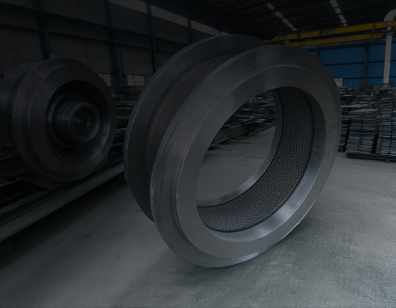
08
Spare Parts
Genuine components are available worldwide with fast delivery service.
