

 0086-138 3838 9622

Pellet Machine in Russia
We’ve lost count of how many pellet machine in Russia installations we’ve delivered over the years. Not because we’re sloppy — because the projects keep coming, and they keep getting more diverse. Wood, grass, alfalfa, manure, straw, feed, pet food, waste paper, even poison pellets for pest control. If it can be densified into a granule, someone in Russia has probably asked us to build a line for it. Single machines, complete plants, drying or cooling sections — we don’t say no. We just ask for the raw material and the output spec.


110+
Ring die units shipped
Ring die pellet machines shipped to Russian facilities. Each one matched to a specific material — no generic setups.
40+
Complete plants delivered
Complete pellet plant projects built across the country. From small farm-feed lines to industrial wood pellet operations.
30+
Material types processed
Different material types we’ve processed with Russian clients. Some you’d expect — some you really wouldn’t.
What we actually built for Russian clients
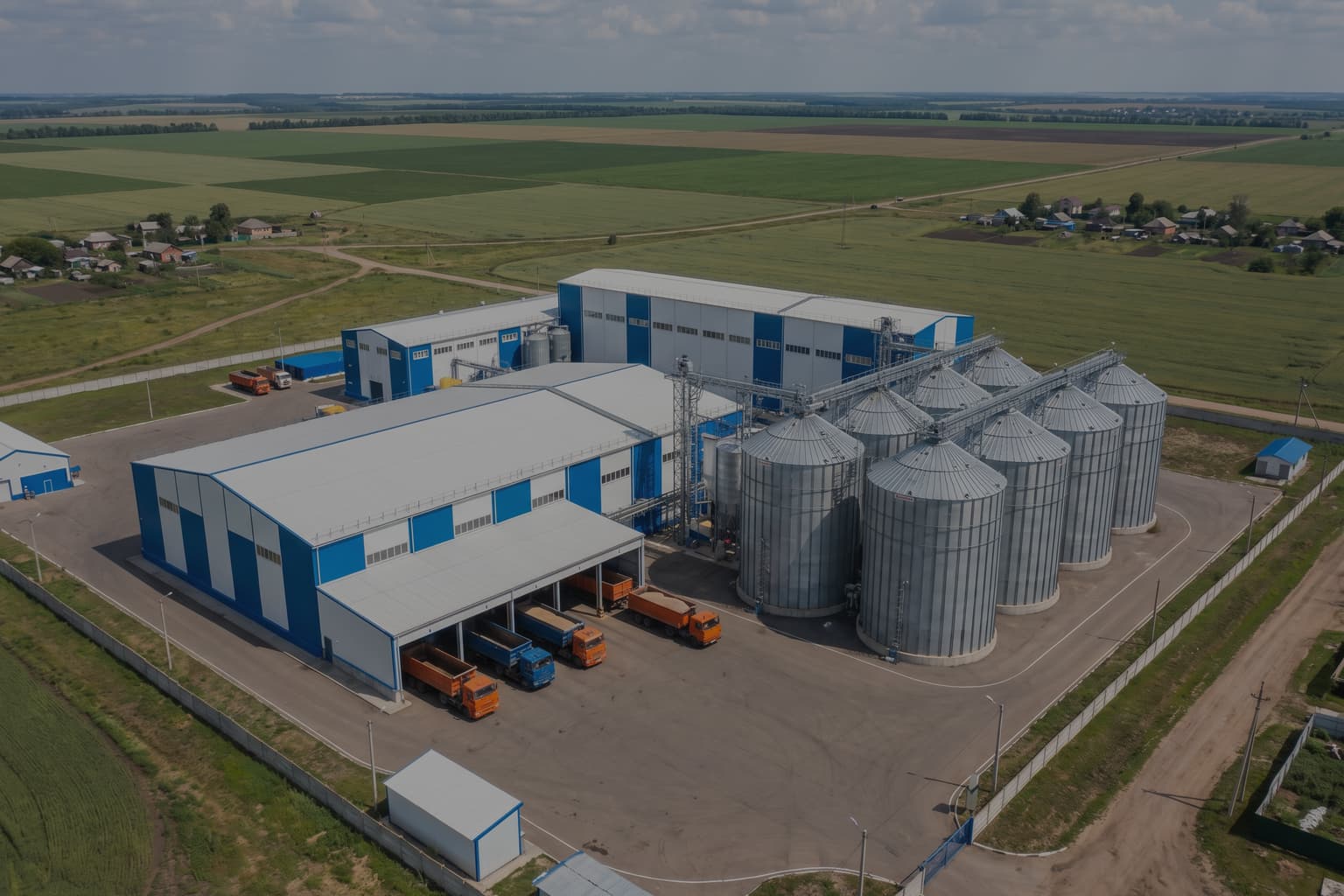
Look, we don’t do showroom tours. We ship containers. Over the years, we’ve watched our ring die pellet mill in Russia end up in places that don’t even have proper road signs. Some clients call us for fuel pellets. Others need feed, bedding, cat litter, even fish food. Below is a handful of real installations. Each one is a full pellet plant in Russia — not just a single press sitting in a corner. Read through. You’ll probably spot something close to your own raw material situation.
Moscow Oblast
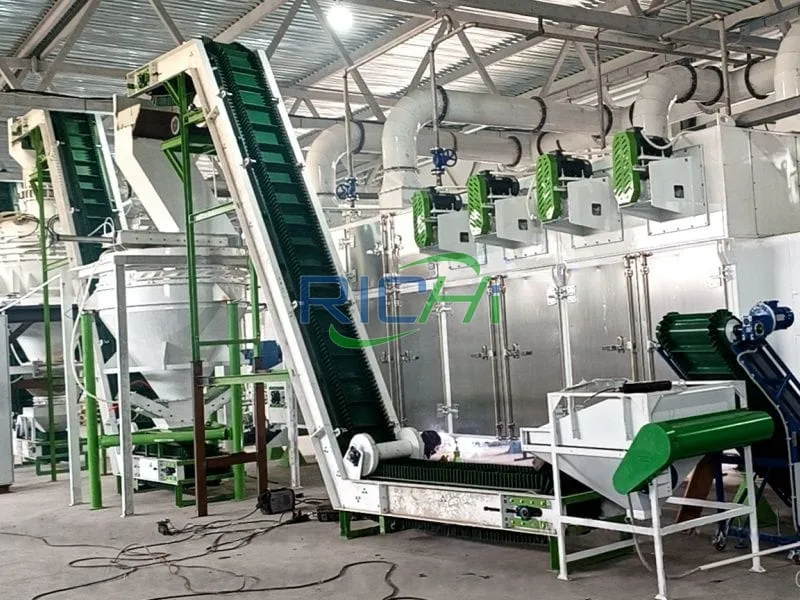
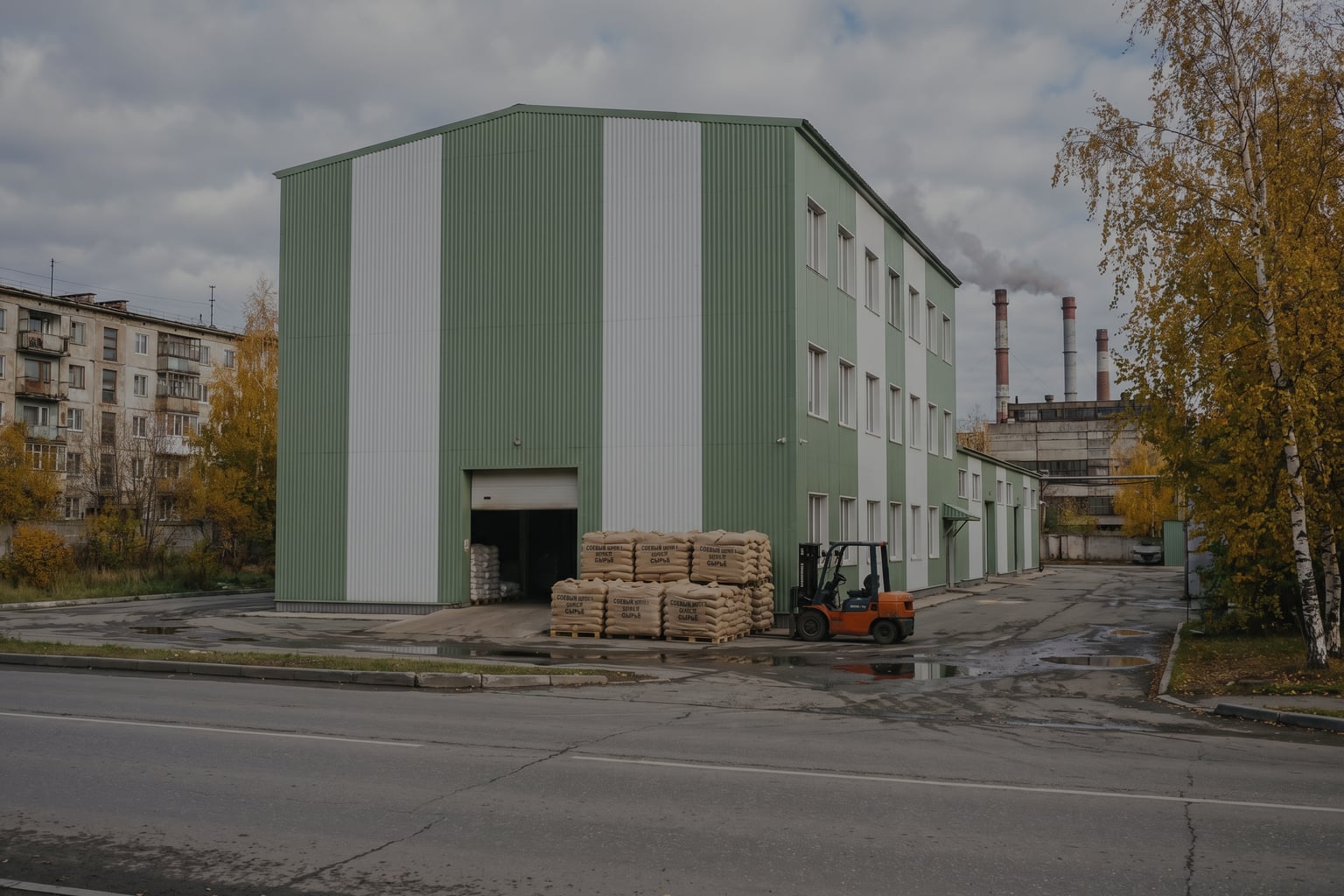
10-12 t/h eco cat litter making machine in Russia
A newer pet product brand in Russia wanted to break into the eco-friendly cat litter segment. They’d been importing tofu-based litter from China — high cost, slow logistics. Their idea? Make it locally. They got process design, equipment, onsite installation supervision, and training on die clearance adjustment for tofu fiber (tricky stuff — easy to burn).
- Raw material: Soybean residue (okara) from a local tofu factory. Single ingredient. Material comes in wet chunks at about 65% moisture — we added a dewatering screw and a rotary dryer before the press.
- Target pellet size is 4mm cylindrical. This isn’t just a pellet making machine in Russia for them — it’s their entire business model.
- We supplied a full pellet plant equipment in Russia package: dryer, MSZLH420 pelletizer, cooler, crusher, and a linear screener for dust removal.
- Process flow: dewater → dry to 12% → crush to 1.5mm → pelletize → cool → screen.
- Total project investment: around $210,000.

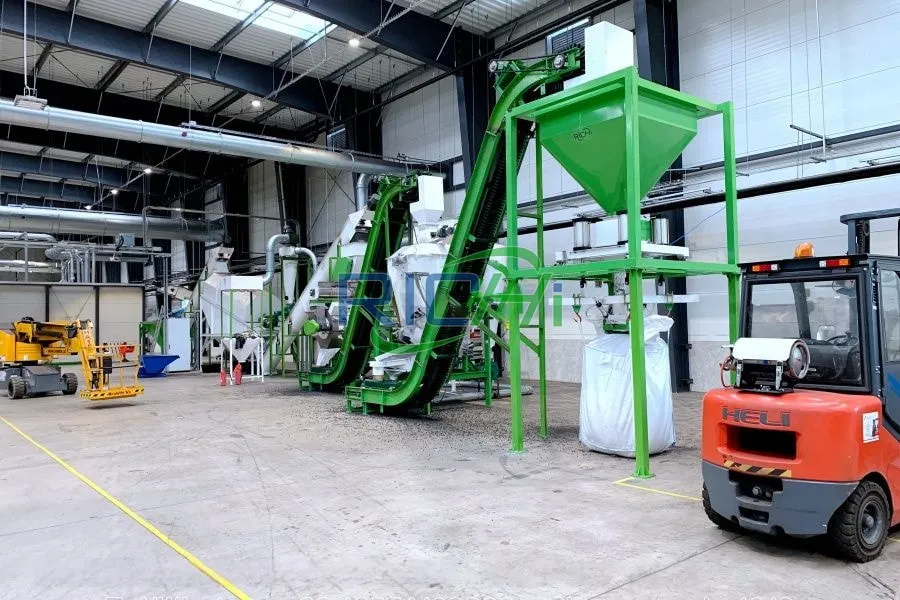
6-8 t/h alfalfa grass pellet machine in Russia
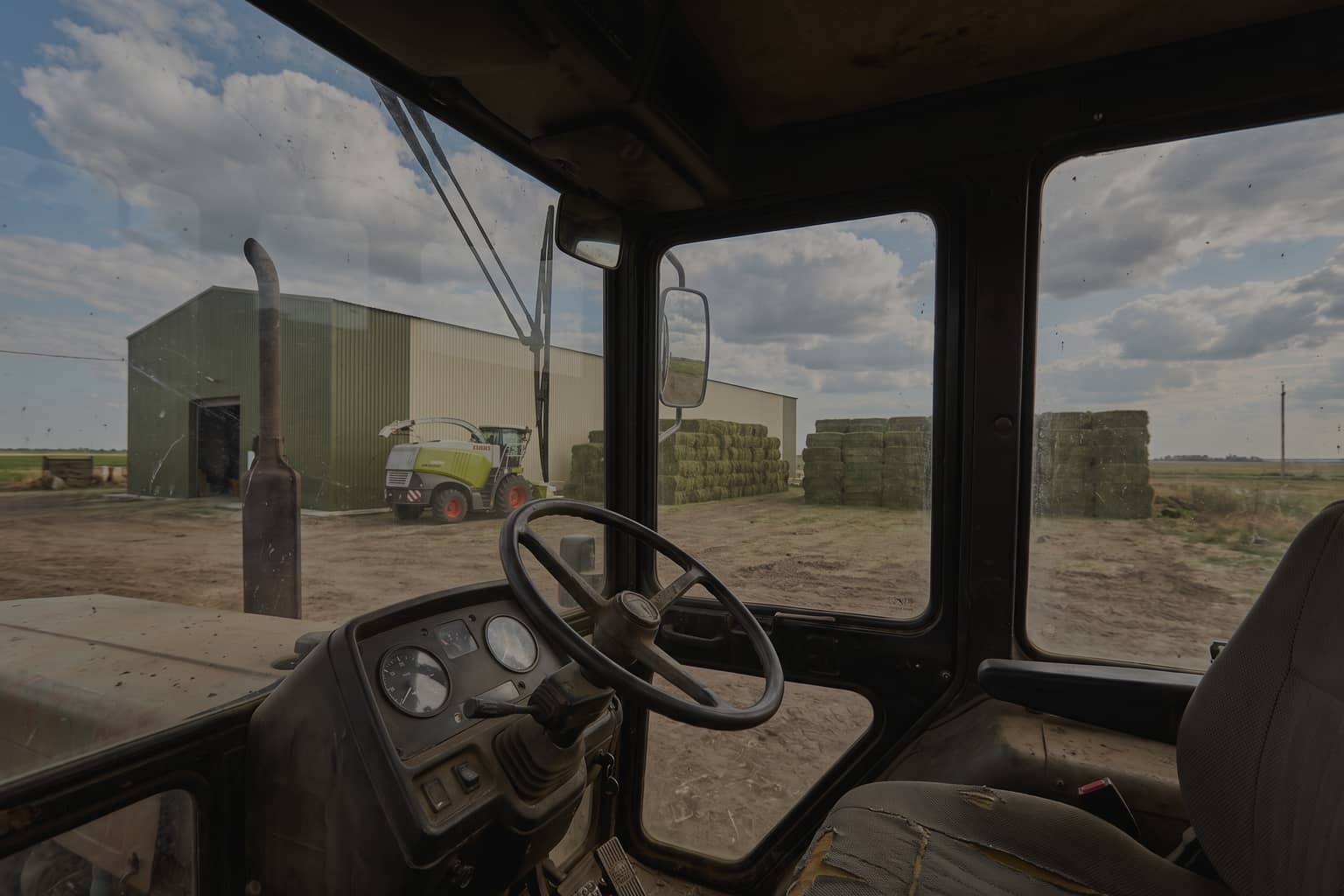
A farming cooperative in Krasnodar Krai grows alfalfa on about 1,200 hectares. They used to sell baled hay to livestock farms — low margin, storage headaches. They wanted to upgrade into high-density alfalfa pellets for the horse feed market.
- Raw material is round bales of sun-cured alfalfa, chopped to 50-80mm before entering the line. Moisture around 14-16% — actually perfect for direct pelleting. But bales had some soil contamination. We added a drum cleaner with aspiration.
- The CZLH768 ring die pellet machine in Russia runs at 75°C die temperature — alfalfa is heat-sensitive, loses protein if you go hotter.
- Pellet size: 8mm. The alfalfa pellet machine in Russia came with a magnet separator and a side feeder for even distribution.
- Other equipment: bale breaker, hammer mill (1.2mm screen), counterflow cooler, and a bagging scale.
- Investment: roughly $285,000. We provided full plant layout and helped them modify an existing barn into the production hall.
Krasnodar Krai
Kirov Oblast
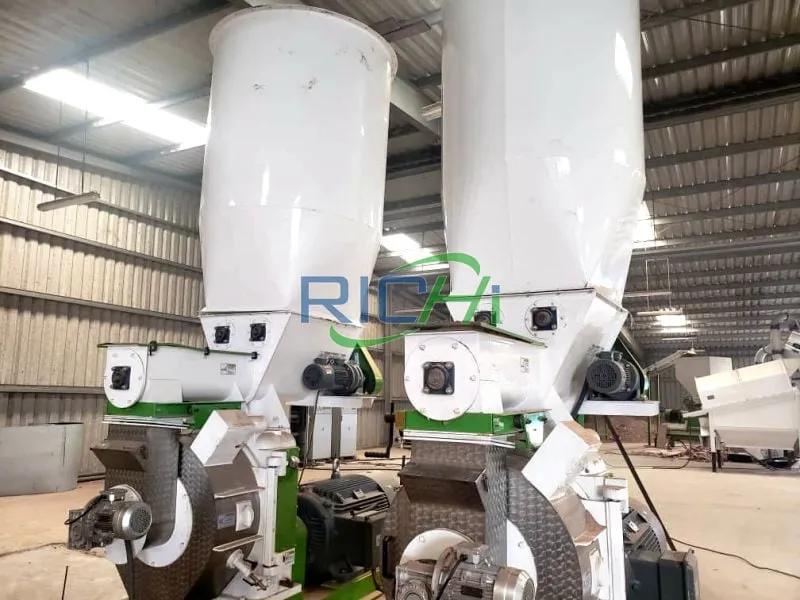
3-4 t/h wood pellet machine in Russia
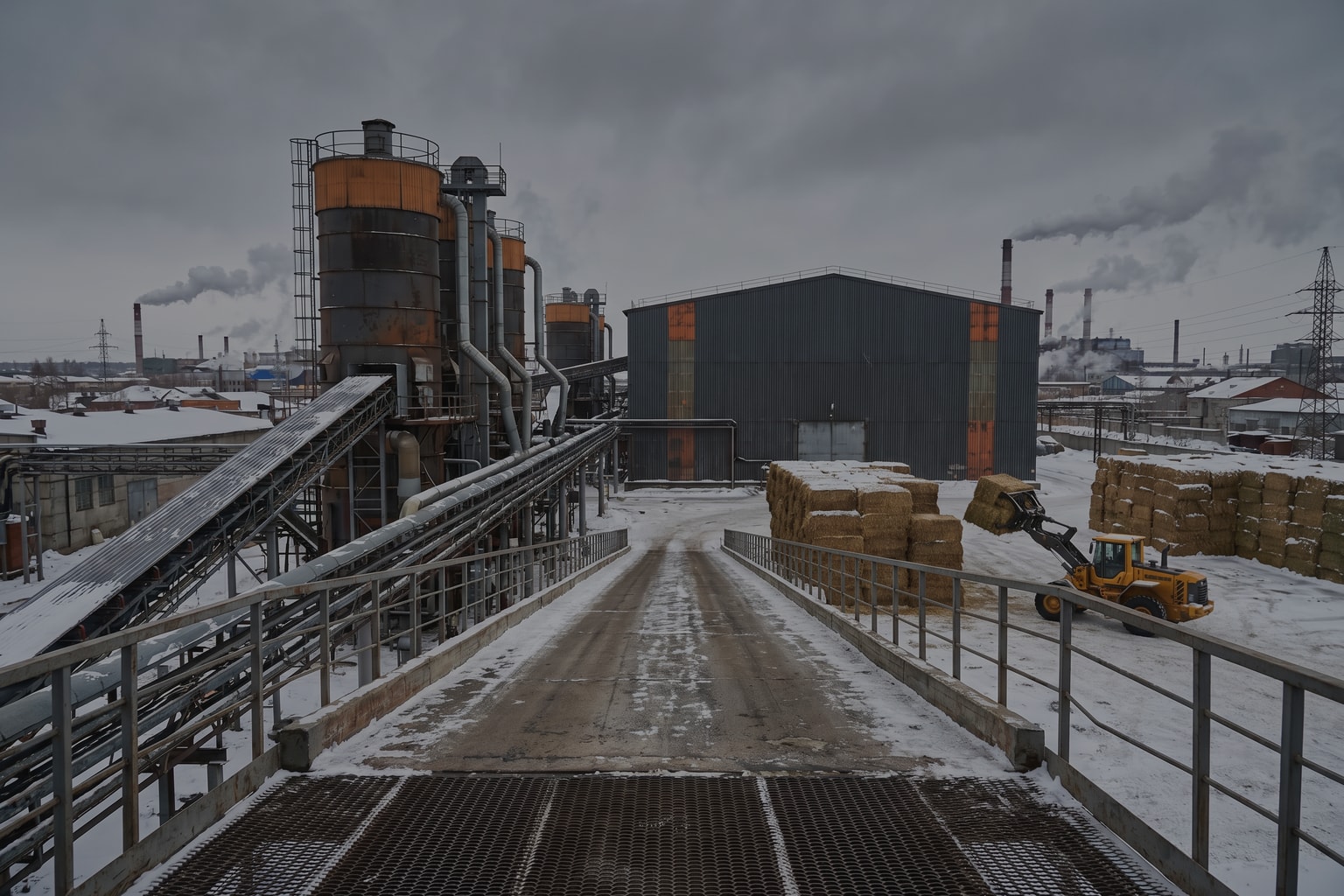
Small timber processing yard in Kirov region. They generate about 8,000 tons of sawdust and shavings annually — mostly pine and birch mix. Before working with us, they sold the sawdust to a large pellet plant 400km away. Transport ate up the profit. They decided to build their own small plant.
- Raw material: wet sawdust, 45-48% moisture, particle size already under 5mm. Two MZLH520 units running side by side — each is a solid industrial wood pellet extruder machine in Russia for this scale.
- We designed a simple but effective pellet production machine in Russia line: rotary dryer (to 10% moisture), double-stage screening, pelletizing, counterflow cooling, and a vibrating screener for fines removal. No hammer mill needed — particle size was already good. They also wanted a bagging silo with an automatic filler.
- Total pellet plant in Russia investment came to $268,000. We sent one technician for 10 days to dial in the roller gap and die compression ratio (1:5.5 for softwood).
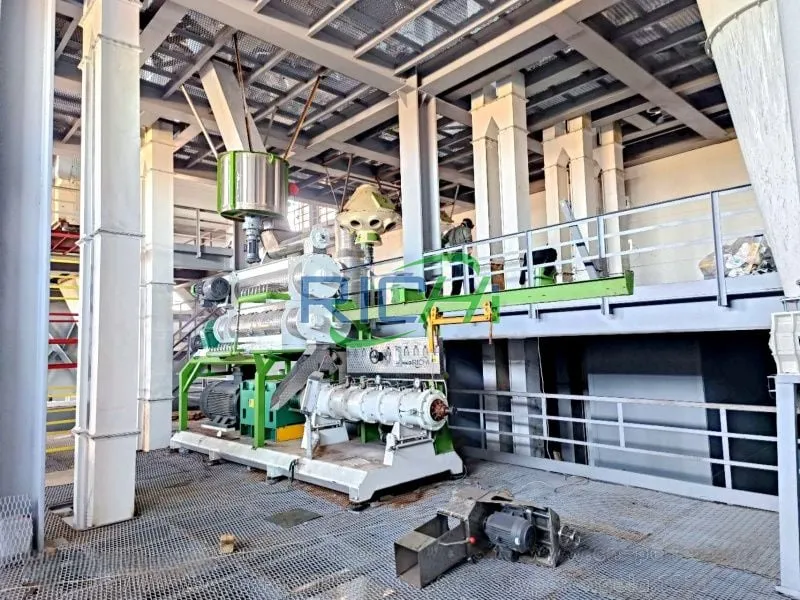
5-6 t/h floating fish feed machine in Russia
This one is different. A fish farm in Leningrad Oblast raises rainbow trout in recirculating aquaculture systems. They used to buy floating feed from Poland — expensive and delivery was unreliable during winter. They decided to make their own.
- Raw material mix: fish meal (30%), soybean meal (25%), wheat flour (22%), corn gluten meal (15%), plus oil and vitamins. All dry powders, moisture around 11%. The challenge? Floating requires proper expansion. A single screw wouldn’t cut it. We supplied the SPHS150*2 twin-screw floating fish feed extruder machine— this is not a standard pelletizer for sale Russia deal. It’s a high-shear system with a conditioning barrel.
- Process: grinding (0.8mm screen), dry mixing, extrusion at 95-100°C, die plate with 2.5mm holes, knife cutting to 6-8mm length, then a vertical dryer (not just a cooler — floating feed needs moisture reduction to under 10%). Also supplied a coater for oil spraying.
- Total Floating Fish Feed Production Line in Russia setup cost about $910,000. The client also bought a spare die and 5 spare knife blades. We helped with the full feed factory in Russia layout including steam system.
Leningrad Oblast
Voronezh Oblast
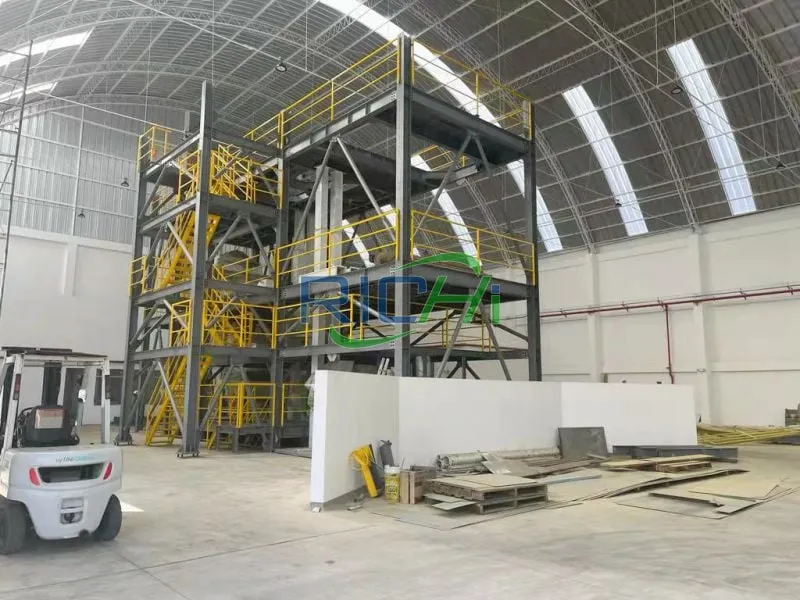
10 t/h cattle feed pellet machine in Russia
A dairy operation in Voronezh Oblast with 2,500 head wanted to cut purchased feed costs. Their formula: 70% ground barley and wheat, 30% chopped clover hay. They already had the grains and grew clover on their own fields.
- Raw material is dry grain (12% moisture) and hay bales (13-14%).
- Grain goes through a hammer mill (3mm screen). Hay through a tub grinder. Then mixing in a vertical batch mixer — 1,500kg per batch. We sold them a full pellet system in Russia: mixer discharge screw, magnet, SZLH508 pellet mill, counterflow cooler, and a crumbler (for cattle, 4mm pellets are fine but they wanted a smaller size for calves).
- The cattle feed pellet machine in Russia runs at 240rpm with a 1:6 compression ratio die — typical for high-starch feed.
- Investment: $325,000. They also bought a dust collection system — we insisted. Grain dust gets explosive. Location: Voronezh Oblast. We provided full mechanical installation drawings.
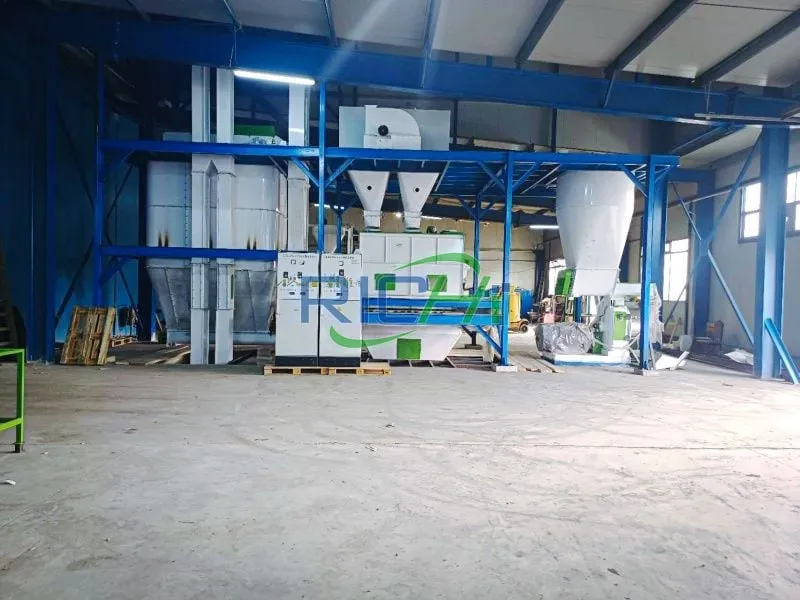
10 t/h chicken manure pellet machine in Russia
Large poultry integrator with two layer farms in Rostov Oblast. They produce roughly 60 tons of fresh manure daily. Environmental pressure was building — local regulations started cracking down on raw land application. They needed a solution.
- Fresh manure is wet (75% moisture) and sticky. We designed a line: solid-liquid separator first, then a rotary drum dryer (gas-fired) down to 13% moisture, then the FZLH520 ring die chicken manure pellet machine.
- Organic fertilizer pellets, 6mm diameter, slow-release nitrogen. Not a typical pellet manufacturing equipment in Russia scenario — most people avoid chicken manure because of ammonia. We added an exhaust hood over the dryer and a deodorizing bio-filter.
- Other equipment: mixing tank for adding microbes, cooler, screener, and a bagging machine.
- Total pellet plant equipment in Russia investment: $365,000. They got a 3-day onsite training and a spare die for abrasive manure fiber.
Rostov Oblast

Tver Oblast
2 t/h wood pellet cat litter plant in Russia
Small family-owned business in Tver region. Started with a simple idea: convert local pine sawdust into cat litter and small animal bedding. Two products from the same line.
- Raw material is dry planer shavings (8% moisture, fluffy, 10-20mm particle size). They run it through a fine grinding mill (0.6mm screen — critical for soft cat litter texture), then the MZLH520 wood pelletizer with a special die (2.5mm for litter, 6mm for bedding). The industrial pellet mill in Russia runs at lower roller pressure — pine doesn’t need much force.
- They also wanted a rotary screener to break longer pellets into uniform granules. This wood pellet cat litter plant in Russia is small but profitable.
- Investment: $198,000. They handled installation themselves — we just sent drawings and a video walkthrough. Location: Tver Oblast. One detail: they called us three times about die lubrication. Easy fix.
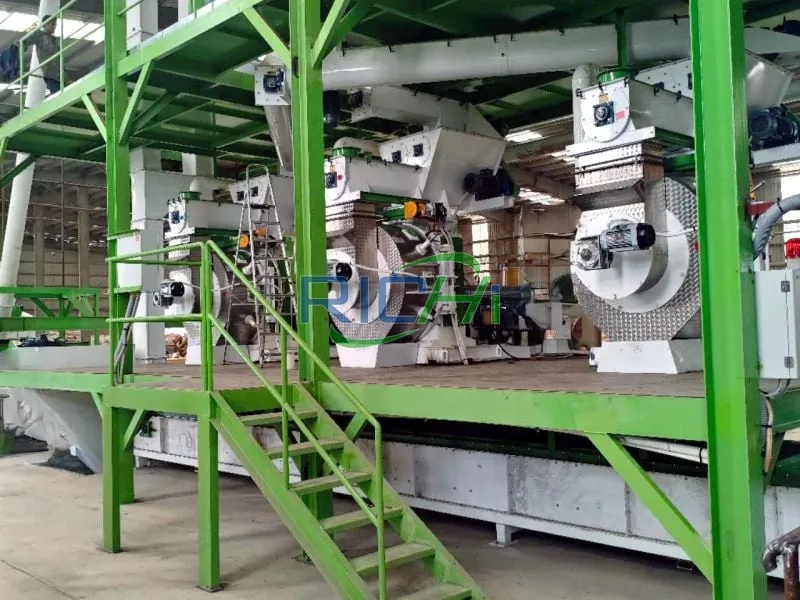
10-12 t/h sunflower husk pellet machine in Russia
Sunflower oil refinery in Saratov Oblast. Husk is their main byproduct — mountains of it. They used to dump it. Now it’s fuel.
- Raw material is clean husk, 9-12% moisture, particle size already 2-4mm. Four MZLH678 units running parallel — each unit is a heavy-duty ring die pellet mill in Russia designed for abrasive husk. Why four? Redundancy. If one mill stops for die change, they still produce 7-8 t/h.
- Process: magnetic separation, pelleting, horizontal cooler, and a vibrating screener. No dryer needed — husk comes dry from the de-oiling process. They also bought a pneumatic conveying system for the finished pellets to a storage silo.
- Total pellet production machine in Russia setup cost: $420,000. That’s four presses, dies, coolers, conveyors. They opted out of a bagging line — sell bulk to local heating plants. We recommended a 1:9 compression ratio die for dense fuel pellets.
Saratov Oblast
Altai Krai
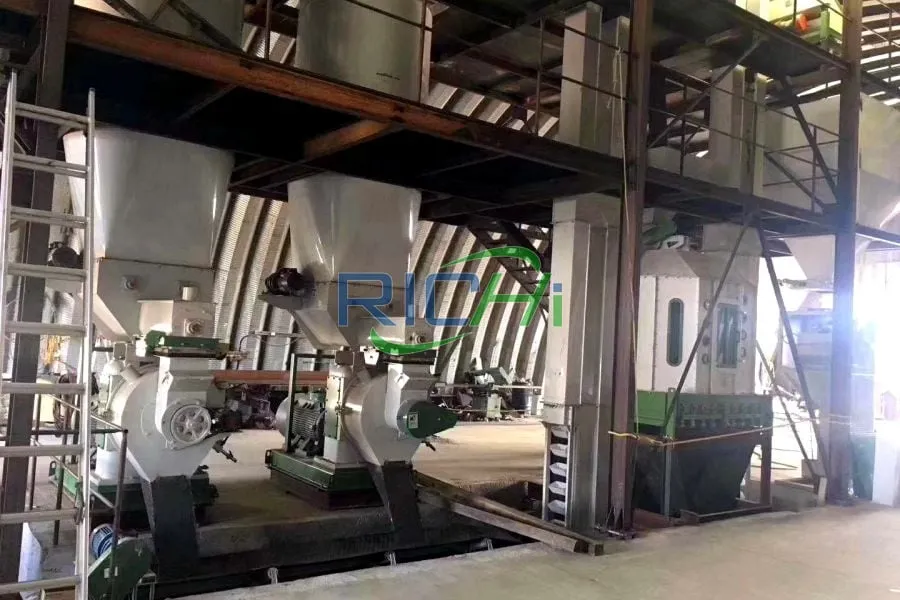
4-5 t/h straw pellet machine in Russia
Large arable farm in Altai Krai grows wheat and barley. Straw used to be a problem — they left it in the field or burned what they could. New local laws restricted burning. They started pelleting straw for animal bedding. Not fuel — bedding. Lower density required.
- Raw material is square straw bales (20% moisture, chopped to 40mm in a tub grinder). We supplied two MZH678 pelletizers — these are not high-compression straw pellet machine in Russia units. We swapped dies to 1:4 ratio for softer pellets that absorb urine better.
- Line includes: bale shredder, hammer mill (6mm screen — larger than fuel specs), mixer (they add bentonite clay for absorption), pelletizing, cooler, screener.
- Total pellet plant in Russia investment: $195,000. The client told us later: “The cows actually lie down on it — that’s the real test.” We provided process flow design and remote commissioning.
Other pellet lines we’ve put to work across Russia
Not every project gets a full case study write-up. But they’re all real. Below is a faster look at other pellet machine in Russia installations — feed, fertilizer, bedding, biofuel. Different scales, different regions, same approach: match the right ring die pellet mill in Russia to the material and get it running. If you see something close to your own setup, just ask. We’ve probably already solved that problem.

5-6 t/h pig feed pellet mill in Russia
A medium-sized pig farm in Belgorod Oblast wanted to stop buying expensive compound feed. They had their own barley and peas. We supplied a complete feed mill in Russia with a SZLH350 as the core. Raw materials are dry grains at 13% moisture, ground through a 2.5mm screen. The pellet machine in Russia runs at 280rpm with a 1:5 die for swine feed. Also included a mixer, cooler, and a small coating drum for fat addition.
Model
SZLH350
Pellet Size
4.5mm
3-5 t/h cow dung fertilizer granulator in Russia
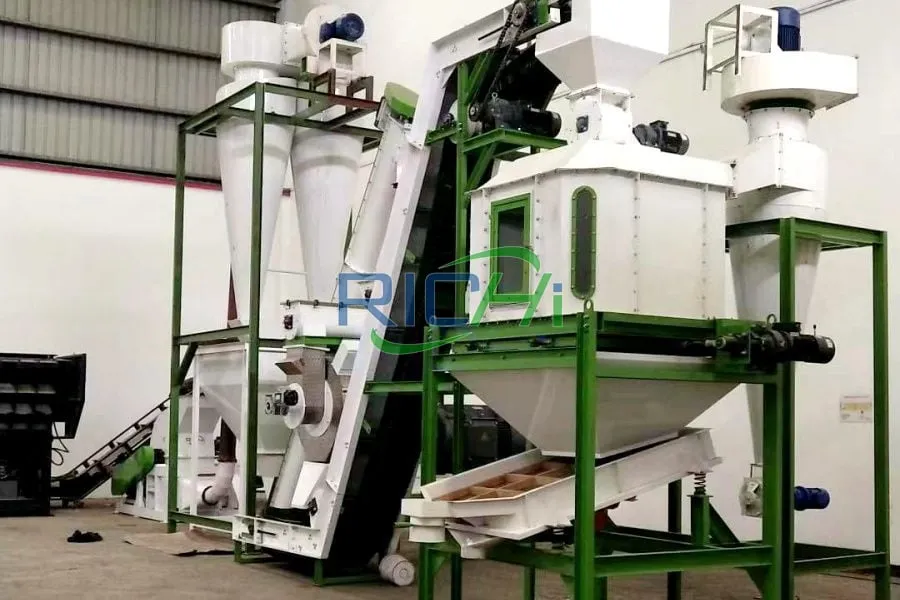
Small organic fertilizer startup in Tatarstan. They collect dairy manure from three local farms. Fresh dung at 80% moisture goes through a solid-liquid separator first, then a dryer down to 15%, then the FZLH350. This pelletizer for sale Russia handles sticky, fibrous material better than a flat die. We also sold them a screener and a bagging scale. The client calls it their “waste to wallet” line.
Model
FZLH350
Pellet Size
6mm
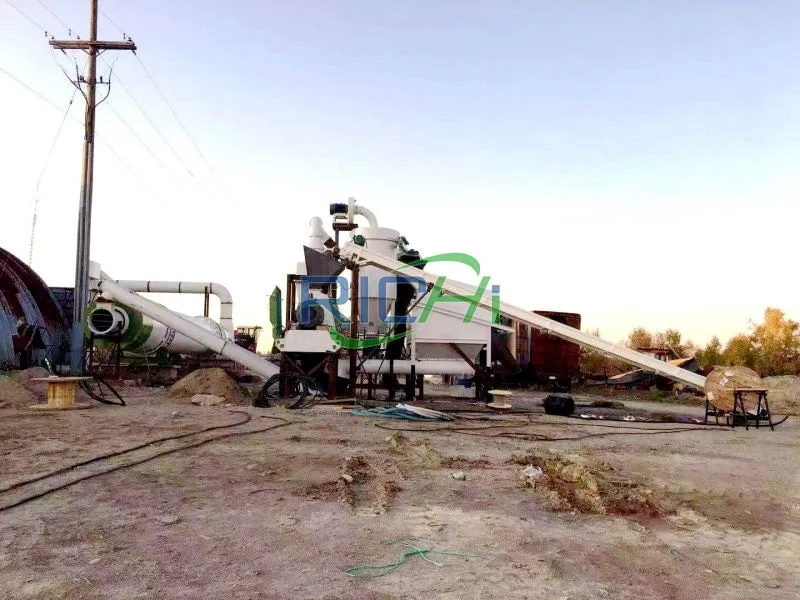
1 t/h animal bedding pellet machine in Russia
A small sawmill in Karelia had piles of dry spruce sawdust going to waste. They started making animal bedding pellets for local horse stables. The MZLH420 runs with a relaxed 1:4 die — bedding doesn’t need high density. This industrial pellet mill in Russia also needed a fine grinder (0.8mm screen) for soft texture. Simple line, quick payback. No dryer needed — sawdust came at 9% moisture.
Model
MZLH420
Pellet Size
6mm
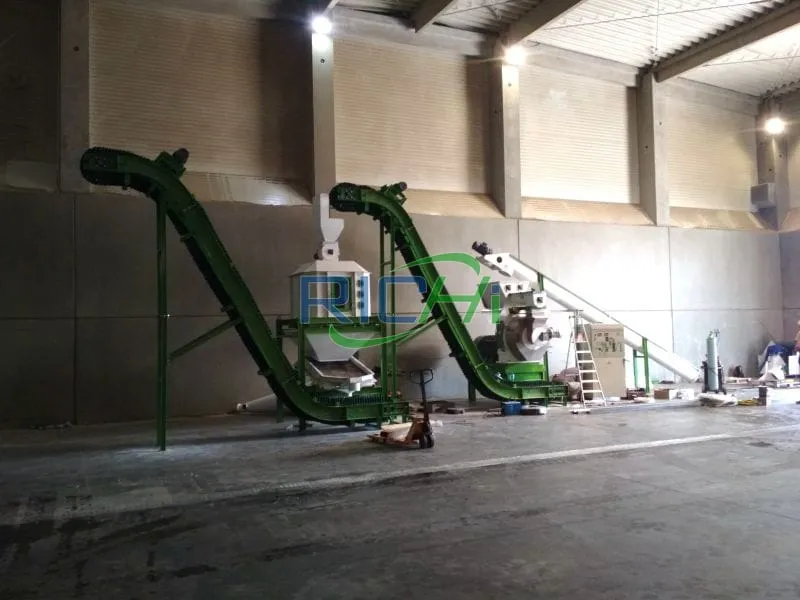
3 t/h horse bedding pelletizer in Russia
A farm in Orenburg Oblast grows wheat and wanted to use straw for horse bedding, not fuel. Different market. Straw bales at 16% moisture go through a bale breaker, hammer mill (5mm screen), then the MZLH678. This pellet production machine in Russia runs at lower compression. We added a paddle mixer to add a light bentonite coating for extra absorbency. The client now supplies to three equestrian centers.
Model
MZLH678
Pellet Size
8 mm

8 t/h Clover hay pellet machine in Russia
A cooperative in Stavropol Krai grows red clover on 800 hectares. They wanted to pelletize for sheep feed export. Raw material is dry chopped hay (14% moisture). The CZLH768 ring die pellet mill in Russia runs at 70°C — clover burns easily if you push too hard. We supplied a hammer mill, mixer, pelletizer, cooler, and a bagging silo. Also added a de-stoner for soil removal from field hay.
Model
CZLH768
Pellet Size
6mm

15 t/h Beet pulp pellet machine in Russia
A sugar refinery in Kursk Oblast generates wet beet pulp year-round. They used to pay for disposal. Now they pelletize it as cattle feed. Wet pulp at 75% moisture goes through a screw press, then a rotary dryer down to 12%, then the SZLH508. This feed plant in Russia runs 20 hours a day during beet season. Also supplied a steam boiler and a molasses coater. The client recovered investment in 14 months.
Model
SZLH508
Pellet Size
8mm
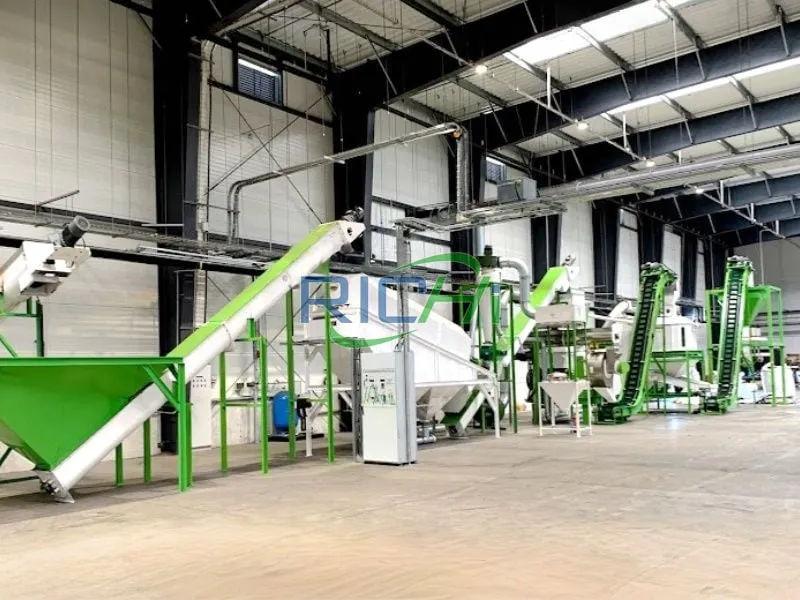
3 t/h Meadow grass pellet mill in Russia
A small livestock farm in Udmurtia has natural meadow grass — mixed species, not planted. They cut, dry, then pelletize as maintenance feed for winter. Raw material moisture at baling is 15-17%. The CZLH520 biomass pellet mill in Russia handles mixed fiber well. No mixer needed — just a hammer mill then direct pelleting. We also sold a small counterflow cooler. Low investment, solid return.
Model
CZLH520
Pellet Size
5mm
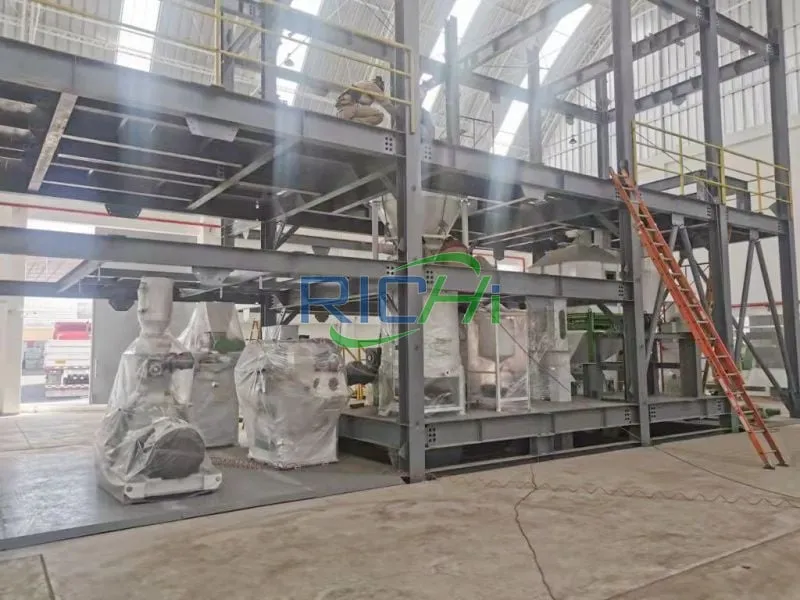
8 t/h Eco hemp cat litter pellet machine in Russia
An agricultural startup in Lipetsk Oblast grows industrial hemp for fiber. The leftover stalks and hurds were sitting in piles. They now process them into biodegradable cat litter. Raw material is dry hemp hurds at 10% moisture, ground to 1mm. The CZLH768 pellet plant in Russia runs with a 1:3 die — hemp needs light compression to stay crumbly. Also supplied a rotary screener for dust control.
Model
CZLH768
Pellet Size
3mm
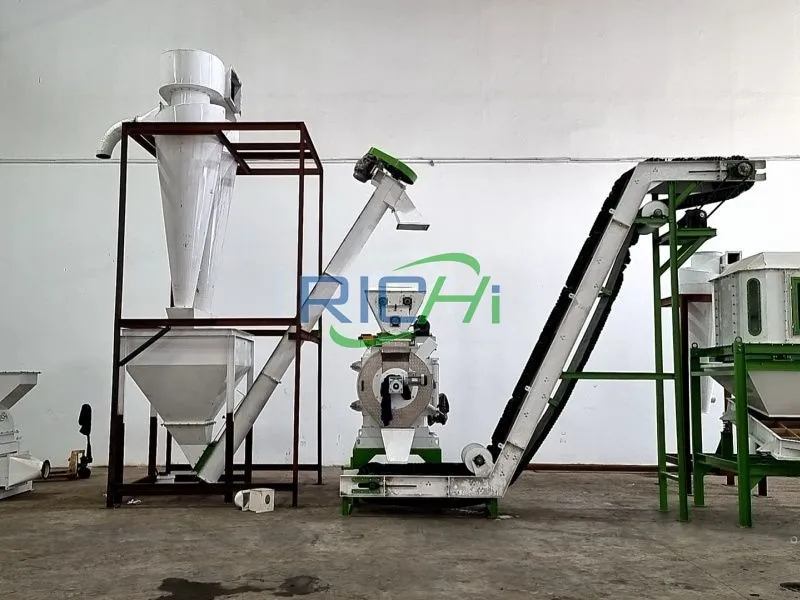
4 t/h Rice husk pellet machine in Russia
Wait — rice husk in Russia? Yes. A rice mill in Krasnodar Krai (they grow rice in the Kuban region) had mountains of husk with no use. Now it’s fuel for their own drying kilns. Raw material is dry husk at 10% moisture, already small particle size. The MZLH768 ring die pellet mill in Russia uses a heavy-duty 1:7 die — husk is abrasive and kills standard dies fast. We recommended a tungsten-carbide-coated die.
Model
MZLH768
Pellet Size
6mm
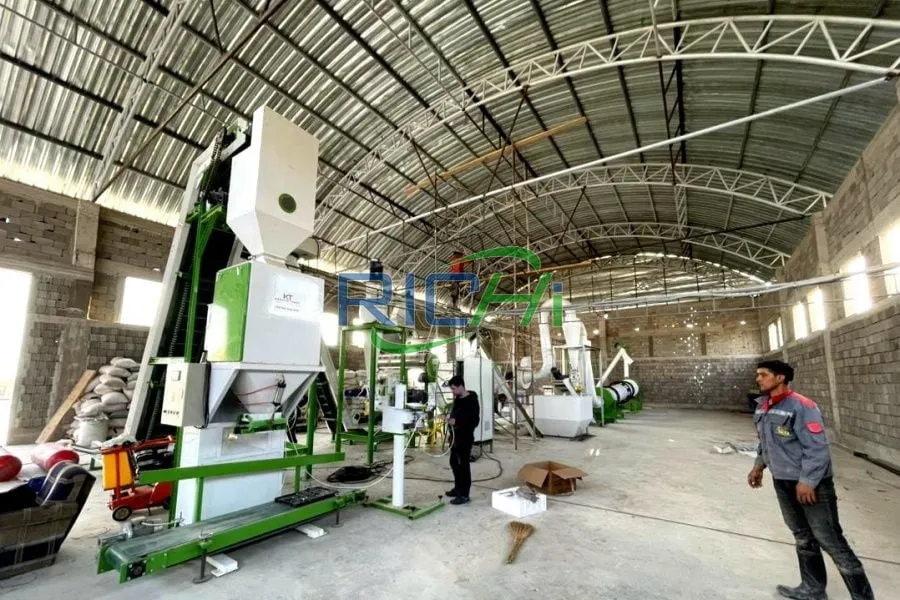
2 t/h Corn stalk pellet machine in Russia
A grain farm in Tambov Oblast had corn stalks left after harvest. They wanted to turn them into fuel pellets for their own grain dryer. Raw material is chopped stalks at 18% moisture, dried to 12% before pelleting. The MZLH520 pellet manufacturing equipment in Russia runs at lower capacity but reliably. No mixer, no additives. Simple line: hammer mill, dryer, pelletizer, cooler. Client handles their own bagging.
Model
MZLH520
Pellet Size
8mm

3 t/h Wood bark pellet mill in Russia
A plywood mill in Vologda Oblast generates tons of wet bark. Bark is tricky — high ash, variable moisture. They dry it from 55% down to 14% using a rotary drum dryer, then run it through the MZLH768. This pellet press machine in Russia needed a stronger gearbox because bark fibers are tough. We also added a magnetic separator (bark often contains nails and staples from logs). Output is industrial fuel for their own boilers.
Model
MZLH768
Pellet Size
10mm
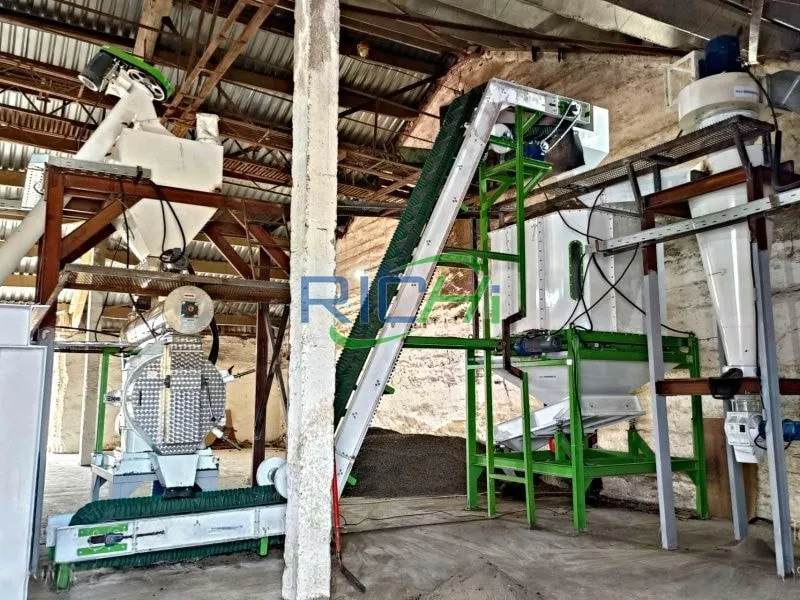
2 t/h Cotton stalk pellet machine in Russia
Cotton is grown in southern Russia near Astrakhan. A small farmer there had cotton stalks left after ginning. They pelletize them as roughage feed for sheep — not common, but it works. Raw material is dry stalks at 12% moisture, ground to 4mm. The CZLH420 feed mill in Russia runs with a 1:5 die. Stalks are fibrous but not too hard. We supplied a small cooler and a manual bagging stand.
Model
CZLH420
Pellet Size
8 mm
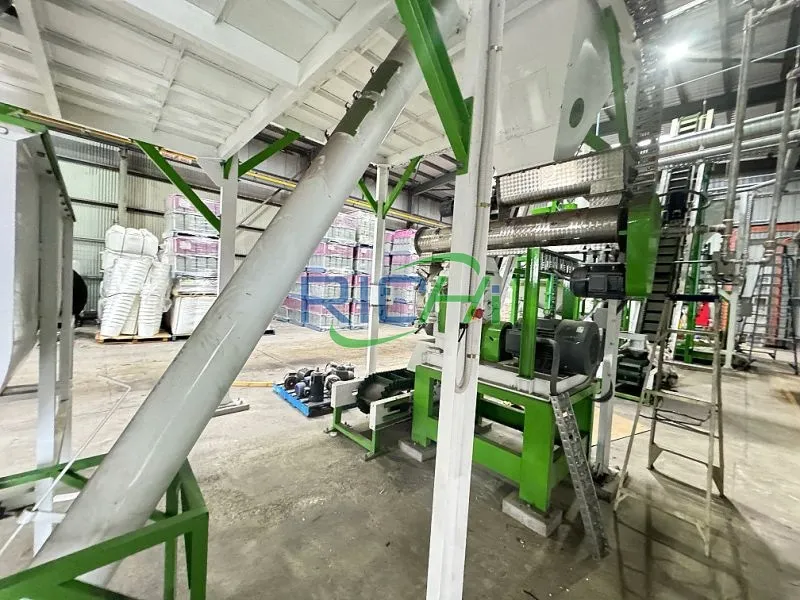
6 t/h Soybean stalk pelletizer in Russia
A soybean processor in Amur Oblast (far east) had stalk waste piling up. They now sell pellets as roughage to local cattle operations. Raw material is dry chopped stalks at 11% moisture. The CZLH768 pelletizing machine in Russia handles the long fiber well. We also supplied a hammer mill with 4mm screen and a horizontal cooler. The client runs the line only 4 months per year after harvest — works for their season.
Model
CZLH768
Pellet Size
6mm
1.5-2 t/h Wheat straw pellet machine in Russia
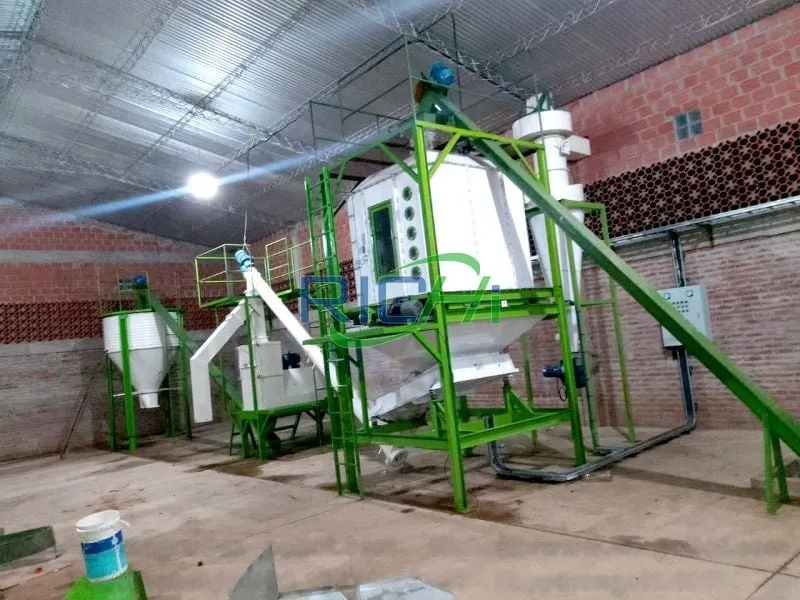
A family farm in Volgograd Oblast grows wheat on 500 hectares. They wanted to stop buying propane for their grain dryer. Now they burn their own straw pellets. Raw material is square bales at 14% moisture, chopped and dried to 10%. The MZLH520 pellet plant equipment in Russia package included a bale shredder, hammer mill, rotary dryer, and cooler. Small but fully self-sufficient.
Model
MZLH520
Pellet Size
8mm
3 t/h Agricultural waste pelletizer in Russia
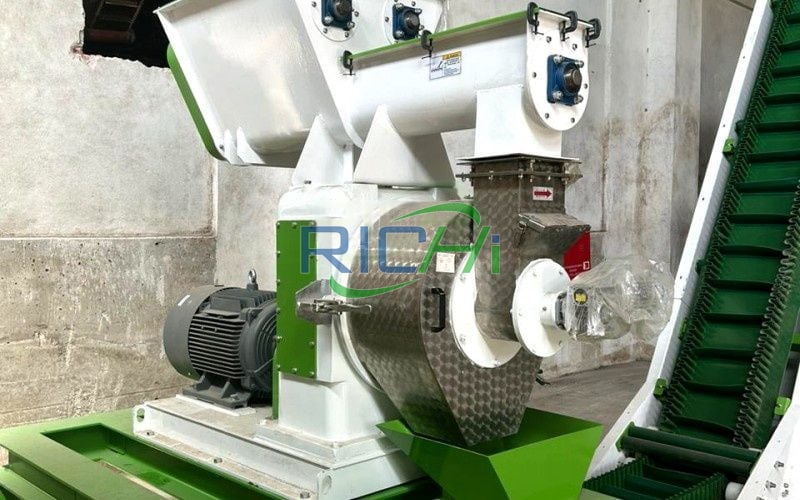
A greenhouse complex outside Nizhny Novgorod needed cheap heat for winter tomatoes. They collect mixed ag waste from neighboring farms: sunflower husks, buckwheat hulls, spoiled grain. This pellet factory in Russia runs on whatever is available. The MZLH678 industrial pellet mill in Russia has a universal die (1:6) that works for most materials. We also sold them a hopper with an agitator for uneven feed.
Model
MZLH678
Pellet Size
6mm
0.5 t/h silage pellet machine in Russia
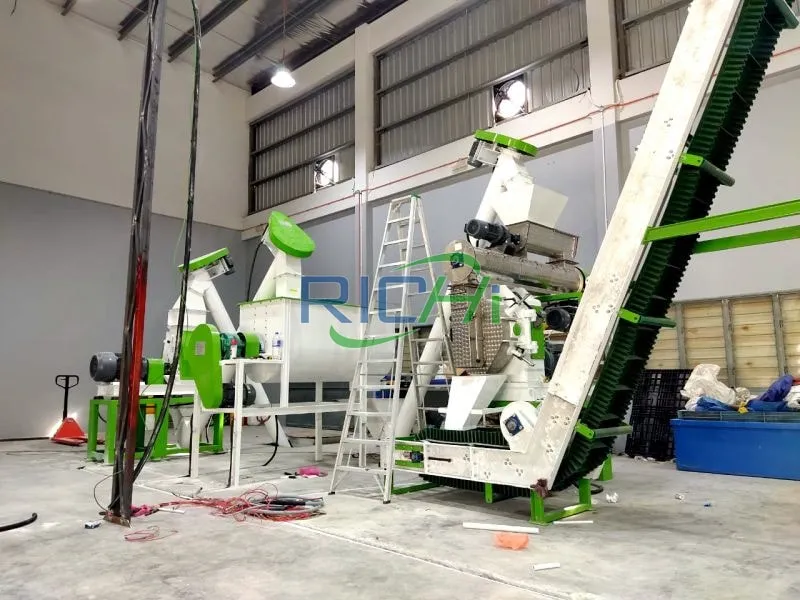
A hobby farm in Kaliningrad Oblast wanted to pelletize wilted grass silage for small-bale feeding. Silage is wet (40% moisture) and acidic. We added a dryer before the CZLH320. This is the smallest pellet mill in Russia we’ve sold for silage — but it works. The client uses the pellets for their own goats. Not a commercial line, but a good example of custom solutions.
Model
CZLH320
Pellet Size
5mm
2-3 t/h organic fertilizer pellet machine in Russia
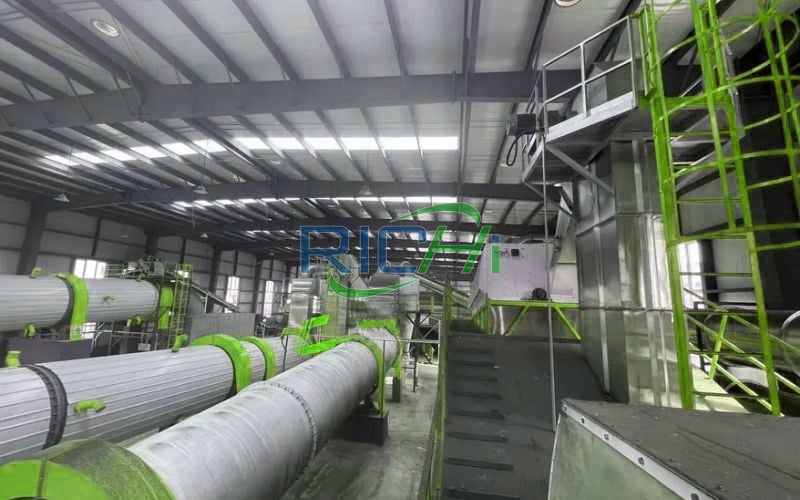
A mixed farm in Bashkortostan raises chickens and grows sunflowers. They mix the bedding litter (manure + husks) at 25% moisture, then pelletize into organic fertilizer. The FZLH320 ring die pellet mill in Russia handles the blend well — the husk adds structure, manure adds N-P-K. Also supplied a pre-mixer and a coating drum for adding beneficial microbes.
Model
FZLH320
Pellet Size
5mm
6-8 t/h buckwheat husk pelletizer in Russia
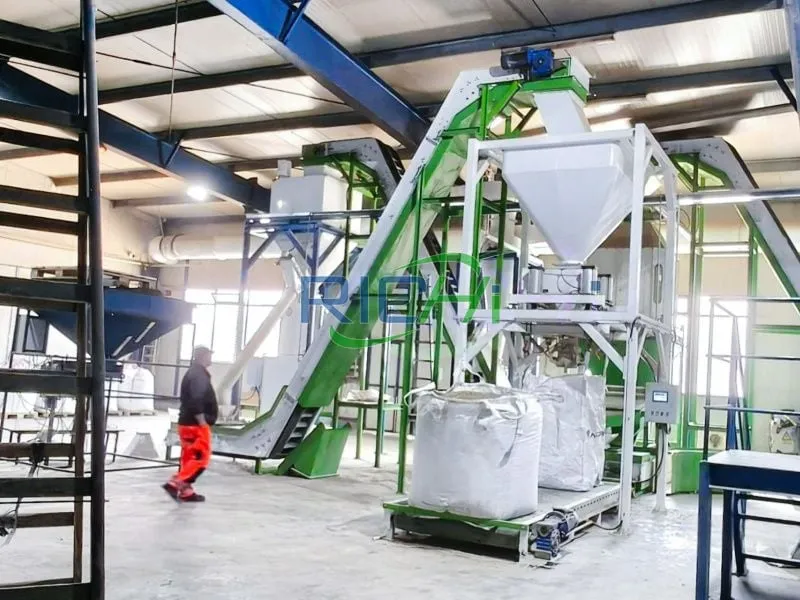
A buckwheat mill in Altai Krai produces tons of light, fluffy husk each season. They now run two MZLH768 units in parallel. Husk is dry (8% moisture), fine, and easy to pelletize — but it’s dusty. We added a large aspiration system and a cyclone. This pellet production line in Russia feeds into a bagging machine for retail fuel pellets. The client sells to local households for small stoves.
Model
2x MZLH768
Pellet Size
6mm
On-Site Project Videos
1-2T/H Pet Food Production Line In Russia
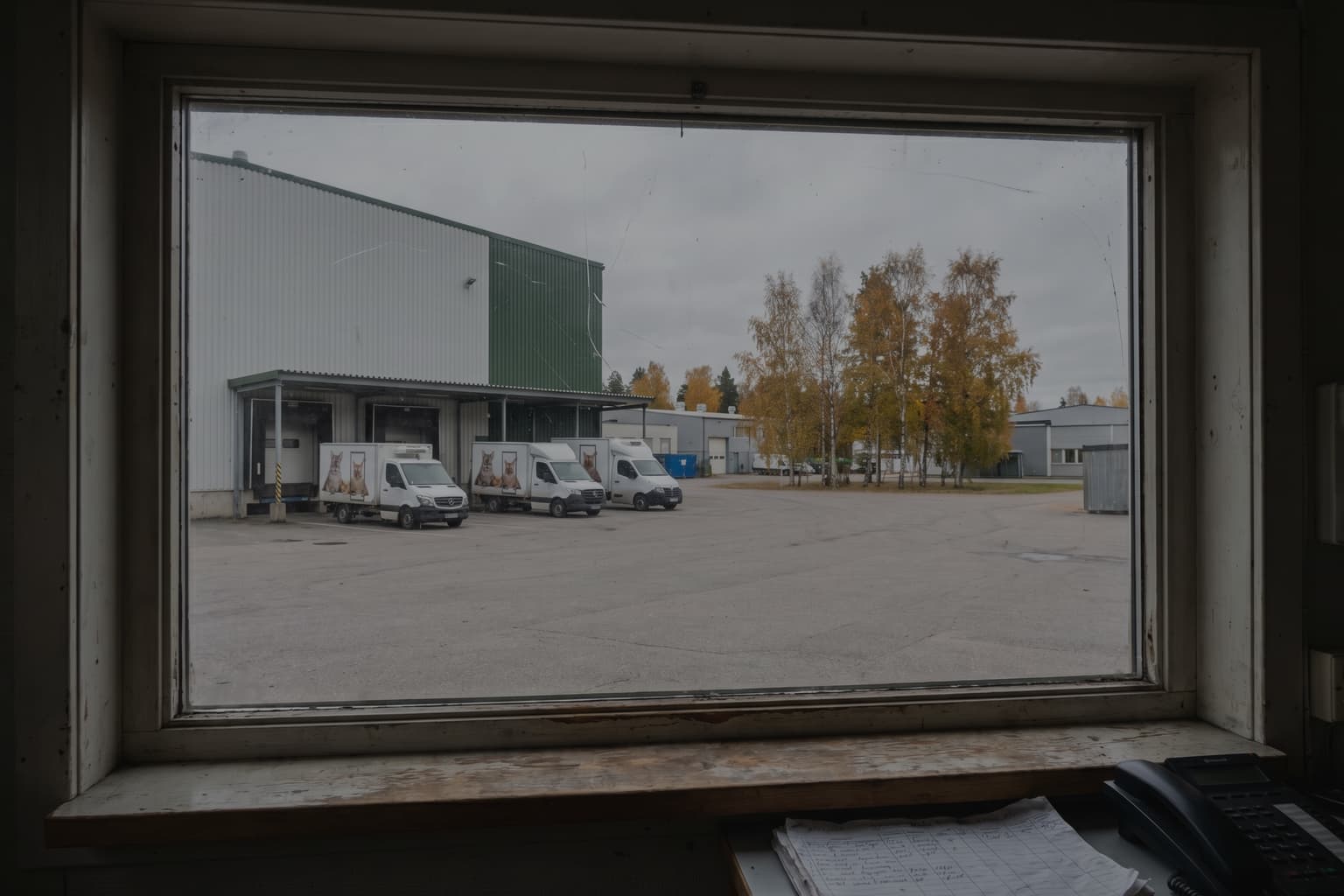
This one’s in Leningrad Oblast. The client runs a small pet food brand — dog and cat kibble. Raw material is a dry mix of chicken meal, rice, corn, and fats. The line uses a SPHS120 twin-screw pet food extruder machine. Die plate has 2.0mm holes, knives cut to 5-6mm length.
Watch the video: you’ll see the extruder puff the kibble right at the die face — that expansion is everything for palatability. Also in the shot: a pre-conditioner for steam and a post-extruder dryer. The whole feed plant in Russia fits inside 150 square meters.
5T/H Trout Feed Production Line In Russia
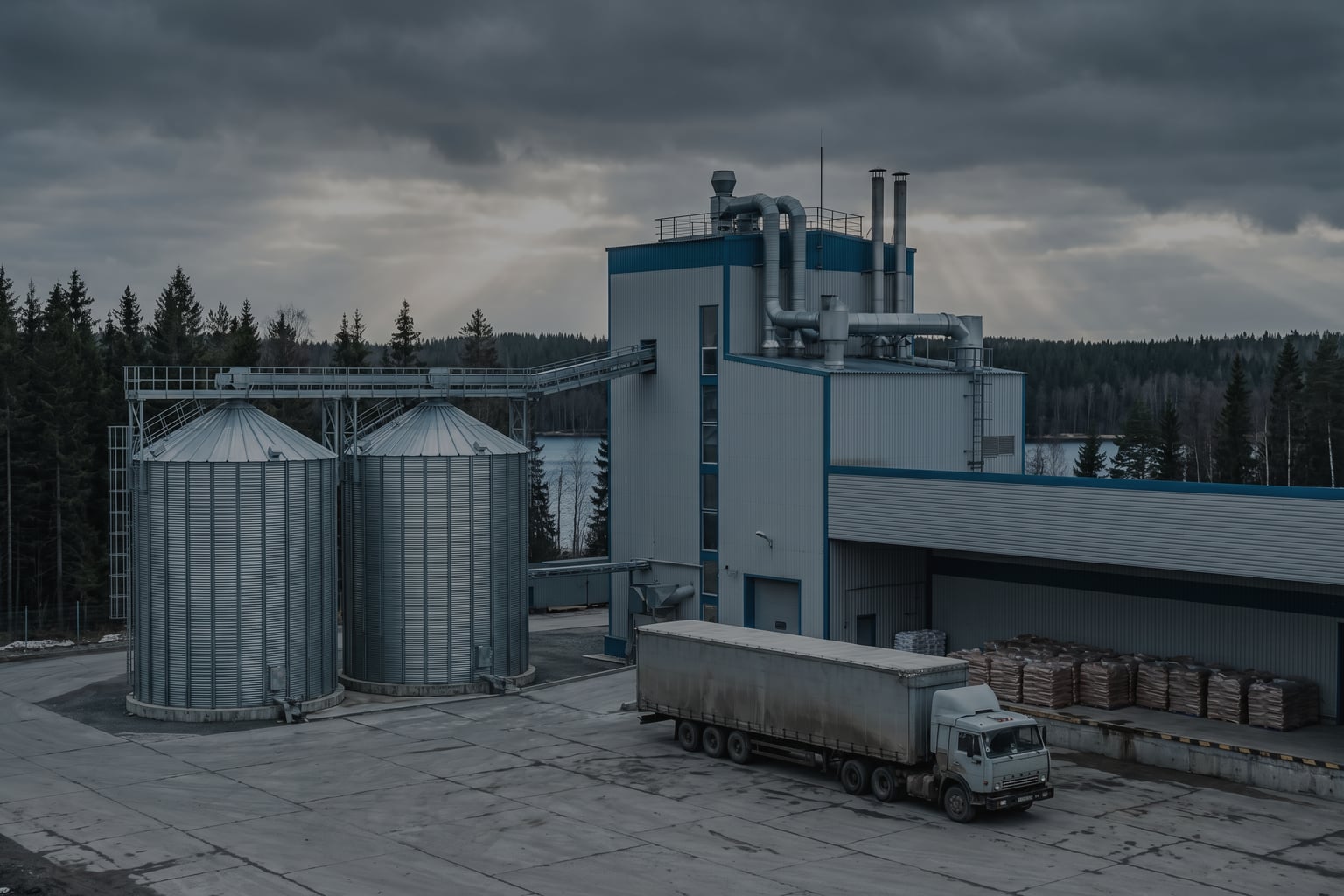
Trout farm in Republic of Karelia. Cold water, high standards. They needed a sinking feed that holds together in water for at least 30 minutes. We supplied a SPHS135 twin-screw with a special die (2.5mm, longer land). Raw material is fish meal, wheat, soybean meal, and fish oil — around 25% protein.
This pellet production machine in Russia runs at 95°C barrel temperature. The video clip shows the die face underwater — cutter blades shear the pellets right as they exit. Also visible: a vacuum coater for adding oil after drying. The client said their feed conversion ratio dropped by 12% after switching to our line.
3-4T/H Wood Pellet Production Line In Russia
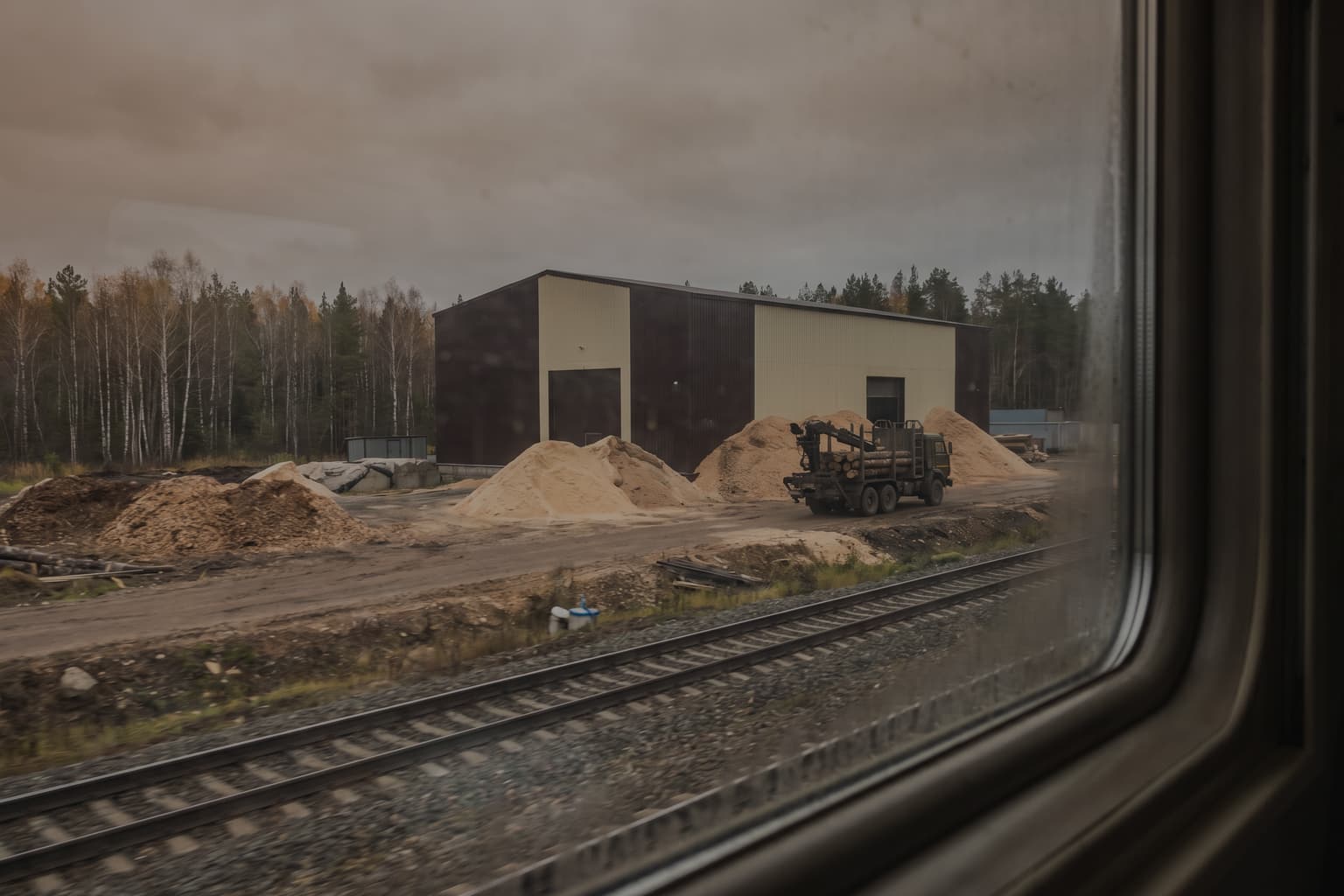
Shot in Kirov Oblast at a small sawmill. Raw material is pine and birch sawdust, 45% moisture when it enters the line. You’ll see the rotary drum dryer first — gas-fired, takes it down to 10%. Then a hammer mill (3mm screen), then two MZLH520 ring die wood pellet presses running side by side. Each pellet mill in Russia produces about 1.8 t/h. Die compression ratio is 1:5.5 for softwood.
The video shows the pellet flow into a counterflow cooler, then a vibrating screener. What you won’t see? Dust. We added a full cyclone system — that mill was a dust bomb before.
5T/H Alfalfa Pellet Production Line In Russia
A cooperative that grows alfalfa on 1,200 hectares. They used to sell baled hay — now they pelletize for the equine market. Watch the video: you’ll see round bales going into a bale breaker, then a hammer mill with a 4mm screen.
The core is a CZLH768 ring die pellet mill in Russia. Die compression is light — 1:4 — because alfalfa is heat-sensitive. Go above 75°C and protein denatures. The cooler you see at the end is a counterflow type running at low air speed to avoid blowing away fines. Also in frame: a de-stoner for field soil. Total alfalfa pellet production line in Russia cost them about $220,000.
10-15T/H Compound Feed Production Line In Russia
A commercial feed factory serving 30+ livestock farms. Raw material is corn, wheat, barley, soybean meal, plus premix. This isn’t just a pelletizer for sale Russia — it’s a full compound feed mill in Russia with batching, mixing, pelleting, crumbling, cooling, and bagging.
The video shows the SZLH508 pellet mill running at 12 t/h, 5mm die for cattle feed. Watch the conditioner right before the die — steam injection at 85°C. Also visible: a crumbler breaking pellets into smaller sizes for calves, then a screener separating fines. The control room panel is shown briefly — all automated.
3-4T/H Tofu Cat Litter Production Line In Russia
A startup making eco-friendly cat litter from okara (tofu residue). Weird material, good business. Raw material comes in wet (65% moisture). The video shows the dewatering screw first — squeezes water out. Then a rotary dryer down to 12%, then a fine grinder (0.8mm screen), then the MSZLH420 pellet mill in Russia. Die holes are 3.5mm.
What’s interesting in the clip: the pellets look soft and crumbly — that’s intentional for cat litter. No cooling tower needed because tofu fiber doesn’t hold heat long. The client later added a rotary screener to break longer pellets into uniform granules.
10T/H Biomass Drying System In Russia
This isn’t a pellet line — it’s what feeds one. Located in Rostov Oblast. The video shows a large three-pass rotary drum dryer fed by a biomass burner. What’s going in? Wet straw bales (35% moisture) and alfalfa bales (30% moisture). Outlet moisture is 12%, ready for any pellet mill in Russia downstream.
The system runs on the same material it dries — the burner eats dry straw. You’ll see the cyclone separator, the exhaust fan, and the discharge conveyor. The client runs this 16 hours a day during summer harvest. Without this dryer, their pellet manufacturing equipment in Russia would choke on wet material.

What Our Customers Say

We run a small wood pellet facility outside Tver — mostly pine and birch sawdust from local sawmills. The biggest headache was always moisture. Our old press kept jamming when sawdust went above 14%. We bought a CZLH520 pellet machine in Russia from this company, and honestly, the difference showed up on day one. They didn’t just ship the press. They sent a guy to help us adjust the dryer settings and dial in the die compression ratio for softwood (1:5 is what we settled on).
Now we run at 3 t/h consistently, even when incoming material hits 16% moisture. The pellets hold together, no cracks. What I appreciate most? They answered WhatsApp messages at 9PM Moscow time. That never happens with European suppliers.
Dmitry Volkov
Production manager, wood pellet plant, Tver Oblast

Which pellet sectors actually make sense in Russia right now
We’ve been shipping pellet machine in Russia for over a decade. In that time, we’ve seen some applications take off (wood pellets, feed, cat litter) and others stay niche (RDF, biochar). Below is our honest take on 15 different pellet sectors — not marketing hype, just what our Russian customers are actually doing and making money from. If you’re thinking about starting a pellet line, read this first. A pellet machine Russia can be profitable, but only if you match the equipment to the right raw material and market.
WOOD PELLET PRODUCTION
WOOD PELLET SOLUTION
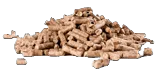
Russia has endless sawmill waste — pine, birch, aspen, larch. The challenge isn’t raw material, it’s moisture. Wet sawdust needs drying. But once you solve that, demand is steady. Local heating plants, greenhouses, and households all buy wood pellets. We’ve helped Russian customers set up MZLH lines from 1 t/h to 10 t/h. The key is matching the dryer size to your local climate. In Karelia, air is humid — drying takes longer. In Siberia, cold is the issue — we add insulation. We can design a complete wood pellet line that works in your region.

GRASS PELLET PRODUCTION
GRASS PELLET SOLUTION
Alfalfa and meadow grass pellets for horses, sheep, and rabbits. This works well in southern Russia where sun-curing is possible. No dryer needed if you bale at 14% moisture. The CZLH grass pellet mill runs cooler than standard machines — alfalfa protein denatures above 75°C. We’ve supplied CZLH lines to cooperatives in Krasnodar and Stavropol. They make green, high-protein pellets that horse owners pay a premium for. If you grow hay, this is worth looking at.


STRAW PELLET PRODUCTION
STRAW PELLET SOLUTION
Straw is everywhere — wheat, barley, rye. Two markets: fuel pellets (needs higher compression) and animal bedding (lower compression, softer pellets). Bedding pays better per ton but the market is smaller. We’ve sold MZLH straw pellet lines to farms across the South and Volga regions. The must-have addition is a force feeder — straw is fluffy and won’t gravity-feed. We also help customers choose the right die (1:3.5 for bedding, 1:5 for fuel). One machine, two dies, two products.


RUMINANT FEED PELLET PRODUCTION
CATTLE FEED PELLET SOLUTION
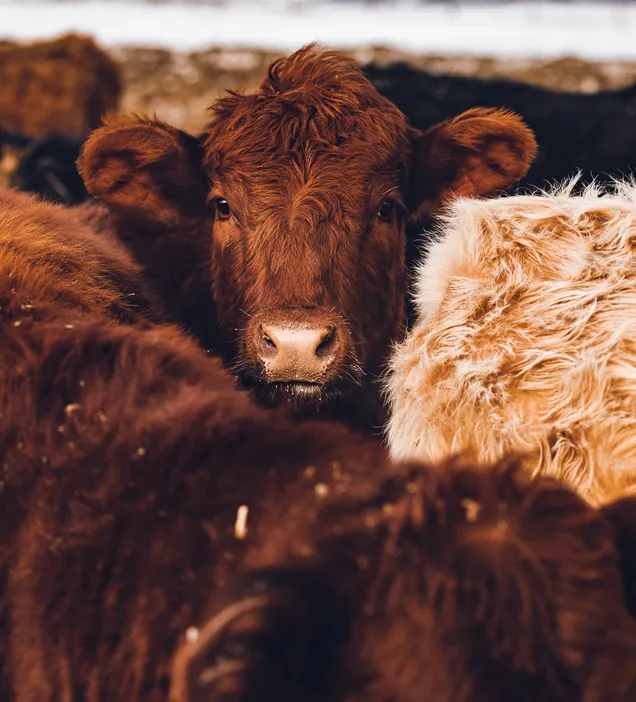
Russia’s beef and dairy sector is growing. Many farms now make their own feed pellets from barley, corn, wheat, and alfalfa. The SZLH feed mill uses a 1:5 die and a conditioner — steam improves pellet durability and kills pathogens. For sheep, use a smaller die (4mm). We’ve helped dairy farms in Voronezh and Tatarstan set up on-farm feed plants ranging from 2 t/h to 8 t/h. Most saw payback in under two years. If you’re buying commercial feed today, you should be making your own.

POULTRY FEED PELLET PRODUCTION
POULTRY FEED PELLET SOLUTION
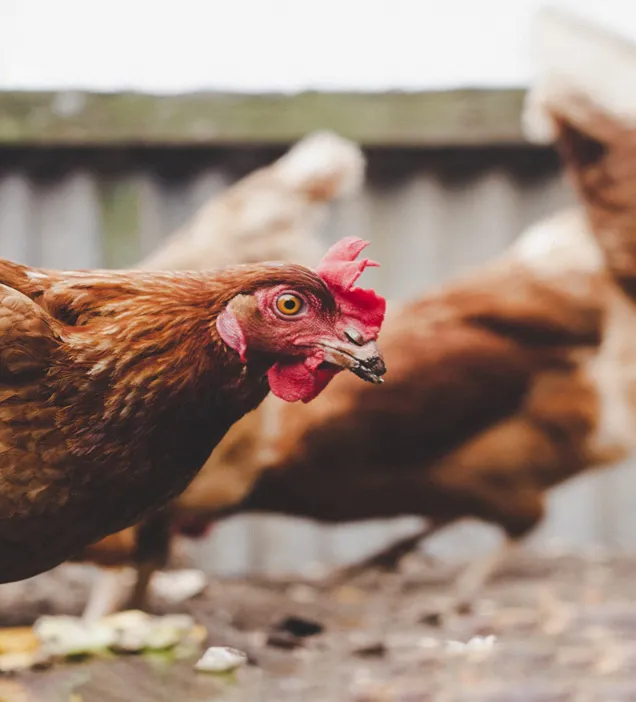
Poultry is Russia’s largest meat sector. Large integrators already have feed plants. But mid-size farms are switching to in-house production. A poultry feed line needs fine grinding (2-2.5mm screen) and a crumbler for chick starter feed. We’ve built SZLH-based lines for farms in Belgorod and Lipetsk. One customer with 300,000 birds now produces their own feed at 5 t/h. Their feed cost dropped by over 20%. If you’re a poultry farmer, the math is simple.

LIVESTOCK FEED PELLET PRODUCTION
LIVESTOCK FEED PELLET SOLUTION
Pig farms across Tver, Lipetsk, and Krasnodar are also moving to on-farm feed. Swine feed needs 3-4mm pellets, moderate compression (1:5), and a conditioner (80°C for 30 seconds to control pathogens). The same SZLH line that makes poultry feed can make swine feed — just change the die. We’ve helped pig farms from 2,000 head to 50,000 head set up their own feed production. The smaller farms often start with a 1-2 t/h line and expand later.


FERTILIZER PELLET PRODUCTION
FERTILIZER PELLET SOLUTION
Two segments. First, manure from large poultry and livestock operations. Chicken manure is a waste problem — pelleting turns it into revenue. The FZLH fertilizer pellet machine needs stainless steel (manure is corrosive) and a dryer. We’ve supplied FZLH lines to poultry farms in Tatarstan and Rostov. Second, NPK fertilizer blending and pelleting — a smaller market but growing. The same machine can handle both, with different dies and formulations.


FISH FEED PELLET PRODUCTION
FISH FEED PELLET SOLUTION
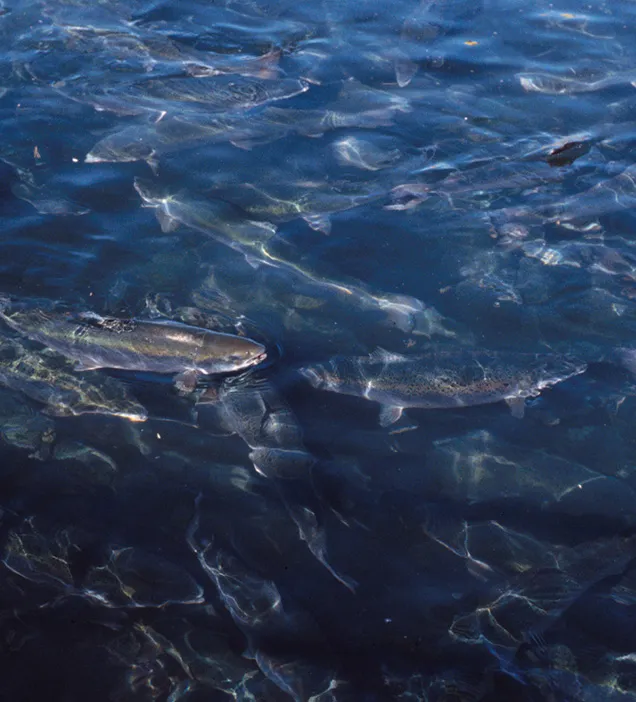
Aquaculture is small but growing — trout in Karelia, sturgeon in Astrakhan, carp in Krasnodar. Floating feed requires a twin-screw extruder (SPHS series), not a pellet mill. Sinking feed for sturgeon can use a standard SZLH pellet mill with high compression. Most Russian fish farms still import feed. Those who make their own save significantly. We’ve built extruder lines for farms in Murmansk and Leningrad. The key is the belt dryer after the extruder — gentle heat preserves oil content.

PET FOOD PELLET PRODUCTION
PET FOOD PELLET SOLUTION
Dog and cat kibble. This uses a twin-screw extruder with different die and knife configurations. The Russian pet food market has grown fast since 2022 — local producers filled gaps left by Western brands. Small to medium lines (300-1,000 kg/h) are the sweet spot. We’ve sold SPHS extruders to pet food startups in Moscow and Novosibirsk. The post-extrusion dryer is critical. We help customers select the right belt dryer length for their capacity.

cat litter PELLET PRODUCTION
cat litter PELLET SOLUTION
Two raw materials: wood (sawdust) and tofu (okara from tofu production). Wood cat litter uses a MZLH pellet mill with low compression (1:3.5) and 2.5-3mm die. Tofu cat litter needs a dryer (okara is 70% water), a fine grinder, and an MSZLH pellet mill with stainless steel. The cat litter market in Russia is growing — pet ownership is up, and consumers want eco-friendly products. We’ve helped three customers start cat litter lines in the last year. One uses hemp hurds, another uses okara, a third uses pine sawdust. Same machine family, different configurations.


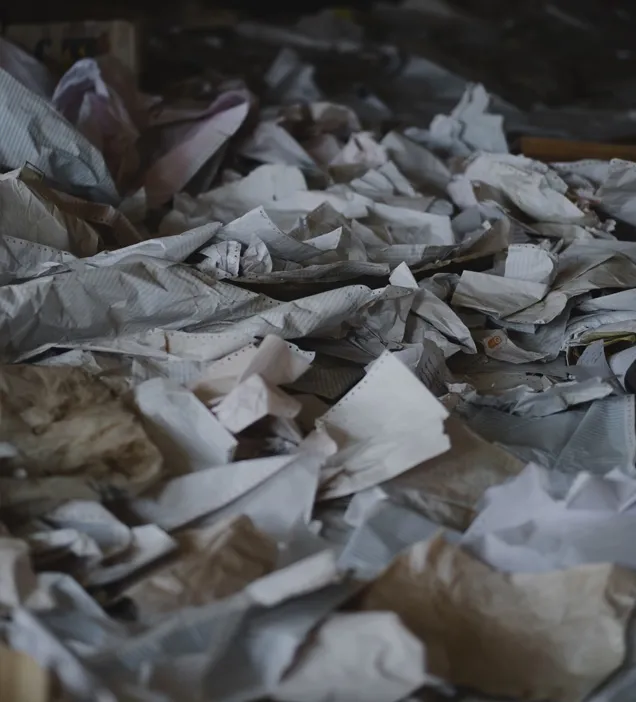
paper PELLET PRODUCTION
paper PELLET SOLUTION
Shredded waste paper can be pelletized into fuel pellets or soft bedding. Paper pellets create fine dust — good aspiration is essential. We’ve sold MZLH paper pellet lines to two Russian customers: one in Moscow recycling office paper into horse bedding, one in Nizhny Novgorod making fuel for a bakery’s boiler. Not a huge market, but if you have steady access to waste paper, it’s a low-cost raw material.

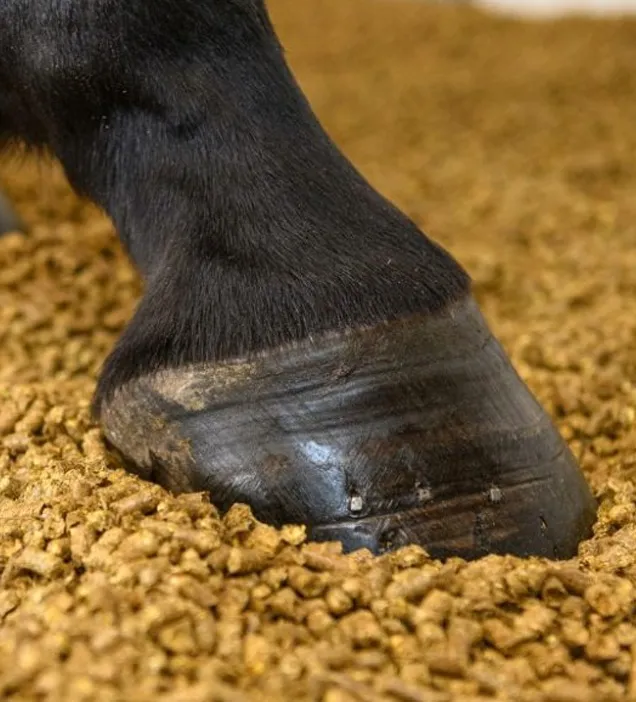
ANIMAL BEDDING PELLET PRODUCTION
ANIMAL BEDDING PELLET SOLUTION
Bedding pellets are lower density than fuel pellets, so they use less power. Market is stable — horse stables, cattle feedlots, small animal breeders all buy them. Sawdust bedding is the most common. We’ve supplied MZLH bedding lines to sawmills in Kirov and Vologda. The die is 1:3.5 compression, 6-8mm holes. One customer sells to 20 horse stables across their region. Price per ton is higher than fuel pellets.

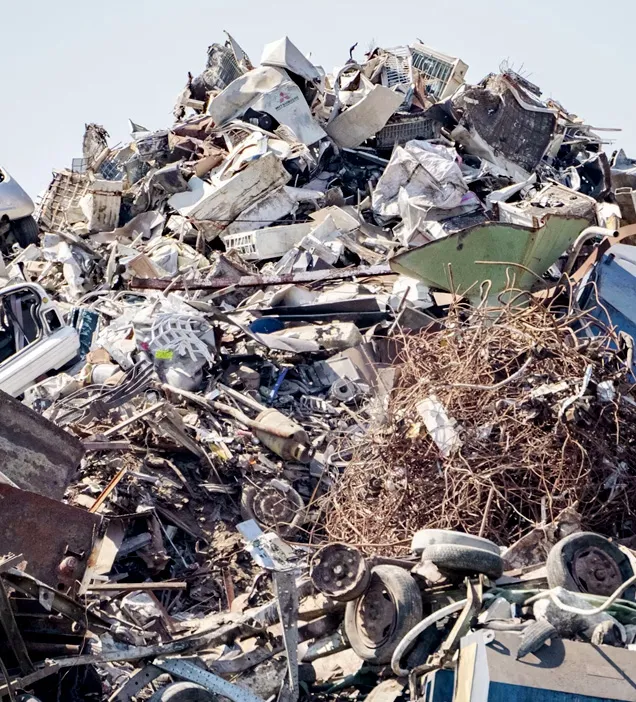
RDF PELLET PRODUCTION
RDF PELLET SOLUTION
This is advanced. RDF pellets require sorting, shredding, drying, and pelleting heterogeneous waste (plastic, paper, textiles, wood). Russia generates huge amounts of municipal waste, and landfill space is decreasing. But RDF plants are large investments. We’ve supplied equipment to one RDF project near Moscow. The MZLH can process RDF but needs heavy-duty construction and wear protection. This is for experienced operators with capital.

Raw grain puffing PRODUCTION
Raw grain puffing SOLUTION
Expanded grain (corn, wheat, barley) has higher digestibility for young animals. This uses a single-screw expander (EXP series), not a pellet mill. Some Russian feed mills add an expander before their pellet mill — expanded grain binds better and improves pellet durability. We’ve sold EXP expanders to feed plants in Voronezh and Krasnodar. Not a huge market, but a valuable add-on for feed mills making high-quality starter feed.


Pyrolytic carbon PELLET PRODUCTION
Pyrolytic carbon PELLET SOLUTION
Biochar from biomass can be pelletized for soil amendment or clean fuel. Russia has pyrolysis projects using logging residue, but it’s niche. We’ve supplied one biochar pelletizer to a research institute near Moscow. The market potential exists for carbon credits and soil health, but commercial scale is still early. We can do it, but we don’t recommend it as a first pellet project.


Rat poison PELLET PRODUCTION
Rat poison PELLET SOLUTION
Pellets containing poison for rats, mice, and slugs. Small specialty market. We have one Russian customer in Tatarstan using a small FZLH pellet mill with stainless steel (poisons are corrosive). Production is low volume — 200-500 kg/h. The pellets must be uniform and durable. Not a mass market, but for the right buyer it’s profitable and low competition. The pelletizing machine uses a closed system to prevent dust exposure.


solid waste PELLET PRODUCTION
solid waste PELLET SOLUTION
Includes industrial sludge, textile waste, rubber fines, construction wood. Some Russian companies are starting to pelletize waste for energy recovery. We’ve supplied an MZLH industrial waste mill to one customer in Sverdlovsk Oblast processing textile waste and plastic film. The machine needs heavy-duty knives and a force feeder. For experienced operators only.


What ships most to Russia — our hot equipment list
We don’t guess what sells in Russia. We look at the last 24 months of shipping records. Below is the gear that actually goes out the door — stuff that ends up in feed plants, pellet factories, and fertilizer lines from Kaliningrad to Kamchatka. Some of these are standalone units. Most are part of a larger pellet machine in Russia package we’ve designed. Read through each one. If you’re building a line, you’ll probably need half of these anyway.
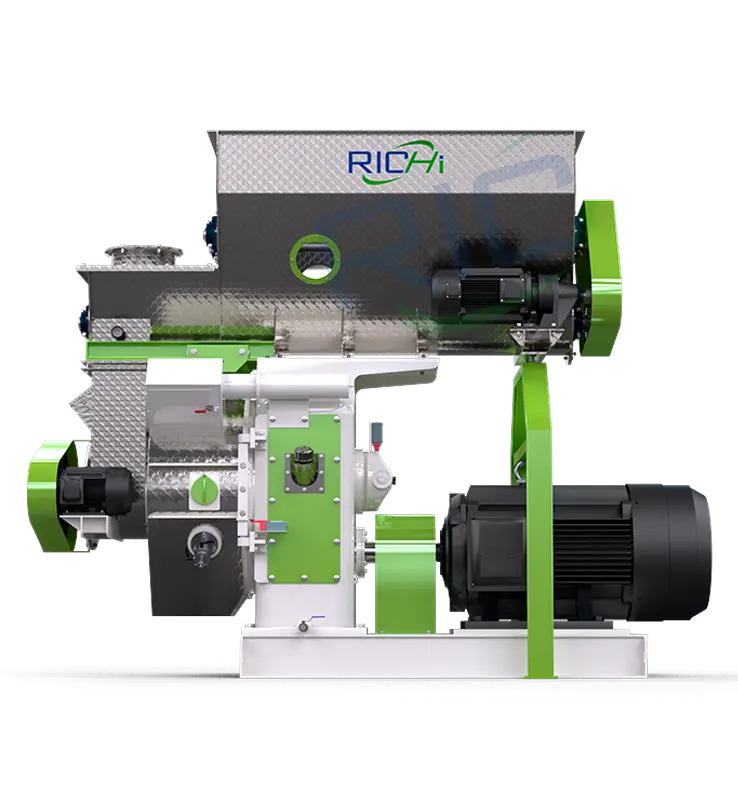
biomass pellet mill for sale
This is our workhorse. A ring die biomass pellet mill in Russia ends up processing everything from pine sawdust in Kirov to sunflower husks in Saratov. The most common application? Fuel pellets for industrial boilers. Russian mills love the MZLH series because it handles mixed ag residues — buckwheat husks, flax shives, even small amounts of bark. We ship spare rollers with every unit — Russian operators appreciate that.

grass pellet machine for sale
Alfalfa is the big one here. A grass pellet machine in Russia is almost always bought by a farm cooperative in Krasnodar or Stavropol. They process sun-cured alfalfa bales into 6mm or 8mm pellets for horse feed. Some run clover or meadow grass mixes. The challenge? Grass is heat-sensitive. Our CZLH series runs cooler (70-75°C die temp) so protein doesn’t denature.

feed mill pellet machine
Feed mills across Belgorod, Voronezh, and Kursk run our SZLH ring die feed pellet machine in Russia for cattle, pig, and poultry rations. Typical setup: corn, wheat, barley, plus protein meal. The SZLH508 does 10-12 t/h on a 5mm die. What Russian customers notice first? The gearbox doesn’t overheat during summer runs when ambient temps hit 35°C. We added an oversized cooling fan a few years back after a client complained. Now it’s standard. Also ships with a spare die — because Russian mills run seven days when feed prices are high.
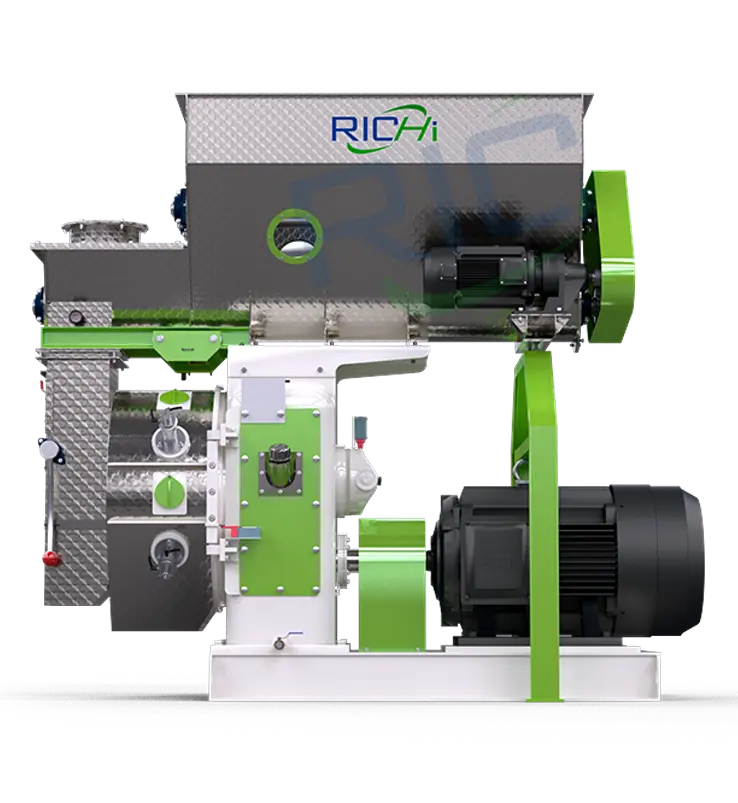
fertilizer granulator equipment
Organic fertilizer is growing fast. A fertilizer pellet mill in Russia from our FZLH series is usually paired with a dryer and a mixer. Raw material? Chicken litter from large poultry farms in Rostov or cow manure from dairy operations in Tatarstan. One client mixes 70% dried manure with 30% sunflower husk to add structure. Pellets go to greenhouse complexes and berry farms. Our contribution? We added a stainless steel die for corrosion resistance — manure is acidic and eats carbon steel within months.

twin screw extruder for sale
Floating fish feed is the main use. A twin-screw extruder in Russia goes to trout farms in Karelia or sturgeon operations in Astrakhan. Our SPHS series runs at 95-110°C barrel temperature with a 2.0-2.5mm die. The video we shot in Leningrad Oblast shows the puff right at the die face — that’s how you know expansion is correct. Unlike single screws, twin-screw handles higher oil inclusion (up to 18%). One client told us their feed stays afloat for 45 minutes. That’s longer than the Polish feed they used before.
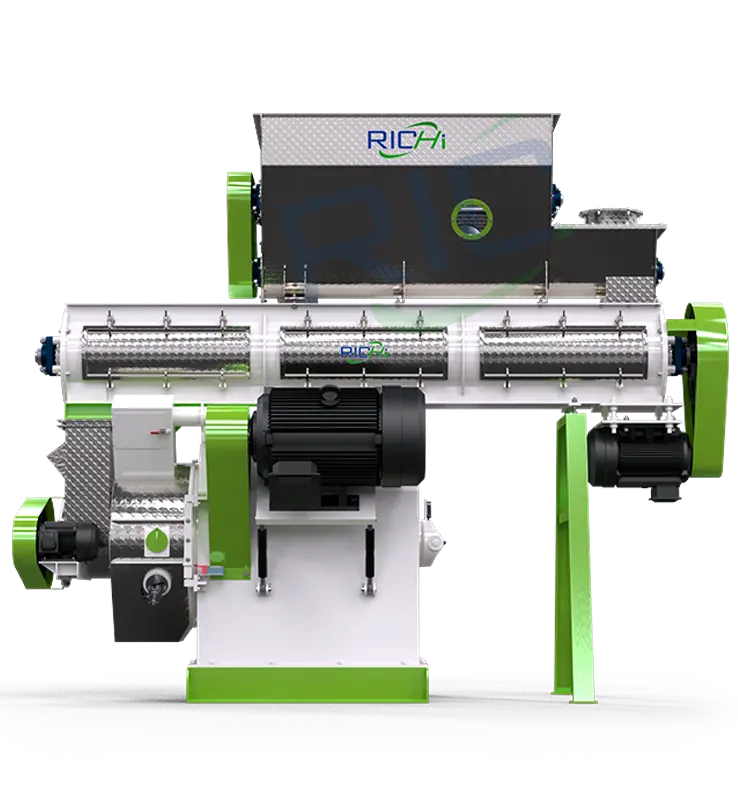
straw pellet machine for sale
Straw. Lots of it. A straw pellet machine in Russia is rarely for fuel — more often for animal bedding or roughage. Farms in Orenburg, Volgograd, and Altai Krai run our MZLH series on wheat or barley straw bales. The trick? Lower compression ratio (1:4 instead of 1:6). Too much density and the pellets don’t absorb urine well. We learned this from a client in Tver who switched from fuel spec to bedding spec. Now we ask every straw customer: “Fuel or bedding?” Two different dies. Same machine.

shrimp feed pellet machine
Shrimp farming is niche but growing in southern Russia — Krasnodar Krai has a handful of indoor RAS facilities. A shrimp feed pellet mill in Russia needs a small die (1.2-1.5mm) and slow die speed. Our SZLH320 with a 1:9 compression ratio does the job. Raw material is high-protein mix: fish meal, squid meal, soybean concentrate. The pellets need to sink slowly and hold shape in salt water for two hours. We added a vacuum coater for oil application after pelleting — shrimp need 8-10% oil coating or they reject the feed.

cat litter pellet machine
Cat litter is booming. A cat litter pellet mill in Russia from our CZLH or MSZLH series runs on two main materials: wood (pine or aspen) and tofu (okara). The wood litter client in Tver uses a 2.5mm die and fine grinding (0.6mm screen). The tofu litter client near Moscow uses a 3.5mm die with lower compression — soft pellets that break apart easily. Both say our machines run cleaner than the Italian presses they tested. Dust control matters for cat litter. We add extra aspiration to every unit going to pet product lines.
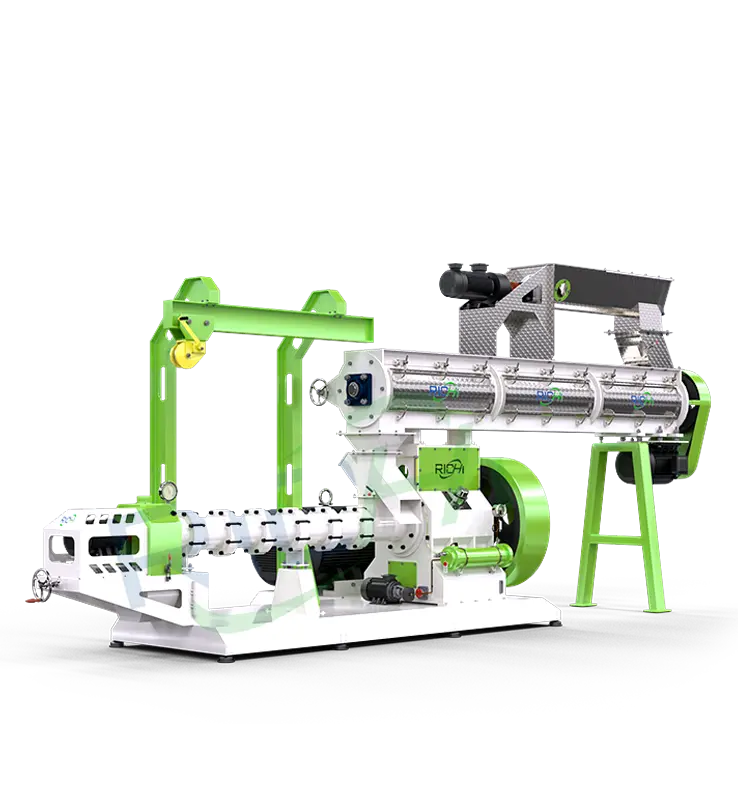
single screw extruder machine
Less common than twin-screw, but still ships. A single screw extruder in Russia is usually for textured vegetable protein (TVP) or simple floating feed with lower oil content. Our SPSC series is simpler, cheaper, and easier to maintain than twin-screw. Russian techs with basic mechanical training can change the screw and barrel themselves. That’s a selling point for remote locations where factory service is weeks away.

Grain extruder machine
Grain expanders for feed mills. A grain expander in Russia sits right before the pellet mill — it cooks and gelatinizes starch in corn, wheat, or barley at 120-140°C. Why? Expanded grain binds better and improves digestibility. A large feed plant in Voronezh added our EXP230 before their SZLH508. They saw pellet durability index (PDI) go from 92% to 96%. Also reduces fines. Russian feed mills in cold climates like expanders because they work fine even when incoming grain is slightly damp (up to 16%).
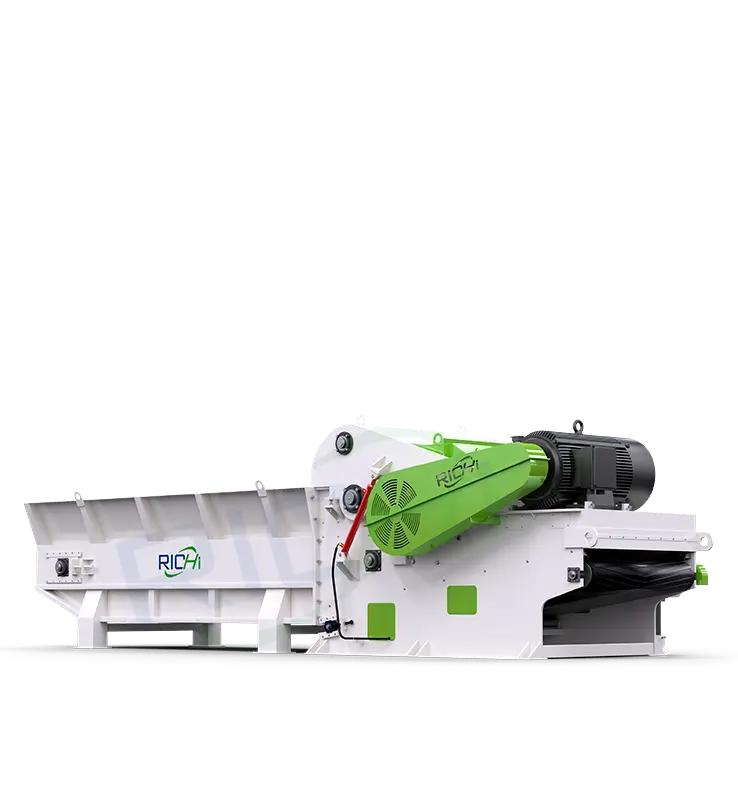
wood chipper machine
Log yards and sawmills need these. A wood chipper in Russia handles pine, birch, aspen, and larch — often frozen in winter. Our disk-type chipper produces 10-30mm chips for further grinding. One client in Karelia feeds their chipper directly from a log deck. Another in Kirov uses it to process mill waste into boiler fuel chips (not pellets — just chips). The heavy-duty rotor and reversible knives matter here. Russian logs contain rocks and nails sometimes. Our chipper doesn’t stop — the knives just chip the metal and keep going. We’ve seen it.

shredder machine
For difficult materials. A universal shredder in Russia processes root balls, pallets, demolition wood, even big round bales that won’t fit a standard bale breaker. Two-shaft, low-speed, high-torque. One client in Nizhny Novgorod uses theirs to shred greenhouse tomato stems — wet, tangled, full of strings. Output goes into a biomass pellet mill in Russia. Another in Samara shreds used pallets for animal bedding. The key feature? The hydraulic drive reverses automatically when it jams. Russian operators don’t have time to crawl into a shredder to clear it.

Wood Chip Dryer
Moisture is the enemy. A rotary drum dryer in Russia is almost always paired with a biomass pellet mill in Russia. Typical setup: wet sawdust (45-50%) in, 10-12% out. Three-pass design saves floor space. One client in Saratov dries sunflower husks from 18% down to 8% before pelleting. Another in Altai dries straw bales from 30% to 12%. The burner runs on the same material — dry husks or straw. No external fuel needed. Russian winters mean we add insulation and trace heating to the feed chute. Otherwise, wet material freezes before it enters.

bale crusher
Bale breakers. A bale shredder in Russia handles round bales (1.2m diameter) and square bales (up to 2.4m long). Alfalfa, straw, hay — all go through. One client in Krasnodar feeds round alfalfa bales directly into a breaker, then a hammer mill, then a grass pellet machine in Russia. The machine has to work on frozen bales in January. We upgraded the rotor with AR400 steel and added a variable-speed feed roller. Russian farms don’t have uniform bale density. Our breaker handles loose farm bales and tight export bales without adjusting.

hammer mill
The workhorse hammer mill. A drop-shaped hammer mill in Russia grinds grain for feed mills and wood chips for pellet lines. Our SFSP series covers both. The curved grinding chamber reduces recirculation — more efficient than round designs. One feed plant in Belgorod grinds 20 t/h of corn through a 3mm screen. Another in Kirov grinds pine chips to 1.5mm for a wood pellet mill in Russia. We ship with two screens (coarse and fine) because Russian customers always change their mind about particle size after the first run.

mesh belt dryer
Low-temperature drying. A belt dryer in Russia is for sensitive materials that can’t take rotary drum heat. Main customer? Fish feed plants. After extrusion, floating pellets are still 22-25% moisture. Belt dryer takes them down to 9% at 60-80°C — gentle enough to avoid fat migration. A trout feed line in Karelia runs our 3-meter-wide belt dryer with 5 layers. Also used for pet food (kibble) and dried vegetables. One client dries apple slices for snacking. Not our usual application, but it works. We just sell the dryer. What they do with it is up to them.

Feed mixer machine
Double-ribbon and paddle mixers. A mixer in Russia blends feed rations, fertilizer recipes, or litter additives. One feed plant in Voronezh mixes 2 tons per batch — grain, protein meal, minerals, and molasses. The molasses mixer has heated paddles (sticky stuff in winter). Another client in Bashkortostan mixes chicken manure with sunflower husk before pelleting in a fertilizer pellet mill in Russia. Our mixers have a liquid injection port and a clean-out door. Russian operators appreciate the door because they change recipes often and hate cross-contamination.

fertilizer crusher machine
Vertical cage mill for fertilizer. A vertical fertilizer crusher in Russia breaks down dried manure or compost into powder before pelleting. Dried chicken litter comes out of the dryer in chunks (10-50mm). The cage mill reduces it to under 2mm. One client in Rostov runs their FZLH350 pellet mill in Russia right after this crusher — no buffer bin. The vertical design self-discharges by gravity. No pneumatic conveying needed. Saves energy. Russian fertilizer producers like simple. This is simple.

grass straw crusher machine
Dedicated forage grinder. A straw or grass crusher in Russia is basically a hammer mill with a wider throat for fluffy material. Alfalfa, clover, wheat straw — all need to be reduced from bale form to 10-20mm before fine grinding. One cooperative in Stavropol feeds round alfalfa bales directly into our 9FQ series, then into a CZLH768 ring die pellet mill in Russia. The machine has a magnetic separator in the throat — field hay always contains wire and nails. We learned that from a returned machine five years ago. Now it’s standard.

vibrating screening machine
Vibrating screeners. A grading screen in Russia does two jobs: remove fines from finished pellets before bagging, and clean incoming grain of dirt and broken kernels. One wood pellet plant in Kirov uses a double-deck screener after the cooler — top deck removes oversize (broken pellets longer than 40mm), bottom deck removes dust. The middle product goes to bagging. Another feed plant in Voronezh uses a single-deck screener on incoming wheat. Removes stones and chaff. Simple equipment, but without it, pellet mill in Russia dies prematurely. Fines recirculate back to the press. Stones destroy rollers.

storage silos
Storage. A silo in Russia is either bolted steel (for dry materials indoors) or flat-bottom concrete (for outdoor grain storage). We supply small hopper bins (5-20m³) for pellet lines and large bolted silos (up to 500m³) for feed plants. One client in Altai stores 300 tons of sunflower husk pellets in two 150m³ silos before truck loading. The silos have aeration floors — pellets can heat up if moisture creeps above 12%. Another client in Tver stores pine sawdust in a 50m³ bin with a sweep auger. Russian winters mean we add insulation and cone heaters. Otherwise, material bridges and won’t discharge.
Frequently Asked Questions
Over the years of shipping to Russian customers, we’ve collected the same questions again and again — about raw materials you actually have, about capacities that make sense for your market, about voltage, about winter operation, about whether our gear can handle sunflower husks in Saratov or frozen alfalfa bales in Altai. Below are the most common ones. Read through. You’ll probably see your own situation in a few of them.
What are the specifications and prices of your different pellet machines shipped to Russia, and which one should I choose for my material?
+
We get this from Russian customers almost daily — especially first-time buyers who aren’t sure which pellet mill Russia actually needs for their specific raw material. Below is a breakdown of what we ship to feed mills, biomass plants, and fertilizer lines across the country. These aren’t every model we make, but they’re the ones that end up in containers bound for Novorossiysk and Vladivostok.
Before jumping to tables, here’s a quick rule of thumb from our installation records: Russian customers running commercial feed mills usually pick SZLH series. Wood and biomass? MZLH. Grass and alfalfa? CZLH. Cat litter and pet food? MSZLH. Fertilizer from manure or compost? FZLH. Same ring die principle, but different feeders, dies, and rpm ranges for each material.
Feed pellet mill in Russia – SZLH series
These go into commercial feed plants and large livestock operations. The numbers below are from actual shipments to Belgorod, Voronezh, and Krasnodar. Production rates assume corn-wheat-soy formulas at 12% moisture, 3-4mm die.
| Model | Power (kW) | Feeder (kW) | Conditioner (kW) | Die diam (mm) | Pellet (mm) | Output (T/H) |
|---|---|---|---|---|---|---|
| SZLH250 | 22 | 1.1 | 1.5 | 250 | 2~12 | 1.0-1.5 |
| SZLH320 | 37 | 1.5 | 4 | 320 | 2~12 | 3-4 |
| SZLH350 | 55 | 1.5 | 4 | 350 | 2~12 | 5-6 |
| SZLH420 | 110 | 1.5 | 7.5 | 420 | 2~12 | 10-12 |
| SZLH508 | 160 | 1.5 | 7.5 | 508 | 2~12 | 15-16 |
| SZLH558 | 185 | 1.5 | 11 | 558 | 2~12 | 20-22 |
| SZLH678 | 250 | 1.5 | 11 | 673 | 2~12 | 30-33 |
| SZLH768 | 315 | 2.2 | 11 | 762 | 2~12 | 38-40 |
Small animal feed pellet machine price in Russia – The SZLH250 is where many small farms start. Your cost of pellet machine in Russia at this size runs between $6,800 and $8,500 FOB, depending on whether you add a magnet or spare die. A few clients in Tver and Ryazan started with this model, then added a second line after one season.
For larger feed plants, a complete SZLH508 setup (including conditioner and feeder) typically lands in Moscow or St. Petersburg around $38,000 to $46,000 FOB. The feed pellet machine price in Russia goes up with automation — a PLC panel adds roughly $3,000.
Biomass pellet mill in Russia – MZLH series
Wood pellets. Sawdust, shavings, sunflower husks, buckwheat hulls. These MZLH units ship with an anti-arching feeder (important for fluffy sawdust) and a force feeder. Without the force feeder, light material like husks won’t drop into the die properly.
| Model | Power (kW) | Anti-arch (kW) | Force feeder (kW) | Die diam (mm) | Pellet (mm) | Output (T/H) |
|---|---|---|---|---|---|---|
| MZLH320 | 22 | 2.2 | 0.75 | 320 | 4~12 | 0.2-0.3 |
| MZLH350 | 37 | 2.2 | 0.75 | 350 | 4~12 | 0.3-0.5 |
| MZLH420 | 90 | 3 | 1.5 | 420 | 4~12 | 1.0-1.2 |
| MZLH520 | 132 | 3 | 1.5 | 520 | 4~12 | 1.5-2.0 |
| MZLH678 | 185 | 3 | 1.5 | 673 | 4~12 | 2.5-3.0 |
| MZLH768 | 250 | 4 | 1.5 | 762 | 4~12 | 3.0-4.0 |
Small wood pellet machine price in Russia – The MZLH320 is our entry-level biomass unit. A Russian customer buying this as a standalone pellet production machine in Russia pays about $13,500 to $17,000 FOB Qingdao. One client in Karelia runs theirs on dry pine sawdust from a local mill — makes about 200 kg/h, enough for their own boiler and some bagged sales.
Price of pellet machine in Russia for medium output (MZLH520, 1.5-2 t/h) typically ranges $41,000 to $50,000 FOB. That includes the force feeder and control cabinet. A few customers in Kirov and Vologda have paired two MZLH520 units side by side when they need 3-4 t/h but want redundancy.
Grass/alfalfa pellet mill in Russia – CZLH series
These go to farms and co-ops making horse feed or sheep pellets from alfalfa, clover, and meadow grass. The CZLH series includes a conditioner — important for grass because adding a little steam (not too much) helps binding without overheating the protein.
| Model | Power (kW) | Anti-arch (kW) | Conditioner (kW) | Force feeder (kW) | Die diam (mm) | Output (T/H) |
|---|---|---|---|---|---|---|
| CZLH320 | 22 | 2.2 | 4 | 0.75 | 320 | 0.5-0.6 |
| CZLH350 | 37 | 2.2 | 4 | 0.75 | 350 | 1.0-1.2 |
| CZLH420 | 90 | 3 | 7.5 | 1.5 | 420 | 1.8-2.0 |
| CZLH520 | 132 | 3 | 11 | 1.5 | 520 | 2.8-3.0 |
| CZLH678 | 185 | 3 | 11 | 1.5 | 673 | 4-5 |
| CZLH768 | 250 | 4 | 11 | 1.5 | 762 | 6-8 |
Small biomass pellet machine price in Russia for grass — the CZLH320 at 22kW runs about $17,500 to $22,000 FOB. One cooperative in Stavropol bought this model to pelletize their own alfalfa. They told us the cost of pellet machine in Russia paid back in eight months because they stopped buying imported horse pellets. That’s a real number.
For larger alfalfa operations (CZLH768, 6-8 t/h), price of pellet machine in Russia sits between $78,000 and $95,000 FOB depending on whether you add a spare die. Die cost for grass is lower than wood — grass isn’t abrasive — but Russian clients still buy spares because they run 16-hour days during summer harvest.
Cat litter pellet mill in Russia – MSZLH series
Cat litter is a growing market. MSZLH units are essentially feed-type pellet mills but with stainless steel contact parts and tighter die clearances. The tofu litter client near Moscow uses an MSZLH420. The wood litter client in Tver uses an MSZLH350.
| Model | Power (kW) | Feeder (kW) | Conditioner (kW) | Die diam (mm) | Pellet (mm) | Output (T/H) |
|---|---|---|---|---|---|---|
| MSZLH250 | 22 | 1.1 | 1.5 | 250 | 2~12 | 1.0-1.5 |
| MSZLH320 | 37 | 1.5 | 4 | 320 | 2~12 | 3-4 |
| MSZLH350 | 55 | 1.5 | 4 | 350 | 2~12 | 5-6 |
| MSZLH420 | 110 | 1.5 | 7.5 | 420 | 2~12 | 10-12 |
| MSZLH508 | 160 | 1.5 | 7.5 | 508 | 2~12 | 15-16 |
| MSZLH558 | 185 | 1.5 | 11 | 558 | 2~12 | 20-22 |
| MSZLH678 | 250 | 1.5 | 11 | 673 | 2~12 | 30-33 |
| MSZLH768 | 315 | 2.2 | 11 | 762 | 2~12 | 38-40 |
Cat litter pellet machine in Russia pricing is similar to feed mills, but with one difference: we add a rotary screener after the cooler to break long pellets. Without that, cat litter looks like short macaroni — not ideal for the litter box. Add about $4,000-$6,000 for the screener.
A small cat litter startup in Moscow Oblast bought an MSZLH250 (22kW) at roughly $7,000-$9,000 FOB. They grind pine to 0.6mm first, then pelletize at 2.5mm. Their product sells at a premium because it’s dust-free — something their local competitors struggle with.
Fertilizer pellet mill in Russia – FZLH series
Organic fertilizer from dried manure. These FZLH machines ship with anti-arching and force feeders because manure-based material likes to bridge in the hopper. Stainless steel dies are optional but recommended — bird manure is corrosive.
| Model | Power (kW) | Anti-arch (kW) | Force feeder (kW) | Die diam (mm) | Pellet (mm) | Output (T/H) |
|---|---|---|---|---|---|---|
| FZLH250 | 22 | 2.2 | 0.75 | 250 | 4~12 | 1-1.5 |
| FZLH320 | 22 | 2.2 | 0.75 | 320 | 4~12 | 2-3 |
| FZLH350 | 37 | 2.2 | 0.75 | 350 | 4~12 | 3-5 |
| FZLH420 | 90 | 3 | 1.5 | 420 | 4~12 | 6-8 |
| FZLH520 | 132 | 3 | 1.5 | 520 | 4~12 | 9-12 |
| FZLH678 | 185 | 3 | 1.5 | 673 | 4~12 | 18-22 |
| FZLH768 | 250 | 4 | 1.5 | 762 | 4~12 | 22-26 |
Small fertilizer pellet machine price in Russia for fertilizer — the FZLH250 runs about $6,500 to $9,000 FOB. One poultry farm in Rostov bought this to pelletize dried layer manure mixed with sunflower husk. Their cost of pellet machine in Russia was under $8,000. They sell the fertilizer pellets to local vegetable greenhouses at 12,000 RUB per ton.
For larger operations (FZLH678, 18-22 t/h), price of pellet machine in Russia ranges $60,000 to $75,000 FOB. That’s a serious industrial pellet mill in Russia — we’ve shipped three of these to Tatarstan for centralized manure processing facilities.
Summary for small machines – what Russian startups actually buy
We get asked constantly: “What’s the smallest, cheapest pellet machine Russia can use to start testing?”
Here’s real data from our last 12 months of sales to Russian first-time buyers:
- Small feed pellet machine price in Russia – SZLH250: $6,800 to $8,500. Makes 1-1.5 t/h of chicken or pig feed. Four units sold to farms in Tver and Ryazan last year.
- Small wood pellet machine price in Russia – MZLH320: $13,500 to $17,000. Makes 0.2-0.3 t/h of wood fuel pellets. Two sold to sawmills in Kirov.
- Small pellet machine price in Russia (grass) – CZLH320: $17,500 to $22,000. Makes 0.5-0.6 t/h of alfalfa pellets. Three sold to cooperatives in Krasnodar and Stavropol.
These small pellet machine price in Russia figures include the pelletizer, feeder, and control cabinet. They don’t include shipping to Russia (add $1,500-$3,000 depending on port) or import duties (Russian buyers handle that directly with their customs broker).
One important note
The tables above cover our main series. Not everything. We also make single-screw extruders for floating fish feed, twin-screw extruders for pet food, and specialty pelletizers for materials like spices, tea waste, and even used coffee grounds (yes, someone in Moscow asked for that last year).
The pellet machine in Russia you need depends entirely on:
- Your raw material (moisture, density, fiber length, oil content)
- Your target pellet size and durability
- Whether you need a dryer, cooler, screener, or bagging line ahead or behind the press
We’ve designed pellet plant in Russia configurations where the pellet press cost only 40% of the total line — the rest was drying, grinding, and conveying. Don’t assume the press is the expensive part. Sometimes the dryer costs more.
Want a real price for your material?
Tell us three things:
- Raw material type and moisture
- Target output per hour (tonnes)
- Final pellet use (feed, fuel, bedding, fertilizer, litter)
We’ll reply with:
- Recommended model and die spec
- FOB price range (real numbers, not marketing sheets)
- List of other equipment you’ll likely need (dryer? hammer mill? cooler?)
Send your inquiry through the form below. We answer within 48 hours — often faster if your raw material is unusual. Russian customers have asked us to quote for everything from frozen fish waste to flax shives. Nothing surprises us anymore.
What’s the complete price of a floating fish feed production line in Russia?
+
“We want to start making our own floating fish feed in Russia. Not just the extruder — the whole line: grinder, mixer, extruder, dryer, coater, cooler, bagging. What’s the real cost for a fish feed extruder in Russia when you buy everything needed to actually produce feed?”
You’re smart to ask about the whole line, not just the extruder. A lot of Russian fish farms call us saying “I saw an extruder for $15,000” — but that’s just the barrel and screw. No drier, no grinder, no fat coater. You can’t make floating feed with just an extruder. So below is what a complete floating fish feed machine in Russia actually costs, based on lines we’ve shipped to trout farms in Karelia, sturgeon operations in Astrakhan, and carp farms in Krasnodar.
These prices are FOB Qingdao. They include: hammer mill (for grinding raw materials), ribbon mixer, screw conveyor, single or twin-screw extruder, vertical or belt dryer, vacuum coater or drum coater, counterflow cooler, vibrating screener, and control panel. Also includes pipes, cables, and basic startup tools. Does NOT include installation (we provide drawings and remote support) or shipping to Russia (add $5,000–$15,000 depending on line size and port).
Single screw floating fish feed line – complete system
Single screw is simpler, cheaper, and works well for smaller trout or carp farms. Lower oil inclusion (max 6-8% fat before coating). Easier maintenance. Russian customers with existing mechanical staff usually prefer single screw for lines under 1 t/h.
| Capacity | Complete line price range (FOB) | Typical customer in Russia |
|---|---|---|
| 200-400 kg/h | $60,000 – $80,000 | Small trout farm in Leningrad Oblast. One client runs this on fish meal, wheat, soybean meal. Produces 2mm floating pellets for fingerlings. |
| 500-600 kg/h | $70,000 – $100,000 | Mid-size carp farm in Krasnodar. Their line includes a 3m belt dryer — critical because floating feed needs moisture down to 9%. Without proper drying, pellets sink within minutes. |
| 800-1000 kg/h | $130,000 – $170,000 | Large trout operation in Karelia. They added a second mixer for vitamin premix. The extruder runs 18 hours a day in summer. They told us the pellet machine in Russia paid back in 11 months. |
What’s included in these single screw prices:
- SFSP hammer mill (2mm screen for fish feed — important)
- SLHY ribbon mixer (500kg batch for small lines, 1,000kg for larger)
- SPSC single screw extruder with 2.0-2.5mm die plates
- 2-5 layer fish feed dryer machine(length depends on capacity)
- Drum coater for oil spraying (trout feed needs 8-12% added fat)
- SKLN counterflow cooler
- SFJZ vibrating screener
- Control cabinet with basic PLC
One note: single screw struggles with high-fat recipes. If your formula has more than 8% oil before extrusion, go twin screw. Otherwise the screw slips inside the barrel.
Twin screw floating fish feed line – complete system
Twin screw handles higher oil (up to 18% before coating), better expansion control, and works for shrimp and sturgeon feed (smaller pellets, 1.0-1.5mm). Costs more. But Russian customers who switch from single to twin screw usually see better feed conversion ratios — the pellets stay afloat longer and leach less oil.
| Capacity | Complete line price range (FOB) | Typical customer in Russia |
|---|---|---|
| 0.5-1.0 t/h | $150,000 – $200,000 | A sturgeon farm in Astrakhan bought this line. Their feed needs to sink slowly (not float) — different die design. Same extruder, different die plate and screw profile. |
| 1.5-2.0 t/h | $440,000 – $560,000 | Large trout producer in Murmansk region. They use a 5-layer belt dryer and a vacuum coater. Their floating feed stays up for 2 hours — they tested it against Norwegian feed and matched performance. |
| 3.0-4.0 t/h | $530,000 – $650,000 | This line went to a feed factory in Voronezh that supplies multiple fish farms. Includes a post-extruder drier stack (two belt dryers in series) and a fat coating system with weighing bins. |
| 5.0-6.0 t/h | $670,000 – $840,000 | One of the largest private fish feed plants in southern Russia. Twin screw with high torque gearbox. They run corn, fish meal, soy concentrate, and wheat. Output is 5.5 t/h consistently. |
| 8.0-10.0 t/h | $880,000 – $1,200,000 | Industrial scale. Only two Russian customers have this size — both are commercial feed manufacturers, not fish farms. Includes automated batching system, steam boiler, and bagging silos. |
What’s included in twin screw prices (everything above plus):
- Larger hammer mill with two grinding chambers
- Paddle mixer with liquid injection port
- SPHS series twin-screw extruder with replaceable barrel liners
- 6-8 layer belt dryer (longer drying time needed for high-oil feeds)
- Vacuum coater (penetrates oil deeper than drum coaters)
- Automated control system with recipe storage
- Spare screw elements and die plates (one set included)
A real example from a Russian customer
A trout farm in Leningrad Oblast called us in 2022. They were buying floating feed from Poland at $950 per ton. Freight costs kept going up. They decided to build their own line. We designed a 500 kg/h single screw complete system. Total investment: about $88,000 FOB plus shipping. Their raw material costs run around $550 per ton (fish meal, wheat, soy, vitamins). They produce about 800 tons per year. Their annual savings vs. imported feed? Roughly $200,000. Paid back the equipment in five months. That’s not marketing talk — that’s their actual number.
Now they’re looking at a second line to double capacity.
Important: These are whole-line prices, not just the extruder
When Russian customers search for “floating fish feed machine in Russia” or “fish feed extruder in Russia”, they often find cheap extruders listed for $15,000-$25,000. Those are just the extrusion barrel. No grinder. No dryer. No coater. Without a belt dryer, your floating feed comes out at 22-25% moisture and will mold in the bag within two weeks. Without a hammer mill, you can’t grind fish meal or grain to 0.8mm — and without fine grinding, pellets won’t expand properly.
The prices above are for turnkey floating fish feed production lines. Everything from whole grain or fish meal in, to bagged floating feed out.
What’s not included in these prices
- Shipping to Russian ports (St. Petersburg, Novorossiysk, Vladivostok) – add 8-12% of equipment cost
- Russian import duties and VAT (your customs broker handles this)
- Onsite installation (we provide detailed drawings and video support; local labor is cheaper than sending our technicians)
- Building modifications or foundation work
- Steam boiler (for twin screw lines above 2 t/h — add $15,000-$30,000)
One more thing — we also make pellet machine in Russia for other feeds
The same Russian customers who buy fish feed extruders often also need feed mills for poultry, pig, or cattle rations. That’s a different machine — ring die pellet mill in Russia, not an extruder. We make both. If you’re a diversified farm, we can supply a pellet plant in Russia that handles both extruded floating feed and pelleted sinking feed on the same site.
The above covers our main floating feed line configurations
Not every possible size is listed. We’ve built lines as small as 100 kg/h for research stations and as large as 15 t/h for commercial feed factories in Russia. Every line is customized to your:
- Target fish species (trout vs. carp vs. sturgeon require different pellet density and oil levels)
- Raw material availability (some Russian customers use more wheat because fish meal is expensive)
- Local climate (dryers need different specs in humid Krasnodar vs. dry Astrakhan)
These factors change the equipment list and the final price. The ranges above are real — from actual invoices to Russian customers in 2023-2025. But your line might cost more if you need stainless steel for corrosive ingredients, or less if you skip the vacuum coater and use a drum coater instead.
Want an actual quote for your capacity and species?
Tell us:
- Target capacity (kg/h or t/h)
- Fish species (trout, carp, sturgeon, salmon, tilapia, catfish)
- Floating or sinking?
- Available raw materials (do you have your own fish meal? buying it?)
We’ll send back:
- Equipment list with model numbers
- Line layout drawing
- FOB price (real number, not a range)
- Shipping estimate to your nearest Russian port
Use the form below. We usually reply within two business days — faster if your project is urgent. Russian fish farms are expanding, and we’ve already helped six of them switch from imported feed to their own production. You could be next.
What does a complete feed pellet production line actually cost in Russia?
+
“We’re looking at building a feed mill factory in Russia — something that can process grain into pellets for our own livestock or for sale. But we keep seeing wildly different prices online. What’s the real cost of a feed pellet production line in Russia from a small farm setup to an industrial automated feed production system in Russia?”
The short answer: anywhere from $13,000 for a basic flat die farm setup to over $1,000,000 for a fully automated feed plant. But those two systems look completely different. One fits in a barn corner. The other needs a dedicated building, silos, and a control room.
Below is what we’ve actually quoted and shipped to Russian customers over the last two years — from small farms in Tver to large commercial feed factories in Belgorod and Voronezh. These are complete line prices, not just the pellet machine in Russia. Every price is FOB Qingdao. Every range is real — the low end is basic automation, the high end includes more pre-cleaning, batching, and bagging equipment.
Small capacity lines – flat die systems for farms
These go to small livestock operations. Flat die pellet mills are simpler, cheaper, and easier to maintain than ring die. The trade-off? Lower output and shorter die life. But for a farm making feed for their own 500-1,000 pigs or 5,000-10,000 chickens, flat die works fine.
What’s included in the flat die line:
- Hammer mill (grinds corn, wheat, barley)
- Horizontal ribbon mixer (batch mixing)
- Flat die pellet machine (produces both mash and pellets)
- Basic control panel
- No cooler (pellets air-dry on a tarp — Russian farm style)
- No bagging scale (they fill bags manually)
These are complete livestock feed processing plant in Russia for small farms. We’ve shipped about 30 of these setups since 2022.
| Configuration | Price (FOB) | Who bought this in Russia |
|---|---|---|
| 1 t/h mash + 0.2-0.3 t/h pellets | $12,500 – $15,000 | Small pig farm in Tver Oblast. They make mash for grower pigs and pellets for weaners. |
| 1 t/h mash + 0.5-0.6 t/h pellets | $13,500 – $16,500 | Mixed farm in Ryazan with 200 cattle and 500 pigs. They wanted more pellet capacity for calf feed. |
| 1 t/h mash + 0.8-1.0 t/h pellets | $14,500 – $17,500 | Poultry operation in Lipetsk. They pelletize layer feed — less waste than mash. |
One customer in Tver told us their feed pellet production line in Russia cost them under $15,000. They saved about $8,000 per month on purchased feed. Payback was under two months. That’s a real number from a real farm.
Medium to large capacity – ring die systems for feed mills
Once you go above 1 t/h of pellets, flat die doesn’t cut it anymore. Ring die pellet mills are more efficient, last longer, and produce better quality pellets. These are what Russian commercial feed mills use.
What’s included in a basic ring die line (lower end of range):
- Hammer mill with cyclone
- Single ribbon mixer (1-2 tons per batch)
- SZLH ring die pellet mill (model depends on capacity)
- Counterflow cooler
- Vibrating screener
- Manual bagging station
- Basic electrical panel (manual start/stop)
What’s included in a deluxe ring die line (higher end of range):
- Weighing system with load cells on bins
- Double ribbon mixer or paddle mixer
- Pre-cleaning screener for incoming grain
- Micro-dosing system for premix and minerals
- Pellet crumbler (for making smaller pellets for young animals)
- Automatic bagging scale with sewing system
- PLC control with touch screen (automated feed production system in Russia)
- Dust collection system
The price difference between low and high ends of the same capacity is real. We’ve quoted both to Russian customers. Some want automation. Some prefer to hire two more workers instead of paying for a PLC.
| Capacity | Price range (FOB) | What determines the spread |
|---|---|---|
| 1-2 t/h | $30,000 – $60,000 | Low end: no batching scale, manual bagging. High end: pneumatic conveying, automatic oil sprayer. |
| 3-4 t/h | $60,000 – $200,000 | Wide spread because some 3 t/h lines use a SZLH350 (economical), others use a SZLH420 with conditioner and longer cooler. |
| 5-6 t/h | $80,000 – $250,000 | High end includes a crumbler and a second mixer for continuous operation. |
| 10 t/h | $170,000 – $320,000 | A 10 t/h ring die pellet mill in Russia at the low end is basic. At the high end, add a pre-grinding hammer mill, post-pellet screener, and automatic bagging. |
| 15 t/h | $240,000 – $400,000 | One Voronezh customer paid $380,000 for a 15 t/h line with full automation and a 50-ton holding bin. |
| 20 t/h | $440,000 – $600,000 | At 20 t/h, you need a SZLH678 or SZLH768. Die costs go up. High end includes a second pellet mill (two SZLH508 units running parallel for redundancy). |
| 30 t/h | $600,000 – $700,000 | This is a serious feed factory in Russia. Multiple mixers, automated batching, bulk loadout system. |
| 40 t/h | $700,000 – $800,000 | Usually includes steam conditioning system (boiler not included — add $30,000-$50,000). |
| 60 t/h | $1,000,000 – $1,200,000 | Only two Russian customers at this scale. Both are large commercial feed producers supplying multiple regions. |
| Up to 120 t/h | Quote based on engineering | At this scale, we design the feed plant in Russia from scratch. No off-the-shelf. Needs site visit. |
A real Russian example at each scale
Small farm (1 t/h mash + 0.5 t/h pellets):
Farmer outside Krasnodar. Bought flat die line for $14,800. Makes feed for 800 pigs. Told us their feed cost dropped from 32 RUB/kg to 19 RUB/kg. Line paid for itself in 4 months.
Medium feed mill (5 t/h pellets):
Cooperative in Belgorod Oblast. Bought ring die line for $210,000 (higher end includes automatic bagging). They supply feed to 15 local farms. Running 16 hours/day, 6 days/week. Replaced imported feed. Their members save about 15 million RUB per year.
Large feed factory (20 t/h pellets):
Commercial feed manufacturer in Voronezh. Paid $520,000 for a fully automated feed production system in Russia with two SZLH508 pellet mills, three mixers, and a 500-ton grain receiving pit. Their output goes to poultry farms across three regions.
What’s not included in any of these prices
- Shipping to Russia (add 10-15% of equipment cost depending on port)
- Russian import duties (typically 0-5% for feed equipment, but check current rates)
- VAT (your customs broker handles this)
- Installation labor (we provide drawings and remote support; local contractors are cheaper)
- Building, foundations, or steel structure
- Generator (some Russian rural areas have unstable power — we can supply one, just ask)
The above covers our main feed pellet line configurations
Not every possible size or configuration is listed. We’ve built lines as small as 0.5 t/h (a single farmer in a garage) and as large as 120 t/h (an industrial feed preparation plant in Russia with rail receiving and bulk truck loading).
All of the above can be customized. The same feed pellet production line in Russia can be built with different material handling (screw vs. bucket elevator), different automation levels (manual vs. PLC), and different post-pelleting equipment (bagging vs. bulk).
These prices are references based on actual 2023-2025 shipments to Russian customers. Your line might cost less if you already have a hammer mill. Or more if you need stainless steel for corrosive ingredients like fish meal or molasses.
Want a real quote for your capacity and raw materials?
Tell us:
- Target capacity (t/h of final pellets)
- Animal type (pigs, chickens, cattle, rabbits, or mixed)
- Raw materials you have access to (corn, wheat, barley, sunflower meal, etc.)
- Do you need mash feed only, or pellets only, or both?
- Automation preference (manual start/stop, semi-auto, or full PLC)
We’ll reply with:
- Recommended equipment list and flow diagram
- FOB price range (narrowed down based on your actual needs)
- Shipping estimate to your nearest Russian port
- Timeline from order to shipping (usually 45-75 days for complete line)
Use the form below. We answer within 48 hours — and we’ve already helped over 60 Russian customers build feed mills. Your project is not too small or too big. We’ve done both.
What’s the cost of a grass and straw crusher in Russia that can handle bales, hay, and dry forage?
+
Good question. And we get variants of this from Russian customers almost weekly — from farms in Altai Krai to feed mills in Voronezh. The short version: a proper straw hammer mill in Russia that can take chopped bales (under 5cm) and turn them into powder will run you somewhere between $5,000 and $35,000 USD FOB Qingdao, depending on how many tons per hour you need and how fine you want the grind.
Below is what we’ve actually shipped to Russian customers over the last two years. These are our SFSP series drop-shaped hammer mills — the same ones used in feed mills and pellet plants across Belgorod, Krasnodar, and Tatarstan.
Why Russian customers keep buying these SFSP mills
The SFSP series has two things Russian operators care about:
First, the drop-shaped grinding chamber reduces material recirculation — more efficient than old round designs. Second, the rotor is balanced for 2980 rpm continuous operation. We’ve seen these run 18 hours a day on frozen straw bales in a Kirov winter. No issues.
These are not straw chipping machine in Russia units that just chop into small pieces. They grind down to powder. By changing the screen (sieve), you can go from 0.5mm powder (for fish feed or cat litter) up to 20mm coarse grinds (for cattle roughage or bedding). That flexibility matters to Russian farmers who switch between applications.
SFSP series straw crusher machine in Russia — models, capacities, and price ranges
All models below are for dry material (moisture under 18%). Wet straw or green grass needs a different setup — add a bale breaker or silage chopper in front. The capacities shown are for wheat or barley straw, chopped to <5cm before entering the hammer mill. Hay (alfalfa, clover) will run about 20-30% higher capacity because it’s less dense.
| Model | Rotor dia (mm) | Width (mm) | Power (kW) | Straw output (T/H) | Price range (FOB USD) |
|---|---|---|---|---|---|
| SFSP56x40 | 560 | 400 | 37 | 0.8-1.0 | $5,000 – $7,500 |
| SFSP66x60 | 660 | 600 | 55 | 1.0-1.5 | $7,500 – $12,000 |
| SFSP66x80 | 660 | 800 | 75 | 2.0-2.5 | $10,000 – $16,000 |
| SFSP66x100 | 660 | 1000 | 90-110 | 3.0-4.0 | $14,000 – $22,000 |
| SFSP66x120 | 660 | 1200 | 132-160 | 5.0-6.0 | $18,000 – $28,000 |
| SFSP66x150 | 660 | 1500 | 185-220 | 7.0-8.0 | $24,000 – $35,000 |
Important notes on these ranges:
- Lower end of each range: basic hammer mill with one screen (say, 4mm) and standard hammers
- Higher end: includes spare screens (two different hole sizes), heavy-duty hammers (for abrasive materials like sunflower stalks), magnetic separator in the feed chute, and a cyclone discharge instead of a simple outlet
- These are FOB Qingdao prices. Shipping to St. Petersburg or Novorossiysk adds roughly 10-15% depending on container size
Which Russian customers buy which model?
SFSP56x40 ($5,000-$7,500) – A small dairy farm in Tver Oblast bought this. They grind wheat straw into 6mm particles for cow roughage. Output is about 0.9 t/h. Their total cost for a straw crusher machine in Russia at this size was just over $6,000. They told us it paid for itself in one winter because they stopped buying chopped straw from a reseller.
SFSP66x60 ($7,500-$12,000) – A horse boarding facility outside Moscow. They grind alfalfa hay into 3mm powder to mix with grain for senior horse feed. They run about 1.2 t/h. A hay grinding mill in Russia at this capacity is common for medium-sized equine operations.
SFSP66x80 ($10,000-$16,000) – A pig farm in Belgorod Oblast. They grind straw and sunflower husks into 2mm meal to mix into grower rations (fiber source). Output around 2.2 t/h. They also use the same machine to grind corn cobs in autumn. Swapping screens takes about 10 minutes.
SFSP66x100 ($14,000-$22,000) – A feed mill in Voronezh. This is their pre-grinding hammer mill for a 10 t/h pellet line. Straw and alfalfa bales get ground to 4mm before going into the mixer. They run this SFSP66x100 for 14 hours a day, six days a week. The only maintenance in two years? New hammers once and a bearing replacement. That’s it.
SFSP66x120 ($18,000-$28,000) – A large pellet plant in Altai Krai. They grind straw bales and flax shives for a biomass pellet line. Output is about 5.5 t/h of 3mm material. This is a serious grass chopper machine for sale Russia at the commercial scale.
SFSP66x150 ($24,000-$35,000) – Only two customers at this size in Russia. Both are industrial feed mill engineerings making over 30 t/h of finished feed. One in Krasnodar, one in Tatarstan. These machines are heavy — over 4 tons. They come with two motors (185kW or 220kW). A straw chipping machine in Russia at this scale is basically a small industrial plant by itself.
A practical detail Russian customers appreciate
All SFSP models above run at 2980 rpm. Hammer tip speed is 88-103 m/s depending on rotor diameter. That’s fast enough to powder dry straw but not so fast that alfalfa (which is heat-sensitive) burns or discolors. We learned this from a customer in Stavropol who tried running alfalfa through a 4000 rpm wood grinder. Came out brown and smelled scorched. The SFSP runs cooler because of the larger rotor diameter and the drop-shaped chamber design.
What else do you need to know about straw crusher machine in Russia pricing?
The prices above are for the hammer mill only — not the feeder or the bale breaker in front. Most Russian customers feeding square or round bales need a bale breaker or a chopper before the hammer mill. Bales at 15% moisture won’t feed evenly into a hammer mill without pre-chopping.
Add about $3,000-$8,000 for a simple bale breaker (for dry bales, 1-2 t/h). Add $8,000-$15,000 for a heavy-duty shredder for frozen or wet bales.
Also, if you’re grinding green grass or silage (over 25% moisture), you need a different machine entirely — a wet crop chopper or a silage hammer mill with moisture-resistant bearings. That’s not the SFSP series. Ask us separately for that.
What’s included in these price ranges
- The hammer mill with motor (380V, 50Hz — standard for Russia)
- One set of hammers (24-48 hammers depending on width)
- One screen (your choice of hole size, from 0.8mm to 20mm)
- Basic frame and discharge outlet
- Operating manual in Russian (we have a good translator now — took a few tries but it’s right)
Not included:
- Shipping to Russia (add 10-12%)
- Import duties (typically 0% for agricultural processing equipment, but check with your broker)
- Bale breaker, cyclone, air conveyor, or dust collection (we can supply all of these — just ask)
- Installation (we provide drawings; local labor is cheaper)
The above covers our main SFSP hammer mill range
These are not the only straw crusher and grass chopper machines we offer. We also make:
- Vertical feed mixers with built-in grinders (for smaller farms)
- Tub grinders for round bales (if you don’t want to pre-chop)
- Double-stage hammer mills for ultra-fine grinding (0.3mm for fish feed)
But the SFSP series above is what we ship most to Russia because it’s reliable, parts are easy to replace, and Russian technicians already know how to maintain them — hammers flip, screens swap, bearings grease. Simple.
All of these can be customized. Need a magnet in the feed chute? Add $800. Need a heavier rotor for abrasive materials (like sunflower stalks or flax shives)? Add $1,500-$2,500 depending on model. Need a remote start/stop panel? We can do that too.
Want a real quote for your straw and grass grinding needs?
Tell us:
- What material (wheat straw, barley straw, alfalfa hay, clover, mixed grass, sunflower stalks, etc.)
- Moisture content (dry bales under 18%, or wet green material?)
- Target output per hour (tonnes)
- Final particle size needed (0.5mm powder for pelleting? 6mm for cattle roughage? 15mm for bedding?)
- Do you already have a bale breaker, or do you need one from us?
We’ll reply with:
- Recommended SFSP model and screen size
- FOB price range narrowed to your actual needs
- Shipping estimate to your nearest Russian port
- List of optional add-ons (spare screens, extra hammers, magnet, cyclone)
What’s the real cost of a wood biomass pellet line in Russia that can run on sawdust, logging waste, or agricultural residues?
+
Anywhere from $20,000 for a tiny farm-scale setup to over $2,000,000 for an industrial complete biomass pellet plant in Russia doing 20+ tons per hour. But here’s the thing we tell every Russian customer who calls — the price spread at each capacity is huge because “complete line” means different things. A 1 t/h line with no dryer (sawdust already dry) costs a fraction of a 1 t/h line with a rotary drum dryer and a cyclone. Same output. Very different equipment list.
Below are real FOB price ranges from quotes we’ve sent to Russian customers over the last two years — from a small farm in Kirov making bedding pellets to a large exporter in Krasnodar producing industrial fuel pellets. Every line includes a pellet machine in Russia (MZLH series, ring die), hammer mill, cooler, screener, and basic conveyors. The price difference within each range comes down to: dryer or no dryer, automation level, bagging system, and material handling (screw vs. belt vs. pneumatic).
Complete biomass pellet line prices — real ranges from Russian shipments
| Capacity (T/H) | FOB price range (USD) | What typically determines the spread |
|---|---|---|
| 0.2-0.3 | $20,000 – $140,000 | Low end: flat die or small ring die, manual bagging, no dryer. High end: small MZLH320 with force feeder, basic cooler, and a hammer mill. |
| 0.3-0.5 | $28,000 – $160,000 | A farm in Tver bought the low end for sawdust bedding pellets. A startup near Moscow bought the high end with a small dryer for wet shavings. |
| 1.0-1.2 | $39,000 – $220,000 | Low end: dry sawdust only, simple cyclone. High end: includes rotary dryer (gas or biomass burner), magnetic separator, and a bagging scale. |
| 1.5-2.0 | $56,000 – $270,000 | One customer in Karelia paid $68,000 for a dry-sawdust line. Another in Rostov paid $240,000 for the same capacity but with a dryer and a hammer mill for husks. |
| 2.5-3.0 | $78,000 – $350,000 | At this scale, you need a MZLH678 or two MZLH520 units. High end includes automated control panel and a finer screener. |
| 3.0-4.0 | $95,000 – $430,000 | A logging residue pellet plant in Russia at 3.5 t/h typically needs a heavy-duty chipper and a dryer (residue comes at 45% moisture). That pushes price to the high end. |
| 5.0-6.0 | $160,000 – $570,000 | This is where industrial buyers show up. One sunflower husk line in Saratov cost $190,000 (husks are dry already). A green sawdust line in Kirov with a triple-pass dryer cost $520,000. |
| 6.0-8.0 | $190,000 – $690,000 | High end includes multiple pellet mills (two MZLH678 units), a dust collection system, and a 50-ton finished pellet silo. |
| 10-12 | $280,000 – $1,100,000 | A serious wood pellet production line in Russia at this scale. Low end: single dryer, single mill, manual bagging. High end: dual dryers, dual mills, full PLC, automatic bagging and palletizing. |
| 12-15 | $470,000 – $1,430,000 | One customer in Altai Krai bought the high end for larch pellets — needed a larger dryer because larch holds moisture. Another in Krasnodar bought the low end for dry sunflower husks. Same capacity. Half the price. |
| 20-24 | $570,000 – $2,100,000 | Industrial scale. High end includes rail unloading for raw material, multiple drying stages, and bulk truck loadout. Only three Russian customers at this size in our records. |
| Higher | Quote on request | Above 25 t/h, every agricultural waste pellet line in Russia is fully engineered from scratch. Site visit required. No off-the-shelf. |
Real examples from each capacity tier
0.5 t/h ($28,000 low end)
A small sawmill in Kirov Oblast. They generate dry pine sawdust (12% moisture). No dryer needed. Bought an MZLH350 with a small hammer mill (just in case), a simple counterflow cooler, and a manual bagging stand. Total: $31,000 FOB. They make bedding pellets for local horse stables. The owner told us: “I don’t need automation. I have two sons.”
1.5 t/h with dryer ($210,000 mid-high end)
A farm in Volgograd Oblast wanted to pelletize wheat straw and sunflower husks. Both materials came at 18-22% moisture — too wet for direct pelleting. We added a rotary drum dryer (biomass burner running on husks). Also a bale breaker for the straw. Total line cost: $218,000. Their complete biomass pellet manufacturing plant in Russia now runs 12 hours a day, 5 days a week. They sell fuel pellets to a local greenhouse.
6 t/h sawdust line ($280,000 mid range)
A plywood mill in Vologda Oblast. They generate about 8 t/h of wet sawdust (50% moisture). The challenge wasn’t the pellet mill — it was the dryer. We supplied a three-pass rotary dryer with a 2.5MW biomass burner. The MZLH678 pellet mill was actually the cheaper part of the line. Total: $410,000. Their logging residue pellet plant in Russia pays for itself in diesel savings — they replaced fuel oil in their veneer dryer with wood pellets.
12 t/h sunflower husk line ($380,000 lower end of the range)
Sunflower husk is the dream material for pelletizing. It comes dry (8-10% moisture) from the oil press. Particle size is already 2-4mm. No hammer mill needed. No dryer needed. A customer in Saratov bought four MZLH678 units (parallel) plus coolers, conveyors, and a bagging silo. Total $390,000 FOB. That’s why the price range at 10-12 t/h is so wide — husk lines are cheap. Green sawdust lines are expensive.
20 t/h automated line ($1,600,000 high end)
A commercial pellet exporter in Krasnodar. They process a mix of pine sawdust, logging residue, and agricultural waste (buckwheat husks, flax shives). Full line includes: two rotary dryers, four MZLH768 pellet mills, a central PLC control room, automatic bagging and palletizing, and a 500-ton finished pellet warehouse with reclaim system. Total investment: about $1,850,000 FOB. Their wood pellet production line in Russia exports to EU markets via Novorossiysk port.
Why the same capacity can cost 2-3x more
We see this all the time when quoting Russian customers. Two buyers ask for a 3 t/h biomass pellet making plant in Russia. One gets a quote for $95,000. The other gets $350,000. Here’s why:
Dry vs. wet raw material – Sawdust at 10% moisture needs only a hammer mill and pelletizer. Sawdust at 50% moisture needs a dryer. A complete drying system (drum, burner, cyclone, fan, piping) adds $60,000-$200,000 depending on capacity.
Abrasive vs. soft material – Sunflower husks and rice hulls wear out dies fast. You need stainless steel or tungsten-carbide-coated dies. Add $5,000-$15,000. Softwood sawdust doesn’t. No extra cost.
Pellet end use – Fuel pellets? Standard dies, standard cooler. Animal bedding? Lower density, thinner die, different cooler settings. Some Russian customers pay more for bedding-specific automation (softer handling to avoid breaking pellets).
Automation – Manual start/stop with local push buttons vs. PLC with SCADA. The difference is $30,000-$100,000 depending on line size.
Bagging – Manual bagging (one guy, a scale, a sewing machine) costs $2,000. Automatic bagging with a filler, sealer, and palletizer costs $50,000-$200,000.
What’s included in these ranges
Every line above includes:
- Hammer mill or chipper (depending on raw material)
- Vibrating screener for raw material cleaning
- Magnet separator
- MZLH ring die pellet mill (one or multiple units)
- Counterflow cooler
- Finished pellet screener
- Belt or screw conveyors between equipment
- Control panel (manual or basic auto at low end, PLC at high end)
Not included in these prices:
- Shipping to Russia (add 10-15% depending on port)
- Russian import duties (check current rates — usually 0-5% for biomass equipment)
- Installation (we provide drawings and remote support)
- Building, foundations, or civil work
- Generator (some Russian rural areas need one — we can supply)
All biomass wood pellet plants are custom
The table above is a reference, not a catalog. Every agricultural waste pellet line in Russia we’ve built has been different — different raw material, different moisture, different target pellet quality, different local labor skill level.
We’ve built lines where the customer already had a hammer mill (saved $15,000). We’ve built lines where the customer needed a special die for flax shives (expensive — flax fibers are long and tough). We’ve built lines for Russian customers who wanted everything on a single skid so they could move it between seasonal sites.
These prices are starting points. Your actual cost will depend on:
- Your raw material (species, moisture, particle size, contaminants)
- Your target output (continuous or batch? 8 hours/day or 24/7?)
- Your automation preference (how many operators?)
Want a real quote for your biomass pellet plant in Russia?
Tell us:
- Raw material (sawdust, shavings, logging residue, sunflower husks, straw, flax shives, etc.)
- Moisture content as-received (wet basis)
- Target output (tonnes per hour of finished pellets)
- Pellet end use (fuel, bedding, feed, or fertilizer)
- Do you have existing equipment (dryer? hammer mill? bagging?) or starting from zero?
What’s the investment cost for a straw or grass based cattle feed pellet plant in Russia?
+
A complete grass and straw feed pellet plant in Russia runs anywhere from $37,000 to over $620,000 USD FOB Qingdao, depending on how many tons per hour you need and how much preprocessing (bale breaking, drying, grinding) your raw material requires.
Below are real price ranges from quotes we’ve sent to Russian customers over the last three years. These are complete lines: bale breaker or chopper, hammer mill, mixer (if needed), CZLH ring die pellet machine in Russia, cooler, screener, and bagging system. The same line can process round bales, square bales, loose hay, chopped straw, or already-ground grass meal. We’ve built these for alfalfa, clover, timothy hay, wheat straw, barley straw, and mixed meadow grass.
Complete grass/straw feed pellet line prices — real ranges from Russian shipments
| Capacity (T/H) | FOB price range (USD) | What material and setup determines the spread |
|---|---|---|
| 0.3-2 | $37,000 – $62,000 | Low end: dry loose grass or already-chopped material, no bale breaker, simple cooler. High end: includes a small bale breaker for round bales and a magnetic separator. |
| 0.5-4 | $80,000 – $200,000 | Wide spread because a 2 t/h line with dry alfalfa meal costs $85,000. The same capacity with a bale breaker for frozen square bales and a larger hammer mill pushes over $180,000. |
| 1-6 | $99,000 – $220,000 | A customer in Stavropol paid $105,000 for a 3 t/h alfalfa line (their hay is sun-cured, dry, already in loose form). Another in Orenburg paid $210,000 for the same capacity but processes wet wheat straw bales that need extra grinding and a conditioner. |
| 2-10 | $190,000 – $400,000 | At 6 t/h, you need a CZLH678 or CZLH768. Low end: single bale breaker, basic automation. High end: dual bale breakers (for round and square bales), an extra mixer for adding molasses or bentonite, and a bagging scale. |
| 3-12 | $220,000 – $450,000 | A horse feed plant near Moscow paid $260,000 for an 8 t/h line processing timothy hay and clover. A cooperative in Altai Krai paid $430,000 for the same capacity but needed a dryer (their meadow grass came in at 22% moisture after rain). |
| 4-20 | $300,000 – $620,000 | Industrial scale. Low end: dry alfalfa pellets for export. High end: includes a steam conditioner (for better binding on fibrous straw), a crumbler for making smaller pellets for young animals, and a fully automated bagging line. |
| Higher | Quote on request | Above 20 t/h, every alfalfa or straw pellet line in Russia is custom engineered. Site visit required. |
Real examples — what Russian customers actually paid
0.5 t/h line ($42,000 low-mid range)
A small sheep farm in Dagestan. They have their own alfalfa fields and also buy wheat straw bales. We supplied a CZLH320 line with a small bale breaker (handles round bales up to 1.2m), hammer mill (4mm screen), and a simple counterflow cooler. No mixer — they don’t add anything to the alfalfa. Total: $44,000 FOB. They make 6mm pellets for winter feeding. Payback was under one season — they stopped buying expensive imported hay.
2.5 t/h line with bale breaker ($135,000 mid range)
A cattle operation in Voronezh Oblast. They process a mix: 70% wheat straw (square bales, chopped), 30% alfalfa hay (round bales). The challenge was bale handling. We added a heavy-duty bale shredder that accepts both square and round bales, then a CZLH520 pellet mill. Also a small paddle mixer to add a binder (bentonite clay) because straw doesn’t bind well alone. Total line cost: $138,000. Their feed cost dropped by 35% compared to buying pellets.
8 t/h alfalfa pellet line ($240,000 mid-high range)
A horse feed manufacturer in Leningrad Oblast. They export alfalfa pellets to equine markets in Europe. Raw material is high-quality sun-cured alfalfa in square bales (14% moisture, perfect for direct pelleting). We supplied two bale breakers, a CZLH768 pellet mill, a long counterflow cooler (alfalfa is heat-sensitive — needs gentle cooling), and an automatic bagging scale with a needle printer for batch codes. Total: $248,000 FOB. They run 16 hours a day, 6 days a week.
12 t/h mixed grass line ($390,000 lower end of the 3-12 range)
A cooperative in Krasnodar Krai makes feed pellets for local dairy farms. They use a mix of clover, ryegrass, and meadow hay — all dry, all loose (not baled). No bale breaker needed. Just a hammer mill, a CZLH768 pellet mill, a cooler, and a bulk loadout system (no bagging — they fill trucks directly). Total: $395,000. They told us their pellet machine in Russia paid for itself in 14 months.
18 t/h straw-based feed line ($580,000 high end of the 4-20 range)
A large feed factory in Tatarstan. They process wheat straw and barley straw into roughage pellets for beef cattle. Straw is challenging — low protein, poor binding, needs a binder and higher compression. We supplied a line with: two bale breakers, a large hammer mill (6mm screen), a paddle mixer for adding molasses (3% by weight), a CZLH768 with a 1:6 compression die (tighter than alfalfa), a long cooler, and a PLC control system with recipe storage. Total: $590,000 FOB. They produce about 8,000 tons per year of straw pellets.
What types of grass and straw can this equipment process?
The same pellet plant in Russia can handle almost any dry forage material. Here’s what we’ve actually run through our CZLH series for Russian customers:
Grasses:
- Alfalfa (Medicago sativa) — round bales, square bales, loose, or already ground. Most common in Krasnodar and Stavropol.
- Red clover — similar to alfalfa but slightly leafier. Needs lower die temperature (65-70°C max).
- Timothy hay — popular for horse feed in central Russia.
- Meadow grass mix (natural pastures) — variable fiber length, but our hammer mill handles it.
- Ryegrass — mostly in Kaliningrad region.
Straws:
- Wheat straw — square bales common. Needs a binder (bentonite or molasses) or higher die compression.
- Barley straw — similar to wheat but softer. Binds slightly better.
- Oat straw — softer, good for young animal feed.
- Rye straw — tougher, more abrasive. Die wears faster.
Forms we’ve processed:
- Round bales (1.2-1.5m diameter) — needs a bale breaker with a slow-speed rotor
- Square bales (up to 2.4m long) — needs a different breaker or a guillotine chopper
- Loose chopped grass — direct feed into hammer mill, no breaker needed
- Grass meal (already ground) — easiest. Just a pellet mill and cooler.
One customer in Altai Krai processes frozen round bales in January. Their bale breaker has a hydraulic pusher and a heavier rotor. It cost extra ($12,000) but they said it’s worth it.
Why the same capacity can cost 2-3x more
We’ve quoted two different Russian customers for a 5 t/h alfalfa pellet line. One paid $110,000. One paid $280,000. Same output. Here’s why:
Bale form – Loose alfalfa meal needs only a hammer mill and pelletizer ($). Round bales need a bale breaker ($$). Frozen square bales need a heavy-duty shredder with hydraulic feed ($$$).
Moisture – Dry hay under 14% goes straight to pelleting ($). Hay at 18-22% needs a dryer ($$$$). A small dryer adds $50,000-$100,000. A large dryer adds $200,000+.
Binder needed – Alfalfa binds itself (low cost). Straw needs molasses or bentonite — you need a mixer and a liquid injection system (add $15,000-$40,000).
Pellet size and durability – Simple 8mm pellets for cattle (standard die, standard cooler). Small 4mm pellets for sheep or rabbits (finer screen in hammer mill, longer cooler — add $10,000-$20,000).
Bagging vs. bulk – Manual bagging with a scale and a sewing machine (add $3,000). Automatic bagging with a palletizer (add $50,000-$150,000).
What’s included in these price ranges
Every line above includes:
- Bale breaker or chopper (for bales) OR a simple hopper (for loose material)
- Hammer mill with screen (typically 3-6mm for cattle feed)
- CZLH series ring die pellet machine in Russia (model depends on capacity)
- Counterflow cooler (grass and straw pellets need gentle cooling)
- Vibrating screener for fines removal
- Belt or screw conveyors between equipment
- Basic control panel (manual start/stop at low end, PLC at high end)
Not included:
- Shipping to Russia (add 10-15% depending on port)
- Russian import duties (typically 0-5% for feed processing equipment)
- Installation (we provide drawings and remote support; local labor is cheaper)
- Building or foundation work
- Steam boiler (only needed for high-starch feed pellets — not for grass or straw)
All grass and straw feed pellet lines are custom
The table above is a reference based on actual 2023-2025 shipments to Russian customers. But every straw based cattle feed pellet plant in Russia we’ve built has been different — different bale types, different grass species, different moisture content, different target pellet quality for different animals (cattle vs. sheep vs. horses).
We’ve built lines where the customer already had a hammer mill (saved $12,000). We’ve built lines where the customer needed a dust collection system because their hay was dusty (add $8,000). We’ve built lines for Russian customers who wanted mobile wheels on the whole plant so they could move it between seasonal pastures.
These prices are starting points. Your actual investment will depend on:
- Your raw material (grass species, straw type, bale form, moisture, dustiness)
- Your target output (continuous or seasonal? 8 hours/day or 24/7?)
- Whether you need a binder mixer or not
- Bagging or bulk delivery
Want a real quote for your grass or straw feed pellet plant in Russia?
Tell us:
- Raw material (alfalfa, clover, timothy, meadow grass, wheat straw, barley straw, etc.)
- Bale form (round bales, square bales, loose chopped, already ground meal)
- Moisture content as-received (dry under 14%? or wet over 18%?)
- Target output (tonnes per hour of finished pellets)
- Animal type (cattle, sheep, horses, rabbits — affects pellet size and durability)
We’re a poultry operation in Russia — broilers and layers. We’re tired of buying commercial feed from third parties. What’s the actual cost of feed mill equipment in Russia for a complete line that can grind, mix, pelletize, and bag our own poultry feed? And what’s the difference between just a pellet machine and a full feed factory?
+
A single animal feed making machine price Russia runs from about $6,800 to $85,000 for just the pellet press. A complete poultry feed production equipment in Russia line — including grinder, mixer, pellet mill, cooler, screener, and bagging — runs from $30,000 to over $1,000,000 depending on capacity and automation.
Below are real price ranges from quotes we’ve sent to Russian poultry customers in Belgorod, Voronezh, Krasnodar, and Tatarstan over the last two years. These are FOB Qingdao prices. The spread within each range depends on automation level, material handling (screw vs. bucket elevator), and whether you need a crumbler (for making smaller pellets for chicks).
Single feed pellet machine — just the press
Some Russian customers already have a hammer mill and mixer. They just need the pelletizer. Others are starting small. A single SZLH series ring die pellet machine in Russia can produce anywhere from 1 t/h up to 40 t/h of poultry feed.
| Capacity (T/H) | Price range (FOB USD) | What you get |
|---|---|---|
| 1-40 | $7,500 – $85,000 | Low end ($7,500-$12,000): SZLH250 (1-1.5 t/h) for small farms. High end ($75,000-$85,000): SZLH768 (38-40 t/h) for industrial feed mills. Includes pellet mill, motor, feeder, conditioner, and control panel. No cooler, no screener, no bagging. |
What Russian customers pay for just the pellet machine:
A small broiler farm in Tver Oblast bought an SZLH320 (3-4 t/h) for $16,500. They already had a hammer mill and mixer from an old line. They added a used cooler locally. Total investment under $25,000. Their poultry feed making machine price Russia at that size was about $16,000.
A large layer operation in Voronezh bought an SZLH508 (15-16 t/h) for $42,000. They run it 20 hours a day. They told us the pellet machine in Russia paid for itself in 8 months compared to buying commercial feed.
Complete poultry feed production line — everything from grain in to bagged feed out
This is what most Russian customers actually need. A complete feed factory equipment in Russia line includes: hammer mill (for grinding corn/wheat), mixer (for blending grains, protein meal, premix), pellet mill, conditioner (steam for binding), counterflow cooler, crumbler (optional — for chick feed), screener, and bagging scale.
| Capacity (T/H) | Price range (FOB USD) | What determines the spread |
|---|---|---|
| 1-60 | $30,000 – $1,100,000 | Low end: 1-2 t/h flat die or small ring die line, manual bagging, no steam. High end: 60 t/h industrial line with full PLC, automatic bagging and palletizing, multiple mixers, and bulk loadout. |
| Higher (to 120 t/h) | Quote on request | At this scale, every feed plant in Russia is custom engineered. Site visit required. |
Breaking down the complete feed mill price ranges by real Russian examples:
$30,000-$60,000 (1-2 t/h) – A small layer farm in Ryazan Oblast. 30,000 birds. They bought a complete line with a SZLH250 pellet mill, a 500kg batch mixer, a small hammer mill, a simple cooler, and a manual bagging stand. No steam conditioner — poultry feed at this scale doesn’t always need it. Total: $44,000. Their poultry feed production equipment in Russia cost paid back in 10 months.
$60,000-$120,000 (3-5 t/h) – A broiler farm in Lipetsk Oblast. 150,000 birds. They added a steam conditioner (improves pellet durability and kills salmonella — important for broilers) and a small crumbler for starter feed. Also a magnetic separator in the grain intake. Total: $98,000. They now produce about 8,000 tons of feed per year.
$120,000-$250,000 (6-10 t/h) – A mixed poultry operation in Krasnodar. Layers and broilers. They needed two pellet recipes (different die sizes) and a PLC control system for batching. We supplied a SZLH508 pellet mill, a 2-ton ribbon mixer with liquid injection (for fat and molasses), a 3-deck screener for grading, and an automatic bagging scale. Total: $210,000. Their animal feed making machine price Russia at this scale was about $21 per ton of annual capacity — excellent ROI.
$250,000-$450,000 (12-20 t/h) – A commercial feed mill in Belgorod Oblast. They supply feed to 20+ poultry farms in the region. We designed a line with: two hammer mills (redundancy), a 5-ton paddle mixer with micro-ingredient system (for vitamins and minerals), a SZLH678 pellet mill, a long counterflow cooler, a crumbler with two sets of rollers, and a fully automated bagging line with a palletizer. Total: $380,000. This is a serious feed factory in Russia — they run 22 hours a day, 6 days a week.
$450,000-$750,000 (25-40 t/h) – Large industrial feed mill in Tatarstan. They produce feed for their own 2-million-bird complex plus external customers. Dual pellet mills (two SZLH768 units), dual mixers, a 10-ton holding bin above each pellet mill, a steam boiler system, and a centralized control room. Total: $680,000. Their poultry feed making machine price in Russia at the high end includes a spare die for each mill and a full set of spare hammers.
$750,000-$1,100,000 (50-60 t/h) – Only two Russian customers at this scale. Both are large agricultural holdings with integrated poultry operations. Includes rail receiving for grain, multiple storage silos, automated batching with 20+ ingredient bins, and bulk truck loadout (no bagging). Total investment over $1M.
Above 60 t/h to 120 t/h – At this scale, we don’t give ranges. Every project is custom. We do a site visit, analyze their raw material supply chain, and engineer the animal feed processing plant in Russia from scratch. Typical investment: $1.5M to $5M+ depending on automation and storage.
What’s included in these complete line prices
At the low end of each range:
- Hammer mill (SFSP series)
- Single ribbon mixer (batch type)
- SZLH pellet mill with feeder and conditioner (basic)
- Counterflow cooler (small)
- Vibrating screener (single deck)
- Manual bagging station with scale
- Basic electrical panel (manual start/stop)
At the high end of each range:
- Dual hammer mills with cyclone separation
- Double ribbon or paddle mixer with liquid injection
- Larger SZLH pellet mill with longer conditioner
- Larger cooler with automatic discharge control
- Crumbler (for chick feed production)
- Multi-deck screener for precise grading
- Automatic bagging scale with sewing machine and palletizer
- PLC control system with touch screen and recipe storage
- Dust collection system throughout the plant
- Magnet separators at multiple points
A note on poultry feed specifications
Poultry feed is different from cattle or pig feed. Here’s what Russian poultry producers typically require:
Broiler feed (meat birds):
- Starter (0-10 days): 2.0-2.5mm pellets or crumbles
- Grower (11-24 days): 3.0-3.5mm pellets
- Finisher (25+ days): 4.0-4.5mm pellets
Layer feed (egg production):
- 3.5-4.0mm pellets for most stages
- Often fed as mash or crumbles (less pelleted than broilers)
Our SZLH series pellet mills can produce all of these by changing dies (different hole sizes) and optionally adding a crumbler. Russian customers with both broilers and layers often buy two dies — one for 3mm, one for 4mm — and swap them between production runs.
What’s not included in these prices
- Shipping to Russia (add 10-15% depending on port — St. Petersburg, Novorossiysk, or Vladivostok)
- Russian import duties (typically 0-5% for feed processing equipment)
- VAT (your customs broker handles this)
- Installation (we provide detailed drawings and remote support; local contractors are cheaper)
- Building, foundations, or steel structure
- Steam boiler (if needed — add $20,000-$50,000 for poultry feed lines above 5 t/h)
- Grain storage silos (we can supply them — just ask)
Our feed pellet mills work for any poultry feed recipe
The same SZLH pellet machine in Russia that makes broiler feed can also make feed for:
- Turkeys (larger pellets — 5-6mm)
- Ducks and geese (similar to broiler specs)
- Quail (very small pellets — 1.5-2.0mm, needs a special die)
- Pigs and cattle (change the die and conditioner settings)
All of our feed mill equipment is customizable. Need stainless steel for wet ingredients? Done. Need a rare earth magnet for grain cleaning? Standard. Need a remote monitoring system so you can check production from your phone? We can do that too.
The price ranges above are references based on actual 2023-2025 shipments to Russian poultry customers. Your actual cost will depend on:
- Capacity needed (t/h)
- Automation level (manual vs. PLC)
- Whether you need a crumbler
- Bagging vs. bulk delivery
- Existing infrastructure (do you already have a hammer mill or silos?)
Want a real quote for your poultry feed mill in Russia?
Tell us:
- Bird type and numbers (broilers, layers, turkeys, etc.)
- Target capacity (tonnes per hour of finished feed)
- Do you need starter (crumbles) and finisher (pellets) or just one type?
- Do you have existing equipment (mixer, hammer mill, storage)?
- Bagging or bulk delivery?
We need a hammer mill in Russia for our operation. We grind corn and wheat for poultry feed, but we also process wood chips and sawdust for a pellet line. Can one machine do both? And what should we expect to pay for a decent industrial feed hammer mill in Russia that won’t fall apart after six months?
+
Our SFSP series drop-shaped hammer mills are designed for exactly this. Change the screen, change the hammers (or just flip them), and the same unit that grinds 5 t/h of corn for feed can grind 0.5 t/h of pine chips for wood pellets. Below are real FOB price ranges from quotes we’ve sent to Russian customers — from small farms in Tver to large feed mills in Belgorod and wood pellet plants in Kirov.
These prices run from about $5,000 to $35,000 USD FOB Qingdao depending on model and options. Every price includes the hammer mill with motor, one screen (your choice of hole size), and a set of hammers. The spread within each model range depends on whether you need a heavier rotor (for wood), a magnet, or a cyclone discharge.
SFSP series hammer mill prices — grain and wood capacities
| Model | Rotor dia (mm) | Width (mm) | Power (kW) | Grain output (T/H) | Wood chip output (T/H) | Price range (FOB USD) |
|---|---|---|---|---|---|---|
| SFSP56x40 | 560 | 400 | 37 | 3-5 | 0.5-0.6 | $5,000 – $7,500 |
| SFSP66x60 | 660 | 600 | 55 | 5-6 | 1.0-1.2 | $7,500 – $12,000 |
| SFSP66x80 | 660 | 800 | 75 | 6-7 | 2.0-2.5 | $10,000 – $16,000 |
| SFSP66x100 | 660 | 1000 | 90-110 | 8-10 (90kW), 10-12 (110kW) | 2.0-2.5 (90kW), 3.0-4.0 (110kW) | $14,000 – $22,000 |
| SFSP66x120 | 660 | 1200 | 132-160 | 15-17 (132kW), 20-22 (160kW) | 3.0-4.0 (132kW), 4.0-5.0 (160kW) | $18,000 – $28,000 |
| SFSP66x150 | 660 | 1500 | 185-220 | 25-27 (185kW), 30-32 (200kW), 40-50 (220kW) | 4.0-5.0 (185kW), 5.0-6.0 (200kW), 7.0-8.0 (220kW) | $24,000 – $35,000 |
Important notes on these ranges:
- Lower end: basic hammer mill with standard rotor, one screen (say, 3mm for grain or 8mm for wood), and standard hammers
- Higher end: includes heavy-duty rotor (for abrasive wood), spare screen set (two different hole sizes), magnetic separator in the feed chute, and a cyclone discharge with rotary airlock
- Grain output assumes corn or wheat at 14% moisture, grinding to 3mm through a 3mm screen
- Wood chip output assumes dry chips (under 15% moisture), particle size of chips under 5cm entering the mill, grinding to 2-3mm powder through a 3mm screen
Real examples — what Russian customers actually paid
SFSP56x40 ($5,000-$7,500) – A small farm in Tver Oblast. They grind corn and wheat for 500 pigs and 2,000 chickens. Bought the basic model with a 3mm screen and standard hammers. Total: $5,800 FOB. Their feed hammer mill in Russia cost paid back in 3 months compared to buying ground grain from a supplier. They told us: “We don’t need a cyclone. The dust just blows out the side into a tarp. It’s fine.”
SFSP66x60 ($7,500-$12,000) – A horse boarding facility outside Moscow. They grind oats and barley for horse feed, and also grind wood shavings for bedding pellets. They paid $9,500 for the mid-range option with two screens (3mm for grain, 6mm for wood) and a magnetic separator (horses can’t eat metal fragments). A solid wood hammer mill in Russia for their size.
SFSP66x80 ($10,000-$16,000) – A pig farm in Belgorod Oblast. They grind 7 t/h of corn through a 2.5mm screen for grower feed. Bought the higher end with a heavier rotor because they also grind sunflower husks (abrasive) in the off-season. Total: $14,200. Their feed grinder in Russia runs 14 hours a day, five days a week. They change hammers every 3 months — normal for husks.
SFSP66x100 ($14,000-$22,000) – A feed mill in Voronezh. They grind 10 t/h of wheat and barley for poultry feed. Also grind wood chips (from pallet recycling) for a biomass boiler. They paid $18,500 for the 110kW version with a cyclone discharge and an extra set of hammers. Their hammer mill in Russia has run for 4 years with only one bearing replacement. That’s what we expect.
SFSP66x120 ($18,000-$28,000) – A wood pellet plant in Kirov Oblast. They grind pine and birch wood chips into 2mm powder for a MZLH wood pellet mill. Bought the 160kW version with a heavy-duty rotor and a rare earth magnet (wood chips from sawmills often contain nails). Total: $24,000. Their wood residue grinder in Russia processes about 4.5 t/h of dry chips. They told us: “We tried a local grinder first. Lasted two months. This one is still running after two years.”
SFSP66x150 ($24,000-$35,000) – An industrial feed factory in Krasnodar. They grind 40 t/h of corn for a 30 t/h poultry feed line. Also grind soybean hulls and sunflower husks. Paid $31,000 for the 220kW version with full automation (PLC-controlled feeding). This is a serious industrial wood hammer mill in Russia and feed grinder combined. Only two customers at this scale in our Russian records.
Grain vs. wood — what changes when you switch materials
The same SFSP hammer mill can handle both, but you need to understand the differences:
For grain (corn, wheat, barley, oats):
- Use a 2-4mm screen for feed (finer for pigs, coarser for cattle)
- Standard rotor and hammers work fine
- Output is high (3-40 t/h depending on model)
- Grain at 14% moisture grinds easily
For wood (chips, shavings, sawdust, husks):
- Use a 3-8mm screen for wood powder (finer for fuel pellets, coarser for bedding)
- Heavy-duty rotor recommended (wood is harder on bearings)
- Output is lower — about 10-15% of grain capacity on the same motor
- Wood should be under 15% moisture. Wet wood will clog the screen.
One Russian customer in Kirov swaps screens every week. Monday through Thursday: 3mm screen for wood chips (pellet line). Friday: 6mm screen for grain (feed for their own chickens). Takes about 20 minutes. They have a spare rotor hanging on the wall, but they haven’t needed it in two years.
What’s included in these price ranges
- SFSP hammer mill with motor (380V, 50Hz — standard for Russia)
- One set of hammers (24-72 hammers depending on width)
- One screen (your choice of hole size, from 0.8mm for fish feed up to 20mm for coarse grinding)
- Basic frame and discharge outlet
- Operating manual in Russian
Optional add-ons (affect price):
- Magnetic separator in feed chute (add $800-$1,500)
- Cyclone discharge with rotary airlock (add $2,000-$5,000 depending on size)
- Spare screen set (add $300-$800 per screen)
- Spare hammer set (add $200-$600 per set)
- Heavy-duty rotor for abrasive materials (add $1,500-$3,000)
- Pneumatic conveying system (quote separately)
Not included:
- Shipping to Russia (add 10-15% depending on port — St. Petersburg, Novorossiysk, or Vladivostok)
- Russian import duties (typically 0-5% for agricultural processing equipment)
- Installation (we provide drawings; local labor is cheaper)
- Building or foundation work
A practical detail Russian customers appreciate
All SFSP models run at 2980 rpm. Hammer tip speed is 88-103 m/s depending on rotor diameter. This is important because:
- Too slow (under 70 m/s) and the material doesn’t break properly
- Too fast (over 110 m/s) and the mill heats up the material — bad for grain (cooks the starch) and bad for wood (increases fire risk)
Our SFSP hits the sweet spot. The drop-shaped grinding chamber also reduces recirculation — material doesn’t bounce around inside. Russian customers in cold climates also like that the mill starts easily at -15°C. We upgraded the bearings years ago after a customer in Siberia complained. Now it’s standard.
The above covers our main SFSP hammer mill range
These are not the only grinders we offer. We also make:
- Vertical hammer mills (smaller footprint, for farms with limited space)
- Double-stage hammer mills (for ultra-fine grinding under 0.5mm, for fish feed or cat litter)
- Wet hammer mills (for silage or green material — different design, moisture-resistant bearings)
But the SFSP series above is what we ship most to Russia because it’s versatile (grain AND wood), parts are easy to find, and Russian technicians already know how to maintain them — flip the hammers when they get dull, swap the screen, grease the bearings once a month. Simple.
All of these can be customized. Need a magnet? Added. Need a heavier rotor for abrasive sunflower husks? We’ll quote it. Need a remote start/stop panel? We can do that too.
We need a wood chipper in Russia for our operation — logs, slabs from our sawmill, and logging residue (branches, tops). What should we budget for a reliable industrial drum chipper that won’t jam on frozen wood in winter?
+
a proper industrial wood chipper in Russia runs from about $16,000 to $100,000 USD FOB Qingdao, depending on how big your infeed opening is and how many tons per hour you need to process. Below are real price ranges from quotes we’ve sent to Russian customers — from small sawmills in Kirov to large pellet plants in Krasnodar and logging operations in Siberia.
These are our XPJ series rotary drum chippers. They take logs, branches, slabs, and edgings and turn them into 20-40mm wood chips for boilers, pellet lines, or paper production. The price spread within each model depends on whether you need a hydraulic feed system (for crooked logs or frozen wood) and whether you want a discharge blower vs. a simple belt conveyor.
XPJ series drum chipper prices — real ranges from Russian shipments
| Model | Infeed opening (mm) | Max material dia (mm) | Feed motor (kW) | Main motor (kW) | Hydraulic pump (kW) | Discharge belt (kW) | Knives (fly/dia) | Price range (FOB USD) |
|---|---|---|---|---|---|---|---|---|
| XPJ500x230 | 500×230 | φ230 | 4+3 | 75 | 0.75 | 1.5 | 2/1 | $16,000 – $22,000 |
| XPJ680x300 | 680×300 | φ300 | 4+3 | 90 | 1.1 | 1.5 | 2/1 | $22,000 – $30,000 |
| XPJ500x500 | 500×500 | φ500 | 4+3 | 110 | 1.5 | 2.2 | 6/2 | $28,000 – $38,000 |
| XPJ850x500 | 850×500 | φ500 | 4+3 | 132 | 1.5 | 2.2 | 10/3 | $38,000 – $55,000 |
| XPJ1200x500 | 1200×500 | φ500 | 5.5+4 | 200 | 1.5 | 2.2 | 14/3 | $55,000 – $75,000 |
| XPJ850x600 | 850×600 | φ600 | 7.5+7.5 | 200 | 3 | 2.2 | 14/3 | $65,000 – $100,000 |
What determines the spread within each model:
- Lower end: basic chipper with manual feed, standard knives, belt discharge
- Higher end: hydraulic feed system (pushes frozen or crooked logs in), spare knife set, blower discharge (instead of belt), heavier rotor for abrasive species (like larch or birch)
Real examples — what Russian customers actually paid
XPJ500x230 ($16,000-$22,000) – A small sawmill in Kirov Oblast. They process pine and birch logs up to 200mm diameter. Bought the basic model with manual feed and belt discharge. Total: $17,500. Their drum chipper in Russia makes chips for their own biomass boiler. They told us: “We don’t need hydraulic feed. Our logs are straight and clean.”
XPJ680x300 ($22,000-$30,000) – A furniture factory outside Moscow. They chip edgings and offcuts from MDF and particleboard production. Bought the mid-range with a magnet (to catch screws and nails) and a blower discharge (blows chips directly into a truck). Total: $26,000. A reliable wood crusher in Russia for their waste stream.
XPJ500x500 ($28,000-$38,000) – A wood pellet plant in Tver Oblast. They process logging residue — branches, tops, crooked logs that won’t go through a sawmill. Bought the higher end with hydraulic feed (essential for crooked material) and a spare set of knives. Total: $35,000. Their rotary drum chipper for sale Russia purchase included a 3-day onsite training.
XPJ850x500 ($38,000-$55,000) – A large pellet plant in Krasnodar. They process pine and poplar logs (whole logs up to 500mm diameter). Bought the 132kW version with hydraulic feed and a heavy-duty rotor. Total: $48,000. Their industrial wood shredder in Russia runs 16 hours a day, feeding a MZLH768 pellet mill. Chips go directly to a hammer mill for fine grinding.
XPJ1200x500 ($55,000-$75,000) – A paper pulp operation in Karelia. They chip aspen and birch logs for pulp production (requires uniform chips, 25-35mm). Bought the 200kW version with a disc chipper-style rotor (actually a drum chipper with more knives — 14 fly knives). Total: $68,000. Their wood chipper in Russia produces about 25-30 tons per hour of clean chips.
XPJ850x600 ($65,000-$100,000) – A logging company in Siberia. They chip frozen larch and pine logs in winter (-25°C). This is the toughest application. Bought the high-end model with oversized hydraulic feed (7.5+7.5kW), heated feed rollers (to prevent ice buildup), and a blower discharge to blow chips into a walking-floor trailer. Total: $92,000. Their disc chipper in Russia? Actually a drum chipper — drums handle frozen logs better than discs. Discs crack in extreme cold. Our drum doesn’t.
Drum chipper vs. disc chipper — what works in Russia
We get asked this constantly by Russian customers. Here’s our honest take:
Drum chipper (XPJ series above):
- Better for crooked logs, branches, and frozen wood
- Produces more uniform chips (important for pellet lines)
- Heavier, more durable, but more expensive
- Our Russian customers in Siberia and Karelia prefer drum chippers for winter operation
Disc chipper (we also make them — different series):
- Lighter, cheaper, less power draw
- Better for straight, clean logs
- Tends to produce more fines (not ideal for pellets)
- Russian customers with clean sawmill waste often choose disc chippers
If you’re chipping crooked logging residue or frozen wood, buy a drum chipper in Russia. If you’re chipping clean, straight sawmill logs, a disc chipper will save you money. We sell both. Ask us which one fits your material.
What Russian customers appreciate about our XPJ drum chippers
Hydraulic feed system – On smaller models (XPJ500x230), feed is manual. On larger models, hydraulic rollers pull the material in. For crooked logs and frozen wood, this is essential. A customer in Krasnoyarsk told us: “Without hydraulic feed, we’d be pushing logs in with a skid steer. Dangerous.”
Discharge options – Belt conveyor (cheaper) or blower (pushes chips into a bin or truck). Russian pellet plants almost always choose blower discharge because they want to blow chips directly into a hammer mill or storage bin.
Screen size customization – Our drum chippers produce 20-40mm chips by default. But we can install a smaller screen (down to 5mm) for customers who want chips for animal bedding. Or a larger screen (up to 60mm) for coarse chips for boiler fuel. One customer in Leningrad Oblast uses a 15mm screen to produce fine chips for mushroom growing substrate.
Knife changes – XPJ chippers use 2-14 fly knives and 1-3 fixed knives. Changing knives takes about 2 hours for a two-person crew. We ship a spare knife set with every chipper to Russia because Russian customers don’t want to wait six weeks for new knives.
What’s included in these price ranges
- XPJ drum chipper with main motor (380V, 50Hz)
- Feed system (manual on smaller models, hydraulic on larger)
- Discharge belt or simple chute (blower is extra)
- One set of fly knives and fixed knives
- Basic control panel
- Operating manual in Russian
Optional add-ons (affect price):
- Hydraulic feed system (on models that don’t include it standard)
- Blower discharge ($5,000-$12,000 depending on distance)
- Spare knife set (add $800-$2,500 depending on knife count)
- Magnetic separator in feed chute (add $1,500-$3,000)
- Heavy-duty rotor for frozen or abrasive wood (add $3,000-$6,000)
- Heated feed rollers for winter operation (add $4,000-$8,000)
Not included:
- Shipping to Russia (add 10-15% depending on port — St. Petersburg, Novorossiysk, or Vladivostok)
- Russian import duties (typically 0-5% for wood processing equipment)
- Installation (we provide drawings; local labor is cheaper)
- Building or foundation work
A practical note on winter operation
Russian customers in Siberia and northern regions ask us: “Will your chipper work at -25°C?”
Yes, but with precautions. Standard hydraulic fluid freezes at -15°C. For Russian winter operation, we ship with winter-grade hydraulic fluid (good to -35°C) and add trace heating to the hydraulic tank. Add about $2,000-$3,000 for the cold-weather package. Without it, the feed rollers won’t move in December.
One customer in Irkutsk skipped the cold-weather package. Called us in January: “It’s frozen. Send heaters.” We did. Now we ask every Russian customer: “Where are you located? What’s your January temperature?” If the answer is below -15°C, we add the winter package automatically.
The above covers our main XPJ rotary drum chipper range
These are not the only wood chippers we offer. We also make:
- Disc chippers (lighter, cheaper, for clean logs)
- Horizontal grinders (for stumps and roots — heavy-duty)
- Single-shaft shredders (for pallets and demolition wood)
But the XPJ drum chipper series above is what we ship most to Russia because drums handle crooked logs, branches, and frozen wood better than discs. Russian logging residue is rarely straight and clean. A drum chipper in Russia is usually the right answer.
All of these can be customized. Need a longer infeed conveyor? We’ll quote it. Need a diesel-powered unit (no electricity at your logging site)? We can do that too. Need a chipper that mounts on a trailer (mobile)? Ask us.
Want a real quote for your wood chipper in Russia?
Tell us:
- Material type (logs, branches, slabs, edgings, logging residue)
- Maximum log diameter (mm)
- Target output (tons per hour)
- Will you chip frozen wood in winter? (yes/no)
- Discharge preference (belt conveyor, blower to bin, or blower to truck)
We need a feed mixer in Russia for our operation. But we also mix fertilizer ingredients and sometimes wood additives for pellet binding. Not just standard feed. What’s the real cost of a horizontal mixer for feed in Russia that can handle different materials, and which type should we buy — ribbon, paddle, or double shaft?
+
a quality industrial feed mixer machine in Russia runs from about $2,800 to $36,500 USD FOB Qingdao, depending on batch size, material of construction (carbon steel vs. stainless steel), and mixer type (ribbon, paddle, or twin shaft).
Below are real price ranges from quotes we’ve sent to Russian customers — from small farms in Tver mixing 250kg batches of pig feed to large feed mills in Belgorod mixing 3,000kg batches of poultry rations. Also fertilizer plants mixing manure-based ingredients and pellet plants adding binders to wood.
We manufacture four main types of horizontal mixers for feed in Russia, plus specialty mixers for molasses and premixes. Each has different strengths. The table below shows real FOB price ranges for each model based on actual 2023-2025 shipments.
SLHJ series — single shaft, double paddle mixer
This is our most popular animal feed mixer machine in Russia. Paddle design creates a triple mixing action (convection, shear, and diffusion). Good for feed, fertilizer, and even slightly sticky materials. Mixing time: 3-5 minutes per batch. Coefficient of variation (CV) under 5%.
| Model | Material | Power (kW) | Batch size (kg) | Volume (m³) | Price range (FOB USD) |
|---|---|---|---|---|---|
| SLHJ1A | Carbon steel | 11 | 500 | 1 | $6,500 – $9,500 |
| SLHJ1B | Stainless steel | 11 | 500 | 1 | $9,500 – $14,000 |
| SLHJ2A | Carbon steel | 22 | 1000 | 2 | $9,000 – $13,000 |
| SLHJ2B | Stainless steel | 22 | 1000 | 2 | $13,000 – $19,000 |
| SLHJ3A | Carbon steel | 30 | 1500 | 3 | $13,000 – $18,000 |
| SLHJ4A | Carbon steel | 37 | 2000 | 4 | $16,000 – $23,000 |
| SLHJ6A | Carbon steel | 55 | 3000 | 6 | $22,000 – $32,000 |
What Russian customers pay: A pig farm in Belgorod bought an SLHJ2A (carbon steel, 1000kg) for $11,000. They mix corn, soybean meal, and premix. Their ribbon mixer in Russia cost about $11,000 and they run 8 batches per day. A fertilizer plant in Tatarstan bought an SLHJ1B (stainless steel, 500kg) for $12,500 — they mix dried chicken manure with ash and clay. Stainless steel is necessary because manure is corrosive.
SLHSJ series — twin shaft paddle mixer
Faster mixing (30-60 seconds per batch) and better for fragile or sticky materials. Twin shaft paddle mixer in Russia is the choice for large feed mills and operations that change recipes frequently. Also good for adding liquids (fat, molasses, water) during mixing.
| Model | Material | Power (kW) | Batch size (kg) | Volume (m³) | Price range (FOB USD) |
|---|---|---|---|---|---|
| SLHSJ0.5A | Carbon steel | 5.5 | 250 | 0.5 | $5,500 – $8,500 |
| SLHSJ0.5B | Stainless steel | 5.5 | 250 | 0.5 | $8,500 – $12,500 |
| SLHSJ1.0A | Carbon steel | 7.5 | 500 | 1 | $8,000 – $12,000 |
| SLHSJ1.0B | Stainless steel | 7.5 | 500 | 1 | $12,000 – $17,000 |
| SLHSJ2.0A | Carbon steel | 18.5 | 1000 | 2 | $12,000 – $18,000 |
| SLHSJ4.0A | Carbon steel | 30 | 2000 | 4 | $18,000 – $28,000 |
What Russian customers pay: A large feed mill in Voronezh bought an SLHSJ4.0A (carbon steel, 2000kg) for $24,000. They mix 40 batches per day for their broiler operation. Mixing time is 45 seconds. Their paddle mixer in Russia replaced an old ribbon mixer that took 8 minutes per batch. They told us: “We gained 3 hours of production per day just from faster mixing.”
SLHY series — single shaft, double ribbon mixer
Simpler design, lower cost. Good for dry powders and grains. Less effective for sticky materials or liquids. Popular for small to medium feed mills in Russia where budget is the main concern.
| Model | Power (kW) | Batch size (kg) | Volume (m³) | Discharge | Price range (FOB USD) |
|---|---|---|---|---|---|
| SLHY0.5A | 4 | 250 | 0.5 | Manual | $2,800 – $4,500 |
| SLHY1.0A | 7.5 | 500 | 1 | Manual | $3,800 – $5,800 |
| SLHY1.0A (pneumatic) | 7.5 | 500 | 1 | Pneumatic | $4,500 – $6,800 |
| SLHY2.5L | 18.5 | 1000 | 2.5 | Pneumatic | $6,500 – $9,500 |
| SLHY3.5L | 30 | 1500 | 3.5 | Pneumatic | $8,500 – $12,500 |
| SLHY5.0L | 37 | 2000 | 5 | Pneumatic | $11,000 – $16,000 |
| SLHY7.5L | 45 | 3000 | 7.5 | Pneumatic | $15,000 – $22,000 |
What Russian customers pay: A small farm in Ryazan bought an SLHY0.5A (250kg manual discharge) for $3,200. They mix grain for 500 pigs. Their horizontal mixer for feed in Russia cost about $3,200 and took three weeks to pay back. They told us: “We used to mix with a shovel on the floor. This is a different world.”
STHJ series — high-speed molasses mixer (continuous, not batch)
This is a specialty continuous feed mixing system in Russia for adding molasses or fat to feed right before pelleting. Molasses is sticky and hard to mix with standard ribbon or paddle mixers. The STHJ series runs at high speed (rotor tip speed 25-30 m/s) and coats each particle evenly.
| Model | Material | Power (kW) | Capacity (T/H) | Price range (FOB USD) |
|---|---|---|---|---|
| STHJ35x200A/B | Carbon steel / Stainless | 30 | 15-20 | $12,000 – $18,000 |
| STHJ40x250A/B | Carbon steel / Stainless | 37 | 20-25 | $15,000 – $22,000 |
| STHJ50x275A/B | Carbon steel / Stainless | 45 | 25-30 | $18,000 – $26,000 |
What Russian customers pay: A fully automatic cattle feed plant in Krasnodar bought an STHJ40x250A (carbon steel, 22 t/h) for $18,500. They add 8% molasses to their cattle ration before pelleting. Their feed mixer machine in Russia before this couldn’t handle molasses — it just clumped. The STHJ solved it.
ZGH series — rotary drum mixer for premixes and small batches
Small rotating drum. Used for vitamin and mineral premixes, small additive batches, and lab-scale mixing. Low cost, simple design, easy to clean.
| Model | Power (kW) | Batch size (kg) | Price range (FOB USD) |
|---|---|---|---|
| ZGH-100 | 2.2 | 100 | $3,500 – $5,500 |
| ZGH-200 | 2.2 | 200 | $4,500 – $6,500 |
| ZGH-300 | 3 | 300 | $5,500 – $8,000 |
| ZGH-500 | 3+4 | 500 | $7,500 – $11,000 |
What Russian customers pay: A premix manufacturer near Moscow bought a ZGH-200 (stainless steel insert) for $5,800. They mix vitamins, minerals, and carrier (wheat middlings) in 200kg batches. Their animal feed mixer machine in Russia at this small scale was under $6,000.
Which mixer type should you choose for your Russian operation?
Here’s our honest advice based on what we’ve shipped to Russian customers:
Choose SLHY ribbon mixer if:
- You mix only dry powders (grain, meal, dry premix)
- Budget is tight
- You don’t add liquids
- Small to medium batches (250-3000kg)
Choose SLHJ paddle mixer if:
- You add some liquid (up to 5% fat or water)
- Material is slightly sticky (fertilizer, wet mash)
- Need CV under 5% for precise mixing
- Most common choice for feed mills in Russia
Choose SLHSJ twin shaft if:
- You need fast mixing (under 1 minute per batch)
- You add liquids regularly (fat, molasses, water)
- Recipe changes frequently (easy to clean between batches)
- High production volume (over 10 batches per day)
Choose STHJ molasses mixer if:
- You add more than 5% molasses or fat
- You’re mixing right before the pellet mill (continuous)
- Your standard mixer clumps with molasses
Choose ZGH rotary drum if:
- You make small-batch premixes
- You need ultra-clean mixing (no cross-contamination)
- You have a lab or small-scale operation
Carbon steel vs. stainless steel — what Russian customers actually choose
We offer both. Here’s what Russian customers pick:
Carbon steel (cheaper):
- Grain-based feed (corn, wheat, barley)
- Dry fertilizer (not corrosive)
- Wood additives (for pellet binding)
Stainless steel (more expensive — add 30-50%):
- Manure-based fertilizer (acidic)
- Fish feed (salt and oil are corrosive)
- Chemical or pharmaceutical mixing
- Any material with moisture over 15% (wet material accelerates rust)
One customer in Tatarstan bought a carbon steel mixer for chicken manure fertilizer. Called us six months later: the inside was rusted and pitted. We sold them a stainless steel replacement. They said: “We should have listened the first time.” Now we ask every Russian customer: “Is your material wet or corrosive?” If yes, we push stainless steel.
What’s included in these price ranges
- The mixer (motor, shaft/ribbons/paddles, housing)
- Discharge mechanism (manual, pneumatic, or electric)
- Basic control panel (start/stop)
- Operating manual in Russian
Not included:
- Shipping to Russia (add 10-15% depending on port)
- Russian import duties (typically 0-5% for feed equipment)
- Installation (we provide drawings; local labor is cheaper)
- Stainless steel upgrade (add 30-50% to carbon steel price)
- Liquid injection system (available for most models — add $2,000-$5,000)
We supply mixers for more than just feed
The same equipment above is used in Russia for:
- Organic fertilizer blending (manure + husks + ash)
- Wood additive mixing (starch binders for pellet lines)
- Chemical powder blending
- Spice and seasoning mixing
- Construction material mixing (dry mortar, plaster)
Our paddle mixer in Russia went to a chemical plant in Tatarstan mixing polymer powders. Our ribbon mixer in Russia went to a spice company in Krasnodar. Our feed mixing system in Russia is just one application.
The above covers our main mixer series
Not every model or configuration is listed. We also make:
- Vertical screw mixers (for small farms — $2,000-$5,000)
- Continuous ribbon mixers (for high-volume, non-stop production)
- Plow share mixers (for very sticky materials — ask us)
All of these can be customized. Need a liquid injection port? Added. Need a heated jacket for cold-weather mixing? We can do that (molasses flows better at 40°C). Need a dust collection hood? Yes.
These price ranges are references based on actual shipments to Russian customers in 2023-2025. Your actual cost depends on batch size, material, carbon vs. stainless steel, and automation level.
Want a real quote for your feed mixer in Russia?
Tell us:
- Material you’re mixing (feed, fertilizer, wood additives, other)
- Batch size needed (kg per batch)
- Moisture content (dry under 10%? or wet over 15%?)
- Do you add liquids (fat, molasses, water)?
- Carbon steel or stainless steel?
We dry sawdust for wood pellets, chicken manure for fertilizer, and sometimes alfalfa for horse feed. What’s the actual price of a rotary drum dryer for biomass in Russia that can handle different materials and moisture levels?
+
a industrial rotary dryer in Russia runs from about $15,000 to $180,000 USD FOB Qingdao, depending on drum diameter, length, and whether you need a single-pass or three-pass design (three-pass is more efficient but costs more). Below are real price ranges from quotes we’ve sent to Russian customers — from small farms drying 500 kg/h of manure to large pellet plants drying 10+ t/h of wet sawdust.
These are our direct-fired rotary drum dryers. They take wet material (anywhere from 30% to 70% moisture) and bring it down to 10-15% in one pass. Inlet temperature runs 400-500°C, outlet temperature 70-80°C. The price spread within each model depends on material of construction (thicker steel for abrasive materials), burner type (gas, diesel, or biomass), and whether you need a cyclone and fan package.
Rotary drum dryer prices — real ranges from Russian shipments
| Model | Diameter (m) | Length (m) | Passes | Speed (rpm) | Price range (FOB USD) | Typical application in Russia |
|---|---|---|---|---|---|---|
| φ0.6×6 | 0.6 | 6 | 1 | 3-12 | $15,000 – $22,000 | Small farm drying manure or grain. One customer in Tver uses this for chicken litter — 0.3 t/h output. |
| φ0.8×8 | 0.8 | 8 | 1 | 3-12 | $22,000 – $32,000 | Small wood pellet startup. A customer in Kirov dries 0.5 t/h of sawdust from 50% to 12% moisture. |
| φ1.2×12 | 1.2 | 12 | 1 | 3-12 | $32,000 – $48,000 | Medium sawmill. Dries 1.5-2 t/h of wet shavings. Popular in Karelia and Vologda. |
| φ1.5×15 | 1.5 | 15 | 1 | 3-12 | $48,000 – $68,000 | Large pellet plant or feed mill. A manure drying machine in Russia at this size processes 3-4 t/h. |
| φ1.8×18 | 1.8 | 18 | 1 | 3-12 | $65,000 – $90,000 | Industrial biomass drying system in Russia. Dries 5-6 t/h of sawdust or alfalfa. |
| φ1.8×20 | 1.8 | 20 | 1 | 3-12 | $75,000 – $105,000 | Large-scale wood chip dryer in Russia for pellet export. One customer in Krasnodar uses this for sunflower husks. |
| φ1.8×36 | 1.8 | 36 | 1 | 3-12 | $110,000 – $150,000 | Heavy industrial. Long drum for high evaporation. Used for very wet material (70%+ moisture). |
| φ1.8x12x3C | 1.8 | 12 | 3 | 3-12 | $90,000 – $130,000 | Three-pass sawdust dryer machine in Russia. Much shorter footprint than single-pass. Great for confined spaces. |
| φ1.8x24x3C | 1.8 | 24 | 3 | 3-12 | $130,000 – $180,000 | Large three-pass alfalfa drying equipment in Russia. Dries 8-10 t/h of hay from 30% to 12% moisture. |
What determines the spread within each model:
- Lower end: basic drum with steel shell, simple burner (diesel or gas), no cyclone
- Higher end: includes cyclone and exhaust fan, heavier steel for abrasive materials (sand, manure, sunflower husks), biomass burner (runs on the material itself), insulation jacket for cold-weather operation
Real examples — what Russian customers actually paid
φ0.6×6 ($15,000-$22,000) – A small farm in Tver Oblast. They dry chicken manure from 60% moisture down to 15% for fertilizer pellets. Bought the basic model with a diesel burner and a small cyclone. Total: $17,500. Their manure drying machine in Russia cost about $17,500 and processes about 300 kg/h of dried manure. Payback was 8 months.
φ0.8×8 ($22,000-$32,000) – A sawmill in Kirov Oblast. They dry pine sawdust from 50% to 10% for a MZLH320 wood pellet line. Bought the mid-range with a gas burner and a cyclone. Total: $27,000. Their sawdust dryer machine in Russia runs 10 hours a day, 5 days a week. They told us: “Without the dryer, we can’t pelletize. Wet sawdust just clogs the die.”
φ1.2×12 ($32,000-$48,000) – A wood pellet plant in Karelia. They dry birch and aspen chips from 45% to 12%. Bought the higher end with a biomass burner (runs on dry wood chips from the process) and a larger cyclone. Total: $44,000. Their wood chip dryer in Russia processes about 2 t/h of dry chips. They save about $15,000 per year in fuel costs by using biomass instead of diesel.
φ1.5×15 ($48,000-$68,000) – A manure fertilizer plant in Tatarstan. They dry cow manure mixed with straw from 65% to 14%. Bought the heavy-duty version with thicker steel (manure is abrasive and acidic) and a stainless steel cyclone. Total: $62,000. Their rotary drum dryer for biomass in Russia — well, manure is biomass — cost $62,000. They produce about 3 t/h of dried fertilizer pellets.
φ1.8×18 ($65,000-$90,000) – A large alfalfa pellet operation in Krasnodar Krai. They dry chopped alfalfa hay from 30% to 12% before pelleting for horse feed. Bought the 1.8×18 with a gas burner and a long retention time (slow drum speed). Total: $78,000. Their hay drying machine in Russia processes about 5 t/h of dried alfalfa. They told us: “Alfalfa is heat-sensitive. We keep inlet temp at 400°C max, otherwise the protein degrades.”
φ1.8x24x3C ($130,000-$180,000) – A large biomass pellet exporter in Krasnodar. They dry sunflower husks (8% moisture — actually they don’t need a dryer) and sometimes wet sawdust from a partner mill. Bought the three-pass dryer because floor space is limited. Total: $152,000. Their biomass drying system in Russia is a three-pass design — much shorter than a single-pass 24m drum would be. Processes 8 t/h of wet sawdust down to 10% moisture.
Single-pass vs. three-pass rotary dryers — what Russian customers choose
Single-pass (1.2m, 1.5m, 1.8m diameters, 12-36m length):
- Simpler design, easier to maintain
- Cheaper for the same diameter
- Takes more floor space (longer drum)
- Better for materials that need longer retention time (alfalfa, manure)
Three-pass (designated “3C” in model number — 1.8x12x3C and 1.8x24x3C):
- Much shorter footprint (1/3 the length of a single-pass with same drying capacity)
- Higher thermal efficiency (lower fuel consumption)
- More expensive
- Better for confined spaces (Russian customers with existing buildings often choose three-pass)
A customer in Vologda had a building that could only fit a 12m dryer. They needed the capacity of a 24m single-pass. We sold them the φ1.8x12x3C. Same drying capacity. Half the length. Cost more upfront ($110,000 vs. $80,000 for a single-pass 1.8×20) but they didn’t have to build a new building. Saved $200,000 in construction.
What materials can you dry with these rotary dryers in Russia?
We’ve sold rotary drums for all of these Russian applications:
Biomass / wood industry:
- Sawdust (45-55% moisture → 10-12% for pellet mills)
- Wood chips (same as above)
- Sunflower husks (already dry at 8-12% — no dryer needed usually)
- Buckwheat hulls (12-15% — sometimes need a light dry)
Agriculture / forage:
- Alfalfa hay (25-35% moisture → 12% for pelleting)
- Clover and meadow grass (same as alfalfa)
- Straw (20-30% → 12% for fuel pellets or bedding)
Fertilizer / waste:
- Chicken manure (60-70% → 15% for fertilizer pellets)
- Cow manure with bedding (65% → 14%)
- Pig manure (similar)
A wood chip dryer in Russia for a pellet plant is our most common sale. Second is manure drying machine in Russia for fertilizer plants. Third is alfalfa drying equipment in Russia for horse feed producers.
What’s included in these price ranges
- Rotary drum (shell, tires, trunnions, drive motor, gearbox)
- Combustion chamber
- Burner (diesel or gas — biomass burner is extra)
- Cyclone (for separating dried material from exhaust air)
- Exhaust fan
- Basic control panel (temperature monitoring, drum speed control)
- Operating manual in Russian
Optional add-ons (affect price):
- Biomass burner (runs on wood chips, husks, or straw — add $15,000-$40,000)
- Thicker steel drum for abrasive materials (add $5,000-$15,000 depending on size)
- Insulation jacket for winter operation (add $4,000-$10,000)
- Stainless steel cyclone (for corrosive materials like manure — add $3,000-$8,000)
- Automated moisture control system (senses outlet moisture and adjusts feed rate — add $12,000-$25,000)
Not included:
- Shipping to Russia (add 10-15% depending on port — this is heavy equipment, freight is significant)
- Russian import duties (typically 0-5% for drying equipment)
- Installation (we provide drawings and remote support; local contractors are cheaper)
- Building or foundation work
- Material handling conveyors (we can supply — just ask)
A practical note on winter operation in Russia
Standard rotary dryers work fine in Russian summer. But when ambient temperature drops below -15°C, the exhaust gas cools too fast in the cyclone. Moisture condenses inside the cyclone and the dried material gets wet again.
We solved this for a customer in Siberia by adding insulation on the cyclone and the exhaust duct. Add about $4,000-$8,000 for the winter package (insulation plus trace heating on critical points). Without it, you’ll be shoveling wet sludge out of your cyclone in January.
One customer in Irkutsk skipped the winter package. Called us in February: “My dryer is making mud, not dried sawdust.” We shipped heaters and insulation. Now we ask every Russian customer: “What’s your January low temperature?”
The above covers our main rotary dryer series
Not every model or configuration is listed. We also make:
- Smaller dryers (φ0.4-0.5m for lab or very small farms — quote on request)
- Larger dryers (φ2.0-2.5m diameter for 15-30 t/h capacity — industrial scale)
- Indirect dryers (for fine materials or materials that can’t contact combustion gases)
All of these can be customized. Need a longer drum for higher evaporation? Yes. Need a different burner fuel (natural gas, diesel, heavy oil, biomass)? All available. Need a cooler after the dryer (for hot material that needs to be bagged immediately)? We make those too.
These price ranges are references based on actual 2023-2025 shipments to Russian customers. Your actual cost depends on drum size, material abrasiveness, fuel type, and whether you need winter insulation.
Want a real quote for your rotary dryer in Russia?
Tell us:
- Material to be dried (sawdust, manure, alfalfa, straw, etc.)
- Incoming moisture percentage (wet basis)
- Target moisture percentage after drying
- Desired output (tons per hour of dried material)
- Fuel available (diesel, natural gas, or biomass – wood chips/husks)
We need a belt dryer in Russia for drying fish feed after extrusion, sometimes vegetables and fruits for a new product line, and occasionally grain. What’s the actual price of a mesh belt dryer in Russia that can handle different materials at low temperatures without burning them?
+
an industrial belt dryer in Russia runs from about $13,000 to $250,000 USD FOB Qingdao, depending on drying area (square meters), heating type (electric vs. steam), and belt width and layers. Below are real price ranges from quotes we’ve sent to Russian customers — from small fish feed producers in Karelia drying 200 kg/h of trout feed to large vegetable drying operations in Krasnodar processing 5+ t/h of apples or carrots.
These are our DHG series (electric heating) and QHG series (steam heating) mesh belt dryers. They use low-temperature drying (typically 60-120°C) with 5 layers of stainless steel mesh belts. Material moves slowly from top to bottom, with dehumidification fans removing moisture at each stage. This is completely different from a rotary dryer — belt dryers are gentle, no material degradation, and perfect for heat-sensitive products like fish feed, fruits, and vegetables.
Belt dryer prices — real ranges from Russian shipments
| Model | Heating type | Power (kW) | Belt width (m) | Drying area (m²) | Layers | Price range (FOB USD) |
|---|---|---|---|---|---|---|
| DHG-400 | Electric | 40 + 0.55×4 + 0.55 | 0.8 | 13 | 5 | $13,000 – $22,000 |
| DHG-500 | Electric | 50 + 2.2×2 + 0.75 | 1.0 | 21 | 5 | $22,000 – $35,000 |
| DHG-1000 | Electric | 70 + 2.2×3 + 1.5 | 1.2 | 43 | 5 | $40,000 – $65,000 |
| DHG-2000 | Electric | 132 + 2.2×3 + 1.5 | 1.6 | 58 | 5 | $65,000 – $100,000 |
| QHG-500 | Steam | 2.2×2 + 0.75 | 1.0 | 21 | 5 | $28,000 – $45,000 |
| QHG-1000 | Steam | 2.2×3 + 1.5 | 1.2 | 43 | 5 | $50,000 – $85,000 |
| QHG-2000 | Steam | 2.2×3 + 1.5 | 1.6 | 58 | 5 | $85,000 – $130,000 |
For larger industrial food dryer in Russia applications above 58m²:
- Custom designs for drying areas up to 200m² (multiple units in series or parallel)
- Prices from $150,000 to $250,000+ depending on configuration
- Used for large vegetable dryer machine in Russia operations (10-20 t/h)
What determines the spread within each model:
- Lower end: basic dryer with manual controls, standard mesh belt material (stainless steel 304)
- Higher end: includes PLC temperature control, variable belt speed drive, stainless steel 316 (for corrosive materials like fish feed or acidic fruits), additional dehumidification zones
Real examples — what Russian customers actually paid
DHG-400 ($13,000-$22,000) – A small pet food manufacturer in Leningrad Oblast. They dry small batches of dog treats (meat and vegetable blends). Bought the electric DHG-400 with basic controls. Total: $15,500. Their vegetable dryer machine in Russia for this small scale cost about $15,500. They run 3 batches per day, 5 days a week.
DHG-500 ($22,000-$35,000) – A trout feed producer in Karelia. They extrude floating feed (2.5mm pellets) at 25% moisture and need it down to 9%. Bought the DHG-500 with a PLC controller and variable belt speed (critical for fish feed — different pellet sizes need different retention times). Total: $31,000. Their fish feed dryer in Russia processes about 400 kg/h. They told us: “The electric dryer is cheaper upfront, and our electricity cost in Karelia is low because of hydro power.”
DHG-1000 ($40,000-$65,000) – An apple chip manufacturer in Krasnodar. They slice fresh apples (85% moisture) and dry to 5% for crispy fruit chips. Bought the DHG-1000 with stainless steel 316 belts (acidic apples corrode standard 304). Also added an extra dehumidification fan. Total: $58,000. Their fruit drying oven in Russia cost about $58,000. They produce about 200 kg/h of dried apple chips. Payback was 14 months.
QHG-500 ($28,000-$45,000) – A grain drying operation in Voronezh Oblast. They dry wheat and barley from 20% moisture to 14% for storage. They have waste steam from a neighboring plant, so they chose the steam-heated QHG-500. Total: $36,000. Their grain drying equipment in Russia cost $36,000. Operating cost is near zero because steam is waste heat.
QHG-1000 ($50,000-$85,000) – A large fish feed factory in Murmansk region. They produce 2 t/h of salmon feed (sinking pellets, high oil content). Bought the QHG-1000 with steam heating (waste heat from their own boiler). Added a belt speed controller and a temperature recorder for quality control. Total: $72,000. Their industrial food dryer in Russia processes about 1.5 t/h of finished pellets. They told us an oven dryer would burn the oil — the belt dryer keeps temperature under 80°C.
QHG-2000 ($85,000-$130,000) – A vegetable processing plant in Stavropol Krai. They dry carrots, beets, and onions for soup mixes and seasonings. Bought the QHG-2000 with four drying zones (different temperatures for each zone — 90°C for first zone, 70°C for last zone). Also added a metal detector belt at the discharge. Total: $118,000. Their belt dryer in Russia cost about $118,000 and processes 1.5 t/h of dried vegetables. They export to retail chains across Russia.
Electric (DHG) vs. steam (QHG) — what Russian customers choose
Electric heating (DHG series):
- No boiler required. Just plug into the grid.
- Lower upfront cost (by 20-30% compared to steam)
- Higher operating cost (electricity is expensive in some Russian regions)
- Best for small producers, remote locations without steam infrastructure, or operations with cheap electricity (hydro regions like Karelia)
- Temperature range: 60-200°C
Steam heating (QHG series):
- Requires a steam boiler (add $15,000-$40,000)
- Higher upfront cost for the dryer itself
- Much lower operating cost (steam is cheaper than electricity)
- Best for large operations, facilities with existing steam boilers (common in feed mills and food plants), or where electricity is expensive
- Temperature range: 60-120°C (limited by steam pressure)
A customer in Krasnodar (where electricity is expensive) bought a QHG-1000. A customer in Karelia (cheap hydro electricity) bought a DHG-1000. Same drying area. Very different operating costs. Ask us to calculate the payback for your specific electricity and fuel prices.
Belt dryer vs. rotary dryer — which one do you need?
We manufacture both. Here’s our honest advice for Russian customers:
Choose a mesh belt dryer in Russia if:
- Your material is heat-sensitive (fish feed, pet food, fruits, vegetables, herbs)
- You need gentle drying (material doesn’t tumble — no breakage)
- Your product is fragile (pellets, slices, pieces)
- You want low-temperature drying (60-120°C)
- Your material sticks to drum dryers
Choose a rotary dryer in Russia if:
- Your material is NOT heat-sensitive (sawdust, manure, sand, minerals)
- You need high-temperature drying (400-500°C inlet)
- Your material is fine powder or chips that can tumble
- You want higher throughput per equipment dollar
- Your material is abrasive (rotary drums can be lined with thicker steel)
We have Russian customers who use belt dryers for fish feed and rotary dryers for sawdust — in the same facility. Different tools for different jobs.
What materials can you dry with these belt dryers in Russia?
We’ve sold belt dryers to Russian customers for:
Fish feed / pet food:
- Trout, salmon, carp, sturgeon feed (floating and sinking)
- Dog and cat kibble
- Extruded treats
Vegetables:
- Carrots, beets, onions, potatoes, cabbage
- Tomatoes, peppers (for powders and flakes)
- Mushrooms
Fruits:
- Apples, pears (chips and slices)
- Berries (cranberries, blueberries — popular in Siberia)
- Apricots, peaches (dried fruit for snacks)
Grains and seeds:
- Corn, wheat, barley (low-temperature drying for seed preservation)
- Sunflower seeds (for bird feed)
Herbs and spices:
- Dill, parsley, basil (for dried seasoning packs)
A fruit drying oven in Russia for apple chips is one of our most common DHG sales. A fish feed dryer in Russia for trout feed is our most common QHG sale. Both use the same belt dryer design — just different temperatures and belt speeds.
What’s included in these price ranges
- Mesh belt dryer body (stainless steel 304 standard)
- 5-layer stainless steel mesh belts
- Electric heaters (DHG) or steam radiators (QHG)
- Dehumidification fans and ducts
- Variable belt speed drive (on mid to high-end models)
- Basic control panel (on/off, temperature setting)
- Operating manual in Russian
Optional add-ons (affect price):
- PLC controller with touch screen (add $5,000-$12,000)
- Stainless steel 316 belts (for acidic materials — add $4,000-$10,000)
- Additional dehumidification zones (better moisture control — add $3,000-$8,000)
- Metal detector at discharge (add $4,000-$7,000)
- Steam boiler (if you choose QHG and don’t have one — add $15,000-$40,000)
Not included:
- Shipping to Russia (add 10-15% depending on port)
- Russian import duties (typically 0-5% for food/feed processing equipment)
- Installation (we provide drawings and remote support; local contractors are cheaper)
- Building or foundation work
A practical note on Russian humidity and drying time
Mesh belt dryers work by pulling air through the material. The dehumidification fans remove moist air and bring in fresh, dry air. In Russian winter, this is great — outside air is very dry. In Russian summer, especially in Krasnodar or southern regions, outside air can be 80%+ relative humidity. The dryer struggles to remove moisture because the replacement air is already wet.
We solved this for a customer in Krasnodar by adding a pre-heater for the incoming air (raises temperature, lowers relative humidity). Add about $5,000-$10,000 for a pre-heater package. Without it, your drying time can double in July.
Another customer in Moscow simply adjusts their schedule — they dry fish feed in winter and do maintenance in summer. Not optimal, but it works.
The above covers our main belt dryer series
Not every model or configuration is listed. We also make:
- Single-layer belt dryers (for slow drying of thick materials — quote on request)
- Microwave-assisted belt dryers (very fast, expensive — $200,000+)
- Vacuum belt dryers (for extremely heat-sensitive pharmaceutical materials — not common in Russia)
All of these can be customized. Need a different belt material (Teflon, plastic mesh, heavy wire)? Yes. Need a longer drying zone (more than 58m²)? We can connect multiple units in series. Need a cooling zone at the end? We can add a fan section for rapid cooling before bagging.
These price ranges are references based on actual 2023-2025 shipments to Russian customers. Your actual cost depends on drying area, heating type, automation level, and material corrosiveness.
Want a real quote for your belt dryer in Russia?
Tell us:
- Material to be dried (fish feed, vegetables, fruits, grain, herbs)
- Incoming moisture percentage (wet basis)
- Target moisture percentage after drying
- Desired output (kg/h or tons/h of dried material)
- Heating preference (electric or steam — do you have a steam boiler?)
We’ll reply with:
- Shipping estimate to your nearest Russian port
- Recommended model (DHG or QHG, drying area)
- FOB price range narrowed to your material and output
- Belt material recommendation (304 or 316 stainless steel)
- Pre-heater recommendation (based on your region in Russia — humid south vs. dry north)
We need an automatic bagging machine in Russia for our operation — packing wood pellets, animal feed, and sometimes fertilizer powder. What’s the actual price of a feed packaging machine in Russia that can handle different materials accurately without constantly breaking down?
+
an industrial automatic weighing packing machine in Russia runs from about $5,000 to $20,000 USD FOB Qingdao, depending on feeding mechanism (gravity, screw, belt), packaging speed (bags per minute), and whether you need stainless steel for corrosive materials. Below are real price ranges from quotes we’ve sent to Russian customers — from small pellet plants packing 2 bags per minute to large feed mills running dual scales at 12 bags per minute.
These are our DCS series automatic bagging scales. They weigh and fill bags from 10kg to 50kg (standard Russian bag sizes). The sealing method can be thermoplastic (heat seal), seam sewing (stitched), or mixed (both). Accuracy is static ±0.1%, dynamic ±0.2% — that means on a 50kg bag, you’re off by less than 50 grams. Russian customs and buyers are strict about bag weights. Underfill gets rejected. Overfill costs you money. This accuracy matters.
DCS series automatic packing scale prices — real ranges from Russian shipments
| Model | Material type | Feeding method | Speed (bags/min) | Power (kW) | Price range (FOB USD) |
|---|---|---|---|---|---|
| DCS-50W | Granules/pellets | Gravity feed | 2-3 | 0.55+0.37 | $5,000 – $7,500 |
| DCS-50K | Granules/pellets | Gravity feed | 5-6 | 0.55+0.37 | $6,500 – $9,500 |
| DCS-50F | Powder | Screw (auger) feed | 6-8 | 1.5+0.55+0.37 | $8,000 – $12,000 |
| DCS-50P | Granules/pellets & powder | Belt feed | 6-8 | 1.5+0.55+0.37 | $9,000 – $14,000 |
| DCS-50Px2 | Granules/pellets & powder | Dual belt feed | 10-12 | 1.5×2+0.55+0.37 | $14,000 – $20,000 |
| DCS-50FB (stainless) | Premix / corrosive powder | Screw (auger) feed | 6-8 | 1.5+0.55+0.37 | $12,000 – $18,000 |
What determines the spread within each model:
- Lower end: basic machine with manual bag clamp, simple scale controller, single sealing method (sewing only)
- Higher end: includes automatic bag clamp and release, PLC touch screen, dual sealing (sewing + heat seal), stainless steel contact parts, dust collection port
Real examples — what Russian customers actually paid
DCS-50W ($5,000-$7,500) – A small wood pellet plant in Kirov Oblast. They pack 15kg bags of pine pellets for retail (pet bedding and fireplace pellets). Bought the basic gravity feed model with a sewing head. Total: $5,800. Their pellet packing line in Russia cost about $5,800. They pack about 2 bags per minute, 500 bags per day. The owner told us: “It’s not fast, but it’s accurate. We used to weigh each bag by hand. This saved us two workers.”
DCS-50K ($6,500-$9,500) – A medium feed mill in Belgorod Oblast. They pack 40kg bags of pig feed pellets. Bought the DCS-50K with an automatic bag clamp and a sewing head. Total: $8,200. Their feed packaging machine in Russia processes 5-6 bags per minute. That’s about 12-15 tons per hour. They told us: “The gravity feed works fine for pellets. No need for a belt or screw.”
DCS-50F ($8,000-$12,000) – An organic fertilizer plant in Tatarstan. They pack 25kg bags of dried chicken manure powder (very fine, dusty). Bought the screw feed version with a dust collection port (essential — manure powder is nasty to breathe). Also added a heat sealer (plastic liners inside the bags). Total: $10,500. Their automatic bagging machine in Russia had to handle fine powder without leaking. The screw feeder pushes powder consistently. Gravity feed would just flood and clog.
DCS-50P ($9,000-$14,000) – A feed mill in Krasnodar that switches between pellets (cattle feed) and mash (chicken feed). Bought the belt feed version — belts handle both pellets and powder without changing parts. Added a dual sealing system (sewing for paper/plastic bags, heat seal for pure plastic bags). Total: $12,800. Their pellet packing line in Russia cost $12,800 and runs 8 hours a day, changing between pellet and mash every few days.
DCS-50Px2 ($14,000-$20,000) – A large feed factory in Voronezh Oblast. They pack 40kg bags of broiler feed at high volume. Bought the dual-scale belt feed model — two weighing hoppers alternating. Packing speed is 10-12 bags per minute (about 25 tons per hour). Total: $17,500. Their feed packaging machine in Russia cost $17,500 and runs 20 hours a day. They told us: “Dual scales mean no waiting. While one bag fills, the other is already weighed and waiting for the next bag.”
DCS-50FB (stainless, $12,000-$18,000) – A premix manufacturer in Moscow Oblast. They pack 20kg bags of vitamin and mineral premix (corrosive — salts and minerals eat carbon steel). Bought the stainless steel screw feed version with a heat sealer (premix bags need airtight seals to prevent moisture absorption). Total: $16,200. Their automatic bagging machine in Russia for premix cost twice what a carbon steel pellet packer would cost, but it won’t rust out in two years. Worth it.
Which feeding mechanism do you need for your material?
We get this question from Russian customers constantly. Here’s our honest advice based on what we’ve shipped:
Gravity feed (DCS-50W, DCS-50K):
- Works for: clean pellets, granules, chips (wood pellets, feed pellets, grains)
- Does NOT work for: powders, sticky materials, dusty products
- Cheapest option
- Simple and reliable — no moving parts in the feed (just a gate that opens and closes)
Screw (auger) feed (DCS-50F, DCS-50FB):
- Works for: powders, fine materials, dusty products (flour, premix, dried manure, fine fertilizer)
- Slower than belt feed but more accurate for powders
- Stainless steel version (FB) for corrosive materials
Belt feed (DCS-50P, DCS-50Px2):
- Works for: both pellets AND powders (most versatile)
- More expensive than gravity feed
- Ideal for feed mills that switch between mash and pellets
- Dual belt (Px2) for high-speed operations
A customer in Tver bought a gravity feed for wood pellets. Perfect. A customer in Rostov bought a belt feed because they pack both sunflowers seeds (granules) and sunflower meal (powder). A customer in Siberia bought a screw feed for dried fish feed powder. Different materials, different feeders.
Accuracy — why static ±0.1% and dynamic ±0.2% matters in Russia
Russian buyers are strict about bag weights. We’ve seen shipments rejected at the customer’s dock because average bag weight was 0.3% underfilled. The fines hurt.
What these numbers mean:
- On a 50kg bag, static accuracy ±0.1% = ±50 grams
- On a 50kg bag, dynamic accuracy ±0.2% = ±100 grams
Most Russian customers set their target weight to 50.1kg or 50.2kg to be safe. They lose a little product but never get fined.
A feed mill in Voronezh told us: “Our old Russian-made scale was off by 300 grams sometimes. We were giving away 6 tons of feed per year for free. The DCS paid for itself in 9 months just from reduced overfill.”
Sealing options — what Russian customers choose
We offer three sealing methods on our automatic bagging machines in Russia:
Sewing (seam sealing):
- Uses a sewing head (similar to industrial bag closer)
- Works on paper bags, woven plastic bags, multi-wall bags
- Most common in Russia — every feed mill has a sewing head already
- Add about $1,500-$2,500 for the sewing head (not included in base price)
Heat seal (thermoplastic):
- Melts the bag opening shut
- Works on pure plastic bags (no paper layer)
- Airtight seal — good for moist products or long storage
- Add about $2,000-$3,500 for heat seal system
Mixed (both):
- Sews AND heat seals
- Used for plastic-lined paper bags (common for premix and fish feed)
- Most expensive
- Add about $3,500-$5,000 for dual system
A wood pellet plant in Karelia uses sewing on woven plastic bags. A fish feed mill plant in Murmansk uses heat seal (keeps oil from leaking). A premix plant in Moscow uses both (plastic liner + paper outer bag). Your product determines the seal.
What’s included in these price ranges
- Weighing scale with load cells
- Feeding mechanism (gravity, screw, or belt)
- Bag clamp and discharge hopper
- Basic controller (digital display, setpoint adjustment)
- Pneumatic system (solenoids, cylinders)
- Operating manual in Russian
Optional add-ons (affect price):
- Sewing head (add $1,500-$2,500)
- Heat seal system (add $2,000-$3,500)
- Dual seal (both — add $3,500-$5,000)
- PLC touch screen controller (add $1,500-$3,000)
- Automatic bag placer (puts empty bag on the clamp — add $8,000-$15,000)
- Conveyor after bagger (moves filled bag to palletizer — add $2,000-$5,000)
- Dust collection hood (add $1,000-$2,500 — highly recommended for powders)
Not included:
- Shipping to Russia (add 10-15% depending on port)
- Russian import duties (typically 0-5% for packaging equipment)
- Installation (we provide drawings and video support; local electrician can wire it)
- Compressed air supply (you need 0.4-0.6 MPa, about 1.5 m³/h — standard factory air)
A practical note on Russian winter and bagging
Cold temperatures affect bagging in two ways:
First, plastic bags get stiff and brittle below -10°C. The bag clamp doesn’t seal properly. We recommend heated bag racks for outdoor or unheated packing areas in Russian winter. Add about $1,000-$2,000 for heated bag storage.
Second, sewing heads can freeze. The oil thickens. The machine skips stitches. Keep the sewing head in a heated enclosure if your packing area is below -5°C. One customer in Novosibirsk learned this the hard way in January. Now they keep a small space heater pointed at the sewing head.
We ship winter-ready sewing head oil with every unit going to Siberia. Just ask.
The above covers our main DCS automatic packing scale series
Not every model or configuration is listed. We also make:
- Small manual scales (under $2,000 — for farms doing 1-2 bags per minute)
- Large bulk bag fillers (1,000kg supersacks — quote on request)
- Complete pellet packing line in Russia with conveyor, palletizer, and stretch wrapper
All of these can be customized. Need a different bag size (5kg, 10kg, 25kg, 50kg)? The DCS series can be adjusted for any weight within range. Need special sealing for valve bags? Yes. Need a printer that prints batch numbers and dates on each bag? We can add that.
These price ranges are references based on actual 2023-2025 shipments to Russian customers. Your actual cost depends on feeding mechanism, speed, sealing method, and whether you need stainless steel.
Want a real quote for your automatic weighing packing machine in Russia?
Tell us:
- Sealing preference (sewing, heat seal, or both)
- Material to be packed (pellets, powder, granules, premix)
- Bag size (kg per bag — 10kg, 25kg, 40kg, 50kg?)
- Desired packing speed (bags per minute)
- Bag type (paper, woven plastic, pure plastic, lined)
What’s the real cost of a vibrating screen for pellets in Russia for removing fines and grading by size?
+
An industrial vibrating screen in Russia for pellets runs from about $2,000 to $10,000 USD FOB Qingdao, depending on screen width, number of decks (1, 2, or 3), and whether you need a linear vibrating screen (SFJZ series) or a rotary sifter (SFJH series). Below are real price ranges from quotes we’ve sent to Russian customers — from small wood pellet plants removing dust from 2 t/h to large feed mills grading 40 t/h into three size fractions.
We manufacture two main series: SFJZ linear vibrating screens (self-balancing, compact, good for basic fines removal) and SFJH rotary sifters (gentler on pellets, better for grading into multiple sizes, larger capacity). Both are used as pellet grading screens in Russia for wood pellets, feed pellets, fertilizer pellets, and cat litter.
SFJZ series — linear vibrating screen for pellets (fines removal and basic grading)
These are self-balancing screens. They vibrate, but the vibration is balanced so they don’t shake the building apart. Two discharge options: 1C (single deck, two fractions: fines + product) or 2C (double deck, three fractions: fines + product + oversized). Most Russian pellet plants use 2C to remove both dust and broken pellets.
| Model | Decks | Power (kW) | Capacity (t/h) | Price range (FOB USD) | Typical use |
|---|---|---|---|---|---|
| SFJZ63x1C | 1 | 0.18 | 2-3 | $2,000 – $3,200 | Small pellet plant. Basic fines removal from wood pellets or feed pellets. |
| SFJZ63x2C | 2 | 0.18 | 2-3 | $2,500 – $3,800 | Small plant with oversized removal. Removes dust AND long broken pellets. |
| SFJZ80x1C | 1 | 0.18 | 5-10 | $2,800 – $4,200 | Medium feed mill. Fines removal from poultry feed pellets (3-4mm). |
| SFJZ80x2C | 2 | 0.18 | 5-10 | $3,200 – $4,800 | Medium pellet plant. Dust + oversized removal. Common in Kirov wood pellet plants. |
| SFJZ100x1C | 1 | 0.25 | 10-20 | $3,500 – $5,500 | Large feed mill. Single-deck fines removal at high capacity. |
| SFJZ100x2C | 2 | 0.25 | 10-20 | $4,200 – $6,500 | Industrial pellet plant. Dust + oversized. Very common in Krasnodar and Belgorod. |
| SFJZ125x2C | 2 | 0.55×2 | 20-30 | $5,500 – $8,000 | Large feed factory. Dual motors for higher vibration force. |
| SFJZ150x2C | 2 | 0.55×2 | 40-50 | $7,500 – $10,000 | Industrial scale. Biggest vibrating screen in Russia we ship. Used in large pellet export plants. |
What determines the spread within each model:
- Lower end: carbon steel construction, standard wire mesh screens (304 stainless), basic vibration motor
- Higher end: full stainless steel contact parts (for corrosive materials like fish feed or fertilizer), quick-change screen frames, dust cover enclosure, heavier vibration motor for sticky materials
SFJH series — rotary sifter (gentler, better for grading, higher capacity)
Rotary sifters use a gyratory motion (circular, not linear). They are gentler on pellets — fewer broken pellets compared to vibrating screens. Better for grading into multiple sizes (2C = two fractions, 3C = three fractions). More expensive than vibrating screens but preferred for high-quality feed and fragile pellets.
| Model | Decks | Power (kW) | Capacity (t/h) | Price range (FOB USD) | Typical use |
|---|---|---|---|---|---|
| SFJH80x2C | 2 | 1.5 | 3-6 | $4,000 – $6,500 | Small feed mill. Grading into fines + product. |
| SFJH100x2C | 2 | 2.2 | 4-8 | $5,500 – $8,000 | Medium feed plant. Two fractions. |
| SFJH100x3C | 3 | 2.2 | 4-8 | $6,500 – $9,500 | Medium plant. Three fractions (fines + mid-sized product + oversized). |
| SFJH125x2C | 2 | 4 | 8-15 | $7,000 – $10,000 | Large feed mill. High capacity two-fraction grading. |
| SFJH125x3C | 3 | 4 | 8-15 | $8,500 – $12,000 | Large pellet plant. Three fractions. Common for cat litter (needs precise sizing). |
| SFJH150x2C | 2 | 5.5 | 15-20 | $9,000 – $13,000 | Industrial feed factory. |
| SFJH150x3C | 3 | 5.5 | 15-20 | $10,500 – $15,000 | Industrial pellet grading. |
| SFJH185x2C | 2 | 5.5 | 30-40 | $11,000 – $16,000 | Very large. Pellet export plant. |
| SFJH185x3C | 3 | 5.5 | 30-40 | $13,000 – $18,000 | Maximum grading. Three precise fractions. |
Note: SFJH series prices overlap with SFJZ at lower capacities but go higher. Rotary sifters are more expensive but necessary for fragile pellets like fish feed or cat litter.
Real examples — what Russian customers actually paid
SFJZ63x2C ($2,500-$3,800) – A small wood pellet plant in Tver Oblast. They produce 2 t/h of pine pellets for household heating. Bought the double-deck vibrating screen to remove dust and long pellets. Total: $2,900. Their vibrating screen for pellets in Russia cost under $3,000. They told us: “Before the screen, customers complained about dust in the bags. Now the pellets are clean. Best $3,000 we spent.”
SFJZ80x2C ($3,200-$4,800) – A medium feed mill in Belgorod Oblast. They pack 6 t/h of broiler feed pellets. Bought the 80x2C with a dust cover (critical — feed dust is explosive). Total: $4,100. Their pellet grading screen in Russia runs 16 hours a day. They change the wire mesh every 3 months (feed pellets are abrasive from corn fiber).
SFJZ100x2C ($4,200-$6,500) – A large wood pellet plant in Kirov Oblast exporting to Europe. They produce 15 t/h of industrial-grade pine pellets. Bought the 100x2C with quick-change screen frames (they run different screen sizes for different export markets). Total: $5,800. Their vibrating screen for pellets in Russia at this scale cost about $5,800. They told us: “We used to skip screening. Lost two customers because of dust. Now screening is standard.”
SFJH100x3C ($6,500-$9,500) – A tofu cat litter plant in Moscow Oblast. They produce 4 t/h of 3mm tofu pellets for cat litter. Need three fractions: fines (recycle back to extruder), product (perfect 3-8mm length), and oversized (break and re-screen). Bought the rotary sifter because vibrating screens break the soft tofu pellets. Total: $8,200. Their pellet screening machine for sale in Russia for cat litter cost more than a vibrating screen, but it doesn’t crush the product. Worth it.
SFJH125x3C ($8,500-$12,000) – A horse feed pellet plant in Krasnodar. They produce alfalfa pellets (fragile, heat-sensitive). Need three fractions for different horse sizes (pony vs. thoroughbred). Bought the 125x3C rotary sifter with stainless steel contact parts (alfalfa is slightly corrosive). Total: $10,800. Their vibrating screen in Russia — actually a rotary sifter — cost $10,800 but replaced two old screens and freed up floor space.
SFJZ150x2C ($7,500-$10,000) – A large fertilizer pellet plant in Tatarstan. They produce 45 t/h of dried chicken manure pellets. Bought the largest vibrating screen with dual 0.55kW motors. Added a dust collection hood (manure dust is unpleasant). Total: $9,200. Their pellet grading screen in Russia runs 20 hours a day. They told us: “The screen handles the weight. Cheaper screens we tried before broke in three months.”
SFJZ (vibrating) vs. SFJH (rotary) — which one do you need?
We manufacture both. Here’s our honest advice for Russian customers:
Choose SFJZ linear vibrating screen if:
- You just need basic fines removal (dust + maybe oversized)
- Your pellets are durable (wood pellets, hard feed pellets, fertilizer pellets)
- Budget is tight (SFJZ is cheaper)
- You don’t need three precise size fractions
- You have limited headroom (SFJZ is lower profile)
Choose SFJH rotary sifter if:
- Your pellets are fragile (fish feed, cat litter, alfalfa pellets, some pet food)
- You need three precise size fractions (fines + mid + oversized)
- You want gentler handling (fewer broken pellets)
- Your capacity is high (above 20 t/h)
- You can spend more upfront
A wood pellet processing plant in Karelia uses SFJZ (pellets are hard, fines removal only). A fish feed plant in Murmansk uses SFJH (pellets are fragile, need three sizes for different fish species). Different applications, different screens.
Screen deck configuration — how many fractions do you need?
1C (single deck):
- Two fractions: fines (through the screen) + product (over the screen)
- Good for: removing dust only. Oversized pellets go with product (not ideal).
- Less common in Russia. Most buyers go with 2C.
2C (double deck):
- Three fractions: fines (bottom), product (middle), oversized (top)
- Most common in Russia. Removes dust AND long/broken pellets.
- Product is clean and uniform.
3C (triple deck — SFJH only):
- Four fractions: fines + small product + large product + oversized
- Used for cat litter, specialty feeds, and premium products where size uniformity matters.
- One customer in Krasnodar uses 3C for horse feed: fines go back to mill, small pellets for ponies, large pellets for thoroughbreds, oversized get crushed and re-screened.
A feed mill in Voronezh uses 2C. They said: “Three fractions is overkill for broiler feed. Just remove the dust and the broken pellets. Done.”
What’s included in these price ranges
- Screen body and frame (carbon steel standard)
- Vibration motor(s) (SFJZ) or gyratory motor (SFJH)
- One set of wire mesh screens (your choice of hole size)
- Discharge spouts for each fraction
- Basic on/off control
- Operating manual in Russian
Optional add-ons (affect price):
- Full stainless steel contact parts (add 30-50% to base price)
- Quick-change screen frames (add $500-$1,500)
- Dust cover enclosure (add $500-$1,200 — recommended for feed and manure)
- Extra sets of wire mesh (different hole sizes — add $200-$600 per set)
- Vibration isolators (if mounting on upper floor — add $300-$800)
Not included:
- Shipping to Russia (add 10-15% depending on port)
- Russian import duties (typically 0-5% for screening equipment)
- Installation (we provide drawings; your local team can bolt it down and plug it in)
Screen mesh sizes — what Russian customers choose
We supply wire mesh screens with hole sizes from 1mm to 20mm. Here’s what Russian customers actually use:
Wood pellets (fuel):
- Top deck: 8-10mm (removes broken pellets longer than acceptable)
- Bottom deck: 2-3mm (removes dust and fines)
- Product: 3-8mm (standard fuel pellets)
Feed pellets (poultry, pig, cattle):
- Top deck: 5-6mm (removes oversize for 3-4mm feed)
- Bottom deck: 1.5-2mm (removes fines)
- Product: 2-5mm
Cat litter (wood or tofu):
- Top deck: 6-8mm (removes long pellets)
- Bottom deck: 1-2mm (removes dust — critical for cat litter)
- Middle product: 2-6mm (precise size for litter boxes)
Fertilizer pellets:
- Top deck: 8-10mm
- Bottom deck: 2-4mm (manure dust is fine)
One customer in Moscow uses three different screen sets for the same SFJH screen — changes them based on the product run. Morning: wood pellets (6mm and 2mm screens). Afternoon: cat litter (5mm and 1.5mm). Takes 30 minutes to swap. They have three screen frames pre-loaded.
A practical note on Russian winter and screen blinding
In cold temperatures, moisture in pellets can freeze and blind the screen (holes get blocked with ice).
We learned this from a customer in Siberia. They run a wood pellet plant. In January, their vibrating screen for pellets in Russia froze solid. The screen stopped working. They had to bring the screen inside a heated building.
Now we ask Russian customers: “Is your screening area heated?” If no, we recommend:
- Heated screen decks (electric trace heating under the mesh — add $800-$2,000)
- Or move the screen indoors (cheaper)
- Or run a hot air blower across the screen (field fix — one customer does this)
The Kirov customer who bought the SFJZ100x2C built a small heated room around their screen. Total cost: $500 for insulation and a space heater. Problem solved.
The above covers our main screening series
Not every model or configuration is listed. We also make:
- Lab-scale test screens (for R&D — quote on request)
- High-frequency screens (for very fine powders — not common for pellets)
- Inline magnetic screens (for removing metal particles — ask us)
All of these can be customized. Need a different screen angle (standard is 19° on SFJZ)? Yes. Need a pneumatic brush to clean the screen automatically? We can add that. Need a diverter valve to switch between two bagging lines after screening? Yes.
These price ranges are references based on actual 2023-2025 shipments to Russian customers. Your actual cost depends on width, number of decks, vibrating vs. rotary, and whether you need stainless steel.
Want a real quote for your vibrating screen for pellets in Russia?
Tell us:
- Screening area temperature (heated building or outdoor winter?)
- Material (wood pellets, feed pellets, cat litter, fertilizer pellets)
- Capacity (tons per hour)
- Desired fractions (fines only? fines + oversized? three sizes?)
- Pellet fragility (durable like wood? fragile like fish feed?)
We need a counterflow cooler in Russia for cooling wood pellets, feed pellets, and sometimes fertilizer pellets right after the pellet mill. What’s the actual price of a pellet cooler in Rus
+
An industrial counterflow cooler in Russia runs from about $4,000 to $20,000 USD FOB Qingdao, depending on cooling area (square size of the cooling chamber) and discharge mechanism (flap vs. rotary). Below are real price ranges from quotes we’ve sent to Russian customers — from small farms cooling 1-2 t/h of feed pellets to large pellet plants cooling 30-40 t/h of wood fuel pellets.
We manufacture two series: SKLF flap discharge and SKLY rotary discharge. Both are counterflow coolers — cold air moves upward through the hot pellets, pellets move downward by gravity. This is the most efficient design. Counterflow uses less air and cools more evenly than cross-flow or cascade coolers. Final pellet temperature comes out at room temperature plus 3-5°C. That’s the standard — heat needs to escape before bagging, or the pellets will sweat and mold in the bag.
SKLF series — flap discharge counterflow cooler
Flap discharge uses a horizontal flap that opens and closes to release a layer of cooled pellets at the bottom. Good for most materials — feed pellets, wood pellets, fertilizer pellets. Simple, reliable, fewer moving parts than rotary. Most Russian customers choose flap discharge unless they have a specific reason not to.
| Model | Capacity (t/h) | Power (kW) | Cooling time (min) | Outlet temp | Price range (FOB USD) |
|---|---|---|---|---|---|
| SKLF11x11 | 1-3 | 1.5 | 6-15 | Room +3-5°C | $4,000 – $6,500 |
| SKLF14x14 | 3-5 | 1.5 | 6-15 | Room +3-5°C | $5,500 – $8,500 |
| SKLF17x17 | 6-8 | 1.5 | 6-15 | Room +3-5°C | $7,000 – $10,500 |
| SKLF20x20 | 8-13 | 1.5 | 6-15 | Room +3-5°C | $8,500 – $12,500 |
| SKLF24x24 | 13-20 | 2.2 | 6-15 | Room +3-5°C | $10,000 – $15,000 |
| SKLF28x28 | 25-30 | 2.2 | 6-15 | Room +3-5°C | $12,500 – $18,000 |
| SKLF32x32 | 30-40 | 2.2 | 6-15 | Room +3-5°C | $15,000 – $20,000 |
What determines the spread within each model:
- Lower end: carbon steel construction, standard fan, simple control (on/off)
- Higher end: stainless steel contact parts (for corrosive materials like fish feed or fertilizer), variable fan speed, temperature sensor at discharge, heavier-duty flap mechanism
SKLY series — rotary discharge counterflow cooler
Rotary discharge uses a rotating star valve at the bottom instead of a flap. Better for materials that tend to bridge or stick — high-moisture pellets, sticky feed, molasses-coated pellets. Also better for very uniform discharge flow. More expensive than flap discharge. Most Russian customers only buy rotary if they have bridging problems.
| Model | Capacity (t/h) | Power (kW) | Cooling time (min) | Outlet temp | Price range (FOB USD) |
|---|---|---|---|---|---|
| SKLY11x11 | 1-3 | 1.5 | 6-15 | Room +3-5°C | $4,500 – $7,500 |
| SKLY14x14 | 3-5 | 1.5 | 6-15 | Room +3-5°C | $6,000 – $9,500 |
| SKLY17x17 | 6-8 | 1.5 | 6-15 | Room +3-5°C | $8,000 – $12,000 |
| SKLY20x20 | 8-13 | 1.5 | 6-15 | Room +3-5°C | $9,500 – $14,000 |
| SKLY24x24 | 13-20 | 2.2 | 6-15 | Room +3-5°C | $11,500 – $17,000 |
| SKLY28x28 | 25-30 | 2.2 | 6-15 | Room +3-5°C | $14,000 – $20,000 |
| SKLY32x32 | 30-40 | 2.2 | 6-15 | Room +3-5°C | $17,000 – $24,000 |
Note: SKLY prices run about 10-15% higher than equivalent SKLF models because the rotary discharge mechanism is more complex.
Real examples — what Russian customers actually paid
SKLF11x11 ($4,000-$6,500) – A small feed mill in Tver Oblast. They produce 1.5 t/h of pig feed pellets. Bought the smallest flap cooler with carbon steel construction. Total: $4,500. Their counterflow cooler in Russia cost $4,500. They told us: “Pellets come out of the pellet mill at 80°C. After 10 minutes in the cooler, they’re 30°C. Perfect for bagging.”
SKLF14x14 ($5,500-$8,500) – A medium wood pellet plant in Kirov Oblast. They produce 4 t/h of pine fuel pellets. Bought the 14×14 flap cooler with a temperature sensor at discharge (so they can adjust cooling time automatically). Total: $7,200. Their pellet cooler in Russia cost $7,200. They run 16 hours a day. The cooler has been running for 3 years with no issues.
SKLF20x20 ($8,500-$12,500) – A large feed mill in Belgorod Oblast. They produce 10 t/h of broiler feed pellets. Bought the 20×20 flap cooler with stainless steel contact parts (feed with molasses is sticky and slightly corrosive). Total: $11,000. Their counterflow cooler in Russia cost $11,000. They told us: “We tried a Chinese cooler from another supplier. The flap kept jamming. Yours hasn’t jammed once in two years.”
SKLY17x17 ($8,000-$12,000) – A fish feed plant in Murmansk. They produce 7 t/h of floating trout feed. Fish feed is fragile and high in oil. They had bridging problems with a flap cooler. Bought the rotary discharge SKLY17x17. Total: $10,500. Their pellet cooler in Russia cost $10,500. The rotary discharge provides smoother flow and fewer broken pellets.
SKLF24x24 ($10,000-$15,000) – A large wood pellet exporter in Krasnodar. They produce 18 t/h of sunflower husk pellets (sunflower husks are dry and easy to cool but abrasive). Bought the 24×24 flap cooler with heavier steel and a wear liner inside. Total: $13,800. Their counterflow cooler in Russia runs 20 hours a day. They change the wear liner every 18 months. Normal for abrasive husks.
SKLY28x28 ($14,000-$20,000) – A cattle feed plant in Tatarstan. They produce 25 t/h of molasses-coated feed pellets (very sticky). Bought the large rotary discharge model. Also added a heated air intake (to prevent condensation inside the cooler in winter). Total: $18,500. Their pellet cooler in Russia was expensive, but they told us: “Without the rotary discharge, the cooler would jam every hour. Now it runs for 24 hours straight.”
Flap discharge (SKLF) vs. rotary discharge (SKLY) — which one do you need?
We manufacture both. Here’s our honest advice for Russian customers:
Choose SKLF flap discharge if:
- Your pellets are dry and free-flowing (wood pellets, standard feed pellets)
- Budget is a concern (SKLF is cheaper)
- You want simpler maintenance (fewer moving parts)
- Most common choice — about 80% of our Russian customers buy SKLF
Choose SKLY rotary discharge if:
- Your pellets are sticky (high-molasses feed, some fertilizer pellets)
- Your pellets are oily (fish feed — oil makes them stick together)
- You have bridging problems in the cooling chamber
- You need very uniform discharge flow (for precise downstream conveying)
- You can spend 10-15% more
A feed mill in Krasnodar uses SKLF for dry pig feed. The same company uses SKLY in their fish feed plant. Different product, different cooler.
Cooling time — why 6-15 minutes matters
Counterflow coolers work by holding pellets in the cooling chamber for a set time (adjustable by the discharge mechanism speed). Here’s what happens:
- Less than 6 minutes: Pellets come out still warm (above 40-50°C). They will sweat in the bag and mold. Bagged warm pellets also trap moisture — bad for storage.
- 6-15 minutes: Pellets cool to room temperature +3-5°C. Safe for bagging. Most Russian customers run at 10-12 minutes.
- More than 15 minutes: Over-cooling. Not harmful, but you’re wasting capacity. Bigger cooler is cheaper than running two shifts.
One customer in Voronezh tried to run their cooler at 5 minutes to increase throughput. They had mold problems in the bags within two weeks. Slowed it back to 10 minutes. Problem solved.
What’s included in these price ranges
- Cooling chamber (carbon steel standard)
- Air intake plenum and exhaust duct
- Centrifugal fan
- Discharge mechanism (flap or rotary star valve)
- Basic control panel (fan on/off, discharge speed control)
- Operating manual in Russian
Optional add-ons (affect price):
- Stainless steel contact parts (add 20-40% depending on size — for fish feed, fertilizer, corrosive materials)
- Temperature sensor at discharge (add $500-$1,000 — recommended)
- Variable frequency drive for fan (add $800-$1,500 — reduces energy use)
- Heated air intake for winter operation (add $1,500-$3,000)
- Wear liner for abrasive materials (add $1,000-$3,000)
Not included:
- Shipping to Russia (add 10-15% depending on port)
- Russian import duties (typically 0-5% for feed/wood processing equipment)
- Installation (we provide drawings and video support; your local team can assemble — it’s mostly bolt-together)
- Ductwork to connect cooler to pellet mill discharge (you’ll need a cyclone or drop chute — we can supply if needed)
A practical note on Russian winter and condensation
Counterflow coolers work by pulling cold air from the bottom and exhausting warm, moist air from the top. In Russian winter, the incoming air can be -20°C. This causes two problems:
First, condensation inside the cooling chamber. Warm, moist air from the pellets hits the cold metal walls and water droplets form — then drip onto the pellets (bad). We recommend insulated cooler walls for unheated buildings in Siberia and northern Russia. Add about $1,000-$3,000 for insulation.
Second, the exhaust fan can freeze up if the warm, moist air hits cold fan blades. Ice builds up, fan stops. We’ve seen this happen in Karelia and Murmansk. Solution: heated fan housing or a condensate drain at the low point of the exhaust duct. Add about $500-$1,500.
A customer in Novosibirsk built their cooler inside a heated room. No winter problems. A customer in Kirov put their cooler outside with no insulation. Called us in January: “The fan is frozen solid.” We sold them a heater kit. Now we ask every Russian customer: “Where is the cooler going — inside or outside? What’s your January low temperature?”
The relationship between cooler size and pellet mill output
We get this question constantly. Here’s a rough guide based on what Russian customers actually use:
| Pellet mill output (t/h) | Recommended cooler model | Cooling time (minutes) |
|---|---|---|
| 1-3 | SKLF11x11 or SKLY11x11 | 8-10 |
| 3-5 | SKLF14x14 or SKLY14x14 | 10-12 |
| 6-8 | SKLF17x17 or SKLY17x17 | 10-12 |
| 8-13 | SKLF20x20 or SKLY20x20 | 10-12 |
| 13-20 | SKLF24x24 or SKLY24x24 | 10-12 |
| 25-30 | SKLF28x28 or SKLY28x28 | 10-12 |
| 30-40 | SKLF32x32 or SKLY32x32 | 10-12 |
A customer in Kirov originally bought an SKLF11x11 for their 2 t/h pellet line. Worked fine. A few years later, they upgraded to an 8 t/h line and kept the same cooler. It couldn’t keep up — pellets came out warm. They bought an SKLF20x20. Don’t undersize the cooler. It’s cheaper to buy the right size the first time.
The above covers our main counterflow cooler series
Not every model or configuration is listed. We also make:
- Very small coolers (0.5 t/h — for farm-scale pellet lines — quote on request)
- Very large coolers above SKLF32x32 (50-60 t/h — custom order)
- Vertical cascade coolers (for very fragile pellets — different design, ask us)
All of these can be customized. Need a different cooling time (not 6-15 minutes)? We can adjust the height of the cooling chamber. Need a different fan (higher static pressure for long duct runs)? Yes. Need a rotary airlock on the discharge instead of a flap or star valve? We can do that.
These price ranges are references based on actual 2023-2025 shipments to Russian customers. Your actual cost depends on capacity, discharge type (flap vs. rotary), material of construction, and winterization needs.
Want a real quote for your counterflow cooler in Russia?
Tell us:
- Any sticky/oily issues (molasses, fish oil, etc.)?
- Pellet type (wood, feed, fish feed, fertilizer, cat litter, etc.)
- Pellet mill output (tons per hour)
- Pellet temperature coming out of the pellet mill (typically 70-90°C)
- Is the cooler going inside a heated building or outside?
What’s the real price of a biomass pellet machine in Russia for different raw materials — wood, straw, alfalfa, husks, manure, and more?
+
an industrial MZLH series biomass pellet machine for sale Russia runs from about $15,000 to $85,000 USD FOB Qingdao, depending on model and capacity (0.2 to 4 t/h). Below are real price ranges from quotes we’ve sent to Russian customers for machines that process everything from pine sawdust to sunflower husks to chicken manure to hemp hurds for cat litter.
The MZLH series is our ring die biomass wood pellet machine. It’s the same basic machine for all materials — but the die compression ratio, roller adjustment, and feeder design change depending on what you’re processing. A wood pellet machine in Russia for pine sawdust uses a different die than a straw pellet machine in Russia for wheat straw. Same motor, different tooling. We’ll explain below.
MZLH series biomass pellet machine prices — real ranges for Russian customers
| Model | Power (kW) | Capacity range (t/h) | Price range (FOB USD) | Typical Russian applications |
|---|---|---|---|---|
| MZLH320 | 22 | 0.2-0.3 | $15,000 – $22,000 | Small farms. Sawdust pellet machine in Russia for bedding. Chicken manure on small scale. |
| MZLH350 | 37 | 0.3-0.5 | $18,000 – $28,000 | Medium farms. Sunflower husk pellet machine in Russia. Grass pellet machine for horse feed. |
| MZLH420 | 90 | 1.0-1.2 | $26,000 – $38,000 | Small commercial. Wood bark pellet mill in Russia. Alfalfa pellet machine for export. |
| MZLH520 | 132 | 1.5-2.0 | $38,000 – $55,000 | Commercial. Hay pellet mill in Russia. Rice husk pellet machine in Russia. |
| MZLH678 | 185 | 2.5-3.0 | $55,000 – $75,000 | Industrial. Wheat straw pellet machine in Russia for biofuel. Cow dung fertilizer granulator. |
| MZLH768 | 250 | 3.0-4.0 | $70,000 – $85,000 | Large industrial. Agricultural waste pelletizer in Russia for bioenergy. Hemp fiber pellet machine for renewable energy. |
What determines the spread within each model:
- Lower end: basic machine with carbon steel die, standard feeder, no conditioner
- Higher end: includes stainless steel die (for corrosive materials), force feeder (for fluffy materials like straw or hay), conditioner (for adding steam or molasses), heavy-duty gearbox (for abrasive materials like sunflower husks)
What raw materials can the MZLH process in Russia?
We’ve sold MZLH machines to Russian customers for all of these materials. Same basic machine. Different dies, different feeders, different roller adjustments.
Wood-based materials (fuel pellets, bedding, cat litter):
- Pine, birch, aspen sawdust — most common. A sawdust pellet machine in Russia for fuel pellets uses a 1:5 or 1:6 compression die.
- Wood bark — harder to pelletize. A wood bark pellet mill in Russia needs a heavy-duty gearbox and a 1:4 die (lower compression).
- Rice husk — abrasive. A rice husk pellet machine in Russia needs a stainless steel die or it will wear out in 200 hours.
- Corn stalk — fibrous. A corn stalk pellet machine in Russia works best with a 1:4 die and a force feeder.
- Cotton stalk — similar to corn stalk. A cotton stalk pellet machine in Russia needs sharp rollers.
- Wheat straw — low bulk density. A wheat straw pellet machine in Russia for biofuel production needs a force feeder (otherwise the straw just floats above the die).
- Hemp fiber — long and tough. A hemp fiber pellet machine in Russia for renewable energy needs a special knife configuration at the die face.
Grass and hay materials (animal feed):
- Alfalfa — heat-sensitive. An alfalfa pellet machine in Russia for horse feed needs a 1:4 die and low die temperature (under 75°C).
- Clover — similar to alfalfa. A clover hay pellet machine in Russia needs the same low-temperature approach.
- Meadow grass — variable fiber length. A meadow grass pellet mill in Russia works with a 1:4 die and a conditioner for adding a binder if needed.
- Organic alfalfa — same as above. An organic alfalfa pellet machine in Russia (certified organic production) needs stainless steel contact parts to avoid contamination.
- Hay — general term. A hay pellet mill in Russia for cattle feed uses a 1:4 or 1:5 die depending on how dry the hay is.
- Grass — general. A grass pellet machine in Russia for sheep or goats uses a 1:4 die.
Agricultural residues (fuel, fertilizer, bedding):
- Sunflower husk — already dry, flows well. A sunflower husk pellet machine in Russia for fuel is the easiest application — no dryer needed, high output.
- Beet pulp — wet, sticky. A beet pulp pellet machine in Russia needs a conditioner to add molasses (binder) and a dryer before the pellet mill.
- Rice bran — high oil content. A rice bran pelletizer in Russia for animal feed production needs a 1:8 die (high compression) and a cooler immediately after.
- Soybean stalk — similar to corn stalk. A soybean stalk pelletizer in Russia for cattle roughage uses a 1:4 die.
- Agricultural waste — mixed. An agricultural waste pelletizer in Russia for bioenergy can run on almost anything — but you need to test the mix first.
Manure and fertilizer materials:
- Chicken manure — corrosive, dusty. A chicken manure pellet machine in Russia needs stainless steel contact parts and a dust collection hood.
- Cow dung — wet, sticky. A cow dung fertilizer granulator in Russia needs a dryer before the pellet mill (down to 15% moisture) and a 1:5 die.
- Organic waste — general term. An organic waste pelletizer in Russia for fertilizer needs stainless steel (organic waste is acidic).
Specialty materials (cat litter, bedding, silage):
- Hemp hurds (for cat litter) — light, absorbent. An eco hemp cat litter pellet machine in Russia needs a 1:3 die (low compression) and a 2.5-3mm die hole size. A hemp cat litter pellet machine in Russia is a growing market — we’ve sold several.
- Hemp litter (same as above) — a hemp litter pellet machine in Russia uses the same setup as cat litter.
- Wood for cat litter — fine sawdust, 0.6mm grind. A wood pellet machine in Russia for cat litter (not fuel) uses low compression (1:3) and a 2.5-3mm die.
- Silage — wet, acidic. A silage pellet machine in Russia is rare — most Russian customers dry the silage first, then pelletize.
- Fodder press — same as grass pellet machine. A fodder press in Russia for cattle uses a 1:4 die.
Real examples — what Russian customers actually paid
MZLH320 ($15,000-$22,000) – A small farm in Tver Oblast. They process dry pine sawdust into animal bedding pellets. Bought the basic MZLH320 with a carbon steel die (1:4 compression for bedding). Total: $16,500. Their wood pellet machine in Russia for bedding cost about $16,500. They told us: “Bedding pellets don’t need high density. The low compression die saves power.”
MZLH350 ($18,000-$28,000) – A sunflower oil refinery in Saratov Oblast. They process sunflower husks into fuel pellets. Bought the MZLH350 with a stainless steel die (husks are abrasive) and a force feeder (husks are light and fluffy). Total: $25,000. Their sunflower husk pellet machine in Russia cost $25,000. They run 16 hours a day, 6 days a week. Die life is about 1,200 hours — good for husks.
MZLH420 ($26,000-$38,000) – An alfalfa cooperative in Krasnodar Krai. They process sun-cured alfalfa into horse feed pellets. Bought the MZLH420 with a conditioner (adds a little steam to help binding) and a temperature sensor (alfalfa burns above 75°C). Total: $32,000. Their alfalfa pellet machine in Russia cost $32,000. They produce 1 t/h of 6mm alfalfa pellets for the equine market.
MZLH520 ($38,000-$55,000) – A rice mill in Krasnodar (yes, rice is grown in the Kuban region). They process rice husks into fuel pellets. Bought the MZLH520 with a tungsten-carbide-coated die (rice husks are extremely abrasive) and a heavy-duty gearbox. Total: $48,000. Their rice husk pellet machine in Russia cost $48,000. They told us: “Regular dies lasted 300 hours. The coated die lasts 1,000 hours. Worth the extra cost.”
MZLH678 ($55,000-$75,000) – A large farm in Altai Krai. They process wheat straw into fuel and bedding pellets. Bought the MZLH678 with a force feeder (critical — straw is very light and fluffy) and two dies (one for fuel at 1:5, one for bedding at 1:3). Total: $68,000. Their wheat straw pellet machine in Russia for biofuel production cost $68,000. They swap dies depending on the order.
MZLH768 ($70,000-$85,000) – An industrial agricultural waste pelletizer in Russia for bioenergy – a large operation in Tatarstan. They process a mix of chicken manure, sunflower husks, and wheat straw into fertilizer and fuel pellets. Bought the MZLH768 with stainless steel contact parts (manure is corrosive), a heavy-duty gearbox, and a dust collection system. Total: $82,000. They told us: “We run different materials on different days. Monday: manure for fertilizer. Tuesday: straw for fuel. Wednesday: husks for fuel. Same machine. Just change the die.”
MZLH420 for cat litter ($26,000-$38,000 range but specialized) – A hemp processing company in Lipetsk Oblast. They process hemp hurds into eco-friendly cat litter. Bought an MZLH420 with a low-compression die (1:3), a fine grinder before the mill (0.8mm screen), and stainless steel contact parts. Total: $34,000. Their eco hemp cat litter pellet machine in Russia cost $34,000. They produce 1 t/h of 3mm hemp pellets for cat litter. The market is growing fast in Russia.
Die compression ratio — why it matters for different materials
The same MZLH pellet machine in Russia can process many materials — but the die must change. Here’s our cheat sheet for Russian customers:
| Material | Compression ratio (die hole length / hole diameter) | Application |
|---|---|---|
| Pine sawdust (fuel) | 1:5 to 1:6 | High density, good for burning |
| Pine sawdust (bedding) | 1:3 to 1:4 | Lower density, absorbs more urine |
| Sunflower husks | 1:5 to 1:6 | Husks bind well naturally |
| Wheat straw (fuel) | 1:5 to 1:6 | Needs higher compression because straw is fibrous |
| Wheat straw (bedding) | 1:3 to 1:4 | Soft pellets for animal stalls |
| Alfalfa / grass (feed) | 1:4 to 1:5 | Lower compression protects protein |
| Rice husks | 1:5 to 1:6 | Abrasive — use hard die material |
| Chicken manure (fertilizer) | 1:5 to 1:6 | Needs binder (bentonite or molasses) |
| Hemp hurds (cat litter) | 1:3 to 1:4 | Low compression, soft pellets |
| Wood bark | 1:4 to 1:5 | Tough fibers, lower compression than sawdust |
A customer in Kirov bought one MZLH520 with three dies: 1:6 for fuel pellets, 1:4 for bedding pellets, and 1:5 for alfalfa (they buy alfalfa from a neighbor). Same machine. Three different products. Two guys, 30 minutes to change the die.
What’s included in these price ranges
- MZLH ring die pellet mill with main motor
- Feeder (standard screw or force feeder depending on model)
- Basic control panel (start/stop, ammeter)
- One die (your choice of compression ratio)
- One set of rollers
- Operating manual in Russian
Optional add-ons (affect price):
- Stainless steel die (add $2,000-$5,000 — for corrosive or abrasive materials)
- Force feeder (add $3,000-$6,000 — required for light materials like straw, hay, husks)
- Conditioner (add $4,000-$8,000 — for adding steam or molasses, improves binding)
- Spare die (add $2,000-$6,000 depending on size and material)
- Spare roller set (add $500-$1,500)
- Dust collection hood (add $1,000-$2,500)
Not included:
- Shipping to Russia (add 10-15% depending on port)
- Russian import duties (typically 0-5% for biomass equipment)
- Installation (we provide drawings and video support; local team can install)
- Motor starter or soft starter (control panel has basic start/stop; VFD is extra)
A practical note on Russian raw material variability
Russian customers often have access to different materials by season. Summer: grass and alfalfa. Fall: sunflower husks and corn stalks. Winter: stored sawdust and straw. One machine needs to handle all of them.
The MZLH series can do this — but you need to adjust:
- Change the die (compression ratio matters)
- Change the feeder speed (light materials need slower feed)
- Change the roller gap (tighter for hard materials, looser for soft)
A customer in Krasnodar runs sunflower husks in October (easy, dry, high output) and alfalfa in June (needs lower die temperature and conditioner). Same MZLH520. They have two dies and a spreadsheet of settings.
The above covers our main MZLH biomass pellet machine range
Not every model or configuration is listed. We also make:
- Larger MZLH models up to 8-10 t/h (for industrial pellet plants — quote on request)
- Mobile pellet mills (trailer-mounted — for Russian farmers who move between fields)
All of these can be customized. Need a different die material (tungsten carbide for rice husks)? Yes. Need a special knife configuration for hemp fiber? We can do that. Need a magnet in the feed chute (for sawdust that might contain nails)? Yes.
These price ranges are references based on actual 2023-2025 shipments to Russian customers. Your actual cost depends on model, capacity, die material, and whether you need a force feeder or conditioner.
Want a real quote for your biomass pellet machine in Russia?
Tell us:
- Do you have a dryer already? (if not, we can supply one)
- Raw material(s) you plan to process (sawdust, husks, straw, alfalfa, manure, hemp, etc.)
- Target output (tons per hour)
- Final product use (fuel pellets, animal bedding, cat litter, animal feed, fertilizer)
- Moisture content of your raw material (as received)
We have our own sawmill in Kirov and generate about 4 tons per hour of wet pine sawdust (45% moisture). What’s the right setup to turn this into fuel pellets for local boilers? We need a complete pellet production line — not just the press.
+
Good starting point. With 45% moisture, you cannot pelletize directly — you need a dryer first. A rotary drum dryer (we recommend φ1.5×15 or φ1.8×18 depending on final capacity) will take your sawdust down to 10-12% moisture.
After drying, you’ll need a hammer mill (SFSP66x80 or 66×100) to get the particle size under 3mm. Then an MZLH520 or MZLH678 ring die pellet mill in Russia — that’s your core machine. Finally a counterflow cooler (SKLF20x20 or 24×24) to bring pellet temperature down to room temp before bagging.
For 4 t/h of finished pellets, budget roughly $80,000-$400,000 FOB for the complete line including dryer. We’ve built exactly this setup for a customer in Karelia last year. They’re running 16 hours a day, 6 days a week. The key is the dryer sizing — we can help you calculate exact evaporation based on your local air humidity in Kirov.
We’re a poultry farm in Belgorod with 500,000 layers. We produce about 15 tons per day of fresh chicken manure (70% moisture). We want to pelletize it into organic fertilizer. What equipment do we need and what’s the investment?
+
Chicken manure is a great feedstock for fertilizer pellets, but 70% moisture is too wet. You’ll need a solid-liquid separator first (removes some free water), then a rotary dryer (φ1.2×12 or φ1.5×15) to bring moisture down to 12-15%. After drying, a vertical fertilizer crusher (our FZH series) breaks up any hard lumps, then an FZLH350 or FZLH420 ring die pellet mill in Russia for the actual pelleting.
Manure is corrosive — we strongly recommend stainless steel contact parts on the pellet mill and a stainless steel die. Finally a cooler and a bagging scale (stainless steel again).
Total investment for a 1.5-2 t/h fertilizer line (about 12-15 tons per day) runs $180,000-$260,000 FOB. We just shipped a similar line to a customer in Tatarstan. They add 20% sunflower husks to the manure to improve binding and reduce stickiness. Works very well.
We grow alfalfa on 800 hectares. Our hay bales are sun-cured to 14% moisture. We want to make 6mm pellets for the horse feed market, about 3 tons per hour. Can you recommend a pellet machine for this?
+
Absolutely. Alfalfa at 14% moisture is perfect for direct pelleting — no dryer needed. You will need a bale breaker (to break the round or square bales), then a hammer mill with a 3-4mm screen (SFSP66x80 works well), then a CZLH520 or CZLH678 ring die pellet mill in Russia.
Note: for alfalfa we use the CZLH series (grass-specific) rather than MZLH. The difference is the conditioner and lower die temperature. Alfalfa is heat-sensitive — above 75°C you’ll denature the protein and the pellets will look brown instead of green. Our CZLH machines run cooler. You will also need a counterflow cooler (alfalfa needs gentle cooling).
For 3 t/h, look at CZLH520 with SKLF17x17 cooler. Budget around $140,000-$200,000 FOB for the complete line (excluding bale breaker if you already have one). We have a customer in Stavropol running exactly this setup for their horse pellet export business.
We have a rice mill in Krasnodar — yes, rice grows in the Kuban region. We have mountains of rice husks at 10% moisture. How do we pelletize these for fuel? I heard rice husks are very abrasive and kill pellet mill dies quickly.
+
You heard right. Rice husks contain silica — they are extremely abrasive. A standard carbon steel die might last only 200-300 hours. Here’s what we recommend: an MZLH520 or MZLH678 pellet mill in Russia with a tungsten-carbide-coated die (our “HC” option). The coating costs about $3,000-$5,000 extra but extends die life to 1,000-1,200 hours. Also use a heavy-duty gearbox and stainless steel rollers. You won’t need a dryer (10% moisture is perfect) and you won’t need a hammer mill (husks are already 2-4mm particle size). Just a magnet to remove any metal, then the pellet mill, then a cooler and bagging scale. For 3 t/h output, budget $70,000-$95,000 FOB for the pellet mill with HD options plus cooler and bagging. We have a customer in Krasnodar running an MZLH520 on rice husks for two years now. They change the die every 8-9 months — acceptable for this material.
We want to make floating fish feed for our trout farm. About 500 kg per hour. We understand this requires an extruder, not a standard pellet mill. What equipment do we need and what’s the investment?
+
Correct. Floating feed requires a extruder, not a ring die pellet mill in Russia. For 500 kg/h of trout feed (2.5mm pellets), we recommend our SPHS135 twin-screw extruder.
But the extruder alone is not enough — you need a complete line: hammer mill (grind fish meal, wheat, soy to 0.8mm — use our SFSP56x40), ribbon mixer (for dry ingredients), the extruder itself, a belt dryer (critical — extruded feed comes out at 22-25% moisture and needs to go down to 9%), a vacuum coater (for adding fish oil after drying), and a cooler.
Total investment for a complete 500 kg/h floating fish feed line is $30,000-$200,000 FOB. We shipped one to a trout farm in Murmansk region last year. Their feed conversion ratio improved by 12% compared to imported feed. The key is the belt dryer — we use QHG series steam-heated belt dryers for fish feed because they dry gently without burning the oil.
We’re a large dairy operation in Voronezh with 2,500 cows. We have our own barley and grow clover. We want to make our own cattle feed pellets — about 10 tons per hour. We need a feed mill in Russia, not just a pellet machine. What’s the investment?
+
10 t/h is a serious animal feed pellet plant. You’ll need a complete feed mill in Russia — not just a pellet machine.
The line includes: receiving pit with pre-cleaner, hammer mill (SFSP66x100 or 66×120), ribbon or paddle mixer (2-3 tons per batch), SZLH508 or SZLH558 ring die pellet mill in Russia (feed-specific), conditioner with steam (for pelleting), counterflow cooler (SKLF20x20 or 24×24), crumbler (if you need smaller pellets for calves), screener, and bagging scale. For 10 t/h, budget $280,000-$450,000 FOB depending on automation level. We built a similar animal feed production plant in Voronezh two years ago for a cooperative.
They run 18 hours a day. The SZLH508 with a 1:5 compression die (corn-barley-alfalfa mix) produces very durable pellets with a Pellet Durability Index over 95%. We also supplied the steam boiler (add $25,000-$40,000). Payback was 14 months for them.
We have wheat straw from our farm — about 5,000 tons per year. We want to make bedding pellets for horses and cattle. Not fuel — bedding. What’s different about bedding pellets and what machine do we need?
+
Good question — many people don’t realize bedding and fuel pellets are different. For bedding, you want lower density pellets that absorb urine and are soft for the animals to lie on. That means a lower compression ratio die (1:3 or 1:4 instead of 1:6 for fuel).
We recommend an MZLH520 or MZLH678 pellet mill in Russia with a 1:3.5 die. You will also need a bale breaker (straw bales), a hammer mill with a larger screen (6-8mm — bedding doesn’t need fine powder), and a cooler. You do NOT need a dryer if your straw is below 15% moisture.
For 1.5-2 t/h output, budget $95,000-$140,000 FOB for the complete bedding line. We have a customer in Orenburg who switched from fuel to bedding pellets last year. They sell to horse stables at a higher price than fuel pellets. The lower die compression also means lower energy consumption — about 15% less power per ton.
What’s the actual cost of a pellet machine in Russia for processing sunflower husks? We produce about 3,000 tons of husks per year from our oil pressing plant in Saratov. They’re dry (8% moisture) and clean?
+
Sunflower husks are one of the easiest materials to pelletize — they’re dry, they have natural lignin that binds well, and they don’t need grinding or drying.
For 3,000 tons per year (about 1.5-2 t/h running single shift), you need: a magnet (husks sometimes contain metal fragments from the oil press), an MZLH420 or MZLH520 pellet mill in Russia with a 1:5 compression die (carbon steel is fine — husks are not very abrasive), a cooler, and a bagging scale. That’s it. No hammer mill, no dryer. Budget for the pellet mill itself: $22,000-$55,000 FOB depending on model.
Complete line with cooler and bagging: $55,000-$145,000 FOB. We have a customer in Saratov running an MZLH420 on sunflower husks for three years. They change the die every 1,500 hours — excellent life. Their pellets sell well to local greenhouses for heating. Payback was under 6 months.
We want to make hemp cat litter. We grow industrial hemp in Lipetsk and have access to hemp hurds (the woody core). What’s the right pellet machine for eco hemp cat litter, and what’s special about the setup?
+
Hemp cat litter is a growing market in Russia. The key difference from fuel or feed pellets: cat litter needs to be soft, absorbent, and crumbly, not hard and dense. You need a low compression ratio die — 1:3 or 1:3.5 — and a die hole size of 2.5-3mm.
We recommend an MZLH420 or MZLH520 pellet mill in Russia with a fine grinder before it (grind hurds to 0.6-0.8mm using our SFSP56x40 with a small screen). Also use stainless steel contact parts because cat litter is a sensitive consumer product. After pelleting, you need a rotary screener to break longer pellets into uniform granules — a vibrating screen with 2mm and 6mm decks works well.
For 1.5 t/h output, budget $55,000-$145,000 FOB for the complete line. We shipped a hemp cat litter pellet machine in Russia to a customer in Lipetsk last year. Their product is now in 200 pet stores across Moscow and St. Petersburg. The key is the low compression die — standard 1:6 fuel dies will make hard pellets that cats won’t use.
We have a mixed farm with 1,000 pigs and 200 cows. We grow corn and wheat. We want to make our own feed — both mash and pellets. Capacity: about 2 t/h of pellets. What equipment do we need and what’s the investment?
+
For a mixed farm of your size, 2 t/h is a good target. You need a complete feed mill plant: grain cleaner (remove stones and chaff), hammer mill (SFSP66x60 or 66×80 — 3mm screen for pigs, 4mm for cattle), ribbon mixer (1,000kg batch — SLHY2.5L), SZLH350 or SZLH420 ring die pellet mill in Russia (feed-specific, SZLH series), conditioner (adds steam for better binding), counterflow cooler (SKLF14x14 or 17×17), and a bagging scale. You also want the ability to produce mash feed without pelleting — use a bypass chute after the mixer. Total investment for a complete 2 t/h feed mill: $20,000-$80,000 FOB.
We built a similar line for a pig farm in Tver last year. They run their SZLH350 at 2.2 t/h of 4mm pig feed. Payback was 11 months because they stopped buying commercial feed. The conditioner is important for pig feed — steam at 80-85°C improves pellet durability and kills salmonella.
What are your payment terms and shipping methods for a pellet machine in Russia? We’re in Novosibirsk. Do you have a distributor or agent in Russia? How do we handle import duties and customs clearance?
+
We do not have any agents or distributors in Russia — all equipment ships directly from our factory in China to you. This keeps costs lower because there’s no middleman. Payment terms typically are 30% deposit by T/T (wire transfer) and 70% balance before shipment, or we can do LC (letter of credit) for larger orders.
Shipping: we deliver FOB Qingdao port or CIF to St. Petersburg, Novorossiysk, or Vladivostok. From Qingdao to Novorossiysk takes about 35-45 days by sea, then rail or truck to Novosibirsk (another 10-14 days). For urgent orders, we can ship by air freight (much faster but expensive).
Import duties: most pellet making equipment has 0% import duty into Russia under HS codes 8436.10 (feed machinery) and 8479.82 (pelletizing machinery). But you should confirm with your customs broker — we provide all necessary documentation (commercial invoice, packing list, bill of lading, origin certificate).
We have shipped over 200 containers to Russian ports in the last three years. Your location in Novosibirsk is no problem — we’ve shipped to Barnaul, Omsk, and Krasnoyarsk as well.
We want to make wood pellets for fuel from a mix of pine and birch sawdust. About 8 tons per hour. What’s the complete pellet plant investment? And what’s the power consumption?
+
8 t/h is a serious industrial pellet plant. For pine-birch sawdust, your raw material likely comes at 45-50% moisture from local sawmills.
So you need a complete line: wet sawdust receiving hopper, rotary drum dryer (φ1.8×18 or φ1.8×20 with a biomass burner), dryer cyclone, hammer mill (SFSP66x100 or 66×120 with 3mm screen), pellet mill — actually two MZLH678 units running in parallel (for redundancy and die change flexibility), counterflow coolers (SKLF24x24 or larger), screener, and bagging line.
For 8 t/h output, total investment runs $780,000-$1,100,000 FOB depending on automation level. Power consumption for the entire plant: about 800-1,000 kW installed, but actual consumption is lower because not all equipment runs at once. The dryer uses the most energy (thermal, not electric).
We built an 8 t/h line for a customer in Karelia last year. They use the pellets for their own veneer dryer (replaced expensive fuel oil) and sell the surplus. Payback was 22 months. The key is the dryer — we can design it to run on the sawdust itself (biomass burner), so no external fuel needed.
We’re a small rabbit farm in Ryazan. We only need about 0.5 t/h of feed pellets. Do you have a small pellet machine that’s affordable but still industrial quality (not a cheap Chinese flat die toy)?
+
Yes. For 0.5 t/h, our smallest ring die model is the SZLH250 (feed-specific) or MZLH320 (biomass). But 0.5 t/h is below the efficient range of those machines — they run best at 1 t/h and above. We actually recommend for 0.5 t/h a quality flat die machine — but not a cheap one. We manufacture a commercial-grade flat die pellet mill (our ZLSP series) that is much better than the $2,000 toys on the market.
For rabbit feed specifically (alfalfa-based, 3-4mm pellets), we recommend our ZLSP300 with a 7.5kW motor. It produces 400-600 kg/h, includes a roller-driven die (not the weak gear-driven ones), and costs about $8,500-$12,000 FOB. Complete line with a small hammer mill and mixer: $18,000-$28,000. We’ve sold about 30 of these to small Russian farms in the last two years.
They are reliable and parts are simple to replace. But honestly, if you can afford to step up to a 1 t/h SZLH250 ring die ($15,000-$22,000 for just the pellet mill), you’ll get better pellet quality and lower operating cost per ton. Ring die lasts much longer than flat die.
What’s the difference between your MZLH, CZLH, FZLH, and SZLH series? Which one do I need for grass pellets for sheep?
+
Good question — the names tell you the application. SZLH is for standard animal feed (any grain-based or mixed feed — corn, wheat, soybean meal). MZLH is for biomass (wood, sawdust, sunflower husks, straw — anything for fuel, bedding, or cat litter). CZLH is specifically for grass and forage (alfalfa, clover, meadow hay — these need lower die temperature to preserve protein). FZLH is for fertilizer (manure, compost — these need stainless steel for corrosion resistance). For sheep feed made from grass pellets (alfalfa or meadow hay), you need the CZLH series — specifically a CZLH350 or CZLH420 depending on your target output. Sheep feed pellets are typically 4-5mm. The CZLH has a larger conditioner and runs at lower die temperatures (65-75°C) compared to the SZLH (80-90°C). This matters because alfalfa protein denatures above 75°C. A CZLH pellet mill in Russia for a sheep farm in Dagestan would be our recommendation. Budget: CZLH350 (1-1.5 t/h) at $28,000-$38,000 FOB or CZLH420 (2 t/h) at $38,000-$55,000.
We need a hammer mill to grind wood chips (from pallet recycling) down to 2mm for our pellet mill. We process about 3 t/h of dry chips. Which model do you recommend and what’s the price?
+
For 3 t/h of dry wood chips to 2mm, you need our SFSP66x80 or SFSP66x100 hammer mill. Wood chips are abrasive and harder than grain — so we recommend the heavy-duty rotor option and thicker screens. The SFSP66x80 with 75kW motor will give you about 2.5-3 t/h at 2mm screen opening. The SFSP66x100 with 90-110kW motor will give you 3.5-4.5 t/h. Price range: SFSP66x80 $10,000-$16,000 FOB; SFSP66x100 $14,000-$22,000 FOB depending on options (cyclone, magnet, heavy-duty rotor). You will also need a feeding system — wood chips don’t flow like grain. We recommend a hopper with a screw feeder (variable speed) to push chips into the hammer mill evenly. Add $3,000-$6,000 for the hopper and screw feeder. We supplied this exact setup to a wood pellet plant in Kirov last year — SFSP66x100 with a heavy-duty rotor and a 3m³ hopper. They grind pallet wood 8 hours a day. Hammers last about 300 hours — normal for recycled wood (may contain nails — our magnet catches them).
Our farm in Rostov has cow manure and wheat straw. We want to make organic fertilizer pellets. What’s the best mix ratio and what equipment do we need for 2 t/h?
+
Cow manure alone is too wet and doesn’t bind well. The classic Russian mix is 70% dried cow manure + 30% wheat straw (or sunflower husks). The straw adds carbon and helps with pellet binding.
Process: first, dry the manure (from 75% to 15% moisture) using a rotary dryer. Dry the straw separately (if wet). Then grind both in a hammer mill (3-4mm screen). Mix in a paddle mixer (adding a binder like bentonite clay at 2-3% helps). Then pelletize using an FZLH420 or FZLH520 ring die pellet mill in Russia — with stainless steel contact parts because manure is acidic and corrosive. After pelleting, cool and screen. For 2 t/h output, invest $240,000-$350,000 FOB depending on whether you need both dryers.
We built a line like this for a farm in Tatarstan. They use 60% manure, 30% straw, 10% ash (from their boiler) as a mineral additive. The pellets sell to local greenhouses at a good price. The key is the FZLH stainless steel option — without it, the machine will rust from the inside in 12 months.
What’s the power requirement and voltage for a pellet machine in Russia? Our facility in Volgograd has 380V, 50Hz, 200A service. Can your machines run on this? Do we need a transformer?
+
380V, 50Hz, 200A is the standard industrial power in Russia — perfect for our equipment. All our pellet machines, hammer mills, mixers, dryers, coolers, and extruders are built for 380V/50Hz three-phase. You do not need a transformer.
For a typical 2 t/h feed mill with a SZLH350 (55kW), plus hammer mill (37kW), mixer (22kW), cooler (1.5kW), and bagging scale (1kW), your total installed power is about 120kW. At full load, your amperage would be about 200A — exactly at your service limit but fine because not all equipment runs at full load simultaneously (the mixer runs in batches, for example).
For a larger 8 t/h wood pellet plant with a 200kW dryer fan and two 185kW pellet mills, you would need 600-800A service. In that case, we recommend splitting the line into two separate electrical panels. We always provide detailed power requirement drawings. Your local electrician can handle the installation — we provide a full wiring diagram in Russian.
We make tofu in Moscow and have tons of okara (soybean residue) as waste. Can we pelletize this into cat litter? What machine do we need? The okara is 70% moisture.
+
Yes — tofu cat litter is a growing market in Russia. Okara makes soft, absorbent litter that clumps well. But 70% moisture is too wet to pelletize directly.
You need: a screw press dewatering system (removes free water to about 55%), then a rotary dryer (φ0.8×8 or φ1.2×12) to bring moisture down to 12-14%, then a fine grinder (SFSP56x40 with 0.8mm screen), then an MSZLH series pellet mill in Russia — we use MSZLH (cat litter specific) with a low compression die (1:3.5) and 3-3.5mm die holes.
After pelleting, you need a rotary screener to break pellets into uniform granules, then a cooler. For 1 t/h of finished cat litter, budget $180,000-$280,000 FOB depending on automation.
We sold a complete tofu cat litter line to a customer in Moscow Oblast last year. They use okara from a local tofu factory that used to pay to dispose of it. Now they make profit from it. The key is the dryer — okara is sticky and requires careful feeding.
Do you offer training and after-sales support for your pellet machines in Russia? What if something breaks? We’re in Irkutsk — far from Moscow.
+
Yes — training and support are included. Here’s how we work: Before shipment, we provide detailed 3D assembly drawings and installation manuals in Russian. During installation, we offer video calls (WhatsApp, Skype, WeChat) to guide your local team step by step. If needed, we can send a technician to your site for a fee (travel, accommodation, per diem).
But most Russian customers do the installation themselves — our machines are designed for straightforward assembly. For spare parts, we keep a comprehensive inventory and can ship urgently by air freight (3-5 days to Moscow, then a few more days to Irkutsk). Common wear parts (hammers, screens, dies, rollers) we recommend you buy a spare set with the initial order to avoid downtime.
We also provide a one-year warranty on all machines (excluding wear parts). We have customers in Irkutsk, Khabarovsk, and even Yakutsk. Distance is not a problem. We ship by rail from our factory to Vladivostok, then by Trans-Siberian railway to Irkutsk — takes about 20-25 days total. We’ve done this route many times.
We want to start a sunflower husk pellet business but we’re new to pelleting. What’s the smallest industrial capacity that makes economic sense? We can get about 1,000 tons of husks per year from a local oil press.
+
1,000 tons per year is about 0.5 t/h running a single shift. That’s on the smaller side for a ring die pellet mill in Russia, but still viable.
Our smallest ring die biomass pellet making machine is the MZLH320 (22kW) with output of 0.2-0.3 t/h on sawdust — but on sunflower husks, because they’re easier, the MZLH320 can actually do 0.5-0.7 t/h. So it’s a perfect fit. You won’t need a dryer (husks are already dry) and you won’t need a hammer mill (husks are already 2-4mm). Just a magnet, the MZLH320 pellet mill, a small cooler, and a bagging scale.
Total investment: $28,000-$45,000 FOB. Payback at current fuel pellet prices in Russia (around 8,000-12,000 RUB per ton) would be 12-18 months. We have customers in Saratov and Volgograd running exactly this setup.
The key is consistent husk supply — if the oil press runs out of sunflowers, your pellet line stops. So secure a year-round contract. Also, check that the husks are clean (not mixed with sand or dirt). We can add a vibrating cleaner before the pellet mill if needed.
We have mixed agricultural waste — corn stalks, wheat straw, sunflower husks, and some spoiled grain. Can one pellet machine process all of these? The mix changes by season.
+
Yes — the MZLH series is designed for exactly this. One MZLH pellet mill in Russia can handle different biomass materials, but you’ll need to adjust the setup. For corn stalks and wheat straw (fibrous, light), you need a force feeder (otherwise the material bridges in the hopper) and a lower compression die (1:4).
For sunflower husks (dry, granular), you can switch to a gravity feeder and a 1:5 die. The machine is the same — the changeable parts are the feeder type and the die. We recommend you buy two dies: one for straw/stalks (1:4) and one for husks/grain (1:5). Also a force feeder is essential for the fluffy materials. With this setup, you simply change the die (30 minutes) and adjust the feeder speed.
A customer in Altai Krai does exactly this — they process wheat straw in winter, sunflower husks in fall, and corn stalks in summer. One MZLH520, three dies, one force feeder, two days of training from us. It works very well. Budget for the MZLH520 with force feeder and two dies: $55,000-$75,000 FOB.
What is the environmental compliance for a wood pellet plant in Russia? Do your machines meet Russian emission standards? We plan to operate near a small town in Tver.
+
This is an important question. For the pellet production equipment itself (pellet mill, hammer mill, cooler) — no direct emissions, so no compliance issue. The only emission source is your dryer (if you have one). For the dryer, you will need a cyclone and often a baghouse filter (dust collector) to meet Russian sanitary norms (SanPiN).
We supply high-efficiency cyclones (98% dust capture) and baghouse filters (99.9% capture) as add-on options. Most Russian customers with dryers also install a wet scrubber if they are close to residential areas. We don’t make the scrubber but we can advise on suppliers.
For a small pellet plant in Tver, if you are using a biomass burner (running on the same pellets you make), the emissions are relatively clean — mostly CO2 and water vapor. We recommend you consult a local environmental engineer for a SanPiN assessment.
That said, we have shipped over 50 pellet lines to Russia and only one customer had to add a baghouse filter after the fact. Most pass inspection with a good cyclone and proper stack height (above 10m). We include a cyclone standard with every dryer we sell.
Can your pellet mill handle frozen raw material? Our sawdust piles in Siberia freeze solid in winter. We store wet sawdust outside.
+
We get this question from Siberian customers every winter. The MZLH pellet mill itself does not have a problem with frozen sawdust if you can get it into the machine.
The problem is the material handling before the mill. Frozen sawdust clumps and bridges in hoppers and feeders. Here’s the solution: store some dry sawdust (after drying) or finished pellets and mix with the frozen material to break up the ice. Or install a heated hopper with trace heating cables (we can supply — add $3,000-$8,000 depending on size). Or move the sawdust into a heated building 24 hours before pelleting.
One customer in Krasnoyarsk built a small heated room for their sawdust storage — just insulation and a space heater. Keeps the material at -5°C instead of -30°C — makes a huge difference.
The pellet mill itself runs fine at low temperatures; the gearbox oil should be winter-grade (we ship with ISO VG 220 oil good to -20°C). For Siberia, we recommend the arctic package: heated hopper, winter-grade oil, insulated bearings. Add about $5,000-$10,000 to the machine cost.
We want to make pellets from organic waste — vegetable peels, spoiled fruits, and food processing waste from a cannery in Krasnodar. Is this possible with a standard pellet mill?
+
This is possible but challenging. Food waste is wet (70-85% moisture), sticky, and acidic. You cannot put this directly into a standard pellet mill — it will just jam and corrode. Here’s the process: first, you need to dry the organic waste to below 15% moisture. A rotary dryer works, but sticky material can stick to dryer lifters — you need a dryer with a special scraper design.
Then you need a fine grinder (the material may be fibrous or pulpy). Then you need a pellet mill with stainless steel contact parts (acidic waste will corrode carbon steel in months) and a lower compression die (1:3 or 1:4) because the material won’t bind as well as wood. Honestly, this is a niche application. We have done it for a customer in Moscow who makes pellets from brewery spent grain.
But for a cannery in Krasnodar, we recommend first talking to us about a material test. Send us 50kg of your dried organic waste and we will run it through our test pellet mill and send you samples. Cost for the test: $500 (refundable if you order equipment). Based on the test, we can design the correct die and feeder. Budget $50,000-$400,000 for a complete line including dryer, depending on capacity.
We need a complete feed production line for chickens in Belgorod. Capacity: 5 t/h of broiler finisher pellets (3.5mm). What equipment do we need and what’s the investment?
+
5 t/h of broiler feed is a substantial feed mill. Here’s the equipment list: receiving pit with pre-cleaner (removes stones and metal), hammer mill (SFSP66x80 or 66×100 with 2.5mm screen — broiler feed needs fine grind), micro-dosing system for vitamins and minerals (we supply the liquid and powder dosers), ribbon mixer (2,000kg — SLHY5.0L or SLHJ4A), SZLH508 ring die pellet mill in Russia (feed-specific, 160kW, 1:5 compression die for broilers), conditioner with steam (essential — 85°C for 30 seconds to kill salmonella), counterflow cooler (SKLF20x20), crumbler (optional but recommended for starter feed — we can add it later), screener, and automatic bagging scale with sewing head.
You’ll also need a steam boiler (we don’t manufacture but can recommend suppliers).
Total investment for a complete 5 t/h feed mill in Russia: $160,000-$380,000 FOB. We built a similar plant for a poultry integrator in Belgorod two years ago. They run 22 hours a day, 6 days a week. Their pellet durability index is 97% — very good for broiler feed. The key is the conditioner and steam quality. We provide a full flow diagram and installation manual in Russian.
We’re looking at a used pellet mill in Russia from another Chinese supplier. Should we buy used or new from you? The used one is an MZLH420, 3 years old, for $18,000.
+
We see this often. $18,000 for a 3-year-old MZLH420 is suspiciously low — a new one from us is $38,000-$55,000. At that price, the machine likely needs a new die ($3,000-$5,000), new rollers ($800-$1,500), possibly a gearbox rebuild ($5,000-$8,000), and maybe a new main bearing ($1,000-$2,000). Plus you have no warranty, no support, and no spare parts guarantee.
When we sell a new pellet machine in Russia, you get a 12-month warranty, full documentation, a spare parts list, and direct access to our engineers. We can also customize the machine for your specific raw material (different die, force feeder, etc.). The used machine might work — we have customers who buy used and are happy.
But we also have customers who bought used, spent $10,000 fixing it, and then bought a new one from us anyway. If budget is tight, we recommend our smallest new ring die model (MZLH320 or SZLH250) starting at $15,000. It will last much longer than a worn-out used machine. We have payment plans (30% deposit,
60000 +
Backed by a 60,000 m² advanced production complex
140 +
Global footprint extends across 140+ international markets
2000 +
Over 2,000 successful pellet production system installations
2013
RICHI MANUFACTURE
Established in 1995, RICHI MACHINERY has grown from a medium-sized enterprise to become China’s largest pellet production line manufacturer. With two major manufacturing bases spanning hundreds of thousands of square meters, we specialize in custom pellet machines and complete plant solutions, handling every production stage in-house—from R&D to delivery.
Our vertically integrated facilities (including dedicated sections for production, testing, and logistics) ensure premium quality, environmental responsibility, and operational reliability for feed, biomass, and fertilizer industries worldwide. For nearly three decades, we’ve partnered with clients to enhance productivity, minimize risks, and achieve sustainable outcomes through innovative engineering.
Zhengzhou Headquarters
R&D, global operations and strategic management converge

Jiaozuo New Production Base (2025)
Featuring automated production lines and Industry 4.0 technologies

Kaifeng Original Complex (Since 1995)
Our manufacturing legacy began and quality traditions endure
Certifications & Patents
As a world-leading pellet equipment manufacturer, RICHI Machinery demonstrates its engineering prowess through internationally recognized certifications and proprietary innovations.
Our ISO quality management system, CE compliance, BV-certified production processes, GOST-R for Russian compliance, ATEX explosion-proof certification for EU safety standards, FDA registration for U.S. market access, and EHEDG hygienic design certification validate our commitment to global standards, while 50+ patented technologies in pellet mills, extruders and automation systems deliver unmatched performance.

When you choose RICHI, you’re selecting globally validated, future-proof pelletizing solutions backed by the industry’s most comprehensive certification portfolio.

01
Consultation
Our experts provide professional advice to understand your specific feed production requirements.

02
Design
We develop customized solutions with optimized layouts and equipment configurations for your project.

03
Manufacturing
All pelletizing equipment is precision-built using quality materials in our ISO-certified factories.
04
Shipping
We handle secure packaging and global logistics with reliable delivery timelines.

05
Installation
Our engineers supervise on-site assembly and commissioning for smooth operation.

06
Training
Comprehensive operator instruction ensures proper use and maintenance of equipment.

07
After-sales
Dedicated support team provides troubleshooting and technical assistance.
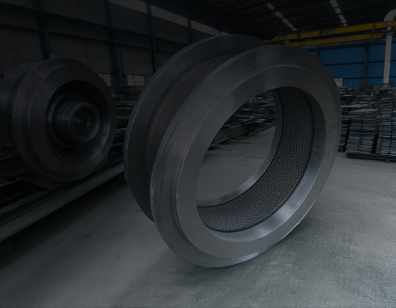
08
Spare Parts
Genuine components are available worldwide with fast delivery service.
