 0086-138 3838 9622
Industrial Tilapia Feed Mill in Philippines
RICHI MACHINERY
overview
The 10-15t/h industrial tilapia feed mill in Philippines was not built from zero. It was rebuilt—on top of an existing factory that had structure, but lacked process stability. After the upgrade, this tilapia feed pellet plant now operates with one pellet production line and two extrusion lines, delivering a total annual output of 100,000 tons.
What matters more than capacity here is consistency. The client had equipment before, but feed quality varied too much. After this upgrade, the system runs smoother, with fewer manual adjustments and much tighter control over particle size and moisture.
Before getting into details, here’s how the project stands today:
- Annual Output: 100,000 tons
- Production Lines:
- 1 × pellet feed production line (40,000 t/year)
- 2 × extruded feed production lines (60,000 t/year)
- Working System: 3 shifts × 8 hours × 300 days
- Total Workforce: 40 people
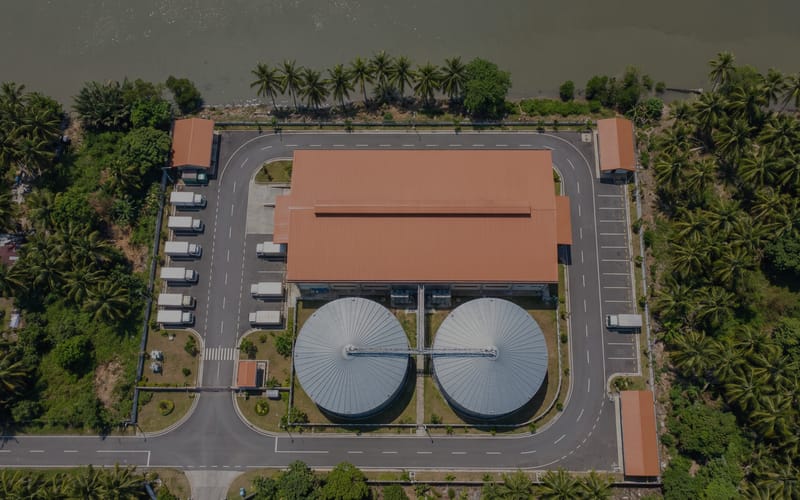
The animal feed production plant sits on an existing industrial site. No new buildings were added—everything had to be fitted into what was already there.
10-15T/H
capacity
$970,000
investment
Philippines
location
Feed
project type
RICHI MACHINERY
Why This Project Was Started
The client operates a tilapia farming business in the Philippines. Over the past few years, local aquaculture demand increased steadily, but feed supply didn’t keep up.
At one point:
- External feed purchase costs were rising
- Feed quality from suppliers was inconsistent
- Profit margins were shrinking
So instead of expanding farming first, they decided to fix feed supply.
RICHI MACHINERY
Timeline That Reflects Real Progress
| Stage | Time |
|---|---|
| Initial Inquiry | February 2024 |
| Technical Discussion | March–April 2024 |
| Contract Signing | May 2024 |
| Equipment Production | June–September 2024 |
| Shipment (Qingdao → Manila Port) | October 2024 |
| Installation & Commissioning | November 2024 – January 2025 |
| First Stable Production | February 2025 |
RICHI MACHINERY
Raw Materials
In the Philippines, feed formulation is strongly influenced by imported protein sources and local grain by-products. The client uses a mixed formulation approach.
Before designing the system, we checked not only composition—but also variability.
| Raw Material | Annual Usage (tons) | Transport & Storage |
|---|---|---|
| Soybean Meal | 25,000 | Bagged, truck |
| Rapeseed Meal | 30,000 | Bagged, truck |
| Wheat | 20,000 | Bagged |
| Fish Meal | 5,000 | Imported |
| DDGS | 8,000 | Bagged |
| Rice Bran | 9,000 | Local |
| Other Additives | 3,000 | Purchased |
| Electricity | 80,000 kWh | Grid |
| Packaging Bags | 200,000 pcs | Purchased |
One thing we noticed during testing: DDGS moisture varied batch to batch. That’s why the second mixing stage includes liquid adjustment capability.
RICHI MACHINERY
Product Plan
| Product | Output |
|---|---|
| Tilapia Pellet Feed | 40,000 tons/year |
| Tilapia Extruded Feed | 60,000 tons/year |
Pellet feed is still widely used locally, while extruded feed is preferred for higher-end farming operations.
RICHI MACHINERY
Equipment Configuration
Instead of listing models, it’s more useful to understand how the system is organized:
| Section | Equipment |
|---|---|
| Receiving | Initial cleaner, magnetic separator |
| Conveying | Elevators, conveyors |
| Grinding | Hammer mill feed grinders, ultra-fine grinders |
| Batching | Automatic batching scales |
| Mixing | High-speed mixers |
| Pellet Line | Animal feed pellet mill, conditioner, cooler |
| Extrusion Line | Twin screw extruder, fish feed dryer machine, coating system |
| Screening | Rotary screens |
| Packing | Bagging system |
| Utilities | Boilers, air compressor, dust collectors |
RICHI MACHINERY
Full Production Process
1. Pellet Feed Production Process (Complete Version)
This fish feed production line follows a two-stage grinding + two-stage mixing + pelleting system, which is standard for high-quality aquafeed.
Step-by-Step Flow:
- Raw Material Intake
- Materials include powder and granular types
- Powder materials: directly conveyed
- Granular materials: require pre-crushing
- Equipment used: scraper conveyor → bucket elevator
- Primary Cleaning & Magnetic Separation
- Cylindrical initial screen removes large impurities
- Permanent magnetic drum removes metal contaminants
- Coarse Grinding (Only for Granular Materials)
- Materials enter temporary storage bin
- Then pass through coarse grinding system
- Purpose:
- Reduce particle size variation
- Improve efficiency of ultra-fine grinding
- Stabilize final feed quality
- First Batching & Mixing
- Large proportion raw materials are weighed
- Electronic batching system used
- Mixed in first-stage mixer
- Function:
- Pre-homogenization
- Reduce variation before fine grinding
- Fine Grinding (Secondary Grinding)
- Mixed material enters grinding bin
- Processed through fine grinder
- Followed by rotary grading screen
- Removes fiber fluff formed during grinding
- Second Batching & Mixing
- Precise formulation stage
- Micro-additives added manually via feeding port
- Two liquid addition systems:
- Oil addition
- Molasses addition
- Mixing requirement:
- CV (coefficient of variation) < 5%
- Conditioning & Pelleting
- Steam or water added
- Material conditioned before pelleting
- Ring die feed pellet machine compresses into cylindrical pellets
- Steam enhances:
- Gelatinization
- Binding strength
- Feed digestibility
- Cooling
- Air cooling system reduces temperature
- Stabilizes pellet structure
- Screening & Recirculation System
- Two-layer grading screen:
- Upper layer oversize → returned to crusher
- Lower layer fines → returned to extrusion bin or reprocessing
- Middle layer → final product
- Two-layer grading screen:
- Packaging
- Automatic weighing and bagging
- Warehousing
- Finished products stored and recorded
2. Extruded Feed Production Process
Compared to pellet feed, this process includes high-temperature extrusion and drying, which directly affects feed performance.
Step-by-Step Flow:
- Raw Material Intake
- Same classification: powder vs granular
- Powder bypasses coarse grinding
- Granular goes through pre-crushing
- Cleaning & Magnetic Separation
- Removes impurities and metal
- First Batching & Mixing
- Large-scale raw material blending
- Prepares for fine grinding
- Fine Grinding
- Ultra-fine grinding required
- Improves digestibility for aquatic animals
- Second Mixing
- Micro additives manually added
- Two liquid systems:
- Oil
- Water
- Mixing uniformity: CV < 5%
- Conditioning & Extrusion
- High temperature, high pressure, high moisture
- Physical changes:
- Starch gelatinization
- Protein denaturation
- Instant pressure release → expansion
- Result:
- Floating feed
- Better digestibility
- Reduced feed waste
- Drying
- Moisture reduced from 25–30% → ~13%
- Prevents breakage and mold
- Coating / Spraying
- External coating system
- Adds:
- Oils
- Vitamins
- Flavoring agents
- Improves palatability and energy density
- Cooling
- Air cooling stabilizes pellets
- Screening & Recirculation
- Oversize → re-crushed
- Fines → returned to extrusion stage
- Qualified product → packaging
- Packaging & Storage
- Bagging and warehouse storage
RICHI MACHINERY
RICHI MACHINERY
Utilities & Supporting Systems
- Water Supply: Municipal
- Steam Supply: Biomass boilers (2t/h & 4t/h)
- Power: Grid electricity
- Wastewater: Only domestic sewage
RICHI MACHINERY
Investment Overview
| Item | Cost |
|---|---|
| Equipment Cost | ~$970,000 |
| Total Investment | ~$1,200,000 |
Given the capacity, this is a cost-efficient upgrade animal feed processing plant project.
RICHI MACHINERY
A Few Practical Observations from Commissioning
During the first few production runs:
- Moisture control in extrusion required adjustment
- Operators initially struggled with mixing timing
- After 3–5 days of tuning, production stabilized
One operator said something quite honest:
“The first few batches didn’t look right, but after adjustments, it became predictable.”
That’s usually how real plants behave.
RICHI MACHINERY
Market Outlook in Philippines
Tilapia farming continues to expand, especially in inland and coastal aquaculture zones. Feed demand is stable and growing.
For investors:
- Pellet feed = lower cost, large volume market
- Extruded feed = higher margin, premium segment
A combined animal feed pellet plant + extrusion fish feed production line setup like this offers flexibility.
RICHI MACHINERY
What We Actually Provide
This feed mill factory project wasn’t just about machines.
We handled:
- Process design based on raw materials
- Layout adaptation to existing buildings
- Equipment manufacturing
- Installation & commissioning
- Operator training
Many clients come with one question:
“Can this really run smoothly after installation?”
That’s the real challenge—and also where experience shows.
If you’re planning a 10-15t/h industrial tilapia feed mill, it’s worth starting from your raw materials and market positioning first. The equipment comes after that.
● RICHI MACHINERY
RICHI Service

● Consulting
Customer Consultation
We want to have a deep understanding of your industrial process, to know your exact needs of feed, wood, biomass, fertilizer or other pellet processing.

● Design
Feed mill Plant Design
Based on your unique situation and industrial process, we will tailor complete pellet plant you need, and inform you of every additional detail that could facilitate operation, minimize total cost.
● Manufacturing
Equipment Manufacturing
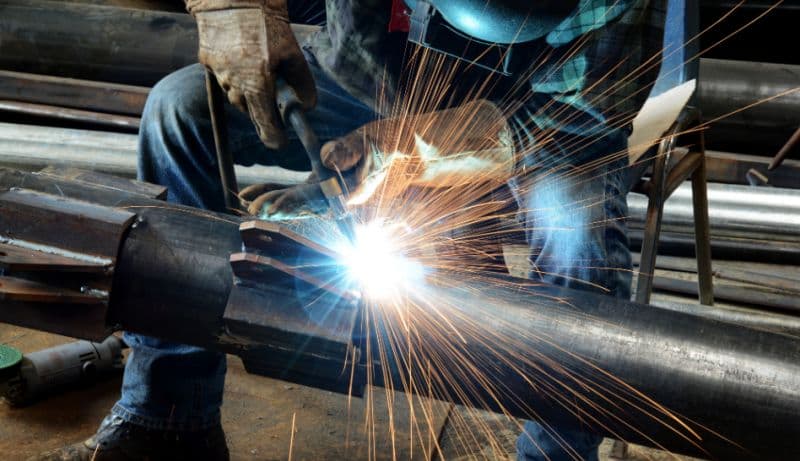
The critical components of the of the complete pellet production line equipment are built in our own workshops in Asia. Additional equipment is manufactured by our worldwide network of reliable partners.
● Testing
Quality Inspection & Testing
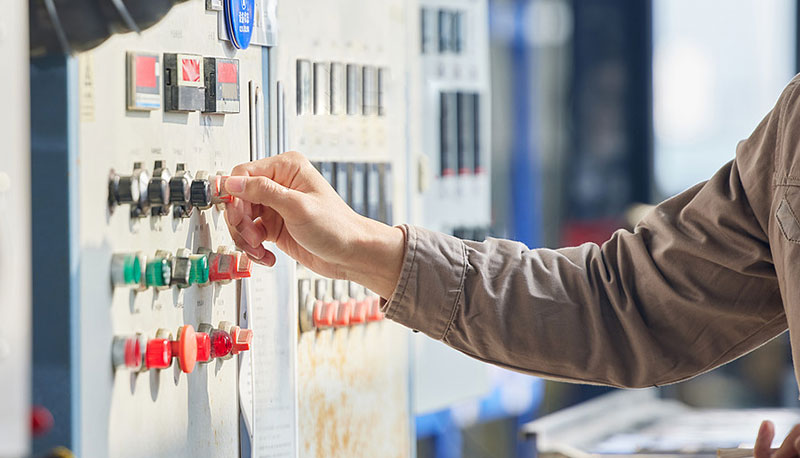
Before leaving the factory, all equipment will be inspected by the quality inspection department. We can also provide customers with testing services from a single machine to a complete pellet plant system, and provide you with real actual data for “worry-free use.”

● Delivery
Equipment Delivery
In equipment boxing and packaging, we adopt professional packaging and modular solutions to ensure the safe and non-destructive delivery of pellet plant equipment.
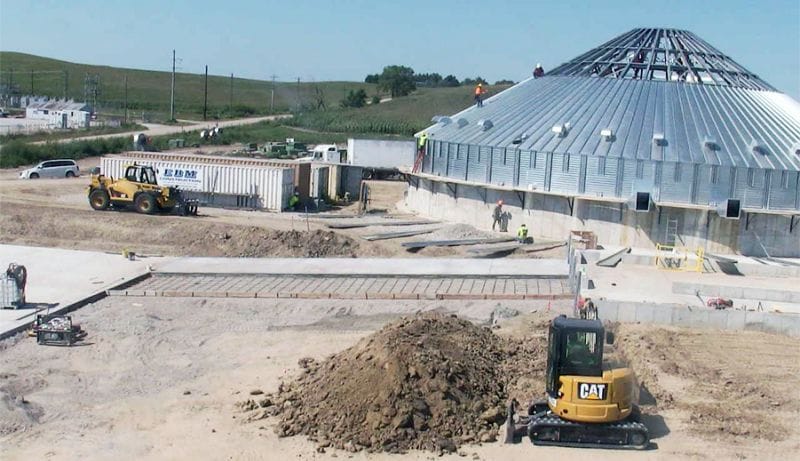
● Installation
Installation & Commissioning
Whether you choose your own subcontractor for the erection phase or you want to install everything together with us, a Richi supervisor will be around to make sure everything is mounted in a safe and thorough way.

● Training
Staff Training
We provide comprehensive training for the technicians of each project. We can also continue to provide support for the technicians during latter project operation.
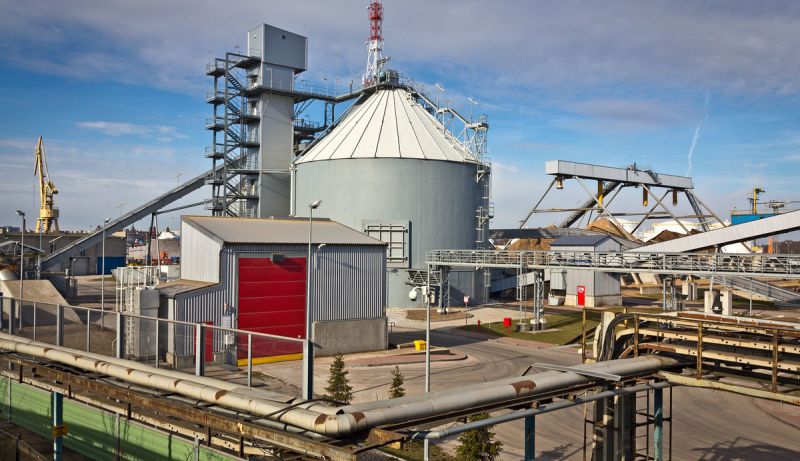
● After-sales
Project Follow-Up
When everything is up and running our Richiers will help you further whenever needed. We are ready to answer your call 24/7.We’ll also visit you regularly to learn about your needs.
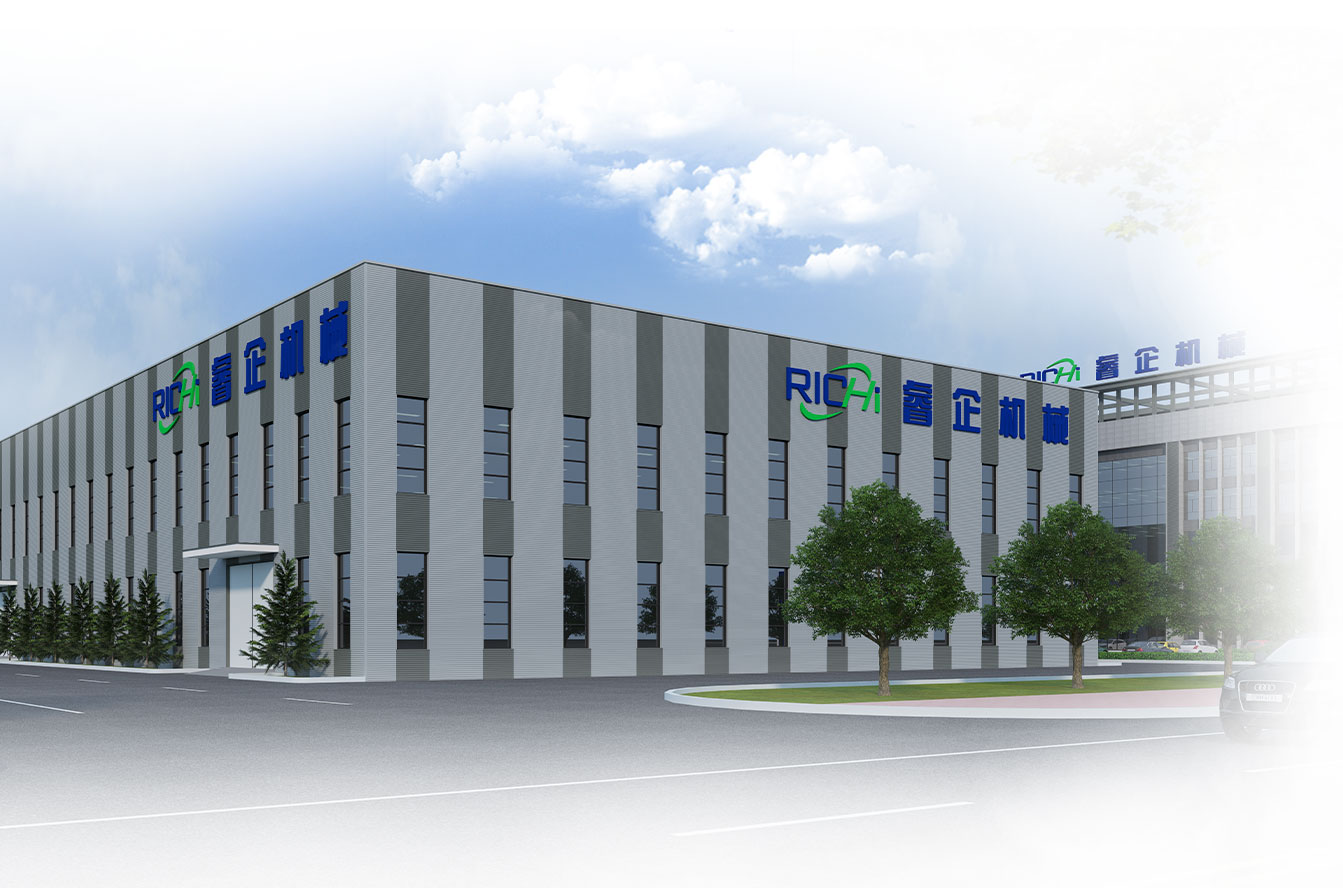
Who we are
RICHI Machinery is one of the world’s leading suppliers of technology and services for the animal feed, aqua feed and pet food industries, also the largest pellet production line manufacturer in China.
Since 1995, RICHI’s vision to build a first-class enterprise, to foster first-class employees, and to make first-class contributions to society has never wavered.
In the past three decades, we have expanded our business to a wide range of areas, including animal feed mill equipment, aqua feed equipment, pet feed equipment, biomass pellet equipment, fertilizer equipment, cat litter equipment, municipal solid waste pellets equipment, etc.

1995
RICHI Established

2000+
Serving More Than 2000 Customers

120+
RICHI Employees

140+
Exported To 140 Countries