 0086-138 3838 9622
Complete Feed Production Line in Serbia
RICHI MACHINERY
overview
The 20t/h complete feed production line in Serbia was not a large, flashy project at the beginning. It started from a very straightforward request: a livestock cooperative needed a stable way to produce its own compound feed instead of relying on fluctuating imports.
This 20t/h complete feed production line in Serbia eventually became a compact but highly efficient animal feed pellet plant, designed around local grain availability, limited labor, and a strict investment budget. The final system runs at about 15t/h actual hourly capacity, delivering close to 100,000 tons annually under a two-shift schedule.
20T/H
capacity
USD 480,000
investment
Serbia
location
Feed
project type
RICHI MACHINERY
A quick look before going deeper
The client wasn’t new to agriculture. They had been raising poultry and pigs for years, but feed costs kept moving up and down. At some point, buying feed stopped making sense.
Instead of building something oversized, they wanted a practical pelletizing line that could:
- Handle common grains like corn and soybean meal
- Run continuously with minimal operators
- Fit inside a multi-floor structure
- Stay within a controlled investment range
One thing they said early stuck with me:
“We don’t need fancy. We need stable.”
RICHI MACHINERY
How the project actually started
- First inquiry: March 2024
- Technical discussions & layout revisions: March – May 2024
- Contract signing: June 2024
- Manufacturing period: ~90 days
- Installation & commissioning: October – December 2024
The client already had land and decided to construct their own plant instead of renting. That gave us more flexibility in layout design, especially for vertical flow.
RICHI MACHINERY
What the client was really trying to solve
Feed supply in this region depends heavily on seasonal crops. Corn is abundant, soybean meal is available but fluctuates, and additives are imported.
Their key concerns were:
- Dust during handling (they had issues before)
- Inconsistent mixing quality
- Pellet durability during transport
- Labor shortage (they wanted automation)
So the design of this feed pellet production line leaned heavily toward automation and dust control.
RICHI MACHINERY
Product Plan
Before designing feed mill equipment, we confirmed what exactly they wanted to produce.
| Product Type | Annual Output (tons) |
|---|---|
| Bulk livestock feed | 40,000 |
| Bagged livestock feed | 60,000 |
| Total | 100,000 |
The ratio matters. Bulk feed required stable silo discharge, while bagged feed required accurate packaging and stitching.
RICHI MACHINERY
Raw Materials
The raw material mix reflects what’s actually available locally:
| Material | Annual Consumption (t) | Storage (t) | Notes |
|---|---|---|---|
| Corn | 56,693.05 | 1,500 | Main energy source |
| Soybean meal | 20,009.31 | 700 | Protein base |
| Wheat bran | 10,004.66 | 150 | Fiber adjustment |
| Flour | 2,667.91 | 50 | Binding support |
| Extruded soybean | 2,000.93 | 40 | Fat & protein |
| Rice bran | 3,334.89 | 80 | Cost optimization |
| Soybean oil | 133.4 | 3 | Palatability |
| Additives | 5,202.42 | 200 | Vitamins & minerals |
One small detail:
The first few test batches had slightly uneven moisture because bran moisture varied more than expected. We adjusted conditioning steam accordingly.
RICHI MACHINERY
Working Conditions
| Item | Value |
|---|---|
| Working days | 300 days/year |
| Shifts | 2 shifts |
| Hours per shift | 8 hours |
| Total staff | 25 people |
The staffing was kept low intentionally. Automation and centralized PLC control replaced manual handling.
RICHI MACHINERY
Equipment Configuration
We don’t usually list every model in marketing documents, but here the client wanted transparency. So we kept the structure clear:
Core Sections
1. Raw Material Receiving & Cleaning
- Bucket elevators
- Scraper conveyors
- Initial cleaning screens
- Magnetic separators
- Pulse dust collectors (4 units)
2. Grinding Section
- Hammer mill feed grinders (2 units)
- Feeding systems
- Cyclone + dust collection
- Screw conveyors
3. Batching System
- 22 batching bins
- Automatic weighing system
- PLC-controlled batching scale
- Micro-ingredient dosing system
4. Mixing Section
- Twin-shaft paddle mixer
- Buffer bins
- Dust control unit
5. Pelletizing Section
- Conditioner (steam-based)
- Animal feed pellet mill (core machine)
- Counterflow cooler
- Crumbler
- Grading sieve
6. Packing Section
- Automatic bagging scales (2 lines)
- Sewing conveyor system
- Bulk loading bin
7. Auxiliary Systems
- Oil spraying system
- Air compressor system
- Steam boiler (2 × 1.5 t/h)
RICHI MACHINERY
Why the process was designed this way
In this 20t/h complete feed production line in Serbia, the process is not just a simple “grind–mix–pellet” flow. It is a fully structured system designed around raw material characteristics, dust control requirements, and pellet quality stability.
From actual operation experience, the performance of an animal feed production line is heavily dependent on how each step is handled—not just the pellet mill.
Below is the full process, step by step, aligned with the original engineering design.
1. Raw Material Receiving, Conveying & Cleaning
Raw materials such as corn, soybean meal, wheat bran, flour, extruded soybean, rice bran, and additives are delivered in bags by truck. These are manually unloaded and transferred to the raw material warehouse.
Bulk soybean oil is transported by tanker truck and pumped into dedicated storage tanks.
Unlike bulk intake systems, this project uses bagged raw materials, so dust generation during unloading is minimal.
Process Details:
- Materials are lifted to the 6th floor via bucket elevators
- Enter receiving pit with grid screen → removes large impurities
- Conveyed by scraper conveyor → enters primary cleaning screen
- Passed through magnetic separator → removes metal contaminants
- Distributed into storage bins via rotary distributor
Output:
- Clean raw material → storage bins
- Large impurities → discharged manually
2. Grinding Section (Particle Size Control Core Stage)
Not all materials require grinding, but key ingredients like corn, soybean meal, and wheat bran must be processed.
Process Details:
- Materials enter grinding bin (80m³)
- Controlled feeding via impeller feeder
- Enter hammer mill chamber
- High-speed hammer impact + screen friction → size reduction
- Final particle size controlled at 1.5–2 mm
Material exits under airflow and centrifugal force through screen holes.
Important Observation:
The discharge temperature stays around 7–12°C, which helps avoid nutrient degradation.
Output:
- Uniform fine powder → conveyed to batching system
3. PLC Automatic Batching System
This section is where formulation accuracy is controlled.
Process Details:
- Ground materials transported via scraper conveyor → collection hopper
- Lifted again → distributed into 22 batching bins (300m³ total)
- Central PLC system calculates formula proportions
- Materials weighed through batching scale system
Small additives (vitamins, amino acids like lysine and threonine) are added separately via:
- Manual feeding
- Micro-dosing scale verification
Key Feature:
- Fully automated batching based on pre-programmed recipes
- Real-time monitoring of weighing sensors
4. Mixing Section (Critical for Feed Uniformity)
Process Details:
- Batching materials discharged into twin-shaft paddle feed mixer machine
- Mixing time: ~3 minutes per batch
- Ensures uniform distribution of nutrients
After mixing:
- Material enters buffer bin
- Moves to next stage
Output:
- Homogeneous mash feed
5. Steam Conditioning (Core Quality Step Before Pelletizing)
This is one of the most critical steps in the entire compound feed mill plant.
Process Details:
- Mixed material enters conditioner
- High-temperature steam injected
Operating Parameters:
- Temperature: 75–90°C
- Retention time: ~180 seconds
What actually happens:
- Starch gelatinization
- Protein denaturation
- Moisture adjustment
- Bacterial reduction
This step directly affects:
- Pellet durability
- Digestibility
- Feed palatability
6. Pelletizing Section
After conditioning, material enters the animal feed pellet press.
Process Details:
- Conditioned mash fed into pelletizing chamber
- Rollers compress material through die holes
- Cylindrical pellets formed
After Pelletizing:
- Pellets enter counterflow cooler → reduce temperature to ambient
- Optional crumbler → break pellets into smaller sizes
- Rotary grading sieve → separate qualified/unqualified pellets
Output:
- Finished pellets ready for packaging or storage
7. Packaging & Bulk Storage
Process Details:
- Pellets transported to finished product bin
- Automatic packaging system (DCS-50) used for bagging
- Sewing conveyor seals bags
For bulk feed:
- Transferred to bulk storage silo
Output:
- Bagged feed
- Bulk feed
8. Laboratory Testing & Quality Control
Each batch undergoes testing for:
- Moisture content
- Crude protein
- Ash content
- Calcium & phosphorus
- Heavy metals (As, Pb)
- Aflatoxin
Chemicals used:
- Sulfuric acid
- Hydrochloric acid
- Sodium hydroxide
- Ethanol
9. Other Auxiliary Pollution Sources
Wastewater:
- Kitchen wastewater → grease trap → biological treatment
- Domestic wastewater
Solid Waste:
- Dust collected → reused
- Waste oil, contaminated materials → hazardous waste
- Sludge from treatment system
This 20t/h complete feed production line in Serbia follows a very typical but highly optimized structure:
Cleaning → Grinding → Batching → Mixing → Conditioning → Pelletizing → Cooling → Packaging
But the key difference lies in:
- Multi-point dust collection
- Central PLC automation
- Vertical plant layout
- Controlled conditioning parameters
RICHI MACHINERY
Plant Layout
The building is a 6-floor steel structure (~35.5m height).
Instead of horizontal flow, we used vertical gravity flow:
- Top floor → raw material intake
- Middle floors → storage + batching
- Lower floors → pelletizing & packing
This reduced conveyor energy consumption and simplified material movement.
RICHI MACHINERY
Storage & Logistics
| Facility | Area |
|---|---|
| Raw material warehouse | 1605 m² |
| Finished product warehouse | 1605 m² |
| Bag storage | 430 m² |
| Additive room | 230 m² |
The client insisted on separating additives physically. That helped avoid cross-contamination.
RICHI MACHINERY
Environmental & Dust Control
Dust was one of their biggest concerns.
So we added:
- Multiple pulse dust collectors across all key points
- Centralized dust collection lines
- Fully enclosed conveying
Collected dust is recycled back into production — nothing wasted.
RICHI MACHINERY
Investment & Cost
- Total project investment: ~USD 1.1 million
- Equipment cost: ~USD 480,000
- Environmental system: ~USD 60,000
We intentionally kept the investment controlled. Over-designing would have made payback too long.
RICHI MACHINERY
Shipping & Delivery
- Port of departure: Qingdao Port (China)
- Destination port: Port of Belgrade (via Danube inland logistics)
Delivery time was around 35–40 days including inland transport.
RICHI MACHINERY
What happened after startup
The first week wasn’t perfect.
- Moisture adjustment needed tuning
- Pellet hardness varied slightly
- Operators needed training
After about 2–3 weeks, production stabilized.
Now the plant runs steadily. Output matches expectations.
RICHI MACHINERY
Why this type of project makes sense in Serbia
Serbia has strong grain production, especially corn. But a lot of value is lost when raw materials are sold without processing.
Feed production changes that:
- Higher product value
- More stable pricing
- Local supply chain control
We’ve seen more inquiries from the region after this project started running.
RICHI MACHINERY
A practical note for future buyers
When clients come to us now, they usually ask:
- Can we use mixed raw materials?
- How stable is the pellet quality?
- How many workers do we really need?
- What happens if raw material moisture changes?
These are real questions. And honestly, the answers depend on proper process design — not just the machine itself.
RICHI MACHINERY
What we actually provide
This animal feed factory project wasn’t just equipment delivery.
We handled:
- Process design
- Plant layout
- Equipment manufacturing
- Installation guidance
- Operator training
- Spare parts planning
That’s usually where projects either succeed or struggle.
RICHI MACHINERY
Final thoughts from this project
The 20t/h complete feed production line in Serbia is not the biggest plant we’ve built. But it’s one of those projects where everything fits together properly.
No unnecessary complexity. No oversized systems. Just a well-balanced pellet plant that does its job every day.
If you’re looking at a similar animal feed production plant or pelletizing line, it’s worth starting from your raw materials and actual production goals — not just capacity numbers.
Sometimes, the best solution is not the biggest one.
● RICHI MACHINERY
RICHI Service

● Consulting
Customer Consultation
We want to have a deep understanding of your industrial process, to know your exact needs of feed, wood, biomass, fertilizer or other pellet processing.

● Design
Feed Pellet Plant Design
Based on your unique situation and industrial process, we will tailor complete pellet plant you need, and inform you of every additional detail that could facilitate operation, minimize total cost.
● Manufacturing
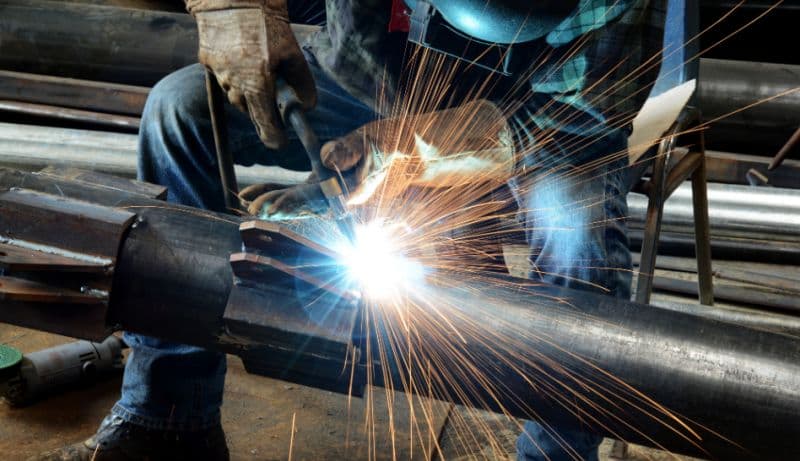
Equipment Manufacturing
The critical components of the of the complete pellet production line equipment are built in our own workshops in Asia. Additional equipment is manufactured by our worldwide network of reliable partners.
● Testing
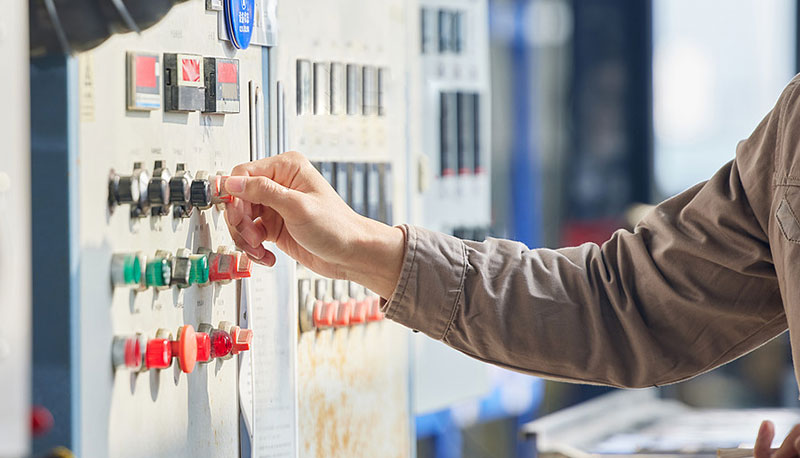
Quality Inspection & Testing
Before leaving the factory, all equipment will be inspected by the quality inspection department. We can also provide customers with testing services from a single machine to a complete pellet plant system, and provide you with real actual data for “worry-free use.”

● Delivery
Equipment Delivery
In equipment boxing and packaging, we adopt professional packaging and modular solutions to ensure the safe and non-destructive delivery of pellet plant equipment.
● Installation
Installation & Commissioning
Whether you choose your own subcontractor for the erection phase or you want to install everything together with us, a Richi supervisor will be around to make sure everything is mounted in a safe and thorough way.

● Training
Staff Training
We provide comprehensive training for the technicians of each project. We can also continue to provide support for the technicians during latter project operation.
● After-sales
Project Follow-Up
When everything is up and running our Richiers will help you further whenever needed. We are ready to answer your call 24/7.We’ll also visit you regularly to learn about your needs.
Who we are
RICHI Machinery is one of the world’s leading suppliers of technology and services for the animal feed, aqua feed and pet food industries, also the largest pellet production line manufacturer in China.
Since 1995, RICHI’s vision to build a first-class enterprise, to foster first-class employees, and to make first-class contributions to society has never wavered.
In the past three decades, we have expanded our business to a wide range of areas, including animal feed mill equipment, aqua feed equipment, pet feed equipment, biomass pellet equipment, fertilizer equipment, cat litter equipment, municipal solid waste pellets equipment, etc.

1995
RICHI Established

2000+
Serving More Than 2000 Customers

120+
RICHI Employees

140+
Exported To 140 Countries